How To Get Coaching Leads Based On Your Personality Type
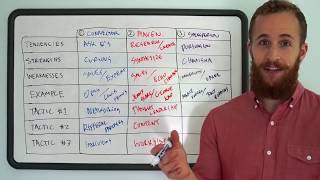
Greg Faxon breaks down three coaching lead-generation styles: Connectors win through networks and referrals, Mavens build authority with content and workshops, Salespeople close deals via webinars and strategy calls. Identify your type, pick one tactic this week, and partner to cover your gaps.
Chapters
Hey, Greg Faxson here. And what I want to talk to you about today is lead generation. And specifically how do you generate leads? How do you connect with potential clients that could be a good fit for your coaching, that are willing to pay for it, that are able to pay for it and that you'd love working with? Now, coaches come to me all the time asking where to find potential clients. And the challenge is there's a lot of different strategies that can work, but depending on who you are, depending on your personality type, some might work for you really well, some might not work for you at all. So what I've done is I've taken a framework from Malcolm Gladwell. In his book the Tipping Point, he talked about three archetypes. And depending on which archetype you are, that will determine which marketing tactics you should try. And you may recognize yourself in more than one archetype. And that's okay. We're looking for what is your primary one, where you're naturally strong so that we can figure out how to play to your strengths and, and how to minimize your weaknesses. So let's dive right in. The first archetype is the connector. Alright, the connector. Now these are people who are exactly like the archetype sounds. They are good at connecting with people. They tend to have large networks. They tend to make people feel comfortable. Their tendency is to ask questions, pretend these ask questions. They're naturally curious, which is one of their strengths. And we all like when people are curious about us. We all like being asked questions. And so that is why connectors are so good at meeting new people and at networking, right? So their weaknesses, their weaknesses are, fall into these other two categories which we're about to go into. But one of them is sales. They sometimes don't like selling themselves. Even though they're good at connecting with people, they're not always good at dealing with that tension that comes from wanting to help someone take action and make a decision and really promoting themselves. They also are sometimes challenged because they're not experts. Connectors typically are very good at surrounding themselves with experts, but they may not be the number one authority. And in their area of specialty, an example of a connector is Oprah. All right, so one example is Oprah, and obviously she's built her empire mostly just being a connector, having people on her shows to interview and connecting people with products and services that she thinks are great, having her book club, etc. So Oprah's a good example of someone who's been very successful as a connector, also someone who's more in the coaching industry would be Lewis Howes. I think he has strengths in all these three archetypes, but clearly he's a connector. He has the podcast school of greatness and he's built a platform on having other people on his show to share their expertise. He's really a syndicate for that. Okay, so tactic number one for a connector is networking. Alright, so first, acting is networking that can be in person, online. The best type of networking is typically at paid in person events that will attract your target audience. So if it's a paid event, it means that they're obviously willing to spend money on this area of their life. And if you know that it caters to the topic that you help with, then you're likely to meet people there who will be a good fit for your coaching or can refer you to others. Which takes us to our second tactic, which is referral partners. So referral partners, this can be joint venture partners. It can just be a casual relationship where you refer people to a service provider who helps your similar market, but in a complimentary way. Those are typically the best service providers who already has an audience of your people, already serves your people, but they're not a direct competitor. Okay, so connecting with referral partners, adding value to them, becoming friends with them, making them love you and want to recommend you to others. Okay, the third tactic is interviews. And when I say interviews, I mean actually having a podcast or a YouTube show where you bring on other people and you interview them. Okay? Because like I said with Lewis Howes, like with Oprah, if you're a natural connector, you're going to be able to get those connections easily and use their expertise and have authority kind of just by relationship with them. All right, our next archetype, archetype number two is the maven. You can think of mavens just as experts, as authorities. And the tendency of a maven is to research and to create, Researching and creating. They love to gather information so they can become more expert in their area of expertise. Alright? Their strengths are synthesis, They're good synthesizers. Okay, so they're good at synthesizing, they're good at gathering information, but their weaknesses relate to these other two categories. Just like the connector. Mavens often have trouble selling themselves. Ironically, experts sometimes are the most insecure, the least likely to promote themselves because they've gone so deep into topics that they know how much more there is to learn. And they tend to be the most humble about how much of an authority they really are. They tend to be all about the steak and not about the sizzle. So sometimes they need to partner with people or have a coach or get better at actually selling their ideas. Example. Oh, another weakness of a maven is I'm going to call it echo chamber, meaning sometimes they don't connect with enough people. And so they may be an expert, but no one really knows what they do or that they even exist. Okay. So they need to also be able to connect with people, not just know the most. An example of a maven, one would be Jenny Blake. She's a career and business strategist and she's gone really deep into the. The idea of a career pivot. Okay. And so she's an example of someone who I suspect is a maven just because she's a voracious reader. She's always recommending resources. Probably her primary type is a maven. The other is George Co. Kao. And I suspect he's a maven just because he produces so much content. He's always on the forefront of kind of authentic marketing, which is really a concept he's created himself. Which brings us to tactic number one for a maven, which is thought leadership. Thought leadership. So tactic number one is thought leadership, which just means don't just gather information, but actually create your own innovative systems and approaches. Tactic number two is content related to thought leadership. But put it out there, Write your best selling book, write the blog article that's very, very detailed. Step by step, make that video that shows how much you know about this topic so that people can really view you as an authority. The third tactic is workshop. All right, Workshops. And the online equivalent is a webinar. So either in person workshops or a webinar. And just give your best stuff, synthesize that information, give people step by step formulas for how they get towards the result that they want. Mavens can do well in workshops and in webinars if they're relatively charismatic. Now the salesperson, again, exactly like it sounds. Although some people have a bad connotation with the word sales. So what I want you to think about is persuasion. That's the main tendency of the salesperson. And one of their strengths is charisma. They tend to be very charismatic, which is why people want to listen to them, want to take action, are willing to go for it when the salesperson suggests they make a decision. Alright, so tendency is persuasion, strength is charisma. Now their weaknesses relate to these other two categories. So connections can be a weakness. And when I say connections, I mean just that initial network. Because they could be really good at selling when they get in front of someone. But if they don't have those initial connections, it can be difficult. They also might ignore people who could refer clients to them and just make it easier. Not everything has to be a hard sell, so value and connections can be an issue. The other is actually kind of fooling themselves. So salespeople can be so good at the sizzle that sometimes they forget about the state that the maven is so focused on. And so making sure they can actually deliver value can be a weakness. It doesn't have to be if they're paying attention to it. But when you're so good at selling, it can be hard to make sure you're really still over delivering, which is obviously important when it comes to your coaching business. So salespeople. An example would be Marie Forleo. I think at her core, Marie Forleo is a salesperson. I think she's good at connecting. She obviously does interviews. I think that she knows her stuff. But I think that obviously she's very good at selling, very good at marketing. People get excited about her brand. People want to evangelize her brand for her. And that tells me that she's probably at her core salesperson. The other is Tony Robbins. So you obviously recognize these names. They're some of the top of the coaching industry. I'd probably put Brendon Bouchard here as well. Salespeople tend to be the ones who are most well known and making the most money because again, they have that salesmanship ability, saleswomanship ability, if you will. So their first tactic is workshops and webinars. If you recognize yourself as a salesperson and you're not doing workshops or webinars regularly, you need to get on that because it's such a valuable tool when you have that charisma that salespeople have. Okay, workshops if they're in person, webinars if they're online. Now, tactic number two for salespeople is sales letters. Okay, when I say letters, I mean that could be emails, that could be whatever it is, it could be video. But creating online funnels, creating some sort of customer journey where you can help the person understand your message and get excited about your message. Okay. Oftentimes sales letters, they could lead directly to a program, but they could also lead to free strategy sessions. So offering strategy sessions or discovery sessions is key for the salesperson because they're so good in that one on one conversation, getting people excited and taking action that they want to put themselves in selling situations as much as possible. So something like a free strategy session where you help the person get clear on where they are, where they want to be, and what they need to do to close that gap. Salespeople are going to be really effective in those, and the more time they spend there, the more clients they're going to get. So, couple things I want you to do this week. First is figure out which type you are primarily. Second is what tactics do you want to use and what's one that you want to put into practice this week to generate some leads. And a bonus is how can you shore up some of your weaknesses? It's not that if you're a connector, you have to become an expert at sales. You have to become a master at it. But figure out who can you partner with? Are there coaches or colleagues or contractors who you can outsource it to, who? That's their area of expertise. That's their superpower. And maybe you just have to get to a level of basic competence in the areas you're weak at.










