How To Get Your First Three Coaching Clients [Expert Panel]
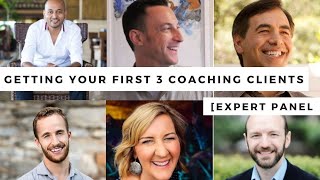
Five coaching experts discuss how to land your first clients. They recommend starting with your warm network, offering free coaching calls to learn your craft, and building trust through relationships rather than shortcuts. Skip the website obsession and focus on practicing coaching first.
Chapters
Sounds great.
Cheers.
All right, everyone, welcome to the live panel. Today's focus is going to be on how to get your first or next three coaching clients. And really excited today. Really honored to have five great panelists on the line with us, who I'm going to introduce in just a moment. Before we get started, first thing I'd like you to do is put into the comments, put into the chat, which you'll see on the bottom of your screen where you're from. Obviously, the panelists don't necessarily need to do that because I'm going to be introducing them, but let us know your name, where you're from, just so we can get a sense of who is in the room. The next thing that I'd love you to do is answer a quick poll and just so that we as panelists have a sense of what your biggest challenge is right now in your coaching business. If you look down at the poll section and I'll launch a poll and it basically says, what's your biggest frustration right now around getting coaching clients? I have a few options there that you can read out and that'll just give us a sense of what you're struggling with, what you're frustrated by, so that we have that in mind as we answer your questions. All right, Erin from Montreal, bonjour to you as well.
Good to have you.
Brian from Cape Town, Claire from Bath in the uk, Peter from the uk. Fantastic. Thanks, guys. So it looks like what's coming through in the polls, Lots of different answers, obviously, but one of the big ones is I don't know where to find clients who will invest in my coaching. Obviously, big concern for new coaches. Just where do I find potential clients? We're definitely going to dive into that. I'm also seeing. It's really going back and forth. I'm also seeing feeling unclear about your focus or niche. And I know that's very hot button issue. Do you need to have a niche? Do you not need to have a niche? And people get pretty passionate about it. So we're going to dive into that as well, for sure. I have a question up front to our panelists about that. I'm also seeing people who say, I occasionally find people who I think would be a good coaching. I just don't know what to do next. So I have a free coaching conversation with what would I do in that consult? So some confusion around that. Thank you for answering that, everyone. We got Michael from la, Thomas from Stockholm. Really great to have you all here. So just to quickly dive into the format. You're welcome to ask questions at any point in that comment section. And in the second half, we're going to be diving into all of your questions for the first 25 minutes or so. I have a few questions that I know are really important, important to new coaches that I'd love to hear from the panelists on. We'll kind of go organically from there. And for the second 25 minutes, we will jump into your questions. Specifically, just a quick note, Pam, who I'm really glad is joining us, she's going to have to run to, I think, coach a client for that second half. So you only have her for the first half, but otherwise everyone's ready to rock with you. So put your questions in the comments and I'm going to go ahead and introduce our panelists today. So I'll start with Michael. Michael Neal is an internationally renowned transformative coach and he's the best selling author of five books including the Inside Out Revolution and the Space within, which is his newest book. Highly recommend both of those. And one of the things that I really admire about Michael is just how much he's kind of shaped the coaching industry. He seems to always be on the cutting edge of a lot of the personal development and he really inspires me. I know a lot of other coaches to kind of up their game, become great at what they do and not always just worry about how do I get new clients, but instead how can I become a fantastic coach. So, hey, thank you, Michael, for being here.
Thank you.
So next Pam. So Pamela Slim is the award winning author of Escape from Cupil Nation and Body of Work. She is a speaker and a business coach and she's been helping entrepreneurs for 20 years. So one thing I really appreciate about Pam is how honest she is in her approach, how honest she is in her marketing. And she's obviously driven by a really strong desire to help small businesses grow and that just runs through everything that she does. So thank you for being here, Pam.
So happy to be here.
All right, and then Ajit. So Ajit is the co founder of Mindvalley, CEO of EverCoach, and that's the first online academy built specifically for coaches. I assume most of the people on the call heard of Evercoach, probably been in your Facebook news feed maybe about 50 to 100 times in the last few days if you've been looking at any coaching sites. So they got their targeting right on. And one thing I really respect about Ajit is just his passion for marketing and business. He's just gone so deep into that. And he combines that with also a passion for transformation and personal development. And you can see that run through everything that he does. So thank you for being here, Ajit.
Thank you for inviting me. Honored to be here.
All right, and then Toku. So Toku is in the bottom right of my screen. I don't know where he is for your screen, but Toku is the founder of Unexecutive, and he works with amazing leaders there to help them move beyond their first few layers of success. He's also the co founder of the Samurai Coaching Dojo. Great name, where he helps new coaches master their craft. So one thing I love about Toku is he really brings a mindful approach to coaching. I know you spent some time, Toku, in a Zen monastery before you became a coach, and so you can tell he really views coaching as an art. And he's also aware of some of the flaws we have in the coaching industry, including the lack of diversity, for example, that we. We often run into. And so I really respect that he's always thinking about those issues. Thanks for being here, Toki.
Thanks, man.
Happy to be here.
All right, and then last one is Perry. So Perry Gladstone is a trusted advisor to business leaders, artists, and athletes who want to achieve their full potential. And if you're on this call and you're a coach, that's probably something you're passionate about as well. He's a successful entrepreneur. He's the author of Fast and How to Open New Hearts, Win Mines, and Create a Better Life in Business. One thing that I really appreciate about Perry is that he incorporates so much of himself and so many diverse parts of his life into his business. So he leads retreats, I think, where he lives in Costa Rica, where you can see him now. And he's worked with a lot of different people, so he's someone who has spanned lots of different kind of target markets and things like that. But it's all centered around helping people achieve their potential. So we're definitely going to dive in with him about maybe his perspective on needing to niche, for example. So thank you for being here, Barry.
My pleasure.
All right, guys, so let's dive into this first component and you know, as the moderator, I have a few questions that I think are really key to dive into, and we'll let the conversation flow from there. I'll usually direct the question at some one person to start. Doesn't mean they're the best qualified to answer. It just means that, you know, they're the one that we want to Start with. But I'd love to start with Michael, and then we'll open it up after that. So to what extent do you feel like coaches need a niche when they're in the stage of looking for their first three coaching clients?
I think when you're in the stage of looking for your first three coaching clients, your niche is people who you kind of like can help and can pay you. And I think to have a niche any tighter than that is doing yourself a huge disservice. Niching, for me, is something that makes sense when you're so overwhelmed by inquiries that you need some way of sorting through the people. And so then it makes sense to start specializing. But when you're starting out, you want to coach your ass off. You want to coach as many people as you can, because that's how you'll get good. That's how you'll start to discern what you're particularly good at and what you particularly enjoy helping people with. So premature, in my mind, premature niching is a huge taking you in the opposite direction of where you want to go when you're starting out.
Does anyone else have anything to add on that?
To me, I see a similar thing. It's the nuance of it is even when you're very much beginning, when you're talking to people, and often your friends, family, peers, colleagues can be the first people to start because they know your work in other areas. But the way you talk to people, maybe customizing it toward whatever it is, whatever problem or challenge they have, is you want to send a clear signal, Michael, you have that problem. I can help with that. Right? You know, your closet's a mess. I can help with that. It's very different than spending $10,000 on a website saying, I am the closet organizing coach, which I see a lot of people doing in an early stage of business, and putting a huge amount of effort and energy into that. So to me, there's a difference between clearly taking a space in the market where somebody said, you know, how do we stand out in our marketing if we don't start out with a niche? I'd be interested to hear the stories of everybody else. But when I first started, it was people who already knew, like, and trusted me in my consulting work, where I was like, I can help you with your career path. And they were like, okay, I trust you. It wasn't until much later that I developed Escape from Cubicle Nation, which was that specific niche.
Yeah, Closet organization is a hot niche, though. That is a hot.
It is.
I'M really embarrassed about my closets now.
I can help. I can help.
So, I mean, what's interesting too is, you know, that I just to echo and reflect back with, both of you said, when you get started, a lot of your interactions are just one to one. So you can really customize your approach to whoever you're talking with. And when we're talking about choosing a niche, that's really helpful if you're doing some larger scale marketing where you need to have specific, compelling messaging for a lot of people at once. But I'm just in a conversation with someone in a networking event and they mention a problem that I think I can help with, well, then I can just direct it towards that specific person.
Can I make a quick comment picking up on something? Pamela, you said you used the word trust, if I recall correctly. And I think that actually for me, the crux of everything why do people trust you? And in which way are you earning their trust? So the example you gave Pamela was that these are people who you had a consulting relationship with and they trusted you already. Rather than worry about what your niche is, why not focus on why people trust you and how they trust you? And that is the way to engage. That's everything. You can develop your marketing afterwards.
Yeah, I think that being a new coach is a little like, it's a little like being in middle school. Like, you don't know you were a kid before. Now you're like, how the hell do I be this adult type person? And so the way I did it is I just like, I had a hundred niches. I was like, this week I'm an executive coach and this week I'm personal training. And I was like, I'll try a few things out. And it didn't work. Like, all right. People didn't like that. They gave me a weird look. I'll do something different. So I think the mistake I see a lot of new coaches make is they put a ton of pressure on.
Like, I gotta find my niche and.
I gotta know my people. And I had for the first two years, I was a personal trainer, actually. And so that's how I discovered the people I like working with is I was like, cool. I think that I'd like to coach the same people I like to train. And that's how I figured it out. And I picked the worst niche. I had a niche around mindfulness and happiness. And I gave away 100 calls on my website and I had 45 calls with depressed, anxious, stressed out people who were never going to pay Me and were like incredibly painful to coach, which I highly recommend. If you want to figure out who you never want to coach, coach a hundred of them. But that's how I got started and I just kept experimenting. So it's an evolutionary process. The guys at Fizzle, who I know Greg knows, they talk about this entrepreneurial spiral. You start out here and then you're just slowly honing in on what you want to do over time. So just go out and try everything, try anything that people want to offer you and. And eventually you'll figure it out.
This is a super important point because all of us have a lot of different. We're understood by different people in different ways. We have relationships with different people for different reasons. And so, you know, in my world, some people know me as a marketing guy, some people know me as a speaker, some people know me as a musician that travels around the world. Some people know me as a coach, some people know me. And so it's whatever door they walk through is the door that you meet them at. So I'm not going to pick one of those things. I'm just going to see what door they come through and then that's the niche for them.
You know, just to give a different metaphor for the same thing Perry's saying, I sometimes think of it as a multi handled coffee mug. So, like, there's the way you think about it, which is how you pick up the coffee mug. But you can have as many different handles on the coffee mug that make it easy for other people to pick up the mug. The coffee's the same, that's what you do. But. But it doesn't matter which handle somebody picks the mug up by. And you kind of want to have as many ways that they can get a handle on what you do as you can come up with.
That's a perfect metaphor.
Just to add to every. What everything said everybody said is kind of my experience as well, which is that you don't really have to pick a niche or anything like that. But what I feel is that at least that is true for the people that I worked with in the past couple of months or for myself, is that there's always this intuitive feeling that we have of what are some things that we would like to work on as well. Like, for example, I know a lot of coaches want to very specifically focus on people where they want to develop people's life, and that's the area that they really want to work on. So they can first start to work on life coaching. They don't have to really niche out what particular area. But they do have a preference based on their experience and based on their stories and based on what they have done, what they would like to work on. Like for example, me as personally, my coaching clients are mostly around businesses and they have to be of a particular size because I don't really work with people who are just starting out because that's a very different type of coaching experience that you require to be able to help those businesses. I help businesses which are at a particular level because I'm more, not only experienced, but that's where I enjoy more. So most of my clients, I actively say no if they don't fit into that category because as much as I know they can benefit from me, I won't enjoy the process. So I. Everybody is multifaceted and multi passionate. So I'm not trying to say that there will be only one thing that you will do. You'll probably end up doing two, three types of coaching. If, I mean, if you want to pursue that direction, some people go really niche. For example, I've been coaching for two years now. I'm very young in coaching, nothing compared to the other fantastic people here. As a coach I'm very, very new. But for me, I found one thing that I really like to do, but maybe in future I'd like to coach another areas of life as well. But I think that's something that we discover as multifaceted people. There will be many areas, but it's okay to kind of say, you know what, this is my first year. I think what happens usually, and that's why people try to niche it is they get too anxious about success. They get too anxious about, oh, I'm, I'm starting out and I haven't. Like that person was saying, like, for example, like Toku just mentioned, I did a hundred calls, right? Like there might be people on the thing, oh shit, I haven't done my hundred calls. Damn, I'm not gonna be successful. I need to find my niche. But that's not the answer really. The answer really is you will have to do the work and it sometimes you will be excited like Tokyo, whatever website do 45 calls. And sometimes you won't be that kind of guy and you'll be like, listen, I will talk to people when I go to an event or I will take my own time because I'm doing it part time and I'm starting out because I have a real job on the side and I'm learning this while I'm doing this I think there's a lot of discounting that happens because of how in the market people talk about coaching is like, oh, yeah, you can be a coach and then you can live the life you want and you will have all the money that you want and you will quit your job in three months and fourth month, you'll be a millionaire.
Glad everybody else is laughing and groaning as you say. I really am.
But that's the problem. That's what happens is why I think people try to find a niche or try to go, this is where I need to go, or this is where, like, you know, like, they just compare to these. Really, there is. And I think maybe it's. I don't know who really said it. So, like, don't take my. Who am I quoting right now? But I'm sure I'm quoting somebody else. It's not me who said it is that I'm an overnight success over 10 years. Somebody said it. I don't know who said that. So it's basically saying that, yeah, you see somebody as an overnight success. Yes, I'm a coach. I do multiple figures or whatever, But I was doing this, like, eight years ago. I became a coach two years ago. But you don't really know my backstory of eight years of work before that. So when I showed up, I had already coached people for six years for no payment whatsoever. Right. Because I didn't even know I was a coach or I didn't know I ever wanted to do this. So when I showed up, everybody's like, oh, that guy, he knows so much. Or he's like, who's this dude? Like, all of a sudden he's throwing an event, he has hundreds of people attending it. What the fuck is happening? Nothing's happening. I did the work before it. Just nobody saw it because I was under the radar. Nobody knew who I was, what I was doing. I just decided one day that I want to do this is why you know my name and I'm called to event like this with such fantastic other panelists. Nobody really compared to you guys. But I guess it's because I've done my work, which most of the people just discount and don't realize that you got to do that before you see the fruits. So niche is not important. Just being able to say it'll take the work it will take and just roll with it for a while. Don't give up so fast. And usually you will find your niche and you'll be fine. If you will do the work, you'll be fine.
So love these. Love this conversation. We got people like Brian saying, michael, I can help with that with. I assume he meant the closet organization.
He's my client. Brian. That's my client. I got.
Oh, yeah, yeah.
We're gonna do a thing about ethics and poaching.
And Liz M. Says, this is amazing. What a great opportunity. Perry, you have an incredible life, my friend. And so, yeah, so everyone's. Everyone's loving it. So I have a question that I'd love to bring up and open to whoever wants to dive in. What bad advice do you frequently hear being offered to new coaches out there?
To me, it's really picking up on what Ajit just said of the worst advice is, it's easier than you think. Just, you know, jump in. You know, you can immediately make, you know, make instant money coaching, and you must follow my particular blueprint, or else it's your mindset that's, like, really screwed up. I just. I think I'm a rebel by nature, you know, And I think there's. Whenever you're building in that perspective that there's one path that people can take, there's one right way to do it, then it builds in this really unhealthy dependency for coaches. And the very best place that I always like to send people, it's exactly what Ajit was saying, is to be in conversation and relationship with people who you think you can help if you listen, if you sit in deep conversation, if you're talking to them about what are all the issues or challenges that they're facing, and you're really thinking about that. That's what I appreciate about having done consulting for so long is we always are trained to look at that place. And a lot of the coaching advice that I see that's coming from folks is completely and totally focused on just how do you market yourself as a coach. And I think a lot of folks have talked about it earlier. What you forget is the actual craft of what it is that you're doing. Perry, I think you were saying that before, where we must solve problems, we must provide value to somebody. And it's not just sometimes we get so focused in our desire to do coaching because coaching is cool and fun, and it gives us the kind of lifestyle that we want. We all want to be in Costa Rica with Perry right now, but I'm in Mesa, Arizona, which is pretty cool here, I'm just saying. But you know that we want that lifestyle for ourselves, and we forget that it's our job to really be leaning in and listening to the people who we want to help. And a lot of what really gets me going is where we begin to talk about it just in terms of numbers. You know, like, let's just get, you know, we'll get our clients, we'll improve our conversion rates. You know, hey, we're all business people and that can be exciting and looking at the back end of your business, but you really want to focus on what actually is that work that you're doing with real life humans. And I remember when I first started Escape from Cubicle Nation, I've been a consultant to corporations. When I started helping people leave, I had done it, but that was it, man. I didn't know a lot. And here I am helping people risk their entire well being, of their family. Right. And their financial well being by quitting to start a business. So I took that very seriously to lean into that experience. And so I think that that's a place that we can't get stuck is focusing just on ourselves and how great it's going to be for you if you just follow a blueprint and you forget to actually spend time with the people who you want to help.
I love everything Pam just said. So, I mean, I did a talk once called Satan's Handbook of Effective Marketing, which is you tweak the insecure thinking of your potential client or customer and then you offer them relief in the form of your service or product. And it's so much of what is being sold out there to coaches is, hey, you're worried about this, here's the blueprint. You're worried about that, here's that. Now it's not that you can't use that format, but if you're the coach, you've got to look at, there's a huge difference between marketing and sales. Marketing, yes, it can help get people to talk to you, but you've got to talk to them and you've got to see that they're people. And so for me, a big thing early on was the day. And I remember the conversation. I had a newsletter. And at the time, I didn't think of it as a marketing tool. I was just doing a blog and I'd get devastated when somebody would unsubscribe. And one of my coaches said to me, you do know that they're people, not numbers. And I swear to God, I had somehow forgotten that. And from that moment on, it was fine. I get people. People can subscribe, unsubscribe, work with me, not work with me, numbers. And so people, not numbers. I absolutely Love that.
Can I add to that? I think we're really talking about something that's crucial. I want to go back to the point that's been made several times. Pam just said it. Pamela or Pam. Sorry, what do you prefer?
Pam's good. I'm in trouble when it's Pamela.
You know, we're all talking about doing the work, and, yeah, it's so easy to get distracted by doing the marketing. But bottom line. And do you want to be a coach or do you want to be a marketer? So everyone's sort of saying the same thing over and over again, and I think it really needs to be absolutely clear. You've got to do the work. And if you're focusing on your marketing and trying to, you know, use this system or that system. Yeah, that's.
That's.
That's a whole other animal. And you. You will do that at one point. Michael, maybe you said this really early on. Like, that happens later when you have a business, and then you can start worrying about what your niche is and what your marketing strategy is going to be. But if you're in this because it's for the marketing, then you're in this for the wrong reason. You don't want to be a coach. You want to be an Internet marketer. And that's a different form and a different panel.
I think that there's a. There's a mindset underneath that, though, that I noticed in myself. And I see a lot of new coaches, and it's the shortcut mindset. And it's like, if I get this client, if I get this marketing, if I put this blueprint into action, then it will become easy. Then I won't have to do sales. Then everyone will just see how great I am. I'm just waiting for the one big break. And I worked in the music business for a long time, and that's the way bands were like, oh, if I get the deal with the label. Well, a deal with a record label is a loan. I mean, that's what a record deal is. It's a loan with conditions and really bad payment terms. So in reality, like, your big break means it's your opportunity to start working. So the most powerful thing I did as a coach when I was getting started, and I did have, like, one of those crazy. I was a personal trainer for a year and a half, and then I started coaching. I was a bad coach for six months. I kept working really hard, and then I went from, like, making 20k as a personal trainer to over six figures in 18 months. So I had a meteoric ride as a coach, but what I did is I just stopped looking for shortcuts. I said I took my favorite client, that I was like, if I lose this client, I'll be screwed. I gave them to somebody else. And I just said, I'm not going for any more shortcuts. I'm going to do all the work that I have to do. I'm going to figure out what I need to do to be successful as a coach. I'm going to let go of the idea of shortcuts, and that's. I see so many young coaches that are looking for that shortcut. There's no shortcut. The fastest way to get really successful is stop looking for shortcuts, lean into your edge and show up. I mean, the reason you're doing this, you become a coach, is because you are passionate about helping people. And when I focused on that passion, like, I'm just going to help everyone I meet, then I was just. I had clients everywhere, opportunities everywhere. So to me, that's the mindset underneath the marketing, everything else. This mindset of I got to find.
The right shortcut and I'm going to. I love what Toku just said, and I'm going to just say, say it. The short. The shortcut is stop wasting all your time and money on shortcuts. Amen.
Preach.
I want to tell you a quick story about marketing that's brilliant. Someone needs to meme that. One of the things that I did a while back is I offered free coaching sessions. And I didn't do it as a way to get more clients. I did it as a way to hone in on exactly who I want to work with. And I put out some messaging, some very specific messaging, I think. And I did it in marketing speak, I did something like, you know, I'm giving away $30,000 worth of coaching.
And.
Then I got a ton of responses. And I think I did a ridiculous. I can't Even remember, like 100 sessions and two weeks or three weeks it was. And. But anyway, the reason I want to tell you this is because by doing that, and my sole objective was just to coach as many people in as short a time as possible to really, really hone in. And I got the. By the way, a quick digression. I got that idea from a buddy of mine who was looking for the perfect boyfriend, and she decided that if she speed dated, she literally. She took two months off her job and went out on an average of three to five dates.
A day.
This is true. And her objective was not to find the guy. Her objective was to find the kind of guy. And I was like, whoa, actually, there's. That's brilliant. I'm gonna do that. And so I did that with this coaching. And what happened is Jason's not here, but he's the one who tells the story the most. Guys like Jason Billows and other coaches and other friends and people in the industry started telling everyone about this story, about how many people I coach. And that became a great marketing piece. But that wasn't, you know, I didn't do it for the marketing. So all that to say that, you know, back to this idea. If you do the work, let the work be about the work, have a clear idea of why you're doing it for. And lo and behold, as you start to figure out what you're up to and what you're doing and what works for you, stories come. The marketing will show up.
I have a slightly different.
You guys. I'm just gonna say goodbye. Take care, Pamela, fellow panelists, and everybody else, have fun. You guys.
Pamela. So I have a slightly different advice for people who maybe or slightly bad, different bad advice that I've heard more most commonly that it's given out there and that I'm talking mostly in context of new coaches right now. So I'm guessing those are the kind of coaches that are on the call right now, which means people are just starting out or very early stage coaches. And that's usually what I've heard is for the learning, run the credit card or quit your job while you're starting a coaching. And that's what I see most often people do as well, is that they would just get excited about the idea of coaching. They would listen or read some case study, or they would go to a certification and they would think life is going to be good now and they're going to just go ahead and quit it. Or some people which are in the space, they're still trying to figure it out and they would keep running their credit cards because that's how I know a lot of economies work where it's very easy to run your credit card. All of a sudden you find yourself with an incredible amount of debt. I am of a little bit different belief. I think that as entrepreneurs, because as much as, yes, we are coaches, we are entrepreneurs, we run businesses. And one of the big things about business is you have fiscal responsibility to yourself, your fiscal responsibility to your business, to your team. If you have built a team already, which means that you are going to not just run the business to ground, which means you also don't want to run, especially if you have family. Take away that support from your family. So if I was to kind of comment on one bad advice that I see most often being given is just jack up, like, spend as much on your credit card, quit your job at the same time. Don't worry, money will come. That's just, I think, is irresponsible as coaches, which people do sometimes when they're just starting out. Irresponsible are the people who suggest that coaches do that, people who are trying to learn this, do that. That is one of the big reasons why we as Buying Valley came into the industry, because we strongly believed that. And to be very honest, I've had a lot of coaches. I had no intention to become a coach. When we were thinking of starting Evercoach, the only intention was how can we serve a community? Because we are primarily an education company. All we want to do is to be able to serve the world with best education that we can find and create an affordable, consumable way that people actually enjoy taking from and actually can become better in life. Which is why our procedure is more directed towards how the product is more than how the marketing is. Our marketing is beautiful and we invest.
A lot in it.
There's nothing to take away from it. But at the same point in time, our investment in product is way more than our investment in marketing, which people often don't know. But that's how great companies are built, in our opinion, at least. And that's how great coaches are built. They invest a lot more in product, like a lot of other coaches already said. But at the same point in time, that is in no way, in my opinion, a thing that coaches should do to kind of go ahead and sacrifice their family, sacrifice their credit card, sacrifice their jobs and just go ahead and quit it. Because it will take time, like any business. Any business takes time. It'll take, I would say, at least for the first two years, or at least for the first year, for God's sake. Till the time you do not earn at least the bare minimum income that can take care of your bills while you quit your job. Don't quit your job.
I tell coaches, 18 months to three years, you got to look at it. Got to look at that as the window. Yes, some people get it a little quicker, but.
The window for making a decent income or for quitting your job, what's that window for?
What Michael suggested, In 18 months or three years, I'm just repeating what you said.
Yeah, yeah, yeah. No, no, it's that that's the window to, to have a business that may well be sustainable, that, that you can rely on as your primary income.
Understood.
Well, and I, I love, I love what Ajit said and I think that there's, there's a balance there. I definitely invested, like, made big investments and took on debt to do the thing that I felt right. I think the question you have to ask yourself as a coach is where is this investment coming from? Is it coming from a place of like the shortcut mindset? If I buy this program, then it's going to get easy or is it like, I really feel this is going to help me? I mean, I made an investment into, I'm in 4pc, which is rich Liffman's like, you know, group of like really high level coaches. And at the time I was like, it was a big investment for me, you know, serious investment to be in that group. And what I said was, if I look at my history, every time I put myself in the room with really amazing people, I get way better. I just know that works for me.
Right.
And so I have experience. I've put mastermind groups together. I've had tons of experience doing that. So, okay, this is a risk for me. But I believe if I do this, it will pay off. And it did. But there were other opportunities. Like other coaches say, oh, hire me, pay me 50k, I'll change your business. And I just felt like I didn't trust them. I didn't, you know, I didn't. It felt wrong in my body and so I didn't invest. So I think you have to be careful. And you know, we did the same thing when we put together the dojo. We priced it so it'd be really good for like new coaches and affordable because it's hard to invest. But you got to feel into what's worked for me in the past. And you know, if learning online works for you, great, do that. If it needs to be in person, do that. If hiring a coach in your town has worked for you, do that. You have to know what kind of works for you and then invest based upon that experience.
And I completely agree that you need to invest in yourself. I'm not trying to take that away from the conversation at all. If you don't invest in yourself, there's no way you're getting ahead. That is for sure. Because to get those skills, the best way to get that is to be in groups and events and trainings and all that kind of stuff. That's all definitely required. All I'm saying is I think a lot of times we get very romantic about those investments and say, oh, I'll have this sob story to tell later in my marketing. It doesn't have to be that way. Stress is pressure. It's unnecessary for your health, for your body, for your family, especially if your family. I think it's just fiscally irresponsible and I think that's just bad advice when that is given. But I do understand the ability of people's risk is ability of people's risk. If you can afford the risk, take it.
Yeah, I definitely should not never throw money at a problem.
Right.
It doesn't matter what the problem is. Definitely never throw money at a problem.
Yeah.
And are you investing in something you're going to actually do? Because it's not just spending the money. I mean, it's an obvious point to make, but I think it's worth making because you can pay for the best program in the world. But if you don't do the work, which is what we've been saying up until this point, then it's not going to work anyway.
Great.
So I want to make sure that we have some time to address some of the questions that have come in. Love the conversation that's happening so far. So I got an email from Nikki Brown before the webinar and she said, I'm an ICF credentialed coach and have coached a variety of clients part time for several years. However, I've been best known as a teacher or trainer by people in various circles I'm a part of. So she's provided services in online business and marketing and WordPress. She says, I'd really like to move more full time into coaching writers to help them with their mindset, creativity and goal achievement. How can I start getting people that come to me for coaching rather than for knowledge acquisition?
I mean.
Sorry, I felt a little lost there. Go for it. Toku.
Yeah, I think if you already have a business, then, I mean, what I would do, I'm not saying you should do this, but what I would do is I would just start giving free coaching away to the people who are already your students. Say, hey, I'd love to coach you too, in addition to you taking my class. Would you be open to that? I can't imagine anybody who has offered free coaching. And then you get, you get a sense of here's how you talk about it and share about your coaching. And then if I were to talk to her, I'd have a couple questions, like, what is it about coaching specific, specifically that you want, and what is it you believe you can do as a coach, you can't do as a teacher? Because you got to get clear on that yourself first before you can really start to sell it to your students. I mean, there's sort of like all these sales and coaching, and the first sale is to yourself. You got to believe that what you have to offer is a value. You have to understand how to say it to yourself first.
What I'm really hearing in what Toku just said, but also just what's being said right around here is free for you, not for them. When you give stuff away, it's for your learning, your training, your development. It's not a gimmick to get people in the door. So Perry's talking about, you know, all the stuff that he did to learn about his audience. Toku, brilliant idea. Which is, hey, go do this so that you can find out how you do it and people can find out about it. It's for you. And so you're not in this mindset of how do I trick people into hiring me? You're in the mindset of how do I get really good at this and get really clear about what it is.
That I'm up to and what is it that I'm trying to discover about myself? Because, yeah, that's the job.
Awesome. She's got a very thorough answer. So another question that's coming in from Liz is why do many coaches speak against having a website when starting out? Who would want to work with me if they don't know anything about me and do not know if we're on the same page? And so, you know, one of the things I'm obviously hearing is to what extent do you feel like a new coach needs to have a website or a blog or all those materials?
I'll do a quick answer just to start. The reason is we're overcompensating for all the people telling you you have to have a website.
Right.
That's really the reason if you're using, I can't do this until I have a website. That's why you don't need a website. Of course, have a website. Just don't wait until you've got it six months until you start coaching.
Right.
And I think we see too, you know, to add a lot of broke coaches with beautiful, fantastic websites, you know, which becomes an issue of, are you creatively avoiding some other area that would make a Bigger impact on your business. Like doing free coaching sessions.
Yeah.
When I first started coaching, I partnered with this other coach, and at the time we were talking about her doing her website. I actually coached her a ton around building a website. And then two and a half years later, like, I guess two years later, she said, I finally got my website done. And I was like, in that time, I had three websites, five different URLs, I had like 27 different niches, and I was working with a ton of amazing clients. So it's like, just build a. I mean, if you want a website, just build a website. Build a crappy website. You want to build an amazing website, Build three crappy websites and you'll figure out exactly what you not what not to do and exactly what you want to build out a website. So just go make a lot of public mistakes. That's my advice to all coaches.
People go to the website to find out who you are after they've already heard about you. Unless you're into Internet marketing, unless you're trying to funnel people and, you know, and that's not really what we've been talking about, then you don't need it because most of your clients are going to come from your warm market anyway. They're going to be people you've worked with or people have heard of you or referred by somebody else. So just to echo the same thing, sure, you can have it, but it's not about that.
Yeah. So I want to make sure that we have a bit of time to get even more strategic and tactical. As much as it's not always about the tactics. But I know that based on that beginning poll that we had, a lot of people are concerned of. Okay, I know that I need to get out there and know I need to do the work. Know that maybe it would even be a good idea to do free coaching sessions. Like a challenge. Like, I know I did one of those Toku Perry mentioned, but where do I go about finding those people that I can coach? Where do I find potential clients?
Well, who do you want to coach? I mean, what conversations do you want to have? What kind of problems do you want to solve? What interests you and what moves you? I'm interested in intimate conversations. I'm interested in helping people at a certain level. So once you start to find those ideas, I mean, really, the why behind it? Why is a conversation important? Who is it important to? Why is it important to them? Why is it important to you? When you can answer those kinds of questions, then you can start to figure out where those people are, where are they having those conversations, what else are they doing?
But that.
All that said, I would go back to what we talked about before. You're probably already having some of those conversations. You probably already have some of those circles.
See, I would add to that just that there's no such thing as a pre existing client. It's not like hunting deer. Where are all the deer? It's like. No, there are human beings and they have problems and aspirations that you can help them with. So unless you live in a remote fjord in Norway, go out on the street and talk to people and you'll find people who have problems and aspirations, help some of them and some of those people will become your clients.
Yeah.
And talk about what's important to you because that will bring that people that you want to solve problems for into your orbit.
Yeah. One of the things that I, that I sometimes mention to coaches who are not feeling ready to have a specialty or a niche is getting good at being able to tell some of your story and what's important to you because that will naturally filter out people who are a fit. Another thing that I just want to add is I think one of the things that's come across, but I want to say it very specifically, is just your network. Your network, your warm network is a great place to start. The people you already know, they're already there. There's already some people that you can help. For example, when I put out the free conversation challenges just to my Facebook profile, people who follow me on Facebook and then a specific group or retreat that I'd been to of people who I knew were interested in transforming their.
Careers in some way. I would suggest two things, and it's taking a lead from what Michael Perry and you already mentioned. Firstly is a great place once you know the answers to the questions that Perry mentioned, which is very important. Without that, there's no point doing anything else is. Firstly, you could always visit events that are in the same area as your area of interest because most of the time what would happen is that people who are looking for those conversations naturally filter into those events. So it only costs the ticket of the event. You're anyways doing it for yourself. But while you're at the event, you get idea and you get to work and talk to people that maybe will fall into the same field as you want to actually get into coaching. Right. So you're doing it for yourself anyways. But in the process you might end up finding somebody who wants to either work with you for free. If nothing else, or for a small fee, whatever is your level of confidence to be able to approach that particular situation. That's one thing. And secondly, if you have the investment, if you take the advice of saying don't quit your job before you actually have something built, you can actually invest in your marketing a little bit. I know it's not the popular way of communicating right now because people feel it's Internet marketing, but in my opinion, that's the way people communicate in today's time. People communicate through Facebook, people communicate through LinkedIn, people communicate through Instagram. It's not a different channel. It is going to be the nature of things. People will, yes, always have physical interaction, physical conversations, actual one on one conversations. But the way to get started, when you have no idea what to do, you want to find a completely different audience. You want to try your hand on something that you know in yourself, that you want to work on, but don't really have the peer group to really work with. Go ahead and put up a page or put up a post on LinkedIn. Reach out to people who are on LinkedIn in similar field. If it's professional coaching that you want to do, if it's personal development, maybe you want to reach out to a couple of groups on Facebook and talk about those topics with those people in that group. And hopefully some people would want to have that interaction further with you. And slowly but surely you will start to build a small audience for yourself once your investment swells, if it swells or if you have saved money for it, build a page, run ads, talk about your values, talk about your story like a lot of us mentioned and just promote the heck out of it. And it's not even like people think it's a really expensive proposition. It is expensive if you compare it to like compare it to buying a burger or something, which is a really bad example right now that I'm giving. But it is not example. It's not actually expensive in context of how expensive it used to be to start a business. It's actually much, much, much cheaper. You can do it for a couple of thousand dollars. You can actually get started and get your first client and the moment, if you do it right, if you've done the work, if you've done the study, very importantly, because a lot of people do the work, which at least from what I think that people do sometimes is they go, okay, Now I've helped 10 friends, I know what coaching is and I'm good to go. That doesn't really work. You have to first understand yourself. In my opinion that you need to really do the work for yourself. So do that work first. Then do the work of actually understanding methodologies, build systems or find systems of other people, whoever is training you on those systems and first work with those systems. And while you'll be working on those systems and working on yourself, you'll create your own system or you will just utilize somebody else's. I think one of the most expensive coaches in the world is Tony Robbins right now. He charges I think a million dollars a year to do one on one client or something to that tune. And his system is pretty much adapted system of many other methodologies developed through neuro linguistic programming. Abraham Maslow love languages. It's not, he didn't build that system. That system is an adapter. He's a researcher almost. I mean of course he has a spin to it but it's if you essentially really diagnose and break it all apart, it's like 10 people system that he learned and he said this works every single time. And he did it for 40 years is why he became the most expensive coach in the world. I think, I'm not sure, I'm just hypothetically I'm assuming he's the most expensive coach in the world right now. And lastly then you say alright, so I have done my work. I've done the work of actually having a methodology. I've tested the methodology for free or for paid, ideally for paid before you actually go out and spend money on building your marketing. Because if somebody pays you money for it, it probably worked.
I want to really grab that point because I think that's how you know when you're ready to spend money on marketing. If you're already getting results, if you're already making sales, then marketing will increase your sales. If you haven't made any sales, it's too soon to be spending a lot of money on marketing once you've got some paying clients. So you know, hey, when I talk to people, some of them want to pay me money to talk to them more. Then the money you spend on marketing is just amplifying multiplier.
Sure, yeah, yeah.
I'm not saying that that's not the right way to do it. That is the right way to do it in many ways. I'm just saying that if you are ready and you have the investment, you don't necessarily have to wait. You don't have to hold back because you haven't signed your first client. I mean it'll be stupid if you don't Have a system to enroll somebody to actually invest any money. But if you're like, you know what, I want to throw it out there, like a lot of people, at least the interaction that I've had is the primary drive is not how much they can bank. It's about how much can I give, right? Or how much I can contribute. It's like the six human needs. Is their need significance or contribution. Sometimes their need is 100% contribution. They're like, you know what? I got the money, I make tons in my actual job or business or whatever. This is just my give. So if that's the case, start there and maybe you will have some clients. But then of course, like you guys already mentioned several times before, don't do it for. For that you want to enroll someone. Do it because you want to contribute, you want to learn yourself, and you're doing it for yourself. So the time, the intent is that you can start there. That's just my. I just think that in today's time, the conversation is not limited to actually getting somebody on the phone. The conversation start. Can start before that.
I agree.
And that conversation happens on social media, on email or whatever channel you prefer to use.
What I'd like to do, we could actually have this conversation for, I know, a long time. And just to round out this specific question, offer a summary of what I see is there's really a spectrum between what we might call like a very prosperous coach type methodology where it's very based on having free conversations on personal interaction, not so much marketing, the other side, there's more of an Internet marketing, more of a tech approach to getting clients. And I think you decide where you want to be on that spectrum. I tended to fall somewhere in the middle, but it a lot depends on how you want to spend your days, what you're good at, and kind of either can work and depends on what stage you are in your business. We had a question come in from Aaron who says, okay, so working your own network is key. Is there any way to approach networking strategically? What types of networking have a really good ROI for all of you?
I think it's the wrong mindset to bring into networking as a coach. I think it's the wrong. I think ROI is great for marketing. I think if you. And first of all, I think that like, if you're developing yourself as a coach and I think it's like developing yourself as a great lover, like you can't just get good at one thing, you can't just get good at sales. Can't just get good at marketing. You really need, like, the whole package, right? And at first, you're gonna be holding hands and, like, awkwardly making out in the back of the movie theater. It's gonna feel awkward and messy and sloppy. So you have to be willing to hang on.
Toku. I want to take notes.
So I love what Michael's saying. I love Ajit saying. And I think that some people start with the sales piece first. So I started prosperous coach first. That was my model. But I'm extroverted. I'm good at sales, right? And some people start with the marketing. But now I'm getting into more and more marketing, right? And I had a blog, I had a platform that really helped me become successful. So I think that's the wrong attitude to take into networking. I think the question I would ask is, like, what kinds of people are interested in, like, where does my energy lead me? Who would I be excited to talk about? And then I also just, like, would try a lot of different networks. So my first three clients were my roommate and two people I met at a Zen temple. And then my next three or four were people I met at startup sessions, like a startup thing in Portland, Somebody I met from an entrepreneurial group, somebody I met through World Domination Summit. So it was all over the place, right? And even now, like, I have a client who's the CEO of a startup company. I met her COO on an airplane when our flight got, like, diverted to Detroit, right? And I have somebody who is the sister of a client, right, who's direct referral. So, you know, you can get clients anywhere. So instead of going, you know, what's networking is going to be my best return on investment. Like, what kind of people do you like to spend time with? Who do you want to help? And go spend time with those people and practice being with people, right? The problem is, coaches think about this whole, like, how I'm going to get to a client. You got to practice each stage, right? And back to, like, the lover metaphor before you practice making love to a beautiful man or beautiful woman. You got to learn how to hold hands. You got to learn how to hug, you got to learn how to kiss. So you got to learn each stage of that process. And what I see coaches doing is they're like, I want to become an amazing lover. So I'm going to go, like, try to pick up a beautiful woman and take her home tonight. Slow down, man. Get really good at. Can you go to a networking event and get people to call you back? Practice that Just practice that little piece. And then you get them on the phone, you talk to them. Can you figure out, like, what are their aspirations, their problems? And then can you invite them into a powerful conversation? Same way with marketing. Like, can I write a website that people are clicking on?
Great.
They're clicking on the website. How's the lead page doing? You got to look at each stage of the process and become a master at each stage instead of trying to do everything at once. And then it's like nothing's working. And I mean, I'm sure, like marketing, like, if you look at your whole funnel, like, my funnel's not working, you don't know where it is. You don't know if the lead generation is bad. You don't know if the landing page is bad. You got to look at each phase and just slow down and get really good at each step, and in the end, you'll be a great lover.
That's a great answer. I want to bring back what Ajit said. Just a minute ago or a few minutes ago, you were talking about going to places that interest you. So, Greg, you clearly identified this, and I think it was really important that you made that summary. It depends on where you know you want to be. If you want to focus on strategies like Toku strategies, focus. That's amazing. That's great. Do that. If you want to focus on just doing the work, do that. But as far as roi, the ROI is going to be in the place that you're the most interested in. So if you want to develop those skill sets, then invest your time, and your ROI will come when you develop those skill sets. If you want to meet certain kinds of people, go to those places and your ROI will come from there.
Right? Yeah. I mean, and to add to that, if we just take the example of going to events to meet people who may or may not become clients, you go to an event you wanted to go to anyway, and you don't get any clients. Well, you went to a great event. You just go to an event you don't want to go to because you think it has a good roi. Well, now you know, you're kind of hosed on that one.
Yeah. And Ajit said it perfectly. He said, make it about self development and Toku. That's what you're saying, too.
So I want to give one advice of people who absolutely suck at this, because I'm one of them. I'm a super introvert. I can do events. I'm the shy guy behind the room, always the last venture I go to the bar, yes, I get a drink, but pretty much I go and stand with the same friend for the hundredth time. So I'm super bad. Like, if you'll see me at an event and you think I'm arrogant, it's not. I'm just shy. I have no idea how to talk to you.
You.
I don't know how to start conversations. Somebody has to start conversations. So I'm awkward as hell, right? So just to take it from there, because I'm sure a lot, if not a lot, at least a few are idiots like me who just can get over it and get down to the business advice for that bunch who find it really hard to do that networking is that. Don't try to do networking. Just don't. Don't try to do networking. Just try to talk. Just go and listen to people and talk about things that you're talking about, and that's it. I mean, they will usually, what is the conversation starter that anybody does? And I know this is not a typical. I'm a coach. I must go into the room and kind of crush the room, or everybody should know me after that. So I'm not that kind of guy. That's why I'm talking about. A very different context to this conversation is think about it like this. Usually people ask, what do you do? Right? Come up with a decent answer for that. Usually that conversation would lead to telling, what do they do? Why they are at that event, or why are they there, wherever they are, why are they going to Detroit? If they're going to Detroit, that would usually lead to them telling about what did they do, their life. And if you can help them during that conversation, usually they'll be like, hey, I'm curious, can we talk more? Or they might connect back on Facebook, LinkedIn, or maybe take your phone number and maybe you can have a conversation, say, listen, I really love chatting with you, and let's connect, and maybe then you can follow up and maybe it'll work. I'm not saying it works all the time. And like I said, I'm super introverted.
I want to add to that because I'm the guy at the bar with a jeet. Like, he and I are chatting and totally not networking with anybody for the hundredth time. So absolutely the same. But I think the other thing that really makes a difference is if you look at when you meet somebody, you're not meeting them to try and make them a client in the next 30 days, you're meeting somebody who's gonna be somebody in your world for the rest of your life potentially. And somewhere along the way, they may well hire you if there's a, if there's a fit. But it's very different going in to try and get a client than to meet people. So even though I am absolutely the last bench, I love every description you gave. I like people. And if you don't like people, you're in the wrong business. And so if you meet people to have more people in your life, you'll do fine. If you meet people to try to get clients and then an roi, you're gonna, it's gonna, people are gonna feel that it becomes transactional, not relational.
I love what you said. In the end, people just feel that if you're trying to do the roi, in the end, they will smell it and they'll be like, oh, no, no, this person is just trying to get me as a client. I mean, we're human beings. We don't even have to listen. Body tells when you're just trying to benefit of someone. People can feel it.
Yeah. So Aaron says, thank you for tearing my question apart. Really illuminating responses. You're welcome, Aaron. And Greg Price says, the introverts, thank you for those words. So I want to go through two kind of just rapid fire questions. Just one or two responses for each. Ash asked, when you say free, as in having a free conversation challenge, how do you say free without sounding gimmick? Like, so that they wonder when the hook comes in.
Don't have a hook. Don't have a hook.
Don't have a hook.
Don't have a hook.
Yeah.
So you can say it free. If you say free, I say I want to have a powerful conversation. I don't like the word free because it's like, well, it should have value, but it doesn't. It's like, hey, I'd love to. Let's have a conversation with you. It's just a conversation. And the key is like, really, like, don't. This is really hard to do, but if you can do it, it's like the most effective technique. Just don't, don't be attached to what they. To whether they invite them back. I mean, preface it. If you want to invite them into another conversation at the beginning, say, hey, at the end of this conversation, I might want to invite you to talk about coaching. Right, but maybe not. Right? So preface it. But then if they're good, just say, cool, good. Just show up with service. So be open to selling if they want to sell, but just don't. The Trick is just don't have a hook, don't have a gimmick, and it.
Won'T be hooky and gimmick.
Yeah.
And I would, I would say the same thing in the word. Mean it. Yeah, yeah, Just mean it.
Love that.
The final question I have here is from Karen, and it's especially for people who have experience, which I don't, personally working with larger companies and coaching in that context. And she said, you know, Ajit might have a. Have an answer here. She feels like you're closest to what she ultimately wants to do. She wants to be kind of a business leadership coach for companies. And she feels like having that focus on larger companies with more team members, she might be able to have more of an impact, which that wasn't the question necessarily, but that can go either way. And she says, I know I can do it well because I've always been an employee, but how do I get the attention of larger companies? So any advice on when you're actually looking to do coaching within a larger company context?
Who in the larger company?
Yeah. So, Karen, so who's the decision maker? Right. There's always a person that you're coaching in either context.
Anything else I didn't understand? What type of coaching is this, Karen, who's typing right now? It's the same Karen that we're talking about. I want to be a leader of this.
Yes. I think what I actually know, Karen, I think her main focus is helping people build a good company culture.
Okay. Company culture, yeah. Because leader doesn't really mean anything. And I don't know how to help you that. But if you're helping build company cultures, usually it is founders or CEOs. Usually some companies will get culture wrong. It'll be their HR directors. But if, usually the companies that are. If you're talking about the new companies that actually know what culture really means and want to build a solid culture, it's usually the CEO or the founder who really is responsible for it. And if you're really looking for those kind of people, start writing about it is the easiest way to get your foot in the door. You can start with LinkedIn. You can. I mean, I'm just talking about basic bare bones. If you're just getting started again, don't quit what you're doing. Create case studies by actually working with, for example, the next thing that I'm getting into, and I'm not talking about anytime soon, but maybe in a year or two years, I will get into how to improve human performance. Generally, that would be One of my areas of. Because that's one of the areas of my interest. So what I'm doing right now, and I'm talking about two years out, is when I will get into it, is I'm already running experiments, experiments on my own body, experiments on my team members, what happens with them when I do certain practices with them, experiments with my friends on biohacking, on brain hacking, cognitive functions, on health, on body, like all that kind of stuff, productivity, how to increase team bonding, culture, all that kind of stuff. So I started running these experiments and you don't have to be a team leader to do that. You can actually be a team member and still run these kind of experiments and build those case studies and write about them. When you write about these things, what happens is when they're real stories and when they're real case studies, people tend to go, oh, this person's interesting, let's follow them. Because I am interested in a mod culture, right? So start to build a small enough audience by targeting people on the area that you want to talk about. If you're very, very sure about that's what you want to talk about. If you are in the exploratory stage, don't go with the big companies first. Go with the small people so you can figure out what you really want to coach on. Like we were talking about in the earlier part of this conversation, you don't want to go to a CEO straight away. You first want to figure out what you want to do because else you will try to get a CEO and you'll be completely lost. Plus if you get them, you do a really poor job. It's a little sacrifice a company, so let's not do that to the world. So first figure out what you want to do. If you're very sure, go ahead and test that methodology. And while you will be testing it, because you will present your cases again and again and again, people will tend to go, oh, listen, you know what? I want to really work with someone on culture. That person is somebody who I've been following or I've heard about because of a friend of a friend was talking about culture, or you wrote a note about culture, you wrote a white paper about culture, you commented on other people's articles about culture, etc. And you would get some attention whenever you are ready because then you can actually make a proposal. Your LinkedIn could be the easiest way that you can go about doing it because you're talking about companies. And when you want to get into companies, most of these kind of people are actually on LinkedIn. And LinkedIn is a great platform right now for writing. So you can go ahead and write and post and then tag people and have more people read about it, comment about it. That way you can have some traction. But don't rush into it. Take your time, build case studies. It's easier if you'll get a company as a client. You're talking about anywhere between 50 to 100 grand or more, right? Depending on the size of the company. And if that's the case, there's this. Don't try to rush into it. You will screw it up.
Great. So I am. That was very thorough answer for Karen, so hope that was helpful, Karen. Thanks, Ajit. I'm aware we got a lot of busy people on this panel and I'm sure some of you may have to run. What I would love to do is go ahead and say bye if you need to run now, anyone on the panel. But if you have an ask for the audience or some sort of summary or takeaway call to action that you'd love for them to keep in mind from today's panel, this is a good time for kind of giving your final comments. So we'll just start with Michael and.
Go through, well, two quick ones. One actually comes from Steve Chandler, who I know was one of the people you asked for their first three clients. And he always used to talk about Lazarus marketing. You only need to bring one person back from the dead and they'll talk about you forever. So just whatever else you do, don't underestimate the power of really transforming people's lives. That's what we do. That should be in my mind, at the heart of everything that you do, and that will do a lot of your work for you over time. The second thing, this was just a big deal for me personally, but when I share it with people, they seem to really get something from it. My son Oliver is 22. He's trying to find his way in life. I try and think that everybody I talk to is Oliver. So with Oliver, I'm not going to hard sell Oliver. I'm not going to try and get him to spend money he doesn't have. I'm not going to try and force him to do something that he doesn't want to do. But I am going to really, really, really listen to him. I'm going to talk to him like he's somebody I'm going to know for the rest of my life. I'm going to prioritize our relationship over the outcome that I want. And I'm going to push him when I think pushing him would benefit him. And whoever it is in your life that you really love and care for, that's who everybody you're talking to is. And that has taken 9, 10 of the. Am I being pushy? Am I this? Should I try to go for the close? Like, all the insecure thinking about how to do it goes out the window when I'm talking Oliver, and everybody's Oliver.
Beautiful.
Thanks, Michael.
That's another meme.
You're full of them. You're full of Michael. So, Perry, any final comments from you?
Yeah, Almost all of the work that I've done as a coach and all of the work that I've done personally, and understanding who I am, the way I go through the world, what's really important to me, why I make the decisions the way I do, to me, that understanding that is the basis of the work. That is the basis of all of the work and everything that I get involved with. And so I'm sort of echoing what Michael just said. In a sense, if I know what I'm in it for, if I know the kind of conversation that I want to have, it's not that I'm. I'm pushing my agenda on someone else. I'm talking about feeling state. I'm talking about at the very core, for example, I know that for me, it's important to have intimate relationships. Intimate conversations. Intimate relationships. Toku, you started this thing in my head. I'm expecting a graphic novel, by the way. I need. I crave intimacy. That's a major driver for me. That's part of how I go through the world. And so I want to have a conversation that allows me to have an intimate connection with somebody. So, Michael, you know, you said it. Everybody's Oliver. For me, that's the kind of interaction that I want to have. And if I'm showing up fully and being vulnerable and doing all the things that allow that to happen from my side, then it happens. Usually it's the right person at the right time. It happens, and it's. It works because it's authentic and that's it. And then, like Michael said, then we're not selling. I'm not selling anything. And it's just. It ends up being the kind of interaction I need in my life, and it attracts the right people for me.
Thanks, Barry. How about you, Ajit? Any final words?
I would say two P's, if you can remember. Patience and persistence. That's what really is the key to building Any solid business is be patient, do the work, whatever that is required, but be patient about it. It's not gonna happen overnight. Nothing happens overnight. It's a lie if you ever believe that happens overnight. Nothing happens overnight. And persistence. Don't give up. That's what happens with most of the people. They just give up right before it's about to take. It's about to turn over. So be patient and be persistent and you'll be fine.
Thanks, Ajit. How about you, Toku?
So I've called the five fingers of new coaches my like thing that I use. So the first finger is be coaching. You have to be working on your craft. You have to be coaching. So if you're not coaching, be coaching. Second is charge something. So just charge anything. Charge a dollar, charge a milkshake. Get someone to build you a website they never built for you, which was my second client, actually. Just charge something, right? And then the third is charge more. So just practice charging more money, asking for more money, right? And then the fourth is charge a crazy amount. Charge more than you could ever possibly. Like. I want to propose like $50,000. Just push your level, right? I mean, I started out $45, and now I charge, you know, 25, $50,000 for coaching. I started at $45 a session.
That's what I started.
And the last is work with a coach. That scares the shit out of you. I think this is one thing we don't talk enough about, is that you've got to work with a coach who's pushing you. And I usually work with three coaches at a time. You got to work with someone who's pushing your being so you can do that deep work so you can really serve other people powerfully. And this is for new coaches as well as for ongoing coaches. You got to help someone who can get you into inside the coaching bubble with you. Because what happens is that you do all this training and you all this marketing and you get in a session with someone, it all happens inside this little bubble where it's just you and the client. And if you are not breathtaking in that conversation, nothing else is going to work.
Right?
Your marketing can kind of help you, but you're not going to feel good about what you're doing. Clients not going to feel good. So find some way to get into the bubble. You know, that's what we built our program for, but it doesn't matter. Go find a friend, coach with each other, get feedback, work on your craft, get inside that bubble and figure out what's going on and amazing things will happen.
Awesome.
Thanks for rounding us out, Toku. So that's all that we have for you today. I want to thank all the panelists. So grateful for you guys being here. It's an incredible conversation. I'm especially taken by the honest approach that you all take to sales and marketing and the delivery and the service that you provide for clients. And I think we need more of. So we're getting lots of things in the comments saying people appreciate it. Guys, I will have a recording up as soon as possible on this if you want to revisit any of what you missed. And thank you for being here. Take care, everyone.
Thanks, Greg. Nice to meet you guys.
Bye.
Bye, guys.
Bye.
Thank you.










