How To Pursue Your Goals Without Getting Stressed Out
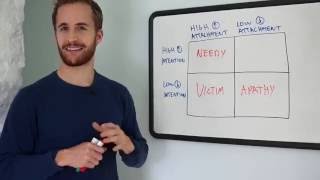
Greg Faxon (speaker) explains a 2×2 performance framework—intention (desire/clarity) vs. attachment (neediness)—to pursue goals without stress. He describes four states: high intention/high attachment (neediness, common among high performers), low intention/high attachment (victim mentality), low intention/low attachment (apathy), and the ideal high intention/low attachment ("champion"). Champions remain committed and focused but separate self-worth from outcomes; Faxon recommends using gratitude to lower attachment.
Chapters
Hey, Greg Faxon here in this video I want to talk about how to perform at your peak. How to pursue your goals without clutching onto them so tightly that you get stressed out or you lose your mind, or you choke in the moment. And this concept I'm going to present to you today is what I've heard from readers of my new book is their most favorite concept, right? So it's helped a lot of people and I wanted to make a video to dive in a little bit deeper and to show you visually what it means to have a high intention and a low attachment. Alright? So that phrase high intention, low attachment, something I learned only in the past couple years. And it just brought in all of the personal development kind of knowledge that I had heard and finally organized it into one mantra. And I realized, okay, in the past, when I've gotten caught up pursuing my goals, when I've gotten stressed out, here's what was happening. And when I was kind of apathetic, when I didn't have that fire, here's what was happening there. And what is the optimal place to come from when you're building a business, when you're filling programs, when you're looking for a new career, when you're trying to meet reach a health goal? All right, and so if you'll see on the top layer we have high attachment and low attachments. This top access is attachment. And then on the side we have high intention and low intention. All right, so let's just go through these one by one. High intention, high attachment. What this means when I say intention is I'm talking about desire. I'm talking about how badly you want something and how clear you are on what you want. So for example, if I want to lose 20 pounds and I really want it, it's important to me I know why I want it. And I have a vision that I'm heading towards. That's an example of high attachment. Okay, Excuse me, that's an example of high intention. But high attachment is when I need that goal to be okay, alright? So there's a way where I'm attached to achieving that outcome, attached to the result. And I'm coming from a place trying to motivate myself, you know, using anxiety really by convincing myself if I don't get this thing, I'm not okay? That's how I used to drive myself, you know, back in the early days when I was an athlete, from first couple years as a wrestler, I thought that the best way to motivate myself was to be really attached to My goals, right? But what happened was it froze me up, it made me needy, it made me clutch at the result. And especially in business, you know, if you're someone who has a client based business, your clients sense that if they sense a neediness or attachment to a certain outcome, it's just human nature to want to run away from that, right? So high intention, high attachment. And an example of that is if you were, if you're on a date with someone with high intention, high attachment, usually not a very fun time, right? Because you can feel their neediness, they want it to work out so badly that they're kind of staking their self worth on it, right? And it's repelling to us. So with high intention, high attachment, we get needy. And this is where most high performers start. You know, they're really committed to their goals, but where they go wrong is they get attached to those results happening. And that's when people freeze up and that's when people choke. Low intention, high attachment. All right, what's this type of person with low intention and high attachment? So this is the victim. All right, so the victim doesn't really know what they want. They, they're not being intentional about their life or their business or their career, but they're attached to it going well, right? This is kind of a funny place to be where they get attached. They get really upset if something doesn't work out and it feels totally out of their control because they're not being intentional about charting their own path. This is a bad place to be. Right? Low intention, high attachment is not where you want to be because you don't really know what you want, but you just get frustrated when things don't go your way. Alright, so let's talk about low intention, low attachment. Alright? Low intention, low attachment. This is where apathy starts to come in. Alright? Apathy for me. You know, I don't think low intention is a great place to be. You know, if some people, the way some people interpret Buddhist teachings, for example, they make it seem like, oh, it's bad to desire, it's bad to have wants and aspirations. That's not how I read into, you know, Buddhist type methodology. And I think that it's actually not the greatest thing to have low intention because I think high intention is what drives us as human beings. It's pursuing a certain goal, it's wanting to grow, it's wanting to achieve, it's wanting to perform at your peak. It's wanting to unleash your potential and your gifts into the world. In some way. But low intention, low attachment, they got the low attachment, right? In other words, they're not needy, they don't really care either way, but they also aren't aiming for anything. And so people in low intention, low attachment usually seems like they're missing a sort of five. They're just kind of, they're not ignited, you don't know what they're driving towards. And as opposed to someone on the date who has high intention, high attachment, who's needy, this type of person kind of like doesn't carry their way and it's not in an attractive way because it doesn't feel like they even want this, right? So we have neediness, victim mentality and apathy. None of these are really optimal performance state in life or in business. What we want is high intention, low attachment. And this is where the champion lives. Alright, When I talk about being a champion in your life and being a champion in your business, the champion lives in high intention, low attachment. Here's what this looks like. The champion, unlike just the high performer who's attached to their goals, has learned to be okay regardless of the outcome. They're coming from a place of being whole and being grateful and just being solid. They just have a solid base. And so they win that wrestling match, if they lose it, it's okay, right? If they get that relationship or they don't, it's okay. If they get that business result or they don't, it's okay. Fundamentally now, that doesn't mean that they aren't laser focused on their goals, that they don't have a desire, that they aren't going to pursue something when with all that they have, alright? But the key is they have a low attachment. So not only are they flexible in how they get there and how they achieve a certain result, they're also ideally flexible in whether the result even happens at all. Because they trust themselves enough and they trust the world around them enough that they know at the end of the day they're good. They don't need an external result to determine their value in the world. Now, high attachment is usually a symptom of low self worth, right? If we don't really feel worthy, if we feel like we're not enough, then we're going to need those goals in order to make ourselves feel okay. We believe our value comes from what we do and what we achieve. You better believe I'm going to be highly attached. But the champions learn to separate their value as a human being from the results that they get. And so even though they have a high intention to create and serve and, and perform at a high level, at the end of the day, they're going to be okay and they're going to be grateful and they're going to remember what matters. And their worth isn't going to fluctuate when they get a client and then go down when they don't get a client, go up when they, their income goes up. Right. Them as a human being, they're separate from those external results. So how do you, you know, if you're in one of these zones, how do you get to this, to high intention, low attachment, to this champion zone? Well, you just need to know where you are, right? And you're either going to need to raise or lower the level of attachment or raise or lower the level of intention. And for most of you, most of my friends, most of the people on my email list are high achievers. They're probably going to be more prone to high intention. High attachment is where they get stuck. And so my encouragement to lower your attachment is to ask one question, which is, what am I grateful for right in this moment? And when you're in gratitude, it takes you back to a place of saying okay, right? Everything fundamentally is okay, even though I don't have this thing yet, and how am I whole right now already? And then from that place, getting back after pursuing your goals.










