I Made 6 Figures in Profit Last Year Using This Online Business Model
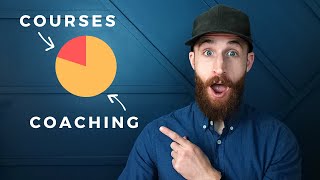
Greg Faxon made $114k profit last year combining high-end one-on-one coaching with an automated beginner course. He charges premium rates for six-month engagements, drives leads through SEO blogging to a 5-7k email list, and keeps his offer simple: coaching or the course. The model works but doesn't scale easily since it depends on his time.
Questions this video answers
$276,000
$114,000
$58,000
14 total (six-month engagements on average)
8-week beginner course; $997 up front or payment plan (three payments of $297)
Chapters
There is no perfect business model. And your job is not to be convinced that there is a best business model out there, but to choose the one that works for you. So the question I want you to ask is, what is the pain that you want to sustain? What is the type of suffering that you want? And that's the business model you should choose, because that's where you're going to have an advantage. All right, so in the next 10 minutes, here's what we're going to do. First, I want to share with you what the 8020 business model is, the story of how I discovered it. I'm going to share with you a breakdown of exactly where my revenue came from in 2022 using this model and the pros and cons of the 8020 model. So you can decide, is this for me? Are there parts of it that I want to take? Is there a philosophy in it that I want to adopt? So let's dive into number one. I started coaching at 22. In my mind, I was like, this shouldn't be a problem. This is going to work fine. So I was like, all right, guys, I'm a life coach. And this was everyone else's reaction, including my girlfriend. She laughed in my face. So I tried all these different things. I was like, how am I going to make money? How am I going to make this work? Tried group coaching. I wrote a book. I did live events, did affiliate marketing. I did some high end one on one. 80% of my revenue came from the high end one on one. When I really sat down and took a look at it. So I got rid of everything else. I. I doubled down on what was working for me. For those of you who've heard of 8020 principle, right, 20% of their time, effort, energy yields 80% of the results. So this is what I doubled down on. Since then, I've coached a hundred plus clients for between 3k and 20k. But about five years in, I was kind of tired. I was like, man, I mean, I'm tired of repeating myself. Same things again and again to beginners in the one on one conversations. It also was time intensive. It took energy to support people in that deep way. So I launched a course called Coaching Business Bootcamp and I just focused it on beginners. And the launch went well. I got a bunch of clients, we ran it live. But after the launch, I still felt tired because it was exhausting to do the launch. So I ended up making it evergreen. I put together a webinar, put together the whole funnel with the Timers and all of that. It took some work, but in the end it created a passive income stream for the business that I could use alongside the one on one. And so here's what my business looks like now. It's 80% one on one coaching, 20% that passive online course. So 8020 model. Okay. And I kind of think about it like this. Spongebob and Patrick, right? Spongebob is the energetic one. So for me, when I'm feeling energized to do the one on one coaching, it takes a lot of work, but it's fulfilling. And then Patrick's the lazy one, kind of works on the side. It's a good duo, it's a good pair. So that's what works for me. That is the 8020 business model. That's how I discovered it. Let's actually talk about a breakdown of my revenue last year so you can get a sense of what's possible if you want to take this path. So first we'll dive into the course side of things, the 20%. All right, so it's a DIY course. People go through it. It's eight week. It's a beginner course for new coaches. It's 997 up front or there's a payment plan for payments of 2 97. I also have an upsell. So I took all of my little stuff and I just put it as an upsell. So that way I didn't have all these distracting a million offers people to buy. It was just the course or one on one. But all the other stuff, I created the book, the courses. People get an opportunity to invest in those after they've invested in the 997 course. It's sold via Evergreen Webinar. So that kind of runs on itself. I've done a couple launches since that original launch, but it's optional. Otherwise it just runs in the background. And it's not as profitable as the coaching, obviously, but it does provide a nice baseline of passive income, which is good. Like there's been times where I've wanted to pivot the business or we fostered a couple kiddos. And so like I don't have as much energy. So sometimes you just want to fall back on that baseline of the passive side and not take on as many one on one clients. All right, so the other side, the 80% is the one on one coaching. This could be group coaching if you prefer that you just want a high end coaching offer for the 80%. For me, it's a six month one on one engagement. This is for more advanced clients. People who are looking to scale up, they want more customization. It's 15k upfront or two payments of $8k. They pay a k upfront and then 8k three months in. And I switch to a monthly retainer after six months if it makes sense to continue supporting the client. I've tried, you know, I've experimented with starting with a monthly retainer. Like we won't even start with a six month agreement, we'll just go month to month. In my mind that would convert better because it's less of a commitment. I actually found when I tested it that it converted worse. People actually preferred signing up for the six months up front, even though it was a bigger commitment, a higher risk because it was easier to sell. It's one thing to say, well, just work month to month indefinitely and I'll be helping you. It's another thing to say, hey, at the end of six months, here's what we can reasonably expect if we both do our jobs. And, and so it actually converted higher clients, stayed for longer. But having them at the retainer on the back end is a nice way to extend your kind of lifetime value of a client. Keep helping them keep making money. I sold the strategy session. So hopping on a free consult, building an overall plan with the client and then saying, hey, if you want my help implementing the plan, here's what it would look like working together long term. And there's more time required with this side of the business obviously, but it's worth it. It's worth it for the case studies you get, uh, the, the relationships that you build. And obviously it's, it's the more profitable part of the business. All right, so 80% coaching, 20% courses. And this is what it looked like by the numbers in 22, 2022 as you break it down. So revenue was 276k, profit was 114k. That doesn't include owner's pay. So for those of you who run like profit first, that profit number does include my paycheck, which is an expense, and retirement, you know, investing and stuff like that, which is an expense. It does include the monthly profit draws, the quarterly profit draws, the part that was passive income. The 20% courses was 58k. And then I worked with 14 one on one clients total throughout the year. That wasn't at one time. Right. There were six months engagements on average each and email subscribers between 5 and 7K. So this isn't like a huge list that I'm working with. You'll see in a bit. I'm not on social media. So that is the source of leads is the email subscribers. I felt a little bit vulnerable sharing the numbers, but I just figured like if someone shares your business, their business model with you and you're thinking about adopting it, you should at least know like, okay, what are they actually doing? Because it can sound like a good model, but if it's not making the type of money you want to make or you need to make, then it doesn't make sense. Or if you have 100 email subscribers right now, you're not going to get to these numbers right away. So where did the clients actually come from? You've seen the business model, you've seen the two offers. Where do the leads come from? Just like offers, I tried all sorts of things for marketing, social media, paid ads, in person, networking, cold DMs, SEO blogging. 80% of the leads came from SEO blogging over the years when I really did an inventory. And one of my encouragements for you all is not to take the 8020 business model, but just to regularly do an inventory of where clients coming from, where's money coming from, what's working. And so I got rid of the other stuff. I went off of social media completely in 2022. In 2020, excuse me, went all in on blogging. So here's how I get clients now. Clients search Google for a keyword that I rank for. They find a blog post, they join my email list, they sign up for a lead magnet, and then once they're on my list, I can invite them to apply for a one on one spot. When they're open, I can invite them to the webinar for the course. All right, so we've talked about the 8020 business model. I gave you a breakdown of where the revenue comes from. Let's talk about the pros and the cons of the model. So first off, it's hard to scale one on one that 80% of the business. That's hard to scale. And actually know this because we tried to scale it this year. We hired a team coach, we had a lower end offer, uh, but people still got one on one support just with the coach. I wasn't coaching them at all and it worked. But man, it's hard. Like a part of that profit's going to the coach. It becomes complex with all this admin. So that part of the business is challenging to scale. People have done it. It's not that you can't do it, but I've personally found it challenging. Of course you still have the 20% course revenue that's infinitely scalable. So if I want Oprah tomorrow, the business can still scale to a certain extent. I'll just have more people joining the webinar. But. But that one on one there is a cap to it and it does require some time. So that's the big con of this model. So some pros works with a small email list because you have a high end offer. If you're only ever selling $100 thing like a membership, you're going to need a big audience to actually make a decent income with that. Great case studies come out, especially of the one on one, but also from the course. Like if you have enough people going through a course, some people who really take action and can get a great deal on that, like they didn't need to hire you one on one they just go through the course. And sometimes I see some amazing case studies from that. Cause it's all there. They just have to implement it. It's simple, just two parts of the business, just two main offers to focus on, two main funnels to focus on. It's 25 hours per week on average that I spend on the business and I'm not on social media, which I love because I found that that was just draining my energy and made me want to compare to other people which like as an achiever was a toxic thing. So lots of pros, not a lot of cons. Of course there are some cons if you just don't like doing some of the things. So if you don't like doing one on one, that's obviously a con. You wouldn't want to do this. You could sub in group coaching for that 80% of the high end revenue. I personally don't enjoy group coaching as much, but I've had clients I've worked with, they love it a lot more. And you get a little bit more leverage with group coaching compared to one on one. This is for you. If you're committed to creating great content and growing your audience. If you don't do that, the 20% doesn't really work. Right. You can do the 80% high end with just referrals or meeting people at live events, you're going to need an audience to actually have a 997 course that's selling each month. If you can provide one on one clients with a significant transformation, you'll like this. If you can't, you're just not going to be able to charge high enough prices for that 80% high end coaching offer. You could, or maybe you could do it, but it won't last because it won't be an integrity. That case studies won't match what people are paying. And if you don't need to make a million dollars, you know, I think this model, there's ways you could scale it to the million dollar mark, but that one on one is always going to be a bit of a limiter. So if you want to build a huge empire, eventually you probably aren't going to be using the 8020 model. All right, so those are the three things we want to chat about. If you feel like, man, this is a lot to take in. I kind of like the model, but I'm also like, you were talking pretty fast. You shared a lot with me. There are ways that you can get support with this. If you're interested in implementing parts of this model in your business, you can go to gregfaxon.com apply I have on that page some criteria for if we could fit to even have a conversation. So make sure you check that out to see if you'd be a fit for the one on one coaching. And I also have a link on that page to the webinar that we run that sells the course. So if you just want to check out that funnel, see what it looks like, or if you think you might be a fit for the course, you can do that too. A little bit about what's possible with this model. Some of the people I've supported. Grace is a performance coach. She hit her first six figure month while we work together. It's kind of humbling as a coach when you start to have clients who are doing better than you and you're like, oh shit, like. But that's the mark of a good coach, right? Is you're supporting people to shortcut your process. Chase is a leadership coach, cut his monthly hours in half and doubled his revenue using a lot of the parts of this model. Ryan's a financial Coach, developed a two month wait list. He sold out his first course, 20 people, 997 each when he launched it. Andrew Kaplan doubled his full time salary. He was working in tech, working for himself in the coaching business. Rachel quadrupled her prices, got 12 clients. Gemma, who was on the last roundtable, had her first 40k month when she started implementing this stuff. And we worked together. So I want to leave you at this. All businesses are loosely functioning disasters and some are profitable despite it. Everyone you hear has this finely tuned model and when we share it, in hindsight it seems clean, and it seems like it makes a lot of sense, but the process of getting to it can feel really messy. And that's why it's important to do that inventory. Do the 8020 analysis even if you don't end up at my 8020 model that I have. Thank you for your time and go to gregfrastin.com apply if you want more support with this.










