"If You Want To Be An Entrepreneur, Start Acting Like One." - Greg Faxon At Occidental College
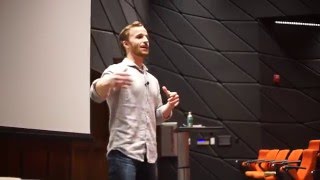
A keynote-style talk by Greg Faxon describing his transition from a consulting job to full-time coaching and entrepreneurship. He argues now is the best time to try entrepreneurship, outlines four entrepreneur archetypes (startup founder, lifestyle entrepreneur, freelancer, intrapreneur), and gives practical advice for getting started today by cultivating 'true north'—the overlap of passions, strengths, and market problems—and by taking brave, proactive steps even before feeling ready.
Chapters
Greg is a high performance coach who catalyzes radical and lasting results for entrepreneurs all over the world by helping them find and do work that unleashes their full potential. He's interviewed some of the biggest names in the business, like Seth Godin, and his newsletter is currently sent out to over 1,000 people. Just eight months after graduating from Wesleyan University, Greg left his high paying consulting job to build his business full time. In this talk, Greg will walk you through, step by step, exactly how he went from working behind a desk with Microsoft Excel to working from an 80 acre farm property with CEO clients twice his age. He'll also reveal why now is the best time to work for yourself, the four different types of entrepreneurs, and how to get started today, even if you don't know what you're passionate about yet. So without further ado, please help me.
Give Greg a really warm welcome. Thanks, Cliff. Got it? Yeah. All right, so I have two talks prepared for today because I didn't know who was going to be in the crowd, what you guys wanted. So the first talk is kind of more informational, it's more academic. There's some good stuff in it. The second talk is going to change your life. Raise your hand if you want the first talk. There's always one. There's always one. Raise your hand if you want the second talk. Cool. All right, so can I tell you a secret? So lean in a little bit. Lean in, Lean in. So they're the same talk, but. But the ending's different. Okay. The ending's different because how you listen to it and what you do with the information I give you is going to be the difference between whether it's information and transformation. Right. We've all been to talks where we feel really inspired and then we leave and we don't really do anything with it. Okay. And so Cliff was generous enough to have me over, and I really appreciate your time. And I. And I want to make sure that everyone's served as much as they can be served. So I want you to be an active participant in the talk. I don't want you to be sitting back passively. And at the end, we're going to dive into some of your biggest insights. I brought some books, so I brought some prizes for you guys, whoever is most forthcoming with the end. But I want to hear some insights. I want to also hear some actions you're going to take. And obviously any questions, is that fair? Okay, cool. So some of you in the audience right now, if Cliff wrangled you into it or if you saw the Facebook page or event, and you decided it was for you. You probably at some point have considered becoming an entrepreneur or building your own business or at least being entrepreneurial. But what you're probably struggling with is like, where do I start? Like, you feel stuck. What does that even look like? And you see different things in the media about what entrepreneurship looks like, and that's obviously not where you're at right now, because you're in school, so you're figuring out, okay, what does that look like for me? And how can I build a life and business or just career around work that I love, where I make an impact and I get paid well for it? My vision for you guys is that two or three years from now, if you were to call me up or send me an email, you'd be like, greg, I wake up every single day and I'm fired up. I'm pumped because I know I'm going to a job or I know I'm starting my business that day with purpose, and I know it's using my unique gifts. That's what we all want, right? We want it to be like us in our work. And I know that's achievable, because I was exactly where you were about three years ago. I'm 23 years old, and three years ago, I was sitting in a chair just like you guys are. I wasn't here. I was at Wesleyan University, and an alumni came to speak with us. And he was an entrepreneur, and he had built this tech business, and he was running a team, and he was like, guys, right now is the best time to become an entrepreneur or to at least try, because you have the most freedom that you'll ever have in your life. You don't have a family, you don't have kids. You don't have a mortgage. So theoretically, you have the most freedom. And I left that talk, and I was like, yeah, man, I'm going to be an entrepreneur. I could totally do this. And I left, and I went out with my friends that night, and. And I kind of forgot about the talk. And one year later, I accepted a job at a consulting firm. And part of me was like, you know what? This is good. I'm on the path. I got into the good school, I got the good job, and my parents are pumped. My friends think I'm cool. I even graduated a semester early so that when they were all graduating, I was getting flown to Brazil first class. And I thought I was a badass. But deep down, I knew you refused the call. A Little bit. You kind of sold out a little bit. And one month into that job, I remember moving a number from one Excel spreadsheet to the next. And I was a little bit brain dead. And one of the partners walked by in my firm at a corner office. I don't know how I landed. It was a small firm. I don't know how I got this stuff. I was fortunate. But he walked by my office and he was like, hey, Greg, how's it going? And I was just real with him. I was like, you know, it's kind of mind numbing moving number from one Excel spreadsheet to the next. And he said to him, I'll never forget, he said, yeah, you can't go to the boardroom right away. And those words changed my life because it hit me, I was like, am I going to wait 10 years to make an impact? And would that be the impact that I wanted to make? Because if I didn't want to be where my boss was at, why am I on that trajectory? And I didn't want the life that he had and I didn't want to spend my days the way he was spending them. So I started to wake up at 5am I started writing articles on personal development, psychology and business and all the stuff I always geeked out on. And I didn't know what that was going to lead to. But then I started doing little Talks in Washington D.C. little personal development workshops. And then I started actually taking on some coaching clients. And I didn't know what I was doing. I didn't really know what coaching was. I just knew I liked having powerful conversations with people that inspired them and that held them to a higher standard that helped them achieve things that they hadn't achieved before. So I started this and slowly I actually started to make some money. So six months in, I made $1,000, which was like, cool because I'd never made that type of money before. But then it was like, well, you can't really do that full time because it's six months, $1,000, you're not quite there yet. So that's when I hired my first coach. And I was like, I'm a coach, I should probably have someone who. So I get how this works. And in our first conversation together, I remember I was telling her about all the stuff I was doing and she said, greg, it sounds like you're working a lot on your logo and you're thinking about URL names and you're tweaking your website, but it doesn't sound like you're actually doing that much coaching. If you want to be a coach, you need to coach. And so she gave me a challenge. She said, all right, I dare you to have 50 conversations for free with people in your network doing what you're doing, getting better as a coach, and maybe some of them become clients. So I was like, man, alongside my full time job. I don't know. That's a lot of conversations. These were like 90 minute, two hour conversations. But that night, I put the word out on Facebook. And that one Facebook message changed the whole trajectory of my life and career because I wrote up this Facebook message. Cliff probably remembers it, and I was like, hey, guys, my coach threw down the gauntlet. I need your help. Here's some of the things we might talk about in this conversation. You don't have to prepare. We'll just dive deep. And I ended up scheduling 50 conversations in three weeks. So this was alongside my consulting job. So you can imagine it was kind of busy. I was working on nights, I was working on weekends. I might have squeezed in a few between the conference calls with the door shut. And I remember one day, this was stressful because I remember one day, one of my co workers was like, greg, you want to go get coffee? And I don't drink caffeine. Really? But I was like, okay, I just need to get out of the office because I was stressed. And I remember walking back and I was drinking my coffee and I could feel the adrenaline start to build in my body because if you don't really drink caffeine, you know how, like, it really affects you. And so I have like a coaching call and then I have like a conference call, and it was too much. And I could. I was feeling like my heart was beating out of my chest. And I was like, holy shit, this is like, not that good. And so at that point I was like, are you really cut out for this? Because I was hustling hard, I wasn't getting clients. And I was like, you know what I need to know. It's like one of those things in your life that you're like, I don't know if I'm cut out for it, but I at least need to try so that I know, because otherwise I'm going to regret it. And that night, I got my first long term, six month high fee coaching client. And I remember I collapsed to the floor and I hugged my office chair like the goofiest thing. And I was like, yes, because in that moment, I had become an entrepreneur. And the month after that, I Doubled my income, made twice as much as I did my consulting job. I got more clients, I left my job. It was a busy month. And since then I've moved out of D.C. to that 80 acre farm property in West Virginia with my partner. And we live on the Shenandoah River. And I don't go into the corner office to work and excel anymore. I just keep my bathrobe on and talk to awesome leaders who inspire me. And I'm definitely still on the path, definitely needs to grow more. But I want you sitting there just to know that your dream might not be coaching, personal development or anything like that, but two or three years, a lot can happen if you make it happen. So there's three takeaways, three lessons from that story that I want to dive deeper into to address specifically where you are now. The first one is why you don't have to wait to be your own boss, why now is actually the best time. The first reason is because of what that alumni told me, which is now you have the most freedom that you will ever have in your life. Some of you may have student debt, so you can argue with me on that, but you have a lot of leeway. You have a lot of autonomy right now, especially as you leave school. And I'm not saying you have to quit school right now or you have to get a job and quit the job. You can build on the side, that's fine, but you have the most freedom now that you will ever have in your life. The second reason is because, I don't know, I forgot the second reason. So we'll figure out what it is. So the second reason is that it's easy to get complacent. It's easy to be like, I'll do that later. But then you get the nice consulting job, you start buying nicer stuff, and now you have golden handcuffs, which is just what we call. You have the good salary and you're kind of comfortable. So that dream you have is a little bit harder. And I realized that one month in, I was like, every week I stay here, it's going to be harder to leave, so I better make an exit plan right now. The third reason is because all of you, even if you're not, even if you're sitting there and you're like, I don't really want to have my own thing. That's not important to me, you're all going to have to be entrepreneurs in a sense, because that's just the way that value is going right now in our economy. If you Think about for our parents, what was valued for our parents. Parents, if we go way back in the industrial age, was valued was physical labor, People who could leverage that with machines. When we moved to the intellectual information age, what was valued was informational labor, intellectual labor. So people had these big shelves in their office with thousands of books, and they were like, yeah, I know my stuff. And that's what made them money. But now information is abundant because it's abundant. It's not scarce. Because it's not scarce, it's not valuable. We've moved into the connection age, and in the connection age, what's valued is emotional labor. What's valued is bravery. And what's valued is people who can move forward without necessarily knowing what's going to happen in the face of uncertainty. If you look at anyone, like we were talking, Cliff and I were talking about devonturrell and futuristic. I don't know if any of you know, but they're from the LA area. And when I see their Facebook post, it's like a rapper and a singer. I'm like, these guys are brave. Like, they just hit record and they go like, they don't know if it's gonna work out. They don't know if everyone's gonna hate it, but they go, and they're making a lot of money right now, and they seem to enjoy their work. So the name of this talk was bravery pays, right? And I mean that literally. So now is the best time to become an entrepreneur. The second takeaway is that there's not just one type of entrepreneur. One of the things that held me back was like, well, I don't want to have a startup named Babel that's like an app. And then I have sell it in an IPO for a million dollars and. And I build this team like that. I don't really want that, but that's what I kept seeing in the media as what an entrepreneur was. And my concern for you is that if you don't think you fit that schema and you don't realize there's other types of entrepreneurs, then you'll just be like, I guess I'm not an entrepreneur then. There's actually four types. The first type is that startup founder. It's the Facebooks, it's the Ubers of the world. And what startup founders value is scale and innovation. So if those two things are like, yeah, that's my thing, then it might be your path. Oftentimes it requires outside funding. You can bootstrap it. But oftentimes it requires investors you're usually looking to sell out. It's two or three years. You sacrifice your whole life for it. The second type of entrepreneur is the lifestyle entrepreneur. So I consider myself a lifestyle entrepreneur. The thing about the lifestyle entrepreneur is they value the lifestyle. It's right in the name. And so what they're trying to do is build a business that fuels the lifestyle that they want. So instead of the startup founder that often has to sacrifice their life for the business, at least in the short term, the lifestyle entrepreneur is like, no, the business is part of my life. I want that to weave in completely and fuel the life that I want. I'm a lifestyle entrepreneur because I'm not going to spend two or three years of my life doing shit that I hate or straining my body or stressed out. Because if you die on year three, that kind of sucks. It's like you made it to year three, but that was right when you were going to get the sale. And, and I know that you can say, well, you've got to think more long term. But for me it's like every moment. I had a friend named Zach McLeod. We went to high school together and he was a football player. And in one of the games he got hit and he went down. They airlifted him out to Spalding in Boston and he's still alive. But they had to take out a part of his brain that determines speech and short term memory. And so when I see him, he can't talk to me and he can't remember when the last time I saw him was. And this guy was full of potential, like this guy you knew was going to make a contribution. And so one of the reasons why I don't wait, why these three years were so busy, was because it's like shit, if I died right before I left the consulting job or right before the business sold, or I had something happen, that would really suck. All right. The third type of entrepreneur is the freelancer. What a freelancer values is freedom. Again, it's in the name. But with a lifestyle entrepreneur or a startup founder, you're actually not that free because you have employees or you have investors, or if your lifestyle is, you've woven it into your life. But a freelancer is just client based. So you could think of a graphic designer or communications consultant. These people just love their craft and they'll go from client to client. If you think of the word freelancer, it came from a knight without a king. A freelancer who would just go around from kingdom to kingdom. So that's another type of entrepreneur. There's pros to it. The cons are you end up trading time for money, a lot, and you always are looking for the next client. The pro is that it's like your pure craft. You don't have to worry about really the business around it so much. The fourth type of entrepreneur is the intrapreneur. So this is kind of like a hip thing to say these days. But an intrapreneur is just someone who uses the organization that they're a part of to create a venture, so they leverage that organization that's already aligned with their mission. So if you were to start a club at Oxy, that would be a form of entrepreneurship because you were using Occidental's resources to create your venture and to create value. But what all four of these have in common is that they're proactively identifying a need and. And they're filling that need. They're solving the problem. So if you want to be an entrepreneur, you need to start acting like one. The first part is choosing which type you want to be. You don't want to build yourself a second cage. You don't want to leave that job and build a successful business. And everyone around you sees it successful, but you hate your life. And you don't get any sympathy because they look and you have a successful business, but it doesn't fit who you are. So really important to be intentional. And that extends beyond entrepreneurship and building businesses. It obviously applies to your career too. So the first takeaway is why now is the best time to work for yourself. The second one is that there are four different types of entrepreneur, not just one. The third big takeaway that I want you to get is that you can get started today, even if you don't know what you're passionate about or what your idea is. It held me back so much because I was like, well, if I just had the idea, I would go do the thing. But I don't know what the idea is. But what you miss when you have that type of logic is that 99% of businesses change completely from year one to year two to year three because they're still trying to figure out who they're actually serving. And until you get into the fray, you don't really know what it's about. There's this idea of finding your passion. I kind of think that's bullshit, because passion is cultivated. Like, think about anything you love in your life. Did you just wake up one day and it was like an epiphany, like, oh, this is what I'm meant to do with my life. That didn't happen for me. I didn't love wrestling before I became an all American. I didn't love wrestling on the first day when I was getting my ass beat by older kids. I had to suffer for it and get better at it. And then I really started to love it. And so as you're thinking, what do I want to do with my life? Like, you're not going to come into this world knowing, and no one's going to tap you on the shoulder and tell you. In the root of the word passion, if you look up one of its meanings, it is suffering. Passion is suffering. It's what are you willing to actually suffer for? And so you need to cultivate passion. And that just starts with doing things that excite you. So follow your excitement. And there's three parts of getting started, and you're looking for the intersection. So I call it your true north. And I have a. When I send the email, I'll send you guys a resource for this if you want to dig in deeper. But your true north is basically the intersection of your passions, your strengths, and the problems that people have in the world. Because the problem solving is what ultimately gets you paid. If you're, like, really passionate about kayaking and you're really good at it, but, like, you just paddle around the river all day, like, you may be able to turn that into a business, but it's not a business yet because you're not solving a problem for other people. That's what people pay for. So that's how to get started. If you remember back to my story, when I started blogging, I didn't know what the business was going to be. I just knew that I needed to start being brave and put myself out there and start to crystallize my thoughts a little bit more and be proactive. Because we've been trained to react like you've been trained to get picked by colleges and to get picked by employers. So this entrepreneurial mindset of being proactive instead of reactive is really different. And it's probably going to push you outside of your comfort zone. If we think about a runner, someone who is a runner. Are people born a runner or is it just someone who runs? Just someone who runs. Right. So if you want to be a runner, run. Like, you don't have to sit there. Like, no one sits there and is like, I want to be a runner, but, like, where would I go in the neighborhood? And like, two months later, are you running it? And you're like, I'm just planning out the running. All you gotta do is run. Like, if you want to be a writer, write. If you want to be a runner, run. If you want to be an entrepreneur, start acting like an entrepreneur. Part of that is taking action before you're ready. The last point I want to leave you with before I dive in with all of you people who are willing is that I am maybe a few pages ahead in the business career book, But I'm just like, you guys, I'm just where you were. So oftentimes we hear a speaker and we're like, oh, their story is unique. And I want to let you know that with this bravery thing, all I've done is do one scary task after another. And the interesting thing about fear is that often the things that scare us are the most meaningful to us, and they're the most likely to get us paid, because if they weren't meaningful to us, we wouldn't be scared. Like, I don't get scared when someone says, like, think about robbing a bank. Like, it's not real to me. Because it's not. It's not something I think about. But if someone says, like, hey, like, I got you a room at Oxy and you get to talk about entrepreneurship, I'm like, oh, that was kind of scary for me. You know, I've never done that before, which is what I know that I need to do that, because that's going to be the next step. So as you're thinking about this True north stuff and you're trying to align it all, I encourage you to think about, like, what's that thing that you've kind of been avoiding? Like, it's kind of been in the back, but you've kind of been avoiding it. And what's one thing that you could do to move that forward? Because chances are that's probably what the world needs from you right now. All right, so that's it for the talking portion. So thank you for listening. Yeah, thank you. Thank you.










