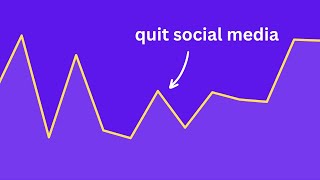
Greg Faxon describes quitting most social media (Facebook, Instagram, LinkedIn) and the effect on his online coaching business. He explains his motivation (reclaiming time and mental space), the transition plan he used (build alternative leads via SEO blogging before quitting), and the outcome: a short-term dip but a long-term recovery and growth, with a reported 49% revenue increase when comparing three years before vs. three years after quitting. He ends with three practical steps for others and a note that he still uses YouTube.
Questions this video answers
February 2021.
March 2020 (as stated in the transcript).
A 49% increase in revenue comparing the three years before vs. the three years after quitting.
Five long-term clients.
Approximately 15 days per year.
Chapters
Three years ago, I quit social media. I deleted all my accounts, Facebook, Instagram, LinkedIn. And I did this even though I run an online business that literally got its start with a Facebook post. That's how I got my first five long term clients. In this video, I'm going to share with you exactly what happened to my business after I left social media, including real numbers. Because that's what I would have wanted when I was making the decision to quit. But before we get into that, I want to explain why I left social media in the first place. This is your brain. This is social media. This is your brain on social media. Okay, so maybe that's a little bit extreme, but we do know that social media has an impact on our mental health. A 2017 study in the American Journal of Epidemiology found that increased Facebook use was correlated with a decline in mental health and well being. Facebook started when I was in middle school, and when it started, it was actually called the Facebook, which is a little bit weird when I. But I made a profile when I was in high school and here was one of my first profile pictures. I checked Facebook all the time in high school. I remember posting something and then just hitting refresh on my screen, hoping that my crush would like it. It's that addictive quality that makes it hard to delay gratification, to focus, to get things done in the real world. But weirdly, that's not why I decided to quit. Fast forward 15 years from middle school and I'm running an online coaching business full time. Occasionally I'll meet someone who isn't on social media at all and I'll feel jealous. But I don't see any other examples of entrepreneurs who have quit. At the time, it just didn't seem realistic. I was still running Facebook ads. I was still getting clients from social media. So instead of quitting, I tried a bunch of different things to limit my usage. I turned notifications off, I took the apps off my phone. I even installed apps that would limit my usage during certain hours of the workday. And it all helped. But there was still something that was bothering me. I felt like I was giving my power away to these companies. I didn't like feeling like I had to be on social media. One day I came across a post from Alexandra Framzen. I thought, finally a fellow entrepreneur who's actually quit social media successfully. And something in her article really hit home. She said, the average human lifespan is 39,420,000 minutes if you're lucky. How are you currently spending Your life minutes. Where are they going? Are you okay with that? So after reading this article, I did some math and I realized that if I was spending an hour a day on social media, that over the course of a year, I. I was actually spending 15 days on social media every year. And I started to think of other ways I could spend that time. I could be hanging out with my wife. I could be in nature working out, writing. There's so many other things that I'd rather be doing. That's when I decided to leave social media for good. I deleted all my profiles, so I was never tempted to log back in. Before I quit, I did one key thing to protect my business. And we'll get to that in a bit. First, let's look at how quitting social media actually impacted my business. I officially left social media three years ago in February 2021. And then I deleted all my accounts in March 2020. The year before I quit had been my best year of business to date. I'm not sharing these numbers to brag. My business honestly isn't that big. I just want to give you real numbers so you can make a decision based on data. Now, the year I Left Social Media 2021, my business actually saw a dip. That's when I started to wonder, had I just made a huge mistake? Perhaps I made a mistake. Here's where we have to rewind though, because I didn't just quit social media without I wanted to make sure I had a source of leads outside of social media first. For me, that was SEO blogging. So I'd write these really detailed articles, all based around a keyword that my ideal clients were searching for. And over the years, I got more and more clients from those articles. When I decided to quit, I learned everything I could about SEO so I could replace those leads that I was getting from social media. Of course, there is still a transition phase. I didn't make up 100% of those clients right away, and we can see that in the first year 2021 stats. But hang on, because the story isn't over yet. I knew the transition wasn't going to happen overnight, and so I decided to stay the course the next year. 2022 was actually a record year for the business. And this felt so good because this is what really proved to me that I'd never have to go back to social media. So if you do decide to leave social media, you can't just look at what happens the year that you quit. You have to play the long game. In fact, let's compare the three years before I quit social media to the three years after I quit. There is actually a 49% increase in revenue after I quit. Okay, so is it possible to build a business without social media? Yes, but you need to go about it the right way. Here are three steps I'd recommend. Number one, get clear on why you want to quit. The big motivator for me leaving social media was to get back control of my time. But you might have a different reason for wanting to quit. You'll also need to work through some of your excuses for not quitting. So, for example, you got to know, how are you going to stay in touch with friends and family if you're not on social media? All right, Number two, build an alternative source of leads. The only thing you really need to do in order to quit social media is to just delete your profiles. But if you run a business, things are a little bit more complicated, especially if right now you're relying on social media for your clients and customers. Fortunately, there's a lot of other marketing channels you can use. Live events, ads, referral, partnerships, content marketing. They're all open to you. Choose a strategy that fits your personality and build that up on the side. Number three is decide how hardcore you want to be. I decided to quit social media cold turkey and just delete all of my profiles. But you don't have to do that. You could just delete the apps from your phone, or you could limit your usage to certain hours. You can use an app like Freedom for that. Just know that the more you limit your usage of social media, the more reliant you're going to be on alternative marketing strategies. So I have a confession to make. Technically, I'm still on one social media platform, YouTube, which you obviously know because you're watching this video right now. I'm still off of all the platforms. I left LinkedIn, Instagram, Facebook. But I found over the last year that I was enjoying YouTube more and more. I was watching videos while I was biking in my home gym, and even occasionally I'd, like, go through shorts, even though I try to limit my usage on that because it's pretty addictive. But the cool thing about quitting social media is that it allowed me to come back to it with a blank slate. So at one point I tried out TikTok and I realized, like, I just didn't really like how I felt when I was using it. And that's the benefit of quitting. You're not just quitting forever, necessarily. You're Giving yourself a step back to reevaluate what actually adds value to your life. Even if you just go off social media for 30 days, I think you'll come back with more intentionality. So what have I really learned over the last three years? Well, I read an article a long time ago, and it was by a journalist named Paul Miller. He quit the Internet for one year. So not just social media, but email, websites, everything. He said in the article that he was hoping that not using the Internet would sort of make him into a different person, that it would totally change his life. But what he found was that he ended up distracting himself with other things instead. I think we all have these fantasies of leaving our addictions behind, whether that's social media, drinking, video games. We kind of create this idea that without those, we'll become totally different people. And sometimes that's true. But in my experience, quitting social media didn't change my life that much. My business continued to grow, but I needed to market myself in other ways. I got a little time and focus back, but I still felt anxious and depressed sometimes. And I stayed connected with friends and family, but it still took an intentional effort to stay in touch. So in a lot of ways, I accomplished my goal. I wanted things to stay the same, just without social media. And I think if those are your expectations, that's very achievable. If there's one piece of advice I can give you, it's to make a plan for what you're going to do instead of social media. Because deleting your profiles is easy. It's what happens afterwards that you need a plan for. If you want help figuring out what the best marketing strategy is for you, I have a quiz@gregfaxon.com quiz. Thanks for watching.