Why This Consultant Is Shutting Down Her Successful 6 Figure Business - Interview with Tamara Kemper
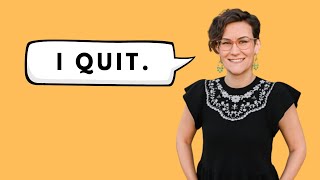
Tamara Kemper shut down her six-figure consulting firm, Process Mavens, to return to solo work. She realized scaling meant sacrificing presence and personal alignment, and that growth for its own sake wasn't worth the cost. She's choosing a business that fits her life instead.
Questions this video answers
Process Mavens.
January 8, 2024.
She will be a solo consultant in 2024.
Six years (the business will be six years on the 19th).
Chapters
I recently got a chance to sit down with Tamara Kemper, who's a former client of mine, and talk to her about her decision to shut down an extremely successful consulting business called the Process Mavens. First we discuss why she decided to go back to being a solo consultant after scaling up her team. And I really like this part of the conversation because I had a similar experience in the past year. Then we talk about her transition from being an optimizer to trusting what life has in store for you. And finally we talk about the difference between having robotic self discipline versus leaning into discomfort. And I think this distinction is really key. So let's dive into the interview.
You know, it started out kind of like, oh, I'd like to have, you know, a little more time in my day, or ooh, wouldn't it be nice to not work on Fridays? Like it was, it was little things like that, like, ooh, could I make a little more time for myself? So of course you hear from all the gurus, delegate and scale and, you know, do all this stuff to get that time back as an entrepreneur. So I was, I was like kind of focusing on those things and incrementally trying to make moves to do it. And then I invest a lot in both time wise and financially in my own personal development and personal growth. And one of my coaches did an activity, and in that activity, out of my mouth came, oh, I want to work 20 hours a week. Which was this just like radical thing for me anyway, like to even say that out loud, like, gasp. So someone could do that, you could do that and be a worthwhile member of society. But once I said it, I knew it was true. I was just pushing myself to the edge of my capacity. I was not present with my family. I was not able to do the things that I wanted to do that make me feel joyful and make me feel alive and make me feel like myself. I was just feeling like every day was just kind of getting more and more kind of crunched in. And so I started pursuing that. And the leap that I took was to hire an operations director. And I did that earlier this year. The thinking behind this was like, okay, I'm going to hire this operations director because that's the play, right? You invest in that right hand person, you give them clarity of the ownership for the operations, the day to day. Then the idea was I would be able to get other people to kind of fulfill some of the work that I was doing and be able to create more of that space for myself. Great, simple. So Easy. So easy. And so I did that and I found a great person and she was a great fit for our team and for the role. And it was working. And I was putting in place systems that were helping me to get all of my work done. So I had like clarity, you know, all the things you're such an expert at, Greg, like, you know, prioritizing your day, prioritizing your week, getting your tasks done. And she was helping me like actually execute on creating this scalable system for the work we delivered. And it's like, oh my gosh, it's going. And it was going. And I could feel like up, we were going, like up the roller coaster. Click, click, click, click, click. And in being pushed in this pressure cooker of like, okay, we're doing the thing, I was feeling some things because I could see, I could see what it was going to take and how my life was going to be and what it meant for who I needed to be and what I needed to let go of in order to be in that thing we were creating. And I actually attended. So my moment of clarity and it really was like, clear. I attended an all day session for a group I'm in where it was like a strategic day where we were supposed to be thinking about the future strategy of our business. And so now I've got all of this stuff in place. I'm executing on this big plan and I'm now having to put to paper like, what is the strategic plan? And it was like, there is just a big, no, no, no, I don't want to do this. No. It felt simultaneously awful. And also, you know that beauty of like knowing, knowing what you want or maybe just knowing what you don't want. Once you're clear, man, decisions are so easy. Action steps are so easy. Like when you really are aligned to what you want to do, everything just falls. Even if it's hard, even if the conversations are hard, even if the actions you have to take are hard, they're so easy because you just know, well, this is what I need to do. So that's kind of the place I'm in right now. I'm in the action taking place where it's like, I know where I'm going, but like it feels very uncertain.
So when you say you know where you're going, what is the part that you're clear about?
So the part that I'm clear about is I told my team very recently that I'm going to be a solo consultant in 2024. The interesting part about it Is, yes, I'm going to be keeping on a handful of clients in that capacity of the work that I was doing, processes. But I don't know exactly. I don't know exactly what I'm going to be doing.
If you. If you demand to know what the next step is before making any changes to the current thing, very hard to get that clarity.
And I think the most important work that I can do right now is to. Be. Be present with my team that is trying to also find their next steps. Some have clarity on that, and some really cool opportunities have opened up for some of my team members as a result of this, like, really magical kind of things, aligning beautifully kind of things, and some are less clear. And so having those conversations, helping them get to what they want to get to next, connecting with clients and past clients and making sure they have what they need and they know what's going on with us, so they don't feel like they're kind of being left in a lurch. So that's really where my energy and my attention is right now. I don't want to. I don't want to, like, just drop this and walk away. I want to really have a beautiful ending to what was created over the last six years will be six years on the 19th. So it'll be fine. Something's going to open up that's going to be great, and I'm excited to see what that is. But it doesn't have to be clear right this second.
That makes sense. Yeah, it sounds like you can be clear. And then there's trying to do right by your team and the clients, and you got to unravel it all. You might have that clarity one day, but the next day it's not. You're not done. Yeah, I can really. I can relate to that. And I feel like I've had a similar journey this year as well in terms of kind of like scaling up and then be like, oh, I don't know. I don't know if this is what I want. And then. But the process, scaling up, you created a lot of pressure and then people that you want to be loyal to, and it's hard to unravel that. It's not the easiest thing.
It's not. And I think you sometimes have to experience it to know that you don't want it or to know if you want it. I shouldn't even say it as a negative. Like, you can look at it all day long, but until you do it, you almost can't. I don't Know, it's really hard to put yourself in that experience of what it really feels like.
That makes sense, something you said. It kind of reminded me of this James Clear quote that I've been thinking a lot about.
Yeah.
In the long run, the people who succeed are the ones who want to live the lifestyle that precedes the results. Stop asking what results do I want to have, Start asking what lifestyle do I want to live. It's common to want results. It's rare to want the lifestyle. In my head, I liked the idea of a vision of a larger team and kind of being the true CEO and holiday parties and stuff with the team, but I don't really want the lifestyle that comes with that type of business. But it's hard to know what that lifestyle is until you start down that path.
I don't know the joy that I got out of having a team. I don't know if your experience is similar, but the joy that I get out of having a team is that personal connection that I have with my team. There is nothing I love more than that, than just the joy of spending time and knowing each person and having that unique experience with each person and helping them get to where they want to go and helping them thrive in their roles and all that good stuff. And the more people you add to your team, necessarily, the less of that you can have, because you're meant to go be doing other things, which doesn't mean you can't still have those relationships. But it's like it was turning all of the things that got me excited upside down and kind of. I needed to kind of step back and allow my operations person to do those things. Well, those are the things that I really loved. And it's just so funny because there's this playbook for how to do this. You know, this is the way you have to do it to scale a business. And I think I was kind of trying to see if you could do it a different way. I was kind of almost. I told people a while ago, like, I was kind of trying to prove a hypothesis that you could build a business, build a scalable, profitable business in. In a more human way, in a more organic way. And ultimately, I think we did it. And also I just didn't want to keep doing it. I don't know, it's like, it's not terribly rational or logical, but I think when you know your. Well, your lifestyle and your. Your talents are aligned, you know, and when they're not, you know, that too. The way that I live most Beautifully and in the most service to everyone and everything is through expressing myself in my day to day life 100%, as authentically as I can. So like, when I see that truth, when I see that clarity of like, oh shoot, I don't want to run my business anymore, you know, being thoughtful and responsible, but moving and responding to that truth and not just shoving it down and going, oh, well, that's just not. I can't do that or even coming on here to talk to you about this and like just, you know, sharing this with you openly. Like, these are not things I would have done six months ago. They're just not. I've been playing a very, very, very, very long game of when at being the optimized person.
No more optimizing.
No more. No more optimizing.
It's big.
And I think that's part of why process and like that whole world. It's like it's hard for me now to even like. Because a lot of the why behind process is about this. Efficiency, optimization. Go faster, go better. And I'm not saying there's anything wrong with it. There is not. There is a place for it. But me in this moment, that's not where I'm at. Like, I'm, I'm in a different, I'm in a different sort of vibe going on right now. And so there are wonderful consultants who are very much in a great place to help somebody with that. And I would much rather they are served by somebody who's really excited about that and really joyful about that and really wants to help. Because I'm like, I'm gonna be sucking you into a different place. That's not, that's not what you're trying to do. So it's not better or worse. It's just being where you are.
I feel like I very much have like one foot in both worlds right now. Maybe I'm in process because I'm still very much have like an optimizing side of me that's still feeling like very alive. And then I have this like enoughness, it is what it is side of me. I don't know if that's, if that's health, a healthy middle way or I have somehow haven't taken the full leap. But we'll see.
I mean, it's interesting you say that. I definitely feel that like when I read your posts, when I read your emails, I feel that that other side, that, that not the optimizer, the, the okayness. I, it's very different. It's a very different tone from, you know, maybe when we first met.
Yeah.
Which isn't better or worse. Again, it's just. It's different and it's. It's like allowing that other side. I've been thinking and talking a lot about this idea of, like, the feminine and the masculine energy. Not men and women, but the masculine being more of that pursuing energy, and the feminine being more of, like, the allowing and the opening energy, relax, release, all of that. And of course, you know, a lot of the scaling, business, entrepreneurial stuff, it's very masculine. I mean, it's. Of course, that's kind of how it is. I told myself that that's how you should be. You should be somebody who has a very organized task list and gets all their work done and prioritizes their work and knows what their quarterly objectives are and knows what their this is and know what they. And like, that is the way you should be. And as it turns out, we don't all have to be like that because some of us are way better at doing other things really beautifully. And it adds color and texture and necessary depth to the whole picture of what we're doing. And that's not just in, like, families. That's in business as well. You know, maybe not everybody needs to be awesome at managing their task list. Gasp.
I'm imagining a scenario. There's like, there could be two people, right? And one has one type of gift, let's say, like one person super organized and. And like, really great with processes. And the other person is, like, very visionary, disorganized, but, like, very charismatic. And you could have, like, that visionary person feeling that they actually should be more operational or organized and trying to squeeze into that box while the other person feels like, oh, the cool thing is visionary and charisma trying to squeeze into this box. Now you have two people who really aren't in their strengths and would it just been good collaborating, you know, doing their thing? I'm really interested in that too. And I think it's like what you spoke to at the beginning, that idea of alignment, trying to get aligned with what you're actually supposed to be doing, get in the flow of things instead of like, you know, fighting upstream because you think you should be doing it a certain way.
I work really closely with organizations, so I see this all the time. All the time. People in roles where either they're in the wrong role, period, or they're in a role where, like 50% of their job is miserable for them because they're being asked to act so far out of their core competencies. But the problem is because we feel like we need to cover up who we really are and pretend like we're really organized or pretend like we're really good at, you know, giving a talk in front of a room or whatever it is that is our role that we think we need to be. We, like, we just suppress the part of us that's saying no. Like, we have an internal no that looks like resistance to doing, like, listen, there's a million reasons you can resist tests. I'm not trying to give like a whole, like, say that that's the reason for everything. But if we're not ever letting ourselves really acknowledge what isn't working for us, we're just going to keep doing all the stuff that isn't for us and we're never going to really find what we're great at. And I feel like that's. Honestly what I'm doing right now is like I'm peeling away everything so that I can re identify what I actually love doing and create something that I don't know is going to use that. Because I know I can help people. I know I can help. I can be a part of creating something good. And I, I want to do it in the, in the most. I mean, I guess I'm optimizing, Greg. I'm optimizing, but just in a, In a very.
Where they're just. We're right in there perfectly.
Yeah, yeah, yeah. But we're not doing a bunch of junk that, like, I, you know, I would give myself such a hard time about not writing a blog post or not posting on social media. It's like, I didn't want to do any of that. I didn't want to do it. And so why am I trying to force myself to do those things when what I really want to do is jump on a call with you and just have like a really interesting conversation. And even like sales conversations. I would love having sales conversations because we were just solving problems. And so it's those kinds of things. I'm like, I don't know what kind of business that is, but I'm going to figure it out. Figure it out. I don't know.
My coaching style has been changing recently along these lines because I feel like what I've sort of learned is that mostly people will come into a call feeling like I should be doing something a certain way. I'm working with a client now who wants to have a better sense of her capacity, like, to know when, when can I say yes? To a client versus we're starting later. Keeps getting overbooked and then you don't have time to work on the business or to do marketing because you're just in client stuff. She felt like she had to have like this thing in Asana that was like this very nicely, like, client process, which probably actually not the worst thing to have, especially if she wants to build the team up so everyone's on the same page. But she wasn't doing it because she felt like it needed to be this thing. And that thing that she thought it needed to be like was really wasn't how she naturally operated. Anyway, the conversation was sort of like. I was like, where do you go right now to figure out your capacity? And she's like, why go into my Google Calendar? And I was like, why don't you just have everything represented better in your Google Calendar so you could just look at would just accurately convey, like, you'd have the client starts here all day, event marked free like all the way. Three months later, you'd see all the active clients. You could schedule in little focus times for them, but it could just be on the calendar and like, I don't know, you might have to change it later maybe, I don't know organizationally, but it should work for a long time if you had it there. And she was like, so excited to do that because she was like, oh, cool. That's how I operate any. That's how I think about it. But I felt like I had to go into asana or something to build it. I'm like, you're never going to do that. Basically, anyone who comes to me with a problem that feels like there's friction or resistance, it hasn't been done yet. I'm like, basically, you're never going to do that. So there's something that we could approach it differently that would probably feel easy to you. Like, if it feels hard, it may be a sign that it's getting forced.
Maybe what you're talking about, I think, is trusting yourself again. Gasp. Right. Like, I feel like coaches are amazing for helping you see blind spots and giving you a push when you already are aligned with what they have shown you. So, Greg, I remember when I worked with you and I was like a closet consultant. Like, nobody knew I was doing it. And you made me post the thing on Facebook and I wanted to barf because I didn't want to tell anybody. It was like so uncomfortable. But I knew that that was what I. I knew that that was the barrier. You gave me a Tool. You cheered me on and then you went and you pushed me. And plus, I was investing money in the program with you, so it was like I was already investing in me. But you were just like a. You were, you were the one that could help me to operationalize the pieces that I didn't have. But I was already on board, I was already aligned, and I was already in. And so lo and behold, it worked. I got my first five figure client. I like, you know, my business grew like it was a direct result of that action you helped me take. I've done other programs where the coach has tried to have me do things, and there is a no. And I'm, I am like, not gonna do it. I know I'm not gonna do it, and maybe I'm not even admitting it to myself. And when that happens, it's just a waste. Like, you might as well not even do it because you're like, you're never gonna do it. That's the thing too, is like calibrating your sensitivity to your yes and your no. So, like, if you could just know what your no is right away, you could save so much time and money on coaching and consulting and like buying the latest, greatest thing because you would just know, like, yeah, no, I'm not willing to do that. I'm totally not willing to do that. So, no, I'm not gonna buy that program.
It's a very different mindset, I feel like, to say I'm going to put my attention and intention on how do I get in the flow of life what's already going to. What's, what's kind of wanting me stuff. It's wanting me to do how it's trying to support me.
Yeah.
As opposed to how do I make all of this happen with my plan and my actions to conform life to the idea that I have. And you can definitely do number two to a certain extent. I mean, I feel like it can be tiring. I was having a conversation the last interview with Madison Arnhold, who's like an intuitive life coach, and she was talking about this idea of intuition. How do you know when something's resistance because it's a no versus it's just resistance because it's like uncomfortable. Like you, you had resistance to posting the to come, like sort of coming out as a consultant. But it wasn't because there was a no and out of alignment. It was more just like, ooh, is this scary? You know, so there's an emotion coming up.
It was an exciting. It was an exciting no.
Yeah, totally. So I feel like that's something that I'm definitely not great at yet, but I'm trying to get better at, which is putting more my attention, more on what's trying to happen versus what would. What should I be making happen?
So I'm really curious about this too, what you've just said. So you would be on my short list of about three, three or four people in my life who are just, like, crazy disciplined, focus, and able to execute on what you put your mind to. Right. Like, man, if I needed to get something done, I would call Greg Fax, and I would just do that. So yay for you. Right. That means you can get a lot of things done, and that means when you get clear, you go get it and great for you. And I've really, you know, I've. I've looked up to you in that way, and I've been jealous of you in that way and all the feelings. Right. Like, why can't I be like Craig Fax and what's wrong with me? And what you just said is really interesting because it's almost like, because your discipline muscle is so good, you can. You can almost act past your intuition. You can push past your intuition to do it anyway. Whereas for me, I am not. That's not. That's very difficult for me. And so what it looks like for me is procrastination. So if I have a no, often I will go in that direction, but then sabotage myself. And so then I just kind of stall. So it shows up differently. But, like, it's just interesting how those superpowers we have, if we're not also listening or the weaknesses that we have, we could be listening to those. And then they become. Are they really. You know, they're just talents again. It's talents. So when you're aligned, man, you can't be stopped. And when I'm aligned, I can't be stopped either.
Mm.
But when we're not aligned, we're gonna do very different things, you and me.
Yeah. And I can really relate to, you know, there's times I cannot discipline myself out of something that's just not feeling exciting to me.
I'm sure. Yeah.
And then, of course, because that has felt so core to my identity, then I'm like, I can't get stuff done. So then I feel bad about myself. Or then I'm like, I'll almost go too big picture in analyzing what's out of alignment. I'll be like, I guess my whole business must not be like, if I was really enjoying my business, I wouldn't be having resistance, which sometimes is the case obviously, as we've seen. And sometimes it's like, not sometimes that's also an escape of like. No, there's, it's one specific tweak. It's like this program. Do you know what I mean? It's this way of doing it.
Maybe what you're calling discipline, I would call ability to stay in discomfort. So sometimes I think discipline can sometimes be turned on and it's this machine and you think you just keep doing that and like, because I decided that this was the thing that you do, then you just do this. You have to do it because you're disciplined. And if you don't do it, you're not being disciplined. So that is to me where it becomes problematic. But I agree with you because you're not, you're not being sensitive to what's here, like what's actually happening right here. Because it may not make sense for you to continue being disciplined in that thing if that thing is no longer for you. So I just, I'm careful sometimes with that word. But what I do wholeheartedly, see is that we as a society do not want to be uncomfortable. Of course, right. Like biologically we don't want that. But now we've created so many ways to escape any form of discomfort that when it comes up, we run. And I think that's what discipline does, is it? It gets you comfortable with being in discomfort. Because guess what? That is part of life and that's how you grow. That's how you are able to do more and to have a richer, more beautiful life is that you can, you can be with anything, you can withstand anything. And so those practices that may be called discipline, that's for me what their, what their purpose can be is to help you to sustain discomfort and not have to run away. You know, when my, this morning I had an altercation with my 7 year old daughter and it was intense, like very, very intense. Anybody who's ever had to hang out with kids knows I know, you know, and I have choices in that. Either I could react and give her that same energy back or I can just be okay. I can be disciplined and be okay in sitting there with her and with kind of let that storm pass and together we can figure out where we go from here. Were some boundaries crossed? Yes, they were. But dealing with it in that moment was not going to be the effective solution. I needed to be disciplined. I needed to withstand that comfort, discomfort. And so I think that's the part that we're really aiming for. And we have to be careful with the routines in making them too rigid because they can become. You can numb yourself to what the world is presenting you.
What appears to be lack of discipline or lack of willpower is often a lack of alignment because people who look disciplined are usually just doing what they wanted to do anyway. Like, if a tattoo artist draws four hours a day, someone else who might not even enjoy drawing if they tried to get themselves to be better at drawing without it coming from really, like an internal, intrinsic motivated place, be like, wow, I really. This is taking a lot to have me draw every single day. The other person's like, oh, I'm just drawing because I want to draw. Of course.
Yeah. And there's seasons of what you want too. Because I remember when, when you and I started working together, like, I was very energized and very excited about following this spark of. I want to figure out this business thing. This is really fun. This is really exciting. So it's not that that wasn't right for me, period. It's. It's that that was amazing and joyful and wonderful and I had to do the things that would get me to that place because I wanted to go in that direction. If I was still trying to make myself do those things. That would be so silly. So silly. If I was, like, posting on LinkedIn every week right now, why would I do that? That's not, it's not the thing I'm trying to do.
Yeah, it's okay to, like, let your, what you do change as you change.
Because I think that there's a lot of us like type A, and I'm not putting you in a category. I'm putting myself in, like, type A. Like achievers who got all the good grades, who did all the things. Winners. Right. Who feel like when you're not doing the thing, everybody else who's winning is doing that you're a mess and it's just not true. And I think underneath all those layers, like, we're all so different. So how you became a winner and how I became a winner, how this guy became a winner, it looks so different. But we're all there and we're all looking at each other and we're like, well, he sure seems like you've got it figured out. Why can't I do? It's like, because you're totally different. You're totally freaking different. I get you're never going to do it the same way. And so stop and now just be yourself and see what happens, because you're probably going to be just fine. In fact, you're probably going to be better than fine. I don't know. I'm excited.
If you enjoyed that conversation, I think you'll love the interview I did with Madison Arnhold where we talk about how to tap into your intuition and how to know the difference between just discomfort, that's fear, and uncertainty that you should lean into versus something that's a no for you. So go check that video out now.










