Considering B Corp Cert? Here's The Slam Dunk Case For You!
Tim Jones walks through B Corp certification: the assessment covers governance, workers, community, environment, and customers across roughly 200 points, with an 80-point threshold to pass. Most first-timers score around 50. The audit queue runs 6 to 12 months, and you'll need to recertify every 3 years and legally lock in your mission.
Chapters
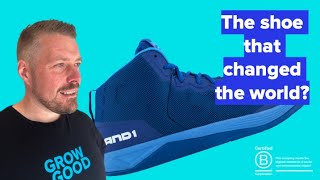
There we go. I hope the lady who said that recording in progress gets paid for every time that it gets played on Zoom, because she will be a Kabillionaire by now. Cool. All right, well, we will kick into it. So, yeah, thank you all for popping along to this little event called the slam dunk case for B Corp. Because I kind of reckon that really everyone should be a B Corp. That's my theory and I'm sticking to it. Some of you I've met, some of you I've met in a previous life. For those of you who don't know me, Kia ora. I'm Tim. I run this little business here, Grow Good, based in Ototahy, Christchurch. But going to the world, we are a. It's quite scary to say that we're a global consulting firm who specialize in helping companies get through the B Corp certification. Grow Good Certified. I don't know if you can see behind me, there's the little red certificate just behind my shoulder here. That is my B Corp certificate. We certified as B Corp number six way back in 2020, 2016. Since then, yeah, we've helped. I think it's close to around about 25% of the current New Zealand B Corp community certified. And we're currently working with, well, up to about almost our 90th company that we've helped get through the assessment. So we're doing some pretty cool stuff. Anyway, enough about me. You are here to learn a bit about B Corp. So what are we going to look at? Well, we're going to start off with just getting really clear on what B Corp actually is because there is sometimes a little bit of sort of fake news or a little bit. Bit confusion. There's. There's a couple of other names out there that people sometimes, yeah, aren't really sure if they're talking about B Corp or not. We'll spend a good bit of time just looking at what the journey to certification looks like to make that really, really clear for people. Because again, there's sometimes a little bit of uncertainty about how you actually go, go through the certification journey. And then we will kind of finish off the session. Well, my part of the session looking at some of the trends that are driving the rise of interest in B Corporation right now, because that's definitely happening. And then, yeah, I'll say I'll finish off by looking at what I call the ROI times two, because there is a return on investment potentially in terms of doing B Corp, but B Corps are also doing some good. And so there's hopefully a return on impact for you as a B Corp. All right, so I like to start the journey by going into the dark mists of time and connecting you to what I call the creation myth story of B Corporation. So is anyone on the call a basketballer or got friends or family who's a big basketball fan? There's normally one person who knows something about basketball on a call, but not this time. That's cool. So if you did, or if you had someone in your friends or family who was a basketballer, they would typically know this brand. And this brand is called and one not Andy. And back in the late 90s, early 2000s and one was pretty much second only to Nike for basketball apparel sales globally. And that was kind of really driving the company was, you know, let's just try and beat Nike. And it was, I guess, what you would describe as a traditionally very successful business, as in it made a lot of money for the people who owned the business and were shareholders. And that was all working really well for them. And.
The reason why this is relevant to B Corp Is the guy who was the co founder of AND one went on to become the co founder of the B Corp movement. And that was because on September. September 11, 2001, his sister was trapped in the Twin Towers in New York. So J. Cohen Gilbert is the guy. His sister was trapped in the Twin Towers. Luckily, she was one of the people who got pulled out. She was one of the survivors. And then about a week or two later, one of his close friends and one passed away. Now, for some of you of a certain age range, you will know of Monty Python and some of you who are particular Monty Python fans, you might remember the wet fish sketch where they're sort of like slapping each other in the face with a big wet fish. I call this moment the existential wet fish to the face moment. And it's not uncommon that it happens to people in their sort of late 30s to early 40s when you have some kind of significant event in your life, either potentially death of a family member or close friend. I think a lot of us in Canterbury had this moment post earthquakes where we had literally a bit of a bit of a metaphysical shakeup. So he had this moment where he kind of realized, well, hang on a minute, we're just trying to chase Nike and we're just trying to make as much money at all costs. And really, is that what life's all about? And after a few moments of reflection, he kind of thought, no, maybe it isn't. And so I know there's a couple of you on the call who are sort of sustainability experts. And, you know, I guess in the late 90s, the idea of any sort of corporate social responsibility was fairly radical at a large company level. And Jay started looking at the business and started to think about, well, how could we do more good on the journey? Like, rather than just trying to chase Nike, rather than just trying to make as much money as possible, what if we actually started looking at how we impact people around us? So they did things like instigating a employee ownership scheme to give their staff some skin in the game. They were ahead of the curve in sort of, you know, before Google in terms of bringing in yoga and massage therapies and treatments to their staff during the working week. The company was based in Philadelphia and large pockets of low socioeconomic deprived areas. So they created their own foundation that did outreach programs and offered leadership programs to at risk youth to try and get them onto a better path. They started looking at their supply chain and they thought, well, hang on a minute, like, what's everyone actually being paid in our immediate supply chain? Are we paying people, or are our suppliers, our tier one suppliers, paying people a good wage? And having done all this, the business went from strength to strength. You know, everyone loved them. The employees loved working there, Their suppliers thought they were fantastic. And the company started performing. It was performing just as well financially anyway. Fast forward to 2005, and Jay has kind of had enough of trying to take on Nike, and he decides he wants to sell the business. So he takes the business to Wall street and he shows it to the goes to see the Wall street bankers. And the first thing the bankers do is look at all the numbers and they go, hey, look, Jay, we know your brand's amazing. Everyone knows your business. It's great. But the numbers are terrible because you're giving away all this equity to your staff and to this charity and to the planet and to your supply chain. So we're going to stop all that. So they stopped all of that, went on to sell the business. And after that sale went through, Jay, I guess, felt pretty shallow and hollow that he' of sold out to the man when he kind of thought he didn't want to go do that. So after that, he got together with his CFO from and one called Bart Houlihan. They've got great names. And one of the bankers from Wall Street, Andrew Cassow. And over a couple of whiskeys, they kind of thought, look, why don't the three of us get together and we'll either buy a business or start a business, and we'll really hold true to these kind of ideals and these values that we'd put into. And one. And I guess a few glasses of whiskey maybe turned into a few bottles of whiskey, because they eventually thought, well, hang on a minute. What if instead of creating one business, what if we created a movement of businesses globally that aim to be the best for the world, not the best in the world? And so that was 2005, 2006, and that was sort of where the idea for B Corps came from. So the B in the B Corp. Stands for benefit. So beyond just maximizing your shareholder return, what benefit does your business provide to the broader society? And so certified B Corps are this new form of business that is seeking to balance purpose and profit. So rather than maximizing shareholder return, you must consider the impact of your operations on your workers, your customers, your suppliers, your community, and the planet. And to do that, you go through. I know Caroline's jumped on the call. She'll be talking later about her experience. I like to call it a rigorous but achievable process to get certified. And once you are certified, you will be independently verified to have been operating at the highest levels of transparency and accountability when it comes to your social and environmental impact. So that is what B Corp is all about. Beyond it being a pretty little. I don't think you even get a red certificate anymore. I'm not sure what color it is. Mine's so old and faded, who knows? But beyond it being a little certificate that you can put on your wall, which I guess is kind of like a verification of the good that you're doing, that's kind of fundamentally what the core part of the framework is about. It is also a movement in a community of businesses. I'll talk about some of the numbers within the community later on, but it's generally and genuinely quite easy to do business with other B Corps. All things. All things being equal, it is a commitment. It's a commitment for you as a business leader, business owners saying, yeah, look, we are going to step up and we're going to do the best that we can, and we're committed to being better over time. And lastly, it's an impact guide. It's a really, really useful tool just to have a look at your business, where it's at currently, and just kind of go, what actually? How are we? And where could we be doing better? You know, where are some of the gaps?
All right, so one area of confusion that sometimes crops up Is some people go, oh, but hang on a minute. You've talked about B Corp, but there's this B Lab. Isn't that a competing certification framework or system? It's not. Some people think it is. So my business is a certified B Corp. Caroline, who will be talking later on, she works for a B corp and has a almost B corp that she runs.
If any of you want to go and get B Corp certified, you'll become a certified B Corp. B Lab is a non profit organization that basically runs the certification framework and is also responsible for community building of the movement globally. And there are a bunch of B labs around the world, our regional one being in Melbourne, B Lab Australia, New Zealand. So some people hear this B Lab thing and think it's like a competing certification or a completing framework. It's not. It's all part of the same thing. And B Lab has a vision. And that vision, which is kind of like the vision really that all the B corps and the B lab community are pushing for, is to create. Sorry. The vision is that all people will benefit from an economy that builds community and regenerates the environment. And so for some businesses, it's typically more obvious how they can have some kind of impact environmentally and less so socially, whereas other businesses, it's more obvious how they can make some social impact. And for a few businesses, it's really obvious how they can maybe do both. But stepping up to be a B corp, or be a Wannabe as we call you right now, it's kind of just thinking about, well, you know, which side of that ledger can we have the most impact on? Maybe immediately. But fundamentally it's about all of us as a community pushing for this kind of end state. Excellent. All making sense so far, hopefully. Cool. We'll save questions for the end and there will be plenty of time for some questions. Cool. All right. But we're going to throw it back to you. So who do you think can certify as a B Corp? All right, so who can certify? Who reckons? Obviously Bronwyn's not allowed to answer because she used to work for a B Corp. So that's unfair. She is unfair advantage on that one. So hopefully she didn't give you the answers, you know, just like hand them over. Cool. So who reckons? Yeah, who can certify as a B Corp? Can anyone be a B Corp?
No.
Graham's a pretty hard no. Any advances on that? Nigel? Sorry, Nigel.
Because he's seen it before.
Cheating.
Does anyone think anyone can be a B Corp?
I'll say yes. Excellent. So I guess it's kind of. Yeah. Not everyone would be the correct answer. So typically firstly you need to be a for profit business. There have been some charities that certified, but it's. You typically need to prove that you majority trade for your revenue rather than being reliant on funding or donations.
Pretty much any industry except there are some industries that are what are called controversial industries. So casinos would be one example. So B lab have kind of made the decision that you could be the most socially and environmentally responsible casino. However, you're still a casino. Therefore we don't. We just see that the, the core thing that you provide has such an existential threat that we just don't want you to be the best version of that anyway because we just don't think that really you should be here.
Generally any geography. If you were in Russia currently, you would struggle to get on the certification journey. They are part of a sort of global moratorium I guess on global ban. Currently pretty much like I say, any legal structure other than charity. And the other thing is you need to have been in operation for more than 12 months for you to actually click submit on the certification. We have been working with a handful of startups recently who've kind of actually used the framework to build the business and then as soon as they've got to the 12 month mark they've. They've clicked submit. Yeah. So it's pretty broad church in some ways and for me it's more about mindset and intent rather than particularly who you are and what you do other than obviously the limitations as described. And that's why we're seeing companies of all sizes and scales. So Danone is one of the world's biggest companies globally. They have gone through and have certified their regional business units. So Danone Asia Pacific is a B corp. Recently Unilever Australia, New Zealand certified as a B corp through to businesses of mine, you know, my size where pretty much up until recently it's been just me. So it really is about mindset and intent, about you wanting to be a B corp and you wanting to kind of prove that you're doing what you're doing and being part of the movement, et cetera. Yeah. So some notable kind of global examples, Ben and Jerry's. The more ice cream you eat, the better the world gets, clearly. Patagonia, possibly one of the more well known B corps globally. They're one of the longer sort of standing B corps. I think they've been a B Corp since 2011 and one of the consistently highest scoring B Corps as well. And then locally Kiwibank is a B Corp. A lot of people don't know that. Toitu, Envirocare, B Corp. A lot of people in the sort of environmental impact space will have heard of Toitu. They do carbon certifications. Eagle. I always give them a shout out. They were the first B Corp in New Zealand. And Etique, who were B Corp number two. Does everyone know Etique, the solid bar, health and beauty products? They're kind of one of my just favorite B Corps because I'll talk about it a little bit later on about why they're my favorite B Corp. But yeah, they're a really high scoring B Corp. Now Bronwyn mentioned that in their group they, they mentioned the N word, which is the nespresso word, which some people kind of have some, some moments around that. I think what we'll do is we'll hold that to the end for like the end of, at the end of my session we'll do a quick Q and A on some specifics and then Caroline's going to be talking about her experience having helped two companies go. She's so greedy. She's helped two companies go through B Corp certification. So if there's specifics about the journey of certification and we'll maybe hold those questions to Caroline's as part of the chat. So if you were going to create an assessment tool that looks at the social and environmental impact of a business, what would be the five areas that you'd want to look at? So in other words, what are the five areas of assessment for the B Corp certification?
Stopping.
Yep. So workers is one of them Community? Community, yes.
Environmental? Yes.
Governance.
Oh, someone, someone knows the assessment when they're saying governance because no one ever gets that.
And what's the.
Community?
We've had community, suppliers, sits on the community. What's the, what's another thing that every business needs? It needs workers. It also needs. It needs customers. There we go. Cool. So if we look at that.
So yeah, this is a snapshot of the actual dashboard from the B Corp impact assessment. If you go on the B Corp journey, you will get very familiar with the word bia. It's like just get grained in your head. So this is the snapshot of the bia. So yeah, governance, workers, community, environment, customers. And then the disclosure questionnaire is kind of like the final screen, pre screen before you get to the verification stage where teacher kind of just asks you a few questions that if you slip up on you get a preemptive see me from the teacher. So it's like, oh yeah, I forgot we were selling those endangered parrots the other month. Oh yeah, we should probably declare that, you know, if there's any sort of dodgy stuff that you're doing that gets captured on the disclosure questionnaire. And yeah, like I say, you'd get a, a kind of preemptive see me from the teacher in that case. So if we look at the impact assessment slightly in a slightly more granular level. So governance looks at mainly ethics and transparency. So do you have a code of ethics? Do you have a mission statement? Do you have basically a declared sort of higher purpose that you're pushing towards? Transparency is more around reporting. So beyond, you know, within the New Zealand context, you know, you have to do your annual accounts. That's kind of it really in terms of reporting if you're a smaller business. Obviously if you're a bigger business you might have other considerations. But in general, as long as you do your sort of tax returns, you're kind of pretty good to go. And you don't even have to show the staff how you're doing financially. So the transparency looks at are you sharing information internally around financial performance, but also are you sharing externally performance around how you're doing socially and environmentally? And then within that, do you have KPIs internally within the company that supports hitting those KPIs workers? Typically in New Zealand we score really well on the workers because we have what I would describe as very favorable trade winds. So we have, you know, state mandated retirement scheme health care Provided we have 36 stat days a year and holidays and sick leave that you can kind of get as an employee. So we, a lot of the basic compensation stuff we kind of get given the points for in this section, which is pretty good. So it's typically easy to kind of kick on and implement a few little extra bonuses for your staff into terms of compensations, whether it's, you know, private health insurance or things like that, that will just lift you up just like a really high points. The development side of it typically looks at training and development is mainly what they're talking about there opportunities for internal promotion, things like that. And again, most Kiwi companies do pretty well on all of that. Community is a bit of, it feels like they kind of created this estimate, they went, oh, hang on a minute, where do we shovel this stuff? Let's put it all in community because it is a bit of a mixed bag. It looks at local job creation kind of Think might be under workers, but I suppose it makes sense because it's community. It's looking about, are you supporting your local community? It looks at diversity of employment. It also looks at charitable contributions. So are you doing volunteering work, community work or any pro bono or in kind or financial donations to charities. But it also captures supply chain.
It is also worth noting that there is no one assessment, so there is about 70 different assessments that you could take depending on your size, your geographic location and what you do. So I'm just trying to see who we got on the call. Like I know Meredith is from what's. What would be the correct name? Canine Naturalist, how I would describe you. But you've got a bigger entity or something. But you basically sell pet food. Yeah, essentially, yeah. That's great. There we go.
So you and you manufacture it.
That's correct, yeah.
So you would be a manufacturing business, whereas like Caroline's business, S360 is a consulting company, so clearly a manufacturing company. We need to ask you a bit more questions about your supply chain. Where are you getting your stuff from and who's making it and where are you making it? Whereas for someone like Caroline or myself, as a service based business working out of virtual or remote offices, we get less questions around our sort of supply chain because for me it's buying paper, maybe at a computer once every seven years. That's pretty much it. And some online subscriptions for software.
Environment at the highest level is inputs and outputs. So how much energy are you using? Where do you buy your energy from? What are your carbon emissions, what's your water usage and any other outputs that you might have. And again, if you're a manufacturing style company, you're going to have a little bit. You can have more questions under the environment than you would if you were like a service based company. And then the customer section at the highest level is really, it's. Do you have things like data protection, data privacy, customer guarantees, customer warranties? Are you tracking customer service outcomes? However, you'll see around the edges we've got these dark blue boxes with the lighter writing in them. And this is because there's actually two parts to the assessment. So the standard assessment is what I call a measure of your operational goodness. So whilst you are making your fine dog food or whilst you are providing sustainability software consulting services, how much good are we crediting? Like what's the benefit of the business?
And so, yeah, that's where you're being measured on these basic things. Like are we treating our staff well? Da, da. Da da da. The impact business models describe basically where you can prove that you've gone out of your way to create more positive social and environmental impact than you are legally required to do. So if we pick on the etique example again, your basic standard for making a shampoo or conditioner based product is you get some chemicals that could have been tested on animals in some country, potentially you whack all these chemicals together, you put them in a plastic bottle and then you top it up with water and then you can ship it around the world. There's, that's, that's your minimum legal requirement for making a shampoo. Whereas Brianne went, well, hang on a minute, I don't really like the animal testing stuff. I don't really like the toxic stuff that's going into a lot of these chemicals that you're mixing together. It seems silly that we're putting it all in a plastic bottle and then diluting it with water and shipping water around the planet. So she has created a better product that has a massive positive environment compared to the industry norm. So that's an example of an impact business model. And so depending on the company, depending on what you do, it's kind of some companies have been built as a B Corp, you know, from the ground up and they will have an impact, a really obvious impact business model. Others won't have an impact business model at all. And that's okay until we kind of really get in and work with a company. It's really hard for us to tell you whether you've got one or not. But they are there and available and really the highest scoring B corps will have unlocked at least one impact business model. So Patagonia is about a 150 point B corp and I think they've unlocked about two or three different impact business models. You can go on the B Corp website, if you Google find a B Corp or find a B corporation, it should come up and you can go and search for any B Corp in the world and you can see what they've scored and how they've scored their points. So if you're interested in checking some people out, that's all cool. So if we look at them in sort of reverse order, so the health, sorry, that the customer impact business model, if you sell a product that has a personal health benefit, so sporting goods, sporting equipments, some nutritional products, if you can prove that there's a health benefit from that, then you can potentially unlock an impact business model education. So I unlock an impact business model because my job as A consultant is to help people be better in their businesses. And so because we're consulting around business improvement that has a social and environmental outcome, we unlock an impact business model there. The environment one, like I say, Ethique would be the best example really of positive environmental impact. Yeah, we'll go too, more into that. The community one. There's kind of three really common ways that people unlock impact business models there. One is called design to give, which is where you basically give a significant proportion of revenue or profits to charities.
The other one is having fair trade in your supply chain. So fair or direct trade.
And actually, no, those would be the two main ones. There's not three on that one. I'm thinking of workers. The workers one. The main one there that we help people with or we've seen is basically providing employment opportunities to people who've historically been found or have found it challenging to get employment.
There's an. Yeah, there's a couple of examples around that. Yeah. Where they've provided workforce development programs basically to people who historically have been underemployed. But the important one, to know if any of you are like genuinely, really serious about going on the B Corp journey, you need to understand the mission lock impact business model requirement, which is basically a new legal requirement where you have to be willing and able to update your company's constitution to include basically a stakeholder clause and a purpose clause. So if anyone's like really, really interested on B Corp like you, this is a step you have to be able to go through. It's a real go, no go kind of thing. So, yeah, I won't dwell on that too much now, but if anyone's interested, just send me a note and I'll send you some info on that. Cool. All right. So how do you get to become a B Corp? Well, basically what we advise is you start well, you appoint what we call the king or the queen bee. So you have someone within the organization whose job it is to go through the assessment and make sure that all the questions get answered. You have that one person who can go get all the information. Again, depending on the size and scale of the company. If it's just you and the company, then congrats, you're. You are everything as usual. You're making the tea, the lunch, paying the bills, and all the rest of it. If you're a slightly larger company, then yeah, appoint a king or a queen bee and build a team around the journey. That is really, really important to build a team. And then basically what you need to do is go through the assessment and reach the minimum threshold of 80 out of 200 points on the assessment. Now, a lot of people go 80 out of 200. That's not even half marks. How hard can this assessment? Well, Caroline might provide some insights onto that shortly.
Most companies on first attempt, well, the median score on first attempt is 50 out of 200. So to even be scoring 80 out of 200, you are significantly outperforming the wider market.
Basically, once you've got over that 80 out of 200 mark, you click Submit, you get stuck in a queue. That queue is anywhere right now between 6 and 12 months before you get introduced to your independent auditor from B Lab, who will then basically go through your working and make sure that you've answered all the questions correctly that they audit you on. And they will also start asking you for documentation and evidence on some questions. So this is. That's where the audit part comes.
One key tip is a lot of people think that they have to have documentation and evidence for every question. As you go through, you don't. You only need to have documentation and evidence for the questions that you're audited of on by the auditor. So don't get too stressed about thinking about what evidence you might need to provide for every question. They will tell you which ones you're going to be audited on and they will tell you what they want to see. So you go through that independent audit process, so long as you're still over the 80 out of 200 mark having gone through that audit, you get to sign your B Corp agreement, you pay your certification fee, and away you go. You get to put your B Corp logo over pretty much everything and anything. Is that all making sense?
Excellent. Cool. So, but if we look at this, I was having a conversation with Caroline this morning about some other cool stuff that she's scheming on, and we might hopefully be scheming altogether. And you know, for a lot of companies and for a lot of people, they kind of go, oh, you know, one day we might become a B Corp. It's kind of like it's this really aspirational thing that one day when we're big enough, we might be good enough to get them there. But realistically, B Corp is not the endpoint. And if we're to meet the vision that B Lab has set, and I guess the global community of B Corps have kind of set, is ultimately to create some kind of regenerative system. And so if you look at where a lot of companies are, BAU business As usual, your entry point for running a business, pretty much in most places in the world, is you trade legally and you trade solvent. So we make money and we're not breaking the law. Well, that's your baseline entry point, and the vast majority of businesses are possibly at that level. You then move into maybe your corporate social responsibility, where, okay, well, you know, we might be doing some good over here, but please don't ask us about what we're doing over here because if you've actually found out about how bad this was, you know, you'd all be having kittens. So the level above that is B Corp. And, you know, it's a great.
Stepping stone on this journey because like I say, you know, you have to be performing across these five parts of the assessment, and you typically have to be doing okay across all five or really well on two of them for you to meet that minimum 80 threshold. Within that B Corp framework, you've then got the impact business model, which is something like a teak. But then like I say, really for us to be where we need to be, we need to be hitting this idea of a regenerative business. And right now there are not that many examples. One of the best examples globally is a company called Interface. And if you want, if you're really interested in this stuff, if you Google Ray Anderson interface on, or look for it on YouTube, there's two or three really cool keynotes where Ray Anderson, who interestingly had a similar existential wet fish to the face moment that Jay had, he like completely turned their business around and went from being they sell carpet tiles, and he went from the business being massively extractive, sell as many as we can, to actually, how do we sell less and do it in a way that doesn't destroy the planet there? It's really, really cool story. Totally recommend it. All right, so then, what is driving the rise of interest in B Corp?
You know how this is going to roll. You're going to go into a little breakout room. You can have a bit of chat. So you are all human beings. You will all be seeing social and environmental stuff out there that you kind of think, well, that's pretty average. I reckon we could be doing better at this, that. So what are some of the social and environmental challenges that you see out there in the world? And that might be driving businesses to step up, to think about how they can solve it? All right, so what have we got? What are some things out there? What are some environmental things that some of you see out there that you're like, yeah, that could possibly be a bit better.
Consumer driven, Tim. A lot of it.
The demand.
What else? What are the environmental stuff?
Yep. What else? Anything else?
No, anything. What about social stuff? Any social impact stuff that people are seeing out there that they're so passionate about trying to make better?
I've been seeing quite a lot of stuff about like, hiring ex prisoners and how much they struggle to find work.
Yep. So any of you in Christchurch, the Addington Coffee Company, they have a pretty cool program of supporting people out of the justice system into. Into employment, so there's some really good examples of. Pathways is another Christchurch example that I know of a charity that provides wraparound support for people exiting the justice system. They get them into carpentry and then get them some, some opportunities. Yeah. So, I mean, this is the thing, you know, there are a million and one things out there that you see as an individual, whether it's planetary stuff, whether it's social stuff, but underpinning all of it, I think over the last couple of years, you know, we kind of all maybe had a little bit of a J moment during the lockdowns of the pandemic of like, well, you know, actually a couple of weeks without hanging with my colleagues. And I don't really miss the work that much, don't really miss the people that much. I wonder whether I could be doing a bit more with my life. You know, we all kind of collectively walked our dogs to within an inch of their lives and during that we all had a bit of a J moment and like, maybe I could be doing a bit more with my life. Or maybe you could. And this is the thing, because for you as individuals, you are all consumers. So increasingly you as a consumer want to support brands that can prove, and the big word is prove, that they are doing good, whether it's socially and environmentally or both. But you are also employees and so working for the company that you're working for, you're kind of like, well, wouldn't it be cool if we could do a bit more good whilst I'm doing my 9 to 5 or my 8 till 10 or whatever you're doing.
So increasingly, employees are expecting that the employer, the business that they're working for, will have some kind of greater societal and meaningful impact depending on where you are in a supply chain. You know, perhaps if you're supplying food to the natural pet food group, they might say, hey, we're kind of thinking about how we can be a bit better and we'd like you as one of our suppliers. To have a think about that. Increasingly we're seeing a lot of pressure coming through to smaller companies who are then talking to us about B Corp, whether it's right for them because someone higher up the value chain has gone, hang on a minute, we're actually looking at the impact of our supply chain and we're now looking really making some considerations around that. That and then lastly increasingly investors are wanting to know that the money that they're putting into a business isn't going to destroy the planet. So 31 trillion was the 2018 I think it was numbers for ESG backed investments. So environment, social governance backed lending but really bringing it home. As a New Zealand example, this was May last year ANZ basically issued a 100 million Australian dollar loan to Kathmandu which was essentially they gave them access to cheaper capital so long as Kathmandu maintain and increase their B Corp score over time. And the reason why this is interesting and relevant is well A, it's the first and biggest of its of its kind of magnitude of investment that's ESG based lending in New Zealand. But also having spoken to the team at Anz, they basically said we looked at all the different, different frameworks that are out there that we could ask Kathmandu to report against to ensure that, you know, they were doing good. And they basically said B Corp was the gold standard, one that just stood out by a country mile. So this is I guess really the crux of the argument is, you know, and this is why we're seeing such an increase in interest in B Corp is every part of your business or every human that touches every part of your business is increasingly wanting to know what you're doing. And B Corp is the gold standard as far as I'm concerned in terms of independent verification against the global framework to prove what you are doing in terms of your social and environmental impact. And that's why we're seeing a rise of interest in it. And then when we look at the like the ROI times two so the return on impact. So every year B Lab curates its own impact report and it gets to do this because it gets data points from all the B Corps all around the world that the assessment and so B Corp's twice as likely to be offsetting their greenhouse gas emissions compared to their non B Corp peer. 63% of B Corps hire workers that have been from what would be called historically underemployed populations. So exactly what Imogen was talking about just then and 7 to 1 is the average pay ratio for the highest to lowest paid worker At a B corp compared to 144 to 1 average. Anyone know what Jeff Bezos pay ratio is? His pay compared to the lowest paid worker? Anyone have a guess?
It's pretty cool.
6,000.
6,000. 6, thousand to one. You're doing all right really, aren't you? I mean, you know, a thousand to one, you're doing pretty good. Six thousand times the lowest paid worker. Happy days. If your name's Jeff.
But in terms of the economic side of it, you know, I kind of put this in here because I don't always know the audience that I'm getting. Some people are kind of like this kind of do good stuff. Sounds okay, but how does it affect the business? So and this is why I call it the slam dunk argument. Because if you just care about having a better business and being more economically resilient, then you should be a B Corp. So this is from a journal called the Grocer, which is a UK sort of fast moving consumer goods journal. And in 2018 they surveyed the 150 UK B Corps at the time. That's interesting in and of itself because the UK is now almost at 1000b corps. And so that's showing you the growth of the movement in the UK. So they certified those B Corps. B Corps grew 28 times faster than the rate of GDP.
Average growth across the companies was 14% compared to 0.5% growth in GDP across the year. 35% of the company surveyed said that they attracted new customers since certifying and 48% said that prospective staff had been attracted to come and work for the company because they were a B Corp. So that's pretty cool. And then our mates at the University of Guelph, they have this study that they did. So they surveyed all the B Corps that certified across Europe between 2012 and 2018. And as they say here, this paper empirically shows that B Corp certification positively impacts the turnover growth rates one year pre versus one year post certification. So you know, if you kind of just care about making money, then you should really seriously have a look at being a B Corp. But if you care about pretty much anything else on the planet, the people, the environment, environment, and you want to prove that you're doing some good, well then you should probably be a B Corp.
It gets better than that as well. Because.
The last B Corp impact report, or, sorry, the one from 2020. Yeah, 2020, 2021 impact report that B Lab curated, we found some really, really cool stats. 52% of B Corps hired more employees in the middle of a global pandemic. 47% of B Corps had employee growth of more than 15% in the middle of a global pandemic. And two thirds of all B Corps increased revenue in the middle of a global pandemic. Now a lot of people go, yeah, but you know, they were all selling PPE or some kind of COVID related paraphernalia. Well, that's not the case. And we've got similar data that was found from 2008, 2009 post GFC, the B Corp community of businesses were just more resilient to these big external kind of social and economic shocks. And that is why overall it is perhaps the B Corp moment. So B Lab, the B Corp community kind of really launched, like I say, 0506.
It took us from about 06 until 2020 to get to 4,000 certified B Corps. We got from 4,000 to 5,000 in one year. So 2020, 2021. 38% growth in the movement. B Lab actually thought that the B Corp movement was going to come crashing down during the pandemic because typically the first thing that CFOs look at in a economically constrained time is certifications and membership fees, like, we'll just get rid of them. But actually they were utterly overwhelmed with the amount of interest because I think more and more people have had that J moment of actually, what are we doing? Are we doing enough? Which is why I leave it with Rose Macario, the former CEO of Patagonia, who said this really well. The B Corp movement is one of the most important of our lifetime, built on the simple fact that business impacts and serves more than just shareholders. It has an equal responsibility to the community and to the planet. So there we go. That's it from me. Any questions on any of the specific content that I was talking about before we introduce Caroline to have a bit of chat about her real life experience of doing some B Corp stuff?
No. Excellent. Oh, happy days. Let me stop sharing this screen. Cool. Oh well, without further ado, we will introduce Caroline. Hopefully you're still there. Yes, I can see you. So Caroline, who are you? What do you know?
Hi everyone. Thanks very much, Tim.
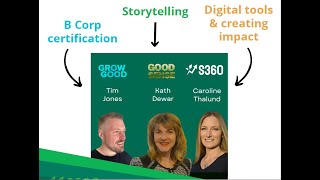
That's fantastic. So, yes, my name is Caroline. I've been working in sort of the broader sustainability space for just over 20 years. And the last I kind of started out in more in the environmental space and then realized that I wanted to see if I could create a greater impact. And then I kind of moved into working with businesses as their internal kind of sustainability person. If you Will. And then instead of just working for one business at a time, I created a software, hoping I could replicate that to many more businesses. So, yeah, and through the last year or so, I've been working with two businesses going through the B Corp certification. And yeah, happy to share any of my experience going through that process. From a teeny tiny startup to a global company, the process might look quite different, or it has been from my end at least. So, yeah, shoot.
Yeah. Any questions.
Or have we just overwhelmed you? If not, I've got some questions that I can ask Caroline.
Anyone got any specific questions with.
Hi, Caroline. Hi, Tim. Thanks for both.
Hi.
Quick question, Caroline. How does it. Have you found that the B Corp certifications helped you set stuff up in the right way for your S360 work? Is there anything particularly that's been challenging as a weenie startup and hopefully growing fast?
Yeah, great question.
It has really helped with. Even though the core business that we do is actually to help other businesses become more sustainable, there was quite a few things I hadn't actually thought about needing to set up. Being a startup or a small business, you might be very light on policies and documents and things like that. So there was certainly a lot of going through the B Corp assessment. I realized all the things I didn't even know even though I worked in the space, there are some things that aren't traditionally kind of included in sustainability. So, yes, there's definitely a few of those. So really helped shape the business, making sure that it was as sustainable as it can be from all those different five areas that B Corp looks at. Definitely.
So, yeah, I guess as Caroline said, you know, so you've got S360, which is your own business, which is the startup, and then you were also working or you're still working with the team at Focus Software, which is quite a large global company. So you're quite unique in that. Yeah, you have literally like really the two extremes of B Corp are startup, we've got no money, no time, no resource, and large company, we've got time. Well, we've got resource, we've got money. We might not have got as much time as we hope. And actually I just need to get the CFO for 10 seconds to ask them the question to fill in this part of the assessment. So which do you think was harder working in the smaller business? And I guess in the small business you've only got yourself to blame because you're the CEO.
Yes, yeah.
Definitely. The big company was the more challenging one because Focus is global, like it's across four different countries. Us, uk, Australia and New Zealand. Zealand. And so there are different legislations, different rules in those different countries. And therefore things are set up slightly differently. And as you said, it's kind of like sometimes getting a hold of the right people.
Other times the challenges have been, okay, we actually doing this thing that B Corp is asking for, but we don't have the evidence. And you're like, ah, okay, cool, so we're doing this thing, but what does evidence look like? And then you've got to go through each of those steps on a B Corp's certification and it tells you what sort of things that you can use as evidence that you're doing this thing. So sometimes that has been a bit of a challenge. But yeah, it's really, the experience is very, very different with the sizes of businesses. And yeah, I've had the two ends of the scale, so I don't know what the middle looks like. But speaking from those two ends of the scale, it's definitely easier with a smaller business.
Because it's fairly straightforward. Like there aren't so many things to find and go through and it's easy to get a hold of people because there aren't that many people involved. Whereas the bigger organization, the more departments and teams and places where things might be saved, like folders and files, you know, gate kept by various different people throughout the organization. So that's probably the biggest challenge.
Whereas, you know, I kind of thought originally when we started out it would be like, okay, well, I know we do all these things and we will get X amount of points approximately for this and that. But yeah, then as you go through it, you're like, this is actually quite hard finding these things. But when you go through it and you kind of go through a couple of different questions and you kind of understand what the process is, it's really fairly straightforward. And now, having gone through the process.
Twice, I learned to definitely be better at record keeping. So if you got like immaculate organization and all your files and folders are in the right places and you know where to find them, it's very easy. Whereas now, you know, going for recertification in three years, for example, we're like, okay, we need to set up folders specifically to save these things into, so by the time that we get recertification that we can find them again. So first time is a little bit of, you know, hide and seek in document folders. And then after that you're like, okay, I know how to do this now. So next time I'll be easy peasy. Yeah.
And I guess maybe for both or either companies, like, why, why did B Corp pop up as an option compared to either not getting a certification or any others that you could have looked at?
For focus, they spent quite a bit of time researching literally every framework that was out there to understand.
So they were just starting out on their sustainability journey and they wanted to find a good framework that would kind of guide them for what does that look like? You know, we want to be really sustainable. You know, how can we find a framework that can guide us to what does the good look like? And so they decided that B Corp was the best, most global one that could lead them to their sustainability goals. So that's where they started that. And then they realized that actually they needed someone to look after this specifically and focus wholeheartedly on just making them more sustainable.
And so that's when they created the head of sustainability role that I was then hired into.
And so that was a decision that was made quite a while ago. But it was really that it's the most kind of like holistic, it covers everything, was the reason that they chose it. And it's got this really good framework, it's got a really easy assessment. Like you literally just go through question by question and just answer the questions, really. So that was really nice and straightforward. And also I guess from what I've heard from other people as well, that probably wasn't a part of that there. But.
For any business, I think I've seen a couple of people go through it as well, is that it's completely free to do the assessment, which I really like, because most things you've got to deep dive into something and commit to something before you're quite sure of it. But I think certainly when I went through the first time, you haven't committed to anything and as you're going through all these questions, you're like, wow, this is, this is really good. I hadn't thought about this, I hadn't thought about that. We need to do this, we need to do that. So, yeah, that was really, really good.
Yes. If you, if you just Google B Impact assessment, it used to be just bimpactassessment.net but they've changed the URL now and it's a bit more convoluted than that. But if you just Google B Impact assessment, as Caroline said, you can create a free account, you can have a play around with the. That it's really, I think there's something like 500,000 companies have taken the impact assessment, but not all of them have kind of gone through to certification for whatever reason. But there's a vast number of people who've just taken the assessment and can use it as a framework. And even indeed, if you're, you know, maybe working for a charity or, you know, you're on the board of a charity or working with a charity, you know, doing something with an organization that kind of can't be a B Corp, you can still use the framework as a tool all, you know, as a globally recognized framework. Just have to look at and go, well, how are we doing against these things? So I guess maybe for both companies. So for focus and for S360, what, what were. And you mentioned yourself like, I mean you are, it's fair to say, an industry veteran of the world of sustainability with some pretty cool achievements. Caroline's, you know, typical humble, do gooder type human. She was pretty transformational. Some work she delivered for Christchurch International Airport here locally in terms of embedding sustainability within an organ and getting some really big wins there. So but you, you said it yourself like there was things that popped up in the assessment. You're like, oh, hang on a minute, hadn't, hadn't thought of that one before. And that's for me, that's kind of cool that, you know, you were like, hadn't thought of that one before. So what were some examples on like the Big End of town and also S360.
Ah.
Great question.
I've tried to blank it from my memory because they were so horrific.
Was there an area, you know, taking.
It to a high level rather than a specific question. But was there an area of questioning?
I do have one that stands out, which I guess prior to B Corp, so first I focused more on the environmental stuff. There are the obvious ones like carbon emissions and pollution and things like that tree planting. That's typically what you kind of associate with environment stuff, which was more MySpace and conservation. Then I moved into looking at it from more global point of view through the lens of the UN Sustainable Development Goals as well, and where you bring in the people side. So you've got the kind of like people and environment and governance side.
But then B Corp, it goes like one level up and extends that kind of like understanding as well. But very specifically, I think that was probably the key difference is that prior to looking at B Corp it would see the specific things like ISO certifications or Fair Trade or some sort of branding for a specific product or specific service where B Corp really covers everything like Everything the business does. Which is also why Focus decided to look at that one and why I decided for S360 that it was the best one for us as well, is because it really, really kind of covers everything you would want to think of. And so some of the ones that.
I hadn't thought of for a business.
A big business, to be honest, any business was the customer side. So previously I thought about impacting through customers through education, helping them be more sustainable as well. But in the B Corp assessment, it's things like, like have you got warranties and guarantees covering this product that they purchased? For example.
Security, data breaches, you know, I can't remember all the wording, but it was things like that. So it's a way of looking after your customers. Yeah, exactly. So cool. Yeah, so it was. But things like that I hadn't thought about being sustainability before.
So I had to go, okay, but it's looking after the customers and this is protecting the customer customers and offering the best possible services or products that they can get. So I remember thinking that was not something I traditionally thought about as being under the banner of sustainability.
What else might it be? And then there's probably more on the impact assessment. Sorry, no, what's it called? What's the big word? Yes, that one.
IBMs.
Yes, IBMs. There you go. That was so.
Yeah, I guess in the kind of like you're talking about with a Mission Lock before as well.
So whereas you might previously think, oh, that's. That's amazing that these businesses are doing that. That's great, that's awesome. We need to put it into our values, into our overall business planning or strategy, that sort of thing. Whereas there's heaps of things under governance that.
What was it? So other than Mission Lock, there's also things like has the business got.
Formal education on sustainability, like social or environment? Has the business got key. Has it got KPIs that are linked to. I think it's something about leadership performance or something like that. You know, bonuses and all these things. So there's probably lots of things that I've been aware of that I wouldn't put all in one place together under this one banner. And, and that was some of those that kind of just popped out of me. What was the other one as well, I thought there was another one. I'll probably think of that in a moment. But yeah, there was a couple. Couple like that. Probably more of the customers one. And then also community. I remember there's a couple there, although I can't Specifically remember what it was like. Community is so much broader than I previously thought it was. Yeah, yeah. Although I can't come up with any specific examples right now.
That's cool.
Yep.
What was I going to say? I had something on in my mind, but no, it's cool. Yeah. No, that was it. Yeah. So stakeholder governance, you know, that's really underpinning the whole B Corp movement has been this idea of transitioning for profit business from being just about. It's literally, you know, the main metric we're looking at is the money we're making. It doesn't really matter how we make, make it, you know, transit. And that's why the customers, I guess is part of that. It's like, well, looking at the, the major stakeholders from a B Corp perspective, you know, it is your employees, it's your community, it's your customers. You know, those are like your, I guess your human main, high level stakeholders. So having good engagement with your customers and at the deeper level the, the customer section does start looking at outcomes as well as customers kind of outputs. So, you know, yeah, you might get really good customer service rating the day you've sold the product or the service, but are you checking in with your customers 6 or 12 months afterwards to make sure that they got a good result from your product? So yeah, it goes. And I guess it kind of makes sense if you've got really happy customers and you're providing a great product or service that's ideally providing some really positive social or environmental impact to them, but a good thing. Yeah. Any, any questions from the room? You're all, you've all gone very quiet. You obviously, you've all had the existential wet fish to the face moment. You're all like, what's going on?
I've got a question. How do the ISO standards tie into bcort?
That's a great question, Caroline. Have you got anything that you'd say on that before I give it a go? By that, do you mean ISO specifically? I can never. Is it 14,001, the sustainability one? I can never remember. Yeah. Is it specifically sustainability or any. In any ISO?
Oh, just any, Yeah. I don't think there's any direct tie in as far as I'm aware of, but obviously there's a lot of crossover. Like ISO 14 and one is.
Environmental management systems. And one of the questions in B Corp you can you get right, like one of the questions is do you have an environmental management system or something like that? Doesn't it, Tim? Yeah, yeah.
So, so there are Things like that. And so I guess if you have, if you already have an I certification in mss, you know, then obviously you can take that question quite easily. So. But other than that I'm not aware of any direct connections but between it, Tim?
No, there's no, no direct. And it would be the same with like any other major reporting like GRI or you know, there's no specific way that you can kind of download this and upload it here. But if you're doing one, you're possibly looking into areas of your business where you're going to have documentation that you can use for the other. But you know again the, the ISO14001 is very much environment, environmental sustainability and so again things like ISO. I mean even under the customer section do you have any quality control certifications? Well, ISO would be one, I think Sigma is another one. There's a few like quality control for maybe manufacturing and production. But if your business is underpinned by ISO then you know, you'd get some points recognition across the assessment. But typically in it would be yeah, you'd find a way that the documentation that you've collected for ISO would, there'd be a room for it. And the same if you've done. If you're a bigger company and you're doing it like any GRI reporting or other reporting for other frameworks. Typically there's a lot of commonality in the documents. But yeah, the specific questions will be, will be different.
I'd say the same as well. Definitely. If you have some of those other things already then it makes it really easy just to upload to your B Corp answer.
But if the choice was between doing one or the other, I know what I would pick but because I've done, I've gone through ISO for like three different ISOs.
The environmental management one and quality and Health and safety. So yeah, I don't know was the question more of whether you should choose to do one or the other or if one makes the other thing easier? What's the benefit of doing the ISO ones if you could just do an all encompassing one.
Probably depending on which industry you're in and what product and services you have. I would imagine so. The other example where I did the ISOs is in a construction industry and there, there's specifically when you, when you tender for a project you basically get higher points or you're more likely to get the job job, get the work and get the customer. If you have a specific ISO certification they literally put it in there. Do you have ISO this and that, yes or no. Like it's pretty black and white. I'm not quite sure what is for other industries, but unless it's required for certain purposes or it gives you like an advantage for that specific thing, then I think I would always choose B Corp because it's broader, it's more rigorous and you know, it covers everything. Racing.
I think for some reason, and I don't entirely know why, but you know, to B Lab is kind of fundamentally at its heart a certification and assessment driven company. Like they design and.
Run an assessment which is kind of what ISO is all about. But if you go through your kind of LinkedIn or social feed, how many times have you ever seen someone go, yay, we got ISO4,000 at one time today. I've never seen that. But like, hey, we're a B Corp. This is what we've done. This is how we did it. This was our like. I mean I'm in a big B Corp bubble clearly on my social feeds. But for whatever reason B Corp just seems to have been this certification framework that has captured the hearts and minds of more than just the people that care about whether you've got a certification. Which is kind of where ISO and a lot of other certifications, it's almost like compliance led. It's like it's table stakes that you need to have some ISO stuff. And in some industries like clearly it's like ISO Health and Safety. Like yeah, like we kind of expect that as a minimum standard. Yes. I think that for me would be the major differentiator is for whatever reason B Corp just seems to have captured people and even me, like I'm not a very certification kind of person. I'd much rather do this than be thinking about a certification framework. But I kind of think B Corp's preference cool, you know, whereas yeah, if someone said to me, Tim, do you want to be an ISO auditor or help people do ISO? I'd be like, no, not really. It's the last thing I want to do.
Just on that same thread, just looking to see with there's so many more mandates now coming in with the TCFD or the XRB and organizations being truly just mandated to report on that, which then follows through with that. The ISO recording that has to tie into that as well. So do you think that B Corp is going to be pushed to the.
Side a little bit or how is.
B Corp managing this with the mandates that are being put in place? Because those are two big financial commitments from organizations. If you're mandated to do one, why would we then go and understand financial commitments from organizations? If you're mandated to do one, why would we then go and understanding one is a financial driven, one is a social driven. But looking for your input from your experience.
Caroline, do you want to go first? And that one, I've definitely got some answers on that one.
I'll let you go Tim.
Excellent. So we have helped.
Particularly a couple of companies in the UK who are in the sort of TCFD arena of having to do reporting. I had a conversation this morning with a large New Zealand company that is, is in the realms of, you know, we have to do certain regulatory based reporting. They still want to do B Corp. And like I say, the reason is if you, if you went and told your team today or you send an all company email saying hey everyone, we're really happy to announce that we're going on the TCFD journey and there's some stuff that we have to do. Like most people just go, I don't know what you're on about and I'm just going to probably delete the email. Whereas again what we're finding is the B Corp, you know, a lot of your employees might be aware of what the B Corp thing is or they might even be buying from a B Corp or they might have Kiwibank or co op bank as their bank or they might be buying some Kathmandu stuff to go tramping next month. The B Corp thing just captures people. And the one thing with the clients we work with, the big thing we are really militant on is getting your team on the journey with the B Corp and people buy into into it. Whereas a lot of these other things, maybe because they are a regulatory requirement, they just don't seem to capture that same attention. So we definitely don't see that it's an either or, it's in most cases it's a both and, or it's a yes and and like I say, if you're doing tcfd, if you're doing gri, if you're doing some other.
Reporting that is kind of mandated, you can have almost always everything that you need for B Cor but B Corp will push you. And again the impact business model stuff.
The requirements are like a minimum benchmark that you need to meet. Whereas B Corp is this almost open ended way that you can look at how you can do more good in the future. And I think again that just kind of captures people. Plus again there's this global community of B Corp. I just don't see that there's that same sense of, oh, you're a TCFD compliant company. Oh yeah, let's go and have a beer. It's kind of like, oh, you're a B corp. Whoa. Like, you know, there's like something really about it. Yeah. There's, I guess a depth of emotional connection to this B Corp thing which, like I said, I don't know why or how they've got it, but that's. Yeah. So it's definitely not either or. And I don't think, look at, like I say, Unilever Australia, New Zealand is now a B Corp.
That kind of tells you that this thing is here to stay. Yeah. Carol, I don't know if you've got anything to add to that. And then if not, maybe we can go to the. Go to the N word than the Nespresso word, seeing as we're talking about large companies.
Just, just wanted to add that I definitely agree with the community feel after that. You know, I think ISOs are important for certain, certain parts and certain businesses and products and services. But that community feel afterwards, that's really something that I haven't seen anywhere else. Like you were like, here's the B Corp community, there's the New New Zealand group, there's New Zealand meetups here in Christchurch, for example, and things like that. Heaps of resources, lots of let's get together and move forward going on there. So definitely agree with that. Just wanted to add that.
Great question. Yeah, so Bronwyn's group, earlier on, one of your groups, you've had a few groups, Nespresso came up. And.
So, yeah, a lot of people, you know, a lot of existing B corps and other people from other, I guess, frameworks were kind of like, well, how can they be a B Corp? Well, the industry that they're in is not on the controversial industries list. If you think coffee should be on the controversial industries list, you can have that conversation with B Lab. They're always open to community and even non B Corp community, anyone providing feedback on how they're running the assessment and so on and so forth. So as it's understands, you know, they are not in a controversial industry and they have met the operational requirements to be a B Corp. Now the two parts to that is it took them about two years to get their B Corp. And that wasn't, you know, we're slow at writing the assessment. It was two years of changing the business to, to create the business to become a B Corp. So two years of work and I think they got in with like an 84 or something like that. It's not a massively high scoring B corp. So that's. I wrote a fairly in depth article on this which I can send anyone the link to. It's on LinkedIn. So that, that would be the key thing. The second thing is a lot of people go oh you know, their pods are really wasteful and according to them they've done the research, they've got the data from their own research. I haven't got into it fully but their argument would be that actually our pods are better and have. And create less carbon emissions. They've gone down to that level of detail than a barista made coffee where there is large amounts of waste. You know Nespresso is a Swiss based company so they're all about efficiency and minimization of waste. So their kind of counterclaim to some of their environmental, you know, the pods are environmentally destructive is it's the pod itself creates less overall impact than, than getting a silver pouch of coffee that is then made into a barista coffee. And I think the overarching takeaway from all of this. I love this word. The brouhaha of Nespresso becoming a B corp was that doing good is not black and white and trying to create impactful businesses. It's not black and white, it's nuanced, it's messy. There are going to be some people that think that some businesses don't get to exist. Exist. There will be some people think that anyone should get to be a B corp as long as they meet the requirements. And for me it's just, it's just a really interesting time that we're in and overall I think it's, I'd rather Nespresso are in the B corp community and they're going to have massive amounts of pressure exerted against them if they drop the ball. And more and more people are going to be scrutinizing them and holding them to that commitment than if they would would. And they were even less transparent and went their own way. So yeah, that's kind of my overview on Nespresso. Don't know if anyone else has got an opinion that they want to share. More than happy to have a bit of a chat around that right now.
For the record, Tim, we weren't, we weren't saying right or wrong, we were just saying we appreciated the discourse and your article was one of the ones that I read at the time and so it was yeah, very well structured. So thank you.
Thanks. Yeah, I mean it's it's, it's just interesting because it really did create a split in the force. You know, there was some people shredding up their B Corp certificate saying that's it, I'm done. And others going, this is amazing. Like they're a massive company. This is fantastic. So, yeah, but I think like I say for me doing good is not easy and it's not always clear and obvious what the, what the path forward is. So yeah, that was, that's my two cents on it. Cool. Well, we've got a couple of minutes left. Any. Yeah. Final question questions before we leave you to the rest of your Monday afternoon?
I've got one. So you know how they've got like a score of 84.
I'm guessing that they get a lot of recommendations for improving that from B Lab. Do they also get support in doing that?
So because of they. They were. Well, they are and still are and were. They would be described as a large and complex organization. So Unilever Anz was kind of the same. They had about a two year journey for their certification. For really large companies like that, they typically have to engage with B Lab from day one because you know, Unilever has globally said we want, we kind of would want to be a B Corp but we're too big to be a B Corp. So you know, Ben and Jerry's was a B Corp before it was purchased by, by Unilever. Unilever have had some other sub brands like T2 is a, is a Unilever owned brand they certified as A. So they had some little sub brands that had certified as B Corps. But Unilever Anz is the first regional part of Unilever that's managed to certify. So because of their size we've got a couple of companies. 1 have just come through the scoping process. They, you know, had like 11 different companies in seven different countries and it was like, oh my gosh, I don't know, how do you even start to eat this elephant? So if you're a large company like that, particularly with lots of sub brands and different ownership, phase one is go talk to B Lab and they will tell you whether you can certify and how you can certify if you can certify. So they would, they had a lot of conversations beyond that though, they did the journey themselves. So they went through. We actually had a bit of a chat with the team from Unilever about a week before they announced their certification. It's benefits. Being a B Corp, you see, you get the get the early goss on who's doing what and how's it all going. Yeah, they pretty much did it all by themselves. And you know, in large companies like that, you typically have got large teams of people that can run a process like that. They did say that actually having, having some external support might have been useful. And that's I guess, the plug for what I do. It's kind of like, it's just, it's a. The way I describe it is, you know, you, you need to take an exam. You've been told today that the exam's tomorrow and you've also been told the exams in Swahili, but it's okay. It's an open book exam and we're basically the book. That's that I, you know, I can translate Swahili for you. That's kind of what we do. But again, you know, they've met the minimum criteria. It's now up for them and all these companies to think about how do we be better and how do within three years when we work for recertification. But again, there's no overt support necessarily from B Lab. I'm sure they're having conversations to say, hey. And I know that they do have conversations. You know, they're connecting, particularly at the big end of town, they're connecting the bigger B corps with each other to say, hey, look, we know that you're both trying to solve this problem. You should probably have a coffee together or a Ben and Jerry's ice cream or whatever and see how you can work on it together. So yeah, Typically though, B lab has a fairly hands off approach. It's kind of, you know, they'll support the community where they can, but pretty much it's down to the community to do what they want to do and for the individual company. But if you want support, you can totally chat to them, see what support you can get.
Cool.
Well, look at that, we're pretty much on time.
So we shall wrap up and this is any final, final, final question.
We will finish off by.
Where'S all my gubbins gone? There we go.
Cool. Well, yeah, thank you all so much. Some great questions. Thank you, Caroline. Round of applause to Caroline for being a greedy double B corper. Go you. We need more. I mean, imagine if every human in the world did two B corps. Like, how cool would it be? But thanks so much. You've been awesome. Caroline and I have both been amazing. So thank you, Caroline. We will get the recording to you if you haven't already got a copy of my ebook. It's basically this event but in a book format. I'll make sure that you will get a copy of that if we haven't already connected on LinkedIn. If you can't find me on LinkedIn, the Internet is broken. If you want to find me an email if you've got any follow up questions. Like I say, if you're really considering going on the journey, you need to know about the legal requirement. Most companies that want to be a B corp that are committed to being a B corp are kind of thinking about stakeholder governance already. So it's not normally a biggie, but we have had a few companies where we've had to spend a bit of time helping them bring their board on the journey as to why they should even think about caring about not making money. But hey, hey. So yeah, if you need any more information on that, just let me know. But yeah, other than that, thank you so much. We'll leave you to the rest of your Monday. Hope you maybe you made a friend in one of the breakout rooms as well.
Thank you both.
See you and we'll play some music to see you out of the room. Bye bye.
Thank you.