60% of Vercel Deployments Are Now Shipped by AI Agents
In this Sorcery interview, Vercel CEO Guillermo Rauch discusses the rapid rise of AI‑driven deployments, noting that agent‑initiated deployments have jumped from 3% to 60% and that Vercel has processed over 2.5 billion deployments in the past decade. He outlines the recent Series F round that raised $300 M, valuing Vercel at $9.3 B, and explains how this capital fuels the company’s open‑source and marketplace strategy for AI agents. Rauch describes how coding agents reshape developer workflows, enabling “agent‑to‑agent” interactions and introducing new standards such as the Machine Communication Protocol (MCP) and machine‑payment protocols. Security concerns are addressed through sandboxing, containment, and prompt‑injection mitigations, while Vercel maintains model‑optionality and scales compute with a fluid‑compute architecture—an evolution of serverless that dynamically expands or contracts resources like a liquid. The conversation shifts to personal performance foundations: Rauch shares his boxing‑inspired discipline, simple nutrition, cardio routines, and the importance of mentors and family in keeping focus. He emphasizes that Vercel’s success stems from staying grounded in fundamentals, both in product engineering and team culture. The interview closes with a forward‑looking view that fluid compute will define the next decade, that serverless is far from dead, and that AI‑driven software will continue to transform enterprises, safety considerations, and the broader software industry.
TranscriptAuto-generated · 89 min
Speaker A
Vercel recently raised $300 million in a Series F funding round. It brings the cloud company's valuation to $9.3 billion.
Molly O'shea
Vercel seems to be winning. You guys are at a $9.3 billion valuation. The Information reported you guys at $600 million in annualized revenue.
Guillermo Rauch
When you're a developer or a company of any size, you can deploy these agents, make your business more efficient. We started out the year with 3% of deployments on Vercel coming from coding agents. Now 60%.
Molly O'shea
Oh my God.
Guillermo Rauch
It took us about 10 years to get to a billion deployments. And then in the next 10 months, we've added another 1.5 billion deployments. So what took us 10 years, we've now surpassed in just a few months. Almost every other thing I see on X every day is just a Vercel deployment. Sometimes you see the largest companies in the world deploying on Vercel, including companies like OpenAI and Meta. Agents are now making the choices and they're choosing right. The lethal combination there is that you buy Vercel as a platform and then you never have to buy software again.
Molly O'shea
G, welcome to Sorcery!
Guillermo Rauch
Thanks for having me.
Molly O'shea
Well, thanks for having me in your really cool studio.
Guillermo Rauch
We're here in San Francisco on our 7th floor of the Vercel headquarters.
Molly O'shea
I mean, this is insane. You have like multiple studios in here as well. I was talking to your crew before and you have like this, this acronym of like you have to do everything at the best. What is that?
Guillermo Rauch
Well, we have a couple of company values. One is ITG, iterate to greatness. So once upon a time, recording at Vercel was not this good. We're always iterating to greatness. And the other one is dig deep. So, you know, whether you get a customer complaint or you find a bug, like go as deep as humanly and agentically possible.
Molly O'shea
Say more about that.
Guillermo Rauch
Well, you know, when I started at the company Vercel, I was a framework and dev tools builder. My passion has always been, can I build, think of it as like, can I build a better hammer? Can I build a better power drill? But for software developers, back when I was a kid in Argentina, I would be given a project. This is kind of fun. I started out doing freelance gigs as a software developer, and anytime I would be given a job, I would do the job and also I would build my own tools. to do the job for 2 reasons. One is I loved it. And the other one is that, hey, each incremental job I'll be able to do easier and faster. In fact, it ended up being true. And so my lifetime has been, can I create better tools? And when I started the company, the first tool that kind of became like super, super popular was Next.js.
Molly O'shea
Mm-hmm.
Guillermo Rauch
We created the framework that almost everybody in the world has now used to build modern web experiences. But I also see the company itself as a product, and the best products are built with the best tools and the best frameworks. So over the years, you know, people ask me a lot, you know, what is your role at the company these days? And I tell them, well, you know, I do a little bit of everything. I do QA, I talk to customers, etc., but I invest a lot in the machinery that powers the company itself, the machinery that yields innovation in the future. And I think one of the key constituents of this framework of how we run the company is the values and our mission statement, the classic things. But we put quite a bit of effort into who are we and what are our values.
Molly O'shea
Is this how you became and continue to be very popular on the internet? Because Nick and I were talking about this, but you are a celebrity.
Guillermo Rauch
a nerd celebrity of sorts. But I'll tell you, okay, one of my personal values is transparency and work in public. Also work in public. A lot of my personal traits I think have sort of permeated through the company as well. And I'm open source, open models, build in public, transparent. And so the reason I think I've had success communicating with people over the internet is that I just tell it like it is. People have asked me if I have ghostwriters for my X. Like young founders, I also spend a lot of time, another value of mine and our family is giving back.
Molly O'shea
And
Guillermo Rauch
so I spend a lot of time trying to give back to the ecosystem. And so I invest in a lot of young founders. And I think almost every week I get, hey, who writes the tweets for
Molly O'shea
you? Really?
Guillermo Rauch
Like, can I hire a firm? And I tell them like, look, it's just, you know, it sounds like the worst advice 'cause it's so simple, which probably makes it good advice. It's just be yourself, you know, tell your story, share your truth, and don't overthink it too much. And I think that's, that's how some of the bangers have happened online. Yeah.
Molly O'shea
But you go viral very, very constantly. Do you check your X analytics? I know I'm going off tangent, but I'm curious now.
Guillermo Rauch
I do actually, uh, for the sake, so another, maybe toxic trait of mine is I'm constantly scrutinizing products, how fast they load, how well they represent the UI, whatever. And the only reason I've spent a lot of time in X Analytics is that I know the engineer at X that worked on that feature and I've given him a bunch of feedback. But you kind of feel it, you don't need analytics. This is not really a value, but an operating principle of mine has been You have to be mindful of the data and the anecdote, especially when running a business in a fast-moving market like AI. Yeah. You can't just go off of like, oh yeah, the last quarter's little spreadsheet that the data analysts put together. We were talking before that every 2 weeks the board is getting reshuffled. And so you have to marry the anecdote, the vibes, the instincts with what you're seeing also from the arithmetic of your business. And so I try to go off, how do I feel and how do people feel? And you do have to adapt and move really fast in this world. I think what's proven really valuable to Vercel has been, we have a mission about enabling builders and enabling people to ship what's next. And that means that we constantly have to be rethinking and reinventing who we are, how we work. And so I think there's a sense of like almost like working in real time with the world and having this real-time conversation. And based on that real-time conversation, you inform your next move.
Molly O'shea
I don't know if you'd be surprised or not, but when I've had these interviews and I've interviewed many different CEOs and investors, a lot of them are getting their news and their pulse on what's going on in the AI industry just from X alone. Like you'd think You think it'd be somewhere else, but it's like, no, it's like—
Guillermo Rauch
Yeah, you think it's their research teams and like there is, you know, large enterprises who have technical advisors to the CEO who write them reports and memos prior to meetings. And like, no, like a lot of us are just like in that global conversation and making our contributions and then seeing how customers react.
Molly O'shea
So Vercel does play a role in this. You aggregate and you distribute some of that data, but you've also mentioned before that we're in the middle of an exponential. Or the exponential. So what does that mean?
Guillermo Rauch
Yeah, yeah. For context, Vercel got really popular because of how easy we made it for anybody on the planet to ship an application. So when I started the company over 10 years ago, almost 11 now, if you sat down even as an experienced software developer and you wanted to put an app out into the world that really performed, that was secure, that scaled, it was like a PhD that you had to take on cloud computing. And at the time, I realized, hey, if it's hard for me to ship an app, I call it like I've been studying the blade since I've been programming day in and day out since I was pretty much 10 years old. in Argentina. And if it was so hard for me to ship an app, I couldn't even fathom an enterprise trying to figure out cloud computing and frameworks and tools and shipping pipelines and all of that. And so I started a company with that simple premise, make it easy to ship. It took us about 10 years to get to a billion deployments. Deployment is one of my favorite words. Every time you ship a change to your app, that's a deployment. And then in the next 10 months, the 10 months since then until now, we've added another 1.5 billion deployments. So what took us 10 years, we've now surpassed in just a few months. And the reason for this is that, well, one, shipping has gotten easier. Not gotten easier in the sense that the code is actually pretty damn hard, But now we have coding agents writing the code. And I think nobody ever saw that coming. The people building the AI, the people close to the AI, I think what's been the supersonic tsunami is that the machines have taken over. They're better than us at figuring out these algorithms, this code, but they need to ship that stuff somewhere. When you write the code, code is kind of a funny thing. I remember telling people another one of my sort of internal principles is code is a liability. Code can have vulnerabilities. Code is how you could delete stuff. You can leak customer data. So code is like, you have to treat code with responsibility. But now these coding agents are superhuman at writing the most Amazing code. And, but again, code doesn't do anything by its own. It needs to live somewhere, needs to be deployed. And Vercel has sort of emerged as the place, this universal field where all of the coding agents are plugging into and pushing their code out so that it can be used by anybody. So you probably are using Vercel every day of your life because when you see things on X go viral, it now makes me quite proud to see this, right? Like, because It took us so long to build it, but almost every other thing I see on X every day, it's just a Vercel deployment. And sometimes you can tell because by default we give people a domain name, it's like .vercel.app, or sometimes you see the largest companies in the world deploying on Vercel, including companies like OpenAI and Meta. And so we've been at this sort of juxtaposition of all of this, which to your point has given us a very unique lens into what's happening because not only are we seeing all of the activity coming from the coding agents, we're also distributing the tokens in the internet. So a lot of companies and developers are coming to us to get their AI tokens, and we offer every model under the planet. So you can get OpenAI, Anthropic, open models, closed models, proprietary models. So we sort of emerged as sort of this index That tells you where AI is going.
Molly O'shea
Are you still coding?
Guillermo Rauch
Yes. So now we can get into hot take territory. So one of my tweets that went viral the other day, I called it reject non-understanding. So what do I mean by rejecting non-understanding? So there is 2 schools of thought today. One, you can tell your AI agent to do whatever, and you don't even look at what it's doing and you press a button, ship it, and it ships it to Supercell or whatever. And there's another route, which is the one that I recommend to my children. Literally, I was up doing math homework with one of my children last night. It's actually use the AI, but also understand what it's doing. Now, you asked specifically, do I write the code? I read code. And what these days I'm doing more and more and more is asking the AI to explain back what it did to me. Which is a little bit of the job. I've compared it to being an engineering manager. The engineering manager at any big tech firm in Silicon Valley over the last 10, 20 years, it's also been a subject of debate, but for the most part, they help their engineers get organized. They help them execute, get blockers out of the way. Obviously, the best engineering managers are amazing engineers themselves. Occasionally they write code. Sometimes they write code to test out what you did. and poke holes. Sometimes they might write a little benchmark. Sometimes they might do QA of the final product. Sometimes they might bring, in collaboration with the product manager, they might bring feedback from the field. So they're kind of looking out for you to not make mistakes. And so I think the role that most people are now taking with these coding agents is that of an engineering manager. But again, the best engineering managers that I've ever worked with, first of all, they love code. They love writing it, understanding it, et cetera. And so I still do it. I also shipped this weekend, I shipped something you could call a proof system, which is a mechanism by which we can make sure that the AIs don't ship slop and don't yeet your data out into the world by mistake. And I purposefully read lots of the code. I wrote down a lot of the examples, et cetera, because— there's a lot of sensitivity around code, right? Like, AI and code will run more and more and more of our lives, whether we like it or not. Formula 1, I was just reading some news. It was this massive event because they had to ship a software update into the cars and the drivers were complaining. And these moments make you realize, holy shit, these Formula 1 cars are being run by code. How the engine works is determined by code. You're gonna go to the hospital and all of those systems are gonna run by code. And so it's so, so important that we take this, you know, AI safety issues and the quality of the code we produce and how we verify it. We need to take it extremely seriously.
Molly O'shea
To be honest about this, how many people or how many, maybe it's a percentage of other companies or employees in companies are actually doing that though? 'Cause I have heard people don't even know how to read their code anymore because they don't know what The coding agent is making.
Guillermo Rauch
I'll tell you a wild stat first. So we started out the year with 3% of deployments on Vercel were coming from coding agents. Now 60% are agentic.
Molly O'shea
Oh my God.
Guillermo Rauch
So more and more and more of the software of the world is just robots telling other robots what to do, right? Or you can think of it as like, Robots that take in English are yeeting out code for other robots to run. And of that 60%, it's hard to say, but I will tell you, there's a really cool thing happening right now, which is when I was a kid in Argentina, I had to work so hard just to write my first line of code. First of all, a lot of software for writing the code was proprietary and impossible for me to purchase. Like even like mechanically impossible. And also just like from a, I couldn't pay for it. Like I couldn't afford it. Second, most of the manuals were written in English. Little thing, right? Like most of the world doesn't speak English. And at the time I had to teach myself English as a way of teaching myself how to code. So it's like I had all of these obstacles in the way. And so then I taught myself English, And then I had to get basically around all of these problems with like, how do I get software for free? How do I host it for free? And like all of these things. And that led me to open source and the big epiphany that has defined Vercel, which is that the tools that developers and agents should use should be free and open so that everybody in the world can learn, which is such a simple thing. When you think about why Vercel has emerged as this coding agent favorite, it's because over the past 11 years we've open sourced everything we know. And turns out when the models get trained, the more information there is about you and the more they can access your content and the rules that you're defining, the better it is for this agent. So it was kind of like a positive karma that we put out into the world and also good for business, right? But essentially what's happening that's really good is that if you were to say, okay, I want to ship my first line of code today, I want to ship my first app, I want to ship my first idea, you don't have to go through the troubles that I had to go. And that's miraculous. And I want that to continue to happen. So I don't want to be the guy that's like, oh, you have to understand every line of code, every precise mathematics behind these systems. But I can tell you perhaps another hot take is there's systems and there's capital S systems. There's the systems that are going to run and host our data, our most critical infrastructure, our security, our national security. And I do think that there is a place for agentic-powered engineers and there is a place for vibe coders, which is sort of the term that the industry has given the more playful, let me just yeet out whatever from the AI type of behavior.
Molly O'shea
To unpack and go deeper into this era of exponential, you've been running Vercel, the birthday's in November.
Guillermo Rauch
Yes.
Molly O'shea
So almost 11 years now. Can you like kind of just explain those shifts and how it's impacted developers and their workflow and their workday? Yeah. And like how it's also impacted you as a business and what you offer them? Because—
Guillermo Rauch
Totally.
Molly O'shea
You've now had to, you know, open the kimono to multiple different kinds of new products to keep it.
Guillermo Rauch
Totally. So in the beginning of time, there was the web, and it was made out of pages and human-centric interfaces, meaning you open up a website, you open up an application, and you are the one consuming. It's machine to human. The era that we're going into now is more agent to agent. Imagine a place where you can deploy interfaces for agents. So a simple example is when an agent goes to Vercel.com, I don't give them the fancy— people should go to Vercel.com, they're going to see this beautiful triangle with a gradient. Our engineers, our agents carefully chiseled this beautiful animation. I don't give them that. The agent don't care. The agent wants straight signal. So what do we give the agent? And this is a Vercel cloud capability. We give them highly precise information about our business that the agent needs to learn.
Molly O'shea
So you're creating your website now for agents?
Guillermo Rauch
Correct. And we're helping everybody in the world make this transformation as fast as they can, because if they don't make that transformation, they're gonna be left out of the most exciting economic opportunity of our times. Because more and more of the traffic of the internet will be agents doing stuff for us. So I'll give you a very simple example. If you ask Muse to build you a website, it'll use Vercel. So it can go off and say, oh, I'm gonna go, I'm gonna visit Vercel. I'm gonna get some information about how to build software, and then I'm gonna build something for this user. And so I need to present my Best face to that agent and to the many, many, many other agents that are going to. And this is true for every business, right? Like you could have. I mean, the example is super top of mind for people is like DoorDash customer for sale just shipped a agent where you can ask for a burrito over text message. You know, it's kind of like you could argue it's a gimmick. You know, actually, some people will use it. Whatever. The key point is that. That is an agentic interface. There's gonna be people talking to an agent, and then that agent will go and talk to DoorDash. Funny enough, a lot of the internet was built to block bots, which is kind of nuts. A lot of websites are saying, oh, you know what? They're on basically technology that was built for a different era that actually says, no, no, no, this is a bot. I don't want this traffic. Vercel is actually taking the opposite posture. We're saying, no, no, no, no, the moment is now to help every business in the world retool themselves for agents, for agents and by agents.
Molly O'shea
That's a really good point. I just put out this interview that I did with John Collison of Stripe at the Browserbase. We were also talking about this before, but at the Browserbase Navigate conference. And so they're the browser for agents to browse the internet, or the connector for agents to browse the internet. But I was talking to John Collison, I was talking to John Paulson about this and John said, well, why do we need bot detect— do we need bot detection anymore? Everything's a bot. So what are we detecting?
Guillermo Rauch
What you do need that we provide is bot intelligence. It's so important to know if the bot is having good experience, which is kind of nuts to think about, right? And the transformation that Vercel made is to go from developer experience, which is sort of our first customer was a developer, to now the agentic developer experience. it's very important that you do understand, okay, am I getting ChatGPT on my website? Yeah. Because I want ChatGPT on my website. I want them to get the best possible information. I want them to get contextual information. And people are not just distributing static information on the internet, they're also distributing capabilities. And so you also want to expose your tools, your products, your services to the agents. We partner with Stripe and Shopify to offer agents the ability to transact, which is another astonishing fact about the Vercel business is that we see agents now purchasing our services. We see one of the most popular tools in the Vercel toolset is a capability that helps agents buy stuff from our marketplace. So for example, if an agent needs to buy a web browser, they can purchase Browserbase through the Vercel marketplace. And I'm enabling that transaction end-to-end without any human intervention. It's like the agent is visiting the virtual Vercel shelf and is saying, oh, I need that. And then I say, okay, it's this much. And so what's really, really important for business owners is, okay, you need to have this intelligence about what's happening with all of these agents, Grok, ChatGPT, Claude, the coding agents, and even the search engine crawlers. 'Cause one important thing that people need to know is models are getting trained all the time, but they have certain cutoffs in training. When ChatGPT first came out and you would ask it, hey, ChatGPT, what day is it? It would say, oh, it's 3 years ago or something like that, right? And so what we have done as an industry is we give, one of the fundamental tools that we give the agent is the ability to search the internet. And so it's still very important for businesses to be really good at putting out their content. In fact, I'll give you an example. So when you put out your podcasts and your shows, what you wanna make sure is that there's a transcript as well, so that when I, an agent, and I, I'm not even gonna say I, cuz I'm not gonna be doing it right. When I say my agent, hey, what did Molly say about so-and-so? If you basically fed the internet with that information, you're gonna be there more readily available to the agent. And this is true for basically every business online.
Molly O'shea
That's why we have a newsletter. Subscribe to sorcery.vc. Um, no, that's a really good point. So to talk about that shift, so we had SEO, which was really important before. Then we went into the age of chatbots or, you know, that kind of thing, uh, chat logs. And we had GEO. I don't know what happened with that, but like, are you saying we need a new thing for agents? Like, what would that be?
Guillermo Rauch
Yeah, it's not just giving them the information. That's sort of what AEO is about, which I think is, by the way, really, really important. It's also that you have to make sure that your product runs agentically, that the agents can use it. So for example, the fundamental protocol that, or programming language, we can call it, when the internet first came around, it delivered hypertext, it delivered HTML, which some older people in the audience might recall as MySpace codes. So the internet for humans was HTML. The internet of agents is new protocols. One is called MCP, which basically allows you to say, hey agents, this is— these are all the tools that you can use from my service. So for example, the Vercel MCP says, here's how you deploy software, here's how you list your projects. And so we're basically creating a presentation of Vercel that is very ergonomic to the agent. There's new protocols also emerging. For example, one is the machine payment protocol or the universal commerce protocol. And so these are gonna be the ones that you mentioned, web browsers. When I ask my agent, hey, go and purchase the same thing that I purchase every month, or hey, go and get me this really cool— I take a photo of this, go get me this really cool microphone. It can go and browse a website or some companies will be out there saying, hey agent, you can just buy it far more quickly in more streamlined fashion because I'm speaking your language, I'm speaking your protocol. And so I think what we're gonna see over the next few years is a complete transformation of every product and every service towards this. And by the way, you see this even from the largest enterprises. I recently spoke at the Salesforce conference. Salesforce was built as a product that was awesome for humans. So you go and you see your list of contacts, your CRM, So it's that vision of a pixel-centric, for-humans interface. But nowadays, the way that we work at Vercel is I can go into my agent that we deploy on Slack, and we can— I can say, hey, tell me about Molly and how frequently she deploys on Vercel, because I'm going to have a meeting with her and I'm her account executive. And give me a quick report on some of the problems that she's reported. So I never actually went to Salesforce. Right. I just went to the agent and the agent went to Salesforce. And so what we're helping companies figure out is one, how do you build agents so that you can streamline your operations? Almost everything we do at Vercel, we do with agents. So I don't have to like learn this like 20 different tools. And you might think, well, it's how big of a change is that? Well, what I can tell you is that Agents are so much easier to use. It's such a disruption of how products are built. It's such a disruption of the Silicon Valley ethos even, because you would go to any company in Palo Alto and they would be designing interfaces for humans. They would be all gathered together in a room and the whiteboard's like, okay, what does G have to see when he wants to prepare for a meeting? Well, let's put the profile picture of Molly up here and 5 lists of support tickets over here. And it was very fixed in time and space. And it was decided basically by a product design team somewhere in the world. The future of the internet is, well, at Vercel, we have our agent that helps prepare our sales force and our customer support teams. The interfaces are more generative. So if I'm asking about an individual, it renders a profile of this individual. If I'm asking about a company, it gives me more contextual information about that company. So we're going more and more into a world that, you know, if you've watched Minority Report, it feels more like the information's just coming to you depending on everything, context, you know, your level of experience. You know, I may not wanna give a beginner sales development representative the same kind of like sophistication that I'm going to give my finance team when I give them an outlook of our business. And so these are all things that agents can solve for that websites and traditional pages and pixels could not solve for. And so we're basically helping this new generation of software be easy to build and ship to this, to these companies.
Molly O'shea
So there's 2 questions I want to ask off of that. One is like, what does the kind of like end state of the agent era look like. I had Shensi from Merge on like a couple months ago and she's a huge fan. She loves Marc Benioff. She's a huge fan of Salesforce and she saw— it's just really funny to me, but she saw them go headless and she was like, he sees the future. Like he's seeing like beyond what, what, you know, no one's really going to need to go into their Salesforce. They can just interact with it and use it headless. And we're seeing this now, as you're saying, With agents and Shopify and Stripe. It's like someone was talking about on X, like, you know, they, they're just buying directly. The agent is buying directly from the brands and not going to Amazon. So like maybe that's helpful for small businesses. Like, what is this end state?
Guillermo Rauch
Well, I'll tell you my sort of super opinionated point of view is I almost take the opposite stance. We're talking about your bending spoons thing that went viral. I don't believe in sort of aggregating piles and piles of software. And, and having what you could think of like lowest common denominator software. I believe in a future of personalized software. Vercel makes it such that you can prompt with your coding agent and generate software that's perfect for you. You can build the podcast schedule note-taking app and agent that fits just your needs. But most importantly, for enterprises, there ROI on creating tools that are domain-specific is much, much, much greater. In fact, I could say there was this entire category of SaaS that you could call no-code, and I'm on the opposite end of the spectrum. I'm a yes-code company because I'm now saying coding agents basically make the code free. And so why not buy the lethal combination there is that you buy Vercel as the platform and then you never have to buy software again because you can just generate it to your needs. Okay, so where do the Salesforces and SAPs, et cetera, of the world fit in? Well, software needs data. I can generate the most beautiful meeting prep or report or all of these awesome things that you can deploy on Vercel, websites, applications, agents, but they need to get their data from somewhere. And so I think the sources of record, the where does the customer history live? Where does the contact live? Where do my meeting notes live? Where do my support tickets live? That's critical data infrastructure. I'm not going to call it software because you use the word headless. What does headless mean? Well, headless means that we no longer go to the head ourselves. The agent can go and get the data out of the system and then either create new software, create new visualizations of the data, etc. So, you know, in a way, the entire world of software is changing. And in a way, I think some of the fundamental pillars will still be there.
Speaker D
This episode is brought to you by Brex, my favorite. You become what you spend on, and I refuse to spend my time on work that shouldn't exist. Expense reports, receipt chasing, and manual closes. The companies building what's next, from Vercel, OpenAI, Anthropic, Granola, and Deepgram, all made the same call. They all run on Brex. Brex is the intelligent finance platform that combines cards, expenses, and banking into a single stack with agentic finance built in. AI agents that handle expenses automatically. Enforce policy before spend happens and close your books in minutes. That's why Sorcery runs on Brex so I can spend time on building and not busywork. It's time to get Brex AF. Learn more at brex.com/sorcery. That's brex.com/s-o-u-r-c-e-r-y. Bye. From handshake to signature faster. Harvey, the AI platform built for legal work, is trusted by 80% of the AMLaw 100 and over 20% of the Fortune 500. Learn more today at harvey.ai. That's harvey.ai. AI needs more than chips. It needs power, land, and infrastructure. Zone develops next-generation data center campuses, partnering with AI companies, site developers, and technology leaders to bring compute online faster and at scale. Zone is building the foundation of the AI frontier. Visit zonefrontier.com to learn more. That's zonefrontier.com to learn more.
Molly O'shea
As you've seen these different value aggregation buckets of where infrastructure's going, how have you oriented the business around that to capture that value?
Guillermo Rauch
Infrastructure is extremely valuable. I mean, it has this compounding value and return because when you enable anybody to ship and you, and you make source code free essentially, Well, that code has to be deployed to some infrastructure. The other thing that's really, really important in this age is security in creating guardrails for what the agents can do. So the infrastructure to support agents is extremely vital. So Vercel has created new services purpose-built to basically secure and contain the agents. A good example is now that everybody can create software, How do you prevent this software from accidentally going out into the internet if it's supposed to be internal to your organization? And so we created an enterprise platform where you can plug in Codex, Claude Code, and all of these systems and then securely deploy. Some people might remember the term intranet where you basically had an internet that's just for your company, right? So we built that for the agent era. Another really important primitive is the news that went viral around OpenAI hacking Hugging Face. And so what happened there is that they had this agent and the agent was given a goal. And in the pursuit of that goal, agents, for better, legitimately for better and for worse, these agents will do whatever it takes To fulfill their mission. They're like a soldier that has been— their frontal lobe has been removed and they're like, let's go, go, go, go, go. And so people will come to appreciate this capability because when you deploy these enterprise agents, when you build your own agents, you're going to realize that now they can act autonomously for longer. And in fact, if I were to summarize what has changed about the world since ChatGPT to today is autonomy. Is with ChatGPT, we had to be in the loop there. Hey, ChatGPT, tell me this. All right, now tell me that. All right, now tell me this. We put that in a loop and now we call that the agent and we're training them to go for longer and longer and longer. And so what can happen is that you say, hey agent, go and close this sale. And the agent can take a very, can take a very open definition of that. They're so resourceful. And they're being optimized to fulfill their mission and to go for very, very long without intervention, because that's also like a better user experience. So if I say, hey, find me Molly's email because I need to send her a happy birthday note, the agent can say, well, I'll do whatever it takes to find this email and send her the note. And 40 minutes later, it tells me, oh, I did it. And maybe it went to the web, maybe it went to Crunchbase, maybe it found it in a comment on YouTube that you said, this is my email. Like, this is actually stuff that happens with agents. But the user experience is great because I didn't have to do all that. I just told my agent to do it. And so the risk is exactly that, is what are the guardrails of what's okay for this agent to do in the fulfillment of this mission? Or how can we prevent other people, external influences, to alter what that mission was supposed to be in the first place? So I'll give you, I'll extend that example. I say, find Molly's email, send her a birthday note. It goes to YouTube. It says, oh, I, you know, sometimes you've probably done this. Like, have you ever done like Route Gmail? And then like you find me in some shitty website or whatever, you find someone and like, and you copy and paste the email address, right? Like, Now imagine that in that YouTube comment, someone plants a prompt injection. Prompt injection is an instruction that is hidden, that is evil, meant for my agent. So my agent was just scrubbing YouTube and like, oh, now it got somewhat persuaded to do something evil, but it's acting on my behalf. It's acting with my tokens, it's acting with my tools, it's acting with my resources. That risk exists. And so long answer to Vercel is also building the sandboxes and the capabilities so that companies can operate agents, deploy agents, and really trust them, get the good experience from them, but really trust them that they're going to do the thing that they were supposed to do.
Molly O'shea
Side note, have you ever seen a sandbox that didn't have sand spill on the outsides of it? Why are we calling it this?
Guillermo Rauch
Great question.
Molly O'shea
They're not enclosed environments.
Guillermo Rauch
Great question. The word sandbox is being used a lot, and sometimes it's kind of a technical horror in that it's not what people are calling sandbox. It's like, look, my computer, this computer has access to the entire freaking world. It's not really a sandbox, right? And so when OpenAI hacked Hugging Face, there were elements that were sandbox-like, and there were elements that truly weren't. But I'll tell you, The thing that concerned me about that incident is that the first escape of the agent, it was from a really good sandbox. Actually, there's a— going back history lane, in the Linux community, actually in the Unix community, one of the earliest words that were used, FreeBSD was a community that I think coined jail, which in my opinion is arguably better. Right? Because the sandbox, you're right, the sandbox, you just escape, you just step out.
Molly O'shea
It spills everywhere.
Guillermo Rauch
FreeBSD created a concept of jails to refer to sandboxes, which perhaps that also would be a term that I think people would hate. So let's not bring back jail necessarily. But to your point, the idea is that you are containing the agent within a controlled environment. It's more like having the agent be a rat in a— and you're like fully contained, can't break glass, and you're like watching it spin, right? In practice, I can tell you, talking to prospects and talking to people that are— we're helping them figure out agents, people have not really figured out agent security yet. And a part, a very, very important part of that is to have very secure sandboxes, which is in itself a really big challenge because Coding agents are also extremely good at finding vulnerabilities in code. So we love the coding agents. They're great at writing code. But overall, in order to be good at writing code, you're good at understanding the rules of code. And to understand the rules of code, you also understand how to break the rules of code. And so what's emerged is that these coding agents are really good at hacking. And that means that enterprises right now really need to be prioritizing protecting themselves from the potential sort of AI hackers of the future. So Vercel takes a stance here, which is we will not lock you in to any model provider. We'll give you the tools so that you can use coding agents, so that you can secure your environments, And use every model under the sun, which is very attractive to enterprises because sometimes it emerges that a certain model may be better at cybersecurity than another. It's also economically better because you make all of the model providers compete for your business. It's also better from a quality standpoint. Whoever is the new hot model today might just keep the pole position for 2 weeks. You know, we, uh, Vercel—
Molly O'shea
That is happening. It's exactly happening.
Guillermo Rauch
I was gonna say Vercel sponsors Formula 1. We sponsor the Mercedes team. Mercedes is such a GOAT. I think they just win all the time. But other than that, the other teams are always just, you know, flipping. Yeah. 2, 3, 3, 2, 4, 3, 2. The AI landscape is a lot like that. One day, you know, you have Anthropic, the next day OpenModel comes in. It's 20 times cheaper and it's 98% as good, or it's even better in some regards. And so Vercel has sort of emerged as the place where not only people are coming to us to build and ship agents, they're just coming to us to get this optionality or this sort of best of all worlds situation with AI.
Molly O'shea
Yeah. Wow. I mean, we didn't even talk about this, but the use of agents Is exponentially increasing compute. So like, how do you deal with that?
Guillermo Rauch
Yeah. So, you know, what's gonna happen over the next few years is that because agents are gonna use far more of the internet and far more of the available resources than humans could, just from a fundamental, like, physics standpoint, right? Like, think about it used to take me an entire afternoon to write a few files of code, and then I would deploy them, and that would use a little bit of compute to build the software, and then that would go out to the internet, and then I would have to wait until humans visit and use the application. So just picture that, right? Like, okay, so you write code by hand, you ship it, we run some compute to build and test it, you put it out into the world, and then other humans come in, through your door and use it, and that triggers some compute and some networking. Now it's the agents writing code. That's why we added 1.5 billion deployments in 10 months. And now the agents are browsing the internet and using all of these resources. And so the demands on infrastructure are going vertical. So you ask, what is a good place of the stack to be in? And I love being in the infrastructure space because First, every week you wake up to an astonishing new record of usage. I was just looking at our data of our overall network utilization. It's just every day is a new record. But also, it's hard to even say, when does this end? We have so many problems to solve with AI. I think we've only scratched the surface of what's possible with discovering cures to illnesses. to even the personal agent landscape, just adding more value to people's lives. Education, right? So it's funny because I have this recency bias. I was teaching math to my oldest kid last night and I was like, ah, this app is kind of janky and not personalized enough. This will be an agent. In fact, one of our most successful startup AI customers is building an incredible a teacher assistant for older kids. I think it's more for teenagers in college, but it's happening, right? Education will also be disrupted with AI. So there's all of these industries that have barely been touched by AI. And so I can't even fathom the demands on compute, the energy grid, the network. Obviously, I think there's a major cybersecurity concern that we need to get ahead of. We're investing a lot there. And so yeah, it's a very exciting moment to build. It's a very exciting moment to be in infrastructure. It's also, I think, for humanity itself, I think we've only scratched the surface of the wins that will come from this.
Molly O'shea
The cybersecurity concern is probably the next line item under like the high growth kind of headline. Everybody is concerned about it. You don't know what to do with rogue agents. I was just speaking with Fred Wilson of USV. He's on the board of Coinbase. And I was like, Fred, like, yeah, You've endured the crypto world.
Guillermo Rauch
Yeah.
Molly O'shea
And I'm sure you've probably clicked on a couple links you didn't mean to. And he was like, yeah, I clicked on like 10. Like he didn't even—
Guillermo Rauch
And that was with humans creating the attacking campaigns.
Molly O'shea
Yeah.
Guillermo Rauch
And, you know, classic, like, you know, the king that promises you a bounty. Imagine once the agents, and it's basically already happening, right? Like now have a perfect idea of you and, you know, your biases and and context on you, and so they can create much more targeted attacks. So there's that level. Vercel hosts a lot of the largest crypto companies in the world, fintechs, like we have Polymarket and Kalshi as customers. And so what's top of mind for a lot of these people is not just the social engineering type of attacks, but how do you protect your code? Yeah. Because the code that everyone is running on was written by humans. There was this funny moment in the past 3 years where a lot of my peers have been very skeptical of coding agents, and almost all of them have been proven wrong, right? There's very little that we can— I mean, I'll be honest here, there's very little. It's a very impactful amount, but it's very little that humans can add at this point to the coding agent capability. And there was a time where people were skeptical that agents could produce secure code. A lot of people would troll the agents because they would make obvious security mistakes. But the reality is humans make obvious security mistakes. And in fact, a lot of the stuff that the world is suffering from today is that we're using coding agents who are now super intelligent and they're reading the human code and they're horrified. They're like, what the hell were you guys doing over here? And they're finding stuff that is just so bad. To get ahead of this problem, we put $1 million towards a sandbox challenge. We told the world, Vercel Sandbox, we believe, is one of the most secure sandboxes, if not the most secure sandbox in the world. And to strengthen it further, we want you to poke holes. And We invited—I mean, you could imagine this, right? We invited the entire world to attack us. Only one person with a like an army of agents was able to make progress, and we're basically processing his contribution now, and we're sharing it with industry peers. TBD. He and I are best buddies now, and like we're DMing on X as we speak, and for sure we'll be collaborating with him for for a long time to come because. I mentioned that the contribution is small but impactful. Great example. This gentleman, amazing cybersecurity brain. This is not someone's child saying, hey Claude, can you hack the sandbox? And Claude did it, right? This is very sophisticated cybersecurity skill plus an army of agents. And so what we're doing is because we invited people with this bounty, we now have, this is called the white hat sort of hacker, right? They're like a— it's like a good Samaritan. We're now sharing this finding with— basically, this is the challenge— everybody in the world, because this found a critical vulnerability in Linux, and almost the entire world runs on Linux. And so what Vercel is doing now is we're creating the sort of cybersecurity harnesses and the incentive systems such that we can find out first, We can protect our infrastructure. We can deploy lots and lots of tokens towards— someone asked me on XO, what's going to happen in the future if all of the human code that we've written to date is insecure? What's going to happen? I said, look, I think in the short term, there's going to be almost like a war between 4 good tokens and 4 bad tokens. The reality is that North Korea, China, enemies, adversaries, bad people, good people, we all have tokens now. And the tokens, I personally disagree with the whole, let's ban open models because of the cybersecurity risk. I think that's nonsense because the thing that is making these models good at cybersecurity is just that they're intelligent. And by— you would be basically prohibiting the access to intelligence. And this intelligence, we can deploy it in a defensive way, like we just did, right? And then help the entire industry. But I think it's going to be a rocky next couple of years because we're going to have to strengthen a lot of these foundations. Now, really positive silver lining. I mentioned this weekend I worked on a proof system, and a lot of my colleagues are researching this now. We can make the agents who are inexhaustible in their energy and capability basically create a kind of code that we can prove almost mathematically is correct. And humans couldn't do this. Some humans, sorry, some humans in the audience, like a very small percentage of humans could do it. But the code that will result from this looks more like the— I don't know if you saw that OpenAI proved Navier-Stokes and none of the mathematicians can understand this proof. I opened the GitHub repo and OpenAI could also not understand it. It's like so much code. of this mathematical proof. And so I'm not saying that our machine code will necessarily look this way in the short term, but it's going to go more towards the mathematical certainty. And so I'm going to be able to say, and by the way, Vercel has sort of been going down this path of strengthening our infrastructure with this more verifiable code for the past few years, but the surface is enormous. Most companies have not done this yet. Most of the code is still human written. It's not correctly verified, and that creates risk for the world. But again, it's gonna be, I think I just wanna deliver a message of optimism. I think it's all gonna be good and—
Molly O'shea
Everything's gonna be okay.
Guillermo Rauch
I swear everything's gonna be okay. Yeah.
Molly O'shea
So we haven't talked about one of the most talked about subjects yet, and that is the war. Between the optical war between a lot of wars. A lot of wars.
Guillermo Rauch
No, this is a war podcast, but here we are.
Molly O'shea
It is. Well, I do a lot of interviews with defense companies. Now here we are. But okay, of the many tweets that you tweet that go viral, one of them was on because you and Vercel sees everything that's going on in the world on the infrastructure side, the difference between open way and closed usage. So what are you seeing there now?
Guillermo Rauch
Yeah. So. So for context, Vercel operates one of the largest token distribution networks in the world. So in the internet that I described earlier, the internet of pages, we had content distribution networks, CDNs, and we would transmit pages. Now the really interesting new thing is tokens. It's a unit of intelligence, and you need networks to distribute these, to get your tokens, to power your agents. To send inputs and to get outputs back. And so developers come to Vercel to get tokens to power their agents. And we're basically one of the largest token suppliers in the world. We aggregate all of the model providers and all of the open models in the world, or most of them. And so we get a lot of really good data that then we actually give back to the world. Under Creative Commons. So anyone can use this anonymized volumetric data to understand where the future is headed, right? And the thing that's astonishing is since the beginning of the year, when we started out the Vercel AI Gateway, is what we call this network, I think it was mostly OpenAI, Anthropic, and Google. That's where developers and enterprises were getting their AI. In fact, Google and Gemini had an amazing time where most enterprises, they had found the perfect balance between price and performance with Gemini models. I think they did a great job in that and they continue to be very strong there. And then we had the rise of coding models. I think maybe people don't know this, but a lot of the tokens in the world today, are being consumed by developers and by the— you can think of it almost like the software factories, the agents that these developers are commanding. This is one of the biggest sources of token demand in the world. But what's happened is that in the beginning of the year, most of the traffic was going to proprietary models. So OpenAI, Gemini, xAI, et cetera. And now the situation is almost entirely flipped. 80% of tokens in our network, and this is a tweet that went viral, is Open Models. And there's a few reasons behind this. Open Models used to be terrible, horrible at coding. I had personally never, even though I'm the biggest open source person in the world, I created some of the most popular open source software in the world. I will continue to fight for open. Our mission really in this AI era is what I call, I will enable you and I will enable the largest companies in the world to own your open intelligence stack. I want you to not be tied and anchored to a model, to not have control over your data, et cetera. But I couldn't live up to that myself because I was like, well, the best coding model is not like, I can't even use this open thing. But then some of these Chinese labs started putting out stuff that was extremely competitive. with the frontier. The KIMI models, even I actually used KIMI yesterday again, and I was like, this model is so good. Of course, it's not like at every single benchmark and level of execution. There's a lot of things that it cannot do, but enterprises realized there's a lot of stuff that we do, like 80% of our traffic, and maybe that's what the data is showing, 80% of what I do requires a certain level of intelligence. I don't need to hire Albert Einstein to solve every problem, like answer every support ticket and spell check my stuff and classify my data. And so the world is literally opening up to choice and saying, I'm going to use the best model for each task. For example, something that's really common with developers today is you do need Einstein sometimes to Or the Einstein-level intelligence to create a plan. I'm gonna write a document of how I'm gonna approach this problem, and I need as much intelligence as possible, but then I need execution. I need to translate that plan into action, into code, into instructions, into operations. And basically every open model is amazing at that task. And so What I think is clearly, the data is clearly telling us is that the future's going to be a portfolio of options. Enterprises also love to have basically the negotiation power of saying like, look, I'm not anchoring or verticalizing myself to specific lab. I'm implementing tools and protocols that make the model more of a module, like an engine that you can swap out. And so if by tomorrow Anthropic is not doing so well in this particular dimension, I just change it out and I go to the Versailles Gateway. And with one line of code, the other thing that's kind of nuts is you would think that replacing models would be this massive engineering effort. In reality, it's one line of code. Or a lot of what the world is researching right now is can we even make the model choice automatic? There are a lot of promising directions and examples of places where you can just not— don't even ask. And I think much of my career has been— much of my success has been I try to think backwards from the user experience first. And I think this world where you have to first choose a model in order to do a task is not very user-friendly. I would much rather have my colleagues say, okay, this is my query. This is my prompt. And then we can decide where to route based on context, based on their intelligence needs. And sometimes I do think for very, very high-end engineers, they need to choose a specific— they know a model very well and they have to choose it. So it's a combination of broadening access to every model under the sun and then also letting some people pick.
Molly O'shea
A clear commonality that I've seen in the conversations that I've had, and one particularly with Bending Spoons, is Luca mentioned 99% of the time they're using open models or not using Frontier. So then what does the role become for Frontier models and how does that then like impose a risk to them and all this crazy momentum and hyper trillion-dollar valuations? Like what is the risk to that and how much they've built?
Guillermo Rauch
The biggest risk is that it's hard for them to understand what their retention is. The best products in the world, I always give this advice to the young founders is focus on the non-cheatable metrics of your business. You know what's cheatable? Top of funnel. Run ads. There's a lot of startups that I kind of frown upon. They just do this baity marketing campaigns and they record videos or they make silly jokes or whatever. Cool. That's top of funnel. But are you getting a customer for life? Are you doing a great job for them day in and day out so that by year 10 they're still with you? And I think that's the biggest risk with a lot of the model companies is that actually there's zero loyalty. In fact, we have amazing loyalty to our AI Gateway product because we have the best interests of the customer in mind. If they want the absolute top intelligence from this model, they can get it and they stay. There's no reason to leave. And so I think what I would worry about if I were them is like, how fleeting am I? Am I, you know, there is, by the way, you're talking about crypto. There are a lot of elements, and I wanna be super clear to this, to everyone that's listening. There are a lot of elements of AI that resemble some of the crypto heists. Yeah. Of easy come, easy go. There were people that had zero loyalty to a coin. They were just saying, I love this coin because it's the hot coin for the next 2 months, and then I'm selling it. Or they were even lying or manufacturing usage. There's all kinds of crazy things going on with AI, including people inventing token volumes. There are a lot of free promos. There's a lot of fake ZDR. Zero— one of the things that we guarantee in our AI Gateway for Enterprises is zero data retention. You come to me because I can guarantee contractually with all my providers and with US-based inference providers that no one copies your data or trains on your data. There are a lot of things going on in the market that I think are very frothy with, you hear about token volumes and you hear about promises of training versus no training. There's a lot of weird stuff going on. And that reminds me of crypto a little bit of the speculation element, et cetera. Another thing with crypto is like, again, that there were people that were hardcore believers and they're still doing really well because they've been in it for so long and they understand the technology and they love it. And there's tourists. And so what I would ask myself if I was one of these companies is like, what percentage of my users are here just because I gave them free subsidies on a plan? Or I happen to have a good day where like my model is good, but by next week it's not good. And like, so there's a lot of volatility there. Now, I do think that, I mean, if your model is really intelligent and you can sustain it economically, which is a big if, why wouldn't you have customers? There's always going to be a demand for frontier intelligence. But I do think that you can run a business that is primarily open with models, and you're going to get better prices. You're going to get more ownership over your intelligence stack, which creates more defensiveness of your own business towards the Model businesses. The other thing is, if the model labs were so convinced that the frontier intelligence advantage is enduring, why are they going into random software businesses? And so I think some of the—
Molly O'shea
Like all of them building different applications for different verticals.
Guillermo Rauch
Yeah. Tomorrow they launch, oh, here's our Slack clone, or here's our other thing and whatever. There's some behavior that seems to indicate that they're starting to diversify from just being a token supplier, because they're finding that they're— my token is from the southern region of France and only that one can be called whatever. Champagne. Yeah, exactly. And so they're seeing like, ah, my token is not that much better than that other token. And so my goal is, hey, let's drive the token price to zero and let's drive developer happiness to 100 and enterprise value of our customers and ourselves to 100. And so we're in that situation. But yeah, I also, I would not say, okay, these companies are going to disappear tomorrow. And I think they're going to do well for long periods of time.
Molly O'shea
Yeah. I have so many different directions I can go off of this.
Guillermo Rauch
It's a fun topic.
Molly O'shea
It's a very fun topic. What's going to happen? Are they going to IPO or is it a money pit?
Guillermo Rauch
Well, what I'll say is, It's hard to predict when— I mean, the whole point of IPOs and public companies is that they can forecast accurately. What you deliver to the market is a solid engine of a business. I'm Costco. I went public. I can say my business works this way. I sell this many Costco subscriptions and I'm growing at this rate and people's demand for high-quality Kirkland bread And locks and whatever I can understand. With some of these AI companies, it's much harder to understand. And so I could understand that on both sides there is nervousness where the public market investors are like, well, I was super, super excited about this thing because they had this model. And then I woke up the next day and there's a free model that does the same. And local models are coming too. There's models that are going to run on your computer and are going to do amazing things. It's already happening. I have one running on this laptop. This is a MacBook Air, and it can run a small QWEN model that can do very interesting things. And so this is to me the fun of this game is I got into technology because you have to have an extremely open mind, be super agile on your feet. What I always tell our customers is the primary value that Vercel gives your business is Iteration velocity, not speed. Speed is you could be just spinning in circles. Is I'm giving you the engine so that you can innovate really fast. The worst thing that you could do today is stay put where you say, I'm not going to implement AI in my business. I'm not going to build agents. I'm not going to try open models because I heard this thing on TV and I'm scared or whatever. You have to be super open-minded and agile as a business. And as a, by the way, as an engineer, like, you know, our greatest engineers are the ones that did not stick to what they knew. They learned the new ways of how to use agents and AI to make themselves better. And so it's true for everybody. It's true for the workforce. If you want your job to stay great, relevant, fun, engaging, you have to actualize. You have to incorporate these new tools. And so I think that's the name of the game today. And it's a very rapidly moving game. Another one of my bangers was, I look around to my peers in Silicon Valley and you would think, okay, AI has arrived and we're all working 2 hours a week. The opposite is happening. I get text messages at midnight from the CEOs and CTOs of these companies where they're saying like, oh, we're going to launch this thing. We're preparing this. Help me out with that. And everyone's working. It's not even 996. It's most, I think it's more like 777, 7 days a week from 7:00 AM to 7:00 PM. And by the way, the reason I tweeted this is that a lot of this is super fun. So it's not that we're suffering out here, it's that there's so much good stuff happening, so many new things, and it's exciting to build. It's exciting to ship. Maybe sometimes it's too exciting and people get carried away, but it's a fascinating time for technology.
Molly O'shea
I was listening to DHA. She has this presentation at the Ruby on Rails.
Guillermo Rauch
Yes.
Molly O'shea
I don't know if you saw that. And he was like, I'm in this state of delirium.
Guillermo Rauch
I don't watch videos, so I—
Molly O'shea
You listened to it?
Guillermo Rauch
I did the craziest thing. It's like, because I host a fireside chat every Friday with our company and I show them how I watch videos.
Molly O'shea
How do you watch videos?
Guillermo Rauch
I get the transcript. On my terminal, I skim it really fast, and then I ask my agent questions and process it. So because watching a video takes too long, but I do. I I did like several peaks of the video just to get some of the body language. But mostly it's just I'd read the videos because otherwise it's slow.
Molly O'shea
That is so weird.
Guillermo Rauch
Yeah, totally. No, it is.
Molly O'shea
Well, he was saying he's in a state of like he's not in AI psychosis. He's in like Delirium and euphoria because it's just so exciting. It's like, yeah, the internet is being invented as we speak.
Guillermo Rauch
100%. The rules are being rewritten. That's why I was telling you I was shipping software on Sunday. And part of that is actually very much in the same wavelength as what DHH is talking about, because DHH, much like me, we loved the idea of creating great developer experiences for humans. And I realized several years ago that what got us here was not gonna get us there. If there was one big move that I made is that I got the AI psychosis, delirium, whatever you wanna call it, mosquito bite many years ago. And not to give myself too much credit, but it takes courage to do that because you have to sit in front of your company And you have to tell them with a straight face and conviction that the thing that they fell in love with is no longer there. And the thing that DHH and I fell in love with was beautiful code, easy to write for humans with our little monkey extremities, right? Like primate evolved extremities. And that's just not the game anymore. Mm-hmm. But what's awesome is that there's a new game, and the new game is You have to make the agents— well, the game that has always been here is you have to make the agents work on the right things. Capital allocation. I don't know if you've interviewed Marc Andreessen, but at some point he went viral in a self-serving way that was hilarious. He said the last job is venture capitalist. And sadly, I think he's kind of right in the— I wouldn't say venture capitalist, I would say capital allocator. Because what you do as an engineer is you're allocating tokens, and we all have the same wall clock time. None of us, I think, to my knowledge, can distort time. And so we all have the same clock running, and we have to invent, create, do good for the world. And now we have this superpower of tokens. What are we going to put them towards? What are they going to investigate? What languages and tools are they going to use? And so that's what DJ's presentation was about. He's like, Ruby on Rails got me here. I think other things will get me there. I think right now it might be this programming language called Rust, which is also super controversial when we introduced it a few years ago inside of Vercel because it's a language that is like, like the name implies, they named it beautifully. It's like I picture it in my head as like this rusty, like not pliable tool. And the things that made for a good developer experience were like this soft, nice fabrics. And now you have to grab this rusty hard engine that is always telling you that you're wrong. One of the things that Rust does is that it tells you all the time that you're wrong with really cryptic— it's cryptic because it's almost approaching mathematical notation. It tells you you violated these 5 lemmas. And you're wrong, you're an idiot. That's what the compiler tells you. And that's what the HHS point was. Like, in the past, you as a human needed to swallow that pill, and it took a specific type of character to swallow that pill. Almost like you know when you watch Magnus Carlsen lock in for like a chess game, and he's just like so locked in into the rules of the game. As a human, you need to lock in into. the rules of this language. And now it's coding agents that do it. And we basically live in the promised land. We ascended to like, oh my God, all of the code in the world is gonna be secure. This was where my optimism was coming from. All of the code is gonna be fast, it's gonna be secure. Incidentally, Vercel built a platform where this kind of code is amazing to deploy. We built almost the perfect platform for this moment, which I'm really happy about. But the world has changed. And so as a developer, you have to like, it's almost like an ego death. You have to forget what got you here. And going back to the Marc Andreessen thing, like choosing what to work on, you know, still something as you weigh in and choosing and your creativity, very, very important.
Speaker D
How good is AI at real professional work? Merkur's AI Productivity Index, or APEX, tracks it with every major Frontier model release built with partners like Harvey and Cognition. See where the frontier actually stands at mercore.com/apex. Today's episode is sponsored by VCX by Fundrise, the public ticker for private tech, allowing investors of all sizes to invest in venture capital. Learn more at getvcx.com. Public is a multi-asset investing platform where you can automate your investing with AI agents. Create your own custom agent with a simple prompt. Agents can monitor markets, execute trading strategies, and manage your cash across stocks, bonds, options, crypto, and more. Want to buy at market close and sell the next day's open? Just tell your agent. Automate your investing at public.com. Founders scale faster on Deel. Set up payroll for any country in minutes, hire anyone anywhere, Get visas handled fast and get back to building. Visit deal.com/sorcery. That's deal.com/sorcery. I have to ask you because there are some really quick money grabs in this universe, whether it's like Neo Clouds, like all these kinds of new providers, the coding agents are spewing off money. How do you stay focused? In that when all of that stuff is going on and, or like even the data companies are making $2 billion.
Guillermo Rauch
I'll tell you an example. The Sandbox product, which maybe to give people like a really simple explanation, as a human, I join a company, I'm given a laptop and I do my work. I install Excel and whatever. It's my personal computer to do work. Agents also need computers. They're the sandboxes. We don't see them. They live in the cloud. So what's nice about this world is that you can see the computer and, oh, it's Apple. It's beautiful. It's very valuable. In this new world, you buy the Vercel sandbox and you give it to the agent. The relative quality between the sandbox product, not to pat ourselves on the back, but I want to give the world this kind of quality, the products and the service that we're creating for this agentic era, this agentic infrastructure. It's the highest quality in the game. I hear every day customers migrate off of, oh yeah, I went to that new cloud and they gave me a deal and this and whatever. Like, it's not reliable, it's not secure, it's not easy to use for agents. There's still a massive quality gap between all of these providers. And I commend everyone in our industry who's not just yapping and launching into every other business for whatever reason. Because they're committed to this line of business. We've been launching sandboxes in the cloud for 11 years because every single time a Vercel deployment is made, we had almost the same challenges. Even before agents existed, we had to create a secure cloud computer for the code to be built in. And so we came into this market with a very unique perspective. We came with a lot of experience and we're delivering a great product. And I think you're going to find that quality is still the name of the game. And yes, everyone can show you that they can create something really quickly with AI, but they still need to maintain it. They need to put those tokens to work for a lifetime of commitment. They have to make it reliable and secure and stuff. And so this is why I always remind the team is that a lot of the world has changed and some of the things that of what makes companies win and what makes people win are the same.
Speaker D
Well, Vercel seems to be winning. You guys are at a $9.3 billion valuation. The information reported you guys at $600 million in annualized revenue. That's growing. You have 60% of AI coding agents using the platform, and I think it was 485,000 customers. You named a few already, and it's, yeah, a crazy list.
Guillermo Rauch
The customer growth of Vercel has been exceptional for the market that we're in, right? Like maybe no other infrastructure company in the public market today has seen this kind of, you know, customer acquisition that we've seen. And that was based on this idea of making infrastructure more accessible to the world. And turns out, you know, agents are now making the choices and they're choosing right.
Molly O'shea
So, I've heard that you're also involved in the hiring process. You have around 800 employees?
Guillermo Rauch
Yes.
Molly O'shea
And you're hiring. So, let's talk about what you're looking for in those hires so we can help when people watch this video.
Guillermo Rauch
Yeah. You know, This AI leverage is extremely key to the hiring process. If you can, first of all, it used to be that if you had a static resume, it was already kind of hard to hire you. You needed to show, borrowing from the crypto world, proof of work. What have you shipped? But now the barrier to shipping has also gotten lower. And so I'm not even interested in like, oh yeah, I have this little demo or I vibe coded this thing. I'm actually looking for, your ability to commandeer swaths of agents and really get leverage back from this new ecosystem. So maybe you can call this agentic engineering. You can call it, people sometimes call this building software factories. And so I'm looking for people that are at that level of execution. I still really, really, really value the communication quality of people or like the communication competence. So I believe that the future's gonna have 2 extremes. There's gonna be human-centric interactions that have to be the most humane and highest quality interactions that you can possibly find. So I give that example of if you go to Vercel.com, you're gonna find this beautiful human-centric, experience. It's for your eyes and it communicates our values and our craftsmanship and our design. The same goes for how you speak to people. I don't want to read your AI-generated tweet slop. I want to hear what you actually think. And so I really care about people being able to be great human communicators because that's going to matter a lot. Especially, look, we employ fantastic AEs who are selling our agent platform to the Fortune 500s, and they're establishing trust-based human relationships. And so I really care about how they show up and how they communicate and their technical understanding. By the way, I expect a much higher level of technical competence. Why? Because with curiosity, And the ability to prompt, every problem, every subject becomes tractable to you. Doesn't mean that you're going to become as competent as a 20 years of experience Rust, they don't even exist, like C++ engineer at C++. No, but now an AE can be foredeployed and speak way more eloquently about our technology and about its impact and its APIs and its data flow and all of the things that were more in the realm of engineering. I borrowed a quote from a friend of mine who's CEO of Splunk of, you know, the 2 most valuable people at the company are the ones that are close to the code or close to the customer. Code is the engine of everything and is the thing that powers the products that we sell. Customer is who we live for, who we serve. But now it's almost code at both extremes because more and more we're for deploying our Salesforce, our sales engineers, our for-deployed engineers, meaning I'm helping people migrate to Vercel in record time. So we did this example with Mercedes. So when we started partnering with them, they asked us, How can you make our F1 team better? And I being sort of a performance maniac, I said, well, we can make your website much faster because when people go to buy your merch or want to get the latest results from the race or whatever, I want to make you faster. I want to make you agentic. And so that process would've taken quite a bit of time, but the first iteration of the migration of their old stack to the new one, actually took 5 minutes. We used an agent to rewrite the code from the old platform to the new one. 5 minutes. When I saw the agent's result, I was like, this used to take months. In fact, a lot of what could have been a slowdown to our business in the past was that enterprises were fully bought into the vision of the cloud and acceleration, et cetera. But everyone dreaded migrations.
Molly O'shea
Yeah,
Guillermo Rauch
because
Molly O'shea
they would hire consultants for this and it would take a year.
Guillermo Rauch
Hire consultants and Scrum Masters. Have you ever heard of Scrum Masters? Yeah, and Agile coaches. And everyone would talk about the migration. I can now forward deploy an engineer and do the migration. And so that's why it's no longer even just close to the code or close to the customer, it's close to the code and close to the code. It's close to the customer's code and close to the code. And so, or close to the agent than close to the agents, right? And so I expect a much, much, much higher level of technical proficiency, curiosity from everybody at the company. And yeah, it's, we're still hiring humans very happily, so that's not going away.
Speaker D
Fantastic. So as we close out, one of my partners is Brex and they're all about performance, spending smarter, moving faster. But I take this 'cause we're on the topic of performance. They're a for-sale customer, by the way.
Guillermo Rauch
By the way.
Speaker D
Really?
Guillermo Rauch
Yes.
Speaker D
Wow. Well, I have to ask this question on performance in a personal way. Okay, so you run a very large company. You've been doing this for 11 years. You have some of the best customers you could possibly have. You also have 6 kids. Congratulations on the 6th.
Guillermo Rauch
Yeah, we just had our new baby girl last week.
Speaker D
Oh, what's her name?
Guillermo Rauch
Lisa.
Speaker D
Oh, well, I usually ask this because in terms of performance, I kind of Think of it as who you surround yourself with or who you're inspired by. Who are those key mentors that keep you aligned and on track? It could also be some of your closest friends that are also CEOs of companies while you're gathering information and trying to figure out what's actually going on in the world. But who are those people for you?
Guillermo Rauch
A lot of them are unknown in the sense that I remember my first boxing coach, taught me the basics of fitness and nutrition and performance that were so simple. I've always loved boxing and martial arts because basically we as humans get in our own way all the time. We get in our own, and this might be controversial to some of your guests or audience in that so much of performance optimization focuses on this last mile 1% optimizations. Like buy this supplement, do this thing, follow this longevity protocol. And no one has gotten like the 90% right. The basic of like get your diet right, eat clean whole foods, and even walk, walk and do pull-ups. Like I do the most basic things in the world and I try to not deviate from that. I try to tune out all of the nonsense on supplements and God forbid peptides and all. By the way, there are people that have gotten all that right and should totally optimize beyond that. And it's also their preference and whatever, right? To each their own. But my message has always been, and I hope to instill this in my kids, of just work on your foundations. This is also advice incidentally for our team and for every software company out Like it's just so easy to get distracted by nonsense and take your eye off of the foundations. And agents are, but yeah, there's a customer, there's a pain, there's a product that serves them. It has to work great. And most of the work that we have to do is based on like what customers and their agents are telling us. And so most of the work's actually pretty simple. I think what's really hard for us is as humans is just staying focused and keeping it simple. So, for example, this morning I did light cardio for an hour and I try to do basic things. And for my family, I always try to set the example. So the reason that I try to eat well and exercise, not drink alcohol and all these things is that your kids are always watching and they become a blueprint of you. And so we do Brazilian jiu-jitsu together and I hope to basically pass on these lessons and even to the broader Vercel team. I'll give you an example. We celebrated Oktoberfest, but I told the team, hey, Oktoberfest is fun, but I haven't had a beer in years at this point. And I would love to portray a message of, can we make both things fun? Because I also don't want to be the preachy Guy that says like never drink or whatever, and so we combined it with activities and fun things, fitness things. I don't know if you've ever played that game where like you have to hold like really like heavy jugs. So it was we did this competition of like who could hold the jugs for longest. We have bodyweight fitness equipment at the office, so like try to like be consistent in in in my life and blur. I blur the lines between life and work. Like how can you possibly have? 6 kids and do this is because I blur the lines. I'm teaching my kids what I know. I'm teaching them engineering. I bring them to the office. I mean, if they go through the interview process in 6 stages of grief that we put people through, yes, we have a high bar. So if they meet it, by all means. But yeah, so I bring them to the office and I'm living and working all at once.
Speaker D
Well, gee, this was such a fun conversation, and I could probably ask you like 10 more questions. There was one I didn't ask, which Darren from Tembo sent me, and he wanted to know, is serverless dead?
Guillermo Rauch
No, the opposite. So what's happening with compute is that we need so much of it, and what's happening with software, there is so much of it being deployed that the reason that enterprises love Vercel is that there's no way on earth that they could deploy as much software their employees are producing if it was all of it running all of the time. So the beauty of serverless was when the software's not being used, we spin it down. There's so many people building software that's personal. They use it every once in a while or they deploy it anytime they need it. And so you need servers to come online and come offline intelligently. So we call the next evolution of serverless fluid compute. It's a better generation of technology, but it's also a better name to what's happening. You need compute that flows like liquid. If you get lots of traffic, it expands. If you get no traffic, it compresses. It's heterogeneous in the sense that it can work for sandboxes, it can work for functions, it can run your website, it can run your agent. So I mean, I've never been more excited about the future of, again, what's the next chapter of serverless, which is fluid compute. And I think it's going to define the next decade. So excited to see how that pans out.
Speaker D
Awesome. Well, again, I'm not going to try to ask another question. Thank you so much. And I'm definitely going to clip out every single time you said code. You probably hit 1,000. Awesome. Thank you. Hey, it's Molly. If you enjoy our interviews, check out our newsletter, sorcery.com/newsletter.
Molly O'shea
BC, where we deliver a once-a-week top deals and tech headlines email and also go deeper on our podcast interviews. Subscribe to Sorcery today. And don't forget to subscribe to the podcast on YouTube, Spotify, Apple, or wherever you listen. Link in description to sign up.
More from Guillermo

The Library of Minds | Vercel CEO: How to Raise Kids Who Can Think in the AI Era | Guillermo Rauch
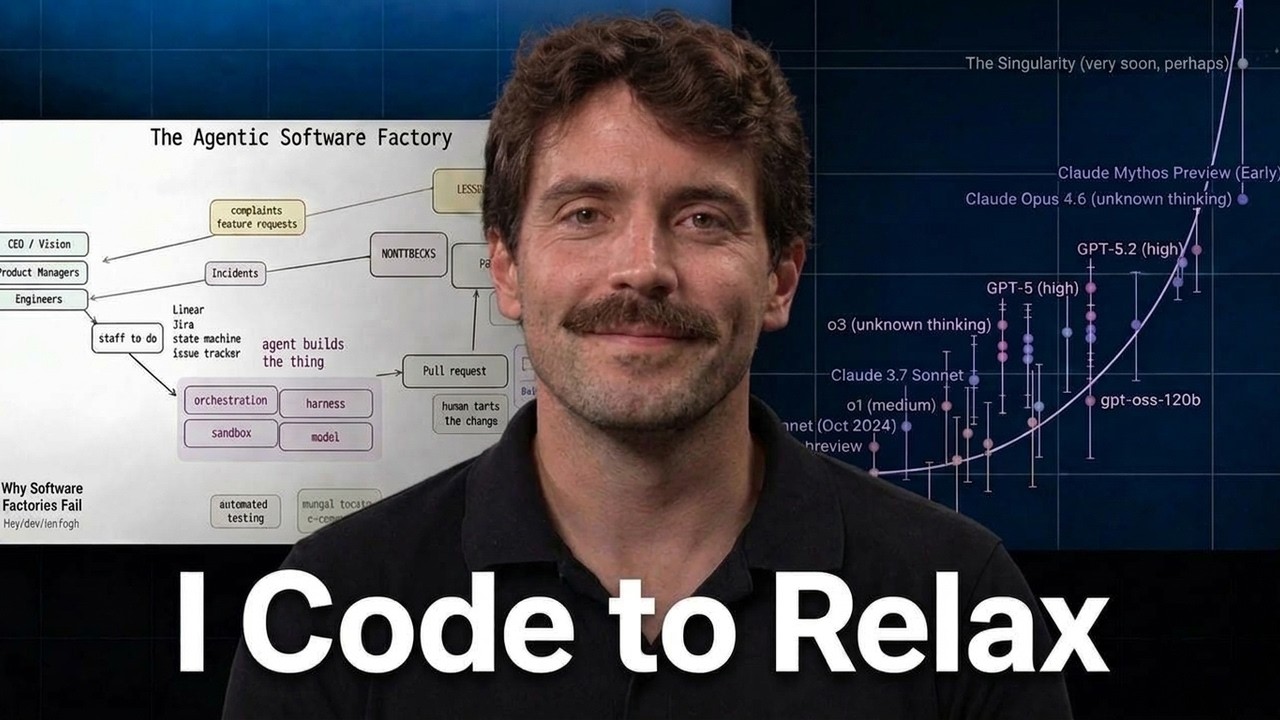
Inside Vercel's AI-era playbook: "Recursive Founder Mode" | Guillermo Rauch (CEO)

The AI Agent Every Company is About to Build | Vercel CEO Guillermo Rauch
Guillermo Rauch at Founders in Arms Live: Simplicity, Focus, and the Bet That Built Vercel
The Man Who Built a $9B Dev Platform Thinks You're Overcomplicating AI | Guillermo Rauch


Inside v0: How Guillermo Rauch Is Building 100 Million Engineers | Lenny's Podcast - EP.89