Vercel CEO reveals his Agentic Engineering Workflow
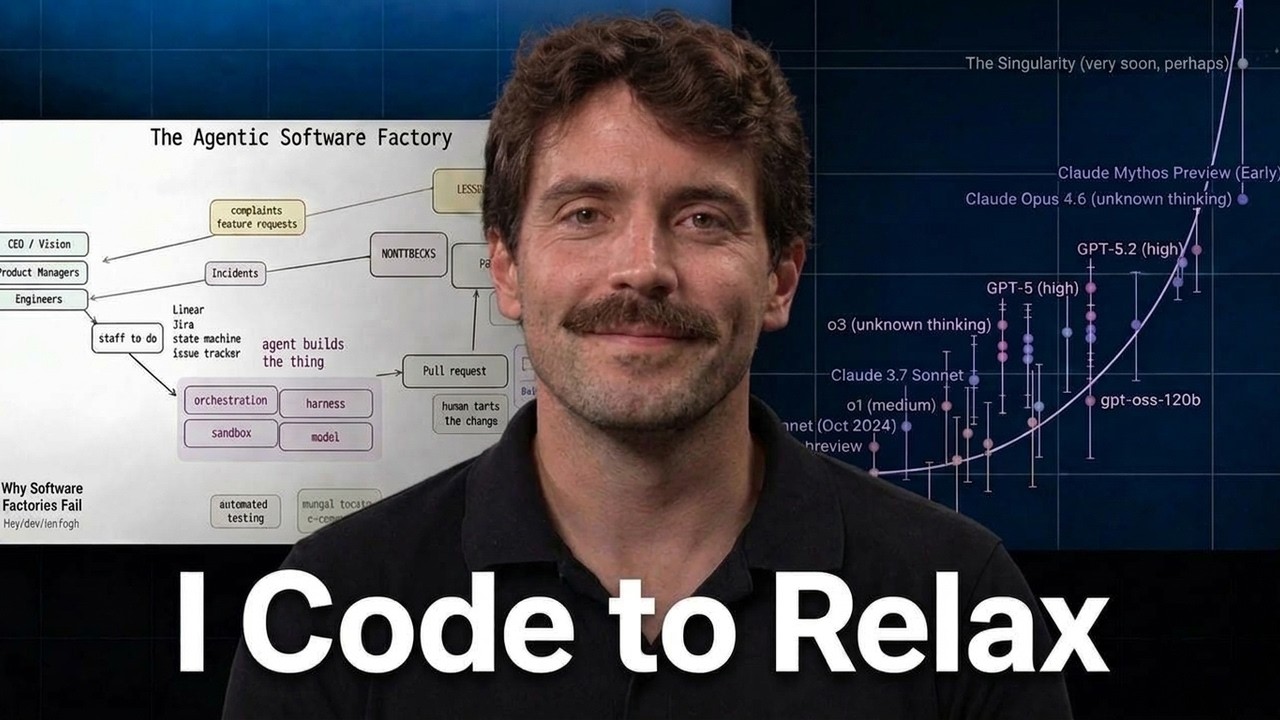
In this interview, Vercel CEO Guillermo Rauch discusses the challenges and opportunities presented by AI‑driven "agentic" engineering. He explains how human developers struggle to cover edge‑case security due to cognitive limits, citing an essay on the spectrum from testing to formal proofs and the scarcity of languages like Haskell+Idris that can guarantee correctness. Rauch describes how AI agents such as DeepSec can automatically discover massive, hidden vulnerabilities in legacy C/C++ libraries (e.g., libheif) and how the efficiency of these models makes large‑scale code auditing feasible for both defenders and attackers. He advocates moving critical libraries to memory‑safe languages like Rust and treating security‑by‑construction as a core engineering principle. Rauch argues that the economics of open‑source infrastructure favor using heavily scrutinized components (Linux, TLS libraries) rather than building custom replacements, but the cost‑benefit calculus is shifting as agents can both find and exploit bugs at scale. He predicts a migration of development workloads to cloud sandboxes, where agents can run safely, parallelize work, and avoid supply‑chain attacks, while still preserving the ability to pull code locally for low‑latency debugging. The conversation then turns to strategic advice for entrepreneurs: focus on problems you are personally passionate about (e.g., AI‑enhanced education), invest in fast, small, embeddable tools (FX, Herder), and leverage Vercel’s new infrastructure primitives such as AI Gateway and Sandbox to build security‑oriented agent swarms. Rauch stresses the importance of storytelling around security investments, transparent auditing, and open‑sourcing incident traces to foster collective learning. He also reflects on the hype cycles of AI and crypto, warning against both blind optimism and fatalistic fear, and calls for high standards and clear metaphors (agents as AI employees) when communicating with non‑technical audiences. Finally, he outlines the distinction between software infrastructure and application layers, emphasizing that the former—hardware, networking, caching, security—will become the primary arena for innovation and value creation in the agentic era.
TranscriptAuto-generated · 98 min
Guillermo Rauch
One of my biggest challenges today in adopting new software, both personally and as Vercel, is understanding the security debt that I'm taking on. Just the surface of attack has become so massive as of recently. We probably need to start writing code in different programming languages. The challenge that I think a lot of organizations have today is that the amount of latent vulnerabilities of all of this human-written code is almost immeasurable. We could eradicate supply chain attacks. If we move more and more of this development lifecycle to sandboxes.
Speaker B
All right. So Guillermo, what will matter in the post-AGI era?
Guillermo Rauch
I think our ability to stay in control as humans. And by that I mean creative control, control over the risks on cybersecurity.
Speaker B
Yeah.
Guillermo Rauch
Control over how we make the agents work for us. Ultimately, I've been speaking a lot about the leverage is shifting one layer of abstraction higher into sort of the harness engineering, the software factory, the fleets of agents that you orchestrate. I'm a huge believer in our taste and our creativity as human beings because we're usually appealing to other human beings and we love to buy the stories. and products and services from other human beings. Yep. You know, we like to think that we make perfectly rational decisions as humans, but a lot of the time we're actually buying into the stories and the vibes and the brands and the flavors and the tastes. Ultimately, agents are gonna be hopefully an enabler of greater and greater storytelling and greater and greater human ambition.
Speaker B
I like what you said about the higher level of work, because people always are afraid of like this job going away, this task going away. And, you know, farming was something that like 90% of population did 200,000 years ago, 200 years ago. And now nobody works in farming, less than 1% of people. Yeah. So thinking of this is like filling out a form just feels like manual labor, you know? So what will that look like? Will it be like managing fleets of agents, like deciding which models, deciding like where they run in terms of the hardware?
Guillermo Rauch
It's so funny 'cause one of my most, one of my best performing tweets recently was, I do this for fun. You know, I build software to relax.
Speaker B
Yeah.
Guillermo Rauch
I build software for work and then I go home and I build more software. Yeah, same. I build software with my kids, I build software with my wife. Like, I'm always building software. So that's where I think the analogy breaks down with farming. And by the way, like, there are some people that legitimately love farming. And maybe they, you know, over hundreds of years, millennia, they'll still do it.
Speaker B
It's called gardening.
Guillermo Rauch
Yeah. And they keep their little like mini farm in their balcony and that kind of stuff. But I think a lot of us do this because we— this is our medium for creativity, and there's no taking that away. There's not— no putting that genie back in the bottle as far as I'm concerned. Um, but it does mean that— I mean, you kind of see this with models these days being benchmarked over their ability to create new worlds. There was that Karpathy discontinuity tweet of, first he introduced vibe coding, then he introduced, oh, by the way, the models are getting so good that they can create entire worlds and they can re-render The Hobbit or Lord of the Rings. Yeah. And so I do think that we're getting into the next level of how much free range of creativity is enabled by AI, creating new worlds, creating games. I've spoken of how the web itself, the web that we will consume as humans, is becoming like ultra fancy. Like the experiences that stand out to you are the ones that just like really go out of their way in terms of wowing you. 3D and animations and particle effects and things like that. And so It's amazing that like literally we can do anything now. We can build anything and people are flexing that muscle. Like I see a lot of people that are building stuff that they're just building it because they couldn't before and they're deriving a lot of joy from building, which I think is really good.
Speaker B
I've been coding with AI for nearly 4 years. In 2023, I was the first to start the build anything trend. And since then, a lot has changed. We have different models, Different tools, different agents. But despite all of that change, every single project I've built has one thing in common. I always use Supabase as my backend. I'm not even thinking about what DB do I use. I just use Supabase. It's simple, it's scalable, and it's agent-first. In fact, it has never been easier to get started. Now, the AI agents can literally build the entire backend for you. Because Supabase now works inside of ChatGPT and Claude, We all know that with AI, you can write code faster than ever. But where people get stuck is the backend. The database, the logins, the storage. All the stuff you need to get right. And Supabase handles all of that for you. With their official connector, you can just ask Codex or Claude Code to use it. Just say, create a new invite table, or deploy this function, or review my app for security issues. And the agent will do all of this for you, right inside of your Supabase project. I'm using Supabase for all of my backends, and so should you. And the best part is they have a really generous free plan. Just go to supabase.com and try it for free. It's the first link below the video. So given the fact that anybody can build anything, what gives someone an advantage? You know, people watching this, they want to know like, how do I get ahead? How do I build a business? Is it the taste? Is it the creativity? Is it being more technical?
Guillermo Rauch
Yeah, there's so many things. You know, I was actually gonna post recently, so Every time a model comes out, you probably, like, the first thing you do, at least both of us, like, we try it out.
Speaker B
Definitely.
Guillermo Rauch
And one good exercise I would recommend people to do is there's a series of things that are just impossible for models to do today. Now, that list is probably shrinking and changing over time, but 12 months ago, that list was bigger and there were a bunch of things that it couldn't do at all. And what you wanna do is like, you almost wanna keep like a list either in your head or like write it down of like, what are the wildest, most ambitious prompts that a model could do? And I think it having the timing, having the anticipation really pays off because when a model drops, it's almost like people are exploring its latent space and discovering what's possible. And it's an opportunity for you to like, it might be that you can build a business like, oh, Opus 5.5 came out and this particular thing that models used to fail at has now become possible. So there's that whole category of things. I think people can use the creative power that they get from the models to broadcast a better message. So you see this with companies taking advantage of like, hey, Models can do this. We can portray our brand or our product in terms of what this model enables. So a good example for us was that when Jev came out,
Speaker B
there
Guillermo Rauch
were all of these really cool things that it enabled for our products. And so Jev comes out, we can now sort of ride that wave and teach people. There's such an appetite by the world to learn about AI. to make sense of AI. A lot of people are out there scared. So for example, for us, every time a model comes out, we run it through the DeepSec benchmarks to help the world understand, okay, this model is good at cybersecurity. It costs this much. There's a lot of alpha right now, which is super ironic because models are so easy to use that you just prompt them in English, and yet there's a mastery to them.
Speaker B
Yeah, for sure.
Guillermo Rauch
There is understanding What model is best for what job? And so I think there is a whole space of evaluation, whether it's that you can become a voice that helps other people through public evaluation make sense of what models are best for what. There's also the personal evals that I think has a lot of alpha. Another irony of AI is that we do go off vibes a lot. I hear people say, oh, I read this thing on Twitter. Then I started prompting the model differently. I heard someone the other day say, oh, I read this prompting guide and said that Astra does better with less this and that, and now I'm doing that. And I asked him, but did you actually ascertain that it's giving you better results? And he's like, no, I'm just going off of what other people are saying. So I think there's a unique advantage now to, are you actually deriving truth from what the models can do? And do you have a set of personal evals or do you have a set of company evals that allow you to navigate this world that is moving so fast? Every single week there is sort of a new model to evaluate, or as we saw with Jev, there's even new categories of AI products coming out every week.
Speaker B
But isn't the vibes part of what makes us human? Because the models, they sometimes lack just the practical sense. Like, okay, we need to ship this feature. If you're a human engineer, you know, like there's pressure on this and the release is tomorrow and you cannot be overly perfectionist. The model will happily spend 30 minutes on something useless, something small that a human engineer would just skip given the broader circumstance. So do you think the creativity, the vibes, that will still remain or better models will have this?
Guillermo Rauch
I think creativity forever because again, unless we go on a social network made by AIs and we decide to follow AIs and how they're gonna influence our future, the reality is that we're still in charge of our brands, our storytelling, our values. Even I think, you know, there's a certain design aesthetic that humans can push forward, right? Like when you look at Vercel, Vercel looks a certain way. And we invest in making it so and creating an emotional connection with our audience. And so what you want to do is you want to use AI to, I mentioned, sort of amplify your story. How can, how can using AI, whether it's the creative tools, image and video models, can it help you tell a better story? Can it help you ship? I mean, what's, what's very clear, right, is that you're going to ship more, more frequently and you're going to ship probably better products.
Speaker B
Yep.
Guillermo Rauch
There's still a delta between like Are you shipping at the true speed of AI? Are you behind? I think for a while, I think we're going to have a range there where there are going to be individuals and companies that are just ahead of how much they can harness this superpower. I think there's an analogy there with when cloud computing became, I guess, fashionable or increased in popularity. There was a relative range of, there are companies that grokked it right away and used it very efficiently. There are companies that are still trying to migrate from on-prem to cloud. And incidentally, I think AI is pushing a lot of people now, the ones that were sort of procrastinating on it. And you can sort of imagine that there are a lot of people that are kind of procrastinating on how agentic they're becoming. And they're probably going to get lapped by these organizations that are moving more autonomously and with more conviction.
Speaker B
So let's go deeper on that. What separates like the company that really squeezes AI to the fullest? Is it like building the autonomous software factories? Because this changes every quarter.
Guillermo Rauch
I really, I mean, I really think it's like we have such a, we have a once in a lifetime opportunity to do what customers want, which is sort of ironic to say, but like any big company, at any given time is getting customer feedback.
Speaker B
Yeah.
Guillermo Rauch
Let's say you're Comcast, right? People are saying things on Reddit. They're calling your call center. They're sending you emails and their internet broke down and they want to understand why. And what's your ability today to turn those detractors into net promoters? When they're reaching out, are you responding with a high-quality, Agentic response. When they reached out to report a problem, are you kicking off an incident investigation? When they're reporting with a very concrete, fixable thing, are you fixing it autonomously? I think this is actually a pretty decent way to grade it, like a rubric for how agentic are you. From customer signal that is decisive about something in your product being broken, defective, or in need of improvement. Are you actually shipping that? Are you shipping the fix for that signal, the thing that addresses that signal? And what is your latency? You could almost make a case that you can measure this mathematically, right? Okay, signal came in. Eventually you're going to get to fixing it. Maybe to give you a lay of the land, there's the company that periodically scrubs that. Maybe through taste, maybe with product managers, maybe by you know getting enough escalations. They're like, ah, I'm gonna fix it. And there is the company that is sort of like becoming truly more autonomous in a good way, right? Not in the sense of like we let the agents go crazy and ship slop. And you know, speaking of Jev and why people are so excited about it, you know this idea of like really fast decision making can be super critical. In shaping these software factories? 'Cause I'm mentioning that there is an element of judgment and taste also in, famously folks like Steve Jobs, EHH, and many others have said, you're not just a machine that turns whatever customers want into product. There is an element of decision-making there, but there's also an objectivity to like, your product might be erroring. And so it's throwing up a bunch of exceptions in prod. Or someone comes in with a legitimate, very straightforward improvement. We like to do this a lot on X. When people give us feedback on X, sometimes they attach a screenshot or a video. It's like, that's spot on. There's no human creativity involved here. They're pointing out something that they experienced and it was a problem that we should fix it right away. And so that's kind of like an opportunity to test out this software factory hypothesis. Interestingly, yesterday we got a guy saying that he was getting confused by our navigation and he gave me some really good feedback, but nothing that was immediately actionable. It's not like I could take his thing and turn it into a prompt. And so what we did is the leader of our dashboard product area reached out to this gentleman and they started going back and forth. He gave us more videos, he gave us more qualitative feedback, and even then requires another layer of human judgment to turn it into a decision for what we're going to do with the product. Now, one could project very far out in the future, which in, in AI could be 6 months, 12 months. There is a world where some of that UI and some of that expectation that this customer have, that would become their own generative interface. But I think we're a ways away from that. So it's still our role to sort of balance out feedback that we get from customers and then sort of eventually find its way into a prompt and eventually find its way into a shipped product.
Speaker B
So when it comes to the obvious ones, like button isn't working, payments are failing, do you think the number of, like you said, the latency towards a fix?
Guillermo Rauch
Resolution, yeah.
Speaker B
Is that like one of the main numbers of predicting of a business success? Because if you go from first principles, business is a product that gets better over time.
Guillermo Rauch
Totally.
Speaker B
And unless you have a super small addressable market, it's like that business that can just fix everything in sub-30 minutes is gonna destroy a business that takes 2 days.
Guillermo Rauch
100%. And that's been the history of technology, right? That's why I give the example of like the companies that were not afraid to adopt personal computers that said like, oh, we're gonna do this stuff by hand. The companies that were not afraid to adopt the internet early on, the companies that also made it their priority. So there's something really interesting to learn from the history of the internet, which is a lot of companies like the internet, but it's like, okay, I'm gonna hire a company that does the internet for me.
Speaker B
There's so many companies in AI. It's
Guillermo Rauch
still happening. Yeah, interestingly, right? Like, you have— it's so funny because I talk to a lot of enterprises and like, it's so common that they tell me that they don't own their own website. And so there's a parallel here, which is that there's going to be the companies that say, I love AI, can we buy a bunch of AI licenses and throw them to our engineers? And there's going to be the ones that say, no, no, no, this is a disruption that creates a new competitive landscape. If we become really good at mastering this thing, it's a little bit like a red If we become really good at manipulating this new block, this new raw material, that's gonna put us ahead. That's 100% what I believe. And yeah, to your point, there's an element of measuring. I don't wanna get only tactical. Like if you improve that metric, that's the end-all be-all of your business. We like to say that there's iteration speed and there's iteration velocity. Iteration speed is how quickly you're churning out stuff. And that's why when I hear about how many tokens you spend token maxing, and when I hear about how many PRs you land, good for you, good metrics. But velocity implies speed in a direction. You could be PRing, PRing, PRing, PRing into oblivion. I'll give you a very concrete example. AI is is helping people realize that they can build a lot of things. And what I don't know that it's fully helped people realize yet is that there's certain things you should build and there's certain things you should buy. There's services you can use for certain things and there's things that you should build yourself. I talked to a startup founder recently. She came to my office and she was like, yeah, I'm building this really cool idea for agents. And I thought the idea was really compelling. And then she proceeded to tell me that she was also building her own email service and her own payment gateway. That's right. And some of those things might make sense, some of those might not, but she was taking on a lot. That was sort of my sense. And sure, there's the very optimistic take, which is that you can have so many agents working in parallel for you that yeah, you can take on a lot more projects. But I'm still skeptical because what you really want to do is you want to pick a few set of problems where you think you can have disproportionate alpha and go really deep and spend as many tokens as you can on those problems and move as fast as you can on those problems. And that would imply that vector, that direction that the word velocity implies. So it's not just PRs landed, but where are you headed and are you actually making progress towards your goal?
Speaker B
Yeah, because if you're doing 20 things at once, you're going to be mediocre Yeah, all of them. And to be successful, you need to build one thing great.
Guillermo Rauch
By the way, this is kind of becoming, uh, a thing already. Like, you realize that a lot of people ship really fast, and then you, you come to their website and it's like a pile of slop. Like, you can sense that, like, there's no value add over what the model did. By the way, this was already the case with the web. Like, people would not respect the vanilla template that looked like you just purchased some kind of starter kit and threw it over the internet. I think people are really not like— it's almost like you're tuning out a bit when you see something that looks like it was just regurgitated by the LLM because, okay, what is the value add? If you could—
Speaker B
One-shot.
Guillermo Rauch
If you could one-shot it, I can also one-shot it. And so there's an element there of, again, the Sweating the details that help you communicate your intent and your values and what you're trying to pursue much better.
Speaker B
By the way, if you have multiple $200 subscriptions a month, pay attention because I want to be working closely with a couple of you to build Cloudroom. This is an open-source platform for running agents in the cloud. It's the world's first open-source solution for cloud agents, right? You have Devin, you have Cursor, you have Codex, you have Claude. All of these are closed. They want you to use their own subscription, their own harness, their own GUI. But you're already paying for inference. You're already paying for tokens. You have probably multiple subscriptions. You should be able to use that inference. You should be able to use your favorite models, your favorite harness. This is Cloudroom. It's fully open source and it's free. However, right now it's not fully open to the public. I'm looking for the real power users, the people who can give me feedback daily, people with high taste when it comes to coding agents and running agents in the cloud. So if that's you, if you're paying for a $200 plan on Codex, Cloud Code, and a bunch of other stuff, go to cloudroom.dev and join the waitlist. As I mentioned, every single day I'll be selecting a handful of people, giving them access, and working with them closely to build this platform. So yeah, if that's you, go to cloudroom.dev. It's also going to be linked below the video. Let's talk about your current agenting engineering setup. Like, how does it look like? What do you use?
Guillermo Rauch
Yeah. So broadly speaking for Vercel, we've encouraged people to try everything. We're not prescriptive about what coding agent to use, what frameworks to use. Our stance has always been open. In fact, our fastest growing product at this point, I think by revenue, adoption numbers, et cetera, is our AI Gateway. And our AI gateway, like the thesis is, I mentioned if you're a company, you should probably be investing in your agentic engineering fabric. You should also not be using just one model.
Speaker B
Yeah, for sure.
Guillermo Rauch
You also showed me yours and I thought it was really cool that you basically built your own client or your own ADE and you can choose between all these harnesses, et cetera. So it's kind of our stance. In fact, we have this app over here in the menu bar where we give you a sense of what your token spend is. So every engineer at Vercel gets this app and they can understand, okay, how much did I spend on the OpenAI model versus the Kimi model versus the Opus model, et cetera. So one of the founding philosophies is you should try many things, especially models. Personally, AI has been amazing for me because I've always been a huge believer in the simplicity of the CLI. So when I started Vercel, if you go on the Wayback Machine, I started Vercel by shipping a CLI. So you would go to zeit.co and you say install Now. Now was our deployment CLI. And as the name implies, basically all you needed to write was like now in any directory and you get back your URL of what you've shipped. And we ended up renaming the product. It's now called Vercel. But 11 years after the founding of the company, the thing that continues to sort of grow exponentially and continues to give us all of our gravitas is this foundational concept. There's a CLI that enables you, but now increasingly agents, to take anything they've built and put it in the cloud and make it instantly accessible. So my personal engineering stack has always been like, can I do stuff in the CLI? And I've always been a NeoVim user. So my next obvious logical step was Claude Code. I got really excited when Claude Code came out because everyone else was trying out sort of like building very sophisticated apps.
Speaker B
Yeah.
Guillermo Rauch
And they became successful by basically going towards the kernel of what makes AI different, which is, well, at the end of the day, it's just packaging intelligence and giving you a prompt. So, um, I'm— today I'm using FX, which is the coding CLI of Vercel Labs. One of the design principles of this CLI is that it almost feels like a shell. So when I open a new tab on Ghosty or I open a split, it boots into ZSH. But one of the things that we obsessed about is can this boot as fast as a shell itself? So it's a very tiny binary. Install is 11 megabytes. If you download it today, which I'm going to show
Speaker B
you,
Guillermo Rauch
it's actually 6 megabytes. It's 11 megabytes on disk and it's incredibly fast to start up. So the idea was if I started a shell within a shell, can I make it just as fast?
Speaker B
So what inspired you to do this? Because most agents are very bloated with endless pre-shipped skills, plugins. What comes to mind is Pi. That's probably the closest minimal agent. Were you inspired by Py or what was the idea here?
Guillermo Rauch
So interestingly enough, Vercel for its entire history has been associated with TypeScript. We have one of the leading open source projects in the TypeScript ecosystem, which is actually the leading and most popular open source project, which is the AI SDK. One of the things that we wanted to experiment with with Effect is 2 things. One, what would it look like to start investing more in native tooling? So one of the frustrations that I always get with CLIs is maybe I'll, not to roast them, but like every time I would launch Claude, you can sort of see it there. Mm-hmm. Like, yeah, there's the boot up time and then there's the like disclaimers or whatever. Like the time that it would take me to start up and like, I just wanna get something outta my head as fast as possible was kind of annoying. But the other thing is that I started realizing that the Unix philosophy is about composing small programs. And a bash, the bash shell or ZSH and whatever, they're just that, right? Like they're programs that call other programs. And so there is an element of like, let's experiment with making a program that is actually gonna be fairly immutable over time. There shouldn't be more UI added to this over time.
Speaker B
Yeah, that's the problem with a lot of these agents. Like you build a business on top of them and then like it's crashing, you know?
Guillermo Rauch
They start out small, they start out fast. This is actually what initially made me fall in love with Claw. It was like, oh my God, there's almost nothing to it. And then over time, I think you really need to fight off this temptation to add more and more and more. But it is true that people should be able to extend these things. That's why they're open source to begin with. And so Effect is actually simultaneously this super minimalistic CLI and also a library that you can embed in other programs. So the classic sort of C-style paradigm here is that you have your CLI and then you have lib in that thing. So there's libfx that goes together with Effects. I'll tell you, this thing is so addictive that I started using it for my own personal research. I realized also that it's not only that— and we're going to have to clear this probably in post.
Speaker B
We'll blur it.
Guillermo Rauch
But I started realizing that another thing that AI was sort of bringing to the foreground is going back to the fundamentals of Unix and the fundamentals of computing. It's not just a bunch of small programs. It's also the fact that the file system is basically all you need. Today, prior to this interview, we announced Vercel Drives, which is a way of sort of modeling a file system in the cloud. And that you can sort of like launch a bunch of agents around. So you can launch a sandbox and attach a drive. I don't know if you saw some people started reverse engineering Muse and Instinct or how OpenClaw works. OpenClaw was so simple that it was just Claude code plus sol.md.
Speaker B
Yeah,
Guillermo Rauch
a Linux program plus the file system. is basically all you need in order to run an agent. So I'm using Effects for a range of things. One is anytime I have a question about virtually anything, instead of going to like, I actually, it's replaced Google for me incidentally, because instead of having to go to like this cloud thing, I can keep a lot of my sort of experimentation in the file system. I can have the agent look at it. I also, and this I think is also like a little bit of like the future of software is it becomes a lot more like English driven. The fact that my agents.md file in this research folder sort of creates the convention for if I ask the agent a question, reads up the instructions, and then dumps my research into this folder, and I can sort of basically improve it over time. The other thing that I've done is that I have this alias, which is literally one letter, R, which goes into this directory. And launches it. Basically, there's not much to do here. It's like if I said, tell me more about tech podcasts, there's basically nothing to do, right? Because it's CDing into a folder and opening Effects, but it still cuts down on all the latency. It gets addicting because anytime I have a question that I want to go deep into, I just fire it off and then move on with my life. Um, the other alias that I created is P. So this is similar to what Toby does with Try. I don't know if you've seen his CLI. I've seen it. Toby from Shopify. Uh, it's very common that I'll have an idea to create a new project. And so anytime I have such an idea, I do the same thing, but it creates a project in my projects folder. And then, um, yeah, I can do anything here from like I will do a lot of experiments with local Mac apps. I will create new Next.js applications. I will create new Zig or Rust programs. I do a lot of benchmarking to help our teams.
Speaker B
Okay.
Guillermo Rauch
So anytime we create a new piece of infrastructure, I try to validate it from first principles and how an agent would approach it. A good example is when we announced Drives, I had an agent go and try to break it. Try to find race conditions, try to measure latency, try to compare it with alternatives. I do a lot of what I call agentic inquiry, which is like I'll have an agent go and try out one of our technologies and then I'll have it reflect on, tell me what Vercel could have done better
Speaker B
for
Guillermo Rauch
this experiment. And it's been doing wonders for me.
Speaker B
So FX is just The harness you use, what's your default model right now?
Guillermo Rauch
Yeah, so I try to test out everything over the last couple days. I was trying out, I mean, Opus 5.5 Fast. I've been very impressed.
Speaker B
Yeah, super fast.
Guillermo Rauch
By the way, I'll actually show you something that I mentioned. One of the ideas of Effects is that you should be able to embed it, right? And one of the inspirations for LibFX was when we created v0, we needed to build the harness from scratch. If I were to create something like v0 today or any kind of application, like imagine like Gamma, which builds slides. If I were to build something like Notion or anything that requires sort of agentic intelligence to be embedded, I would want to pick a harness off the shelf. And so We created this example that we're going to open source. I think you're going to be one of the first people to see it. So I'll give you a prompt. Create a simple page that says hi. And so we made the default model Opus 5.5. So the easiest possible V0 that you could build. Is just creating HTML pages. So we did this thing where we help you choose between design, app, or agent. And like you, I've been extremely impressed with the speeds. Like, change background to red. It's insane. It feels like you're designing in real time. And the level of accuracy, like, design an icon. Design a set of SVG icons. Make it wide again. And describe a pitch for a cool tech podcast. So what was really cool about building this demo of FX0 was, you know, back when we built V0 for the first time, I think the amount of time that we spent just on the harness was was disproportionate. Like 90% of the engineering time went into figuring out AI SDK and the models and the prompts and the tool calls and all of this. Whereas this example was probably like, I don't know, 100 lines of code on top of the CreateFX agent API. And so I was mentioning this is just using the ability of the model to output HTML. But the second thing we did was like, hey, using this mental model of brain and hands. I don't know if you've heard of it, but the architecture that we recommend at Vercel is that you run the harness and then you give it tools. So in this example, the tool that we're giving it is the Vercel Sandbox. So This prompt said build a landing page for a CLI coding agent. It's, I mean, it kind of looks like the previous one that I showed you, but behind the scenes it's actually running a full Next.js application.
Speaker B
Previous was just HTML.
Guillermo Rauch
Just HTML. And then we gave it a third one, which is agent, and it creates an Eve agent when you give it a prompt. Now what's really cool is what perhaps took us like a couple years of engineering with v0, like It's now part of the infrastructure that you can use off the shelf. And we've had a lot of customers come to us saying, hey, like, I would love to add like app generation capabilities within my system of record, or I like what you're doing with v0, but I want to have one that's sort of like internal. Like imagine sort of having your own quote unquote software factory where one of the capabilities is design. I think what AI is showing us is that, you know, What used to be software that you purchased is now becoming extensions of the infrastructure that sits on top of the model. And so the level of creativity you can have on top of this is limitless. Another thing that I noticed Opus Webify is really good at is build a pixel art scene of a dinosaur jumping. Up and down and making magic. Let's see what it does. But it's been just, you know, the, the idea that you can embed this harness and sort of pointing it at— pointing in a new creative direction gets me really excited because, you know, we have a lot of customers that are, you know, building like gaming platforms or education platforms or, um, uh, like healthcare, finance, etc. So LiveFX is sort of Even though it's a coding agent, what I love about it is that at the end of it, it's just a thing that's really good at working with a bunch of models, calling tools, producing outputs, reflecting on it. For example, for this particular FX0 example, we have not given it a browser, but you could, and the model only gets better if you give it a browser. You can run it inside the Vercel sandbox, or you can use one of our marketplace partner services like Browserbase or Kernel. And yeah, it's been super fun to build.
Speaker B
Yeah, this is a crazy amount of progress in like 3 years. v0 was 2023, right?
Guillermo Rauch
Yes.
Speaker B
Yeah, so I remember prototyping, it took like minutes to get anything up and going. And now you have, you know, it really is only limited by our imagination, right?
Guillermo Rauch
It's amazing to me that, you know, we needed a big team of people building something like v0. And it's now a library that you can import and you can basically vibe code your own.
Speaker B
Yeah. So then human is the bottleneck really.
Guillermo Rauch
Yeah.
Speaker B
Because knowing what to accept and also unblocking these agents. Because you could have, I believe that the harnesses and the models are good enough to have thousands of agents running proactively, but nobody has really thousands of agents running proactively, right? The thing is to figure out how does that work? And I think a lot of the lessons are like, borrowed from what works for humans, right? I mean, neural nets inspired by the brain. So I think there will be some way of having a manager or some director agent.
Guillermo Rauch
There's also a lot of interaction models, I think, because people, I think, in the different eras of AI kind of over-index in one modality or the other. But let's look at this example. For example, if I want to create a video for X where I had this idea of this dinosaur doing something really cool, at a laptop. Like, you still need these systems that are like super fast.
Speaker B
Yeah.
Guillermo Rauch
And have you in the loop very much like making decisions and like trying things out, etc. And then there's another interaction model which is more like the, you know, go and solve problems for me. And there is also the one that is sort of coming off of a signal like we talked about, right? Like, something is broken. So, um, maybe for fun, let's look at the So make me a to-do list with persistence to disk. So this would be the case where if I'm building a full-stack app— by the way, we've made insane progress in making our sandboxes extremely fast. I think the future of dev tools like Next.js would be very much making these use cases work really, really well where you have an agent driving the experience rather than a human being. But still, when you give an agent a computer, there's almost the assumption of like, I'm going to go and let it cook in the background. Right. And I think more and more of these hardcore go and build applications, solve problems, et cetera, they might not require you to be in front of them every single time.
Speaker B
So I guess it depends on what the input is, right? If somebody reports this button is failing and the model can check it and ship a quick fix, that's obvious. If you can define like, we wanna optimize the boot up time and you launch auto research for like 7 days running. But what you're describing here is like you need to figure it out with the agent, right? You need to sit there and really work with it. And if it takes 2 minutes to get a response, you cannot be doing deep work because the cost of that 2 minutes has never been greater, right? You can unblock to another agent.
Guillermo Rauch
That's why I think people really liked planned mode, even though now it doesn't really have to be a mode per se, is that there's an element of you going back and forth
Speaker B
Yeah.
Guillermo Rauch
With an intelligence that is really important that it feels real time. In fact, I would not be surprised if more and more goes into voice for this reason, where you just talk back and forth with the model a bunch on figuring out the plan, and the model pushes back and improves your idea, et cetera. And there's also the whole premise of what I've been calling verification engineering. Which is what you're trying to do is set up the set of guardrails or the proof system around the thing that you're building. And that also requires that you and the agent agree on a set of axioms and potentially a set of trade-offs. Because I can tell, and this was true actually in the development of Effects, right? Like, we could do— we can do amazing things in Effect for startup time, for making the binary smaller, et cetera. But everything comes with trade-offs. And some trade-offs are, for example, like how much time you spend in the CI/CD pipeline. Some trade-offs are about speed versus safety versus binary size. And there's a bunch of things there. And so I think it's very important that you as a human spend time Almost in the edges of the testing system. Someone was saying today on X that they don't believe in unit tests anymore. And I've been kind of, I kind of personally been there for a long time because over watching engineers and working on very large teams, I started realizing that a lot of human engineers who spend a lot of time in these micro unit tests that gave you a false sense of confidence. And by the way, the models are incredible, but sometimes I see models just write the most inane tests that you've ever seen. Always. Like export const something equals 4, and then they write a test to ascertain that the constant is 4, which is kind of silly, right? And so I think the more we can spend our sort of design tokens into the edges of the system, and less on the little tiny implementation details, the more effective you'll be at leveraging the agents. And these might be things like, again, what are the set of axioms about the correctness of the system? What is the aesthetic sense that you want to embed into the system? What are the performance constraints? What are you not willing to trade off in terms of speed? Or maybe you don't have a certain performance budget. But if the model doesn't really know what you want, it'll take you in whatever direction it wants.
Speaker B
So what is that skill? It's like system design architecture. It's kind of a mix of software design, codebase architect. How would you describe that skill?
Guillermo Rauch
Yeah, it's a really good question. I think on one hand, I think there's this whole field, some people call it symbolic systems, which is instead of focusing on the specifics of syntax and programming languages, can we reason about systems at a higher level of abstraction? So maybe to make it concrete, what I think people should be able to reason about is the concepts of engineering. What is a library? What is a framework? What is a compiler? So understanding how the pieces fit together. Maybe a better word would be the ontology of engineering. And another thing that's true about engineering is that there is algorithms and there is data structures. And so understanding what data is, where it lives, how to get it, understanding how long things take is also very helpful. Even prior to agents and AI, I would recommend people to look at this resource from Jeff Dean at Google. Let's see if I can pull it up. It's called Latency Numbers That Every Programmer Should Know. I think it was from Jeff Dean at Google. So this table, I've shared it so many times with engineering teams. It gives you rough senses of scale and orders of magnitude of how long engineering systems take. So, and by the way, funny enough, because Moore's Law is kind of still alive, like these numbers have to get updated frequently. So this is 2012. They were probably already, but the orders of magnitude are probably still the same. But like— Yeah. An L1 cache hit on a CPU is half a nanosecond. A branch mispredict. Like, for example, understanding how CPUs work at a high level, super helpful, like branch prediction. And, you know, there's tiers of caching. Even the concept of there's tiers of caching, this— there's certain things that are true about systems of every scale. The Vercel global CDN is a multi-tiered caching system. When we first designed the CDN, we came up with an L1 cache and L2 cache and L3 cache at large scale. Which is that when you go to a website, it's really fast. Like when you go to rauchg.com, the reason it's really fast is I probably hit the L1 cache of the Vercel CDN in San Francisco. And if I were to miss on it, there's an L2 cache. And then if I were to miss on that, there's an L3 cache and there is a pretty fast underlying storage system behind that. And so I would recommend people understand these things. You don't have to memorize everything, but one that I particularly love— oh, look, they've been keeping this up today. That's so fun. They've added LLM stuff. But I love this one, and I've used it occasionally as an interview question, or I used to do sort of level set if the person that I'm talking to has experience in systems engineering and networking. How long does it take to send a packet? from California to the Netherlands, back to California over a well-tuned high-performance network. So it's about 150 milliseconds. I think there's also one here.
Speaker B
So what type of answer would you not accept?
Guillermo Rauch
Oh, people get this very wrong sometimes. So you think it's seconds, they think it's 10 milliseconds. It's very important to know that it's somewhere in between 100 to 200. When people say 200 or 250, I'm okay with it because this is if everything is perfect. You're dealing with— Vercel spends a lot of capital on the interlink between regions because we need encryption in the network stack in between. So for example, you put the Vercel CDN in front of a certain workload, the communication between The edge that's closest to you and the origin has to be encrypted. It has redundant— it sends redundant packets. The packets get cloned, and it goes over a high-priority network. So when packets go over the internet, they shuffle around routers and ISPs. If you run traceroute, you can sort of follow the life of a packet. The worst-case scenario is that your package just gets tossed all over the internet and you end up in low priority queues. And in a high priority bandwidth system, you're basically taking up space in this very, very expensive backbone that is underneath the ocean in between California and the Netherlands. So knowing, I think, how these systems work, it's almost like, okay, you don't want to have too much encyclopedic knowledge because The AIs are really good at that. But if you're also completely clueless, I think you might fail to push the AI harder. So if an AI ships that system and I'm hosting it in the Netherlands and I notice that the page is taking a second to load, knowing this fact can help me say to the AI, make it faster.
Speaker B
Yeah.
Guillermo Rauch
Make it faster, make it faster. And so now the counterargument that you could create there is, well, the AI will just create optimally fast software in the future. I don't buy that because when you give it a task or a prompt, et cetera, the AI itself has to work with a system of trade-offs.
Speaker B
Yeah, you need to set what matters for this project.
Guillermo Rauch
Exactly. And it can't spend infinite tokens on every task. And so I think what you need to know as an engineer is What are my levers? What levers can I pull? I'm not gonna do the work myself. It's a little bit like giving the plan to the AI and the AI can sort of go nuts, but you're still in charge of creating that plan to some extent.
Speaker B
So I guess it's being very technical on a high level in your domain. Whatever you're building in that domain, you need to know all the concepts.
Guillermo Rauch
And expanding your domain is also a thing, right? I've become more savvy thanks to AI about areas where I wasn't. If I went to my research folder right now, I'm constantly researching things that were so out of my scope in the past. And so I do think you can get— you want to be a sort of— you want to dominate the conceptual space of your domain. And then as you build more confidence in certain domains, I think you can get more comfortable expanding and going to other places.
Speaker B
I think the key here is really getting both the most out of the AI, but out of yourself. A lot of people want to maximize their skills and MCPs and stuff, but they don't use the AI to get more technical.
Guillermo Rauch
I mean, I really encourage— I mean, again, this is sort of my take of the world, but I encourage people to understand. And there's not just understanding, I would say reject non-understanding. Because I do see folks proposing like, it doesn't, nothing matters anymore. You're just a neat proxy. Yeah, right. Like, just lean into the AI. You know, it reminds me a little bit of like, there are a lot of people giving advice in society that is so counter to your interests. The one that I always think about is, you know, a lot of people interview me because I've built a large family and I'm very much like pro-life. I love my family, I love having babies, et cetera. There's a part of society that tells you not to do that. There's a part of society that says, no, you know what? It doesn't matter. Climate change or whatever, you shouldn't. I see, and perhaps this is an extreme metaphor, but there are people that are saying you could understand, but you shouldn't. What's best for you is to stay in this little box, go about your business and upload everything to to big AI. And I think the people that are telling you that are usually not following that advice is sort of my hot take. The best example is like people are saying like, I don't read code anymore because that's like assembly. And I know for a fact that if I get a candidate that's gonna work on engineering at Vercel or any other company, if I can ascertain that that candidate understands the stack really well from assembly, all the way up the stack, that person's more valuable because they're gonna use, I mean, unless, sadly, there's a category of those people that are anti-AI, maybe a little bit of the ego of how well they understood the previous world.
Speaker B
Yeah.
Guillermo Rauch
But if you can understand the universe and hone in your AI skills, you're unstoppable. And so the phrase that I've coined, I think I've coined this, is agentic inquiry. Which is I'm not advocating that you read every line of code, but when you do get something done, try to understand what just happened.
Speaker B
Yeah, I think this is the biggest nuance because people see such a binary. Either you're reading the code and it's line by line, like, what does this line do? Or you're just fully YOLOing and never looking at it. But what you said, I think that's really the key. It's like if you know how to use the agent to understand this file or this module, That's enough. You don't need to know all the functions.
Guillermo Rauch
And by the way, I think nature will heal. I see a lot of great advocates of this on X. I've seen folks create skills that help them diagram their code. This guy Dylan posted— I think he created it, Dylan Mulroy. He was showing a call stack diagram so that I think the agent was sort of doing pseudo-static analysis. And I think this is a skill, or it might be a skill plus an AST grep-style tool that was after it cooked, it gives you a sense of the symbolic space of your program. Oh. This method calls this method, calls this method, calls this method. And this is agents at their finest because to do that only with syntactic tools and AST parsing, you'd have to every time create a new program to visualize what you just did or have a very rigid tool. It's amazing that AIs can sort of like dive deep, call some tools, and then give you back an understanding that's sort of like digested. And it could be things like measuring latency. It could be things like measuring allocations. It could be things like understanding the new API shape. And so those are the things that you definitely want to be kept in the loop about. And by the way, this in itself, and this is the crazy thing about AI, this in itself could be turned into an agentic process where I've seen folks set it up such that they call the Slack MCP anytime you do something. You could put this into your agents.md, right? Anytime you do something that alters the— let's call it for an example, the public-facing API shape of this program, let me know, ping me on Slack or Discord. That alone is just, I think, better, quote unquote, agentic engineering than just do it, make no mistakes, please auto-merge, and let's keep building a huge pile of slop.
Speaker B
So basically knowing what matters for that system.
Guillermo Rauch
Yeah.
Speaker B
And then building automated software factories or pings, whatever. To use agents to help you.
Guillermo Rauch
Another thing that is also a lesson from the old world is that tech debt would get tossed around as a word a lot. And the smarter people that I've worked with have always embraced tech debt. The people that were like, no, no, no, everything has to be pure, beautiful, perfect code, have probably gotten nothing done in their lives. And I think something I've loved about Silicon Valley is that people have really leaned into tech debt. I mean, if you look at Y Combinator and like how Airbnb got started, how Twitter got started. When Twitter got started, it was Jack vibe coding before vibe coding was a thing. Ruby on Rails, uh, it has the CRUD generating features. It, it, you know, I'm not gonna call Ruby on Rails slop, but as a system, it gave people an agility that more rigorous, more formal methods, you know, like let's say compared like Java at the time versus Ruby on Rails. Ruby on Rails in itself was a little controversial in the world of like leaning really hard into dynamic typing and, you know, making code shorter. Making code shorter and dynamic typing are traits for velocity, for humans, for iterating quickly. And that was seen as lesser by some people. Then we only write programs in objective-oriented programming with C++ or Java. But if you look at the things that actually succeeded in the world, it was Jack using Ruby on Rails and shipping Twitter. And so Silicon Valley has always understood, and I think Move Fast and Break Things was another example of this with Facebook, that taking on some tech debt is so healthy. And so what I would recommend to the vibe coder that is listening to us is understand the amount of slop debt that you're taking on and lean into it. If you say, okay, I need to move really fast in this area of the system, ask no questions, make no mistakes, auto-merge, ship it. If there's a part of your product that is very crucial, we all need to be really, really, really mindful of security and the role that security will play in the future. Yes. You know, I think something that will backfire for a lot of people that are embracing, you know, extreme vibe coding is that if I'm an enterprise, I need to build very strong conviction in the security profile of your product, in that my data is going to be safe. And so I actually think security, and in some ways almost like communicating that you're doing the opposite of vibe coding, can really play in your favor. I've had this experience where I will have FX research something and I'll ask it, find me a bunch of projects that have already done this because I don't want to reinvent the wheel from first principles. One of my biggest challenges today in adopting new software, both personally and as Vercel, is understanding the security debt that I'm taking on because supply chain attacks, Because vibe coding, because, you know, just the surface of attack has become so massive as of recently. And so I think, again, there's areas of your codebase, there's areas of your product where you want to do the opposite of like, you know, no questions asked. You actually want to be extremely diligent and communicate that to the world.
Speaker B
Before we go to cybersecurity, which I definitely want to touch on, one thing I built for myself to kind of understand the tech debt is like an LOC to ADR ratio. So basically the number of lines of code to how many decisions I'm making in the codebase. Cool. To see like if I'm shipping super fast and not really telling the agents like what matters, or if I'm just like working too much on the system and not working fast enough.
Guillermo Rauch
Yeah.
Speaker B
I don't know if this is a perfect metric, but I think we need these types of like proxies to know like, okay, I've been like going 5 days shipping like crazy. It's time to calm down, kind of embed like what matters, you know, what are the axioms?
Guillermo Rauch
One of our values at Vercel is also KYC, know your customer. I think there's an element of, it's very easy to do AI engineering or vibe coding when you are the customer. And so all you're doing is you're in this verification loop of like, I like the app or I don't like the app. Things are very different when you're selling a product to other people in the world. And you kind of want to layer on the operational metrics of like, P99 latency and error rate. And there's a metric that I really like that is error-free sessions.
Speaker B
Hmm.
Guillermo Rauch
So it's hard to develop empathy with the myriad of ways in which software can fail because typically they're very prolonged sessions. Like, I have to go to your website, I have to press sign up, I have to enter my email or do sign in with Google or Vercel or whatever. And like, I have to try something. So many things have to go right for me to have a positive end-to-end session. And so I think layering on the metrics of the success of your product in the real world, very important. And then to the extent that you can connect that back to your software factory, I think it adds a whole layer of success. By the way, you see this a lot with the Cloud Code team. They ship software, et cetera. They talk a lot about using feature flags. They talk a lot about rolling out experiments. This is something I encourage people to get comfortable with is as you start having users, you kind of lose that direct connection with the experience. Yeah. Is it fast for them? I think it's fast, but they're using Windows or they're on Android or the— the complexity of the multiple dimensions of the execution of your program gets really wild. And so feature flags, experiments, metrics, those— and interestingly enough, at Vercel, we're turning a lot of these things into CLIs, like Vercel Metrics, Vercel Traces, because we want to help you hydrate your agents with the real-world data of what's going on in production. production context is, I think, going to be a really big source of alpha for the next generation of products.
Speaker B
Yeah, I mean, giving agents read-only access to production is great because before you ship a feature, it's like, do people actually need this? Is this matching the data we have? It's so easy to just lose the basing it in ground truth because you think you have a great idea, but if you sleep on it, it's like, well, maybe it goes from great idea to a good idea, and then you analyze it like, actually, nobody has this problem. Nobody even visits this page on our website. So yeah, let's touch on deepsec and cybersecurity because I think this is going to be a topic that will only get more popular. How should people think about this?
Guillermo Rauch
Yeah, I'll show you the benchmarks that we actually just put out today. So we created this benchmark called DeepSecBench. So first of all, for context, there's a tool called DeepSec. It's a cybersecurity harness or meta harness that can invoke Codex, Claude Code, OpenModels, et cetera, with the very precise intent of uncovering vulnerabilities in your codebase. It's really interesting how models can take on these different roles. If you tell models to go and look for vulnerabilities, It's really surprising what they can uncover, especially if you give them time and you give them sandboxes where you can start parallelizing them, et cetera. And this kind of started back when we started to see that models were getting much better at cybersecurity reasoning. So cybersecurity reasoning is you look at code and I've had the privilege of meeting a lot of humans who are very good at thinking about corner cases. Hmm. I've likened being a great engineer, especially in the cybersecurity world, as like being like a really good detective, like Sherlock Holmes, and like piecing together evidence and reverse engineering and thinking about the things that, that doesn't usually happen. Uh, you know, there— I think there's actually an XKCD about this. Uh, let's see if I can pull it up. about QA. A good QA person or a good cybersecurity researcher is not just saying like, well, like, oh, it looks like, you know, this line of code makes sure that you can read a cookie, and then this next line of code makes sure that it contains a certain value. And then they don't realize, well, what happens if the cookie is not there at all? Or what happens if the client is not using HTTP and they're causing an error earlier in the pipeline that makes the program go through this other route. And so when humans would write code, and by the way, to some extent I still see it with LLMs, it's very easy to write code for the happy path.
Speaker B
Yeah.
Guillermo Rauch
And it's very cognitively demanding to think about the entire space of possibility. Another one of my all-time favorite essays on engineering is about, um, the spectrum of testing to proofs. This gentleman started analyzing a very simple algorithm and how correct the implementations were using tests versus type systems versus proof systems. And what he realized is that they The code that covers all of the edge cases requires a lot of boilerplate and compiler help around it. So, there's almost like an inverse correlation between if the code is very succinct and sort of naively implemented, it hides or it's sort of in that illusion of simplicity is sneaking in—
Speaker B
Yeah.
Guillermo Rauch
A lot of corner cases that it's not contemplating. And so the risk to the global infrastructure of humanity, so to speak, today is that the overwhelming majority of code that we've written has been sort of self-serving. It's been humans get exhausted from writing a lot of code, and it's also very cognitively demanding to think about all of these edge cases. And even when programming languages have existed or have become available that help you cover all these corner cases, they've gotten very little adoption. So one of the programming languages that this article references is Haskell plus Idris. So Haskell plus Idris covers all of these corner cases of implementing this really simple algorithm. Now, agents will completely change this equation. So on one hand, when they look at the code that humans have written, they will identify a scary number of vulnerabilities. So the first thing that happens when you run DeepSec on a program is that you're like, you're like, what the fuck?
Speaker B
Yeah.
Guillermo Rauch
How, how is this short amount of code so vulnerable to so many different things? The other thing that happens is you start realizing that we probably need to start writing code in different programming languages. And with different sets of assertions, et cetera. So recently, you know, a hack of OpenAI kind of made the news. The team that hacked them hacked them because of an image encoding library called libheif. So it's an image codec that was invented to compress images better. That library was, I think, written in C. So let's look it up. Yeah, C++, C, some C in there. So of course, no diss to the open source contributor that wrote this, like awesome person. But inside of this, essentially there was this looming remote code execution vulnerability. This library is embedded in the image processing pipeline of virtually the entire internet. It was being used by Slack. It was being used by Next.js. It was being used by OpenAI. It was being used by Discourse, which is a very popular forum software. And so the challenge that I think a lot of organizations have today is that the amount of latent vulnerabilities of all of this human-written code is almost immeasurable because of what I mentioned. Just a tiny bit of code can basically hide an enormous amount of vulnerability space. And then the other challenge that we have is that some of these models are insanely efficient. If you look at the benchmarks here, DeepSec-v4-flash in our benchmark is highly competent at finding vulnerabilities and very cheap. Which means that a bad actor can take these models and run them on massive amounts of both open source and external security surface and uncover a lot of problems. So my advice to the world right now, and Vercel has been putting out a bunch of these warnings out, is you kind of want to get ahead of this. You kind of want to start protecting your code as much as you can. DeepSec can help you, and obviously there's other tools. You also want to start shifting into systems that create secure code by construction. So a good example would be, and by the way, this is an effort that we're interested in funding, take libraries like libheif and start proactively moving them into memory-safe languages like Rust. And so there's a lot of stuff like that that we need to do. I think Microsoft has already been doing a lot of this work with embracing Rust. It might be that the future will all be Rust because we need to make these very strong assertions when the agents write the code.
Speaker B
Okay, so there's so much to unpack here. I guess when you think about building software, would you build on top of open source library? Like, because you can run DeepSec on other people's stuff, right? So if you're going to build something and like, okay, this library is great, like I don't want to rebuild it. but it was created 5 years ago. I'm just gonna run DeepSec on it. Would you prefer to build everything on top of open source, or how do you think this shifts the equation?
Guillermo Rauch
It's really interesting, right? The potential for vulnerabilities to exist in a single piece of software that only you're looking at is so freaking massive that I do think that there is an economy of scale effect of everybody in the world is looking at React. Everybody in the world is looking at Next.js and a lot of tokens are being thrown at these things. And so the best example would be, do you write your own kernel or do you use Linux? Well, Linux is written in C, but right now we are, Vercel and many others, investing a lot of money into deep-sacking it and finding vulnerabilities and doing a bunch of bounties and stuff to make it more secure. So I think it's still true that you should bank on infrastructure for which you have confidence that the amount of scrutiny over its security has been higher than what you'd be able to do by yourself. So are you confident that today you would write a more secure TLS library than the one that Amazon put out that's written in Rust, plus they use proof checkers, plus it's open source and a lot of companies, ourselves included, use it and depend on it and have audited it. I would not write my own TLS implementation today. But I do think the jury's out now more than ever before on should you regenerate these things or not? It goes back to that cost-benefit equation that we talked about earlier.
Speaker B
What do you think companies will do? Will they kind of flex like, yo, we spent so many tokens on securing our software?
Guillermo Rauch
Someone told me the other day, I think I'm going to start putting, I deep-sect this software on my website or on my GitHub README. I do think that you should talk about, like I mentioned, I think it kind of becomes a differentiator. I was checking out this really cool local assistant and harness that someone built, and on his website he was talking about the firm that audited and also the extensive security auditing that he did on the software. And so there's a storytelling to be done around how much you've invested in security for sure.
Speaker B
Let's talk about cloud agents. What do you think? Is it inevitable just like from on-prem to cloud for the previous generation of cloud, that agents will go from, you know, a laptop, which even if you go with the highest spec, you're going to hit a bottleneck, whether it's annoying, just agents popping up, you know, windows or changing tabs, or just overheating or draining battery. If you're in a coffee shop, you don't want to burn all your battery because agent decided to run 1,000 tests, right? So like, do you think moving agents from like, okay, Claude code in your terminal or or effects on a computer to a cloud is inevitable, or how do you think about this?
Guillermo Rauch
It's inevitable. It's already here, right? Even DeepSec as an example, like, in order to scale itself in very large code bases, it's not tenable to run it on your own computer. So it uses sandboxes. Code bases get really large at scale, and, you know, processing a bunch of branches and permutations of a program on your local computer, like you said, You run out of memory, you run out of CPU. There are a lot of security concerns around the supply chain. So if I'm running something on my own computer, my computer gets popped, what does the attacker get access to?
Speaker B
Password manager, everything.
Guillermo Rauch
Right? So it's much easier to compartmentalize and contain the blast radius of a supply chain attack, or even, I would even argue, We might be able to completely make— I mean, it's a bold statement, but we could eradicate supply chain attacks if we move more and more of this development lifecycle to sandboxes. Why? Because we can have more careful firewall and security policy monitoring the network. What happens with the classic malware or RAT or remote access Trojan is it gets some stuff from your computer and it exfiltrates it to some kind of hostname or S3 bucket or whatever. I think keeping your development in a secure cloud environment allows you to make much stronger assertions around the security of the network, doing scans, containing the damage if something does get popped. So I think from a security perspective, cloud is infinitely better. It's very clear that agents are really good at attacking problems in parallel. For parallelizing, also better. You can scatter them across multiple sandboxes, they can share state, et cetera. From an efficiency perspective, they can do work while you're asleep. Yeah. So when we're thinking about this world of self-healing software and It's everywhere. An exception happens and whatever. What are we going to do? Turn your computer back on because we started getting a bunch of these errors or you're under attack or whatever? So that's the element of like, hey, it's already happening. Now, what I do, maybe I'm contrarian on this, is that I do think that you still want to be able to pull things down into a computer. I think that's a use case that's important. People again try to go into one extreme or the other, and I believe that reality ends up being a lot more complicated than we expect. Like sometimes you need to like look at things under the microscope. This is incidentally also why I like CLI is because I need to be as close to the metal as possible. I need to look at the file system. I need to run a process monitor. I want to see it interact with other applications that I've installed. I want to see it on a Mac. And yes, you can do all these things in the cloud in theory, but I do think that sometimes you just want the— all right, pull it into local, lowest latency as we can with regards to me monitoring the system. And so that option should stay open.
Speaker B
How should you if you're an entrepreneur, how should you think about like the future, right? What business decisions to make, what products to pursue? Things are changing so fast. And also like a lot of things are getting just removed by agents.
Guillermo Rauch
Yeah.
Speaker B
How do you think like what to pursue? Like what bets to make? What is like the roughly timeframes that you're thinking on? Like, do you have like a set of, you know, axioms, set of things you believe deeply that you always like reflect from first principles?
Guillermo Rauch
Yeah. There's so many things to do now. So I, I will not bore you with the classic, like, just apply AI to a vertical, which I, by the way, completely believe in. Like, I think education is a good example of something I'm pretty passionate about because post-agents, the world has been turned upside down and how we learn, what we learn, how we educate our children, our colleagues, and there's just so much to do in that space. I'm also really excited about this. What we're looking at here, like benchmarking and finding truth in the world. I think I've invested in a number of companies and continue to invest in this space and have done quite well because there's an element of like the world wants to know what models are good at. The world also wants to be able to make really economically sound decisions. You don't want to use the most expensive model for anything and And there's also the eventually benchmarks become RL environments and there's a how do we help the models get better economy that's sort of being created now, which is very exciting. But even all of that aside, I think there's a lot of low-hanging fruit in the software world. Making software more secure, it's a huge fucking problem. Yeah. A lot of great minds should be working on this right now. Obviously we're making contributions, but I love to support companies with our sandbox or infrastructure where they're creating new kinds of cybersecurity harnesses and agents and things like that. I'm particularly excited about making things faster.
Speaker B
Because for agents, it's going to be unacceptable. See, one visual I had is agents, if they have a slash goal to do something, if something cannot be done, there's going to be more and more agents attacking that, right? So some government institution, if they can download library, it's no problem. But if more and more agents are like, this part of the web or this part of the bureaucracy is like slow, it's gonna be like more and more points of you attacking that.
Guillermo Rauch
Faster everything.
Speaker B
Emails to that agency, phone calls.
Guillermo Rauch
Faster and smaller. So I saw today someone created a little web browser, 3 megabytes. Why? Because it links Safari dynamically. So it's a Safari-based browser, but 3 megabytes, clean, fast, awesome. Like I commend you on pursuing that like we're doing with FX. Small, fast, embeddable. Anything that's slow, anything that's complicated, anything that's not extensible, anything that's not embeddable, all of these things are going to change really fast. I was playing with Herder today. Awesome. Same philosophy. Small, fast. It's an infrastructure primitive. No choice. And so more secure, more performant. And you can sort of like— the net you can cast is so wide because Obviously a lot of us are just super interested in coding AI, but if you look beyond that, any kind of software we use can be made better now with AI. I'm very passionate about— there's a whole set of people that have not been able to participate in creating cool things, and now we can empower them. I think there's a lot of room to go on video models, image models, how can you apply them to creating really, really high quality things? I've spoken of the next Disney as an example. The models are already really freaking amazing. I've seen it just in the last week, and I don't know if it's the new Seedance model or—
Speaker B
Yeah, I think it is.
Guillermo Rauch
Is it? Do you think it's the— my God, we've arrived. People could be, again, the person that has really cool ideas, And has not been able to get a filming crew in LA. Maybe something slightly sad about is that I'm not seeing more of these people step up to the plate. Where are all these really cool short films?
Speaker B
It's the propaganda against using AI. A lot of these people who are the artist mind, they're like, I don't want to use AI.
Guillermo Rauch
And I have a few friends that are like that. sadly. Like, some of my more creative friends that, like, have been sort of sitting it out. But again, someone will crack that too. And it might just be that your skill is community building and actually speaking to those people and bridging the gaps and, like, or creating the interface that makes sense to them. I do think that, sadly, in, in the Valley, we have so many hyper-proficient AI people that, like, they tend to go towards the generalization extreme of, like, No software matters anymore. It's all going to be just neural link into the computer and whatever. I actually think practically speaking, the platform where you can create music if you're musically inclined with AI, that's going to be a big thing. In fact, I'm an investor in Suno and they've done incredibly well. But that's also true for video and so many other things. So I think bridging the gap to the normie world, lots of alpha as well.
Speaker B
What do you think of the sentiment about AI? There's a lot of different people pushing a lot of different messages. Where do you stand on this?
Guillermo Rauch
I think we need to keep holding a really high bar as a society. The reality is that a lot of AI that people fawn over and lose their minds about is trash. It's kind of silly sometimes to see some tweets that say like, Oh, MG, look at this. And I'm like, am I taking crazy pills? You're literally showing a piece of junk. And so I think I love the idea that you should be excited that you can do things that you couldn't do before, but you always need to be calibrating your bar. There's actually a very simple example here. I love this. Have you seen Three.js Bench?
Speaker B
I think so.
Guillermo Rauch
So threejs-eval.com. I love this site. It helps you vote between 2 permutations. What grass is better? Clearly the one on the right. And so he created all these permutations of what models can do. But let's look at this one, right? It's objectively and it's insanely cool that models can produce these things, but it's only relatively cool. is relative to someone that could never use Three.js in her life, someone that's never done any 3D. If you compare this against the same scene of even an indie Unity developer—
Speaker B
Yeah, it's better.
Guillermo Rauch
It's— this is a joke.
Speaker B
Yeah.
Guillermo Rauch
And so I don't want to have that negative, like, ah, like everything's junk that AI is producing, whatever, because it's just so dumb and in like 3 months my mind's gonna be blown, etc. But I do think that we need to keep holding an insanely high bar to what do we want AI to do? Obviously, with the layer of optimism of anyone that said AI cannot do this has been wrong over the past three years, right? And so I'm here advocating a little bit for defending the naysayers of AI, a little bit of the people that were in this. Center of gravity of it all here in SF, we also need to be super grounded on expecting that the systems are freaking awesome. I do think that my other hot take is that the fears over AI destroying the world, I also same sentiment. Let's have a good healthy sense of, you know, let's not let this thing get away from us, but we cannot get one-shotted into like losing our lead of AI in the United States or just creating fiction. Like that whole thing of ancient civilizations that like, man, like it reminds me a little bit of, um, the crypto times. So one great thing about being in SF for quite a while is you do see these hype cycles play in and out all the time. And I remember that people would get so irrationally excited about Bitcoin. By the way, I was so freaking— I'm still bullish. I love crypto. Nice. But people would Write religious texts on Bitcoin.
Speaker B
Literally.
Guillermo Rauch
And like it was like before AI psychosis, there was crypto psychosis.
Speaker B
Yeah.
Guillermo Rauch
And so I think we have to be careful with like the metaphors we use, the language we use to describe what's happening with these AI systems because sometimes they're helpful metaphors. A good example is that when when a normie asks me what an agent is, I tell them it's like an AI employee. You have your marketing agent and you have your security review agent. And this used to be teams of people. DeepSec is the security engineer employee, right?
Speaker B
For a lot of startups, literally.
Guillermo Rauch
And so I love that metaphor, but also I'm not like, oh, how is the security engineer feeling today? Is it sentient? All this stuff.
Speaker B
Yeah, I guess that comes with getting your hands dirty because people who outside, You know, they don't know, like, you're talking about the capabilities, you're not talking about like all the other stuff, you know, like, we need rights for the agent, like, how about less regulation, you know? So I guess your message is like to be practical, you know, like—
Guillermo Rauch
I try to be brutally practical, yeah.
Speaker B
And I guess, you know, if we see signs of the models having like illicit harmful behavior, then we can investigate that further, but like not to fearmonger and kind of shoot ourselves in the foot because again, like you said, it's a once in a lifetime moment.
Guillermo Rauch
And even the Hugging Face thing, you could argue, well, that was illicit behavior. Yes, but they were in an exploit gym. They were being trained to do this behavior that I described, which is like we are training the models to do the extreme corner case finding thing that I mentioned was a defining feature of the best hackers in the world. Um, one of the best guys I've met is, um, I think Igor Emakov. I think I'll pull up his name later, but he was, uh, his whole expertise was in finding vulnerabilities in OAuth. Hmm. And few times had I met people that were like so could think adversarially about every edge case of a protocol and also deep knowledge about auth systems. And this guy would be so prolific in finding vulnerabilities. And by the way, that guy could have been a black hat. He chose to be a white hat and get bounties and whatever. The same thing is happening now with these agents. We're training them to be hackers. And then they hack and we're like, oh my God, it hacked. It's the meme, man. Bro, it's what we're doing. And so that means that you do have to be careful that if you're setting up this training environment and you give them that objective or OpenAI says like, oh, we didn't quite give them that objective, but you're putting them in that context, you're giving them these tools, you're challenging them. You have to be really careful about security and making sure that your systems don't get pwned.
Speaker B
Also, maybe they cannot even say that they give them that objective, you know, because legal implications after all goes to the company. Because like, I don't know who said it, maybe David Sacks, it's like we already have pretty good, you know, legal frameworks for like who does it, you know. You develop a system. Totally.
Guillermo Rauch
Hacking is illegal.
Speaker B
Yeah.
Guillermo Rauch
PSA. And I do think, by the way, that something that bothered me a lot about that whole incident is that as someone with a lot of interest and curiosity and experience in this field, I had a very hard time piecing together what actually happened.
Speaker B
Yeah, they didn't reveal it fully.
Guillermo Rauch
It's not only not revealed fully, it has all of this sort of useless details, and then the people writing the metaphors of civil— there's so much noise. Yeah, over what happened. What I really need is the ancient trace.
Speaker B
Yeah,
Guillermo Rauch
it's like, um, you know So here in Effect, we have Ctrl+O and you can read every input, every output, every request, every token that was spent. If I had this, but for what the agent did in that sandbox, I could build a very good mental model of this OpenAI Hugging Face incident. I can't today because we just don't have this clarity. So we have to go off a lot of speculation and loose details and whatever. Yeah. What I'll say is Artifactory did have this recent CVE that made me update in the sense of like I was actually more dismissive. So this CVE in— let's see if we can open it up here. Yeah. So improper authentication that gives you full administrative access in Artifactory. So going back to what were the really awesome human hackers good at? It's finding these edge cases in auth code paths. Kudos to GPT-Astra, I guess, was being used. It found— and by the way, I don't think they even confirmed that this is the CVE that OpenAI
Speaker B
found. Yeah, which is crazy because that's the safety.
Guillermo Rauch
But the timing does seem to point out that I give credibility to the theory that the agent did escape the sandbox by hacking a system, which is Artifactory. The CVE has come out, the timing lines up, and it's super fucking critical. It's a 9.8. And what happens is if you hack Artifactory and you get admin on Artifactory, you also get to poison any Artifact that Artifactory delivers to the sandboxes, so you can do insane damage if you're an agent if you found this vulnerability. So this is me also arguing against myself a little bit here, like saying I'm kind of shocked that an agent found and exploited a zero-day vulnerability that ended up being a CVE, and that should give us some pause. Like these systems are fucking insane.
Speaker B
But not really because like there is, you know, the technical skill, like, you know, like you said, they were benchmarking them on cybersecurity and then it's like the intent, anthropomorphic thinking. The agent had this goal, it wanted to escape, they wanted to trick them. Like I think this is actually a great idea. When there's a security incident like this, OpenAI, Anthropic, they should fully open source it. Like agent traces, everything.
Guillermo Rauch
Yeah, I really think so.
Speaker B
'Cause if they wanna claim that they care about security, then like having tens of millions of developers look at it, And having the model be strong at programming doesn't mean it wants to do damage.
Guillermo Rauch
The fact that they haven't, we should scrutinize.
Speaker B
Yeah.
Guillermo Rauch
Because it means that they're either hiding something and they're creating an adonation of the story.
Speaker B
The narrative, yeah.
Guillermo Rauch
And marketing push or whatever. Or we're not collectively learning. I mean, as a society, it's a little bit like public trials. That lady just killed her 3 kids. Every person in the world, and if it became big in Poland,
Speaker B
I mean on Twitter, but
Guillermo Rauch
everyone's talking about this thing. Yeah, right. And I think that's great. Like, like if something so bad happens that shakes up society, we should get every detail. It's the people versus or the state versus this this person, and it's a public trial, and there's a jury of the people that are affected by it. In this case, it's weird. There is no jury. We're all hearing this loose sketch of what happened. And yeah, I think the world deserves to know as much detail as possible here.
Speaker B
So one of the last questions I have is, do you think as agents get better, models get better, all of software or even knowledge work would collapse into hosting or inference?
Guillermo Rauch
I think a very helpful distinction in software engineering is infrastructure versus application layer. And infrastructure is a term that gets tossed around a lot. And so there's an element of infrastructure, which is like the hardware, the CPU, the GPU. Now more than ever before, it's actually possible for both of us to go and cook on a new architecture and CPU design because of agents.
Speaker B
Yeah.
Guillermo Rauch
In the past, I think you and I were probably not going to do that on a weekend. But realistically, right now, I think we've chosen not to do that and to build on top of that infrastructure. ARM, x86, Intel, AMD, Nvidia, right? We sit on top of that. The same is true for the software world. Like, you know, we use open source kernels and GNU and Linux and React and Next.js. And good example is something as simple as serving a high performance JPEG on the internet.
Speaker B
Okay.
Guillermo Rauch
Is non-trivial infrastructure. We kind of touched on it, right? Like tiers of caching, global networking, security, like, regions, PoPs, all this stuff. Sending an email is like that too. And so I think the software infrastructure layer is incredibly important. In fact, the security of that has never been more important. I think if you can make a contribution to that, I think you're going to do really well. But the bar again keeps getting higher and higher. There's things that used to be very bespoke pieces of of software that can be democratized to the world as infrastructure for others to build on. So I continue to be super bullish on that layer. We've seen this with AI Gateway, with Sandbox, all of these new products that before just didn't exist. And because we've turned them into infrastructure, now people can do really cool things. They can build, maybe to use the cybersecurity example, you can build a swarm of cybersecurity agents that red team software on top of Vercel Sandbox and Vercel AI Gateway. And you can do that in a fraction of the time and a fraction of the token cost because we've put it out into the world. So that's an area where I think people will continue to do a lot.
Speaker B
So if you were starting something from scratch, right? No name, no connections in Q3 of 2026, How would you go about it? What would you look at? How would you decide what to build?
Guillermo Rauch
I would start with, what is the story that I'm going to be telling the world? Because I can build anything today. So my recommendation to people is you really want to feel a sense of connection to the problem. The amount of effort, so the amount of human effort being poured into creating these AI systems is actually insane. Like I've said, people are working more hours and days because of AI. Yeah. Like, wasn't the theory that agents are so capable, we should all be working 4 hours a week? Not even a day. We should be having like the 4-hour work week, right? The opposite is happening. You, you will have to pour an insane amount of creative effort, prompting effort, proving effort, benchmarking effort into this thing. So I think you should still pick a problem that you feel very personally convicted about. And I think the other piece of advice is that you can 10x or 100x the ambition. Hmm. You can reach more people than you think. You can build faster than you think. You can build better than you think.
Speaker B
All right. I think that's a great note to end it on. Appreciate your time, Guillermo. And I guess, where should people go? FX?
Guillermo Rauch
Yeah, I mean, check out vercel.com, obviously, vercel.com/labs, where you can find some of these new products that we're researching. Check out the AI Gateway. In fact, the easiest way to check out Vercel AI Gateway is check out FX and you get access to every model. That we offer there. No markup, 0% markup, especially if you pay by invoice. But yeah, like I said, it's never been a better time to try everything out. And please send us feedback and we'll incorporate it into our software factory.
Speaker B
All right. Once again, thank you for your time and we can wrap it up here.
Guillermo Rauch
Thank you.
More from Guillermo

The Library of Minds | Vercel CEO: How to Raise Kids Who Can Think in the AI Era | Guillermo Rauch

Inside Vercel's AI-era playbook: "Recursive Founder Mode" | Guillermo Rauch (CEO)

The AI Agent Every Company is About to Build | Vercel CEO Guillermo Rauch

Guillermo Rauch at Founders in Arms Live: Simplicity, Focus, and the Bet That Built Vercel

The Man Who Built a $9B Dev Platform Thinks You're Overcomplicating AI | Guillermo Rauch


Inside v0: How Guillermo Rauch Is Building 100 Million Engineers | Lenny's Podcast - EP.89