Coaching Insight Journal - The Who Comes Before The Why
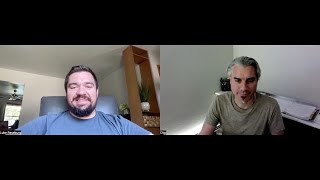
In this unscripted video, coach Chip walks viewers through a post‑session Insight Journal he creates with a client (Speaker C). The journal captures the session’s context, core insights, and concrete commitments, serving both accountability and a reflective tool for the client. Chip explains his coaching philosophy: deliberately entering uncomfortable territory, holding space while pushing the client to keep looking deeper, and guiding a shift from extrinsic to intrinsic motivation—what he calls starting with the "who" before the "why." He outlines a development curve of the coach‑client relationship, emphasizing efficiency and depth to generate a cascade of insights. The client reflects on limiting beliefs, painful events, and the concept that a superpower at one level can become an anchor that hinders growth at the next. Their commitment includes defining their authentic character, integrating this definition into a morning routine, and continuously expanding their internal capacity. Throughout, Chip highlights the importance of safe yet challenging space, intellectual rigor, and the transformative power of deep, iterative questioning.
Chapters
Hey there, Chip here. Uh, this is the first of the videos like this that I'm putting out there, um, and so it's a little bit of an experiment. It's not scripted at all, um, gives you a little bit of information about how I coach and are some of the things that I do when I'm coaching with my clients. But my goal here is really to help, help my clients that I'm currently working with, but also to help potential clients, people who would be interested in getting coaching. And certainly it's not just about coaching with me, but like coaching in general. And so one of the things that I do at the end of my sessions is to essentially capture a little journal entry for the client of the conversation that I have. So I'm going to show you how that went for this client, for this session. And, you know, as an aspect of coaching, this is something of a twist on the idea of helping the client in being accountable to, you know, the insights that they have and the commitments that they're making within the session. And so at the end of the session, I capture a little summative statement from the client, and it's actually a journal entry for themselves. So what you'll see is the context of the conversation, the sort of the core insight that they have, and then the commitments that they're making for that. And so if you can imagine after the session or between this session and the next session that I have with a client, not only do I interact with them, but this gives them an opportunity to call back and sort of feel their own emotion and their own commitment by essentially watching themselves and what they're saying. And so that gives you the context for what I'm doing and why I would do it. And so obviously I'm sharing this with permission of the client. You know, a couple of the things that are covered here, I've just made a few notes to myself for you to pay attention to. You know, the, the first one is the willingness to be uncomfortable, the willingness to really explore the uncomfortable areas. And honestly, the more uncomfortable of an area that you can develop with the client from the coach's perspective, or that you're willing to really take a hard look at, the more you can get out of a session. You know, so it's not just about the superficial stuff. It usually starts with that, and then you can get behind that and behind that and behind that, right? You'll see sort of a resolution to a new state of being, and I like, I like to see that. I like to see not just, well, I'm committed to do that thing, but like from the standpoint of it being like a real realization, I think that really gives us a strong footing on which to move forward from. And so, you know, part of what's going on here is moving the identity of self, the orientation of the identity of self, from extrinsic motivators to intrinsic motivators. So basically a self-orientation but from an intrinsic standpoint. I think that's really important, which ultimately gets us, you know, to the idea of starting with who, right? And so who, being a clear understanding of self, starts, you know, you got to start with that, and that comes before the how and the why. We make a mention to Simon Sinek's Start with Why in there, and that's kind of a funny little part of it. And so Doing that really shapes the commitment for new actions, and I think that's really important. I also, if you can see also a little bit here, I describe the development curve of the relationship and basically through the development of that, what you can really accomplish in a session. Because, you know, the basic idea here is to be able to accomplish as much as you possibly can in a session. It's sort of the hypothetical idea of being efficient in a session, not just to have some great ideas, not just to figure some stuff out, but really to go as deeply as you can and to really uncover as much as you can and then make that fundamental shift. So in my role of just being able to create this space, but also in being able to sort of assert or push on the client, kind of from the idea that the teacher can expect more from the student than the student can expect that they can accomplish, kind of deal. Some sort of version of that, if you will. Holding the person in the state of looking, if you can catch that, gives can result in a cascade of insights. So not just look and then get one insight, but look and then I just sort of sit back in that situation under the pretense of continue to look, continue to look, continue to look. And a lot of times, oftentimes, and what we try to cultivate in a session, or I try to cultivate in a session, is for a person to get into that state of looking but then to have it be really penetrative of a person's ideas and beliefs and everything about themselves, self-identity, or, you know, whatever we're working on. And that you can see it sometimes, it's really great to watch, is the cascade of insights where a person will have one thing and they'll go, oh, well, it's this, and then it becomes another thing and another thing and another thing. And it's really great to see that and witness it. And it's also most efficient in those circumstances if I just sit back and continue to hold the space for the person. And then we can kind of, you know, go into the ramifications of, of going that deep, you know, because then I like to say it's, you know, sort of the suffering, the consequences of, of having those deep insights is the cascading effect that it then has in one's life and owning up to those realizations, not just have them be a superficial thing. So with that, I'm going to go— I'm going to split into this particular Insight Journal entry with my client, and I hope it benefits you, and I hope it, if you're an existing client, kind of gives you context for some of the stuff that you can do. When we're working together. And if you're new to coaching and are somewhat interested in it, it gives you sort of an idea of where you can go. And certainly, I think some of the really great coaches out there would agree with me, any given coach can't, you know, obviously serve an infinite number of people or a large number of people in this type of one-on-one scenario. So I really believe that really great coaches are rare, although the industry is just exploding right now. So if you're in that frame of mind where you're considering that this would be a great thing to do, I would say that it's a vital necessity in today's world. It's one of the greatest one of the great privileges, if you will, of today's world that we can do this type of work together. I think it really amps up your game. I think it really increases your ability to move forward and play a bigger game much quicker. At the same time, the caveat is you have to develop that relationship and find that particular person that you can do that with. And by nature of the mathematics, the best people to work with are also gonna have the least amount of availability, unfortunately. So, uh, there you go. With that, I'll give you the video. The video.
Had a good conversation here. I think we've kind of emerged into a nice space and, and sort of a point of arrival. As we've been talking. And so take the mic.
So today we had a very powerful session. There was a lot of great questions back and forth, or great dialogue back and forth, and some of it was more about defining terms of what we were working through, but we kind of went through you know, some of the limiting beliefs or stories that I had been living out that weren't helpful, and then where that came from. So that kind of, we transitioned from that into, I, there was an event I was dealing with as in like day-to-day life and Chip's like, okay, there's probably something in that. So we pursued that and it went all the way to framing this concept that, uh, what works on one level doesn't work on the other level. What got you here won't get you there. So I was talking about a superpower I had that was a superpower at one level, and we kind of bumped into that. What is a superpower at one level is usually an anchor when you're trying to apply it on the next level. So we went through some of the events previously and in my life and talk through them. It was pretty great when it's like, I don't want to talk about that. So it's probably something I should talk about, right? And just going through, you know, a, like the superpower of some events I felt good about, and seeing that in reality, those same stories were actually causing like the beliefs, the ideas that I was holding actually were causing some of the big problems in life. And really bringing that up, parsing through that, what does that mean for me? And, um, we had great discussion going back and forth about defining terms around what that means and how useful those events were and why I associated certain things with that. That really, I guess, contextualize not just the events of my life, the things that happened, or why I was thinking that, but more overall of like who I am as a person, and then what that even means intellectually, but then in a very real sense too. So for context, some of the insight I got was the patterns that we live out, that I was living out, were always contextualized in a group setting. Some of my— the shortfalls of life and being young and a kid and growing up in a peer group and relationships are just normal day-to-day life stuff. I had attached on this extra meaning and was really living out these ideas. And, you know, reinforcing bad patterns. But what the most useful part of today was really going deep into those painful events, things I don't want to talk about, and really handling them and thinking through what that means, defining that, and then go, okay, I'm not going to do that. Here's what I am going to do. And going that deep, as we were kind of just saying, as we were wrapping up here, at the end of it, the usefulness of the exercise was really building out a capacity in myself, not just to understand, but to work on who I am. Who I want to be, what I'm going to do. I know we were kind of saying like it seemed as though in some conversations I could aware— I could have an awareness about that, an understanding intellectually, but then not really embodying that in reality for myself in a meaningful way. So like I know things but I don't do things, right? Keeping it simple. So, um, as you're kind of saying, I had At the end of the call, it's more about like the state I'm in right now is a good strong state, but it's not a temporary thing. It's something that because of today's session, like internally, I stretched my capacity to be able to work on this level. Like, okay, there's— you can break through the little tunnel and crawl through that into the next level, but not actually meaningfully operate, operate at the next level. Who I want to be, actually making space and capacity for who I am internally. So I know it's a lot of talk, but it was very intellectual. It was a very deep conversation we had.
And described arriving to a point of having space to do the work that you're talking about?
Yes, and the work has already begun, but it was just personally increasing my capacity to embody and live out what we've been talking about. So my commitment is to continue on to do this and build out intentionally, um, first identifying in meaningful and simple way like who I am, what, um, defining my character for me, not just defining it externally in accordance with like what other people would want or what they would say or thinking that through, but authentically who I am, defining that out, and then being that and how I want to live that out in the world for myself, not just based on what, what other people would think or what they said or stories that happened in my past or things like that. So I'm gonna write out things, integrate that in my morning formula, write and speak that out for myself in the morning, and, um, yeah.
May continue to clarify on it, kind of continue to scribble and build on it, you know, like render it out like a painting, right? Like, yeah, because it'll be the action of putting time and effort and focus into that slowly uncovers more and more.
Yeah.
And I feel, or I guess I would describe it from the standpoint that I feel like we— I think I said it during the conversation was I feel like we're now to that next level, right? Like in the beginning, we're sort of like developing all the preliminary rapport of the relationship and that kind of stuff. But then we get into like goals and trying to clarify the goals. Now I would argue, given that we're at this level of it, doing that, like really getting clear on who you are as a being, how you want to show up in the world, is needed as a context for deciding what you want to achieve, right? Yeah, establishing the goals and stuff like that. So it's not like we're ignoring the fact that we have a goal, but like now we're seeing through the goal to the deeper layer of knowing the why. I guess in Seneca's words, of why that goal in the first place. Well, it's because it's built on a foundation of who you are authentically.
So yeah, so it all starts with why, but in reality it all starts with who.
Maybe.
Yeah, at least right now in the conversation. Yeah, fine.
I'll start writing that as a book. Maybe Simon will endorse it. I don't know. There you go.
Well, you met him at the airport, you know.
Yeah, you do have that, that, uh, Hey, do you remember that time that you ran into me at the airport?
So I have a book.
Yeah.
It's not the why, it's the who. You know, you can do like a red line and cross it.
It starts with who. Yeah.
Might be just compelling enough for him to go, hmm.
Yeah. All right, I bet he would dig it. He would dig it.
Oh yeah, yeah. And I'm sure he wouldn't argue with it either. He'd probably be like, yeah, uh, well done. Uh, it was another long one, but it seems like we do really great work when, uh, we do this. So I really, uh, appreciate, um, it's, it's, it's something that kind of the whole process of how we start and how we get into it and then You know, we, we, it seems like we're able to steer into that location of discovering the part of the conversation that, uh, neither one of us really knew we were going to be covering when before we start. So it's, it's always a great, I think, discovery on both of our parts.
So yeah, well, and I want to acknowledge you and just say thank you to you for being my coach, but also creating a space that is safe but challenging so that we can actually do the deep work, not just in, you know, building out some super superficial, like, plan or achievement and, you know, goals and 3 steps to get there, but to actually, like, no, let's wrestle with the hard questions, um, to be able to like, well, when you say this, do you mean this? And to really define, um, our reality and shared experience, to define words like, when you say that, what do you mean? And to give context and to really, um, go deep in that. Like, it's so, so powerful. Like It sounds almost overly intellectual, but it's actually like, that's the deep foundational work to define your terms, to say what you actually mean, to share what you're experiencing, to open that up and, you know, literally open like the car hood and start taking things apart and say, okay, well, this is, this is how this works. So when you say this, and, you know, just the way you create that space, and in a way that's challenging but never in a negative sense, you know, but it's challenging to be able to go at that, that depth. I mean, obviously that takes like skill, but I just want to acknowledge you for your willingness to go that deep with someone else, but then also create the space to allow that to take place. That's pretty— I mean, that's extremely powerful.
Well, thank you. I appreciate that.
Yeah.
It's been, it's been a while to get here, but I love being in this space, so it's great. And, and likewise, uh, you know, over the sessions, and I— that's where I see sort of a growth curve with a client. It usually takes, you know, whatever number of sessions to get to a point, but there's certainly a point in our conversation where I felt like, you know, you got to that— what you said was like an intellectual intellectual part, or maybe you thought it was intellectual, but then I saw you really punching that through the concepts, and I could just kind of sit back and like literally hear and watch you like go through a cascade of ideas.
Yeah, that was fun.
See the concepts just sort of like go, well, it's this.
No.
Oh, you know. And so in, in my ability to be a part of that, uh, aspect or encourage that situation. It's, it's great to witness as well as, uh, being thanked for it. So being thanked or acknowledged for it. So I appreciate it. Yeah, it's a great experience working together, and I look forward to us continuing to do so. So there you go.
Same here. Thank you. I genuinely, I appreciate you.
You're very welcome.
Likewise.