Addiction In Recruitment, Therapy, and Self-Awareness: Lessons From Addiction with Dan Martin
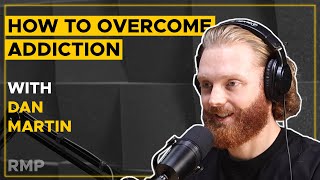
In this second half of the podcast, Dan Martin recounts his personal collapse after moving to Manchester, describing how a mis‑measured LSD microdose forced him to confront deep depression rooted in grief, identity loss, and core wounds. He explains that addiction is merely a symptom of underlying emotional pain, emphasizing the importance of therapy to uncover and resolve those core wounds. Dan discusses the typical profile of high‑functioning professionals who appear successful outwardly but suffer internal emptiness, anxiety, and substance use. He defines addiction as continued behavior despite known negative consequences and outlines common emotional and functional impacts such as shame, brain fog, strained family dynamics, and reduced work performance. The conversation then shifts to barriers to seeking help, notably fear of judgment and stigma, especially among men, and the distinction between labeling oneself an addict versus experiencing addiction. Dan introduces his structured recovery program—past, present, future—highlighting trauma work, lifestyle/boundary building, and purpose‑driven future planning. He offers practical advice for those hesitant to disclose their struggles, suggests confidential pathways within workplaces, and provides concrete next steps for engaging his services, including a web application and open DMs. The episode blends personal narrative, therapeutic insight, and actionable guidance for professionals battling addiction.
Chapters
Addiction is a, an automatic process. We get caught in the loop and we struggle to see beyond it. In order to give yourself hope, you need to start looking beyond what you're currently experiencing. So if you were no longer trapped by addiction, what would be going on in your life? Think about your environment, your behavior, the people around you, how you'd be feeling, what values would become important to you, your beliefs. Explore it.
Welcome back to another episode of the Recruitment Mentors Podcast. I'm your host, Hishem Azzouz, and on this week's episode, I was joined by Dan Martin. You've been qualified as a therapist for coming up to— going towards 2 years, and you found yourself helping people in the fitness industry. And then you then have your business called Freedom Solution, where you help high-functioning professionals break free from addiction. So Dan is now an addiction therapist. He works with what he likes to call high-functioning addicts. So on the outside, they have all of the perceived success, status, but on the inside, there's turmoil. And Dan is talking from experience. He spent 8 years in the recruitment industry, and at his worst, when his habits and his addiction was at the worst, he was out 5 times a week having 5 grams of cocaine at a time, drinking several nights of the week, and he found himself in this cycle. But he's been on this amazing growth journey since then where he's turned what he's gone through into his superpower to help other people. He's now a qualified hypnotherapist and NLP practitioner and actively helps a lot of people actually in the recruitment industry who may be suffering with addiction and we spoke about how to spot addiction. When does a bad habit become an addiction? I think it's an important discussion. What often holds people back from taking that first step to maybe getting help?
That's a great question.
And let's get into this week's episode. Dan, welcome to the podcast.
Thank you, great to be here.
Appreciate you making the trip. Uh, have really enjoyed our conversations up until this point in preparation for this. I've really enjoyed learning about your story, the people that you now help, the, the mission that you're now on. And I think I'm always keen and open-minded to have important conversations that can hopefully be helpful for people that listen to this podcast, which is a lot of recruiters, a lot of high achievers, which is why I think the conversation that we'll have today could be really helpful, maybe even transformational. For some people. So I'm going to just give a bit of background, and then I'd love to just start with just going through some of the important moments of your story that I've learned since getting to know you. So let me know if I get any of this wrong, but I think I wrote down, um, when we prepared for this, you worked in the recruitment industry for 7 to 8 years. You worked as a recruiter for a number of years, but then you also worked in the, in the recruitment industry in the sense that you sold a financial solution to recruitment companies. So you was in the recruitment ecosystem for a good amount of time, um, and that's a quite important part of like your journey. Um, so you— that's what you're doing work-wise, and then now you've been on this personal journey, I guess I'd say. Where you've been qualified as a therapist for coming up to going towards 2 years, and you found yourself helping people in the fitness industry from the high performance mindset standpoint.
Yeah.
And then you then have, uh, your business called Freedom Solution.
Yep.
Is that right?
Yeah.
Cool. Um, where you help high functioning professionals break free from addiction.
Right, smashed it.
So there's a lot to unpack here. So like, let's— and I know that you've also worked with a number of recruiters. Yeah, right, um, in that, which is why I was really interested to have you on. I've seen your post, I think you're doing a really good job of building your brand. I've got some of the LinkedIn posts today that you've shared which I want to break down with you. But why don't, why don't we just start with um, understanding a bit more about your story, because I feel like my perception of, uh, you know, the types of people that do what you do, uh, we can go into the, the core drivers why you do what you do, but oftentimes I've found that people have been on their own journey with whatever that may be, and then they've, you know, had that growth, and they almost feel like if they weren't to help people experience the same, they're almost doing like a disservice, uh, to themselves, right? So where, where does this story start for you? Like, when, when I meet you and I'm maybe speaking to you about, you know, working with you as a therapist, I might fall into this camp of a high-functioning professional that might label myself as an addict, or I'm not sure if, uh, you know, I'd say I'm an addict, but I always end up in these certain situations. And you start talking to me about, look, I've, I've experienced similar things to you. Like, where, where do you often— where do you often start the story in terms of where Dan's journey started with all this?
Are we talking about with therapy or with addiction?
I'd probably say with addiction.
Yeah.
So like, where do you often tell people, like, this was like where it started for me?
It started really, really young, to be honest with you. I was actually reflecting on this last night ahead of this, just journaling a little bit to explore in a bit more detail. And it really started at age 15. I'd say that was the first time I found some form of substance that had a bit of a hold over me. And I won't go too far into school details, but ultimately I didn't really feel like I fit in, right? I felt like a bit of a misfit, didn't feel like I had a real close friendship group. I'd look to other groups and think, oh, why can't I have that? And weed, cannabis, was something that gave me an opportunity to have that because there was a group of people, you know, like the gothic people. You don't really see that many of these guys these days, but there was a goth, gothic, uh, I think it was actually more good, like an emo group at the time. And I fell in with them and, um, cannabis was a big part of the culture within that group. So that's where my journey with addiction started and immediately you can form a link between smoking weed and getting a form of connection from it. And at the time, tell myself, oh, it's just fun, it's just getting high and getting stoned and whatever. But looking back on it now, I can see that really I was looking for a sense of connection and belonging within that group, you know. So that's where the story starts, and then it escalated quite a lot and went in ebbs and flows over the years, you know. It wasn't cannabis at 15, and then I'm straight on to cocaine, which is ultimately where I met, um, the hardest point of my life. But started at 15 and, um, and went from there. How do you want me to continue from here? Where do you want me to take the story from here?
Where, where did this— where, like, if you're happy to share, because it might be something that you found in people that you've worked with, but where, where did this sort of longing of connection come from?
That's a big question. Yeah, we're going there. Yeah, so the longing for connection ultimately comes from the fact that I'm adopted, right? So, um, I was adopted at a very young age, at 3 months old, adopted by my parents. And I'm not going to sit here and say that I had a tough upbringing because I didn't. I wouldn't be sat here opposite you having incredible conversations with people like you had I not had the upbringing that I did have. I'm very grateful for the upbringing that I did have. But what we are doing when we're children is forming beliefs and our sense of the world through beliefs. Beliefs essentially become our operating system. An analogy that I really like to use when we talk about beliefs is, um, hardware and software, right? The conscious mind is like the hardware, and you pick up your iPhone, you're looking at hardware. You're not seeing all of the ones and zeros behind the screen, you're seeing hardware. That's your conscious mind. That's I'm going to pick up this can, I'm going to take a drink after this podcast, I'm going to walk out that door, I might go and grab a coffee, sit down, do some work. It's me actively and proactively thinking about what I'm going to do. That's your— that's your conscious mind. And then the software is your subconscious mind. So that's where your beliefs live. And really, in the same way that the software within a phone becomes the operating system and the functionality of the device, your beliefs in your unconscious mind create the operating system through which you view reality. So when I was adopted at a very young age, a belief was formed of, well, I'm just not good enough for birth parents, despite all the evidence to suggest that I had a great life. That was a belief that was formed. So we carry those beliefs with us through childhood into adulthood. And when I draw this back to wanting to fit in with a group smoking weed, if I feel like, oh, I just not— wasn't good enough, or I wasn't deserving of love, by getting in with that group and smoking weed, guess what that does? Makes me feel like I am. You are.
Yeah.
Does that make sense?
Yeah, no, that does, that does make sense. No, I appreciate you sharing that because I, I think I always, when I have these types of conversations, it makes me feel like how grateful I am for, like, my parents, in the sense that my— definitely relationship with my parents has never been always, like, perfect. But what I mean by that is, I think whenever I speak to people, uh, who haven't had the typical, you know, setup where your mom and dad stayed together for X number of years or whatever, I find myself feeling grateful for that because I can— I can't fully understand, you know, how that could make you feel. But I think oftentimes people that come from a home where their mom and dad have stayed together for, you know, a period of time, they haven't got divorced or these other things, uh, you can probably take that for granted.
Yeah.
But in— like, if you, if you don't mind sharing, I'm just, I'm just curious, like When, as you're like in your formative years, because you, you always see, I feel like, in like films play out and stuff, or like drama series that I watch, where if someone is adopted, they'll come a point where you're really curious about who your parents are. Did you go for— I don't know, I feel like that's— you always see that depicted. I don't know if that's accurate, but I feel like in like you know, watching stuff. I don't know, that's like a quite common storyline where someone grows older, they then start thinking about, who are my actual parents? I've had these amazing adoptive parents I'm so thankful for, but who, who are, who are my parents? Did you go through that?
Yeah, I've been through that several times over the years, and last year was when it kind of peaked. I think I was laying on the sofa with my girlfriend, and out of nowhere this insight came to me. It was like, you need to go and meet your birth parents. Really? Yeah. And I don't know where it came from, but it just came to me and it kind of produced a wave of emotion. I reflected on it and then I actually raised it with my therapist in my next session with him. I said, I think I've got this one. His name's Hugh, my therapist. Hugh, I've got this burning desire to go and see my birth parents. And he went, well, what are you hoping to find? What if they don't share that desire? I thought, fuck, you're right. Like, I could be building this up to a big monumental point where I think, oh, we're gonna meet, it's gonna be lovely, we're gonna connect and feel love and all these emotions. But there's no guarantee of that. And in reality, it could have caused more discomfort than not knowing. So I accepted that right now just isn't the perfect time to do that because, I mean, where do you even start with that? Like, I've got no idea where to start. And I don't— if I look within myself deeply is there something inherently missing that would be filled by meeting them? No, not right now. I've got everything that I need right now. That doesn't mean to say that at some point in the future I will pursue it, but it's not as straightforward as running the Google search going, who are my birth parents, right? Like, yeah, it's complex.
I can imagine— I can— again, obviously I can't relate, but I can just imagine it would just be just a real sense of curiosity, like 'Who are these people? How much are they like me? How much?' I don't know.
Yeah, it's exactly that, it's curiosity. I know that this is something that's, um, big on your hierarchy of values, right? Curiosity is, uh, it's a driving force in my life as well, hence why I became a therapist. I want to learn more about humans and understand how I can help them. And it's there, there is a question in my mind: who are they? What are they doing? What are they like? What are their values? Do they align with mine?
So would you agree then, in your own journey, because you often grow up hearing weed is the gateway drug to other drugs, would you, would you agree with that? Would that, would, did that play quite an important part in then exploring other drugs in your life?
Yeah, for me it certainly was a gateway drug, but I do not believe that we live in an either-or universe insofar as everything has to be either this or that. Yeah, for some people, people which I know personally, they can smoke weed and have no interest in doing anything beyond that, and they can go to work, hold down a job, build a life, build a family while still smoking weed. It's not going to be the same for everyone, and it certainly wasn't the same for me. For me, it absolutely was a gateway drug, but there's a fine line between enjoyment and escapism, and when I was using weed unconsciously, it was escapism for me at the time because of all the stuff that I was packaging away from childhood. And weed became what was essentially a form of medicine for me. So get some form of, um, emotional relief from smoking weed. Naturally, I wanted more of that, so moved on to other things. And I can move on to— not too long after that, actually, still at age 15 at this point in time. I don't know if you remember this, but there was a drug which came out, MCAT. MCAT, you remember that? Yeah, yeah, it was huge.
So many people on that. Yeah, I was, I was, and I never did it to be fair, but I definitely remember like just hearing people doing it at parties, and that was like a very popular drug. Yeah, because I'm, I'm 30, right? I feel like we're similar ages. Yeah, I was born in 1993. Yeah, so I feel like that, that definitely had like its moment. It was like plant fertilizer or something.
It was, yeah, yeah. It was crazy strong, like crazy, crazy strong. I remember police coming into school one day, and I don't know if this story was true, they were just trying to scaremonger, but I remember them saying that there was somebody who took Mephedrone and they ripped a car door off because they were so high.
Ripped a car door?
Yeah, that was the story they gave. And I was 16 years old, my 16th birthday was spent going backwards and forwards to a row of shops picking up more and more of this MCAT stuff because it was, it was so cheap and it was so pure. It was still legal.
Yeah, it's mad that when those, like, people discover these, like, legal highs— yeah, you— I always think, like, who was the first person to, like, get that in their system, do you know what I mean? There was like, oh my God, yeah, this is unreal.
Yeah, yeah, let's produce more of this. There are labs all around the world which are trying to find loopholes to manufacture new drugs which are essentially doing the same thing as the one which has now been made illegal, but they can just brand it as something different and then it can legally be sold in shops. You know, like Spice, great example of that. Remember that was—
I feel like that's really— that was really big up north. Yeah, yeah, a lot of homeless people. That's right, would be using that, right?
Yeah, that's right.
Yeah, so that— so quite— so quite quickly then you were also getting exposed to other drugs and bar smoking weed.
Yeah, I was. And it was, it was systemic in the, the culture of the friendship group that I was in at that point in time. It's just what we did. It's just a bunch of people who were really like paper bags floating through the wind. None of us had any ambition. We didn't have any desire to create anything or do anything with our lives. There was a very wide, um, spectrum of, of ages, you know. We were there at the bottom end at 15, 16 years old, but then there were people there who were in their early 20s, and we were all in a very similar mindset. We just know what we wanted to do with our lives, so it was so much easier just to smoke weed and take drugs because, hey, it's fun, you don't have to worry about anything.
Yeah, I haven't got much else to worry about, right?
Yeah, that's right.
Yes, I always— the thing is, is like when you're that— when you're that young, and I do view that as like really young, I know when you're at those ages you think you're a lot older than you are. Yeah, but It's interesting because how— what is the chances or likelihood of Dan like breaking free from that friendship group if he feels like it's not serving him? I don't see that. I don't feel like that's very high. I feel like when you're younger, you just want to fit in.
Yes.
So to even think about, I'm not going to go to this party tonight because last time I did MCAT, it was a bit weird, but Like, there's— I feel like that's so hard, which is why so much can happen if you get in with the quote-unquote bad crowd when you're younger, right?
It's—
and I don't know if— yeah, that'd be so hard to break free from it. Yeah, when you're younger.
Yeah, it would have been, but importantly, at the time I had no desire to because, like, I talk about, you know, not feeling enough and challenging emotions and all of the pain I was experiencing. Now, having got over 100 hours of therapy and coaching under my belt personally and trained as a therapist, I understand this stuff now. It's hard to even have the level of self-awareness to be aware of this stuff if you don't know what you're looking for, right? And I had no idea what I was looking for. There was just discomfort there, but I don't want to go near it. I was like consciously choosing to ignore that and instead just intoxicate myself. So at the time I wasn't ready. And, um, having a conversation with someone on LinkedIn about this yesterday, um, when it, when it comes to addiction, really, in order to do something about it, you have to arrive at a place of acceptance and willingness to confront all of your bullshit that you're ignoring and do something about it. And everybody traveling at different speeds, and not everybody will be ready at the same time. That's why you hear about interventions that take place and then they just get thrown, thrown back around in their face because the person's not ready to receive that kind of news. And at this point in my life, I certainly wasn't ready. I had a lot more self-destruction to do before I arrived at the place of rock bottom and going, fuck, I need to do something.
Yeah, yeah. So where, where did we, where did we go from here then? So 16, 17, yeah, like obviously weed, MCAT. When did— and was the en, en looking back was just the perception here, like, I have a group of friends, we do drugs sometimes, it's recreational, it's, it's good fun. That, that was like the language, I'm assuming, or like the perception of what you was doing. Yes. Rather than actually, yeah, maybe I, I feel like when I do do this stuff, I'm always thinking about the next time we can do it. And, you know, I'm assuming you didn't think of this word, an addict or addiction, back then.
No, it wasn't something that was in my conscious awareness, but I was aware that I was crossing the line between addiction and dependency. Because there is addiction and independence, there is a difference between addiction and dependency insofar as addiction is more of a towards movement. We'll go out of our way to try and find something, right? Dependence is I can't function unless I have this thing. And cannabis did become like that for me. It become so frequent using it every day, sometimes smoking it before school when I was at that age, and I genuinely didn't feel like I could function without it. Obviously I could but at the time, psychologically, I need this stuff in order to function. So kind of crossed the line between addiction and moved towards dependence at that point in time.
Yeah, I always find it fascinating, people that can like function day to day. Yeah, by starting their day just smoking a fat one. Like, I've never understood that. Yeah, I just— because, yeah, it's mad. It's a dependency and addiction. That's an interesting distinction, to be fair. So he was crossing those lines. And then how does this— how did this start to evolve then? You know, when did we start, you know, um, exploring with different drugs? Like, where— yeah, when did— where did— where did we go from here with our journey with using narcotics?
There was a, a brief moment of respite around age 17 where I wasn't using a great deal of anything. Every now and again I'd smoke some weed. I was still drinking, but the level up towards harder drugs happened when I got into the corporate world. So age 18, I was actually working as a mechanic at that point in time. Still didn't really know what to do, just knew that I loved cars. I thought, oh, I'm working in a workshop. Hated it. Couldn't stand being dirty and cold and making tea and sweeping up shit all day long. So didn't stay there very long. Um, I was around 18, at my nan's funeral at the time. And my cousin, who was a year younger than me, just having a general chat with him, he said, I've just started working in sales. And he was earning— I can't remember the exact figure, but he was earning, as near as making a difference, double what I was earning working as a mechanic. And I thought egoically, well, if he can do it, then I can do it. So that's where my journey into the corporate world and sales started. And, um, I landed a job at a leaflet distribution company, which is very old-school sales— here's a list of numbers, go out and find some business kind of thing. And I was tasked to go around and, um, pitch leaflet distribution services to businesses in London. And, um, it was tough. Didn't have a clue how to write an email, didn't have a clue how to speak on the phone, no idea what I was doing. But taught me a hell of a lot about getting rejected and told to get the fuck out of the shop, right? Which is really powerful. But that was my first instruction in sales. And then from there, I left that job and went into recruitment. And that's where, um, I had done cocaine previously, but not very much. It wasn't something that kind of had its grip over me at that point in time. But in that environment, that's where everything started to ramp up. And, um, cocaine and steroids actually became a part of my life at that point in time. So we can go wherever you want to go from there.
Well, yeah, let's just talk about this because that, that's also why I wanted to have this conversation, because I think a lot of people listening have been around the people that use those drugs in the, in the recruitment industry. So because you, you worked, you worked for, um, you worked as a recruiter for a couple of years and I'm assuming, like, how, how successful were you? Like, were you earning the most money that you had, had up until that point? Like, do you know what I mean? Financially, was you doing well?
Okay, I was doing okay. It was, it was, um, I don't know, very low basic, as most recruitment entry-level recruitment jobs are, for maybe on like 15, 16k a year, something like that. And then with commission, maybe up to 24, 25k, something around that sort of mark. So at the time, for someone who had just come from an apprenticeship as a mechanic, which is earning, you know, very, very low wage, then going to work in that other business selling leaflet distribution services where I didn't earn any commission on about 15, 16 grand a year. To me, it was a lot of money at the time. It was a lot of money, so it was easy to spend it.
And like, what— and what was— you live in a home?
Yeah, living at home. Yeah, with my um, with my dad at the time. Okay.
And like, how did this— how did this first show up then? Like, how did cocaine first show up with you in the recruitment context then? Was it Friday night, you know, week, one of the boys thought, let's get a bag in? Like, how did it— how did it initially show up oftentimes?
Yeah, it's exactly like that. It started off as being, you know, Actually, usually a Thursday night. Interesting. Yeah, Thursday, Thursdays.
Didn't have work from home Fridays either as well.
No, not every Friday. Yeah, yeah, every Friday. Sometimes staying up until 5, 6 o'clock in the morning watching the sun come up through the blinds, hearing the birds chirping at window, knowing that you gotta pull yourself together and get to work within the next couple of hours. It was, it was tough. But yeah, it started off as being just a, a Thursday and Friday night and, um escalated from there. A few years later, really, it, it was only— I say only— 2 times per week whilst over that period. Um, again, emotionally at the time, wasn't aware that there was anything wrong with what I was doing. I was kind of caught up in the process of just want to earn money, just want to have a good time. I've earned this if I've had a hard week at work, I deserve to be able to go out and let my hair down at the weekend. There's no harm in doing this. I've got no responsibilities really. I'm living with my dad. There's no problem here. So stayed that way for a few years. Um, but this is at the same sort of time that I was starting to dabble in steroids as well.
Where did that come from?
Insecurity.
Yeah, it often does when you're younger than that.
Yeah. Yeah, absolutely. Insecurity and impatience. I'd only recently started training at the gym, enjoyed it, but playing into the addictive tendencies of my mind— if there's something that I enjoy, I want more of it, I want to dial it up as much as possible. And this is— I'm not a finished article, right? Like, I sit here now and I still have to control myself at times. This is just something that's hardwired into my DNA. Started going to the gym, the same guy who I do coke with at that, um, recruitment agency says, oh, have you thought about Anavar? And Anavar is like a tablet steroid, right? So, um, fairly subtle in terms of its effects. Tried that. Oh, that's good, look how much muscle I've built in such a short amount of time.
But what was the why? Was it— what was the, like, mate, have you thought about this because you can get bigger, like, even quicker? Was it as simple as that?
It wasn't even that. It— at the time, I didn't really know that it was a steroid. Like, it wasn't explicitly explained. Like, we hear steroids, kind of a loaded word, right?
It's kind of—
you—
I feel like— I don't know about you, but as soon as I hear the word steroid, you think about injections going in bums. Yes, is what you— I feel is like what— where my mind goes.
Yeah, yeah. Well, that's what it went to next. So I only took Anavar for a very short amount of time and naturally wanted more. So testosterone came along, and it was actually positioned to me as being even safer than Anavar. Oh well, if that's the case, then crack on. Load me up.
Yeah, but was, um, and the motivation behind that was combined with, like you, like you said, being self-conscious, wanting some of the other things you said around, like you wanted to dial up your getting into your training. But was it as simple as, I want to look good, I want to, I want to get big, as simple as that?
It was purely aesthetically driven. There was no, I'm going to compete at this competition in a couple of years' time. It was, I just want to get as big as possible so people will validate me.
I definitely know people— it's interesting, it came up in our friend WhatsApp group recently. Like, I feel like anyone listen to this, they'll likely, as a guy, know at least one person that started using steroids fucking early. Because that then as well, even, you know, late teens, early 20s, again, you're still so like one— you care about other people's opinions so much. So you absolutely in those years do— I don't know how you found it, but you, you would have found, I'm assuming, some sort of validation from it. Yeah, because I know the guy that I'm thinking of in I like town and grew up with, his arms were fucking huge.
Yeah.
And like, I'd always be thinking, how the fuck? How?
Yeah.
And I just know back then that would have probably made him really feel good that people looked at him that way. But then it just came upon a friendship group recently, like one of our friends went to the gym, uh, went to David Lloyd in the local area that we grew up and was in the sauna and ended up talking about this guy saying like he's had 2 heart attacks. And like, yeah, it would have been— he's younger— would be younger than me. And it's just mad because again, when you are those, um, in those formative years, again, when you start training, you want to fit in, you can easily make decisions like the decisions that you made.
Yeah. And they have long-term repercussions to the point where, because I abused them— steroids, that is— for such a long time, on and off for about 5 years with no safety precautions. I'm now at a point where my natural testosterone is struggling to get within normal range, and I'm 28 years old. That's not right. This shouldn't be like that. And energetically, I feel okay, but it shouldn't be as low as it is now. And something that we spoke about when we were on our prep call is the condition that I developed, gynecomastia, where, without going into too many details, I had to have surgery on my chest because of a hormone imbalance. And that cost me the best part of £3,000, which I didn't have to spare at that point in time, all because I wanted immediate gratification, or very, very short-term gratification from taking steroids. But when we're young, particularly operating from, um, highly driven, ambitious, and insecure mindset like I was, don't care about the long-term questions. We just want to get big quick and get ticks in the boxes from a validation perspective.
Yeah, no, totally. So that mixed with then the use of cocaine increasing, that's, that's some mix-up.
Yeah.
How, how, like, again, in hindsight— and we're gonna go into your journey in, you know, uh, I don't know if the right term is like better control or like making different decisions, holding yourself accountable So the reason why I bring that up is because sort of what I'd love to just get your take on is like how influential were the people you was around in these sorts of decisions. But I don't want that to be in a way where you're like pointing the finger, because I don't think that's helpful, right? It's like, oh, I made this decision because of so-and-so. You don't really give yourself any power in having that perception. But like you were— like the— your tribe is so important. So how, how much of this, with this continued increased usage in these, in these years, was like the environment you was in? How much of an impact did that have?
Hmm. 2018 is when I left, um, being on the tools, so to speak, as a recruiter, and went to the other side of the fence and joined, um, what recruiters will recognize as an umbrella company. Yeah. And, um, their environment contributed massively. That's where everything started to really ramp up in terms of usage. So, um, most, most, most recruiters, whether they're contract or permanent, will know that the relationship that is developed between umbrella companies and recruitment consultancies is largely built upon the foundation of dropping gifts off smoozing, taking out for meals, boozing, all that kind of stuff. For someone like myself who was already struggling with addictive behaviors, that is a recipe for disaster. My employer goes, there's a company credit card, we need you to go out and build relationships with the recruiters, do it by any means necessary. So that, that became my tribe. And the tribe which I had outside of my professional life were also people who were into the party scene. So it was drinking, drugs, and destructive behaviors there. So I would be going out, you know, 2 times per week taking out recruiters, which would be largely fueled by drink and often drugs as well. And then Thursday, Friday, Saturday, I'd be out with friends partying. So it was from every angle contributing towards these destructive behaviors that I was stuck in.
So it went more from like 2, 2 times a week to 4, 5, 4, 5, sometimes 6.
Yeah, it was a lot.
So what—
a lot.
Where— when was this at its worst then? Because I feel like this is where you're talking about where it dialed up. Like, when was your relationship with cocaine at its worst, would you say, in terms of the amount that you used it? Or like, at the—
yeah, at the worst, it would have been 2018.
Really?
Yeah, 2017, back end of 2017 going into 2018. That's when it was—
and what did that actually look like?
What did it look like in terms of the work life? As I said, it was 2-3 times per week out in London going to regular cocktail bars and clubs afterwards until the early hours of the morning, staying in a random hotel somewhere, gratefully paid for by the company I was working for at the time. And then in my personal life, I'd be going out to raves and Sometimes just at home, stood around the kitchen table until 4, 5 o'clock in the morning.
So how many grams are we doing a week at this point?
Grams a week, that's an interesting question. Absolutely, you know what I mean?
Like, what is it like, or gram, like, yeah, you know, how much are we doing average?
I'd say average night out would be— I try and get the stronger stuff, which generally comes in half grams, right? So generally 2 or 3.
Pure, typically.
Yeah, that's right. So a gram and a half of that a night, probably. So we must start doing that 4 or 5 times a week, you know, 5, 5, 6 grams a week, I guess, something like that, of the pure stuff, something around that sort of mark.
What is it that you enjoyed most about it? Because I never, I never really rated it. Like, I've done it a number of times and always just felt— I don't know, I've just never— if I think of the, the times I've done it, it's normally been on nights out with mates, stuff like that. I don't know, I've never really rate— I've never really like proper rated it. Like, what is it that it, it get like in terms of— how did it really— how did you really enjoy it? Or what is it that you really enjoyed about it?
Um, I thought about this a lot and there are 3 things. Okay, firstly, confidence. I wasn't a very confident guy, and I was working in a job where it was my responsibility to form relationships with people which would then remunerate me financially. So if I took cocaine, I'd feel a lot more confident, I'd be able to have better conversations with people, which would then lead me to more professional success. So in my mind, I was like, well, this is just a win-win, this is, this is obviously a good thing. So firstly, confidence, but then it gets a little bit darker because it gave me freedom. Because at that point in time, 2018, I was experiencing discomfort. I knew that I was feeling anxious. I didn't want to go near it, but I was aware that there was something going on inside my body. And this was an accumulation of the adoption realization, and I also lost my adopted mum when I was 18 years old. And I just chose not to process any of that, consciously disregarded all that grief, didn't want to go near it. So there was that that I was avoiding, and it gave me freedom from that as well. And it would also give me what I would now define as like charisma. It made me feel like I had something. You remember earlier on in the conversation we was talking about me never really feeling like I fit in? It gave me that connection and that sense of fitting in. It made me feel charismatic. So confidence, freedom, and charisma/connection is what I'd get from cocaine.
Yeah, to be fair, I'm not— confidence, totally get. Charisma also, I, I do get that because you're sort of like, yeah, it sort of amps things up a bit, doesn't it? It's like, yeah, yeah, I'll get the— I get the freedom piece in terms of— I feel like that's where we're talking about like escapism, right?
That's right. Yeah, I said earlier there's a very fine line between enjoyment and escapism.
So what ended up being— because you said, you said, right, it's difficult to help someone that doesn't want to be helped. So was there like a specific moment that was like your rock bottom, or what was like the lead domino of maybe you starting to have these thoughts of like, why, why do I end up always making these decisions? Or why do I always end up in these scenarios? Like, was— yeah, what started to bubble away and why?
It was an existential crisis that took place, and the trigger event was completely outside of my control. So it was actually the pandemic that caused me to have that look in the mirror and understand that I needed to make a change. And it wasn't an overnight process, it was something that happened gradually over about a year, to be honest. So we went into the first lockdown when— March 2020, right around that sort of time. Yeah, I'm living in Hitchin, Hertfordshire at the time, and the lifestyle that I'm living, insofar as going out partying up until that point, up until that point, is no longer possible. I'm not able to do that anymore. So I'm stuck with my thoughts, and I have no choice but to look in the mirror and be with myself. Now, I'm still smoking a lot of weed at this point in time. I didn't do a hell of a lot of harder drugs over that lockdown period, but I did smoke a lot of weed. And that's because I still just wasn't quite ready to process all of the, all of the discomfort that was going on. So that was the trigger event. And, um, over that summer I didn't really face up to a hell of a lot. I was just smoking weed. But then towards the end of 2020, the lease was up on that flat that I was living in, so I went back home to move in with my dad for a little while. And something happened when I moved back home there after having a break from the house in which I grew up in and spent so much time, you know, taking MCAT and smoking weed and all this kind of stuff. When I went back there, something didn't feel right. Something felt disconnected for me, and I kind of woke up a little bit. And for whatever reason, I just felt a burning desire to just push the reset button. So I knew that I had to get away and actually turn my attention inwards and understand what was going on inside of myself. So having never been to Wales before I moved to Wales, and the reason for that is because I was also doing a lot of mountain biking at the time, and I thought, how can I leverage the one thing that I am able to do? All of the other stuff that I used to love doing, like going out and partying, that's not possible. But the one thing I can still do is ride my bike. How can I make that as enjoyable as possible? I'll move to Wales. So I found a random room on SpareRoom. Photos were awful. I don't know what I was thinking moving there. It looked very suspicious and suspect, but I moved to this random house in the middle of Wales. And it was moving there that I started to truly wake up and understand who Dan was and what Dan was running away from. So, um, there was one book that interestingly my best mate told me to buy to send to another friend of ours who was really struggling with depression at the time, and I forgot to send that book to him. And I took that book with me And I thought, well, it makes sense for me to just kind of start reading this book, right? And it's called The Drummer and the Great Mountain. For anybody listening who suspects they've got ADHD, buy this book.
What's it called?
The Drummer and the Great Mountain. It's an adult guidebook for ADHD. Okay, super big words, which is great for someone like me with a short attention span. And there are little tasks all the way through, and it really helps you understand, um, who you are, where you're going, what you're doing, what you want to get out of life. So I started reading that book. As a result of reading that book, it brought up a hell of a lot of emotion for me. So gradually over that period of time, 2019 now, uh, no, sorry, 2021. Yeah, 2021. Um, I'm starting to feel depressed.
Time to feel depressed.
Starting to feel depressed. Yeah, I'm, I'm processing. Like, it's, it, it's a conscious act that I'm going through at this point in time. For once in my life, I'm welcoming emotion in rather than pushing it away with drugs. Again, still smoking weed at this point, but I'm actively trying to access my emotions at this point in time. So that was the, the period at which I hit close to rock bottom. Not quite there, you Yeah, um, but that friend of mine who sent me that book, he was studying to be a therapist at the time, and he asked if I would be willing to practice with him because as part of your therapeutic training you need to practice and get some reps in to understand how to do the different techniques and methodologies. So that's my introduction into therapy at that point in time, doing it with my best friend. And naturally there's a limitation to how deep you can go with a friend because you've got kind of a previous relationship there and you don't want to share certain things. So I kind of start to pull trauma and stuff out that I hadn't gone near before, but doesn't come all the way out, right? So that takes us up to, um, that would take us to August 2020. And there's another key milestone in the story, and this is something which I spoke about on my LinkedIn a few days ago. Whilst living in Wales, I thought, I'm out here in the middle of nowhere And I've always wanted to try growing weed.
So you've always wanted to try growing weed?
Yeah, I always wanted to try growing weed. So, um, mentioned to the guy who I was staying with, is this okay? Do you have any problems? You don't know about it, then yeah, sure, no problem, that's absolutely fine. So there was a guy who did some housing renovation work with this property that I was living in, and I mentioned to him, got quite friendly with him, thinking about buying a cannabis seed and just growing a plant. He went, oh, funny you should say that. Come have a look at this. And this big farmhouse that I'm living in takes me out to an outhouse out on the property, and there's a grow in there. There's already 4 plants that this guy's growing. Great. Okay, would you want to go halves then? So we go halves. And naturally, this same theme, which you'll be picking up on now, when I find something that I like, I want to do it more and more and more. So there's 4 plants in there at the time. We harvest it, great, they came out okay. Well, let's do 6 next time. Okay, we did 6. And then there was a second barn house, and I thought, well, I'm going to buy a tent, I'm going to put it in that one, and I'm going to start growing some seedlings over there whilst these ones are coming to the end of their harvest, so that by the time these ones are done, these ones can be moved into there, and we can have this bit of a cycle going on. And it's important for me to mention that I had never had any intent to supply. This was all just like cultivation. I just enjoyed the gardening aspect of doing this stuff, right? But, um, it all came to an end when the landlord's daughter came to visit. She knew the property very well, having lived there for, um, 25 years while she was growing up. She heard the sound of the extractor fan out in one of the outhouses, called the police. And, um, of, of the morning of my arrest, I knew that there was something wrong intuitively. There was something telling me in my body that something was going to happen and change was around the corner. And, um, police knocked at the door. It was a very, very traumatic day. Ultimately, I got arrested and had to leave Wales very, very abruptly. So that was the end of my time in Wales. It started off very, very strong. I started to understand my emotions, generally turn my attention inwards. That's where I landed on the realization that I wanted to train as a therapist. I started training as a therapist whilst I was in Wales, but then I had this crippling imposter syndrome whereby I was like, I want to work with people with addiction, but I'm also growing weed plants. It was kind of dual life that was going on. I didn't— I hadn't really 100% let go of that past identity that I had whereby I wanted to still be involved in drugs and all that kind of stuff. That was kind of going in two different directions, you know. So short-term, getting arrested was awful. It was, um, very, very difficult and traumatic. But long-term, it's the best thing that ever happened because it was the existential kick up the ass that I needed to say, look, mate, you've got so many good things going for you here. Sort your shit out. Sort yourself out, you know.
This podcast is proudly partnered with Vincere, the all-in-one recruitment agency software that over 20,000 recruiters trust daily. We're also partnered with the award-winning 1UP Sales, the sales and motivation platform that enables you to maximize the potential of your teams. We love partnering with both of these organizations because they share our mission in helping you get the most out of your people and your business. You can get exclusive offers because you listen to this podcast and get up to 10% off the usage price forever. Use the link in the show notes to get your hands on that. Let's get back to the episode. What— it, it is crazy how like just what one decision can lead to. I just thought— I'm always fascinated by that. Because you told— you shared two experiences there. One, your best friend sharing a book for another friend which you ended up reading, and then another of someone that you met, although you still had an idea, who said, hey, come have a look at this. Just, yeah, you always— I feel like, yeah, one, you can be just one decision away, right, from Yeah, like really good things, bad things, poor decisions. So yeah, I'm not surprised that that made you really think about what the fuck am I doing.
Yeah, it did. It was a wake-up call that I needed. Yeah. And as one door closes, another one opens.
Do you think everyone— do you think people need— do you think most people need a wake-up call?
Specifically within the area of addiction or just in general?
I guess, yeah, we could call it that. That's, that's, that's the world that you're in and the people that you help. Like, have you found that oftentimes people have had a moment which they would describe as, I needed— it was a kick up the ass?
I think some people will find their own way. Some people will have a moment of realization themselves. But others do need it. I certainly did need it. I don't know how long I would have gone on trying to grow weed and what would have happened from there. That was, even at the time, something that I knew I needed. So again, we don't live in a neither or universe, but there are a lot of people who are struggling with addictive behaviors which do need that existential slap around the face to say time to make a change.
So what did the— so that year then, 2021, clearly a pivotal year for you. Yes. Really started to face, like you said, the, the emotions that often you've pushed away.
Yes.
Started to spend some quality time with your best friend, specifically around therapy sessions with him, because that's what he needs to do. I mean, I also really— what I also respect about like what you did there, although you ended up in a situation which ended up being your kick up, uh, kick up the ass, but you did— a lot of people wouldn't have gone like— you also really changed your environment, do you know what I mean? You went to Wales, it was just you. I'm sure like that was also probably quite important because you're in— you're completely out of like when you go to Wales and, and it's you, no one, no one has a preconception of like who you are and what you were.
Yes, that's right.
That's what I really like about when you move somewhere. Like when I moved to London, you know, 5 and a bit years ago, like when you meet anyone, they're meeting you of today and you talk about where you're going. Whereas when you stay in places like where you was, you know, with your dad and stuff, you will walk around and people look at you and go, oh yeah, that was Dan, he was, he was really big, wouldn't he? Do you remember how big he was when he went to the gym?
Yeah.
So like, I, I do really like that.
You—
I really respect that you did that on your own as well, because not a lot— I think that takes a lot of courage.
Yeah, thank you.
Personally, um, so what, what did you then really start leaning into then? You obviously left Wales. What did you really start leaning into that you feel continued to help you go on this journey of facing your emotions and, like you said, started to actually become the person that you needed to be if you did want to become a therapist that helped people with addiction? Like, what else did you start to do?
Um, well, there was another event, something which we've spoken about again, which happened around that same sort of time as being arrested, and that was a return to work meeting that I had with my boss at the time, right? That's a really pivotal point of my journey because Coming back from lockdown and going back into the work environment, two major things happened. First of all, I was working as a business development director, and after the lockdown, the contract market saw, um, a big dip, right, as a result of the pressures that were put into the economy. And as a result of that, I lost my title of business development director whilst working at an umbrella company. And had to take a demotion back down to key account manager. Now, that was a big slap on my ego, and it was the first time that I had to surrender to the fact, well, actually, maybe I truly am not good enough. And that was quite humbling in a way, difficult to take, but humbling. Um, but my boss at the time said some words to me that have stuck with me forever, and they were, I gotta be honest, Dan, you went away from the business on lockdown one person. You've had 8 months out doing whatever you've been doing whilst on lockdown, and now you've returned someone completely different. I don't even recognize Dan anymore. And it was one of those moments— I don't know if you've ever had this— where words just kind of cut through all of the noise, and it was like a hammer shattering my identity. And it was at that point when I knew, okay, I've got to really pull my shit together here and start making some, some proactive changes. And then shortly after that, I got arrested. So it's almost like the universe's way of saying that something's changing here, dude, you know?
Yeah, I don't know if anyone else listening has had moments like that. I, I definitely had my moment with that. It is, it is— I do find it so interesting that you can often just have those certain moments and experiences that do stick with you. Forever. But I completely agree when those words just like really resonate and they just land different. So for me, I was really fortunate— I'm fortunate I have a really great close friendship group. We're all doing our own thing, we don't all live near each other, we've all ended up our own paths. But early 20s, like, all I cared about was other people's opinions, going out, just the normal stuff. But then there's two friends that started to not come to socials as much, didn't come around when we said we were just gonna smoke weed and watch Geordie Shore. And like, they started to sort of splinter off. And because I am a quite curious person, like, that did make me think, like, why, why are they not coming around? Like, why are they I just found that interesting. So my moment with that was— yeah, it was actually, it was actually on a, on a shroom trip, the first ever one that I did with my close friends. Like, super safe environment. We literally started the trip by watching High School Musical, like, and it was just— the, the intention was we're going into this experience together to get something out of it. And I'll always remember it where we were sitting on the beach, obviously fascinated by the stars because they just look mad when, um, uh, when you've taken, uh, shrooms. And I sort of— something just clicked and I understood why they were saying no to the things that we'd always done, AKA going out or these things. And it was a simple realization that they were making the decision on the best investment that you can make is in yourself. And I never— that would— that is not a perspective I would have. So that like struck deep to me, and I was like, oh, they're just choosing to spend time on themselves rather than time doing what we were doing. And then from that moment, I was like, okay, what does that look like for me? What can I start doing? I started to read books, and I just started to explore this idea of spending time on myself. And that, that was, that was like a huge catalyst for me, and those words really cut deep. And just having that, I just, I'll always remember it, just, it just clicked for me. I was like, oh, okay. And then I've just continued on that journey, just thinking about, you know, exploring me and myself.
Yeah, that's a great insight that you shared.
That was me. So I understand when you have those moments, how they feel, and they can genuinely change they can really change things.
Yeah, yeah, I resonate with that a lot. And you, you kind of opened up a memory pathway for me there. One thing that I noticed whilst I was going through my growth journey of starting to, similar to you, read books and watch YouTube videos and, and that kind of thing, is that I was doing it all wrong for many years. It's almost like I don't know what I'd call it, maybe toxic productivity, you know, when you feel like you have to be reading new books on self-help and all this kind of stuff. And one thing that I did, and I can now recognize as a major mistake, is just read everything. And then I'd get frustrated with myself thinking, well, why is nothing going into my head? I'm just reading lines and I'm not actually absorbing anything. It's because I just didn't give a fuck about it. I just wasn't bothered about the stuff that I was reading. I don't know if you found something similar that the second I proactively thought about what I really want to learn about, like what actually interests me, what excites me, what could I get really curious about, learning and personal development became so much easier. The words just naturally fall into your mind and you absorb it like a sponge because it's something you're genuinely interested in. And for so many years, I think always being relatively ambitious and, and growth-minded, I'm just reading the wrong thing or looking at the wrong thing and pursuing the wrong path. Because I thought that it was the right thing to do, as opposed to what actually excites me, what lights my soul up, what do I want to learn about.
No, I can definitely— I was just like obsessed with thinking about how I can be better, just become better. Yeah, is what I was super curious about. So I definitely resonate with that.
Yeah.
So that pivotal moment of you're someone that's different.
Yes.
Obviously I know then you had the experience of Wales, but was that important then because you had someone almost validate that you, you had made changes and you're someone that, yeah, was going in a different direction? Or clearly, like, you must have been feeling that you are starting to, like you said, like trying to process this emotion, not push it away, not fall into old habits, and you had someone that had no— like, that known you, obviously had a perception of you, literally label you as someone that is different.
Yeah.
And I'm assuming you took that as in, like, different in a good way, like, yes, he's noticed that I am trying to go in this direction, I am trying to make different decisions, or I am trying to become a better person.
Well, no, actually, no, kind of, but indirectly. Like, I certainly didn't perceive it as positive at the time.
Really?
Yeah, this, this isn't— we're now getting into the, um, the high-functioning element of the work that I do now. Because my boss said that to me because the person who he perceived me to be before going on lockdown was what he saw as being the better person. Oh, it was the productive Dan. It was highly driven. It was, uh, you know getting work done, despite the fact I was still going out and I was partying, doing that kind of stuff. He didn't know about that, right? He just, he just saw the Dan who's hitting his targets and pushing the needle forward. So he saw that identity die and thought, what's happened? What's gone wrong here? Meanwhile, I'm thinking to myself, yeah, I'm actually starting to really get better, right? He's gone, no, you are— something's not right here. Does that make sense?
Yeah, that makes sense.
It's actually the opposite way around, which is why it was so impactful at the time, because I was like, well, I thought that I was doing things right here, and I've just been told that whoever I am is not right. So that's why it was so impactful. But what that did in a roundabout way was shatter that old identity and put that to rest. And in that immediate moment was very hard to take. They were impactful words, but I then knew that, oh, okay, I've got a new identity that I really need to step into and start building here because the old one's gone. Old Dan is no more. So Um, I had to leave Wales after the arrest, and then for whatever reason, I felt an intuitive nudge towards moving to Manchester. So I moved to Manchester at that point in time. That's where I still live to this day now. And, um, it was 2 months after moving to Manchester in December 2021 that I hit my absolute lowest. So that is where I hit what I would call rock bottom. For weeks and weeks and weeks leading up to the 18th of December, which I'll explain the importance of in a moment, I felt like I was ill. It didn't feel like an emotional pain that I was experiencing. I was constantly going backwards and forwards to the doctor to try and get a diagnosis on what was actually going on inside of me, and they said, you're fine, there's absolutely nothing wrong, we've got no sign of illness, no sign of COVID nothing to suggest there's anything wrong with you. Meanwhile, I can't get out of bed in the mornings. I'm, I'm struggling to motivate myself to work. I'm feeling pressure in my head, and something is clearly not quite right in my body. And interesting, you mentioned shrooms a moment ago. At that time, I was experimenting with microdosing, and I was microdosing LSD. And it wasn't the regular type of LSD, which is like paper. It was this weird, like, plastic stuff, and it was very, very hard to measure out the right microdose. It's Wednesday morning, I measure out what I perceive to be a microdose, and then at 8:36 in the morning, the words start jumping out my computer screen. I'm like, oh no, what have I done? And it certainly wasn't a microdose. And that day was when I came to the realization that I am incredibly depressed, and it's not an illness that I'm trying to diagnose, it is just my denial of the fact that I am in emotional pain. Wow. And it was the LSD that helped me get to that moment of realization. So, um, same friend who passed me that book, speaking to him about it, telling him what was going on, he said, I'm gonna be honest, dude, it sounds like you're depressed. Yeah, I am. You need therapy. So that's when I started going to a real therapist as opposed to my friend. And, um, it was from that point that my life completely changed. Because all of those emotions that I was packaging away, they were now here, right? And, you know, I said before that I was kind of trying to let them in. They were all there all at once, hence why I was experiencing that depression. And Jim Carrey, who everybody listening to this will know has got a, a great, um, a great metaphor for depression, and I make him right on this. He says depression is when a person goes into a state of deep rest. The role that they've been playing is no longer suitable anymore, and they just need to rest from that and recover. And that's what was going on for me. That identity that I was living through up until that point was no more, and the reintegration of authentic, honest Dan was then taking place. And that comes with a lot of processing of the adoption of the grief of losing my mum at 18, of just understanding what it meant to do a complete identity shift and rebuild, and processing all the emotion that came with that. It all kind of hit me at once. So I started doing therapy with my therapist Hugh at the time and really focused on actually becoming the best therapist that I possibly could. So I stopped drinking on the 18th of December 2021, and I haven't drank since. And I don't really think I ever will again, to be honest. I've achieved so much between now and then that I've got no reason to go back to it. And it was all as a result of experiencing and understanding that I was in a depressive state and I needed to make some pretty serious changes in order to get out of it. And committing to no drink and drugs and all the rest of it was, was one of the, one of the factors towards that.
So what What has— how, like, what are like the key things? Because then I want to go into how you now help people, because— but I'm assuming a lot of things you now help people is, is also what you experience for yourself. But what are like the important things that having that time with a therapist helped you do? Like, why was that— why did that end up really helping? And obviously it's a continuous journey, but like when you had all that emotion to process and Like you said, like, you was depressed and then you started to work with your therapist. Like, how did that help you? What is it that that therapy time gave you or enabled you to do, and why was it so important?
Firstly, it gave me the understanding that addiction is a symptom, not the problem. We generally perceive whatever the behavior is, whether it's cocaine, alcohol, gambling, sex, porn, whatever, it doesn't matter. It's almost irrelevant to a degree. The first thing going deep into therapy myself did is help me understand that addiction is a symptom of the underlying problem. The underlying problem in my case was the pain being adopted, it was the grief of mum, it was the identity crisis and the, the anxiety that I was experiencing. So it helped me get to the root and resolve all of those core experiences that were causing me feel anxious and depressed so that when they're gone, they're no longer a problem anymore. There's no reason for me to go and need cocaine or alcohol. Does that make sense? I've explained that as being a symptom. So you've got the addictive behavior. In my case, let's say cocaine is being fueled by anxiety. It's being fueled by self-doubt, anxiety, is an aggravation, not an emotion. So the anxiety is being fueled by, in my case, shame and guilt as a result of all of my past decisions, and grief from losing my mom. And they are core wounds. Resolve the core wound, all of the other stuff falls away because it has nothing holding it together anymore. So that was the major insight, understanding that, oh, I don't just love getting high this is for a reason. I'm doing this to avoid something.
Yeah, so spending that time with a therapist made you just go down, look at, like you said, like the core wounds and the, the deeper layer, your subconscious, whatever. Yeah, however you would describe it. But you hadn't up until that point really peeled back the layer on ultimately, like, why you're doing the things you were doing and why you're making decisions you were making. You just thought I'm making these decisions because I'm addicted to coke, or like, I enjoy this. But actually, it made you really look at where— yeah, where this has been, where this was truly being driven from.
Yeah, previously I was one of those people, and there will be many of them listening to this podcast. I've just got an addictive personality.
Yeah, you hear that?
Yeah, all the time. It's a get-out-of-jail-free card, isn't it? It's like, it's okay, I've just got an addictive personality. Yeah, but why, right?
It made you think about the why.
Yeah, well, before you hadn't. No, I just accepted it as part of my identity. And we'll do this, we'll form— whenever we begin a statement with 'I' or 'I am' or 'I am not,' that's an identity statement. So if you're saying 'I have an addictive personality' or 'I am an addictive person,' that's the reality that you're creating for yourself. Instead of just accepting that as the way you are, ask yourself why. Where could that be coming from? What's the reason for it? We're not confined by these beliefs that we trap ourselves within. If you don't want to have an addictive personality, ask yourself where it could be coming from and do something to change that.
So if it helps you understand that, it really helps you go to like the core wounds.
Yeah.
If I now know what my core wounds are, I'm assuming then What's like the next thing that really helps you? Is it you then spend time processing? Yes, those core wounds and trying to understand them, or is, is that then what it helps you with?
Yeah, that's right. So the first step is understanding what the core wounds are, and then you want to find the right therapist who can help you get there. And the number one predictor of success in therapy is not the form of therapy, it's the relationship between the therapist and the client. It's as simple as that.
Interesting.
So there are some forms of therapy that will work better for others, but finding the right person to help you get there is the most important thing. And you can get there alone, right? There are some people who process their wounds and their trauma without going to therapy. It's possible. You mentioned psychedelics. Psychedelics can be a way of getting there. It's certainly not for everyone. I'm not going to sit here and recommend it, but the important takeaway within this point of the conversation is you need to go to the darkness in order to resolve it. And that's an inconvenient truth about personal development and growth. Growth is very uncomfortable because what you're doing is going to places that you've never been before. And if you're somebody who's struggling with addiction and you have never even turned your attention inwards to face your mistakes in the past your challenging situations that you've experienced, whether that be, um, inside or outside of your family, with, with trauma, etc. If you're not willing to go into that, then you're not going to resolve it. And you can do that on your own, or you can do that with a therapist. It's entirely up to you, but you have to go into the darkness in order to see the light.
So describe, describe these, uh, high-functioning professionals to me. What do they typically look like? Their behaviors, decisions— what, what do these people typically look like? What identities do they hold?
It's me. It's me 5 years ago. And that's the whole reason I created this business and, and, and focused on the niche that I do now, is because I was on paper very successful. I had a good job, I had a great car. Um, in the past I've had girlfriends whilst having a good job. Out of my own place, earning good money, but I was struggling and I didn't know who to turn to for that. I was often very anxious, very stressed, because I was working in a high-pressure environment which is often driven by KPIs. There's inherent pressure that comes as a result of that, and I didn't know who to turn to. So the people who I work with now primarily work with me because they can see that I have been in their shoes before. It's the polarity, dual life. On paper, very successful, everything suggests that life is moving in the right direction, but inside, often very unfulfilled, lacking true purpose, and feeling overwhelmed and anxious. And that's then causing them to go and take drugs or drink or gamble or watch a load of porn or whatever the addictive behavior is. It could be anything. It's the polarity of success and struggle— success on the outside and struggle on the inside.
So when does— I wanted to ask you this with your own experiences— when do we cross the line of addiction, if you get what I mean? So like, when does watching porn become I'm addicted to porn, or like vice versa with alcohol? Because I feel like you can always, like you said, give yourself a get-out-of-jail-free card when you say I've just got a bit of an addictive personality, or I only do it on the weekends. But like, yeah, when— I don't know, I don't know if there's like a definition or a clear like line, everyone's different. But what— when would you say we're sort of getting into the territory with our habits and our decisions that maybe you'd feel like is— yeah, like, is it— would you agree that you maybe are addicted to alcohol? I don't know, when do we cross that line?
Um, I guess it might be helpful if I just define what addiction is. Yeah, to me anyway. There's, there's going to be different definitions depending on who you ask, but to me addiction is any behavior that we continue doing despite the known negative consequences. The final part of that statement is the most important, right? The known negative consequences. Yeah. And the consequences are gonna vary in level of severity depending on what the addiction is. Porn could be considered to be quite low consequence if you're watching it maybe 1, 2 times per week. If you're watching it 3, 4 times per day every day, that's pretty high consequence. Alcohol can be moderated for many people. Others abuse it to the point where they could end up having liver damage and toxicity. So the consequence is dependent on the individual, but having the awareness of what those consequences are and how they're impacting one's life is really the crucial point here.
And how— what do they sound like? Because that's what I'm interested in. Like, what do those consequences often sound like? From these high-functioning professionals? Is it, I feel ashamed, or every time I do it, I don't like the person I am? Like, what do those— what do those consequences often sound like? Because I think that's where that could be helpful for people, because they might be having that internal dialogue.
Yeah, yeah. It depends on very— on person to person, but shame is something that comes up again and again and again. Embarrassment is the word that most people resonate with, because shame isn't a word that we want to go near. Really, but a lot of people feel embarrassed and guilty about their past decisions. But I focus primarily on substances. That's what I work with most often. So that'll be alcohol primarily and cocaine. They're the two core addictions that I work with. I have worked with others like gambling and what we call process addictions like sex and porn, and gambling falls into that as well. But primarily work with substances. So for people who are experiencing those consequences, if you're using cocaine and alcohol, what you'll probably be experiencing, and you may not even be aware of it, is a lot of brain fog and lack of clarity. It's almost like a mask that these substances put within our mind, and you don't know what it's like to get out of that until you stop. But a lot of the clients who approach me to work with me are experiencing a lot of brain fog, lack of clarity, lack of purpose insofar as feeling very unfulfilled, and they're often quite anxious. And that's like the physical symptoms of it. But in terms of the um, social. It often affects family dynamics, particularly alcohol affects family dynamics, because when you're abbreviated, you're, um, you're not there, you're not present, and that can have an inherent effect on the connection that you have with your family as well. And then of course, going into the professional world, if you're experiencing a lack of clarity, that's going to have an inherent effect on your work performance. So your performance isn't going to be as good as it possibly could be. And these are all often unconscious. We don't even know about this stuff because it's just so systemic and normal to go out and drink and take coke and all of the rest of it that we just accept that it's the way it is. But there is a better way.
If I'm— so if I'm feeling those things, I feel like it is— I'm just doing it maybe too often. I do want to change. I'm finding it hard to change. I'm not sure why I always end up in a situation with my mate at 4 AM sniffing coke? Like, why do I always end up here on a Friday, Saturday night? Like, what have you found to be the common reason why I don't reach for help or look to speak to someone that could potentially help, whether that be therapy? Like, what is it that even though I could be feeling those things, what often holds people back from taking that first step to maybe getting help?
That's a great question. Fear of judgment.
Really?
Yeah, fear of judgment. I've had over, I think, at least 5 people message me privately on LinkedIn saying, I absolutely love your content, but I can't engage with it because I'm afraid that my employer will see it and judge me.
Really?
Isn't that telling? Yeah. So fear of judgment is a big one. And then particularly for men, and I would have fallen into this category back when I was 21, 22 years old, therapy as a word is quite loaded. It's quite energetically charged. When you hear therapy, generally most people's mind will go to, that's for broken people.
Yeah, I'd probably agree with that.
Yeah. Whereas you hear coaching and you're like, oh, that's going to make me better. Therapy has got a certain stigma and notion that's attached to it. And less so with women, but more so with men. A lot of men are resistant to go to therapy because they will feel weak if they do so. So that's a big roadblock or barrier that I see in people reaching out for help. I think that's changing over, over time, you know. The mental, mental health movement is is doing good things for that, but there is still a lot of resistance for— from, from a male perspective to reaching out for help.
It is really interesting on the, on the judgment thing, because that, that must be tough, because if you're— if you say, oh, I actually started working with an addiction therapist that then means you're gonna have to start explaining to people that you're— you would maybe, uh, deem yourself as an addict.
It's a double whammy, isn't it? Because not only are you admitting that you have an addiction, but you're also going to therapy, which—
yeah, and you might not be equipped to really, you know, dissect that with people, or like have the— have the confidence to talk, like to say, yeah, I actually— I'd I'd probably say, yeah, I am an addict, or I do really struggle with this. Like, that's, that's tough. I do get that. And also, as we, we said, when you do hear that word addict, that, that also makes you feel and like, feel and assume certain things, right? It isn't the types of people that you work with. Like, when I— when you say the word addict, you don't think someone that's doing really well financially, has progressed their career, these things. You think the opposite of that.
That's right.
So I understand why. So if I, if I took the courage to take that first step, reach out to you, we start working together, what is it that you're— I know everyone's different, but like, just to paint a bit of a picture here, if, if someone, you know, does have the the courage to reach out for help, like, what, what are you gonna look to do and, you know, help me discover in those early sessions? Like, what is it that you really focus on? Because I'm sure there's certain things that you are intentional about to hopefully help me as quickly as possible.
Yeah.
Where do you tend to go?
So I split my programs up into 3 stages: past, present, and future.
Nice.
And I believe that each one of those plays a crucial role in helping live a life beyond addiction. Past, because as we've spent a lot of time speaking about today, contributes to who we are in the present. So all of my past struggles and pain and trauma is what was keeping me trapped in addiction. So the first thing we have to do when helping someone get out of addiction is build a solid foundation. That comes by way of resolving the past. So that's the first part of the work that we do. The second part— second, third— is looking at the present. So that's lifestyle and behavioral modification. So introducing boundaries, fortifying communication, so that particularly for high-functioning people who are in work environments where there's booze playing a role quite often, you need to feel confident going into those social situations and being able to hold your own and not feel like you're going to cave in. So we look at Adapting that, introducing structure. Structure equals freedom. When we have more structure, less ambiguity, we're way less likely to push the fuck it button and go and have a drink or get a bag of cocaine or whatever. And then the final stage is future. So this is where we look at fulfillment and purpose. And this is not something that I see spoken about ever in the addiction or recovery community. If you go to a and a conventional therapist for addiction, they might be able to help you stop the behavior, but the chances are you'll probably fall back into the hole and go back into the habit if you don't have a compelling reason to stay away from it. So for me, the thing that's kept me out all this time is my purpose as a therapist and my drive to help as many high-functioning humans out of addiction as I possibly can. That is way more compelling thing, putting my nose in a bag of cocaine. That's my purpose, that's my mission. Like, you're building this podcast and you're building your platform, that's your purpose. You've got a deep why as to why you're doing it, I presume. It makes it a lot easier to say, no, you know what, I'm good, I don't need that stuff, I've got some really, really good stuff going on over here, I'm gonna stay going that way, thank you. So past, present, future.
Yeah, I really like that. I understand the future bit. Because you need, you need though, you need that future bit in those moments where you could cave in, right?
It's essential.
So I totally get that. That's, that's super interesting. So I'm, I'm not gonna be able to discover those things if I don't have the courage to reach out, take that first step. So, because I'm sure you've helped people with this or spoken to people about it to get like practical for a second, what's ended up being your common advice about approaching the internal perceptions that you're most worried about? You know, particularly in the recruitment setting, do I want to be known as the person in the office who's an addict? Probably not. So what— how, how would you encourage people to navigate this? Like, like you said, people are worried about what their boss would think, these things. I don't know, is there anything to share? Again, everyone's situation is different, but is there anything to share that could be a quite sort of, um, tactful way of approaching getting help when your biggest concern is you don't want to be labeled as the person that has an addiction problem? Because then that comes with a whole weight of other perceptions— that how is he going to keep his performance up? Like, just so many other things would go through my head like other people's heads, I feel like, in terms of like, oh, I now know this person is, you know, would say they're an addict and they're getting help. Like, how, how would I navigate? Would I not— should I not tell anyone? Should I try and pick a moment to speak to someone internally about who I trust? I don't know. How, how have you helped people navigate that if that's one of the biggest reasons why people, uh, don't ask, don't get to that point of asking for help?
Well, the fear of judgment is a really interesting conversation, right? Because the fear of judgment is usually a narrative or a story that we create in our own mind. The story that we create is often what's causing us to feel quite uncomfortable about it, and nothing's actually happened yet. We're usually time traveling, we're going out into the future thinking, oh, what if this happens? What if they think that? What if this, this happens? Usually nothing's actually happened, it's just the story that we're creating in our head. So Um, it needs to be approached on a case-by-case basis, but any decent therapist will keep 100% confidentiality. I guarantee this to every single person that I work with. Unless I ask for permission to share a testimonial or something along those lines, I will not share anything. And that's because I understand that the corporate work culture hasn't quite caught up to where I'm at yet with regards to openness and being vulnerable on social media platforms. I'm not expecting everyone to do that. It's got to be approached with sensitivity on a case-by-case basis. If you feel that you're under a lot of pressure in your work environment right now and you need space to work on yourself, then that is a moment where I would advise communicating it to your employer. And if there's somebody who you trust within that business who you can communicate it to first, in the confidence that they won't say it to anybody else, then that's the way which I probably approach that. And, you know, most people have— my businesses, sorry, have a mental health first aid representative within the business these days. That would be a first port of call, person to start with. That would be a good person to start with, yeah. And then beyond that, if you could go to a, a senior member of staff, providing you've got the relationship to do that, then that might be a good move as well. But there's nothing saying that you have to. If you feel that that's going to cause you a lot of anxiety and stress and discomfort because of the fear that it might get around everyone, you don't need to keep it yourself. You don't need to. Yeah, but there are tools to help offload stuff that you feel is taking up bandwidth in your mind. If you feel like you need to tell someone or just get something out of your unconscious mind and on onto paper, then that's what I recommend you do. Just grab a pen and paper and just get your thoughts out of your head and, and do what I call a brain dump. Get out of your minds, and sometimes that can be quite relieving in itself.
How helpful is it to— how helpful is it to label yourself an addict?
Not helpful at all.
Yeah, it's hard.
It is hard, it is hard, but it comes back to the point of identity again. There's a big difference between saying I am an addict to I experience addiction. Okay, same with anxiety, right? I, I am anxious. I am an anxious person, or I experience anxiety. One, yeah, that's totally different, completely different. One is very much part of our experience And one is, I'm just experiencing emotion like any other human being.
Yeah, that's— even that just slight shift, I feel like, would entirely change how I would perceive someone saying to me— yeah, I'm like— yeah, like, you would feel entirely different if someone came to you and your team to say, look, I wanted to be honest with you, I'm really struggling with this, I think I'm an addict. 'Yeah, I think I'm addicted to coke,' whatever, or 'I'm really struggling with this, I feel like I'm experiencing addiction with—' Yes, that's— that makes you feel totally different.
Yeah, it's a big shift. It's a big shift, and that's something I encourage.
Um, and what's the other reason behind that? Because I feel like then when you change it from an 'I am' to 'I'm experiencing,' the 'I am' is like, 'This is what I am,' and it's sort of almost saying you're sort of saying like, this is who you are. How's that working in my head? I am— you're basically saying that that's who I am. That's— and then I'm experiencing is basically saying— I feel like it's sort of— when you say I am, it's like finite. It's like, yeah, that this is who I am, there's no changing. Defines— defines, yeah. Whereas experiencing it almost sort of makes you feel like it's a moment. Yeah, it's like a period. Yeah, not like— yeah, like defined.
That's right. Yeah, we are not defined by our emotions or behaviors. Yeah, we are not our emotions. That's just energy moving through us, in the same way that addiction is this creation that we've put together as human beings. It's not something that defines our identity or our inherent sense of self. It's just something that we do. And the more that we can get away from it and get distance away from the behavior so that we can kind of look at it objectively and understand it rather than feeling so wrapped up in it like a lot of the addiction community does. And I'm not going to sit here and talk shit about, you know, AA and people like that. They've helped millions of people around the world. I think that's great. And I think that there's no universal truth as to who's going to help the most people with addiction. But, you know, in the, um, in some of these, uh, support groups, and you have to go, hi, my name's Dan and I am an alcohol addict, or whatever, it's kind of promoting it, right? It's kind of keeping people trapped up.
It does go against, yeah, your philosophy, I guess. Yeah. And I'm not sitting here saying that I am right, you know, you're just talking from your own perspective. That's right, people. That's right. That's just part— that's just, yeah. Yeah, that's right. But that, that is, that is a true point. But I'm assuming— I haven't looked enough into it, but I'm assuming there's a real reason behind that in terms of like accepting acceptance, coming to terms with who you come to town.
Yeah, what you're doing. Yeah.
But I do— but I think why you probably feel— I'm assuming here— but why you probably feel that way is because the types of people that you're working with, it is a very specific type of people. Yeah, where we're like, we're saying if I'm a high-achieving professional, to say to your boss that I am an addict, that probably isn't— that probably isn't that helpful. No, I don't have a helpful way of like communicating it. I think that I am experiencing these, these feelings, I'm experiencing addiction with this, I feel like that would help a lot more people in, in those circumstances.
Yeah. Absolutely. And it's the frame through which we approach conversations like that. It might not— it may not always be necessary, as we've said, but in those moments where you do need to have a conversation because perhaps you need some, some time out, to frame it as, hey, I am experiencing some difficulty at the moment. Maybe I'm feeling anxious, I'm feeling a little bit overwhelmed, and I don't want you to feel that my job performance is dipping for any reason other than the difficulties I'm experiencing with addiction. I need some time out to go and work on this stuff. Any decent employer would be okay with that, and if they're not, then I'd encourage you to find a new job.
So to wrap this up then, two things. One, if I am someone that maybe is experiencing addiction with insert the blank Firstly, what do you want to leave me with if I'm listening and that's, that's like someone that you're speaking to? I might not have the courage just yet to reach out and, and want help, but I'm maybe, yeah, feeling that the negative consequences is something I want to stop feeling. What, like, how, what would you sort of leave me with in terms of just advice if, but maybe I'm just, you know, maybe one step away from asking for help? Like, what, what would be helpful for me to, to hear from you?
Two things. One, ponder this question: if you shifted— insert addiction here— what would change for you? If you stopped, what would happen? Reflect on that. And if you can grab a pen and paper and explore that with words, then that would be really powerful, because addiction is an automatic process. We get caught in the loop and we struggle to see beyond it. In order to give yourself hope, you need to start looking beyond what you're currently experiencing. So if you were no longer trapped by addiction, what would be going on in your life? Think about your environment, your behavior, the people around you, how you'd be feeling, what values would become important to you, your beliefs. Explore it. And then something which is really powerful for me was breathwork. And the reason for that is because I spent a lot of time in my head. I'd overthink and be very worried about what other people were thinking of me. Breathwork forces you to get into your body, and the more you can get into your body, the more chance you've got of understanding your emotions, the more chance you've got of overcoming addiction, because as we now know, that's what they're driven by. So for somebody who's struggling, they don't know what to do, they might not be ready to reach out yet. Firstly, ask yourself what life would be like without addiction. Explore that, get clear on what that reality would look like. Secondly, get out of your head and into your body, and you can use tools like breathwork, or you could do meditation if you wanted to, but just try and get out of your head and into your body. That's awesome.
And then if I'm ready to reach out, how, how can people work with you? What does that look like?
Um, ultimately by following the application form that I've got on my website, which would be www. Thefreedomsolution.com/apply, or you can follow the link which is on the, um, I don't know what it's called on LinkedIn, a button just, just below my name on LinkedIn. You can check me out there. Or if you're not quite ready to apply yet and you just want to find a little bit more about me specifically, how I work and how we could work together, just shoot me a message. My DMs are always open. I'm happy to have conversations with people that way as well.
Awesome, Dan. It's been an absolute, absolute pleasure. Thank you for being open, honest, vulnerable with us. And also just, yeah, just a big kudos to you in, you know, turning this journey and experience you've been on to the reason why you want to help so many other people. I, I always respect people that go on that journey. I think it's amazing. So yeah, thank you so much for joining me on the pod.
Thank you, brother. It's been great.
More from Hishem




You don't need as many clients as you think to bill $1 Million A Year In Recruitment



From 30 Direct Reports to Back-to-Back $1M Years as a Solo Recruiter with Zach Creighton



