Alyssa Daugherty - Knowing the worth of your time, servicing clients as a partner & growing teams
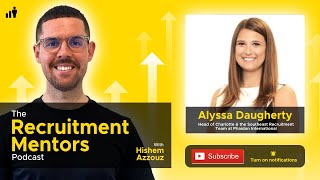
In this Recruitment Mentors Podcast episode, host Hishem Azzouz interviews Alyssa Daugherty, head of Charlotte & Southeast recruitment at Faden International. Alyssa shares her career journey from a pre‑medical graduate who fell into recruitment in 2014, through a challenging first year where she closed her first deal after seven months, to becoming Rookie of the Year and later the account director of Faden’s Preferred Partnership Program. The conversation covers the core traits of successful recruiters (mindset and intellectual curiosity), the trainability of a growth mindset, practical productivity habits (day‑planning, time‑blocking, valuing one’s time), business‑development strategies (short‑term vs long‑term, 50/50 split between candidate and client work), building and expanding client relationships through partnership, scaling and hiring a new regional team, cultural non‑negotiables (continuous improvement, being the first point of contact, work‑hard/play‑hard balance), and the broader purpose Alyssa seeks in her career. Throughout, Alyssa emphasizes learning from mentors, being a “sponge” for top performers, and the importance of respecting client processes while adding value beyond placement.
Chapters
Welcome to the Recruitment Mentors Podcast. My name is Hishem Azzouz. Today I'm really excited to be joined by Alyssa Doherty, who is the head of Charlotte and the Southeast recruitment team at Faden International. Alyssa has worked in the industry for 7 years and started her recruitment career in 2014 working under the Selby Jennings brand within the Faden Group. After that, working, um, in this team, she ended up becoming the account director of their extremely successful preferred partnership program, part of the business where they would deliver an elite level of account management service for Faden's top clients globally. Then Alyssa went on and for the last 3 years has been responsible for the growth of the Charlotte and Southeast region, where she has grown it from scratch with 2 others to currently 35 heads in that part of the business. So Alyssa, thank you so much for joining me on the podcast.
Yeah, thanks for having me. Thanks for the introduction.
Really looking forward to this.
Me as well.
I think you've been on a really interesting journey. So where we always like to start is, in your opinion, what characteristics and traits do you think make up a highly successful recruitment consultant?
Yeah, absolutely. So this is a question I get asked a lot right now as we're growing. I think every Canada I interview at the moment asked me this question. It's a really fair question. I think it's an important one. So for me, it probably won't be an entirely unique answer, but I'll say it centers around kind of two components. I think the first is mindset. Um, I think mindset— there's sort of two types of people in my view. I think there are people that have, you know, sort of limiting or defeatist mindsets, and then I think there are people that have pretty optimistic, anything can happen, I'm just going to get it done mindsets. And I think if you are in recruitment, it's really difficult to be successful with the first. I think that, you know, it's very easy to be someone that says, this is hard, this is difficult, it's impossible, you know, it's just not going to happen, um, or get really down on yourself on a bad day and, and just not think that there is kind of the opportunity to, to excel in, in the way that there really is in the industry. So for me, I think you have to be someone that looks at a situation and sees the ability to do it. I think you have to be much more of a yes person than a no person. And I think if you are that individual, then that means inherently you're pretty driven and you're pretty optimistic. And I think you'll inherently then kind of be successful in the business. I think there's really nothing you can't achieve in recruitment. You know, there's no sort of like magic skill set that someone has over anyone else. So really, it does just come down in my mind to mindset. And I think the second thing is intellectual curiosity. For me, when I first started recruiting, I remember my manager said to me, you know, you don't have to understand your space, you just need to be able to recruit. Right. And I think for me, starting off, that worked quite well because it taught me the psychology of recruitment. I had to really understand like the heart and core of what motivated people, how to influence people. But I don't think it made me much value to them in advising them on some of the moves that they made. So I think where I really began to kind of take off in my career is when I made the decision on my own to seek out those extra levels of advice, right? And I think whether that is reading a book or listening to a podcast like this, or, you know, seeking out a mentor in the business, whatever it may be, you know, I tell my guys all the time, like, your job is to grow a network of experts in this industry. How often do you just call them and say, hey, can you explain this to me? Can you talk to me more about what you do here? And I think far too often people just don't, right? Um, and so for me, I think if you're, if you're someone that has those two things at the core, then, you know, those are the people that find the next level of success in recruitment.
I love that. So what I just wanted to get your thoughts on really quickly is the first part of that around the mindset piece. Yeah, because what you're touching on there, that type of mindset, I feel like you're talking a bit about the sort of Carol Dweck growth mindset that a lot of people have mentioned before. Obviously resilience is in now, I feel like you're talking about that ability to sort of, I guess, look at things in a, in a positive light to say, hey, what can I learn from that? Rather than like pointing the finger and going, this happened because of that. I'm not taking responsibility.
Yeah.
So the question I want to ask you, because we recently had an event on this, which I thought was really interesting, is basically, do you believe that mindset can be learned or trained, or do we already possess it?
It's a good question. I've definitely heard the debate on both sides. I think where I fall is— this isn't going to be a great answer for you, but like somewhere in the middle. I think there are absolutely some people that are just bred with a more optimistic mindset. I mean, I don't think they're necessarily born with it. I think it has a lot to do with the environment that you come up in. But I think Once you kind of are established as an adult, can you train yourself to be better at this? 100%. I mean, I think there are a lot of exercises in mental toughness and optimism that, you know, help really successful people kind of reach those next levels of their careers. And I think, yeah, like, why not try? In my view, I think I've seen a lot of people that I know personally make pretty major transformations in this. And honestly, I think I'm probably one of them. I grew up a bit of a perfectionist. I think I had a really specific mindset, and when things went wrong, I had a really tough time with it. And through a series of things, I think I was able to kind of push away from that and learn how to adapt from it and actually see pieces of it as a strength. So I absolutely think it's something that can be trained and influenced. But I think growing up in an environment where you're exposed to that is helpful as well.
Yeah. So where I want to start then is just understanding a bit about one, sort of how was your first year in recruitment and sort of what did— maybe did you learn, what do you find challenging? But I don't know sort of exactly how— what the typical stories are in the US, but typically in the UK people will say I fell into recruitment. Right now, sort of having met and interviewed more and more recruiters that either go from the UK market to the US market or are based in the US, what, what sort of UK recruiters definitely typically find is that sort of working as a recruiter in the US is typically like the, the reputation of recruiters in the US definitely isn't as tarnished or bad as it is in the UK. Don't know if you're aware of this. Do you know that? Yeah, cool. Yeah, so I guess I was just interested, like, obviously I can see that you obviously graduated at University of Michigan. Like, how did you end up in recruitment? Was it an accident? Was it actually something that, I don't know, like, you was actually like quite motivated to get into? Just curious as to like, how did you end up in recruitment?
Yeah, it's a fair question. I definitely didn't intend to end up in recruitment, so I'm absolutely one of those people that kind of fell into it. I was actually pre-med in undergrad, and I really decided right before I graduated that I didn't want to go to medical school because I wanted to make money, um, sooner than kind of the next 10 years of my life. So that was a big part of the decision for me. Um, and I think, how did I end up in recruitment specifically? Um, I think at the time, honestly, it wasn't nearly as common as it is now. Like, I hear a lot of people, you know, say they're in recruitment now. I think in the US it's spoken about a lot more as a career path than it ever was when I was in school. I had never heard of it. Um, I really just had someone randomly kind of say to me, I think this is something that you should take a look at. Um, I had studied, you know, psychology a lot in school. I find intrinsic motivations, you know, really interesting. So, um, yeah, I sort of just started to explore it a little bit. Um, and I actually hadn't heard of Faden or applied to Faden. Um, I was really fortunate that Faden reached out to me, and I did just kind of fall into them as a company. Um, but I was looking at, you know, kind of some similar roles. So yeah, that, that's sort of how it happened for me.
Okay, so just on this point really quickly, just to get your honest thoughts recently been recording like a sort of entry-level graduate focus series. And obviously, I guess I just wanted to sort of hear how you dealt with, or if you did have to deal with— see, I can imagine, particularly if you were going down the medical route, that friends, peers, family were like, oh my God, Alyssa, what you doing? Like, I don't know, because then you ended up in recruitment. They might be like, what, you was training to be in medicine or whatever it may be, like how did— because I'm sure there'll be people that end up in recruitment and I don't know, may end up feeling guilty as part or like, oh, they were meant to do this or whatever. I think it can be a really challenging time, right? So I don't know, did you have to deal with any of that? Like, Alyssa, what are you doing and how did you deal with that?
Yeah, a little bit. I think, you know, I went to a relatively prestigious school. A lot of my friends were going into like pretty prestigious jobs. I was definitely the only one that went into recruitment. Um, I think people just at that point honestly didn't know that much about it, so I didn't get a lot of like negative connotation associated. I was also fortunate both of my parents were in sales the majority of my life.
Oh, okay, nice.
I had a lot of support at home that I was going into a commission job that they just sort of saw as sales and an opportunity to kind of excel. So, um, I don't think that that's something I came up against that much, fortunately, but I definitely can understand, you know, the complication of going home and telling your parents you want to be a recruiter.
Yeah, it's like, what? Yeah, fair enough. So look, obviously you work to obviously Selva Jennings, which is one of the brands under, and yeah, one of the sort of Faden International brands. So like, talk to us about, I'm sure like you communicate some part of this, however you communicate to people you hire for your business now and teams now, but obviously most people would describe first 2 years in recruitment is bloody hard, maybe even hardest parts of your working life that you may ever face, right? So always intrigued, and I definitely experienced that. I went from being the top salesperson in my sort of world before recruitment to then being bottom of the pack. So like, what, what, how would you describe your first year? What did you find difficult? What were some of the things that you really had to work through?
Yeah, uh, it's a really fair question. I actually talked to my team a lot about this. Um, I took 7 months to do my first deal, which was like, wow, beyond average. Yeah, so I had a really tough first year, um, and I think probably there were two points where I doubted whether or not this was something I was cut out to, to kind of do, um, and that was what made it the hardest. You know, when I was committed and all in and just kind of had my head down and was going, it was okay because those points I kind of just was bought in and I believed that it was going to come. It was really in those moments where it felt like it wasn't coming that I, I kind of had, um I guess just those, those real questioning, difficult, like, should I be here, should I not be here type of conversations with myself. And yeah, I think I'm grateful every day that I had people around me at that point really encourage me and push me and say, you know, you're, you're doing the right things, like, keep going and it will pay off. And it's a really cliché thing in recruitment, but like, it 100% does. Like, if you continue to put the work and the time in, you know, that the payoff is there. And I went on to finish that year as our top rookie. Um, so After 7 months. Wow.
So what people want to know, like, what, what, what changed? Like, what turned the unicorn light— turn, sorry. Like, what was it? Just things just started to fall into place? Was it you had some sort of epiphany moment? So it was like, oh, actually I've done that wrong a few times now, let me do this. Like, what do you think? Besides obviously helps that you've got people around you saying, hey, keep doing that. And I definitely had that. From experienced people, that helps because you believe them. They've obviously seen a lot of people do what you've done. But like, what? Because I'm sure that there'll be moments now that you've helped people turn that corner and your own team, like what? I don't know what changed.
Yeah, I think it was two things. I think one was honestly, yes, a lot of the work did just pay off. I think I did one thing I did a really good job at was really just continuing to put in the work. I kind of made the decision that I wanted to finish out the year having given it absolutely everything that I had, and that if at that point it didn't work and I had to walk away, at least I knew I put everything I had into the job and I could walk away knowing, okay, you know what, I gave that what I had to do.
Yeah.
So I think a lot of that started to come through and hit, you know, there was a lot of like playing the long game, laying the groundwork that did come through in kind of those last couple months of the year that, that really helped with the performance. But I think the other was really choosing to kind of be a sponge, which again is a bit of a cliché, but I really just sought out— I went to every top performer in our business constantly and just was like, how do you do this? How do you do that? You know, can I watch you do this? Can I listen to this phone call? Um, I remember I would get like coffee before work, drinks after work with people, and just, just ask them. And there were some things where I would say, okay, yeah, like that, that's a really dumb idea, like I'm not gonna do that. But I think there were a lot of things that I took and implemented really well and that were really beneficial to me in my career. And I always encourage my guys to do this now because I think even if you, even if you don't hear something where you say, oh, like I should be doing that, at the very least it makes you think differently about the way that you recruit. When you understand how someone else approaches it, it challenges you to kind of have to think outside the box a little more. And I think for me, you know, those were the two things that really contributed to, to turning that corner.
I know, so like people would probably really want me to go practical here.
Okay.
So thinking of those conversations, that's what this is all about, right? So I guess one or two things come to mind where maybe it was like, oh my God, why didn't I know that before? I'm going to now do this. I don't know, one or two things that maybe stuck with you where that you felt had a really impact on your performance might have been on the client side, candidate side. What comes up for you.
Yeah, I think one, um, huge one for me was to know the worth of my time, um, and to value my time. I think that I had some conversation with one of my mentors along the lines of like, if you had no base salary and had to just put time into, you know, places where you knew you were going to get paid, would you be putting your time where you are now? And I think that was a huge moment for me, um, where the answer was no. I think I was putting time into clients that weren't as committed. Um, I think I was putting time into candidates that weren't that interested and really trying to just kind of force things to happen. And I came to really learn, I think, throughout that process as well, from a business development and a client management perspective, that, you know, how you— a client's going to treat you the way that you dictate, right? Like, if you don't give me feedback and you don't call me back and you just answer an email with one line, like and I keep sending you good people, why are you gonna not do that, right? Like, of course you're just gonna continue to do what you do because I'm giving you what you want anyway. So I think I really learned to say no. I learned to stop working on things, and actually, in turn, it led to clients coming back to me and saying, hey, you know, why aren't you sending us people? And opened the door for me to have those conversations and really say, you know, you haven't given me feedback, or what you're looking for doesn't exist. Like, here's what I'm seeing in the market, where can you be flexible? And really just facilitate more of that advisory and consultative piece of recruitment that I think I was just missing before.
I love that. Thanks for sharing that.
Yeah.
Yeah. I think the more experience you get, the more you definitely get— you just really value your time. And I think that's definitely— yeah, you can learn that the hard way at the beginning. So again, this may seem really— this may seem not really basic to you, but I think sometimes people just really want to hear this stuff. Like, when you approach top performers in your business, like, how How did you approach that conversation? Was it just as simple as like, hey, I can see you're typically always high in the leaderboards, or like, I don't know, like, was it like, I'd love to pick your brain, like, I don't know, how did you approach that conversation out of interest? Was it as simple as that?
I think at the time in New York, our team was quite small, so that helped a lot. You know, there was a lot of openness. Usually I've always found it's best to approach people over a drink if you can, or like in a social setting. Honestly, because I think people are just more comfortable and they're more honest. Like, I think when you approach someone, like, and go sit in a meeting room in a formal setting, like, they may give you good advice, but it's not necessarily going to be as candid or as, like, raw. And those were the conversations I took the most out of. Like, I wanted people to be blunt with me. I wanted people to give me criticism. So I think that was one thing that I really tried to do, was do it outside of work, whether that was coffee.
Yeah, nice.
And yeah, I think the other was honestly just flattery. Like, when I was reaching out to people outside of New York, I think it was just very like, hey, you know, you're doing a great job with X, Y, and Z, like, I'd love to learn a little bit more about your approach on this. And it was nerve-wracking every time you press send on the email or like picked up the phone to dial someone, um, especially when I was like a nobody who was absolutely failing. Um, but I think in recruitment, like, A, people like to talk about themselves generally, so like they're almost always going to take that phone call. And B, I think, you know, it is a pretty collaborative, competitive environment, right? So like if you're succeeding, you do want to be able to kind of share that with other people and help them. So I've never had anyone, you know, kind of not come back to me or not be open to having that conversation.
Yeah. Awesome. Because I think sometimes, yeah, people that, yeah, being worried about, I don't know, maybe looking silly or like, yeah, like then maybe reacting like, oh, what are you going to take all my secrets? I don't know. So like, yeah, that's why I wanted to ask that.
I was just gonna say, I think there's like a tremendous amount of respect that I give to people who have the courage to do that. Yeah, like it takes a lot of balls to put yourself out there to someone who like is a top performer when you're absolutely no one. And I, I think most people in recruitment would respect that, but that's my view.
Yeah, I know, I, I agree. And I think speaking to a lot of— I'm spending a lot more time now speaking to recruitment business owners that are growing their businesses and they want, they like, they love to see people in their business like spend time on their own development. And that's what, that's what you would be doing by doing that. You're showing your own initiative. You haven't been asked to do that. Your manager hasn't gone, have you thought about reaching out to that person? And there's nothing more great. And I'm sure you've seen this in your people now that I'm sure that just fills you with joy or excitement like, wow, That's amazing. That person did that off their own back and to write, that's— I think that's such a good sign.
I think 100%. I totally agree.
Yeah. So let's— so what happened just really quickly then? Like, obviously ended up being Rookie of the Year. Did you— obviously you then obviously got that accolade. Did you find it hard to then back up the second year? Was it sort of smooth sailing? Was there any sort of main challenges you had in the second year or what did the second year look like?
Yeah, um, so I went through a good period of kind of performing well, and then I, I went through a good period of blanking for a while, which was really tough. I think I say this to, to my team a lot— absolutely everyone hits a low in recruitment. It doesn't matter how good you are, how much you've learned, um, you're always going to have a period where it sucks and it feels like nothing's happening. Um, so I definitely hit that, and, you know, that was, I think, something I was better prepared for after having sort of the initial journey that I had had in the business. Um, And then, yeah, you know, honestly, I was really lucky. I did really well the second half of the year. I ended up closing one of the largest deals, or at that time it was the largest deal we had done. So how large is it? It's around $440,000, I think. Oh wow.
One deal. That's big.
Yeah.
So obviously, so basically, I'm sure you say to everyone, like, I guess people were like, Alyssa, what are you doing in that first half of the year?
Yeah, like, yeah, no, it's a fair question. I mean, I can tell that the holidays are slow.
So I guess just I really want to ask because everyone goes through this and I think it's so important for people to hear this from other— like, it's easy for you in hindsight to go like, oh, I ended up like doing like creating, have some good milestones, achievements. But in those moments, it's so hard to like see the light at the end of the tunnel. So like, and I'm sure you help your team with this now, but like, I don't know if I'm listening right now and I'm going through that where I haven't done a deal for a while, struggling to see the light at the end of the tunnel, like what would you be saying to me? Like what should I, what sort of helps you push through those low moments that obviously we all face in recruitment?
Go back to basics and work to a day plan. I think that every single top performer that falls off it happens because they just stop doing the little things that make them successful. And I adamantly believe that. I sit down with people all the time, and it could be that they're having trouble pulling jobs and they say, you know, we look, I'm like, cool, how much are you following up? They're like, not really that much, right? Like, I think there's always something there. And I think recruitment is a bit of a science. I think it does come back to the numbers. Like, you know what you need to do to be successful. If you're not putting enough out there, for good things to come back to you, then inherently you're not going to do as well, right? Like, it's about having as many opportunities to succeed as possible. So if you've stopped sending as many headhunt messages, if you've stopped sending BD emails the way that you should, if you've stopped just picking up the phone and trying to call clients, um, you've stopped, you know, adding new contacts to your system and growing your network. Like, people do that all the time, right? It's really easy to get focused on just one aspect of what we do and kind of lose the rest. And So that would be my advice. Go back to the basics, call candidates, pull leads, understand what's happening in your market, get some intel, find places to target and build from there.
Love that. Yeah, you hear— I was going to ask you, like, in your view, like, what does, like, the basics mean? But I think you just sort of categorize them there. Yeah, just so people, people love finding out. So you mentioned day plans there. I'm glad you did.
Yeah.
So something that I'm finding definitely and obviously supporting and speaking more and more to more and more recruiters around where they want to develop, where their gaps are with the Recruitment Mentors platform. So we can go and create that content. But we recently added a learning area called Productivity and Time Management. And look, my view on this is like, if I think when I was in recruitment, most people would— I would like to think most people would not say that they had some sort of time management training, or like, I don't know, like, I just had— you just had to work it out as it was. Like, I used to just trying some, like I used to, I was only in the office with like 8 people. The person I sat next to, we did, we had our own patch, but sometimes we'd cross over. So like I would just try and come in either a bit before that she does so I could get straight on to things or like, and then I would just like, I just try and like see what other people were doing. But like, and we would sometimes have like some weeks we would do our sort of 10 to 12 Tuesday and Thursday, we'd all be doing BD at the same time. But like you learn as you go on like time management, basically. Yeah, I think you just— yeah, so like you said, there's a bit of a science. So I guess the question I have for you, and I know there's nuances here and everyone's different, but like, what does a typical good day structure look like for you? Like, I don't know, what, what comes up for you when I say that, out of interest?
For me or for a recruitment consultant? Because I guess it's a little different now for me.
Yeah, for you now, for you now it's different. But I guess if you're like, clearly you're supporting your team with— yeah, doing the basics, having a plan Like, I guess if you, if I was to say to you, if a recruiter right now in your team is like doing the basics really well, they're performing and they've got a good structure, they've got a good routine, what do you, what, how would you describe their typical routine? Would you say?
I think, uh, you want it like broken down by activity, I'm assuming?
Yeah, let's do it. Let's, let's do it from 8 AM. They're doing this probably just because that people, like, people love this.
Yeah, so I tell most of my recruiters to start with a 50/50 split between business development and candidate-oriented activity and then lean one way or the other depending depending on their current situation, right? Depending on the pipeline of jobs that you have to service, how well you're servicing them currently, and whatever it may be. But I think that 50/50 split is always where you should start. Um, I think one of the most important things to do to be truly productive and efficient with your day is to make your day plan achievable. Um, and I think it's also to build in administrative time. So there's inherently always things that come into your day that completely throw off a day plan, and when you're booking hour by hour, that can be really frustrating. Um, so I, I I really recommend that our guys come in and they either come in a few minutes early or they spend, you know, kind of the first 15 to 30 minutes really clearing their inbox, you know, getting any messages answered that need to be answered, just all of the administrative stuff, right? And then I recommend that happening straight after lunch and then at the end of the day as well. So I almost always say block off at least 30 minutes in those 3 windows just to kind of account for random things.
So it's a buy-in, but then in between there, are you typically— obviously emergency stuff or things you have to get sorted, you would, but like, are you then encouraging, or the best people will ignore out of those times, they're ignoring their email, they're not going to reply straight away to stuff unless it's urgent.
Yes.
Discipline on that. Yeah.
Yeah, 100%. I mean, I've gone so far as to like turn off notifications for people when emails come in. I think it can be really distracting. Like you have your calendar popping up You know, every time someone applies into an ad, you get a notification, things like that. So yeah, you really have to, I think, especially early, train yourself to stay focused on the task that you're in. And I think the way that you do that and stay organized is you can have those random thoughts like, oh, but I need to do this or that. Write it down. Like, and that's why I say that's all the time. When it comes into your head, write it down, and then you'll deal with it at the end of the day. You'll put it on your plan for the next day or finish it before that day when it's done. So, um, yeah, I think from that point forward, you know, we really focus kind of the first 2 to 3 hours of the morning on candidate-oriented activities. So we'll get through, you know, as many calls as we can. We'll really try to put enough out there for people to come back to us throughout the day. So that may be headhunting, maybe ad response, may just be going through clear lists, things like that. And then usually before, in like kind of the hour before lunch, we'll try to do a business development-oriented activity for that last hour of the morning. Sometimes that's just kind of hammering the phones on something. You know, sometimes that's sending out a targeted email or whatever it may be. Um, and then we'll break the afternoon then again kind of between the two. So really looking at drilling into working some jobs pretty hard, getting your clears, getting candidates out the door, and then doing both short game and kind of long game oriented business development. You know, that's I think one of my biggest theories on business development is you have to make sure you're, you're mixing it up a lot. So just making sure that they're balancing kind of volume-oriented activities with targeted and then pushing through that way.
So would you define short-term and long-term business development approach? Maybe a short-term one would be, I've seen this client, they're in my patch, they've got live jobs, I've got candidates, I'm going to be following up, I'm going to be approaching them. And then long-term would be a bit more, maybe you, you would have done some sort of mapping exercise, maybe the beginning of the year or something you're always doing. What companies would I love to work for? Who's on our dream customer list and then there's maybe different touchpoints you're trying to create with them. Is that fair?
Yeah, no, 100%. I think that's really fair. I think also, yeah, I think you hit the nail on the head, right? Like chasing a hot lead, something you know is active, like that's an immediate potential short-term win. But I think also just balancing like sending out a really active candidate with sending out an article that someone may find interesting and get their thoughts on, right? I think is just creating different dynamics to have different types of conversations. Like, don't just always go in and ask someone, like, are you hiring right now? Because if they're not, you're like eliminating the opportunity to build that relationship for the future. So I think that, that kind of ties into that as well.
Love that. So thank you for going into that. People love this. So like, the key things I take away from there is make time. So if you have a day plan and you listen to this, great. But how in your day plan have you got time to do your administrative tasks? If you don't Adam, and I couldn't agree more with you. When I put like DD sessions in my diary, like the last half an hour of that is then like doing the email follow-up, doing all the admin stuff.
Yeah.
Try and be self-disciplined, as you said, like we're getting pinged with notifications left, right and center. So if you are susceptible to them, then sort of try and set up your environment to win. Right. And then the other thing, thoughts on this. This has been a game changer for me. But like, would you say most recruiters that are good at this and have this structure, discipline, would they typically, without leaving, would they plan their day beforehand before leaving the office typically?
Yes.
Yeah, yeah. Like, that's a game changer. If you're not, if you're listening to this, you don't do that, like, before you leave the office, do a to-do list, understand what you're doing the following day. You will sleep better, you won't be thinking about work when you get home as much, and there's not a better feeling than going into work going, I know what I need to focus on today. And there's nothing more worse than going and going, right, what am I, what am I focusing on today? So I'm glad you said that.
Yeah.
Okay. So let's sort of take this to— well, I want to talk about how you've been growing the team, leadership, these types of things. But let's just talk about your journey on the account management side. Obviously, you then became— obviously, you as an account director for the Preferred Partnership Program. So would you mind very quickly just, I guess, just giving us a bit of a snapshot on the purpose of of the Preferred Partnership Program, and then I'm really keen to talk to you around, I guess, how recruiters listening to this can get better at building relationships, being more strategic in the accounts that they can expand, these types of things. But could you just give us a bit of a snapshot on that?
Yeah, 100%. So, um, the kind of development of the Partnership Program and what it came out of was really the desire to increase the level of service for our top clients kind of globally across the business, to increase the synergy or the, the way that we were leveraging opportunity to do business with those clients across all of our teams and our brands, um, and, and every office kind of nationally and internationally as well where there was scope to do so. Um, and then looking at just kind of consistent streams of revenue, right? Like for, you know, our, our leadership team, for our investors, whoever it may be, like a huge thing is being able to say consistently we can rely on X amount of business from these partners, etc. So that was a big part of kind of the strategy as well. Um, In terms of how we worked and what we did, I think we really looked at identifying, you know, what made a good client, what made a client someone we could work with well, where did we see the opportunity to really grow within kind of that client from what we were doing. And I guess as an example, you know, there were a number of clients that we worked with in just one small area of our business. And maybe we were doing a lot of business with them, you know, maybe we were doing a lot in just technology, right? Or even one arm of technology within a company. But we had, you know, tons of other teams that could be servicing that client from other angles and other locations and geographies. So we really spent a lot of time strategically identifying how can we, A, obviously perform to the level that people want to go in and advocate for us and recommend to us and kind of push us forward internally. But B, like, how can we then, you know, get people to do that for us, right? How can we have the right types of partnerships, build the right types of trust with clients, them know that we we'll go above and beyond to get things done for them, that they'll, you know, kind of put their neck out and advocate for us internally to have more opportunity to work with them in other areas. So that was kind of the overall goal of the team and what we did.
I love it. So can we unpack this a bit? Because I think people, people want to know how they can achieve that, right? Because I think it's very easy to, like, as a— as you're growing a recruitment business or like have different teams where, yeah, you have different disciplines, let's say. Because obviously, what, what are the different disciplines that you have within Faden? Is it finance? Is it finance or not finance? Tech?
Yeah, so we have financial services, life sciences, kind of a renewable energy and infrastructure team, a technology team, but they focus mainly outside of financial services, and then we have a team that focuses on end-to-end supply chain recruitment. So, even when I'm talking about the leveraging, Selby Jennings for us breaks down into, you know, 6, 7 areas, so it was even that minuscule, and then going macro brand to brand.
Yeah, yeah. So because like I think it's really easy to assume like we've got the ex-client that's working with Selby Jennings and this team.
Yeah.
And we know that they have jobs or other parts of the business that the supply chain team could support. Yeah. It just, it would just make sense to you to go, yes, we'll hire, we've got this technology team, I've got a supply chain recruiter here that's got a good track record, let's bring them in and they can start leveraging the clients we're already working with. But It's not as easy as that. It never normally works that way. You know, it's obviously a lot more harder to do it. So I guess what I'm keen to first— so there's two things I really want to get your thoughts on before we move on to the next part of your journey is one, what you found to be the best possible way of like expanding those accounts and then getting more teams supporting that one client. So it seemed like from what you shared, it was people going, hey, 'Hey, these guys have done a great job with us. I wanted to connect you with them.' It seemed like a bit of that going on. And then the other thing that I wanted to get your thoughts on was then like, how— what was your sort of grading system, or what did a good client look like? Because I think a lot of recruiters can benefit from that right now because a lot of people have a lot of jobs and it's really transitioned to candidate short, so they have to get really good at understanding what is a good client. Yeah, the first thing, like, what ended up being like the— I know there'll be a lot of nuance to this, but like, what was the recipe, would you say, to taking a client that was just using one part of the business to then expand it to potentially using 2, 3, 4 different parts of the business and serving that? What was the recipe, the typical recipe for that to work?
Yeah, I think there are a few things, but I think at the core of all of it, and maybe I'll give a little bit of backstory to this to sort of explain where the strategy came from. When I first took on that role, I spent a lot of time in my first few months speaking with existing clients of ours and really understanding like how did they view us? Um, how much value do we add to their business? Were we their go-to recruitment firm? Why or why not? And I think pretty consistently a message I found across the board is that we were, you know, one of the best, if not the best, at what we did in the areas we were operating in. We were pretty consistent in being able to execute and fill positions that we were given, but we weren't that pleasant to work with. Um, and I think that was off the back of a few things, but one of which was just we were We were aggressive, we were new to the market, we were trying to build something from nothing. And so we did a lot of kind of busting our way through doors and trying to figure things out. And that doesn't always rub, you know, people the best way. So I think we had to kind of take a step back and make a really conscious effort to understand, like, how do we not just service you and provide you the best talent, but how do we become a true partner that you can work with in a way that doesn't cause you any headaches, right? Like, how do I be that phone call you want to make where even if we weren't the best, you're going to call me anyway because you prefer working with us over these other guys that maybe make it really difficult? So, um, that was a huge thing. So I guess from an advice perspective, what that translates into for me is really taking the time to understand how a business works and operates. Like, what is their process internally? Who are the decision makers? Um, what can you do? What can't you do? Where can you kind of push the envelope a little bit? And where do you need to kind of hold back and respect boundaries that they're drawing. You know, I think one thing we did really well that helped us was actually playing by the rules, right? I think we would go in and we'd say, cool, like, what can we do to show you that we respect your process, that we want to be this partner, right? And then we do it for 6 months, we come back and be like, cool, what now? Like, now what do we get from it, right? And I think there was a lot of that that went on. You know, people asked us for things, we reciprocated. I think also we tried to find ways to add value beyond just recruitment and beyond just candidates. You know, we really took up diversity and inclusion as a huge part of our business and what we drive and how we, you know, kind of offer insight and services and consulting to the clients that we work with. And I think that really helped us as well. You know, that's a huge— find a pain point for almost every organization across the globe, right? Like diversity and inclusion is one. Them. So I think just understanding how can I offer you things that are going to be useful to you and your business without necessarily immediately expecting something in return. And I think that was our strategy and it built the right type of rapport and relationships within these businesses. So people started to want to take our phone call, to want to call us back. Yeah. And we sort of just chipped away at it a bit there.
Love that. And then, I don't know, there'll be— I love the way— so I think what I love about that is obviously it can be quite scary, right, to sort of find out what you're not good at as a business. So like anyone listening to this that is able, is willing to do that, clearly that then can present amazing opportunities for you to improve.
Yeah.
And yeah, make sure that your customers, clients, candidates are like, yeah, having a great experience. So I love the fact that you did that and were willing to ask the difficult questions. So after all that, that all makes sense. Was then, was it obviously like you said, you were giving more than taking, respecting their processes, making like leaving a good impression, delivering all these sorts of things?
Yes.
Was it obviously then that meant that people were more willing to then put their neck on the line because they've experienced all of that? But was, was the growth of these accounts and expanding these accounts, did it typically come from Hey, listen, you know, you've been doing a good job. You know, you said that we've really improved or whatever. How happy would you be to introduce me to X? Like, was that how it, was that how it typically grew? Like, is that how it worked typically?
That was absolutely a part of how it grew. I would like to say, like, I wish it were more of how we grew, to be honest. It was a good portion and it was important. But I think one of the challenges to that from an execution perspective is that often internally within organizations, people don't actually know who's covering what. They don't actually know the person that's sitting in that other team. So they're not that apt to reach out to someone that they don't know and make a recommendation when they have no idea if they need a recruiter or they, you know, they don't know what their pain point is or have a relationship with them. So I think sometimes that was a big hurdle and how we got around that when we found it was really then reaching out and making those people understand what our track record was and the people that we did have relationships with and the work that we had done and how we had gone about doing it. And, and I think we sort of at that point tried to let our, our work speak for itself to some extent and also just continue to encourage them to pick up the phone and have a conversation. And then really it's just about that first call, right? From that call you can capitalize on that opportunity hopefully 9 times out of 10, um, if you handle it the right way and kind of go about it from, from the right angles. So I think for us it was the goal was always that approach, always to be introduced, to have someone go advocate for us. And we absolutely have had that happen, which has been fantastic. We're really lucky to have clients that have gone back for us, even with other clients sometimes. But I would say there's absolutely a good portion of the time where it's just not logistically feasible for that to happen all the time. And so we had to kind of lean on other things like that.
That makes complete sense. And I think, I guess, a couple of things that come to mind there, I guess, yes, some good sort of mapping out of the business, being strategic. And then I guess maybe sometimes it would be a good idea and good etiquette to say, hey, you know, we've been working together. I've seen that such and such is in this part of business. I have no idea if they're recruiting. Would you be adverse to me reaching out to them? Like, maybe get permission sometimes. But I do really like that because if you're proactive and you go, hey, Elissa, that we haven't spoken before, but we've been working with such and such. This is our track record. This is how we've helped them. I know they'd be happy to take a call if you want to reference that. Would you be open to having a call? Like, yes, like being proactive as well as— yeah, I get what you mean. There's the missing context that sometimes doesn't make the introduction work, doesn't it? And yeah, I love that. So I think, I think it's very like, don't ask, don't get.
Like, that's, that's my mentality on this stuff. Yeah. So like, why not?
Don't ask, don't get. Yeah, yeah, I love that. So Okay, next thing before we move on to the last bit then, like in your view then, because I'm sure this is what you like spend a lot of time understanding, like what makes a good client a good client in your point of view? Because obviously a typical, there might be like typical, there might be some people listening to this that have some sort of like, like grade the jobs that they have. It might be like I've got 5 grade A jobs, 6 grade B jobs, etc. And grade A might be a business that has agreed to work with me exclusively. They call me back when they say these types of things. Grade B might be we've got terms, they're a bit sketchy sometimes, they don't sort of come back to me, they're a bit slow, they're not exclusive, but they give me a fair chance. And then Group C might just be clients that you're just prospecting, haven't really built so much rapport with, you're just following up. Like, how do you have any sort of like system that you work to out of interest? Like, what, what sort does a good client look like from your perspective out of interest?
Yeah, I think there are two different things. I think there's what does a good client look like and what does a good job look like. Um, I think what does a good client look like is someone where we have access to key stakeholders. I think it's really difficult to work only through HR. Um, you have to— even if you just start off that way, like, before they're a good client, I think you have to earn the right to be pretty integrated with stakeholders in the business and leaders and the hiring managers you're working with. Otherwise because, you know, it's as great as HR can be. They can also be, you know, a little challenging at times. And so I think it's important that for a client to truly be somewhere we're going to dedicate a ton of time, we need to be going to the source and be having intake calls and getting on, you know, VCs to talk about feedback and really be advising and understanding and kind of moving our process forward from there. I think another is, pretty basic, our terms, you know, what is our agreement with you? Do we work to exclusivity? You know, are we working at our standard rates or have we come down because you, you know, won't go any higher and that's what you work with other agencies at? We typically, to be honest, don't prioritize clients that are working, at least here for us, we don't prioritize clients that we know are working with a ton of other firms. Like at the end of the day, there's more than enough business out there to not spend time being one of 7 agencies on a position. So I don't think that that's the right type of client. And similar to that, I think portals fit into that, right? You talk about, you know, I won't say the brand names, but like there are a couple of portal systems out there that companies recruit through. And to us, you know, I think unless that's coupled with, you know, relationships and engagement beyond that within the business, you know, that doesn't make a great client either. And then, yeah, I think the last is really just looking at the overall client as a whole. Is this the type of company that we want to be working with? This is the type of opportunity we want to be bringing to our candidates. Is this somewhere that people, you know, want to work and would get excited about? Whether that's a big name or a tiny name, it has to be something that we're passionate about and we back, you know, kind of what they're doing and the role that they're playing in their industry and market. So, um, for me, those are kind of the 3 things that we look at. I think when you're looking at what makes a good job You know, we include things like looking at, you know, this, the speed of obviously response, the, the size of the candidate pool, um, is a big one for me. Like, we really have to think about how much time is going to go into this versus how many candidates out there can actually do this job, will want to do this job, are qualified for this job, are in the compensation range, etc. So, um, I think there's a lot of, of other kind of dynamics that go into it when you're figuring out how much time to spend specifically on the job beyond just kind of the client quality.
Sure. No, awesome. Thanks for sharing that. Really? Yeah, I think, I think it's such an important point to make, isn't it? It's not all about the client. It's also like, yeah, are you excited about their brand? Are you in line with like what they're trying? Yeah. Like also think about is it something that you're proud to represent in the market and take to the market and also think about those things. It's not just all about the client. Yeah. Yeah. Love that. So As we come to the end here, just keen to talk a bit about your journey on growing teams, leadership. So I think it's a perfect place to ask this. Obviously, after you, obviously from that partnership role, you then decided with two other colleagues to take on this journey of then growing Charlotte and the Southeast, right? Brand new, obviously, opportunity or obviously a new adventure. I asked Ollie, what would you, what do you want me to ask Alyssa question-wise? I think this is the perfect place to ask it. And what he said was like, he like, why, why have you always been someone that's willing to like get out of your comfort zone? And I think this is the perfect place to ask it because you went from being a recruiter, did that journey, then obviously helped sort of orchestrate and be involved with this obviously new part of the business. And then now obviously growing and leading the team, which obviously I'm assuming you didn't have loads of experience in. So like what? I don't know what comes up for you when I say how have you been willing to take that first step or get out of your comfort zone, do you think?
Yeah, that's a good question. Thank you. I think for me, I just really enjoy a challenge. Like I want to come to work every day and face a puzzle. Like I want it to be engaging. I want to feel like I have to work it through and I have to figure out how to make something happen that not everyone else can do. And I think that that's a really rewarding part about a job if you can find it. Right. And so, you know, similar to Ali, my role has changed almost every year I've been in the business thus far, or every 2 years. And I love that. I think it's absolutely pushed me and challenged me to grow in ways that I never would have been able to push myself. And I think That's ultimately why I keep doing it and keep taking it on, no matter how unqualified I think it may be or how, you know, stressed it may make me. I think I really want to push myself to be the best that I can be and also to add the most value that I can to the people that I'm working with and to the clients that we work with. And, you know, I think— not to make this kind of selling on Faden, but I think Faden is really tied into that for me. I think The passion I have to be a part of something that's trying to do something that's changing the industry, that's doing it a different way, that's letting us kind of go out and, and make it our own is a huge part of what's in it for me. You know, it's that I get to put my name above the door and say, this is my office, my team, this is how we're doing it. And being able to integrate that with such a great company that we have is awesome. But how have I been able to jump and make the leap every time? I think I've just forced myself. It's always scary. It's always overwhelming. It's always been something I'm not 100% sure of. But I always come back to this final question of like, why not? Like, what do you really have to lose? And most of the time—
It's a great question. Because if it's not, if it's not like, I don't know, might lose, I might lose the people I care about or I might not live or whatever. Like, it's what? Okay, what else? Why not then? Yeah. Do you know what I mean? That's just perspective. Yeah. So as we come to the end here then, so you've obviously grown this part of the business. What's been some of the key learnings so far then in, I guess maybe we can sort of think about attracting talent, maybe think about sort of Yeah, like hiring people. How has that been? Has it been difficult? Have you got better understanding when to hire? Like obviously I'm sure you've heard this, but obviously it's just the most ironic thing, but most recruitment businesses, one of their main pain points, I'd say top 5, is hiring for their own business.
Yeah.
So what's been your journey with that? Any key learnings?
Yeah, I mean, I've learned a tremendous amount. I think hiring was a huge part of it, to be honest. I think I think if I could go back and do it different, I would have had a better understanding of the local talent pool and market from a new graduate perspective. And I think I also would have really taken a lot more time in initially picking who our first team was. And that's not to knock any of the guys we have. We have an incredible group of people down here. But I think, you know, we've also had some people that haven't made it. And I think a lot of that came down to me just not really putting my finger accurately enough on what I needed in the people that were going to really launch this from nothing. You know, that's an incredibly difficult thing to do. It's very mentally trying, um, as probably anyone who's done it would tell you. So I think that was something, you know, I learned the hard way, was to really dig in a lot harder into, as I said in the beginning, you know, mindset, um, of people and, and focusing on hiring people who understood that this wasn't going to be easy, that it is hard, that it is a challenge every day, and that, you know, they were doing it because it was going to be worth it. So I think that was a learning point. What else? I think for me, it's been really trying to find the right balance of being an incredibly driven, fast-paced, motivated environment for my employees and team to work in. With having a bunch of fun and enjoying being here every day. And as easy as that might sound, I think that balance is tough. I think one thing I'm glad that Faden really does is people are not a commodity for us. We really invest in the people that we have. We try to keep our teams consistent, not have a lot of turnover. And obviously, I think we've been pretty successful with that here, which has been great. But it is still— you have those days where you come in and the room feels really tense or it feels really heavy or there's just not the energy or the level that you need going on. You have to figure out what are those motivators for the people that are working there today, you know. Is it they just need to kind of let loose and get some stress off and have a little fun? Is that that they need a bit of a kick in the ass and need to kind of get going and have someone push them forward to wake up a little bit? Like, and so I think I didn't really pay as much attention to that in the beginning as I probably should have, and I think it's something I'm really conscious of now and will continue to be as I move before kind of growing the business.
Yeah, it's really interesting. It's, yeah, like a balance of setting and having really high standards along with being mindful of the sort of long-term culture that you want to create where people enjoy working there. They don't feel like just getting their balls busted all the time. Like it's, yeah, but also having high standards and people knowing what they need. If they turn up today, they're under the Faden logo, what's expected of them.
Right.
Yeah, that's interesting. And then have you only hired typically Chinese, out of interest?
No, I have hired some experienced people and I have had a couple of people transfer internally with some experience in the business.
Oh, really? Okay. So just interesting point before we finish, you know, you said around I would have been a bit more mindful around the local talent. That's actually something that has been a bit of a learning when speaking to UK businesses going into the US.
Yeah.
And I think sometimes it can be underestimated. I think the remote piece has obviously had a positive impact on this or affected it, but I spoke to quite a few UK recruiters that then launched American parts of the business where, I don't know, they might have started in Boston and then realized, oh shit, like there's, like there's not loads of universities around here where we can tap into and the people around here are expecting really high salaries. We can't really compete with that. What sort of things are of interest? Obviously you grew up in America, so you're going to have even more insight to this. But I guess when you say that, what would you have looked out for, if you get what I mean, that you think would have maybe made it a bit more easier to attract or have more access to, yeah, trainees?
Yeah, this probably isn't like the answer you're looking for, but honestly, I wish I would have done more interviews. Like I wish I came down twice. I did interview, you know, kind of weeks, and I think I just should have spent more time doing it than that. And at the time, we weren't incorporating a ton of virtual interviewing into our process. So this was a couple of years ago. If I could go back, I would have done a lot more virtually and then met the people in person that, you know, I felt like kind of I needed to meet. But I think in terms of, you know, the local talent pool or market or what I would have looked at different, I think I've noticed in hiring out of a lot of schools now, you know, there are just certain types of people that tend to come out of certain universities or areas or programs. And that is something that had I known in hindsight, I probably would have targeted more people out of some of those programs, you know, where we've seen some of our most successful employees come from. And I also think just probably spending more time with our internal recruitment team to work on undergraduate recruitment and to be at the career fairs and to make our name known. So we really were acquiring kind of that top level of talent. So I think those are probably two things. And lastly, I think we did it at the wrong time of year, if I'm honest. I think if we were bringing— I think you need to align with May grads if you're bringing in new grads. I think it's— if you're hiring people in November or December, you know, it's potentially going to be a different group of people or people who have struggled to get a job maybe before that. Obviously not everyone, I think we did a good job of finding somewhere that wasn't the case, but I've found it's a lot harder to hire on that cycle than on a normal graduate cycle.
Got it. So look, final sort of two questions really before we finish. Yeah, interested to hear this one. What would you say sort of in, in your team now and what you're building, what would you say the sort of three non-negotiables that everyone around you have to live to from a sort of culture perspective? That, yeah, what are the sort of things that they have to live to, the 3 non-negotiables of your sort of culture that you're building that everyone lives to, do you think?
Yeah, I think one is we really push quite hard to be better today than we were yesterday. Whether that is in the work that we do or the way that we contribute to the team or the energy that we have or whatever it is, I think that's a huge thing that we embody. Um, be their first phone call is something we say a lot as well. So whether it is a candidate or a client or a friend or a colleague internally, how do you make sure that you are the person that when they are hiring or firing or they need advice, um, that they pick up the phone?
That's cool.
Yep.
Right.
Um, and so I think those are, you know, those are probably our two like biggest cores. I think if I were to pick a third, really we're just talking about work hard, play hard. I think we really just try to balance like I'm a big believer that one of the main reasons we lose good talent in recruitment is burnout. I think that you have to find a way to maximize your time and efficiency during the day and that you 100% can be a top biller and a top performer within the normal working hours. I don't think that you have to be here at 5 AM and leaving at 10 PM every night. So we really try to push efficiency and productivity throughout the day and grind as hard as we possibly can and then sort of pencils down and go have a good time. And I think that contributes to a culture where a lot of people are really close outside of work and enjoy, you know, being with each other in and out of the office, which is, you know, a huge part of the team environment that you feel when you come here.
Brilliant. Yeah, absolutely love being the first call. So final question, what is the ultimate goal for your recruitment career?
Oh, that's a good question. I don't know that I have an ultimate goal. I think I think an ultimate goal for me ties into just wanting to be a part of something that matters. I think I want to feel like what I'm doing every day has a tangible impact. I want to be a part of a company, a business, a team, whether I'm growing it or, or whatever it may be, that is trying to do things their own way, that is trying to kind of carve out something and make it their own. I felt that from kind of the first moment I joined this company, and it was a big part of the reason that I joined. I think they were setting out to kind of do something that no one had done, and then it was a very underdog mentality, and that's how I want to continue to feel. I think I just want to always feel like we're fighting up against that next level of greatness. And yeah, I don't know what it'll feel like, I guess, exactly when I hit it or achieve it, or when that will be.
Maybe never one. It's just, yeah, it's just the journey. Yeah.
Yeah.
Well, well, Alissa, thank you so much. I think you've honestly, I think there's been so much gold in this episode. You've really done a great job in articulating the answers when I've asked you and everything. But yeah, really excited to see where you are in another 2 years, where the business is. And thank you so much for coming on the podcast.
Yeah, you as well. Thanks so much for having me. It's been fun.
More from Hishem




You don't need as many clients as you think to bill $1 Million A Year In Recruitment



From 30 Direct Reports to Back-to-Back $1M Years as a Solo Recruiter with Zach Creighton



