April Turner - "I was born into Recruitment"
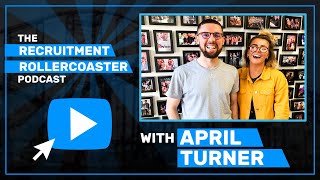
In this episode of the Recruitment Rollercoaster podcast, host Hishem Azzouz interviews April Turner, a recruiter turned sales professional and employer‑brand specialist. The conversation explores how authentic personal branding on LinkedIn makes outreach easier, turning prospects into referrals and building trust. April shares the challenges of creating video content and offers practical advice for recruiters scared to put themselves online. They discuss the importance of gender diversity in tech sales and recruitment, noting how balanced teams improve performance and the subtle biases that can arise when trying to recruit more women. The dialogue shifts to employer branding, with April emphasizing that a company’s online presence—from LinkedIn photos to career‑site design—directly influences candidate experience and talent loss. Common pitfalls such as poor ATS‑driven career pages are highlighted. The pair also touch on mental‑health concerns in high‑pressure sales environments and preview an upcoming InSales Elite event focused on tech‑sales wellbeing. The episode closes with April’s succinct advice to fellow recruiters: “Just keep going.”
Chapters
Welcome to the Recruitment Rollercoaster podcast. My name is Hishem Azzouz, and today I'm in the very cool and funky Wiser offices, and I'm joined by April Turner, who is a growth manager and working for the Wiser Elite team. And we're in the dark room. We are in the dark room today, but we've got some lights in there to get a bit more light in. Um, this is soundproof, isn't it?
It is.
This is awesome.
Yeah.
So for those that haven't checked out the Wiser offices, they're pretty cool, aren't they?
Yeah, I won several awards for it.
Oh, okay.
Just saying.
Nice to get that in there nice and early. But no, it's really cool here. But as I was just saying, where I always, always like to start, April, is how did you get into recruitment?
So it's a bit of a funny one, actually. I think I was just born into it because my mum had her own recruitment company.
You was born into recruitment? That's the first time I've heard that.
Well, when I was born, my mum was a recruiter, right?
Oh, wow. Okay, cool.
She had a recruitment company. She was like top biller at Huntress for like 4 years in a row in London. Oh, nice. Yeah, yeah. Okay. And then obviously I used to come home from school and no day was the same for her. So it was like one day was like, yeah, I've been out with clients, I'm socializing. The next day it was like, I don't wanna do this anymore. I was like, I do want a role where it's not the same every day. So I was like, fine. And then, you know, I've got a brother who's 5 years older than me. He steps into recruitment. So I'm now looking at my brother, yeah. Now he's built a really successful tech recruitment company. So I think it was always just meant to happen. I would have stumbled full into it.
First time this has ever happened. Yeah, yeah, that's so cool. Yeah, okay, cool. So a few things within that then. So just quickly to frame it up, so, uh, born into recruitment.
Yes.
So you then worked for one business for how many years?
I worked for Certus for 3 and just over 3 years.
Yeah, yeah. And then you went into tech sales.
I did.
And then you're now here at Wiser.
Yeah, right.
Okay, yeah, cool. So I'm excited to, to go through that journey with you. But firstly, I have to say, like Growing up then, what the hell was your perception of recruitment? So you touched on it a bit there, like my mum one day would be absolutely buzzing, I love this job, I'm going, taking you on big bit of lunches, no doubt.
I was in the lunch club as a baby.
Absolutely loving it, right? And then that's, that's really interesting. You also noticed that she also had some really bad days and tough days, right? Which, that is what recruitment is. So I guess, like, what was your perception growing up of recruitment and how did that evolve by the time you got into it?
I think Yeah, it was like everyone's perception, right? It was like up and down all the time. Like no one day was the same, but like from an early age, you just get this view on it that whatever it would do, it would like pay your way through life and you'll quite quickly just pick up on everything, right? So even from like a young age, from like year, I would say year 7, from the minute I really understood like any business language, I probably knew a lot more than someone in my year just from the way my mom would speak or my brother would speak.
What, 'cause what, you'd go home and they're trying to close deals in the kitchen?
Well, yeah, yeah, be closing deals, I'm like chicken kievs in the oven and mom's like walking around the kitchen island trying to close deals.
All right, so then, and then did they actively encourage you to get into the industry?
Uh, my mom always said that I'd be good at it just because I like love people, right? But she said that maybe, you know, the up and down part I won't enjoy as much. But, but yeah, definitely my mom pushed it, not in a bad way, but more.
All right, and then a quick one then, like how did they sell it to you? Because I'll be interested.
My mom, how did she sell it to me?
How did she sell it?
I don't think she had to sell it to me. I think it was more her like seeing that I loved what she was doing. Yeah, like you should try it. So I was like When I left school at 17, it was like that age where it's like, do I just get a job in customer service or being an estate agent? And I said to my mom, I'm going to interview at Fox and she was like, just don't do that, just get into London.
If you want your weekends.
Yeah, exactly. Well, recruitment, you want your evenings.
That's true, that's true, that's true.
But yeah, so she just said, get into recruitment.
So did she not get you into some companies then? Did you just do that all yourself?
Oh no, I did that myself. Yeah, yeah, that's how I found Certus. I messaged JB, the, um, RCO at the time, like, hey, give me a job, and I came in.
Yeah, that's mad.
Yeah, yeah.
Okay, cool. And then I guess, like, when, when that happened, I guess through that process you must have been like, yeah, I know recruitment, like, my family do it. Yeah, like, how did you then— because that must be interesting that you've got obviously people that are close to you that are in it— what did you sort of look out for when joining the company, or was you just open to sort of just getting involved, getting straight into it? These types of things.
It's actually funny you say that. So remember when I had my— I had 3 interviews in London when I was 18, and one was at Networks International, remember that oil and gas recruitment? I can't remember the other one, it was at High Street, I think. And then there was Certus, and without any prompt, I just knew that what, what company would be right for me. Obviously, like, some are just like boiler room environments, all lads, like not one female on the sales floor, just like literally like wall-to-wall sheets.
Um, so what gravitated to you towards Certus then?
I think it was just, you know, like, they're— they push that whole like young people dreaming big, like get in and we'll give you the opportunity. And like James Thompson, a guy who was there, I still to this day would say he's the best recruiter I've ever met.
He just really—
yeah, yeah, he just like the way he sold it and like the impact that he had in a room, you're just like, I want to work for this guy. And I think that's—
we'll talk a bit about that then, like what sort— because it's really interesting to say that. So we'll, we'll get on to this because obviously part of your new role now is employer branding, stuff like that. And I have my own view on that from my own experience and when we were working with recruitment agencies and a big obviously challenge is get attracting talent, right?
Yeah.
And for me, I just think a lot of people miss the part when they go to promote the, the office environment and only promote that and don't elevate people like that, that person you met in the room. Do you get what I mean? I think there's a really big thing there that people are missing that, do you know what I mean? We'll get into that, but I guess talk a bit about like what, what did that presence feel like and how did he set it? Why was it so impressive and why did it sort of get you bought in even though you're brought in, but like you're like 100% I'm working for them and no one else? Like what sort of things do you talk about?
I think like if we're looking at time-wise 2013, right, so we're now 6 years on and people look at other elements like a ping pong table and a beer fridge and quirky offices, which is all great, but at the time you're so organic and fresh to the industry that the thing that you're being solely sold on is the person in front of you. So it's like then you're going, can I get, is this guy gonna get me earning 60, 70 grand my first year, yes or no? 'Cause that's what recruitment was solely based on. Now it's like, is this person, is this company gonna get me through mental health, diversity, like having fun and making friends, but then it was like, right, is this person going to make me like a millionaire?
Yeah, that's how you viewed it. So you really thought he could help you get—
that's how I was like, yeah, that's how I looked at it. He had the Rolex on. Yeah, yeah, yeah, classic recruitment.
That's so jokes. Okay, cool. No, I love that, that's really interesting. So, um, okay, so then obviously you was there for a really solid stint, so I think that's cool. I think the fact that you like— that was your first job and you had a really solid time there.
Yeah.
How, how were your first 12 months?
They were hard. So I think at one point for the first 5 months I cried at least twice a week. Really, really hard. What you're crying about, it's just like, you know, you know, booking in a candidate and then not showing up for, for like a meeting with you, you know. And the mindset then, it was like we wouldn't go out and meet candidates, you'd get them in the office, right? So it's like get in the office and then you'd be waiting at 6:30. Yeah, yeah, basically Baker Street. Yeah, you'd be waiting at 6:30 and they wouldn't show up. Yeah, you know, like that kind of thing. You'd be like, why? What have I done wrong? And then you like wouldn't be closing the deals and you'd be solely relying on your consultant to close the deal and it would just be that impact. But I just remember it was like month 9 or 10 and it clicked and I did like 47k in my first like billing month as a researcher. And my boss looked at me and was like, this is why you just have to keep going, just keep going.
Well, let's, let's definitely unpack that because a lot of people listen to this who— the difference between have been doing recruitment for a while, early on in these things. So a few, a few things around that then, um, April, is so firstly Just give me a bit of context. So did you just go straight in and focus on candidates? Like, what market was you recruiting for?
Yeah, so I worked for what was called like Digital, which is a combination of like events, publishing, business information.
Okay, and you went straight in sourcing candidates?
Yeah.
So you started learning your craft that way?
Yeah.
And then was you supporting someone then? So was you working on jobs that other consultants had?
Yeah.
And how big was the agency actually?
Uh, 45-ish people.
Oh really? Okay, interesting. Um, okay, so I was cracking on with candidates, etc. When did you then start doing BD?
Uh, I would say, well, BD was always like ingrained from the get-go, so we do cold calling from 10 to 11 every morning.
Well, when you first started?
Yeah.
Oh shit.
Yeah, fucking hell. I remember you'd be like, get on the phone, get on the phone.
Really?
You'd be like, you'd literally be like picking it up.
Hello, Barbara. Okay, cool. So, um, how long did it take? So you said you had that huge month. Yeah. But like leading up to that, like what went on? You said you was crying twice a week. Like, did you bill much? Did you not?
Not really that much. I think like the most I'd probably done at that point was like 7.5K, so just over threshold. So it was never be enough to see.
Well, as in per month?
No, not consistently though. So let's— I think I joined in like February, so February to maybe like October, November time, I'd done combined 25K.
Really?
Which wasn't that good.
Yeah, I built 24K in my first year.
Oh, I think that's in your first month.
No, no, I'm very open about that, mate. I was smashing the phones. That's exactly what I was doing.
Yeah, I think you were making coffees, mate.
No, no, but totally take that. But I guess one, one interesting to understand that like you mentioned that they clicked. So I guess leading up to that point, firstly, like, so you said a bit about people letting you down and these things. Like, was there anything else in there that like was just causing this emotion to be like— was you doubting yourself? And was you like just not understanding why you— why it wasn't working?
Well, it's like, it's the first time you've ever really been an environment where you have to do something, right? So one thing I always say is they don't teach you enough at school. It's like really how to, you know, adapt to working environments and get your head down or be consistent or don't get distracted. So you've gone from running around in a playground like selling cookies from Sainsbury's and not really having any responsibility to actually going into a working environment where you've got a 50-year-old guy telling you to get on the phone. So it was like, I don't even know what I'm good at. I don't know what I'm doing. Mum's telling me to get, do this job and I'm cold calling and I'm trying to get through that party's gatekeepers. And it's like, what am I doing? I'm seeing these people that are successful but I'm not getting there. Why am I not? And I think the biggest problem that people have is that they want it now. They think they can get in, just get on the phone and make money straight away and that's, quite honestly not the reality. Sorry for those that think it is.
No, I think, I think that's really well put. So I guess, what, what made you get through that then? Like, so I guess that, that month must have been a huge moment for you.
That was it, honestly, that was it.
But like, what, what, what? Because a lot of people would have quit. Like, if they're, like, if they're going home, if their mum wasn't recruited, right, they're going home and April's coming home and she's crying. She's like, April, what the fuck you doing? Like, leave the job. Do you know what I mean? So what, what, um, what helped you get through that? I guess obviously knowing what your mum's achieved in her life and these things helped, but like, what helped you get through those times? Which no doubt I'm sure you felt about quitting and these things. Like, what helped you get through that?
I think that fortunately for me, I could go home and mum would be like, look, you'll just have these days. So that helps, right? Because if you've got a mum who is like a nurse, she'd be like, what on earth? Like, this is not normal. You shouldn't be this up and down in your first 6 months. But I think sometimes when you have those moments, even if you're 6 months in or even now like 6 and a half years into your career in recruitment, you know, just have those moments where you just think, what am I doing this for? You know, you just think like, right, is it the big shiny car or like the detached house and the Rottweilers and the family? Or do you want to just do it because you just like— there's an element of the job that satisfies you? And honestly, then I'm not kidding you, and I have it to this day, if you can chat to someone on the phone and listen to what they want and find them a job they want, it is so rewarding. Yeah. And I just had this pile of candidates candidates that I just kept placing and placing. That's when I did the month, like, nearly 50K a month. And they all honestly, it was like recommendation, LinkedIn. Thank you, April. Thank you, you found my job of my dreams. And half of them are still in the same company 6 years on.
That's wicked.
So it's that feeling, it's like, that's what you're doing it for.
So, so what you're saying there is you tapped into, obviously I liked the idea of the Rolex, but what, why am I actually doing it?
Exactly. And I don't think enough people are taught that. As recruiters, we're here to consult, and we don't get taught that from like the offset.
Yeah, for sure. I think I did. I released, um, an episode with a guy called James Dean, and we sort of both agreed because I had this, like, we— he said, like, the biggest thing that he learned was not— was not to, like, stop being a yes man.
Yeah.
I don't know if you had that experience, that where, like, basically that transition of being a consultant, you start off, like, if a client says, yeah, not sure about this guy, blah blah blah, like, yeah, yeah, okay, yeah, I understand, and then on to the next thing. Do you go— I mean, whereas as you get better and more confident, more consultant—
yeah, exactly.
So no, it's interesting to say that. So Love that. So then what— so I think you just tapped into them, but what clicked then? What are the things that— so you, you then you just said that you really listened to what people wanted. That obviously was a key thing, but what, what do you think changed for then to have this huge—
just having the confidence to know what I'm talking about. Because for the first 7 months, you're just like an industry expert, right? You think you know what you're talking about, but you don't. But then just the moment that clicked, it was like, I actually know what I'm talking about. I'm enjoying it. People are like listening to me. And like, people around you are like, April, you sounded well good on that call. And you're like, that's great. And that's when it clicks and you're like, the confidence bit comes in.
Yeah, yeah. So I think when you like really back yourself, not in an egotistical or arrogant way, but yeah, really, you're really confident that this person I'm calling now should be speaking to me because I can actually help them. And I know I'm well informed and I know what's going on in the market.
Exactly.
But when you actually truly believe that It is a game changer, but it is hard to get to that point when you're a couple of months in.
Oh, of course, yeah.
So I guess, just quickly then before we move on, like, if I'm sort of a couple of months in, I know what I did, but like, what would your advice be to get more confident in these things? Would it be to listen more when you're on the calls and just find out what, like, understand more about your market by listening and asking good questions? You know what I mean? How did you get to be more confident?
I think that one thing as like a new starter in recruitment you need to remember is like, recruitment consultants are busy. It's 360, it's 360 times 10,000, you know what I mean? There's so many parts of your job. And when you come in as a newbie, you're told to like sit with the consultants and listen to their calls, but they're always going to be busier and they might not necessarily think of you first. So as a newbie starting out, I would honestly say nag people. Let me listen, let me— yeah, nag them, listen to the calls, go to the meetings, find champions, find mentors, read books, like do everything you can because unfortunately the world that we live in, people are too busy. And whether they're good people or not, you know, like if I've got a 20K pitch I need to go out to, I need to go to it. And I might have some training booked in. I was like, you know, sometimes you just need to like nag and like make it happen.
But I just ran that off by saying also by you doing that, you'd actually probably be really pleasantly surprised how many people are willing to help. So I'm sure if you're nagging from the right place that generally you are willing to learn, you'll be surprised how many people are actually willing to help you. Yeah, definitely. That's really interesting. Really interesting first 12 months.
Really?
How much did you build in your first 12 months then?
I think it was like £112,000.
Not bad.
Yeah, it's not too bad.
Decent.
Yeah, it's decent.
Cool. Okay, so going into year 2 and year 3 then, yeah, did you just continue building? Like, did you then start building your own niche, start building your own client base, etc.?
Yeah, yeah, I absolutely love it. Really?
I can tell.
It's like the queen of business information recruitment.
Really?
Like, all my clients, they all knew. It was just honestly epic. I actually said this to my boss Jack the other day. I was like, when he think back of like your happiest time. And like, I'm absolutely happy now, but you know when you're like 19, 20, you've got no worries other than the direct debit that you're paying for your mobile at the end of the month. Oh my God, you're earning good money. And I just remember like it was a bit of a big shot. I was walking the office like billing, you know, like I knew what I was talking about. My clients just love— honestly, I loved it. Yeah, that was my little empire. So 2014, '15 were my best years, definitely.
Really?
Yeah.
Cool. So let's, so let's just, um, unpack a bit there as to like— so firstly, I always get people to sort of be open, honest about how they're performing in these things, because I think that's typically what a lot of recruiters lie about, right? If you were to go on a night out right now and be like, yeah, I'm a recruiter, yeah, how well are you doing?
Yeah, great, mate.
I can go find out, build 24K in one year, do you know what I mean? So like, what— how did you continue? Exactly, did you continue to like increase your billings? Did that go in the right direction?
I think one of the biggest problems that I have even now is to be consistent. Really?
Yeah, yeah.
So it's like, how good is your last month? That's exactly hard Yeah, it's so hard, right? And if you go on holiday for 10 days and your month's screwed, so you have to like, you have to like pre-plan almost. But yeah, I definitely say, well, you know, annually I'd always hit target, but I'd have months where I did like 3K, really. But then the next month would like make up for it. Yeah, because I've got this thing where I, I honestly believe it to this day that you should never work hard, work smart. So I'm quite reactive, right? So I won't necessarily go and build like 5 projects a day and message those people. I'll be quite reliant on like the network that I have, really. And that will probably be the problem is why I'll have those 3K months, because I'll be like, well, nothing's happening this month, why is it not? And why is it— where's all the business coming from?
You gotta have that balance of being proactive. And okay, cool, definitely. So before we, before we move on to like the tech sales piece, just, just interested to just talk a bit more about— so you, you seem really happy then when you're talking about, yeah, I built this empire, these things. Like, obviously a huge part to that is clients, right?
Yeah.
So like, let's, let's talk a bit about— so the most common thing I get asked about is, is business development. Yeah. So like, as you continue to and speaking to the clients that you can help. Like, how did you go about building that empire? Like, what are some of the key things that you learned and what you got better at, would you say?
I would think just like making the most of candidates, uh, like questioning where they're interviewing, who they're meeting, uh, and then you just like start to build a picture in your head of like who's hiring and what company and what role they're hiring for and what candidates they want. And then that— those candidates start to talk about you and they're building your brand for you. So that by the point you're doing business development, it's not really hard, like, hard cold calling. It's like you can be like, hey, you know, like, someone mentioned your name the other day, they said you were hiring, or I'm working with X at this company.
You've got to go in that way.
Yeah, yeah, it's just having like smart conversations, really.
What do you mean by that?
Not going at it, not going at it from approach of like, I need to do 60K this month, I need to get on the phone and like cold call. It's, you know, every person you meet, you have no idea who they— what— who their network is, or the power that they have, or who they met an hour before they met you, or what their situation is. To just chat to them like humans and then they'll start to like let things go and they'll be like, yeah, I met with Terry at XYZ, he's hiring for a BDM. And be like, oh really? And then you just start to build, honestly, it's like building a little empire and you start to know who's hiring, where they're hiring, what level they're hiring, how much they're paying, if they're using agencies. And then by the time you go and have that conversation, that cold call, that first prospecting email, you've got a picture of what's going on. And then they're like, actually, this person's fairly switched on, they know what they're talking about.
Yeah, I really like the way that you put that. If I'm, if I'm a recruiter right now and I'm not having smart BD calls, how do I start doing that? Because that makes complete sense, but like a recruiter's world is quite chaos, do you know what I mean? So like the way you broke that down now, I really liked it, but how can I start doing more of that? So it's ask better questions from the candidates, make the most of that. I think you mentioned a bit there about actually approach these conversations like just genuine conversation, like, oh my God, I need to get this out of this conversation, or if I don't get more out of these BD calls and I'm not going to hit my 60K target, etc. So how, like, just, just some, just some practical tips and to get more in that position to ask, uh, have more, uh, smart conversations, what would you say?
Just like, if you're gonna like really get it down to detail, obviously you need to market map. That's like one of the most important things. Yeah, if you're looking at like martech, then within martech you've got like social, you've got email, you've got like multi-channel, like all these different areas. Then you want to be looking at like the best companies to work for, like Times Top 100, and then that's the kind of brands that you want to sell anyway as a recruiter, right? And then look at the hiring managers and just like follow what they're doing on LinkedIn and be like, hey, notice you did this the other day, or notice you held this event, and just message them. Doesn't the, the first message or interaction you have with a prospect doesn't need to be to sell your services. It can just be, hey, you know, let's do a podcast together. Yeah, there you go.
No, no, like, no, you're totally right. I think, um, I think we're all so quick to sell, aren't we?
Yeah, too quick.
And I think we'll, we'll get on to this because it's something obviously that I'm, I'm building a business around now, personal branding, these things. And I think that is where that is where recruiters are missing the trick. Like, the best recruiters don't go straight in there. And essentially what you're talking about there is they're thinking about what can I get out of this relationship, like, from day one, you know what I mean? And obviously you have to be to the point sometimes, otherwise you're not going to get anything out of the relationship. But it doesn't mean you always have to start with, like, what you want out of it and straight there. Do you get what I mean? Cool. So you then went into tech sales.
Yeah.
How the hell did that happen?
So when I, yeah, towards the end of Certi, it was like everyone was like, yeah, I'm going into tech, I'm going into SaaS, it's just so cool and trendy. So I was like, I'm gonna follow that, whatever that means. And I followed it, did it for a while.
So what, did you get, what, use a recruiter?
No, I didn't actually.
You not?
I went direct.
No, just 'cause I thought someone might have touched you up and said, have you ever thought about tech sales?
One of my friends works for the company.
Sold you the dream.
Yeah, yeah, sold me the dream. Actually was good.
So what, just give me a bit of insight into that. Um, what, what type of tech solutions were you selling?
Uh, it was at the time like programmatic, so you can call it tech. It's like ad tech, it's campaign-led, it's a bit— it's not like software sales.
Okay, what does that mean? Yeah, what the hell does that mean? Come on, speak my language.
It's like the, like, automated way of buying and selling like media online. So it's like, okay, go on to the Daily Mail, right? And you've been doing some shopping at JD, go on the Daily Mail, you've got a few trainers on discount.
Bloody hell, I hate when that happens.
Yeah, I know, but How nice is it when you go shopping and they're showing you what you want?
Yeah, yeah, right. I used to say, oh, okay, cool. So, um, so then, and then give me a bit of a flavor as to like— so that was straight B2B?
Yes.
Okay.
And sold into recruitment.
Oh really? That's what I'm gonna say. So who were your client base?
Yeah, yeah. So I sell into like Trinity Mirror, right? So if you're— or Total Jobs.
Okay.
So if you were looking for jobs and then you left Total Jobs website, we're going like shopping, and then you get people like Total Jobs ads. Yeah, yeah. It'd be like, hey, you just looked at this BDM role.
Yeah, yeah. So your typical client would A lot of people like total jobs.
How I came across Wiser.
Really?
Yeah, yeah, I was selling to Wiser.
So how did recruitment businesses like take that?
So they would have like marketing teams, right? And these guys will have budgets and they'll have different teams and they'll think about how can we, you know—
Yeah, well, I was selling to these people so I can relate to this.
Well, yeah, so, um, I think this conversation another time, it's very way too technical.
No, I'm just, just interested. So I guess, um, so it's just— so you went from that I guess what— so what was you like, why was you excited by that? Was it just like—
it was very similar to culture to recruitment, which is really hard to find.
Yeah, fair enough.
Yeah, yeah. So like in software sales, it's like honestly it's epic and you learn so much, but it's very like head down doing demos, maybe quiet rooms, and it's maybe not the same culture from like bantering around the office, fun, sociable. I don't really know, I don't want to speak on behalf of everyone out there, but that's what I found. And then went into this company and I knew a few people there, um, it was growing. I really wanted to work for a big brand as well. We were like 1,000 people. So going from like a 50-man tech company, recruitment company, to a 1,000-employee business.
Why did you want to work for a big company?
Because I always think it's good to have a mixture of both. Because if you've got exposure to the CEO in one company, right, but then one day you've got to go like jump through hoops to get anything done, it's good to have that balance.
Yeah, I agree.
You want on the back of it.
Okay, so before we get into, um, when you join Wiser then, just, just on that point, because I have my own experience that I went from a big insurance company to then a small independent insurance broker, had direct access to the owner, and then went to an agency of 8 people where I sat next to the owner of the business. So you mentioned that it's good to experience both, definitely agree. What, what would you say— and obviously now working at Wise, you can obviously include that as well— what's been sort of your thoughts on the pros and cons of working for a bigger company to a business where you have direct access to the owner and your experiences there? What would you say?
Um, yeah, definitely, like, the whole jump jumping through hoop thing. Like, you don't really have exposure. I've— so my preference is always a smaller company. Yeah, I don't know, same favor of smaller companies. But, um, I think just having exposure to like the view of the business and where it's going. So it's like at V, you know, it was really hard to know, and like any day, like what was going on, if it was good or bad. And obviously the result of it, like, we were so true.
Really? Yeah, yeah. And then I guess also with that is like when we were saying earlier about like tapping into like why you're doing it. It's a bit harder to understand that, do you know what I mean? It just feels a bit more like, well, yeah, it's my job, but I've got to sell this. But yeah, there's a bit less why behind it in there.
Absolutely.
Okay, anything else to add to that? I feel like there could be a few more takeaways or not. Like, what's been the best— what's been one of the big benefits for you then for working for a smaller business or smaller growing business?
Because you're not, you know, like you come in and you have your job title, right? Let's say like recruitment consultant. You have your target and you have your market But if the CEO's coming in one day in a small company and, you know, like they're having a day where it's like, guys, where are the numbers? What's going on? You really see that, like they need it. Not in a, yeah, like, oh my God, we're struggling kind of way, but like you understand why they're doing it. Like you get exposure to their body language, why they're thinking it, why they set it up. So like all of a sudden you get that like spark that comes back in. You're like, yeah, shit, I'm actually doing this for a reason.
That's really good point.
So it's like getting exposure to that. I just don't— I honestly, I don't think you can be bored. It's brilliant.
You can't put a price on that, can you?
No.
So what would your advice be to someone there? Again, because the thing is, a lot of people, they'll get their first job in recruitment they might stay in there a year, 2 years, 3 years. Then again, absolutely caned by rector ex because they've got a year, 2 years experience, right? And they're thinking, right, look, there's loads of jobs out there. And obviously the thing is, recruitment is a very high-demand skill set, right? So there'll be a lot of people listening that maybe in a big company, smaller company, growing business, like, what do you, what do you think? You mentioned 2 things there, but if I'm a recruit right now, a bit of a crossroads, I'm like, right, should I join a smaller business? Should I join a big, big business like Hayes or Esprit or whatever? Yeah, what would you be saying to those people?
I would definitely say join a smaller business. Really? Yeah, yeah.
Yeah, I definitely agree with that one. Cool. So we now get on to Wiser. Why is that? You obviously— so you got made redundant.
Yeah, I mean, yeah, you went— like, yeah, that's another conversation.
Cool. No, that's fine. So then, so literally at that point where you're like, okay, like maybe I should get back into recruitment.
Yeah.
Did you want to get back?
Yeah, I mean, yeah, there was a company that I went for for a short period of time that's not, you know, not on the LinkedIn profile. Not on the LinkedIn profile. Bit of a bad experience. There you go. So actually, being quite honest, I am I took like 3 months off for joining Wise. I had massively suffered from, um, depression.
Whoa, okay.
Yeah, yeah, yeah, massively.
Okay, uh, sorry, I thought you were gonna say, yeah, I went to Bali, I went traveling.
No, no, I wish, I wish. I've still yet to do that. I think I'll do it one day, but not yet.
Yeah, well, we'll definitely— for me, just to let you know, um, that's a huge thing for me to talk about in an open, honest way. So we'll definitely, um, talk about that. But I guess Like, so how did you get to the point, just quickly, as to how you got to Wiser though? Like, tell me a bit about that.
So I saw, I was selling to Wiser at Vee, uh, and I came across a fantastic guy who's still here today, a guy called Will Cooper. Uh, he's in like the sales team, but I was trying to sell to him and little did I know he was trying to sell to me as well. And then he messaged me in January last year, was like, hey, what are you doing? I was like, I'm actually looking. So I came in, met Jack Cathrell, met Will. And I honestly just loved it. And my CEO Finn, as I walked in for the interview, he's like, hey, I've been messaging you consistently for like 4 years and you just haven't ever come back.
Really?
And I was like, oh my God, when I was looking through the messages, I was like, shit, yeah, yeah. And that's how I'm here.
Really?
Yeah.
And so you've been here for 18 months?
Yeah, indeed.
Okay, as you brought it up, let's talk about it.
Yes.
So you had a couple of months off?
Yeah.
What was going on?
I just had a bit of like moment, I was like, what on earth is going on? Because when you go from like—
and how old was you at this point?
20— what am I now? 25, 24, 23.
Okay, cool.
So yeah, um, so obviously because I didn't go to uni, I went straight into work at 18. I was like in this fast-paced like recruitment job for like 3 and a half years. I was like top biller for 2 years in a row. Now I'm going to Vegas, loving life, everything was just going really well. And then when you go from like quite quick turnaround in recruitment, like you can turn your months like around quite quickly Software sales is another beast.
It's like 9 to 12 months. Yeah, it's horrible.
You know, you need to be really smart and you need to have like real training to be successful at software sales. And then I joined this company and it was just an absolute shitstorm.
So you went from like, you went from like top dog to like, yeah, it was being nothing.
Yeah, basically.
Um, and that was the ego.
Just started to question myself.
Really?
I really did. And I just thought, I just don't know what I'm gonna do. Um, and it was just a reason.
So over those 3 months, and there was a mixture of like, so you went from that whole journey, which obviously must have been tough. Yeah. So then what, you're just looking yourself in the mirror and like, what the fuck's going on?
I went home working in a pub part-time, walking dogs every morning.
You just lost your purpose a bit?
Yeah, absolutely. It was so frustrating. But luckily, you know, these things happen.
So, so what, like, what sort of things did you learn through that period then? Because like, obviously you can now clearly— I know something you're passionate about. I've seen the stuff you put on LinkedIn and stuff. So like, yeah, what have you learned, learned through that process of— obviously I'm sure plenty of days are like, oh my God, what am I doing in my life? All this to doubt on yourself or this. So like, yeah, what— looking back, which is obviously a great thing, yeah, what sort of things did you take from that whole experience then?
I think I just let things get to me way too easily, really. You know, if you meet some of the most successful people in the world, like salespeople or just in general, one of the things they do really well is just consistently don't show their emotion or don't get attached to things.
I wouldn't say show their emotion, but I meant like in the sales process. Yeah, yeah, yeah.
So it's like, okay, you've got a deal happening You know, you've got a bit too emotionally attached. Yeah, way too attached. And I would let a deal that's not happening affect me so much that I would lock myself up for the afternoon and I'd be like, I've done it, it's my fault, what have I done wrong? Whereas, you know, really good salespeople be like, just don't get attached to it, just carry on the next one, then next one, the next one. So I look back now and I'll be like, I will never be that person ever again.
Really?
Like, I had a guy not accepting off the other day and I honestly laughed at it and I was like, on to the next one. It was 2 years ago. I'd be like, I can't do this.
So Was that the biggest thing then? So like going through that period, you're like, April, like, I can't, I can't get so attached. I can't let basically, um, your circumstances dictate how you feel and these things, right?
Yeah.
I think just to add to what you said there, because that was one of my biggest challenges, and to be totally honest with you, a lot of the, um, a lot of the consultants I work with were female, and I think, obviously my opinion, but you guys are a lot easier to get emotionally attached to things. Yeah, exactly, which is cool. Like, obviously there's pros and cons to that, obviously. But I think what I had to get better at is totally that, is that it's one— I think there's a mixture of you can't get really emotionally attached and let that deal falling out dictate how you approach the rest of the afternoon or how you feel. But you have to be willing to look in the mirror and take accountability and say, okay, what could I have done better? Yeah, so it's— so it's exactly— so it's less like, April, what the hell have you done? Like, what— this is your fault. Like, what have you done wrong? Blah blah blah. And more so, okay, what could I have done better in that situation?
You literally hit the nail on the head. It's about how can you look at that wrong deal that didn't happen, learn from it and move on with it versus going, I'm an idiot, it was my fault, getting in a strop and then walking off. There's always, there's always more you could have done, always. And that's like the frustrating thing, there is always more you could have done. When is it a time when you've gone, I actually did everything right there and it just happened to not work out, does it? Yeah.
But, um, yeah, that's interesting. Thank you for sharing.
That's all right.
So like, I guess how— obviously through that whole experience, it helped you cultivate the sort of mindset you have now, but like, how did you start implementing that? Do you know what I mean? Because it can't have just, just gone like that.
What do you mean?
So like, obviously you just said there that obviously that's, that's how you used to be. You'd be really emotionally attached. Like, if something dropped out, you'd lock yourself in the room.
Yeah.
Now you're wiser and obviously you haven't got that approach. That 3 months helped you, I guess, mold you to then you don't approach it that way. But how did you start when things didn't go bad? What did you start doing differently? Do you get what I mean?
Yeah. I mean, let me add, I still have those days.
Yeah, of course, of course.
That's what I'm saying.
Yeah, but that's what I'm saying. It's like, what have you— have you, have you started— I don't know, do you have any new habits that help you?
Okay, talk You know, it's just like if you look at it, like look at other areas in the job that you love. I can always see like this event side that I've started doing. I know it sounds really silly, but I actually have fallen in love with a whole part of myself that I didn't even know existed, like helping people. So like when you've got another part to your job that you love, you, those little things don't really make such a big impact to you. Okay, does that make sense?
I think so.
So it's like what, like let's say when I started Wiser, my role was full 360 recruitment, come in, build a deck, desk. Yeah, get clients, close candidates, get people jobs, right? So when a candidate didn't accept, that was so crucial to my success. So crucial. It was a number, like numbers. If you hit a number, you're a newbie, you're coming in, you're building a desk. I'd be like, oh my God, this is— the CEO's gonna be looking at me when no one is. But then like now where you start to like build your brand and you start to adapt to the industry, like running a community, doing the event side, the little bits on the side don't really have as much of an impact. And that's why I think it's so important as a recruiter, no matter how far you go in your career it's really important you try to do other parts of the job as well, even though recruitment itself is like 10 jobs.
You still have to do it, but like there's other elements. I think, yeah, no, I really like that. I think, um, obviously that recruitment is super repetitive, so like I think as well, yeah, if you can, even though it is actually beneficial to the what you're doing and it enables it and it helps it, but yeah, it gives you something else to think about. Yeah, yeah, that's French. Is there anything else then? Like if I'm a recruit right now, I'm going, April, yeah, really good point, but I can't do anything like that. Like, I wouldn't be supported to do that. Like, is there anything else that has helped you react better to those types of things?
I think, like, I'm quite a black and white person. Like, the people that are sitting there saying I don't have that support, like, I didn't necessarily go to Jack, can you give me 20 grand to go and run an event? I didn't have any budget. I didn't do it, you know. Like, it was my personal goal to go, right, I want to get more females into sales teams, let's do an event about it. Okay, that means that my job is now more diverse. So, like, you don't need necessarily the support, just get up and do it. I'm quite black and white.
Yeah, no, nice, good point.
I think it's a good mindset to have though, right? Yeah, constantly looking for support from somewhere else then means you're not relying on yourself. Yeah, so just like those—
how did you sell it to Wiser then?
I think for me it was like a personal objective, and they're really big on like you—
yeah, fair enough. Like, yeah, no, the reason why I sort of wanted to dig a bit deeper there is because like, totally get your point, and I think it's a really, really good point, but I was just keen to hear if there's anything else that has sort of ended up in the April life that's enabled you to like deal with these like shit times. Did you just get shit thrown at you every day?
Don't you? You know, like the coffee machine's not working on Monday, get over it, run to print and get a coffee, you know, like get over perspective. It is perspective because I would only like— you throw it so easy to throw a tantrum, but there's so many worse things going on in the world. Oh my God, honestly, so many worse things. It's like if you're crying about Canada didn't accept a job, like, April, get over it, move on. There's like thousands and thousands of salespeople in London and I will find that person, I will get them a job.
Yeah, cool. No, I really like that. It's perspective, it's mindset, it's, um It's something you've got to cultivate, right? I think— oh, I just thought you might have ended up talking about maybe meditation or anything like that, just because that's helped me a lot.
For me, I've actually got— um, so we've got the event coming up in October, the Mental Health in Sales event, right?
Okay, cool.
And the people on the panel for that, we've got, um, a mindfulness coach and that kind of thing that's going to come in and like teach sales directors how that they can implement changes into sales teams. So I'm quite intrigued by it because I've never really, really like pursued it. But like, for me, like, yeah, I had therapy to help it helped me. But for me, it's like keeping busy. I— and that doesn't work for everyone.
It doesn't work to sit down and like—
yeah, yeah, no, for me, I just— my mind goes mad. So I'm just like, get in the office.
Yeah, yeah, yeah, no, fair enough. No, that's awesome. Okay, cool. So 18 months at Wiser.
Indeed.
How, how's it been?
Epic. Honestly, I love it. I still love it.
Really?
I love it like the first day I joined.
Really?
Yeah.
Why is that?
They've just changed— like, and it's actually a one-liner, but they genuinely changed the way people think about work. Like, you can probably see by the culture and the environment here. Yeah, it's special. It's unique. It's very very unique.
That's like, that's like no bullshit people. Like, it generally is unique. Like, that's no joke because everyone says they're unique, but you can feel it as soon as you walk in.
Yeah. And I think honestly, and I'm not just saying this, and Jack Hathaway, my boss, is honestly one of the most epic people I've ever met in my life.
He's been on this podcast.
Yeah, I know he has. He's a legend. Honestly, it brings tears to my eyes how much like time and effort and what he does for people is just incredible. Like, he's trained me, and like, my mindset now is solely down to the way that he's made me think and the time that he's given and, you know, like, I'm unique in the way that I do things. Like, I can be loud, I can be quiet, I can do my thing same way, but he's completely adapted. He's given, yeah, me the, just the platform to build my own brand now, and it's honestly, it's just brilliant.
Okay, cool. So let's unpack that a bit. Just one thing that I want to touch on, because you said, I noticed that you said that earlier about that you're top biller back to back. Yeah, skip that part. Um, how have you done billing-wise since you've been here?
Yeah, it's been well. So I hit target my first full year. So last year I was was just a case of coming in.
And what's been your best year again, like percentage-wise or numbers? Numbers?
It was actually the last year of Certus. I did like 207.
Okay, cool. So one thing I always like to talk to people about, because a lot of people, um, ask me like, Hishem, I'm sort of— I'd love for people to talk about— I'm, um, so basically a lot of people say to me, Hishem, I'd love you to sort of uncover how someone went from like 100 to 200, 300, whatever, right? Because a lot of people may feel like they've hit that glass ceiling if they're constantly billing 150k or whatever, right?
Yeah, I totally get that.
Yeah, so I guess, um, from your perspective, like, what are some of the— over this period, I know it seems like it's all been— you're getting better at being consistent and you're always trying to get your billings to go in one direction, but like, what, um, what are some of the sort of key things that have changed over that— that you've changed over the last couple of years that have sort of helped you think think that helps you get your billings to the next level, or you've had an increase in how you've done performance-wise and things like that? Is there anything worth talking about there that you sort of changed?
So who— so for the people that do say that it can be a bit, you know, boring and a bit like frustrating constantly getting like the £150,000 to £180,000 mark every year, it is really, really hard to bill more than £250,000 a year as an individual consultant, as with no resource, uh, no— like you're doing it all on your own.
Yeah.
So I've never billed more than £250,000, £260,000, like, as an individual contributor. Okay, so then that— for people that question themselves, like, why can't I build more? It's really hard. You have to be working 14-hour days. You have to be, like, building projects at night, working Sunday afternoons. And then that, that works for some people. So for me, like, in all honesty, like, I've never been a manager. I've never, like, I've never had a resource at Wiser. Like, everything— because I'm not very good—
it will be down to you, it'll be down to me.
So I don't feel doubtful that that's not success.
Oh wow.
What defines your success is like what you've actually achieved in that year, right? So it's like me doing like one— I did like, I think, 192 last year. But within that, like I said, I build a brand, you start posting on LinkedIn, you know, you're doing events and things like that. And then that defines success to me.
I really like that, you know.
But a lot of directors would be like, oh, I mean, what are your numbers? What are your numbers?
No, I think, I think that's a really good point because, um, I think, um, no, I think that's a really good point because I guess what you're also saying there is is, okay, so if it is just you and your bill and you've billed 200K for the last 2 years, yeah, like, what— like, could there be an extra resource? Like, is that an option? Like, have you thought about getting someone in underneath you that can work your jobs? And that's, that's a really good point. And then also, as you just said, like, your, your, your success isn't just defined by obviously the, the end billings amount. I really like that.
No, it's— no, it's not. And I think—
have you been around big, big billers though? Like, what in terms of like—
well, yeah, like, there's people here that— like Amelia, um, before she was at Dartmouth, like, she built quite a lot of money, but then you also need to look at like the, the setup and the deal values and the contracts and things like that. Everything is relevant in its industry.
Yeah, yeah.
You know, like doing half a million a year, that might be executive search. You've got 10 people working on one account and then they were like feeding into like one beast. Like if you look at the numbers, what of that was your numbers that you build on your own?
24K.
What, um, I had 5 resources.
What I was gonna say, what Um, always interested to ask, and then we'll get a bit onto the branding stuff because we'd love to get your perspective and your experience.
Yeah.
What does a typical April Turner structure look like? So when you're doing well, yeah, what— tell me about your day, like how's that structure? Because people always interested in that. Like, yeah, yeah, talk to me a bit about your structure because I'm sure that's had to evolve and get better.
Oh my God, yeah, talk to me. I think my, my structures— and this is probably the worst thing I can say on this podcast— my structure's definitely gotten a bit more less structured as time's gone on. Okay, but for people that are starting recruitment, we used to honestly get in at 8, write to-do lists from 8 to 8:30, and it would be like segmented by, well, how many CVs you want to send, who you want to send them to, registrations that day, BD, and so on, right? Then like 8:30 till 9:30, you'd be like thinking about what clients you want to work on that day. Yeah, 9:30 to 11:30, you'd just be doing like resourcing, going through job boards, calling, booking candidates in. The minute you book a candidate in, like, you're pretty like satisfied, like, get on with it. And then after that, BD. So like, you can go at it like that But realistically, like, how many days of the year can you go in without a to-do list, right? Get on the job board. That job board so many exist, but this is like 2004.
So what does your day look like now? You must have some a bit structured.
Podcast, running events. No, it's different now. So I think, yeah, going back to that term I use, like, work hard, work smart, not hard.
Yeah.
You know, like, just like reaching out to people, learning from them. Like, we've got the Elite, the sales community that we've got now, which is is pretty much a job in itself, like making sure the content's there. And so it's quite reactive, my job.
Okay.
I mean, you know, people that listen to this, of years, years experience in recruitment, that won't be right for them. It won't be the same because they're still like building their own empire. So how I structure my day is very much based on like what's going to be an opportunity for me to— well, obviously one, make money.
Yeah.
But then also an opportunity for me to build my own brand. So you need to spot an opportunity and jump on it, not always be the idiot that's working 20-hour days but not, yeah, you know, making anything from it. That doesn't really answer your question.
No, no, that's fine.
Thank you.
It's fine. That's cool. So you've mentioned a few times building my brand. What does that mean to you?
Personal brand?
Personal brand? No, what does that— what does that mean to you as a recruiter? Because obviously when you started and you was 18, I'm sure you didn't hear your mom talking about personal brand.
Oh my God, absolutely.
Yeah, exactly. To talk to me like, what— like, what does that mean to you as a recruiter?
Like, what does building my brand mean to Yeah, you know, being able, like I got a message up down LinkedIn, April, your name come up at this event the other day, you know, and you're like, how, where, like where does that happen? It's really hard to quantify what your personal brand means or is like worth. For me, it's just like sharing things on LinkedIn here and there or just being me, you know, it doesn't necessarily mean pushing things out on social media, it's more just like my brand is me, I'm loud, I go with the flow, I have an opinion. I'm pretty black and white, you know. This is my views on things. Happy to like always listen to others, but like that's my brand.
And if you've always been that way though, always—
I'd say more so now after what happened a few years ago. Now I'm just a bit more like to the point.
Okay, no, no, no. Okay, cool. So then, so how does that transfer in the online world? I like the way that you put that because I think that's where a lot of recruiters are missing the part. That's what they're missing is that at the end of the day, the biggest asset that you have and any recruiter has that's listening to this is themselves. And what you're talking about there, what makes April April, right?
Yeah.
So I guess, like, what— just tell me a bit about that journey, because there'll be people listening that have heard me speak about it and they know it's important, but they're so scared to put April out there and these things. Like, talk to me a bit about the journey of, like, building your brand, you know what I mean? What— talk to me a bit about that.
So, um, it all started actually probably like mid last year when, um, we kind of collectively as a company were like, let's let's kind of test the water with pushing content out on LinkedIn as consultants. You know, and then we were kind of said, write something online that really pisses you off. But not in a bad way, but like talk about it from an educational point of view. So put something on LinkedIn that might educate your network. So I was like, right, you know what annoys me is that every client I work with says they want a 2:1 graph had from a Russell Group university, and that means that they're going to be more successful than someone that doesn't. And because I didn't go to uni, so I put this post out on LinkedIn and it got like crazy response, like 500 likes or something. That's before that, all I was doing was like job ads. So it was like going— so everyone back from my boss.
How much, how much money did you make from posting about jobs? Zero. Yeah, zero.
Um, yeah, don't do that, guys, it doesn't work. So yeah, so I put this post out and then from there I kind of found my voice, to be honest with you.
Really?
Yeah.
'Cause you got a really big win early on. So what happened off the back of that? You had people messaging you?
Yeah, honestly, it was crazy. Some people messaging me and then I tried to push more and more content out there and then the time went on and then it was more like meeting with, so when, funny story, if Nazma's listening, she's a legend. Nazma's a client of mine and we actually went for drinks and she was a bit of a mentor and she was like, what don't you do enough of? And I was like, I don't travel enough. So we just booked flights to Iceland. We went a few weeks later, but then I started to share those stories of like, now, so my client in Iceland on LinkedIn, and you know, you just start to like build a picture of who you are and then it comes natural, you know? And then the events off the back of that started happening.
So when you say it comes natural, you mean being April online?
Yes, it did. I like that. It did.
But that came from you, I'm sure, being a bit uncomfortable to start with, or like, oh my God, absolutely.
I like, I kept writing that post like 15 times and deleting it and sending it.
And what was she worried about? People's opinions.
That's what people's opinions would be.
Yeah.
And obviously I've got clients in my network, right, who are asking for those 2-on-grads from Russell Group.
So she was a bit worried you don't want to ruffle a few feathers?
Yeah. But then, you know, you're not going to get anywhere by being soft, are you?
Yeah, that's— no, that's really true. Okay. And then your opinion then. So how long have you been on that journey for, would you say?
I started that probably like summer last year. It's about a year.
Okay.
Yeah.
How— first question I get is, okay, how much money is it going to make Really hard to quantify unless you spend a lot of time on it. So, but how would you say a year later, how has it benefited you as a recruiter? How has it benefited you as a person?
So if you're looking at it from a BD perspective, right? So let's say I'm messaging, you know, Prospect A. If they're like looking at my LinkedIn, they see I'm pushing out content, they probably get to build a picture of who I am.
Yes.
So then they find it much easier to respond to me because they probably know, you know, I'm legit. I'm obviously not going at it in the normal like recruiter sense. Yeah, got recommendations. Yeah, they're probably like seeing there's a lot of goes on there. So just get a feel for what we're all about, and it just means that the whole process is much easier. You know, if you've got this bog-standard black and white LinkedIn profile with like the red tie, white shirt, navy suit kind of recruiter approach, and the rolly, the rolly, um, then they're just going to be like, there's another person that I don't really want to speak to. But just make it more human.
So it's helped you. So, and then what has that converted to then? People talk about that when you speak to them on the phone?
Absolutely, yeah, all the time.
That's thing.
Yeah, recommendations, referrals.
Yeah, no, I really like the way that you put that because I think generally like that, that is the seat— that is the secret to it all, which isn't that much of a secret if you get what I mean. Because I think at the end of the day, that's totally right. If you're, if you're sliding into my DMs, right, and I'm a, I don't know, a tech salesperson, you're probably the 5th person sliding into my DMs that day.
Yeah.
And who, who do I want to engage with? If I go on April Turner's profile and I see— I know a bit more about April draw, or I've gone to someone— yeah, about the person you're describing that hasn't shared anything that's relevant to me. Yeah, or shared anything besides like the jobs.
Honestly, it works wonders. I actually had a guy last night who's like one of those profiles every recruiter would love to chat to, and I often ask the question, he's like, why did you reply to a message? He was like, it was just human and it was normal. And you could see that there was a bit more to your story than sending out a 200-man project on LinkedIn.
Love that.
Saying that they're gonna—
that's what it's about, right? So for me, it's like, yeah, no, honestly, I love the way that you put that because obviously one, it's happened quite naturally.
Yeah.
You've become more comfortable being you.
Yeah.
And like, that, that literally is it. Like, that's like, you don't need to overcomplicate it.
Like, but it's really hard to like start into it.
Yeah, yeah, it's hard to get into it, but generally it's, it's starting, obviously, isn't it? But I think it is going to be uncomfortable. Like, I remember when I did my first video, like, I was really stiff, like is horrible. Like, I openly share it because it's grim.
Really?
Yeah, like, it's fine, but I did about— did about 20 times. It took 20 times to do it. I've got some weird haircut going on. Like, it's just like— but you have to start somewhere. And as you said, I totally agree. Like, you gradually just get more confident sharing who you are. And I think the ultimate goal here, this whole buzzword personal branding, the ultimate goal here, which hopefully this will relate to you, is if April Turner messages me, if I'm a client or a candidate, and then and that process goes from April calling me, or, um, you engage with me, and then we meet, or we then speak on the phone or whatever. The goal here is, wow, April, exactly how I thought you was, right? I'm sure you've heard that, absolutely, right? Yeah, that's the— that's the whole goal with this. And that is, if you're a recruiter, that's your— that's your biggest asset. That's why I'm going to work with April over Tom down the road, who like doesn't— do you know what I mean? I don't know who Tom is, you know what I mean? So everyone wants this point of difference, but ultimately that it's you. And I think, cool. So I guess last bit on that. Yes, I know you sort of touched on it, but it'd be good just to get your opinion. So like right now I'm in recruitment, I'm hearing this, I'm like, April, I'm so scared. What's your go-to advice to like start? Because that is that— I have my own advice for that, but like what would you say to someone scared to start like doing, being me online and these things? Like what's, what's your go-to advice?
You have to have confidence in yourself that like being you is that what you like, right? Because if you're having a bit of a down day, then you don't want to start sharing content because it might be not what people want to hear about or see. But you know, it's actually quite a hard question to answer. You just gotta go with what you're thinking as long as it's not offensive. I would honestly say that. Like what is there to lose, honestly? What is there to lose?
I love that question.
And I always think when I have like, when I've got a family and they're like, oh mom, like what was your like, what was the day for you that you just like, it all worked out? It's like, you just gotta make sure that you tell your kids that you've fucking worked hard for it and you just went with it. Don't be scared to type in a bloody status on LinkedIn and share it. What's the worst thing that's gonna happen? Bob saying, I'm offended by your post, but like, just get rid of it then. Just go with it. No one changed the world overnight by sitting behind their screen, did they? Doing nothing about it.
I really like that.
Sorry, I'm getting really passionate now. Call me Oprah Winfrey.
Cool. So look, as we wrap up then, So I guess, um, a few things actually. Um, so for you then, you— so you're now in a slightly different role. So you started as just out-and-out recruiter?
Yes.
Um, so just quickly, actually, female in tech and tech sales, these things.
Yeah.
What— how did that come about? Like, why are you passionate about that?
The women in sales thing?
Yeah, because obviously that's relevant to recruitment as well.
It— you know what it is for me? It's just the impact that that it has on like the performance of a team, I think people don't think about enough.
So— Go on, elaborate.
So, you know, if you're, and when I, the whole topic is obviously very sensitive, there's only certain things you can say about it, but, you know, I do believe male or female, like you could still do the job well.
Yeah, of course.
Right, so I'm not saying that like men think they're doing a better job than women or vice versa, it's none of that. It's just, you know, as a woman, naturally, you mentioned it earlier, we get more attached to like things not going well, we get emotional. So if I'm like sitting with like a very heavy, heavily male-dominated sales team who don't understand, and I'm like, I just want to chat to like a female boss about that, or someone in my team who's on like another female sales— it like, it helps, right? So if I'm pissed off in my job, I don't feel like anyone's appreciating what I'm saying, that means I'm not going to perform, which then ultimately affects the company's performance. So I don't understand why people aren't thinking about it. Does that make sense? That's the angle that I'm coming at it from. It's just like, it makes sense to have equally balanced, like, sales teams just for the performance of the company.
So do you proactively try and get more females in your industry then?
No, I wouldn't say that, because then that's like the whole, like, you know, unconscious bias thing of, like, thinking you're trying to sell.
No, I mean, there's nothing wrong if you have an intention to try and get—
Yeah, I think so. But, you know, we're lucky here at Wise, we've got like 56% female, but obviously we've got creative team and recruitment team, but even the recruitment floor is pretty balanced. I think if you're if you're seen to trying to be doing it, it does— it's not appealing, you know. I mean, if you like, it's a bit of a trial, like, you know, if I really want to recruit females, like, he's a bit too—
I think, I think I'll totally go, you mean, but then I think it just comes down to— because that's my whole bit, I agree a bit also with that, a bit like the mental health thing. Like, I think it's such an easy word to use now, do you know what I mean? I think that also— I get what you mean. So, but I think at the end of the day, it comes back to what we're just talking about a second ago, where it's Whereas if April's talking about it and then I sit down in a room with April and you're talking about the same thing, I think that's fair enough. You're actually being real about it. Because obviously I'm sure there's a lot of companies that you work with that say, yeah, diversity is really important to us. And then they ask you, and then you get a few females with it, they're like, nah.
Absolutely.
Do you know what I mean? We all know what's going on. Do you know what I mean? So it's like, cool. So I guess as we finish then, so you're now going into a slightly different role.
I guess.
Well, yeah, recruitment. So it's like, so obviously the unique thing about Wiser is obviously it's a half employer brand agency.
Yeah, so 50% creative, 50% recruitment.
Okay, so I guess what's your view on employer brand and these things then? Like, what are you talking to businesses about?
That it's so bloody important. Yeah, honestly, it's crazy how important it is and people don't think about it.
How can a recruiter impact that if they don't have a half employer brand agency? Like, did you typically talk about that if you didn't work for Wiser?
Yeah, so it's like little things, right? So, you know, I'm a software salesperson, I've got an amazing profile, but I've been given 10 job specs, 5 of them have got black font on white paper, 5 of them are like PDFs, brochures, interviews with sales directors, what made them successful, where would you go? Just off the basis of a job spec, where would you go? Like, if you look at the candidate experience and the journey that they're going through and why they're saying no to job specs or why they're saying no to like applying for a job, it's all the way that your brand's being perceived online. And I promise you now that employer branding is gonna be more important than consumer branding one day.
How can, how can recruiters impact that?
You can just by educating your clients, right? Like, I came here with no idea what employer branding was, and even now I've been a recruiter up until 3 months ago. Like, I'm, I'm no expert, but it's the basics.
Sure.
It's like, guys, your LinkedIn photos, your sales director's holding a beer, do you know what I mean? Like, that needs to change. It just looks so unprofessional. Or, you know, the content's not consistent across LinkedIn profiles. Um, people are jumping around. The Glassdoor reviews are bad. Just like, generally, like, yeah, if I was looking for a job, would I go to you? Probably not. And it's okay to be honest. Obviously don't offend them.
Yeah, but you know, it's interesting. I'm just thinking, I don't think I ever— I totally agree. Yeah, but it's like, I'm just trying to think, people listening, like, how the hell do I impact that? Do you know what I mean? I totally get it. It's basic. You can't impact it, but like, no, to influence that, because obviously it's in like— it's an inner recruiter's interest. Yeah, for sure. No, again, I think it's coming back to being consultative, right? I think, I think it's totally right. And I think It's just, I just find it interesting. Yeah, it's very interesting. Yeah, okay. And what, what's, um, what are some of the, the common things that you're seeing then, the common pitfalls that people are making? So you mentioned some of the basics there, but what are the common things that you see that people just going way wrong with their employer brand that you've just seen?
Just like career sites are just really poor.
Bad, aren't they?
Yeah, yeah, especially when they're like through an ATS and they're like just black, loads of black font, and you like don't even know what you're applying for. It's just, just that is just terrible in itself. It's hard to quantify, right, because you can't really see like the talent you're losing out on on. But, you know, like, imagine, you know, like, looking at— it's hard to say, you know, Salesforce. There might have been the top billing software salesperson at Oracle that's gone on to Salesforce's website and they've left because it looks rubbish. You can't see that because it's really hard to find track. But like, that's the kind of story we're trying to build, is like how much talent you know that you're losing out on, or you don't know you're losing out on.
Wicked. All right, well, look, I always like to ask people What's April excited about at the moment? What's going on in your world then? You've got an event coming up!
We have got— oh my God, no, no, we don't have one.
Mental health in tech sales.
Mental healthy cells.
It's run by InSales, not just Tech Sales.
No, InSales really. Yeah, I mean, it's run by The Elite, which is obviously a sales community which is solely SaaS sales professionals. So cool, it'll be heavily like tech people there.
And what's the sort of agenda behind that? Like, what sort of message you're trying to get to these people or what sort of value you're gonna try and give them?
Well, honestly, I want to learn from it as well.
Yeah, of course.
What are you hoping to learn from it? Sales directors, there's a way that we can like execute this into sales teams without it being based around what you think you should be doing, you know, like for example sending out, phone's ringing, sorry guys, sorry, trying to close the deal. No, but it's all about like how can we help sales teams perform better because having up like having months where it's like not going well and working 12-hour days, like it has an impact on you.
Yeah, of course it does.
And I think it's just how can we assess Salespeople be more open-minded and educate, you know, like your team on what to look out for.
Or I think it's the same in recruitment, isn't it?
Like, yeah, well, recruitment is sales, isn't it?
Yeah, exactly.
So I'm quite excited to learn.
So excited for that.
I am.
Anything else?
Uh, what's coming up? Got Lost Village next week. Oh my God, Jesus Christ. I know, I'm not nuts, I promise.
Cool. Well, no, look, that's amazing. Well, look, I think, um, I've really enjoyed this. I think being so open and honest, I think, um What I always ask people before we finish is one question. You can answer it with a phrase, just a sentence, a word, whatever comes to mind. So if, if you could communicate to every single recruiter out there, they'd listen, they take on your advice, yeah, they'd implement it tomorrow, what would you be telling them?
Just keep going.
Keep going. Good advice. Keep going. Cool. Look, it's been a pleasure. Thank you so much.
Thank you very much.
More from Hishem




You don't need as many clients as you think to bill $1 Million A Year In Recruitment



From 30 Direct Reports to Back-to-Back $1M Years as a Solo Recruiter with Zach Creighton



