Ash Goodwin - Being a great business developer means you HAVE to be ruthlessly tenacious!
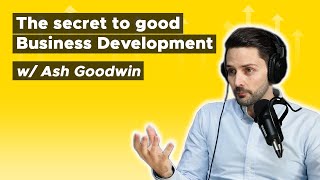
Ash Goodwin, a former police officer turned recruiter, built two recruitment companies by being ruthlessly tenacious. He uses cold-calling and relentless follow-up to win clients, and his latest venture, My Product Path, offers fixed-price tiers up to £100k salary to disrupt traditional agency fees through technology and partnership.
Chapters
If you think about bodybuilding and translating the bodybuilding world to business development, when I was competing, you do a 12-week cut. 2 weeks out, I was doing an hour on the StairMaster 3, 4 times a week, as well as doing weight training like 7, 8 times a week. When you're on the StairMaster, the first 5 minutes you're thinking, I've got this. And then the next 5 minutes you're thinking, why have I started? Then the next 10 minutes you're thinking, I can't do this, I don't think I can do this. Then you get to 40 minutes, you're like, I've got this. And that first part of the journey is always the hardest bit with business development. And it's just like being on the StairMaster or whatever your interest is, whatever's hard, translate that to business development.
Welcome back to another episode of the Recruitment Mentors Podcast. I'm your host Hishem Azzouz, and on this week's episode I was joined by Ash Goodwin. After working the police for 6 years, he had a career change and he found himself working in the recruitment industry. After nearly 3 years working for a company, climbing the ranks and becoming one of their top performers. He then started his entrepreneurial journey just before COVID and launched his recruitment business called Our Door Talent. He then more recently went on to start another recruitment business called My Product Path, which is a SaaS service, a self-serve play, as well as a recruitment company. I'll be honest, I challenged Ash a lot in this episode in terms of the way that they're thinking about the future recruitment, how he thinks it will be. I definitely pushed on a a number of things that he thought in a healthy way, but we also broke down his approach to winning business, standing out, mindset, and so much more. Enjoy the episode. Ash, welcome to the podcast.
Thank you, great to be here.
Oh yeah, thanks for, um, coming to the studio. I appreciate it. Obviously, we, we've sort of just crossed paths or spoken a couple of times on LinkedIn, haven't we? Um, and I know you're extremely passionate about changing the perception of the industry.
Correct.
Yeah, a bit like I am. And also, I think what prompted us doing this was sort of the way that you're building your more recent recruitment business is really centered around changing the perception industry, doing things differently. I think you said that there's a lot of people on LinkedIn talking about doing things differently, but are they actually doing it?
1 million percent.
You believe that? Yeah, the way that you're trying to build things, you are actually doing it. So I'm excited to dive into how Ash is approaching on actually actioning that. But I guess, just to— like I always sort of like to start with, just to paint a bit of color on Ash's journey so far. So if I'm missing anything, let me know. So you worked in the police for over 6 years?
Yep, correct.
Definitely going to talk about that transition from police to recruitment. You then sort of worked in recruitment, employed for a business businesses for, yeah, nearly 3 years. Where you had sort of early success was at Minor Contract Services, right?
Yeah, correct.
So you worked there for 2 and a half years, became one of their high performers there, and then August 2019, or in 2019, you then started Outdoor Talent, your own recruitment business, a couple of months, 7 months, half a year before COVID Yeah, that was fun. Yeah. So, so you started, started your own business then, and you've been on an entrepreneurial journey since then, right? So Yeah, you've been on the entrepreneurial journey since 2019. Um, yeah, initially started that with Ardor Talent, but then nearly 18 months ago you started a, uh, other recruitment business called My Product Path, um, with your co-founder Sean, who's a product expert, worked in the, in the product world for however many years. And now it's more of like a group. Ardor Talent does more finance, property Or not.
Yeah, so property, technology, finance, compliance. Um, Aldo will be winding down and be spinning out more arms of my product path. So my finance path, my compliance path, etc.
Yeah, cool. So yeah, so then, and then, yeah, my product path, I feel like from— I don't know, you tell me, but I feel like that's where you see long term what the main focus is going to be, like you just said.
Yeah, 1 million percent. It's almost like our innovation hub. And then it's become the forefront of the business.
Cool. And then, so like you kindly shared with me, so in your last financial year, you put it, you put it as a group, right, in terms of this? Yeah, there's 14 of you, and then basically a combined group turnover in the last financial year, £1.4 million, and £780 grand is in GP, and for My Product Path specifically, just under £300 grand in, um, gross profit. So I feel like, yeah, you've been on an interesting journey, right? Like, things have evolved, met your co-founder, started that. So yeah, I'm really excited to get into this. And I think the way, the way that we'll break this down is let's definitely talk about Ash the recruiter, get into the detail of that, and then we'll, we'll dive into the entrepreneurial journey, things that you've had to learn, um, and we'll focus on that. But I guess where we always like to start, million-pound question, something you've probably thought about since having your own business. Yeah, what's Ash's take on what are the, the characteristics and traits that make up a highly successful recruiter in today's market? Let's start there.
Yeah, I always love this question and I'm going to answer it non-traditionally. So I've obviously listened to your podcast historically and everyone says work ethic, etc. So one question I always ask at interview is, what is the greatest challenge you've overcome? And the reason why I ask that question is I'm looking for resilience. Is a key factor of a successful recruiter. And once somebody understands the process of overcoming a challenge, they can translate that into recruitment, because in recruitment, every single day we have challenges, every single day, thrown at us left, right, and center. So resilience for me is a massive, massive factor, and that's coupled with discipline. Motivation will get you to start something, and discipline will get you to finish it. The person who's disciplined will always outwork and outbeat somebody who's just got a bit of motivation here and there. And I think that's the difference between a hard worker and somebody who works hard. There's two differences there. Someone can work hard for a period of time, but the hard worker who's disciplined can do the micro tasks and get to the macro level by doing that. And I think the third point I'll go through here is a problem identifier. And a problem solver. The job of a salesperson is to find pain points and needs and provide solutions for that. So someone who's really, really good at uncovering that is incredibly successful in recruitment because fundamentally that's the job of a salesperson. So I think they're the three which I would identify as, I guess, the key characteristics. And just to add another one in there is the executor. I've had people in my business over the last couple of years who've had fantastic ideas but can't execute. So having fantastic ideas, you need that in your company. You need somebody to challenge you from a continuous improvement perspective. However, when you compare them against the executor, the executor will provide better service and outbill the person with the good ideas because the person with good ideas thinks that that's the only way to do it. Because it's that way. So I would take someone with 99% execution and 1% ideas over 99% ideas and 1% execution every single day of the week. So there's so many more to it, but they're the 4 things that I, I probably look for closely when I'm interviewing recruiters because I know that I can use that and make them successful and bring the best out of them.
So let me, let me ask you then, what, what's been the biggest challenge that you've had to overcome?
What, from recruitment or in business?
Just if you was to be asked that question, how would you answer it?
From a personal aspect, it was when I left the police to transition into a new career. Um, I went through a real, real dark period, and you get an exclusive here because I've not spoken about this in public. Um, I, I went through a super, super dark period. Um, from a mental aspect, I, I was completely, completely lost. So the biggest challenge I've overcome is learning how to walk away from a job which is fundamentally a career, moving to something which is the fitness industry, where everyone says you should follow your passion. I did that. I began to hate it. I resented the thing that I was— I loved the most. I really hated it. Um, I had no money. I was in a complete dark period, completely lost. So the biggest challenge I overcome was overcoming the mental aspects of Ash and then relearning who I was, having to relearn empathy. Because when you're in the police, you have no— you have empathy for people, but you have like— bad stuff happens all the time. One of my friends came to me and said, my granddad passed away. And I went, okay, well, unfortunately people die. Like, that's just part of life. I'm not a friend there, I'm a robot. So relearning the empathy side of things of life was, was really interesting. So from my perspective, it's overcoming the mental challenges of myself. That's the hardest thing I've ever done. When you come out the other side of it, you're fearless and you're so powerful. You're literally like Superman the woman because no one putting the phone down on you can ever hurt you. It doesn't matter, does it? You've beaten yourself up enough mentally, the rest of it's fine.
No, thank you for sharing that. I think, I think people, a lot of people can find themselves in those moments. So let— if, if you don't mind, let's just talk about that for a sec because I think this would be helpful for people. So being, being lost, like, what did that actually look like? So are you talking about— yeah, he was in, in the police, which I'm assuming people around you, or sort of the people that you could look up to, had been doing it for over a decade, or it was like their entire life. And you, you obviously left that after 6 years. So was it, what the hell do I do now? And sort of dealing with those types of questions?
Yeah, so when I was in the police, I, I was one of the first people— not the first people, but I started— I've always had businesses on the side. So when I was in the police, I, I got paid extra to do like modeling and Hollister stuff and all that great stuff. And then I started selling fitness plans, and then I sold makeup, and I was selling makeup, I was selling anything that I could do, and I was making more money from doing that than what I was in the police. And I knew it was the right time to leave the police because I wanted to live a life where I could be home to see my children. My wife wouldn't be worrying whenever you go out. And unfortunately, an unfortunate event happened in the police where two of my colleagues were unfortunately murdered. And that was a moment when I was like, I'm 23 years of age at the time, I'm not doing this forever.
Wow.
So I'm, I'm getting out, I'm going. And it was kind of like when you leave and then you pursue your passion I pursued fitness. It was my passion. I competed. I was on to a good thing. And when you start to hate your passion, it contradicts everything everyone says where you should follow your passion. And it was more the aspect of thinking I had it figured out by following the fitness sector and realizing that just wasn't right. That's my personal passion, not my career passion, which are two different things. And then you just beat yourself up. You feel like you've failed. And I failed at like probably 3 or 4 different businesses trying to create businesses during that period. And then I did the fitness sector, which it was a shoo-in, it was a dead cert. I, I had to be successful at it. Didn't work. It was working, but I was miserable. So it was more— I, I thought I was at— thought I was at the end of my journey with failure when it's actually at the start of the journey. and I had to just relearn myself. It's like an evolution period. Everyone goes through it. You have to learn about who you are and what you are, and then you become entirely content with yourself, and then you can move forward. But as you go through that journey, in that period where you're lost and you don't know who you are, you don't know what your values are anymore, you just completely, like, you just can't see through to what, like, the end of the road. That was probably the most challenging aspect to come through. And I think every person in the world goes through this.
Yeah, definitely.
Like Like, that's a dead cert. I think the thing to get through is just realizing that when you're in a tough period, just don't stop, keep going. Take a moment to reflect, look at your good points and bad points, but keep moving forward. So for me, it was— I felt like I'd lost it all. I had no idea what I wanted to do next. Like, no idea.
It's a scary place to be, isn't it?
Yeah. And I had no degree as well, so no degree, no nothing to fall back on. I was all in, and it just didn't work out, which, which was a blessing in disguise.
And we found the world of recruitment.
I did, I did what, I did what everyone does. I got into Google, I was like, what am I good at? I'm good with people, I'm good at solving problems. That's a good starting point. I Googled it, and I also wanted to make money, which is why everyone gets into recruitment. And the recruitment was the first one which came up and goes, well I don't see why I can't do that, and I just applied.
So let's just talk about, like, looking back at, um, Ash being employed, because I feel like that, that sort of journey says a lot as to, like, why you've ended up sort of where you've ended up so far. I feel like, like, clearly you had that sort of entrepreneurial energy and spirit quite early on. You were sort of thinking, how can I support myself? How can I be reliant on myself? Yeah, it seems like even when you was in the police.
So I think that goes back to being a kid. Like, I think it all starts there. It's the old cliché, selling stuff and selling cigarettes, sweets, washing cars, getting your mate to wash your cars with you and taking half the money. Like, the whole journey there, it started there. But entrepreneurialism, when I was, what, 22 years ago, 20 years ago, we didn't have social media, so you didn't really know if it's inherent in you. You don't actually— you didn't know it back then. So that's why I went to the police, to learn discipline. Um, and then obviously as social media become more paramount and I started to learn more about myself, I was like, I actually need to be doing this.
So with what, what did you— what, like, looking back, what did you, um, where did you, where did you struggle the most when you was employed in, like— so obviously you worked at, how do you pronounce it, Mane?
Or Maine?
What, what were some of your biggest challenges early on in that business? Because was it Is it contract or is it perm?
Both. So yeah, they, they, Maina are a great company. They do lots in engineering and defense. And my job was to come in and actually help shape and grow a technology desk. The CEO, Gary, he's a fantastic guy. He's a really good leader. I think I'm a hard person to manage. I'm so self-sufficient, you can leave me alone, I'll go and do it. I'll know I'll grow something and I'll do something fantastic. I'm easy in terms of to management from that aspect, but I'm hard in terms of like, I will always push continuous improvement. I will, because I want to work for the best company possible. And I think the biggest, I guess, challenge there was understanding. I had— it took me a couple of years to figure this out, that my vision and their vision was different. And that's okay. It just meant that my vision didn't align with their vision anymore. So it's more the vision aspect, which is the reason why I kind of left, is because I kind of saw recruitment going a different avenue to what, to what they did. And that was okay because their business wasn't fit for, fit for my purpose long term. It was fit for their purpose.
And because obviously I, I wrote down when we prepared for this that you became one of the top performers quite quickly.
Yeah, correct.
A big part of that, from what you shared with me, was around how you got good at winning new business, building partnership, something that, um, you said you, you feel you're great at. Yes.
Let—
like, what— why were you able to get some sort of early success on, on the business development side, do you think? Why was you able to do that? A lot of people struggle with that.
Yeah, it's a good question. I mean, when I left, the turnover of the business unit was 2.6 million. And that's in the 2.5-year period. So it was, it was quick success. What, what I realized was very good at— I'm, I'm— it's the ability to be ruthlessly tenacious. So if you think about bodybuilding and translating the bodybuilding world to business development, when I was competing, you do a 12-week cut. And for— I think it's like 2 weeks out, I was doing 1,000 calories on the StairMaster, an hour on the StairMaster, 3, 4 times a week, as well as, as well as doing weight training like 7, 8 times a week. It was— and then you're on like 1,400, 1,500 calories. It was ruthless. When you go through the period— and this is interesting because I use this as an analogy to my consultants— is translating a process which works into business development. When you're on the StairMaster, the first 5 minutes you're thinking, I've got this. Well, most people are thinking, I've got this. And then the next 5 minutes you're thinking, why have I started? Then the next 10 minutes you're thinking, I can't do this. I don't think I can do this. Then you get halfway thinking, I just want to start, but can I get going? Then you get to 40 minutes, you're like, I've got this. And that first part of the journey is always the hardest bit with business development. And it's just like being on a StairMaster or whatever your interest is, whatever's hard, translate that to business development. And with business development, it's initially a numbers game. My mission was to bring on as many clients as I could in the fastest period possible. I brought on a travel company which almost changed my life. As a travel company, as a financial services company, there's two different stories. But the travel company, right funding, right time, and my ability to build relationships off the back of just, I guess, being myself. That's how I won the business. And then it was not only that, it was taking them out to dinner, landing them, expanding them, getting introduced to the next person, then the next person, and then the next person. But fundamentally, you're the problem solver. They know they come to me, I'm gonna— I will work through the night, I'll work over the weekends, I will get the job done so they can grow their business and they can grow their teams. So it's a mixture of being reliable, tenacious, consistent, and understanding what they want. So understanding what the hiring manager actually wants versus what you think that they want. So from a business development standpoint, the 3 biggest partners I brought on were all the first year. And that wasn't by luck, that was from work ethic. I, 5 o'clock till 7 o'clock in the evening, I, I kind of worked those 2 hours where everyone had gone home at half 5, sending out sales emails, speccing candidates over who are reliable to— so relevant to the right parties. I did that day in, day out, week in, week out for an 18-month period. And that's kind of what helped to grow the business. I outworked everybody else in the office.
So what, if, if it's cool with you, we've spoken a lot about this recently on the podcast and I think people have really appreciated it. So you can, you can maybe take, take experiences of now with my product path or more recent, uh, with, um, your own business. But I guess I really like the way that you broke down that Stairmaster experience. Like, I think a lot of people relate to that. Like you said, I think it is, it is so true, those first 5 minutes you've got it. Then after that, you're like, why the fuck have I done this? Like, I, like, I couldn't relate more. So that makes complete sense. So I guess, like, taking that then into the business development context, I think that, that makes complete sense. So I guess, what, what does Ash's, like, business development strategy now look like? Do you know what I mean? So if— and we can break that down where you're, you're making sure you do the things even though you may not want to be doing them, or just how that translates. It'd be good to just get your perspective on that, or how you now approach things, because I think this will be really helpful for people people. So let's just say, I don't know, now with my product path, you've got 10 dream clients, you know who they are, you feel like you can, um, solve their problems, add tremendous amounts of value to them. Um, what is Ash's strategy, um, that, like you said, sometimes you may not want to do it, but you know you need to do it, to take those people from not knowing who you are to having that first meeting with you where you get the opportunity to sort of showcase this is what I'm about, this is why I'm someone that's reliable. Like, just talk to us and feel free to go as grand as you want, but what does that look like?
Yeah, I think there are two parts to the question because you've got Ash as a recruitment consultant in the main, and you've got Ash now where I've already got a client base, I can pick and choose almost who I want to work with. What I've always done is, in order for me to sell a company and sell a position, I've got to be passionate about the person and the company. So first and foremost, I'm looking at, okay, which companies are doing things, in my opinion, ethically in the correct way? I don't want to be partnering with companies where you hear horror stories about people leaving after 4 or 5 months continuously, not just anomalies, continuously. So my business development plan is now more, okay, who can I add value to and who can add value to me? It's a two-way street, business development is. And when you start out, you always think it's a one-way street because you put the senior people on the pedestal. You do. Back here, it was the micro steps. It was hitting the KPIs, hitting the numbers. It is a numbers game. It's getting people to— it's, it's been planned. So planning is super critical to being successful in recruitment. 4 till 5 every day, I'll be planning. 5 till 7, I'll be doing all my sales emails, spec and CVs. 9 to 11 every single day, I'd be calling. I'd be— I had a targeted list in specific industries that you're called. Now, when people get into recruitment, they say, I want to work in the sports industry because gaming's really cool, or whatever it is. Just, just kind of— that's kind of what they say. I ended up in travel and then ended up in data and then, then SaaS. Like, there are industries I didn't even think about, but it's where I got the results. And then you build an almost a business off the back of it. If I'm working with a FTSE-listed business, one of the biggest companies in the world, which we've worked with for the last 7 years, I'm gonna use them to market out to other companies because it's a clever way to do business and people want to work with the best. They, they do. And if they know you're delivering talent to those, to those companies— so I, I think when you're starting out, you almost go for everything, and then it's like a big— it's like the sales funnel. You start with everything and then you get to this stage here, like, okay, I'm at this stage here now where I'm like, okay, who do I want to work with? Why do they— why should I reach out to them? Because people reach out to me now. So it's almost a two— my BD plan is now a two-way street versus how is my product path going to benefit this company in the future, because we're not right to work with everybody. At the start of your journey, you want to work with everybody, everybody, and that's like, that's part, that's part of business. So my business plan now is more structured around how we can add value. I still cold call. I actually personally love it. I really like it. I'm sat there with the lads in the office and the girls in the office cold calling. So it's more having a structured plan, but having a plan which is long-term. I'm talking 5 years down the line. Which of these customers do we want to be working with? What products are they building which are really cool? How can we supply the people to build those products out? Because I'm going to probably use that product and yeah, it'd be— so you feel quite proud of the fact you supplied the right people. So my business plan now is more around that, but back when I first started, it was more around volume, numbers, work, basically where can you get the, the wins quicker. At month 10, I learned how to win exclusivity, and that's what changed my career in recruitment.
You learn how to win exclusivity?
Yeah, I've won my first— I won a director of it exclusive role with, um, a company in Leicester. It's a company called Cambridge Counties Bank, fantastic business. I've worked with them for a long time, and I won exclusivity on that one role. And I came out and I realized what my worth was. And then when you do that in recruitment, you don't settle for competing against 5 companies anymore. You've done it once, you can do the process over and over and over and over.
Well, let's talk about that then. I think that'd be helpful.
Yeah.
What— so how— let me ask you this, maybe this will bring it out, but what was Ash doing in a— so I'm assuming, did you sort of ask for exclusivity in the client meeting?
Yeah.
Okay, cool. So what did a client meeting look like when you didn't get exclusivity? So maybe 6 months in, what questions are you asking? What were you focusing on? To then, what did that meeting look like and how different was it when you did get exclusivity? When you, like, 10 months in, as you said, what were like the main differences? Like, yeah, I'd be interested because I think that'll bring to life the different types of questions you're asking, what you're focusing on, rather than what you ended up focusing on when you walked away understanding your worth with exclusivity. And like you said, that, that sort of changed your career. So yeah, how different were the meetings?
Yeah, a lot of it was confidence. So when I was at my first recruitment company, they, they labored the point of booking meetings and going out on meetings and getting in front of people. And when you do, when you first start, the meetings are generally— I would say rubbish, but you're learning and you're gaining experience and there's no structure and you're my meetings were all around the people, getting the people to talk, not talking about recruitment, and then getting people to like me, I like them, and that's how you win business. And that's kind of like the first 6 months was just around— I was almost— you can, you can smell the— not smell the desperation, you can almost smell the desperation of this recruiter really needs this. Whereas at month 10, I'd actually already worked with one of the HR managers in the previous company. I'd, I did 5 deals with her it during that period. But she also had a boss who I had to get on side. So I kind of had, I had half a hunch I could do it. And I think that ability to understand that you can do it, like you probably know yourself, Hishem Azzouz, when you've been on meetings before. I get myself so psyched up now for meetings that I've already won the business before I even go in. And that's what I did on that day. Whereas these meetings here, it's almost like you're, you're faking it a little bit. You know, you're You know, you know you're not bad at recruitment, but are you confident you're better than anyone else out there? Probably not at that stage. So those meetings here were just a bit more, looking back, not great, understandably. And there's nothing, there's no targeted outcomes that I wanted from those meetings. You just go to meetings, hopefully win business, come back to the office. This meeting here was specifically for one job. I had to go and pitch for it. So I got the data. Got all the LinkedIn data, had case studies. I was probably the most prepared I've ever been for a meeting in my life. And then in that meeting, I asked them point blank, I only work exclusively. How would you feel about working exclusively on this role? I didn't only work exclusively at the time, but I said it because I'm like, I need to, I need to, I need to win this exclusive. I'm not going to do this role where I'm competing. I don't want to do that life anymore. And they were bought in and they said, might need some time to think about it. Well, let me just kind of stop you there. Like when people say it's because they're not convinced, talk me through the reason why you need more time. And then I was able to answer the question and then we won the business and I closed there. So it was that almost that switch where before I probably would have gone like here, I'd have gone, all right, okay, yeah, I look forward to hearing from you. Whereas in this moment I was like, no, I'm winning this. I'm not going to leave this office until I've won this business. And that was the difference in the two meetings here versus the meeting here. There's a targeted outcome. There's no targeted outcomes here.
What was that question you said? Because that's, that's, that's very helpful for people.
What about exclusivity?
So basically, so like you just said, it was— they said, Ash, I think I might have to think about it. And you replied with, typically when people say that, they're still unsure. What is it that you're unsure about?
Yeah, correct, because it's true. And, and I think you and I both did meetings before where they say that, and people say this often, and it's always the case that they're not entirely convinced by you yet, or you haven't sold your solution well enough. So when anyone says that to me, I always circle back, I'm like, okay, fantastic, and obviously appreciate that. My experience suggests that when people say this is because they're not entirely convinced, so what part of the process you're not convinced about? And then you get an opportunity to overcome the objection again and sell the solution. So it was that bit there, which I'll be honest, I learned that from a YouTube video on sales. I thought, I'm just going to try it, and it worked. And it's one of those things where I was like, okay, now I'm going to do it again. Then I can now put into my language 7 years later as to how I would do it now. But back then it was like I was almost obsessed with sales to a point where I, I, outside of work, I was always self-developing and improving and trying stuff. And eventually when you're trying the stuff, some stuff works for you, some doesn't. And that was just one of the things which worked in that period.
Yeah, and then just to wrap that up, I know we've gone granular here, but I know people really enjoy this stuff. Um, so people listening, what would— like, now knowing what you know, I'm sure you help your guys and girls with it now. New client meeting, I'm excited about the— like, they fit sort of— I think they're, um, a great business, they've got low turnover, um, fits our sort of ideal sort of, um, type of client. And I think it could be a really great partnership. What would be the non-negotiable things you plan for in that meeting now then? Or what would— like, for people listening, what should they plan for non-negotiable as a minimum rather than going into these types of meetings just hoping it goes well, trying to build a relationship, and hopefully I'll win some business? Like, what would be the non-negotiable prep for these, uh, potential, um, new client meetings?
Yeah, it's a great question, and I think it starts with how— like you mentioned there, like how you qualify the prospect. So from the qualification phase, that's how you do your prep. So let's just say company building out a product function, they're going to need 20 hires, which is what happened back in August. It's then running through the data and analytics on the company, um, so understanding where they've acquired talent from before, uh, because usually LinkedIn analytics is great nowadays. Everyone, everyone uses it. It's, it's really clever. So I'm always looking at that. But then let's just say in this instance where they're having to grow different squads, it's having— I honestly just sit down with Sean and say, Sean, okay, this is what we have. This is what they want to build. I need an idea when they go into the meeting. They might need 2 product managers here and a product owner here and maybe a designer here and an engineer here. I need to understand the formation of what the squad, what a good squad looks like, what a good formation of a business looks like. So I think first and foremost, having that high-level knowledge is super critical. And then also, I think in that meeting I said about product operations, which is quite a new thing in products. It's been around, but it's super new. So it's asserting yourself as that expert as well, because the CPO goes, you know, I thought about it, but not too much. It's something I need to come back to you on. And you instantly assert yourself as the, almost the expert, the dominant in that meeting. So I think that's the first and foremost. Then it's okay, exclusivity is key. We only work at that, terms of business. And then I guess from a research perspective, it's more just the analytics and just looking at the squad formation, looking at the person I'm working with, looking at the company we're working with, what's attractive about them to sell, getting them to tell me why somebody should work there. So the meetings for me now are more on the client than me delivering on the meetings, because people already know what I can do. I already know what I can do. So it's almost kind of like the prep is there, the rest of it's in that meeting. You're finding out, are they the right partner for me ethically? Are they the right partner for me from a values perspective? Do they fit? That's kind of what I'm looking for, and that's what I'm shaping. But prep-wise, it's just run your analytics, look at who goes, who goes where. If you've got a Sean, try and look at a squad formation, squad, like, have a look at are they a pro— like, organization. ChatGPT is fantastic now. You just stick a bit of information in there, tell me about this company. So make sure you know who the company is, the prospect, but also try and understand what the vision is. And you often get that for the meeting anyway.
Okay, so, so just quickly, so non-negotiable then would be I go into client meeting and I would be able to articulate or understand that. So it looks like you've typically hired people from these types of companies why is that? Or like, you've picked up on that. Um, and then, and then the other thing that you, um, said there was also like in preparation, is there anything that you can share within the market or just any sort of industry insights that could be also really helpful as well? So yeah, yeah, like you said, where they typically hire people from, where does it look like they like to hire people from, make sure you go into those prep— uh, yeah, prepared on that. And then also what, yeah, what insight can I, or value can I give this business that could also showcase my expertise?
Yeah, million percent. So the first point, super simple. As a recruiter, if you go and find a profile from that type of company, there's a chance you might do a deal with them because they like that type of profile fit for their organization. So simple recruitment is that. It's how I did my first permanent placement. I asked the VP of product, Where do you want this person to come from? I literally went and found someone from that company, sent them over, and we did a deal in 19 days from start to then. Um, this side of things here is more— and I'm not saying it can be hard for a junior recruiter because they just need to call somebody who's a CPO and ask them for some time. This bit here is the high-level consultative part where— and this is how you stand out as a recruiter, whereas I understand how now with Sean and my experience, how to form a product function, what goes into a product function. Product operations is something which again is relatively new, but it's the glue which holds now product teams together. So my job is to go and yeah, be the solution driver for building your talent base, but also be that partner where I'm thinking about doing this and this, what's worked best for you? That's what's worked really great for other companies as well. Like, how— when you built this team here, what did they do? And that's kind of the bit which—
yeah, that's the insight.
Yeah. And that's the bit which you— that kind of comes with experience in asking the right questions. So if you don't know as a recruiter, call somebody who does.
Could even be someone in your office that's got more experience than you.
1 million percent. I remember going to the meeting with a chief data scientist. I knew nothing about data science, and I called the data scientist up and I said, okay, just please forgive me, I've not got a job for you. But I might have after tomorrow. And just please forgive me because I just need some help. I've got this meeting tomorrow, but I don't know what to talk about. What would you suggest? And they just said, ask them about the data landscape. So the first question I asked was, just talk me through what your data landscape looks like. They came alive. The rest of the meeting was really easy. So sometimes, even if you don't know, ask somebody who does. But that's the bit there which almost can't be taught. It— that comes with a bit of experience and asking the right people the right questions.
Yeah.
Hey everyone, a real quick one from me. This podcast would not be possible without our amazing podcast partners, Vincere and Sourcebreaker. Because you listen to this podcast, you're able to get your hands on exclusive savings on both of these award-winning products. If you're a growing recruitment business, you have to check out Vincere, who are an all-in-one operating system for your growing recruitment business. With Sourcebreaker, if you want to make sure that all of your recruiters have the best tools on the market to stand out and beat their competition, then you have to check out Sourcebreaker. Use the link in the show notes, in the comments below, and you'll be able to get yourself exclusive savings on these amazing products.
So let's talk about this entrepreneurial journey then. I know we went on a few different times, but I enjoyed it. So why don't we, why don't we dive into, why don't we just dive straight into like My Product Path? Because I know that's, I feel like that's, yeah, what you're really excited about. Obviously You started your recruitment entrepreneurial journey with Idle Talent, right?
Yeah.
So why don't we just dive straight into my product path? So firstly, like, how, how would you describe my product path? Firstly, like, let's just, let's just start there, and then I'm going to hit you with some questions.
Yeah, it's always a good question when people ask me this.
We—
I think from, from a visionary perspective, and I obviously started this when you started this, this podcast, you suggested that everyone wants to change recruitment, everyone's talking about when no one's actually doing it. We've been doing it behind the scenes but not talking about it. So just providing a good service and the partnership approach is a minimum requirement of a successful recruiter. Now, that's not change. That really isn't change. What we're doing at my product and how I describe us is we're wrapping technology around people to create change in a sector, which is a fantastic sector. It's a sector that I'm passionate about and I love, and it's a sector which can make or break companies. So we're a SaaS-driven organization that every money that we make, every fee that we make, we put back into the technology, we put back into the people. So we're a tech-for-good SaaS organization who is streamlining recruitment services and to build fantastic product and technology teams. I think that's probably the easiest way to describe us without getting too deep. I know we're going to go to the detail shortly, but that's fine. Yeah, probably the best way to describe us.
So that's the vision, but let's keep it real, right? So, but like, so far that's the vision, but most of the revenue so far has come from recruitment. Yeah, doing deals.
Yeah, that's— I mean, we're building the technology by the use of that. And here's the interesting thing. So self-serve is, from a consumer behavior standpoint, self-service is ever-growing every year. I think I read this stat that 86% of behavior in supermarkets, for example, self-service nowadays. Everyone uses kiosks. Not sure last time you went to the supermarket, but I assume you may have used a kiosk.
It depends how big the shop is.
Yeah, so, but that's part of it. And when you look at COVID, the QR codes, everyone orders via QR codes now, or they were. A lot of stuff we do, and a lot of the people that are going to be hiring managers over the next decade, it's going to be self-service. However, self-service isn't the only answer. Hence why when you go to a restaurant, you've got the self-serve aspects, but you've got the people there. To help deliver it. So it's kind of— you've got to combine those two aspects to make that change and make it work.
Yeah. So what, what I just wanted to get your thoughts on, because I thought this was interesting, why, why, why have you sort of really lent into like saving money, fixed fee? Because I like— on your website you've got two clear pricing structures. Standard costs 6 grand Following process: recruitment interview by product recruitment expert, cultural assessment, self-assessment, CV submission. I think that's up to a certain salary. What salary is that up to?
Up to £100,000, and then anything after that it's a percentage.
Yeah, and then executive, and then executive you've got £10K. Following process: recruitment expert interview, cultural assessment, psych assessment, role-specific assessment, you're interviewed by a CPO, background checks.
Oh sorry, that one's £100,000, the other one's £70,000.
Yeah, so up to £70,000.
Yeah, that one's £100,000, then after £100,000 it's a percentage. Um, we've actually got one for now for $70. And the fundamental—
why have you done that?
Disruption. Okay, to be frank, it's disruption. Um, when you use technology correctly, you always have a great, a great talent pool of people, of product people, which means that we actually do more deals off the back of this pricing model. So I'm going to break down one customer that we have. They're my longest-standing customer, and we've been utilizing this process with them. We saved them £84,000 last year on recruitment. We reduced the time to hire on their roles by 11 days, and we've increased retention. And we've actually made more money over the last year than we did for the previous year, and we've reduced the consultant's time in doing the roles. And the reason why we're able to do that is because we're plugged into the hiring roadmap. So we can almost pipeline talent in advance for, in advance for the partners. So the reason why we've done that is to disrupt the sector. That's kind of one example of a customer that we've worked with a long time. We've just been competing with a digital agency who we all know in the marketplace and two other companies for a new fintech company. One of the largest pre-seed rounds in fintech history in the UK. They're working with us exclusively now. They're working with us first. And they've got rid of the other two agencies. And when you look at our competitors, we are now starting to win the business from them. One, because of the cost, right? We're in a recession right now. And if any recruiter thinks that they can still charge 20 to 30% fees in a recession, I think they're going to do as much business as they have over the last 2 or 3 years. They're in a dreamland. 'cause people are not gonna spend that. They're looking at ways to cut costs. That's why, unfortunately, the talent acquisition teams in most companies have been cut first. It sucks. It really sucks. However, the pricing model we've generated is the longer-term vision that nobody sees yet. This is 2, 3, 4, 5 years down the line 'cause our pricing model won't change. We'll create different SaaS models, but it won't change. So we're increasing quality whilst driving down costs, and that's disruption.
But surely, like, this is what I wanted to ask you about, because if you're getting— if you're being chosen over price, is that where you want to start the relationship? It's like, I'm using— I'm using Ash's business because they're cheaper. Like, is that— is that— yeah, why would you want to start there?
It's, it's, it's not about being cheaper, it's about having more feature layers in. Okay, so how many recruitment companies have a Chief Product Officer, someone who's got 20 years experience doing the job?
Yeah, not as many.
No, I don't know, I'm not sure about you, but I don't know of anyone who's got a CPO in as an agency in their business. So, so number one, we've, we've got a Chief Product Officer who on the market— and I don't want to market him out, but he'd be 200 to 300 grand a year salary.
So he's in there, you've got the industry expertise. Yeah.
And then we've got the understanding of what each individual role is. Interview processes for each individual role rather than just doing, okay, talk me through what you're looking for, match the skill, match, match the job up, ask a bit around the skills but not really understanding it. We've got that deep level there. Cultural assessment that we've created. I mean, I don't know many companies who do a cultural assessment, skills assessment. So the reason why the price is more like competitive is because we've got more talent than most of the other companies and we're able to utilize that talent better. You know yourself, Hishem, when you're in recruitment, how many people come out to you asking you to look for a job, and you can't help everyone. You really can't. Our model kind of helps us to do that because it doesn't cost an arm and a leg, and all we're doing really is redistributing fantastic product talent into the marketplace. So whilst we're in a recession right now, when people talk about partnership and when people talk about championing change. How many of those companies have gone to their talent, to their partners right now and said, yeah, you know what, it's been fantastic last 2 years, thanks for all the business, you're struggling right now, we'll happily drop our fees by a couple of percent to actually help you through that period? Most recruiters won't do that, and the company won't allow them to do that because they don't actually care about the partnership, they care about the money. Whereas we're a partnership-driven business. Every penny that someone spends with us is put back into building our technology out to champion the change for the future. We're giving the people back the power to choose how they want to be represented on the marketplace, to level bias, to literally have the option of who and what they are, when they want to be, and how they want to be represented in the marketplace. And that's part of what we're building here at My Product Path. So everyone who joins us and partners with us, that's the change which they're, they're championing. So yes, it is more cost-effective, but we're not the cheapest. We're just more cost-efficient and cost-effective, and it annoys people. And I'll be honest, it's kind of more satisfactory because it annoys people to me than anything else. So I don't like the word cheap, but when you look at technology— and this is what recruiters don't understand right now— is technology is going to simply impact the business over the next 10 years in which we're in. Look at ChatGPT, look at what it's just done. Look at how it's ruffled Google's feathers really, really quickly. We are naive to think that technology will not positively impact our sector. It won't solve it. AI is not going to solve everything, by the way. It isn't. It really isn't. However, we've priced ourselves for 5 years' time, and we're taking a short-term hit for the long-term vision. And that's how disruption innovation is created.
What does that short-term hit actually look like?
It just means we make less money on fees. It's quite simple. I mean, some companies are our competitors there. I mean, one of them sent an email to my consultant saying our average fee is £18,000. It's ridiculous. It doesn't need to be that high. And most people hate me saying this, by the way, in recruitment. It doesn't need to be that high. It's fantastic for them, but we're now in a recession. They're going to lose business, and we're going to— when we are winning more business because of our— because we are priced more competitively.
Just, I just, like, I've been on a bit of a journey this with this myself and in my own business. And yeah, I understand what you're saying, but I feel like you're also talking about the other great things that you, you're, that you built and that you do in your service. So why, why would that— why would you not charge a premium for that? Do you know what I mean?
Because it doesn't create change. When— so here's the thing. When we went through the ideation phase to create My Product Path, I did that during the pandemic, and we built the use case around what the users wanted.
Users being who?
The product people.
What, the hiring managers?
Hiring managers and the candidates.
Okay.
So in order to be the voice of the customer, which is what the job of a product person is, we've got to be the voice of the customer from a change perspective. So I had the idea for My Product Path, and I like to use the Trafford Centre as— I always use the Trafford Centre because I think it's a fantastic place. You go there, it's an all-in-one experience. So that's kind of what I wanted to create. And that's why we also launched the mentoring platform as well as the aftercare piece. But if you look at it from, from now, the ideation phase, I went to over a dozen CPOs. And this is my idea. What do you think? And Sean was a person who most understood and was most aligned to my vision. It's the reason why we partnered together. And from here, We speak to candidates every single day, and we take a pool of the candidates to ask them, okay, what do you actually want from a recruitment service? And then we built a model around what they wanted. So when you look at some of the fundamental challenges, is skills fit and culture fit is some of the hardest bits to get correct in recruitment. That's from what they said. Cost is number 3.
Cost from hiring managers?
Correct. So the cost of recruitment people suggest is too high.
Okay.
And that's from the feedback over the last, what, 2 years now? It's in the top 3 of everything in which we do. And that's from polls on LinkedIn. That's from actual feedback. And when we're asking, when we're speaking to customers in everything, people think recruitment is too expensive. It is too expensive. But we're salespeople, so we want to try and keep it high. We want to try and push as much of what we can. But is that ethically correct? And is that actually creating positive change? Not in my opinion.
So what— so when you was having those conversations, is there anything you're surprised by when you're saying, what do you want from a recruitment service?
Um, and keep in mind, Hishem, at this stage, I, I was a generalist agency recruiter. I'd started my business, I was doing traditional percentage models. So the cost for me— because it's not just the cost of the of the, um, actual fee, it's the wasted time of the hiring manager interviewing. And when you actually factor in— and then obviously from when people leave, from a rebate perspective, the cost of a bad hire is pretty significant. And people don't add in the fact that hiring managers' time to actually interview costs companies a lot of money. And they've got to do this multiple times, not get the end result. You lose thousands, thousands, thousands of pounds it takes for hiring managers to actually interview. So I think the, the cost was surprising to me, being that I was a percentage recruiter billing lots of money and making good money. When I actually broke it down and put myself in their shoes, I got it and I understood it. So I, I do appreciate what you say that I, I do get it, and we are adding more features in, but why didn't the features in is because it's what the users want.
No, yeah, I get that.
And how many recruiters and you speak to a lot of them, I've started the business and actually asked people what they want. We do what's right for us because it's to make money and it's to start a business and it's because you can make more money doing that. But how many have actually gone to actually, okay, what do you actually want from a service? How do you want to be presented?
That's a great exercise.
You'll know better than me, but I don't know many who actually go and do that.
No, look, I'm, I'm a big believer that one of the, one of the values in my company is customer obsessed. And the way that I've gone about building the, the business that I'm building is with actual feedback from paying customers and their feedback. What do they want more of? What do they think isn't so great? Like, I totally get that. I think, yeah, I'm just challenging you a bit on it because, like, I just, I just think I— yeah, I think you've obviously explained, you've explained the, the, your approach, and I completely understand. You're, you're creating a service that people want. Rather than just thinking what's best for us. Like, I totally get that. I just think— I just found it interesting that it looked like you really led with price when you're creating something that more people actually want. And I think if you— recruitment doesn't have a good reputation, and if you start relationships with— like I said, you may not want to be like the word cheaper, but if the internal conversations are, we're going to use MyProductPath, they're a lot cheaper than the others.
Yeah, which happens.
Like, is, is that, is that not just a quick race to the bottom? Do you know what I mean? And like, is that where we want— is that how we're gonna level up the perception of our industry, that we just use the cheapest, you know? Because— but I think I under— I understand, I understand the thought process here is like, because typically you'll hear people that charge and work 10% are just spray and pray, shit service. Yeah, all that, right? But it sounds like you're charging less, but you're also building a product and a service that people actually want. So I'm assuming it's just being— it's just boiled down to you're doing— yeah, you are reducing the price, but you've reduced it to a price that you think is more fair, that you can actually, um, build a business on whilst also building a service around it that people actually want.
Yeah, it's what the users want. So why am I building what I want? I'm not a product manager.
Why did you end up on 6 grand then? There must be— is there some science behind that? Or like the 6 grand and 10 grand?
It was the feedback from the customers. Feedback. And also, again, I go back to this word disruption. So I think first and foremost, the customer is at the heart of our journey. And the customer isn't just a client, it's the candidate. Everybody who interacts with us, they're at the heart of our journey, and we are building what is right for them. Are we going to make less money than other companies short term? Yes. Are we going to make more money long term? Yes. Because it's fundamental fact of long-term strategy. And there's so many different analogies. Look at LeBron James investing into Liverpool. Long-term strategy is you're going to make lots of money. He got offered $50 million from McDonald's to go and do that. He actually invested some money into a pizza chain. He's now making $40 million a year, or it's worth $40 million. It's longer-term strategy. And money isn't the forefront of my mind. Acquiring customers and providing good service obviously is at the forefront of my mind because the more customers we acquire, the more disruption we make. So the pricing model, we've got 4, 6, 10K. That's, I mean, if we're competing, we charge a percentage. I've got to make that clear because I'm generally, we'll turn it down because we're not going to do it. But if we're competing against other companies, we will charge a percentage. Exec search is a percentage. That's high level. It's, it's, it's different recruitment than the generalist 0 to 100K. What's the rule percentage if we're competing? It's 20%.
Okay, so you only charge that pricing model when you're not competing?
1 million percent.
Because when it's exclusive, or—
so I mean, I'm, I'm— my time's worth something still. Like, I'm not, I'm not going to be working competing against people for nothing, like, for minimal, like, price. It doesn't work like that. But the, the price is based upon what the users want. So, and I'll always come back to what the users want because that's how the future of recruitment— it is going to move that way. People don't like it, and we get— we've been criticized by some rival companies, and I call them rival companies because they're bigger than us, and we're that startup who they're probably looking at thinking, well, actually they're taking a few of our clients away. They're only small clients, they'll be fine. We've got two of the largest companies in the world working on our SaaS products right now.
Criticize what? Because you're charging less fees?
Yeah, because we're taking their business away from them. Which, and we're also providing better service and we're providing additional features. And when you look at the first people that we ever placed in my product path 18 months ago, they're still at the same companies. One's been promoted. Like, it just comes down to doing the job correct. If you do your job correctly as a recruiter, you don't worry about a 3-month rebate period. You don't worry about the— you don't really worry about anything because you've done your job correctly. So we are more cost-effective, but people don't see the vision yet. People don't understand that the technology is going to drive costs down. And if people think it's not, then they're living in the dreamland, because technology will disrupt our sector. It will. It's not going to solve everything. I said, I always say it's right from the start, it's not going to solve everything. You can't solve everything with technology. But why can't it improve it? Because it's not really improved the sector yet. We're still a million years away from like being anywhere near where we need to be. We're still probably stuck in the '90s and we're waiting for that change to happen. So we're part of that change and it is going to irritate a lot of the big agencies because we're going to take business away from them. And more for it. So the analogy that I used before with our biggest client where we actually made more placements, they did more money, and actually reduced the consultant's time of delivery— that's the example we'll use because it might seem like we're more cost-effective, but we're more profitable at the same time.
So let— I know we went on a tangent there, but I think that's like— you're, you're passionate about, like you said, doing things for, for the positive change. So I'm glad we spoke about that. And that's, that's what I was just really curious to get your thoughts on.
Yeah.
And your, your perspective on. So like, yeah, look, I think for me it's just like, fair play. I think I just wanted to understand why, yeah, that pricing piece. And you, you shared why, why that is. Because yeah, I definitely don't think just being cheaper is the, is the way that we're going to change the perception of our industry. And I know that isn't what you do. That isn't obviously what you're doing.
No.
And as you've said, we offer this pricing when we're working in partnership, when we're working exclusive, or yeah, we've got a partnership. And when we are competing, then that's when, um, it's back to the traditional methods.
So sorry, Hishem, just on that, and when you look at what I've seen, one agency who we would class as a competitor, they've just done an embedded, an embedded talent model which is cheaper than our fees, yet we're an embedded talent partner to a degree because it's partnership approach, yet we charge our fees. So when people look at being more cost effective, is it? I mean, it is for transactional recruitment, but from a partnership perspective, it's still more cost effective overall. When you've got now companies doing their embedded talent partner, which they wouldn't have done 10 years ago because they wouldn't have, they're now putting it in as a service because they understand actually, yes, disruption. Actually, yeah, the companies have done this, they've actually removed some business away from us. And that's what's happened. So what we're doing is building a model which for the next 5, 10 years will do the same thing.
So let's just end on then, because this is the what you're building your business around. What does a good quality modern recruitment business look like in 5 years from your perspective?
The technology wrapped around the people, that's innovation.
What does that, what does that mean? Was Like technology wrapped around people.
You'll find out in 6 months when we launch the software.
It was high level, like what, what some of the thing— what, what are some of the things that technology can enable the people part? Like what, what— talk to us about some of the things.
I think it's making, um, efficiency in recruitment, because you and I both know when you do this job, you get bogged down in admin, you get bogged down in loads of media, sort of, I guess, minor tasks which you shouldn't be doing. So number one, it's making things more efficient is critical to being a successful recruiter on a bit more of a global scale. Because when you look at the amount of admin time, amount of Bullhorn time that you do, or any of the CRM which you use, or whatever it is, it's just mental how much is used. Communication with candidates. Companies are really poor at how they communicate with candidates, really poor. So having a system in place where things are more visible to the candidate makes a lot more sense to me. And it's kind of like candidates nowadays want a choice and they want to feel like they're in control of the process and we need to give them that. So if we just think sending a CV, doing a deal, speccing the CV over, that's going to be the long-term answer to recruitment. It's not. Going to be that. So in 5 years' time, fees, I think you're going to have 2 models. You're going to have the models which are a bit more partnership-focused, where they're looking after the companies correctly. And there's always going to be the place for the agency recruiter as it is now, doing the fees in which they are now, because some sectors don't require what we're doing, by the way. So like the construction sector, for example, it's not really needed for us. It's different type of work. Like it's not the same, same as what we're doing. But for me, it's always technology wrapped around the people, and that's how the disruption is going to change, and that's how things are going to change in the sector. Service is just one aspect of change. It's not really change, it's just doing your job correctly.
Okay, see, no, I think I'm, I'm so interested to see how things play out.
That's why I want to do it now, because I want to come back in 18 months and I want to have this conversation again. And it's almost like a time capsule to see whether— I know I'm correct for what people want. It's how this is executed will be the, the success or failure of the business.
Look, the, the thing that I take away, which I, I massively respect, is I think, yeah, I think if you want long-term success as a recruitment business, getting closer to what it is that your clients and candidates actually want from you, from a service is the right approach. I couldn't agree more. Rather than just focusing on what is going to be best suited to us, like, I, I totally get that and I buy into that. I just think for long-term sustainable success, if you are very close to what your customers want and you build your services around that, then yeah, like, it makes complete sense. So that, that's why, um, yeah, super interested to see how it plays out and how recruitment companies deliver that, how they approach that. You're obviously making, um, your bets on how you're approaching that, which I really respect. And, um, yeah, look, I think I wanted to challenge you on a few things, but I— it's only coming from a place of just curious, curiosity, you know. And I respect the, um, the journey that you were going on, and I'm just really interested to see how it all plays out.
Yeah, no, 1 million percent. And I love being challenged on it, by the way. So if anyone wants to challenge me after this podcast, please feel free to interested to do that. Um, we have actually been challenged by a client to say, actually, we want to pay you more. So I'm like, well, pay us what you want then. Um, so yeah, no, I, I, I know the future of what our industry— like, the recruitment sector, I love it and it's amazing. The future of the industry is changing. And ChatGPT, if people haven't noticed that— and I'll always use this as an example— it's going to take that one moment like that for people to sit up and think, 'Ah, okay, I need to change.' Because most recruitment business owners right now are just thinking about the now. They're not thinking about 2, 3, 4, 5 years. I'm 5 years in advance. I'm not thinking about the now. And that's going to be the success and failure of a lot of companies over the next 5 years, is, okay, how visionary are they? If they think the status quo of recruitment right now is going to work in 5 years' time when the Gen Z start managing and hiring people and they don't understand who the, the user personas are, the people that we're working with, they're going to fail and they're not going to do this correctly. And that's what we understand is the personas of people hiring now is different.
Ash, thanks for coming on the podcast.
Thank you for having me.
Thank you so much for listening to the episode. I hope you enjoyed it and got value from the conversation. If you did enjoy it, please don't forget to like, share, and subscribe, and we'll see you in the next episode.
More from Hishem




You don't need as many clients as you think to bill $1 Million A Year In Recruitment



From 30 Direct Reports to Back-to-Back $1M Years as a Solo Recruiter with Zach Creighton



