Bootstrapping for over a Decade to Raising £4 million Strategic Investment with Wendy McDougall
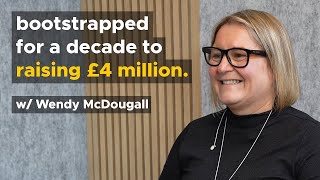
Wendy McDougall built Firefish, a recruitment-tech platform, from scratch and bootstrapped it to 20-30% annual growth over a decade before raising £4 million. She started as a recruiter frustrated by clunky software, spent four years building a unified platform linking websites to candidate databases, and eventually chose investor Foresight over others because they valued autonomy and cultural fit.
Chapters
Wendy, welcome to the podcast.
Hey, lovely to be here.
As I was, as I was saying to you before we started this, first, I first heard you speak when, uh, yeah, I booked myself a ticket to a UK recruitment event on my own when I worked in recruitment. Um, have always seen you speaking at Recruitment Expo, always seen you in the red of Firefish.
Definitely.
So, uh, now we're here, so I'm really looking forward to do a few things here. One, actually unpack a bit of your entrepreneurial journey, because I think you've been on a really interesting journey from starting your own recruitment business to then turning a product that you, you know, wanted for yourself into a business that has now been going for over a decade. And also talking about this recent investment journey. I think people are always interested in that because I know when you release that video of we've we're announcing this round, how much hard work goes into leading up to that. And it isn't as straightforward as people think. And also, yeah, like where, where Firefish is going and what you're staying true to in terms of, yeah, like what you're staying true to, to serve your community and what you really believe in. So a lot to uncover. So I'm looking forward to it.
As long as you don't make me feel old.
I'll try my best. But why don't we just start with So feel free to correct me if I'm wrong, but from what I saw on LinkedIn, you basically started your own recruitment business, and I think at the peak you put on LinkedIn that around 15, 16 people generating just over 1.5 million in revenue. Um, and then did you exit that business?
Yeah.
Yeah, so you exited that, and then the reason why you exited that was you wanted to go on this journey with Firefish. Is that right?
Yeah, it's a bit of both. So, I suppose just prior to that, I was the usual way you fall into recruitment, top biller, and then fell in, decided I was going to do it myself. And first year, managed to turn over 100, turn over the first million from a back bedroom story scenario as well with my first employee. And I exited with my first employee doing a management investment-led management buyout. So, that was a really nice story. But you're absolutely correct. The drive for me to leave that business was really, I'd always wanted to run a tech business. But my heart was in recruitment. So, be able to combine both of them. And it fell off of a real frustration when I was running my own recruitment business for the tech that was out there. You know, it just got, at that time, which is around 2004, 2005, or something. And, you know, really, you had RDB, you had Bond, that was about it. You know, Bullhorn was maybe coming onto the marketplace. And I could see from being a tech recruiter, what was really happening out there in terms of the technology, consumer-led technology, inbound marketing, all this cool stuff that could happen from the web coming into your database. And recruitment was so behind. So, I went, screw this, I'm going to build this. And we decided to start building this for my own business. So, we spent 4 years really there developing that before we decided, let's spin it out.
So, in those 4 years, was it even called Firefish then?
So, we had a name and people say, why Firefish, etc.? And there's no clever story to that. Basically, the designer upstairs gave me an option of Pumpkin or Firefish, and I decided Pumpkin was a bit seasonal. And Firefish had fins, as we say, so that was good. So, it was just getting born with that name, but we spun it out from the recruitment to have 2 separate entities. And that's really where I was running both. It was also, as any of your listeners out there are probably entrepreneurs as well, it was 2010 that it was born, so we were in the middle of the recession. It was really boring doing recruitment, so I needed more things to do. I also had a child at that point too, which was nuts. So, but yeah.
All happening. So, yeah, I really resonate with building something around a problem that you have. I really resonate with that because that's sort of what has really spurred on my own entrepreneurial journey. And I think it's such a, great, like, foundation and platform to start from in terms of whatever it is you're building in your business. You're trying to solve— at the center of that, you're trying to solve a problem that you've experienced firsthand, because I think that gives you such an upper hand when it comes to really understanding where your offering and service needs to go or what you need to stay true to, because you really understand those problems. So just curious then, if I can cast you back to that early period, what were like the core problems and the core frustrations that you were like, this, there has to be a better way for this, or like, what were the core things that you first felt like, there has to be a better way?
[Speaker] Yeah, so, sorry to anybody that was using Bond out there, but now that they were taken over, I actually liked the Bond culture of the guys that were there at the start, but this was really what tipped me over the edge because I was all about inbound marketing. With inbound marketing, you need to have your web connected to your database. So at that point, I had to have Bond net tools, I had to specifically go to one, one particular web designer that then had to integrate it all. And every day, one of the components failed. So, I wasn't getting— the easiest thing for me was getting an application through your website into your database. So, that was— and every day I was on to their support desk. I thought this must be better because I could see that, you know, the no longer— because I was in tech as well, that's a little bit further advanced than some of the other professions that, you know, CVs were not— CVs or candidates were not walking into the door. You had to have them on your web and drive that traffic. So, this was a problem that nobody was solving and nobody was thinking about a database that was actually alive and breathing and able to get engagement and able to get candidates converted straight in. So, that's what we went out to solve. And the power of that in re-engaging that candidate database is, you know, I know the recruiters out there, if you can get a candidate that you place 3 or 4 times in that career, you know, he's walking around with a price tag on his head and you've just made 4 placement fees out of that. So how do you keep— and that's sweet, isn't it? Sweet placement. Dead easy. You know who you're selling, you know they're good, and they come to you first. There's no competitiveness there. So for me to be able to reengage that candidate and keep tabs on that candidate, I needed to do that through the web, the alerts, and seeing how that candidate was engaging in my database. You just can't— you just at that point were never able to do that with all the databases that were out there for recruiters. They were like a separate administration database filing cabinet that unless your recruiters made a call or you said as a manager, do your admin on Friday and update your KPIs. It was just dead data that we were putting into this big filing cabinet and doing nothing with.
So that core problem was, yeah, how can we make like all of that just communicate with each other as smoothly as possible, which is crazy to think that. I'm assuming there's still companies now that have some of those issues, to be fair.
Do you know, we're now evolving and we'll get on to that in terms of where our problem, the problem that we're now solving. But, you know, the slide deck that I created and the original video to describe this problem, it still exists with companies that are talking to us. Well, I would probably argue that although technology has come a huge way, it's almost overly complicated our world. And you've got so many different things out there that it's really hard to actually get that true core vision of what's happening with your candidate data. So, unfortunately, yeah, there are still loads of companies out there with that same problem and one to definitely, you know, we easily solve and increase the number of placements that they can get from their existing database.
So had a bit of an internal drive then to run a tech business, which is interesting. Um, what were some of the— just curious, like, what were some of the shifts you had to make as a founder of a tech business compared to a recruitment business? Was there anything that you particularly found challenging or surprising about that shift, or was a lot of the things that you learned on that recruitment entrepreneurial journey instantly able to transfer over, or was there anything that you were surprised by?
Yeah, well, I think, you know, we live in a recruitment world where we all just hire the same people. That's the first thing. I've never been in an industry that when you actually draw it down, go, we all hire the same people. Um, so, you know, actually understanding how to, um, how to work with different types of people and different skill sets was definitely something. And they don't run sometimes as as fast as us recruiters. I think one of the things in terms of comparison, when you're running a recruitment business, um, gosh, the way that you are able to learn how to manage your money, to go out and be sales-led, um, to work hard in these ethics, that is phenomenal in the recruitment sector. And don't ever undervalue that within the recruitment sector, because in other sectors, like, you know, we are ahead. I think the problem is that we're almost too ahead of that work ethos that sometimes we don't work smartly enough. And that's what other sectors have brought. And I've learned from running a tech business.
That's interesting. So what were like— been doing this for just over— I was looking on like 14 years. Yeah, such a long time.
I was going to say your keeper. Sorry.
The thing that I bring up is because in my journey so far, which has only been 2, 3 years, I've already experienced like feeling like my business is entirely different, but it's the same bit, like same business. So I can only imagine, you know, doing what you've been doing for so long, it's probably— you probably feel like it's had like different lives and, and different, like felt almost entirely different. You probably feel like you're going into a bit of a different chapter now.
Totally.
So I just find that so interesting. So like, what What did that initial, like, first chapter look like? You must have been really excited. You've— you're solving a problem that you really cared about, you've experienced firsthand. You're selling to people that you— you were— you were the, the person, um, that you were selling to. It's like, what, what did you really double down on in those early, earlier years? Like, how did it— how did it initially play out? Did you find yourselves really supporting companies exactly like yours, or was it more people that are in that, you know, one-man bands or up to 10 people? How did it initially play out? I'm just curious.
Yeah, I mean, I don't think it's any secret. We've become the sort of go-tos for that 1 to 10, 1 to 20 market players, and that's where we definitely fit. And actually, to be honest, that really suited us. In the recruitment world, that's the largest sector. It's top billers spinning out and wanting to grow. So, we excelled in that, and we excelled in that because we just, we really focused and doubled down on that sector. And the reason why we did that is that their— it suited what we were doing. It was an all-in-one platform. They got everything with the one vendor, so it simplified that. Like, top biller coming out and wanting to grow and scale their business, they got their website, they got their database, they got the multiposter for one price. It was really, you know, it's, it's a really good offering for that type of person. And then they grew. Um, so that, that's— that also helped because the life cycle in terms of sales was, you know, 4 to 6 weeks, and it converted, and they were paying me because I've done everything organically. And I think that's Probably I didn't give myself probably as much credit as I know, which we'll get to in terms of the investment journey. Growing a SaaS business organically apparently is unheard of. So I needed money. So that market helped us to grow and develop the product. So that suited us. And also at that point, I was just wanting to have fun. I loved supporting companies that were doing what I did. And we were able to achieve a really good return for for them an investment, so it suited both parties.
And what did you, I know you mentioned it slightly there, but like what did you remain true to for that type of audience? Like what is it that you felt like you did a really good job of? 'Cause I feel like when you go down this path, particularly in like your world, you can, you tell me, but I feel like you could sometimes end up getting all these different feedbacks, people saying we need this or we want that, this product needs to do that, and then you can find yourself maybe creating things or going down a path of going, shit, actually that isn't as valuable as we thought it would be. So you mentioned a few things there, but just interested, like what did you find that for that particular market, what is it that you really remain true to that over this long period of time they've actually generally really found valuable in partnering with you guys?
It's [Speaker] still one of our strengths today, so I just didn't let go of that connection between, why we started up was that connection between the web and the database, and having that as one product. So there was no integration, There was no points of failure and it was easy for the recruiter. None of my other competitors were doing that and I know it really annoyed a lot of them. So that also suits me.
So what does that actually— 'cause I had a demo of the product and everything and we went through it. So like from my understanding, you helped me understand, but like when you say that, 'cause I feel like now Firefish doesn't necessarily have to do your front-facing website. But it can enable that to happen just by through the job part. But you're going to be better to explain it to me. But when you say that we're evolving by that.
Yeah, so we're evolving. But if I go back to the earlier days, that's definitely where, you know, we probably a lot of our other vendors and partners would say that we were a bit closed off and that wasn't us deliberately saying we're not going to be friends. We were friends with everybody, but we just didn't. We just, we just had to put all of our internal resources into building out the product that our customers wanted and we couldn't open the doors at that point. And the web there allowed for almost a TotalJobs or an es— all the CV library or all that job board functionality that we knew was churning over loads of candidates and recruiters were spending lots of money, we brought that into an asset for their own recruitment company. So, when a recruiter connects their web and instantly posts off a new vacancy, we're then alerting all their candidate database. And so you're not reliant on a recruiter doing anything. The recruiter used to post a job and spend money on posting jobs into the job boards and then waiting for— that would be the first place they would go, right? That also was a problem for the recruitment owner because if they're paying for a CRM and they're going out with the CRM straight away before they even created a job, that's— you're not going to get a true sense of what's happening in your business. So if you took that problem away and the first place they did it is they posted it in Firefish, and then it was distributed out, and then we gave them a list of prospects of who's looking at it, who's reading it, who's delivered it, then you're actually giving a list of candidates to then go and target at the right time as well, because they've been looking at your job. And if you think about that, that could be somebody that maybe you placed 6 months ago that might not be happy, so you need to go and do that if that was in your retainer or your rebate. Or it could be somebody that was contracting for you that you never thought might look for a permanent job. Or it could just be somebody that you hadn't engaged with and you thought was happy, and you didn't have a callback scheduled for 12 months, you know, the number of times that a recruitment owner would turn around and say, I'm so pissed off, my recruiters, that company down the road that we had the job on, we had the candidate in our database and they flippin' filled it. That is like 10K fee walking out the door and it was on the database. That doesn't happen with Firefish.
Yeah, no, that makes complete sense in terms of why you stayed, remained true to that.
It was completely unique as well at that time. But as we go and it's now, thank you, 14 years and we go into a different type of world, and the world of recruitment is ever-evolving, and our positioning is evolving, but we will still remain very strong to that main ethos in a way.
[Speaker] Yeah, I think what I'm assuming why recruitment owners love that is because they, like you just said, that they already had that data, so if they're then generating revenue from existing data they had rather than instantly people feeling like they need to go and look for new candidates, which means the cost of finding that person is going to be increased every time, right? We're paying like credits for CVs or whatever. But if the first step is how can we engage our existing database, which we've already paid for the data, we have the data.
Yeah, exactly. It's a no-brainer. And the thing is, let's face it, you know, we're all recruiters out there and we all hate admin, right? So we're not going to do it. But if we get a benefit from doing something, if you post a job on Firefish and you instantly get a match of the suitable candidates, you post an advert and it creates it now with, you know, ChatGPT and AI, and then it distributes it all out online, socially and everything else, and you get candidates instantly coming back, you're more likely to stay in the heart of the business, which is your CRM.
Yeah, for sure. So why don't we talk about then leading up to investment? Like you said, absolutely, you should be proud of growing a business organically. I think, yeah, typically if you find yourself in a room of SaaS founders, you're very quickly gonna hear the word investment, raising investment, these types of things. So when did you first start to, like, did you always feel like that was a journey that you wanted to go on? Like, when did you first—
Never, no. That's why it took me so long. Like, I really wanted just to do my own gig, and I'd heard all these sort of horrible stories about investors, and I just avoided it. And that's what probably fueled my, "I don't need to do this, I'll just do it my own way." As anybody that does know me, I'm very stubborn. So, that wasn't, but they had a point. And I think I got to the stage where I could see the space in the marketplace. Earlier on, you could argue, "Who needs another CRM?" But we'd built our space, we'd built our position. It was a wee bit like the David and Goliath up against Access and Bullhorn, and we were getting great traction. We were growing 20-30% on-year, which was really good growth. And I think it's all about timing. And I won't lie, but Vincere getting taken off the market and going to Access, well, that was a really good time for us. So, I suppose as an entrepreneur as well, you've got to look at timing and when's right and when's the space for that investment to really come through and how you're going to fill it. And I really felt that from a UK point of view, still being a majority shareholder and an independent, but fueled by P, strategic growth money. Now's the time for us to really stretch our legs and go for it. So, that was the main difference. The other difference was that I could also see that I'm proud that we've built a really good culture. I actually genuinely do think that everybody enjoys working for us. And that's good, but we also need to really keep up with inflation, high net costs, and everything was getting more expensive. So at that point, that's a lot of strain. You know, we're almost 17 people in the company now and having that all on my shoulders, that was a lot, you know. So coming out of COVID and sort of looking at how I'm going to take that journey to the next step, as you said, there's various stages you go through in running that business. And I thought, you know what, I really, you know, I've got another 10 years definitely in me. I want to go out with a bang. So let's really go and annoy some people.
No, I love that. Yeah, is timing— that's interesting what you say about timing. And I think, yeah, I think kudos to you on being really stubborn around being bootstrapped and growing this organically. Um, I think, what— why don't— would you mind sharing just like leading up to the investment? Because I know how difficult that can be. I guess just a couple of things. What did you find most difficult about going on that investment journey that maybe you were surprised by? There'll be people listening here that might think about investment or just probably curious about it. My experience with it was it literally is a full-time job. So I found that really difficult. Like, you're trying to run your business and look at the direct problems ahead of you whilst also looking ahead. And then you're then speaking to investors and talking about like where the business is going and you have to have that big picture. But what were some of the challenges that you run into? Because obviously that was the first time you were doing it, right? When you started having these investment conversations? Did you find anything challenging about it?
It's all challenging, and it is much more challenging than you think. And I'd heard all the same stories, so I recognise everything you've just said. So, I think I've got to also sort of, I suppose, declare here, for all those reasons, I decided that I was going to partner up. So, I actually went with Deloitte's, and I think that was the best thing I did was get represented by one of those types of companies to go, you know, and probably from being in recruitment, if you're a candidate trying to get the best job, then I wanted the best best brand in front of me, presenting me to them.
What does that mean? So, do they actually help you then be presented? And I guess they can leverage their network.
They're a very, very expensive recruiter representing us onto the market.
So, they almost brokered?
They did. They brokered the whole deal. And they have obviously access already to all the investments that, you know, I actually am not lying. I sit here every week and I get at least 3 investors from all the world trying to invest in us again or try to get interest with us. So, I just sort of park them, say, thanks very much, park it all. In a folder, but I don't know who's good or bad, right? And you are playing on a global front. We're in 30 countries now, etc., as well. So, you have no idea which ones to go with. And I was scared to get this wrong. This is one of the biggest things that you're going to do and put through the business. So, they brokered it. At that time, I'm sure they hated it because they worked with me for a good year before I decided to really hit the button. They did it on a success-only basis. So, they were doing a a huge amount of work for us. They got me ready for due diligence, they supported me through that due diligence process, they met and really assessed all the investors, they introduced me, they organised all the presenters, they came with me in every single meeting giving me feedback. So, as an entrepreneur, I actually felt as though I got a business school year of actually developing in my own self and how I would approach selling your biggest asset that you try to achieve.
So it cost a premium, but—
Oh my God, that's the other thing out there. Um, you know, I'd heard it as well, don't do less than 3 million investment. Totally. I would almost say now don't do less than 5 because—
How much did you raise?
So it was a strategic investment of 4 million.
Yeah.
Um, because, you know, your fees, you know, you're, you're taking around 600 off that straight away.
Yeah, but I mean, going through that for the first time with your experience up until then being— this is also a very big decision for you just personally because you was like, you know, I was gonna have a boss. Yeah, exactly. She never— it's an important one. So like, I understand why you— that, yeah, why you ended up investing in that because it sounded like there was so much value there besides getting the end outcome, which is getting the right people at the table and signing the deal. Yeah. Curious then, um, just interested myself if I'm honest, like what what ended up being like the most valuable parts of the business that maybe, 'cause I'm sure you went into those initial conversations like, this is Firefish, this is what we're great at, this is why it should be this multiple, this is what makes our business really unique and valuable. Did any of those—
Yeah, it's such a great question because it is, it's finding your hidden gems and actually our hidden gems was our marketing. Really? Our inbound marketing stream. We basically, we can scientific, we're a very data-led business ourselves and we can essentially for 10,000 10 years, you know, we have been able to look at the strategic growth of our ratios in terms of we know that 1 in every 3, 1 to 10 businesses that come into us converts within 6 weeks. It's that scientific. So having that and being able to prove that over the number of years was hugely valuable.
Yeah, I mean, that's going to give people great confidence. Yeah, that's interesting. So marketing, was there anything else? Was you, was you maybe surprised how how much weight they put on your leadership team and how skilled they were. I don't know, is there anything else that you was maybe surprised on where they weighted a lot of value?
[Speaker] Yeah, so they do, and they definitely want to see a good leadership team around you, and I think, you know, probably that's what delayed my decision to doing that is I wanted to make sure that it wasn't the Wendy Show, which a lot of people out there going, yeah, I know. Trust me, that's not what my aim is. It's just my face is out there a bit. So I needed to make sure that, you know, my team was actually presenting. So, one of the things that Dollights were great with me in saying, don't come to all the presentations. Get your team in front of them. You don't be in the door. So that you know that you're fronting it, they're happy and delighted with you, but make sure that they're happy with your team. I think that also was— I was good with that as well because this was not a decision just for me, though I'm still majority shareholder. This was a change in the company that my guys have been— my management team have been with me, some of them for over 10 years. So this was a change to their their everyday life as well. And I wanted them to be really behind that decision too. So, they had to feel right in the investor we chose because at the end of the day, if you can get a situation where you're in the driving seat and you can choose the investor, then that's definitely the best place to be.
Yeah. And then before we go into, like, yeah, what basically your vision is in terms of what this strategic investment is going to enable you guys to do, just a couple of things which, again, I think people will be interested and you're just talking about it there, but one immediately where my, um, what I was just thinking when you're talking about that experience was how did Wendy approach internal comms around this? Did you keep it fairly under wraps? Or like you said, obviously you wanted people to buy into like why this is happening. This isn't just about Wendy getting to this moment, because I feel like sometimes the perception can't— isn't necessarily true in terms of like some people might have thought Wendy's going to get a huge payout. Oh my God, she's going to be absolutely buzzing. And like, I don't know, like, what was the, how did you approach the internal comms to make sure people actually bought into what was happening rather than going, maybe deciding, oh, what's gonna happen to Wendy now? She's gonna have this big payout.
All those questions, yeah.
To like, yeah, is Firefish gonna change? Like, is this company in Glasgow, is that massively gonna change now? So like, how did you approach that?
So important as well. You're pretty good at this, aren't you? So I'm all about transparency. I think everybody that joins my company is like really surprised surprised at how much I share with them. And I've actually also done like 3 or if not 4 rounds of employee share options as well. So every 2 to 3 years, um, we do another round. So I specifically did another round just before we went into this. And every year we have an annual shareholder. So I've got over 20 people in my company, so that's a third pretty much now that are all part of that company. And that means that they're part of, you know, whatever happens in the company going forward. So I I believe in that hugely. So, the shareholder— we have a shareholders meeting, so all my shareholders, that was 20 of them, were absolutely fully aware of what was happening and why we were going to do this. And they were behind saying, "Yeah, let's do this. We're good with understanding that this could be our time to really grow beyond what Wendy's done now." And they can see that this will enhance their career and their job security going forward too. Because as a company grows, there's more opportunities for their their careers. So, we did that, and then we also brought the rest of the company in before the deal was done too. So, they actually knew, and I took the risk that could have gotten out and that could have been misconstrued, but the company is all about your people and they've got to be behind, they're the journey, and they've got to be driving it from within. So, it was not a surprise to anybody, they all knew about it, they just didn't know which one we would select at the end.
Fair enough. And then just a bit of, um, I don't know, I wouldn't say it's a personal question, but I'm not interested in anyone in particular, but I feel like this could be of interest, would be, did you find that once it all got announced and stuff, did you then have to run into or handle then people's perceptions of like, well, I should be paid more now then, or like just this perception of like you have all these funds, you know what I mean? That's— that can be difficult.
Totally. Yeah, yeah.
And especially individuals, but I'm sure that's something that, yeah, like the perception as an employee is like, we've got all this money now, so like, how much you're going to pay me?
Yeah, exactly. What's in it for me? And you're not wrong. But interesting, one of the questions I got by the, the main CEO of Foresight that we went with was, so you've got balls coming down here and asking for all this money. Tell me this isn't just going to go and pay salary reviews internally. So I had that question straight up before I accepted the money, and I was honest with him and I said, well, 'Well, if you want to retain my staff, you're going to have to do some of it, yes.' So, there's been a— I think we have been working well. Each of our staff get 2 reviews annually, so it's not like an annual salary, 2 reviews each year. So, we were able to do something for everybody, but we have been true to our value that we focus on talent and talent shining through. So, the talent shining through have done better. Better, um, because those are the ones we want to retain. So that hasn't changed. And if there was a perception that, you know, I can get more money elsewhere and they're not part of the journey, fine, rock on.
Yeah, that's interesting. And then just final piece, I think more from the perspective of— I know you worked with Deloitte and they probably helped with this a lot, but less interested in terms of like the particular PE firm that you partnered with, but just as a whole through that journey, like, what is it that you think were some of the core pillars that you learned that what you aligned with who could be like a good investor or a good partner? Like, what were some of the things that you learned was like, you know what, they take this, they definitely showcase this to me? What are some of the things that you ended up, uh, yeah, really understanding that made you feel confident and happy that these are the right partner? What did you look for exactly?
Yeah, so it came— it's, it's quite Up to the 24 hours before I made the decision, I was going with another investor.
Really?
Yes. It was really stressful. Wow. I know. It's a story and a half, but probably don't have time for that.
Did you have to let them know? Or did Deloitte?
Oh my God, right. So, Deloitte did it. But I'm not kidding because I felt really bad about that because I wanted to tell them, but I signed an exclusivity with Foresight, so I couldn't. And Deloitte were like, you cannot talk to them. I was at my daughter's swimming gala, and I had from the CEO of the other investors like 10 missed calls calls, 3 messages. I'm like, oh my God. I couldn't speak to them. And Deloitte were like, I've had the same. I do not know, I've never had this with another company. I was like, well, I'm very flattered, but, um, so yeah, it was— that was hard. I, I subsequently, obviously, after the exclusivity, the deal was done, I had a good call with them and explained what went right. But one of the main reasons was that— and Foresight were not the cheapest. I will not do personally as well with Foresight, but they were the right— what— the right fit for our company. And it came down to they believed in the team and they're going to let the team do what they want. They're going to support us and push us to grow up and move things and become a bigger business that we needed to do.
So that sounds like autonomy.
Correct. So it really— I didn't think it did. I thought, no, I'm ready and everything else. But actually the team pushed me for autonomy. So I listened to the team.
So that was one of them.
That was one of the core pillars. And the other one was keeping the customer at the heart of our business. So some of the things that started to get backed down in terms of how they wanted to get involved and maybe looking at— we're very good at customer service and I don't want to lose that. And I just felt that we might lose our way with some of the things that were coming up there as well.
Well, like reducing your cost on customer service and support and stuff. Yeah, fair. That makes sense. I know I said that was the last thing, but just quickly, I think again, people might be interested in this. So obviously with autonomy, I understand why autonomy would be important, especially when you've been on that business journey for so long. Like, yeah, you want to still feel like if you have an idea or a certain strategy that you just believe in your heart is right, and then you have someone tell you you can't do that, that isn't why you start your own business, is it really?
I went out on my own, you know, 2003. I have not reported or have to justify anything since then. Yeah.
So, but like, what does the, like, now having that investment and partner, what does the cadence look like in the sense of like, do you have like a monthly board meeting? Do you have a quarterly board meeting? Is that, what does that look like?
Yeah, so that was quite interesting as well because you go through quite a lot of adjustments. I'd say it definitely takes 6 months to bed in. So, you know, we now have an investor director on our board. They also introduced us to a new, well, They didn't introduce us. I recruited my own chair, but they insisted I had a new chair, who I'm really pleased with, Richard Lewis, grown lots of SaaS businesses. Kai Murray and I, who was our chair and non-exec, brilliant in recruitment. She'd run search throughout the UK, but probably after 8 years of working with one another, we were too similar. So, they wanted somebody to come in and challenge me. So, that was fine, but I had to go and pick them. So, that was a new exec board and definitely formed that. So, our original board, because we did have all of that, has become much more of an operational board. So, that's taken a little bit of time. And just also getting used to the level of, at some point, for at least one month, my CFO and I just felt all we were doing is board papers. That's an adjustment. And I struggle, like I'm sure many of your listeners would, anything you don't think is adding value to the business, you're like, like, why am I doing this?
Yeah, yeah.
But I understand the purpose, so I'm going with the process.
And then how far are we now from that event happening? Is it— I saw, watch your video every day— is it over 6 months?
It is, yeah. So, um, it was just in April that we all got it confirmed. So, you know, that's our 6 months then passed. And, and actually, you know, again, if you're going for investment, best time to do it is when you don't need money, so you've got real strategic growth plans that you don't necessarily— you're not scrapping around.
Correct.
So actually, we really only invested November and December and started using the money. So all of that has been really great foundations of restructuring our product team for growth. So, you know, now I'm starting this year super enthused, you know, in terms of like, I feel like it's a new stage of our company now as well. Hard work's been done by the teams all last year to change, adjust, and now we're ready to shift.
And what are you then? Let's talk a bit about this shift then? Like, again, um, I did a post about this recently. I don't know what you think about this. I feel like what, what you have remained true to— and when I went through, um, the most up-to-date Firefish, again, some of the most common aha moments is around the marketing piece.
Yeah.
And like the insights you offer, uh, for the customers there and the engagement you get and the things you're talking about. What I really— the way that I would like to think about things, my post was around and I don't know how useful it is to have like predictions on like how things are going to play out. Of course you should really try and understand where things are going and make bets, but actually what you should really remain focused on and double down on is like what isn't going to change. And this is totally inspired by a podcast I listened to with, um, Jeff Bezos where he was like, what I'd rather focus on— yeah, what isn't going to change, what isn't going to change for Amazon being able to easily find products at a good cost, delivery times are low, they're not, do you know what I mean? So like, what are some of the things, you said the shift there, this isn't about drastically now changing Firefish and bring all these new things, like what are you really doubling down on and remaining true to that you feel like is gonna be just as important but you're gonna do it better, like towards the end of this year and beyond?
[Speaker] Yeah, so where we were, as I said, was really on that web connection. Now we're looking at that web as being one of those connections to enhance the data. Doubling down on is that utilisation of the data in the core product. So we're looking at engagement from web, from LinkedIn, from Sourcewell, from PagerDuty, from all of those other sources. We're not locked down as much. And that's the integration part. So what we're doubling down now on is still how you utilise and are much more effective with that data, because that data then feeds AI, that data feeds predictive analytics, that data feeds— that data will allow a business to become data-driven. Driven and understand what they're doing is right or wrong. Now, when you get to pushing our target market size now, which is now 20 to that 100, still business owners, because I still want to work with business owner entrepreneurs, they need to know what's working in their business. They need to know, like, what—
especially if they're growing on that scale.
Exactly. And they can't be— especially in this market, and reminder of what's happened last year— they need to be really effective with the money they're spending on their cost to acquire candidates, their time to hire, All of those metrics, and that all comes down to the source of putting that data in the heart of the business and making sure that that's the first place that really that recruiter goes for their results or to answer questions that they've got and problems they've got for their clients. But what we're opening up now is ways that that data gets enhanced and comes in. It's not locked down just from that one source.
Like through the integrations and stuff like that. Still, what you're remaining true to is what likely isn't going to change from a year from now and probably beyond is, if I'm a recruitment owner of a scaling recruitment business, am I— are we maximizing the data that we already have?
Exactly.
And do we understand what's working, what isn't, these types of things?
Yeah, absolutely. So that core problem, as well as, you know, a recruiter owner on Firefish should never miss a candidate that is, you know, getting placed down the road, codes that you had the job on and you had the candidate, but they were more aware of it.
Yeah, that's still going to be important, correct?
And that's never going to go away.
Do you still— what about— do you view as part of that? Because I, I don't know if you'd like to view yourself as under the umbrella of like a CRM, but just for— to make it simple for everyone to understand, like, I feel like the most common sentence I always hear from recruitment leaders is, my team don't use a CRM.
Correct.
Is that part of Is that what you're remaining true to?
Exactly, it's that utilisation.
Yeah, is it by doing, by having that approach, it should also mean it's gonna be easier for Wendy the recruiter to use your CRM, use the—
Exactly, that's one of our metrics our customer success team look at, is utilisation of that system through all their users. There's no point in buying a CRM if your guys aren't using it, right? So, exactly that, and that's not just about forcing them, that's about reward, that's about giving them the perks purpose of why they should come there first.
Yeah, and I guess, yeah, if you have more and more experiences of, oh wow, yeah, I could have missed that candidate, or like those types of insights you were giving them because the way that you're approaching things, that makes sense. Yeah. What about the other thing that I really liked when I saw it was the analytics? Yeah, talk to us a bit about that. How are you— because I know that's something that I was looking at your— some of the elements of like your product roadmap, um, that got shared with me. Analytics was something on there because you've you taught me for it, but I feel like you've got elements of analytics that look really good, visual, and then there's bits that you want to improve on this journey, I feel like.
Yeah, so we've been working, you know, it's everything like our competitors told us maybe 5 times they were selling against us 5 years ago saying our analytics was rubbish, right? So we went, I went, right, I'll show them. So I doubled down on those analytics. Now we've got a dedicated team to doing that. And, you know, effectively, if other people are out there, you know, it's like a Cube 19 or it's a Power BI straight on your analytics that we do. We don't charge any extra for. So, from that point of view, there's no point in having all this data, again, coming back to join the dots for a recruiter, allow them to easily visualise anything in that recruiter so they can start to see, you know, how many clients do they work with that's in a sector, how many placements did they actually make within those skill sets, what should they do more of, because what was not working? It's amazing when you talk to a recruiter and they basically say, I say, well, where were you successful last year? They go, well, I think I'm not sure. And within 5 seconds you can show them and I said, this is actually where you should be doing more of because that's smarter. Don't take that job on there because you don't have enough supply and demand, supply of candidates in there. You've got great supply over there. Your time to fill is this, do more of that. And you can't do that without visually— I think recruiters are pretty visual.
Yeah, for sure.
So you can't do that without visually showing them. So yeah, the analytics is really important and core.
Um, because what bits do you already have already? Because you already have these elements.
Yeah, so, so it's probably one thing that I would say that our customers are just waking up to and we're, um, and they're, they're getting to use more and more. So we've got, um, you know, complete versatility in dashboards. You can have anything in there and you can make your own cards. It's real-time reporting, so as soon as you do something, you see it there in dashboards too. And where we're enhancing that is now making that easier to select in terms of what cards you want to see and make— I think, I think everybody likes data, but it can be noisy unless you really understand what you want to see. So we're helping them almost by creating pre-built dashboards and just making that very easy for them just to copy over to get a sense of it. It's like what your job-to-fill ratios are and like just, yeah, the important cards —so get used to that first, and then you can enhance it and personalize it once you get into the thought process of that.
You can then give them the sort of North Star metrics that they should— Exactly. Yeah, obviously that's gonna become more and more important for companies that are on that scaling journey, because as you would have experienced when you was growing your recruitment business, a lot of these types of things you can probably do by proximity when you're like 10, 15, 20 people. 20 people, probably hard. But yeah, then all of a sudden as you grow, you need to be way more scientific around when you're hiring, What does, you know, ramping up, how does it take for our people to become profitable, these sorts of things, that becomes absolutely crucial. Exactly. What about marketing? Talk to us a bit about that. Is there anything that you're doubling down on there, anything that you're trying to buy?
Yeah, I think that's probably a shift for us in terms of what we've been doing there is that we will still go and look at that wide piece to convert. So if you're having events, if you're having, you know, any content to convert that straight in, but probably we've seen the automation marketing best getting handled by some of our partners because they can— and so we've done a lot of Zapier work in there as well, so you can then go and select from HubSpot, you could go to Force24, you could go to Sourceware, again, all of those ones because they've been really dedicating that product team into that. So, it's probably one of the areas that we are good with, but commercially, I hate to say it, but recruitment recruiters' owners are generally not as marketing focused. So we need to sort of make that wee bit of a pivot and, you know, make sure that we're really, we're really answering those questions that recruiters are wanting within that utilisation of data.
Now, it might be, you might give me a similar answer, but wanted to ask, obviously, when you started this journey, you was very clear on that web to CRM, the problem that you wanted solve. As you're now, like you said, timing, you see an opportunity, you've got this strategic partner investment, you're investing a lot in your product support and other elements. Like, what are some of the— as you go more up mid-market, what are some of the, like, core problems that maybe you and the sales team have identified, the frustrations that you're really hoping more and more companies at 50, 60, 70-person heads going, Firefish helps us solve this problem?
What are the things that you're— yeah, we've naturally— a large amount of our growth has actually been through the construction health sector and also oil and gas because we're up in Scotland. So, that's on our doorsteps a lot. So, that's highly compliant companies. So, we've actually been pushed by our customer base to be pretty good at compliance. And as a company grows, that becomes more important. A 1 to 10 really doesn't care too much about compliance. Maybe they know that they should, but they don't have the resources to have somebody in-house to actually manage that. And as you go to that sort of 40 to 50, you've probably got a compliance person. That's their responsibility of checking every placement, making sure that candidates are compliant. And that's going far beyond just GP— um, God, I can't even remember the name of it. GPR— GPD. Oh my God, you know what it is, the data permissions. We're so over that now. But that's going, that's going way beyond even that. So, so, um, we're pretty good at that.
Um, so compliance, frustrations, problems, definitely want to be known for. Yeah, exactly.
So I think, you know, that's a surprise when people come to us, is how good we are at Anything else? And in terms of, I think we're really just looking at how to segment, make more use of those lists, and be able to visualise it in different ways to do more with it. So, we will start to, at the end of the year, start to move that into more predicting, as you said. I actually believe we can predict more than we think. AI is a big part of it too. I did the Expo last year, And I talked about how we were going to use AI throughout. We've done all of that. So every piece of SEO content, blog, recruiter summary, job spec, we're all just analysing that data and summarising for it. That's pretty cool. Now it's starting to think, OK, well, how can we do it on telephones? How can we then sort of summarise meetings? How can we incorporate all of that, make that easier to then be fully searchable structured data? And you've also got—
I'm sure your customers are really interested by it, but you also launched this industry insights, right? Yes. That's like, like the— but I found that really interesting because I'm sure a lot of recruitment owners are here all the time where, especially if you just go off what you see on LinkedIn, everyone's just talking about how great things are. Yeah. But if as a Firefish customer, I can see how we match up against our industry peers in terms of performance, I think that's, that's a really really cool thing to be able to offer to people.
Yeah, thanks. It was something that I thought, you know, let's look at it. In the last 3 years, you really can't sort of see what's happening in the market. So, and as you said, some people are just going out, it's great, but it's not really. So that concept of benchmarking, um, I think is really cool. So anonymously, we take the, you know, the, the stats and the figures, and if a recruiter company opts in, they're going to be able to see what their average recruit— or how their average recruiter is benchmarked against another average recruiter within the same sector.
It's pretty cool. That is what that— I really like that, just because again, as you're serving more of these companies, it's like you're just giving them more data to make better decisions and understand, like, yeah, are we performing at the levels we should be?
Exactly. And we want to do more and more of that as well. So it's like, you know, what's the average source cost candidate application? The SaaS metrics that I've learned how to run a SaaS business really effectively, we could learn an awful lot from in recruitment.
For sure, yeah, I love that. Well, let's round out here then where, like, obviously you said you're going into this, you're really excited. Obviously, yeah, real pivotal moment for you personally and for the business and going through that journey. So where would you, you know, what are some of the things that you'd really like Firefish to be doing, you know, towards the end of this year then? What are some of the big goals?
Yes, I think that, you know, we're like this, we're punching now again, right? So I think, you know, this time next year, I want to be looking back on everybody now seeing us as a bigger player. We're on the table now every time I'm pitching against the bigger players and we're winning. Recruiters are a wee bit like magpies, and I can say all of this because I'm still one of them in my head, but it takes a little bit of time to shift and a lot of recruiters still, owners still see us as, and our competitors are still saying, "Oh yeah, they're the wee guys." Well, no, we're not now. We've got growth in that marketplace, so this time next year, We're going to be dominant in that mid-market space, and that's really our aim, while we still look after our 1 to 10s, 1 to 20s really, really well.
Love it. Well, super excited to be part of the journey. I think kudos to you on everything that you've built so far, and thanks for coming on the pod. Oh, thanks so much.
And I'm really excited about also working with you. Love what you're doing too.
More from Hishem




You don't need as many clients as you think to bill $1 Million A Year In Recruitment



From 30 Direct Reports to Back-to-Back $1M Years as a Solo Recruiter with Zach Creighton



