Building a Niche Recruitment Business: Lessons from 20 Years In Recruitment with Helen Plumridge
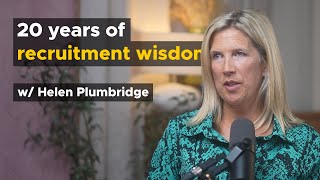
In this podcast episode, host Hishem Azzouz conducts a coaching‑style interview with seasoned recruiter Helen Plumridge, who has built a successful niche recruitment agency over 20 years. The dialogue begins with a recap of Helen’s career—starting at Blue Arrow in 2002, founding King Recruit in 2015, growing to a team of seven and achieving £100K monthly turnover through a shift to retained search. The conversation then pivots to Hissem’s own first‑year experience as a solo recruiter in the accountancy and finance niche in South‑East England. He shares his motivations (greater freedom and earnings), current performance (£200K revenue, mostly contingent work), and challenges (loneliness, difficulty saying no, lack of structured processes, inconsistent cash flow, and limited pricing strategy). Helen provides concrete coaching on: 1. Defining a clear niche and client avatar. 2. Transitioning to a retained‑search model (target 50% retained work, fee structures, payment milestones, and case‑study creation). 3. Building a business plan with quarterly goals, pricing, and marketing assets (presentation decks using Beautiful.ai, branding, freelance marketer). 4. Implementing operational SOPs for recruitment, business development, and marketing, possibly with a virtual assistant. 5. Financial discipline (cash‑flow forecasting, VAT and tax pots, credit control, Xero dashboards). 6. Hiring strategy—when to hire, what role (experienced biller vs. resourcer), runway requirements (3‑6 months of consistent revenue and cash reserves), and evaluation timelines. 7. Productivity habits (exercise, phone‑free mornings, weekly planning). 8. Emphasizing confidence in pitch and pricing, and creating a sales asset or one‑pager to support client conversations. 9. Encouraging iterative pricing experiments and agile positioning to find the right market fit. 10. Leveraging LinkedIn, free strategy calls, and downloadable presentation resources to attract leads. The episode also includes sponsor spots for Firefish (CRM) and Sourcewell (engagement platform). The overall tone is supportive and action‑oriented, aiming to give early‑stage agency founders a roadmap for the second year of growth.
Chapters
Helen, welcome to the podcast.
Thanks for having me, Hishem.
It's been, uh, obviously we've known each other for a while.
It's been a few years.
Yeah, obviously I spoke to you when I worked at Hoxo, um, when you was, uh, building King, talking about marketing, um, and now we're here.
Amazing. First time I've met you in person.
Yeah, in person. So what we're gonna do in this episode, in this conversation, which I'm really excited for, He's going to approach it slightly different, but I think where this idea came from is hopefully everyone listening is going to get even more out of this. So what we're going to do is we're going to treat this as a bit of like a coaching conversation. And the reason for that is you're now on a really exciting journey with your business, Hyper Consulting. But to give everyone some context before we get to what you're now, you know, on a big mission to do. Is you've been in recruitment for over 2 decades, 22 years. So let me know if I get any of this wrong, but you started in, yeah, 2002 with Blue Arrow. You then actually went on to start your own recruitment business in 2015, King Recruit. Now, your whole world has been senior appointments for SMEs in the Southwest region. Obviously, you travelled up from Devon today, so that's your world, just telling us how great Devon is and living there. Um, so you did that for 8 years. You're still— yes, you still have a portfolio of clients that you support now because you've obviously built those, uh, relationships. And then, um, I haven't got the date here, so you have to let me know, but then you— oh no, sorry. And then in the 6th year of that business, you then got invest— uh, investment from Recruitment Entrepreneur, correct? And the idea here was obviously he was going to go on a bit of a journey to scale and grow the company. I don't think they had loads of organisations in that part of the UK. Obviously, I'm sure a huge part of it is investing in you and what they saw in you and the potential. Um, and now, so basically by that time you was leading a team of 7, uh, to do £100K a month. So you had a turnover year-on-year growth of like 30%. Um, a big part of that journey as well was when you adopted retained search and was able to double the turnover. On the exact appointments part of the business. So I think it's fair to say that, like, you've been in the trenches of building a recruitment business, and you're still doing some of that now. And you're now— you can tell me a bit more about it before we get into this, but now I've got here you're on a real mission to help, like you, other female founders maximize their recruitment business. And I'm sure it's now all about how you can pass on what you've learned the hard way to other female founders of recruitment companies, um, to get more out of their business. Yeah, it's—
that was all good.
Awesome. Yeah, that's why today we wanted to treat this as a bit of like a coaching conversation.
Yes.
So today I'm gonna talk about and speak to you as if I'm in, in the following circumstance. So I've done recruitment for, you know, 4 to 6 years. I did the classic route of I was employed, I was a high performer at the business I worked for, and then a year ago I decided to take the leap. I started the entrepreneurial journey. I've sort of always had a bit of an itch to start my own business and also really like the idea of actually taking back more of the earnings because I, you know, was seeing the billings I was doing for the company and like the idea of starting on my own. So I'm a year into having my own business. I'm currently considering maybe hiring someone. I've put in the first year of accounts. I've had some profit. It's just been me, so I've kept things low. I've really tried to just focus on getting, you know, cash in the business. I do like the idea of the business not being just me. I do just permanent recruitment. In the first year, most of my deals have been contingent. So 80% of it has been contingent. With some being exclusive. And I did do one retained deal with a client I built a good, good relationship with. Um, I did, when I first started out, really have like a focus of what I wanted to do. I had covenants, obviously I had to respect those. So my world is accountancy and finance in the Southeast. But as I, you know, went on this journey in the first year, there were some roles that I had to say yes to because I wanted to get, you know, placements in cash in. Systems and processes, I don't really have any. I know what I'm doing. I've done recruitment for a good amount of time. So a lot of like how I do what I do is in my head. I've got CRM. I'm thinking about spending some of the money that I made in the first year on LinkedIn Recruiter, but I've made do so far without. And that's the situation I'm in. And we're going to treat this as a bit of a coaching conversation. So why don't we— obviously we've given everyone the context. That's sort of how I'm going to be talking about, talking from the perspective today. So where do you want to start? Where do you like to start these conversations if me and you are starting to work together?
Yeah, absolutely. Well, congratulations on your first year. Well done. Not a lot of people don't do it. So out of interest then, I mean, this would be one of the first questions I'd ask is, you know, why did you go out on your own in the first place? What was the vision? Initially?
Is it— I'll be honest, I don't think I had a big grand vision. The big thing that sort of drove me was, uh, like I said, uh, when I was sort of mapping that out for you, was I, I did well at the business that I worked at, and I really like the idea of just taking more of the money that I was earning in the business. And coupled with that, I did definitely want to feel like I had more freedom. I, I was treated like an adult, but I like the idea of if I did want to have extended time off, I didn't have to ask anyone to, to do that. So I didn't have a big vision. I wanted to have more freedom, I wanted to have more earning potential, and I guess just feel a bit more in control of the way that I'm doing recruitment and, um, yeah, what I wanted to build. So that, that's probably what I would say.
Excellent. Again, like so many others. So, question for you. So if you were to take it, you know, a year down the road, where do you want your business to be in a year's time?
So for me, I would definitely like to be— I'd like— I think it's a good goal to increase the amount of revenue and profitability that we've got in the business. So that's the first thing that comes up for me. And then secondly, although it's been just me, and I've enjoyed that. It comes with its challenges. I definitely like the idea of the business in a year's time not being just me. I'm not sure if that's actually having a full-time employee supporting me, or sometimes on LinkedIn I'll hear people talking about outsourcing or using AI and technology to get more out of my time. But I think at the end of the second year, I want to be, I'd like to say that I've grown the profitability, we've earned more money. We're working with more businesses in like my specialism, accounting, accountancy and finance in the Southeast. Yeah, and I like the idea of it maybe not being just me, but I'm not sure entirely what that looks like.
Okay, brilliant. Well, let's dive into some of those areas, but what would you say has been the toughest thing in the first year?
Yeah, good question. Two things, I think. With it being just me, that's been hard. I've got a supportive partner, so they've had to listen to me talk about the challenges that I've faced. Uh, so definitely being on my own I found hard at times. And that's also not just for the challenges of experience, but also there's no one to share the wins with. So that, that's what I also found interesting. Um, So that, that's been hard. And then secondly, I think the other challenge I've had is I really tried to take my plan seriously and have like a clear plan for the types of companies I wanted to work with, the type of roles that I wanted to specialize in. But sometimes I've had to sort of go outside of that because I found it hard to say no. And I, I sort of had to wrestle with like 'Well, this is an opportunity for me to make some money. That's important right now.' So also, I'd say just wrestling with, like, staying true to the plan and being agile, and maybe sometimes thinking, 'Should I get back to the plan?' Like, where the line is.
Yes, um, I echo all of those, those things myself. You know, I've been there myself in those kind of early days, and it is a real I think the first year, it's almost like having a, having a baby for the first time. It's all the sort of teething problems, doing things for the first time and navigating your way through. So I think that sort of second year is a really great time to have a reset and almost look at your business afresh. But I think in terms of feeling alone and things like that, I think there's so much help and support and peer groups out there. That can actually help you in those kind of darker days. And I think it's interesting how we don't reach out when actually we've got quite a strong network. Invariably, you've probably got a very strong network, I'm sure, that you can reach out to.
I found, I don't know if you found this, but it can be, because it is just me, I can share, I've got some people in my network that are on a similar journey, but only I really know how hard it is in my business. Like, I can share, but no one can really relate besides me. That's the only thing. I don't have a co-founder who can really feel the same things that I'm feeling.
And what do you, what do you sort of do to set yourself up for success at the moment? What's your kind of daily— you have any daily tools?
Yeah, I'll definitely, uh, I have good— some good weeks with this and some not so good weeks. But I think I'm a big believer in just trying to, like you just said there, setting yourself up for success. So I think just a couple of the habits that I really try and instill, just personally if I'm honest, that I feel like will help me have the best frame of mind to get the most out of each day, although sometimes I have better days than others. Is definitely putting my health right up there. So definitely working out, going for a run, gym, like that's something that I prioritize. So I normally like to do that in the mornings before I get started. And then the other thing that's really helped me as well is just really being disciplined with not looking at my phone for the first, like, hour to 2 hours of waking. Obviously a lot of my time, even in when I'm personally like spending time personally with my partner or my friends, it can be very easy to think about the business and, and I should be doing this or I should be doing that. So I think when I'm not waking up going straight on my phone looking at emails, what's happening, I've— I'm giving myself space to be with my thoughts, digest things. And that's really helped me. So they're like the two main habits, if I'm honest. We can get into like how I try and actually like set my day for like recruitment and a day plan, but in terms of habits to help me, you know, set myself up for success, I'd say they're the two.
Yeah, and you know, it's really important to focus on the mindset so you can focus on your business, but you know, you're going to get a lot of value and a lot of return out of getting your mindset straight and being able to have those tools and techniques and I mean, I've always used exercise as my tool. But the other thing that may help you, and I've done this more so in the last sort of 3 or 4 years, is just having a real planning mindset. And actually trying to chunk your days and plan for the week. And I typically will map out my week on a Sunday evening. That kind of sets you up for the whole week. and then you can kind of chunk out those time slots for, you know, business development, servicing, working on the business, marketing, um, those types of things. So, um, and knowing that it's all there and you've worked out your plan ahead of time, um, I found though those sorts of things have really made my efficiency a lot higher. Um, also things like asana, I don't know if you're familiar with asana.
I've heard of it.
Yeah, it's a really cool project management tool. It's one of the big ones. You can use a free platform, free subscription, and that's really great for kind of more project-based stuff, which you kind of think, does that apply to recruitment? But it does if you're running a business. So you can, you know, you can map your business development strategy, your marketing, you know, finance and accounting tasks. And everything you need on there for the month and kind of keep yourself accountable. Because I think that's one of the things that we need to do if we don't have an accountability partner. We need to keep ourselves accountable in business.
What I have found though is always gravitating towards— I'm just a bit mindful of spending time on tasks that I probably perceive as like, don't make me money.
Of course. That's that recruiter mindset, isn't it?
So I wouldn't say I'm like great at that. Like I said, there's probably been some months where I've really tried to get our website in order or put marketing, like put emphasis on marketing, and then I might not look at that again for a couple of months or think about it. I've probably been a bit more consistent with the biz development side of things, but again, have I had like a clear plan So then when I'm looking at my week or looking at my pipeline and realising I probably don't have enough jobs as I should, am I sort of planning my time appropriately in advance or continuously to make sure that doesn't keep happening? Because I've found that to be a bit of a cycle, is I'll get a couple of jobs on and then that's all I focus on, and then I get out the other side of those. I don't feel all of them, but I've done a pretty good job of the jobs that I have worked on. And then I get to the end of it, it's like, oh shit, now I need to get more jobs.
The age-old recruitment problem. The dilemma that we, that never goes away. And I'm guessing as well then, you've had some success and some profit, but based on what you've said, mainly contingency and low-hanging fruit. So I'm guessing you've had some inconsistent, you've had some good months, but you've also had some inconsistent months. Is that right?
Yeah, so I definitely haven't billed every single month. I ended the year basically doing just under £200K for my first year. And because I didn't do all of the placements in my specialty area, the average deal size has probably been a bit lower than what I'd been used to. Because ideally my specialism is I want to be placing more at the senior end. That's why I got a sort of track record of in my previous company in terms of placing accountancy and qualified accountants at the senior end. So finance directors, account directors, these types of things. But like I said, I've had to say yes to a few things. So it's been a bit more lower level stuff. So if I would, when I sort of looked at the first year earnings, my average deal size was definitely lower than it has been. And I think that that's also part of probably why I haven't like billed every single month as well, because I haven't had a clear plan on that.
And I think just in what you've said there, you've got the answers, you know, in terms of now is the time to, to say, right, okay, I can look at this business as a, as a niche, um, and I would, you know, strip that back and start doing a business plan all over again, um, you know, and start with looking at, uh, the pros and cons of that because there are pros and cons, but I think accountancy and finance is one of those disciplines that effectively, you know, every single business has that requirement for accountancy and finance. So it's not like doing, you know, I don't know, compliance roles in airlines or something like that where, you know, airlines kind of see a complete dip or we have COVID again. So I think it's worth doing that kind of business plan, know your market, research it in the Southeast. Is speak to all your clients and candidates, and then do some competitor analysis, look at your pricing. And I think, you know, you've mentioned there about retained work and higher fees. Now is the time to look at that retained search model.
Okay.
What you're going to say no to. I think that's the thing really moving forward, Hishem, is to look at what you're going to say no to, and it perhaps is some of those low-hanging fruits. Um, so how far—
I don't feel comfortable saying no, if I'm honest. I find it hard to say no because when you're like, it's, you, you know what, like, the, the potential of what you could earn if you place that job.
Yes.
And I back myself to do it. So that's what I have found hard sometimes, is, is to say no.
Yeah, I understand that. Uh, very tempting, isn't it, if you've got a big sort of 20K fee in front of you. Um, You know, you've got— if you want your business to move forward and you want to grow it, which it sounds like you do, you do have to sort of at some point put your stake in the ground and say no to certain work. You still want to work with that client, so it might be that you do a split with someone in your network and they work on that position for you, and you get a split. You've got the business for them, so it's still— you're still got that touchpoint with your client, but You know, you're remodelling it to say, look, I still want to work with you, but I'm now focusing on senior hiring in finance and accountancy. And that's where the positioning will be.
Why do you think that will help me earn more money if I'm saying no to—
Because presumably at the moment, you know, it is more scattergun, or it sounds a bit more scattergun.
Yeah, it is a bit more, yeah. It's still in the accountancy and finance, but It could be a financial controller, maybe someone that's just qualified up to— I've only been able to do a handful of like the typical type of appointments that I sort of built my career on in the business that I work for.
What you'll find is, you know, your client, I think if you think about it from an operational point of view, it makes everything more organised and more planned and efficient because you're just working on accountancy and finance positions at a certain level. So anyone you hire as well, they're going to be very specific. Terrific in what they're doing, you can arrange all your marketing, all your business development, everything you're putting out there on the market. And if you think all buying decisions now made by clients, 60% of them are made based on your footprint.
Okay.
So they're already looking at your branding, your marketing, what you do. So my question back to you would be, how do they know how to work with you if you're doing a scattergun approach?
Yeah, they probably don't, in all honesty.
They probably just say, Hishem's a nice guy, I've worked with him before.
Yeah, like, he's been able to deliver. They've— yeah, he's done a good job. But I don't think that would be very clear. So that is interesting.
And this is the long-term game as well. You know, effectively niching is the long-term game. So you might even see a bit of a reduction in your first part of your second year. But if you're planned and prepared for that, you sound like you're a strong business development person, so there's no reason why you're not going to be able to pick up where you've left off in terms of accountancy and finance and getting that strategic, you know, business development plan in place for that first 3 months. Of course you're going to contact all your existing clients, but then you're going to look at your wider network. Your restrictive covenant's gone, so it's all to play for really.
Yeah.
We'll get back to the episode in just 1 minute, but today I'm excited to talk to you about one of our partners, Firefish, the recruitment CRM that accelerates creates data-driven growth.
The problem with most recruitment CRMs is that they are just a database of records, meaning they become just one of the many tools that recruiters use every day.
Like with all systems, the records are only as good as the data being captured.
Our sponsors Firefish know that for agencies to win faster, data needs to be at the heart of their business, making your CRM the single source of truth. With over 10,000 records created and updated every day, and 85% of placements from existing candidates, Firefish enables recruiters to enrich and engage their data, equipping you with real-time insights needed to win faster. To learn more about Firefish and take advantage of an exclusive Recruitment Mentors Podcast offer, make sure you click the link in the show notes and mention the Recruitment Mentors Podcast when speaking to the Firefish team.
What do you think? What would you— so if I was to write down just like what my niche is or what my focus in, like what should, what should be in that from your perspective then as like a non-negotiable? Because I can imagine it can always get more detailed or more niche, but as a minimum, what would you expect to see if I was to show you part of my business plan for the second year and part of that was the focus I'm now going to have? What should be included in that?
Yeah, I mean, definitely, you know, what level hires you're going to do, what your pricing strategy is. Um, I don't know what your sort of fee structures are, but Again, being quite sort of strong about those and what they look like, about having perhaps, you know, 50% retained business to start off with, and you can start increasing that as the year goes on because it sounds like you've just done one so far. Yeah. So let's not go all out and do 100% because I think that's too much of a challenge at this point. Get some case studies under your belt, and then you can then focus that down. Um, you know, definitely with regards to all your marketing, all your content, what you're doing around there, you might want to get a freelance marketer to help you with some of your socials, branding, case studies, testimonials, all that stuff that goes alongside launching a proper brand. Um, and then with that sort of forecasting piece, um, if you're looking to hire I know we were going to come on to that, but, you know, you should be looking at, right, okay, for my first 3 to 6 months looks like this. I want to prove my concept, um, get that money in the bank. Again, you want 3 to 6 months in the bank before you hire someone.
Okay.
Um, and then month 6, really, in preparation for month 6, you want to start thinking about hiring. And then it's almost like the 6-month mark you want to be ready to go on taking that next person on.
Okay. And where, like I said, I've only done one retained, so I feel like that's— you sound like quite— you're quite a big advocate for that then on the retained side. I haven't done loads of that, if I'm honest.
Yeah. At the end of the day, why wouldn't you want to work that way? Why wouldn't you want to have money up front, you know, confidence and security from your client that they're going to work with you and invest in this campaign? Enough money to kind of COVID doing that legwork, doing that sourcing, doing that research, and finding your shortlist. And then money at the shortlist stage, and then money at the end of the whole project. And all you're doing really is you're breaking that down. You're just breaking the end fee down into investments. And I think I always liken it towards, you know, if you go out and get a website, or you secure any legal work, you know, you always have to pay money up front. So why wouldn't you do it in our professional recruitment consultancy capacity? So it's really, it is a mindset shift, retained search.
Okay.
It's really believing that you can do it. And I think I would create a case study from that one piece that you've done and then create a pitch deck for it.
Okay.
And then you've just gotta suck it and see and just go for it. You might be quite nervous in that first pitch, but be confident in the delivery. And you should be taking any work that you want to be able to, you can deliver on. So if it's a finance director, for example, then—
Yeah, I'd be confident with that.
Make sure you're going to be confident in fulfilling it. And if you're not, for any reason, don't do a retained search. You know, make that decision and be honest with your client at that point.
So do you think I should, as part of this then, should I, um, should I break down and think about having different products or services almost? Because right now, if I'm honest, how it's worked is I've done what I've always done, which is, you know, talk to companies that are hiring, find out that they've been struggling with XYZ reason, and then get them to agree on terms. And typically that's just been 20% of the salary that I placed. And obviously that's done on completion. So I've definitely had some challenges in that first year of getting paid on time. Maybe we can get onto that, but that's something that I've had to wrestle with. So yeah, like that's typically how it's worked. And then the— and then sometimes what did end up happening is because I did a good first job with— on the contingent side, I was then able to secure the next two roles with a particular client on an exclusive basis, and, um, I gave them a slight reduction on the fee, but they— to 18%. But what enabled me to, to have was the more commitment from them because they gave me two weeks to get to work on it. I wasn't competing with any other agency, um, and that worked really well. And then that, that's what actually led to the one retainer. Um, I've had a couple of friends that, um, worked that way. I've listened to podcasts, seen people talk about on LinkedIn. So because I sort of built up that bit of a track record with them, I suggested that the next time that they hire someone— and it was a bit more on the senior side— that we have like a bit of like a commen— a commencement fee rather than just a 2 weeks exclusive. And, and that did actually go down Great. Pretty well, but I haven't done loads of it.
I think whatever's worked for you before, do that, because everyone's got a different pitch. I've got to the point now because I've done so much retain work, I'm a bit ballsy with it, and I just say that's the only way I work.
Okay.
Sort of take it or leave it a little bit. But if you've, if you've been consultative and you've diagnosed and you've shown that you can deliver added value, that they kind of, they want to be compelled to work with you. So it's kind of like either work with me on this basis or maybe find someone that, you know, would you recommend almost then to like just not—
because it's curious if I should still give people— because I really haven't really been giving people options. Like you said there, your option is we work together in this way. I've just been saying like the typical way we work together on a contingent basis. But do you think it'd be a good idea then to maybe not have that as an option and go down that road, or not?
Well, I do. Yeah, I'm an advocate for it, but I think it elevates you. And I think as soon as you start saying, you know, search and selection, and that's the way you work, and we've got methodology that works, you know, and you can add some things in there. Like recently I did some, you know, video summaries for my client, and actually they only selected, because they felt they'd seen everyone through my shortlisting and video presentation, they only selected one candidate out of the shortlist. But they still paid the retainer fee.
Okay.
So I think it's kind of thinking about what else can I add in here, which sounds really good that perhaps other people aren't using, whether it's psychometric testing or just going a little bit further. So, yeah, the thing is, is that you will, the more you do, the more confident you will become with it.
Yeah, sure.
That's what I mean about that 50%, you know, aim for 50% retain work. In your first 3 to 6 months, and then after that you can start increasing the amount of retained work you do.
So do you think that should be a big focus for me then, going into the second year, as one of the main things I want to change?
We doubled our turnover on the executive search side when we started doing retained search.
Okay.
In my firm, um, I actually had an executive delivery consultant as well So I know we were talking about hiring, but that, that made a massive difference to, to our bottom line and our effectiveness.
And is there, just as like, just so I can get some actions then, what, what would be the first couple of actions then to get to that point where I'm in a position to like present something to a potential new client? Because I think what I do like the idea of is speaking to brand new prospects and clients I've never worked with, because they're gonna— they're not gonna have any expectation of how to work with me, right? So what should be in my, like, version 1, as something I can go away and work on? Like, version 1 of talking about my retained service, like, what, what should be in that at the very minimum, from your experience? What, what could version 1 look like to existing clients or to new clients? To new clients.
To new clients, um, you know, do that presentation deck, and I would use your case study, okay, to talk them through. This is how we, this is how we worked, um, this is, this is what we'll do to ensure we get the right, the right shortlist. So it's just putting a, a pack together that you can then present nicely to, to a prospective client, um, thinking about all their pain points, and, you know, obviously what's worked in the past with that particular assignment. And then, you know, being also sharing that out, sharing that out on your profile. I always recommend doing as much. You could do a video, case study, etc. Get it on your website, you know, sing about it, you know, be talking about it all the time with your clients when you're having those conversations. I mean, there's benefits, thinking about the benefits as well. There's huge benefits to all three parties. We're not talking about candidates here, but it's a massive benefit to your candidates as well. You know, they're only in that portfolio of your shortlist. No one else is engaged.
Right.
And therefore, you know, it's a big selling point to them as well.
So creating some sort of presentation?
Yeah.
So yeah, because I've never created anything like that before.
Okay.
Or used something like that before, if I'm honest. But I do like the idea of it.
There's a really cool tool called Beautiful.ai.
Okay, Beautiful.ai.
Beautiful, yeah,.ai. And you can create AI-focused presentations there. Obviously you can use a bit of ChatGPT as well, but, you know, putting all your key points in there, starting points.
And what should be in there then as a minimum? Obviously we've got the case study, I definitely want to include that.
Yeah, a bit about me, I guess, my track record, intro, bit track record, you know, how many positions you've hired in this space, right? Okay, that case study, definitely. Um, a bit about the— perhaps a bit about the client. Um, obviously, definitely fees and how— just talking them through how retained search works, because I think some people kind of assume that they— I think some people will kind of say they know how it works, and maybe they don't because they don't want to seem sort of a bit stupid. And I think I think not all companies— you make the assumption that all companies would know what, how it works and what it does for them. So it's being able to sort of talk through the benefits, um, and then come to that kind of conclusion.
Okay, so really, yeah, because that's obviously something I always try and educate clients on, is like how we go from like here to like what I actually do, the work. Because I agree with you, sometimes I can definitely fall into the trap of like assuming that they know how it works. But so a big part of that is then, yeah, make sure I communicate how we go from starting to work together to getting to a shortlist and what I'm going to do to make sure that we get the people that they need and we solve the problems that they've shared with me.
And it's also sort of saying, you know, this is— there's more touch points in this. You know, I know we all talk about recruitment partnership, but this really is that kind of true consultancy partnership model where You know, really, you're setting— the control becomes much more on your side. So, you know, you're setting the timescales, you're setting the touchpoints, you're setting that, you know, debrief conversation with them. You're much more in the thick of their business. And, you know, you could go and interview heads of departments and senior hirers within the business as well as part of the whole programme. When you think about 20%, actually that seems like quite a lot for your money, doesn't it?
Yeah, that's true.
It's really just having that mindset and thinking, this is, this is a really valuable job that I'm doing, and why wouldn't I want to work in this way?
And how do you think I should price it then? So like you said there, you can break it into 3, right? Or I've heard other people say you could do like— obviously a big part of it is like on commencement, like we're going to start this And they pay, I don't know, maybe like a third of the overall fee of what it normally would be.
Yes.
And then I've heard people say you could maybe then charge the other two-thirds once that person's accepted.
You can do that. That's something that we did initially, but I got burnt too many times with that. Yeah, because the start date, if it's 6 months down the line, right, That's a long time to wait to get paid, isn't it?
Can I not just send an invoice on— again, this is just some friends' advice, but yeah, I think this is the advice that I got around getting paid on time, is sending the invoice when that person signed the contract rather than when they start.
You could do that, yeah. Some— I mean, some companies would do that, okay, some wouldn't, okay. You know, you've always got to have set— I don't know how many, what your payment terms are, but I'd advise 7-day payment terms on all of those. And then, you know, the beauty of getting paid upfront and getting that money in to kickstart the campaign is fantastic. So yeah, just be careful with the two-thirds because it could be quite a big chunk of money. And if you're hiring maybe 2 positions at the same time, that's a lot of time to— can be a lot of time to wait. Plus, you know, if there's any hitches along the way, they take a long time to hire. They take a lot longer than they thought they were going to do, or what they said to you in the outset. You could be waiting, yeah, a few months.
And then, so what's also held me back on this, just the last thing on it, would be I obviously want to make sure that I'm selling it to the right type of company. I'm obviously really confident that the type of skill set they're looking for and experience, I I'm going to be able to deliver on, but what, what happens if I don't deliver? That's obviously a bit scary.
That's obviously a bit scary, isn't it?
Yeah.
I mean, that is down to your relationship with the client and down to what you feel is the right thing to do. I think it's always good to, to think that way. I've had a retained search hire before where it just wasn't going to work for whatever reason. The business owner was quite volatile, so I actually refunded the whole lot. 20 grand, which was very, very painful. But I just said, we can't work together and I don't actually want to place people in this contract. So I think, you know, if you've done your full shortlist and you've done that first third, I'd be inclined to keep the first third and you might want to refund the shortlist stage if you haven't delivered. If you can honestly say, you know what, I haven't delivered on this. Okay.
Hopefully you don't get into that position.
Hopefully you don't get into that position. And Again, it comes down to confidence of taking that role on, doesn't it? And doing your due diligence on the client and making sure that you're not going to end up in this sort of situation, which is kind of rare, I think.
Yeah. Okay, so I definitely then want to be getting back to my niche, having a business plan around that. What am I going to really focus on? Like you said, just really good time going into the second year to like really, really look at that. So I'm definitely going to do that. And then the other thing that you've mentioned is going to be really looking at how I work with organizations and get to more of the position where I'm working with a lot more companies on the retain side. So I need to be thinking about my presentation deck. Obviously, I've jotted down that tool that you mentioned. Make sure I include things like, yeah, my track record, case study, and really sort of communicate on the process of how we're going to work together. So yeah, that's definitely a good thing for me to focus on then, that obviously is hopefully going to impact the business development side of things and consistently bringing on clients with hopefully more of the roles that are larger fees than what I've been used to.
And if you're also just working out your client avatar as well, your sort of ideal client, you know, and I think you mentioned SMEs, so If you're mapping the Southeast, you know, map those companies. And do you do it by, you know, the size? Does it have to have a team of 50 before you start working with them? Does it have to have private equity backing? Do they have to be going on a considered growth path for you to work with them and know that actually this is a worthwhile client for me to invest my time and energy into? So I think there's also that qualification process. So whoever you've got on your database at the moment, you know, it's worth again, seeing as you're revising and resetting, to actually qualify what you've got on your database and then perhaps even to pull in some extra data from either LinkedIn, um, or buy some data of that kind of profile hit list. Yeah, so you can start then targeting them, you know, get your top 100, get 3-month business development plan in, in gear, um, and do some consistency around what you're doing day in and day out for the first 3 months.
That sounds like a good plan. Yeah, I'm definitely going to do that then. Where do you want to go from here then? So like, I've definitely got that, that will be really helpful, having a clearer client avatar, get closer to like what I just want to be known for, and also then building out the, the, the different type of product in terms of working.
I think before we talk about— we were going to talk about hiring, but I think before you do all that, it's worth talking about some geeky stuff, which is more the operational back office, which no one kind of wants to talk about. But I think if you're, you're remodelling it, resetting, now's the time to look at how you're doing all your processes and operations with that preparation in mind. In 6 months' time, I'm going to hire someone, so We use something called SOPs, so standard operating procedures, and all it is is a basic document where you can document how to register a candidate, how to pitch to a client. We mentioned there about business development, how we do business development, how we post something on social media, what to do if this happened. So putting all those together, you might want to get a VA and pay them to put all those nicely together for you, but actually getting yourself, getting your store sort of set up, but then you're thinking about this growth. It's important to have all these processes in place so you're not duplicating for yourself. Because as you said, you were doing a load of marketing stuff and then you left it for 3 months. So, you know, how are you going to remember what you had in place and what you were going to do? So it's doing some things like that. I'm also a big advocate for being in your financials daily. So, you know, do you have that cash flow forecast, you know, in front of you daily? Are you— yeah, um, as soon as you've got staff as well, you want to be in that daily.
Um, so what, what do I— what would be— so what's the benefit of getting some of those? They just sound like admin tasks for me.
Of course they do.
So what, what would be the benefit of doing that now?
So you want, you want better results. Okay.
So for myself.
Yeah. And if you ever want to grow, scale the business, what you'll find with those businesses, you won't find any businesses that are on a scale journey that don't have rigorous systems and processes and operations in place.
Okay.
It's harder to come back and do them afterwards. So you're in a golden position to be able to do them now. It's going to cut down your efficiency and time. When you hire someone, you know, there'll be a certain amount of, right, okay, we've got that documented. So you know, here's a toolkit for you, this is the way we do things, this is our brand, this is how it needs to be consistent across everything we're doing, all the touch points. So you need to be a bit sort of, I think you need to go from that kind of recruiter mindset to not saying that you want, in a business mindset where you're really thinking about your business and how it's structured.
Fair.
So those are the benefits. That's going to give you more efficiency, more time, Imagine having to kind of rewrite the rule book when every, every time you hire someone.
And what would you recommend I start with? Because obviously there's a lot, right? Would you recommend I start with like the recruitment process stuff? So like you said, the just getting stuff out of my head, because a lot of that stuff is in my head and I know how to do it, obviously. And like I said to you, I, I do like the idea of it not being just me. I don't know if that's definitely going to be like a full-time employee, but I know you mentioned virtual assistant there. But I do like the idea of it, like I said, not just being all reliant on my time. But what would be like some good SOPs then, do you think, that would be a good starting point just to get written down and done?
I think all the basics, and especially as you're doing them, you're doing them every day. So every time you're doing a task, go, ah, right, I could do an SOP for this.
Okay.
So kind of instead of sitting down and going, oh my God, I've got this mountain to do, I would do it as you're actually doing in that sort of, you know, in a month you probably get most of them done. And then every time you come to do a new task that perhaps you haven't done before or you haven't done for a while, I think it's always thinking, right, okay, this is a task that's repetitive, so let's get an SOP on this.
Okay. And what I could just do that on like a Word document or a Google Doc or something like that just to start with?
Yeah, just a Word document. Loads of templates out there.
Okay, awesome. And what about finances then? Because I'll be honest, that's— yeah, I don't know. It's not something that I'm entirely comfortable with. I've got better at— we have like Xero, so we use that. Um, I've got better at looking. I mean, it is fairly straightforward. I've kept my costs low. Like, we have a CRM, I have a tool that I use for making phone calls as well. I don't have LinkedIn Recruiter, so like the cost really is there isn't like loads of outgoings. Um, so I've got better at like looking at the end of each month on like the amount of money in versus out. But I don't know, what, what do you think would be— maybe I'm a bit aware of that, maybe I need to be a bit more smarter with the finances. Um, so yeah, like the, the first VAT bill I got came as a bit of a surprise. I probably didn't manage that as well as I could have in terms of the amount of money, it just stayed in my business account. So I don't know, yeah, what, is there anything there that maybe would be good for me to think about so I can just get a bit more discipline on the finance side?
Discipline is definitely the word, and you're not alone in that. So, you know, it's quite common to, you haven't run a business before, so have that. There's some great pots on, yeah, I don't know what your banking is, but, you know.
Starling.
Yeah, so Starling, Monzo, they all have pots. You know, set up 5 or 6 pots. One for VAT and corp tax, you know, one for salaries, one for, you know, marketing spend, you know, rainy day stuff, you know, it costs, general sundries. So just start having that kind of pot mentality where, you know, every time you get an invoice in, you know, your VAT plus 20% is going into that VAT and that corp tax pot. Have a cash flow forecast. Again, all these things have dashboards, don't they? So Xero's got your dashboard if you keep it up to date, of course.
Yeah.
So have that cash flow forecast in front of you and have that kind of, it can be as simple as you like. You don't have to, you know, run away with it. But I would recommend looking at it a couple of times a week if it's just you. And then once you've got someone on board, you want to be looking at that almost daily to check. Okay. And one big thing that I've always been an advocate for is, you know, be your own credit controller whilst you're small. Be really, really hot on that credit control because, you know, it's all very well getting sales, isn't it? But actually getting the money in, as you said, is really important. So be really hot on that and have all your alerts set up with Xero. But you could argue that it's just another touchpoint with your client, so why not use it as a great touchpoint?
That's a good point.
You know, contact your client, and you don't have to have a hard approach to it. Just have a nice soft, friendly, it's due approach.
Whilst we take a short break, I wanted to take a moment to chat to you about one of our amazing partners, Sourcewell, the industry-leading recruitment engagement platform. I'm using it myself, and I don't know what I would do without it. From building personalized messaging cadences across a variety of channels to automating follow-ups and data tracking straight back into my CRM. It's really made an impact in streamlining my workflow and most importantly, accelerating my sales results. My favorite feature by far is the live feed. By being able to see in real time who's engaging with your campaigns, it enables me to prioritize my outreach with the most engaged prospects, which helps me get way more out of what I put in. So I'm going to be honest, if you haven't got Sourcewell and you're a recruiter, I really believe you're at a disadvantage. To find out more and see the platform in action, make sure you click the link in the show notes and mention the Recruitment Mentors Podcast. Because you listen to this podcast, you're gonna be able to get access to an exclusive offer, free 50 phone credits, 50 email credits, which is at the value of circa £500 per user.
So make sure you mention the Recruitment Mentors Podcast and click the link in the show notes. And from what you said earlier then, have you sort of, from your experience, have you figured out the best time, maybe cash flow-wise, job flow-wise, to consider? Like, with— like I said, I'm not entirely sure on hiring someone permanently, but definitely having someone support me. So spending, um, some of the money on, uh, would that be getting an assistant or just getting help? For sure, still figuring that out, but like how much money should I have in the bank or runway? I don't know, what have you found to be, is there like a bit of a good guideline there?
Yeah, I mean, if you're hiring someone, first of all, you want that kind of proof of run rate. So 3 to 6 months, you've proven that you are hitting at least 10K, 15K a month yourself, and you can look back and go, right, okay, I've got some consistency going on here. You also then want 3 to 6 months in the bank.
Salary because for that person, for that person, right?
You know that, but that's, that's the safe play. That's the kind of best practice. A lot of people don't do that. Yeah, but I would do that, you know, if I was doing it again, I would have that in the bank, nice buffer. You know, you want them to be, you want them to be making their first placement in that first 3 months, right? Yeah, but you've still got a, you've still got a shelf there kind of startup costs.
Okay.
And salary, I'd be— I feel comfortable about it and not be stressed about it. But there's that kind of mindset side of things as well to be mindful of.
No, no, that'll definitely make me more comfortable whatever I decide to do if I know I'm not having to worry about like, yeah, like paying them or anything like that because I've got that runway. But it's interesting, so also look at my consistency.
Yes, 100%. Before—
to look backwards.
Yeah, you are the business effectively. And also, for anyone you're taking on, they're going to be looking at you and what you're billing. So the last thing you want is that yo-yo inconsistency, because then they'll just perhaps think it's— it might be okay if I don't do that.
So do you think I should hire someone, an actual, on a permanent basis then? Or like you mentioned assistant earlier, what, what have you found?
Well, I found that It depends on where you want your business model to go.
Okay.
If you, you sound like you want people and you want some camaraderie and bounce off. So for you, definitely hire a biller. Get someone that's really good. And that 3 to 6 months that you're waiting to hire someone, you know, start those conversations now. Have those coffees, couple of people a week if you can. So when you do come to hire, you've actually got a selection. So I would hire someone just as good, if not better than yourself, who's got that kind of background. They might have restrictive covenants, but if they're a good biller and business developer, then—
Do you think I should get someone experienced rather than to help me on the resourcing side?
I would, because then you— it doesn't feel so fragile, it doesn't feel so lonely. There are plenty of instances though where someone is, you know, a strong biller and they just want that support team around them, which you could argue is simpler, but it still just relies on you, doesn't it, for that billing. So that's the kind of question you want to be thinking about, you know. Do you want more holidays in this second year? Do you want to be, you know— more freedom, more freedom, and therefore perhaps that biller is someone that's going to be able to hold the fort when you're away. If it's just you, then yes, your delivery consultant or resourcer might be able to hold the fort, but is that going to give you peace of mind?
Yeah, probably. That would probably be quite hard. Yeah, I think then obviously then that means I'm definitely gonna— that's gonna be more expensive, isn't it?
It's gonna be more expensive, but if they are, if they are doing 200K or more that's, you know, it's going to double the turnover of your business.
But what, what have you found then? Because you said obviously your journey, you had like a team of like 7, did you say?
Yes.
So I'm— it's just me. So like, what— how can I make it compelling for someone to join my business? Do you know what I mean? I don't know how many people—
it's a good question. A lot of people are excited by that and they can, you know, they could, they buy into your story. And that's what I mean about that, those coffees and that building relationship. You know, now you'll be thinking, right, okay, I'm gonna start building relationships with people because then they'll buy into you and they'll buy into the excitement of building the business and coming in at the start when, you know, it's a, not a complete blank canvas, but there's lots to go at.
Okay.
So it's just thinking of those sales points. You know, you're a salesperson, so you've got to kind of think of those compelling reasons. If they don't want to join you, then they don't want to join you. There's no point dragging them kicking and screaming. Someone's got to match your culture and your values, I think. And if you can get that, then you're on to a bit of a winner. But if they don't, then don't be afraid to call it a day. And you're going to have some miss hires for sure.
Yeah, it scares me a bit. I've never had to do that.
Yeah, it is scary. It's not nice.
But what have you found? How long would you— so if I go down that route, which I do like the idea of, if I can bring someone in maybe that does a similar sort of niche or focus, or, um, sort of go hand in hand with what I do Obviously what I like about that is that they're probably going to be more autonomous because I work remotely. Um, so obviously I know that's going to be important. I can definitely give them probably more freedom, can give them that autonomy, as I said. Um, but like, how long? How long should— like, I'm gonna have to figure out how long should I give it before maybe I think actually maybe it wasn't right, you know, that's quite—
So you definitely need to be mentoring them and doing your weekly check-ins, even if they are really experienced, you know, you definitely want to have those touch points so you're in the thick of it with them and you know, you know what their output is. I would say, you know, in 3 months' time, if they've built the client base, they've built the candidate base, and they look like they're they've got all the potential bubbling away there. You just make that decision on whether they've done enough work and their pipeline is there. If they haven't made a placement, that's okay if the potential is there in the pipeline. If it isn't, they haven't done the work and it looks like they're sort of scattergun or they're struggling, then, you know, at the end of the day, you know, tough decision, but—
I feel that's quite on me though, isn't it? To help with that.
It is. It is on you. It's your account. You're accountable. To make it work as well. It's a two-way thing. I think some people sort of take people on and they just expect them to hit the ground running and it to be wonderful. So even someone experienced, you know, it's important to put the work in yourself. And that first 3 months will pay dividends for that first year, 2 years. So if month 3, if it's sort of borderline, then, you know, make that tough decision. Don't wait 6 months. That's a lot of money to But down the drain, unless you've got long lead times, you know, you've got CFOs.
Yeah, it's gonna take time, isn't it? And then what if I didn't want to go down that route and maybe this year is about like getting back to more of like what, um, I know where the average deal size is larger, I'm even more profitable, I'm working more on a retained basis. So I've got more, like, commitment there. I've got more consistency on performance-wise, but I have more freedom in the sense of I'm not maybe chasing my tail as much because I'm doing those things that you've advised. Like, what— how, how can I get more out of my time? Because I'm not gonna be able to do everything. What would be the other options there that maybe I should probably think about besides, like, getting a full-time employee who's, like, experienced?
I mean, there are so many options. You could go down the outsourcing route. You know, sort of looked at the Philippines and South Africa for that. You could have a temp delivery consultant, someone maybe that's worked in-house somewhere, and they're going to, they could do a campaign if you've got a, you know, particular campaign. You could get a VA to do a lot of the legwork for you. A lot of VAs now are really sort of marketing content savvy, so all those kind of building the brand side of things, all the stuff that takes your time, social media, all of that, they could be doing that. Freelance marketeer could also help you with that. Um, you know, interns. I'm actually looking at an intern at the moment in my business, which is great experience for them. So, um, there's lots, there's lots of, there's lots of different options. I mean, I know a sort of a million-pound, um, solopreneur, and he's got fluctuated freelancers. He's got a VA and I think he's got a marketeer as well, and that's, that's, that's it. He's just got that sort of almost like a virtual team around him, and he's absolutely killing it, um, and just doing all the front-facing.
I don't know which path to go down though. Is that down to me to figure that out?
What do you think?
Probably, yeah, because I think if I'm honest, I'm probably leaning more towards that in the second year.
Being a solopreneur and having—
well, just like maybe actually just trying to like use my resources to have people do some of those tasks that take me away from building the client relationships and stuff that I enjoy. Maybe I can sort of map out some of those like initial tasks, you know how it is on like the resourcing side, that maybe I don't need to be spending all my time on doing. Um, because I feel like if I get all those things in place, one, by hopefully in the second year I've made more money, I've got more time back, maybe I'm hopefully doing more of the things that, um, I enjoy or actually moving the business forward. But also then I can still have the option in year 3, 4, 5 to grow the team and almost, you know, have the resources that I've set up for myself support the people that I bring in.
There's no reason why you can't be really successful like that chap I'm talking about and be doing really high turnover and effectively, you know, it's a high profit situation. I think perhaps sometimes we can get caught up in, oh, I feel a bit lonely and/or I need, in my mind, I need to add stuff to grow and be successful, but that's not necessarily the case. And I think post-COVID, we're a lot more leaner, aren't we, in terms of efficiency and costs. So it's quite a pivotal moment for you, but yeah, you've got time, you know, why not do that in your second year and prosper as a result? It's simpler in a sense because you don't have to think about that person or motivate them or look after them.
Which is what I quite like the idea of.
Yeah.
So what's going to be the reason if we're sitting down again in another year's time and I haven't become more profitable? Or yeah, like, what— yeah, what, what do— yeah, what's going to be the reason why I haven't achieved some of these things?
Um, you haven't said no enough.
Yeah, that's a good point.
Uh, you haven't gone for it more on that retained search side, and then you haven't got rid of those low-level tasks somehow. And just been more strategic and planned in what you're doing and got all your processes in place. Because again, I know I talked a lot about SOPs and things like that if you've got more staff, but actually this is just as much for you as a solopreneur to get organised and planned so you've got those efficiencies within your business effectively.
Yeah, that's a good point.
Good point. And then the only other reason is you've just taken too many holidays. I've not done, you know, not done the hard work. Done the hard work, yeah. And it's also, what does success look like for you?
Sometimes I don't— I feel like I lose clarity on that.
And it's important to still have those times when you sit down, because we all do it. I mean, I do it, I know I do it, that you need to be sitting down weekly, monthly, and just revisiting why you're doing it, what your vision is, where the shortcuts, not the shortcuts are, but where those kind of gains are, where the hacks are effectively that are going to make you more efficient. And kind of reflect yourself, have that accountability session with yourself if you've got no one else to bounce off. You know, did I really, did I really make enough of my time this week? Did I spend more time on social media than I should have, etc., etc.
Easily done.
Did I get sucked in? I put my phone on focus now, so I don't get any alerts, no notifications, nothing.
Yeah, okay. Yeah, so I think, I think that would be helpful, um, to really re-look at, like, yeah, like you said, why I'm doing what I'm doing, what my sort of short-term, medium-term, definitely like yearly goals are, really making sure I keep having clarity in that, because I feel like if I do that then my sort of decision-making process will be a lot more easier rather than just thinking about where's, where's the next placement going to come from.
Yeah, and, you know, also think about it as a quarter's, right? This quarter I'm going to achieve X, you know, I'm gonna, I'm gonna take on this many more clients, I'm gonna hire this many positions, I want to make this amount of revenue. Be really clear and be really simplistic in what you want to do in that 3 months and work in quarters. And that also is kind of more like real time rather than the year.
Yeah.
Always feels like a big stretch and you're kind of thinking, well, I've got a year to do it, but actually let's just think of it in terms of sort of chunking it down.
Yeah, no, I love that. So what could be like final things then that we're going to go over here, like for people listening? You know, we've spoken about a lot, to be fair. I feel like we went through that quite Well, but what would be any other things before we finish here that would be really top of mind if anyone's listening that's in that position right now?
Yeah, top of mind, I think, you know, think about what plays to your strengths more. You know, I think out of this conversation, it's clear that you've gone from thinking, maybe I need more people, to thinking, oh, actually, maybe it could still be me and I could be more efficient doing X, X, and X. Uh, revisit your business plan, look at your niche, um, or get a niche if you're not, or, you know, be, be very focused on that. Be disciplined with your time, um, make sure you've got a really good rigor around your systems and processes, um, so you can be more efficient. I keep working towards more retained work and more valuable work that, you know, your revenue and your revenue is going to go up, your time's gonna— and efficiency is gonna, you know, time's gonna increase. Sorry, time's gonna be more efficient and profitability and efficiency are gonna increase.
Yeah, I think something that I always share with people, being a business owner myself, is— and what I really liked about the retain piece and how that can become a huge part of of having more consistent months, um, working with companies that just have a lot more commitment. So hopefully there's— obviously that it comes with its own stresses, but like a lot less of those moments where they get those final offers pulled, or like you spend time on something and then like you never speak to that client again sort of thing. Um, is you can— it's your business, you can try different things, you can—
yeah.
And that's the coolest thing. Like, for anyone listening, if you've got a bit of an idea, you have to be willing to take action. But the next time you're on a presentation or you're going through how you work with companies, change the price, up the price, or change sort of how you position it and keep trying until you see sort of how it lands. It's very easy just to do it the way that you've always done it. So that's something I always say to people, like, I'm always trying to experiment, definitely with the pricing for sure. In terms of like increasing it.
Yes.
Um, there's no one telling you that you can't do that. And I think particularly when you're speaking to companies for the first time that haven't worked with you before, they might work with other recruitment agencies, but it's the first time they're speaking to you. And like you just said, there's— this is how I work. There's nothing wrong with doing that. I think it's just that willingness to experiment and see how it resonates, learn from it, and reiterate and keep going there. But that's one of the coolest things I think about having your own business is that you can try these different things and implement it and take action on it.
Absolutely. And now it is about being agile and being creative in what you do, and things are changing all the time, aren't they? So you've got to adapt to that, um, and keep offering your client more if you can at the end of the day.
So, and for people listening then, what would be— you know, we've tried to make this as tactical and actionable as possible. What if you had messages from people listening to this and they said, Helen, I listened to your advice and I got this done? What would you want that one thing to be that you think would really help them get closer to achieving their goals, whatever that may be? Like, what do you think would be like the one thing that would be really helpful for people to do as an action point after this?
Wow, that's a big question. Hishem Azzouz.
Does one thing.
One thing is very difficult, isn't it, Nate? I think be confident in your— whatever you decide your pitch is going to be, a bit like we've just discussed retained search, be confident in your pitch and pricing because that's the biggest thing that's going to make a big difference to your business, is getting that bang on. Spend the time on what that pitch looks like, how you sound, how you come across. All your branding and get the pricing right as well. Um, be confident in your delivery and your approach. Just make that tweak, make that, implement it in your business, and the results will speak for themselves, most definitely.
I think that's a great one. I think what I'd add to that, that I think will help what you just said, would be the action point could be to, if you haven't got one, build a sales asset that you can go through when pitching your service. That's something that I implemented on my business, and I think that's been a real game changer for me. It's a bit different with what I sell, but I think there's— you'll have even more confidence going into these conversations. I've found if you've got like a visual aid and you're talking through things and you've got something to show, like what you're saying, it's not just your words. So I think when I worked in recruitment, I used to sell my service and negotiate terms all through a phone, and there's nothing like— they just had to sort of take what I was saying. Yeah, do you know what I mean? So I think with what you just said, work on your pitch, be confident. That comes with practice, writing it down, not just winging it because you know what to do and you're getting complacent with it. But also following this, if you haven't got like a one-pager or just some sort of sales asset that shows your track record, who you are, the problems that you're trying to solve with your service and how it works from going from this meeting now to working together and working on whatever it is you're working with them on. I think that would be a really good action point for people to do.
Agree. And each, each piece of work is a case study that you can add to the next pitch deck.
Yeah.
Or video, or—
Absolutely.
Yeah. You know, your next pitch.
So Well, there we go. I think, Helen, thank you so much for joining me.
Thank you.
Hopefully for those listening, they found that really helpful. I know that if anyone listening wants any more like nuanced advice to their business, LinkedIn for you, right? Going to be the best place.
LinkedIn. Yeah, I write on my LinkedIn profile, 45-minute free strategy call with me.
Nice.
I've also got 18 lovely sort of presentation PDF that you can download for free.
We'll put that in the show notes on this.
Yeah, 18 revenue enhancing hacks to simplify your business and give you more free time in your business.
Lovely. But thanks so much for joining me.
Thank you for having me.
More from Hishem




You don't need as many clients as you think to bill $1 Million A Year In Recruitment



From 30 Direct Reports to Back-to-Back $1M Years as a Solo Recruiter with Zach Creighton



