Chris Atiyah -The power of building relationships to grow a USA desk and a USA recruitment business
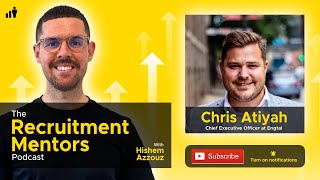
In this Recruitment Mentors podcast episode, host Hishem Azzouz interviews Chris Atiya, CEO of Engtow, a Chicago‑based engineering recruitment firm. Chris outlines the core traits of top recruiters—work ethic, commercial acumen and relationship‑building—before recounting his move from the UK S3 office to Chicago in 2012 and the cultural, psychological and market differences he faced. He critiques S3’s high‑performance, organic‑growth culture, noting its strengths (exceptional standards, operational excellence) and its weaknesses (lack of fresh ideas). Chris describes how he met his business partner Mark, the trust‑based partnership, and the non‑50/50 equity arrangement that gave him a large stake while Mark provided capital and expertise. The conversation moves to the early years of Engtow, the challenges of covenants, building a client base from scratch, and the COVID‑driven pivot from physical engineering to high‑margin software/tech recruiting, which lifted average fees from £18‑20k to £35‑40k. He reflects on what he would do differently—target more lucrative tech markets earlier and hire senior recruiters sooner. Chris shares nuanced differences between US and UK recruitment, emphasizing longer sales cycles, the importance of branding, and a relationship‑first approach. He details Engtow’s tech stack (Ardro, Seamless AI, ZoomInfo, Kube19, Sourcebreaker) and how technology underpins rapid scaling. Culture is highlighted as a competitive advantage: 5‑star Glassdoor rating, high retention, regular team events, remote‑friendly hubs, and a vision to be the best workplace globally. For scaling, he advises building supporting infrastructure (marketing, ops, leadership), fostering a retain‑able culture, and articulating a clear growth plan toward a 100‑person team. When asked about key performance indicators, he stresses relationship‑building over raw metrics. Finally, he critiques “cowboy” recruiters and cites Simon Sinek’s Start With Why as his most influential book, concluding with his ultimate goal of creating a world‑class recruitment firm.
Chapters
Welcome to the Recruitment Mentors podcast. My name is Hishem Azzouz, and today I'm very excited to be joined by Chris Atiya, who is the CEO of Engtow. Engtow are an innovative and rapidly expanding Chicago-based search firm providing recruitment services to the US engineering industry. And Chris has ambitious goals for Engtow and wants the company to be a 100-person business by the end of 2023. Before Chris launched Engtao in 2017, he worked for S3, where he climbed the ranks from consultant to regional director, where he took his recruitment career to the States and along the way won outstanding awards like the Manager of the Year Award at S3 in 2014. Chris, thanks for joining me.
Not at all. Thanks for having me. As I said earlier, I've been a longtime fan of the show, so yeah, pumped to be on here.
Love it. And for those that can't see this, Chris has delighted all of us with his fruity shirt. He's got flamingos. Is it flamingos?
Yeah, I think it is flamingos. Yeah, I was told that it wouldn't be— I knew it was going to be a podcast, so dressed appropriately with a very moody shirt.
Love that. So first question I have for you, and where we always like to start, is in your opinion, what characteristics and traits do you think make up a highly successful recruitment consultant?
Good question. So I think when I look at this, I think you've got basically a kind of baseline of characteristics that I think all top sellers have. And then I think there's almost various ways you can kind of go with it. So for me, I would say work ethic is just a no-brainer. I've never seen anyone be successful in this job or indeed any job if they're lazy. So I think having a good work ethic is essential. I think commercial acumen, business acumen is always something that I look for. Someone that understands business, you know, has a little bit of kind of commercial savvy about them. And then I think, you know, certainly in the US market in particular, and also the way the recruitment world is going right now, I think being a strong relationship builder and having good kind of influencing skills, I think, is really important. So when I look at characteristics, those three are kind of non-negotiables, essentially. What you do with them, I think, can change. Like, if I look at our two top billers at our company, you know, actually they're quite different. The way that they approach the job is actually very different, and they've both been tremendously successful. So I think you can, you know, approach the role in a different way and be equally as successful, but I think those three kind of fundamental characteristics you would see in most top performers, in my opinion.
Yeah, I like that. So just to frame this up for everyone, so, um, obviously, so for the last nearly 4 years now you've been building your own recruitment business, which is obviously Engtal, as we mentioned. And then for sort of 7 and a half years you worked at S3. Um, so let's— what we'll do first is let's, let's just talk a bit about that and that journey. Um, and then we'll go into, yeah, your whole journey so far in, in running a business, which will be obviously a completely different experience from being an employee. So, really quickly, so just for all of us so we can understand this. So when did you take your career abroad? Like when, at what part of your career out of interest?
2012. So I joined S3 in 2010 in London, worked for Computer Futures London division, the kind of founding team, I guess, within S3. Did that for 2 years and then moved out to Chicago in 2012. I was one of, I think there was about 4 or 5 people in Chicago when I moved over, worked for Huxley, so the banking and finance brand, and I went over there to launch the life sciences team under Real Staffing. So yeah, moved there beginning of 2012.
Okay, so beginning of 2012, and then was you there, have you been there ever since?
Yep, yeah, so worked for S3 for, I think it was about 5 years after that, came in as a senior consultant in the US and, you know, like you said, kind of worked up to a kind of regional director role. And then yeah, 2017, you know, the end of 2017, decided to branch off and launch my own business with the help of my kind of business partner and investor, Mark.
Okay, got it. So let's talk a bit about this then. So firstly, Always interested. Mentioned this a couple of times, but sort of outside looking in, Esprit's got this sort of reputation of being this amazing company, high standards, culture, all these types of things. So I guess from your point of view, when you went into that business in 2010, like, how would you describe it? How would you describe the culture and the non-negotiables of that culture?
Um, yeah, I mean, it's a very interesting company, and I think it's a— it really is like a You know, it's an interesting company to almost do like a case study on, I think. You know, I think you had, was it Ashley Lawrence on this podcast a year or so ago? And I think he described it perfectly. He said the culture was lacking and not particularly good, but the environment was phenomenal. And I think that I couldn't sum it up any better myself. I think culturally, you know, it was quite questionable. I think that, you know, it was very, you know, probably unrealistic standards, you know, a lot of burnout, a lot of very kind of old-school mentality. And part of my driver to launch this company was to basically do something different and create a different culture. I didn't love a lot of what their culture stood for. However, I thought the environment was fantastic. You know, they have incredibly high standards, An average performer at S3 would be a top performer anywhere else in the world. A bottom performer at S3 would probably be a very good performer in a lot of other companies. I think operationally, they're very, very good. Everything from their back office systems to the general logistics of how they run the business, day in, day out. I just see the caliber of people are so high. Come from an environment where every day you're expected to give 150%, you know, even if you go into another environment and give 120%, like, you know, you end up excelling. So, for me, I don't think it's a coincidence that so many recruitment businesses have been started by ex-Esprit people because it's a phenomenal breeding ground for entrepreneurialism, for people that, you know, want to be the best in the industry. And fundamentally, I think that environment and that mentality mentality is why so many people that leave S3 do go on to do some very good things.
So sort of, if you were to sort of bottle all of that up, like, what, I don't know, what do you think would be the secret sauce? I'm just curious about this environment.
I mean, I think for me a lot of it comes from their organic growth model, I think, you know, and I think it's the best thing and the worst thing about S3 because I think you've got incredibly pronounced strengths and you've got incredibly pronounced weaknesses. So if I look at my chain of command, I guess, like I reported into the same person for 5 or 6 years, she reported into the same person for 15 years, and he reported to the same person for 18 years. So you have this kind of, you know, the top guys that founded the company, people like Russell Clements and Gary Eldon, and I'm sure the guys before them that founded the organization, I think their strengths are very well pronounced. It trickles down into the whole environment. So very hardworking, very driven, very entrepreneurial. But also where they lack is getting those fresh ideas because everyone speaks the same language. They've all been taught by exactly the same people. So I think they struggle to bring in people externally because they're very unique in their culture and they do lack a lot of those kind of, you know, maybe new entrepreneurial ideas that you get from hiring people that aren't graduates. So that's why I think, you know, in my opinion, you know, the company is the way it is, because they've had that organic growth model where 95% of the population started as a trainee and learnt the esprit way. And I think it's both a blessing and a curse, and, you know, one of the reasons they are phenomenally successful, but also one of the reasons that maybe they're a little limited in some of the other, you know, the other aspects.
Yeah, that's really interesting. So I guess what I wanted to ask you then, and I'm always curious about this, so you mentioned how high the standards were, the environment was. So I guess why was it that Chris was able to land that opportunity then to take your career to the States and not the person sitting next to you? Because I'm sure there's other people that wanted that opportunity to open up that office in Chicago or get that opportunity. So what did you do differently?
That's what I'm always interested I think I was always pretty kind of bullish about my own career and kind of always had my hand in the air kind of thing. Like, you know, I sort of knew that, like, you know, I would eventually maybe grow out of UK recruitment because I think the UK market is tough. I think it's very competitive. And when I looked at S3, you know, at the time they probably had 150 people in the States versus maybe 1,000 people in the UK. But I think something like 8 of the top 10 billers were all in the US. So for me, I was like, you know, the opportunity is clearly, you know, a bit bigger over there. And I was always just pretty kind of like, I think from day one, like when I joined the company, I made it clear that that was a motivation of mine. I was very interested in one day living in the US. At the time, you know, it was a bit easier, certainly easier than it is to move out here today. But, you know, there was probably more opportunity back in 2012 than there has been the last couple of years. And I performed well, I was one of the top rookies in my first year and was, I don't think I was the top bidder on the team, but I was one of the top bidders in that London office, which was a decent size. And I think I just constantly put my hand in the air for a move and eventually they said, "We're opening this office in Chicago, would you be interested in interviewing for it?" And took the opportunity and made the jump.
Love that. So let's talk about this change then, because obviously it's had a real impact on where you've ended up. So you mentioned that you was part of the Computer Futures brand, but when you moved to Chicago, it was a life sciences brand. So did you have to change market?
Yeah. Yeah. So it's complete change. Changed markets, changed continents, you know, and basically built it from scratch. So it was definitely a big change. The first year was a struggle. You know, anyone that's done that transition will tell you that the US is very different to the UK.
What was the most— let's just dig into these real challenges then, because that's— people really want to know, one, that there's other people that have gone through these challenges if they're going through them right now, and people want to know the dark days and how they got through them. So I guess, yeah, so what were the sort of maybe top 3 things that you found most difficult in that first year when you took your career there and started that business from scratch?
I think psychologically it's obviously a challenge. You're moving to a new country, you don't know anyone, your family are 5,000 miles away. There are cultural differences between US people and UK people and it can be a little lonely. You can't just hop on a train and go to your parents or your mates and just take a break. You're there for long periods of time. So I think that that's a struggle and I think anyone that does that needs to be prepared for that and needs to ask for help and make sure that they are vocalising any challenges that they're going through. I think from more of a recruitment perspective, it was a little humbling in that I think the US market is a bigger opportunity than the UK market in my eyes, zero doubt about that. But I wouldn't necessarily use the phrase easier. I think if you started a job in the UK tomorrow, you would probably do a deal quicker than you would if you started in the US. The US is more long-term, it's a bit slower, it's a bit like a steam train. Like when it gets going, it's phenomenal. But you couldn't drop someone into a US market and be like, cool, let's do a deal in the next 4 or 5 weeks. Whereas I thought you maybe could do that in the UK because it's a bit more transactional. So I think that psychologically, again, almost takes its toll on you. I came in an environment where I kind of smashed it from day one in the UK, moved out to the US, and I was a bit kind of like, What's wrong with me? I was used to being a top performer. Have I forgotten how to recruit? You start to doubt yourself. And so that was a challenge. I think the difference is, US is a lot more relationship-oriented. It's why I like doing recruitment in the US. I think in the UK, it's very transactional. Sometimes I think you feel like a bit of a double-blazing salesman and you're kind of like, I don't wanna hear you, I don't wanna see you, but just give me good candidates. In the US, it's a lot more relationship-oriented. Sometimes you need to meet people 2, 3 times before they'll work with you. You need to go into the front door a bit more than the back door. And a lot of the kind of tips and tricks that I maybe used in the UK, you know, just spamming mailshots and trying to persuade clients to interview handlers without a guard knowing about it, trying to create urgency and say, look, you can't interview this guy on Friday, you've got to interview them on Tuesday. Those kind of things that I think work in the UK didn't really work as well in the US. But the most important thing and advice that I would give to anyone doing that transition is you need to look internally at yourself and you need to be willing to adapt. I remember there was a massive turning point in my career where I was probably 6 months into moving to Chicago. I was working 13, 14-hour days. I was working every weekend and I was really getting nowhere. Exhausted because I was like, I can't do anymore. And it was at that point where I took a step back and said, look, maybe the answer is not to work harder, right? Maybe I must be doing something wrong. And then I spoke to a bunch of different people from other operators that have been successful and basically analysed my own business and almost kind of reset and came up with a plan. And I think people need to do that. Don't be arrogant enough to assume that just because you smashed it in Europe, you know, if you do exactly the same thing, you're going to smash it in the States. You've got to be able to adapt to a different way of working and trust your instincts, but don't bang your head against the wall. You need to be able to change. And once I did that, I started taking a bit more of a long-term approach, maybe being a bit more quality-oriented versus quantity, leaning a bit more on marketing and branding than hardcore sales. Things like that started to improve my business, I think.
Yeah, no, thank you so much for sharing that. I guess my next question, because it just makes sense to ask this, you just touched on it, but I guess would you be okay just to share? I know you were touching on it there, but is there anything else to add on? Like when you did have that moment of self-reflection and self-awareness to go, hang on a minute, am I doing the right thing here? Seek help. Like what were the sort of main things that you changed that really did move the dial then? Because I think that's what people want to know that maybe can inspire them to change or try new things if they feel like they're hitting their head against the wall?
Yeah, I mean, I think listen to your customers, you know, is really important, right? Find out where the money is, find out what your customers want. And like, it's a tough one because there's a few like intangibles to this, but I feel the S3 way, certainly in the UK, was KPIs, KPIs, KPIs. If you hit these numbers, these results will come. And that was driven into me so much. When things weren't working, my default was do more numbers, right? You know, that's the only way that I'm going to be able to turn this around. And there really wasn't that, you know, in a way it was almost less numbers, but it was listening to, you know, your customers, providing excellent customer service, getting referrals and recommendations, and, you know, and doing things that way. It's all different depending on where you're at geographically and markets and things like that. But I think The most important point is listen to people that have done it before and have been successful in the space that you want to excel in, and then be adaptable enough to implement that advice. The people that didn't make it, and I saw a number of people come out and maybe weren't successful and move back, I think they were possibly the people that weren't adaptable. They weren't able to pivot their own mentality or how they approached the job to suit the US market.
Yeah, nice. And then I guess just be really curious because I'm sure this probably seems like a lifetime ago now, but like, I think this sometimes doesn't get talked about as much. So we mentioned there the sort of epiphany and the change of being open-minded, seeking help, and that had a real impact. Like, how— what is there anything that you can share? Because I'm sure you share it now with people that you hire for your own business, but anything that you did like personally that really helped? So I don't know, you said around being localized, right? Because I think because sometimes we've had a couple of people on this podcast that have tried to take their career to America and failed, and it was the social side, especially when work's not going well, right? So imagine, like you said, you're putting all those hours, you're working on the weekend, and you feel like a failure, and then you've got no friends, your best mates are obviously in the UK, you know what I mean? So did you do anything, I don't know, on the personal side that helped? Was it quite easy to network, find other expats, or I don't know? Anything personal.
I mean, it was, you know, Americans generally are very friendly people, so that helps, I think. And like, yeah, you know, we, um, you know, it took some time to kind of, I guess, like meet my like real like friendship group. I think when you first move somewhere, you just naturally gravitate to whoever you're closest with. And, you know, it took me a year or so, I think, to forge like people that I'm friends with today, like 8 or 9 years on. And I think for me it was just, you know, really keeping your eyes on the prize and and understanding that this is a transitional period. It's not surprising that I didn't pick this up immediately. It's not surprising that I don't have the friendship group that I do back in the UK. It's almost looking at it logically and thinking, you know what, I can get through this. Technology is so phenomenal these days. You can jump on a Zoom call with all your friends and family. I was kind of conscious to not ostracize myself and just make that extra effort to build friends and kind of do that kind of thing. Thing. But generally, some people, maybe it's not right for them. The reality is there are some people that move out here, do it for a year or so and say, that was a great experience. Now I'm ready to go back. And great for them. That's absolutely fine. There's nothing wrong with that at all. I happened to meet my now wife, who's American, and kind of settled down here. But there's plenty of success stories of people that have come over for a year or two and moved back. It doesn't mean you're a failure if that happens. But for me, I just think it was about keeping my eye on the prize, being aware that these are probably just normal things that everyone goes through when they make that move, knowing that career was kind of number one for me. And, you know, if I wanted to truly make a success of myself, I had to just push through and, you know, get through it.
Yeah. Thank you for sharing that. Look, I'm keen to start talking about sort of your journey as a business owner, but I just wanted to ask, like, the way that you've spoken around, like, realizing maybe this isn't working, or like you said, they're just understanding that maybe this is a transition and sort of maybe not getting too bogged down in the day-to-day because you took a step back and looked at the bigger picture. Obviously what we're talking about here is self-awareness, right? And I think sometimes a lot of recruiters don't have this. I'm sure we've managed people that don't have this and get really bogged down in the day-to-day and stuff like that. Like, where, where's— have you always, have, have you always been able to tap into that self-reflection? Have you always been able to take a step back? And I don't know, where have you cultivated that self-awareness from, out of interest?
No, I mean, yeah, definitely not. Like, it's something that, you know, and even now, like, you know, you kind of got to check yourself sometimes, say, all right, I need to, like, take a step back here. Um, so, you know, it's definitely something, you know, I'm still, still working on. Um, I just think, you know, putting aside time, even as, like, a manager, for example, if you're doing, like, a monthly meeting I do it over lunch or do it over coffee or do it in the pub or something like that. It disconnects you from the bogging down of day in, day out kind of monotony. That's what I try and do. Take some time to— whether it's just going and sitting in the bar and having a couple of beers and just figuring out, right, okay, on a high level, what do I need to change right now? Or taking a morning off work and just saying, right, I need to sit down and just kind of, again, reflect on sort of where things are at before COVID taking a day working remotely and being like, "Right, I need to disconnect a little bit." I think those things are quite important from a self-reflection perspective. But I just do think it's kind of like a— it should be a natural, it should be a reaction for anyone that's not happy where they're at today. That's probably the first place that I would look is to say, "Okay, cool, what am I doing here?" Like, is there anything— I'm doing wrong, if there's anything I can change to help my own, you know, personal journey.
Yeah. And then I think what you're then talking about there, right, which I think is the important part, is you just, you just said the first place that I would go is like, what can I do? What can I change? And I think sometimes people aren't willing to say, what can I change? And they say, my manager Chris needs to change.
Oh, 100%. I mean, you know, and, you know, is, is one of the most important things of any trade that I look for. I should have mentioned that earlier, but being accountable. And you know, when I look at our management infrastructure, I look at myself and Mark and some of our top performers, that's a culture that we really try and cultivate. Like if things go wrong, don't beat yourself up, don't blame other people, look at yourself first. And Mark, my business partner, is obviously, you know, super successful guy. And one of the things that I've always respected about him is Whenever things go badly, the first person he looks at is himself. And having had the success he's had, it'd be very easy to point fingers and say, it's you, it's you, it's you. His default is like, you know what, I could have done better at this. I'm going to improve moving forward. And I try and mimic that as well. And I think it creates a culture in a company of people saying, you know what, I'm going to do my part here. This went wrong. This was what I could have done better. Next time, I'm going to change it. I'm going to do it better. And you don't blame other people.
Yeah, I love that, especially if it's coming from the top, right? That it's going to be a lot easier for me in your team if I see my manager going, you know what, that was my fault, or yeah. So, okay, so you obviously mentioned Mark there, so let's talk about Chris the business owner, right, and the sort of journey that you've been on so far. So it's coming up to nearly 4 years, you've obviously got big goals for this business, want it to be a sort of 100-person company by 2023. Could you just very quickly, before we go into the beginning of this journey, like, what— paint us a picture of where the business is at today and then we'll sort of reverse engineer.
Yeah, yeah, sure. So today we are, I think we're about 25 people now. We'll be 35 by the end of the year. So yeah, we're about 3.5, 4 years old. We initially started in engineering, so, you know, more physical engineering, so mechanical engineering, electrical, that kind of stuff. And during COVID that market was hit pretty hard, so we pivoted into more software engineering. So most of what we do now, we're probably about 80-90% software engineering and tech, and then we have other, you know, kind of teams. So we specialize in terms of technical industries, yeah, software engineering development, DevOps and cloud, cybersecurity, AI, machine learning, that kind of staff. We have a physical office in Chicago, we have another office in Dallas, and we have a UK satellite office in Stafford, so about an hour north of Birmingham. And then we will be opening an office in Boston beginning of next year. So yeah, so 25 people, 35 by the end of the year, and then long-term goal is to grow to 100 people by the end of 2023.
Amazing. So let's talk about the start then. So you mentioned Mark, your business partner. So obviously, let's just paint the picture here because I think this is, when we spoke preparing for this, I think this is obviously what people sometimes are always interested in. So my typically first question for people like you is like, what gave you the confidence? And I'm assuming Mark was part of that, right? Because you, had someone involved to help you start this business? Because a lot of, I'm sure you've been there, right? Especially in the environments you've been in, down the pub. Chris, look, I'm going to start my own business one day, but I'm billing X. I'd rather make that for myself, all that, right? But how many people actually do it? So I guess why don't you talk to us a bit about the start then? Maybe, I don't know, how did you meet the person that ended up obviously investing in you and the business? And then share with us sort of how that works exactly, and then we can start unpacking how that first year was and everything else.
Yeah, definitely. So, I mean, he actually found me through a recruiter. So, you know, Mark's background is he also worked for S3, but many years before I did, so we never overlapped. He started his own business post-S3, sold it for a bunch of money, and, you know, and then he took a year out just for covenants and things like that. He never did a huge amount in the US. It was always a goal of Mark's to start a business in the US. So he essentially worked with a— internal recruiter to try and find him someone to launch a business with him and be his business partner. At the time, I was pretty happy. Mark and I actually had an initial conversation and after that I was kind of, you know, really, really liked him, but I was, you know, thanks but no thanks. I'm in a good spot at Espray, I'm pretty happy where I'm at. And then it just almost kept nagging in the back of my mind for the next 2 or 3 weeks. I kind of found myself business planning and I started actually writing a business plan. I never actually planned on sharing with anyone, but almost just as a kind of an exercise. And then the more I thought about it, a few weeks later, I kind of reached back out to Mark and was like, actually, this is something I'm kind of interested in. And then, yeah, we got rolling. It was an interesting one because I was obviously on a visa in the US. So we kind of agreed to go into business together probably about 6 months before I was actually able to resign from S3 because we had to get everything compliant from a visa perspective. So the last 6 months I was there, I was kind of, you know, knew that this was going to be, you know, what we were doing. And I was sort of working on it in the background. And yeah, that's kind of how it happened. Mark and I kind of hit it off well. We obviously have relatively similar backgrounds and then yeah, we kind of worked on it from, you know, it was probably February, March time and then officially launched in August.
Love that. And then just real quick, because I think this advice has been shared, like what qualities was it that you saw in Mark that obviously you've got the track record that obviously helps credibility, right, straight away. But I guess, I don't know what qualities really resonated with you because I think maybe hearing the qualities that resonated with you, that gave you that confidence or made you comfortable going into business with this person, could be something that the people listening to this could hopefully look for or try and find in people that they want to connect with or have involved.
Yeah, I mean, for me it was trust and, and yeah, it was trust and honesty. Like, you know, those were the main things. Um, you know, I trust Mark implicitly. I think he does the same for me. And I think it's just so crucial. If you're ever going to go into business with anyone, it's like a marriage, right? You have to, no matter what happens, no matter what shit hits the fan or no matter what goes wrong, you've got to be able to trust that your business partner will have your back and you will have their back. And you're a team. And Mark and I had a bunch of mutual connections, so we knew a lot of people. And I kind of reference-checked Mark, and I'm sure he did the same for me. We both kind of reached out to people we knew and trusted. And I asked a number of people used to work with him and things like that. I got a lot of feedback that he will not screw you over. He's a very straight up honest guy. And that to me is everything. So I think we shared a lot of our kind of core values. I think that when you go into business with people, it's fine to be different. I actually think that's a good thing in a lot of ways because you can bring different things. If you're too similar, then That could be a challenge in and itself. But I think at the core, you need to be linked. And I think when you look at Mark and I's work ethic, you look at our ethics, you look at our drive and motivation, I think there we're pretty linked, you know, and we're pretty well aligned, even though, again, you know, we might bring different things to the table. But that to me was everything. Like, you know, I obviously, I was in a good position at S3. I was earning good money and, you know, had a, you know, kind of a team I cared about and really, enjoyed working there for the most part. So for me to make the move, it was crucial for me that I was going in with someone that I could trust and that I knew if things didn't go as well as we hoped, we would still back each other and it wasn't just a kind of roll of the dice and say, okay, never mind, because that was my life on the line really. So it was very important to me and that was the main thing I would recommend Anyone that's going to go into business with anyone, you've got to be able to trust them. That's the number one thing that, um, you know, you should look for in a business partner.
Yeah. So, um, talk to us really quickly. You don't have to go into like all the nitty-gritty details, but people— I, I've said this a couple of times now, but I, I do feel like sometimes people have the impression in the recruitment industry that if I partner with someone that, like Mark, that they're gonna gobble up all my profits at some point, right? Or do me over. There's been those sort of stories out there. So I guess, how does it work? Are you 50 50 partners? Are you like, I don't know, how did you structure the business?
No, so we are not 50/50 partners. We have a different equity split in terms of the business ownership. And we basically, Mark was more of a, I don't want to say like a silent partner because he's very involved in the business, but the idea is he hired me, paid me a salary as an employee, and then I have a large equity stake in the business at the same time, and then we take our dividends based on that split. I think for me, it was definitely a question of like, should I just do this on my own? Because yeah, there is an answer. If you make a massive success of it, then yes, you will make more money if it's just you. But I think you've also got to value the expertise that someone like that brings to the table. And for me, I kind of figured, right, if I can grow my business 3 times as fast with an investor in terms of their cash, but also in terms of their expertise, their contact book, just someone to bounce ideas off and things like that, then I would probably be about as financially about as far forward as I was if I just did it myself. I think if finances are your only real motivator and you are a super biller, so you're someone that can bill a million bucks a year personally, maybe there is an argument to say you should go on your own. You will probably make more money if, again, you want to not massively scale it and do it yourself. For me, I didn't really want to do that. Rather have a smaller chunk of a 100-person business that is, you know, a fantastic culture, creates opportunity for people, you know, brings people over to the US, gives phenomenal customer service. Like, things like that are probably more important to me than, you know, running, you know, owning 100% of a 10-person business that might be super profitable but doesn't achieve the other things that I want it to achieve. So when I looked at things, and it was something I thought about very seriously, like, should I go in on my own and do it, I decided to go in with an investor because I just, I wanted to have, you know, I wanted to have a business partner and I thought it would help me build the company that I wanted to build, even if I had a slightly smaller piece of the pie, basically.
Yeah, thank you. And again, it's that self-awareness, right, on understanding what, yeah, would be more meaningful for you and what, yeah. So I love that. So I guess let's talk. So how difficult, obviously you've got that business partner, it's been obviously planned for a while. Like talk to us about that first year. How difficult was it? Obviously, you would have had covenants. So I'm assuming, did you have to build up a market from scratch? Like what was the strategy?
Yeah. So yeah, I had covenants. We, it was hard, you know, it was very hard and taught me and Mark, I think, a lot. It was one of, if not the most developmental years of my career. And I think the truth be told, we made a lot of mistakes. We survived and we did, I think we did 750K roughly in revenue or something. So not a horrible first year, but by any means, it was, we kind of did what we needed to do, I think, which is prove the concept, get the business off the ground. But it was definitely a challenge. I think there are things I would do differently if I did it again. But at the same time, it was phenomenally exciting, being able to create that culture, bringing people together on this journey, and basically just proving the concept that it works. I think the biggest fear as an entrepreneur is going into it and thinking, well, it's going to fail, it's just going to fall on its arse. I'm never going to make this work. And seeing, coming to the end of the year and seeing deals going up and breaking even and then making profit and then kind of doing all of those things and starting to think, wow, I can actually turn this into a real business, started to get really exciting. And then we'll start to really progress from there.
So look, people listen to this podcast because they want to know what you would do differently. So what is it? What would you do differently then, do you think?
Yeah, no, so I think I would have done different markets. So, you know, I kind of went with what I knew, which is, you know, basically Midwest, which is the kind of central chunk of America, and engineering. Fees were low, well, low for the US, like $18,000 to $20,000, and just kind of a bit more like old-school blue-collar type customers, like very ingrained in manufacturing, just kind of, you know, maybe not the most innovative, you know, customers in the world. But during COVID and you know, it's crazy to say this, but I always say I think COVID kind of accelerated our business like you wouldn't believe because it forced us to pivot into, you know, kind of other more innovative areas. Now, you know, we work a lot in tech, our average fee's £35,000 to £40,000, you know, and markets are just like night and day. So markets would be one. And secondly, I would have led and hired more experienced people early. Our first kind of 5 or 6 hires were all trainees, great people, very talented, hardworking, like, you know, love them to bits. But I think if I'd hired a right-hand man or woman at that time, someone with, you know, kind of even 2, 3 years of really good recruiting experience, maybe paid them a bit more to be more of a kind of, yeah, like a right-hand person to me, I think would have helped us. Like now we've got a bit more of an infrastructure, We have a bit more leadership, we've got some phenomenal builders, and, you know, it took us a couple of years, I think, to really almost get the right people on the bus. So those are probably, you know, markets and then leading with having, you know, one or two very good experienced people are probably the two changes I would have made.
Yeah.
Yeah.
Really, really interesting. Thank you for being honest there. So where was you then, like, in terms of the amount of people by the end of year one then? Out of interest?
I think end of year 1, we were probably at about 6 or 7, I want to say. Yeah, roughly around that.
Okay. So what I was just keen to ask you on this point, because I think it will go— I'm really curious around this pivot that you had to make, because I think that's— because I'm assuming until sort of COVID hit, you was operating in those blue-collar markets.
Right.
And then, yeah. Okay. So that's really interesting, right? So, but so I guess before that, I guess it'd be really great. I'll get a lot of messages from people that are really interested in hearing and really understanding, like, what are the nuances of the US market that I need to understand? Or like, what am I going to learn the hard way and then look back in 6 months ago?
Yeah.
Like that, this is how you got to do it in US. So I guess Like, I don't know, what are some of the sort of core nuances that us UK-based recruiters— that a lot of people do want to come over to the US, and a lot of, like, I would say most businesses, ambitious progressive businesses, before COVID hit would have had US on their business plan. I think a lot of businesses still do. So I guess, I don't know, before we go into that pivot and how you approach that, like, what are the nuances that we need to understand? What we've typically heard in this this podcast is the directness of people. We've heard around actually the actual profession, being a recruitment consultant has a better reputation in the US. But what are some of the nuances that you maybe you make sure you communicate to your guys in the UK that work for you that they may have to learn the hard way?
Yeah, I mean, I think that, you know, the— yeah, it's an interesting one. The how you're treated in the US is night and day. That's why I love recruiting in the US. I do feel that it is a lot more of a a respected career. You know, it's funny, I remember I sent out my first mailshot in the US and sent out a mailshot in the UK. And, you know, I can't even, you know, probably talk about some of the responses you get. But it's like, you know, F off, I'm going to kill your family. Like, crazy. Just like, think people just so angry. You send a mailshot in the US. I remember when I sent my first one and the responses are just like, thank you so much for reaching out. Like, I'm so happy you emailed me. I'm not hiring right now, but I will definitely keep your contact information. Like, it is crazy how different it is. Not to kind of duck the question, but it is challenging because I think so much of it are intangibles. People ask me this all the time because, yeah, like you said, there's a lot of people trying to make a success of the US, and I have a lot of colleagues that run businesses in the UK that often ask me, what would you do here and what would you do there? I think you've got to take a bit more of a long-termist approach to it. You know, understand success is not going to come overnight. You know, build for year 2, 3, and 4 rather than year 1. You know, build those relationships. You know, again, maybe marketing and branding is a bit more important than smashing the phones and kind of hardcore sales. You know, so, but it is tough to say. Like, for me, I've been out in the US for 8 years now, made a ton of mistakes, and I feel that it's almost inevitable you have to go through that journey. If you're looking to build a US business, I would almost say to you, do not expect it to be successful in the first couple of years. It's almost like building a contract business, but stick with it because it will be successful if you do it right and you learn and you adapt. And that's why I hope that we have a relatively good proposition for people, whether they're in the UK or the US, because we know how to do US recruitment, we've kind of cracked it. So anyone that is looking to move out to the US or just looking to work the US market from the UK and make US wages and make a lot more money, I think our structure and our relationships are pretty well set up to do that. So that's why I think that's one of our kind of USPs, I guess, to anyone in the UK is that we really understand the US market. It's taken a long time to do that, but we're in a position now where we kind of get it and we know how to be successful in this space.
So, um, if I'm listening right now and I speak to people that I know that are going through this at the moment, I'm a recruiter that does what you do but in the UK. Some of my existing clients have some US operations and I've put a business plan together and my business has said, look, let's give US a real crack, work US hours in the UK, and we'll see where we are in 6 months' time. Like how— let's just, let's just put aside a second that we're not doing the completely wrong things and we're doing more of the things that have helped you guys get to where you've got to. Like, what would your honest advice be to me on like the timeline that I should give it for me to then go, okay, there's a business here, or like maybe we should actually pivot or look at different things? Roughly, would you say timeline-wise?
I would look at In the first 2 months, I think you should look at tangible outputs that you know are going to lead to results. How many terms are you signing with customers and what does the opportunity look like with those customers? How many client meetings are you going on on a monthly basis, albeit remote meetings in Zoom? How many jobs are you pulling? How many interviews are you booking? Those kind of numbers that you know are going to eventually lead to success. For me, I think if you don't you don't see any revenue on the board or getting close to revenue on the board, month 3 or 4, you might get a little concerned. I think by month 6, you should be able to consistently do, you know, kind of a deal a month. But again, it's just, it's so hard to say for sure because the metrics are just so different. Like, you know, there are some markets where it will take you a long time to crack in. We have some markets where our interview-to-placement ratio is, you know, about, you know, 4 or 5 to 1. You know, I have 2 guys on, you know, kind of my team, I won't name names, but they basically have done the same interviews this month. One of them will build $200K in a month, you know, $200,000 in a month. And the other one may not do a deal with the same volume of interviews. But I think it's because the markets are very, very different. We have some that are, you know, interview-to-placement ratio, 4 or 5 interviews, you're doing a deal. You have some that, you know, you need to book 50 interviews in a month to do a couple of deals. So it is very, very different and there isn't a kind of one-size-fits-all mentality. That's why that listening to the market, listening to your customers, being adaptable, are those kind of things that I think are really crucial.
Fair enough. So let's look, so look, we've got sort of 15 or so minutes left here, right? So I want to talk to you about your journey so far in hiring and growing this American business because again, a lot of business owners that I speak to really struggle on the hiring side. Obviously, ironically, recruitment business can't recruit for their own recruitment company, right? Always hear it. But talk to us a bit about what was like— I really respect that you pivoted this business, right? And because I think again, it's— you've taken accountability, like you've really shown that because I think a lot of people could have gone, well, we'll wait and COVID's happened, so we're not going to do this or we can't do this. So Like, what was the approach then? Because you've gone from being a business that supported a completely different sector, right? To then doing engineering in the tech space, which is completely different. And although it's engineering, but like, what was the approach? Like, how did you gain— because I'm assuming you then had to build all again from scratch.
Yeah. I mean, we invest a ton in technology. So, you know, that helps. Like, you know, we're massive geeks when it comes to tech. I think there's a lot of companies out there, you know, the old kind of like, here's a Yellow Pages and a phone book, like get dialing kind of thing. Whereas with us, we invest a lot in branding, a lot in marketing, a lot in tools where you can ramp up very quickly. So, you know, you can add thousands of managers onto the system very quickly with phenomenal data integrity. You can get out and reach people with really compelling product quickly. So I do think that investment in tech helps with the ramp-up period for us. It was kind of necessity due to COVID. Obviously, COVID here, we were at a point where every single thing in our pipeline basically was put on hold. And we basically had a team-wide meeting where we were very transparent with everyone and we said, look, This is where we're at. This is the amount of money we have in the bank. This is what our breakeven point is on a monthly basis. And this is what we've got to do to survive. And we didn't lay anyone off. We said, look, I will— Mark said, I'm not taking any money out of this business, nor will I. I said, I will happily take a pay cut before anyone else loses their job. But we need to do this. We've got to pivot. We've got to pivot quickly. And the team responded phenomenally. We doubled in size over COVID. We made a huge success of the business. And I think it was almost the— we were doing maybe a lot of the same things, but I think everyone really bought into the vision that they saw it as almost an opportunity where a lot of companies were furloughing people and laying people off. We were able to hire some of those people. So like you said, it's always a challenge getting good talent, but over that COVID period, we were actually able to bring in some really exceptional talent. And we opened our UK office during that time period, which has been a huge success for us. And some of the people, you know, we took people that had been furloughed in the UK and then brought them on board and they tripled their earnings within the first year of joining us because the markets were working and things like that. So it was almost like a mentality shift of like, look, this is why we've got to do this. We've got to make a success of it. And we were able to bring in some really good talent because maybe some other companies were, were struggling at the time.
Fair enough. And look, people always want to know this and message me, so I hope you're okay sharing, but people love to know what tools people use. What are some of the tools that you've invested in that you spoke really highly of there that's really helped?
For us, it's almost like a kind of tech stack. So we use We use Ardro, we use a tool called Seamless AI, we use ZoomInfo. We're currently in the process of onboarding Kube19. We have Sourcebreaker. It's kind of like everything that's available, we essentially invest in. I think the key thing for us is that a lot of these tools are great in isolation, but you always need them in a tech stack. So you need The one tool is way more effective if you use it alongside something else. And I think that there's a lot of companies out there that are just kind of scale, scale, scale. For us, we try and stay probably a headcount or two behind where we could be, but then invest that money in technology. So when someone comes in, make sure that they have every tool they could need to be successful. The promise will pay for itself. And if you— I wouldn't— maybe I wouldn't suggest doing that, but if you fired your worst person and you invested that money in getting everyone else in your business better technology, I think that would be a smart decision. And you know, we hardly ever fire people, but like, we almost have that mentality with our headcount where rather than being as big as we could be, we try and be a little bit behind and then invest that in making sure everyone has a ton of technology because I just think it pays for itself like 10 times over if you do that.
Yeah, nice. So look, on the hiring piece then, so you've got some big ambitious goals, right, to get to 100 people. When I've sort of interviewed people on here who have ended up in America, one of their biggest challenges, which is quite nuanced actually, is that obviously agency recruitment in the US is completely different, right? So obviously the typical story in terms of how it's perceived from the younger generation, from what I understand. So obviously for a lot of us, we may end up in it, fall in it straight out of uni, blah blah blah. But in America, obviously from what I understand, correct me if I'm wrong, obviously there's, there's this whole, uh, really lucrative career on the— as a corporate recruiter, right? And you get all the benefits, the medical care and all these types of things. So when Chris is then speaking to me as an American citizen, you're going, look, you're going to have a lower base salary you're going to be on a higher commission. Like, I don't know what's been your journey in actually hiring American citizens and what have you learned? Because that seems to be a sort of sometimes a challenge that UK businesses miss because they try and go down that same model and then they're like, shit, we're not in actually a very good location. And two, obviously we have to offer lower salaries because the commission earnings there. But that isn't— I don't know, that doesn't seem to be as common.
Yeah, I mean, I think it's true. I mean, very, very different. I mean, for us, you know, we have— my vision for the company, I've got it kind of on my LinkedIn, is to build the best company to work for in the world. You know, I don't know if you've ever read Simon Sinek's book, Start With Why. Yeah, that's my why, you know, I guess, is to build a company that is just phenomenal to work for. I think a lot of it is that you have to have a compelling proposition. Opposition. We have a 5-star Glassdoor, we were ranked, we were named the number 1 company to work for in Chicago last year. And I think that you have to have something that is very compelling, because if you don't, you're never going to hire anyone because the competition is so high. So for us, yeah, our base salaries are probably slightly lower than some of the internal recruitment roles that you'd get in the US. I think our culture is second to none. We have super high staff retention, we never lose people. And I think that That is outstanding. I think when you look at our total comp package, a lot of our performers, they're making $500,000, $600,000, $700,000. Some are on track to bill $1 million this year. What's that making in terms of what they're billing? So I think that you've got to have a very, very compelling opportunity for those people. We also leverage people in the UK. Obviously, we have a satellite office in the UK, which We kind of use as a feeder club to the US for anyone that wants to move there. But we also use it as a very like long-term opportunity for people if they don't want to move to the US, if they want to make very good money, they want to have flexible working hours, they want to have a bit more of a maybe a grown-up environment than some of the UK recruitment companies, it can be a good option. And the final thing is we're shifting to a, you know, a remote model. We always want about 75% of our people to be based in our hubs. So Chicago, Dallas, Stafford in the UK, Boston, but we will also have 25-30% fully remote. So when we see someone that we really, really like, even if they are based somewhere, we've recently hired a gentleman in Philadelphia, we've just hired a new head of contracts who's based in Kansas City, and we've kind of built this Zoom culture whereby they can still interact very well with the wider population. But it is definitely, you know, it's one of the biggest challenges. And I think that's one of the areas that I take almost as my job is to attract great people to our company. Like, that's one of the main components I see of my position is creating a company that's going to attract those great people. If you do that, then a lot of the rest will kind of, you know, take care of itself. But in answer to your question, it is definitely a challenge of the US market because there's also not many— the US recruitment market is obviously a lot more in its infancy than in the UK, which is a good thing in some ways because there's far less competition. That means when hiring people, it can be more of a challenge as there's less people out there. And then finally, we've had a fair amount of success. I think there's a few maybe UK recruitment companies that previously were privately owned but have been bought by private equity firms, so maybe squeezing some of the commission, so the compensation is starting to drop. We've had some quite good success taking people from some of those larger organizations that have maybe gone on the journey over the last 10 years, they're now owned by a private equity company and maybe the opportunity is a little different. So, you know, we've had some success of bringing people in from those organizations.
Yeah, and I think, look, before we finish, that was what I was really curious to hear from you, like, because I'm sure you have this with your end clients now and your guys and girls share this with you, but like how How do you, how have you made that, how have you communicated that culture to make me feel like it's compelling and I want to be on the bus through a screen and through Zoom? Like, how do you think you've achieved that? I know you said that you've done it quite well, but what do you think are some of the things that you've done really well? Because I think a lot of people really scratching their head around that and would have found that difficult.
Yeah, I think you've got to be very aware of what you are and what you're not. And then cater towards those people. So for us, you know, if you are a completely fresh graduate without any experience coming into a recruitment company in the US, it might honestly not be the best outfit for you. People like S3 and maybe some of the bigger organizations, they might offer more from a leadership perspective, from an infrastructure training development, you know, that kind of thing. Where I think we excel is kind of those second jobbers, maybe the people that have been in the company 2 or 3 years, they've learned how to do recruitment, but they maybe want a bit more of a grown-up environment, they want a bit more high-growth company. We specialize in, we have a phenomenal training program that specializes in taking people from $200K billers to half a million dollar billers, which we pay an external company to do for us. So I think all of that stuff is, again, it comes down to like, well, you know, what are you and what are you not? Like, what type of people would thrive in the environment that you've created? You know, for us, our three core values are positivity, drive, and innovation. And I think if you are a positive, driven, innovative person, you will thrive in the environment, you know, that we've created. And from more of a logistics perspective, we, you know, we invest a lot in trips, we do happy hours, we do team lunches, we do, we had like a wellness consultant that came and spoke to us all last week about staying mentally and physically healthy during lockdown. We did like a team yoga class, you know, a couple of weeks ago, which I was terrible at. But we do like various kind of, you know, like fun things like that to try and keep the culture going until we were able to physically kind of, you know, move into an office, you know, together.
Yeah, fair enough. So look, before I ask you some sort of quickfire questions then, um, I've got 2 questions for you. One, there's a lot of recruitment business owners that I know and speak to that sort of find themselves in a bit of a yo-yo of like getting to 15 people, then back to 10 or 8, then 15, then back down. Like, what would your advice be for, um, recruitment business owners listening to this that really want to to grow their team from X to X and the sort of journey that you're on, what are some of the maybe like top 3 tips for me if I'm listening to this, if I really want to get to 25 heads and beyond, if I'm always back and forth between 5 and 15?
Yeah, so top 3 tips. I think you've got to work on your infrastructure. So, you know, I think people often will be like 360, 360, 360, right? You know, you're not going to get to 25 people with 24 360 consultants. Influence. So, you know, work on, you know, getting a marketing person, getting an operations person, getting leadership infrastructure, you know, kind of, you know, through the door. Number 2 would be create a culture that's going to retain people. You know, like I said before, I've always said my job as a leader is to attract and retain the best talent in the market. That's it. If I do that, if I attract the best people to my company, create an environment that retains them, I think will be successful. So I think creating an environment that retains those people. If you're yo-yoing, why are you yo-yoing? Are you bringing in the wrong people? Is your culture just not as strong as it could be? You kind of need to diagnose what an issue is. And then the final thing I would probably say is I think you've always got to look you've got to have a bigger business plan. I could tell you I'm going to get to 100 people. I could tell you all of those markets. I could tell you all those geographies. I could tell you the non-salespeople we're going to bring on. Build a vision of where you want the company to go and share it with everyone at the organization so they can see exactly. It's all very well saying, right, we're going to get to 100 people, but what are these guys going to do? Where are they going to be? What infrastructure do we need? Is it contract? Is it perm? What job it is, all of those things. So, um, you know, those are probably my 3 things that I would say if you're looking to really kind of scale your business up.
Yeah, nice. And then I always love asking this question before, um, I ask you some quickfire ones. What, what do you think is the most important action or KPI that you think contributes to recruiter success?
That's a really Tough one. The most important one. I mean, I think that, you know, it's maybe not a KPI, you know, but particularly in the US, the relationship building aspect is crucial. Like, you know, if I look at the best billers in my organization, I think they're there because they are phenomenal relationship builders. You know, their clients would do anything for them. And they will open doors for them, candidates will provide them with leads. Like, you know, obviously, yeah, being able to pull jobs and being able to go on— there's a number that are crucial. But, you know, I do think for me, that kind of, you know, ability to really build and influence relationships is crucial.
Nice. Right. Last couple of questions. So first one, if you could change the industry, What would you improve?
Um, I would remove a lot of the cowboy recruiters out there, or cowgirl recruiters out there. Um, you know, I think that there are— it gives us a bad name. I think there's a lot of people out there that are just trying to make a quick buck. They don't care about customer service, they don't care about doing a good job for their customers. Um, and I think it just always gives a lot of the market kind of bad, bad rep. So yeah, I would definitely try trying to eliminate them.
Nice. What book have you read that's had the biggest impact on you?
I would say Start with Why by Simon Sinek.
Yes, great book. Different one, this one. What did you spend your first biggest commission paycheck on?
I spent it on a really terrible shiny suit, which anyone that knows me, if they've got to this part of my podcast and they're still listening, they'll know. Yeah, it was absolutely awful. It looked like, I don't even know what it was. It looked like it was made of like sheet metal or something, but I bought it in Savile Row. It cost like about £1,000 and I think I've probably still got it in my cupboard somewhere. But yeah, it was pretty horrific. Love that.
Final question. What's the ultimate goal for your recruitment career or business?
I mean, to build the best company to work for in the world. You know, I want to get to a position where you know, we look back and we say, wow, you know, we built a phenomenal company. We treated everyone well, we paid everyone well, we trained and developed them well. Everyone that worked for our company was proud to work for us. You know, the kind of company that, you know, you invite your parents to meet everyone, like, you know, that kind of thing. If we can do that irrespective of size or revenue or anything like that, you know, I will be a very, very happy man.
Amazing, Chris. Been an absolute pleasure. Thank you.
Yeah, Andrew, my friend, you take care.
More from Hishem




You don't need as many clients as you think to bill $1 Million A Year In Recruitment



From 30 Direct Reports to Back-to-Back $1M Years as a Solo Recruiter with Zach Creighton



