Chris Stringer - Working out of a bedroom and a Mexican restaurant inspiring the brand name...
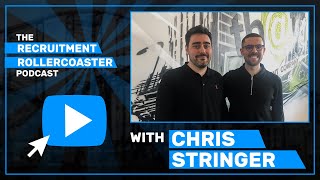
Chris Stringer started That Recruitment Company in 2014 from a spare bedroom with £7,000 and made £90k in six months. He dropped out of university, worked as a double-glazing appointment setter, and built an IT recruitment agency now operating in Amsterdam and Berlin.
Chapters
Welcome to the Recruitment Rollercoaster Podcast. My name is Hishem Azzouz. Today I'm in sunny Birmingham in the Jewellery Quarter. Never been here before, and I'm joined by Chris Stringer, who is the owner of That Recruitment Company, and they specialize in the IT development market and only operate in the Netherlands and German markets. Chris, hello, joining me, mate.
No worries.
Um, so as I was saying, where I always like to start on this podcast is how you got into recruitment, and then we'll, we'll definitely be focusing on your business journey. Okay, so how did Chris Stringer enter the world of recruitment?
Um, so I, long story short, dropped out of university because I'd spent all my money and left to be a double glazing salesman. Wow. And that's how it sort of came about. I seriously ran out of money in my first term.
Really?
Found a little leaflet on the floor saying, earn money quick, ring this number. I didn't know what it was or anything. Went down to this random little industrial estate in Lincoln and it turned out to be a double glazing company and they wanted us to call, make the appointments for the reps to go around.
Appointment setter.
Yeah, basically that's what it was. And they targeted me like half, half a lead, whatever that is. I still don't know what that is to this day. And my first day I got 4 and I was like, okay, I didn't really, think about doing sales before. So I ended the first year, I worked more, went to uni less, end of the first year failed because I hadn't been to any lectures. And then when I got sick of kind of making my mum cry because her firstborn was a double glazing salesman, I was like, I really do need—
I was going to say, did your parents know that you're doing that?
Yeah, they weren't happy about it. Yeah, I was doing criminology and English language, and all of a sudden I'm like, nope, the future is PVC. So, um, no. So yeah, I, I Got offered a job in Birmingham, failed the first year and never went back and then thought, well, I need to actually get a job. Didn't know what I could do. Got offered loads of jobs, ambulance chasing. So have you had an accident or selling photocopier toner? I really don't want to do this. And then thought, well, recruitment sounds all right, but I wasn't a graduate. It was 2006 and nowhere had let you in. So really? No, no, not at all. It was great. I was, I was I was 19 at the time, I was 20 when I started. But unless you're a degree holder, they wouldn't look at you. So I sent off a load of applications saying, look, just give me some advice. And somebody, luckily an internal recruiter from S3 phoned me up, gave me 30 seconds and that was it.
Really?
All of the brands said no except Progressive. And I went and started their kind of engineering division because my old man's an engineer and I think they quite like that.
So what, she was like, what was it, a she? I'll just assume that. Yeah, it was a she. She's like, right, Chris, you've got 30 seconds.
Literally 30 seconds. Why do you want to be in recruitment? And, um, which I still do now. Um, so yeah, we did, we did that. And yeah, really, okay.
So to frame it up then, so joined the infamous Esprit, and then you was there, was it for 6?
No, no, 3 and a half years. Sorry, but I was their first hire in their new kind of engineering.
Engineer, okay. So you're there for 3 and a half years. Then you joined another business.
Joined— I became a bit of a recruitment whore, to be honest, unfortunately. Yeah, because we did S3 recession recruiting engineering 2008, 2009. It was hard, it was tough, and it, it came to the point where I needed to try something else. Went and joined a company, um, over in Dudley and didn't do very well at all. That was, that was a huge failure for me, but it teaches you. Um, and then fell into doing Amsterdam recruitment and kind of here we are now with an office in Amsterdam and one in Berlin. So yeah, that's the route into it really.
Yeah. So, so just, just to frame up for everyone listening, so yeah, got into recruitment. So how long you been in recruitment now?
13— oh my God, recruitment years, that's like 100— uh, 13 and a half years.
13 and a half years, right. And you're early 30s now, right?
33 now.
33, right. So recruitment 13 years, uh, started at S3, went to another business, and then you started your own business?
Yeah, well, oh, there was another one. There was another one in between.
One of them ones?
Yeah, I was one of them for a little bit, and then I thought, well, I've got to do something here. Um, no, but the, the, the story of it is my first job, I loved it. I really, really— yeah, I mean, it wasn't so much just the way that it was there, the kind of culture they had. I was one of those geeks that on a Sunday night I really wanted to get back into work, and going and working for a businesses and seeing how they operate, you don't necessarily get that in every business. So I wanted to create a business again where it was an exciting place and you look forward to going— we're not there yet, we're getting there— but, um, where you'd be excited to go back into work. And that was what I started.
Just a quick one before we dive into sort of you and your business, like, I'm always curious because again, when I moved up to London, that's when I first heard of brands like Esprit and sort of just being in this recruitment world, right? So I'm always keen, like, how, how would you, how do you, would you describe that culture? Because obviously a lot of people speak really highly of it. It's created loads of business owners and loads of really successful people in the industry. Like, if you're talking to someone down the pub, whatever, and they're going to look, what was Esprit like? How, how would you describe that culture?
I think it was perfectly acceptable to go through every kind of emotion every single day, and the lows are so low and the highs are so high. And that, I mean, that's consistent in every recruitment job, but what they had there, and I'm going back and I sound like the typical XS3 boy going back to the golden age, but what they had there was like a culture where it was kind of expected to do well, but it was competitive, but it was supportive at the same time. All the good stuff that you hear, but you had fun, you made friends. I still speak to people now that I haven't worked with for 10 years because everybody was like-minded and they got that side of it really right. And I just loved it.
So it was the people that got through the door.
—and then what they pulled. And the managers, I mean, they train you really well. They do. I still use some of those training sessions today. The managers there genuinely wanted you to— at least in my case, I learned from the best, and they wanted you to do well. So you end up being very loyal to it. And the people that are loyal tend to do well. It's an engagement thing. The more engaged you are, the better you're going to do.
And it's— yeah. So and then just to sort of finalize that, just always interested in this because, again, thinking of sort of way a bit— we were talking a bit about this before, but like, Early on in your career then, did you get exposed to like really high hitters, like big billers?
Yeah, and I wasn't one.
But that's what I mean, like, how do you— but I'm just interested in that because it's like, um, I've quoted it a couple of times now, but I really like the quote. It's like, you can only be what you see. I think that's a really interesting thing to think about in recruitment, right? I think of my recruitment career, the, the top biller was doing, yeah, circa 200K, around that. To think, to think beyond that and go, yeah, there's perm recruiters out there billing 300K or whatever. It's like, how can you even think that if you can't see it? It's like, how did that— how did being exposed to that— I don't know, how was that for you, seeing that?
I think with anything, your mindset in any kind of business is infectious, isn't it? So if the company's running in a positive way where people are kind of expected to do well, then it's, it's contagious. People do do well. The opposite's also true. But I think in the best— I mean I wasn't a terrible biller by any stretch, but I never did the 4, 5, 600s that you see there. Um, I think the mindset it kind of gets you into— if you think, certainly as a perm recruiter, that your month hasn't started until you've done 2 or 3, yeah, then instantly you're going to be shooting for 4 or 5. Yeah, I like that. If you're lucky, if you sat there and you're thinking, well, I really hope I do 1 this month, you're just going to get really inconsistent.
It just cultivates your standards to be high, the bar's higher because you're— yeah, yeah, it's very competitive.
You want to be the best. You see people, um, who are putting money to one side for one minute. I know that's a lot of people's motivation, never really was mine, but the barometer for success and, and the feeling that you get of looking around going, there's good people here and I'm mixing it with the best of them, they really highlighted that really. And it's something that I've tried to take to every company as well. That's interesting.
Um, okay, so your own recruitment business, um, so it's been going now for 6 years?
6 years, yeah.
Had you always wanted your own business?
No, but I'd always had designs of maybe doing something myself. And then when I did go to a couple of businesses, I thought, well, I need that buzz, I need that spark, I need that passion, something that I can grow and really not have to answer to anybody actually after a little while and put your own stamp on things. And that's why I kind of got into it. And had—
and do you think, was there anyone sort of personal to you that you think influenced you in wanting to have your own business? Or was it just through your sort of recruitment career where you got exposed to entrepreneurs and things like that? Or—
I've been really lucky with some of the people that I've worked with and some of the network that I've grown. But I think actually looking at things, I've got kind of the mission statement of our business is continual improvement, always looking to do things better. Awesome. And, and I think if you, if you're in somebody else's arena for a long period of time, you're not comfortable to step out and say, this is how we improve things, let's look at innovation here. So I always wanted to be able to put my own mark or do it a bit better, and I think that's where it came from. It was kind of a natural conclusion.
Yeah. Okay, cool.
That recruitment company, where did that come from, mate? Uh, I stole it, um, if you want the honest answer. There was—
from who?
I don't even know.
As in, like, you bought the domain?
No, no, no, no. There was a restaurant growing up at Star City in Birmingham when I was a kid, and it was called That Mexican Place. And I thought, well, that's clever. It kind of writes itself. And I thought, right, I'm having that. So something that I do, it just always stuck with me. And I'm not very inventive. And the company culture is kind of what you see is what you get. So we might as well call it a recruitment company. So that's where that came from.
Okay, cool. So what— how would be good to break down this, the last 6 years? So let's definitely talk about the first year. I think if you think about people listening that may long-term aspire to have their own business or are going— are in their own business right now, typically the first year, as we know, a lot of people fail, right? So that first year in this business, firstly, to frame up, was it just you? Yes, just— it's just you in that first year?
Well, I took my first member of staff on, Sam, um, When 10 months in, so the first 10 months, yeah, it's the first 10 months, just Chris, like, dog.
Yeah. Did you have any sort of strategy?
I think so. I think you, you kind of know the direction where you're going, where you're heading towards. You've always got to have a plan in place, but it is a little bit of kind of let's do our very, very best and try and keep everything sharp, and then we'll make some decisions when there's some cash in the bank. Yeah. Um, And that's, that's really where it, it started. But it's terrifying. Um, I did it with 7 grand and in my back bedroom of my house to start. As I say, you did it at home? Yeah, yeah, to start off. But I turned my, my back room into an office and I only went in there to work.
Yeah, fair enough. First, that can be quite hard to blend that when you're at home.
And it's all-encompassing, especially when you're starting off and you're looking to get your first few deals in or your first couple of fees and take the pressure off yourself. You just don't stop and It's, it's healthy to a point, but it can easily overtake, and it's finding that.
And I think a lot of people will be worried about how they're going to acquire clients, don't want to piss their previous employers off and disrespect any covenants and stuff like that. So yeah, how— so had you done the Amsterdam or Berlin market previously?
Yeah, I'd worked in Amsterdam, and to be fair, I, I'd stuck by my covenants. My old company were good to me, um, and, and the covenants I was, I was wary of. Yeah, but it was also a fresh start, and it was an opportunity to veil things under your own, under your own banner and the way that you want to do things. So it was a nice feeling to go out there and build it as, look, this is a new brand, this is what we're going to try and do. It was a totally different experience than just sitting there on an account.
How did you get those clients?
Cold calling, like literally going back to basics. It's the only thing I think you can do yet. You haven't got the money to invest in the tools, let's be honest. Did you—
yeah, was there any tools that you invested in? LinkedIn Recruiter. That was the only thing you recruited? Did you have a CRM?
Yeah, a CRM which we still use today, actually. I think it's, it's important to lay your foundations properly. So I used the initial money to get myself a good set of tools. Yeah, because I actually have seen a few businesses that haven't spent enough. Yeah, it's, it's good to be savvy, but you've also got to set yourself up. If you're, if you're trying to make a living and you've got no more resources to do the job than the clients that you're recruiting for it's not going to work out too well.
Um, so I think it's good to think about as well of like what, like where you're heading and where you want to be. Like when you're making those decisions on, um, should I get a CRM? Well, actually, in 12, 18 months' time, I'd like to think that I've got more people and there's going to be a CRM. Yeah. Do you know, it's good to make decisions on, well, actually, this is where I'm going or where I want the business to be going. Yeah, absolutely.
And I think early doors you've got to make a decision. Yeah. Whether it's going to be a lifestyle business or whether you want staff. Yeah. Um, the first month you, you go without shaving for a little bit and grow your hair out because it's the stuff you haven't been able to do for years. But after that, it's like, I always wanted to, to grow and to have stuff.
I always wanted to do that.
Investing in the right tools and techniques was really important.
Yeah. So cold calling then. So did you— quite— this has happened quite a few times, so be interested to see if you did the same. Like, quite a few people have said that they went through their LinkedIn connections and gone, right, 'Who can help me?' And like, sent out quite a few messages and going, 'Look, just starting my own business, this is what I'm doing, let me know if I can help you,' whatever.
Yeah.
Did you do that? A little bit.
Um, I, I tried to do the, the quirky thing to start off with, which we still are a bit quirky, and try and give yourself a bit of impact and a bit of branding. I think it's so important. Um, but initially I think everybody looks for the low-hanging fruit. Yeah. And I think that's a learn, that, that kind of not all business that you're going to get in is good business. So you go and you get your first sort of offers that go on hold, or you, you go for whatever you can get. Um, and then after that you think, well, actually it's going okay, let's try and put some more strategy in and break these bigger clients. Because actually you have a lot of freedom, um, when you're first starting out. So some clients really like that, and it's just going and finding those people through networking.
How, how long did it take before you made your first deal? I was lucky.
I started in the July and I did my first deal in the August. Really? Yeah, I was really. But I've always found that being able to buy food is a pretty good motivator to do your job. So yeah, I did.
Okay, cool. So then, and then what, what, what did you do billions-wise in the first year then?
See, I split it up because, so I started in the July, 90K from the July to the December.
Yeah, yeah. And then started afresh. Then started afresh in the January. So it's a 90, so, and So yeah, so by that point you hadn't made your first hire? No. Yeah. So I'm assuming that was quite a big factor of, right, actually, you know what, let's, let's get some other people involved. Yeah.
You get to a point where you're kind of thinking, well, it doesn't feel like your money. It still doesn't to this day. It still feels like I work for this business. Yeah. I like that. I think that's important. Yeah. You do get to the point where it's like, I could probably make a hire now. We're not going to be living under a bridge. So So yeah, it's just natural progression is how it goes forward from there, I suppose.
So 90K, let's just talk about that and then we'll progress on to like then get another person in the business, stuff like that. But 90K in your spare bedroom office, not bad, right?
It's all right. Yeah, it was okay. You know what I mean?
'Cause I think that, look, it's good to talk about. I know it's not all about numbers and all that, but a lot of people have no idea how much they're going to bill in that first year or whatever. That's a real concern, right? And I think it's happened quite a lot now where people have been surprised as to what they've been able to do. So I guess, um, what were— what do you think were the biggest challenges during that period? Because you spoke about quite positively and the— and like clearly approaching quite a smart way, but 90 grand in that period, like what were the biggest challenges?
Do you think that you literally make every mistake you're ever going to make? And there's nobody— I'll tell you one really big challenge actually, thinking about it. You want it— when that first deal goes in, you want to turn around and kind of high-five your colleague or do what, and there's nobody there. Yeah. And it's really that, that was a really hard challenge. And I remember ringing my dad and saying, Dad, it's working. And he's got no idea about it. Didn't understand what, what the gravitas was, what the dropout period was. But you needed some kind of validation. And he's obviously been very supportive, but you need that validation. And it's like, okay, go get back to work then. And it's like just, just celebrate. Yeah, it's difficult. It's—
I said, well, and then you got a family.
I've got a little girl and a wife.
Yeah. So like, what, how was your wife during this period?
Well, she wasn't, she was my fiancée at the time and I basically did the deal with her that we'll just see where it goes and fingers crossed we're really gonna make a go at this.
And she was happy when you—
She was, yeah, she's always been nothing but supportive of me. She has, she puts up with a lot. So yeah, she, she was really happy. But I think there is that disconnect between, it sounds like play money, doesn't it? Yeah. When you say 90K from a bedroom. Yeah. But it's not, it's knowing what you are gonna do with that and where you're gonna invest in. And I think that's the— so whilst it was kind of like, we can breathe, we can buy groceries, happy days, um, it was always gonna— that was the start. We were always gonna push that up.
I like that. Cool. So let's talk about year 2 and 3 then. So you brought on— what was his name? Sorry, Sam.
Who, uh, he— did you work from—
did you work together? No, no, no.
I took him from Rec2Rec. Really? Yeah, my first ever hire.
One of the messages that I always get is, particularly of businesses where you're at smaller growing businesses. Look, we're in Birmingham and there's a lot of other recruitment businesses, right? It's saturated, it's competitive. What was the sell to him to join you on this? Like, how did you do— how did you get that?
I think a big part of what I've always had is a lot of passion for what I'm doing. Yeah, like I say, and it sounds clichéd, it's not a money motivator. I always wanted to build something special. And I think Sam kind of believed in that. He'd not done recruitment before. He'd done a little bit of sales because he wanted to get into recruitment. And if you hear that from a rookie, it's like, wow. But it was a massive gamble for him and for me. And so far, I mean, he's probably one of the best billers I've ever met.
Really? Yeah, he's upstairs. Yeah, yeah, he's still here now.
And kind of, yeah, I owe him a lot.
So, um, And then I'm assuming when you took him on, you moved out of the—
Yeah, we moved to this building, a smaller unit in this building. And that was challenging as well. Really? We tried to do the office up nice and just the two of us sat there every day and making him work really hard, really hard. That was a challenge. That really— well, you've got to be— you've got to play every role. So you've got to be the best friend, the psychologist, the role model, the person who gives him a bollocking. And he put up with a lot. And I think he's worked really, really hard to get where he is, but he had really good training because he sat next to me as well.
Yeah, that's for me when I was considering what type of recruitment businesses to join. That's what really drew me in. 'Cause I went from like a bigger corporate company in insurance and then joined a smaller business. I was like, well, actually, if I get direct access to you, the owner, there's loads I can learn about you. And that seems to be quite compelling for a lot of people. They get direct access to you.
Yeah.
And also when you're working your absolute socks off, like, you can see where your work's going, and like, it's— being closer to you is definitely a good thing. It can keep you motivated. Yeah.
I mean, he'd probably argue differently, I think, certainly, and it's stressful. Yeah. Um, but I think it was— I made clear very early that— and I do still do with people who come into the business now— this is a partnership thing. It's not the Chris Stringer Recruitment Company. It's something that I want I want everybody to be a part of and to help grow. And he's put up with a lot, but he's also turned into one of the best there is. So it kind of works both ways.
So year 2 then, was it just like, give me a bit of the timeline. So it was just you two?
Making me think now. It was just us two for about 6 months. And then we went through a kind of procession of making hires that weren't the best. I used to treat this job like the— somebody put it to me like this. The driving test is the only test you're ever gonna take where when you've got in the car, you've passed it and it's your job to fail it, right? And I used to treat my job interviews like that. So anybody who was coming in because we were small and because I didn't have much of an imprint, I was giving the job to anybody that came for it really. And you learned pretty quickly that that's not a good idea really.
And what, and then was that because you felt like where you was in your business journey that if anyone would consider working for you, you'd be like really grateful for that. And like, that's coming from that place.
Yeah, you do. And you think there's a bit of self-doubt where you think, well, I've gotta, I've gotta just take what I can get. Yeah. And there's also a little bit of arrogance, which I've learned now. But at the time, because we'd gone in and done well and Sam was up and flying, I was sort of thinking, well, I can teach anybody to do that. It's not like that, right? So, But initially, yeah, we took on a few, few not so good hires, and as you do throughout the years, but we've always steadily grown and we've got some really, really great people in the business now.
Okay, cool. So, so end of year 2 then, what we're looking at there? Like you took another person on, do you remember how much you did roughly between you guys?
I think—
I'm not going to hold you to it, man.
No, it's okay. I think we'd done between 4, we'd done, best part of 400, I think. But that was mainly a split between Sam and I when we'd done that, and some trainees that were coming up. So I think we were kind of thinking, well, this is going and we just need to add 100 of the right people. And we're still looking for, yeah, there's kind of 88 of those people.
So, so it seems like since, since that sort of year 2 and where you are now, it's just been real organic and building around you. Yeah, the, yeah, the chap obviously that you brought in And it's been quite organic around. It has been fair.
We do take on the odd experienced hire as well. But I think it's really important that you've got your own culture and your own brand and people believe in it, buy into it. And we found that if you can do that through organic growth, then why wouldn't you? It's giving people the opportunity to get involved and have their say into something. And that works for experienced builders as well. We've got some great experienced hires too. Um, but I, I always think you're going to love your first recruitment job more than any other, so it excites me to be able to teach them.
Yeah, yeah. Okay, cool. So, um, look, with that then, so, um, let's bring it up to sort of now in this period then, like what— because you mentioned around the hiring and learning through that quite a bit, so I'd be keen to just speak about that because again, one of the most common messages I get is, Hishem, I'd love to— for you to talk to people about how they've got better at making the right decisions on hiring people and stuff like that, right? Um, spoken a lot about this on this podcast, but it is just, just so ironic that a recruitment business find it very hard to recruit. Yeah, yeah, it's so weird. So it's like, so you mentioned there, obviously year 2, you went through people learning these types of things. So it'd be good just to talk a bit about, yeah, like what over the last 6 years, like what have been the sort of key learnings on getting the right people for the door, having a better chance of getting the right people through? What have been the learnings there?
I think it's, it's not an exact science. Yeah, I think you have to accept that it's not an exact science and you are going to make great hires and you're going to make bad hires. And sometimes you, you take a punt and it works and other times it just confirms everything you already knew. There's no hard and fast rules. I think you've got to look for synergies within your approach and actually think about what their what their introduction into the business is going to be. So we got it wrong and still do with quite a few of the people that we brought into our business because their, their journey, their kind of roadmap into recruitment wasn't as good as I thought it was. Okay. And I think it's all very well and good as an agency owner to sit there and say, well, everybody's shit and we're going to get a 50% conversion on whatever. But unless you're doing the best that you can for those people, which is an ever-evolving process, then you can't just label people as bad hires. We've never had anybody who's consistently been coming in late, bad attitude, blah, blah, blah. We've never had that.
So you're talking about having, not having the right roadmaps for people in terms of their career?
Yeah, it's what you do with them. Everybody comes in as a blank canvas and I think as much as you are gonna get the occasional bad hire slip through the net, it does happen. You also have a duty to them as an employer to make sure that they come down with as soft a landing as possible, but actually learn quickly that you get out of this job what you put into it, and it's, it's, it works both ways. So how—
look, you're a small growing business, right? So there's what, 13 of you now? Yeah, 12, 13. Yeah. So like, how can you— how— what sort of roadmap on their recruitment career can you offer when you're a small business like that? Do you know what I mean? Because it's, it's pretty— it's going to be pretty flat, right? Is it? I mean, I don't— that's what I mean. That's what I'd be keen to know, like, how— what sort of things are you speaking to people about on 'Look, this is where you are now. Like, these are the things that I think we could, we could do for you.' Because you've got to think about it like that. Everyone wants career progression, right? Yeah. It's like, how have you cultivated that, or what are the sort of roadmaps that you've created for people?
I think just using a recent example, over, over the Christmas period that we've just had, rather than me going, 'Right, visions 2020, we want to be an X amount business,' what, what we did instead was I asked everybody to write their own job description. So come back into me in January with a list staff, this is what I get. If I hire you, this is what I can expect from you. But what do you want?
Where do you want to go? That's awesome.
And then we build around those people. So when you say it's got to be pretty flat, I mean, it can be, but if you want to take it somewhere, I want to help you kind of achieve it.
I love that. That's what I was trying to get at, because it's like someone may be listening and going, well, yeah, we're in a— we're in this box room. It's like, what can I— how can I offer progression to someone? But it's exactly what you just said. It's like you're giving it— you're handing over the the bat to someone else and go, look, how do you want your job to look? Yeah, exactly. Yeah. And cultivating that, that's really interesting.
I wouldn't say we get it bang on every time.
Yeah, but still, that's interesting.
It helps. It doesn't— it's the Steve Jobs LinkedIn quote, isn't it? It doesn't make sense to hire smart people and then tell them what to do. You want to hire smart people and let them have some impact and influx in where their career goes. And that's what we kind of subscribe to.
So do you have any non-negotiables now then when you're hiring people? Like, do you— yeah, have you sort of come up with a bit, try to come up with a bit like any non-negotiables?
It's more a kind of gut feel that we get within our business. People, we don't like people too much that have bounced around. It's not really a wide boy kind of company. I like people who can kind of demonstrate some motivation. So I ask a lot of people in interview, what did you do the weekend? And the ones that get up at 2 o'clock in the afternoon and watch a bit of Netflix, they're probably a no-go. Um, so just activity and a bit of passion, that's what really shines through.
Okay, mate, cool. So, um, so in terms of like year by year then, mate, how has it been like growth-wise? Because it'd be interesting— we're talking a lot about hiring, but obviously we were having a chat before this and you've been quite pleased with like how it's continued to grow as a business, right? Yeah. And I think again, on the sort of hiring tangent, I think what can be quite difficult for a lot of people is sort of getting better at noticing and picking up on those hiring juggers. So obviously there's going to be, there's going to be, when you're bringing people in, that's going to mean typically you're going to have to invest more in them, which means maybe a year and a half time we're going to really see the benefit of that. And do you get what I mean? Yeah. What, so obviously you've continued to grow this business in terms of the performance of the people in here. Um, but yeah, how, how have you got better at making the decisions on, right, let's actually invest in our people now and start, I don't know, start bringing the next person, etc.?
I think the beauty of having a business that grows is that obviously you've got more people on that are doing the job. So the, the variety of kind of clients and business that you bring in creates more need. So rather than just thinking, well, this guy's good, I'm just gonna, I'm just gonna take a punt on it and we'll stick him somewhere, you can look at markets and look at the kind of roles that you need filling.
Okay.
And, and look for that certain kind of person that you need to bring in to fulfill that role. Does that make sense?
So, so recognizing the platform that you can offer or want to offer?
Yeah. So if we, if we interview somebody who's very intelligent, very well spoken very formal, we now would have a senior appointments desk where they might fly better than, than kind of, uh, the digital new media side, which is kind of very informal and very relaxed. So there's more opportunities for more people. It's not just a one-size-fits-all. You've got to look at your business kind of objectively. And if you've got somebody in front of you, you've got a kind of a responsibility of, as an employer, to then turn around and think, well, can I offer this person a good home?
Not just, yeah, oh, this is going to be a good biller. And that's enabled you to, yeah, when, and you're thinking about that when you've got people in front of you, which is, which, yeah, gives you a better chance of, okay, yeah, that makes sense.
Yeah, because you want to set these people up. Yeah, every, every hire that we've lost, it's a lot of investment, a lot of time, and it's upsetting. It's a bruised ego. Um, so you want, you don't set people up to fail, you set them up for success. But as you do kind of get bigger and gather some momentum, there's more opportunities for you to put the right people. Yeah. And so you can, you can make those decisions.
Are you actively looking for that, for that? Like before you have— do you know what I mean? Is it, is it both ways where like— because, because, yeah, so are you like actively looking for those opportunities within your business and then you've got that then in mind when you've got people sitting in front of you? I mean, is it both? There's a bit of both. Yeah, but both. Yeah, because— yeah, so that's interesting.
Yeah, I think you need, you need to know what your business needs. Yeah. And that's whether it be revenue, business developers, resources, account managers. You need to know what that is. At the same time, if you've got somebody sat in front view and you think, wow, this is a, this is a superstar. Then you sometimes you don't know and you've got to give those people the opportunity as well. It's just been open, really.
Because what's your, what's your mindset to growing this business now on, on— I know it's not all about headcount, right? Um, I think Matt said it, like obviously headcount's just vanity, right? Yeah. And it's about maximizing the, the people in your business and there's everyone, loads of things. But it's come up a couple of times on like, as you've, um, grown this business, like how have you, have you had the mentality of of always hiring, if that makes sense. So are you someone that's always willing, instead of being reactive, oh, actually, you know what, I think there's opportunities for the senior appointments desk now, I'm going to start hiring, let the reps know, or have you always had the mindset of always willing to go and meet people for a coffee, or do you know what I mean?
How— again, sorry to, sorry to sit on the fence, but I think it is both. We're always hiring, but we're hiring for the right people. Yeah. And there's times where we've kind of hit, okay, we'll we've got some people that need to come in before we hire again. And then there's somebody who comes past your door and you think, I've got to have that person. It's really the best of both worlds, really, to kind of get—
It's just interesting, 'cause I think you spoke a lot about hiring, but I think that is obviously a really big challenge when people are trying to grow their businesses. And I think it's happened, it's come up quite a lot that people really just approached it on the sort of always hiring mentality, rather, whereas previously they've been a bit prone to being reactive, which, can sometimes enable you or encourage you to make bad decisions because you're like making short-term decisions. Yeah, that makes sense.
And I think it's important that it's, it's not a battle that you'll ever conquer, or which— yeah, not everyone in your business is going to be a great hire. But what you can do is try and put the best caliber of person that you can possibly find in a room with a load of other really high caliber people and really hope that just chemistry happens and, and guide that. And I I think it's as much about that really as, and being a bit of an opportunist rather than saying, well, I need X, this X skill and X background.
And yeah, so just to frame up for people, mate, because I'd love to just dive into some of the key things that you've gone through that you think have had a quite significant impact on helping you guys to get to where you are now. And I know it's ongoing or whatever, but so, um, year on year then, has it been growth year? Yeah, we've got in terms of like revenue and—
yeah, revenue's growing every year. Um, some years we've doubled, some years we've, we've added a minimum of 40% revenue-wise. Um, we've always added headcount on, uh, per year as well. I think this year might be slightly different. I think we might have a bit of a consolidation year and just make sure that everything is really bulletproof so that we can then explode. But yeah, I think we— year-on-year growth is an important marker.
Yeah. Okay. And okay, cool. So there wasn't— so there— what I'm trying— what I'm thinking about is, so last year it's been year on year on growth. Um, I guess any key things for you that sort of in hindsight, where 6 years in, had a really good year last year, that you think have sort of been significant to you being able to hit those numbers and things that you've achieved?
Yeah, it's a very clichéd answer, but I think if I was to do it all again, I'd do everything differently because you have to go and earn your scars and really, really learn from that. But I think not being so scared initially to spend money, because the reason you start a business is because you're, you're good at this, right? And you're confident that you can kind of step out on your own. And I think there's so many good tools about now that will help you, like our DRO, like the certain CRMs that do really well. If you invest in those tools, it's a license to make money. And also I think just letting people have a little bit of freedom because you take everything very personally when it's your own business. Trust me. And I'm a control freak and I'm still working on it.
You've had to get better at just— Letting go.
Letting go and trusting. And realizing that actually my business has some, by luck or judgment, I have some great people there that can do a great job.
How have you got better at that then? 'Cause obviously that's not a grand process, but like how have you got better at that?
By them forcing me to, to let go. No, I have a very open relationship. I know I'm not perfect, right? So, and I know I've got my flaws and it's about recognition, learning about yourself as well. And you don't wanna squeeze, you don't wanna be that, that little kid with the puppy that squeezes it so hard that it bursts. Yeah. Right. So if people want to do something and if they've got an idea and their motivations, let 'em run with it because they, they end up being more proud, more bought in and it benefits the business. I wouldn't say I've got it down pat yet. Yeah. I'm still a bit itchy.
No, I just say it 'cause yeah, my old boss, Well, yeah, I said before we started a similar business, and yeah, we have quite an open relationship now and always chat. And it is that, like, when you're in the role that you're in now, like, it's quite hard to see, like, how you're gonna be in a position where you might not be billing anymore or completely out of it. Like, you, you get pulled pillar to post, right? Yeah, you're so accessible and those sorts of things. So that's interesting. So when people have come up with ideas and gone, Chris, you thought about this, blah blah blah, instead of going, I'm not sure, and then you you're then really involved, it's gone, well, actually, yeah, why not? Yeah.
And it's again, it's not, not something that we've mastered yet, but why would you not do that? If somebody comes to you in your business and says, I've spotted this, can I have a look? So long as it's not doing the obvious things like treading on everybody else's toes and doing what, then yeah, do it. You never know which company is going to be the next Uber, right? You never know which market is going to be where the newest technology is coming from. So you have to kind of expand a little bit and evolve and adapt and keep going with the market. And actually, unless you want to do it all yourself, then enabling people to be able to do that is a really good way of developing your business and moving it forward.
I like that, mate. So speaking of the market, like, how have you found— so your business servicing Netherlands a lot in Amsterdam, Germany a lot in Berlin. What's that been like? Because obviously you do no UK business, right? No UK business. Yeah. Again, I know we were talking about this before, like, a lot of people may think, how can you do that? Like, in terms of, yeah, being in the UK or whatever, how can you serve a lot of people outside of the UK and these types of things from the UK. Like, how, how's that journey been for you?
Well, I always say the same thing. The, the job is the job. I can get to, um, Amsterdam as quickly as you can get to London. It's a 40-minute flight.
It is, it is a bit crazy.
I mean, there's a bit of faffing about with passports. Yeah, but it's good.
I always think that whenever you go to somewhere like that, it's like, fucking hell, 40 minutes? Like, it takes me longer to get to Birmingham. It really does.
I mean, I flew back last night and it's not— I'm not broken today. It's fine. We think of other countries like they're the other side of the world and it's No, not in Tanzania. Literally, it's like 40 miles. But yeah, it's, it's a difficult one because it's a culture shock when you first go into it. And there's a lot of, especially English recruitment companies that are trying to— it's a question they get asked a lot— open up in Europe and how do you do it? And it's like, well, I'm not going to tell you every secret, but it is a different culture, it's a different way of working, it's hard to adapt to. But actually, if you can, if you can get in there and get it done properly, it's, it's an amazing, amazing market.
I'm sure you're willing to share, mate. So I guess, no, I guess all it'd be good to know is like, what are the common, what are the common things you've seen here, quote unquote, English recruiters do wrong when they're trying to get into mainland Europe or whatever that you've typically always heard about? I'm sure that would be useful for a lot of people.
This is a weird one, right? I'll give you one secret. Um, the, the, the concept, the, the misconception is that we're too salesy and too aggressive. English recruiters, because we, we have a really smooth sales pitch and we're able to really pressure people. Um, and you kind of have to learn a way to knock all of that aggression out of yourself and not be seen to be selling by selling harder than you've ever sold in your life. Um, it's quite a difficult thing to learn. So it's very relationship-oriented, it's very quality focused. If you over-promise and under-deliver in Europe, it's incessant. Yeah, I would rather turn around to a client and say, I will be in touch in 3 weeks, but— and I will have one CV— than, look, you're gonna have 3 CVs by the end of the day and send nothing. Um, because it's very black and white. Yeah, in European markets. Um, so if you say you're going to do one thing and do another, your reputation—
it's a lot more direct. Yeah. Chris, you said you do this and you haven't.
Yeah. Yeah. And you can manage that. So it's expectations management, right? So you have to be honest with people. There's nothing wrong with turning around and saying, actually, I haven't got any of those candidates. Yeah. Rather than going, well, I've got a database of 2,000. It's just a total different way of doing your business, but it's more collaborative. It's relationships are more important. They're longstanding. Some of our clients I, I, I've had for 6 years. And they followed them through various different companies so that when they know it's you, they're only going to use you. But it does take a little while to build, to build that course.
Yeah. And how have you— how, again, I'm sure a lot of people think of it in a nutshell, like, how have you come up against the challenges of your UK business? Would you say you're pretty much based most of the time in Amsterdam? No, we're fairly honest about it.
There is kind of a backstory. Story to it.
Initially I was going to move out and my wife said no.
Um, but we, we're fairly honest because it's the job is the job, right? And if we've got the right tools and the right resources and I can be on site for 10 AM tomorrow morning, why would you not work with us?
Yeah, because I think a lot of people could just make that assumption, couldn't they, that there'd be a lot of challenges, people wouldn't like potentially dealing with a UK business. And some people don't. Yeah, some people don't.
Yeah. But then they're the ones where actually— I've always said this— your best relationships start on an argument, right? So where you really have to go in and prove why they should be working with a UK recruiter, it's like, oh, okay. And then you do get more business off the back of it. So it can work for you or against you, it just depends on how you voice it, really.
Yeah, that's interesting. Um, okay, mate, so marketing, I think it's fair to say that you've got a pretty cool brand. Okay, yeah, thank you. I think, I mean, look, going to your office, green everywhere, you've got graffiti on the wall. Yeah, I think, I think when I originally dropped you a message, I think I saw that post around like the trainers. Yeah, around the trainers. Yeah, yeah, that was good. So I think, look, I'd love to get sort of your experience. Like you mentioned earlier around getting better at understanding that, look, we're, we're making money, which means, look, if we're growing this business, getting better at investing it and being more willing to invest it in the right things or whatever. So What's been your journey in investing in your brand and marketing? And like, what— how's that been for you personally in the business?
So I think, um, in order to answer that, I spend a lot, right? I'm a— I always have been a spender anyway. But I— if I'm going to sit somewhere for work for 35 to 50 hours a week every week, I want to enjoy being there, right? So I want to be proud. If I'm going to take somebody up, show them the office or the trainer thing, um, it needs to be kind of a showpiece that helps with your recruitment. With regards to kind of external branding, I think you've got to know what your passion is and what message you're trying to deliver, and then it becomes a lot easier. I think if you are known for being that, that brand that's not quite corporate but will still deliver the same result but do it with a more human touch, which is kind of where we go with it, then the branding kind of writes itself and you get a lot more freedom, don't you? I mean, you're—
yeah, but no, but so what you're saying there is knowing what you are firstly, or what you want to be known for.
Yeah, and staying loyal to it. Like, you've got to have an idea of what you want the brand to be, or how it— how you want it to be perceived. That's a better way. Yeah. Um, and then if you know that, and if you really are true to that, then the branding becomes maybe— or content, I should say— becomes more relevant, slightly easier to do.
Yeah. And how, how has, um, investing in that and going through that impacted your business, mate? How's it?
I mean, it's hard to quantify because we're sat in it and it's hard to know what they think from outside, but we've been noticed a fair few times. Really? And we've got a bit of a pun of a name and we try and do things that are brightly colored and bold and a little bit more flashy. So it just stands out a little bit more. And all I want to really do is pique your interest. That's it. And if you decide to lift the bonnet up and have a look in and it it works for you and your business, then yeah, that's, that's a good way to put it.
So advice for people that are hearing more and more from people that marketing is important and seeing companies like yours and go, oh, Chris is doing like, looks really cool what Chris is doing and stuff like that. Like, any advice for people that are starting?
Yeah, again, I think know what, how you want your brand to be perceived. I think you need to— would you buy off yourself? And I think if the answer to that is no, Such a great question.
You've got to believe that, right?
You really have. And I think there's a lot of companies out there that, that they pick an object and a color, or they pick two names and put them together. Yeah. But how are you going to get remembered? The memorable bit— I mean, ours is a bit cheesy. I still shudder a little bit every time I say it, that recruitment. All right. Um, but knowing kind of what, what you stand for, or what you want to do.
Yeah, it sounds simple, but But yeah, you've got to make sure that, especially with where your business is at right now, you've got to be on the same page if you're going to start shouting about it and make more external noise and stuff like that.
And it's easier to keep a consistent approach with your business then, because it kind of is what it is. Does that make sense? Yeah, yeah, yeah. Definitely. If it's what you see is what you get, it's really hard to mess it up. So I just try and keep it simple. Yeah.
So Chris, as you've been learning, you've been growing this business, making mistakes, as you're quite openly sharing with us, How have you managed to get the best out of your people, do you think? The people around you, how can— because that, that's, that's, that would have been paramount to hitting the numbers that you did last year. Like, how, how have you got the best out of your people, do you think?
Um, I think you've got to have a shared— a really clichéd term, but it's kind of a shared vision. And I think actually it's okay to turn around to people and say, I'm not doing very well with this, I'm having a rough day. And I've been lucky with the people that I have, they're really— I'm really open about like mental health. I'm an anxiety sufferer, stuff like that. Not to detract from your question, but being a very, very open book with people so they know, look, if we make this amount of money, this is what we're gonna do. Whether that be an incentive, a division, whether they're gonna have a great paycheck. It's really having that kind of open forum and being approachable. I think that's really worked for us. 'Cause I wouldn't say anything different to my staff than I'm saying here now and vice versa. but they then become, they don't feel a part, they are a part of what the business becomes. And the kind of feeling that, well, I hope they get this, they own it too. Like Sam, who started as a trainee, he's now an owner of the business. It's not a false promise. If you work hard, then we can make this the best job in the world for you.
And then sort of you, yeah, cultivating that open forum, that open But culture has meant that the people that you do have around you are willing to be accountable, responsible, which breeds, yeah, better performance and things like that. 'Cause people are willing to, 'cause yeah, I'm not doing it just for me. It's like, look, I'm on the journey here with Chris.
[Speaker] Yeah, and I think it's important that the old cliché is that you see the MD turning up in a Maserati and then coming and bollocking a 17-year-old for their phone times. Like, no, don't do that. It's not the way to do it. To do it. Um, feeling it with them, go— you— it— this is proper cheese now because I'm going to say the name of your podcast, but it is a recruitment role. Yeah. And we've, we've got to be all on it together. Yeah.
But so, so you mentioned that before we start wrapping up, mate, like you mentioned that, like, I always talk about mindset on this. So like, for you, what— yeah, what has been your journey and sort of the mental side? So you said there that definitely an anxious person, like, what's been the sort mental journey of having your own recruitment business and having other people involved, having to pay salaries, your personal relationships? Like, how, how is it? Because I think, again, this is really important to me to talk about like that, and we always do on, on here. So like, how, how has that journey been for you personally?
I think when you said mental, you've pretty much summed it up. You, you experience every single emotion, and sometimes it's— you get really easily wrapped up in stuff. I mean, when my daughter came along, I hit a hit a low looking back, probably a burnout. Really?
Um, why is that, do you think?
Because I didn't adapt to fatherhood as quickly as I thought I would. Uh, business, we weren't doing quite the figures that we're doing now. Yeah. Um, I tried to take on too much, didn't have the support networks in place that you have now. There's loads of stuff you can do differently. Um, but I think overall you've got to realize the reasons that you're doing this, and you've got to look at the people in your business that actually they do want to help you. And I've got to plug this a little bit. There's a support network outside of the business. If you look at in Brum, the Canaries are like a huge, hugely important part of having a support network where you can just go and have a moan, or you can talk to somebody who owns a business with 100 people in it. And not keeping it all bottled is really helpful. And kind of wearing your heart on your sleeve a little bit. You don't want to leave yourself totally open. At the same time, it's okay to say you're having a tough day, you know what I mean? And, and, and I used to shy away from that and now really—
So how has that helped then, having that support network? Or like, as you said, I think that's a good— So the learning there and what you've experienced as well, actually, and I think this is the whole thing, right? Typically a lot of, typically males is like, you're not going to show weakness. You're not going to be vulnerable. But I think that that's the whole thing that it's quite hard to shake that off sometimes, especially when you run your own business, you've got people around you, you've got to show that sort of, well, no, Chris is all right. And you've got to showcase that sometimes when sometimes you might not be.
I think you win more friends by saying, actually, I've had a really crap day today. You don't want to be that recruiter in the pub when you, when you bump into an ex-colleague and it's like, how you doing? Oh, I've been great. And you know that crap, right? You know that. Yeah. And I think it's really important that you don't, you don't paint this horrible fake picture of yourself. And people want to help you. They genuinely want to help you. They want you to do well. Well, there's a couple of exceptions, but they're not the people you talk to, are they? And I think it's okay because most of the time if I'm struggling or if people come to me who's struggling, I've been through that or they've been through that. And there's genuine, really good advice there, whether that be within the business or from the network outside of it. Share your burden a little bit. You've got to take a bit as well, but that's a good feeling too because you're kind of all in it.
And I think particularly as well from you, and obviously myself were talking about this before, that like you started this business on your own, right? Yeah. You've got your employees, obviously, and obviously as well other people that now own the business, but it's—
you're on your own. Yeah. And, and it is quite isolated at times, being, being honest. It still is, not so much anymore, uh, because as the business matures, people become— you have your cornerstones, I always say that. Um, but initially, yeah, it's, it's terrifying. Genuinely terrifying and you don't— nobody tells you. This is a really, really thing I find really difficult. Nobody tells you that you're doing it right. People tell you that you're doing it wrong. Yeah, everybody's a critic, but nobody goes, actually, you're doing okay there. And how do you have a barometer for your own kind of validation? You don't want to turn around and say, oh yeah, we're doing fantastically well. But at the same time, you've got to stop and smell the roses every so often, I think.
And just to sort of wrap that up, man, and I'm always curious to hear people's experience with this, 'cause I think a lot of people, and I think this is changing, but I think a lot of people, for whatever reason, particularly when you're in your own business, may like, how confident are you that if you reach out for help that someone's gonna be willing to help you, right? Like, so a lot of people may feel like, oh no, they're not gonna help me, or no one would help me, or whatever. Like, when you have gone, you know what, actually, I'd love to see if someone can help me with this, or whatever, like, what's been your experience when you have reached out out to people.
I've never had a negative experience. That's what I mean.
But a lot of people may— you feel like, oh, I don't want to burden that person.
Yeah, they're too senior for me. Or even your employer— this is a massive one. Like, I've got people who work in this business are my counselors, 100%, right? And I'm quite open, and I love them for it. Yeah. But nobody ever turns around and goes, oh, shut up, mate, chin up. You know, that people want to help, um, And it's really important, even as a recruiter, this is not a new thing for me, but it's really important to know that you're willing to help as much as you ask for help, but it's nothing to be ashamed of and it's okay to have a talk.
Yeah, anyone listening that's like, you know what? Yeah, I'd love to get some help. If that forever, you're not sure if you should reach out to that person, like do it. Like you'd be, that's fine. Bring me. But that's just come up so often. It's also come up before, a lot of recruiters who have gone, right, how can I increase my performance? And there's people around them that have, that they look up to and it's like, go ask them, be curious. And that's likewise when you have your own business, you'd be surprised how many people be willing to help.
And you think again, going back to the networks in place, when I first thought about networking again with Canaries or whatever it is, you think, oh, well, I don't want to be around a load of dicks. That's what I mean. It's not like that at all. Like, it is, where's your pain points? How can we help you with this? And it's, and you're like, oh, you've been through that as well. That's a really important kind of emotion to, to feel. Cause you realize actually you're not as isolated as you sometimes feel. I think that's, that's where it is.
I like it, mate. So look, before, before we finish, what, what, like knowing what you know now, what advice do you wish that you'd been given early on on this journey?
It's a good question. Don't bite off more than you can chew and try and do everything yourself. You're not an island. You can either pay people to help you or people will just help you. Yeah. It's okay to have your shitty days. Yeah. Because if you're not gonna have the shitty days, you're not gonna appreciate the good ones. That's, that's true. Yeah. And the final bit, I said it earlier, not all business is good business. Don't distract yourself working the first thing that you can find. We've all done it. You think it's a golden, golden egg, golden opportunity, but actually there's a manager somewhere that genuinely needs help and your service, and that's where you'll build your relationship. It's not the, not the role that you're up against 19 other agencies because they've all pulled it too. It's, it's building a good relationship, um, of with sort of reputable businesses that's going to pay your bills moving forward. Love that, mate.
So what I've been asking people over the last couple of weeks is, um, questions on resilience. Let's have an event coming up and it's all about the— what the theme is, cultivating resilience and going the distance. So a couple of questions for you on resilience. What, what does resilience in recruitment mean to you?
Bouncing back a bit, Alan Partridge. No, it's the ability to take a bad day, not just blame, but actually affect your environment. There's two types of people, right? There's people who are controlled by their environment and people who control their environment. And I think resilience for me is having the ability to control your environment and pull yourself out of it rather than be controlled by it.
And, let your head go. So when I realized that— so what you're talking about there is being a victim of your circumstances, or realizing that you have the— you have— you always have a choice. How are you going to react to this person letting you down, rather than, oh my God, that person let me down, and pointing the finger, right?
Yeah. And it's always somebody else's fault. Yeah. And you, you kind of have to let that go and say, well, actually, what, what would I have done different if I run that again? And then just don't do it again. Yeah. Learn from that.
It sounds simple, but it's hard.
Well, you never finished learning, are you? And you get better every single day. But if you, if you, if you blame, or if you're not taking the accountability, then this is a horrible job and your head goes down because everybody lets you down all the time. But you got to look in before you look out, I think.
Love that. How has the importance or need for resilience changed as the industry's evolved?
I think, because I still do the job, um, you have to be more cute now. Whilst cold calling, phone bashing, it's really important, you've also got to be brilliant at WhatsApp, you've got to be brilliant at Skype, you've got to be accessible 24/7. And I think with regards to resilience, it's very full-on now. You always hear the old-school recruiters, and I'm one of them, we didn't leave the office until 7. No, you didn't. But I'm still on it on my phone, and you probably are as well, till like 10, half 10. So you don't get that break anymore and that can grind you really quick. So you need your resilience to be able to keep going.
Yeah, 'cause you're, yeah, I think it's really interesting that 'cause you're so accessible now. There's, yeah, an element of resilience that's required. Yeah. Just to keep going. I mean, you can't switch your phone off.
You can't do it.
I wish I could. No, you can't. What can people do themselves to instill resilience in their teams?
Good question. Be more open about when things haven't gone well. I think, I think the temptation is if you've pledged 15 grand that month and you're in the third week of the month and you know it ain't coming in, sitting there and pretending that it still is, is not— we've all done it. It's, it's not going to help you. I think it's not that these knocks don't happen. It's how you deal with them and be more open about, look, this one's messed up. And this month isn't going to be great, and getting some support first of all, but then secondarily kind of following that up with it being okay and looking for to build on it rather than hide.
Yeah, yeah, yeah. So like, yeah, yeah, as you said, again, open forum. Yeah, even when things aren't going the right way. Yeah, yeah, yeah, yeah.
It's— it— I think if you're open about what's gone wrong, it's a much clearer road to get back, if that makes sense.
So look, before I ask you the last question, mate, what is Chris Stringer excited about, mate, 2020? Well, quite a lot. What's going on? Business-wise or everything? What do you want to shout about, mate? What are you excited about?
Our market, if you look at that technology, Internet of Things coming through. I've never seen more cooler kind of millennial type of companies popping up that are genuinely making a difference. Europe is incredible as a market to see the hubs that are going on there. With regards to business, we're probably the strongest we've ever been. We're looking to grow again and it's not showing any signs of slowing down. And just generally the feeling that we're kind of onto something. I mean, I think your first 3 years especially, you— is this real? Is this kind of— but now it's like, shit, this is money. Real? Yeah. Oh God, um, I wasn't expecting this. So now kind of transitioning into, uh, into a business that's a proper career. Yeah, it's a career for people. That's exciting.
Yeah, love that, mate. Awesome. Um, so look, question I always ask people to finish this is you can answer it with a phrase, a sentence, a word, whatever comes to mind. But if Chris could communicate to every single recruiter out there, business owner, they'd listen to your advice, they'd implement your advice tomorrow, what would you say to the, to the people, mate?
Keep going. And don't be one of those people that works the first thing that they find because they're in a hole or they're up against it. You, you work the job that every other recruiter's got to. Keep— look at your business kind of holistically. Take yourself out of it. See it through a kind of business manager's eyes, and is this really going to achieve the purpose of what you need? Is it going to get you to that next step, or are you just working it because it's there and it's panic? I think that's a really important sort of lesson.
Chris, it's been a pleasure. Thank you very much.
More from Hishem




You don't need as many clients as you think to bill $1 Million A Year In Recruitment



From 30 Direct Reports to Back-to-Back $1M Years as a Solo Recruiter with Zach Creighton



