Cold Calls, Complacency & £900K Billings: Lessons from Year 2 in Business with Hemish Ilangaratne
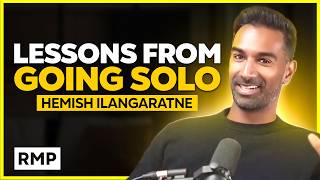
Hemish Ilangaratne built RX Group, a recruitment firm targeting US pharma QA roles, from £190k billings in year one to nearly £900k in year two. He credits cold-calling senior leaders, a 500-plus LinkedIn network, daily metrics tracking, and a niche podcast that generated referrals. Personal stability and saying no to off-target work kept him focused.
Chapters
Hemish, welcome to the podcast.
Thanks, mate. Thanks for having me.
Thanks for coming in. I know you do your own podcast as well, so you're on the— you're on the other side today.
I am, yeah.
Now, the things that we're going to talk about today are— you're, you're in your third year of this entrepreneurial journey of having your own recruitment business.
Yeah.
So some of the, the core things that we're going to focus on today for everyone listening is one, really dig into what did you do well in that first year of your recruitment business and what have been the things that you've done well in your second year. We're also going to talk about some of the, the lessons, and I think what's really interesting about your journey is that you basically built your market from scratch in a part of the world that you've never done business before, the US. Yeah, so I think there's a lot of lessons there. One of the core strategies that has worked really well for you is building your brand. You launch your own podcast So really, hopefully what people are going to get from this is just the important lessons that you've taken so far. We're going to learn about some of the things that you've done that have worked really well, and, um, I'm sure a bunch of other things as well.
Yeah.
So let's just give everyone some context. Let me know if I get any of this wrong. So before you launch your recruitment business, you had 11 years at one recruitment agency called Real Staffing. You went on that typical journey of like trainee all the way to associate director. You You've always been contract, that's been your background. 3 and a half years into your recruitment career, you then became a lot more manager-focused, and by the time you left, you had a team of 35 people, 4 direct reports, and you was doing perm and contract within that function.
Yep.
So then we launched your recruitment business, RX Group, in Jan 2023. Launched that in partnership with RecruitHub, had £45,000 in savings. That's probably the most in a while, not gonna lie.
A lot of people have like—
That's because I spent 7 years trying to save up for it. 45K in savings. I got here as well, which we'll touch on too. It comes up a lot, but by this point you hadn't done yourself personally a deal in 7 years, right? In terms of you being hands-on, et cetera. Took you about 3, 4 months to do your first placement, but first year you billed 190 grand and you got your contract booked to 12, between 12 and 13K weekly GP. Year 2 performance, just under 900K billings. 6% contract, weekly GP of, uh, up around $14K. Um, and then you ended up doing a bit of perm as well. So 7 to 8 perm placements. Largest placement was about $110K, all focused on quality assurance market in the US. And you're soon— you're a team of 2 now, more recently, but soon to become a team of 3. Or is it going to be 4?
It will be 4 in June.
Nice.
Yeah.
It's a great journey, right?
Yeah, yeah. Nobody's ever done that for me.
Um, so where we wanted to start, we're gonna hone in a bit on this sort of year one because I think, I think it's fair to say that, that sort of, if you launch your own recruitment business, you're going to have a lot of things going on in your head on like how that first year is going to go, what you anticipate, expectations. But where I wanted to start was, and I think this is really a common theme, and I'm really passionate about this, particularly when you're a solo founder and you don't have a co-founder. But just this idea that if you're performing outside of work, you just increase your chance of performing inside the work.
Yeah.
So what, what, where I'd love us to start is I've got written down here when we're prepared for this, you really felt like your personal life— we can talk about whatever that means to you— was in like a solid a good position, which then you feel like helped you when you started your entrepreneurial journey. Do you want to just talk to us a bit about this and why you sort of felt like that was an important point?
Yeah, I think it's kind of— it's overlooked sometimes is what state your personal life is, um, when you, when you know, when you're starting out your podcast. Like, I'd, you know, I was, I was 35, I think, when I set up. And, you know, I was in a position where I wasn't married, didn't have kids, I was in a relationship, living on my own, so I could kind of focus on just myself and getting up and running. And Yeah, I don't know. I think that's quite a— it's a thing that people overlook is when you're setting up something so different, you have to have the building blocks in your own life just solid in place. There has to be consistency, momentum, and that just then allows you to be the best in your own, you know, in your space, in, you know, doing something which is completely, completely different to what you've ever done. So I think that was something that I just felt right, this is a good time for me to do it.
Yeah, I think— I'm sure you've met people now being part of Recruit Hub and stuff, but we're not saying that you can't be successful, launch a recruitment business without having some of these building blocks, right?
Of course.
Because I've met so many people.
Yeah, of course.
Yeah, where they— a lot of the time, I don't know if you've had conversations with people, but oftentimes it'll be like, we've got a kid on the way, we just got a house. Yeah, if I don't do it now, I'm never gonna do it, sort of thing.
Yeah.
But I guess what we're pointing out here is Okay, when you think about starting a recruitment business, you're going to think about who my client's going to be, my business plan, all those bits. But definitely don't overlook what we're talking about here in terms of actually how is your personal life. Like, are you in a good position mentally? Are you in a good position health-wise? You have good relationships, you have a good support network. And I agree with you, that can be overlooked. And if you do overlook it, you can get 6 months in, and one of the reasons maybe why it doesn't quite play out is because we haven't got that personal side in shape.
Yeah, there's so much happening, you know, your life. Like, for me, my life before, that was 11 years in the same company from a 23-year-old to then. And, you know, you go through a completely different— you get— you go through— you go from being a boy to a man almost pretty well, you do. And, um, yeah, I think at the— I was thinking about setting up for about 3 years before, 3 or 4 years before, And, but it wouldn't have been the right time for me because I was just, you know, I was still going through like so many things just happening. I didn't have the consistency in my life to be able to just focus purely on it. So I think when I did it, you know, I had a good relationship, I had good support network. Obviously the, you know, RecruitHub allowed me just to focus purely on the sales element of the role. Um, so I think, I think all of those things allow you to just have the strongest possible mindset going into something which is completely foreign to you.
And then just to round this bit out, because not everyone has— I guess this is where maybe RecruitHub has really helped, you can tell me— but when I do speak to solopreneurs or people that go out on their own, what can be tough more on the personal side is that if they haven't really got any other friends that have taken a similar path, because that can be a challenge, right? I'm quite lucky with my personal friendship group, but one person in my close friendship group, everyone's sort of taken that entrepreneurial path. But not everyone has that, and that can be a challenge, right? Especially even if— and I think of my journey, um, I was in a relationship with someone who's now my wife. Like, that was a massive help to me at the start, because when you start on your own, you've got no one to talk about it to, do you know what I mean? So yeah, I think— I don't know how you found that, but I think maybe Recruit Hub helped. But again, if you've got no one else to speak to who's on a similar journey, that can be hard as well. Yeah.
Yeah, 100%. I think the support network that RecruitHub have is brilliant. There's lots of people that are going through the same journey as you at the same time. And especially for me, like, there was nobody that I set up the business with. It was just me on my own in my spare bedroom, literally all day. So that helped. And there were a lot of people that I was— I say a lot of people, there were a few people that from S3 in the old days that have done their, you know, set up their own thing. So there was a bit of a network there that you could kind of tap into. One thing, probably the biggest thing for me was my relationship, my partner. She— we met in S3, so she understood recruitment. She did recruitment, so she was in a different role, different company. But it was, you know, and not to say we spoke about work all day long, go home and talk about— but she could understand your challenges. Exactly. Yeah. So she was, you know, in that first year, just very basic things like if I'm worried about how much savings I've got or how much money I've got, you know, she could— she'll just take care of it. She'll buy me dinner or she'll pay, you know, she'll help out with little things like that. She would tell you that everything's going okay, going to be okay. She'd believe in yourself. So it was having someone to believe in you there is key.
Yeah, I agree.
In addition to the rest of your kind of support network that you've got.
So she didn't grill you on like, did you hit your KPIs today?
Well, she sometimes did actually, yeah.
I love that. All right, let's get into more the particulars then on like what we feel like you did well in terms of that first year. Yeah, because do you want to talk a bit about what, like, if me and you were to have a conversation in that early period, what, and I said like, what, what's your strategy? What are you focusing on? How are you going to achieve your goals this year? Like, talk me through what you would have said to me, what that would have looked like, and any particular reason why you just decided to focus on, on the US side because you hadn't done that before.
Yeah, I mean, I, I started thinking about the strategy about a good 12 months before, before doing it. So there was, you know, I set the business up in February 2023. So 12 months prior to that, I was like, okay, if I'm going to do this, what am I going to focus on? And, and my team, my business had just— it was purely UK focused. So I'd never done— I'd done recruitment into the UK pharmaceutical market in a specific niche called quality assurance. 7 years before that, you know, when I first did it, did it for 3 years. So I thought that's the market that I'm going to do. But I just felt the UK was quite saturated. I would probably have a fairly strong non-compete. And I was always fascinated by the US market. I just felt the size of it, the amount of investment going into it in the biotech sector was such a huge opportunity. I'd seen people go from the UK to the US and how well they're done in a relatively short space of time. So I thought, well, I haven't got a network, I haven't got any immediate people to tap into. So I may as well just do something completely new and go into that and give it a go. So I decided my strategy was to do the US pharma and biotech market and focus purely on quality assurance within the biotech sector. I didn't necessarily focus, like drill down too much on the location. I just thought I'd go with the US, maybe focus on the East Coast. but I thought the niche of doing QA into pharma and biotech was quite niche. So I think, yeah, I spent a good sort of 6 to 12 months thinking about the strategy, thinking about what my focus is, thinking about the tactics and how to, you know, how I'm going to get customers in, how I'm going to make it some sort of success. And like, I believed in myself in the sense that I'd done recruitment before and I knew I could do sales. I was still relatively hands-on for a person leading that team in a sense. I did training around business development a lot. So I did back myself, but it was also like I hadn't done a deal in 7 years. So I was like, maybe what if this doesn't work? So that was always a bit of a concern. I started connecting with people on LinkedIn in the US like 12 months before. So day one, I probably had about 800, 900 US first-degree connections in quality assurance or at that direct-to-VP level. Which I think helped because I'd also been planning on— I was posting on LinkedIn sporadically, I'd say, in the 12 months up to that, but then obviously increased that when I set up, and I already had people that were connected with me seeing my content. So I think that helps when I first— when I started and posting on LinkedIn because I had people there sort of engaging with my content.
Yeah, definitely.
And I spread the word quite, you know, so that spread things quite quickly.
So what do you think would have— what would have been the— like, just out of interest, obviously it took, what, 3 or 4 months to do that first placement, right? And was the core plan always to be, I want to just build my contract book? Was that the focus?
Yeah, that was a goal. I think I'd set a goal of doing £150K in revenue in my first year. How that came about, I didn't— I wasn't, you know, I wasn't going to drill down whether it was going to be this percentage of contract versus perm, but it was just quality assurance. Quality assurance, just try and win customers. So, you know, day one I had a whiteboard up in my spare bedroom, and I'm quite numbers orientated. I like spreadsheets. I'm quite data-driven, and I'd like— I'm quite competitive, competitive with myself. So I, you know, I'm not competing with anyone here, so I was like, right, I need to just somehow almost like gamify it. So I was writing my targets on the wall, I was literally calling people, putting up how many BDs I made, and it was like almost going back to being— well, it was going back to being a rookie. So it was— that was, to me, I had to hold myself accountable to myself.
Um, yeah, that— I think that's something that people really struggle with when they go on their own. Yeah, so let's just break that down a bit because I know people find that helpful. So I've got, yeah, numbers and accountability. So I think a lot of it, what I write down here and what's really helpful is like, what, what can I do that's just within my control, right? I think that's really helpful. So what I've got here, militant on the strategy. Let's just think about this for a second. So like, what, what did this initially look like? Because I think it'll be— let's actually talk about when we first started, what did it look like versus like now? Because it will be different. You've done the hard yards of I'm sure there's still plenty more to do, right? But you've got more of a brand now, you've got more people you connect with, you've got more of a network. But I think what's helpful for people to understand is like, what did these— what did good look like to you? And what do these inputs look like when you did first start?
Because that's going to be different on the company from a sort of a tactical day-to-day.
Yes. Like when we say militant on the strategy.
Yeah.
If I was in your office there, what, like, what, what would have been— what was your aim at? Like, what was you typically aiming for? What would have been a good— what would a good week look like in those first 3 months out of Interact?
Yeah, I mean, it was just number of people spoken to, number of meetings bad number of leads generated. Pretty much they were the 3 kind of key metrics. And obviously, that, you know, they're the things that you can control. So, you know, how many dials can you make on a day? If you can make 100 dials in a day, you're likely going to get through to 10 to 20 people, let's say. But once you get through to those people, it's then the skill that can then generate the leads and the relationships that come off the back. So I was just militant on speaking to 10 to 20 people every day, senior level people, whether they're candidates or clients, just saying, hello, my name's Hamish, this is what I'm doing, you know, and just introduce myself. I wasn't necessarily, I wasn't pitching, I wasn't selling to them, I was telling them what I'm doing, what my story is, what my background is.
No fake jobs.
Pardon?
No fake jobs.
No fake jobs, no.
People love to do that.
No fake jobs. I mean, what are you going to do? You're going to say, I've got to direct to a quality job and then, you know. So no fake jobs. I had my LinkedIn account manager was like, use your job slots. I don't have any jobs.
So the strategy was, yeah, speak to people. And I think sometimes people like underestimate this. Like you were just honest, transparent. You said, look, this is what I've been doing. I'm now building this out. And was it like, there might be something I can— I don't know. How did you actually approach that?
I think, yeah, literally that. I think people in the US, they enjoy the entrepreneurial side of things. They like people, they back people that are going and doing their own thing. So I just said, look, I'm starting this, it's day one or week one, whatever it is. I've been recruiting into quality for the last 11 years, I'd say. So I know the space, but this is all very new to me. So I just wanted to say hello, introduce myself, find out a bit more about you. And then, you know, and a lot of people might go from there. Well, that's great. Good luck. You know, haven't got anything right now or, you know, not in a job right now or whatever it may be, but they're It's, you're building, you know, you're putting plant, planting trees down, you're building relationships. Um, and then it's the follow-up, you know, you connect with them on LinkedIn, you send them a follow-up email, all the, just the, the process of, you know, getting them into campaigns and then keeping them in a kind of a regular loop. Um, and then it was like generating, just try and generate leads to try and generate like business information. What's happening in the market? Who are the companies that are hiring contractors? Who are the companies that are growing in general? And then being, just executing that on a day-to-day basis, just being militant with your accountability. Like, are you hitting these numbers? Why are you? If you are, if you know, can you push it? If you're not, why not? What's the blocker? And it's really boring, but it's literally just doing that on a day-to-day basis. And I did get wins. Like I got wins in the first 2 or 3 weeks. And nothing particularly came from that, but it was just trusting that process, trusting that that strategy is right. And a lot of people sometimes will pivot to, you know, something that they might feel like, ah, this strategy isn't working, or it's, you know, after a month they haven't got quick wins from it. So I think just trusting that you've done the research into the market, you know this space, you know that if you do these X, Y, and Z things consistently, the results will come.
Yeah, I love that. What was— I got here, 2-week retainer, said no, could have said yes.
Yeah, yeah. Well, yeah, I guess going back to the strategy thing, so I'd, I'd, um, you know, I had a, a campaign going, sort of a campaign going. Someone came back and they needed a— I think it was a VP of quality or head of quality, but it was in Ireland.
Okay.
It had been forwarded on. It was a— they had a global presence, they'd forwarded it on to to someone in the UK and Ireland or whatever. And HR got in touch and they, so I met with them and I'd never done a permanent deal. I don't know what I was doing. And I pitched a retainer. Let's go. I barely knew what a retainer was and what I was doing. And they agreed to it. And then I'm like, after I pitched it and won it, I spent like a couple of, they were like, right, well, you know, send the contracts over and stuff like that. And then I just started thinking after a day or two of doing it, I was like, why have I pitched this? Because now I'm going to have to spend the next 2 to 4 weeks or whatever speaking to people in Ireland or the UK, which is going to detract me, distract me from my strategy of being US-focused. Um, and I had a meeting booked in 2 days later to just go over the sort of terms and conditions and And funnily enough, it didn't work out anyway, but my plan was to go in there and say, um, I'm not sure this is the best. I don't think this is the best thing. Yeah, on reflection, I'm not sure this is the best thing to me, which would have been like, in hindsight, it sounds a bit crazy because it would have been money in the bank straight away. Um, in the end, they, they had been contacted by someone who they wanted last year or the year, you know, 6 months ago, and there were some other things that it was, it was a pretty difficult job to fill, would have been a tough job based on the location. So all of these factors meant this could potentially distract me from my strategy. And then that was a lesson for me because it kind of said to me like, right, I'm just going to focus on the US. No distractions. Don't get distracted by a €20K job in Ireland or whatever it may be. So sorry, not €20K.
I'll go €20K fee. I mean, honestly, I hear this all the time, saying No, when it's your— saying no to work.
Yeah.
When it's your business, when you're particularly at that stage, is really challenging.
Yeah.
And really hard. Yeah. And sometimes either you might have to experience what you went through to go, actually, yeah, that's probably a bit of a sign there. Like, I just— that would have just been a distraction.
Yeah.
Or a lot of people would have ended up doing it, being like, it's money in the bank, you go down the rabbit hole, you do it, you might end up with the win at the end, or you might not. And then you've got to learn that lesson yourself. Do you know what I mean?
Exactly. And, you know, at the end of the day, it was, it would have been money in the bank, but you do a deal in the US and you're making up that money within a few weeks and more. So I thought like, you know, that's it, just stick to the strategy. And I think that would be my advice to anyone who's doing it is like you have to have it. If you've done the research, you've picked a strategy, there's a reason you've used data to do it. You know, hopefully you've done your research into it. Don't distract yourself from that.
Yeah, stick to it for a fair amount of time. Yeah, you can be agile obviously, but yeah, like use 2 weeks then, do you know what I mean?
Exactly. Yeah, exactly.
Just so, just curious then, because you said East Coast US, obviously that's such a large— like, just tell us a bit more there, because I think when I do speak to people that start that US journey, sometimes I'll hear the advice of like, yeah, you want to have like a niche focus, that's massively helpful. I don't think I often hear people say like you have to have a state focus, something like that. I think you, you'll be able to tell me you're more versed in this, but I think what I have heard people say is that US culture-wise it's way more typical for people to move. Yeah, in terms of like for opportunities and stuff. So in terms of like if you were to be like I'm only focusing on Boston, it's like well there's probably actually a lot of talent that would actually move to Boston if the opportunity is right sort of thing. Yeah, but like how But like, there's a lot you can go at, you know what I mean? So like, how— if a lot of your stuff is determined on just having conversations, was you putting a list together of people that were open to work? Was you putting a LinkedIn search together and then just reaching out, starting there, you know what I mean? How did you focus? Because that's also where people can get overwhelmed. It's like, I have no idea where to start.
Yeah, yeah. Well, I mean, so I used to, you know, data tool to pick out my ideal companies I wanted to try and work with, you know. So there was probably about I don't know, 500, 500 to 600 companies that were in the niche that I wanted to work in, or the, the space and the stage of development that I wanted to work with. So it was literally then using LinkedIn Recruiter to create searches with those companies and mapping out the key decision makers, putting them into campaigns, um, and being consistent with the, the outreach.
Okay, yeah, so you work backwards from the companies, fair? Yeah.
Yeah, so this is the type of company that I want to work with. Preclinical, phase 1, phase 2, phase 3 companies in biotech, which is still huge. So I went specific into a modality there within that. So just focus on— initially I just focused on the cell and gene therapy market, mapped those companies out, put them into a LinkedIn project, mapped out the key decision makers, put them into relevant Sourcemail campaigns. Let, you know, wrote the campaigns. And, and there was probably a lot of tinkering with the content and what you're, what you're sort of, um, what you're writing and what you're speaking about. Um, but then just being militant on that and then throwing in the phone calls, the conversations, the LinkedIn. Um, um, I think so.
That's a helpful bit then, where like, rather than trying to think, right, what state am I going to focus on these things, actually really understand what types of companies can you do you want to be working with?
Yeah.
And then you can work backwards from there, can't you, in terms of the people at those organizations?
Yeah.
And then I'm assuming those 500 are going to be across different states. Yeah.
But, and the thing is, like, people, like you say, people in America, they move a lot, so their relocation isn't a, isn't a huge, uh, problem for a lot of people. Also, there's a lot of hybrid/remote roles, so people are happy to travel, um, for, you know, 25% of the month, um, or it could be a purely remote role. So Yeah, so that's the reason why it was probably, you know, it made sense to not focus on a specific niche. So yeah.
And did you have any, just on this that might be helpful for people, did you have any preconceived expectations or perceptions of, I've never done the US market before, they're going to be like this, or I'm going to run into these challenges? Do you know what I mean? Did you think that? What are they going to be like when they hear an English person on the other side doing bit? I'm not a new— I don't know, did you run in— did you have any of those? And like, how did that play out?
Yeah, I didn't really have any sort of preconceived conceptions of what— how people would respond to me. I just thought, you know, be myself, be honest, tell them what I'm— why I'm doing it, and, um, and hopefully they would buy into that. Um, I did have a couple of— so not necessarily around the geography, but This is quite a US, I think, centric challenge for, you know, for any recruiter, whether you're US or not, or UK. But a couple of big clients, like big enterprise organisations in the pharma and biotech sector, household names, got some early interest from them, from hiring managers. And I thought, I'm in here, this could be huge. And then all of a sudden you're shot down by HR or TA because they haven't heard of you. Um, you know, up to the point where I had 2 people interview, um, for contract roles in my first month at big organizations, and then the, um, then TA came in and just, just put an end to it.
Interesting. So they got whiff of it and was like, hang on a minute.
Yeah, they got whiff of it. Um, and like, in hindsight now, it's quite naive, like, from, from me just thinking that you could go for a process, just break into a big client like that, but Um, so I think just being an understanding of how things, how things work over there. Like, in the UK, you know, you tend to be able to push that, push that sort of thing through. Um, in the US, it's a lot more, it's a lot more challenging, um, because TA will just be like, well, we're not, we haven't got term signed with you, that's our candidate now. Really? Yeah. And that, that didn't necessarily happen on those two occasions, um, but it can happen. But, but yeah, it could have easily happened and And I think if you're not sort of, you're not on top of your, right, what, what level of commitment do you actually have there? Um, you've got to be careful.
So yeah, if you're— so basically, if you're, if you're aiming to work with those bigger, larger organizations, probably a good idea from what you've experienced to make sure like TA, HR is part of that strategy.
Yeah, exactly. Yeah, you try to try to try, and that it's, it's, it's a different strategy. I mean, it's a different, um it's a different conversation and different pitch because you're talking to enterprise customers. Why would they want to work with a one-person business in the UK? Which is kind of why I was like, right, this is my focus, is this sort of SME size of business whereby they might not have existing TA teams. You can work closely with the CEO or CTO or VP of quality. And not have the, the high barriers to entry.
Um, and then, so talk to us about the story of doing this first contract deal, right? Because I thought it was quite a cool story. Because I wanna, I wanna ask you, have you found in that first year, did you find yourself having to be a lot more— I know it sounds like you was having conversations, getting information, actioning on that, but definitely want to hear your take on, on reflection that year one, did you end up having to be very like candidate-led having people you're working with and then taking them to market. I don't know, but tell us about this first deal because I thought it was a quite cool story.
Yeah, well, yeah, firstly, I think you need the candidates, you need the contractors, you need the candidates, and I think that stems from your market knowledge and understanding your market and understanding who the good candidates are. But yeah, first deal, I think it was maybe in my third month, you know, 3 and a half months in, and one of my mates who'd set up a business and like the year before, he'd— they had a Zoom info account. And so he just gave me, you know, 500 phone numbers of VPs of quality in the US. So like, that was just— I'm just calling through these people. And I called this company, this lady who was a head of quality or VP of quality from this company I'd never heard of in South Carolina. And she answered the phone, had a good conversation. I was just chatting, telling her what I was doing, just talking about understanding her business, what her problems are, what's going on. And she sort of, you know, mentioned that she was struggling in a specific area or struggling to fill some gaps here or there. So I literally just sold, I had someone in my mind who has done that exact, you know, could help her out in that exact challenge that she was facing. I sold him in, got an interview there, and then on the call, um, for like 3 or 4 days later, and, um, and then that was it. They offered him and he started about 2 weeks later, um, yeah, on a 3-month contract. Yes, that was the, that was the first deal, just from a, from a mate giving me Zoom info. That's a cold call to South Carolina.
That's something, right? Yeah. How's that just happened? Because I'm sure there's loads of other instances where you feel like you've worked your absolute socks off and like nothing's quite came off. Exactly. Yeah.
And then just to call it 4 PM on a Thursday afternoon turned into that.
But have you found that, have you found that to be the case then in terms of being candidate-led and having to take candidates to market? Has that been— not, it's not gonna, never a silver bullet. I think there's always a lot of things, right? But initially starting out, has that been, was that the most effective way for you in year one to open up conversation, to speak to people, was like, I've got this person, or—
yeah, particularly from a source like from, from your email outreach. And I think, but what I've, what I've got better at, or what I got better at quite quickly, is, is selling the impact of the individual rather than just— there's so many people will just say, here's a candidate with, you know, 10 years experience in whatever, X, Y, and Z. They're selling the tasks that they do, they're not selling the achievements or the impact that they're going to have on their business. So For me, it was like figuring out this group of companies. What is their, what is going to, what is their CEO or CTO or whoever the stakeholder is? What's going to capture their attention? And you have to do that. These people are going to get so many emails on a day-to-day basis, so many calls on a day-to-day basis. So rather than listing tasks, endless tasks that are, they are relevant, but actually what did the impact of What was the impact of this person in their business? Did they get them through a regulatory milestone? Did they get their specific product that they're trying to get into patients? Did they get them to the patients? How did they do that? And selling that rather than selling tasks.
Selling tasks.
Yeah.
And then those things are classic sort of feature advantage benefits.
Yeah, exactly. FAB, you know, it's pretty basic selling, but it's just understanding your clients and pain points and your challenges and having the right market knowledge to think this candidate will help this person out or this company out.
But fair to say, again, nothing's a silver bullet, but that definitely gave you the most traction in terms of like having conversations.
Yeah, that was the door opener.
Yeah, yeah, I think, because again, I think a lot of people just view, uh, I, I definitely don't, but I do think a lot of people like just shit on spec, and I'm just like, from all the conversations I have, it's always a solid channel for most people that I speak to. It's never going to be the only channel. For some people it might be, and you can always do a certain task or activity average, and you can do it excellent like we're just talking about. But I think for most people, I think in recruitment, a big part of the game is information, right? Like, if you're, if you're prospecting, you're calling people, and you're leading with that, and they go, actually, that type of stuff, we're like past that stage now. Yeah, but this is where we're at, then it's down to you to then use that information. Do you know what I mean? It's just, it is actually just going to be way more easier to actually start speaking to companies from the people that I've met.
Yeah.
Versus the initial approach that you're having, right? That's gonna be quite hard when you're speaking to companies, I feel like.
Yeah, you have to be intelligent about it. You can't just spec one person to 500 people and expect to get good response rates because they're probably not going to be relevant to those 500 people that you spec. It's too big a pool. But if you've done your research around a specific hiring manager and company and and, um, and, and you've, you pair that with your knowledge of the market, and, and then the market knowledge piece is huge because if you don't have the market knowledge, you're not going to understand your clients' pain points and problems, and you're not going to understand what type of candidate is going to be able to fix them for them. So that is almost the first thing you've really got to nail, is your real understanding of what your people do, how they've solved their problems for the clients. Then it's like, right, okay, now I know this person can do that. I can take this person to market. I can take this person to these 30 companies and position them in the right way, position them in the right way and capture the attention rather than just what 90% I'd imagine of recruit— I don't know, I don't know this, but like I'd imagine a lot of recruiters are just speccing people with like long lists of bullet points of this person does that, yada yada yada.
So with hindsight then, is there anything that we feel like you would have done differently in those first 90 to 180 days, first 3 to 6 months, you think you would have done anything differently, or actually you felt like you had the right strategy to speak to people, gather up that expert knowledge?
I, um, I would have probably started the podcast sooner.
Okay.
Um, to be honest, I would have gone in with that, um, rather than part of your version 1 strategy. Yeah, rather than waiting 6 months or however long, um, I did, which is still, you know, still, it was still good, but I, you know, Probably would have accelerated things. I think maybe being a bit more, well, I think being a bit, especially with the, you know, I pulled a few permanent jobs in my first few months, you know, 3 or 4 months that were good jobs on paper, but I didn't qualify them or didn't qualify candidates as quickly, as well as I should have been. You know, my permanent recruitment processes were poor. So that was a bit of a learning curve for me. So I think they're probably the, you know, the two things. But I think, yeah, starting the podcast earlier would have definitely been—
would have helped.
Yeah, would have helped. Yeah, I mean, it was— the first 6 months is always going to be scrappy.
Yeah, no, it always is. And I think that that's also like, you just got to— I think the most important thing from when I've sat down to people is I think it's going to help if you've got some sort of plan. Yeah, I think it's going to help if— because if you don't have that, you're gonna— it's gonna be hard to like say no with confidence. Yeah, you could be pulled in all these different avenues that then 6 months you don't end up really getting the return on your time and investment and stuff. Yeah, yeah. Um, but yeah, like it's just a continuous learning journey. It just doesn't stop.
Yeah, yeah.
What, what do you think you did? So obviously we then You know, ending the— before we get into the podcast, the branding piece, because I know that's been like crucial in your strategy, and we'll break that down. But I often, when I do, uh, speak to people that are on this entrepreneurial journey, that first deal can often act as a bit of a domino, whether that be confidence, or I've got my case study, my testimonial, first testimonial, it can massively help. But what did you then do or really focus on double down on over the next, you know, 9 months that then led you to getting that contract weekly GP to £12,000, £13,000? Because that's really solid for the first year. I think worth noting, and part of why we wanted to focus on the US, right? But I got written down here that typically on average your weekly margin was like £1,000. Whereas in the UK, I think typically you're saying that was always what, £400, £500?
Yeah.
May vary, but it's just like almost double, right? So not going to need as many contracted deals to get it to those sorts of numbers. But from that first point, that first milestone, what do you feel like you then doubled down on, do you think?
Yeah, I mean, I doubled down on just that candidate-led approach. I had some really strong candidates who I thought could be a really good fit for a small group of companies and had a really, what I think is a really good, you know, Sourcewell campaign out. And I got a bite back from one of them. You know, maybe my fourth month and had a meeting with them. He was, you know, a C-level guy in an organization and then had a follow-up phone call with him maybe a month or so later. He didn't have anything right at that moment, but managed to get the meeting. And I think that's quite a challenging thing is you get a lot of, you get a few bites and you'll get a few people saying, oh yeah, send me the CV or the resume. Um, but it doesn't lead to anything quickly. So I think getting the meeting is quite a challenging— one of the challenges from that initial bite. So getting in front of them, um, then the follow-up process and, and having them into some sort of, you know, weekly cadence, or sorry, for, you know, bi-weekly or whatever it is cadence. And then, um, so I managed to get this— I, I called up this, this person who I'd met about a month after we— I'd met him and, um, I sold in a couple of people that I thought would be good for them. And he said, well, actually, that's quite interesting. And then he introduced me to two of his managers, and I had a meeting with them. They had four or five contract jobs that had been— they'd gone out to their existing supplier about four days before, but they hadn't received anyone good yet.
Oh, that's not— in 4 days in contract, you'd normally— it's like—
exactly. So that was quite like, you know, alarm bells for me. Exactly. Yeah. So, you know, within the next day, I had 12 people over to them, contractors, and had 7 or 8 interviews for the 4 or 5 jobs, what it was, and filled them, filled them all.
Nice.
Um, so that then, you know, all of a sudden you've gone from running, you know, 1 to 2K weekly GP to 6-7K weekly GP. And then it kind of snowballed from there. So it was just, you know, penetrating that customer. I got a couple of referrals from contractors that I'd placed into them, into that company, who are senior people and going from perm roles into consulting. They've referred me into different organizations. So it kind of, yeah, that was the trigger point, which then led to, because you then work in positions, you work in 4 or 5 contract positions, you're candidate outreach, you're You know, that's very specific then.
It's very specific, something intangible for them.
Yeah, you've got something to talk about, um, and if you do a good job on it, you know, the market knowledge, the speed, um, the covering off of it, the process with the candidates, if you do a good job, they'll probably refer you to other people. So, so yeah, then a couple of them referred me to other, other companies, which then led to more positions. So yeah, but it all triggered from that, you know.
Yeah, I think the thing that I just want to underline there for people is like, we can, we can speak on here for great lengths of time around how you acquired that client, how you get new business. But a big part of it is when you do get it, you do what you've just done.
It's pretty bad, it's pretty straightforward.
Yeah, but like, I think that can— again, it's just a bit overlooked. It's like, because you— like, whenever I speak to recruiters or recruitment business owners, that like a big challenge is always that consistent pipeline and the new business, right? But I think just, just to sort of Yeah, hammer home that point of like, you got that opportunity and then you proved what he was about very quickly, and you have to be able to do that. That's a big part of the equation, is like, you get the opportunity and then you've got to prove yourself and deliver it, and if you can't, then it's gonna always be difficult.
Exactly. Yeah, you know, you're getting overpromised, underdelivered. Yeah, yeah.
So I just think that's a great point in that story, is like, 4 days, nothing. That's your opportunity, and you took it with both hands. But a big part of that is because you've been obviously militant with the market expertise, speaking to people, growing your network. And then because of all that, then, you know, you can do your job really effectively.
Yeah, it's all building up to that point where you do get the opportunity. And if you've done the right things before that, you should be in a position to execute on that opportunity. Taking a good job description, a good job spec is probably one of the most important things in that process so that you can really understand what they're looking for. But yeah, like it's fairly, you know, it's a lot of It's a lot of basic things combined together that if you've done well consistently, it should help you when you get that opportunity.
And just because you highlighted it, I think it'd be helpful for people— what— because you'll be thinking about this now, you're growing your team, turning that initial interest to meetings. Like, I know that could be nuanced, but what are some principles there that you're probably going to be equipping your team with? Is it— because that is a skill, isn't it?
Yeah.
Like, because I don't know how you approach it. Is it if they reply I don't know how you feel about this, but I'm very mindful of this in terms of I just think it's become a competitive advantage to like pick up the phone basically and actually have a human conversation. Yeah. So if someone replies to me and they're in my campaign, yeah, my first port of call would be if there's a number there, and it could be on their email signature or I can get it from the data, I'll call them and be like, I thought I'd do the human thing.
Yeah.
Save an email going into your inbox.
Yeah.
I wanted to talk to you a bit about what you just asked. I didn't want to send over the CV. Would you be against me talking for it? Whatever. You can give me the principles that you're going to give your team, or like, how can people listening— because it—
yeah, yeah, you have to engage in a conversation with them.
Okay.
And you learn— and exactly that, you have to pick the best, the quickest, and easiest way of doing that is just picking up the phone too.
Yeah. So if they reply, go, this looks interesting, yeah, happy to send over the CV, you're like, if you can, give them a call, and then you'd be like, let's just have a chat about it versus me just send you another email.
Give them a call as quickly as possible.
Time is important.
Yeah, exactly. Yeah, time, time is important. And just say, look, I just got your email, I just thought I'd give you a quick call just so we can discuss this. And don't go straight into the job, you know, don't go straight into the need or why, you know, understand the bigger picture, try and paint a picture of their business and their challenges and understand the whys and all of that sort of stuff rather than just going. And that was the mistake in the early days. It's like, send me a resume. Okay, here you go. Here's the CV and that's nothing. And then nothing, you know, you'll get, unless there's a real, real you know, need. And even if the candidate is good, they might just not— they might not just reply because it's like they've— it's relevant to them, but they might not be hiring, but they might be waiting for funding, they might not be looking, they might just be interested in what this person looks like. So getting into a conversation and understanding and finding out why do they want to see—
how come he's interested in that person? Like, again, it's information, isn't it?
Yeah, exactly.
Normally when I speak to people and they are interested in someone like this, it means they're going through this stage of the drug development process or whatever. I don't know your world, but then you can use that market expertise, right?
Yeah.
What about effective ways of doing that over email? Because that is hard, isn't it? That's a different skill, is it? Are you trying to be like, I can, but— or I don't know.
Yeah, I've played around with it. I don't think there's any silver sort of look to it. I mean, I— one thing that I'd sometimes do is just, um, just, you know, I might reply about, yeah, I'll get it over to you later, just so I know what's the situation. Are you able to jump on a call? If they don't answer the phone, I, you know, what's the situation, or what, what's the, um, what's the reasoning? And try and engage in a conversation over email if you can't do it over the phone, rather than just sending us, sending a CV, um, to them. But, um, I think, um, yeah, I think asking questions, just sort of challenge them on why, why you want to see this CV. If you can't speak to them over the phone, just try and engage in a conversation with them on email to the point where you can get a meeting.
Because then you can actually—
the end goal isn't to get an interview on that cat. Well, look, it is, but the, the ultimate goal to, to really build a relationship and find out what— like, get an understanding of the business is to try and get in front of that person. Um, so I think that whatever, whatever wording you use, it's, is to figure out why they're asking for that. Yeah, what made them interesting and, and try and getting on their meeting.
And then just final, final point on this, because I know people always interested in this stuff, just to sort of round this bit out, but are you typically, uh, if you were to send anything over, you like anonymizing it? Are you, do you know what I mean? People, are you attaching it in the like source campaign? Do you like attach files or just give them a bit?
No, no, no, no, no. I try and keep the emails under 100 words. Um, I would never attach anything though. It would just be a pretty like, you know, lots of, you know, one line, two, three or four lines sort of thing, and just keeping it high level. Specific to that, um, to that person.
Nice. Let's get into the brand and piece because that's been like, fair to say, like a real core part of what's, what's helped you accelerate things, right? But let's be honest though, we've just spent a large chunk of these conversations talking about good quality basics, being militant, holding yourself accountable. I think really if you can do that with what we're going to talk about now that's like a really solid, uh, combination. Yeah, but talk to us about— I think I'm a huge advocate for podcasting, like it's had a big impact on my career. I'll always encourage people if they're serious about it to take action on, on, on the podcast front. Obviously you can talk from your experience, but when I do speak to recruiters about it who are considering it, what I always— the advice that I give, and then you can tell me how it played out for you, is The— you will get the most benefit from the podcast the longer you do it, is sort of what I say to people, is if you're going to do it for 5, 10 episodes, you're probably not going to really reap the rewards for doing it. Obviously, you're coming up to like nearly 50 episodes, right? So we can talk about the wins that you've achieved, but I think, so what, what's going to stop you from continuing doing it in 6, 12 months' time? And I think for me, where often people go short, uh, fall short, is they don't— again, back to strategy and they sort of just decide they're going to start a podcast, sounds like a good idea, and they just sort of willy-nilly get anyone on it. Yeah, but my advice always to people is the same, which is if you really want to be doing it in 6 months' time, 12 months' time, just be intentional about who you want to get on, uh, and you need to make it in line with what your actual business strategy is. Because most people will stop because they'll spend time, money, energy into it and then go, hang on a minute, like what am I actually getting for this? Like, is it actually driving any good positive stuff in my business? And if the answer to that is no, there's a high chance that you're going to stop doing it. So my advice always is, if this does apply— it may not have applied to you— but start with, uh, 10 existing clients. So 10 existing clients that you've done work with, will continue to do work with, because you should hopefully have some rapport with them. You can hone in on your interview skills because it is a skill. And then two, if you're going to be doing more work with them, you're going to be left with a digital asset that's unique, that only you have, that you can take to market. Yeah, then it's target clients. The B, your biz development is literally we have a podcast, we're doing this, you can tell us about that. But that's literally what the biz development is. And then the other 10 for the first 30 would be, uh, people that have a brand or reputation in your market space that you can piggyback off because people will listen to your podcast because of your best guess, not because it's your podcast. Yeah, so I know I've just gone on to that, but like you can tell us about your experience, but I think You're probably way more intentional now, I can imagine, with your pod versus at the start. I don't know, you tell us your journey with that.
I mean, the podcast, I think the key thing with something like— because this is such a crowded space in recruitment— the key thing for me was having a reason why I'm doing this podcast. Because anyone can just say, I'm going to start a podcast and, you know, talk about whatever, you know, interview people. But you have to have a purpose behind the, like, why are you what is your theme? What are you trying to interview? We're trying to get out of this. And like, for, you know, for you, your podcast is helping other recruiters understand the tactics to accelerate their careers, you know. Um, and for me, it was like the market I was doing, quality assurance. So, you know, zooming out on it, like, what is the main challenge for people in this market at a senior level? And one of the things, without going too much into the technical stuff, is, is that quality is not a Or it's not seen as a revenue-generating function within a pharma and biotech because they're essentially the people that are saying, well, hold on a minute, the product hasn't been manufactured to X, Y, and Z standards, therefore let's just hold fire. So it's slowing down commercialising a product, right? So they're often seen as the police. Right.
And they're underappreciated, maybe.
They're underappreciated. They have to sit across the business. So there's loads of different stakeholders that they need to communicate in. So it's quite a unique kind of challenge that they've got. So I leant into that and spoke, you know, and I, you know, at the start I was just talking to people, you know, in the scrappy kind of way that I've started and just saying, do you think this would be a good idea? I really want to help like shine a light on this. And after about 15 people had said to me, yeah, I think it'd be a great idea. I was like, right, it's got some legs.
Did you go to people you'd already spoken to or like people?
Like a mixture. Yeah. People that I hadn't spoken to, I was just BDing them and saying, look, I'm, I'm Hamish, this is what I'm doing. I'm actually thinking of starting a podcast. And then, and then there can't be some people that I'd already spoken to who I knew were good people in the industry. So, and then that led to a meeting like that. So that was a very easy way to just get them onto a Teams meeting, talk about their journey and talk about what they want to talk about and, and understand a bit more about their challenges in their business. So within about 2 or 3 weeks of coming up with the idea, I'd probably had about 15, 20 people who had agreed to be a guest on the podcast. So that was kind of like your season 1.
That's class.
Taken care of. So I think—
Surprised with the amount of people who like say yes or like happy to have a chat?
Yeah, I was actually, yeah. And I was reaching out like for my phone calls, I was doing LinkedIn voice notes, messages, whatever. And a lot of people just, you know, but your response rate was quite high, you know, a good 25% of people, I'd say 1 in 4 would would say yes to it. So, and then it was just a case of getting the logistics sorted. But yeah, I think like the one of the reasons is why people, it's like with anything, is that the consistency of the execution, if you can't be consistent with it, you do a podcast every week, it's consistent, you know, it's coming, that then just people just know, you know, people know that you're the person who does, who talks about this rather than doing it once every month or once every, you know, however many weeks, you know that once a week you're going to get a 40-minute conversation with a recruiter or whatever. Um, that, that then leads to— that naturally leads to business development conversations.
Well, tell us about the story because this happened fairly quickly. No podcast launch, 3, 4 months in, which led to an $85,000 deal.
Yeah, well, yeah, I mean, that was part of it. I guess the brand was part of it. Like, I'd Yeah, I was on holiday. It was probably about a year into setting up and I was in Sri Lanka. I went on a week holiday at the start of last year and just got a message from a CTO who I'd never spoken to, was connected with him on LinkedIn and he just said, I saw you do quality assurance. I've listened to a couple of your episodes. I was like, oh, that's cool. And then he said, I'm hiring for a VP of quality. Would you mind if I introduce you to my HR guys? And yeah, that then led to me placing that person who's on a $350,000 salary.
Let's go.
Just, yeah, completely just off the back of, you know, build, being consistent with the brand and the podcast and being telling, telling the story to that that market, that quality assurance professionals, um, talk about. So, so yeah, that was, it was a nice, it was a nice, yeah, it was a nice message.
Did you like, when you heard that happen or no, was you like, oh yeah, I was— did it make you believe in it even more? Like, actually, that's what you need.
It was, yeah, it kind of like the validation that actually you're doing the right thing. And, and again, like, it was, that was a year into it, you know.
And that's a whole different— because I have this with my business, right? But that's a whole different sales process, isn't it?
Yeah.
It's like you're getting introduced in there's already a big chunk of trust built there.
Yeah.
And then you're going on that call, and then it's just about you doing you and, and what you do best. But the, the amount of trust there, that, that's crazy different, right?
Yeah. And then when you call people, you know, if you call someone for the first time, whether that be a senior candidate or if you're trying to pitch someone, whatever it— they, they might not have spoken to, to them, but they, they know who you are. A lot of people just say, I don't— I see you, see your face every time I open LinkedIn. Um, so there's that trust already established, um, which then makes your conversation a lot warmer.
Yeah, I just think if you're— I think it's important as an employee, it should be one of the tools that you leverage. But I think if you're listening to this and you're planning to start the entrepreneurial journey, or you are an entrepreneur, like, I just— it has to be non-negotiable for me. It's just one of the— not the podcast, but just the brand piece. Like, that has to be— like, we all hear that you would have all heard that like, oh yeah, recruiters, they, you know, clients work with the recruiter, not the business. Like, they have the relationship, all these things. Like, that, that's your brand. Like, you have to leverage that. I just can't— I just don't understand how that's still a non-negotiable for me. I just, I just can't quite fathom that.
Yeah, as long as they're adding value to your niche, a lot of people will talk about whatever and all sorts. Yeah, yeah, you know, and I'm all for talking about your personal life and putting personal posts on on LinkedIn, but there has to be a good ratio of like the personal stuff versus the value-add stuff.
Yeah, I think, yeah, what I've got written on my notes as like, uh, where I put all my ideas that just pop into my head, is like to, uh, the goal is like to be the best resource for your target customer, basically.
Yeah.
Um, so you just got to be thinking about them.
Yeah.
So, okay, let's just build on this a bit then, because I think if we were to— with everything that you know now, there's a lot of people that are still considering it or seeing a lot of people doing it. I think you've spoken about it's got to be a bit more than like, I'm starting on podcasts because I'm gonna make money. I think there's got to be an authentic why behind it. Yeah, what you're doing, what you're focusing on. But with what you've learned, how would you approach those first like 90 days now, if you're to launch a podcast from this? Yeah, as a recruiter, because like you, you've done the, you've done the reps now. I've got the advice that I'd give to people, but what, what would you do if you were to start again? Yeah, tomorrow from scratch, what are you doing?
Yeah, my, it would be just adding in more structure around the process of outreach, um, to secure guests. So like similar to what you said, you know, break it down into people that you want to work with, people that you think are key influencers in the market. and have a bit of a brand themselves, and people that you already work with. So almost bucket them into 2 or 3 different groups, create your outreach campaigns, whether that be via LinkedIn, email, phones, and be really structured with that. And, and really track the— I suppose really track the data as well. Like if you know that 25%, you've got a 25% interest rate from your podcast and you know how many people you need to reach out to, to get to secure 50 guests for season, for whatever season. So use the data that you've, you know, used. If you're starting it from scratch, you don't have that data. But, you know, if you go on that kind of premise of maybe 20% will be interested. But I think the starting point, going back to it, is just having a reason, a theme that you want to go into, having a reason why you're doing this podcast and just making sure there's kind of a compelling story about it, because otherwise there's no theme and consistency, and that helps tell the story.
And you sort of evolved from really making things technical-focused to now more focusing on more career-focused within the same space.
Yeah, yes, my first 20-odd episodes was talking about a specific topic in the industry, which was great because it, you know, you'd had 2 or 3 meetings with the people to prepare for it, but it was quite time-consuming for the guests.
And is that because you felt like you really needed to, you want to make sure that you're really prepared?
Yeah, a bit of both. I think you, you know, you have a meeting just to talk about the concept, especially the first season, and then your second meeting would be to real sort of map it out, and then you might do another one, you know, just to follow up. But I found that quite challenging to keep the conversation flowing. Because it was so technical. I'm, you know, I understand the market, but they're talking about a lot of very technical things, which would be challenging for me to go into a real deep conversation about. So it was, I felt it a bit, you know, the episodes went well, they were fine, but I found it personally just a bit stop-start. It wasn't particularly like, I didn't find it particularly easy just to keep the flow of the conversation.
So Do you think you would have still had the— make the impact that you've experienced if you went career trajectory focused?
Not necessarily. I think whether the impact was— it could have been better. I think regardless, I was still talking to these people and meeting these people. But this season, I've really enjoyed the podcast a lot more because it's been talking about their journey, how they got into science, their leadership, what the— things that I can relate to a lot.
Maybe add your own opinion to it.
Add my own opinion to it. It becomes more of a conversation. I think the guests probably enjoy it a bit more because they kind of reflect back on their journey.
I think it's important for you to, that you enjoy it.
It is, yeah.
You want to still be doing it, right?
Yeah. As long as you don't burn out as well. Yeah. Because you just don't, you don't have the motivation to keep going on that.
I do think that can sometimes hold people back on like, what am I going to talk about? It's going to be too technical. So If you do feel like that, my advice would be like start with where you're— where you've ended up more recently. Like start there, and then yeah, there's certain people that you meet or there's certain trends or topics you're like, actually, I think it'd be really cool to have a bit of a focus on this, then do that. But yeah, I think to round that out for me, I think yeah, like if you— if you're in a niche, you could have a couple hundred people listen to this, um, a month. I think that's still worthwhile because all you've got— all the other benefit, like you probably learn even— you've probably accelerated your learning even more about the industry. Yeah, which is beneficial. Um, but then also the amount of people that you've probably now met, you could have met them in your normal— if you were just typically speaking to them in the recruitment context. But I do think like this game is relationships, it is building a network, and it's just going to give you more opportunities to build your network with people, learn a hell of a lot, and do a good thing. Like you're giving back to the industry.
Yeah.
And you're sharing knowledge and information. That's one of the best things that you can do because you speak to so many people Yeah, so I think if you're listening and you're on the fence about it, like, go for it. Like, don't, don't think, oh, everyone has one. Like, it's your— you're gonna have your unique ecosystem. Yeah, get into it and speak to people and learn, because you— there's so many other benefits besides the content and all that, which is great, but there's so many other benefits to it.
Yeah, yeah, exactly.
So how, like, when we went into like year 2, was it for you just like more of the same? Like, you must have felt Would you like, please, with how you got on year one?
Um, yeah, I was pleased in the sense that like I was going into year two with a good contract book. I was running, I think, you know, maybe 12, 13K weekly GP, um, going into the year with some good pipeline. Um, and then had, but I hadn't done any, made any permanent placements in my first year, so that was part of the, you know, that part of my objectives for year two was to start, you know, placing some directors, vice presidents, C-level guys into my customers. But yeah, year 2 was, I think I set the goal of doing $500K in NFI. And yeah, doubling down on quality assurance, doubling down on the podcast and the branding side of things. I think I said a goal of hiring 2 people by the end of the year or towards the end of the year. Um, so yeah, I was, I was happy and I was looking, I was, you know, excited going into the year, what into the year because of the contract book was at a good, a good level. There was also that always that challenge of finishes, impending finishes, but managed to, um, extend a few of them and had a good Q1, Q2. Um, so that kind of set me up for the year.
So it sounds like really, and this is just the truth of it, it was just doing more of the same. But just like better, you know. I was recently—
yeah, I was enjoying it as well, actually. I was enjoying the job, I was enjoying my life. Um, I felt like I had good— a good balance of sort of, you know, I was working extremely hard, but I was also— it gave me the time, you know, setting up the business and being on my own after 11 years in the company and 7 years of people management. I had the time and I enjoyed my work-life balance. Um, and I enjoyed working as well, you know. If I was going on holiday, I was working. You know, and I didn't mind doing that. Um, my fiancée probably did mind, but, um, I just enjoyed my work. So I was, yeah, I was excited. I was doing well. It was going, had good momentum. Like, the customer base was good. Um, so yeah, it was just more about like literally doing the basics more, doubling down on quality, um, doubling down on the podcast and brand.
Yeah, I love it. I mean, it sounds like they're literally the core things. It's just about doing, it's just doing more of it but better, right? That, and this game is the the more you do it, the more referrals you're going to get, the more track record you're going to get, the more networks you're going to build. It does— if you're doing a good job, it should snowball. That is the game.
It kind of is. Like, I'm quite, um, I'm quite straightforward and simple— not simple, but, you know, um, I don't like to complicate things too much. And I think if there's— if you have a way of working which, you know, works, just do those things consistently. um, at a good, good knowledge, a good level, um, and things will work it out, work itself out.
And then, because you've, you've been doing this for a good chunk of time now, what— it's not going to be the perfect way, but how have you— because sometimes I speak to people about this on the US front— so like, how have you approached the like working day, working week? Because you're talking about it a bit there. So talk to us a bit about what— again, it may not be set in stone, but what have you landed on? You're bringing people into the business, you're probably gonna have to be a bit more clearer on it.
Yeah, we're now doing 11 till 7, um, with a bit, you know, with some flexibility there, um, and there'll be one or two days where we might do that a late night, um, in the office or whatever. But yeah, we're going with an 11 till 7, um, as a standard working hours. I think over the first two years I, I generally did like 12, 12 till 6, had a break, and then I would do 7:30, 8 o'clock till 10. A lot of nights, especially in the first year. I enjoyed having my mornings though, like I really enjoy like having the mornings to like go for, get a coffee, go to the gym, you know, listen to a podcast, whatever it may be, rather than getting straight into it. So I feel like by 11 o'clock, I've like my personal life stuff, like I've gone to the gym or I've gone for a walk.
You'd like had time for yourself?
Had time to yourself, and I think that sets me up quite well. I don't mind working late nights, I don't mind working evenings. I think in the summertime, as we scale, that will become more of a, not a challenge, but something to be more on top of and having more structure around the process for that. But the last 2 years has worked well. But yeah, this year we'll be now thinking about, right, how do we make this sustainable for hiring people?
And then how impactful has it been for you to actually get over to the States? Because you've done that a few times as well. Like, when I do speak to people that do the US from the UK, they found that to be— that's really helped them accelerate relationships. Sitting down, getting in front of people really shows that you're here for the long game, like you're serious.
Yeah, exactly that.
Like, how have you found that?
Yeah, I did 2 trips last year at the conference in Miami, and then a couple of clients in Florida, so I went up to see them. Um, then I went again in June or July time to— I think I did 3 or 4 states in about 5 days. Um, So yeah, did that. And yeah, like the, you know, you take your contractors out for dinner, take your hiring managers out for dinner, that the value that you get from that is enormous. Um, it, and like you say, it shows them that you, you care, shows them that you're serious about this. Um, you will get intel, um, that you probably wouldn't get by having phone calls. Um, as good as Teams and phone calls are, you're just talking about stuff away from that with not— where there isn't a time cap on it. So yeah, I think that's a big part of it. I don't think you need to stress too much if you can't get over there, you know, once a quarter. I think doing the organization and figuring out where your clients are and having a strategy— you'd rather go and meet 10 people and have really good meetings and valuable relationship-building time with them than going and doing 20 meetings and spending 25 minutes with each of them. So I think planning ahead is probably— and then in hindsight, I think I didn't plan ahead in my second trip, and it was a bit all over the place going from state to state, going from Maryland to Boston to New Jersey to Florida. So I think—
sounds great, doesn't it? But that's hard.
Yeah, when you're doing like 2 flights a day.
That's great. It's not, not, um, what about— I think it's the other one. Speaking to people, I feel like it's— you can tell me what you think about this, but it's also like the little things in terms of if you're meeting contractors or clients where they have a site and you might be doing, you know, placing more people there. I know some people can work remote and it's different, but also like going to these places, you can actually have those sort of more nuanced conversations with people. Like, oh yeah, that I went to that coffee shop, it's really nice. Or like, it's also those cultural aspects.
Yeah, and that's actually really helpful.
Yeah, when you're trying to form relationships, speak to people. Yeah, I think it's those little bits as well where that, that's like, you're not going to be able to get that on Google Maps and like, do you know what I mean? Yeah, I don't know if you found that, but I think it makes it all like sink in a bit more, like, oh, this is actually what it all looks like and where— yeah, what's in there.
Yeah, I mean, it's common ground. It's like, so I think understanding the, the cultural elements of the different states is quite important and the just general geography and Understanding, you know, when key things are happening in America, like, you know, if there's a, you know, obviously the fires in LA were going on. And if you're not on top of that, just, you know, obviously you should be. But if you're calling people on the West Coast when that's happening and they're not answering, you know, have a bit of common sense about things. So I think understanding just generally what's going on in the country from a cultural perspective is really important. And understanding, you know, when you go over there, seeing the different coffee shops and the restaurants and knowing that and having that common ground will, will add to the relationship side. Yeah, definitely.
Love it. So let's round this out then. What— so we're in year 3 now, obviously starting to grow the team. What, like, in terms of if we would sit down in another year or so time, um, we've achieved our goals, like, what, what have we doubled down on? Is it again just more of the same, all the things that we've spoken about? Is there anything else that that's really top of mind for you, that's on that priority list to have another really solid year in the business?
Yeah, I mean, this year is all about the people. For me, it's— I've got one person who started and then another two starting in the next couple of months. So for me now, it's like, right, going from a one-person solo business to now you've got an office, you've got three people with you on this journey. So it's about telling the story of RX Group, what we trying to achieve more longer term? Why are we doing this? What markets are we operating in? How do we get people up and running? What does good look like? What does a longer term sort of incentive look like for the people? Why join a startup of this size? And then getting them performing and hopefully diversifying the customer base. I think what, you know, if you were to say, what does good look like? Getting these guys up and running and firing and doing, you know, winning business, being profitable, keeping, maintaining a good contract book and growing the contract book, winning some enterprise customers. So that, I think that's the longer term, that's what's probably going to move the needle on the contract book is working with some bigger customers and then diversifying the customer base, leaning into more of the sort of community aspect of it. So we're starting a mentor program, um, going over to the States and bringing that group of people together a bit more. Um, so there's like, there's 3 or 4 things there that I think I'm really, I'm nervous about, but I'm really excited about.
It's definitely about your comfort zone.
Yeah, 100%. Yeah, I've been very much in my comfort zone for the last 2 years, so now it's about stepping outside of that. Yeah, it's class, which is exciting.
Yeah, I think honestly, like, such a, such a great story. Like, let's not forget that, okay, you had this track record and you worked for one organization and did really well there, but all those things that you were talking about, you've built that from scratch, really. Do you know what I mean?
Yeah.
So, um, I think again, just a really cool story on like what if you're, if you're willing to put in the work, hold yourself accountable, do the bits that we've spoken about, do it at a really high level do some maybe things you haven't done before, like really double down on your brand, the podcast, continue to learn, and, uh, you can create something pretty special. And I'm sure you're just gonna— like, you're gonna feel like there's, you know, we're just getting going. Yeah, you probably feel like that. But like, if you think of where, where you was to now, like, there's so much momentum that you built.
Yeah.
So it's really exciting to see where it ends up, right? And again, hopefully there's loads of lessons here that people have taken, but It's really cool where you can get the business to in like, you know, fairly short period of time if you're willing to do these things that we've spoken about.
Yeah, yeah, 100%. Yeah, it's doing the basics very well on a consistent basis and executing, executing, executing the tactics and believing in the strategy and believing in the work that you're doing will come to fruition. So yeah, no, hugely excited.
It's been a pleasure.
Thanks for having me.
More from Hishem




You don't need as many clients as you think to bill $1 Million A Year In Recruitment



From 30 Direct Reports to Back-to-Back $1M Years as a Solo Recruiter with Zach Creighton



