Early on in recruitment series | Becca Williams - Unlocking Self Confidence
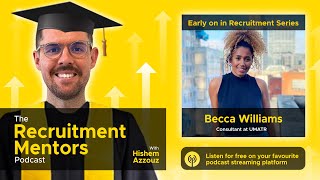
In this episode of the Recruitment Mentors podcast, host Hishem Azzouz interviews Becca Williams, a recruiter at YouMatter (UMatter). Becca recounts her early, discouraging experience in contract construction recruitment, her departure from the industry, and her return in 2021 to a startup environment. She explains how a supportive culture, strong training, and a focus on personal branding transformed her mindset, boosting confidence and leading to rapid career progression. The conversation covers practical advice for newcomers—identifying why they feel unhappy, choosing the right sector and company, and adopting an expert recruiter mindset despite limited experience. Becca highlights the importance of data‑driven metrics (interview‑to‑deal ratios) for planning workload and earnings, and shares strategies for building sustainable client and candidate relationships through video calls, authentic social media, and regular check‑ins. She discusses handling low periods, leveraging one‑on‑one mentorship, and the resilience needed when offers are rejected. The episode concludes with Becca’s view that recruitment offers high earning potential, the chance to impact lives, and that culture and training are critical for long‑term success.
Chapters
Welcome back to another episode of the Recruitment Mentors podcast. I'm your host, Hishem Azzouz. This is another installment of our Early On in Recruitment series. I'm joined by Becca from UMatter, who we're gonna sort of dive into her journey so far. But we were just talking before this and we wanted to just give all of you just some useful context. So Beca, for the last year, has been building her career at You Matter and recently had her year milestone. So that's what we're going to be really digging into today. But what's sort of interesting, I certainly find interesting as part of this story, is about 4 years ago, Beca actually got into the recruitment industry. She joined the business where she was doing contract construction recruitment. She did that for 4 to 6 months and actually thought that recruitment is not for her, and she left the industry. Becca then went back into hospitality for a couple of years before then joining UMatter in 2021. So I think what's really cool about this is Becca's still early on in her journey, but actually had, yeah, a prior recruitment experience that could have potentially meant that Becca hasn't then gone on to have this amazing journey of UMatter so far. So I think this is, yeah, an interesting one. And I guess part of this episode is just to educate some of you that just because your first job in recruitment maybe didn't work out, there's a few things that Beca's going to share that could get you thinking about what could make a successful career in recruitment if things didn't work out initially. So I guess, Beca, where I've been starting and why I wanted to give that context is how has, I guess, recruitment with You Matter in this sort of last year maybe compared to what you expected from your previous experience? Let's start there.
Yeah, so, um, unfortunately I started off with a really negative mindset, and I know that recruitment unfortunately sometimes has a bad stigma around it. And I think the experience that I had kind of makes sense, and it proves as to why sometimes it does. Um, but yeah, like, what I really think in regards to that experience that I had, um, it was awful. I started, um, the 3 months I did resourcing. I was on a really low basic, and I didn't even actually get any commission for placing sort of anywhere between 5 and 15 construction workers into their job every day. Um, and, and yeah, to me, I was surrounded by people that didn't really give me any guidance, and, um, I didn't really look like they enjoyed their job either. So, um, it wasn't something that I lasted very long in. When I got promoted and I was doing BD, I was just left on my own to do it. Did make like 20, 30 cold calls a day and see where it got me. So yeah, it wasn't really the best start, but I think when I spoke with Mitchells straight away, it was something that I was really upfront and honest about. Recruitment wasn't really quite for me. I'm quite a— I'm not really modest. I like to be the best at everything. I like to think that I'm the best at everything that I do. So when I wasn't very good at recruitment, I just give it up. Like, I'm like, okay, I'm not the best, so I'll just stop. But yeah, I think it was more, I was more sold on the fact that You Matter, as well as a lot of other companies, are really trying to change that bad stigma now. And they're really trying to put in the good practices and really understand what recruitment's about. And even now, like, when I look back to that previous role, I just don't think that it's even in the same sort of, like, region of things. I don't see recruitment then and recruitment now as the same at all. Like, I'm building relationships now, like, I have a team that really collaborate and work together. So I think, like, something that I wanted to come on here and really talk about is not only understanding recruitment, coming into recruitment, but understanding particularly like what sector you're going into, whether you want to work in like permanent work or contract work, or like, yeah, like whether it's a long-term goal for people. So I definitely say, as much as I enjoy my role now, it's still difficult. I can't lie and say that it's, it's a lot easier than I thought, but I think now that the highs definitely outweigh the lows with this job.
Yeah, I love that. So I guess just to, I guess let's just start this really quickly then, just because you, you shared some really good stuff there. Um, before I start asking you about your first year with U Matter, like for people that might be listening to this that might be in that like similar to you first couple of months, um, and might sort of be thinking recruitment is not for me, I guess knowing what you know now, and you've obviously got the benefit of this whole experience you've had of U Matter that you may not have known existed. Like, what advice would you give to people that may be thinking, oh, recruitment is not for me? But obviously you've experienced that actually getting in the right company, the right sector has really helped you. So I don't know, is there anything that you would maybe say to people to consider or things that you would encourage them to do just before they decide to hang up their, yeah, boots of doing recruitment forever?
Yeah, I definitely just really understand what it is that's making them unhappy in their job. Like, because, like, is it the fact that you're working with contractors? I like— sorry, construction workers. I don't want to put a bad name on just them.
Oh yeah, sure. That's fair.
Yeah, that's my experience. And like, even doing BD, like, that you're speaking to like proper geezer guys that just— if they get a cold call, they're just going to hang up. They don't really care. So to me, like, that sector wasn't really great for myself. Like, is it the team that you're around? Again, I was surrounded by people that were 10+ years older than me. And yeah, just seemed like they didn't really have much drive or motivation themselves. Like, really understand what it is that's making you unhappy there and just look around. Recruitment's huge. Like, there's what, like 40,000 recruitment companies in the UK? You need to understand that recruitment as a whole is an insane platform and it can do wonderful things for you, but you need to understand that different companies are all doing different things. Like, even now with Youmatter, we're a startup company. It's something I've never worked in before, but it gives me a lot of drive and it gives me a mission as well to work on.
Yeah, I love that. I think, yeah, if you're— and hopefully part of this can educate people on that. But I think that's great advice. I think if you're listening right now and you are unhappy, take a step back and recognize what it is that you are unhappy with. Because saying, I don't like recruitment, there's probably— peel back the onion on that because there might be a few things in there that actually you, by making, speak to other companies, or there'll be other things that you can control like the sets you recruit in, the people that you're working with. Like, that's part of working in recruitment, but they're actually things you can influence by getting into the right company. So, okay, awesome. So let's get into this then. So what I always like asking Becca is like, what skills or experience has recruitment given you that maybe you least expected to get from this career so far?
I think it's quite an obvious one. It is my confidence. And it's crazy because I've had confidence grow in like every area of what I do. Like, I worked like at theme parks and I had to speak to like thousands of different people every day. So I built confidence from that. But like, now I have confidence in like talking about software development and coding languages, and, and just give me the confidence to understand that I can be an expert in whatever field that I want to. Um, I mean, it's— confidence is something I always thought I had, but it just really just made me put it into a whole new practice. And yeah, just times the confidence that I have, um, by a mile, definitely.
I love this. And how is that— have you also seen that show up in your personal life?
Um, I can't imagine I could have got more confident.
Fair enough.
No, no, it definitely has. But there's stuff now that I'm, I'm achieving that I, I never achieved before. Like, it's, it's given me the confidence to like even start my mortgage process. Like, that's something that wasn't even on the cards for a long, long time for me. And it's— and yeah, it's pushed me into like adult life, really.
I guess what I take from that is like, it's really— you, you're someone who's confident, but being in the environment that you've been in and the career recruitment, it's— it seems like what I'm getting is it's showing you that you're capable even more, or like, yeah, the chance to adapt to all different certain like situations.
Like, I never ever in a million years thought that I'd be able to talk about, like, yeah, coding and software development. But yeah, it just makes me see that you can really adapt to anything.
Okay, so let me ask you then, what has in this year then— what, because obviously you have some previous context and experience— what has been maybe more challenging in your first year than you expected?
Um, I'd say really like the lows of recruitment, they, they, they do come out of nowhere. Um, I'd say you can't— like, they're unexpected. I know that I was on like such a high and I was, um, billing like every single month, and I was really lucky to start off when I did. But I think one month I had like 5 or 6 rejected offers. And to me, that was, that was crazy. Like, I thought if I got any offer at any point, like, I can close it, that's no problem. And then, yeah, like 5 or 6 rejected offers in a month, and I was thinking this is going to be my first month, like, getting way over like a 5-figure paycheck. Like, it's going to be, it's going to be fantastic. And then, yeah, it comes out of nowhere and it hits, it hits you hard. Um, but yeah, like, that was a huge challenge for me, and Again, it's just a point for me to step back and look at everything and just think, where can I improve? Like, what's really like— is there anything that I could have done or is it just the industry? And sometimes it is. Sometimes you could have made improvements, but you just learn from it.
So let's just talk about this for a moment, not to sort of make you relive a horrible moment, but I think this is what you're talking about is something that a lot of people go through and can be a real catalyst as to why people leave the industry. So you just mentioned there about having the right mindset towards it in terms of like, right, what can Becca learn? What can you do differently next time? What can you improve on? But thinking about that month, like you said, already maybe worked out what it is you're going to get paid, maybe thinking about how much you can save towards your mortgage from that paypack, what you can spend the money on. So then having those rejected offers and it not happening is really difficult to swallow. Like, what did you do to, like, work for it? Like, what did you have to do to make sure that your whole month you didn't spend dwelling on what could have been? Like, did you go out and go for a walk? Like, I don't know, what did you do to help you get out of that potential funk?
Well, I always say, like, keeping busy, like, is the best thing, but definitely just step back and look at each situation as a separate situation. Like, when it comes to the month, I did look back and I think, wow, that was 5 5 offers, they're just like, that's tough. But each, as it comes, like, you need to just understand each different situation as its own situation and then just shake it off and think of the next day as the next day. And something that I find super motivating, like, I don't know how many sort of like managers or founders will be listening to my first year, but those one-on-one interview, one-on-one training sessions or one-on-one meetings that you have with your founder, with your mentor. Like, I find them super helpful, like, just to sit down and really get everything off your chest, how you're feeling. And not only that, like, hear that it's not just you, that your founder that built like a million pounds in a year, like, he's had the same thing, like, he's had more than that, like, go wrong, and he is where he is now. I find that super motivating for myself.
And from that month, what was like the key takeaway or key learning that you took away from— I know that it's quite contextual or whatever, but is there anything that comes to mind that you're like, you know what, that's something that I really learned from that period that I really like always have to do now, or something that you always keep top of mind?
Yeah, I'd say that just be so assertive that you are an expert maybe not in the field, but you're an expert in recruitment and you're an expert in finding people what they are looking for. I had the main one for me was one candidate that I introduced to a role, and I knew he'd be perfect for it, and he was like, no, no, like, it's a bit too big of a company, I want a smaller company.
And I was—
and I said to him, like, there's a couple of your previous colleagues that's gone to this company, like, I really think that you'll add value, and I think that you could be a really big asset. And he was like, no, no, it's okay. And I sent him the details anyway, and he was like, yeah, like maybe. And I was like, why don't you speak with your, your old colleague and he'll let you know that it's a good role. And then he managed to actually be introduced to the company through that colleague and myself. Um, and if I had just like been so assertive and been like, I know that this is a good role, like I'm going to introduce you because like, it's a fantastic role for you. That would have been in my pocket. But he did end up joining the company after me actually helped him through the process. Because, I mean, when he asked me about the interview process, I'm not going to lie and I'm not going to try and shaft him and send him to my company. I wanted to help him find the right role and I ended up doing all my job for free of charge.
Yeah, that's a really interesting one, actually. Just, I guess, again, confidence, right? And being like, no, no, Becca the recruiter knows that this is where you should go. This is why. Yeah, that's really interesting. Thanks for sharing that. So I guess, what have you maybe learned then, bringing it back to maybe things sort of early on on that? Like, what did you learn in your first 6 to 12 months or the last 6 to 12 months that maybe you wish you knew from day one?
Um, yeah, I think again, um, I don't want to sound like a broken record, but you need to understand that you are an expert in that recruitment. Like, I, I know that there's so many different fields out there and not everyone's going to understand. Like, even people that recruit for like nurses or, um, like, yeah, construction workers, you're not going to understand like all the ins and outs of what they do. Um, but yeah, you need to just understand the process. Like, Go with each candidate from your first ever candidate through the process and understand how their process is so you can tell it from both sides, I think.
And like, you've mentioned being an expert a couple of times, so let me know what you think about this, but when I speak to a lot of people through, uh, Recruitment Mentors early on, sometimes I feel like they can sort of get in their own way and have I don't know, just sort of prevent themselves from having that confidence in them being an expert and say things like, oh, like this senior software developer is going to know way more than me. I'm only a junior recruiter, these types of things. So how, how did you, how have you really lent into like being confident around being an expert? Because I think a lot of people feel like that's going to take time and I can't be that confident until I get to this certain position. Do you know what I mean? So how, because you mentioned it a few times, how have you you got better at not saying to yourself, like, I've only got 6 months, I'm not that much of an expert? Like, do you get what I mean? Because you can quite easily fall into that.
No, I completely understand. I've been the exact same. I'd say, like, just being so genuine and honest from the get-go. Like, even if you're in your first, like, month, just be like, okay, I'm very new to this company, I'm very new to recruitment, but I know that we've got some fantastic opportunities in the market right now. 'If you're looking for this opportunity, like, we have incredible roles. I'd love to discuss with you and find out what it is that you're looking for, and then I'll go back and I'll make sure that this matches with that.' Like, you don't need to— yeah, again, you don't need to be an expert in what you're selling. You just need to know that you're doing the right thing for that person. Like, even when it comes to BD, like, they understand that you're not the developer themselves or you're not the candidate themselves. You need to just understand what it is that you're here for and how you're going to help them get to where they want to be.
So, yeah, own it. Yeah, honestly, I love that. And what do you think? Do you think you've done anything to speed up that process? Do you think you've really gone above and beyond to getting to that point where you are more— So I get that, own it. Look, I am new to this, but like you said, be honest, I'm here for your best intentions and these sorts of things. But do you think you've done anything personally to really accelerate?
Yeah, I would say that just like getting your personality across, like even when it comes to your personal branding, I've gained clients through personal branding. I've gained lots of candidates through personal branding, and I see a lot of people out there posting stuff that's really relevant to their sector, but again, those candidates know that they don't actually know anything about the sector whatsoever. So it's just quite false. I think when you get your personality across and, uh, yeah, really, like, even as recruitment, what you're doing is selling a person. You're not selling all of their, um, all of their expertise. I can write a whole CV out, but when I send the candidate, I'll be like, if I'm honest, like, I know that they might be a little bit junior, but what really sold me was the confidence that they had and their personality and enthusiasm to learn. I think as long as you sell yourself as a person, it's the exact same as what you're doing day to day or selling candidates to the company.
Love it. So obviously you've gained a number of promotions in your last year. Obviously, Keren, if I'm wrong, so obviously you're— I don't know how long for, but obviously you've been doing this sort of client business development side, right?
Yeah.
How long has that been?
I'd say mainly just this year really, so in the past like 8 months.
8 months, cool, okay. So I guess curious to find this out, you just mentioned around personal branding, but what has been sort of your own experience and your best way of firstly cultivating and building sustainable client relationships? What has ended up being the sort of best way for you to achieve that? Has it been personal branding? Has it been a mixture of the phone, good emails? I don't know, what has ended up really working for you?
Yeah, it's like a mixture of everything really. I think having your personal brand, always putting out as much as you can to get your personality and just the way that you are across, just things that you do in your home life. I think people want to know the people that they're working with. I did start out just posting as much as I can about tech and as much as I could about Scala, but it only ever really was the people at U Matter that was liking or interacting. But yeah, I think the one post where I probably put my personality across the most and posted a disgusting photo of myself, like, it actually went viral, and that's where I gained a couple of client calls and a lot of candidates from that as well. But yeah, I'd say even from the get-go when I introduced myself to people, I've started introducing video calls. Again, you can get so much more personality across than you can on a cold call, than you can on an email. But yeah, just trying to be there and be present as much as you can when it comes to calling, just to catch up with them, or booking in, booking in like a call every other week and just catching up on the pipeline. You want to, yeah, just stay Stay personable with these guys, definitely.
Yeah, I'm definitely getting that, and I think sometimes, sometimes these are the sorts of things that people early on in their career feel like they can't share these things, or like, I don't know, they're too concerned or worried about that. But clearly that's been, yeah, one of the, some of the best things that you've done. And that's what I'm sort of getting, sort of learning in this conversation, is that you really lend into like bringing the full Becker to work and bringing bringing your personality and connecting with people on a human level, and that's actually ended up becoming your competitive advantage or has ended up actually really impacting your results?
Yeah, even when it comes to— if you ever have the opportunity to attend conferences or meetups or anything like that, I'd highly recommend it. It's a great way to interact with those in your sector.
So what's been— interested to hear this from you— what's been like the best training advice that maybe you've got from Mitch or Jay or other people in the business? What's been the best training advice that you've received that's really worked for you since starting? It could be anything, and feel free to go as grand as you want, but I don't know, does anything stick out?
Yeah, well, there's one thing that me and Mitch have actually started looking into very recently. He has mentioned it quite a lot throughout my time at Ematter, but we've really started to to dig into it quite recently now that I've hit the year mark. Um, but your data behind what you're doing is incredible. Like, now I've been here for a year, I can really look at how many, um, candidates that I've subbed to get my one deal, or how many interviews that it's taken me to get that one deal. And now I can start looking at things at a whole new perspective. I could really look like, okay, well, if it takes me 9 interviews to get 1 deal, then I need to make sure that I'm doing 9 interviews a week or 9 interviews every other week so that I'm getting at least 2 deals a month. Or, um, or even looking at things like, okay, well, if I did the same amount, um, of deals I'm doing now but I just did them in my own client, then I'm doubling my billings anyway. It's incredible, like, what you can really look back at, and it goes really far back as well. I think even if I started maybe 2 months in, and I was looking at how many profiles that I looked at to send out the amount of messages that I need to, or how many messages that I sent out to, um, to get on as many candidate calls as I want to. If you start looking back and start going through all this, you can really start leveraging how much work you're doing and leverage— like, working smarter than— rather than harder, I guess. But I think if anyone can really get in touch with there, whoever looks after all of that, it's definitely worth going through.
That's so interesting. So what I'm getting from that, you're probably the first person to say this, so what I'm getting from that, what has that, you seem quite excited by that, so like what has that enabled you to do? Because what I'm getting from that, and you let me know what you think, but it's enabling you to really understand the science behind what it is that you need to do and have even more clarity on what's going to hopefully get you the outcomes and the the results that you want. Because I think obviously early on it is very much just like, I don't know, I need to crack on with this, I need to do this or whatever. But as you, like you said, as you gain more and more experience, there's more and more data that you can look at. They can actually really get a grasp of what's required to achieve X outcome. So it seems like it's enabled you to have even more clarity on what Becca needs to do to achieve the goals that you want is what I'm getting from that.
Yeah, massively. I mean, it's, um, really puts things into perspective for me. Like, how much money that I've made this year, I'm super happy with. Like, all I want to do really is maintain it. But I know, um, I know now what I need to do to double that. And for me, even if I was to perhaps go on holiday next week, all I need to know is how much, how many interviews that I need to get before I go on holiday and how many interviews I need to get after I go on holiday to just maintain the level that I'm at. I don't need to go on holiday for a week and then stress when I get back thinking, oh, I'm so behind, like I haven't got this many interviews, I haven't done this, when it's like, okay, well now I know the numbers that I need to have before I go, and I know the numbers I need to have before I come— like as I come back. Um, and I don't need to stress about it at all because I know as soon as I've got those 9 interviews, I've got my deal. Like I don't need to stress, like that's how many interviews it's taken me to get a deal, and that's, that's nice.
Yeah, no, I love that because particularly now, as you, as you've been, as you all know, doing the client, the candidate side, 360 side, there's a lot going on, right? There's a lot you could be prioritizing, these things. So I think that's a really interesting insight because that can oftentimes be the boring part, deemed as admin, these types of things. But actually what it's enabled you to do is just have complete clarity on what Becca needs to do and it's going to give you, like you said, more confidence to know that, right, I know I've done that, so it should mean this. It still may not happen, but I know that I've really put in the inputs and achieved what I needed to, to, to get close to or achieve the outcomes that you wanted. Yeah, that's really interesting. So I don't know if you've experienced this, but did you— have you experienced like a penny drop moment, like the one where you really felt like you got it since being with You Matter? Do you think you had one of those moments where things really clicked for you?
Um, I don't know, I'd say it's probably happened maybe 2 or 3 times, and then, and then I've been like, oh, okay, maybe not, not quite so much. Yeah. Um, but yeah, I think really when I got a real grasp on my candidate management and I really, um, yeah, just not looking so much on, um, like I need to get 25 subs in a week, like, and just trying to win at how many themselves, I get, like, it's really like you need to help these guys through the process. Like, they need that extra guidance before every, every call that they go into. They need some assistance when it comes to, like, um, like managing what they're looking for, salary expectations, or what else it is that they need. Like, they need that.
So candidate management is big for you. Okay, so what about this then? Obviously, I know you've had a really good first year. So I guess if you were to start your journey all over again, knowing what you know now, how would you approach your first 90 days differently, if at all?
I would say probably I would chill out a bit on my first month. I think I went in again very confident and really cocky, thinking I'm gonna do a deal straight away, like I'm not stressed when really that first month, it should just really be a write-off. You need to consume as much as you can, take in everything from everyone that you speak to. I think that I was really, really lucky starting off when I did in the, in our startup because the people I was shadowing was Jay and Mitch. So I was lucky to have what I thought, what I still think of probably the best recruiters out there to take as much as I could from But now as we grow our team, like, they're even more luckier because they get to take the best parts of what everyone does and make a mega recruiter and just really put all of those best things into practice. So yeah, just really just take that first month to learn. And again, on those 90 days, keep track of everything. I did so much on my notepad and wasn't really bothering too much with the CRM. But now I would love to have all of those notes back and to really be able to track my data even more because I'd have every single thing on there.
Yeah, that's interesting. So it'd be interesting to get, get your thoughts on this because of your previous experience, but like, if you could pick one thing about the environment that you've joined, so U Matter, that you feel like has really allowed you to succeed, What do you think it would be? So like, I don't know, it could be culture, training, incentives, the right market. Like, what is it that you feel like that you've experienced that maybe people should really look for in a company when entering recruitment?
I would say culture is a massive, massive one. As everyone knows, those lows are horrible. Like, when all those things go wrong, like, it's not great. But having like a team that you know you can fall back on, you know, really understand what you're going through and will be there to help you through everything. That's really important for me. Again, the training is incredible. You need that training in recruitment if you want to go as far as, as you can. Yes, recruitment is a great industry to go into if you want to earn lots of money, but unless you're being trained right, like, you're just gonna want to leave after 3 to 6 months, really. Really?
So look, final question then: why do you think more people should consider recruitment as a career choice?
I mean, it's hard to picture much else than money. I think there's a lot of other things that you can say. You change multiple people's lives, like within like a month, within a week. But yeah, I think there's no better place to start out if want to earn as much money as possible. Like, if you do have genuine ambitions and genuine reasons to earn that much money, like, you'll have the drive to really go for it. Um, like, I think last month I paid more in taxes than I've ever, ever earned in, in like a month's work. And that's just because of how much that you put in. I know, like, everything that you do, you're going to get out as much as you put in. But I think recruitment probably the best way to do that.
Love that. Well, look, Becca, I absolutely love your story. Obviously, going from your experience leaving the industry, coming back, and then it sounds like you've just really maximized the opportunity that you've been given. And then also, I just love hearing that recruitment's ultimately sort of just enabled you to go, you know what, Becca's capable of even more. And you've really leaned into, yeah, I guess pushing the boundaries of what you think is possible and what things that you, you think you can achieve. I think that that's one of the amazing things in recruitment, right? That, like you said, put it, put, put the work in and you can see you get what it is that you put in. Uh, but yeah, absolutely love this. So look, thank you so much for, for joining me and sharing those things with us. Really excited to share this with everyone, and I know Yeah, you're always happy to connect with people on LinkedIn and these things for people that might be struggling or may have some questions for you. But yeah, thank you so much for being part of this series.
Thank you for having me. It's been great.
More from Hishem




You don't need as many clients as you think to bill $1 Million A Year In Recruitment



From 30 Direct Reports to Back-to-Back $1M Years as a Solo Recruiter with Zach Creighton



