Early on in recruitment series | Danielle Blake from Understanding Recruitment
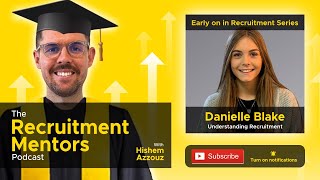
In this Recruitment Mentors Podcast episode, host Hishem Azzouz interviews Danielle Blake, a 7‑month‑old .NET specialist recruiter at Understanding Recruitment. Danielle shares how she entered recruitment after a pandemic‑disrupted graduate path, the motivations that led her to choose the field, and the reality versus expectations. She highlights the unexpected importance of resilience, tenacity, and time‑management, and explains how she learned to "control the controllables" and maintain motivation. Danielle offers practical advice for new graduates: apply broadly, research companies, assess culture, and treat every interview as a learning experience. She discusses challenges of lacking technical knowledge and transitioning into business development, describing how she built confidence through practice, content‑driven outreach, and structured daily planning. The conversation also explores what drives young recruiters – financial incentives, clear progression, supportive culture, and personal development – and why recruitment can be a rewarding career choice given its fast‑track training, commission structure, and growth opportunities. The episode provides a candid roadmap for anyone starting a recruitment career, emphasizing mindset, continuous learning, and leveraging company culture.
Chapters
Welcome to the Recruitment Mentors Podcast. My name is Hishem Azzouz, and this is another edition of the graduate entry-level podcast series where we interview recruiters who are early on in their recruitment career to find out how it's going, what they might be doing, what they might have told themselves to do things differently if they were to start over again, the challenges that they're working through, and advice for those that are considering a career in recruitment or are still early on in their career as well. Really excited to be joined by Danielle today, who I'm going to get to introduce herself in a second, but really looking forward to another edition of this episode. So Danielle, over to you and then we'll get into the questions.
Hi Hishem, thanks for that introduction. So yeah, I'm Danielle Blake. I have been in recruitment for coming up to my 7th month now, so pretty new to all of this still. I work for a company called Understanding Recruitment. We're based in St Albans and we also have teams in Boston too. I specialize in the.NET domain, so.NET specialist recruitment for tech, so software developers, engineers, and etc. And I recruit permanent positions as well.
Perfect. And then further, so you— and you graduated in 2— last year?
Yeah, graduated in 2020, but still haven't actually had my graduation yet.
So, oh wow, really?
The grads at the moment, we're just kind of, you have the piece of paper but never actually graduated officially.
Oh, okay. And then, cool. So obviously been in recruitment for obviously 7, yeah, 7 going on 8 months. And then just, just for like context for people, so when did you, when did you enter the, the world of work, like after graduate? So when did you actually graduate? What was the month?
So theoretically my graduation was in July last year. I initially had a recruitment job secured back from February in 2020, but that got pulled out from under my feet due to the pandemic. So I was like, what do I do from here? All I wanted at that point was a job. So went into kind of a finance position for a few months, really realised it wasn't for me. And as soon as I saw kind of recruitment companies starting to hire again, I got my foot straight back in that door. And first company I applied to was Understanding Recruitment. Got the job and have been so happy since.
I love that. So I'm excited to unpack this then. So where I want to start is like, so it seems like you was really quite intentional on recruitment. It seems like, like, so I guess what I want to find out from you is, one, why did you want to get into recruitment if you did? Or, and then two, how has it been compared to what you expected?
Okay, so I guess initially I really wasn't sure why I wanted to get into recruitment. So it got to kind of my final year of university, looking at the November, December time, when I started actually thinking, what am I going to do when I leave here? So I was, you know, starting applying to here, there, and everywhere. I did a business management and marketing degree, so I was like, okay, start looking at marketing, PR, sales, recruitment, anything under the sun in sales really. Got into a few interview processes, and it really started becoming very clear to me quite early on in these processes that companies may look really cool and interesting on paper and really inviting, but when you actually get into the interview, it's a whole different world. So for me, it came down to what interviews I really enjoyed the most and where I actually saw my career developing and progressing the most, which I think is a really key element for a lot of grads now. We're not just looking for jobs, we're looking for that progression, development, ways to really push our career forwards. So it happens to be— Spanish? Those recruitment interviews that were the most interesting to me. They were engaging, informative, culturally I felt like I fitted in well, and that was something I found really, really important. I mean, you'll get to know me over this podcast, I'm very chatty, I'm very comfortable, and communication is probably one of my better traits. So I love speaking to people, being on the phone, building relationships, and I really fell in love with, I mean, this company in particular, Understanding Recruitment, but like the culture it really promotes, how I, and from there, that was how I directed kind of what company I was looking to work for.
Yeah, nice. It just, it seems like then was really open-minded to like what you wanted. Like, oh yeah, you just try it. You like experimented, you went into different instead of like, yeah, I like that because what you're just putting yourselves, you're putting yourself in a position to be like, you know what, I actually really like the sound of that. A lot of the people that I'm not going to give that a go rather than like sitting at home trying to find like the perfect job description that you think you can do. You like went to interviews that maybe you thought, maybe, maybe I could do that, maybe I couldn't. And then once you've got a grasp of it, then you made a decision. So you took action.
Yeah. So if you haven't really got any kind of commercial experience in a sector, I mean, I'd done some PR internships, didn't think it was the route I wanted to go down. But as a student and going to be fresh graduate, what I was looking for were just those opportunities that were there and I could fit into. So I just kind of took every opportunity that was available to me and went through all these processes because if you don't try, you're not going to succeed. There's no point going, oh, maybe I'll like it, maybe I won't, so I just won't apply.
Yeah, yeah, exactly. And like, it's just very easy to like sit at home and like look, find reasons why you couldn't do that job or when you don't feel, when you haven't like got the experience or whatever. But yeah, okay. So What— so now being in recruitment then, so like what skills or experiences recruitment given you that maybe you, you least expected?
So every recruitment interview you're going to get asked about resilience and tenacity, and being a uni student I was like, why is this so important in the real world? Like, what is this, this kind of push on resilience and tenacity? And kind of going into recruitment, you'll be dealing with rejected offers candidates being under-offered, people not answering the phone or answering your messages, not turning up to interviews. There's so many mix of things that can happen, which can throw all of your hard work out the window. So being able to manage that and on your own, those clients' and candidates' expectations, it's a huge feat itself. So kind of being able to do that and not get yourself down is a really kind of key aspect that you don't really think about as much until you're in the industry. I was like, oh, I'm going to bill this much, I'm going to place this many people. You can only control so much in these jobs. So it's kind of leaving that ability to trust people in the process, but also control what you can. And that really does focus in that resilience and tenacity. I mean, since being in recruitment, I've learned to control the processes, deal with the rejections, and move past it. I think every uni student will say, oh, I've got great time management skills, I can complete coursework to time. But until you enter an industry or enter recruitment, all these words like time management and organisational skills are really just too easily thrown about. So I mean, the resilience is what I least expected, I guess. It's definitely that skill of being resilient, being able to confidently speak to professionals in sectors that I've never worked in and barely understood myself. I mean, I'm really not very technically proficient, you could ask anyone in my industry, but it's the market I recruit into, and all I have done is I've taught myself these elements that I need to be conversational about, and that's kind of how you build up your strengths with that resilience as well.
Yeah, I love that. So what— so having spoken to a couple of people now, it seems like what you would have had to tap into then, and people will have to tap into when they're early on in this journey, is, is their motivation. So you're talking about resilience there. So I guess what— when you do have those knockbacks, when you have experienced those sort of challenging times so far, what have you tapped into? Or like, what's like helped you remain motivated out of interest?
I guess for me, understanding that, I mean, the big thing is you can only control the controllables. And the big thing for me was taking that to an understanding that I like being in control, knowing exactly what's going on when, and knowing exactly when my candidates are interviewing, exactly when they're going to be calling me for feedback, when offers are going to be going through, timeframe specifics. And it is quite hard to tap into that appreciation that you can't control everything. It's not all down to you at the end of the day. So that was kind of quite a big thing for me with that resilience, and I managed it because, I mean, at the end of the day, I was like, look, candidates aren't going to want to accept a job that isn't in their best interest. So I made it a really big thing for me when I'm speaking to candidates to say, look, at the end of the day, if this isn't the right position for you, don't go through the interview process. I don't want to waste your time. You don't want to waste my time, and it's not worth the outcome. So I really tap into kind of their personality and their personal thoughts of what they're looking for. Because if it's not exactly right for them or not something they're keen on, there's no point pushing someone in something where they're not even going to pass their rebate period. So all your hard work's out the window anyway.
Sure. So, so, so you're— so, obviously, what you've really had to learn and really what you focus on is, yeah, controlling the controllables, which helps. But I guess I guess what I was just trying to get from you is like, what's helped you remain motivated, if you get what I mean? If, yeah, if things have gone wrong, like, have you then gone like, have you made the time to think about, I don't know, do you have goals that you think about? Or like, I don't know, just, I guess, things that can help people listening to this that they may have not made the time to think about why I'm actually doing this job or why am I in recruitment? Because if you don't really think about that or haven't got much clarity on that, it it can be very easy to get bogged down in the day-to-day or like really like those setbacks really affect you. So I guess that's what, yeah, so like what?
Yeah, I guess coming in I was thinking these setbacks would have affected me a lot more than they do. And you really have to be mindful to not take anything too personally. I mean, if someone's rejecting an offer, it's not because they don't like you, it's because it's not the right job for them. So I mean, don't get me wrong, I've had my fair share of rejected offers, dropped out candidates. I mean, my first ever placement dropped out on the day he was meant to start. And I was like, oh well, that's fine, on to the next. And my manager looked at me like, how you just took that mentality? And I was like, well, if he's not going to go in there, I'm going to find someone else who is and who's going to make me that money at the end of the day. So like, to me, it was just not taking that too personally, appreciating it is just a challenge of the job. And if you can't accept that challenge, maybe recruitment isn't the best pathway for you. I mean, you have to appreciate there are challenges in any job. And rejection is one of them in recruitment. I mean, so if you have a really good, well-structured team who manages your expectations, you know what you're going for, and they're really there to support you, that's the most important thing. I mean, I've got my managers and my colleagues by my side who are like, "Oh no, that's awful. Don't worry, we'll esco out for lunch." I'm like, "Yeah, sure, but I'm just going to make a few calls and get a few people in the interview process first for this role." You have to kind of keep that tenacity with you, and that's why it is so important to not get bogged down by things, because that's things they'll ask you in an interview, "Well, what if this happens?" What if you had a $100 grand kind of salary placement and they dropped out the day before? What are you going to do? You'd be sad for 5 minutes, you go get a coffee and you get over it because that is part of the job.
Where's this come from? Where's this come from for you then? Because this is a great mindset and talking about resilience, talking about bouncing back, you're talking about, yeah, self-awareness, having a growth mindset. Like, where— have you always been this way?
I feel like I have always been this way. I'm a very kind of straight thinking person. I'm like, my end goal is the money, the commission, the promotion, the incentives, like hitting kind of incentive lunches, half-year trips, holidays. That's what I'm looking for at the end of the day. I want to be a top biller in my company. I want to be progressing. I want to be getting promoted. I want to be like mentoring juniors and interviewing them to come into our company. And why? Because I'm good at what I do. I know what I do and I love my company. And so not only do I want to make the money for myself, but I also want to kind of perform well in my industry and in my company. I mean, I have no desire to leave, to go anywhere else and to make money for any other company. So I'm staying where I am, performing my hardest, doing my best. And like, negative things happen. It's life. I mean, if you've been through the last year, you know that bad things happen and whatever, like People haven't had their final year of university. They haven't graduated. They've been working from home with online exams. I mean, nearly the first 3 months of my recruitment career, I was working from home and I was seeing all these challenges of me not learning as much and not developing in my own areas. And you just have to accept it for what it is. And if you don't, and you let yourself get bogged down by all these things, that's going to stunt your growth. And if you want your growth stunted, let it affect you. If you want to progress, you move forward pretty easily. And that's why I'm seeing a lot of people in my industry and company as well are doing. I mean, you get a dropper, you get a rejected offer, and you're on to the next 5 minutes later. No one really lets it affect them. It can't be a personal matter.
Love it. So what, so what advice would you give them for people that— obviously you're, you're still in this like the first first year of your recruitment career. So I guess thinking about if I'm listening to this and I might be starting a recruitment job soon or I'm like in maybe the first couple of months, like what advice would you give to people that are at that stage, like really early on where you was, knowing what you know now?
Okay. So definitely kind of at that application stage, apply to everything and anything that you think could interest you because even if at the end of the day you don't get the job or you don't like the process, you will learn so many skills just by interviewing at companies throughout the process, whether it's how to perform with recruitment, how to do role plays, how to present yourself and come across in an interview. I remember my first interview, I was so nervous and my hands were sweaty. I was like deodorant spraying my hands because I was like, if this girl wants to shake my hand, what am I going to do? And that was my first interview. By the time I got into the second, third, fourth interview with the same company, different companies, I had my, like, process down. I knew how to present myself, how to hold myself. I learned how to perform in role plays and to manage tricky questions. So that's kind of one. But I'd also really recommend doing your due diligence. If you're interested in a company, do your research before that interview. Go in with questions you want to ask, things you already know about the company that you want to delve into deeper. Everyone loves a candidate who's done their research, no matter what industry, no matter what company. So that's kind of really important as well. And then I guess finally, I'd say, look into that culture and environment, make sure they're key questions that you are asking. So I mean, I appreciate some companies do have much more of a work-from-home policy now, so culture and environment may not be as much of a large factor. But I mean, where I ended up in my old job, the culture made me hate going into work every day. The environment was so uncomfortable for me that I wanted to work from home. And understanding recruitment, I have no desire to work from home. I love being in the office and I love being around the people I'm with. So if the working environment isn't enjoyable, there's no morale, the people, you don't enjoy being there, why would you as well? I mean, I entered a role I hated during the pandemic. It put my initial graduate role from under my feet, as I mentioned, from a different recruitment company. And it wasn't my old job itself that I didn't like. It was the people and the culture. And that made me not want to perform. It made me not want to be in the office. So at the end of the day, The happier you are, the better your work and your work life will be.
Love that. And then what, so just on this, and then keen to get your thoughts on if people are sort of in their first year as well, what things have helped you or what advice you'd give, but what would be your advice for people to stand out then? Because as you all know, it'd be super competitive. There'll be loads of graduates or people trying to enter the workforce for the first time. Like, what, like, obviously now being in recruitment, you're prepping people for interviews and stuff like that. Like, what, what can people do listening to this to stand out amongst the competition?
Okay. So prior to obviously having that job, if you're at university or you're a student of any form, go and get internships, apprenticeships, brand ambassador roles for any company. It doesn't matter where, because most of them you will be selling of some sort. If you're not being paid, you're not being paid. You're a student at the end of the day. It's not ideal. But in order to get that experience before you go into your first proper work placement, I definitely recommend kind of any of those internships, apprenticeships, online courses, something extracurricular that's not, oh, at uni I did this because everyone did something at uni. Make sure it's outside of that element. Be open to really everything. The key to like a graduate success for me is to really continuously learn, be that sponge, soak everything up that anyone tells you because Something you think could be irrelevant, 4 months down the line, you'll be like, "Oh, I remember someone said to me once," and it will kind of come to fruition and be kind of beneficial to you. And I mean, in recruitment, there isn't really a set way that anyone works that is the same. So going into a role that you don't know or an industry you don't know, you will find your own structure or plan that works best for you. And I guess, for kind of preparing for these interviews and things like that, you need to be prepared, especially in many sales jobs. Be prepared for that hard work, long hours, rejection. If you can take those things, recruitment's for you. So if you've got an experience where you've been knocked down before, where you've had a challenge, where something's really not gone your way, put that forward in an interview and say how you've moved past that and overcome it, because overcoming challenges is a really big kind of, it's a really big aspect of sales positions, and interviewers will really kind of appreciate that. And I guess finally, something I learned early on is no question is a stupid question. I mean, I say to my manager about 4 times a day, stupid question, but— because coming into the industry, I had no idea that there are a million things I didn't know about. And to be honest, there are still a lot of things I don't know 7 months in. The best way to improve and learn is to ask. And if you don't ask, you don't get and you won't know.
Yeah, I love that. So talk to me about what have been— because obviously you strike me as someone that's like super positive, which I love. But like, what have been some of your biggest challenges so far then? In 7, 8 months of working in recruitment?
Oh, biggest challenges. Okay, so I think, I think for me and for like initial graduates entering a company, a new market itself can just be a challenge. I mean, I'm not very technically proficient, I can barely work a computer, or I barely could before I started here.
How have you learned? How have you learned then? How have you got yourself comfortable when dealing with people that are the opposite of that?
Practice. You just practice. I mean, you get yourself on the phone and you start speaking to people. If I'm speaking to someone about technology that I haven't really spoken to someone about before, I'm not really well-versed in what platforms they'd be using it on, how it will change their workflow, how it will improve, like, the company aspect, I will ask them. I'll say, "Thanks, X, for your time. I can see you've worked with," I don't know, "AWS Cloud," just for example, something I actually haven't come across too much with developers. "Can you tell me a bit about your work with that?" and your projects. And 99.9% of the time, people who are confident in these technologies are really willing to talk about them because it's where they're comfortable. So, I mean, I guess it's also that thing that, as I'm not the most professional individual recruiting in tech and software, it took me a while to understand my market and actually get confident with it. But the more you just pick up the phone and pretend it's not a big deal, the less of a big deal it will become. I mean, I just acted more confident than I actually was when I was speaking to people. I pretended I knew what I was talking about. From that, you actually learn more than you realize. Also listening to other people's conversations and how they manage the flow. I have Google Alerts coming to my email every day on.NET news. There'll be recent tech releases, updates. I'll post on LinkedIn about it to make some credible posts for my network. By doing all these little bits of asking the questions, reading and article a few times a week, posting on LinkedIn, commenting on people's posts. You learn so many things that defeat those challenges of, I don't understand this space, I'm really new here, because you're continuously learning and every day you'll pick something new up that you don't realise.
Any other challenges? I mean, worried about speaking on the phone in front of your peers for the first time? Well, doing business development?
Yeah, BD definitely stressed me out and was a challenge to me. I mean, I think I've done my first, like, 4 months, I started feeling really confident in being on the phone, sourcing, and kind of focusing on that candidate side recruitment. And as I started feeling comfortable, they were like, right, Danielle, we're moving you into BD. And that kind of threw me straight off the bus. I was like, right, I've just felt comfortable, he's trying to throw me under the bus again. So it was a really stressful time to I basically have cut my sourcing time in half now, because I spend half my time in the week focusing on client side. That definitely was a really big challenge to kind of break into, especially when I still feel so new in the market. But at the same time, if you're not pushing yourself, you're not learning and developing. So it's just something you accept, you move on, you kind of structure your days really, really kind of focused with timeframes per task. And that kind of helps you overcome that stress, because when you're so busy, and you have a million things to do in a day, you need to prioritise those. So you're actually doing the most important things. And if it gets to 6, 6:30, 7, and you haven't sent a CV, is it the worst thing if you write that CV up tomorrow morning? Probably not. But if you haven't done your BD for the day, that's going to affect your BD for the next day.
How would you describe your first couple of BD sessions then? Because they were definitely daunting for me.
Oh my God, so daunting. I was, because I felt comfortable speaking to technical people on the phone, I was like, right, the people I'm going to focus my connections with are these head of software, head of technology, engineering managers, CTOs. I tried to stay a bit away from talent people at first because if you message a recruiter and you say, oh, I want a job, they're going to go, we're internal, no thanks. But if you kind of push things into I mean, the way we really structure our BD is we have a lot of processes involved in BD, and we also have a lot of content already set up within each vertical. I mean, we have a.NET report per year that we amend and rewrite. We have women in diversity inclusion reports as well.
But you use those for your BD?
Yes, we have.NET specialist content that we will send out to people who are focused in, like, the heads of, or the heads of software engineering managers. And that's how we try and reel them in by not just saying, oh, we want a job. We say, I have something that could help you. What are your thoughts? Without even asking for a job, you don't mention what job's on at the moment. If they do, you just say, this is a market I specialize with. I can see you're in, I don't know, financial services. Here are some of the partners, the clients I partnered with over the past X amount of months. We've placed X amount of candidates there. They were actually really struggling with this technology, we found this, managed that. So you basically kind of go in with something that is going to create a relationship automatically without actually asking for jobs. Because I mean, a lot of recruiters are going to go in and go, okay, I'm a.NET specialist, can I have every job you have, please? And no one is going to give you that. You need to build a relationship. What's the bet that company's had 5, 6 other messages this week saying the exact same thing? You do need to approach it in a different way to how my brain initially thought, okay, you go in, hi, how are you? I specialize in.NET, saw you advertising role, think I can help. Everyone's going to say that. It took me a few training sessions to realize how the other ways I can go about that are. Whether it's initial connections, commenting on posts, really increasing that engagement. BD was definitely a huge challenge for me when I first started. I mean, it still is a challenge just by Speaking to clients, arranging things, negotiating fees, it's all a bit stressful, I'm going to be completely honest. But it's actually really enjoyable. And when someone comes back to you and goes, actually, yeah, I'd really love to arrange a call, you think, wow, this company actually found what I've given them really interesting and potentially we can help them where other agencies haven't. So it's a stressful situation, but it really has its bonuses. But I'd say challenge-wise, it's just one of those things that when you come in as a resourcer, you don't know what you're doing and you have to learn the ropes. So when you move into BD, it's the exact same. It's nothing you've got experience with. You just learn the ropes, you learn the processes, and it's a trial and error situation. There's going to be failures, there's going to be wins.
Yeah, I think it's just weird because like for me, thinking back, it was always like, it was like the thoughts before I made the calls or like, so when I actually got through to someone, I spoke to someone like it was fine and like I sort of was able to build rapport or like make that call go in normally like a good way. But it's always like the bit leading up to that call where you're like, oh, what's going to happen if this person picks up and all that? Do you know what I mean? But then when you're actually on the call, it's fine. And then you get off, it's like, why did I big that up as such a big deal? Like, yes, it is funny. So I've got two last questions for you. So one, Just for people listening to this that may be hiring for their business, hiring for their teams, most of these people would love to have people like you in their business, young, motivated, positive sort of attitude. And like what I just want to hear from you, and it's what I did a post about today, but like from your perspective, you, your friends, etc., like what What is it that young people actually want out of a recruitment business? Like, what are they motivated by? Like, what actually gets them going? Like, is it the holiday incentives and these types of things, or is it bigger than that? Like, I don't know, like, what really, I guess, connected with you, and what do you think would connect with other younger people that you think is really important to them?
Okay, so I mean, there's so many incentives and benefits that you hear about sales jobs, whether it's recruitment or any other sales kind of role itself. I mean, yes, you've got a basic salary and a basic salary. If you go into an interview and yeah, I want to earn £23,000 a year, that'd be great for me. You're never going to get a sales job. You walk in, you go, okay, I saw the basic salary, but I'd love to kind of see my on-target earnings at this a year. How am I going to get there? So of course, commission is quite an important factor in recruitment or sales positions because you are looking for that commission, you're looking for the extra money, the progression, the career development. But yeah, so money is obviously a great incentive for any sales position because I mean, you're not looking at £60,000, £70,000, £80,000 basics like our developers are in my roles, for example. But I mean, especially coming out of the pandemic or anyone who's had a job before in a kind of a sales environment, there's usually quite a lot of progression that they do provide you. And I mean, me coming out of uni, I was like, I want a job I'm going to start in I'm going to progress through the ranks and give me a few years, I'll be managing people or kind of mentoring more junior people.
Why do you care about that, though? Why is that important? Like, why does that get you going? Why does that motivate you? Why is that?
Within my market, I mean, we see people move from company to company every 18 months to 2 years. I've never thought of myself as a jumpy person. I've always seen myself to go into one company and be there for like a really extensive period of time, like find that company that fits me and who I am and my values. And if you find a company that matches your values and everyone in that company has the same values, there's no way you're not going to A) learn, B) develop yourself professionally and personally, and also kind of really enjoy what you're doing. So I mean, I know realistically everyone spends the next 40-odd years of their lives working at least 10-hour days. And if I'm going to be doing that, I'm going to be doing that in a company that I absolutely love and see my career like absolutely skyrocketing from. And that was what I've really found with Understanding Recruitment. I mean, they have a really big focus on culture, they have a really big focus on teamwork, and I don't want to be in a company that's— I mean, you hear recruitment being dog eat dog and everyone will take candidates from each other and roles from each other and stab each other in the back and That was why I was a bit questionable about recruitment at the beginning in some of these really large organizations. Then looking to understanding recruitment, you have that really kind of team culture fit where everyone celebrates everyone, whether it's big wins or super small wins. They'll support you through your losses, they'll support you through anything, and that is the most important thing because having that support helps you learn, it helps you develop. I mean, I had a bit of a crappy day, like one day last week, one of my colleagues was like, oh, let's, let's go for a 5-minute walk, we'll chat about what's just gone on, then we'll come back with a fresh head. And that was exactly what we did. We took 10 minutes out of the day, we went for a walk to refresh our mind, because if you're sitting there at your desk, you're not going to be doing anything productive or kind of beneficial to yourself or kind of getting anything going further than any other processes. So yeah, I mean, there's obviously that progression, which is really key. I wasn't looking for something that's just going to be a dead-end job. I was looking for something that's going to push me in my personal and professional development. I've got the option of, obviously, we see participation, then you hit promotions, you hit half-year trips, full-year trips, there's monthly, like, restaurant incentives in my company. And all those things, they push you to make, want to make yourself better, make you want to work harder and have these better outcomes. But everyone's really supportive with it, which is what I really appreciate. It's that great mix of you've got the sales environment where you're working hard and whatever, but you've also got that environment of supportiveness and kind of collaboration, which I think is really important for me.
Nice, love that. So final question, why— obviously typically hear recruitment being an accident, a career that people fall into. Like, why do you think people should consider recruitment as a career choice?
Well, this one, I mean, there's a million reasons. Okay, so of course, every company is different. Where I am at Understanding Recruitment, again, you've got those financial incentives, you've got moving further than just commission. I mean, you've got half-year trips, full-year trips, holidays, half days off, whole days off, team incentives, wellbeing days. And it's a type of company that, or any company that has kind of really collaborative culture like this, is that they see you working hard and they want to kind of reward you for that. So if you want to go into a career where you're going to be working hard, you're going to be pushing yourself to the limits, yeah, you might be working 12-hour days some weeks, but is it something that you love to do? Yes, cool. Is sales something you love, or do you love speaking to people? Do you love being conversational? All these things for me were yeses. So I could have gone into marketing, could have kind of had the same client relationships, but not really kind of seen as much on this, this financial benefit side, not as much kind of progression into where I see myself going. I mean, I've been in recruitment for 6 months and I probably get headhunted 3, 4 times a week by different companies because they're like, we see your experience, we'd love to have that here. Well, how can you see that in 6 months? I'm thinking, I think that just shows how much I can learn from December to now. I mean, if you have that learning mindset, you can appreciate being a sponge for a bit and sucking everything in. That's kind of where you're looking. And I mean, I was looking for clear progression. I wanted to know how often people were getting promoted, how common it was for people to get promoted in their first year. Kind of the development these companies are focusing on quite heavily. I mean, from my personal experience, we have a fantastic training team here. I mean, I have kind of BD training like once a week, and if I want more, I can book in individual sessions. If I just wanted some extra development and training purposes, I can have that here. So that in-depth training really helps to better understand your role, the market, and it really kind of helps you focus on that progression. So I got a bit comfortable in month 4 and I was like, oh yeah, I can source, I can speak to candidates, I'm all good here. Then they threw BD at me and I was like, oh wow, like the progression I thought I wanted is already here. And I thought it was going to be a few months away. So it really is so fast-paced and you pick things up so often that progression is almost instant from being in a company like this. I mean, there's obviously the normal company perks of why you want to be in recruitment. Oh, fun culture, pool table, like wherever it's going to be, fully stocked drinks fridge, early finish Fridays, but I think for me, the two main things of why you should want to get into a recruitment career is, A, those monetary incentives. And it's not, oh, I want to go and buy myself a pair of trainers and a handbag every few months. It's, right, I want to move out in 4 years. This is how much I want to save in 4 years, and I'm going to make this many deals and get this much commission in per year so I can reach those goals. It's those long-term standing goals for one, And then, of course, I mentioned before, that progression and that clear kind of pathway for you to develop yourself personally and professionally are really important. I don't think many other sales industries give you that in such intensity.
Love it. Danielle, I absolutely love your energy. Excited to sort of see your recruitment career unfold. And thank you so much for being involved with the podcast series.
No, no worries. Thank you so much for having me. It's been an absolute blast.
More from Hishem




You don't need as many clients as you think to bill $1 Million A Year In Recruitment



From 30 Direct Reports to Back-to-Back $1M Years as a Solo Recruiter with Zach Creighton



