Early on in recruitment series | Hannah Sheldon & Rachel Lennox from Finlay James
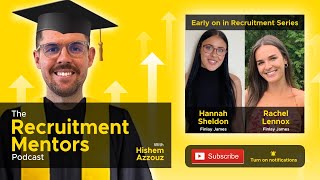
In this episode of the Recruitment Mentors Podcast, host Hishem Azzouz talks with two early‑career recruiters, Hannah Sheldon and Rachel Lennox, about how they unexpectedly entered recruitment, the skills they’ve developed, the challenges they’ve faced, and what keeps them motivated. They discuss imposter syndrome, the impact of the COVID‑19 pandemic, shifting market dynamics, and personal growth areas such as time‑management, multitasking, confidence, cultural awareness and patience. Both emphasize the importance of attitude, continuous learning, and supportive company culture. They offer practical advice for recent graduates on how to stand out, the value of networking, and the need to be authentic in interviews. The conversation also covers gender dynamics in recruitment, highlighting the benefits of gender‑balanced teams and the importance of inclusive language in job descriptions. Finally, they describe the type of recruitment firms that appeal to young talent – those that are tech‑forward, offer clear progression, listen to employee feedback, and provide a supportive, flexible environment.
Chapters
Welcome to the Recruitment Mentors Podcast. My name is Hishem Azzouz, and with this episode, it's a slightly different one, and this is going to be part of the entry-level/graduate episode podcast series where we speak to recruiters who are early on in their recruitment journey. They may have graduated, um, and they are sharing with us how it's going, what they've learned so far, some of the biggest challenges they've experienced, in hope that some of you listening to this can, even if you're considering a career in recruitment, can get a real picture of what to expect and some practical advice. And also, if you are earlier on in your recruitment career, to know that you're not— what you're going through, you're not going through it alone. And also to hear how other people are making the most of their recruitment career so far. So I'm really excited to be joined by Hannah and Rachel from Finley James. And before we get into this, Hannah, if you could introduce yourself and Rachel, you do the same and then we'll get into it.
Yeah, sure. So hi everyone, my name is Hannah, as mentioned. So I joined Finley James back in March 2020. So coming up to like a year and a half now, and we specialise in placing people in the tech and software space, um, primarily like sales and leaders as well as marketing professionals. I typically specialize in the edtech and learning tech space as well.
Amazing, love that. So you've been recruiting a year and a half, and did you go— did you graduate? Did you go to university?
Yes, I went to Mamet University, graduated, uh, 2 years ago now, and did a textiles degree.
Awesome. And Rachel?
Yeah, so my name is Rachel. I also work at Pliny James. I've been doing recruitment for around about 10 months now, so I think I joined in August 2020, and I also obviously specialize in the tech space, and my kind of where I like to work on is the martech space. I really like any marketing technology and data analytics space as well.
Awesome. And then for context, so 10 months, and then so did you graduate last year?
I graduated 2 years ago as well. I had a previous sales job before this.
Okay, awesome. So where I want to start then, Rachel, I'll come to you first. Yeah, obviously you had a sales job before, but like how and why did you end up choosing to get into recruitment after that sales job? Let's just, let's just start there.
Yeah, so I'm originally from Swansea, I don't know if you can tell from my accent, but I wanted to move to Manchester just because there's so many more opportunities up here and I think it's a really cool city. So I was trying to look for jobs up here and I did enjoy my sales job, but I didn't really— I was kind of open to any job because I've obviously only graduated a year before that, I was quite open. And then I saw a job online through a recruitment agency agency, but it was just, I think it was another sales job, and then they rang me up and they kind of pre-screened me, and they were actually like, "Oh, have you ever considered a job in recruitment?" And I was like, "No, not really." And they were like, "Oh, if you think you'd be really good at it, would you want to go to some recruitment interviews?" And I was like, "Yeah." I was open for anything, so I was like, "Yeah, go on." And then the first one I did was actually with Finny James, and like the minute I went into the office. I just absolutely loved it, it's such a cool office, everyone in there was so nice and I really enjoyed the interview process. So I kind of just fell into it that way, just by kind of coincidence. Wasn't that I actually thought about, you know, I wanted a career in recruitment, it just kind of came to me.
Okay, interesting. And Hannah, I just muted you there because it is a bit of a background noise, so I'll just mute you when Rachel's talking. But what about your story then? No, sorry, Hannah, sorry, not Rachel. What was your story into recruitment then, Hannah? How did it unravel for you?
Not too far off, to be honest, from Rachel's. So graduated from uni, I did a really creative course, and I was really torn, like, where I wanted to go down, whether that was pursuing more like the art style route or just going into something completely different. So when I was doing some art commission work and stuff like that on the side, I picked up a door-to-door sales job.
Wow.
That I actually weirdly really enjoyed.
What was you selling?
Well, it's actually Bernardo's, the children's charity.
Oh wow, okay.
Sign up to the charity, so I did feel like I was doing something good.
Yeah, I love that.
But I realized I actually just really thrived off getting to speak to new people every day. And my dad was like, hang on, you're actually really good at this, why are you doing this and standing outside in the rain every day when you could doing a sales job inside. And I was like, yeah, I know, but I've got no idea about sales or anything like that. And he's the one that suggested recruitment because he has some friends and family in recruitment and stuff and was like, have you ever thought about it? And same thing as Rach, I just started applying and really had no clue what it even meant. But I just, I knew it was a sales job and I knew that I just wanted to move out of the creative space and just push myself to do something new. So yeah, same thing with Rach, just sort of fell into recruitment, interviewed at Finley James and was like, I really love this company and joined.
Love that. So back to you then, Hannah, real quick. So I have to ask, like, I feel like this is something that we all have to work through in our lives, but I feel like it's even more intensified, especially when you've gone to uni, obviously taken on all of that debt that's part of that journey as well. So like, I guess any advice for people listening that may be graduating this year or recently graduating that still have no idea what the hell they want to do? Like, what helped you? I don't know, like, what comes up for you when if I'm saying to you, look, Hannah, I'm just really worried at the moment, I don't know what I want to do, I'm like all these sorts of things, like, how did you deal with those feelings and did you experience those?
Yeah, 100%, and I think for me it's important to try as much as possible not to compare yourself to everyone else because I was watching all my friends getting design jobs straight away or people landing like the dream job in like teaching or whatever it was straight away and I was just sat there thinking, I've literally got nothing, I've got no idea what I'm doing with my life, oh my god, I'm a failure. But it's just, you have to step back and realise we're still so young, there's so much time, even people in like the 40s and 50s still don't even know what they want to do. So I think just take a step back, enjoy your time off when you've got some, and then just try and go out there and explore as many options as possible and interview at as many places, and then it'll probably click and you'll probably find something you think, actually, this might not be what I thought I'd be good at or I wanted to do, but this is what feels right, and just go with, go with the flow.
I love that. And then Rachel, back to you then. What was your experience with that and those those feelings?
Yeah, so I had a similar experience. A lot of my friends are medics, so they had their career path kind of set out for them. They didn't have to do— obviously they've never done interviews really because they've got a set plan, they've been in uni for the last 5 years. So I felt like similar, I was very stressed because I just didn't know what I wanted to do. And I think it's quite an unsettling feeling when you graduate. You think you've got— like you said, you're in a load of debt, you've gone to get a degree to get a really good job, but like it's so hard to find what you're looking for. If you don't know what you want to do, you can't even look for jobs online because it's like, it's so overwhelming. You're like, I don't know what to choose, don't know what I'm good at. But yeah, my advice would be, you know, take some time, have a look at some, just any job, go for some interviews and see, get a feel for kind of what you like, if you think the culture is nice, if you like the people there, and when they talk about the job, if you could see yourself doing it. Because sometimes the job description, as we were saying, does put people off, but it I, from the job description that I've seen on recruitment, is nothing like what I actually thought I would be doing. So I was under the impression that, you know, you fly all of the job ads out and then you wait for people to come back to you and then you're just ringing people and it's like completely different from that. Like, it's not like that at all. So I think, yeah, if you try and kind of go to as many jobs as you can and don't worry about it. I spent like a few weeks trying to enjoy my time off, but I couldn't because I was just panicking thinking I'm never going to get a job. And I was just trying to like get any job that I possibly could, which is not necessarily equally the right thing to do because you might, you know, get into a job that you really, really don't like and just take them for the sake of it. So yeah, I think just take a step back, try and find what you think you would enjoy, like what do you enjoy in life, and see if there's any, you know, job avenues down from that.
Yeah, nice. Yeah, I think it's just experimenting, isn't it, like, and like being open to that. I think obviously we put a lot of pressure on ourselves to like have the perfect career or find it perfectly. And actually, I think I just don't like the term as well. I know obviously I always used to say to candidates, and I'm sure you've had some of these conversations as well, like job hopping and you don't want too many jobs on your CV and stuff. But when you're younger, like, fucking hell. Yeah. Like you're just trying to find out who you are and make your way in this world. So like to go, oh, I'm not going to do that because that's going to affect my CV. It's like, well, no, you need to try different things and the only, like, and then not worry about that. And yeah, so like, I feel like people are going to be more and more understanding of that in today's society as well. If like Rachel had 5 jobs in 3 years compared to someone that had 2 jobs, well, actually you're actually more rounded or you have more different experience. So now you may have a better understanding of what you're doing, right? Or what you want to do. So I guess back to you then, Rachel, like what skills? So obviously you both fell into it, but like What skills or experience then has recruitment given you that you least expected?
Yeah, so like multitasking, I've got to say that's one of the biggest ones because I think again, you're under the impression that you're kind of doing one thing day after day, but it's like there's so many different aspects. You've got like the client side of things, where you're speaking with clients trying to bring on new business. You've also got to reach out to candidates, you know, that are not actively looking for jobs. You've got to kind of try and you know, persuade them into maybe start looking for a job when they weren't ready to look. And then you've also got to kind of manage— I don't know if it's like for other recruitment companies, but we at Finney James work in a really collaborative environment. So because we're quite new to recruitment, um, we are obviously working other people's jobs in— yeah, they've brought on. So you've got to work together to kind of get the deal over the line. So that's with the client, that's with also the people at Finney James, your colleagues, you know, and the candidates. So it's a lot of stuff that you've got to kind of juggle all in one. You've got to do prep calls, it's just so much, and I think you've got to really, really work on your time management because if you don't have like a good set plan for the day, it's so easy to get down like a rabbit hole and not actually get done anywhere near as much as you think you would. So those are the two things for me, time management and multitasking.
Yeah, nice. And then Hannah, I'll ask you the same question in a second, but just before I do. What about like personally as well? 'Cause for me personally, when I got into sales and stuff, like I really found, I don't know, I just feel like it did make me more confident in speaking to people. And I don't know, I just feel like it gave me more than just like the professional stuff. Like anything, do you feel like it's helped you even like as Rachel, the human being, the person, do you think it's impacted anything out of interest working in recruitment?
Yeah, definitely. I think like also because you have to speak to the clients on a daily basis, as well. Like, when I first joined, I've never even spoken to someone like really high up in a business, or, you know, I was just in uni, had no kind of— obviously I was like working in a coffee shop for most of the time, but that's like nothing compared to like speaking to, you know, CEOs most of the time. And like, that can be quite daunting, um, but you know, after your first or second go, you really find your groove. And like, I find my confidence improved, like not just in the workplace but when you're going out and meeting new people, I just feel like I'm such a more confident person now. I feel like I could walk— before I was even shy to order stuff at a bar, but now I literally am like a whole new person. So yeah, I think it really has improved my confidence in work and outside work.
Love that. So then Hannah, over to you, same question really. What skills and things is it sort of, have you obtained, you think, so far that you least expected?
Yeah, so I'd definitely say a bit of an obvious one like Rachel as well, but the time management, but more like down to like being self-disciplined. So I think it's like when I first went into this, it was like I was spending hours on one thing and then being like, oh my God, I've not got anything on my to-do list done today. But it's just having that like self-discipline to be like, no, stop and move on now and just being able to get on and move on with your day. If maybe things take a little bit longer, but then it's fine as long as you've got what you need to do, just move on. And then I think for me it's actually patience. So it's a job where you can't, like, you really do have to be patient with people. People are very unpredictable, and I think going into this, I just thought everything would go as to plan everyone would do, as you'd say. But it's the complete opposite. So again, just, yeah, having a little bit of patience. Sometimes a deal could drop in like 3 months later than you thought it would take. There's long notice periods involved, like all of that stuff. It's not a quick thing. So it's just been able to go with the flow of the process and just have a little bit more patience with everything, which is good.
Nice. Patience.
And then this is a bit of an odd one, actually, but I think as well, because I've been speaking to people probably more so than anywhere in the US, and then even like in Europe, so like Germany and things, it's just having that cultural awareness as well. So I've literally never spoke— when I got told you're working on a US role, I was thinking, I've never spoken to someone in the US in my entire life, what they're going to be like. But now, like, I know how to speak to them, I suppose, you know, maybe someone over in Germany and just building up rapport but in different ways versus like the cultures in the country and that sort of thing. So that's quite an interesting one.
I love that, and I think that's just one of the greatest things about recruitment, I think, like how like communication skills, having good communication skills in life is just so valuable and it can help you in like all areas. So we've been, we've kept it like quite positive, I feel like. So I guess, Hannah, back to you then, like what What have been your biggest challenges so far then? So like, because we all hear, and I definitely experienced this, like first year recruitment is horrible, might even be the worst year of your life or most difficult. I don't know how difficult uni was and stuff like that, but like first year recruitment, it's going to be difficult. So like, what have been some of the biggest challenges that you've had to face? And then I guess how even you still may be working through them, but like I guess then what comes up for you when, how you've sort of gone about overcoming them or dealing with them? What comes up for you on that?
Yeah, so I think for me it's probably coming down to like lack of confidence in myself or like sort of imposter syndrome. So when I joined in March 2020, that was literally, I had 2 weeks of training and then we were suddenly in lockdown. I was sat there thinking, oh my God, my job is definitely not safe. I'm gonna have to leave and find a new job. So from the start I was just panicking. But to be fair, Finley James was so supportive. We had a lot of weekly catch-ups over Zoom, keeping everyone in the business up to date with where we stand as a business in terms of the revenue, in terms of the plans. But also I was made to feel like your job is safe. We are going to get you through this. Obviously you're going to have to work hard. But throughout I was just thinking, how have I kept this job? I don't deserve to be here. I've literally had no experience. Experience. So I think over furlough, I was just consistently trying to improve and learn as much as possible. I was watching your podcasts, um, reading a lot of books and that sort of thing. So when I came in, I was like, right, I've learned as much as I can now, and I'm gonna go in and smash it. But I think throughout the whole process, even coming back in, it's just constantly having to remind yourself, like, I'm not perfect, but I can do this. And I'm always just having to, like, battle in my own head, like, 'You can do this, you deserve to be here, you've worked really hard.' So I think it's just recognising when you hear that voice in your head and it's so natural to go into it and be like, 'Yeah, I'm doing awfully,' but it's switching it and recognising that you're doing it and just trying to be like, 'No, stop a minute, I'm doing all I can. I've done really well so far,' and just thinking more rationally about it.
Love that. Yeah. So just getting better at Recognizing the self-dialogue and noticing if it's serving you or isn't serving you and trying to change. Yeah, I love that.
Exactly.
And then Rachel, same question for you then, really. Like, what, what have been some— obviously you're still, you obviously coming up to that, uh, year mark, which is exciting. So like, what, what have been— obviously still here, still, still, still in the job, surviving, doing it, making it happen. Like, what What have been some of your biggest challenges so far then you've had to work through, do you think?
Yeah, well, I also had a bit of a rocky start. So I actually got offered the job in March and I was so excited to start, handed in my notice, and then obviously the pandemic hit. So I was absolutely gutted because obviously I was like really excited to start and I was like, there's no way they're going to keep— I also thought there's no way they're going to let me start. And then obviously they let me know, obviously I wasn't going to start, but they were like, don't worry, you know, we do really want you to start. Start, we just don't know when. So I was like every month getting in touch, like, do you still want me? Do you still want me? And like, they were so good. Like, every month they'd be like, yes, we promise, like, as soon as we get a solid start date and we know, you know, you will be starting. They were so informative. And, you know, really, because it was quite nerve-wracking because I couldn't go on furlough because I'd already handed in my notice, and I obviously couldn't go on furlough from Vinnie James either. So it was quite a nerve-wracking position to be in because I wasn't sure if any other people would be taking on jobs either, but they were amazing in keeping me informed. And then I started in August and I had a great few months. I think I really, really wanted to prove myself because I was like, I really want to keep this job. So I ended up becoming the fastest person to ever be promoted. So I was on a massive high. And then since we've kind of come out of the pandemic, One of the things I've really struggled with is because I've only known a COVID market. I started during COVID where there wasn't actually that many jobs, but whereas now we've gone like the other extreme where there's too many jobs. So there's so many counteroffers happening, you know, you've got to speed your candidate through the process, otherwise, you know, they're getting snapped up really quickly. And I think the thing that I've, you know, struggled with, especially in the last like 2 months, is dealing with those, overcoming, trying to make sure that my candidates, you know, are, you know, getting sped through the process or adapting to this sort of environment. I think that's one of the challenges that I've faced and like obviously going from such a high to then now obviously I'm trying to adapt to this new market, um, that's been, you know, a big, big challenge for me. Um, so I'm hoping I kind of see the other end now and go back right back up.
Well, yeah, well, a lot, a lot of, um, I'm sure you might have heard John say this, but a lot of people say if you can make it happen in a market like COVID, then you, you, there's a very good chance you'll make it in a stronger market. But you're right, it's different challenges, right? And having to adapt and things like that. So I guess what I wanted to obviously ask you both then. So Rachel, on this then. So this is something that came up when I was speaking to a couple of people. So obviously both of you said that it sort of happened quite quite by accident, getting into recruitment, right? So hopefully you'd agree, but fair to say that there may not have been like a really solid why you wanted to get into recruitment at the beginning, but disagree with me if you want to. But I guess what I wanted to ask you is, in those sort of early, early periods, what can be really hard to sort of, I guess, really tap into is like why you're doing it and that motivation. So I guess my question for both of you, and Rachel, to you first, like how— obviously you had that high, so obviously I feel like the financial stuff, that helps with motivation. But then when you've had challenges, like, what have you tapped into, like, to be motivated to carry on? And like, what's helped you understand, like, why you're now in recruitment? And what— does that make sense? Like, because that's really hard at the beginning.
Yeah, I think a big thing for me is when I am struggling, I feel like I've got really good close— like, although they're my colleagues, they're also, you know, my friends. Because I, as I said, I moved up Swansea, I only knew my boyfriend here, I didn't really have anyone else. So I only know the people like my colleagues and they're now really close friends of mine. And one thing that really helped me through, if you are struggling, is just talking about it with people who understand. Like, I come home sometimes and I try and speak to my boyfriend about it, he just doesn't get it. He's like, what are you on about? But having that, you can vent to people that fully understand, I found that really helps. They can help motivate you if you are struggling that day, they'll be like, no, come on, 'Come on, you've got this.' I also found listening to motivational podcasts as well, and I love podcasts myself, so I listen, you know, if I'm having a, like, a little bit of a down day, like, sometimes I will listen to, like, a motivational podcast and it really, like, gets me in the mood. But I think since I started recruitment, and, like, hence why I want to stay, is, you know, I do love the buzz of closing that deal, like, that is Although the lows are low, the highs are really high. I know everyone says that, and it is such a satisfying feeling, you know, when you do get a placement and you've crossed over the line. It may have taken, like you said, a month or two months, but you've done it. And also, you know, the people, like I said, the people you work with, like, I love everyone that I work with, and I find it so much fun walking into the office and seeing everyone. I think that's, you know, a big, big reason why recruitment is so fun, especially at Finning James, is just because the club's environment is just so nice.
Nice. I love that. And then I guess same for you then, Hannah. Like, what have you— what's helped you tap into your motivation and how have you remained motivated in this sort of early part of your career?
Yeah. So I think for me, in the morning, like before I start work, I always do something, whether like writing in a journal or speaking to myself in the mirror and just reminding why I'm doing it. But I'm quite a big book reader as well, so yeah, just reading books all the time, or like Rach says, always listening to podcasts, whatever it is on the drive to work, just something to get you quite pumped up. And then it's just reminding myself why I started, and I think with recruitment, obviously, like Rach said, you're going to have— you could have a tough day, tough week, even like a tough month, but it's looking at the bigger picture and sort of the life skills that you actually are developing along the way from this is really invaluable. Like, it's testing you, and it's really a job where you're getting used to being in the uncomfortable zone. But I think that's where you're going to be successful in the long run. So it's reminding yourself that. And then another thing is definitely because every day is different. So I'm probably someone that gets quite bored doing the same thing every day, you know, like a set routine. I just get a bit irritable. So knowing that every day you literally have no idea what to and I do think the time goes by so fast, which is always a plus. And then, like Rachel, again, it's the people at Finley James as well. Like, we've all become so close and we've all obviously gone through COVID and we know it's just been a tough year, but I think we've all just bonded a lot over that and we've got like a really good collaborative team at Finley James. And I genuinely think everyone else is— everyone there is just so supportive of each other, so it's just such a good feeling to know you're never alone, which is always a plus.
I love that. So as we come to the last sort of 10 minutes of this, so like what I guess let's now think about, so for you Hannah, like going obviously the journey you've been on so far, so for anyone listening that may have recently graduated or is sort of at a point in their life where they are considering a career change, but maybe we could keep it specific to grads, because that's obviously part of your journey. Like, what advice do you have for them then if they're entering work for the first time this year? They may have done obviously the odd job during uni, but like, what advice would you give them, do you think?
I think go in there and you need to remember you're not going in as a pro, you're not an expert in this job, but I think the number one thing to show is the attitude. So it's that willingness to learn, really, and that sort of positive mindset. And don't be afraid to ask questions because I remember when I first started, I was that person that was asking about 50 questions a day and I was just thinking, I'm so annoying, I can't believe how many questions I'm asking. But I actually think that's part of the reason I was kept on throughout COVID, because I was showing that willingness to learn and try and find out as much about the job as possible. So yeah, for me, number one is the attitude and the willingness to learn. And just don't be afraid, like, just go with the flow with it. Don't put too much pressure on yourself at the same time. And obviously, make sure you're still taking care of your mental health so you're not spiraling and you're not, you know, leaving some time for yourself and self-care and stuff like that.
Nice, brilliant. And then the follow-up to that then is like, how And then Rachel, I'll ask the same thing from what you think, but like, how do you think then, what would your advice be for people that want to stand out? So like, if I'm graduating this year, I know there's gonna be loads of other people graduating, I'm applying for jobs. Like we said, there's a lot of jobs, a lot of opportunities, but there's also gonna be a lot of competition potentially. Like, what would your advice be for me to try and stand out amongst other graduates or entry-level talent, do you think?
Yeah, so funny, but my boyfriend's actually just graduated from uni this year and he's been applying to jobs and just updating his CV and he's like, "Han, why is no one coming back to me?" And I was like, "Right, you need to be doing something different." So if there's a number or you go and you need to find someone's number and you need to be ringing them and standing out, or whether that's, you know, getting on LinkedIn and getting on social media and posting videos or just thinking outside the box how you can be approaching people to make yourself stand out because they're getting CVs from left, right, and center. So whether that's like you do a personalized video, email to the hiring manager, or whatever it is, just try and think of ways to gain some attraction that's not just sending CVs through to every job application possible.
Yeah, nice, love that. And then I guess, Rachel, anything to add to that that you think could help people stand out, do you think?
Yeah, I also obviously completely agree with what Hannah said, but obviously when you get the chance, I think when you do get an interview, is really let your personality come across. I think a lot of people, when they do go to interviews, it is quite daunting when you've just graduated and, you know, you haven't had much interview experience, and it does take a while to kind of get into, you know, the groove, and you've got to get in like interview mode as such. Like, you know, you know what the client's looking or you know what sort of questions are going to come up. But I think to make yourself stand out, you do have to kind of really let your personality shine through and don't be, you know, so try and not get in your head and be a little bit rigid because I think obviously from my experience when I was interviewing, it took me a while to kind of fully relax in the interviews and I was coming across probably like a plank of wood, like really stiff, like not really remembering my answers and saying the words words, remembering them. And I know it sounds really stupid, but I think a lot of people, when you graduate, you do, you get a list prepared and you kind of get all your answers ready. But I think, I know it's cliché, but just be yourself, try and relax, try and enjoy yourself whilst you're in it.
Nice.
But also, obviously, we've got a new starter that, you know, really stepped out of his comfort zone and actually like stood at London and had a sign like saying, I'm looking for new jobs, which which is obviously a really good way of finding a new job. So yeah, if you try and come up with any other way than just sending a CV, because your CV is going to probably be just under a load of other piles of paper. So you've got to try and make sure that you've got to keep reminding them. Maybe if you did send it like last week, maybe you want to ring them, keep chasing them and just make sure that they know who you are.
Yeah, love that. So I've got two final questions for you both. So Rachel, coming to you first, since I know this is something that you both wanted to talk about. So women in recruitment. Yeah, obviously, obviously recruitment as a whole typically has the image of a male-dominated industry, right? So I guess I know when we spoke about this is something that you found out or thought about. So I guess obviously the question really is How have you had, like, how have you found being in an environment where there are more men and males and what has that been like? And I guess really like, how did you go about navigating that environment? Or I don't know, anyone, I guess you could talk about it in a sense of like, if I am a bit worried about that, what to think about or what you would say to them, if that makes sense.
Yeah, well, I think I didn't I mean, when I walked into Finney James, we have 50/50. I think we've actually got more females than males. So I didn't even notice it kind of coming in. I didn't think, oh my gosh, I'm going into a room full of males when I was interviewing. I think if I had done that, that would have been— I think that probably would have put me off, which it shouldn't do, like in the future. But I think, yeah, going in as a graduate, going into an interview place with a load of males, I think that definitely would have put me off.
Why would it put you off?
I think it's just very intimidating and I also think it gets in your head, maybe, you know, women can't do the job, which is an awful thing to say, but you think, you know, if you've got— why is there a reason? Why is there a cause? You know, you don't really want to think about, like, maybe— yeah, it just gets in your head that you don't think that you can do the job. I think I'd walk in and be like, oh, that is a male-dominated industry. But since being at Phinney James, obviously most of our top performers are females, which is obviously—
Oh wow, that's amazing.
Great to hear. So yeah, we've got a really good gender split, but I think what's important is to not have the mindset that I had and walk in and think just because you are the only girl that you can't do the job. If anything, you want to go in and try and show that you can do it better than everyone that's already there. So I think just like not letting gender bias put you off, try and be that person that kind of disrupts that gender bias because, you know, women have been so successful in recruitment. It's not to say that we can't do the job, so, you know, don't be afraid and kind of push yourself out of your comfort zone even if you think that, you know, you shouldn't be doing it. It's really important, I think, to just get in and try and do your best.
Love that. And I guess, Hannah, anything to add to that from your own experiences?
Yeah, I think even just to start off with, I know Rach touched upon this earlier, but it's like even when you're applying to jobs as a girl, I found like things like the job descriptions are quite like male-heavy wording. So the things like competitive, hungry, and I think we need to be using more female terminology as well because the job that can be done very well by females. There's a lot of things like skills like emotional intelligence, empathy, like listening skills that females do really, really well at. Not to say that men can't, but, you know, we can as well. And they need to be actually used in the job descriptions because I think they're just completely off-putting to even start with. And now we've got this idea behind, you know, sales is a really male-heavy, you know, like Wolf of Wall Street type environment when it doesn't need to be. And it's At Finley James, it's not like that at all. And I think when I walked into Finley James, I was so shocked at how different it was to what I thought it could be. And I know, obviously, not all places are going to be like that, but it's just, don't be afraid and just go in there and prove yourself. And as females in the tech space, if we're doing well, we need to be putting that out there and showing other people and other female graduates that it can be done and that we can be successful in it as well.
Yeah, I love that. So final question then for you, Hannah, is how, like, why do we think then people should consider recruitment as a career rather than it being typically an accident? Like, why? What would you say to, like, why should it, why should people consider it, do you think?
So definitely it's just going to improve your life skills. And I look at myself back in March and like, I feel like I'm completely different now. So that's 100% something if you're looking to grow. I think also if you're quite money motivated, quite an obvious one, but if you go in there and you do apply yourself and you learn as much as possible, it really is a type of job where you could genuinely, you know, get promoted soon. Like Rach mentioned, she was the fastest to be promoted. I'm on track to get promoted very soon, and I've got, like, I'm exceeding my targets, and it's such a lovely feeling to know that you're doing well, and it's definitely the type of job that you actually get that sense of achievement and you actually feel like you're going somewhere. And it's even like a type of role that you could move into, you know, like a management position or whatever it is in the future. It's not just you're going to stay in this role forever. There's a lot of scope and a lot of valuable life skills that you're going to learn. So I think anyone considering it, it's genuinely like a really good long-term job and not just something that you're going to do just for 6 months and then leave.
Absolutely love that, thank you. And then Rachel, same question: why should people be considering recruitment as a career and not just an accident?
Yeah, as Hannah said, I think if you're looking for a job, you know, which has high rewards, you know, if you work really hard, there's opportunity to earn a huge amount of money. And I don't think people realize, I think that people think, yeah, you can make money, but there is opportunity to earn a lot of money, you know, if you are doing really well. And also, you know, with with more money becomes, you know, more progression. And also you can move up to a management position really quickly, probably more so than you would in any other job. But then also opens doors to if you did want to maybe eventually become a manager elsewhere, you know, you can go down a different route. You know, you really gain experiences that you can take and hopefully progress more later down the line. But I also think that, you know, the incentives, like not a lot of companies do really fun, cool incentives. You know, we've got weekly lunch clubs, quarterly lunch clubs. You also got the incentive to go to New York at the end of this year, you know, if you hit your target. Like, there's really big motivators that come along. You know, sometimes the job is hard, but also, you know, there's loads of things that make up for that. And I think that also contributes to having such a fun working environment because you're all, you know, working to get onto these incentives and you want to get on, you want to make sure that your friends get on them. So you're encouraging your friends to get on them as well. If you don't want to go to the lunch club by yourself, you're like, come on, you need to work harder. So I think it's just a lot more fun rather than just work, work, work. So yeah, that would be my advice if you do want to start.
I love that. So I know I said that was going to be my last question, but sorry, I'm going to ask you one more and then it'll be our last one, I promise. So back to you, Rachel. So I just think this is an interesting one. So a lot of recruitment businesses will want to hire amazing people like both of you, right? They wanna hire graduates, they wanna hire entry-level talent, train them up, and make them the sort of next highest performers in their business, right? So, but obviously a lot of the time, obviously these business owners are a lot older than both of you, right? So the question is, like, what do, What are the actual types of businesses that you want to work for? Like, what are the actual benefits that actually, like, talk to you? Do you know what I mean? I feel like, because I feel like the typical ones are just always like, you can earn all this cash. Obviously, I know you said the incentives and stuff, but just out of interest, like, for you, Rachel, first, like, what types of actual recruitment businesses, like, do people like you actually want to work for? Like, what are you actually motivated by? What actually captures your eye or speaks to you? And what actual types of benefits also speak to you as a, you know, young person building out their career?
Yeah, I think one for me is having people similar age. I think a lot of, a lot of my friends are kind of jealous that I've started and I've got like, me and Hannah are both the same age, like quite a few of us are the same age. We've got like a nice group, you know, we've all graduated at the same time and I feel like that is, that is quite important I think to have people of a similar age group to you, you know, that, that makes things a lot more fun. You've got quite a lot in common as well. But also, like you said, a company that's constantly changing and updating, I think it's important to kind of keep with the times. You don't want to work for a company that's still using a database from 30 years ago. It's important, I think, to kind of keep up to date with new technology, especially because you're in the tech space. I think companies that can consistently evolved and also adapt. So, like, I like working with clients at the moment that have realized that, um, obviously candidates are getting snapped up quickly, so they've reduced their, um, interview stages because they realize they can't be doing a 6-stage process anymore because it's just not— they're not going to get— but then some clients, you know, are sticking to their ways, like, no, I'm still gonna do 6-stage process, and then end up not getting the candidate that they want. So, I think it's important to kind of, you know, keep up to date, notice what's going on around you and continually improving. And also, a big thing for me is listening to your employees. So, I like the fact that we have weekly, not weekly, like monthly feedback. So, one team, one member of each team member will go and speak to managers and say what we think we can improve on, what kind of we didn't enjoy this month, what might be good going forward. And then, we do implement them them straight away, so they'll happen the week after. We'll try to test out and see if it's going to improve. I think that really, really is important for me as well, to make sure that employees are heard, especially in this day and age.
Yeah, nice, love that. And then, yeah, final question to you, Hannah, like, what actually speaks to young people? Like, what actually gets them excited about a business?
I think it's just working for a company that actually cares about you, like, you're not just a number. So again, the whole thing with the diversity, like, you actually feel worthy of being in the job. They're big advocates of things like mental health, so we've got people at Billy James, you know, regularly checking in, like, how are you doing? And there's that flexible working where you've actually got trust in your employees to do the job, and it's not, you know, you have to work now till then, stupid, like, late hours. There's no pressure to work long hours. It's just as long as you get the, you know, what you need to be done, that's absolutely fine. And you need to take care of your mental health and you need time for yourself. Because I've heard these horror stories of some other recruitment companies, you know, like you need to be working till like 10 at night, you're not having a break until you've done 50 calls or whatever it is. And I just think that's a really toxic sort of environment to work in. So yeah, I think number 1 is trusting in your people, supporting your people, and making you actually feel like you deserve to be there. And pushing on the whole, yeah, diversity piece as well, you know, it's not just a 99% male company, and they're big on supporting females in the tech space as well.
Love that. Hannah, Rachel, it's been an absolute pleasure. Excited to see how your recruitment career continues, and thanks for joining me.
Thank you so much for having us.
More from Hishem




You don't need as many clients as you think to bill $1 Million A Year In Recruitment



From 30 Direct Reports to Back-to-Back $1M Years as a Solo Recruiter with Zach Creighton



