Early on in recruitment series | Harman Dhillon from Ambition Recruitment
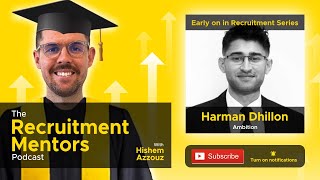
In this episode of the Recruitment Mentors Podcast, host Hishem Azzouz interviews Harman Dhillon, a recruiter at Ambition Recruitment who entered the field two years after graduating with a geography degree. Harman explains how a cousin’s suggestion and self‑directed research led him to recruitment, and reflects on the pressure graduates feel to choose a lifelong career. He discusses the unexpected skills he’s developed—particularly prioritising tasks and time‑management—while juggling multiple client and candidate demands. The conversation covers practical productivity tools (Microsoft To‑Do, weekly hour‑by‑hour audits, end‑of‑week reflections), strategies for avoiding burnout (structured breaks, planning the next day, setting non‑negotiable routines), and techniques for switching off after work. Harman offers concrete advice for graduates: apply broadly, use LinkedIn for Easy Apply and networking, ensure CVs are error‑free, research interviewers, and build rapport. He also talks about selecting the right recruitment firm and industry, the meritocratic nature of recruitment, and how to overcome common fears such as cold‑calling and being overheard on calls. The episode ends with Harman summarising why recruitment can be a rewarding, people‑focused career.
Chapters
Welcome to the Recruitment Mentors Podcast. My name is Hishem Azzouz. This is another edition of the Early On in Recruitment series where we're uncovering and speaking to recruiters who are early on in their recruitment journey to find out how they're getting on, advice for people that are considering recruitment as a career, get tips from them on how to survive but actually absolutely smash your first year in recruitment, advice for people to do really well in their interviews for recruitment and a lot of other things. But I'm really excited to be joined by Herman today from Ambition Recruitment. But before we start, before I start giving you loads of questions and I was breaking this down, Herman, if you could introduce yourself and we'll get into it.
So my name's Herman and been working in recruitment for pretty much just 2 years bang on now. Graduated in well, finished my uni course in June 2019 and joined recruitment the month after. Um, and I recruit into insolvency and restructuring. Ambition.
Love it. So have you had your graduation? Have you had that?
Yeah, no, I mean, COVID wasn't the thing when I graduated. That hit, um, the March after of 2020.
Nice. Yeah, some people haven't had that day. I'm sure you've had mates that might not have had that. Yeah, virtually or something.
Yeah, I know there's a few people that haven't had that yet. People who did masters, um, still haven't actually had a ceremony yet, which is a bit kind for them, I'm sure.
Yeah, it's not ideal, is it? So as you said, obviously graduated in 2019, and you— what was geography that you got a degree in?
Yeah, geography.
Nice. Okay, um, so graduated that, like, let's just start, like, how, how the hell did you end up in recruitment? Like, was it— did you have mates in recruitment? Did you, like, I don't know, talk to us about that? How did you end up in recruitment?
Um, So it was actually a cousin that suggested it to me. I must have got to, I don't know, Christmas of third year, and I just had no clue what I wanted to do. So I just sort of spoke to him about it, and I was like, God, I'm graduating this summer, no idea what I want to do. I mean, geography's all right. I focused a bit like on the human side of geography, but it wasn't really my thing. Like, I enjoyed the course, but the careers from it, and I didn't really fancy working as a town planner for the council or whatever. So I spoke to him about it, and he just suggested recruitment, and I'd never really— I mean, I knew what the word meant, but but I didn't really know what it really entails. So yeah, I just sort of researched it, sort of looked into a bit, looked at a few different companies, listened to your podcast at the time as well. I think it was called the Recruitment Rollercoaster Podcast back then. And just from the stories from that just sort of spurred me on to actually go for it.
Love that. So let's just talk about that pressure that you're feeling. I think it's important. I didn't go to university, but I think we all feel pressures of like, what the hell are we doing with our life, basically? And that constant just feeling of like, is this what I want to do for the rest of my life? Or like, what my purpose is or whatever. So like, would you mind just talking a bit about that? Because I feel like I'm sure you've spoken about this with your friends, but that's a lot of pressure, right? You've gone to university, there's debt that you've taken on, and I'm sure you've had— you've got parent pressure as well. Like, 'Harman, what are you doing?' Like, so like, how did you process that, out of interest? Like, maybe even a bit with a bit of hindsight for people that might be going through that now, but talk to us a bit about how you felt and how you were processing and dealing with that pressure.
Um, I guess, I mean, a lot of people probably turn to Google these days, don't they? Um, and just sort of Google what to do if you don't know what you're gonna do, um, after graduation. So I turned to Google, um, you know, watched a few YouTube vids and stuff, and everyone's like, 'Oh, don't stress, you'll find your own path in life, just choose what you enjoy,' whatever. Um, yeah, and hearing that as someone that doesn't know what they want to do, you just wish that someone could just give you the answer. Um, so it's annoying that I'm going to say this, but I think just choose something which you think you're going to enjoy. In fairness, um, try not to stress about it, even though that's, that's not going to help me to saying that. Um, I think, okay, yeah, the best thing you can do is, I mean, yeah, reach out to, um, if you've got any sort of older mates that have graduated, or, you know, brothers, sisters, cousins, you know, maybe your parents um, just for an idea of what to do. Um, okay, like there's, there's no pressure on, like, you're not gonna— chances are, you know, your first job you're not gonna retire in. Um, yeah, you know, graduating at 21, like, I guess you've got your whole life ahead of you, so there's no stress to pick the perfect career. Just choose something you think you're gonna be, you know, half good at, give it a go. If you do well, you do well. If you don't, then learn from it, choose something else, kind of thing. Um, I think for me it was like a massive pressure of oh, it's got to be, you know, the exact thing I'm gonna be doing for the rest of my life. Um, yeah, I've got to be perfect at it. I mean, luckily it's worked out for me in recruitment, but, um, I think, yeah, just try not to stress about it really. Do your research.
So let's just talk to that very quickly and we'll move on, because I think that's actually— it's that, and like, this is what I've taken from some of these conversations, which I just find fascinating really, like this idea that like you're gonna find exactly what you want to do and the perfect job like straight out the bat, like straight out Do you know what I mean?
Yeah.
Like, if I think my— I had no idea what I wanted to do, and I then ended up stumbling into sales. But before that, I was doing all sorts of delivering pizza for Domino's, working at B&Q, working in different things. Then I went abroad, had to get— I got a sales role where it was commission only. Then I was like, oh, sales, it was really difficult to start, but I enjoyed it. And then that was that. But like, could you talk to that a sec? Like, for anyone that's feeling right now that they like— why is it— why I don't know, I guess it's easier for you to feel like that now because I don't know, like, just why, how can we help people just not put so much weight to I have to get the perfect job, like the first job out of uni?
I think just doing your research. I mean, people who are watching this, you know, you can take from it, you know, me just saying it's not particularly going to help, but if you just do your research, speak to people that have graduated, Yeah, and from their stories you'll be able to tell, it will give you a bit more confidence in yourself that you're choosing the right thing, or it's, it's not a massive commitment. Yeah, yeah, at the end of the day, you know, once you've graduated, you might want to take a gap year or whatever if you want, do some traveling, or you might want to, you know, start earning straight away. So I guess, you know, there really isn't any pressure. I guess the only real pressure is, you know, just your degree, focus on the degree more than anything. Get a decent, you know, get a 2:1, get a first if you can. That's the main thing really. You know, in your spare time, just look around for jobs, something which you think, you know, you would find interesting. I think the main thing is, you know, go for some interviews, meet the people that actually work there and ask the questions there. You know, go for interviews. It's what I tell my candidates, it's not a commitment to taking the job, you know, it's just a fact, you know, you're interviewing them as much as they're interviewing you. So yeah, just try not to stress, relax.
Yeah, no, good point. And I think just— and then it'd be good to get your thoughts on this, but I think the other thing just to like really sort of underline is like definitely don't, don't, definitely don't like put a lot of weight on how your CV's gonna look as well. Do you know what I mean? Like if you go into a job and you're like 3 months in and you're like, this is fucking terrible, like I do not want to be doing this, and then you get another job, like that isn't going to affect your chances in 10 years' time to get a job, do you know what I mean? Even in the short term, I think sometimes that's as well, like people, like, I don't know, obviously you help people now prep, blah blah blah, like if you don't, if you have a couple of client businesses on your CV and you're just graduated, like that's not the end of the world, like you're going to be experimenting and finding stuff out.
Yeah, I think the key thing with that is I guess people are afraid of being too jumpy Yeah, I mean, it's— I guess, I mean, I've only been recruiting for 2 years, so I can't really speak for how it used to be. From what I've heard though, it's getting better with clients talking about CVs being jumpy. They understand that people who are a bit younger are going to move around every couple years or, you know, a couple months maybe, depending on how the firm sort of treated them really, or how they sort of felt they fit in. So I think the key thing here is if you can get your foot in the door at an interview Just explain the reasons why. They're probably going to ask you, even if they're sort of fairly understanding. If you've been to 3 different firms in a year, um, that obviously, you know, logically that's going to raise some red flags. They're going to want to know why. Just make sure you've got answers ready for that. Um, if they're genuine and, you know, um, your old boss was, you know, didn't really get along with them, or this wasn't the right fit for you, just explain it. I mean, you know, logical, rational, um, whoever you're interviewing, partner, director, will understand that, I think.
Yeah, yeah. I think, yeah, I think just final point on this, I think as well, I think what would make— if, yeah, I get, I'll get that. But I think if you're— it's different if you're jumping within one industry compared to different industries, do you know what I mean? Because that's quite a logical story where it's like, okay, over the last 12, 24 months I've worked at 4 different companies, but 2, like, 2 companies with different sectors. So I've worked out that wasn't right for me. But yeah, it's definitely— you're gonna have to have a solid story if it's constantly jumping around in one industry, do you know what I mean?
Yeah, yeah, definitely.
Yeah, so cool. So the question I have first then, so obviously it seems like recruitment really piqued your curiosity, ended up in recruitment, but like what I'd be keen to know from you is what skills or experiences recruitment given you that you least expected?
Um, it's a difficult one I think, um, because you have such a different— you have no idea well, you do have a bit of an idea, but not as much of an idea of what recruitment actually entails when you first join as to when you've been doing it for a little while. Yeah. So I didn't know that, you know, everyone says it's fast-paced, you know, you've got to be resilient and all these different things, but you just sort of say, yeah, yeah, that's fine, I'm resilient, I can do all this stuff. Yeah, you've actually got no idea. It's actually tough. So I think the main thing I— the main thing, the main skill I think I've learned, and something which I'm still sort of developing, Probably is just prioritizing tasks in order of importance. So you might have, you know, X number of jobs come through the door, or you might be working with a number of candidates. You've got to be able to rank it in order of what's going to get you where you want to be, essentially, or what's going to be— I think knowing when to quit is one of the most important things. That's been something that's difficult. You know, if you've been trying to source a job for quite a long time the client's tricky or, you know, the processes are dragging or you're sending candidates and they're just not getting the interview, you know, the client might be really, really choosy, your time is probably best spent elsewhere. So I think, yeah, prioritizing jobs is a key skill that I didn't realize I'd get and I guess that sort of spills over into life as well. If you've got a lot of time management, prioritize, yeah, time management, yeah, time management, I mean, Yeah, I mean, I remember sort of talking about that in the interview, being like, yeah, time management, I've got like that, I've got all these deadlines to hit. But you've only got maybe, what, 1, 2, 3 assignments to do at a time. And at uni, you've got all the time in the world, haven't you? Getting up at like 1, um, and then just doing a bit of work, you know, going out and then just doing it where you can, a few all-nighters maybe here and there. Um, so I think, um, yeah, yeah, definitely the spinning plates part of it. Prioritizing tasks. That's probably the least expected skills I think I've got from it, even though I was told that I'd need that.
Yeah, yeah, I know it's different in reality, isn't it, when you actually— yeah, exactly. But it's, it's a really, it's a really common area, this, even for people that are like 3, 4 years down the track. Like, time management, productivity is, is definitely— because it isn't, it isn't something that— it's like in, in the, in the Recruitment Mentors community, it's like a— it was a new sort of learning and development area that we introduced like 3, 4 months a go because it like we kept getting feedback about that's an area that people really want to develop or improve in because you sort of just have to stumble and learn the hard way, really. I mean, that's like there wasn't really— you don't really get a lot of support on that or like training. So I guess my next question is, and I know you said you're still developing this, but I guess for people listening to this that are in a similar spot to you, I guess what are some of the things that you do now to get better at prioritizing out of interest that maybe you didn't do at the beginning or you had to learn the hard way out of interest?
Um, that's quite a difficult question. Uh, I think, I don't know, I think it depends on the individual. Some things will work for some people, some things won't work for others. I use Microsoft To Do, the to-do list. You could, you know, prioritize it. That's just a really like useful thing for me. You can slide, it's like a to-do list that you can slide, tick it off when you've done it.
That's a digital one.
Yeah, essentially. Yeah, I mean, we did have training on it, but, and that was useful, but I think a lot of it's on the job, just trial and error, what works for you. Yeah, work closely with your manager, be self-critical when things don't go your way, and to sort of learn from it. I think the key from it is so cliché, but it's just learning from your mistakes, isn't it, really?
Yeah, yeah, that's fair enough.
Or at least you're trying to improve on it.
Yeah, have you— this came out of one of our training sessions recently, and I actually did this when I first launched my own business, when I started training recruiters on personal branding, and it really helped because I had to really— there's just— I'd obviously spun a lot of plates in recruitment, but there's even more plates when you— some— when you start your own business if it's just you. But something— have you, have you ever looked at like basically auditing a week Or like your desk out of interest. So an exercise I did that you might find useful, people listening, is basically— so for a whole week, what I did, I was working with a coach at the time, they recommended it. So basically for a whole week, every single hour you write down what you did. And the reason why that would be useful is because you'd be surprised the amount of time that you spend on certain things. So you might be thinking, yeah, I'd recommend doing that because that's actually—
I'll try that next.
Try it just for one whole week. Yeah, one whole week. So every single hour— where if I've got terrible handwriting, so I did it digitally. So like every single hour, or if obviously if you do different things in the hour, you just write down every single hour, what did I do, blah blah blah. And you'd be surprised, there might be some areas like, how— why the hell am I spending that much time on this? Or yeah, this is where I need to— so yeah, I get that. And I know it's very much on the job and learning what works for you, but I wanted to ask. So the next thing then Spoke around things that, yeah, maybe you've gained that you didn't expect. What have been— obviously I'm sure you got this from the podcast when you listen, but obviously everyone will say recruitment early on is just so, so difficult. So what have been some of the challenges that you've had to work through, out of interest, so far?
Um, so I guess challenge, I think, yeah, spinning plates. That is tough. Like, that is mentally draining. Um, yeah, trying to spin plates when you've got, you know, targets to hit, you know, things drop out. It is a tough job, you know, things don't always go your way, even if sometimes maybe you did everything by the book.
How have you dealt with that? Because that's hard at the beginning.
I mean, it was never actually— I mean, I guess at the time you're fuming if something doesn't go your way because, you know, you start totting up the things in your head and you think, wow, this is going to be great, you know, I could potentially be top bidder this month or whatever. And you big yourself up. So I think for me, the key thing is I never get too excited until something is done and dusted and the offer's accepted, written, that person's maybe not started, but that, you know, it's pretty much done and dusted. You put the fee through the system, that's when you can sort of celebrate. Like early on, like my first fee, or one of my first fees, got really, really excited about it. It was my biggest fee in recruitment, was absolutely buzzing, told everyone. Um, you know, and, uh, and then she accepted the counteroffer, um, which was just going— so now I'm just a bit more relaxed about it. I think that's, that's how I deal with it.
Stay a bit more grounded, like, so you're not too high, not too low.
Yeah, just, just chill out, um, yeah, chill out. And just, you know, there's always going to be peaks, um, and there's always going to be lows as well. So just take it how it comes, just accept it as part of the job at the end of the day. Just do what you can to mitigate it early on And then if it's, yeah, if it does go wrong, you're still going to be upset, of course. Just go for a walk, chill out, do whatever you want to do, then come back, discuss it with your team. Like, you know, I've got a great team, really supportive, so you can just sort of talk it over with them and see, you know, if you did go wrong, you know, did you talk about this, this, um, and you're trying to get that emotion sometimes out of your system, isn't that? Yeah, yeah.
Instead of it letting it ruin the rest of your day or the week or whatever. What about— how have you— so you mentioned spinning a lot of plates again, like, how have you found— have you found it difficult to switch off since you've been in recruitment?
Yeah, um, I'd say that's something I think is probably the— actually the most difficult thing about the job is switching off, actually. Um, yeah, especially when— because if you proper throw yourself into it like, like I have, um especially early on. Um, when I first started, it was, yeah, 8:30 start, 6 PM finish. Um, and then, you know, if you had something on, you'd be working late. I live quite far from London, so it's about an hour and a half there and back. Like, someone's getting home late, waking up at 6. So that was tough. Um, but I think, yeah, um, it's a difficult question to answer. How do you Well, you might, you might not be.
I'm just saying it's just good that you're talking about it because there'll be people listening.
Yeah, I mean, I think, yeah, I think you've got, it's got to sort of have a work-life balance with it really, haven't you?
Um, yeah, one, one thing that's— I find, I find it hard to switch off, but one of the things that— I don't know if you do this, but one of the things that's really helped me, and, and there'll be some weeks I'm good at this, some weeks I'm terrible, but most of the time I'm quite good at it. But before, I wouldn't like close off the week. And what I mean by that is, so something that I do every single week now, most of the time, is I'll basically reflect, um, at the end of my week on basically— so for like 45 minutes, it's 4 till 4:45 on a Friday, and I'll reflect on, okay, what went well this week, what didn't. And then I'll also then look at my goals for the month, quarter, and then think about the week ahead. I think when I really struggled to switch off was I didn't like— I didn't like have closure on the week, do you know what I mean? When you sort of go into the weekend or even the evening sometimes when there's loose ends, you're thinking about certain things because you haven't made it. I don't know, you're already thinking about next week, do you know what I mean? Yeah, so I think that's definitely helped me.
Yeah, the big, the big time when it, it's a struggle is when, um, when you go to bed, when you go to sleep and you stop, and then your mind's just rushing with stuff like, should have done this, should have done that. So that's that. Yeah, that is difficult. That, I think that's like an ongoing thing really, trying to switch off, um. But, uh, yeah, um, I guess just, uh, what you said. Yeah, it's planning ahead.
Yeah, no, that's right for me. But it's doing—
yeah, whatever you said, mate, that's the perfect answer.
No, no, yeah, I definitely wasn't doing that early on, but I wish I'd—
I've just had to—
yeah, I've had to really invest a lot into, like, time management, like, since having my own business and stuff. I've just really had to do that because there's no one else holding me accountable, do you know what I mean, besides myself. So I guess on that I would definitely, if you're not already, and again, this has been a game changer for me, but like, if you leave the office without planning the next day, like, you will have even more of those thoughts before you go to bed. So I don't know if you're doing that, but I would definitely encourage you to do that, mate.
Yeah, no, usually like before I leave the office, try and write like 3 main things I need to do first thing. I think more than anything, I guess I do that, but not with a view to sort of switching off. It's more just like a So I'm not sort of scrabbling about morning after trying to figure out, oh God, what did I do yesterday? What's going on today? Kind of thing, which has helped with that. Um, yeah, yeah, that's a solid tip for switching off as well, I think.
What about— so with that then, on this, because I think this is one of the challenges with the recruitment industry and why grads come in the industry and then get spat straight back out. Like, how— and again, you may not have an answer to this, but we're talking about it's important. So like you said, waking up early, long commute, working hard? Like, what— how did you make sure you didn't get burnt out?
I did, actually. I mean, you did? Yeah, no, I mean, I was, um, I was waking up at 6, getting into the office, and then sometimes working until, like, you know, half 7. Um, just thought, you know, if I put in more hours than anyone else, or if I put— you know, there are other competitors out there, they're not gonna be doing this, I'll be able to get an edge. I'll be, you know, yeah, I'll have that in your control. Um, but I think, um, you can do it within the hours you set. Obviously you might spill over. I think the— and I think the key thing is just planning, planning your day. Um, I think that audit your week, um, that's obviously a tip I've just got on this call, but that's, that's, that sounds, that sounds really good. I'm going to start that from next week just to see where you're spending your time. But I guess I sort of did that already, just sort of thinking, um, you know, how's my time best spent. You know, don't call candidates or clients just for the sake of it to get your numbers up. Actually want good quality calls. Sit back, review your desk, you know, where, you know, where it's going to get me to target the quickest or the easiest. Follow that.
So you said you burnt out. What, like—
I mean, I was just working too many hours. I think I was just grinding it out in the office till late, and then I went to the gym down the road from the offices, um, because, um, just because it was just there, um, and sometimes I wouldn't get home till like, you know, 10, 11, and, um, that's just too much.
That's sustainable.
Like, I don't work for JP Morgan, um, and I'm not trying to say, and I'm not trying to say that's, that's a bit extreme, um, so I mean, I still get the same amount of work done, um, and I still might pull the odd, you know, late, late one or do a bit of work, you know, when I probably should be relaxing. But I think it's just a balance really, um, to try and figure out what works best for you.
Um, what are like non-negotiables for you then, out of interest, like now maybe, that you think helps you? And look, there will be some weeks where you've got great opportunity, you know that if you place these 3, 4 jobs, you're going to be in a good spot. So like, you might end up having a week where you're like just absolutely slogging it out. That's just part of the game. But like you said, and it's why we're having this conversation, it's not sustainable. Like, you're not going to have a successful career in recruitment without it being sustainable, the habits that you're building and stuff. So I guess just interested for people listening to this that may have experienced this already or might be in the middle of it right now where they're doing what you were doing, just absolutely slugging it out, but it's just— there's gonna— there might be a point where they're just like, I'm absolutely knackered, or they fall ill or whatever. Like, what's non-negotiable for you now, out of interest, that I don't know, maybe every single week you book time to do X? I don't know, maybe you have something, maybe you don't, but I thought I'd ask.
I don't really— do you mean— what do you mean? What do you mean by non-negotiable in terms of time that I will spend doing one thing? Or—
well, I guess— sorry, so I guess what I was just trying to find out was you said that you've— you felt like you've experienced being burnt out.
Yeah.
So I guess I'm assuming after that you're like, right, I'm going to stop like doing this, or I'm going to make sure I make— give myself time to do this, that might help you not be in that position again. Do you get what I mean? Yeah, that's what I'm trying to find out.
Yeah, I guess, um, I try and take breaks now. I think it's harder doing that from home. I mean, in the office I usually used to take a— I, you know, used to be like a pop out to, you know, wherever, get a coffee and a sandwich, come back and work at the desk, you know, go for a walk, take, take, you know, at least half an hour, 45 minutes out of your day just to do something that's not recruitment. Um, yeah, because it's— and it's, it's easy to sort of work, you know, way past the hours you probably should be at home because you just wake up, you're straight at your desk like you're at work. So yeah, trying to take, trying to take a, you know, a little bit of time out where you can. Um, lunchtime's usually good, so I try and do that. That helps. Yeah.
Yeah, that's really useful because it's easy to— you see people in the office, don't you, just having their meal deal in front of their desk and put that in the bin and then they're back slogging out again. So you've separated that. Okay, so the next thing, and I know that you thought this would have been really useful for you to think about or spend some more time on, so I wanted to ask it for you. So let's just talk a bit about, for the next sort of 10-15 minutes before we finish, Um, like, just advice for people maybe considering recruitment, and we'll talk a bit about some other things, but what was your whole process on like finding out what industry you wanted to recruit in?
Out of interest, uh, yeah, yeah, so that was a massive one for me because I was sort of looking around recruitment firms, um, you know, what have you got? You've got audit, tax, um, finance, accounting, all the tech, all this, all this stuff. I'm just like, what on earth do I recruit into? Um, And to be honest, I sort of just took a look at the company's website, had a look at their promo video, whatever, looked on Glassdoor for average salaries and that kind of thing and reviews, and just sort of applied and interviewed at places and got a feel for it from that. I think, yeah, in hindsight, I was— you shouldn't really bother about it that much. It's not that important. You go for an interview. I mean, I interviewed here, so we recruit for sort of all the service lines for professional services, legal, and practice. Had an interview and I don't know how many people I interviewed, so many people, but I can tell now they're all people from the different teams and they sort of saw which team my personality fit into and you sort of just get given a desk really, don't you? And then you learn more about that industry, you know, how the candidates are, how the clients are and go from there. So I don't think it's particularly anything to be that worried about. Um, just interview as many places as you can, um, and then just ask the question like, you know, why should I choose tech recruitment over— don't be presumptuous, but you know, why do I choose this over this, you know?
Yeah, yeah, for sure. Okay, and what about then, what would be your advice for people who— I mean, like, I've seen, I saw another, I don't know if you've seen these, but like, obviously it's, it's difficult for grads to enter the workforce, right? Stand out. It's a lot of competition. Yeah, I mean, I've seen those posts where I saw a guy this week post— I don't know if you saw it— guy sitting in a three-piece, standing in a three-piece suit outside Liverpool Street. Yeah, I was gonna write that. Fucking roasted, mate.
Oh my God, he's out there like 30 degrees.
Yeah, do you know what I mean? It's just like, he wouldn't be doing that if it was, if it was like easy to get a job, do you know what I mean?
Yeah.
So like, advice for people listening to this that I don't know, knowing what you know now, obviously you've prepped candidates, obviously it's not for recruitment, but how can grads stand out, do you think?
I mean, I wouldn't say you have to go to the extreme of standing out on the street corner with your CV and stuff. That probably did work for him though. I think that post got like 5,000 likes.
I'm sure, I'm sure. Yeah, I'm sure.
I'm sure he's probably got a few interviews off the back of that. So, you know, if you back yourself to do that, go and do it. Yeah, but I think in terms of of, you know, getting yourself into processes. First of all, choose what you want to do, or even if you don't know what you want to do, just apply to a variety of things. Yeah, if it's recruitment, um, I just use LinkedIn Easy Apply. It was nice and easy, upload your CV, bang, bang, bang, applying to all these companies, um, get some interviews off the back of that. I'd say the key thing is, yeah, with the CV, um, I don't know how important this is for other, other places, but for me, if I see a CV that's not formatted correctly or the content's got spelling mistakes, that annoys me. Um, like, it's, you know, put a bit fit into it, double-check it and stuff, that kind of thing. And then when you do get into an interview, this is obviously probably more important than your CV, is to just prep as much as you can in terms of research into the company. But I'd say more importantly, the people that are interviewing you, if you can find that out. So if you're going through, I don't know, if you go through a rec2rec, they'll probably tell you, or if you're applying directly, just ask the internal recruiter or whoever you're speaking to, who are you interviewing with, build a bit of rapport with them because a lot of recruitment interviews and hires off the back of them are based on personality really, aren't they, more than anything.
Yeah, culture, isn't it?
Yeah, so yeah, just build a bit of rapport with them. I like pretty much stalked the director at Ambition before I joined and looked through everyone's profiles, you know, looked at their likes, found out their interests, So when you go in, you can, you know, shake their hand, you know, address them by their name, and that's what kind of stuff really impresses. And then in your questions, just, you know, you might not always have the chance to show them you've done all this research in the interview. So at the end, if they ask if you've got any questions, you know, um, I, you know, I saw that you did this, I saw that, you know, I've seen you working here for 10 years kind of thing.
You joined straight out of uni, like, what advice would you have for me to be successful or something like that?
That's literally, yeah, that's literally one of the questions I ask, and I think that just impresses.
Yeah, yeah, no, for sure.
Stuff like that.
So on this, I think, because just again, I didn't go to university, but like, how, how like, was you like communicated to like how powerful LinkedIn can be for your career?
Not at all.
That's mental, innit?
Yeah, I mean, I sort of just got it as a joke. In first year, me and all my mates have sort of downloaded LinkedIn, we're like, what is— I think they did business management, a lot of them, they had to make a LinkedIn profile for their course. Maybe they studied something about it on that, but you can imagine in geography, like, I'm not— I've not— I wasn't— LinkedIn was not a part of my course at all, which in hindsight, I mean, yeah, they probably teach it in school, to be fair.
Yeah, yeah, it's about— it's career, isn't it? It's like, it's career-related. What I wanted to ask you is, again, people listen to this, like, so you said that obviously you used LinkedIn to apply, but, and then you also used it for research, but anything else? Did you, like, how else did you use LinkedIn when you were, like, applying, trying to get in the door with places that maybe was also useful, do you think?
Um, I guess, I mean, I followed the hashtag recruitment, um, hashtag recruitment jobs, followed all that, started liking internal recruiters' posts. And I guess the main thing with people, yeah, just engage with people, you know, comment on stuff, you know, maybe do like a post, something like that. I don't know about your uni course, just get some engagement going if you can and just apply to jobs. Doesn't have to be through LinkedIn, it can be through the company's website, can be through, you know, Reed, whatever. But with LinkedIn, I think key thing is just to the way the algorithm works, you just want to, you know, post stuff, like stuff, comment on stuff, and then your profile gets seen.
Yeah, yeah, for sure. I think, uh, I think one of the great things about LinkedIn is like people generally are willing to help on, on the platform. Yeah, literally, if, if you're a grad listening to this and you're like, I really want help with this, like literally I would just do a post, stick a picture of yourself on there and be like, this is me, this is what I'm after. Anyone, like, if anyone could help, that would be great. And you'd be surprised how many people could help.
So yeah, definitely. I think, yeah, LinkedIn's amazing. Um, I think, I mean, what do people do before LinkedIn? No idea.
Yeah, no, I just can't believe it's like not actively spoken about. Yeah, yeah, it's just crazy. It's just not. Uh, so a couple of things before we finish. So I know that obviously part of your journey so far was when you was on furlough. Um, but what I wanted to ask you was, I guess I know like you're still on your journey, but just interested, so like for people that might be still in their first year, like what would be your top tips for success or to have the best chance of having success in recruitment in those first 6-12 months out of interest, knowing what you know?
Um, I think you've got to fully commit to it. Um, yeah, you don't have to work crazy hours, but you probably will have to do some unsociable hours at times just to get stuff over the line. Yeah, but aside from that, I think, yeah, commit yourself to it. Just, you know, just sort of be a sponge and sort of soak up as much as you can. Ask questions and, you know, just sort of back yourself. You know, you probably hear loads of horror stories coming into recruiting about how difficult it is, and it is tough, but if you choose the right company, I mean, Ambition are great, um, like, you know, you've got supportive, supportive atmosphere. Um, it's, it's not as— I mean, you know, when you go into recruitment, you think it's going to be super, super sharky and everyone's gonna be nicking everyone's roles and all that kind of stuff. And I'm sure that stuff probably does go on at some places still, but I mean, and I can only talk about my own experience. Ambition, of course, you've got to choose the right team. Um, and the only way you can sort of really figure that out is look at Glassdoor, look at reviews, speak to people. Within the firm, interview there, and just choose the right firm. And I think if your company wants you to do well, you probably will do well if you put the effort in. I think in terms of practical tips, I'd say the biggest thing for me is actually having the courage and, you know, just be brave and pick up the phone and dial a notoriously spiky candidate or client that might be a bit cold. Um, like, that's the hardest bit, picking up the phone and dialing. Yeah. Um, yeah.
How did you work through it? Like, how did you get over that? Because, like, I, I, I can remember that. So to be fair, it still happens now sometimes when I'm doing, yeah, business development. You just have that weird internal voice of like, oh, you're gonna get rejected, you're gonna get rejected, it's gonna go terribly.
I think the more you practice it, the better you get at it. Um, yeah.
And I've got a Post-it note in front, in front of me that says afraid of doing business development, question mark. Are you going to die? Exactly.
You know, I mean, what's the worst that can happen? Literally.
And like, you need to check yourself with that sometimes.
Yeah, just like, yeah, you know, don't take yourself too seriously with it. I think, um, the worst thing they can do is say no, um, or just be, you know, slightly, uh— I've never really had this happen to me, but, you know, be— I've heard it, you know, be a great, you know, aggressive with you on the phone or whatever it is. Just their loss kind of thing. Um, you, you know, back yourself. You're a good recruiter. You could have given them an excellent candidate or opportunity. So brush it off, move on.
Um, yeah, yeah.
And again, I think that's where your team comes into it.
Yeah. On this really quickly, and then I'll ask you the final question. Sorry. And I know when you— when you— we spoke, you said, um, sometimes you'd like to go out the office and that, but I just want to ask you, because I've had this in my inbox before and I definitely remember this. So I— when I went into recruitment, it was a team of 8 people. So obviously it was just literally obviously like a bank of desks. We're all opposite each other, so obviously small environment. And I've had people message me about this before, but like, how did you get over like that worry of if people listening to your calls? Oh, that's a real— it's a real thing.
I hate that. You know what I did? You know when you leave a voicemail, um, and you can press hash to, to re-record it?
Yeah.
Um, so I was a bit of— well, I still am, I guess, but I was proper proper perfectionist when I first started. I had to leave the perfect voicemail, and if I didn't, I pressed hash. And I just found that so embarrassing. Like, come on, just get the voicemail right first time. And it's like, you know, if you stub me words like, you know, call me on, or call me on my mobile, and it's like, oh, hash, record. I think, I mean, it's just, yeah, you get over it. I mean, everyone sort of has that. You're in a room with like, you know, Ambition's probably at 30 of us now. In the office, uh, and everyone's— if the room's quiet and, you know, you're speaking to a camp for the first time and you're like, you just gotta get over it. That is— I think everyone struggles with that. Um, yeah, yeah, you do get over it though. As you get to know a little bit more, you feel more comfortable in your own skin within the office. It's fine.
Yeah, yeah, it is. It's like when— it's obviously— it's harder when you're like the new person, do you know what I mean? Yeah, when you're like— when you're like more embedded in the team and that, it like— you don't you don't care. It's just funny because it is true, like everyone goes through that. Um, love that. So look, final question, an important one. Why, why should more people consider recruitment as a career rather than it just always being an accidental career, do you think? Why should people be choosing this as a career from your experience so far?
I think, I mean, I can only speak to myself as an individual. I don't know what other people's motivations are. I'm assuming that the financial side's a huge thing for everyone, but I guess that's already well known. So is the— I struggle with this word— meritocratic side of it.
Yeah, I struggle with that word.
Meritocratic.
Yeah, I can't even understand it.
So yeah, I guess that side of things, that was a massive thing for me personally. I guess, you know, if you put in the hard work, you know, you get to a certain target, like you'll move up and progress, you'll be recognized for that within the business. So that's a massive thing. And I think, you know, aside from all the sort of standard stuff, ping pong tables and incentives and all this rubbish that's sort of flying around, you know, I guess the most important thing is you're working in a people job. If you like working with people, not just sort of, you know, clients and candidates, you know, just in the office, very social, it's quite relaxed. You know, you can have a laugh with people and it's quite focused but friendly. I think that's how I describe it, ambition at least. So I think if you want, you know, if you want a job where, you know, you wake up and I mean, I'm not gonna lie, you don't always wake up fully, fully excited for the day, it's got something really important going on, but like generally more times than not you're buzzing just to get started and especially if you come into the office and have a laugh with, you know, people who become your mates, then, you know, it's a fantastic career to choose, I think.
Love it. Thank you so much for coming on the podcast. Thanks a lot for being part of it. Excited. We're on another 2 years, my man.
Thanks a lot. Definitely. Thanks very much.
More from Hishem




You don't need as many clients as you think to bill $1 Million A Year In Recruitment



From 30 Direct Reports to Back-to-Back $1M Years as a Solo Recruiter with Zach Creighton



