Early on in recruitment series | Nathan & Amber on how to enter the industry & thrive
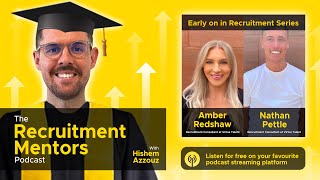
In this episode of the Recruitment Mentors Podcast, host Hishem Azzouz talks with Amber and Nathan, two early‑career consultants at Vertis Talent, about what it’s really like to start a career in recruitment. Amber, coming from no sales background, describes how the role is faster‑paced than she expected and how she learned to handle constant rejection without taking it personally. Nathan shares his perspective as a ‘blank canvas’, explaining how he had to unlearn previous sales habits, the importance of mentorship, and how the supportive culture at Vertis helped him push through a tough pre‑Christmas period to achieve his 16‑deal target. Both discuss coping mechanisms – Amber’s habit of venting to colleagues and Nathan’s mindset of believing you can or can’t succeed – and stress that the right environment, manager accessibility, and training outweigh salary incentives. They give practical advice for candidates interviewing with agencies: reach out to current employees, ask about day‑to‑day culture, and consider office presence for early learning. Nathan advises that sector choice is secondary to training and culture, while Amber notes most graduates prefer office‑based work during training but value flexibility later. Salary expectations are explored, with Nathan citing realistic entry‑level base salaries (≈£20‑£25k in Manchester, £23‑£27k in London). Finally, Amber reflects on the poor reputation of recruitment, suggesting more university outreach and word‑of‑mouth to attract talent. The conversation provides a roadmap for anyone considering recruitment, highlighting challenges, mindsets, and the critical role of supportive culture.
Chapters
Welcome back to another episode of the Recruitment Mentors Podcast. I'm your host, Hishem Azzouz, and this is another edition of the Early On in Recruitment podcast series where we're sitting down with people who are early on in their recruitment career to find out what have been some of their biggest challenges, how they overcame them, uh, advice that they would give, uh, to people coming into the industry, and, uh, much more. So So I'm really delighted to be joined by Amber and Nathan today who work for a business called Vertis Talent, and that is actually a recruitment business that helps entry-level talent into the recruitment industry. So we're going to talk to Amber and Nathan about their own journeys, but also they're in a really unique position to give all of you listening to this some insight into, yeah, what sort of things to expect, what sort of things can we look for when we are looking to get into the recruitment industry, and yeah, just get their take on those types of things. So Amber, I'm going to come to you first, and sort of where I've been starting these conversations is I would love just to hear sort of your thoughts on how has recruitment been compared to what you expected so far?
Yeah, so this is my first recruitment job. I haven't come from a sales or recruitment background, so I came in very blind, to be honest. Um, very different to like Nate's background, so I didn't really have too many expectations, to be honest. I knew with our market, you know, it was like heavily phone-based, a lot of it was inbound. I know you had to be like spinning multiple plates at once, but I think I underestimated how fast-paced it actually is. You do need to be able to, you know, multitask and be on the ball, especially in a market like ours as well, because I think our market is quite different to a lot of others. So, you know, we come into, you know, applications day in, day out, and you know, speed is key, especially in our markets. I think I knew it was fast-paced, I knew you had to pick up the phone very quickly and be on it, but I think I kind of underestimated how fast it actually was. And obviously, you know, there's competitors out there, you know, the candidates might be applying directly. So you do really need to be on that. Yeah, you've got to have that tunnel vision, come in, sit down, and just basically hammer through them as soon as you can, really.
Yeah, fair enough. So, so, Nate, obviously, if you just— for context for people listening, obviously we were just saying, so like, worked at a recruitment business for 2 years. Unfortunately, COVID meant that that sort of had to come to an end. You then got into a sales role, but then as you were saying, when you moved back up to Manchester, like, you was, uh, yeah, really keen to get back into people-facing role and like the opportunity to get back into recruitment. So obviously you've been a— you've obviously been at Vertis now coming up to nearly a year. So I guess what I'd love to just get your thoughts on, and you can sort of share what you think you've taken from your journey with Vertis so far or even before, but what skills or experience do you think recruitment has given you that maybe you least expected?
Yeah, it's a conversation me and Ams were having the other day, actually. I think we've both come into it sort of completely differently. Sometimes I think Ams, actually, you'd think outside of looking in, it's easier for someone like myself to come into it. But sometimes coming in as a blank canvas is actually a massive positive because you've got no prerequisites, you've got no bad habits from previous roles and you can sort of just hit the ground running. So I almost had to sort of unlearn before I could start to learn again when I came into Vertis, which is maybe something that I wasn't prepared for. Came in thinking that, you know, all of those experiences that I had previously would be positive. And there were some where I actually had to unlearn habits before I could sort of really kick on. So it actually arguably took me a little bit longer than some of the other associates here to get to Redcon. But now that I've got there, I'm sort of performing quite well. So I suppose one experience from myself was that initial phase of coming in, that actually as a blank canvas you can sometimes hit the ground running a little bit better. I think in terms of a more sort of positive experience, I came into this having done purely solo roles before, where it was all about sort of my own performance. I think coming in now and being a part of training up some of the associates as me and Amber both kick on towards senior, and then we'll look beyond to sort of management. I think leadership isn't something I'd ever considered before Vertus, but I think being in that sort of 360 role is now actually something that I'm sort of striving towards. So I suppose that was an experience I wasn't necessarily expecting, but one that I've certainly relished the opportunity to have.
Nice. And then any skills, Nath, that you think like you've developed professionally, personally, that maybe you didn't think from what you'd get from working in recruitment? I'm sure you went into it going, right, I'm gonna carry on my sales skills, my people skills, but is there— do you feel like it's impacted any other things that you've maybe been surprised by sort of just skill-wise and maybe even character-wise, is you as a person?
I think, yeah, probably what you pick up on there, um, lastly about me as a person. I think when you're doing, like, if you look at my previous role working in sales, it's very transactional, it's product-based, so you've got the sales skills but it's not so much on the people side of things. I think I, to give people my background away from work, obviously moved up to Manchester knowing no one and then stepped back into recruitment as well, and I think it came at the perfect time because I think that relationship building element, that people-focused role has probably helped me massively outside of work because I was doing quite well in a recruitment role, building relationships with people, didn't know anyone outside the office, and I thought I'd just sort of mirror that out of the office as well. And I think it's probably made me 10 times more sociable outside of work as well, and it's helped me to build sort of a social as well as professional network all at the same time.
Yeah, I love that. No, yeah, good on you, mate. That's— I think that's a great thing to share, particularly for people, yeah, moving into different cities and these things, that can be really daunting, right? And you've got to really lean in to being in those new environments and being on your own, and you have to sort of put your neck out there, right, to speak to people and build those social things. So that's awesome to hear that it's helped that. I guess I'm sure both of you speak to people about this. I'm gonna come to you on this, but I'm sure you may at some point, or I'm sure it's something that you guys communicate, but a very typical sentence, I'd certainly heard it, is that look, first year recruitment can be probably your hardest, right? So let's talk, I want to find out what some of your biggest challenges have been. So Amma, I'm going to come to you, like looking at your sort of first year recruitment, what have been some of your like darkest days, biggest challenges that you've really had to work through and pick yourself up, back up from?
Yes, I don't think I've got like a a particular day or a particular period that was, you know, really, really bad and I always think about it or anything like that. But I think just in general, like the first 3 to 6 months at the job, obviously I came in, like I mentioned a minute ago, no prior sales experience, no recruitment experience. I obviously knew that the job was hard and knew that obviously you do get rejection, things go wrong, you know, people can let you down. But I think one of the challenges that I definitely faced with, and I think a lot of people can probably relate to, is that, you know, that it's not personal. You don't need to take that rejection personally. And I think after, you know, a couple of things go wrong, you know, I don't know, candidates might not accept offers or candidates go elsewhere, or they decide recruitment is actually not for them anymore. I think it can, I think it's very easy for you to basically get down about that, especially in the first couple of months. But then, you know, you do just have to kind of pick yourself up and go again. You know, it isn't personal. I think once it's happened a couple of times, you just get used to it. You know, you don't just let it faze you anymore. I think it's just all about picking yourself up and going again. But I think that is one of the things that it took me a while to kind of, you know, not go home and think about it, or I could have done this, or could I have done that? You know, sometimes, I mean, obviously there is occasions in the first year, you know, you are learning, especially if you've not done this before, you know, it is all of that training period, but I think, you know, you don't need to go home and beat yourself up about it. You know, sometimes things just don't work out. So I'd definitely say that a challenging point for me was not taking the rejection personally.
There's a lot of rejection.
Yeah, especially on the graduate front as well. You know, they change their mind left, right, and center. So I do think that is a big thing, and obviously because the graduate market, you know, It is very fast-paced. You deal with a lot of candidates on a daily basis as well. So, you know, if one doesn't work out, you know, you're on to the next one. You know, the bad days don't last too long at all. You know, you could have one something in the morning go wrong and then 3 things go right in the afternoon. So it's just all about having that mentality, really. And, you know, the rejection that you receive, it's not personal. And, you know, if you do, it's obviously, you know, in your training period, there are learning curves. But I think that's how you develop as a consultant as well, by things going wrong, because if nothing ever goes wrong, then you're not going to, you're not going to learn from it really.
Yeah, absolutely. No, thank you for sharing that. Super, super common, I guess. Nath, what comes up for you? What have been some of your biggest challenges at Vertus so far that you've had to overcome and work through, do you think?
Yeah, I think one that stands out massively is obviously I mentioned that I came into the role probably expecting to do maybe better than I did initially. The way that our business model works is you come in as an associate and it's 16 deals in 16 weeks to get to retcon. Obviously over that time you take on more and more of the process and the idea is that by by the end of that you can sort of fly on your own and do 360, and that's when your senior target starts. Now I remember sort of, I joined in the October, so it was a run-up to Christmas anyway, grads were dying down a bit, getting all my excuses out early here, but it was a bit of a quieter period, and I think it was the week before Christmas, and I had 3 things that could have gone in that would have put me on like 8 and 11, I would have been doing all right to come back in the new year, and one ghosted me, one rejected offers, one didn't get offers, and I sat there on a Friday, sat down with my manager, like Jacob and Aaron thinking, I'm on 5 and 11, like, what's gone wrong? We've obviously gone on the Christmas do, and then I've sat there with beer fear the next day, got like a 2.5-hour train journey home for Christmas, and had 3 weeks off to think about it. Like, this is tough, this, this is a lot harder than I maybe thought it was going to be. But I think the best bit of advice that I ever got given that I used massively in that situation, and then I always think about, is whether you think you can or you think you can't, you're probably right. And I think I was at a bit of a crossroads there where I could think, you know, you can either pack it in here and you can say it's not for you, or you can give it a real, real good go and come out the other side of it. And obviously, thankfully, I think one of the biggest things here at the Birtses is obviously the culture and the leadership and the guys were able to sort of drag me out of that, turn it around, do 16 and 16, and then I've not really looked back since I've become a retcon. So I always remember that time as like, if I can get through that, I can probably get through a candidate not answering the phone, and I use that every day now.
Yeah, no, that's awesome. That's, yeah, I really love that. So that's a great way to think about things. I guess I've really enjoyed asking this, Amber, I'm going to ask you first. Like, obviously Nathan spoke a bit about something that he keeps top of mind when things do really sort of when shit hits the fan and you have dropouts and you have loads of people coaching on a certain day, you just have one of those days. Do you have like a sort of go-to ritual that sort of helps you just like, yeah, go again and like forget about it? Are you someone that needs to go for a walk? Are you just write it down? I don't know, is there anything that sort of helps you just dust it back off?
Yeah, I think I'm a 'venter.' I like to voice my problems. Yeah, I'm a 'venter.' I like to voice my problems, you know, sit down with managers or anyone in the office, just kind of let it all out. And I think, you know, a problem shared is a problem halved. You know, obviously everyone does have bad days, you know, it's inevitable in a job like this, but I think if you can share your frustrations I think that's half the trouble, to be honest. And back to what Nate said, you know, having, you know, working with colleagues, working with a team that you're able to do that, I think that's key, to be honest. And, you know, even if you do vent your issues to them or explain, you know, what's going wrong or how your day's been, you know, they could even offer advice. You know, you never know, they might have been in a very similar situation to you. They might have handled it differently. They can give you like tips and advice. But yeah, I'd say definitely for me, I like talking to people. I like voicing my problems and Yeah, taking that approach really.
Yeah, no, I really like that. I haven't heard— I actually don't think I've heard that before. Problem shared is a problem halved. I really like that.
Yeah, that's—
yeah, I literally— so the— I recorded, uh, one of these episodes with a lady called Hannah before this, and that was her. So for her, one of the things that she had to really work on was like not bottling it up, and like then it would just like build up and then she'd have a really low day. So Yeah, that's really interesting that you say that because then when you speak about it, like you said, problem shared, problem halved. I really like that. So, so, Nafe, I'm going to ask you a different question. I guess obviously I know you're coming up to this year milestone, so I'd love to hear your thoughts. Again, you could relate this to previous experience or Vertis, but like, what do you think you learned in those first 6 months with Vertis and on this journey so far? That maybe you wish you knew from day one?
I think probably the biggest thing is I'd say recruitment was fairly similar to what I expected but just amplified. So I knew it was going to be fast-paced, I knew there'd be lows and I knew there'd be highs, but I think it's getting into the role, just realizing how fast fast actually is, how low those lows actually are, but then also how high those highs actually are. So probably just to enjoy it all a little bit more. I think I would have actually performed a lot better I had just taken a bit of the pressure off myself and just sort of sat and enjoyed the roller coaster, if you like, a little bit more from the start. I think a lot of people come in and they put too much pressure on themselves from day one, and you can be your own worst enemy in this job, I think. I think the person that's going to make you succeed and ultimately the only person that can make you unsuccessful in this job is yourself. And I think just taking that pressure off yourself from day one, enjoying it, getting stuck in, taking a rejection, picking up the phone 50 times, getting a no, picking it up that 51st time and getting that yes that you're looking for and just enjoying every bit of that process. I think I probably would have had a much easier and smoother 6 months, probably would have even performed a little bit better had I not been my own worst enemy.
Yeah, no, I think, yeah, you put that really, really well. No, thanks for sharing that. And I guess, Amber, same to you, like reflecting on obviously your first year, what do you, would you, yeah, what did you learn in those first 6 months that you wish you knew from the start?
Yeah, so I've always said that, you know, you need to be able to ask questions in a job like this, and I don't, I think, I think I am quite good at asking questions and asking for advice, asking for help, but what I do wish I kind of did a little bit more, just kind of throw myself in the deep end a little bit quicker and not kind of worry about the outcome. I think sometimes you can overplay a situation in your head or overthink it. And then, like Nath said, you can be your own worst enemy. And, you know, if you do just keep picking the phone up, if you do maybe, I don't know, push back a little bit, or I don't know, you know, stand your ground a little bit more, or just whatever it may be, just kind of throwing yourself in the deep end, you're just giving it a go. Because if it doesn't work out, it doesn't work out. But, you know, if you spend however long thinking about it, you know, you could have done it 10 times over by the time that you, you know, come to the decision that you are actually going to do it. So yeah, I'd probably say I just, just deep, just, just kind of jump in a little bit deeper. Yeah, just lean into it.
Yeah, just kind of, yeah, what you do.
Yeah, just go along with it, really.
So I guess let's sort of segue into like getting— I'd love to just get both of your perspectives on I guess not so much like current market, but for people listening to this, they might find this and be considering a career in recruitment. And obviously, as I'm sure both of you will help the people you work with, like, that can be really fucking overwhelming because of how many recruitment companies there are, right? So I guess, Nate, if I'm going to come to you on this one, like, what would you say is some sort of good quality advice for people listening who have stumbled across recruitment, had maybe some of their friends go into it or maybe discovered it and they're now on the job sites and they're like, oh my God, there's so many jobs. Like how that can be really overwhelming. So like what would be your advice in terms of like, I'm considering recruitment, I'm really interested in that. I'm actually quite motivated to get into the industry. What would be like some of the things that you would share with people to keep top of mind so they can just have a bit more clarity on like the types of companies they should be looking at and those types of things, because I think it can be really overwhelming.
Yeah, well, message me or Amber first of all, that's our job, so I'll take that stress away. But no, I think when you're having that conversation, I think first of all, it's such a varied industry that it is actually for a lot of people. I think people have this perception in their head that, oh, it's not for me. And when they pick up the phone to us, they realize, ah, it's not necessarily what I thought. So I think take away more prerequisites, if you like, about what you think the industry is going to be, first of all. But I think once you have decided it's for you, I think, like you say, we have a slightly different take on this because we've got our ears to the ground a bit more. We speak to graduates day in, day out that are having these thoughts. And I think one thing that we always say is a lot of them are getting into it for the same reason. So they're financially motivated. The businesses that we work with, they'll all offer good training, good progression. But I think the number one thing for me is the environment that you're going to go into and the culture. And I think probably the one that's overlooked. Candidates so, so often are swayed by, oh, you can earn £100,000 in your first year, and you see it on an advert and it all looks great. But like we've said, that first 6 months is going to be tough. And what will get you through that, and it's what got me through it, it's what got Amber through it, is the environment that you have around you, the manager. Do you have the right manager? Do you have the right support system in place to get you through that? So I think when it comes down to it, any decent recruitment business is going to offer you good earning potential, good training, good progression. But above all of that, superseding all of that, you've got to look at the environment. Is it going to be a business where when the going gets tough, you want to be there? Not the business that's flying you off to Ibiza every 6 months if you hit your target. You've got to look at the day-to-day, where you're going to be, and make sure that you find the environment that's right for you. Because we've seen it so often where people are going to do 3 months in a business and think, "I'm terrible at recruitment," and you'll go and find them an environment that's right for them, and they go on to hit senior, they're managing their own teams now, and they thought they weren't good recruiters because they were in the wrong environment. So I think finding Finding the right basis to give you the platform to kick on to be a top recruiter is far better than any incentive that a business can sort of run down your neck.
Yeah, yeah, that's great advice. So Amber, to build on that then, great advice, couldn't agree more and makes complete sense. I guess Amber, what would you say then if like I'm thinking, okay Nathan, yeah, I'm definitely going to keep that in mind, but like how can I unpack that in an interview context? How can I really trying to extract that and sort of grasp that in typically an environment where these companies are trying to show off to me why they, why they're so great. They might flex a bit. They know how many other companies they're going to be speaking to. And sometimes it can be really quite hard to sort of grasp that environment and that platform and what Nathan's speaking about in an interview context. So what would your advice be for people to like, to give them the best chance of actually really getting authentic look into what that platform, what that environment might actually look like day to day. There's obviously only a limited amount you can, but I think this is where people can be smart and intentional with what they do in the interview process.
Yeah. Yeah. So I think a really good tip, and this has happened with a couple of my candidates previously, is they've reached out to people that are actually working at that company. You know, they've been there, you know, sub a year, you know, they might have been there, I don't know, 6 months working towards the next promotion or something, and just reaching out to them on LinkedIn, you know, send them a connection request and just messaging them. Because I think it is, especially if, you know, if you're a graduate and you're having, I don't know, multiple interviews with multiple different agencies, it can get a little bit overwhelming. And, you know, face value, you know, they are ticking the boxes in terms of what you're looking for, like they said, you know, earning potential, progression, training, incentives. But I think, like you said, there is only so much you can get out of an interview process. But I think a massive tip as well is just not taking the first thing that comes your way. You know, seeing out all of your options, seeing out the processes, and by exploring the market a little bit, you know, having multiple interview stages with multiple businesses, you know, going into the office. I think you will always get a feel for the environment when you do step foot into an office, you know. If you're able to speak to more members of the team during that interview process as well and just asking them about their experience, you know, how they found it, you know, what's their favorite thing about working at the company, you know, what's the biggest challenge, you know, is there anything that you struggle with, is there anything that, you know, you don't really enjoy, just basically having those open and honest conversations with people that haven't been doing the job too long either because they can very much relate to you because that was them, you know, 6, 12 months ago.
That's such a great tip. And like that, I'm sure like that's also like extra brownie points as well from like the employer perspective, you know what I mean? If they're like, oh my God, this person's like being proactive, they're asking good questions. Like, that's, that's such a good tip. I think if any of you are listening and you're in this process right now, yeah, reach out to people in that team that hopefully you can get to the position where they are and ask some good quality questions. I think that's, that's such a good tip, Amber. Thanks for sharing that. So on this topic then, I think there's some useful things here that people can take. So Nath, and I'll come back to you. I think when I've spoken to a lot of people that are early on in their recruitment career or considering it, again, another part of being overwhelmed is what sector to go into. Do you have any advice on that in terms of like, I want to get into recruitment, but I have no fucking clue what type of sector I want to go into? Like, what's your sort of typical advice for that? Because that can be quite overwhelming for people as well.
Yeah, I actually tell people, maybe not the advice that you're expecting on that point, but it's almost bottom of the list for me personally. If you're coming in as a raw grad that's never done it before, if you go into, you know, any environment that you go into, if they're offering good training, a good progression plan, they're going to take you from knowing nothing about the industry to being an expert in that field if they've got the right training in place to do so, the right progression structure in place to do so. So if you're going into a You know, I speak to graduates all the time and they'll say, like, I only want to do tech. And then when you dig a little bit further and, okay, great, why do you want to do that? They don't really know. It's just they've gone on what they're hearing, or, you know, maybe they know someone that's done it before. But really, if you go into any of these industries, provided that you've got, you know, enough of an interest to be able to talk about it on a day-to-day— no, say you go into tech, for example, no one's going to expect you to be a tech expert. You're the recruitment expert in that scenario. So the training that you get offered will sort of carry you through the role. And then, like I say, it comes back to the progression, the environment. Do you actually enjoy being there? Can you see yourself being there long term? And I think, again, that probably supersedes whatever sector you were to go for. So I actually tell candidates to think about other things first. Fair enough, I think sector comes into it when, say, you've got two businesses offering you and you could just— everything's exactly even and then you've got one sector that maybe appeals to you a bit more, then maybe favor the sector. But if you go into it with this idea that you want to do tech, for example, but you've got one tech offer and then this other business is offering great progression, great environment, great earning potential, don't go for the sector because the other things are far more important. That's normally how I would sort of position it to a candidate.
Fair enough, yeah. I think what I took from that, Nath, is I definitely, personally, in my own experience and speaking to people, I do, I would underline there, like you said, have enough of an interest to speak to people day to day. I do feel like That's a factor because I think because of this job and the rejection and how hard it is, if you work really hard to like, yeah, get to speak to that person or those things, then you speak to that person and it's just really fucking boring and you're not curious about it at all, that's going to make it even more challenging. But I get what you're saying. It's like that shouldn't be the leading indicator into your search. It should be all those other things that you said. And then it's like, make sure, let's make sure that you're looking at sectors that you are at least have a remote curiosity about and are interested in, and then you can obviously learn. But yeah, that's good advice. So Amber, I have to ask you, do young people want to work in the office full-time? Do they want to work from home? Do they want to work from the office? What, what do young people want, Amber? Please tell us. So it does vary, um, but I, I mean, as a general percentage-wise, what do you think people must lean to?
Office-based, definitely. I think, you know, with the environment that recruitment offers, obviously, it's quite a young industry as well. It's a social industry. A lot of people enjoy being in the office, you know, they like having that interaction with their colleagues. And it's, I found as well, because we're, you know, when I was going through my training and everything, I was in the office 5 days a week, you know, full-time. It's so much easier to ask questions, you know, if you were at home, you know, you have to message someone, oh, are you free for a call? I've just got a really quick question. And something that could have taken 30 seconds, you know, it might be 15 minutes because you're waiting for them to, I don't know, come off the phone or come out of a meeting or something. But you're sat in an office with, you know, all of your colleagues, especially in that training period. I think you can take up so much more from that. You know, we always say to people, like, in your first, you know, 3 to 6 months of the job, you know, you need to be a sponge. You need to absorb as much information that you can, basically. And one way that you can do that is just by being in the office and even just hearing, you know, all the people on the phone, them having those conversations. You pick up things, and I think you underestimate how much you actually do pick up just by being in that environment. So I do think you take a lot more from being in the office 5 days a week, especially during that training period. And, you know, we obviously, we have these conversations with graduates all day, every day, and they like having interaction, you know, with the colleagues, you know, with the young people, you know, it's a— and especially like the social side of the job as well. Obviously, you know, working from home, you know, a couple of days a week once you've undergone, you know, your training period, yeah, that's absolutely fine. But yeah, I think most graduates, I would say, prefer being in the office.
Is it like, do they want the choice? Like, they want the choice to be able to be like, yeah, I can work from home?
Yeah, I would say so. Yeah, the majority. You do get the odd few, you know, that they're not bothered whatsoever, they're happy to do anything, but I'd say The overriding majority, you know, do like to have the opportunity, you know, and if they did want to, I don't know, work from home on a Thursday or something, that the option is there. But, you know, we keep in contact, you know, with all of our candidates, you know, once they have started, you know, keep in touch with them, you know, how's it all going? And a lot of them do say that they, out of choice, go into the office full-time just because they enjoy it.
And also, look, the type of people that you're placing, let's be honest, unless you're, I don't know, you're in a family that are doing all right, like you're, you're probably going to be in some sort of flat share or like, I don't know, do you know what I mean? Like in terms of like the work from home setup might not be the best. So I think that that's also a big factor as well. So I guess to carry on this topic and then I'm going to ask you a couple more questions about both your journeys and we'll finish. But obviously I know you guys cover different parts of the UK, so Nath, you feel free to we can break it down. But like, I'm really curious to get your thoughts on what you're seeing on like the base salaries. Like, I've been speaking to a lot of recruitment companies and been having some, yeah, pretty interesting conversations that the sort of base salaries that some entry-level people are asking for or expecting can be pretty nuts. Like, I've spoke to some recruitment companies where they've interviewed people that, yeah, maybe have 3 months experience or no experience at all and they're going into that interview asking for a 30 grand base. And I know there's so many factors to this, right? Inflation and all these types of things. But I guess, what are you seeing? Like, what's become, like, unrealistic in terms of, like, too much? And unrealistic maybe in terms of, like, too low for some recruitment companies? Like, what are you finding are the typical base salaries that's actually realistic, that entry-level talent are actually happy with and can, yeah, are actually open to? And let's just talk about that for a sec because I think that'd be helpful for people.
Yeah, definitely. So I think there's, unfortunately for us, and it's a difficulty in a day-to-day for us, there's a lot of nonsense out there about salaries, but at both ends of the scale. And I say this to people on the phones all day, I think some people think it's like 14 hours a day chained to your desk, you've got to put your hand up to go to the toilet, and you're doing that all minimum wage. And then you've got others that are telling you that, you know, any grads can come and earn £100 grand in their first year. So we've got people ringing us all the time saying when you ask them sort of what they're looking for in terms of earning potential. Some of them are, as you say, going in too low, and then some think that, you know, when you tell them a realistic figure, that that's slightly underwhelming because a lot of the nonsense that's on there. But I mean, to put a figure on it, I think when I, even when I started in sort of back in October, I think in like Manchester, for example, where we do sort of like a lot of our business, I think, you know, most graduates were getting sort of £20,000 and they were happy with £20,000. Now that's probably low, slightly low, or the lower end at least. I think, you know, you're seeing graduates getting sort of 22, 23, some getting 24, and that's just fresh graduates that have maybe worked a bit alongside uni. They might have done a bit of high-level sport, but no commercial experience, and they're sort of walking in on 23, 24. Down in London, again, sort of when I started, 23 was the standard. Now it's almost 25 across the board. We've got a couple that pay sort of £27,000 for fresh grads. So it's creeping sort of up and up and up. But again, I think sort of the constant battle that you're facing is a lot of the advertised salaries against the real salaries and just sort of trying to pitch a realistic expectation to graduates somewhere in the middle of that.
Yeah, no, that's good. That's really, really good insight. So I appreciate you sharing that. That's good help for people because I think there is a lot of nonsense, isn't there, online? So I think sometimes Pete, again, and I can imagine it for both of you, the hardest thing is when you speak to people and they have certain expectations, and then when you speak to them, it's below their expectations and they're already like underwhelmed, as you said, Naif. And that's probably not the best position to start from. You'd rather them have lower expectations and then they're like, oh really? Like, that's possible. Do you know what I mean? So I can see that. I was just curious because yeah, I've heard some crazy stories of what people asking for just because of how crazy the market's been. And people trying to be competitive. So I was just super curious to find that out. So I guess let me just— I just want to ask like 2 more questions and just to wrap this up, I guess. Amber, what would like be your advice for people when it comes to like, I guess, no, actually let me ask you a different one. Like how do you think we can like really move the needle on like really incentivizing people to actually choose recruitment as a career? I don't know if you guys are picking up on more people wanting to go into it, but as you know, typical story is I fell into it, I knew nothing about it. But I just, I'm just so passionate about recruitment being a career choice and like it can equip you with so many skills that you can take into other industries and it can help you in all areas of your life. But how do you think that we can actually really educate people on why recruitment is such a great career choice for a lot of reasons?
Yeah, so I think we kind of, I think a lot of people have a lot of preconceived ideas about what recruitment is. I think it's got a little bit of a bad name, a bit of a bad reputation from like, you know, years prior, but I do think that is changing and we do see, you know, a lot of young people, you know, fresh out of university and, you know, we always ask them the question, you know, how have you come across recruitment, you know, where have you got this idea from and a lot of them just say that, you know, it's just from their own research. You know, we always say to people, you know, no one ever grows up, you know, thinking, oh, I want to be a recruitment consultant. But I think that stems back to, you know, education, you know, school, college, university. I just don't think it's very widely talked about. I know it definitely wasn't when I was at uni. I know that was a few years ago now, but it definitely wasn't, you know, I didn't know anything about it until a couple of years ago. So I think it comes back to, I don't know, I think there still is a long way to go in terms of it, you know, being more accessible from an education point of view. I just don't think it's very widely talked about, but there are a lot of people that get into it because they know someone that, you know, fell into it. You know, they might have had a friend or family or someone like that. And I think a lot of it is word of mouth. And I think, you know, it is getting a much better reputation for itself now. You know, gone are the days of, you know, 11, 12, 13-hour days. You know, you don't have to wear a three-piece suit or anything like that. You know, there is, there is a lot, there are a lot of good agencies out there now that you have flexibility, you know, you know, it is more relaxed. It is more of a, you know, a collaborative team environment. You know, you're not being hit over the head with a KPI stick or anything like that. But In terms of like the question of how do we get more people, you know, getting into it, I think it does go back to, you know, being at university, college, just having, you know, those conversations really.
Awesome. And then Nath, I'm going to ask you this final question. I feel like I know what you're going to say, but I'm going to ask anyway. Again, I think this would be really helpful. I think, but yeah, I love recording this with both of you because I think this would be really helpful for so many people who might be, I don't know, maybe a month or so in and think, you know what, recruitment is not for me, or actually, no, maybe I'm not in the right environment. And there's just been some really good advice here, and also for people that actively hire graduates and entry-level talent as well. But my question for you, Naif, I had this from someone, I thought it was a great question, is if you could pick one thing about the environment, um, that someone joined that you feel would allow them to succeed, what would it be? Culture training, incentives?
I think there's a few things you can go for. I think the environment as a whole, but I think if you were to pinpoint it to the one thing that maybe for myself, look at my own experience, has been most successful, I think it's just like accessibility. So if you look at our office, for example, and I mean that in a few different ways, so how accessible you are to your manager and what they're actually like with you. I'm very fortunate, I work under Jacob in our business. He's sort of very good one-on-one with me. We've got individual training, team training, group training. So it's that accessibility to sort of a good mentor and a good leader, but then also just looking a bit more widely at your accessibility throughout the business. So the way our office is set up, I've got Billy in earshot who's one of the top billers, well, the top biller. I've got Aaron in earshot who's sort of second top biller, and you've got accessibility to all these different people in the business. So it's not that feeling of, oh, I've only got Jacob to go to. And he's sort of my lifeline. If he's not there, I'm stuck. It's that accessibility across the wider business that you feel you can go to anyone. Like, Aaron will sometimes come to me and say, I've written this cover sheet, what do you think about it? I'm like, that's my sales director asking my opinion. And it's just that sort of wider accessibility, I think, across the office that for me culture sort of comes down to. And I think that accessibility to management, to training, to all these different things, sort of again, is probably greater than the incentive there for a graduate.
Yes, that's a great tip. So look, as I said, honestly, thank you so much for joining me on this. I think this is so good for people, and, um, look, really enjoyed it, and, and thank you for, for being part of it.
Appreciate it. Thank you very much.
More from Hishem




You don't need as many clients as you think to bill $1 Million A Year In Recruitment



From 30 Direct Reports to Back-to-Back $1M Years as a Solo Recruiter with Zach Creighton



