Early on in recruitment series | Sophie Gould & Oli Stockford From Evolution Recruitment
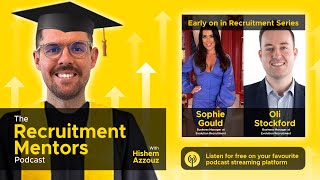
In the concluding episode of the "Early On in Recruitment" podcast series, host Hishem Azzouz interviews Sophie Gould and Oli (Oli) Stockford, both recruiters at Evolution Recruitment with 3.5 and 2+ years of experience respectively. The conversation explores how each entered recruitment—Sophie after a biology/chemistry degree and a gap year in Australia, Oli after leaving college and working in retail and car rental—highlighting the accidental yet decisive nature of their career switches. They discuss the unexpected personal growth recruitment has fostered, such as increased confidence, stepping out of comfort zones, and self‑discovery. The dialogue delves into first‑year challenges: time‑management, building a book of business, qualifying roles, securing client commitment, and the difficulty of saying no to clients. Both guests share strategies for overcoming these hurdles, including strict day‑planning, video‑call emphasis, regular client check‑ins, and leveraging internal training (Evolution’s Invest‑in‑People Platinum). They reflect on what enabled their rapid progression—hard work, hunger, clear goal‑setting, mentorship, and leveraging strengths. Burnout prevention, work‑life balance, and financial prudence are addressed, with advice for newcomers to work hard, use mentors, set measurable targets, and manage finances wisely. The episode concludes with both guests advocating recruitment as a viable career, citing earnings potential, professional development, and the value of the people and culture within Evolution.
Chapters
Welcome to the Recruitment Mentors Podcast. My name is Hishem Azzouz, and today I'm sharing or recording the very last Early On in Recruitment series episode. So this has been a series where we've been interviewing recruiters who are early on in their recruitment career to sort of find out the challenges that they've been working through, what they've learned so far, and really just unpack a advice for those that are considering a career in recruitment or are sort of in the trenches right now of their first year to, uh, 2 years of recruitment. So I'm really excited today to be joined by Sophie and Ollie, who I'm going to get to introduce themselves in a second. But the great thing about this is Sophie's been working in recruitment for just over 3 and a half years, and Ollie's been working in recruitment for over 2 years now as well. So to sort of tie this series up, we've got two recruiters that have progressed really well and are a bit further down the track, so benefit even more from a bit more hindsight. So I'm really excited to unpack their journey so far. So before I start asking you both some questions, Sophie, I'm going to come to you first. If you could introduce yourself and then we'll, we'll get into things.
Yeah, perfect. Well, I mean, thank you for having us on. Um, so yeah, I've been in recruitment now for, like you said, just over 3 and a half years. Um, I joined recruitment at Evolution. Where I am currently, my first ever recruitment kind of role, and I focus on JavaScript freelancers just in the Nordic areas, so across Sweden, Denmark, and Oslo as well.
Awesome. And obviously, for a bit of context, you did you— so you went to university, but you didn't join straight out of university?
No. So I went to university, did a year traveling in Australia, and then kind of just came back and found this recruitment job.
Yeah, nice. Love that. Now, you got a degree in biological chemistry?
Yeah, so I actually got a first in—
Interesting.
Yeah, biology and chemistry. So definitely different to recruiting JavaScript freelancers in Sweden.
Absolutely. Cool. And then, Ollie, why don't you tell us a bit about yourself?
Yeah, so likewise, pleasure to be here. Thanks for inviting me. I'm a business manager at Evolution, like Soph, but I work within the southwest of the UK helping open source, mainly JavaScript and PHP engineers find their ideal role. I didn't go to university. I was very much of, I'd like to kind of work for my living, if that makes sense. So straight from college, I had a part-time job at Debenhams and then went full-time after that. And then from there, just worked my way up.
Yeah, love that. So obviously, again, just for a bit of context, obviously Ollie, you work in the permanent market, right?
Yeah.
And then obviously Soph, you obviously do freelancers, as you said. So Soph, obviously you recruit solely into the Nordics, as you said. And then obviously Ollie, UK, but just Southwest, yeah?
Yeah, predominantly Southwest in the UK.
Awesome. Right, so where I always like to start then, so, so if I come to you first then, as I was just saying, got a first in biology and chemistry, went to Australia, came back, like how the hell did you end up in recruitment then? Like, let's just, let's just start there.
Yeah, well, it was a bit of a mad journey, but I think it was, I did my degree and I enjoyed uni, don't get me wrong, it was fun. Obviously did really well. I enjoyed the social aspect of it like most people do, but there wasn't anything I was kind of super passionate about, or I couldn't see really where I would fit into like the science world. And at the time, one of my friends was going to Australia, so I went with her and I thought, you know what, I'll come back, I'll kind of get rid of my responsibilities for a year, like let's just run away from them. And then I'll come back and decide and see what happens. So then I came back just before Christmas and really I just wanted a job where I could earn some money, get my savings back up because I'd blown it all in this one year in Australia. Yeah, and then I got approached by an internal recruiter here at Evolution and then it just went from there. I interviewed, loved it, kind of loved what the company were about. And to be honest, never thought— I didn't even know what recruitment was. Like, I never thought about it before.
Did you not come across it in Australia? It's obviously quite common.
Yeah, a little bit, but to be honest, I was more doing like the backpacking side of things and like just partying. It wasn't really like proper adults with careers that I was really coming in contact with.
Yeah, yeah, yeah, fair enough.
But yeah, so then I interviewed here, started— I think I started the middle of January, so it was quite a fast process in terms of getting back to the UK. And then starting with Evolution.
So yeah, it was quite a typical story of like accidents, like finding it, like, yeah, okay. And then what about you, Ollie, then? Obviously you took a bit of a similar route to me really. I had no idea what I wanted to do, so I didn't fancy going to uni and getting into debt. And if I'm honest, probably didn't have the grades either. If I'm honest, like, I found college difficult, so I guess I then found like sales and I was like, oh, you know what, I actually didn't even know sales was a career option, really enjoyed that. But like how obviously you worked at Enterprise Rent-A-Car, like moved your way up in that company before you then got into recruitment. So tell us a bit about how you got into recruitment because it's a slightly different journey.
Yeah, so like I said before, I always liked the thought of working full-time as opposed to going back into education after college.
Sure.
I enjoyed sales. I enjoyed working with customers and that side of things. I really like flourished when I had the opportunity to work my way up and progress up the ladder. I didn't necessarily choose to go into recruitment. Again, enterprise, work my way up from the trainee management side, learn everything about business aspects in that way. But when you get In sales, I found that at Debenhams, it happened at Enterprise, you get to a point where you're stuck because you've got to wait for someone to kind of move out. Either that's get promoted or they leave the company or what have you. I got approached by one of the internal rec here at Evolution for an interview. I could have gone in a couple of directions, like I could have stayed in rental, I could have stayed in sales, like a business manager, manager sort of thing, but I thought I'd see how it goes. I got totally grilled by Andy Brack, the MD here. He was really passionate within the interview about like what makes a good recruiter and the resilience that's needed, and I wanted to kind of prove to him that I had what it took. I always wanted that role where I could kind of make what I want out of it, depending on how much I put in.
Yeah, I think that really is one of the great things. Like, I remember when I got my first sales job, which was, it was like in the call center so you could get commission and stuff. Before that, I just did similar things to you, Ollie, where I think I worked at The Range for a bit, B&Q, did some Domino's delivery, like just anything really. And then when I got in a sales job, I was like, oh, like I can actually be rewarded for the hard work that I put in over someone that could turn up, do the same job, but like half-ass it. Do you know what I mean? And so that's the thing. I was like, why would I be in a job where, yeah, two people could be sitting next to each other, you get paid the same if one person like puts more work in the other? And I was like, oh, sales can obviously provide that space. So I love that. So I guess— sorry, go on. Sorry. Yeah.
And it wasn't just that as well. It was the fact that I had the motivation at home, now three, but back then two kids. And then this is like— I didn't get myself in debt because university, I didn't have university to go to, but we got ourselves in debt, mainly me, just off stupid mistakes. So there was like a— it's like that advert with the headache. It's like that thing in the back of your mind that you need to do something about it. And this seemed the best opportunity to kind of clear your debt by working hard.
Yeah, with no limits. The only limit is yourself. Yeah, yeah. I love that. So Sophie, back to you then. Obviously been in recruitment for a little while now, so I guess the question I'd like to ask is, obviously talking a bit about how you got into it, but like, like how, like what skills or experience would you say, Soph, has recruitment given you that you least expected, would you say?
Yeah, I think it sounds really cheesy, but I think it's made me really learn more about myself and like who I am as a person. Like now I'm just so much more willing to kind of step outside my comfort zone, do things that you've not done before and try new things. And little things like, we run a podcast series ourselves and one of my aims next year is to kind of go and actually host a talk, like a live event across the Nordics. Now, Sophie 4 years ago would have absolutely died at the thought of that, like no way would she even consider that. So yeah, I think it's really learning about yourself and learning how much you can do, even if it's something you're not comfortable with.
I love that. And how, again, just curious, like, how has that shown up? Like, has that shown up anywhere in your personal life as well?
Yeah, definitely. I think it makes you one, more confident, and you just, you can achieve whatever you want to, both in work and outside of work. And I think it shows that you can, whenever you put your mind to it, all it is is a bit of hard work. And if you stay on track and you keep within your aims, you're going to achieve it. And I've seen that outside of work. So yeah, it's definitely helped me on both playing fields, really.
Yeah, and that's been really common, which is why I wanted— yeah, so I love that. I think that's such a great thing that sometimes it may not be like sold in the typical like recruitment interview, do you know what I mean? That you are going to be out of your comfort zone and this is— you could become an even more confident person or it could help you gain more confidence. So I love that. And then what about you then, Ollie? What have you— what do you feel like you've experienced or skills that you've gained maybe that you least expected? Obviously you knew you wanted to go into it to clear debts and everything, but What else?
Yeah, I mean, at the same time, I had a lot of growing up to do, so everything just happened all at once. Like, obviously met my fiancée now, um, having children at a very young age, like, it was all scary. Um, yeah, I'm 24 now, but back then when I first started working, I would have been 18, 19. So obviously everything had to happen straight away. I had to change my ways, um, Recruitment has given me a couple of things, really. So, one, that how business operates. So, you know, I'm learning each day, like I'm still learning, um, how different businesses operate in terms of the ones that I recruit for different sectors, interesting sectors, that is, as well. Um, patience. To begin with, I had little to no patience, and that's because I was just so eager to impress and earn commission, um, which I've often let affect the relationships I was trying to build, and then also relationship building. So I enjoy speaking with people, I enjoy working with people. Obviously, depends on the client, but you could be dealing with anyone from HR, tech team, to owner in the permanent side of things. I need to adapt my style to different people, really.
Okay, love that. So, spoken a bit about the positives, I guess, Ollie, back to you really on let's just think about, let's just sort of focus on like the first year for both of you. Cause I'm sure if you've gone through the process of like speaking to people about joining your team or whatever, I don't know if you have, but a typical sentence you will hear is like the first year in recruitment will be like one of the toughest that you'd face or experience, right? So I guess, Ollie, back to you then, like what, so you mentioned patience there, but What other sort of challenges sort of really came up for you in that first year that you had to really work on in overcoming?
So this might be a live exclusive to this podcast, Hishem, but I was very scared to say no to clients and candidates. Coming from a customer service background, it had to be yes to everything.
Yeah, customer's always right. Yeah, exactly. That's the sort of sentence you had, yeah, yeah.
Absolutely. It led to me working poorly qualified jobs with little commitment, and then it actually led me to serve notice due to doubting my own self back in my fourth month of Evolution, which obviously was my first job in recruitment.
So why did you do that? Just, just let's just like, why you, you came to a point where it's like, you know what, maybe this isn't for me, or I'm prepared to quit. Like, what was there, like a lead domino at all? I don't know.
A number of factors really. So obviously back then it was 5 days a week in the office and there was obviously a cost element to come into the office. Obviously being in debt as well, that was the huge pressure on mine that was kind of stopping me from— not, well, it wasn't stopping me from working hard because obviously that's why I wanted to get into the job, but There's obviously that doubt in my mind that I can't afford to live here and obviously got kids to look after. I was doubting myself whether this job was the right move for me just because of everything was just seemed to be dropping off. I started off well, I think I placed my first candidate who's still going strong in my first month and then had a couple of things come on and then they all dropped and it's like, if you add up your potentials and then they don't come in, it's like, that's heavy though. So I learned from there never to do that again. And it was just, it's self-doubt. And I think a lot of people do it. Since then, I've gone on to clinch, you know, 5 promotions within 2 years, broken a 20-year-old, 20-year year-to-date revenue for the business. And I'm on the verge of surpassing, you know, a revenue target that I'm proud of for the year this year. And I think the business has, a couple of people have done it in perm. So, you know, it's all happened so quick, but I think it was that, element of doubting myself and thinking whether I'm right in this role. And I tell everyone that we're getting into the, you know, we're hiring for our team, you need to be honest, you need to ask questions, you know, you need to work hard and make sure that the qualification side of things is strong. So we do a lot of video calls now, not just because of the pandemic and what the effects that side, but, you know, self-centered with Nordics as well, video calls are key. Because you understand the business more.
But yeah, so say, okay, so say, say, yeah, I love that. So I didn't know that.
Yeah.
So, okay. So let's just, if it's okay with you, Soph, let's just like hone in on this a bit, Ollie, very quickly. Because I think people can relate to this because I think people will listen to this and maybe even reach that moment or have that self-dialogue of like, maybe I should quit this or maybe this isn't right for me. Right. So you spoke a bit about what led to that. What then? So obviously now you can benefit of going, I'm so glad that I didn't because this has happened. But what changed in your mindset, do you think? Like, what, like, how did you— obviously when you stayed and you decided to stay, I don't know, what do you think changed?
Actually seeing, like, actually seeing the work that I was doing, like having the one-to-ones with my line manager James, um, and actually seeing the work I'm doing isn't actually as bad as I think it is. Because I wasn't achieving the results there and then, yeah, it was making me feel as though I wasn't doing well, right? If that makes sense.
Yeah, that makes sense.
And then not just seeing the here and now, what was happening, it's what is available in the future. And if I work hard now and work harder than anyone else, I can actually achieve a lot. And what I tell new starters now is you need to be prepared to put the effort in. Like, I think you mentioned it before, so sometimes recruitment can be kind of mis-sold in a way that it isn't a 9-to-5 job, it isn't glamorous, you need to work hard. Don't be fooled by that. It's fast-paced, it's hard work, and it requires to stand on your own feet. With the right backing and support, you can make it where you want, and I think that's That's what I was doubting myself on because I wasn't actually sure whether I was putting the right amount of work in because nothing was coming from it. And that came from the kind of work that I was doing. So the poor qualification, um, in that, that was the one thing that I changed. It was the video calls. And from then on, it kind of stemmed from the change.
Yeah. So yeah. Okay. Got it. Cause I think, I think, and then just to tie this up, so for now I'll come to you, but I guess what's quite common, I think, and I couldn't agree more, is when you're in the trenches like you were, it's hard to see what could be around the corner. Do you know what I mean? You might have senior people like James go, "Look, Ollie, keep doing what you're doing. It'll pay off." But you're like, "Yeah, it's easy for you to say that. You build 30 grand this month or whatever." Do you know what I mean? But it can be really hard to see that the work you're putting into that, it can really benefit you and show up in 3, 4 months' time. And I'm sure that's probably even more so in your world, Soph, in contract. But yeah, like, I guess just to tie us up then, advice for someone that may be struggling to see out of the trees or get their head above the water to see what the sort of hard work they're putting in now could benefit them. What advice would you give them, do you think, to help them better see what they could be achieving or where they could be in another 3 months' time? That's— that's— speak to people.
Speak to people and get them to map out what they think you're doing right and what you could be improving on. I think one thing that I can say about Evolution here, and I'm pretty certain Soph will agree, is the people here are genuine people. And the training, you know, we've got an Invest in People Platinum, you know, it's world-class training here. So without that, I don't think people Saying that is probably a bit harsh on certain people, but I don't think you can succeed without that, do you know what I mean? Like, it's really good.
Don't suffer in silence. Don't like talk about it.
Yeah, absolutely. And you've got to speak to people.
Yeah, I love that. So Soph, over to you then. So thinking about, I know this might all seem a bit of a blur now, like let alone the last 18 months, 2 years, but like thinking about that first year, obviously your world is contract, Freelance. And did you do Nordics from day one? Yeah. Okay.
Always done what I'm doing now. Yeah.
Yeah. So what, what were some of the biggest challenges that showed up for you then that you had to really work through and overcome?
Yeah, I'd say it's quite similar, but more so kind of finding where to spend your time because it's so easy to be so busy in this job, but not actually busy with the right things. So I think respecting your own time is so important and it kind of ties in with what Ollie said about qualifying jobs, qualifying candidates. And for me now, I'll only work with clients and candidates that can give me the commitment that I can then give to them, because that's the only way it's going to work out for the best. But I'd also say kind of the first year, especially with it being contract, is building the book and seeing the money in return when it's— what, it'll take you 6 to 12 months to build your book up, but you've got to graft so much in that 6 to 12 months for little return until you start getting your runners adding up and you start building your book. And it's the constant thought of, like you said, this is, I'm going to do this for the future me, for the Sophie in 6 to 12 months' time. Because it isn't, you have a runner start and then you get the money the next month. It can be quite a long process to build up the commission. So you've got to have that in your mind because it can be so easy to think, well, what am I doing? Like, why am I doing this?
Yeah, yeah, absolutely. So just because I think a lot of people benefit right now, and I think you've both mentioned it and how sort of pivotal it's been, just to frame this up. And so far, I'll come to you basically to talk a bit more about this client commitment piece, because speaking to a lot of recruiters at the moment who like a sort of typical sentence I might hear is like, I've got live jobs coming out of my ears, right? That might be like a typical sentence I might hear at the moment. A lot of people hiring, and I think right now quite a few people could be prone to like being busy fools and like spending time in places that may not give them what they're hoping for in terms of opportunity to place people, work with the right people, all that. So I guess, could we just, I guess, just have a bit of a focus on like when you say client commitment, what, like just to have a bit of a deeper dive into that, because I think that would be really helpful for people right now. And as you said, both of you said, is quite pivotal when early on that you actually started to work or get more commitment from clients and value your time. So I guess, Soph, how have, like for you now, when you say client commitment, what are like the non-negotiables for you when it comes to a client work or you partner with a client? Like what do you need on their side? What things do you look for? What questions do you ask to make sure you're then spending time and partnering with the right clients?
[Speaker:SOPHIE] Yeah, if it's a client that you want to work with that maybe hasn't got a live job, we always aim for like monthly calls, like monthly video calls everything done on video, just to keep in the loop, to make sure that they respect your time and that they know that when there is a live job coming, you've had so many chats with them over the past however many months that you know each other. But I'd say with the live jobs, which is definitely common, there's so many jobs at the minute, kind of having a weekly call booked in to catch up on these are the CVs or these are the candidates I've found or these are my challenges. Getting interview slots from the first call that they say they need a job, so making sure that you've got the interviews booked in for you to then go and fill. Feedback calls as well, that's important. So once you've had the interviews, making sure that manager's going to dedicate 15-20 minutes to feedback on them interviews with yourself. I think all these things are really important, and they're so difficult to get once you've qualified the job and then you go away and you do all this, the candidate work and all the resourcing, um, it can be very easy to let the ball drop and then you kind of start wasting hours with no commitment from the client side of what we're going to do with all this information now.
Yeah. There's nothing worse than like, yeah, taking that job, buzzing, got a new job in, start getting to work. Like you said, you don't have any time in the diary with that client. If it's feedback, if it's interview slots, whatever, you didn't get commitment on the other side, and you then call them, I don't know, maybe 10 days later because it took you that long to get some CVs, shortlist, and then they go, sorry, Soph, but we've actually moved the goalposts slightly. We're now looking for this or whatever. And that's— you're like, fuck's sake, right?
Yeah.
Yeah.
So, okay. So very quickly on this, because I think this is really practical and useful for people. So out of interest, you know, there's monthly calls. I've heard Chris talk about this before. Like, just talk to me very high level. Like, why, why, why would I book in a monthly call with you? Like, what, like, what are we going to talk about?
Yeah. So one of the big things we do is our own podcast series. So we really kind of ear to the ground on what's going on in the market, setting up our own podcasts and talking about interesting things. So that's a good one that we like to lead with. Is these are the topics we've discussed recently, have a listen, what are you interested in, let's get you on a podcast. But also because we do know so many companies across the Nordics that we get on to the podcasts, we can share information like remote onboarding or things like this that have happened that maybe could be a pain point for some of the clients. We've got so much industry knowledge from other companies, whether it be competitors or completely different companies from different industries. So it's more about sharing that information and sharing that knowledge to kind of add a value and for them to say, you know what, I came off that call with Sophie and I've learned this, or I've done this, or we had a really good chat and I'm going to implement this. So it's like constantly adding value and adding a service, really.
I love that. And then the other point before, Olia, sort of learn a bit more about your experience is, so let's just, you know, all those things that you, so basically what we're trying to get is a client to commit time to you or agree on time slots and these types of things. So like obviously a red flag I'm assuming would be if you suggest, hey, what's typically worked with other clients is we book in interview slots. This is how we work on feedback, blah, blah, blah. And they go, sorry, so if I'm I'm really busy, I'm not going to be able to do that. I guess, what's your advice for recruiters that may be getting that to go, well, I guess you've got to then get good at saying no, right? Or you've got to get good at going, hey, look, this is how I work, otherwise I'm not going to be able to deliver your service. Like, what advice would you give if people aren't able, like clients aren't willing to give you that out of interest? Like, what would you encourage people to say or advice?
Yeah, I think it depends on the situation.
Sure.
I think you've always got to think of like, win-win, like, what can— how can you come to a resolution that fits both? If it is the case of hiring managers not having any time, try and think of a solution of, okay, what about a phone call? What about a call in the morning when you're on your way to work? Or what about on lunch? Like, anything you can think to kind of solve their problem of not having enough time as well. But if it is a case where you are trying, you're suggesting things, but you're not getting the commitment, It's hard to say no. It really is difficult, but sometimes it's better than wasting your time.
Yeah. Yeah. How would you say no?
Oh, it's a good question. That is a really good question.
Again, I know there's like nuance here, nuances here, right? But is it something like, hey Sophie, look, I've come up with suggestions. The reason why I am is because of this, but if we can't, then unfortunately I'm not. I don't know. Like, it's hard, isn't it? Because you want to leave a good impression.
But you're saying, right? Yeah, yeah. I think if you explain, what I would do, I think, is I would explain that you're working with other clients, that you've got that commitment, so it's more beneficial for you to spend your time there. Of course, don't say, right, see you, I'm never going to speak to you again.
Yeah, yeah, yeah.
But say, if I've got time, I'll spend some time on the role, but obviously it's not my priority. And I think they can understand that because they understand the recruitment. We're all here to do business and for it to be mutually beneficial. So I think just explaining the situation. I'm not too sure because I've always done Nordic recruitment. Yeah, they're quite open to things like this. Like, there isn't really too many, like, huge, huge blockers. Like, we do tend to find a way of making it work even if they are really busy. But yeah, I know sometimes in the UK it can be, it can be even tougher because, yeah, different markets, isn't it?
Cool, thanks for sharing that. So, Ollie, over to you then, to one of your As you said, one of your real pivotal learnings was saying no, getting away from that environment of like, customer's always king, customer's all right, to then being more consultative, being willing to say no, getting more commitment. So talk to us a bit about, I guess, what you may encourage some of the team, like people in your team now with in terms of getting more client commitment, like same sort of questions really. What's been your journey with it and how have you got better at saying no as well?
Um, I still struggle to say no. Um, that's me being honest. Um, with the— so when I changed my ways of working, it was, it was basically because I was just having a single phone call, and that's because I knew from, from previous, like, training, um, or the ways of previous work in recruitment, that's how I felt it was, just a phone call doing a job step. A job spec call and then that's it.
You go and find candidates.
I don't know. Like, I know a lot of recruiters like Scott in my team, he's really good at just doing that and cracking on. He'll find the best guys for his clients and that works for him. But for me, it's like a weird enigma that I can't fill a role without seeing someone face to face on a video call. Yeah, really strange. So I then just put it into perspective and kind of stressed the benefits to prospective clients or current clients that let's jump on a call, let's talk about it. It allows me to understand you more and your role and company more to then sell to potential candidates. Um, the people that we get into the team are new hires, um, I work with them on a strict day plan and that's something that's worked from the minute that I changed my ways of working. A strict day plan being that when you mentioned when there's loads of roles going on and where do you turn to, to avoid going in a dark hole, Your day plan then allows you to kind of structure your day in a way that you get everything done and you work your priority jobs, but you're also doing the most important thing that I think, and so also think, is business development to allow your pipeline to then, you know, help you in 2, 3 months' time. Because I see recruitment as your own business because you basically are your own desk. You are what you make of it. You're in control of what you want to do. So You would never set up your business to fail. You'd never set up your business to 3 months down the line have nothing going on. So by doing a day plan, we're likely to plan that for the months ahead. And that's how it works ever since.
Okay. Love that. So now we went into a bit of a deep dive there, but I know that'd be really valuable for people because even people who are 2 years, 3 years in, like yourselves, it's a real challenge sticking point at the moment. So the next thing then, I'm going to come to you first on this. I think specific to both of you, like obviously let's just say we were to sort of sit in a typical interview of someone that was selling a recruitment job to someone, right? Like no doubt within there we'd be talking about, look, Sophie, you can join our company, you can progress. It's down to you. Join as a trainee. Look at Ollie over here. He'd done it in 2 and a half years. Like, like you'll get that, right? But obviously both of you have achieved that. Over different periods of time. So I guess what I just want to talk a bit about now is really, I guess, just unpacking maybe why you think you've been able to progress and you've been able to achieve those sort of milestones so far that a lot of recruiters will join Evolution now, and that's where they want to be. That's what they want to achieve as well. So I guess first, you, Ollie, really, obviously over, um, yeah, the period that you've been there, nearly 2 and a half years, you've gone from trainee the business manager? Like, why, why do you think— I don't know, maybe 1, 2, 3 things that come up for you as to like why you think you've been able to actually progress and achieve that, do you think?
Um, so I've shown commitment and hunger, um, partially due to, um, you know, my home motivations that I've got back at home waiting for me. Um, I'm prepared, whether this is the right or wrong mentality, but I'm prepared to make sacrifices at home to ensure that, you know, future life is going to be better for them. And by that I mean, you know, working late, whether that's in the office, not so much, it's at home, and being prepared to just be switched on whenever I need to be. This isn't linked to, like, anyone else potentially. Well, it probably will because of the pandemic, but During the pandemic, one thing that I found was that Nick and Gareth, the owners of the business, they were very transparent and they walked through the business and how they were operating. And if we did this, how we would achieve certain things. And if we didn't do this, what would we not achieve? Basically P&L and what it was looking like. And that just spurred me on. And I think them being open and transparent made me want to work harder for them.
Nice.
And one thing that I remember in my first interview with Gareth, the owner, he said that we can give you everything. We can give you the tools, we can give you equipment, everything like that. But the one thing that we can't give you is the motivation and the work ethic. You need to do that yourself. And that's stuck with me ever since. Just working hard and being accountable for your own actions. Is something that will make you succeed. So, you know, 3 things: commitment, hunger, and motivations.
Yeah, just really, really dug deep. Okay, I think there's a couple things I want to ask you more about that, but that— I love that. So, what about you? Like, what— why do you think you've been able to progress? And advice for other people that want to progress, or—
yeah, yeah. Like Holly said, work hard. You have to sacrifice some of your personal life. You've got to stay late on a Friday if a job comes in, even if you've got plans. I think definitely putting the hours in and grafting is key. I'd also say trust the people around you. So, my manager Chris, my director Matt, they've always been so supportive and kind of knew the best thing for me to do. So, trusting in them and trusting the process that they've done and what the team they've built, that's really, really key. And then I'd also say play into your strengths. So I think for me, I'm like super, super organized like crazy, but I think that's like a real strength within recruitment because it just allows you to kind of forward think and plan and get you on top of things. So yeah, whatever your strength is, definitely play to that and focus on that rather than trying to constantly improve what you're not too good on. Let's focus on what you can do and what you are good at.
Yeah, I love that. So on, on this, so if I'm gonna come back to you on this, right? So you've both said, and look, this, this is personal, right? And I'm, I'm really like, my view of this is like, it's completely personal to you and you make your own decisions, right? But like, I think it's definitely quite common for particularly people who are early on in their recruitment career to like literally just absolutely graft, work their socks off, and like might find themselves just grinding themselves to a halt, basically. Do you know what I mean? So I guess, I don't know if either of you have experienced this, may have, may not have, but I guess any thoughts on like, at the same time, let's be mindful of, I don't know, what do you keep mindful of to make sure that you don't burn the wick at both ends? You know what I mean? Yeah, yeah, to you, like, I don't know, yeah, any thoughts on that?
Yeah, I've definitely experienced it, and you know what, I can't notice it in myself, like, I'm getting better at it, but it's, for me, it's down to my manager Chris to be like, right, Soph, come on, you're kind of working too hard, you're overworking, take a step back, because it's, because you're so eager and you, like you said, you're so hungry for it, and in this job there's never a stop, like, there's never a day where you're like, I've done everything I could possibly do. Yeah, there's no, there's no end. So it's something I definitely struggle with. Most weekends I'll work if I've not got anything else better to do. So for me, it's definitely having someone around me who can be like, right, Soph, calm it down, but also making sure you prioritize stuff outside of work. So a task I've done recently with, with my director is looking at your week and looking at where you've spent time, whether it be in work or with your family or with your friends. When you go back over the past few weeks you can see that you've spoke to a family member maybe twice and it's like, right, well, that's the balance is off there, isn't it? So you need to make sure that going forward you're kind of booking time in into your personal life as well, rather than just not having anything to do. So then you naturally fall back to working.
Yeah. Yeah. Okay, cool. And I know this is super personal, right? And I'm definitely similar to you, but I guess, Ollie, what about you then? As you quite openly said, look, I'm, I've I've decided I know if I'm happy to sacrifice now in the future family that you're building is in a great position. But I don't know, any thoughts on that? Because I do feel like it's important that we also talk about this.
Yeah, I think it's definitely a key point. I mean, lots of people simply bring themselves to the role, whether it be a new role, and almost expect people around them to show them exactly like what is needed each hour of each day. Those who are successful take on as much advice as possible and then go above and beyond without the need for kind of direction. I think, like, I've been told off by Gareth before, like, you know, being working past 10 o'clock. It's like, Ollie, what are you doing? You need to spend time with your family. But for me, like, I've never had that before. I've never had that sort of support and guidance from that high up.
Yeah, yeah.
Coming down to my level, do you know what I mean? But I think at the same time, yes, I do give time to my family and I probably do, if you kind of work it out, I probably give more to work. But Evolution is, this might sound cheesy and cliché, but Evolution has genuinely, and I mean genuinely, helped change the life of myself and my family. And I've had a lot I've had to make a lot of sacrifices at times, you know, as the role can be very demanding. But I know that the long term, the balance of family life will definitely improve and work in my favor.
Yeah, yeah. I think the advice there then, which I quite like to be fair, is just be honest with someone in your team and go, look, I, as you know, I'm quite prone to work my absolute socks off, whatever. So if ever you think you need to pull me up or go, look, so if you, have you thought about having a bit of a break or whatever? Find those people in your business or your team.
Yeah, definitely.
So, um, no, I love that. So a couple of things then before we finish, I guess, before I ask you sort of the sort of final questions I like to ask, I guess. So back to you, I guess, if we were to try and put together your experiences and what you've learned, I guess if I'm listening to this right now and I really want to have the best possible chance of finishing that first year in recruitment on a high, on a positive, I'm excited to go into my second year of recruitment, what 1 to 3 bits of advice would you give me, do you think?
Yeah, I'd say definitely keep working hard, like think of the future. You don't know unless you try things, you don't know whether it's going to work, whether it's not, so just really biting the bullet and going for it and stepping outside your comfort zone. And I would say using the people around you. So what I quite liked was that when I came into this business, there was a number of top billers, there was a number of leaders that are so, so approachable that you can have a chat with and everybody does it slightly differently. So I think kind of learning from everyone and taking bits of this person's success and how this person does it and just using the people around you, I'd say is definitely a smart way of doing it.
Hmm.
Okay. Love that. Ollie, same question to you.
I think there's two things. So make use of the tools. So Evolution are a platinum investor in people. The training is literally world-class. Make use of that. They put a lot of money into it. Make the most out of it.
Yeah.
You know, I thought maybe not being a grad might have held me back, but it never has. The other thing is similar to Soph is that You just need to be the hardest working person in the business. There's no exceptions. You need to work harder than that other person on desk 12 over there or desk 2 over there. And yeah, definitely ask, take advice from the top billers, sit down with them. You know, I've had a couple of chats with people when I first started of, you know, how, how you do certain things, how do they overcome things. And it definitely helps.
Yeah. Okay. I've got two more things before I both ask you the final question. So you both obviously mentioned a lot around working hard, work ethic, these things. So Ollie, first to you then. How, um, how do you set goals? I feel like, like you're going to be even more inclined to work hard if you know exactly what you're working hard for. Talk to us a bit about, I don't know, do you set goals? How do you think about your targets? I feel like the people that really get the most out of their work ethic are really clear and have clarity on like where they're going or what they're aiming for. Just out of interest.
Um, so being in recruitment has made me realize that I'm actually quite good at chasing down targets. So I think Evolution are really good at— and I presume every recruitment firm has it— but these like internal leaderboards, um, and target boards. And that has made me target where I want to go to the next level. And the promotion structures in Evolution pinpoint where I want to go. And having an Excel document for me just to track my progress. And then I sit down with James and even Andy as well, the MD, to pinpoint where's next. And the great thing about it is there's literally no ending.
Yeah, cool. So I guess if you haven't got that, you need to be talking to someone in your team about having clarity on what I need to be doing, where I need to be to get to business manager or whatever the job title is. So for you, it was having complete clarity on that, which meant it's really easy for you to really work hard because you know exactly, yeah, there's, there's no, it's complete clarity. Yeah. I love that. Okay. So what about you? What, talk to, obviously it's quite an organized person. You said, so do you set goals? Talk to us a bit about how you think about goals and stuff.
Yeah, definitely. 100% agree with Ollie there, the promotion. And literally what's, what attracted me to this job is I know every minute of every day what I need to do to get to my next goal, to get to my next promotion. But I think aside from the promotions, even just like the basics of the job, so video calls with candidates, video calls with clients, literally writing them down in an Excel sheet or however you want to do it, and knowing that this is my goal for the week or this is my goal for the month. Let me hit that. Let me exceed that. So that's something that I do. Like I have daily targets, weekly targets, monthly targets. And they're obviously on like the very, very basic level. I know hitting all of the basic targets is going to reach to my end goal of being successful and hitting my promotions and doing well within the job really.
Okay. Love that. So before I ask you the final question, sorry, I know there's, I've added a few more, but basically, Ollie, I have to ask you this. So what I want from both of you, if you have anything to share, don't feel like you have to, but I want to find out from you, like, financial— that's a fire alarm. If you could, um, let me just—
is that going off for you as well, Ollie?
Wait, I'm gonna—
like, in your room?
No, I can't hear it here. I could hear it outside.
We can edit that bit out, but I want to say what I'd love to get from both of you before I ask you the final question is, so first to you, Ollie, like, I'm personally, right, just to frame this up, I'm actually baffled that we don't get taught about finances in school. And like, I just, it baffles me, right? So I've been on my own journey on like financial education, like just trying to learn exactly like just what I could be doing right now that could benefit my future self financially. Obviously, you've both spoken about hard work, hitting targets, getting promotions. With that, obviously money comes with that, right? I think sometimes, not that it's completely down to the employer, but I'd love to have more conversations in recruitment around just more sharing of like, or having conversations around, I wish I did this when I was earning that amount of money, or I don't know, just having a conversation around it. So I guess the question is What, what, I guess any financial advice that you wish you had when you were younger or like when you're first starting out of interest? Just, just curious.
Don't, don't spend on silly things.
Fair. Nice and simple. Yeah. Just. All right, cool. I'm happy with that. Don't say that. Don't go crazy spending on silly things. Budgeting.
Yeah, like when—
sorry, sorry, sorry.
I was gonna say, when you're a young person, like, forced to rent a house at 18, 19, rent prices— obviously this is my own doing, but having kids so young, um, like, there's obviously a lot of outgoings, and the budgeting thing was— I never had that support as a kid.
Yeah, yeah, nice. Sounds boring. But it's, it helps, doesn't it? Like, I've only started doing that in the last couple of months, actually budgeting, and it just helps. So what about you? Any, any financial advice you wish you had a bit earlier? Maybe, or maybe you had to learn the hard way. And we're not financial advisors here. We're just trying to have a bit of a conversation around money and what we do maybe differently.
I don't know if I'm the best advocate for this because I literally love spending money.
I love that.
I need the advice.
But no, I think I've got better. But you know what, for me, like, being able to go out and buy silly stupid things and buy expensive stuff, and I'm like, oh, do you know what, I'm 26, I can do this, not many of my friends can do this. It gives you that feeling of like, oh, well done. Yeah, but I definitely need to rein it in.
No, I appreciate it, honestly. Cool. So look, final question. So if I come to you first. I guess, as you said at the beginning of this, like, a lot of people can find themselves falling into recruitment, all of that. And I really believe that, like what both of you have shared, like, recruitment can sort of give you so much professionally and personally. So I guess final question is just like, why, why do you think, or why do you believe, like, like, people should, more people should consider recruitment as an actual career choice rather than it being an accident? Is the final question.
Yeah, I think aside from kind of the usuals that you hear, like the potential of earnings, the trips away, the incentives, I think the people you meet along the way are really like-minded, they're really hardworking, they're really outgoing. So, the people that you will meet and that you will work with really make this job, and you'll learn from them and kind of make friends for life, really. So for me, it's definitely the people that you will come into contact with.
Love that. Ollie, what about you?
I think I've answered it, to be honest. It's hard to answer properly without reeling off into a load of clichés. But like I said before, working at Evolution has genuinely helped change my life, myself and my family. And whilst I have to make a lot of sacrifices, I know that in the future and the long term, the balance of value is going to be massively in my favor. And that's thank you to Evolution, the training that's provided, the support. You've got to choose your businesses right, but I think as an employer, as far as Evolution goes, I've never had— well, and obviously I had two full-time jobs before this, but I've never had directors that sit on the same floor as you, that are literally walking distance to you and will shake your hand and just talk genuinely about footy. I've never had that before. It's like, so sick, there's genuinely great people and you're surrounded by that to learn from. So yeah.
Yeah. Love it. So, it's been a pleasure. Excited to see how both your careers continue to unfold, but thanks for joining me. I really appreciate it.
Oh, thanks for having us, Espawn.
Bosh, mate. There we go.
More from Hishem




You don't need as many clients as you think to bill $1 Million A Year In Recruitment



From 30 Direct Reports to Back-to-Back $1M Years as a Solo Recruiter with Zach Creighton



