Elly Greaney Why management isn’t always the answer & play the long game of building relationships!
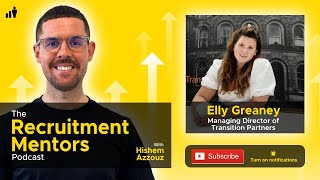
Ellie Graney moved from beauty entrepreneurship into tech recruitment at 24 and built a £80k-generating events strategy. She scaled from $140k to $340k in annual billings by hosting community events, networking relentlessly, and taking on client accounts during a colleague's maternity leave.
Chapters
Welcome to the Recruitment Mentors Podcast. My name is Hishem Azzouz. Today I'm very excited to finally be joined by Ellie Graney, who is the Managing Director of Transition Partners, who are a tech recruitment consultancy based in Leeds covering the UK and Europe. Ellie has progressed from a trainee recruitment consultant all the way up to director level within this company. In just 6 years. Ellie is currently responsible for a team of 4 people and has really played a crucial role in helping Transition Partners become seen as a go-to technology recruitment partner in the north of England. Ellie, thanks for joining me.
Hello! I feel like I'm so excited to finally be here.
I know, we've been speaking a while, haven't we?
So, um, I feel like you're my pen pal, like we've been speaking long distance.
No, yeah, I'm definitely looking forward to it, excited to dig into your journey. So as I was saying, where I want to start is, in your opinion, what characteristics and traits do you think make up a highly successful recruitment consultant?
Oh God, this is such a tricky question. And I feel like when I interview potential recruitment consultants or transition partners, that is something that I think about all the time. What makes an ideal recruiter and what should I be looking for? There isn't really one answer. There's so many things like resilience, positivity, grit, gravitas, there's so many different cocktails that make up a good recruiter, I think. But for me, there's that special little spark that you can find in someone that's able to create a community, create a network, and build connections. So maybe the sort of person, you know, who can, who on a Tuesday night when no one wants to go to the pub or go out for a bit of a party and everyone says no at first, but they're the sort of person that can create a hype, get get everyone on board, and before you know it, you're having a great night out. So, like, someone who can create something really special, create meaningful relationships, and get everyone heading towards one vision. And I think that's something really special that recruiters have got, and I think successful recruiters definitely have that skill.
Interesting. Do you think that's something that you had at the beginning, or do you think it's something that can be taught?
I can always get everyone a night out. Yeah, I think that's something that I've always been able to do quite successfully. Successfully about like bringing people together and creating a bit of a vision. And I think, yeah, that's definitely played a key part in my success, particularly at Transition Partners over the past 6 years.
But do you think that can be taught?
Oh, good question. Hmm. Oh, 50/50, like maybe a little bit. You can like learn and you can watch other people do it and see. I mean, like, I, like, I really feel like my job recruitment isn't just recruitment. There's so many different aspects that people don't— and I guess it's the different aspects that make a really good consultant. So bringing networks together, communities together, training, supporting, advising, so many different aspects in there. And as you get more and more experience, you're able to use those different skills and utilize them on a daily basis. But I think some of it's intrinsic, like you've got to be a people person. So many people that go into recruitment, I mean, I've been at one of them and you've been part of a big PSL you go to an agency briefing, there's like 6 other recruiters in the room, you're thinking, jeez, like, they want to work with people. There's some people you think, oh, they're not natural people people, like, it's quite hard sometimes and you think, God, how did they get into recruitment? But I think you've got to love people, you love what you do, you want to help people advance and progress their career as well. From an agent, my perspective, I don't just want to be placing people in vacancies that's like the obvious step, I want to help them achieve the next step and take a big jump in their career. So that's what I love doing in recruitment. And yeah, I think hopefully if you've got that little spark, it can certainly help.
Okay, interesting. So when preparing for this, I think you've accelerated your career quite quickly. On the face of it, it looks like that, right? It doesn't feel like that.
It feels like a lot of early mornings and a lot of late nights. But yeah, I guess so. I guess in comparison to—
Yeah, because I was saying before, a real common goal whenever I've sort of search for what people's ultimate career goal is for their recruitment career. A lot of people sort of lean towards wanting to sort of head up their own team and grow their own team, or it's sort of achieving that director status within their agency. So why don't we start by like, how would you describe your first year in recruitment, Ellie?
Awful. Like the worst horrible year I've probably ever had. It was tough. Like it was You cannot underestimate how tough that first year is. And I mean, my background, I'd never worked in an office before, so I was a little bit like a caged animal. Like my— I don't know whether you want to go into background and kind of— before that, I worked in the beauty industry and I worked in sales and I traveled all over the world. I met my chap in Australia and he's from Leeds originally, so moved over here and I was running a champagne nail bar in Harvey Nichols in Leeds. So I was selling nail polish. Yeah, like I was selling. I loved it. I had loads of vouchers for now for Harvey Nichols, which is amazing because I had a really good handbag collection, but I didn't have any money for a mortgage. So I thought, you know what, I've got to do something different. And a load of my clients were recruiters and they were like females doing really well. Yeah. And it was so cool to see like these women come in and they're all sat there drinking champagne, having their nails done, and I used to have a really good laugh with them and they all said, do you know what, you should get into recruitment. So I started at the very bottom. I interviewed with a few different agencies in Leeds and through a rec to rec, and I had no idea what I was doing, to be honest. I didn't even— I actually thought the rec to rec was offering me a job at first.
Yeah, that's so common.
I didn't know, I didn't understand what he was even doing. So it was, yeah, quite unusual circumstances. Interviewed for a load of companies, ended up getting quite a few offers, which was fantastic. And I went into recruitment at 24. So for me, it was like make or break. This isn't just an opportunity to give something a go. It's either going to work or it's not. And if it doesn't work, I'll be a bit of a failure. So my first year, I put a lot of pressure on myself and Sandra put a lot of pressure on me, which I love in hindsight, knowing the amount of accountability that she put on me. It was fantastic. I worked with— when I first started with Transition Partners, it was just Sandra and Emma, who are still there today.
Yeah, I was going to say, why don't we— why don't you describe like what transition partners look like? Because I think that can help with context on the journey that you've been. But like, just really quickly, like, why did you— why did you choose transition partners and that environment? Because that surely must have felt really quite daunting if you're joining two people in an office, then yeah, there's three of you.
Oh my God, it was so daunting. It was so scary back then. Yeah, so I had a couple of— I think I interviewed in two days. I interviewed 5 agencies, I got 4 offers. One of the offers, the one I didn't get an offer with, they're basically, their response was, um, this isn't the sort of office where we wear navy suits. They said, um, there's not, our lads don't have football style haircuts. I didn't understand for ages. I think, God, what the hell are they on about? I'm a 24-year-old woman, like, it's got absolutely nothing to do with. And I think that translated as like they, they were looking for people, probably people a little bit more vanilla, whereas I'm definitely like a mint-choc-chip kind of girl, do you know what I mean? It's all about personality and making relationships with people, and for me, it definitely would have never been right. It was working in accounting and recruitment, actually finance recruitment. And then the 4 other offers I had, I liked, they were actually all bigger businesses apart from Transition Partners, which was the smallest. So Sandra had started the business like 2 years before, and she was a really successful recruiter, for about 10 years before that, and she worked for some amazing brands, really good clients. Emma helped resource all the roles. So it was just the two of them in a small office right in the center of Leeds. And for me, I could just tell there was like a bit of opportunity, like there was a bit of a spark. I love the fact that I'd be working with like two other strong women and it was relatable and they were doing— I mean, even members like Sandra sat there with a pair of Chanel earrings and I thought, oh, I like this, I could have a bit of this. So I thought that was all that time ago. But I remember just thinking tech was probably the— out of all the industries I'd interviewed with, which were like FMCG and finance, tech was probably the one I knew least about. And that came as soon as I accepted the offer. It became pretty apparent actually, because I couldn't even turn computers on. I had no idea. Yeah, honestly, it was a hell of a shock to the system, but I think it was about the people. And I knew that I could just spot like an opportunity. I knew that this company had a lot of potential and it had the groundings of a really good business. And I thought, why not join something where you're number 3 rather than number 53 and be another recruiter?
Fair enough. But with that comes more accountability, potentially responsibility, those things which it seems like you've grasped. So I guess what was— I always like asking this, like, what was the best piece of advice Sandra gave you or Emma gave you in that first year, do you think?
Oh, bloody hell. Don't give up until the roles are filled. That was basically it, really. We were an absolute dream team. Honestly, I still think about it now. Like, we were an absolute dream team. I don't know how we did it. How we worked back then is very different to how we work now. And I think that's been a large part of our journey as leaders, is because that we were all so committed to Transition Partners. But when I say blood, sweat and tears went into this business, I am not lying. Like, the amount of graft that went in. Used to get into the office, we used to get into the office at half 6, quarter to 7 in the morning. We didn't leave till 9, 10 at night. I didn't have, when I first started, like, this is a really good example, I didn't have a car parking space. I just, in Leeds city centre, it's quite expensive to park in Leeds. So I used to get the train in and out, and then it got to the point where I kept missing the last train and I'd have to pay for taxis home. And it kept happening all the time because I was just working too late. I didn't keep an eye on the time. And then Sandra was like, right, we're going to get you a car parking space because you're just working too many hours. So we ended up getting hooked up with parking, that made things a little bit easier. But I got that pretty quickly, probably within about 3 months, because it was clear the amount of hours we were putting in. But it, and it was brilliant to be a part of, and it was really, really hard work. I think my first grey hair probably came in about 3 months into recruitment, but it was really good. And like, I learned so much in every role we filled, every role we got, we filled. Like, our conversion rate was impeccable. Like, we all, we all believed in everything we were doing, and we kind of just grew from there. And at that point, I came on with the idea of being a 360 consultant. My biggest skill coming into recruitment was that I was good at sales and was good at working with people. But we had so much work on, I couldn't, we just had to do delivery. So I was just doing 180 for a long time, which was great. It was a blessing and a curse, I think, but I learned a lot and it was very candidate-led, like candidates were at the forefront of everything I was doing. I built a really strong network and I built a real good community around me. At the time, we were specializing in business analysts, so more technical business analysts, but doing bits of business change and transformation as well, which was like the perfect market for me because they're all like in tech. These are the people, people in tech. So they'd be more than happy to call me and share their knowledge and tell me about all their other friends in tech. And yeah, it was really good fun, but cut my teeth first year. A lot of hard work, not a fun experience. Plenty of times I came home crying and saying I was going to give up. Actually, I did that a lot. I think my first year.
Really?
Yeah, I did. I did. Yeah, I think. Yeah, it's tough.
It was. Why didn't you quit?
Oh, why didn't I quit? Probably because I wanted to prove everyone wrong. Underdog. Complete underdog. My— I guess from a personal perspective, my background, I dropped out of school at 16 to go into beauty. So I had— I left school, all my friends were really successful. They all lived in London, were doing really, really well in like fashion and fintech. And I went traveling and I spent loads of time working in the beauty industry, which was great fun. And I learned a lot and created some really good networking skills, but I didn't really have anything to prove, anything to like show from it. My brother was extremely successful. He'd been to university. He's a retail director of a company down in London. My dad had a successful business and I kind of just thought, you know what, I need to prove them that I can do really well even though I dropped out of school. Because when I dropped out of school to go to beauty school, everyone was like, what the hell is she doing? Really? Yeah. Yeah. And I think from that perspective, everyone everyone had thought I'd made a huge mistake when I said I was going traveling. What are you doing? Big mistake. Don't do that. You're going to waste a couple of years and waste a load of money. And I wanted to prove that I could put the skills and everything I'd learned into, like, really bring it to fruition, I guess. And recruitment gave me an opportunity to do that.
Yeah, just so, just really quickly then, just on that, and then it'd be good just to get some context on sort of how long you were just delivery, then when you transitioned to more 360 management, etc. But you hear this all the time, right? Like, why? So why was Ellie able to sort of put the shutters on and block those opinions out? Because a lot of people would have taken on those opinions and not went into beauty and didn't go traveling, right? So why? Why? I don't know. I don't know if you're stubborn or you're like, no, no, I am going to do it. But like, why was you able to sort of listen to yourself rather than listen to other people, because especially when it comes from family and stuff.
Yeah, I think so, actually. Yeah, I guess I went, I went against everything I was told to do, but I just, I don't know. Yeah, maybe no one can say no to Ellie. I guess I get my own way quite a lot of the time. Yeah, I just knew that I wanted to do things at a certain time, and, and, and actually for me that was the right time. So when I came into recruitment at 24 I had some life skills. I'd been to, I'd been places, I'd met people from all over the world. And when it, when, and that was so important. Like, I think so many people, you see recruitment adverts now and it's like, must have at least a 2:1 and must be this and X, Y, Z. And it's just, to be fair, it's all a load of shit because if you can work with people and you can speak to people, that is more important than anything. And traveling, for example, was a great way of me to be able to network and meet people that weren't in my that put me out of my comfort zone, I guess. I come from quite a privileged background, grew up in Cornwall and probably a bit sheltered. And yeah, I mean, for me it was a huge learning experience. And then when I brought that to recruitment and I'd lived all over the country by the time I'd gone to recruitment as well, I knew places and I knew, I guess it was weird when you travel and you can talk to anyone about anything. If you're quite well-travelled, you've gone anywhere, you've got common ground with people. So I think that's a really good way to be able to communicate and build relationships. So Things like that have been really, really helpful. It's not your traditional route, but for me, for me, it worked really well and I think it's helped my success as well. But starting at 24, it meant I didn't have time to piss around. Like I was going into recruitment and I was going to take it really seriously, which I did.
Love that. So let's just map this out for people listening then. So just focused on 180 Delivery, just because I'm assuming Sandra had the jobs and pulled in the vacancies and then you'd fill them. Or obviously Emirates supporting these things, right?
Yeah.
So like, how long did you do just that piece? And then how long did you then— and then when was it when you did sort of more 360 and more involved on business development and delivery? And then when did you actually start the leadership journey? Just for context for me and people listening, and we'll dig into it.
So I think when I was about 2 months in at Transition Partners, I was literally learning the basics, right? I was so bad on the computer. Even Sandra had to put me on a touch typing course because I hadn't worked on a computer before. I had no idea. So I just spent an hour every lunch doing touch typing and now I'm absolutely whizz at it. But it actually was really helpful for me. And all the basics. 2 months in, Sandra told me that she was pregnant.
Right.
Which I had a feeling that she was a woman, certain age. I think she'd probably want a baby soon at some point, I'm sure. And so she, yeah, so she was pregnant and she was pregnant and I was a bit like, at first I was like, oh God, what does that mean? What does this mean for me and what does it mean for Emma and the business? But actually it was a really good opportunity because as Sandra went on maternity leave, I had the opportunity to start managing her clients and take on some of the key accounts. Me and Emma did an absolute sterling job of like minding the business and growing. We grew the business while Sandra was off, which was incredible. And then when Sandra came back, by that point I was ready to do business development. So I must have probably been about a year and a half into recruitment. But even at that point, I didn't really have to do it, which, like I said, is a bit of a blessing and a curse because I wish someone had been like, right, as much as a cold desk sounds awful, I think for me it would have been quite good because then I would literally just have to hammer it, whereas I didn't have to do that. Which means a lot of my connections have been built after, from like long-standing relationships, recommendations, when clients have moved on. So they might have been one of Sandra's accounts initially, but then I made a connection with a specific hiring manager within that business, and then they've moved and brought me with them. So it happened quite organically, um, which means they were like real relationships rather than, I guess, false.
Yeah, that makes sense. And then, so, okay, so that, okay, so about a year, year and a half in, that makes sense. And then, yeah, If you really put in the work on the candidates and then you took on some clients of Sandra's, yeah, great platform then to grow clients and accounts. So then really quickly then, I've got one question around the candidate piece. When did you, when did Eddie then transition into a manager? When did that start happening? Just for context.
I think I took an apprentice on with probably within about, yeah, probably about a year and a half at that point. I think I probably took on my first Spanish, and that was one hell of a learning journey for me, actually, out of recruitment. That's been the— as much as I am a people person, it's been, yeah, one hell of a learning journey.
So we're going to talk about that. Let me ask you this, right? So there are, there are so— recruitment is competitive, but there are so many tech recruiters out there, right?
Yeah.
So two questions, actually. One, how important is it, do you think, now If you're looking back, clearly you made it work, but like, how important is it for tech recruiters to understand the tech that they recruit for?
Oh yeah, I mean, for me, I'm the best person at finding the people that can do that, but that doesn't mean I'm technical, and you're not asking me. You want me to fill 5 Java developer roles for you, for example, you're not asking me to write the code, so I personally don't think I need to know how to do it. Some people are more technical and I think that's great for them. Like, everyone's got different angles. For me personally, my strength isn't in the technical piece. It's about finding the people and selling opportunity and creating opportunity for people. So not for me, but for others, I think it is valuable. I think maybe if you're more of an introvert, your style is a little bit softer, which actually works really well in real tech. Technical recruitment to developers, DevOps, cloud, etc. If you are more sort of like there's a softer approach to recruitment, a real skilled approach to that, then it can be a really valuable asset. But for me personally, yeah, it's not. Okay.
And then the other one is just like, where do you think most tech recruiters do badly when sourcing tech talent? Where do you think most tech recruiters go wrong?
I think people assume that people are always looking for work and they're not. The biggest, I think the most common mistake in everyone in recruitment, and I think actually it's not often a lot of people's fault, it's the pressure that managers put behind them. You said people always assume people are looking and they're candidates already, but they're not. They're people and they might not be looking right now, but they're looking. They might be looking in a year, they might be looking in couple of years, but if you're in it for the long game, which I am and I was, then it's about building them relationships. And when those people are ready, they'll always come back to you. So I think, yeah, I think that's a really, really, really important piece. What was your question again? I went off piece. No, no, no, no, no.
The question was, you've answered it. The question was like, where do you think most tech recruiters go wrong or do badly when sourcing tech talent? And you said, yeah, always assuming that they're open to to work.
Yeah, sorry. Yeah, I think, I think, I think that's always the case. Yeah. And they're not— and the way you approach people is the long game, not the short term. So I'm not a transactional recruiter. My experience and my business has been built on reputation. So, um, I think that's really important to remember.
So what was— as you did this, as you sort of transition then, and we'll talk about Ellie the, the manager, but like, what, what was your biggest— like, you said that obviously you built up a, a great platform that in hindsight really helped, but like What was your biggest challenge with client development early on? Because this is an area that is the most popular area that recruiters want to develop in or become better at or think they're sort of weakest in. So like, what was your biggest challenge early on, do you think?
Access. I think gaining access to people in tech. Well, do you know what, we're in Leeds, we are so lucky. I mean, I started recruitment in Leeds and we obviously work across Europe now and all over the UK as well, so But in Leeds, we're really lucky. We've got something very special around the North, around this tech community, and it's really welcoming. Gaining access to that market was really important and being welcomed in, and that's something that I've been working on for years, particularly with the— I'm really involved in sort of like events, blogs, podcasts, personal branding perspective is a big piece of my work. But I think gaining access to that was invaluable. And I did that at quite an early stage. I think I held my first event when I'd probably been with Transition Partners for about a year, maybe a year and a half. And then it kind of catapulted from there. We run about 30 tech events a year and it just means I get to meet everyone and anyone. And usually if I meet someone, usually, I mean, I'm good at my job, so they want to work with me. So, okay, let's talk about this then. Yeah.
So biggest challenge, access, but what really helped you overcome that and get access was ultimately being the person or being the business that hosted the access. Basically, right? So yeah. Yeah. So like you just said, ended up actually hosting your first tech event in like a year or so in. So let's just talk about this for a sec. Cause I think what you guys do well is definitely the branding piece and events is obviously a huge part of that. Thank you. So I think from my perspective, I think it's very easy for recruiters to go, ah, events, they've been done, people do them, right?
You can't do enough of them, I don't think.
Yeah, fair.
I love them.
Glad you said that, but I think it'd be easy because everyone always wants to know what the next thing is. Is it podcasts? Is it videos on LinkedIn or whatever, right? Everyone wants to know what the next thing is. So I'm glad you said that, but like, if I'm listening right now and I'm someone that's like, you know what, I've actually really recognized an opportunity that I can give access to my network or I can create the place where people can access each other, blah, blah, blah. Like, where did you, where did you go wrong with these events early on?
Why did I go wrong with them? Maybe vetting the people that you, that you have attend. Depending on what you were trying to create. I, I soon, to be honest, I got my head around them quite quickly. Um, I think if you're just there to create money out of an event, it's really bloody obvious and everyone can see through it. So don't go in it with that goal, but go into it with the idea that you've got to create a community and bring people together. Because if you bring people together and introduce people to people, they'll introduce you to other people, and it just— you gain access to a market that the hidden market. So, um, I think, yeah, don't go in with a business agenda, but equally start thinking about how you can turn it into opportunities rather than deals. So I was getting to the stage this year, it's been— it's turned everything on its head around the event space. But yeah, last year, year before, I was probably making about— at least I think it was last year, 80 grand's worth of my fees came from people that I'd introduced to someone at an event. So I tracked it to see just over £80,000. So yeah, I basically would invite hiring managers, invite specialists within the field that I knew they were hiring. These people might not be looking for work at the time, or this person might be hiring right now, but making introductions like that. So yeah, and then that's just from a, that's just from a billing perspective. But from a BD perspective, yeah, the opportunities have been kind of endless off the back of it.
You've got— How has it helped client development? How has it helped client development?
The relationships you can build with people, you're just getting time with people, with these professionals. I mean, everyone's busy, right? And if you haven't got— if you're not at work, you want to be spending time with family or friends. But finding something that's a combination of all of that. So something that tech people are really passionate about what they do. So they're talking about something they love, which is awesome because they're so passionate about it, talking about something they love. They're in a room full of people with the same, I guess, that we're all on the same wavelength and we're mutually, we're all having a great time. There's a few drinks there, we're just networking, we're learning about one another, we're creating a community, we've got the same purpose, same goals. And yeah, that's something. There's such a buzz about good events. Like, honestly, it's the favorite part of my job actually is the events because the high that you get following an event, you just don't get that sat in the office banging on the phone, but the results are actually much better.
Okay. So what I want to ask you is, you've got, you've got the attendee list, right? This is when we can meet face to face and hopefully we can do more of that. But I definitely have a question around if I'm listening right now, like how, what would you say to me if I want to start creating this in the virtual world? Because you've probably gone through these learnings recently, but just, just a real quick question. Because I was definitely rubbish at this at the beginning. Like if you had the attendee list and you're like, right, I really want to try and speak to this person, this person, this person, this person.
Yeah.
What would be like, what would be for you, what would be the, like, how would you approach that? Like how would you approach that person? Or like what would be the opener? Or like what's your like go-to advice for your team who's like, right, Eli, so I know these people want to speak to them. Like what would your advice be to try and start a conversation with them at this event?
Oh, don't go and try and go in technical. I wouldn't do that. I'd definitely go in more personal about, I guess, other events they've been to. Have they traveled from far? What's it like? What, what brought them to the evening? Was it the topic? Was it the speaker? Have they been to an event before? You know, just like, really, it's just a chat. It's not— we have this habit of putting people on pedestals, and it's just, they're just normal people. How many times have you been in a situation where you get really nervous. And I get it really bad actually, because I'm quite a confident person. I'm quite a, I guess, fake it till you make it kind of girl. But I get massive warning signs. I get a big rash across my chest and all up my neck. So even though I might act cool and I'm alright, I'm not alright. I'm panicking and I'm nervous. That anxiety is there. And I still do get nervous before meeting people. But yeah, don't put people on a pedestal. They're just normal people like us. Or I might stalk people a bit before they arrive at the event as well and find out about their background, who we've mutually connected, who, how they've come to the event or signed up for the event. I'll do a bit of research, but the amount of time I've spent before, like over the years of having events, like researching people and thinking, yeah, do you know what, this is a real opportunity we've got here tonight, guys, and then they turn up and you just can't spark a conversation with that person, or it's just not meant to be, or they might not talk too much on the first event. You're not entitled to chat to everyone just because they've come to your event. But if you put on a really great event, they're not going to forget about it. A, they're going to want to attend again, but B, we gain access the next day because we either ring everyone or email them for feedback so we can improve our events for the future. So if they've missed an opportunity, which does happen, you can't speak to everyone and these events you're normally running around like crazy anyway, I'll get in touch with them after and find out how they found it and if they'll be coming to another event. Which our events have got 100% success rate of people saying, yes, I'll be coming back. So that's really good.
That was going to be my next question around that, like how important is follow-up? But you just answered that.
Yeah, really important. And it actually helped me. Yeah, because a lot of the time, oh God, like for some examples, like some of the events we're doing at the moment, last week we had a technical one which was all around DevOps, which I'm not particularly technical, but the feedback forms that might then help shape shape the next event for us. These technical people might tell us about what they'd want to learn for next time or next month, and we can create a meetup and we can create a community out of that. Today's event, before I've come on here, I was literally rushing around because I've hosted a free lunchtime webinar to try and help people who are out of work get back into work at the moment. So it was just like an interactive workshop, me and an exec coach who helps train individuals with interviews and and progressing their careers. We work together to create like an interactive lunchtime session to help unemployed people. And it seems like that you've got to be able to add value longer term and it will pay off for sure. But the feedback forms are really great because then they'll help us know what we can do better and give us ideas.
From your audience. Exactly. So final thing on these events then, like if I'm listening right now, I'm like, right, I'm convinced, I need to start an event.
I need to speak, right?
But we can't, like you said, like for sure, yeah, I definitely can't do the typical sort of blueprint of like, right, let's identify a topic and all these types of things. Let's rent a bar, let's get food, let's have a few drinks. Can't do that. Like over the sort of last 6, 8 months where you've had to adapt to whatever, like what would your advice be to me to take action on this? Or how would you think I should approach it if I'm listening and I want to start an event, what would you say to me?
Ask your community what they want to learn about. What can you facilitate? Like, you are the middleman, right? That's our job. We are middlemen, it's, and women, and our job to find out what people want to learn about and how we can help set up that. So facilitating that is really important. Ask your network, how many LinkedIn connections have you got? Can't just drop a message out and find out what people could, they haven't learned about before? What have you not seen in a networking event that you'd want to see? What can we do as a business to help provide a platform for you to learn and help progress your career? But just ask your community, ask your clients. I'd definitely try and find a speaker for your first one that's spoken at events before, for sure. Like, you don't want someone whose first event it is. You want someone who's done it, something like that, previously. Maybe mitigate risk by creating a panel. And then from a branding perspective, then if you have the opportunity to host that panel, then even better, because like, I'm hosting a panel on Thursday and it's all about thriving through menopause, which is a subject that is not like something I'm particularly well informed about, but I've got some amazing women in tech talking about it, and it's all about how employers can help support women and families going through the menopause and what we can do better. So I think being able to host the events and actually host the panel was even— you gain media access to a host of people that you wouldn't normally be able to speak to, which is be cool.
Okay. So yeah, remember that, yeah, you don't have to be the speaker. Find the people that you listen to, speak to your audience about, identifying a topic. And then yeah, even better if you can host the panel discussion, you're just again, you're creating the access, you're creating the place to find the thing.
I didn't host the events, by the way, for years. I just sat in the corner and like, really, I used Well, maybe not quite so much, but I kind of did. I'd do a bit of an intro, hand it over to the guest speaker, and then I'd do a bit of a close at the end. But, um, is there not salesy? I think that's a lot of feedback that we get actually from our events, which was probably quite valuable, um, for your listeners, is that, is that a lot of other tech events they go to, they're quite salesy. And it's really clear, quite often people will come to our events and then at the end of the event they'll go, so what do you guys do then? And for me, that's like the best, like, oh, that's so great, they didn't I know, like, most, probably most recruitment agency owners will be fuming, like, we've wasted money, they don't know who we are. But for me, that's good because you don't know who we are. A, you want to ask who we are, which is brilliant, but B, we haven't been selling to you. It's a softly, softly, what do you guys do in tech? And then we're able to build longer-lasting relationships. So that's really good.
Okay, love that. If you're listening right now, hopefully, let's take some action and get bringing access, right? That's, I think, even more so now from what I can see. People want that. People want community. People want access. I think it's become even more normal just to jump on a video call and attend something. So if you're not convinced by sort of the tangent that we just went on here together, I think Ellie's really the living proof that this can work, right? So give it a go. And like, if you are stuck or really want advice, I know you'd be keen to help Ellie. So like, anyone that's listening, Anyone wants to take action on this, like, do it for sure. Um, so let's just talk about then, for the rest of time, let's just talk about Ellie the director, right? How did that happen? So the great thing about recruitment, right, is it's— there's no way that Ellie is getting opportunities like becoming the managing director of this recruitment business unless you're, unless you're delivering, unless you're achieving certain outcomes, right? Um, so let's talk about this. How was Ellie's journey in terms of performance, billings, what did that look like over the years, over the last couple of years?
Yeah, I mean, it's been, it's been a journey, isn't it? I've always been one of those people, someone sets me a goal, I will overachieve and I'll do everything I can to do that. So I was very accountable, even though I was given roles as a 180 initially, I ran it like it was my own business. Probably that might have been quite annoying for Sandra to start with, to be honest, like, this girl coming in. But that was really important for me because I guess I've got quite a bit of entrepreneurial spirit in me and I wanted to run it like my own. Every responsibility I took on, I was accountable. I'd be doing bits when I was meant to be on annual leave. I'd be taking calls late night and I was working every Sunday afternoon from 4 o'clock till 6 o'clock every Sunday. I used to work to find candidates because I wanted to come in on Monday morning with CVs ready to go. I mean, that's a long time ago now, and I think the way that we have to work has changed. It was probably a bit archaic in its approach back then, but things have changed. And the proof, I guess, was in the pudding. My first year, I ended up, I think it was about $140K, which was good.
What was your best year?
$340K, about $340K. Yeah, so it's permanent recruitment. I do a little bit of contract, but not very much.
And last year, that's an amazing achievement.
Yeah. And last year, this year, obviously it's the first year actually I was a bit annoyed. It's the first year that I've not grown.
Each year there's been quite big growth and it's the first time your billing performance. Yeah.
Yeah. Right. It's gone up.
Let's talk about this.
Yeah.
This is probably one of the most common things where people ask me, want to ask questions like, Ellie, how have you gone from $140,000, $150,000, $100,000 to the next level of hitting $200,000 to $300,000 plus, right? So let me start with this. I know you said that, I know you said like you just make things happen, right? And you'd easily admit that like you're not the best person that like has the best process or whatever, but people always want me to ask, what does Ellie's day look like, the $300K plus biller? Compared to the $140,000-$150,000 villa?
Oh God, that's such a good question, isn't it? And yeah, like I said before, I think one of my problems, one of my biggest things that I've had to work as a leader is explaining the way that I do things because I find that really challenging because I think, I guess quite naturally, I'll always just make opportunities happen and I'll get the end result I want from a conversation. So I find it really hard.
What does your day look like? How do you structure your day now today? I'm sure because that's probably what you've become better at. If there's a structure.
So today, oh God, today, for example, so I started to spec out a few candidates this morning, started at 8 o'clock, spec'd out a few candidates this morning. I had a BD call booked in with a client actually this morning at 8:30, which was the first client I've had. Actually, you'll be excited about this, Hishem, because I was so excited. Someone messaged me saying, what do you recruit in tech? We'd like to work with you, which was so exciting. It's like, yeah, they've come to us, which is awesome. And so I had a call this morning, then I had some speccing, then a BD meeting, had a catch up with a couple of members of my team about bottlenecks and how they're getting on. Then I had an interview for someone at Transition Partners, actually, which is really exciting. So hopefully, hopefully that goes well. And then I hosted this event. And then now I've come on your podcast. So in terms of BD time, it's been fairly limited. But the conversations I've had have been the right conversations. And I think that's probably a really big tip that I think's worked well for me is like going with my gut. If I, you know, you're not going to be able to work with everyone, right? Not everyone's going to like Ellie. I know that, right? I'm not everyone's cup of tea. But the ones that do like me will keep buying from me. And that's the important thing. So I think it's about building relationships with the right people and knowing when a lead is like, when it's going to be a bit of a dud lead rather than pursuing it and hoping and wasting your energy, your time, and ultimately it's going to end in disappointment. Okay.
So like, so, so, so, okay. So like any, like, let me ask it this way. So like, Because I think it's interesting, right? Because some people may go, right, so maybe initially first 2 hours of my day always this, next hour always this, blah blah blah, right? So I guess what people are interested in, Ellie, is like what daily must-dos have changed that you think has impacted performance, increase in performance?
I spend a lot of time on my network, so I spend a lot of time on social media, and I think a lot of people, I think But for me, it's one of those things I see on LinkedIn. I see all these marketing agencies that say, do this for LinkedIn to be successful and do this to grow your direct business and blah, blah, blah. And you think, bloody hell, does that even really happen to anyone? And a couple of months ago, I felt exactly the same. But I do it because I love doing it and it's helping me build a brand. So by investing in myself, for example, just silly, silly little things that I am originally from Cornwall and I was watching a TV program on Sunday night, Simon Reeve one, about why Cornwall is struggling to help youth employment. Like, there's no careers for people in Cornwall, right? It's all holidaymakers, and once summer trade goes, there's nothing for people to do. So I put a couple of tweets out saying that I wanted to do something to support the Cornish community and, like, can I get involved in some tech events down there and do some speaking to help Inspire the next generation. I ended up actually emailing my old comprehensive school to ask if me and my friend who works in FinTech, yeah, can come in and do a talk with them. So that's getting organized at the moment, which is going to be fun. But I end up posting about it on Twitter, blah, blah, blah. Next thing I know, someone from a startup in Cornwall seen it and they want to have a chat with me about recruitment. And it's the stuff like that now that you can, if you play it right and you do it sincerely, which 100% I wasn't doing that post business development. I was doing it because I care about people having the right opportunity, and the amount of knowledge that I've gained as a recruiter, and there's so many things now that I think, God, I wish I'd have known that when I was younger, particularly in tech. Like, there's some really cool stuff going on, and there's so much opportunity for people, and they just need to know about the opportunities that are available to them. So it's my job to inform people of that and help them with that, and I take that job pretty seriously, actually. So I think it came from a sincere place, but opportunity came off the back of it, which is win-win.
So daily must-dos has been really investing in your network, building your brand. Okay.
Yeah.
Let me ask you this, Anelly. You said you're someone that you was a bit gutted that you didn't— you've always had sort of year-on-year growth in these things.
Oh, this year?
No, no, as in like— so the question is like As a top biller, a high-performing biller, what have you done yourself to motivate yourself to keep pushing and breaking records?
I think my team, more than now, more than ever. So my team itself makes me competitive, which I love.
Really?
Yeah. Do you know what? I've never had a team quite like my guys right now. Right. They'll probably be listening to this and they are really, really cool and they're really bloody good. And I've been top, top biller for years at Transition Partners. Sandra doesn't build directly, so I mean, she's a great recruiter, but I wore that crown for a while, loved it. This year it got ripped off me by my girl Sarah in Germany, which I was stoked about. Like, I'm so happy that my team are like really making waves, and, and that pushes me so much.
That motivates you?
Love that so much. Like, honestly, me and Sandra are a bit competitive as well. Like, we'll— we're a great team, like, we'll do BD together all the time, like a little bit like work on people together and then, and that works really, really well. But my team itself, by knowing about, God, they're doing this and they're having these conversations, they brought on 10 roles yesterday. I'm like, bloody hell, I better get and do some business development myself. That's not showing me up. So yeah, right now my team motivate me and the wider business. Yeah, we've got some really exciting things going on and it's brilliant to be a part of it.
Okay, so yeah, so the— okay, that's interesting that your teams end up being the motivation. So right, so before we finish this, let's talk a bit about leadership and maybe how you've had to sort of adapt your approach during a difficult period the last few months and all that. But like really quickly, so I saw this advice come through from one of the mentoring sessions, recruitment mentors the other day, and I thought it was really good advice. So So when I said that people's aspirations in their recruitment careers become director, right? So I want to ask you this question and it'd be interesting to see if this is relatable, something you did or whatever. But this tip and advice that came through was how important it is if you really want to get to that director level or head of or whatever the title is, that it's really important that you sit down with the person above you, the owner of the business, whoever it is above you that can help you get there or makes a decision or whatever, how important it is to sit down with that person, actually map out and understand and agree together what you need to do to get there. Yeah, right. How many people actually sit down with, let's say, Sandra, if they're in the same position as you, and go, right, so if I achieve this in the next 90 days, will you give me another apprentice? If I achieve this in the following 90 days, will you then give me— let's have a conversation about getting shareholders in the business, whatever it may be, right? So like, how, what have you done or how have you approached getting those opportunities? You clearly recognized with your gut there's an opportunity in this business to be more than just an employee, your number 3 and all that, right? Which is part of it, circumstances, environment, but you've given yourself that opportunity. So like, I guess, have you, did you do any of that or like how did you make sure that you was that person that got opportunities to own part of this business or get that director status?
I think I made myself transition partners quite quickly. So I literally really embedded myself in the business and put my— I was the foundations of TP and I'm there. I might not have been there in year one, but I'm there 100%. So I've made myself kind of, I guess, invaluable to the business. I didn't sit down and go, what do I need to do? What do I— I don't remember like having conversations like that, but I naturally, I guess you probably can't do it if you're from a bigger business, from a bigger agency, you would need to do that, right? It's quite easy to get overlooked. And I'm sure probably a lot of bigger agencies, well, the next step for you would be management. That's not always the right step for everyone. I think you just need to make yourself really invaluable. You need to be like, you need to be seen, you need to become that business. And when you do start from working for a smaller consultancy, that is definitely easier. The opportunities that we have with Transition Partners, even hiring now, I was having a conversation with someone yesterday, a tech recruiter that we were interviewing, and I was saying to him, there's not many businesses where every time you kind of, we hire someone, we see it as a bit of a new opportunity. And although we're not kind of sat back glaring as in like, we've done this and we've done that 'before and we've got this experience and we've had this success' and we're actually like, we're here to learn from one another and we open, I guess people are welcome with open arms and that they come in and make a real difference. If you don't get that opportunity, then you can go somewhere else because there's plenty of opportunity, plenty of companies over there who need really skilled people who can add value. And if people aren't investing in your recruitment, then more fool them because it's so silly because I don't know why you You wouldn't, you couldn't. I mean, you could start your own business tomorrow if you wanted, but there should be opportunities laid out there for you because if you're successful, then that is the business. Our business is people, and if our people are progressing, we're progressing. So there's no reason why we shouldn't be supporting them and looking after them to enable them to do the best job that they can do. So did I sit there and do a full business plan? No. But did I barge my way in and give her no choice but to make me a director? Probably, yeah.
Like, yeah, no, I think that's the advice. Like, it's what you said earlier. It came pretty quite natural to you. You treated it like it was your own business and you made yourself indispensable. That's what you've done. And when you do that and truly do that, you're going to give yourself opportunities, right? So I think that's the lesson there. And that's how people should approach it, particularly in smaller environments. I was in an agency of that size and you could definitely grab that with two hands if you really wanted it. If you really wanted to become indispensable to this company and take those opportunities, then Yeah, it's exactly that. So before I ask you the final 5 questions then, let's just talk about really quickly, like, Ellie, the leader then, like, what's been your biggest challenge with leadership recently as a whole? You said obviously communicating how you do things or what works for you, whatever, sometimes to the team. But like, in terms of one of some of the common questions I get from people is like, As a manager, how can I help recruiters that can't see the light at the end of the tunnel or can't sort of, um, sometimes lack self-belief, but you know that they, they, they have what it takes, but sometimes they can just sort of get that lack of self-belief. How do you help people get over that? How do you, um, get the most out of your team? All these typical things always come through from, um, managers and want to know how people approach this. So I guess what What things have you found difficult in leadership?
I guess a couple of things. Like, for me, probably one of my biggest strengths is building confidence in people, whether it be my candidates about to attend an interview, my clients who are about to, I don't know, potentially apply for the next job opportunity within their company, or, or my staff and my team. I think I'm really good at helping people push the boundaries and stretch themselves in a great way and build their confidence, which has been really good. But for me, management didn't come naturally, leadership didn't come naturally, and actually I didn't enjoy it for a long time, if I'm honest with you. I fell into it because I had to do it because the business grew. But realistically, if I worked for a bigger company, then I never would have— I wouldn't have managed for a few more years and I would have just carried on billing, and I probably would have made more money if I had done that, to be honest. So I think kidding yourself that management is the only step is a silly thing to do. And I definitely, if you're in that position now where you're thinking, actually, I'm not really enjoying it, then try and find another opportunity. Do you really need to be doing that? Does that mean that you're successful by taking that next step or not? I think a lot of people think they need to and they don't. But now I really love it. So it's taken me a long time. I managed before in my old job, I used to have a team of 20 girls back in Harvey Nicks and I hated it then, didn't like it when I went into it at Transition Partners, but I just had to do it. But over the past— Yeah, what's changed? I guess maybe me as a leader, I've taken— this past 12 months, I've really chilled out a lot. I'm quite a highly strung individual. I move 100 miles an hour and my expectations of people were the same. I treated everyone like—
Why aren't you doing what Ellie would do? You hear that a lot.
I treated everyone like they were me or Sandra and they're not. Like, everyone's individuals and they've all got different strengths, which is— thank God we're not all the same, otherwise our office would be bloody crazy. But I think I got to grips with that, about learning people's strengths and weaknesses and giving people time. But also, I kind of took a little bit of pressure off myself. Because I'd always just put so much pressure on myself to build and still make money and build clients and stuff. But, but now I do actually enjoy the success. Like, actually, for me, if I make a placement, yeah, cool, good. I've got someone a new job. That's great. Actually, I love it when my guys make placements. Like, I get so excited about them billing and new, new terms. I just go like, yeah, absolutely nutty about it because it just gets me so excited because I remember when it was like my first client or, you know what I mean? Like, they're doing some really great things. We definitely got a really strong team, actually. And I think for now, this year has been awful, innit? It's just been such a shitty year for everyone. And I've had a couple of, like, personal things that have gone on that have taken me, knocked me back, really. And I think that from a leadership perspective, I've been a lot more vulnerable about that, whereas before I probably wouldn't have been. Like, I'm a very open person and And I think that's, I think that's done me a good stead as a leader, actually.
I love that. So advice for new billing managers then?
Well, do you really want to be a manager?
Yeah, and that's a fair question. Like, don't think that's the only step. Like, do you actually want to become a manager or have you, has it been forced upon you? Like, if I'm someone that does see myself as a leader or billing manager, billing leader, like, and I'm on that trajectory, what would your advice be to me?
What I did for a long time, actually, that I think, hindsight now, if I was to tell myself, what don't do, don't answer everyone's questions all the time because they're going to keep asking you questions forever. So what I try and do now is just constantly ask them, what do you think is the best solution for that? They'll come to you with bottlenecks all the time. It's going to happen. And most of the time they do know themselves. But I think by turning it round on them, by making them accountable for the situation and coming up solving problems, then it's going to help you so much long term rather than them constantly needing support and needing help. So I think definitely push it around on other people and ask for their ideas. And then what I'll do usually is I'll come up with a solution and then I'll just like sprinkle a bit of glitter on it and just say, why don't we try this to do like, you know, something a little bit different?
Give them the credit. Like it hasn't all come.
Yeah, no, it's not come from me at all. I'm just, I'm just helping them.
Is that, that's a really good, really practical go-to question. So the question was, what do you say? What solutions do you think we could have for this?
Yeah, I just, I turn it around straight on them. If they ask me a question, I'll just literally turn around and then, well, what do you think would be the best thing, best course of action? What should we do today on this?
Yeah, so just put it straight back on them, listen, and then if there's an opportunity to sprinkle some glitter on it that may give them an opportunity to like do well, then it's, they've come up to that conclusion themselves rather than you going do this.
Yeah, because most of the time it is something really obvious, isn't it? But I even do it now. Sometimes I just want someone to go, yeah, you're doing the right thing. Like, the amount of times I'll be doing an important email and I'll send it to Sandra, or she'll send me an email to check, and we just want to, we want to do the best, best job we can. And sometimes you just need someone, a bit of reassurance. And that's what management is most of the time, is giving someone an opportunity, a platform to do something amazing, but then reassuring them and supporting supporting them from the sidelines. Okay, that's what we should be doing.
So, got a final question because I definitely wanted to ask you this before I ask you the sort of 5 quickfire questions. Um, like, and because I see you guys do a lot of this in the tech world, like, how, how do you think we can move the needle on creating more female role models in recruitment?
It's hard for me because I work in a business that's 80% female, so I, uh, Yeah, I don't really see this being a problem in my business, but if not, in ours, we actually want more boys. But I do a lot of initiatives within women in tech, and I think it's about exploring opportunities, and I guess it's just using the same principles and applying it to recruitment, telling people about the opportunities. If I speak to young people and they don't know what they want to do, and I think they've got the right characteristics to make them a good recruiter, I will tell them that they should give recruitment a go because what's 6 months, 8 months in recruitment? It could completely change their life and it did mine. But the impact that it's had on opportunities available to me, networking, financially, I would not have had that opportunity. I mean, I left school, I can't even tell you what GCSEs I've got. There is no way that I could have done as well as I have in any other industry. So I like to shout about it. And tell people how cool it is. And I'm actually tonight, this is exciting. My 18-year-old cousin's ringing me up because she's got an interview for a job in recruitment down south. So I'm like super excited. Yeah, I've actually told her to listen to your podcast.
So basically the advice is tell more people about it. Like if you, if you're someone that thinks, you know what, they could be great in recruitment, like tell more people about it. Yeah.
You don't always have to be a certain type of person. I've seen different types of people, different personality traits. Be really successful in recruitment. So there isn't like a one-size-fits-all for what makes a good recruiter. So tell people about the opportunities that are on recruitment. It's all a bit, I mean, like you say, a lot of people said to you about rec2rec, and it's all a bit cloak and dagger, isn't it? When you first go into it, you've got no idea what it's all about. But I think by talking about it and by talking about all the amazing opportunities and life-changing events that recruitment can have for you and the confidence I mean, the confidence that recruitment can give you, I don't think there's many other industries like it. I mean, we've got some people in our business, and when they first started, now we've just seen them blossom into completely different people, and it's really cool to see. So I think if you can, if you love recruitment and it's made an impact on your life and you think someone would be good at it, definitely tell them about how great it is. Encourage people to get into it. It's an awesome industry.
Love that. So I've got 5 questions for you, okay?
Oh God, okay.
First one is, if you could change the industry, what would you improve?
God, there's so many things, isn't there, about recruitment that people don't like, and what would I improve? More around unconscious bias for me is a big thing from a recruiter perspective. I think recruiters do it, I think hiring managers do it, I think recruiters do it when they're recruiting recruiters, and it just, yeah, I don't like it at all. Needs to be more education around it and we need to do a better job of being unconscious with anyone and everyone. Interesting.
What book have you read that has had the biggest impact on you?
I'm really not a reader. Listen to podcasts. I like all your— your podcasts have helped me, honestly. I'm not even joking, Hishem. I've been like a day one fan. Everyone who works at TP, they all listen to your podcast. Because I genuinely think that some of the stories that I've heard have really helped inspire me. And like, you know, I mean, sometimes recruitment is bloody horrible. And I think by listening to other people and being able to relate to that, you cannot— I mean, that's why I love doing my podcast now, because people say that how much it makes a difference to them. And I think, yeah, by listening, some of the stories that you've had have been really impressive and they've certainly helped me when I've been going through like a shitstorm of a week, you know what I mean?
I appreciate that. All right, well, okay, all right, let me ask you this. So the next one is, um, if you could write a LinkedIn post that could be seen by every single recruitment consultant across the world, what would you want it to say?
Oh my God, what am I meant to say? Something like inspirational here or something?
That like, whatever, whatever comes up for you. Like, if you could communicate to every single recruitment professional out there and they'd see it, they'd read it, they'd listen to Ellie, what would you want it to say?
Oh my God, I think being original, being true to yourself is more important than anything, and I am definitely that on my LinkedIn. If anything, I overshare, but I think like being true to yourself as a recruiter and have, I think, ethics, business ethics, ethics are so important and doing the right thing is everything to me, by my clients, by my candidates. And yeah, be true to yourself. Just because your manager wants one thing, if that's not you, don't do it. Don't—
you don't need to—
yeah, be true to yourself and who you are and you'll be great at recruitment.
Next one: What did you spend your first biggest commission paycheck on?
It would have been a holiday. I love a holiday. Yeah, I got my— yeah. Oh, do you know what? I've had loads of bougie ones. I've even now where I'm like, I've sent my mum and dad on holiday, I've sent my chap's mum and dad on holiday, and that's actually nicer than— well, actually it's not as nice to go away, but it's really nice to be able to do that, you know what I mean? Like, things like that to me, um, yeah, I'd much rather go on holiday than buy I'm not, I'm not particularly flashy. I'm very Yorkshire for someone who's moved up north. I'm very Yorkshire, like I'm pretty tight. So I'm sorry, saying how tight I am actually. Love that.
Final one, Ellie, final one is, um, what's the ultimate goal for your recruitment career?
I want to take TP to the next bloody level. Like, I already think I love my business. Like, we've got the coolest people in there. They're doing some amazing things. We— the sky is the limit. It's like, honestly, if we could get more people like we've got, there's no reason that we can't take over the world with recruitment. We've got something very special bottled up, and, um, to be able to put that out in the net, into the community, would be amazing. Grow the business. Yeah, I love what— keep doing what I do and love what I do. Like, that's really important for me. I'm I love helping people and being able to do that. Yeah, I'd love to keep doing that. I'd love to do more public speaking, keep the podcast going, keep doing the events, all the fun stuff. And let's just grow on it and think of new ideas, be creative, innovative within our field and enjoy what we're doing. Take it to the next level. Why not?
Take over the world?
Yeah. America, watch out. You know, we're coming.
Love it. And it's been an absolute pleasure. I think you've been on a wicked journey and It's been awesome having you on the pod.
Thank you. Thanks so much for having me. I've loved it.
More from Hishem




You don't need as many clients as you think to bill $1 Million A Year In Recruitment



From 30 Direct Reports to Back-to-Back $1M Years as a Solo Recruiter with Zach Creighton



