Emma Crabtree & Nikki Dent - The power of investment & why it's never too late to start a new career
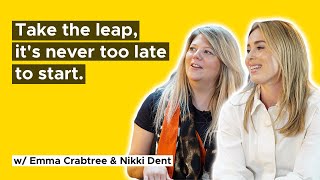
In this episode of the Recruitment Mentors Podcast, host Hishem Azzouz interviews Emma Crabtree and Nikki Dent, the co‑founders of Mirai Talent (originally Mirai Tech Recruitment). The conversation traces their personal journeys into recruitment—Nikki from a call‑centre trainer role and Emma after teaching English abroad— and how they launched their agency in the first week of the UK COVID‑19 lockdown (April 2020). They discuss the decision to take angel investment from Mark Nealon, the structure of that partnership, and the strategic support it provided. A large portion of the dialogue focuses on building a distinct company culture, aiming for a 50/50 gender split, team‑building activities, wellbeing workshops, and moving away from the traditional ‘boozy’ recruitment environment. They explain how they defined co‑founder roles (finance/systems vs. training/development), instituted accountability mechanisms, and refined their client‑acquisition model through multi‑hire solutions and deep relationship building with hiring managers and HR. The episode also covers their recent rebrand to Mirai Talent, the meaning of the name, and the evolution of their service offering. They share experiences expanding into the US market, the challenges of scaling the team (rapid hiring, process foundations), and lessons learned about asking for promotions and setting realistic growth plans. Finally, they outline future ambitions, including a stronger US presence and continued cultural development.
Chapters
We do quite a lot of like the team building stuff, so it's not just about like, I think we spoke before about like the boozy culture that can be associated with recruitment, you know, like we'll go on nice like team walks and just talk about stuff that isn't about recruitment.
So I think naturally, you know, we are conscious of who we employ and naturally we're getting quite a few girls.
We do have a lot of girls, don't we?
Yeah, but our ideal is a 50/50 split, I think, and different personalities, not the typical recruiter you might think of.
Welcome to the Recruitment Mentors Podcast. I'm your host, Hishem Azzouz. And in this week's episode, I was joined by the founders of Moriah Talent, Emma Crabtree and Nikki Dent. I absolutely love their passion and energy for their business. They're 2 years into their own journey before working for multiple brands before they started their own, and they are extremely passionate about founder-led businesses, getting more women in director positions and leadership positions, and they have big plans for their company. Enjoy the episode. Emma, Nikki, welcome to the podcast.
Thank you.
Thank you.
Thank you so much for coming down. I was just saying, I'm pretty sure you're both the first Northerners to be in the new studio space. So thanks for coming down. So as you all know, the sort of place where I always like to start this is the million-pound question, and I'm sure you've thought even more about it since starting your own business.
Yeah.
So, Emma, I'm going to come to you first, but I'd love to hear your thoughts, your take on what you believe are the sort of common characteristics and traits that really make up a successful recruitment consultant in today's market.
I think the main 3 are belief, relentlessness, and an innate desire to succeed, basically.
Okay.
All those 3 together. The others go with it, obviously, but they're the main 3 drivers, I think.
So, belief?
Yeah, belief.
As in, like, belief in yourself?
Yeah, absolutely, like, you can do it, you know. We never, going out into recruitment, or the business thought we'd fail. That's just not an option for us. Yeah, yeah, yeah. I think that's what makes us successful because we have that belief.
Yeah, it's a passion to keep yourself driving towards what you kind of angles, I suppose, at the very beginning.
Where, where's, where's that come from?
I have no idea. I generally have— I think I'm an optimistic person, so that helps, but I really don't know where it comes from. Yeah, I really don't.
I think when I first started in recruitment, I kind of didn't believe I could do it almost. So I think for me it's as I've kind of like try to succeed, I suppose the beliefs come along with it.
Yeah, so obviously as we sort of have spoken stuff before we did this, like we're going to talk a bit about both of your journeys working for other companies, and then the main focus that we're going to talk about is this sort of 2-year journey that you've both been on. Yeah. So I guess like where I always like to start is like Nikki, who were you before recruitment, would you say?
Wow, before recruitment then, so I was a trainer actually. A trainer? Yeah, so in a call centre, so I started in Salford University graduated from there, ended up living in Manchester, and I was working in a call centre, and I thought, right, okay, I want to try and do something different. So I just started applying for jobs internally at the Cooperative Insurance Society, ended up being a trainer. So got that position, and I was doing savings and investments to start with, to be fair, and then they outsourced the whole of that department.
Really?
So my first day as a trainer, I was given like a microphone and stood at a podium and got told to go and trade motor and home insurance to a group full of 30 people. Yes, it was pretty on top, to be fair. But you know, that's the thing, all these types of things, they build you up and give you a bit of confidence. But yeah, it was a bit daunting to start with. And then I did that for like maybe 2, 3 years and then unfortunately they got rid of quite a lot of people. And so I was maybe redundant and I just bought myself like a flat in Congleton.
Really?
I know, exactly. And then literally just as like the recession was starting, because 2008. And then yeah, I just started making applications and started in recruitment. And yeah, I went for a few different companies and then ended up in a place in Wemsley, a tech IT company. So was you aware of recruitment then?
Career or that wasn't like the typical?
Yeah, no, it was absolutely— no one even spoke about it, to be quite honest. So there was actually a girl that said, you're quite chatty, you like to chat with people, take time.
You could be good at recruitment.
Yeah, sounds like me.
Yeah, nice, okay.
And yeah, they just said you'd be good at recruitment. So I'd actually applied to a different company and then they forwarded my CV over to someone that they knew because it was closer to home.
And what about you, Emma? Who would you say, how would you describe yourself before recruitment? Where was you at?
What were you doing?
Well, I got into recruitment quite late. I was 29.
Really?
Yeah, yeah, yeah, because I Left uni, yeah, went to New York for a bit, had a travel bug, then decided I wanted to teach English because that would allow me to live abroad. Yeah, so I did that in London, and then I moved to Japan, and it was supposed to be for a year, but it was for 6 amazing years.
I always find that fascinating.
Yeah, you did that, it was amazing. But then I got to a point in my life at 29, like, right, I don't want to teach English, I'm coming back to England. I have— I had money there. Yeah, I had a good lifestyle. Yeah, but what am I going to do in England, you know? So I started applying to marketing jobs because that's what I did at uni, like 20K in London with slow career progression opportunities. So I thought, I need something else. And a couple of my friends were in recruitment. Everyone in Japan is now in tech recruitment, by the way.
It's mad. Really?
Yeah, yeah.
So, and they were like, apply. So I just applied to one place, got a call, had the interview, met Nikki at the interview. She sued me. Yeah, she did. And then stayed there for a bit and absolutely loved it.
Yeah, yeah, I love that. So What's a career in recruitment given both of you then that maybe you least expected?
Do you know what, it's exactly that, it's a career. I didn't know I was going to be any good at it. Yeah, I didn't know how long I'd be doing it for. I'd kind of got made redundant, I had a flat, you know, a mortgage, and then started on this journey and yeah, I mean, I was at the first company I worked for for like nearly 13 years and you just never really thought of that as going to be like a full-blown career. Yeah, that's probably what it gave me, to be fair.
What about you, Amalia?
Yeah, same, career to be proud of. Really? Yeah, and I always had like a business mind as well, so I kind of from there knew I wanted my own business, started in recruitment, thought I'm quite good at this, so that's what I'll do one day. Yeah, exactly.
Did you, so like when both of you met for the first time, was there like a spark straight away? I don't know, did you like just get on like a house on fire or?
Nicky really wanted me to get the job.
I knew.
Really?
Honestly, like when you interview somebody and you know that they're going to be great, like Emma was amazing in the whole interview process, I was like, look, she's got to get the job.
Yeah, and other managers weren't as keen I don't know, Nikki was like, say this, say that.
I was like, got it, got it, do no prep.
Yeah, prep went really well.
She did a great job though.
Love that. So basically, Nikki, you worked in different bands for like, was it like 12 years or so?
Yeah, exactly.
Before you started Mariah. And then Emma, for you, was it more like 2, 3 years?
Yeah, 3, 4, yeah, yeah, about that.
Nice. So I guess, Nikki, what I really want to ask you and stuff before we get on to both of you starting this business is a lot of people listen to this podcast because they want to progress quickly, they want a successful career. Obviously, you, like you said, maybe you didn't expect it at the time, but you went on this amazing journey and going from joining at that point to then becoming like a divisional manager by the time that you left. What obviously people want to know, like, how, how would— what do you do differently to get those opportunities? Because obviously recruitment's competitive internally just as much externally. So what do you think, what What were some of the things that you did well that enabled you to progress your career, do you think?
Definitely. I mean, I was always a planner. I always made sure that, you know, I knew exactly what I was going to be doing the next day. You know, you'd go through what you need, your objectives throughout the course of the day, and just make sure you tick them off and, you know, made a plan for the next day. And yeah, I mean, I think in terms of like, I asked for a lot of promotions as well, you know, like I just went and asked.
It sounds simple, but like, yeah, a lot of people don't ask.
You've got to ask. Yeah, exactly. And I think that's a big thing, you know, you can get forgotten unless you actually put yourself forward sometimes. But yeah, I'd probably say, yeah, just asking for what you want, really.
And obviously delivering, like doing what you need to be doing in your role.
Absolutely.
But when you say, like, just talk to us a bit about that for a second. So when you say ask, are we literally saying like, hey, I've absolutely smashed my target this year, like how can I move? Like what did that ask look like?
Yeah, I mean, to be honest, it was probably a little bit uncomfortable sometimes.
Really?
Yeah, because you know, you've got to basically put yourself in a position where you're going in and saying, look, I know I've achieved this, I know these objectives. I want to be a manager of a team, you know, I'm already doing most of the job, so this is what I'd like to be able, you know, like the title and like the pay rise to go with it a lot of the time as well. So yeah, I did ask a lot for that. I love that.
And then, and then Emma, what about you? So like, how would you describe your sort of early years in recruitment? Did you sort of get like, get into it straight away? Like, I don't know, how would you describe your early years then?
Yeah, well, early years, but I was 29 and everyone else around me, I was on like £18k, you know, I wasn't earning more and everyone else around me was a lot younger and I was like, I need to be like Nicki very soon. Yeah, you know, and that's all I used to think, like when people used to go and interview or go to the boardroom in meetings, I was like, I want to be doing what they are. How do I get to that level? So I just wanted— the money was great, but for me I wanted the career. I wanted to be a manager, I wanted to lead a team. So I think it was that hunger and pressure that I put on myself because the age was that, and my one goal was to like put a deposit down on a house in the first year.
Yeah, so let's just talk about it for a second because I think that is interesting and I think people because I think like typically a typical recruitment company will try and hire young people, maybe grads, whatever. And yeah, like you said, for a 29-year-old, although that, that isn't old, I mean, I'm 29 this month, like that isn't old in my eyes. But like, because I think, I think obviously a big part of what we're trying to do this podcast is like recruitment should absolutely be a career that people choose rather than like falling into.
So yeah.
I guess it'd be good because I did think that, oh, that must have been quite challenging to look around and go, fucking hell, this person's younger than me. So what maybe advice would you give to sort of people entering recruitment who are maybe a bit older as to like maybe things to be mindful of and why it's something that they should absolutely consider and not think, oh, I've missed my chance because I'm, you know.
It's not too late in any career to change, and I really admire those who do that because it's brave to do. And it's almost like a relationship, you know, you can be in a job and you're like, oh, I'm 30, 'Yeah, it's okay, you know, I'm earning money, I need to be sensible, I want a mortgage.' But really, you've got such a long life ahead of you, and we only live once. Yeah, so just do what you want to do. Yeah, and I absolutely love it. I'd never— I wouldn't change anything.
Yeah, love that. So let's, let's go into— let's go into both of you obviously going on, on this business journey. So, um, I guess talk to us a bit about— so when, when did you found the company? When did things start?
It was February. Well, kind of the idea was in February 2020, yeah, but we actually launched April 2020. Yeah, just after COVID.
That's the first week of lockdown we launched. Yeah, yeah.
Okay, that was cool.
That was great fun.
So I'm excited to unpack this. So obviously, both— just to frame it up for people, so basically you've been going for 2 years now, just recently had a really cool rebrand, um, and you also, to kick kick off this journey, you decided to go down the investment route, right? So why don't we start there? Because I think that would be really interesting for people to hear. So one, what drew you towards, or like, how did you come to the decision of like, you know what, actually going down the investment route and having that help at the beginning is something actually we really want to go for and there's something that we align with and can be helpful?
Yeah, I mean, it came from an unfortunate conversation, really, a fortunate conversation with a rectorate.
Yeah.
Because when I was looking to leave where I was, I was like, and she was like, you sound like you want your own business. Yeah, I think I do. But I was like, how, how do we do that? I've never had a business, I wouldn't know where to start. And she was like, I know someone, right? So very, yeah, fortunate because she then introduced me to Mark Nealon, who's an investor of recruitment companies.
Yeah.
So we kind of hit it off, obviously had a lot of conversations, um, and then, yeah.
Did you go into that? I know it probably felt quite organic at the time, but in hindsight Was there any— I know you said you hit, you and Mark hit it off, but was there anything that maybe you was mindful of that you wanted to see or pick up on that would, I guess, give you more confidence or feel more comfortable in potentially having someone like Mark, an investor, involved from the start?
Well, I think his track record, because he'd done it, you know, he'd formed or was a director of a successful company.
Yeah.
And then I met people that he'd already invested in, so straight away they're like, he's great. And had about conversations with 5 people, so instantly you feel at ease. Yeah, yeah.
Puts you in touch doesn't he? With other businesses which was great!
Cool and then when did you and Nikki start having these conversations like how did that happen quite organically or—
I kind of engineered my own interview really well. Yeah yeah well I'd gone to a different company and it wasn't really working out so I'd actually recommended Emma speak to the rectorac that had introduced her to Mark right so you both stayed in touch and everything? Yeah friends always say like I'd kind of thought oh I thought, you know what, I know what she's up to, I maybe want a bit of this as well. Yeah, so I just texted Emma and I was like, hey, should we go for dinner? Let's have a prosecco and some food.
Yeah.
And then I sat down and I was like, so what's this all about?
What was really funny though, there was other people there. Yeah, we'd literally sit next to him and like, hi, so tell me about the business idea. Like, yeah, straight in.
So yeah, and that was it then, basically.
Yeah.
So yeah, we spoke to Mark and then we were straight in at 7.
And Mark said as well, most businesses, apparently there's data around this, are more successful when you— yeah, yeah. Because were you fully prepared to like just go and you're joining the ride. Yeah, I was just like, let's do this. And then I was like, woo, someone along the ride.
Yeah, it's amazing. And it's great as well because we've obviously been friends since we've left, so it's nice to do it with a friend.
Yeah, it is. Because obviously there you've built trust, right? And sometimes that, if you've got that from the very beginning, you've built that relationship.
And we know how we work as well. That's important as well. Like, we share the same values and we know what we liked and didn't like about where we've worked previously.
And it's nice to share experiences with someone else, isn't it, rather than doing it by yourself.
It's a bit of a soundboard as well, you know, because you have a lot of ideas and it's like, what do you think? And you know, you gain so much more when you're able to share something, I think.
So let's just focus on this for a second then. So what would you say, because we're now like 2 years in, what would you say have been some of the like 2, 3 core things that you think because you've had Mark's support from the very beginning, it's enabled you to do, or what's been really helpful? Because I think people, a lot of people listen to this will maybe think one day they want to have their own recruitment company. And obviously there's a lot of people, businesses now that will be trying to message people, say, hey, have you thought about starting a recruitment company? We can help you. So what would you say have been like the, the really sort of core things that Mark's really been able to help with, out of interest?
He's helped with everything, hasn't he, really? You know, just operationally, you know, like, we were great at what we did, and, you know, you can be a good recruitment consultant and a manager, but, you know, when you're looking at the business as a whole, you know, that's the areas that he just gives you so much support with. So, you know, just looking at day-to-day operations, how can you streamline things. Um, so yeah, he's given us tons as well. I'm networking as well, really. Sure. Yeah. Yeah. To some amazing people. Yeah. So yeah.
That's the thing about Mark, and he really champions that, the idea of meritocracy. Yeah. So it's the best idea wins, not where it comes from. Love that. So he's like, trust me, but go and ask someone else. Yeah. You know, why try and do it yourself when there's a million people out there who've done it, made mistakes, and can tell you and like help you along the way. So yeah.
Provides a lot of value.
Yeah. And he's just, you know, and it's just someone if you're like, oh God, what do we do?
Yeah.
Give him a call.
Give him a call.
Yeah. Yeah, he's like, yeah, great support, really supportive.
So, and then, so, and then a couple of last things because people will be interested. You don't have to go into like the exact like details, but like how, how was this structured out of interest? Like, was it like, I don't know, so Mark had X percentage of the company, then if both of you hit certain goals and that gets reduced? Like, because this is the stuff that people like, how, like, do they have the majority share of my business? Like, how did you, how was that structured, if you don't mind sharing?
We have the majority share. Yeah, it's very fair because a lot of people were saying to me, that's what I mean.
Yeah.
Oh my God. Yeah.
Like, all your business.
Yeah.
Do you report into him? It's nothing like that. So we have majority share, and, you know, there was a loan at the start which we paid back very quickly. But for us, it's not the financial support. Yeah, it's— he's an angel investor and a coach. Yeah. So every week we speak to him, and it's amazing, and we strategize and we talk about ideas. And so it's that element that we'd want to keep forever, you know. So yeah, we can reduce his share options as well in time. Yeah, yeah. So he's very fair like that.
No, I love the fact that it's actually not about the capital, it's about You didn't mention that once, it was the network, it was the people you've been speaking to, all those things.
Yeah.
And I think more and more people I speak to now, young recruitment entrepreneurs, like, they're just way more humble and willing to ask for help. So people might get a year down the journey, 2 years, and go, I don't know all the answers, so I want to help. And if you've got someone that can help but also has got skin in the game and it's in their interest for both of you to improve this business, then that's a great relationship.
The worst thing you can have is an ego, you know, because we don't know. Why pretend we know know how to run a business. We're getting the idea now. Yeah, but you know, in the early days, like, why try and do it by yourself? Yeah, you know, because we're not the best at that. We want to be the best at that.
Yeah.
And that's the journey we're on.
So from— and then last point then— so from the beginning then, was there like, um, did you sort of— did you speak every week, or was it like quarterly board meetings, or like, what was the typical structure?
What is going on in the world?
Yeah, at my kitchen table with Bobby, like, Mark, we didn't plan on this.
And he was really nice through that, because what was funny is he knew everything. Like, we were like, you know, when it first started, yeah, we never thought it was going to go on for as long as it did. And Mark kind of was like, to me it was like doomsday. Yeah, it came like, girls, this is gonna be bad. And we were like, oh my God, like, why are you so negative?
Never gonna happen.
But he still believed in us, which he could have freaked out and been like, why am I investing in a company? Let's park this for a bit. But we had no choice we'd left our jobs, we had nothing else to do but just push on, basically. So we're on the phone a lot. We were on the phone a lot. Now it's every— we meet every week.
Yeah, go for a coffee, sit down. It's great to look at longer-term plans as well, so that's the thing, it's always about like, this is where you could be, girls. So yeah, it's great.
So let's just paint a picture. So obviously, yes, obviously it had to go on this journey during the thick of COVID So like, what did the company look like by the end of year 1 then? Just so we can paint a picture. Was it still just you two? Was there a couple of people involved?
We had an office. We moved into an office in August.
Yeah, and we'd taken on a couple of people.
Yeah, we hired. So I think we finished at about 4 people and an office.
Yeah, yeah.
So let's just talk about then, like, because I mean, it all seems like a blur, doesn't it? So like, what, what do you think has enabled— like, what do you think in hindsight enabled both of you to like actually not it, to go, oh my God, like, we had it at the worst possible time? And like, we failed, or I don't know, what did you do looking back that you think enabled you to get to 4 people? And I'm assuming you're doing revenues and these things, so like, I don't know, how did you, how are you able to do that despite the challenges?
I don't think we ever really doubted that it would work, to be quite honest.
We got some good deals early on, actually.
Yeah, early, yeah.
Nicky did a really good deal first off, then I did one in an area I don't usually recruit for.
I was like, woo!
So that kept us going.
Yeah.
And then it's like the sheer joy, we really enjoy what we do. And like, we said earlier, failure is not an option. Yeah. Right, is going to make it, was always going to make it.
Yeah, it's just that, just the belief.
Yeah, yeah, absolutely.
But we enjoy what we do as well, like we love what we do, and like we made it a bit fun as well, you know. Even though we'd got to the point, like Bobby, like my son's 7, so he would be like 5 at the time or something, he'd only just started school. So then he's now sat at our kitchen table while Mummy and Emma are like cold calling, like, hey guys, should we work with them? Bobby is repeating my phone number in the background, he's heard it that many times, you know. And that was it, you know, we just had to get on with it and you had to make good of what, of what we'd been given.
So, and talk to me How did you come up with Mirai? Because the name is interesting.
So that was another thing which Mark gave guidance on, because I was like, EJC Associate, all these like crap names, like with my name in, and obviously he was like, hmm, I never knew that. What about something that means something a bit more? Yeah. And then actually, as my friend in Japan, Joe, who's amazing, I was like, right, Japanese name that connects with recruitment.
Yeah.
And he was like, Mirai, because it means future in Japanese. I was like, I was like, nailed it! It was the first thing you said. I was like, Mark, Mirai. He was like, love it, I don't know what it means but love it.
It's a keeper.
Yeah, and we do like it. Yeah, and we were Mirai Tech Recruitment, yeah, and now we're just Mirai Talent. Yeah, but soon we want to just be Mirai.
Right, yeah, so that was the rebrand that you went for recently, right? Yeah, yeah. So talk to me about, like, I'm sure looking back it was just like, just do anything to get deals in, make it work, but What, obviously I'm sure Mark would have helped with this, but like you said, you've worked at other companies, you'd be able to look at those experiences and go, I really enjoyed that, didn't enjoy that, but like what, a lot of people say want to do things differently when they start their own recruitment business, so like how did both of you think and execute that, you being unique and different, and what did you bring to the market that you felt that was different and unique and made Mirai Mirai?
I think we were keen to look at like culture, weren't we, for Mirai, and I think that's something that that we will never really forget. You know, for us, it's all about making an environment that, you know, everybody wants to come to work and they want to enjoy it. Um, and, you know, and it bounces off the space to our clients as well. We want to make sure that we're creating like a really good atmosphere and like building up really good relationships, I suppose.
So really thought about the people, the people.
Yeah, Simon Sinek has a quote about until people are happy within the business, yeah, or how can they provide good service.
Yeah.
And then naturally, if you're coming to work, springing your step, yeah, buffet, people can tell, you know. So that's important. So it starts with culture and our team, and then naturally that extends on to the service we can provide as well.
Hey everyone, a real quick one from me. This podcast would not be possible without our amazing podcast partners Vincere and Sourcebreaker. Because you listen to this podcast, you were able to get your hands on exclusive savings on both of these award-winning products. If you're a growing recruitment business, you have to check out Vincere, who are an all-in-one operating system for your growing recruitment business. With Sourcebreaker, if you want to make sure that all of your recruiters have the best tools on the market to stand out and beat their competition, then you have to check out Sourcebreaker. Use the link in the show notes, in the comments below, and you'll be able to get yourself exclusive savings on these amazing products. And then what about, like, did you, did you, um, identify and focus on any particular niches? Have you, like, I don't know, evolved any of the services you have? Like, what, what has that been like that's maybe impacted the difference and the uniqueness as well?
Yeah, I think within tech tech, because a lot of places are, we are tech, and that's fine, that's great, but we recognize that as it's so candidate-driven, we start with the candidates. So we look at cloud and data predominantly. Yeah, just because like the, the mad markets really. Um, and then, yeah, and contracts is something that we didn't do, but now we're looking at contract first. Yeah, so we have adapted along the way just because you have to.
And what, what did you mind? Because thinking back, obviously when you started, like, the polar opposite now where everyone's saying I've got jobs coming out my ears and like it's the candidate pipeline I need help with. Back then it was like no one's hiring.
Where are the dogs?
Yeah, so like, what, what ended up like, what ended up being the most effective way for you to start winning logos, getting your own clients on board? Because that, that can typically be some of the things that people are most worried about, of like bringing in those clients that are going to be your first paying customers. So like, what ended up really working on that front? I think we went you have to multi-hire solutions. Okay.
Because naturally, you know, we put a lot of work in, and if you place a one-man-band IT manager, that's great, but where's the repeat business?
Yeah.
And we know we always get repeat business. So, okay, well, that, that's not going to work. So let's start targeting the companies that you do have to chip away at, but eventually it'll pay dividends because they've got a large workforce and you become an extension of them.
You put the same amount of effort into getting one job spec as you would do, you know, creating a relationship and becoming someone's, someone's like part of it.
Yeah, yeah, that's interesting. Let's just focus on that for a second. I think that'd be interesting. So, I mean, no, you're saying like chip away at it. Let's— obviously people want like practical thoughts or ideas on like what, what's worked and what helps other people. So like, when you— what has typically worked time and time again when it comes to getting into like a larger account or a growing customer? Like, what have you found has really worked? Is it going direct to the hiring manager and building a relationship? Is it actually delivering a really great candidate experience and then they refer you when they're internally? What has ended up really working in getting into these bigger accounts?
Yeah, often hiring manager, then falling out with HR, then becoming best friends with HR and the hiring managers, and just really listening. You know, I can't stand it when you hear people like, "I've got 100 candidates just for it." No, you don't, and that would make our job very easy if we had a load of candidates waiting. I think ultimately, like, like just leveling with them. I understand, but we're going to take ownership of your challenges. You know, we absolutely buzz off it, don't we? Like, we're like, give us the jobs, we love this. You don't like it, so give it us. And I think that people can tell how much we enjoy what we do.
Definitely. Just even in our tone of voice, like, okay, calm down, you still get that same buzz, I think, of finding a really good candidate, or, you know, like pulling a new role in with a new client or something, as we would have done, you know. Me like 10 years ago.
So what I wanted to ask you both then, because I think as you said earlier, like, great, there's so many positives of it not just being one person, there's both of you, but obviously there can also be challenges that come with that. So obviously you both had the added benefit of working with each other, so probably had a bit of an insight, but how have both of you got better at understanding, like, right, Emma, you are way better than this, than Nikki is, or whatever? Like, how— just talk to us a bit about that, because I think sometimes having interviewed people that start a business with two people, that can sometimes be a bit of a journey. So how's that been for both of you?
I think our problem in the beginning is we're both good at the same thing, right? Yeah, so we're so similar, you know. So my dad would used to be like, the best business partner is when you're good at this and then—
yeah, yeah.
Whereas we're like, I'm a little bit better at finances and systems, so I'm the finance queen, you know. And that's the thing. And it kind of was like, I don't know, for guilt thing with both of us. We've tried to do the same thing, so we both went on a demo together, we both had the phone call, and we're like, why are we both doing this? So now recently we've kind of defined our roles because you have to think about— because we don't look at candidate sides anymore, but we still do look at the business. But when we step away from that, what are our roles within the business? So you have to look at long term, what are our strengths and what do we enjoy doing?
Well, that's it exactly. So we, yeah, we have designated RPs for certain jobs, say responsible people, person, yeah, exactly. So like I'd look at like more of the training and development, and then Emma looks at like more of the marketing stuff.
So And finance systems.
Definitely finance.
That will be outsourced soon, but for now it's like my bag.
So what was the first step in that? Was it literally like, right, we keep going on the same things, you've noticed it and it's like, right, we need to work out who's doing what.
You just find out that you don't do—
nothing gets done.
Yeah, a job doesn't get done as well.
The proverbial weight, Mark said.
You both feel like you're both kind of doing a bit of everything but not enough of one thing, so if you split your time. And there's just endless amounts of jobs, obviously in recruitment it never stops anyway, there's always another candidate to call and another role to chase. But when you've got the operational side as well, you know, it can be a bit overwhelming sometimes. So you have to actually just split your time.
So was it literally like you both went in the meeting room, was like, right, let's just be honest with each other. What do you enjoy doing? What are you better at? And then you just started just—
We actually did, yeah.
Because we were coming to meetings like, that's not been done. Why was— were you going to do that? Oh no, I think I was going to do that. Okay, I'll do that. And there was just no process behind it. And now we're like, this is what I do. That's what you do. And it's so much better, isn't it?
Well, you do it properly as well. And like, it gets— yeah, you get a lot more value out of your job.
So how do you hold each other accountable then? Do you have like, is it weekly things that you then hold each other accountable for?
Yeah, we talk a lot about everything we need to get done.
We're getting better at putting things in the diary because otherwise it doesn't get done. And there's always something to do. I mean, we're guilty of putting things off when really you just need to get it done. What is important? Like when you're in recruitment, okay, what do we need to do? Right, I'm gonna— and another thing we were doing is feeling guilty about doing those those tasks in the golden hours. Yeah, but really it's like we need to do marketing. So I spent last week 2 days straight just focusing on that, and it felt so much better that I'm not doing it at the weekend or in the evening. Yeah.
So I know it's something you're both really passionate about. Talk to me about what's been your experience, journey, in being in a, um, female-owned business. Like, what, what's that been like? Has there been maybe certain challenges that you've had to navigate I don't know, like, talk to me about it.
Do you know what, I think because I've always done this job, it doesn't feel that much different to me, I suppose, because I've done like the management side for a while anyway. But yeah, I do think there is a massive lack of females in, you know, tech and also in management positions, especially around recruitment.
But yeah, and there is a boys' club feel. Yeah, and even like guys we interview, they don't want to be part of the boys' club either. Times have changed. Yeah, times have changed, that's the thing. And there's a stigma because if you have a child, what 'What'd you do then?' and all this. So I think naturally, you know, we are conscious of who we employ, and naturally we're getting quite a few females.
We do have a lot of girls, don't we?
Yeah, but our ideal is a 50/50 split, I think, and different personalities, not the typical recruiter you might think of as well.
So how do you think we can, I guess, impact that sort of lean towards like more men in senior positions in recruitment companies, or just more men overall? Like, I don't know, I'm sure you've thought about this. Obviously it's going to help if there's more women in own recruitment businesses than men, but I don't know, how have you thought about how we can impact that?
I don't know if we've made a conscious effort. I think it's more like the personality that goes with it as well, like big drinking culture, lads club, all this. We want different people, we don't want mini versions of us either, we want a real eclectic mix of people because it's not always a typical salesperson that succeeds either.
Yeah, absolutely, and that is something to think about actually because, you know, you stereotype people, you know, what's a successful salesperson, you know, and it's quite a loud, you know, outgoing type of person. But, you know, people that don't actually have that type of personality, can be a bit more subdued or, you know, a bit calmer in personality, can actually be one of the best recruiters ever as well, you know. So different personalities do definitely work.
So let's talk about the last year then. Obviously you had your 2-year anniversary recently.
Yeah, not yet, not quite yet.
Okay, sorry, April. So I know something sort of, I've known a bit about your business, something that's been quite exciting is the US piece, right? Yeah. So like, talk to me about how that's going when you first sort of identify that, because I'm sure you've, you've noticed— I definitely have— like more and more recruitment companies it seems have the US on their business plan, or they're doing it currently. So talk to me a bit about that journey so far. When did it start? How, how it's going?
Yeah, so I was actually working with some like UK-based SaaS companies that just wanted to scale in the US, so it was quite organic. We did a few different project deployment teams in Atlanta and Chicago. So we did that because it was part of their, you know, UK scaling plans. But yeah, I mean, in terms of what we want to do moving forward, it's just opened your eyes up so much. There's so much opportunity. Yeah, you know, it's, it's a great market to get into.
Absolutely. There's a world out there and we want to be part of it. Yeah. And like you said, I think I've heard other people on this podcast say as well, it's like the 2-week notice period.
Oh yeah, for like permanent placements.
Yeah, and we focus a lot on senior appointments in the UK, which is great. 3 to 6 months notice period, you know, So much can happen from that. Exactly, and it's just fast-paced and you've done a sterling job, but they've not been the hardest fills though either, have they? Not to take it away from you.
No, it's actually been a breeze in comparison to UK-based hiring. So you literally just LinkedIn Recruiter is obviously your best friend and yeah, you just literally get all your calls set up and yeah, it's been so much easier.
So let's just talk about this then. So you've been the person like driving this because I'm assuming that it was your customers that Yeah, so let's just talk a bit about this for a sec. So what would you say have been the main— so I'm assuming previous to that you've always worked in what, UK, Europe markets?
Predominantly, yeah. I say all around London was my patch for quite a long time, and then yeah.
So what would you say have been the main like nuances that you've maybe had to adapt to or maybe learn the hard way, like quite, quite quickly once you started to go into the US?
Yeah, I think it's— well, to be quite honest, I mean, the roles that we've actually Actually, I suppose it's just the time difference. It's obviously making sure that, you know, you're setting up your calls in the right times. But yeah, I mean, there hasn't been tons of challenges, I'd probably say.
So have you noticed, obviously a lot of people say perception of recruitment's more positive there?
Yeah, massively. Yeah, I mean, you know, everybody's very respectful, you know, the fees are like hugely higher, you know, the salaries are so much higher, you know, there's a lot of, you know, benefits to working in the US. And yeah, it's a very respected industry there as well, which is obviously great.
And what about how some people might just perceive this as a challenge, but it probably but how, like, how have these people reacted to getting on the phone to Nikki from Manchester? They're like, hang on a minute, what's going on here? Like, what's that been like? Or is it actually been like—
It's absolutely been fine.
Really?
Yeah, I think we market ourselves as UK and US on LinkedIn, so, you know, I think that definitely does help, you know, when you're actually going out and you're trying to get your candidate attraction. But yeah, it's been absolutely fantastic. You know, people get back to you so quickly. Yeah, so I mean, it's been a great experience.
So like, a lot of the things that have always worked for you, the habits, the approach, approach has completely translated over?
Yeah, I mean, to be fair, it's just projects that you just get done. You just send out your messages, just make sure you're attracting the right people, you know. You just want to make sure that you're going for the right tech stacks and you can see that that's going to be, you know, a decent career change or something that would be interesting to them. And yeah, it's just been, yeah, it's been a good, good experience.
And then have you, have you focused on, because obviously it's such a big place, isn't it? So like, yeah, it seemed quite organic, like Atlanta and the other place, but like, have you, have you, after you've done a bit of it, have you then been like, right, we're just going to focus on this state? Or I don't know, how have you approached out of interest?
At this stage now, we have done a bit of research into where we actually want to focus our kind of media efforts, let's say.
Okay.
The reason I'd worked in those areas is that just, you know, that's what my client needed then.
Yeah.
But we have actually been spending quite a lot of time now to think, right, this is going to be where Mirai will focus, um, and really have a look at the data, I think, as well, to just see.
And what sort of things are you looking for out of interest, like to go, you know what, that, that could be a really exciting opportunity? What sort of things are you keeping an eye on or looking at?
So we're looking looking for like scale-up companies, you know, where investment's been made, um, and yeah, looking to provide like talent solutions to people. So you really kind of, you know, go in and ring-fence like a whole company's business rather than—
rather than like ones and twos.
Yeah, exactly.
Like where there's a shift, you know, there's certain areas like Texas, but we're getting on a little bit later than that.
Yeah.
So where's the new hot place? Yeah, we can go and make an impact.
Exactly.
It's exciting.
So let's, let's talk about the, the rebrand and, uh, like these types of things. So like, what, why, why was important to do? Out of interest, like you said, Mirai Tech before, like, because obviously I've seen it all now and like, I don't know, one, why did you feel like it was important to do? Two, what was the process like? And then like, three, how has it been received and stuff? So like, why was it important to do, do you think?
I think because, you know, at the start, website is important, but you're not going to throw a load of money at it. Yeah. And also, who is Mirai?
Yeah.
You know, we could put a load of words on there, but we didn't have a mission, values, values. We didn't really know our story.
Yeah.
And as we've progressed, you know, we look at that old— the old website, like, who, who wrote that? Because it wasn't us.
Yeah.
And it didn't represent us. And even the way we communicated, our tone was a bit corporate for whatever reason. We're used to speaking in a certain way, but really we just wanted to show our personalities, our journey. You know, we're not perfect. No. And kind of, we want to be quite humble in our approach as well, that we want to get there, we're not there yet, but this is where we are so far. And we know who we are, what we want as well.
And how has it been received in the market then? Like, because I've been seeing all your stuff.
I mean, we're more like, do you like our new hoodie? Do you like the pastel colours? Yeah, so people are naturally going to say yes.
Yeah, it's early days, but yeah, we've had a lot of nice comments. Yeah, we have.
And as part of this process being— I'm not sure, but as part of this process being looking at your solutions and the services that you provided—
Absolutely, yeah, that was a big part of it because we're all fed up of no placement, no fee. Yeah, whoever said that line, you know, has got a lot to answer for because that's not what we're about actually. Yeah, why do Why should we work so hard with ultimately you could gain nothing from it?
Yeah, yeah.
So really it's a full solution depending on multi-hierarchy, higher contract solution from start to finish and really provide that full service as opposed to transactional bums on seats, there's one person.
One-offs, yeah, exactly that.
So let's talk a bit more about this because I, from all the conversation that I'm having, I feel like a modern-day recruitment business shouldn't just be going into to a client or customer and going, yeah, this is our service, it's like, let's agree the fee and then you pay me when— I don't think that should be the only thing that you're able to talk to them about.
No.
So you just said there, so you've got, how did you describe it? So you've got a contract solution, you've got, what were the different?
Multi-hire.
Multi-hire.
So that's more cost effective because there are companies we've placed about 30 people with, you know, so—
So to pay a fee 30 times.
Yeah, exactly. So let's look at your year.
Yeah.
How many hires do you think you're gonna make? Right, okay, well, if we work on them exclusively, we can offer you this. And it makes more sense because why do you want to be speaking to a number of different recruiters? Just have that kind of what becomes in-house almost support. And it works better for us, the consultants, and our clients as well.
So what's been the main difference, if any, in terms of like how approaching, like selling this and yeah, getting clients to sign up? Come up to this? Because I don't know, is there a different mindset of like approach and the way that you're talking about things? Because a lot of people— I had people sit down and say like the best recruiters now have got to be solutions-focused. So back to your point, everyone, like understanding where they're going, the challenges and those things, and coming up with, well, because of what you shared with me, let's talk about our— the, the solution that you just said so we can actually help you over the long run rather than just paying an individual fee for each time. Have you noticed like, I don't know, different mindset towards these sales conversations? I don't know, anything around that? I think we were kind of doing it before, right?
Way without labeling it. So we provide, you know, advertising campaigns, salary insight, benchmarking, feedback loop, all these things. And we value our time and our consultants' time. And, you know, we're lucky to work with some great businesses, but we've all been there. We've put so much time in, had 4 final stages somewhere, and then they change their mind.
Yeah.
And you're like, are you kidding? You know, so really it's respect for our time as well, but also knowing that we're ultimately going to do a good job.
So how have you typically, like, the commercials, and have you, have you gone down like the retained route? Have you gone down like monthly subscription? I don't know, how is that typically? I'm sure it's different for different companies, but how have you thought about that? How's that playing out?
Yeah, retained, that's what we're looking at. Yeah, so dividing into 3 payments.
Yeah, okay, nice. So let's just talk a bit about, before we sort of come to the end and finish then, so how you said at the beginning, like, what's really important to you and things that would be different is like the people part.
So let's just talk a bit about that.
So how, how How have you thought about, because you haven't had to do this before, like how have you thought about and gone about building your culture, out of interest?
Yeah, I mean, I think culture is a massive part for us. You know, I think we kind of summed it up, we didn't want anyone to ever experience that Sunday fear of coming into work ever again. You know, like we want to make sure we've got an environment where people feel really supported. You know, you can speak to anyone on all levels, no question should, you know, ever be deemed to be silly, you know, and we just want somewhere where people feel like adults, they can be ambitious, but you know, everyone's Everyone's got their own types of personalities and we can, you know, mould them all together really.
Yeah, and we want to lead with compassion, not fear.
Yeah, okay.
And, you know, '90s style recruitment is like hit you over the head with KPIs and why? No one feels good, you know, you've got to be compassionate, especially today, understanding we're all in it together. We want to perform well, we want to earn well, but you don't have to act with, you know, lead with fear to achieve those results. There's different ways to get the best out of people. Yeah, so.
And has there been anything, I guess just a bit granular, anything like specific that you've done that's really worked on cultivating this culture and not leading with fear? I don't know, is there things that you do on a monthly basis with your team that you found really helps with this? I don't know, anything that—
We do quite a lot of like the team building stuff, so it's not just about like, I think we spoke before about like the boozy culture that can be associated with recruitment. You know, like we'll go on nice like team walks, we do like little walks and talks, you know, like once a week we'll, you know, go out with somebody that's on our team and just talk about stuff that isn't about recruitment. You know, it's like, how are you getting on?
Like, what's going on in your life?
Yeah, you know, and just make sure that you've, on a personal level, that you can actually speak to people and they feel comfortable to talk, you know, to the managers about, you know, just normal day-to-day life as well.
Yeah, and we've started investing in wellbeing workshops as well. Yeah.
Oh, amazing.
The guys are loving it.
Really?
Yeah, really loving it. It's early days with that, but that—
So what sort of things are you getting people to speak about? Is it just mental health as a whole? Or is it like talk to them about things, I don't know, habits that they could be thinking about that could help them outside of work, inside work?
Yeah, so it's building resilience, being a thought, and there's another one. It's about being kind to yourself as well, and, you know, really having those conversations that I, I've never had. So we've started individual therapy with the same doctor, and she now is doing the workshops with the guys that we're part of. Yeah, and it's just like, oh my Well, it's just good to talk, isn't it? And you're not alone. And often there is a tendency to think you're the only one feeling certain ways. Everyone feels the same.
So how, like, what are people like? How, why has that helped them? And have they gone, Emma, thanks so much for this, like, I haven't had this before, it's been great to speak about things? Like, what have you, how have they, why have they reacted so positively, do you think? What have they shared with you?
I think because we all do have our struggles, don't we, internally, and people people aren't often okay with talking about them or raising those subjects, like you said, thinking they're alone with it. Yeah. And when she just talks about the science behind it as well, so there's a reason you feel like this.
Yeah.
This is what's going on in your brain. And it's like, oh, it's a huge education piece around there.
Yeah.
Because you can think, we can think like, oh, is it just me that's wired this way? Or like, things this way. But when you learn about these things, like, oh no, we're actually all wired this way.
Yeah. Yeah.
I mean, encourage the guys, go and get some fresh air, you know, take a break, because they don't do that enough. We're guilty of just like sitting at the green, but we all need a bit of fresh air and yeah, just breathe. We do breathing exercises with it.
We did indeed.
Breathing exercises.
You know what, they've really worked as well.
I love that. So what have been some of the maybe challenges and things you've both had to work through on this journey so far then that maybe you've least expected to have to deal with?
That's a good question.
I think our strength is also our weakness because we take action quickly. Yeah. And we get overexcited.
Okay.
Let's hire loads of people right now. Do we have systems systems in place?
Not at all. So let's do it anyway.
Yeah, and Mark was funny though because he does let us make our own mistakes. Like, he guides us, but it's like, I think you were hiring a little bit earlier. So I think people has been tough for us. Yeah, because we were overexcited with that without building the foundations. Yeah, so we hired too quickly and too many.
Too many. Yeah, you've got to get your— yeah, build the machine, isn't it? And then I'll be operating.
Let's just talk about that for a second before we finished. Like, when you say that, like, what do you mean in terms of like the foundations, the processes? What, like, what do you actually mean by that?
It's even just getting like your tech stack down and like your processes in terms of appraisals, you know. There's so much stuff that you need to think about, um, you know, like the people's day-to-day, I suppose. But yeah, I think, um, a lot of the stuff, it's just making sure that you've got all of that kind of foundation sorted. Job roles, like what they're going to be targeting at, like what patches are they going to be looking at, you know. They're going to be great on BD, are they going to be great on delivery, you know. There's lot of different things to it.
And there is an element of winging it when you're in startup mode, but then there is like, we're going to do a development review, we don't have any people.
That's a good point.
We're going to talk about, yeah, okay, let's go and have a chat.
Yeah.
And, you know, and these things, and that adds stress to us because you're like, oh my God, I need to do that, I need to do that. And we were spreading ourselves too thin, ultimately.
Yeah.
You know, and now we're trying to take a step back, go slower to go quicker.
Exactly.
Yeah, go slower to go quicker.
Yeah, it's working.
So where are you as a business today then?
Like, how How many of you are there?
There are 8 now, yeah, yeah, and the plan is hopefully to be at about 15 to 20 by the end of the year, but it's not the be-all and end-all and we're learning that.
Has that maybe been the learning for both of you?
100%, like we're gonna have hundreds of people all over the globe and it's gonna be great, yeah, we're quite ambitious I suppose, we did have quite grand plans when we started.
Really? Yeah. It can be quite easy to like fall into that though, can't it? Yeah, sure. That way of thinking. Why do you think that is? Because it is very common.
Think the more people you have, the more successful you're going to be. But really what you have to do is invest in the people that you've got. Not to say that we didn't, but you know what I mean.
But that's even the processes and make sure they've got everything they need, not just them.
And then they need to be billing, and then you add more to the, you know, fuel fire, you know. And that's the whole point, isn't it? But yeah, if you've got like 6 trainees and then 2 of you, you know, you are spread thin.
So, so someone listening to this then that might be in that startup period that's like, I do want to hire, I'm not sure if like— what would, what would you say should be like the fundamentals that maybe they should think about that they haven't in place that should hopefully give them a better chance of these hires going well rather than maybe not working out 3, 6 months down the line? What advice would you give them?
I mean, I think if you've got the jobs on, 1 or 2 is absolutely fine, but make sure they're okay and comfortable before you then add to it. Yeah, because we just kept adding when the other team members were still fairly junior themselves. Or we all want to try and get seniors on board, but that is more difficult.
That's impossible.
That's tough as well. Yeah, that is tough.
So to finish this up then, like, what Where's Mariah going to be then, Mariah Talent, sorry, is it going to be in another year, two years' time? What's the ambition?
In the US, yeah, we'd love to see at least business coming from the US, yeah, and also contract, home split 50/50 as well. Absolutely, yeah.
And you thinking, are you planning on getting people over there? Are you gonna—
Absolutely, we're 100%, yeah, yeah, I volunteer.
Definitely bag that first plane ticket, yeah, yeah.
Absolutely love that. Well, um, look, absolute pleasure having both of you on. Thank you so much for coming down, and so excited to obviously see where both of you are in another year, two years' time.
Thank you.
Thank you so much for listening to the episode. I hope you enjoyed it and got value from the conversation. If you did enjoy it, please don't forget to like, share, and subscribe, and we'll see you in the next episode.
More from Hishem




You don't need as many clients as you think to bill $1 Million A Year In Recruitment



From 30 Direct Reports to Back-to-Back $1M Years as a Solo Recruiter with Zach Creighton



