Fraser McLeod - Building a business in a pandemic, & learning from the smartest in the room!
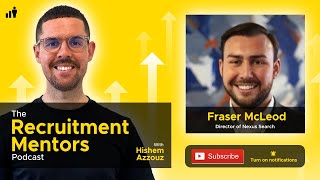
In this Recruitment Mentors Podcast episode, host Hishem Azzouz interviews Fraser McLeod, co‑founder of Nexus Search and former top‑performing recruiter at Chapman Black. Fraser explains the traits he believes make a recruiter successful – hard work, accountability, self‑awareness and disciplined goal‑setting – and shares how he used these to become the youngest top‑biller at Chapman Black at age 21, earning a Rolex after hitting £200‑£250k in six months. He details his daily operating model, emphasizing pre‑call preparation, extracting deep information on calls, and focusing on a few key accounts. The conversation moves to the emotional impact of Chapman Black’s administration in early 2020, Fraser’s sense of responsibility, and how the event accelerated the launch of Nexus Search. He describes the strategic vision for Nexus – building a lean, high‑performing team without revenue concentration, leveraging the founders’ complementary personalities, and maintaining discipline during COVID. The interview covers leadership transition from individual billing to developing others, dealing with imposter syndrome when speaking to senior executives, and the challenges of scaling hiring as competition increased. Finally, Fraser outlines future plans: a hiring academy, formalising a sales operating model, and growing the firm to 20‑25 consultants by 2025.
Chapters
Welcome to the Recruitment Mentors Podcast. My name is Hishem Azzouz. Today I'm really excited to be joined by Fraser McLeod, who is one of the founders of Nexus Search. Nexus Search specializes in executive search across the automotive and consumer goods industries. Fraser started the business in 2020 with 3 other business partners, Max, Johnny, and Stanley, who all met one another at their previous company, Chapman Black, where they had all successfully climbed the ranks before the company went into administration. Nexus Search are now at 16 people in the company, but due to sort of continued success over the last 18 months, they have big plans to continue to grow the business and take it even further over the next few years. Fraser, welcome to the pod, mate.
Thank you for having me.
Looking forward to it. So where we always like to start is the million-pound question. So I would love to know what comes up for you when I ask you, like, in your opinion, what characteristics characteristics and traits do you think make up a highly successful recruitment consultant in today's market?
Um, so I think obviously there is, you know, the, the typical characteristic of being the hardest working in the room, you know, and I think everyone knows that in recruitment, you know, you have to put the effort in. Um, it doesn't come to you without putting them hours in. Um, but for me, what I've noticed recently since working more in Nexus Search is accountability and that self-awareness. I think you have to be able to have the ability to be able to know at any one time where you're at against your performance and be able to then self-reflect on that and, you know, work out what do I need to be doing now to make myself improve over the course of the next day, this afternoon, the next week. That continuous analysis of your performance is what I think really helps the modern-day recruiter.
I love that. So like self-awareness, uh, discipline, just, yeah, knowing what you need to prioritize and focus on. Yeah, yeah, I just love that. What's that? You just lost me.
Yeah, I just lost you there.
I'm sure it's fine, we'll carry on, but if there's any major issues, we'll— it'll be fine. Yeah, um, cool, we can, we can edit that bit out. So, okay, great. So what I guess, just, just to frame this up for people then, what, what I'm really excited to go over with you is we'll absolutely focus on last 2 years, you being a business owner. We're going to unpack that journey. But I think before that, what we're, what we're going to talk about and what I'm interested to find out from you is one, this Chapman Black journey, like how you went from, yeah, where you was to, uh, by the time you left, obviously AD. Also, I'm sure a lot of people would have wanted to get to that position. So I want to find out from you what you did differently, how you got there. And then also, as we were just saying before we started, right, I think Um, yeah, people definitely interested on like, okay, well, as an employee at Chapman Black when the administration went through, like what, what that experience was actually like. So if we'll talk about that and then we'll, we'll go into, yeah, then that transition of the different mindset of being a business owner, right? And not just having to worry about your number, getting the best out of your team. So let's just, I guess, just wind it back a bit then. So talk to me about how, uh, how did you, how did you end up in recruitment? So I can see you was in sales and then you got into recruitment. How did you get started in the recruitment dream?
Yeah, so my first ever job was actually in IT.
I was an IT consultant coming out of school, which when you think about is the complete opposite of my profile.
And then, yeah, done just a sales role. And to be honest, I just fell into recruitment probably like everyone else. I didn't really know too much about it, very naive to it. But, you know, I just had an obsession about working in the city, you know, putting a suit on, you know, I was always going to be successful. Um, and yeah, I spoke to Rex.
Where did that come from there? Where that— what is that from? What do you have people in your family? You was inspired, was you— did you not have that much, so you was like, I'm gonna— I need to make it? Like, where'd that come from?
Yeah, you know, my parents are not successful, um, you know, in terms of, you know, finances, etc. I've never had that. But I think it was just always throughout school, I was always that person that always loved business, you know, always was obsessed about, you know, on being an entrepreneur, trying to make something of myself. And I think it just drove me to, to looking for that job that could give me that as soon as possible.
Is it quite a common thing for people growing up in Essex to think, right, I'm going to be in London one day wearing a fancy suit? Is that a thing?
Yeah, I think, yeah, I think it is quite common, to be fair. That's why most of the recruitment industry is filled with people from Essex.
That's because, like, If I think when I was growing up, I did, I don't know, like sometimes if you were to go, like obviously I'm from Eastbourne, so like the South Coast. Yeah. So I don't know, you don't feel like London city suits as much, but I just feel like whenever I've interviewed people from Essex, it's like, yeah, I knew I wanted to go to London, have a suit, all that. I think it's interesting.
Yeah, it definitely is a common trait.
So, okay, so didn't know much, didn't know much about it. And talk to me about, talk to me about, I don't know, the first like year or so then, because that's typically like, yeah, sort of the most difficult period. Like, how, how was that? How would you describe that journey for you, that first part?
Yeah, yeah.
So obviously I said I fell into recruitment. Um, I remember on my kind of first day when I was there, all I was doing was— I was only 19 at the time— and all I was doing was just asking everyone, you know, who, who's the best in here, you know, who's the one making the money. Yeah, I was just so obsessed about just trying to work out who was the one that was, was doing the best, you you know, that was always my obsession. And the conversation just steered to a gentleman that has been on here before, which was Ross Fraser. And it was just consistently directed to Ross. It turned out that Ross was actually going to be my manager.
So I was, I'm not going to tell him this, but obviously I was super buzzing at the time.
Love that.
But yeah, like, and opening was just quite a natural job for me. I've always been good at, I've always been confident. I've always been good at speaking to people. I mean, building relationships has never been something that I've struggled with.
So suddenly I found this job that, you know, you could do really well in by communicating and building relationships.
So I thought I just like hit the jackpot for me. What—
where did that— where did that— I'm like, not everyone would walk into an office and go, right, who— how can I learn from the best? Like, why did you think to do that? Because that isn't common.
Yeah, I suppose I did have like a slight— I suppose people probably did meet me back then, would have seen that as a 19-year-old, probably did have a slight arrogance around me. You know, I just always— yeah, I did have that little bit around me, which I've had to grow out of as I've, you know, moved up my recruitment career. But, um, yeah, I just was— it was just for me, I've always wanted to be the best. Everything I've done, when I played rugby when I was young, you know, I've always pushed myself to try to make sure that I'm the best at everything I can do. And I think when I walked into that job that day, it was, you know, I was so excited. I see all these people, um, all these young people, you know, on the phone selling, and it was just for me, it was just really eye-opening, and I just wanted to know, how do I become the best in this business? And yeah, from there, you know, I just— Ross was only, was only a young lad at the time, and my obsession become being the youngest top biller. That's all I cared about when I really—
that's all you, all you cared about?
Yeah, yeah. In that first year, like, I did hit the ground running. I was pretty successful in terms of, you know, understanding the job, getting my head around it, and The goal for me was just how do I become the youngest top biller in this business, and that's all I was kind of obsessed over for the next few years.
What did you find out from Ross then? So if everyone's going, you like, Ross is the guy you want to learn from, blah blah blah, what did you, what did you take from him which you'd probably, probably still pass on now? Or like, what were the main things you remember that you took from him?
I think probably the biggest learning was that, um, and it was, it was him and also the other top billers in the office, what I kind of What I kind of took from them was they didn't always have the best call times in the office. They weren't the ones that were doing the most calls. They weren't the ones who were doing the highest call times. What they were doing differently was when they were on the phone, and you listen to them on the phone, the information that they took off that call was so much more than anyone else in the office. They would have a 30-minute call in comparison to a 1-hour call, and they would take so much more information. They would ask so much better questions. They would come off the call and, you know, I'd ask so many questions of like, how was that call? What did you get out of that? And it was the information that Ross and the other lads in the office saw, that the women in the office that were doing well, the amount of information they got was just so much more impressive than the rest of the office.
Hmm, that's interesting. So do you think that was just the questions, or, or like just the way they were going about making, like, getting better at opening people up? Building relationships, like, I don't know, why do you think they was able to get more information?
I think they, um, like, before they go— they went into any call, they, like, they understood what they were going into that call for, you know. They weren't take— they were, you know, that's one thing that I probably did take from Ross is that every call he went into, he always knew what he was trying to get out of that, and he would focus so much of his questioning and his positioning of the call to get what he needed out of that. And he you know, really installed that into me, I would say. That's probably my biggest learning from Ross.
Yeah, no, I love that. We, yeah, the work, the work starts before the call, right? And I think we did a session just recently and that was one of the tips. And I think, 'cause especially right now when everyone's so busy, those are the types of things that you could get complacent with. But as you just said, if every single call you go into knowing like what you want to get out of that, the point of the call or that, you're just going to have a better chance of making the most out of that call. Yeah, yeah, that's why I think that's a great insight.
Yeah, I say that to my consultants on a daily basis is, you know, every single call we need to understand what we're trying to get out of that call. You know, we've got to work out what is this call, what information do I need from this call to take me to the next call, and then we've got to make sure that throughout that call we've got to position ourselves to get that information.
Yeah, no, I love that. So how long did it take you? Did you achieve the Young Top Biller Award, mate?
Yeah, of course.
How long did it take then? Talk to me.
Um, I won, I won Top Biller when I was 21, so it took me about 18 months to 2 years. Um, yeah, so I won it when I was 21. Um, was this per—
were you permanent contract or both?
I've only been a perm biller. I've only been in perm. Um, and I've done automotive recruitment.
Yeah. And what— so what— so, and that was a top biller throughout the— what, your team, the whole office?
It's over like a 6-month period, so they do it over a 6-month period. Um, you know, you've got to be the top biller. Um, I had a really hot— you know, the other, the other person in our team who was also hired similar time to me, Callum. Yeah. Um, you know, it was like me and him just always fighting for it. He was same age as me and we just kind of— yeah, yeah, it was actually really nice to be fair. Like, we just had a really healthy competition. We knew that we were At the time, I would say we were the two up-and-coming consultants in the business. We would push ourselves to do things differently, and we just created a really healthy competition, um, and they would be pushing for that top.
Well, so it was on a, it was on a 6-month window, so that you, you was, so they would have the top biller for in the last 6 months rather than like the whole year?
Yeah, so you would have it over 6 months, and then, um, whoever won that, you got, you got like, you got a Rolex basically. Uh, classic.
Yeah, the classic recruitment.
Love that, that's decent though. So the '21, 2 years in, Rolex, must have been buzzing.
Yeah, I was buzzing.
Love that.
I was very happy, I was very happy.
So what numbers did you have to hit then to get the top biller? Uh, 6-month window, do you remember roughly?
I think at that time it probably would have been about, probably was around between 200 to 250. I'd say. So it would have had me on track to be like a— yeah, yeah, yeah.
So in 6 months, that's what you— yeah, yeah.
So yeah, it would have been around that.
All right, so a couple of things I want to unpack here, right? So, okay, cool. So first, first thing people really interested to find out, okay, Fraser, so you got, you got there in that period, and obviously you obviously stayed at Chapman Black for, for a lengthy period of time, but like what What did you maybe do? People want to know, okay, so if I'm right now, if I'm billing, I don't know, $150 grand in a year, let's say.
Yeah.
But I'm listening to this and I'm learning from people like you and you're doing double that. I want to know what is Fraser doing differently basically, or what do you feel like you really doubled down on or did differently that made you go from, I don't know, maybe doing $100 grand in 6 months to $250 grand? Was there any key things that come up for you that you feel like you got really good at to hit those sorts of numbers?
Yeah, so I think, um, I think what I did was I always made sure that I was surrounded by the best people in the office. That was just like a number one for me.
That's just, um, so you intentionally made sure you was around positive people, you wanted to get inspired?
Yeah, you find in recruitment companies there's always like, uh, the little groups of generally the people that do well at recruitment, and they're always in a little group, and they're not too accepting of the ones that are not. But I, yeah, I don't even think I could to try and get myself in there.
Just understood what they were doing. I think that was my immediate— the difference to me and other people in the business that weren't— that were at same level as me, you know. Yeah, in terms of recruitment, uh, in terms of recruitment, I think, um, I suppose it was my mindset really. I think if I was to go back to anything, it'd be my mindset. I was so target-driven, um, I'm always setting goals. I was always thinking about what's next for me. You know, constantly what's next. As soon as I won that top biller award for the 6 months, you know, I didn't say to myself, great, I'm going to go and enjoy this Rolex on my wrist. I said to myself, yeah, there ain't many people in this business that have back-to-backed it. Not many people have went and won it again, you know. And my— from the day that I won that top biller award, I went straight back to my desk and it was, how do I go and win it again now?
And again, yeah.
And that was, that was my mindset, and that was exactly what I did. And Okay, I just tried to always go that extra mile with everything I did basically in the office, really.
Yeah, how do you set really high standards? What— talk to me about how do you— how did you set goals? I know this may sound really basic, right? But I think this is also things that people like to hear. So when you say you're really goal-driven, everyone could say, yeah, I had targets, but like, did you have a monthly target and you broke it down on a weekly basis? Because as you said, one of your first things at the beginning of this was like being set, like having that self-analysis, knowing we need to prioritize. I'm assuming that's something that you've done in your career, but how did you set goals that helped you know what you need to be prioritizing, where you're at, which obviously helped you?
Yeah, so obviously I set the big goal, you know, which is what you want to get out of 6 months, you know, whether that's to win top biller. And then it was always— I would always then work it back to kind of what the, the money I would need to bill is to make that. And then you try and break that down. In exec search, it's a little bit different in that you know, your average placement is $40,000 to $50,000. So realistically, you only need to be pulling, you know, need to be doing 5 or 6 placements over, you know, 6 months, you know, maybe a little bit more to really be able to achieve that. So then it's just, okay, so what's the, the pros? I'm very big on like operating model and just trying to work out what is that process that you have to be doing on a weekly basis consistently, you know, to get the absolute minimum out of your day. And yeah, that's what I used to try to do a lot. And I think that I was very systematic in my approach. I would look at doing the same things every day without fail, and I would never leave the office without doing them. Um, I think that's how I've been able to— I was able to then build a consistent, um, like, billing track record.
Yeah, yeah, yeah. Okay, okay, on that then, people, people would want me to know, okay, what is, what was your day plan then? What did it— what, what, how did that work? If you had like— if you were to think then, when you, when you got that top biller for the first time, what did your look like? Walk us through it.
Oh, um, going back some years now.
Sorry, mate. Well, roughly, obviously.
Yeah, yeah. And I think, um, obviously you— for me, I was always— I had like 5 or 6 accounts or 5 or 6 clients that were always my target clients. So I always knew at any one time, who, who do I see myself having a long-term partnership with? Who am I already through the door with? Who likes me? Who's giving me a buy-in? And Yeah, every single day I would always be contacting at least 3 or 4 people inside their businesses. It doesn't matter what, you know, where they are. I just want to constantly be making sure that I'm always making inroads into them 5 or 6 key accounts. That was always like my first few hours of every day. Um, I would then—
what would be your reason for calling though? Why, what, like if you're doing that every day?
So what I would do, I would just constantly— German, 9 out of 10 times I've generally had a relationship to somewhere in that account. I've maybe done a placement there, I've got some relationships. I'll just be going into every single account with just trying to have a conversation with them around, um, you know, I had one, one account was my biggest account. It was in, it was in Italy, and Italian automotive supplier. And, um, you know, I just, I would constantly be calling all people all over the business and just talking to them about the placements I've already done, you know, who I am today, what I'm looking to do in their business, these are the candidates I've got in my network, and I just constantly be trying to build a relationship there to see if I can grow them accounts.
Um, love that.
That's what I did. I did that successfully with that, you know, with my major account.
You'd always do that at the beginning of the day, or you'd always do that every day?
Yeah.
What else have you done there?
Yeah, I think with exec search, you're constantly, you're constantly doing in that 360 model in that every search you get is kind of different. So there is not that opportunity to recycle your shortlist as much as other markets. So you're constantly having to spend time you know, doing new searches on LinkedIn, trying to generate new candidates that specify to the retained search you're working on at that time.
Yeah.
So I'd be spending a lot of time doing a lot of delivery. I think at the early days of Chapman Black, they hadn't got that delivery and sales consultant role right. They didn't have that process. So it was very like, you're a 360 consultant, go and do your job, you know. Win candidates, do delivery. But in exec search, it's a different operating model, but they didn't have that at the time. So I was doing a lot of delivery, and then in the evenings, you know, I'm just constantly— most of my evenings was either again rebuilding my searches, rebuilding my BD lists, or I was, you know, sending speculative candidates out to the market to then allow me to go into my next day with some opportunity to BD.
Yeah. So what— so how would you describe executive search? How, like, why are you judging it on? Because I think we spoke about this, didn't we? Like, what, yeah, how do you, so I mean, what I would maybe take is that you, like, are you, obviously your average deal size was like 40, 50 grand. That's pretty, that's pretty big. So was you doing more senior, like executive search? Was that because it was more senior? Was it always retained? How would you describe executive search?
Yeah, so it's executive and leadership search. I know that obviously, I think we do do leadership placements and which is more the senior manager placements. We're not going to turn them down. How would I describe the differences? I think for me, what I've noticed recently since being next to search and being back into it and doing it on a daily basis is it's just slightly— it's very relationship-driven. You're not going to get given a retained search for a vice president or a director if you can't build relationships and you can't really position yourself as to why they should choose you. Over one of the bigger players in the market.
Yeah.
And, okay. And then it's just a lot, it is a lot of connecting the dots really, because it's, because there is no candidates that you can really recycle. You know, you've got to take one call to the other. You're not just constantly recycling, you know, a profile across the market and just, you know, knowing you're going to win a role off of that. You have to constantly do a new BD into new decision makers. Yeah, that's probably how I would describe it a little bit, just in, obviously it's still recruitment, but that's probably what it is.
So what, what I just want to— what I just want to hear from you then. So again, just still focusing on this sort of early part of your career. So what I'd— I'm really interested to know is like one of the common sort of— I don't know if you've seen this now, I don't know if you saw this in your— when you was a manager at Chapman Black or now and you're growing the business, but like when I've sort of interviewed or spoken to recruiters who are really early on in their journey, one of the biggest things that holds them back is just this feeling of I don't want to say imposter syndrome, but like, for example, let me give you context. If I was in your shoes, maybe at the early stage, and I was doing these senior placements, I was calling people that were triple my age, way more experienced than me, like, I could maybe really doubt myself and think, fucking hell, who am I to be talking to this guy around his leadership position, VP, all that. I don't know if you see this now. So like, obviously you quite quickly, you got, you were obviously making deals, you're building relationships, but Why, like, did you not ever think, like, fucking hell, I'm this, like, Essex lad, 20-year-old, just calling these people in Italy vice presidents and that? Who the fuck do I think I am? Do you know what I mean? Did you not ever have that? Did you have to deal with that?
I still get it today, to be fair, you know, like, I still—
Really? So you did have that?
I don't think you ever lose that. Yeah, I don't think you ever lose that. There's always that sense of, you know, I am only in my 20s, you know, I'm not coming with some— I've not got some crazy degree behind me, you know. And how do you overcome that then?
Or not let that like block you, not let that block your performance or hold you back?
Yeah, I think, um, so I'll say it to my consultants today is I think like I say to them, if you can have a candidate call, if you can speak to a candidate, you know, if I— what I say to them is if I put a vice president candidate in front of you and I asked you to qualify them as a candidate, you would have no issues with it. You would take the call, you would have a very good call, you'd come away with really good information, you'd build a really good credibility because you're looking at them as a candidate. There's absolutely no difference if you approach them as a decision maker. They're still the exact same person. All you have to do is, rather than asking them questions around why they want a new job, you've just got to make yourself sound relevant as to why you are in, why they are looking, like, what are you looking for in your new hiring strategy? And you just have to be confident that you can offer a solution to that.
Yeah, yeah, okay. Yeah, it's just interesting. Yeah, um, because, because I know a lot of people struggle with that. So clearly a few people, like, you've had to help people with that, right? Especially if you're dealing with, like you said, more senior people. You've got this big deal values, right? Like, everyone's doing 40, 50 grand deals. And as, as I said, like, 21-year-old Fraser, he's got a Rolex on his hand, he might have a bit more confidence then calling people. But still, it's like, who, who must they think I am? Like, you know what I mean? It's interesting.
Yeah, it's definitely, it's definitely a common theme, I think, in recruitment. Um, yeah, I think, you know, that probably the top billers are the ones that are able to navigate that feeling well, you know, and the ones that can get past that. For me, it's— I was just one of them people where I didn't overthink things. I don't overthink the recruitment process. I don't look at recruitment, you know, and it's not rocket science, recruitment, you know. There's But if you go in it headfirst and you just approach it every day the right way, you know, it doesn't matter who you're speaking to, you're going to get success out of it.
Yeah. So, so the next part I just wanted to unpack then, and then we'll sort of move this on a bit, is because I'm always— because this has come up a few times. So you had that big— I know you said that you came back in and was like, right, I'm going to do it back to back, right? But did you lose motivation? Did you lose any motivation? Because like, that, that's what I find interesting, because a lot of people listen to this. I do feel like the phrase, the phrase might, the phrase might change, because top biller, I don't know, it's just corporate like recruitment breath in it. It's like, I don't want to be the top. Yeah, I feel, I feel like the, the phrase needs to change. But like, if a lot of people listen to this, probably want to be the top performer, whatever you want to call it, right? But a lot of people I've spoken to, like, it's more easier to get that because you've got the motivation, someone else has got it. Whatever, and then you get that and it's like, fuck, now I need to keep it, or I need to maintain it. Did you find your motivation dipped at all?
Yeah, yeah. Like, for me, for me, getting up, going up the ladder to become the best performer in the business and, you know, be seen as that wasn't the hardest part, you know. That for me was always something I could achieve because I just had to keep looking at people above me, working as hard as I get there.
Suddenly, when you're there and it's like you've got people coming after you, you've got Fraser, 20-year-old, the other 20-year-old after you as well. How do you maintain it then?
Um, to be fair, there probably was a period where I didn't. There probably was a period where— yeah, there probably was a period where I didn't. Um, and that probably— opening— that probably wasn't down to my mindset, you know. Did I let it go to my head a little bit? Yeah, maybe. Um, yeah, it probably was a weight, you know. I, I did have some good mentors. The MD of Chapman Black Guitars, like, you know, there was a few times where she'd have to pull me in a room and just give me a bit of a wake-up call, you know, like, let's get back into it. And that's all it— that's all it took for me was just someone to say to me, come on, get back in the game, Fraser, and then I'd be back. Yeah, um, on it again. Yeah, it was the— definitely when I was at the top was the hardest because you just—
what, where did you— what did you have to like— what, like, for people listening to right now then, so if you— if I'm there, what did you have to tap into? Did you have to tap into more of like, right, okay, so I'm not chasing me being this anymore. It's like more about what I can— I don't know, what did you have to— you have to— must have had to work out something that really got you going.
I think what I had to do was I had to change my— I had to understand when I— by the time I got to the top of— when you was in the business, I was like, you have to work out what your new motivations are. Your motivations change constantly. And I had to work out to myself what was them, because, you know, earning money, being the best performer, I've achieved them now. That— where— what is it that really drives me? What's getting me up in the morning now? And I think what I did was I worked out that actually what was the really driving motivation for me was, um, was, you know, have not allowing myself to now fail, you know. And I had to get into that. I had to really understand that that's my new motivation. And then I had to go and find the next, you know, the next step for me in my recruitment career off the back of that, kind of.
Yeah, yeah, I get what you mean. So, but it was more about being consistent, like Okay, yeah, like, you know, that was what was motivating me, was to stay at the top.
Um, I had to do things, you know, continue speaking to the same candidates, decision makers, making sure that I'd stay disciplined. You know, discipline for me has always been a big thing. Um, yeah, you know, there's areas that I have an element of me which is, which could be, uh, could, you know, go a bit on the other side, you know. I can, I've got that, and I just need to constantly tell myself, you know, be disciplined. Maintain your right standards, Fraser.
Okay, talk to me about— so before we, before we start talking about the end of the Chapman Black journey, like, talk to me about— and I'm sure you've obviously heard this before, right? But obviously really challenging period also can be, Fraser, just worrying about his own performance, his own number, to then being responsible for yourself but also other people. Yeah, like, what, what were some of the, the biggest challenges that you had to work through as, as a, as you become a leader, a practice manager, an associate director, that you maybe had to learn the hard way or go, right, Fraser, I need to sort of maybe change my approach here. What were some of the difficulties when you went into more of a leadership billing manager role?
I think the number one thing is, you know, accepting that you're no longer going to be the top performer.
You know, accept that.
Yeah, that's—
It's no longer about you. It's not just about you.
Yeah, literally. Yeah, I know. And I know that sounds like—
No, it's come up before. It's come up before.
I just had to accept that no longer is it about you. You have to take away that selfish approach that I think you do need to become a top performer. You have to leave that and you have to come into the office with a new perspective now. It's, you know, my job is to now turn people into top performers. So rather than keeping that information in my head, I need to get that information, I need to articulate that to people, and people need to start understanding and learning from that. That for me was, was my, was the biggest learning curve. I'm all, I feel like I was always a natural leader. People enjoy being around me. People do, you know, they, people do get inspired by my communication, how I act. I thought I had that presence in Champ Black, but it was for me, it was that transition of knowing that I'm not going to be the, the guy anymore that everyone looks up to, to anyone looks up to from a billing perspective.
Yeah, I get him in. What, what advice would you give someone that's maybe going for that transition at the moment that was like a biller but wanted to get into like a billing manager role, what advice would you give them to like start getting more out of their team, become better leaders?
I'd say that for me, you know, there's nothing more that— there's nothing more that would fulfill me than seeing your team and seeing people become superstars in a business. And it doesn't matter how much enjoyment you might get from, you know, winning a Rolex, from being a a top biller. Yeah, you know, that, that will— the enjoyment you get out of that does not even compare to seeing someone walk into an office that has no clue what they're walking into, you know, and you are taking them on a journey to go and be really successful. And when you do see that happen, for me, that is the best enjoyment you can get within recruitment. So I would say, you know, just go for it, you know, let go of that selfishness and see that you can get much more enjoyment out of being a manager.
Yeah, so, so Jan 2020 then, obviously before— let's— we'll get into the, the— we'll get into the Nexus, uh, journey now, but before we do then, let's talk about what was Fraser's experience with this administration. As I was saying, um, as I was saying, obviously before I— when I was preparing for this, I did some Googling and I saw some like funny tweets like, yeah, people heard Chapman Black people fighting in the office, people stealing TVs, computers, all of this. Like, what was it as an employee of that business like? Did you know it was going to happen? What was the vibe like? Where was your mind at? Like, because yeah, you built out a successful recruitment career here, 7 years. That's obviously still going to be tough to— yeah, I guess, like, what was your experience?
Yeah, so I could just take— I'll take you through, you know.
Yeah, let's do it.
I'll take you through that week, should we say. Um, which I know is, uh, the recruiting world's been wanting to hear something like this for a a while, so that was big, big news.
So I actually found out a few days before. I found out a few days before, and yeah, basically I just had a meeting with one of the founders. We were very close, you know, we'd built up a strong relationship over the past years. He had a lot of respect for me. I think he just wanted to give me a heads up. So I found out, I remember it was in a coffee shop underneath my flat at the time on a Saturday. And I just, you know, it was just a complete shock for me. I didn't see it coming. You know, I run one of our most successful divisions. We were turning over like £3 million, just my division. I just, yeah, yeah, don't see—
so just to make it really simple for people, like, what, what was that? What actually happened? They run out, they're like, no, they had no longer money to— like, just explain, like, what actually—
yeah, you know what, openly We've never really been told.
Okay, fair.
Yeah, we've never really been told exactly what happened. Of course they ran out of money, you know, they didn't have enough money to keep the business going. Okay. But I don't know exactly what happened. I think it's, I think it probably was just a combination of the business had 3 or 4 bad months where we probably were, you know, losing quite a lot of money. The business had a lot of overheads at the time, probably, you know, um, swallowed up a lot of the cash that was sitting in the bank. And then, you know, by the time they got through to the new year, I think it probably was just— they probably got advised that this is just not gonna— you're not gonna get out of this.
Um, so, you know, they went into administration.
Yeah. Um, but when I found out that day, it was a bit of a shock. I remember going back up to my flat, I was in the lift, and I was just like, so what's going on?
Yeah. But it wasn't even—
my girlfriend at the time obviously worked at Champ Blanc.
And I remember going up in the lift and I'm thinking, I've literally just got to go and tell my girlfriend that she's unemployed. And like, you know, so it wasn't even— I couldn't even really accept it as just myself. I've just got to go and tell my girlfriend now.
I just hired my best mate who I knew really needed a job.
I've now got to call him and tell him he's unemployed.
Like, it was just a lot of emotions. And I remember going into the flat and I remember telling my girlfriend and, you know, opening up. I got really upset actually for about a few hours. I was really upset. Like, I it come over me a little bit. I was— and I'm not really an emotional person— and I was. And I think it was just a sense of— it was a sense of that I did— I felt that I was a part of that that let people down, you know. I was one of the associate directors. I had a big presence in that office, you know. A lot of people looked up to me, and I felt that, you know, as much as it had nothing to do with me, a part of me was just like—
responsibility.
Yeah, yeah, yeah, yeah. You know, if a business goes into administration and you're one of the associate directors, then, you know, you've got to be accountable for that to an extent. And it was just a little bit like I had let down a lot of my friends in that office. People in that office weren't my colleagues, they were close friends to me, and it was just a real sad moment to think that, you know, and to think that all of them years I had worked in that business, the blood, sweat, and tears I'd put in— For it to go out like that was just a bit sad. But yeah, then I remember a few days later, and obviously—
So you went into the office, went into the office? What was the vibe? Was people like, fine, what was the vibe?
Yeah, yeah, well, I think, yeah, I think what happened, everyone basically, they was meant to go on a ski trip. There was going to be a ski incentive the day before, and everyone was getting ready to go to the ski incentive. And like, no, none of the founders were obviously in the office. They were doing what they needed to do. I was the only real person in the office that knew at the time. So I saw my mates getting ready to go to a ski holiday I was like, I can't let that happen. So I've had to run, I've had to basically pull them in a meeting. I just took it upon myself, I didn't ask anyone, I just pulled them in a meeting. I said, look, you're not going on this ski incentive, you know, I'm not going to tell you why, you know, but you'll find out in the next day.
So, and I remember like everyone was like, really?
Like everyone's just shouting at me.
I was like, what?
Yeah.
Um, and then yeah, next day we just went into the office and it was, um, basically, yeah, I think everyone by then knew, knew the situation. Um, and yeah, the founder obviously let everyone know that the situation, um, you know, he was very genuine about it. Um, you could tell that, you know, for him personally it was an extremely— yeah, he was very sad. He didn't want that to be a situation. Um, and yeah, the office just kind of went, um, it just went crazy, to be fair. I think a lot of people— I remember a lot of people were annoyed. Yeah, well, you got a lot of people owed commission, weren't they? So there was a lot of commission.
Okay, right, I didn't know that.
Yeah, so no one got paid, you know. So we went into administration on the 20th of January. No, the last time we had been paid was before Christmas. So you've got a lot of people—
fuck.
So a lot of people were waiting for their January payday, which is an important paycheck, I'd say, out of the year.
Yeah, it's a long time in it.
Long— yeah, yeah, probably the most important paycheck, to be fair. And, um, you know, so everyone got told they weren't getting that, basically.
All right, so that, that's why— okay, so that's why there's obviously people saying people are robbing staff and like all that, because their owed money.
Yeah, obviously. Yeah, no one was getting their commission, no one was getting paid. So I think it all just kind of broke loose in the office.
Um, not like—
not lying, not— yeah, not— I think Twitter was just a bit— just typical.
Yeah, yeah, no, yeah, of course. No, but obviously, yeah, yeah, yeah, that makes sense. Yeah. Oh, thanks for sharing that, mate.
Yeah, yeah.
So then— sorry, go on.
I was just gonna say, but it's nice to see that that business was filled with some really good recruiters because a lot of people have A lot of people have left now and, you know, have gone on to be directors and, and, um, their own businesses. So, you know, Chatham Black had a lot of good recruiters in that business. It's maybe it was a blessing, um, for people to go and push their careers on now.
Yeah. So, so you guys then obviously started Nexus Search. Like, was that, was that already in the pipeline then? I was already—
yeah, it was in the pipeline. We had agreed to do that in November. Um, so in November we had decided to already set up. We was planning to set up in August. Of 2021. That was our target. That gave us 9 months to make sure that we had enough capital, because we're self— we invested our own money. Yeah, we wanted to make sure we had enough capital. I had a longer notice period, so we was already in the plan. Like, we already had a name for our business, we had all that already set up. So this obviously happening was just like a kickstart for us. It was probably a good start that we needed.
The benefit is what I'm assuming. Yeah, obviously you could get started right away, no notice periods. Obviously unfortunate thing is you haven't got that January paycheck, we would have gone into the pot. But you'll see, I'm assuming you didn't have any covenants, so like you could just crack on.
Yeah, exactly. So we didn't have any covenants, which was a massive help for us. Um, I think probably anyone who set up a business would say that would be a lovely thing to have.
Um, yeah, for sure.
Obviously we capitalized on that. Um, it was a good— it was a great opportunity for us. Now we— now look back here, I think that it was just so perfect. And considering that COVID was 2 months away, um, it's more— I look back here, I think, would we— would we have actually set up? Because if we had waited till August—
yeah—
of 2021 and COVID turned up in March, you probably would have waited. You probably just waited, have been like, yeah, like, yeah, I don't think me and you would be talking about Next Surge right now if that was the case. So it was probably— it was a massive um, you know, blessing in disguise for us that, um, yeah, to set, to set up Nexus.
So talk to me about— so we'll talk about the last sort of, um, 8 months or so, but like, talk to me about the first year of Nexus then. Like, what was, was the sort of mindset like? Right guys, let's, let's just get cracking, let's use this as an opportunity, let's start speaking to our clients, get money in the bank, start doing deals. What, what was the mindset going into that first year then?
Yeah, yeah, I suppose it was, um, very much, you know, that's going and just attack this, right? Let's go and really try to set up a business. Let's capitalize on the fact that we don't have this non-compete. What we did was we were very strategic in our approach though. We didn't go in it like— we didn't just go crazy and just run into our old markets again. You know, we sat back and we said between the four of us, what did we like, what do we dislike about Chat and Black, you know, what can we recreate, you know, what can we actually create from what we know? And I think that's allowed us to really be able to build a some values and a vision of what we wanted to get out of the next, you know, the first 3, 4 years of NexaSearch. And we've really been disciplined around creating that vision, which I think helped us in that first 12 months.
Yeah.
Where did you get— why did you do that? I understand why, but like, where did that come from? Like, why did you— because you could have quite easily been like, right, fucking hell, like, this has happened now, let's just go get smashing deals in, crack on. Like, why did you guys stay disciplined on that? And why was that important?
Because I think we all four of us shared a very similar value in that we, we love Chapman Black and it was a great business to work in, but there was definitely some elements of the company that, you know, we were not, we were not so fond of, you know. We, yeah, we saw that it was a company of 100 consultants, you know, with 20, 25 people making most of the money. Um, right. I know that happens a lot in most companies, and we was just really passionate about trying to recreate that, you know. We didn't want to create a recruitment company where, you know, there's not people generating revenue, there's not people absolutely top performers. And that was our focus going into it, was, okay then, so what do we need to do now to turn Nexus Search into the most— to a high-performing recruitment company without, you know, which is just— if it has to be 20 people, if we just find 20 people and 20 people are going to take our business to where it needs to go, then we'll just find 20 people. That's work on trying to create them values.
Yeah, no, I love that. So, so a few things here then. So what would you say have been like— obviously you started this with 3, um, other guys. Yeah, we're at Chapman Black as well. Talk to me about firstly what have been some of the main positives that you've experienced so far, all you guys starting this journey together, because obviously I speak to a lot of people that start on their own. Yeah, 2 people, like, what would you say have been the main positives of you guys starting it together as for you as a business?
Yeah, I think probably the biggest positive is just that we're like a little team, you know, we're like a little team. We've just, we've got a real team player mentality between the four of us. We all bring something different, all different people, you know, we're not carbon copies of each other, we're all different people, we have different perceptions on recruitment, how it should be done, And we all just bring something different to the table. And I think that's really enabled us to constantly have new ideas and constantly be able to just choose what is the best idea on the table. And none of us have gone into it with an ego. None of us have gone into it saying, oh, you know, I've built more than you here, or I'm better than you here. We've gone into it as a complete, you know, we are equals, we're running this business together, and we all want to get the best out of it. And I think that's probably been— and obviously, you know, naturally there's 4 views. You can split tasks, the stuff that's time-consuming, between 4 of you, you can split that up well. Yeah. And hats off to anyone who set up a recruitment company on their own because, you know, I don't think, you know, like, it's so difficult with the amount of business-related tasks outside of recruitment you've got to do. And I think with 4 of us, you just have a luxury a little bit of being able to spread that.
And then what have been some of the challenges then? Like, has it been difficult for all of you? I know, like, you've all been, like you said, you're a proper team, but what has it been quite difficult sometimes for all of you to be aligned with where things are going, or the decision, like, what have been some of the challenges?
I think we've never not been aligned with where the business needs to go. I think that's something that's probably surprised all of us, actually, in that we've all just always understood where the business needs to go. We've never really had a conflict. There's never been an argument around what we need to be doing. I'd probably say the biggest difficulty is that there is 4 people in a room, and it's 4 different personalities. I think if you went into business with one person, You have to understand that one person's personality, you have to, you know, manage each other's personalities. We've got 4 people in the room, so it's managing each, each person's personality, you know, in a different way. And each person's expectations has to be managed correctly. I think that's probably what we've had to juggle. That's the hardest thing we've had to juggle, I'd say.
So what, what's, uh, what surprised you so far then? Obviously you were thinking about starting a recruitment business in November But obviously you got chucked into it because of circumstances that weren't planned. But what surprised you on this journey so far then as Fraser, the recruitment business owner now, which is different to being a director in someone else's company?
What surprised me? I think one of the things that's probably surprised us the most, which is what it shouldn't have, but when we first went into it, we, we seeked advice from a business consultant. So we got a business consultant in. he wasn't to do with recruitment, but he trained us at Chapman Black and we really liked him. We got him in, we done a workshop with him, and we went through a business plan. And him being someone not from recruitment, you know, we was all saying, well, you know, we're all 400, 500, 600K billers, you know, we're just going to go and do it again. And he was a bit like, well, you're not.
And he was like, it just doesn't work like that. Like, you run your own business now.
Like, it's not going to happen. And I remember us coming out of that meeting and we all just kind of looked at each other and was like, are we not going to do it?
Like, are we not— are we like, are we not going to do 500K? Like, is that not going to happen? And, and for about a week or so, we like changed our business plan and we like low— we changed that.
Why did he say that though? Why? Because like you, you can't just build, it's different, you're in a different environment. Yeah. Why did he say that?
I think he was just trying to explain to us like, you're bit like when you work in a company where there's an infrastructure, you know, and all you're doing is coming into work, sitting at a desk, doing recruitment you know, you can do them numbers. Coming into a business where you run it yourself, you know, there's more pressure here or there, you've got more things to do, you know, you're not going to go and rectify them numbers. Which I think was a fair statement from him, you know, of course he didn't know that, he doesn't know recruitment. So we didn't like, we just took it as, we might not have believed him, but we took it. For about a week we might have believed him, and then after that we didn't. And I suppose probably the biggest surprise for me was that we have just gone and been able to rectify the numbers. Um, yeah, you know, we have all been able to go and do, um, the numbers that we were doing at Chapman Black. Um, yeah, you know, and more and more to be done.
What would you put that— what would you put that down to? Like, let's just— like, why? Like, obviously you've got a track record, you've, you know, like, you've got a— there's a collective of you, you probably all kept each other going, holding each other accountable. But like, obviously, yeah, you would have— March 2020, obviously COVID, all that. Like, what what, what do you think has enabled you guys to do that? Because that, that's, that's still like something super to be proud of. And as you're saying, probably did more than what you've done at Chapman Black. So like, why?
Yeah, and obviously through COVID as well, which was a pretty difficult situation for any recruiter. Um, no, to be honest, I think we just, um, we took a different approach to an extent. We, we saw that COVID was around, we knew that business development was going to be different. You've got to approach during COVID— we could— you couldn't just fly into any decision maker with a CV and just expect they were going to interview that CV, whether it matched their market or not, which could have been the old way of doing recruitment. It was more about, you know, we have to try and find out what, how do we offer a solution as a startup business that's flexible, that's agile in the recruitment, in the exec search space. What could we do different to other companies? And we started maybe offering different proposals. We were offering much more contingent recruitment, searches that we wouldn't have normally took on. We were taking them on if we saw that it was with a client that was actively recruiting during that period. So we just worked a bit more smart, I think, in that first year. And to be honest, we were just very relentless. We were very relentless. We all have a high expectation of each other. We pull each other up constantly if we don't think that each other is at the right level. In the whole 2 years we've been in ExaSearch, not one of us has ever taken a long lunch. If someone turns up 1 minute past the hour, you know that one of the other 3 business partners, one of us is going to look at each other like, you're not allowed to do that. But we just hold each other to a really high discipline, and I think that's what's enabled us to do them numbers so far.
Yeah, yeah, no, fair enough. And what about— how have you gone about— obviously, as we said before, there's about— what did you say, there's like 16 of you now, right? So how has it been like hiring for your own business? Because obviously that's a whole different thing in itself. Like, how has that played out?
Yeah, so in year 1, we were, we hired really well. We hired 4 people, which was just what we needed for our business. 4 delivery consultants. Strategy was bring people in with around 1 year's recruitment experience because we don't have, you know, an infrastructure to train the absolute basics. So let's bring someone with just a bit of knowledge, and we managed to find 4 people that have been, you know, have been fantastic for our business. They're still here today. They've created a great layer of our business. They are openly 100% the reason why we was able to do even more numbers in year 2. We've done that, we thought that hiring was really easy in year 1. We've come into year 2 like, we've come into year 2 like, we'll go and hire 10 people this year. We've found 4 people without really trying. Then it comes to year 2 and we It's just been, it's been so difficult now. I think it's been our hardest thing. Um, is it?
What's been so hard about it? Is it because everyone's hiring? Is it because— what, what's been, what have you found difficult about it?
I suppose it is probably we have, we definitely have more competition now. You know, people weren't hiring during COVID um, whereas now people are. Um, I think obviously just the people coming into recruitment now after COVID have a different perspective on what they see a recruitment company to look like as well. You know, people people maybe are not— I don't think I've seen as much— I've not seen people super motivated by what I was talking about at the beginning of this, um, podcast, you know, being the top performer. I don't know if that's 100% the driving motivation behind a lot of people stepping into recruitment now. And it is— it's changed. And I think we've, as a business and as business owners, we've had to kind of shift our, our— what attracts people to our business slightly.
Yeah. And obviously what I thought was quite good, obviously considering where you guys are on your journey, you've also, you've now got an actual dedicated internal recruiter as well. Has that helped?
Yeah, definitely. I think that was something that we saw. So basically what happened was we hired them 4 people and then we took our foot off the gas on hiring because we was like, we've got our 4 people, they're really good going into year 2, that's our setup now. And we didn't we didn't proactively keep approaching the market in the first half of this year, and it just left us with a massive black hole. We just didn't have any candidates.
Yeah, you got it. I think that's the thing, you've got to be consistent with it. You can't just be like, oh, we need to hire someone now, let's start now.
Yeah, that's it. And I think, um, then we just, we said, we've got, we've got, we hired Amber as an ops assistant, um, but we were just seeing so much sales flair. She had so, she's a salesperson, you know, and we just thought, why don't we just use this early on in our journey, that's ingrained in internal recruiting to our business. They understand our culture, and we've just worked so hard over the past 4 or 5 months in, in allowing her to become, you know, an internal recruiter. And it's now, it's now paid off massively because we've made— she's made 3 hires in the past 3 weeks now.
That's class. That's a good thing about that, right, is that obviously you've got someone dedicated to being consistent and getting the Nexus name out there. Rather than before, I'm assuming maybe you might do a bit of, I don't know, you might do a bit of it, someone, some of the guys might do a bit of it in terms of like the internal hiring push.
Yeah, well, you just rely on, you know, you'd speak to some rec2recs and you would hope that they're the right section profiles, and there's only so much you could rely on rec2recs, you know, they've got to go about doing their own recruitment themselves, right? Yeah, I think having that internal recruiter that's just consistently pushing next to search, pushing messages out, always you know, just trying to find new profiles for your business. I think for us, I think going into next year, it's going to pay, it's going to be so fundamental. I think Amber's role is going to really enable us to go and get, you know, 20, 25 to 2025 heads.
Yeah, I love it. So talk to me about, as we finish then, talk to me about what's on the horizon for you guys then. What's, obviously you're getting into, this is going to be your second year, right? Pretty much the end of this year nearly. So what's top of mind? What are you guys thinking about? As we get into the end of this year and go into next year? Like, what's on the horizon?
So I think for us it's just about— it is about that continual organic growth with hiring. We want to make sure that we're bringing more people in. We plan for a hiring academy at the beginning of January. We want to bring 6, 7 people into our business, which would be our first talent injection. We—
I'm really—
I've moved roles now, so I've become more of the sales manager of the business, less around just being a billion. I don't have a billion target on my head anymore. My responsibility is to run our company and to try to get the best out of the new people in the business. So I'm trying to build an operating model. What is the best practice for a delivery? I feel like we have a best practice for a delivery function. Now it's about trying to build a best practice for a sales function. We've got 5 sales consultants in the business. Next year is about making them, set them up to become Nexus Search's next top performers. That's the goal.
I love that. Well, Fraser, it's been an absolute pleasure. Thanks for being super honest. Love your energy, mate. Love your positivity. I think kudos to you guys. Like, yeah, obviously, yeah, ended up starting the business journey sooner than planned, but have really maximized the opportunity that you've, yeah, that you got given, right? So yeah, good on you guys and really excited to see where you guys are over the next couple of years. But thanks for being super honest and sharing everything that you have in this episode, mate. It's been brilliant.
No, I appreciate it. Thanks for having me on here.
More from Hishem




You don't need as many clients as you think to bill $1 Million A Year In Recruitment



From 30 Direct Reports to Back-to-Back $1M Years as a Solo Recruiter with Zach Creighton



