From Homeless to Top Recruiter: A Story of Grit & Resilience with James Mowat
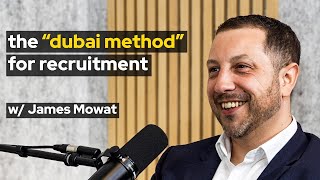
In this podcast episode, host Hishem Azzouz interviews James Mowat, a former teenage homeless youth who turned his life around through recruitment. James recounts his two‑year homelessness, early jobs at a job centre and Adecco, and how a 2005 recruitment role launched a 20‑year career focused on the Middle‑East MEP construction market. He explains how he built an international desk from scratch, the importance of authenticity, relationship‑centric networking, and generating referrals. The conversation dives into candidate qualification for overseas moves, the nuances of expat relocation, and practical steps for entering a new market. James also shares his evolution from a dictatorial manager to a coaching‑focused leader, discussing delegation, time‑blocking, metrics, and personal development (therapy, mindset work). Charitable work with Step by Step/Emmaus is highlighted as a source of purpose and a reminder of stereotypes around homelessness. Throughout, actionable advice is offered on relationship building, coaching vs telling, delegation, and structuring a manager’s week.
Chapters
James Moat. James has an incredible story. He spent 2 years as a teenager homeless, found it extremely difficult to get employment. But in 2005, the recruitment industry gave him an opportunity and he hasn't looked back since. In this episode, you're going to learn the trials and tribulations that has come with building an entire international desk from scratch.
My desk back then when I started managing was split between 6 people. They're my relationships. I've got so much invested interest in it. I've got so much sacrifice and it's control, right?
How to become a world-class relationship builder in your industry.
I wanna build a relationship up with you. I might not have a role for you now, but in 6 to 12 months, as soon as I've got something that's gonna be right, I will call you straight away.
Mm-hmm.
That authenticity really, really, really helped me.
The secrets to generating consistent referrals from your network.
Can you tell me someone that's looking for a job? That's the worst way to ask for a referral. It goes back to—
And finally, how James has gone from being a manager, if he's being honest with himself, that he probably wasn't proud of, to becoming an aspiring leader within the business.
I did wrong for a long time because the target was on my head. I'm still in recruiter mindset and I didn't take enough time out of my desk, allowed myself to do that, to actually think, right, what do we need to do to improve? What value can I add? What's my skill set?
Enjoy this week's episode. James, welcome to the podcast.
Thank you for inviting me to come on.
Looking forward to this. I know I say that every time, but I am.
I'm glad.
Obviously we've got to know each other over the last 12+ months, so safe to say you've been on, you've really made something of yourself. We're going to get more into that, but today we're going to talk a bit about how, you know, a career in recruitment has genuinely changed your life. And how that came about and what that means. We're gonna talk about how you've consistently performed, got better over the last decade plus. You've been with NRG people all in all 17 years, but you've been with them over the last 11 years. And then we're also gonna talk about how you've become, and hopefully your team would agree with this, a better leader, right?
I would hope so, yeah.
'cause you've been sort of growing and managing a team from 2014, but you've also been an individual contributor and you still have a revenue target now that you hit. So I think we're gonna talk a bit about your story, how you've improved over time, and then also the management side as well. So just to give everyone a bit of context, and then feel free to correct me if any of this is wrong, but I guess the key elements is you've been Specifically focused on the Middle East market since 2006.
Yep.
You do a lot of business in Dubai, but also have done business in Qatar and Saudi. 90% of what you do is perm, although you had a period where you went back to contract, which was in 2018. And we can talk a bit about that because, you know, I guess one of the cons which we'll go into, Middle East, it can be very— what was the word that you used earlier?
Cyclical.
Yeah.
So it's up and down, very volatile. Yeah.
Because of the things that happen with oil prices and a bunch of different things. Yeah. And then, uh, like I said, since 2014 you've been on this journey of leading from the front, managing and coaching people. You manage 12 people now, and you're also trying to help drive business development, acquire clients, help really on the client acquisition side for the perm part of the business. Um, and yeah, like, it's been an interesting journey, right? I think your best year today— obviously there's a lot to cover, isn't there? So like, best year today has been 300K. Um, so like, yeah, there's a lot to cover here, but I guess that's a bit of a highlight reel.
Yeah, I don't think so. I don't think so. I think you did pretty well, mate.
You know, nearly 20 years of career in like literally 30 seconds.
No, you've done pretty well, mate. I would have taken about an hour.
So why don't we start with— and I'll let you talk about this and we can go wherever we want with it— but getting a, you know, having a career in recruitment genuinely changed your life. So like, talk to us about what that means to you and how it actually did that.
So in terms of changing my life, it literally did. When I was a teenager, I was homeless. So for best part of, well, it was 2 and a half years, I was in youth hostels. So there was a place called, back in those days, Emmaus Projects, because basically my mum was an alcoholic. She left and yeah, I had nowhere to go. So I slept rough for a little bit and then luckily was taken in by this charity, which gave me a lot more than a roof over my head. Really helped build me in many ways. Build me back up. But I couldn't even get a job genuinely when I was living in that place because people just saw the address and just thought this is gonna be a, you know, a druggy teenager, somebody that's gonna be an absolute nightmare to employ that's not gonna rock up for work, blah, blah, blah, blah, blah. So I struggled for probably about a year to get a job and then actually started to work in the job centre, which was quite awkward because I was signing on quite a lot of the people that I lived with, which was quite interesting. But it gave me that initial, skill set, for want of a better word, in matching people to jobs. So I then saw Adecco at the time were advertising for a permanent recruiter in Guildford. And at that point I was working at the job centre during the day and Enterprise Rent-A-Car in the evening for 3 days a week and working 8 hours on a Sunday. So I was 18 doing 60 hours a week or something. And the job that I got at Adecco, the basic salary was exactly the same as those 2 jobs that I was working before. Plus commission. So anyway, started working at Adecco, did best part of a year there. High street recruitment. But what I, I really enjoyed it. The training was amazing, but I couldn't focus on one thing because in the morning I'd be working on a sales manager role. The afternoon would be a greenkeeper. Then somebody else would come in that wants a job in a bank. And I personally struggled not having a niche. And my friend's friend was working for energy people or energy recruitment, as it was called back then. At the time, and I joined them in 2006 to essentially help build the international market. So Dubai at that time was going absolutely crazy. There was no real talent pool there. So there was a huge amount of need for expats to go and build all these massive projects that are over there. So at that time, I had no idea where Dubai was, you know, literally from where I was, if that makes sense, 18 months prior. Yeah. Starting to work in the Middle East market in an engineering profession.
And yeah, your world is construction, your industry.
Yeah, construction engineering. So quite a niche part of construction for me. I'm best known for MEP recruitment, which is mechanical, electrical, plumbing out in predominantly Middle East, Dubai, and have placed people in some very interesting other locations as well over the years.
What would you say is like— because I know this is something that you're actively involved in that, which I absolutely love, in terms of like the charities you're involved in and these types of things. But like, what would you say, just from your experience, maybe looking back? Because I can imagine it can be quite hard in the moment to like think about these things, or even now through the charitable work that you do. Like, what is often like— what do people get wrong about homeless people, you know what I mean? Because like, even myself, being honest with you, you If you think of a homeless person, when you walk past a homeless person, you think certain things, right? You think most people got there because of their own decision-making.
Yeah.
You— yeah. Like, what is it that us typical— the status quo get wrong?
Stereotypes. Yeah, it literally is. And I'll touch on this in a minute, but it's the same with recruiters, funnily enough. So that's kind of helped me well in a weird way in the past because— and I did it myself the first night I was in Step by Step, or Emmaus as it was called back then. I shared a room with what I was informed was a paranoid schizophrenic.
Right.
So that worried me to say the least because I literally was going off my preconceived ideas of what a homeless paranoid schizophrenic was. And I was nervous as hell. I don't think I slept a wink that night. But the next day I started to get to know the guy and he was lovely. It wasn't his fault he was in that situation. And I think there's just such a big stereotype around homeless people, especially young homeless people, that they're gonna be trouble, that they're on drugs, It's their fault that they're in that situation. And yet for not everybody, but there's a huge amount of the young people that we at Step by Step help that it's not their fault. You know, the circumstances that they are in is the reason why that they don't have a home. It could be through parents. It can be in some instances that, you know, they have challenges themselves that the parents couldn't necessarily cope with, so to speak. But Step by Step The charity I'm referring to, I've been a trustee director for the last 3 years. So my aim in that role is to try and inspire people, the younger generation that might be in those situations that, look, I don't have any type of education and I've made something out of myself. You can too. Just believe in yourself and don't let the situation you're in dictate your future.
And when, like, I'm just curious, like when if you don't mind sharing, of course, like, how, how would you describe your mindset in that part of your life? Like, did you, did you, did you sort of see yourself as like bringing more to the world and like being more as maybe what people made you feel like, or maybe how you thought people saw you? Like, did you always have that, do you know what I mean?
Yeah, I had the interest. Even if you wind back even further, um, a few years without trying to focus too much on this, but I think it gives a bit of context to my personal story and journey. So my mum and dad split up when I was 4 and my dad worked in London and me and my sister ended up doing a lot of the housework. So it was instilled in us from a really early age to have a good work ethic. So at the time I did not appreciate that whatsoever, but weirdly it actually helped me on my journey because I had that work ethic instilled in me already. But my, in answer to your question, my mindset, I don't think I had a mindset for quite a period of time because 'cause what I was going through emotionally was anger, it was upset, it was frustration, it was pretty much every emotion that you can think of on repeat on steroids. So for a period of time, I was going through this mental cycle of blaming my mum. She was an alcoholic, it's her fault. Why am I in this situation? This is crap, excuse my language, blah, blah, blah, blah, blah. And then it was like a light bulb moment just went when I was like, right, this is a situation I am responsible for getting myself out of this. No matter what happened, no matter whose fault it is, I'm in this situation. I am the only person that can change that. And, you know, as I said, I had that work ethic anyway instilled in me from mowing the lawn when I was 6 or whatever it was. But it just, there was a fire inside of me that I refused to give up. And I refused to, with respect to some of the other people there in this situation, I refused to have the same journey and the same journey as my mum. And I knew that I could be a lot better than what I was. So it was a big shift in mindset. But part of that as well, if I'm really honest, was down to the key workers that I had luckily at Step by Step at that time, because it's almost like a weekly coaching session that you have that they help you with life skills, they help you with, you know, your own goals and stuff like that. 'Cause even in that scenario at the time, because 'cause mum being an alcoholic and stuff like that, I didn't really have any concept of money. Like I'd never managed my own money before 'cause I'd just finished school. So I was 16 basically when it happened. So that helped me in many ways build confidence, having those coaching sessions and one-to-ones every single week. But yeah, in answer to the question, mindset.
Yeah, how did you, their mind, I know you said light bulb there, but like, Because I think I really admire that, like arriving at the conclusion that if, yeah, if you are going to change your circumstances, it's like on you rather than like pointing the finger.
Yeah, and I think the finger needs to stop doing that and do that. Yeah, yeah.
I think it's like there's a really good quote on that from, um, a guy that I really enjoy his content called, um, Alex Hormozi. And it's just like, whoever you whoever you point the finger at, you give power to.
Yeah.
So like, yeah, like by you pointing at your mom saying I'm here because of her, these things, you're giving power to her.
Yeah.
But like, it's hard to— it's hard to take that responsibility, isn't it? Like, that's the thing. And I think that a lot of people can relate to that, even in the world now when we're talking about recruitment.
Yeah.
There's so many things that you can point out that you can blame as to like why you're not, you know, achieving the goals that you want. So I just really admire that. But was it like a process to get to that, or was there like a moment, or not? I'm just interested?
I think, and this is getting older, I realised that there comes a point and there came a point for me where I just had enough and that I'm not letting this continue anymore. Like this is my fault in terms of where I'm at right now, staying in that scenario, in that situation, that is down to me 100% because so what if a supermarket wouldn't give me a job? It's my responsibility, I am accountable for me getting out of that situation. I'm not trying to say I'm self-made and any of that sort of stuff, don't get that wrong, because of the help that I got. But it was all down to pointing that finger at myself because I just had enough and I refused to not have a life that I thought I was very much capable of having.
And how have you— because now, even in the last 3 years, or just in general, in like your career and your life, A lot of people will have people in their lives that they like give them advice, but they're just— they're not— they're not willing to take responsibility, right? Regardless of like, you know, you finding yourself in the circumstances you're in, I think we can all relate to people that will moan at their circumstances or not be happy with their circumstances, but really don't like the idea of— when you bring it up, they get defensive about being responsible. And I'm sure you come across this a lot, maybe in your trustee work or just in general. So like Living the experience that you've lived, how have you found, there might not be an effective way, but what have you often found to be the best way to enable someone to arrive at that place that you arrived, which is like, it's on me to change it, do you know what I mean? 'Cause that's hard.
[Speaker] It is really hard, and I was a product of that myself in a weird way, because yeah, I had that help from people, but it took me a while to arrive myself, to actually start influencing in changed in my own life. So I had that journey myself, but I think more of a coaching style, because if you just tell people, people don't want to listen to that a lot of the time because they don't want to face the truth. You know, the mirror is an ugly thing sometimes when it's put up in front of you with what's going on. And 90% of the time it's fear of change, then it's fear of facing realities. And implementing that change can have a significant effect. And it's scary, but I've done a lot of work on myself probably the last 12 years, I think. Got quite, not obsessed, but really into personal development and psychology and the psychology of the mind, all that. Obviously, sorry, psychology of the mind is pretty obvious, isn't it? Not psychology of fr. But learning more about psychology and neurological pathways. So I don't know if you've ever—
What, NLP?
Partly, yeah, partly NLP, but that they're like motorways, right, in your mind, and that's how habits are formed. And thinking is a habit and a choice. So changing your thought process can change your life genuinely. And through coaching, guiding outcomes, if you get somebody to come to that epiphany themselves rather than you just telling them, most of the time you can get a different result. But yeah, bless my mum, in a situation like that, an extreme example, you can give some people all the help, you can give them all the advice under the sun, but if they're not willing to change, you have to accept that as well. Because that is just unfortunately a reality of life that some people cannot and will not change. And one thing I've learned is that there's a level where that isn't your responsibility. That's down to that person to change.
Yeah, you've had to learn that, it sounds like. Yeah. I appreciate you sharing that. Um, what does— I guess to round us out on that, bring us back to recruitment.
It's a recruitment podcast, but like, not a therapy podcast.
I really appreciate you sharing all that, and I know a lot of people will be able to either be inspired by that, respect it. I think it's really, um, admirable. So what does telling— we can bring it back to management, you know, what does telling sound like and what does coaching sound like? We can use a recruitment example, but because I'm sure this is something you've had to get better at. Just know it. Yeah, so just give us a bit of an example because you said there, like, the insight there was— and this is something that I'm always trying to get better at as well because it's so easy to tell someone to do something or tell someone what the problem is or tell someone what the solution is, and it's harder, more time-consuming, requires more patience to be— to like coach that So what does like telling someone sound like?
Do this, do that.
Really?
Your phone times are 3 hours. That's not enough. Do this, do that, etc., etc. You're being more of an authoritarian, I think is the word. You're telling somebody something, whereas coaching, you're getting them to find the answers by asking probing questions, open questions. Why do you think this happened? What is the reason for this? What could we have done better? What could you have done better, et cetera, et cetera, as opposed to just telling. And I still struggle with that today.
Yeah, it's hard.
Like, yeah, for me, I've always been a fixer. So not DIY, but in terms of if there's a problem, hence I think the recruitment career as well, my client has a problem, they need somebody, I can find you a solution. The same as from a management point of view, I, for quite a few years, saw any problem as something that I needed to fix straight away. Rather than giving the consultant the time and encouraging them and helping them come to that answer themselves, I would tell them what to do. I think I've seen loads of the podcasts you've done with people and some of the amazing stuff on Hector where, you know, in the early days of somebody's career in recruitment, they need to be told what to do because they don't know. So if you try and coach somebody that's just started in recruitment, I don't think you're necessarily going to get the right outcomes because they don't know what to do and that's not their fault. So I think the beginning of somebody's journey in any career, they're going to need guidance. They're going to need telling, for want of a better word, in the right way. But as people get more autonomous and more experienced, then I think that's where you should start adopting that coaching model a lot more, because then that helps that person grow a lot. And what I learned with my own mistakes over the years in management was, yeah, telling people what to do hinders their growth if you do it for too long. It doesn't help them at all.
Like, I become reliant on James. Yeah, I don't think for myself.
Or yeah, it's like a parent-child relationship, right? You've got somebody telling you what to do all the time, and every time you need them, you're reliant on them for the answers. Whereas actually empowering someone and helping, guiding them, or giving them the responsibility and the trust is probably the best word for them to come to that conclusion and figure that out themselves. Helps them build a huge amount of confidence as well.
We'll get back to the episode in just one minute, but today I'm excited to talk to you about one of our partners, Firefish, the recruitment CRM that accelerates data-driven growth. The problem with most recruitment CRMs is that they are just a database of records, meaning they become just one of the many tools that recruiters use every day. Like with all systems, the records are only as good as the data being captured. Our sponsors Firefish know that for agencies to win faster, data needs to be at the heart of their business, making your CRM the single source of truth. With over 10,000 records created and updated every day, and 85% of placements from existing candidates, Firefish enables recruiters to enrich and engage their data, equipping you with real-time insights needed to win faster. To learn more about Firefish and take advantage of an exclusive Recruitment Mentors Podcast offer, make sure you click the link in the show notes and mention the Recruitment Mentors Podcast when speaking to the Firefish team.
So let's break down this like Middle East journey then, which I think people will be interested in. So, because there'll probably be things that you've done well, mistakes that you've made that people can apply to their own markets, so that'd be in the, the UK, like, uh, doing international markets. But I guess obviously you said at the very beginning when you joined NRG, the sort of core purpose of your role was to build the international side of the business, which obviously you've continued to do now over the last decade consistently.
Nearly 20 years. That makes me feel so old.
Yeah, so like, why don't we just start— why don't we just start with a bit of an open question? Like, because I know you've also tried to bring people on the journey as well, like, to do this successfully. But like, with all the experience that you have now, like, if I was to have you join my recruitment business and I had a good brand in the UK, we had a niche However, what I started to realize was there was 20% of our clients saying that they have an office in Dubai, Middle East, or whatever, and did start to sort of say to me like, Hishem, you've done such a good job here, like, can you help us with this? Like, it is a similar skill set, but understand that it's a different country, these types of things. And I started to think, well, hang on a minute, could I get someone to do that? But that isn't what I specialize in, so let me bring James in. Like, with your experience, like, how would you approach those first, like, 3 to 6 months differently with all the experience you have now?
Because I'm sure wildly different from the early days, 100%.
Yes. Like, how— just talk to us a bit about what would be some of the, the key things that you would do if you was to approach opening up an international market or try and build an international presence in the first 3 to 6 months? Like, how would you approach that?
You need to figure out what you're going to do. So firstly, the niche that you're going to work in, um, and map that market. Who are the who are the companies that you want to work with? Why do you want to work with them? And what's the potential? Immersing yourself in the candidate pool as well is so, so, so important. No matter what market you work in, no matter where in the world it is, you need to get yourself known by people. And in terms of the things that I think I did well, 100 years ago, it feels like that was one of the key things was I had that mindset of everybody needs to know me. Everybody needs to know my name, not from an egotistical perspective, but just to get me up to speed a lot quicker so I could start building building a reputation so I could start building my own brand, for want of a better word, out there. I would say if you, if you've got clients that you work with, go back to your example in the UK or wherever else in the world, that's the easiest place for you to start from. What existing business have you got right now that can take you into the markets that you want to get into? Because you can leverage those relationships. That's a much easier place to start than just literally going in gung-ho in a market you have no idea about. You don't know what the talent pool is like, etc., etc. And interestingly enough, from my own experience, as much as there's been a heavy emphasis on the Middle East, clients have taken me to some wonderful locations around the world. I've placed MDs in Singapore, I've placed people in Australia, I've placed people in Algeria, funnily enough.
Oh, nice.
Yeah, in a big oil and gas project in a recession. Perfect timing. And yeah, we're now actually developing business in the US that one of my colleagues is working very hard on. And that has come again off of existing client relationships. So yeah, trying to think who you've got that you work with and how you can leverage that to actually get you into a market.
So it sounded like what underpinned all of that. So let's just get into it a bit. Is that candidate piece?
Yeah.
Which I'm not surprised by. So like, understand what you would want out of like that candidate pool. More people to know who James is, how you might be able to help, who you are, company you work for, these types of things. But like, again, if we were to think people listening to this who are like early on on that journey, what's in it for like the candidates, you know what I mean? Like, how do you think— because I think sometimes people can think about that. Yeah, it's like, what, like, what's in it for them? So like, how would you, how would you approach that in the first 3-6 months when you probably don't have let's say you don't have much to give, like you don't have amazing companies to speak to them about. Um, I don't like the idea of pretending that you have jobs or like talking about fake vacancies, you know what I mean? I don't— I think that's quite unethical. So like, how would you, with all the experience you have now, like how would you think about that? Because I'm sure you've had to coach people on this, like how, how can people deliver value? Or how would you approach those, you know, first 50 to 100 conversations with candidates who are in the talent pool that you want to build, that you want to build your market around, but right now you're not going to have loads of great jobs to speak to them about. Like, how would you—
yeah, being authentic. And I would just— telling the truth, telling people the truth is— it's got to be where it starts, right? In turn, if you don't have anything at that point in time, tell the candidate. Why would you not? I, I get, I get the point, you want to go to them with something, but think of it as a long-term relationship. And that's what's helped me over the years, that doing this for so long, some of the people that I place I first met in 2006 became my clients in 2013. So giving a bit away of yourself as well and actually getting to know people, that is absolutely paramount in anything that we do, I would argue, as recruiters, whether it be a client or a candidate. The beauty of expats is that in reality, and this is not, if anybody's listening, there's any candidate or client, I don't mean this in a disrespectful way, but most of them are there for a purpose, right? They're there for a job. Job. A lot of them don't necessarily have the ambition to stay with the business for 5 to 10 years. Not everybody, because that does happen a lot, but they're there for a reason. And that reason for the Middle East, a big part of it, projects and money. So the money is a key factor. So people are more likely to move. But the beauty that you have with dealing with expats is that you are a connection to home as well, in a weird way, that people will talk to you. People do generally tend to give away a bit more of themselves because used to doing that to build their own connections. And they— I found personally the differences of work in the UK and Middle East, and this is again no disrespect to everybody back here in the UK, but expats are more open to building relationships. So for me, if I've got a trip to Dubai, I would book my meetings 2 weeks before and I'll have genuinely 30, 40 meetings in a week of candidates and clients. And that was the same from when I pretty much first started to now. And people will generally meet you a lot easier over there because they see the value in having that long-term relationship. So yeah, being authentic with people, being honest from the outset. And I would say showing that you want to learn. And that was one of the big things for me because, you know, honestly, as I said, I didn't know where Dubai was when I first started. I had no idea what a building services engineer was at all. So a bit of naivety helped. Because I was being really honest that, look, I don't know this market. What is it that you do? Can you explain that to me, etc., etc.? This is what I'm— this is my role. I want to build a relationship up with you. I might not have a role for you now, but in 6 to 12 months, as soon as I've got something that's going to be right, I will call you straight away. And that authenticity really, really, really helped me back in those days and still now.
And what— like, interested to hear your thoughts on like, what did you have to learn the hard way? And not everyone will be able to relate to this, but a bunch of people will. What did you have to learn the hard way when it comes to— because you moved a lot of people to Dubai, right? And now obviously that market is a lot more established, so there's more moving around of people that are already there. But obviously I'm, I'm sure a lot still happens in terms of moving people that want to go there. So like, curious to hear your thoughts on like what were some of the things you had to learn the hard way when it comes to moving people to countries, because I feel like there's so many different factors there.
Yep.
So what did you have to get good at? Because surely the candidate qualification piece, the challenging of like, how much do you want to move there? And like, what did you learn there? Because I'm sure there's some— what do you have to learn the hard way there?
The qualification piece, you're absolutely spot on. And funny enough, going back to that point, um, we were talking about earlier about accountability, uh, I kept having people letting me down and I got so fed up with it that, you know, it was me again blaming other people at that point in time. Oh, he didn't, we just messed me around. He lied to me. No, James, it's your fault. I didn't ask them the question. I wasn't direct in the right way when I qualified them and asked them, look, if I've got you something, if the salary is X, are you definitely going to go on a plane? You know, is there any reason for you not to get on the plane? Is there any reason for you not to take this job? Have you got any other offers? Are you seeing any of the clients, blah, blah, blah, blah, blah. And I try and put this in the right way. One of the first questions, especially if you're speaking to a construction manager or project director, QS, whoever it is, have you asked your wife? Have you asked your partner? Etc., etc. Because I'm sorry to say it, but a lot of people get excited about these sorts of things. A job in Dubai that's 100 whatever it is grand a year tax-free, working on the biggest project in the world. But when the actual reality of the of them moving there comes, it's a completely different ball game.
Has that been by far the most common reason that people have used to be like, James, I'm so sorry, I'm not actually going to be able to accept it? Like, my partner's not on board, or actually, as a family, we don't think it's right for us.
Yep, and even like, you know, the years you do recruitment, you end up being a bit more of a psychologist, I think. You start noticing people's patterns of behaviour and the way they communicate or don't communicate. And that was something that I learned quite early, was when people's communication style me changed, or the, the regularity of the communication with me, if they stop talking as much as they would, there's something wrong. And you need to have that conversation with that candidate. So that helped me hugely in many ways, like a baptism of fire in recruitment of the importance of qualifying people. Because again, I'm not trying to say it's harder. There's just more nuances in getting people to move across the world. There's more variables, there's more moving factors, families, all sorts of different scenarios that can come up that you have to have that conversation from the first call. So any candidate after that moment of frustration where people kept letting me down and I dropped out, I started to instill that from the early days of, are you 100% sure you're going to get on the plane? I also started setting boundaries with candidates very early that this is how I work. So I'm going to be representing you, speaking to my clients, blah, blah, blah, blah, blah, blah, blah, blah. I need you to tell me if you've got another interview. I need you to tell me if you've got another offer, et cetera, et cetera, et cetera. And you're going to get complete full transparency, honesty, and trust from me. But I need that from you or I can't work together with you. If you're 1% unsure, go away, speak to your partner, and then come and actually call me when you're 100% committed. And that was a game changer for me. And I still do that today. Still do that today. That's something that I instill in consultants, whether they work in the UK market, whether it's whether it's in the Philippines, wherever it may be, the fundamentals of the qualification and setting those boundaries from day one.
What's expected.
So important. Yeah.
And it goes both ways, right?
100%. Because then you've got to deliver as well.
Yeah, exactly. Yeah, 100%. What, um, but I think also then with what you're talking about as well, and again, this may not be relevant for everyone, but it should get you thinking as a recruiter the different ways that you can add value. Because then if you, once you've done that a number of times, help people move there, these types of things. That's like so much value that you can then offer to someone that has had the conversation, has got the right mindset, is open to it. You're not just speaking about jobs, but you're then talking about these areas could be really good for you because your family's now got good schools there. And, and like, you also then learn that. So then, you know, recruiter delivering value— there's so much more you can do there as well.
100%. And that's like one of the most important things of any market, what value can you add to clients and candidates, right? To set yourself apart from your competitors. And looking at those sorts of things on the internet definitely helps, but getting yourself there, that makes a massive difference. And my first trip there was 2007. I went on my own, you know, bearing in mind I'd only been doing it, what, 18 months or so and was in a very different scenario 2 years prior to that. But I think I was pretty nervous at the time, if I'm really honest. But that character building, definitely. I had no idea where anything was. I even had a bit of— sorry, I'm going off topic a little bit, but to tell the story, I had a bit of imposter syndrome back then. Why is a project director going to talk to me? What have I got to talk to him about? But actually starting to explore that a lot more with people and learning more by going there, no matter what market it is, it's a game changer because you're showing your commitment to that region. You're showing you're serious. That is a big enough statement in itself. And learning what things will add value to people. Like there's, if somebody was thinking about relocating, trying to find a website like a free ads website where people can find accommodation. It might sound really small, but stuff like that can really, really help people. Finding communities out there, expats. Again, they talk to people, they have to network. There's a huge community of expats. So introducing them to people. And that's something that I learned quite early on was the— or realized I've always been quite a good social connector. So putting people in touch with other people, that in itself was adding value as well. That I've placed this lady, this chap here, etc., etc. Speak to he or she, they can tell you where to go, where not to go for accommodation, blah, blah, blah, blah, blah, those sorts of things.
How many, how many of those people do you think you met you met face to face in the first like 2, 3 years, did you end up doing business with or have ended up doing business with, do you think?
Probably 90% of them.
Yeah, that's interesting.
Genuinely, because it just makes such a massive difference. And some of those people were junior engineers that are now directors of businesses. And it was through that, going back to the early days, hard work and sacrifice, Building relationships with people and seeing the value in that was so important, and that's helped pay dividends. People have literally taken me around the world, not literally moved me around the world, but in terms of recruitment, where people have moved to, those relationships have, yeah, led to placements in Singapore, they've led to placements in Hong Kong, Algeria, all sorts of different places.
So curious to get your take on like, because I think this has come up a few times recently, I think it's it may not be practical for everyone, but even if it isn't super practical, like it wasn't super practical for you, like that was a real commitment getting on the plane, it's an investment getting over there, like doing that at least once or twice a year. Like we hear time and time again with people, like getting in front of people face to face has almost become a bit of a competitive advantage now because it's so easy not to do that in today's market. Yet. So curious to hear your take on, like, because we were just talking a bit about this earlier, like, if I was in your team right now and I was working the, the Dubai market and I'm building my patch, I'm a year in, like, there's some com— I've got some target companies that what I want to work for. I'm starting to build a bit of traction and I plan myself to go to, um, Dubai for the first time, my market, and, you know, for for 3 to 5 days and I want to try and maximize that week and book as many meetings as possible. How am I— what is your advice to me to like really have the best chance of getting some good meetings booked? Do you know what I mean? Because I'm sure you've thought about this a bit more now in terms of like, right, I'm going to be in Dubai in this time for a week, 10 days. How— if you were to think about it before, you maybe knew a lot more people than you now do, how would you go about approaching maximizing that meet week where you land like a good number of meetings because you're in the country? Like, how would when you think about doing that?
I do it 3, 4 weeks before I would start. Write your list of targets. Who do you actually want to meet with? And just ask them genuinely. You've just got to ask the question. And it's the same as retainers. It's the same as so many things in life, right? If you don't ask, you're not going to get anything. So being brave, put yourself out there and just tell people, I will be here from this date to this date. I would love to come to your office, learn more about your business. This is going to help me find the right people for you. 'What time are you available at 10 o'clock on Wednesday the 15th?' To be specific. Yeah, you have to be because otherwise, yeah, you're not—
it's like these— but what about like companies that you don't have, you know, you haven't— you've got nowhere near— they're on your target client list, you might have spoke to them on the phone once or twice, but you never signed terms with them or anything like that. Like, is it just being direct and being like, 'I'm in the country, would you be against getting a coffee?' or something like that? Yeah, as simple as that.
As simple as that. Or what I've also done as well, which is probably the easiest option in many ways, or working smart, find senior people in the business that could be candidates because they can open up the door for you. It's the easiest way to get into a different business. They're the best way to do business development. Speak to, if you're in construction, a project director, they're a hiring manager. Speak to them as a candidate, flip the call into a BD call. You know, you're building a relationship, so you're not just using them for something and they're going to want to meet you.
So I was going to say, what is the best way to do that without felt like that person smelling your recruitment breath? Do you know what I mean? Like, how do we do that without me just going, James, like, I know what you're doing here, mate.
It gets stereotypes, right? Yeah, what we talked about earlier.
Yeah, because it's just like, there is, there's a way to not do that. Yeah, I mean, there's a way to do—
it's giving something.
Is that—
yeah, not literally physically giving something like bribery, I don't mean that at all. Yeah, but you give something away in the call, um, being authentic, being honest with people, you know, just saying to them— and I've done this so many times over the years— if I've spoken to a senior person in that business I've just been open and just said, look, I've been trying to knock on this door for ages and I'm just not getting anywhere. The HR team won't speak to me. I know they rule roost. Is there anything that you could do, please? And just be honest. Just be—
what would you have get? You said you got to get this give and take, right?
So you would then meet them about the candidate side of things. I would, because you want to build a relationship up with them anyway. Why would you not want to?
Right.
If they're a hiring manager there, or if you could place them somewhere else, they're going to be a hiring manager if you place them in a different business. So maybe giving them market intel, speaking to them. And that's again, immersing yourself into a market in the early days, but consistently throughout, knowing what projects are going on. If you're in construction or whatever it is, or the latest technology, if you're in the tech sector, sharing bits of information with people, building relationships, is they— people will give you information. I've gone I know very far down the line, so to speak, from a recruitment side of things now. But some of the clients that I have will call me when they're walking around Dubai Marina now, just for gossip on what's going on in the market. But they only do that because they know that I know, because I've taken the time to invest in learning and finding out about the market. I'm not just talking to people about CVs. I'm not just talking to people about jobs. I'm setting myself apart by learning more about that sector. And one of the things, probably more so over the last 10 years that I've done, is getting a lot more involved in industry bodies. So in the Middle East, we're the partner for a magazine called the MEP Magazine. It's the only magazine for the industry. So I do all sorts of salary guides, articles, etc., etc. For them to add value. And that has helped me set myself apart exponentially from the competitors because I'm doing something different and I show that I care and I really do. And having passion about what you're doing is so important and actually letting that ooze out of you. Yeah, that helps massively.
And then to round this out then, when we prepared for this, you said that like candidate referrals are like the lion's share, have always typically been the lion's share of your placement. How do we get good at that? Because I'm sure you've always tried to drill your team on this. Like, everyone listening to this would have heard about the importance of referrals, even myself in my own business. Like, how, like, how do you think about this? How can people listen to this become more effective at making their next placement a candidate referral?
Ask. Again, it just goes back to— sorry, to one word answer, but it goes back to that point. If you don't ask, you're not going to get But again, it goes back to that point of building relationships. Everything goes back to relationships for me and investing that time, that sacrifice that I was mentioning earlier. I've gone for nights out with people in Dubai. I've gone for meals with them. I've sacrificed my own personal time to build a personal relationship with that person. So that then opens them up a huge amount more to introduce people to me. And I've shown that I'm trustworthy. I've been authentic, I've added value to them in some way, shape, or form over the years. And I've then asked the question. I'd call people and say, who should I talk to about this job? Not, can you tell me someone that's looking for a job? That's the worst way to ask for a referral. Who is the best person? Who should I talk to? Those sorts of questions. But with people that you start to build that trust with, they will open up to you and they'll tell you.
And what do you think has been like— you might have already answered it, but if you— because you've been doing this market for a long time now, so like, you see the gray in the beard— what, like, for you, what has been— you might have just answered it, but like, what has been like the most consistent way for you to have great hiring managers, great clients partner with you? Like, what has always— you've been like, oh, like, like, this is the the most effective way throughout the test of time over the last decade that is the most important thing to bring on business? I don't know, it might be relationships, might be something else, I'm not sure. But what is it? What do you feel like it always comes down to?
The fundamentals when you first start out is always hard work. It's got to be. And that graft for the first 12 to 24 months, probably in reality, they're your foundations, right? But during that period in time, investing in getting to know people, building relationships, whether it's a client, whether it's a candidate, and giving, again, a bit away about yourself. Humanise yourself. Don't sound like a robot. Don't just send CVs. Don't just talk to people about jobs. Get to know them as people. That's how you'll build relationships.
Whilst we take a short break, I wanted to take a moment to chat to you about one of our amazing partners, Sourcewell, the industry-leading recruitment engagement platform. I'm using myself and I don't know what I would do without it. From building personalized messaging cadences across a variety of channels to automating follow-ups and data tracking straight back into my CRM, it's really made an impact in streamlining my workflow and most importantly, accelerating my sales results. My favorite feature by far is the live feed. By being able to see in real time who's engaging with your campaigns, it enables me prioritise my outreach with the most engaged prospects, which helps me get way more out of what I put in. So I'm gonna be honest, if you haven't got Sourcewell and you are a recruiter, I really believe you are at a disadvantage. To find out more and see the platform in action, make sure you click the link in the show notes and mention the Recruitment Mentors Podcast. Because you listen to this podcast, you're gonna be able to get access to an exclusive offer, free 50 phone credits, 50 email credits, which is at the value of circa £500 per user. So make sure you mention the Recruitment Mentors podcast and click the link in the show notes.
I always like to ask this: how would you— if you used to say, if you used to say to me, like, I've got a really good relationship with this hiring manager, and then you'd say about another person, like, I've got relationship but it's like not as great or it's not as strong, but what would be the things that you'd look at that would make you think, I've got a really great relationship with James, out of interest? Like, how would you sort of think about it?
How we communicate.
Really? How we communicate.
That can be the style of communication, whether it's just transactional, whether— and you've just got to accept that in our job you can't have the perfect relationship with everyone, right? It's just life. But if you were going to have one client versus another, what do I need to work on? I'd be thinking, what do I know about that person? Have I met them? Have I taken them for dinner? Have I gone for lunch with them? Have I, you know, got to actually know them and invested in that person as a person? Not just, you are a client or you are a candidate, because you're just labeling someone.
So it's like what you'd sort of determine it on, like how much you know about that person.
Yeah, 100%.
Like how you communicate with each other, family, kids, sports, hobbies.
Like these sorts of things. And that's what I was quite lucky in my early days. That was instilled in me quite a lot that you need to know that. We used to call it black book information. So those bits of information that your competition won't know about that person.
And black book information.
Yeah. And it's those things that can really, really, really help you have a relationship that's just transactional to a proper relationship. And, you know, some of the people that I know out in Dubai now, They genuinely are friends. They'll message me on Instagram, WhatsApp, whatever it is, because again, giving away a bit about myself, take, got to actually know them outside of work. Not that I'm best friends with everybody, I don't mean that, but you've actually got to know them on a human level.
Yeah, and I just think if you do that, it just gives you the ability to have a bit more of an insight on like what drives them, what's important to them, what motivates them. Them, which is going to mean when you're speaking to them about their career, you're probably going to be able to do a better job, or you might be able to make a good connection. Yeah, someone that you think they might be able to get on with. That's going to be really— it's just going to be more challenging to do that if all you know is like how many years experience they have and what skill set they have.
Yeah, if you just qualify them all the time, you know what I mean, and just speak to them about, yeah, what salary are they looking for, what's their notice period.
That's all.
If that's all what you know about them, that's all you're ever going to Yeah. So again, just being a bit brave and asking those questions about personal questions, that will transform the relationships you have with people because you're, again, you've got something that sets you apart from your competitors who are just going to be talking to them about CVs or just talking to them about jobs.
So let's, how would you, obviously you've been a bit honest with me earlier, so like that'd be great if you could. Of course, I wouldn't lie.
I know you wouldn't anyway, but in terms of like— You're stereotyping me, I'm a recruiter.
How would you— like, so many people find that transition to leadership hard. Like, it's, it's really challenging in recruitment. Personally, my take on that is I do think a big element of it is like, how, how, how do companies support James to be— to understand how to be a better manager and leader? Like, compared to like, James, you'll figure it out, you know what I mean? Do you know what I mean? Or like, James, you've done a really good job, let's hire someone in your team, you'll be a good manager, and then like you haven't had loads of guidance on like how to conduct a one-on-one or like how to give feedback, do you know what I mean? So like how would you describe your management style early on?
Honestly? Yeah, honestly. I was very direct and I was, the honest truth, I was insecure. Insecure. So I— being able to reflect is a beautiful thing, right? And looking at who you were and who you are now. And if there was a problem, I'd bring it up straight away. Um, I felt challenged, I felt insecure.
Um, what was you insecure about?
Authority.
Well, as in, like, should you be the—
I'm, I'm the manager, right? I was trying to be something that I'm not, right, at that point in time. So I wasn't being authentic. And I was very much more of a dictator, is the honest truth. I wouldn't have liked to have worked for me back then, is the honest truth. I was too direct. Don't get me wrong, I was honest, but I didn't spend enough time getting to know people as people. Again, go back to that relationship point.
You weren't doing what you were doing with your network?
No, at all. You know, I'd have all these really nice conversations with people on the phone, clients and candidates, but then when it would come to the team, I'd be really direct, direct with them. So yeah, changing—
why do you think that was? Was it like you thought that's how you had to be?
Yeah. And that's— they were the experiences that I had previously. That was the type of style that I had had.
Mm-hmm. How— what you'd experienced?
Yeah. And I think it was who I thought I should be.
And what does that actually sound like? It's like, Hishem, you haven't sent any CVs out today, why aren't you done? On that?
Yeah, it's not good enough. What's the problem?
What's going on?
Not all the time.
No. Yeah, but there are a couple that I'm genuinely embarrassed about.
Some of the decisions that I made back in the early days that, you know, someone— so many people have looked at me in a funny way and I'll be like, am I speaking Spanish? Like, not good. Not good. But that was me being insecure.
It was.
I was being defensive because I'm like, you're challenging my authority. Et cetera, et cetera. And I didn't have a manual for being a manager, and I very much was a manager, not a leader back then. And it was very rules, process, da-da-da-da-da-da-da, rather than, yeah, getting to know people, coaching people.
When did this start to change then?
Probably—
was you aware of you being like this, do you think?
Yeah. And this is not an excuse because it's my fault, but the team at certain points weren't performing, so I was under a lot of pressure. Trying to learn how to manage a team and deliver because my desk back then when I started managing was split between 6 people. So I was sat there thinking, I wouldn't talk to Chris like that. And it's control, right? Because they're my, it was my baby Dubai. It's, they're my relationships. I've got so much invested interest in it. I've got so much sacrifice as I was talking about earlier from getting to know these people. I wouldn't have said that. Why have you sent a CV? That's not good enough. Those sorts of things.
You, yeah, very concerned about— no, I do think that's totally normal. Like, I think I was reading something recently about like, it was a book called like Buy Back Your Time, and a lot of it is around like systems, processes, and something in there which really stuck with me was like, like, if you do want to grow or like scale like your team, for example, you're better off having the mindset of like 80% like done well is better than like 100% of you feeling like you did it perfect, you know what I mean? So like that, but that is hard, especially when it's your own client relationships. You're worried about how it's going to look, these types of things. So I do think that's quite useful to think like, okay, they're not going to do it exactly 100% of the time the way that you'd want them to. To do, but is 80% of the time them doing it in a good way? Good, probably, if you want to get out of your way and you want to grow the team, which you have to do if you want to grow.
And that's what I really struggled with because I wanted to have an element of control, so to speak, because they were my relationships, right? And my billings personally, because I didn't— when I first got into the management side of things, um, was a team leader, I wasn't incentivized for other people billing. So So that then, the frustration with that came that you're, that's my client, I could have made that placement. Like that's what I'm thinking, I'm not necessarily saying.
Yeah, sure, sure.
And that's what partly built that frustration up in the early days. But a lot of it genuinely was just down to, yeah, on reflection, insecurities.
Yeah, no, I appreciate you sharing that 'cause I know a lot of people will be able to relate to that. And then how, what were some of the things that you started to implement that you found maybe looking back, like, more proud of how you were as a manager or a leader? Do you know what I mean? Like, how— what were some of the things? Did you really start and try and rather go all guns blazing, start leading with questions, or— I don't know, talk to me a bit about what are some of the things you start to implement that you feel good about, that— or you felt like, you know what, I was really trying to improve as a manager.
And that was it. It literally was invested the time in myself, was that genuinely? And that changed my whole mindset from being frustrated in quite a a fixed mindset, very fixed mindset. And in, in real raw honesty, getting therapy, because there was stuff that I went through in my earlier years, as we've talked about already, that really affected me.
Sure enough.
And yeah, 100%. And that frustration, and there was a huge amount of, um, pain is the honest truth from the past that I hadn't actually dealt with. So going and actually developing myself and fixing those problems. That changed me massively, genuinely massively, and invested in myself, learning, getting more obsessed with developing me as a person in a positive way, not just being so fixed on being a recruiter and getting out of just a purely focused recruitment mindset that this is my target, this is my billings, into the team. It's not I, it's the team. Was huge. And there's, yeah, certain, certain things I look back on now, as I say, I wish I would have done incredibly differently. But the biggest thing that I love now is seeing people develop. And I absolutely love that when, when you can see somebody is really confident at doing something now, that's one of the best feelings. And when they start to make money and really start to grow as a person, that gives me a huge amount of fulfillment. German.
I think what's always hard for people in the seat that you're in is like allocating their time appropriately. Like, you obviously— yeah, like, so like, how— because like, yeah, just tell us a bit, if you don't mind, like breaking down a bit how— again, I know you'll have some good weeks, some not so good weeks, but obviously, correct me if I'm wrong here, obviously part of your role is very much leading by the front, being able to the team bring on clients, get in front of people. You might go on meetings with people or, you know, try and, you know, increase the chances of people winning great work with committed clients. But you're then also managing performance, one-on-ones, coaching, these things. So like, how have you been— and again, it still might be a work in progress— but when you feel like, I've had a really productive week or a great week, how have you typically— how do you typically approach setting up your week with like the team element and the individual element? Because that is hard, that bit.
Yeah, I've said it on loads of the podcasts that you've done. It's the hardest job in recruitment, right? Everybody says that. That's not a boo-hoo statement at all. Poor me. It's reality. You've got to run a desk still and manage, coach, develop people and bring in new business. So what I did a while ago was again, learning, watching podcasts, your podcast, loads of other people's. Different podcasts that there are out there and reading a lot of books, reading a lot of material about leadership development, et cetera, et cetera. And I just broke my week down. How many hours am I here? What are my priorities? What would make this week a very good week? And then allocating specific amounts of time. Again, not a boohoo statement in any sense, but my market is 4 hours ahead of us.
Right.
So when I get in in the morning, straight on, it's lunchtime time. So I get in a bit earlier the most, and that's my time to get my head down. So I then need to set expectations with the team to let them know, look, everybody, this is, I need to focus on this from this time. If you need me, give me a shout from 11 to 12, whatever it may be. Or team Harry, our team leader, speak to Harry. Those sorts of things, setting expectations with everybody, but breaking down the hours that you're there, what the goals are for that week and then distributing that accordingly throughout the days.
And how do you, how have you like found an effective way to set up your team, like in terms of being like, right guys, where are we? Like, do you know what you do have that a lot on the Monday kickoff sort of thing? How have you gone about that? How have you found that working?
Yeah, so Harry, team leader, he does that on a Monday. So one thing that I learned as my role was developed, I need to let go of some stuff. I can't do everything. It's not feasible. And it got to that almost breaking point where I was so frustrated that I wasn't able to deliver on everything. I actually realised, well, it's not possible. You've got to give away some stuff. So Harry would do the Monday morning meeting and then we have one-to-ones throughout the week and a wrap-up meeting on a Friday of what we've actually achieved. Nice. What I do throughout the week is in my diary every single Thursday, check where are we at in terms of interviews, CVs, meetings, blah, blah, blah, blah, blah.
What's like, what's the dashboard that you're like looking at? What, like, and you're, when you're looking at team performance, what's the, that, have you created like a bit of a dashboard that you like?
Yeah, through OneUp. So I, I look at it, um, pretty much every day.
What are the metrics that you always look at, like the important ones you care about?
Interviews, definitely. Number of interviews booked, number of interviews booked, um, and pipeline. So how many second stages have we got out there? How many offers have we got out there? So I've got a bit of an idea in terms of revenue what we're likely to actually get through this week, um, or potentially next week. So it helps me forecast and stop any trends that might start to happen. If we start slipping on interviews or offers, we need to be ahead of the curve. I need to be ahead of the curve and have that conversation with the team if necessary. If we're dropping on certain metrics.
How do you, do you do the one-on-ones?
Not all of them. That's something that I've had changed recently.
Really?
Yeah, because I like 11 people when—
That's hard.
Superstar in the Philippines. It's not easy when trying to be a director and trying to manage a team and trying to manage a desk. You know, I was booking interviews and without sounding arrogant, that's not a high value task at all.
No, definitely.
For a director, why am I booking interviews for candidates? Why am I communicating back and forth with a client to agree a time for a team interview?
100%.
It's silly. So the reality of the things that I can delegate.
Sorry, go on.
Sorry, I was going to say just to delegate and empower as well. Yeah, because you're getting the opportunity to give somebody else some more responsibility.
I was just going to say, sorry to cut in, but I was going to say, um, it just immediately went into my head, but like, I think that'd be interesting for managers listening to what— if you've done a bit of that, like, are there any other like low-level, like low-skill-level tasks that you, you found like, fucking hell, this is taking up a lot of my time?
Too many.
Like, what would be some of the things like arranging interviews, booking Interviews. What else? Yeah.
Qualifying candidates. Like if you've got the luxury, for want of a better word, of having talent consultants or resources, use them. Like, why? It doesn't make sense for me to be doing everything at all. So giving away a lot more of what you're doing, booking interviews, even communicating with the client to book the interviews.
Yeah.
Getting them to book the candidate interviews, advertising jobs. They're not high value activities that a director or a manager should be doing. You should, in reality, should be directing the business, right? Helping things improve, help them grow revenue, if I can talk, grow the client base. Booking interviews is not doing any of that.
Yeah.
So thinking about those sorts of things that are going to impact the team, impact the business and put, make them your priority.
And what would be, I know you just mentioned there, but then how would you, what would be some of the like high leverage tasks that you think, right, that me spending time on this is generally moving the team forward? What do some of those things look like?
What do we need? Like a skills gap analysis, training needs, these sorts of things, looking at what what do we need to develop? What are the holes in the team? Do the SWOT, an old school SWOT analysis. And actually then having a bit more of a plan on what you need to do to develop the team. Because I've again heard it on the podcast many times. So many leaders spend time in the business, not on the business. And that's something I did wrong for a long time because the target was on my head. I'm still in recruiter mindset and I didn't take enough time out of my desk risk, allowed myself to do that, to actually think, right, what do we need to do to improve? What value can I add? What's my skill set? What am I really good at that I can help impact the team in the business? So for me, it's business development, building relationships. Why am I not out there more? Why getting involved, public speaking, these sorts of things, doing this?
Yeah, all that sort of stuff helps build the profile of our business as well, rather than booking And then just to wrap this up then, like, if I'm listening to this right now and I'm a manager that maybe gets to the end of the week and sometimes I'm like, what, like, what has even happened this week? I've probably been a bit of a busy fool. Like, where would you start? Because it sounds— I think what you're talking about there could be really valuable for a lot of people because this is something that I've been really working on myself. And as a small business with 4 people, like like, it's like, it's so good to— it's such a good feeling to like delegate, um, and like have things in place where you're no longer doing them but you spend like you used to, you used to do them. So like, if I'm listening to this right now, like, where would you start? Do you know what I mean? Like, if I'm feeling like a bit of a busy fool, I'm doing all these different things, I still have a target, I'm a billing manager, what would be some of the first things that you'd look at to be like, could that be delegated? Should I actually be doing that? I don't know if you have any thoughts on that.
Yeah, I literally, I stripped my whole, like, not that I have a formal job description, so to speak, but actually thought, right, what are the key tasks in what I do? What are the most important, the most valuable things that I do, or what I should be doing versus what I'm actually doing?
Like actually like figuring that out and then looking at your calendar.
Yep, breaking it down into, right, what things can I actually delegate? What do I need to do this? Is this critical that I personally do this or can I delegate this? And just letting go, to be honest, and not being afraid to do that because again, that empowerment to that other individual can be really powerful as well to help them grow too. So you're not just giving them all the crap stuff that you don't want to do.
That is a really important point. Again, it was in, I might recommend you to read it, I think you'd really enjoy it, but like just because you enjoy it doesn't mean someone else would, would it? Is also the thing, do you know what I mean? Just because you don't enjoy doing that task, ask, actually you could bring a lot of joy to someone else because they'd really enjoy doing that task.
And the fact that you've asked them to do it, yeah, you know, you can package it up in the right way. Yeah, um, by all means.
So yeah, I think, yeah, like, definitely. Did you do like a bit of a time audit then, or like—
Yeah, and I literally, I, I work for— I hardly ever work from home, right? Because I've always been that type of person that thinks I should be leading from the front, I need to be there to be visible, blah blah blah blah blah. And that's something that I've learned as well, probably probably genuinely over the last 6 months, if anything, that I don't need to be there every day. And that's just, again, me being not controlling, but me allowing people to learn and grow themselves and not being afraid to fail and mess up. People need that. So for me, I literally, I had the time in my calendar to do UK business development in the morning, sorry, Middle East business development in the morning, UK business development in the afternoon. And I just sat there, I was like, what am I doing? Like, what am I doing? Why am I doing this? What should I be doing? And took that time out to really scrutinise the tasks that I do and yeah, what I need to give away.
Love that. Look, James, it's been an absolute pleasure. Really respect Respect the journey that you've been on. Like, clearly, like, you're just hearing you talk there, always looking at ways to improve. No, that never stops. But thank you so much for joining me on the pod.
No, thank you. It's amazing. Thank you very much.
More from Hishem




You don't need as many clients as you think to bill $1 Million A Year In Recruitment



From 30 Direct Reports to Back-to-Back $1M Years as a Solo Recruiter with Zach Creighton



