From Rock Bottom to £1.6M with Elliot White
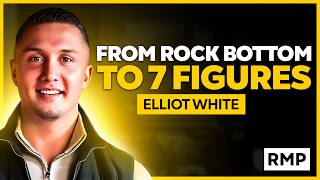
Elliot White rebuilt his recruitment firm Hubscale to £1.6M by assembling four senior leaders across cyber-focused units. He prioritizes hiring for role-specific fit over headcount, requires leaders to generate revenue and build community, and is expanding into Austin while protecting culture across UK and US offices.
Chapters
Elliot, welcome to the pod.
Great to be here.
Thanks for coming down. Just learned that it's third time in London.
Third time in London, yeah. Not one of my, uh, not one of my go-to cities. As we said before, I'd rather just go on holiday somewhere if I'm going to travel 4 hours.
So, um, today we're going to talk about this journey that you're still very much on. You're in the trenches as a recruitment entrepreneur, and safe to say it hasn't all been plain sailing.
No.
So in this conversation, I guess we've got sort of two places that we're going to take this. One, people really appreciate when people are transparent and people share their hardships, because we're just talking about it in terms of, in today's world, there's always someone that looks like they're doing better than you are and comparing, right? So like, when we prepared for this, I'll be honest, I was definitely surprised with some of the things that I learned in terms of the hardships that you went through. Yeah, compared to like what you see outside looking in from a brand perspective, where you guys are going, what you're shouting about. So we've got two areas we're going to take this. One, the early days, what was hard about it, what do we learn, how did you push through. And then two, when your co-founder Elliot and also a very early employee Katie joined in 2023, how things started to shift and how you ended up then building a 7-figure recruitment business last year. And I know you're going to feel like you're just getting started, so we're going to get into how that happened, how you turned it around, and what you're doubling down on is what we're going to do.
Amazing.
Yeah. So where, like, when I say to you, when I talk about the early period, where does your, like, mind immediately go? Like, to give people some context, you went on the classic journey of, like, it was a top performer You then found yourself in Dubai with a partner, and, um, you then started this recruitment journey, this recruitment entrepreneurial journey. So like, when, when did the hardships start appearing? Because when you first start, I found this in my business, there's a lot of adrenaline, there's a lot of kudos, well done, mate, like, go on, like, anything you need, like, you get all that. But then very quickly that just starts to quieten down, and no one cares about your new business, and it's just you on your own trying to make things happen. So like, when did things really start to feel shit? Yeah, this is hard.
Yeah, well, I think just take it back, right? So I remember creating a website in my bedroom just before moving out to Dubai, because the story was I went to Dubai on holiday for 3 days, moved back, 4 weeks later moved out to Dubai and set the business up over there. So quite knee-jerk reaction just to go, you know what, I'm going to do this. I was doing it anyway, but I thought, right, let's go and try it in a different country. Um, but the hardship started probably a couple of months after getting into Dubai. Um, I started off pretty well and it was like moving country and X, Y, and Z, but we'll go into a lot of the points soon about why and why this stuff was hard and some of the things that I faced then and how I've kind of remediated them over the past few years really. But the first bit was really kind of running out of cash probably around 3 months in. Um, 2022 in executive search, which is the main stuff that I had always focused on. It was really, really hard to get traction, especially in a new business, one person. I remember going against a pitch for a CRO role for a publicly traded company. I was one person against 2,500-person company. And the fact that I didn't win, right? So going back to the right at the beginning, it was really, really tough just to mentally get me going every day. We started to run out of money because I was, it was basically moved over with a partner who was also not working. So we was after, we had to kind of move the money around in a certain way to spend it in. And Dubai's a very expensive place. Um, so then when the, the fees weren't coming in and et cetera, it started to get a little bit hard, probably 2 to 3 months in. Um, then a lot of the stuff really came to light about, which we'll go into later, definitely is just about my personality and the stuff I was doing on a day-to-day basis and the foundations that I didn't have. From a personal standpoint that I couldn't replicate in the business.
Because you, I've sat down with a lot of people and like, you probably saved a good chunk compared to other people. Like I did a prep call the other day with two founders, similar space to you, but not completely committed to cybersecurity, but do tech sales. They both had 5K each that they started with. I've got written down here 50K. But under that lifestyle, the Dubai lifestyle.
So it's interesting, right? Because I did have quite a bit of money, but it was a weird time. I wasn't necessarily, especially 2 or 3 months in, I wasn't the person I was on a day-to-day basis. And a massive turning point was when I moved to Mallorca. So we actually moved to Mallorca because we couldn't afford to live in Dubai because we weren't generating any revenue yet. This is like 2, 3 months in, probably about 4 months in. And it was a lot cheaper in Mallorca. And it was really, really hard out there. We was stopping in a place where we had no aircon at one point. So literally for 35-degree heat, no aircon, trying to get up, build a business, go into different cafes, trying to go to the gym, et cetera, throughout the whole day. I remember my mum coming over and she literally looked at me in the eyes and said, you are not gonna— what's up with you? And to this day, every single time I see her now, because I told her everything was fine and later she found out it wasn't.
Um, when she said what was up with you, you said you was fine.
Yeah, so I said I'm fine, I'm fine, I'm fine, I'm fine, don't worry about it.
Why, why did you say it was fine?
I just always do. Like, it's one of them things, you just— I go back to the state, I want it, I want, I want to kind of be okay for everybody. Um, and every single time I see her now, she always asks me the same question. Is everything okay? You sure? You told me that time in Mallorca that it wasn't, that it wasn't fine. But, um, yeah, it was just an interesting time because you've got to really dig deep in them scenarios, right? And that's an early stage of the business. And I always put it down to, it's like, we'll go into this a lot today about kind of characteristic traits and having your personal life in order before you do a business. I moved to a different country. I went to set up a business I've never done before. I was in a very early relationship when I did that. And I was away from my friends, my family, and I was working 6, 7 days a week in Dubai and everyone looking at it and go, what a nice lifestyle. But it weren't, it wasn't at all. And some of the stuff that I'd do on a day-to-day basis. I'd be driving myself insane. I'd be working till 2:00 AM in the morning. I remember delivering a shortlist report at 2:00 AM in the morning. That, and luckily that was actually the first deal that we did. It was like 80K, but it was 2:00 AM in the morning. I was doing a prep call with a candidate to go into the thingy for a presentation. It was, it was pretty crazy. But after the time of that, then you start to reflect on that and you look back on it and you go, I kind of wouldn't change it for anything. Because there's a lot of things that I learned through that stage about people, about friends, about people you've been in work with for a long period of time, etc. Friends and actual true friends and family who are there for you and things like that as well. So I wouldn't change it for the world, but it was, it was, uh, it was— I basically did everything, every massive life change in one go, and hoping it would work. But it worked.
It was a super early relationship. Yeah, which is why it's just add that to the mix as well.
Just add that to the mix.
What, so how long, how long is this like period then, just to sort of put a time frame on it? Like how long would you say you was in that period for, and how long did it take until you did your first, first placement?
Uh, roughly about 4-5 months in. Um, then we did, then I did like 200 grand in the space of 2 months. Um, then it, then it started to roll, and then this comes the next set of problems, right? I Honestly, you'll see a gradual theme here. And I always say, you only, when you get in entrepreneurship or anything, you only graduate, you think the problem's over, but you're just graduating for the next set of problems. So it's super, super interesting as you go through this. But basically then, then when we got everything in, things were starting to look up, I started to hire people, but I did it remotely. So I hired a couple of people in, a guy I knew in the past in the UK, one of my friends, um, who actually came into the business. And they won't mind me saying this because I've still got relationships with the guys, but they just weren't the right person for that, for the size of company and working remotely. I got them an office in Manchester when I was still in Dubai and et cetera. And there were a lot of things that was flying all over the world. I took them to San Francisco, took them to Israel, took them to everywhere to try and really build some sort of community with the team, right? You don't want to just be doing remote all the time. And that was probably till the start of 2023. Um, we, we did, was doing okay from a revenue perspective. We had money in the bank and things. Um, but then it was, I started to think, this is not the business that I want to build. Um, and then came more personal problems from this, this 4 things that we'll talk about later on. But one of the key things is like, honestly, you cannot build a business if you don't have the foundations yourself. If you're, if you don't have your foundations in place, you're just gonna complete, you're building on sand, and then eventually something's going to topple over. And it did with me. And that was probably around 2020, early 2023. And revenue was fine, but it was more looking at the team, looking at what I wanted to do, um, seeing and constantly comparing myself to others in, in the industry and things like that. And it was, it was a really, really tough time. Um, and it took for two of my best friends, Tom Hall— shout out to Tom Hall and shout out to Tom Dickinson— um, who came over to Dubai and literally looked at me in the face and went, you need to change. And so Tom Dickinson, one of my best mates, is a, like, a lifestyle coach. Um, he's an awesome, awesome guy. And they, they helped me and supported me, both of them, and a lot of my other close people really, uh, friends and family, kind of just build the foundations again. And then that came where, like, I exited the relationship, I did everything, and then, then things kind of just moved on from there, really.
So just to take on— I want to dig into that with you because I think there might be people listening that are in that right now, or might feel like their current circumstances— can they change, or can they make like— yeah, like go in a different direction even though they're unhappy, or maybe feel like chained to the business that they built? Yeah, but like, what— like, I'm just curious, what— how— what made you keep on going up until that point? You know what I mean? Because like you just said, like, you weren't only just bringing them money, doing what you need to do, you also had other humans involved. Like, what made you just keep going even though maybe when, when it was just you, your mind was quiet, it was like, I don't know if I'm enjoying this, like, do you know what I mean? Like, why, what made, what kept, why did you just keep doing it?
Yeah, well, I certainly wasn't enjoying it at that point, um, that was about 9, 9-ish months in, um, yeah, I wasn't enjoying it at all. And it is, I don't know, you, you can, you can say the cheesy things of, oh, I just, I was never going to give up, I was never doing this, but realistically you're just in it day by day and you don't actually see that when you're in it. You don't realize how bad it was. Um, and it's not— I'm not saying it's like the worst thing in the world, by the way, or just in a, in a, in a bad place and got over it. Like, that, that stuff happens, right? But you don't see it when you're in it, and it only takes you 6 to 12 months to then reflect back on that moment and go, wow, I actually was a different person. Like, if we did the podcast then, I'd have been a shell of a man in comparison to who I am today. And that just goes with growth and, and get— trying to get better, which is things we'll talk about later on. But it's just interesting. And, and it, and it took some of my closest friends to try to kind of shake me and go, what's up with you, type thing. Um, and it wasn't like the business was doing terrible or anything like that, but it was just, it was just a personal mindset. And then to carry on going and carry on going, it was one of them things. It was, I just looked at it on a day-by-day basis and just did the stuff I needed to do. Um, but then when things changed, when they came over and I started elevating things around, that's when it all changed. And that moves on to the next point about when, when we kind of got really, really serious, when, when Elliot joined and things like that as well.
So let's— I want to lead up to the— when you're like— I think that's amazing that you had friends that were able to like be honest with you. I think, again, I have a really close friendship group and I'm always making sure like I don't take that for granted because I know there's a lot of, uh, particularly men out there that don't have that. But I guess like I just want to make sure that we cover it and people— because I want— if there's anyone listening that might be in this sort of chapter now, what did like leading up to that moment— what did— two things really. Like what did like a normal day look like? Was it just you was just doing what you needed to do, didn't really feel very fulfilled, you was just, I don't know, like whatever it looked like? And then two, um, like what was the hardest thing about it? Because I remember like we've always exchanged messages on LinkedIn and stuff, and like you just never would have— like, I just remember seeing your content from Dubai and these things. I just never— if we had an honest chat, then I just never would have put two and two together. So like, one, what did a normal day look like? And, and two, what was actually the hard— like, on reflection now, because you've obviously done a lot of reflecting on it, what was, what was the hardest thing about it?
Hey, it's just, um, on a day-to-day basis, it was just the same stuff. But there's, uh, there's actually, I'm gonna send you a link after this. It's for a TED Talk and it talks about, um, positive frame of mind versus stressed or neutral. And you are 31%. It's a TED Talk, so it's genuine. Genuine. So I'm not just making numbers up here. They probably are made up, but who knows? But basically he talks about you're 31%, uh, smarter when you're in a positive frame of mind. So when you're neutral or stressed, you're 30, 31% less smarter and you're 37% better at sales. So taking it back to that scenario, I was doing the day-to-day things, but I really, really wasn't operating at the best level I was. And that was annoying me. And I knew I was better than what I was doing on a day-to-day basis. I knew the calls I was having and I knew things were happening. It was no, no, no, constant, constant nos at some points. But I think just looking back at it and like talking to people how to get out of that scenario is speak to your friends. And a few things about what I'll talk about earlier about about setting up a business, like get your foundational stuff in order— gym, fitness, health, uh, friendships, family, all that kind of stuff— um, before going on this journey. Because if, if it gets hard, and even if you go 3, 4 years with smashing it, something is going to come and you've just got to be ready for it mentally. And if nothing's happened in the past and things are a little bit shaky on the ground, on your foundations, it will just fall over. Um, so yeah, that's kind of what I want to say.
Yeah, I, I really echo that. I think particularly even more so when you're a solo founder as well. Like, we'll get on to how we feel like things change when Elliot joined and that dynamic, but I think with what you just said, I couldn't agree more. Like, again, me super grateful for my friendship group, also super, uh, grateful for my now wife. Like, I've always said to her, like, whatever happens, the fact that I feel so grateful that we've— with what we've got together is like really strong. And like a lot of people don't even have that. So I completely agree with you, like you can't— if you put all your eggs in, in the work basket and nothing and everything else is just crumbling away, yeah, that, yeah, it's gonna be one more difficult and a lot less fun, uh, really hard. But what, um, like leading up to your friends coming over, obviously that, that sounds like a really sort of pivotal moment, and sometimes in life we have these pivotal moments. So firstly, when, when your friends did come over, like, where— what did the— just, we've got a clear picture— what did the business actually, actually look like at that point? Like, what did you do roughly, like, billings-wise, revenue-wise? How many people were there? Just so we got a bit of a picture before your friends came.
Up until those coming, I think we did, um, close to 200, 300 grand. No, it did about 300 grand, something like that, in the first, in the first one.
And how many of you were there?
Um, it was brand new. So, okay, uh, my ex actually works in the business as well. And then we had, um, two people who just started probably the latter end of 2023, right? Um, and then it was, it was quite evident quite quickly, um, I don't know if there was going to be here for a long period of time. It was just the dynamic was just a bit strange, um, with just me, me and Dubai. And I'd still not decided if I were staying out there or what I was doing yet. And it was one of them things where we're kind of finding the feet still with what I wanted to do with, with my life and be where I wanted to be type thing. So, um, it was— yeah, that was, that was basically where it was.
And then when the, the like context of your friends coming over, was it just like, Elliot, it'd be great to see you, like, let's get a plan in, boys, like, come on, it's my birthday.
Oh, really?
Yeah, yeah, this is your birthday, just like a social thing.
Literally February time next year, so my birthday is next, uh, next Monday.
So nice.
Um, yeah, this just came over for just to see me really on my birthday.
And like, just interesting, was this like a quick thing where they like— have you got a really honest relationship with them where they're like, as soon as they saw you, within the first hour? Really?
Within the first hour, yeah.
That's mad.
It's crazy, honestly, because you look, you look back at it all, right, and you go, you go, there is— then I call them like, uh, inflection points. And there's, there's many times in life when you had your inflection points and things like that, but the certain key ones, and that was one of them, to be fair. And it was like, what am I doing? I knew as well, I knew there was something wrong. And I'm not going to go into details on this podcast because that's not, that's not what this part is, not a therapy session type thing. Um, but definitely there's, uh, yeah, you just, you live and learn, um, about circumstances and everything in between as well. And I was just lucky to have people around me, really.
And like, what, what was it that I guess like What was it about them pointing out that actually then resulted in change? You know, I mean, was it because you knew deep down that they knew you truly?
Exactly right. It won't even— that I knew deep down as well. So I knew deep down that things were wrong and they came and reaffirmed it basically. But because honestly, I was living, I was living 45 minutes away from Dubai, basically on our own with no car, no nothing, just working in a room for all day, every day till late at night for the US hours.
Jesus Christ.
Trying to get across this. And honestly, it was, it was crazy. Like, I didn't have a social life out there. People had asked to meet me and I'd say no, I'm working. Like, it wasn't— moving to a different country is hard, but the things I've learned now, moving, you need to move and put yourself out there and not just— but it was the timing of it because I just started, so I didn't want to go out and spend time with people that was going to the beach club or whatever they were doing in Dubai. Um, I just wanted to be sat there working and trying to build the thing. Um, so it was, it was just weird timing that this has happened, but then again, I'm honestly so grateful for all that experience because it's led me to exactly where we are today.
So just have a lot more clarity on like what's important, what's not. So what were some of the— Elliot, you need to change— what are some of the— we can put the breakup and all that aside, that's not what it's talking about, but that was part of it, right? But like, what were some of the, the sort of early decisions then around you changing or making decisions around hopefully getting into a better place? Yeah, with the business, with yourself.
First was fitness. I've always gone to the gym, done fitness, played football, whatever it is, always done that from a very, very early days. And I weren't going to the gym. We weren't going to the gym. I was eating terrible. I was fully out of shape.
Why was that? I'm always interested in that. Like, is it because it's so easy to put everything in the work basket, isn't it? I found everything, and you can feel guilty as well when you're early on, like, I'm not working, I've got to be working.
Yep. And then you slip out of the routine and then XYZ, and it goes there. But I found it works for me, fitness and gym. Are a massive part of my life. And that's, uh, if I didn't have that, I think I'd lose my mind. But it's great just to go in there and it's like, it's like a form of meditation for 45 minutes, an hour, just to go and smash out a workout or whatever it is.
Um, so just really started getting actually putting, like, making time for yourself first.
I would just have more structure around it. Um, so I know there's 4 things that we're talking about, um, later on, but one of them is health and fitness, uh, really, because if you don't have your health in order, you're not eating right, you're not fit, you're not going to the gym or whatever that may be. For me personally, I genuinely, I'm not at the top of my level, um, in terms of where I need to be. So that was a, that was a massive, massive driver. Um, being more kind to myself as well, because I was putting a lot of, a lot of pressure on myself from early doors. And looking at social media like everybody does, from LinkedIn to whatever it may be, to, they're going, oh, these guys are doing better than me, what are they doing, etc. Um, And that was, that was a really bad thing as well. So mentally I weren't in the right state, but I knew to get in the mental state, you get, I get myself in a fit state. So get fit state, healthy, et cetera. Then you can make decisions more clearly. Then the mental state kind of gets better. And then from there you can make better decisions. And then from there you move on into the next step and et cetera. There's a work in progress and everybody goes, right, I'm in a really bad place now. What can I do? The first thing is to do something that makes you feel better, which would be diet and exercise. Um, and then once you do that, your brain gets better. Then you can move on to the next decision. So. It's not. And honestly, even in the last 12 months, I've changed so much as a person, but it's because I've genuinely been working on myself, um, from every single aspect, from self-development to fitness to this, to not drinking as much, to everything. I've kind of really, really honed in on what I'm trying to focus on. Um, and even if you spoke to me a year ago, I'd be completely different to who I am now. And that's, that's kind of the level, like, I want to get to. You want to be constantly improving, and it just comes from The literal foundations from starting where I was back in 2023, nearly 2 years ago now, to the point where I am now, it's not been a massive crazy increase. It's been a gradual increase for 2 years.
Progress. Yeah. So you said your friend was, or is, a like life coach? Yes. Or yeah. So what were some of the— so ended up changing your fitness, like putting energy into that. And like you said, then the impact of that is then your mind is better, you can make better decisions.
What were—
because did you— I'm pretty sure you said to me, like, he, like, what— I don't know if he did, like, quote-unquote sessions with you, but, like, I don't know, maybe he had some conversations with you and tried to uncover some of the things that— like, what were some of the things that he spoke to you about then, or helped you sort of uncover in that, in that period as we were transitioning or starting to make progress?
Yeah, no, definitely. So, so Tom's a— he's a mental health speaker. He goes around the world, he goes around the UK traveling, speaking to businesses and, and schools and things like that. He's an amazing human. Um, And basically when, when we first started out, he was just starting out his coaching business as well. So I was like the guinea pig, but it worked, right? And it's just, um, and some, some of the things are just, again, talking about the foundational stuff, like what are you doing on a day-to-day basis, having a habits, having routines, etc. It was just when your life's so busy and chaotic, you can feel in the trap of, oh, I should be focusing on my business, not doing X, Y, and Z. But realistically, if you have a routine, you have a Evening routine, whatever you need to do. It could be 2 minutes, could be 10 minutes, um, just to make sure that your body is going out there and, and acting, and your mind is acting in the best space. But after 2 or 3 weeks of doing that, you start to feel better, and there's a, there's a reason behind that, um, and, and that's basically where it started. But all of this stuff is just so foundational, like it's nothing life-changing stuff. It's just do the work every day and eventually you will get better in every aspect of life, um, from whether that's recruitment or fitness or whatever that is.
So over this, and then again, it's all about progress, I agree. What, how, what, like, for you now are some of the sort of non-negotiable things that you do on a daily, weekly basis that give you the best chance of like being in the right mental state? Like, what are some of those things that you've stuck to or really important to you now?
100%. I even have a coach now, fitness, never had one in my life, so I've got one of them as well. Um, and the reason— shout out to Ben Bray, he's awesome. You got PT? Yeah, PT. And basically it's like foundational stuff again. So like once you've got to that point and you move past that point, then you go, right, what do I need to do to get even better? So I have a morning routine, nighttime routine, gym in the morning first thing. Diet is literally mapped out all the time. So I don't even have to think about it, prep my meals, et cetera. Listen to the book on the way to work, listen to the book on the way back from work. So all that kind of stuff you're squeezing in little bits every day and you just compound interest, right? Over a certain period of time. Things are going to get a lot better. If you do that for 2 years, the place you're gonna— is everybody wants to be there, but nobody wants to do the work to get there. That is the, that is the main thing. Um, and again, it goes across absolutely really everything.
And then like to sort of tie this together then, if I'm listening to this right now and I'm sort of resonating with your Dubai chapter and where you was at, what, which was you, what would you say to that person? I know we're always progressing and it's just you're never really gonna get to this sort of like peak, right? There's always then going to be something else that you want to do. But like, what would you say to that person with sort of— clearly the way you're coming across, like, and I can feel it, I can tell, like, you obviously feel lighter, you feel a lot more like, you know, confident in your own skin, everything that's coming across, which is amazing. But what would you say to that person that isn't there? That was where you were?
And to just write out what you do on a day-to-day basis on a notepad, um, and then implement other things on there from a, um, a structural perspective, from the likes of fitness, from the likes of what you're eating and stuff like that. Um, even on what you're doing in a business sense, like, are you actually doing the right things? Are you pitching rightly? Are you, are you, are you actually learning different things on a day-to-day basis? Are you doing sales stuff? Are you watching this? Are you reading books? All that kind of stuff. Um, and again, guarantee you, if you're probably not doing that stuff, there might be a— you might be in a similar situation to where I was. It's just really about assessing what you do on a day-to-day basis and then understanding that. But people do look at just work and plan the work and do this on work, but realistically, it's the foundations of your personal life that makes you better in work. Um, and for me, um, if I had to start a business again, which I know that's one of the questions, um, I'd do it at home— not at home, but in a place where all my friends and family are. I do it in around when I'm in a good, a good headspace, when I've got things around me in X, Y, and Z. I know I'm in a structure, I know I'm in a routine, and I know everything around me. Because when it gets tough, I can drive to my mate's house, I can call my mate and go see him for a pint, I can do X, Y, and Z, whatever that is. It's just that was my biggest thing that I didn't have. Um, so that would be what I say. And just work is not everything, man. Although everyone wants to be, and I do, and everybody in Hope Scale, for example, wants to be the best, you also need to relax a little bit before making big, big decisions, um, which is, which is key.
Yeah, maybe think about going to a completely different country in a very early relationship, start a business, all three at once.
Why not just go and do it?
And then just like final point, I know there isn't, there isn't— whenever, like, I'm, I've been big into my own develop— development and trying to be the best version of myself for like a good amount of time now, and have listened to a lot of content around mental health, men. I've had people on, on the show talk about it, but I think it's, it's like hearing you say that even your mom asked you like, you're right, and you, you're still saying like, yeah, I'm fine.
Yeah.
But it sounds like, again, there's a lot of work that you've done, but an inflection point was you actually agreeing with your friends going, actually, you know what, like, yeah, things do need to change. There's a lot of people that one may not have the friends to point that out and may find themselves like being still being Elliot who's going, 'No, no, I'm all right,' even though deep down, you know, it's not. So like, I don't know if there's anything to share there. Like, there is honestly on the talking bit because it's hard.
No, it really, it really is, mate. And this is why honestly, like, um, I've mentioned him like 5 times already in the podcast, but Tom Dickinson, mate, honestly, he's He's my best mate. I'm his best man at his wedding and things like that. But when we go through it, um, you probably should have him on a podcast, mate. He's absolutely awesome. But the things he does in terms of actual benefits— we was in a Barça town, um, this is like 4 years ago now. He's been doing talks for like 6 years and doing all the content stuff and things like that. Somebody walks up to him in the street and goes, do you know you saved my life? And I'm there like, what is going on here? And then Tom's like, what do you mean? Um, and he— because he watched his content and etc. Like, he actually genuinely, genuinely saved his life. And this is what I mean about men. Men these days don't really talk about things today, or never have. Um, or just not just men, but everybody. But I think once you open up to somebody, they also go through the same problems or similar problems. They just don't talk about it. So for example, even in the work setting, I try to be quite close to everybody in work. Um, just because when they— when something is wrong, and I, I'm, I'm openly sharing sometimes stuff that happens with me, not regularly. But when somebody comes to me, I kind of relate to it because a lot of stuff has happened in my life, um, not just from, from recruitment perspective, but, um, and then you can genuinely open up to people. And then when something goes wrong in the future, somebody can come to you. And I feel like that's interesting as a leader and a boss, right? And so whatever you are in any, any company, I think you've got to be able to kind of connect with your team and make sure that when something goes wrong, they can actually feel that they can come to you and say something, um, which you don't always get with a lot of companies. I've had that a couple of times in my career, which is great. Um, so that's why I'm trying to replicate that and who we are as a company. But I think it's just super important, even if you're a founder on your own and you're trying to build a business and you've got nobody to speak to, there will be somebody. You just got to pick up the phone and speak to them. And it took them to do it to me. But don't be that guy. Don't be that— or girl. Don't be that person who just sits there and waits for it to happen. Everybody wants to help you around you if they're your true friend or your family member. You just got to give them a call or go meet them and ask them, really.
Yeah, I think what I definitely take from that is like, if you unfortunately don't have the social friendship network, then they'll go to a professional, like you said, like your friend, or they're like— there's people there that are committed to make— committed to making sure that you're not going through what you're going through alone. Yeah. So I love that. Oh, well, I really appreciate sharing that, and I'm confident that that will help people that are in that, that position, or at least just— it's just good to, like you said, you can be in that headspace and just, you're so self-absorbed.
Yeah.
Which is a big part of mental health I found, is like you're just so obsessed with your own problems and what's going on that you don't have space to understand, like, actually other people might actually be thinking these same things and it's not just me. So how did we then, like, things really started to change on the sort of recruitment, business, entrepreneurial side in 2023. How did we— so you used to work with the other Elliot at a previous company. Yep. How did we end up in front of each other, consider him joining on the journey? Because I'll be interested to hear what you think about this. I sit down with a lot of founders who run smaller businesses, and sometimes what they can run into, which is a bit of a— I don't want to say limiting belief, but when it comes to like hiring, sometimes they can be concerned like, who'd want to join my small little recruitment company when there's all these other great companies out there, right? And the reason why I'm bringing that up is because it's interesting that you was in an interesting place. You've also made some changes, but yeah, be interested to hear how you like positioned it to Elliot, right? Because you, you obviously been on your own journey, right? It wasn't— you weren't going to Elliot like, mate, I've just been slugging it out, like, honestly, I can't keep up with all the demand, making loads of money, like, come join this rocket ship, mate. Yeah, do you know what I mean? So how did that come about?
Amazing. So two things is, um, a bit of brand. So I actually started the podcast. I don't even do them anymore because there's too many of them. But in terms of like cybersecurity and recruitment, talking to people. But I started it and then that started to get a lot of traction. Not from clients, and obviously you're doing it and you were working with clients and etc., but from people genuinely really quite interested in what we were doing. So that was it. And Elliot was always coming. And for people who don't know, there's two Elliotts. It's super confusing. There's Elliott White and Elliot Elliot Fielding. But he's obviously my business partner now and things like that as well. But he is the best person for me and him to work together, and he knows that as well. So I am good at stuff he's not, and he is very, very good at stuff that I'm not. So we work so well together, and we did work in my previous business very well as well. So he's always coming. So when he came, then it started to get really, really exciting. I remember he first joined and we went to Tel Aviv to a trip, and we was talking about big plans and strategy and et cetera, when when he first joined as well. But that's when it starts to get really, really exciting.
What was the sell though, from your side? Besides you two being able to work together, do you know what I mean? Because of where you was at.
Yeah, but I always believed in the vision.
Okay.
I always believed in the vision. No matter what.
Always backed yourself.
Always backed, not even just myself, just what we was doing. Because we wanted to build a business that supports security, the security ecosystem. I'm sure we'll go into in a minute, but we have 3 different business units from executive search, product, and second go-to-market. And it all works well, it all works together harmoniously, harmoniously type thing. So that was always the vision, and Elliot knew that. And when, when he joined, that was just the vision. So I think a big thing as well is like, you've got to match people's dreams into your dreams, um, into the business's dreams. Sorry. So if you, if you, if somebody wants to scale to 10 people and, and do X, Y, and Z, you have to match that to hire them. So when Elliot was joining, it was just our visions together matched and aligned. And because we wanted to go here, and the vision never changed, it was always wanted to build this all-in-one cybersecurity platform recruitment thing. Um, and when he was joining, it was that as well. So it was, it was a mixture of knowing him very well and knowing, knowing how well we work together, but also this is what we want to do together. And we did have some successes, right? Um, we had a, we had a, um, really, really good few big wins as well with a client basis. We had the podcast as well, so the branding was getting out there, people were starting to notice us. So it was not like it was just absolutely nothing. But so with that stuff, it would just be around keep the vision, have that strategy, don't kind of keep keep— there's an analogy, lady in the red dress, where you're looking left and right for the next thing to do, which we will get into because I did that a couple of times, um, when— in later on down the line. But so all that kind of stuff plays into the fact, really.
And then having gone through that, uh, period at the start of your business journey, what would you say if me and you were to chat 3 months from Elliot joined? And yeah, did Katie join at the same time as Elliot, or was that a month and a half later?
Yeah.
Okay, well, let's just focus on— you can include both of them if you want, but like, what if me and you were to catch up and now 3 months in, what would you say would have been the biggest changes in either yourself or the business? Or like, just what would you comment if I was like, Elliot, what's like, what's been the changes then, mate? Like, since, you know, these, these people joined, knowing that you're gonna do it. What do you mean?
Knowing that you're gonna make it.
Okay.
In my mind, interesting. That was it. The, the biggest difference was as soon as Elliot came in, I'm like, yep, we've done this, we're gonna do it. Um, because like I said, there's me and we work so well together and he's moving over to Austin now and he's building out the Austin office, which I'm sure we'll go into as well. But we just work so well together. And when he came into the business, it was like, right, we're gonna do something now. So it kind of just alleviated a lot of stress for me. And this is why I always say if I was to start again, I would have somebody with me.
You'd want to do it with someone from the start?
100%. 100%. Not just because you can't do it on your own or et cetera. It's just so much more fun. Like you actually can speak to somebody about problems which you can't do on your own. I mean, actually relate, and you can actually relate to it, and you can actually get on with somebody and speak to somebody about strategy and X, Y, and Z. So yeah, 100%. Um, but that's when we knew basically, right, we're going to do something big here.
With that, out of interest, you might have thought about this, you might not, but if I'm listening right now, have entrepreneurial ambitions, what if we were to put a bit of a checklist together from your experience on like what you think would be really important or on your non-negotiable list for a co-founder.
Yeah.
Putting like a good recruitment track record aside, what would be some of the things that you think would be on that checklist?
Can you work together?
So what would be under that?
So for example, so Eli is not just somebody who I think, right, can he get me from A to B? Um, the decision is, can this guy or girl build the business with me for the next 10 years? That is a hard question to answer, right? So when you, when you're hiring that person, that you can't just look at the track record because there might be a good biller, but what's that going to do when you're managing a team of 50 people? So it's like all the characteristics have to be there from a, from a standpoint. And as well, like, do you— what do you want out of somebody else? Um, Elliot is not a yes man. He's somebody who's going to challenge me, he's going to push me, and I'm going to push him and challenge him. And that's exactly what we want as well. And from a personality standpoint, we get along really well. You go for a pint with them, you can go for a beer with them. So personality, characteristics, where do you want to take the business, and can they be there as well, which Elliot is and definitely can. Um, so like, that was the, the main foundations of it. And how do you, how do you— it's hard. It's a different scenario with me and Elliot, right? Because I've known him for so long, and we used to work together when we were building cybersecurity business unit in my previous business from scratch. It was all this cool thing that we were doing, so we knew how each other worked and how well we worked together. So it was quite an easy thing, right? But if you, if you, if you hire in that role, you better be sure that they're going to be the person where you want to get to, because there's always challenges. Things happen, lives change. You could— your whole life can change in 12 months and you don't want to do recruitment anymore. Um, so if that's the wrong co-founder that you get, so you have to, have to, have to be super diligent when you're going through that process and making sure you're making the right decisions. Luckily now we have a board member, a guy who's absolutely a rockstar and was like a COO of a billion-pound recruitment business. So he's guiding us through all the conversations. He speaks to some of the people that we bring on on a senior level as well. So that's later on down the line. But have a little bit of a circle around you as well. I get asked quite a lot to, is this person good? Is that good? What would you think about this hire and et cetera from other people? And you just got to make sure people are honest to you around you and have someone to check to as well. Um, if you find somebody who is doing 10 times better than you in the business, might be running a £20 million, £30 million, £40 million recruitment business, and then I had that luckily at the time, um, and then go and ask them, what's the situation, what would you think about this, etc. Yeah, so, um, yeah, you've got to be willing to ask the hard question.
It's like getting in, like, if you're really serious about getting in a, in a, in a relationship, you've got to ask the hard questions, don't you? Like, wait, what does a happy life look like to you? How do you feel about kids? Is it kids that you want? You know, I mean, you have to ask these important questions. I never understand from the business standpoint. Um, just like, I'm not— you don't need to share like the specific details with like you and Elliot, but I do think it'd be something that'd be top of mind of people.
Was you—
because you had this period where it was you, it was your business— was you reluctant to like give Elliot part of the business straight away?
No.
Okay, fair. So you just sort of— because some people might be a bit like, well, I feel really confident in this person, but he's not sure how—
yeah, fair. Like, if you, if you know, you know. There's no way.
So you just did straight, like, he's gonna own part of the business from day one? No, like—
no.
Okay, fair.
100%. Because, um, yes, just belief systems. Do you mean, are me and Elliot gonna build this business to where it needs to be? Yes. Um, could I do it without him? Probably not. So that's— that was the, that was the mission, really. Um, and I think people are too scared to give up things in, in the business, right? Um, what does it mean you've got 100% of nothing? Like, it— you've got to also be able to let people have this and do this and generate this to even attract the right people. Um, so, and that comes down to hiring as well. But yeah, there's, uh, there was no, there was no situation with that, which is nice.
Fair. So going into— let's talk about 2024, because that was like a real— I'm sure you will look back and be like, that that, that was such an important year for our business. I'm sure you're feeling like just getting started, but obviously ended— let me know if I'm getting this wrong, but like obviously ended the, the year. So there's 8 people in C. I know you got more people joining. You got an ops person, the rest of that is, is billers, and you did £1.6 million. Obviously you're all permanent, aren't you, you guys? So like, what— like, let's just reflect on 2024 then. Like, but like, you can tell me the important factors, but what What do you think you got right then? Yeah, in, in that year, what were the important bits?
So me and Elliot sat down at the beginning of, uh, 2024, or like December 2023, and said, what do you want to do next year? We had a 2027 roadmap. Um, I mentioned that because it's quite important. 2027 roadmap. And if you know anything about OKRs, which I'm sure we'll go into in a moment, it's, um, you want to set a big goal, and if you hit 70%, you've passed it, and anything over that, uh, it's like amazing. You don't really want to hit 100% because if you do, then you're not, you're not setting up, you've not got a big enough goal. And so we, we set 1.8 million for the target and the team of 10 people, um, and some stuff and other things as well for 2025, um, 2024, sorry. So then we went out and we're like, well, how are we going to do that? So we started with me, Elliot, and Katie beginning of 2023, 2024. Yeah, sorry, I'm getting the dates mixed up, mixed up. Yeah, that's right. Then we hired 2 people in January, um, one of the guys has absolutely killed it last year, um, and things like that as well, um, and then we started to really, really, really Who did we want in the next hire? These two free hires were the most important hires, I think, um, as well, heading into there, because we ended the year with 8 people, one of them in ops, all people who were leaders. So instead of going all consultant heavy and hiring graduates or hiring people like that, we went, we went top down first. And I think that's such a massive, massive thing. And it's a, you'll hear me that you'll hear this about what we're going to do in Austin. And you'll hear about this in the whole way we're going to build a business and scale the business to X amount in this year. You need leadership in place. So now we've got 4 different business units, Austin, a startup, a growth stage, which is bigger companies basically, and products and tech. And every single one of them is a leader that we hired last year. So for example, Jake and Callum came in midway through last year to build out each of their respective markets. Now, what does that give you? It gives you leadership and flexibility to go out and scale teams. Instead, you're not looking for somebody to hire, or I'm not hiring 20 people, or whatever the scenario is, because you, you need people to, to work together. It brings a leadership team, so people who have been— they've got 10 years experience in recruitment, managing teams. So like, they're bringing their own ideas to the table that we're sitting in rooms and we're— this is what we're going to do in X, Y, and Z. So we created this 2027 vision, me and Ellie, at the beginning of the year, um, and it was just about hiring the best people. And genuinely working with the best customers. And it frustrates me in recruitment a lot when everybody's like, we need more customers, we need more customers, we need more customers. The best form of business development is doing the best job you possibly can for your current customers. And that's what we did. We literally— some of our customers were quite high-paying customers, a lot of them, um, but it was all on this level of service that we was providing. We was constantly kicking other firms off, um, all these recruiters, and going exclusive or retain with, with people because We went in there, identified everything. We took the executive search approach and applied it to other things in terms of like the process and reports and XYZ. And we just absolutely killed it last year. And even if that, that $1.6 million, two people was 9 months because there was 3 months ramp. Two of the people came in halfway through the year. One of them had just started at the end of December, beginning of Jan really this year. And one of them is in Auxilia. So realistically, like, it's not 8 people doing that amount of revenue. It's like a sliding scale throughout the year of different people doing different things. But it was all customer-centric, like focused on customer-centric and bringing the best people in. And then it was like hiring the managers because then now in 2025, we are ready to go out there and scale. Like we've, we are now signed people. We're now 13 people, um, across, and this is in January. I don't know when we'll release this, but, um, it's all coming into that effect now. We've got 4 teams, maybe 5 soon. That we can go out there and build and scale underneath. And with the right leader, with their vision, their OKRs, they've created everything themselves. They've done everything themselves to go out there and build their own business unit, really.
So I think most people will understand that approach and get it, right? So yeah, if you can hire people that have been experienced, have been in that sort of seat before, that you can bring in, and then you can— they can then actually do the building, and you're not having to start with, like you said, people that maybe there's a high chance they might not work out if they're coming in at entry level or lesser experienced. But I'd say, what might people think? Okay, well, it's easier said than done. I think the two things maybe that people might think, and you can sort of talk to me about your perspective on this, is one, a lot more expensive.
Yep.
So more financial risk in that standpoint. I'm going to feel a lot more riskier bringing people in on the 70, 80K base, whatever the base is, compared to bringing Elliot in on a $30K base. That feels less riskier to me. Um, and then also, why would they join? Yeah, so there might be something else, but like, I feel like that's what people might be thinking about, right? Because I understand what you're saying 100%. Yeah, like, why— if I can get a sales director in and then build from there, then I totally get that strategy. But that— there may be the two things that I might think About?
I'm going to answer the second point first, just because I intentionally said the 2027 vision a minute ago. That's why they joined. So do you know when you're hiring somebody, you've got to, what I said earlier, you've got to build their vision into your company. So if somebody wants to come in and build a team and be a part of this crazy growth journey, but you only want to get to 10 people in 2, 3 years, they're not going to join you. So our vision for 2027, when me and Elliot sat down at 2024, was big. It was what we did last year, 1.8 million, and then it was actually less than what we were targeting to do this year. It was about 3-something, and then it was this, and we expanded into the US and all these big pillars that we, that we already had planned. And it was all in this really fancy document so you could pitch it really well. Um, but that was genuinely what we wanted to do. But what we learned along the way is that when you, when you have a vision and, and people get bought into the story and you as people, and you can sit there and like genuinely believe yourself that you are going to get to a certain point, you get other people wanting to come join you. And it all comes with this. Well, it's like, um, a really important part about attracting the people. We had a board member, again, the guy I'm talking about, Stuart. Um, these guys get access to him and went through the interview process to meet Stuart. Um, and you're like, you're a 6-person business, why have you got a— why have you got a board member like that? Because we're not— we're not a 6-person business back then in my eyes. We're not a 12-person business now. We're operating like a much larger business. We present on a quarterly basis now to, to the board member. We are genuinely operating like a 30, 40, 50 person business, but we're super small and lean, um, doing really, really good numbers, going out there with a board member, two different offices, hiring senior people. Then everything kind of aligns that as well. So have a vision, have a strategy, map it out. Don't— you're probably not gonna stick to it cuz things may change cuz you need to get the people on the bus to then decide where you're going, which is another topic we'll go into. Um, but that's the biggest part on the, on the second point. Um, and what was the first one again?
Like, the financial risk is higher, right?
I think the— it's the opposite.
Yeah, yeah, I get, I get why you'd have that perspective. I guess just to think about that for a second, I think I remember when we prepared for this, she was like, we say no to most people.
Yeah.
Which I do think is part of getting the strategy right.
Yeah.
Is you've got to have a very high bar. Yeah. Which I want to hear your take on. But I've spoke to a lot of recruitment leaders, and you might have already experienced this, you will experience it, where you hire someone, you've done everything that you feel like you should have done from due diligence, it just doesn't happen. Yeah. And they don't bring what was sold or what they said they're going to bring to the table, whatever that is. How have you— you might still be in this, but like, what are yours and Elliot's sort of— you've got the board member there, that's probably part of it in terms of getting another perspective. Which I really like. I think that that's awesome that you've got that. But what are some of the things that you've got maybe better at to sort of fish out the people that are good at selling an interview? Yeah, because the financial risk is higher. So like, this is even more important to have a slick interview process. Talk to us about that.
100%. Um, backchanneling.
Nobody does that.
Nobody does enough of it. Yeah, but backchanneling, and not just the ones that they give you as well. Don't be, don't be scared to call somebody and ask them. 'Um, how is this guy? You work with him for 2 years.' 'I don't hire him.' That's really— that saved you 6 months and a lot of money. Um, so don't be scared to do that. Um, and I would expect people to do that on me when they're joining Upscale. I really do hope they call people who I've worked with in the past. I think they should do. And I think, to be fair, half of them are interviewing at them and they always come here. But I think he was always talking about this kind of situation. But Once you've got this kind of, once you've got that, but now it's all about the interview process as well, right? So having people like the leaders and everybody in the team meet them. So our interview process is really slick. So you meet either me or Elliot and then the other way around, and then you meet Callum and Jake, and then you meet the whole team and then everybody has an opinion. So what we'll talk about, I don't know if this is even on the situation, but the book Principles, Ray Dalio talks about like an idea meritocracy, right? And this is not my idea. This is from the book and I've learned this from other people in the past.
But everybody should have an opinion in hiring or just in the company in general.
Yeah, definitely. So in terms of like strategy or hiring or this and that, whatever it may be, I'd like to hear every single person's opinion in the whole business. So for example, we'll have a, they'll speak to all the leaders and then they'll speak to the team and things like that as well. And everybody might like them, but then there might be a couple of things and then we go, right, what's the believability? How can we go this? What's the situation, right? Is that worth the risk? Yes. Okay. Let's go make the hire. Um, so you've got everyone's opinion and it's not just me saying yes, by the way. I've actually, not on hiring in particular, but I get pushed back a lot and I have to change my mind on a few things because people saying no to me, which is great. And that's what you want.
Would you give these people a bit of a framework or content like these are the things I wanted to ask or look for, or is it organic?
So it's, um, a lot of it's organic. And I think the most important thing about a team is their culture, right? Um, so what is culture? What is Hubscale? What does that mean to everybody? So a lot of, some of the conversations are more cultural perspective. Are they gonna fit in with us, et cetera? Because you can get really excited by somebody's resume sometimes and you, you, you skip a few things when you're interviewing them. So having a broader set of eyes interviewing somebody, or not even interviewing, just having a conversation, you get to see different things. We actually took somebody right down to the final, um, and then we took them out for a beer. I wasn't here at the time. Um, and they were saying some terrible things that we would, we would've hired them. If they wouldn't have met the theme. So there's like certain things that you've got to do and you miss certain things if you don't run the whole process. And now our process is very, very like outlined in terms of the situation as well.
And then let's get into the client service piece. Well, I think it's always helpful to start with just to like inverse it really. Like you said that what you really doubled down on was service, people miss it. Like, yeah, really applied those exact search principles to a contingent search, whatever you want to call it. But where, where, like, where do recruiters go wrong with this client services piece? And because I do agree with you, I think the amount of— because my world is helping recruiters build their skills with our training platform, like, it is baffling the amount of recruiters out there who are relying on hitting their target this year with clients they don't know yet versus getting right their existing relationships or all of the deals that they are relying on are one-offs. They're not like multiple, like over the piece. So just this spot business, and it's really hard to build consistency in that environment, right? So where do people go wrong just thinking with this heading of like client services that you feel like you've really doubled down on, took seriously, that has resulted in?
Well, it's just, it's just focusing on a niche, right? And I think that's the most important thing. And because we just do cyber, we don't only just do cyber, we do specific areas in cyber, and we have people in the team that just do one part of the market. So they've really ingrained into it. So when you do that, you can start to uncover a lot more things when you're speaking to clients, because you know everything about the market. You're the guy or the girl for that specific piece that you should be going to them and telling them how to do things. And not how to do things, but you can give them a lot more advice, right? So that's the way that we're building a business across all the different functions within the thing as well. And just like there's a, I'll just put, I'll forget that.
Nice.
So yeah, so basically it's just about really, really focusing on one market and doing the best job possible. And when you're ingrained so into that market, you can really start to understand the customer and then understand the candidates that you send in, understand the process, understand where the challenges lie. Um, and then that comes down to it as well. So executive search is a different thing entirely, in my opinion. It's a different process, it's a different way of working. Um, people who say they're executive search, it's like a massive, completely different, separate thing. So when you implement some of the stuff that you do from a reporting standpoint on lower-level contingent roles, you start to really knock clients off and like, oh wow, as if I've never seen that before. And you do a report for search on the East Coast and, and people are like, I've never seen anybody do this before. Um, it's just taking more time and effort, um, and putting into things. And it doesn't take too long as well. You can genuinely create a report in 20 minutes, but you send that to a client instead of sending a couple of CVs. But it's just little things like that, and it's the little 1%ers that you need to do from a client perspective, um, that, that really make the difference in, in the long run. Um, and that goes across everything from exec search to the contingent to exclusive roles as well. Um, and even if you're— most of our work now, 95% of our work is either retained or exclusive. Um, and that's just come from that. So we go in there, we might work on a contingent role, but then before that, yeah, you're doing a full retain project for them as well on the, on the lower level stuff.
You don't know what I'm gonna ask now, don't you? What people are going to want me to ask? What, what goes in the report?
What goes in the report? Um, it's nothing, it's just basic stuff, like just Just think about it, right? So you do a report on, uh, you've reached out to 120 people on LinkedIn and you've done your own network stuff. Create a report off the back of it.
So yeah, it's what a lot of recruiters learn the hard way or don't do is actually do a good job of effectively communicating what they've actually done. Yeah.
And yeah, so for example, you could speak to 100 people and you can't find a role, but if you've not told the client or showed the client, they're just gonna go They're gonna go, they've not done anything, but you have. So you just go and show it them. Um, this is what I mean. So transparency, and this is, this is why it's so good doing one thing, one market, is because you genuinely can really build relationships with people very quick. You can go into a company and say, I've worked with James over there doing X, Y, and Z, and this is what I've done for them. Or you typically get introduced to them so you can actually have a better conversation with people. Um, and that comes down to the executive search brand is a completely different business that we was talking about. Um, and that is full report. So. The bigger firms in the whole world. We do the exact same as them from a shortlist report perspective, from all the stuff that you need to do, um, from identifying candidates. All, everything is mapped out through a 4 or 5 week process, week by week, uh, with the clients as well. So it's completely separate and different, but we just took a few things from that and plugged it into the other business really.
And you've like separated that recently to what perception is reality in that game, you feel like?
No, perception is really— yeah, I think, well, I've, I've always done executive search. I've been doing it for, um, all the time in recruitment.
How do you define it though? I'm always curious about this. Okay, so like on seniority? Yeah, I know there's process elements you're talking about, but yeah, VPC suite level.
But it's also the process of executive search. Like if you just send in a couple of candidates to an email, that's not executive search. Um, so for example, if you go into private equity firm and you send a candidate in and you get— they get the role, that's not filling the job in a private equity's eyes. You've just sent them a candidate who's got a job. What, what in a private equity's eyes is you are running the full search. You are retained by them. You're taking control and ownership of every single thing that goes into the process, and you're running that entire search and methodology over the, over the 4 or 5 week period until you present the shortlist report. Um, so that is the completely different way of working than sending in a couple of CVs. So executive search, I genuinely would argue, is completely different into, into the recruitment side from a, just a process standpoint.
Yeah, fair. So you, like, yeah, fed again, like, these will be things that people would have heard before, but the reality is, are they doing it consistently on the service side, right? Yeah, it is wild. Like, and it's often where, yeah, like, these, like, I'm honestly so surprised when I speak to recruiters and, like, for them, a lot of people would find it hard to really in detail talk about who they serve, their ideal client, and like in real detail, like what are the problems that they care about, what their challenge is. And also like having got clarity on, okay, like let's take a step back for a second. Who are my best clients and why are they my best clients? Like how do we start working together? Was it a referral? Was it a spec? Was it whatever? Like a lot of people don't do that work. Yeah. Which is surprising. And it's great to hear you just hear you talking about how you double down on that. And it is just really back to this world-class basics, doing the things really well and just being really disciplined with those things, right?
I think the, um, I think people overcomplicate recruitment crazy amounts. Um, there's this always this new BD trick and stuff like that, but realistically you do the same thing for a long period of time and do it really well, and there's no other way to do things. You build really good relationships with people, you're doing all the basics on a day-to-day basis, you're continuously doing them. You're building really good relationships, you're meeting people face to face if you're doing executive search and all this kind of stuff as well. And you, or over a period of 2 to 3 years, you will absolutely kill it. Nobody can wait that long typically. And it's like, if you just do one market, and this is why we're doing, this is why I'm a true believer in, in what we're doing at Upscale, is because if it took somebody, took me say 3 years to get up and running in cyber from building it from absolute scratch, um, then it would ideally, it would take somebody a year coming in from a brand new market, coming into a market that we've set out and identified everybody for them. With a set list of customers that we've already got case studies with so they can be plugged into a market to already go out there and smash it. That's the whole point of doing one, one thing. Um, there's a book called, um, Your Next Five Moves by Patrick Bet-David, and he talks about how do you beat the Goliath? How do you beat the really, really big companies? And I think about this in more of an executive search standpoint because there's huge, huge search firms out there, but they all do different markets and there's gaps. We won't go into today because that might give a little bit of our secret sauce away, but there's little gaps that we're identifying. But When you're going after a Goliath in an industry, do one thing and become the best in the world at it, then advance out. So we will be the best in the world at cybersecurity recruitment from an executive search standpoint and everything be down, and then we'll start looking at other stuff. So it all comes back to really focusing on one thing and making sure people coming into the business can be upskilled very quickly. Not even just upskilled, but we've got a guy joining, 7 years experience in recruitment, one of the top billers at his previous companies. He's going to come into a market he's never done before, but everything's mapped out for him. So he walks in day one and he can just go and plug in and play.
It's like the platform. Yeah, yeah, yeah. That makes complete sense. What you said earlier, that like you're also dead set on that, but you've been pulled in different directions before. What are some of those things then? Podcast. What, starting up doing a podcast?
Starting a podcast, doing a brand. Um, uh, yeah, crazy, crazy amounts. Um, I can't tell you how many conversations I've had where people ask me, how have you done this with a podcast? What's the best way to do this? Best way to do that? I always remember this. Um, I was talking about— I was talking to a guy that I've known for a long time. He owns a very successful business. Um, and I call him up and I go, oh, what do you think about this, this, this, this, this, this, this? Talking about podcast, this, all this stuff, doing advisory boards, all this kind of, all this kind of stuff. And he goes, what are you doing, mate? I said, I said, what do you mean? He went, just bill. And I went, right. Because all of that stuff is taking you away from what you just genuinely need to do. It's great, don't get me wrong, it brings— a brand is so important, so, so important. But especially when you're starting off, the only thing you should be doing is just focusing on revenue-generating activities, and it shouldn't be anything else. Um, when you're building a brand and things like that, it's great, you get podcasts, you get all this kind of stuff, but you can— it took me a little bit away from just doing recruitment, um, especially back in, back in the early days when I was posting on LinkedIn, doing all these podcasts sitting on there, what's going on, all these likes and all this kind of stuff. You get drawn away from what you just need to be doing on a day-to-day basis. So that was a massive thing for me, that call. I was just like, oh right, that makes sense. Yeah, okay, let's put that to a pause a minute and just do that. Um, but don't get me wrong, try and do both, but realistically you should just be doing on that one thing.
I guess what I like, what I would say, because I, over the last like 12 months, I've met a lot of, uh, solo founders, startup founders, And it's just what you were just talking about there. A lot of people, what they struggle with is having a point of difference and like standing out because it is really competitive. And one of the ways that you can do that is, is your marketing, having a different way of starting conversations, relationships. So I'd probably— I think we even jumped on at some point, we're talking about podcasts and stuff, but, um, you can tell me what you think about this, but I would say you can make it work if you're actually intentional about who you're trying to get on the podcast. Like, if you're way more planned with that it should feel like it's part of your sales strategy because that, that's how you win with it. I think where a lot of people just fall into the trap with what— the way that you're describing it is there is no real plan. They're not really looking at it as like, how can it help me get in front of these dream clients I want to work with over the next 5 years? And yeah, I think if you do go down the podcast route and you take this marketing move, it's just about being intentional with it versus like just doing whatever is what I'd say. Because I do think it is— it It's not a silver bullet, but a lot of that— you tell me— but a lot of the time recruiters just need different angles to like start conversations and speak to people, and the podcast can be that.
Definitely.
Yeah, yeah.
I just— I had no strategy with it. I was just doing it.
That's what I mean. Yeah, yeah, of course. Um, but I feel like when we jumped on as well, you— I feel like, correct me if I'm wrong here, I feel like you was a bit of a perfectionist and you didn't like the idea of outsourcing stuff as well, do you know what I mean?
So he's doing all sorts. Yeah, I was literally creating the whole podcast. The little tiny things, that's not right. Exactly.
But Um, so what— so going into— obviously you had that 2027 vision, obviously saw that you've been posting recently about, um, obviously you got two of the team— so Elliot's going to Austin, right? So what— again, to be fair, you might be like, it's the same thing, but like, what if I was in your sales kickoff then, 2025? Yeah, what we doubling down on? What's the message? Do more of the same but better? What, what we saying? What, what, what we'd have heard? What you doubling down on?
100%. So, um, If you notice, we build the team very intentionally last year from a leadership perspective. So now we've got the reins to go out and scale the business, and because we have 4 leaders in place already, 2 locations, 4 different business units, and with a potential of a leader joining, that would make 5 that could all build 10-person teams. So that becomes more easier to look at a plan and go, right, that's, that's where we need to go. Um, one thing I do want to mention, the last 6 months for us has been crazy in terms of the way that we've evolved, um, ever since, uh, Jake and Callum coming in, in particular for the leadership level, and Stuart coming aboard as the, as the board advisor. Because when we, when we're doing our meetings and, and what we're planning on doing, we started off with just, right, we're one business, let's go out there and try to do something. Over a 3-4 week period, start to really define the markets of what we're going to be focusing on. Then over a 2-month period, we got Stuart involved, big plan structure, what we're going to do, P&L perspective, etc. How we're going to scale that, where we're going to scale it, what's the plan strategy, et cetera. 2, 3, 4 months down the line after that conversation, then we've now got 4 business units. What we're going to do, that becomes more exciting, as I said a minute ago. And then we're like, right, who are we hiring? And then it comes down to hiring the best people. We've— I swear, we've probably interviewed— it's only the end of January today— we've interviewed about 17, 18 people this month, and we turned down more or less all of them other than 2. Not because they're not bad recruiters, they're just— we're hiring so specific for the role that we've got open. So instead of just trying to get somebody in for the sake of getting, and this is where I see a lot of people go wrong, and you want to be a 10-person business, you want to be a 20-person business, but it's just vanity. You need to get the right person in for that specific role underneath that specific manager. Um, which again, it comes into a lot of other things, but sales kickoff-wise, it's just about really doubling down on what we're, what we're doing. Um, we've got the leadership in place. We need to just be hiring the right people. Some of the people who are joining who are absolute rock stars, and you'll see when, when they join and announce over the next few months. Um, and it's just really about doubling down on all that kind of stuff as well. And the Executive Search brand is massive for us because that's what I've been doing for the— I've placed publicly traded C-level people in my past and things like that as well. So we've got all the experience in what we're going to be doing in terms of that piece of it. Private equity, venture capital firms. Um, and then the Hubscale brand, the obviously the, the blue and black logo stuff, is individual contributors to director level. In terms of what they're going to be focusing on as well. So big strategy, 4 different teams, leadership in place, ready to go out there and scale.
Really, 2 things. One, how did you meet Stuart?
Um, he's actually my best mate's dad. Oh really? Yeah, lucky coincidence.
Nice. So what, did you intentionally reach out to him then?
So Tom Hall, um, another awesome guy, also runs a business, uh, exactly same, um, in terms of recruitment. Very similar size. It's amazing actually having him to— we have, we communicate all the time about things. It's just amazing having somebody to lean on, um, who's gone through the exact same stuff. And but yeah, his dad, um, is, is just awesome. And he, he was a guy at my previous business who helped me scale to like 70 people as well.
So, okay, nice. Uh, how do you feel about— you're talking about leadership there. Do— is your— what's your sort of mindset towards expecting these people to hit a number like to be producing themselves? Yeah, like I know the sort of billing manager chat is just so overdone, but just curious, like some people, do you know what I mean? How do you see that in terms of like, we're hiring these leaders and they're also got to be able to hit numbers, lead by the front?
Yeah, the biggest thing, so there's a role in cyber, um, called the field CTO.
The field CTO.
Field CTO, that's field CISO, right? And what does that role entail? Um, that role entails going out there to all the conferences, going out meeting clients, bringing in leads, bringing in everything, doing the most invisible in the company. That's what this role is, in my opinion. And what are the leaders? Not just my role, every single leader who comes into the business. Um, I've had it in the past, I'm not going to go into it, but somebody in my— in, in a position where you're leading a business, you founded a business, you're a director, you might be managing one person, whatever that is, you should be the person doing the most, in my opinion. That's what everything from going out there and meeting clients to bringing in revenue to bringing in customers to X, Y, and Z. When you get to a certain scale, you should be bringing in customers and giving them to your team, just like I do now. It's like, that's the whole driver for the business. It's not like, oh, I want to do X amount of revenue. It's what can we generate as a team together. So when you're leading from the front— it was funny, I was interviewing a guy the other day, he talked about a book called Leaders Eat Last by Simon Sinek, and he was talking about genuinely, like, in a wolf pack, the alpha male eats last and everybody else does— eats first, and then he comes in after. That should be the same principles run by every single leader in a company. You should be going out there and doing everything for the team, making sure that everybody's got rolls on the desk, making sure this is happening. You're getting in front of retainer pitches with them, you're elevating them up from a sales perspective. All that kind of stuff is on your shoulders. And that's what everybody, every leader in Hubscale will do is be that kind of evangelist for their own part of their market really. As well as generating revenue and things like that. But you get to a certain point where you probably won't generate revenue. It'll just be working with your team and helping them do even more and stuff like that. But That's on the sliding scale of what some of the things what we've got organized in the company.
But yeah, yeah, I love that. It's just like, be like, there's so much more you can do beyond smashing in deals. Yeah, do you know what I mean?
It's crazy. It's, um, you, yeah, you want to build like, because we've got all we're doing is cyber, they're all different markets. Do you want to be able to build a community in your own respective market? So if you're doing like Calum is, like private equity and venture capital firms, that's his market to go out there and meet all them, go, go fly. We flew out to Austin to meet a private equity firm. And all this kind of stuff that we're doing is like, you've got to go out there and get— be that person. So when you bring somebody in, they can look up to you and go, I love what Callum's doing, I need to learn from that person, or I love what Jake's doing, this is what I need to do. So it's all about that kind of mentality, really. And it's, um, it's really, really cool because you get people bought into a vision then. And then if somebody creates their own vision, they then want to do it more. So for example, every business and leader here, they've created their own vision and this is what I want to do with this business unit. And we go out there, right, how do we do that? This is what we do in terms of what we need in terms of hiring perspective, revenue perspective, team perspective, scale it back from our stuff that we've already done. So you've got data to back it up and then you go out there and really do that as well. So it's exciting. It's really, really exciting for this year, for sure.
So to round this out then, like, just curious, because like I'm sure Stuart will be giving you advice on this or you and Elliot will be thinking about it. Again, on the flip side of everything you've spoken about, the plan is all clear. What, what, what are the constraints that you are sort of anticipating for, or what are the things that may not be the reason why you don't hit your, like, goal this year, but what are the sort of main things you're anticipating? Because it isn't going to be a smooth ride, right? So what are the— and like, let's just, we, let's just acknowledge the fact that one of your biggest constraints is getting the right people in the right seats, that's always part of the game.
Yeah.
But is there anything else that, as like you just said, um, you obviously consume Hormozy content, mate, like me, but there's gonna be new bosses at this level, isn't there, right? And there's gonna be new different problems as you keep graduating. So what are the things that you perceive, um, to likely be running into, you're anticipating for this year?
Yeah, definitely. Um, so we've got the teams in place and obviously now you can go and scale underneath them, right? That was the, that was the biggest thing. Um, and then when, when you're building a team, you've got to have different, you've got to have different personalities in there. And the reason why I'm— I'll come back to that question in a moment, but there's a book called Surrounded by Idiots and it's got 4 different colors. Have you read it?
I know that it's, uh, what's his face, Eric something.
I can't—
yeah, I've, I've seen it but I haven't read it.
So there's— that book is super important. Um, because it tells you who people are and you get to learn how to communicate with different people. So when you scale in a team, the only real issue is not keeping everybody happy, but you want to keep everybody motivated and X, Y, and Z. And when you add more people in, what does that do to the culture? How are you going to do this, etc.? So as long as we've got a culture deck that we kind of present to people on the first day and walk through them throughout the process, um, so these are kind of our expectations from a cultural perspective, um, there's a lot, a lot of stuff on there because then you have to Um, but that's going to be the biggest challenge, right, is making sure that everybody's happy in their own right. Not necessarily happy because that's a— it's a never-ending word really, that is it. And nobody's ever really truly, um, always 100% on top of the happiness. But, um, I think it's more about that side of it from a cultural and growth perspective. Um, making sure everybody's still working together because at the moment with all of our teams, it's very intentional how we set the business up and everybody works together. So one person could pull on a role for another person and then everybody shares in that in terms of the splits.
And you could probably do that by like easily by proximity at the moment, can't you? In terms of like—
It's not proximity, it's markets. So for example, product and tech could pull on a client that GTM could work with and then an exec could work with as well. So it all slots in really nicely together and nobody's taking any pies of anybody's pie. It's just about that. So I think as well as we grow, we've got different markets that we're entering into in the next few months, but they're all within cyber in different areas. So I think that could be a challenge coming into it, is getting the right people in the seats for them roles, but then also going into new areas where we've got a little bit of an experience, but not as much as this side. But then again, that's not something that scares us because it's replicatable and we've done it before where it knows it works as well. So there's still so many exciting things, but I think keeping everybody on the same track towards the same vision, that's always a challenge when you go and scale.
That's going to be harder. Especially as you're now trying to export that to Austin.
Yeah, I don't know, that's, that's also interesting. Um, I've learned so much. This is why I think it was a really good thing that I started in Dubai, because I learned so much of what not to do in a business. Then especially when you're going out to a new place, like, um, me, Elliot, and Katie have had quite a few conversations about this, but they're really good at that anyway. So, um, but like going out there, meeting people, building a friendship group, building a community, getting your routine in place, all that kind of stuff. Is so important when you first land and go and enjoy the first week as well. Don't just go straight into work. Um, so there's little bits about that that you, you need to do out there. But then again, it's like when we started the office in Manchester, you got— we had a culture and then we built that culture out. And now we need to build the same culture if we can over, over in Austin. So that's going to be a challenge. But again, that comes down to getting the right people in, which I'm pretty sure we've got a couple of people that, that's going to do that for us. Um, in terms of new hires that we're going to be bringing in, So that's super, super exciting. But then again, there's always challenges and communication between the US and the UK. How do we do that? That's something that's always an ongoing topic in conversation. But I'm pretty sure we've got that, a little plan around that as well, which will work, which will, for example, quarterly incentives. We're all doing them together irrespective of where you are. We don't do here, it's like top performers go. It's everybody goes or we don't go. So we hit a number, every single person in the company will be going. So for example, we'll be going to, uh, if we hit the Q2 incentive, we're going— everybody in the company is going to Mykonos, um, with even everybody in Austin and, and the, the UK side of it. So there'll be little stuff like that along the way that can still gel people together, which hopefully should break that barrier from just having two offices, as to say, really.
Yeah, I do think it'd be interesting when we sit back down again, like, I do think that would be one of the the potential constraints of like, how do we keep that hub-scale culture? And yeah, that, like, that, that's always gonna be hard, and that's obviously gonna be always hard to do as you add more humans, right?
Yeah.
And it becomes not diluted, like, you can control that, I guess, but like, just because there's more humans, not everyone's going to really like feel that. Yeah. Every day, right? Which is why you have the things like the culture deck, and you're doing that before you likely like need it, which I think is the right mentality if you want to go on a growth journey, right? Like let's worry about a culture deck when we've got 20 people and we need to get that across. Like, no, let's do it now. Um, but again, it's recruitment, right? Um, a big part of how you can influence that is having a high bar on, on who you let in on the journey, right? It sounds obvious, but it's like, we know how hard that is to actually do and how many people get complacent with that. But, um, it's been an absolute pleasure. Like, love, always love speaking to people, learning about And hearing, sorry, like, people that you obviously went through hardship and like coming out the outside, doing the work, you're going to feel like you're just getting started. But like, kudos to you, mate, in terms of, uh, going from that situation he was in to where you are now. It's exciting, right?
Yeah.
So, uh, thanks for joining me, mate.
No, it sure is, mate. There's, um, lots to do, but no, appreciate you having me on as well.
More from Hishem




You don't need as many clients as you think to bill $1 Million A Year In Recruitment



From 30 Direct Reports to Back-to-Back $1M Years as a Solo Recruiter with Zach Creighton



