From Start-Up to Dominating Your Niche with Sam Langford
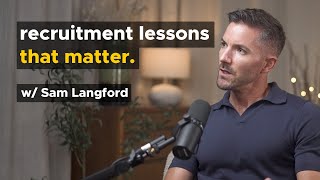
Sam Langford grew Silcom from a spare-bedroom start-up with £6,000 in 2016 to £624k turnover by focusing on motor-trade recruitment. Hiring Simone 18 months ago to handle admin freed him to recruit full-time. His next move: deepen local client relationships, pursue exclusivity deals, and expand into accounting and finance.
Chapters
Sam, welcome to the podcast.
Thank you very much for having me here.
Appreciate you making the trip.
Of course.
Obviously, like you said, uh, don't come to London often, be out of the comfort zone.
Very much so, very much so.
So I appreciate you making the trip abroad.
Same.
Look, like, really looking forward to this. Also, we've, we've got to know each other over the last years, uh, last few years. He was one of our early customers when my business was called Recruitment Mentors, so I learned a bit about your business then. And like, as I was saying to you before we started this, like, fascinated by your world, really respect what you're building with your business. And we're here to talk about how you've been doing what you're doing, what you've learned, the challenges, um, and everything in between.
Yeah.
So just to give everyone some immediate context, let me know if I get any of this wrong, but started the, the business in 2016. Your world is the motor trade industry.
Correct.
So you're looking to— you're thinking big, you have big goals for the business, but over since then you've very much focused on the Southeast, right? But have ambitions to grow, um, which we'll get into. But the sort of most latest year, so there's a team of 5 of you now, um, and what I've got here is turnover last financial year was just over 600K, um, 624. 624. Um, and yeah, there's 5 people in the team, and like I said, your world is motor trade, correct? Yeah. Um, and we're going to talk about this journey that you've been on. So I think the first thing that we wanted to, to start with was like the early days. Like, it is, it is challenging to build a recruitment business on your own.
Yeah.
But you had some help.
Yeah.
At the start, after working for a big brand, Randstad, and then you decided to go on your own. But you have a twin brother, correct, that's also in recruitment.
Yeah.
So why don't we start there? Like, how, how did this business come about? How did he help you at the start?
Yeah, so, um, it was, it was very much a case about the time, um, you know, I— things were happening with Randstad. Obviously it's a different story, but it was either now or never, um, and obviously I was very fortunate to have you know, a brother, a close friend, a twin, a twin brother in recruitment. And, um, you know, I naturally leaned on him and just said to him, look, this is what I'm thinking, um, would you be willing to help? And at the time they were probably already 6 years in business, so there's a lot of experience there. And thankfully, um, him and his, his business partner Sean, um, were willing to help, and it saved me from having to because I guess the alternative was go to a bank and look to get a bank loan to set up the business, or, you know, lean on Dean and Sean and see if they'd be willing to help and get involved. And they did. And I believe it was the right— definitely the right choice at the time. And they lent me £6,000 to set up the business. And I used that £6,000 essentially to pay myself £1,000 a month for 6 months, which, you know, um, helped massively at the time because myself, you know, my wife, you know, had a house and a mortgage and there was, there was things to think of outside of just setting up.
Why do you, why do you feel like, why did you, because I often hear this, why did you feel like it was now or never?
Um, I, I wanted to do it, uh, I, you know, I was keen to I was very keen to work for myself, um, and being married and having a house, um, you know, me and Sarah at the time were thinking of having children. So that, that's kind of why I just thought to myself, you know, without going into the story of Randstad and what was happening, we had a great team there, um, and when that was dispersing, it was either I go to— the alternative was going to another, another business, um, a competitor of Ramsaz at the time potentially and starting again. And I really didn't want to do that, so I just— it was, yeah, it was do it now or don't.
Um, because I, I do see this time and time again. I've got written down here, wife was pregnant and you started. And I just, I just see it so often. I'm just curious, like, so I started my entrepreneurial journey when like those circumstances were in play, but I can sort of See, I want to start a family, and I can imagine that you feel like the responsibility is even more heightened, and you're like, you know what, they're only going to increase. Yeah, motivation might be even more higher. I want to provide for my family. So like, was like, how did that play into it? Because I see that so often in terms of like, I'd love to see the stats on, yeah, like starting a family and starting a business, because, because I feel like there'd be quite a close correlation.
Yeah, it's, um I, yeah, it's a scary, it's a scary thought to, you know, I think Sarah told me she was pregnant like 3 months into Silcom. Really? Yeah. Um, so it was, you know, that's why we made that decision to, you know, the house was in place. Um, I've been doing recruitment for a long time now. I'd gained multiple industry experience. And, um, yeah, I think things become harder, or mentally harder, when you've got, when you've got children. Um, because it's like you say, you've got the mortgage, then you've got to think about looking after your children, and you've got to set up a business and make that successful, it's like a mental drain. Um, so not having the children there at the moment, um, it was— yeah, it was go time.
And what— like, I was speaking to someone today, they're like early on on their business journey, they're trying to figure out what they want to focus on, the strategy. Like, talk to me through how you landed in this motor trade piece, like how you thought about that looking back. Just talk me through the thought process there and how you sort of landed on like doubling down on that particular industry. Just talk us through that because I know a lot of people that I speak to really struggle sometimes to figure out where they want to put all their energy. Should I do this market? Should I be just focused on the industry and then placing people in industry? Or should I just focus on the job title and then placing them in different industries? Just talk us through that sort of period of trying to figure out and decide on like what you was going to focus on.
Yeah, it was, it was, you know, um, very simple. I was really enjoying accountancy and finance, um, so built up a really good knowledge in, in that area. Um, I obviously leaving Ransad had to respect my restricted covenant, um, didn't want any issues there, especially when setting up. Um, didn't want, you know, any headaches, any letters coming onto my— it probably wouldn't have happened, you never know, um And with the motor trade, you know, apart— I don't know what it's like in London, but pretty much throughout the whole of the UK, everyone owns a car or needs to have a car. It's a massive industry. So it was very much a case of taking what I know, which was accounting and finance, and saying, okay, well, let's, let's try and be quite niche and, and target that into the motor trade. And that, that was it. It was picking an industry and my knowledge and just trying to put them together and, and focusing clarity for my own mind, I guess, as well, just to focus in one area. And, and I'm glad I did that because had I— thinking about it— had I gone down the other road, which was potentially then looking at taking clients from Ramsad and who I was working with at the time, it was very competitive with a, you know, very locally established business. I don't think it would have got off the ground as quickly as, as you know, what it did, you know, with going into the motor trade industry. So in hindsight, I think it was the right choice.
Do you remember how long it took you to get that first placement?
4 weeks.
Really?
Yeah.
How did that feel?
Amazing. I was literally high-fiving myself, high-fiving myself in the spare room. I remember the lady, Jane Perks. We still work with the business now, so we've been working with that particular business since 2016. And, um, yeah, amazing feeling, just like— but also a weight off the shoulders.
Was it, was it the feeling of, I can do this for myself?
Yeah, yeah, yeah. It was, um, uh, the process of, you know, it was very rewarding feeling as well because the process of getting the vacancy on, you know, it was really about asking the right questions you know, hearing about a lead, chasing it down, um, you know, cold calling into a business, um, picking up the vacancy, qualifying it, and then just running with it. And, um, and then managing the process, and then the lady's notice period, and managing all of that as well. It was just an incredible feeling. I remember going out for a run that night. I was like, wow. Yeah.
Um, do you remember how long, um, because people often underestimate this, do you remember like how long it took the client to pay?
Very quick, actually.
Did they?
Yes. Yeah, it was, um, it was, it was quick.
Our payment terms are 14 days, so, um, just a lot of people I speak to don't experience 14-day payment terms.
Yeah, it's—
I guess when you're working with, um, you know, because when you're employed, like, when you're employed, especially if you work in a big organization, these aren't the things that you notice, right? It's like you put your number on the board, it's like, right, sweet, placement. Yeah, I know what I'm getting commission. But when you actually have your own business, it's like like, right, shit, now they've got to pay me.
You see it all. Yeah, yeah, it's exactly right. But I was straight on to the next one. I was already, you know, that was, that was in, in process. I was having to manage that, but, you know, it was equally, it's not enough, I need to get to the next one. So I was already managing that, and then obviously, like anyone else would, you know, focusing on getting the next deal. It was very much— you should have seen my setup, it was just hilarious— my spare room, my whiteboard on top of my ironing board.
Yeah.
And I'd literally just, I got to 10K and I was like, let's get to 20K, and it was just very much like that. Um, bang, bang, bang, next milestone, and just constantly going for the next one.
Um, love that. Yeah, so let's just give people some context then. And this is also part of why I really wanted to have this conversation. We were talking about this, so like your world, like we're just saying, you've spent— your real focus has been motor trade.
Yeah.
But then you would place different skill sets, like you're saying. It could be accountancy and finance professional in a motor trade business. It could be a salesperson. It could be a manager. But again, let me know if any of this is, is wrong. It's all perm that you do?
We do some, we, we do some temp. Okay. Yeah, when a client requests someone on the temp basis, we do that and we payroll it.
So, okay, cool. Right, so you have some of that, but it's majority—
it is, yeah, right.
And then your— this might have fluctuated, but what average deal size typically? £1.5 to £3K, is that wrong?
It's wrong now. Um, I think it— I think that was correct at the time when I was talking to you about, you know, um, pre-COVID. Yeah, it's probably— from what you've probably seen as well, what I've shared with you, um, it fluctuates between £2,500 up to £5K. Um, and above that, we've had, you know, we've had deals, um, above, above £10K. Yeah.
Um, the reason why I'm highlighting this is, as we were saying, like, yeah, like, there's so many different industries that you can be successful in, in recruitment. Um, the problem that your business solves for businesses is a huge problem— attracting great people, retaining great people, all these types of things. And like, yeah, anyone listening to this, you can be successful in different markets regardless of if you're— whatever your deal size is. Like, this might be— this— there'll be a lot of people out there that are in, in the same boat but maybe only find out on this podcast that lists people where they're doing deals where it's the 10 grand fee in these things. I mean, my, my word, when I worked in recruitment, my average deal size, because I was doing the Kent insurance market, it was like, yeah, between like 4 to 8K, but it was mainly between that, that 5 to 6 region. Um, so the reason why I'm highlighting this is because I think there's definitely going to be some like differences and nuances in terms of like how you win in the weeds and how you compete against, um, other agencies, or how you really build a brand of like a great business. Because I think in that type of world, it could be very easy for people to cut corners, not that bothered about the service, do the things that we typically hear about industry, which is like transactional, chuck loads of CVs at a wall, see what sticks, all that sort of stuff. Um, so Before we get into the details on that, like, looking back, do you think there's anything that you could have done better in that early period? Like, it sounds like he's really focused. You just double down on getting revenue, uh, trying to build, um, some good success stories in this market he was now focusing on. But is there anything that you think you could have done better looking back of all the experience you have now? Because there's a lot of people that listen to this that consider starting their own business and want to get that early period, which is often the hardest, right?
Yeah. Um, yeah, when I look back, I, I really don't know if there's anything that we, you know, like, like you say, we, we focus on delivering in a very transactional market, uh, an exceptional service. Um, and, and I always did that, so I, I don't know if there's anything I could have done better in that early period, because when I look back at it, it was, it was always successful. Um, I believe the mentality of, um, and hopefully this helps anyone who's listening, but if you are in a very transactional, um, contingent model like we are, um, trying to separate yourself and differentiate yourself by doing the basics really well and leading by example and delivering a really high level of customer service, the proof's in the pudding. And, you know, I think that's when I looked at setting up, you know, when you think about 30,000+ agencies potentially in the UK, how do you separate yourself from everyone? Well, you've got to control what you can control, and that's by, you know, delivering an amazing service and trying to stand out in that regard.
So, but you feel like you did?
I feel, yeah, I, I, it might not help your list, your listeners with that one, um, but I just, I, when I look back, um, I feel like I did a great job. Um, yeah.
And, and the lesson I take from that is it sounds like he was pretty focused. Like, I think when you go out on your own, there's a lot of distractions. What serum should I get? Like, what should I do this? Like, what tech, do I need these things? But it sounds like you was in the spare bedroom, you had your fee board on your ironing board, and you was like, I've got some goals, I'm just going to focus on hitting those. Yeah. And then like, it's that— that's the lesson I take of it, was you just focused.
The— probably the only thing I could say is if you are going to set up on your own, um, if anyone does that and they are on their own like I was, try and, um, get some time with, with people. Because, you know, in— if I look back at it, it was quite a lonely period. And it was quite tough in that regard. So I think, you know, try and get some time. Obviously, I had no separation from work. I was— my work was also in my house. So, um, it was very— at times when it was quite stressful, um, you know, I was always there. So I think just try and get some time to talk to people. Um, that's the only advice I can give, or whether you could find a mentor. Obviously I had Dean, but Dean was very busy running his own business. So although he was there, um, you know, he actually wasn't in much regard, if that makes sense, because I didn't want to bother him. So there was, there was some definite massive lonely moments. And, and if that could help anyone listening who will be on their own for a period of time when they set up, just try and ensure that you can get some separation from work and, um, find someone that you can talk to. Um, because yeah, it was— that was probably the only thing that was the—
what was it that you found hard about being on your own?
Uh, well, when you're on your own for a long period of time, you do— it's quite lonely. Um, you know, you've got the stresses of a business, um, setting up a business, etc. So it's, it's always in your mind, it never leaves you, and, and there's no one to talk to about it really. Um, so it's— yeah, you probably—
yeah, yeah, I could definitely relate.
You've already experienced it. But, um, that, that's all I can say is, um try and make sure that you get some— someone that you can talk to, someone that you look up to, someone who could mentor you, get some advice from. Um, or even if it's just spending some time, you know, you know, communicating with friends, whatever. Um, you know, that's, that's probably what I could pass on to anyone that could, that could learn anything from my experience early on.
Do you think, um, like, hopefully that's obviously part of, you know, what, what this podcast can help with, right? But do you think that what you're saying there about the work you're always on, like, do you think that that's changed much?
No, it's hard. It's very hard. I go away, um, and I never stop. Um, I'm always, I'm always there. I'm always contactable. But that's how it is. But now I've got a team, so it's, it's great because we all, you know, we all get on, um So it's different, and I think you have to be like that. You can try and separate yourself and go away and say, well, you know, for a week I'm not going to look at my emails or whatever, and that's great. Personally, I just, I find that really hard to not be involved, but that's fine because I'm used to that now, and I actually would rather be involved. So, um, yeah, I'll ask them for myself, right?
Because like, that's sort of, I can, I resonate with that. Yeah. What, what I wasn't great at at the start, because I've been on this sort of entrepreneurial journey now, like, yeah, since like 2019. And, um, I wasn't— I, I don't know how it was for you, but I wasn't great at sort of communicating it with like my partner. Like, I just sort of expected that she knew, like, I would have— I had to work on these things. So that, that's sort of what I've had to get better at, is like just communicating to my other half, like, yeah, I, like, I am finding it really hard at the moment to switch off for this reason, which is why I feel I want to put more hours in or whatever it is. Whereas before, I would just like work longer, work long hours, and then expect that she'd understand. Yeah, it doesn't quite work like that. And then you get the friction of like, what's going on, you're always working, these things. So that— I don't know how that was for you, but that, that's what I had to get just really better at is actually communicating. Yeah, what's going on with the business, why I feel like I want to put extra hours in, and also just communicating the, just the hard facts that it's hard. Yeah, yeah, this is the period that we're in, this is the reason why I feel like I want to put more hours in. But then when you do have that time, then, um, whenever it is in the week, evenings, on the weekend, I think it's then on you to, to be present. Um, And yeah, like, we can all spend a lot of time with people that we care about, but it's actually the quality of time. Yeah, that matters, you know what I mean? Just because we spent 3 hours together doesn't mean like all of that was like quality time. But if we spent half that and like was present with each other, there's no distractions, I'd rather that versus the 3 hours where maybe it isn't like that.
Yeah, yeah, it's a really good point. And yeah, 100% agree with you. It's, it's, it's you know, expecting them to understand without communicating. But Sarah, now, you know, if we're away and I'm on my phone, she knows likely what I'm doing. You know, she just understands it. But if there is something on my mind, then yeah, I will always communicate that now. And it's good to do that because, you know, otherwise you have no, you have no understanding from those that you need. You know, I need my wife to understand what's going on in my mind, so I need to communicate that to her. But yeah, there There's also a boundary thing, isn't there? And making sure that you're not bringing too much of it home.
And that's some good days and bad days.
Yeah, especially when you've got kids as well, because you've got to be present for, you know, I've got to be present for Hartley and Nixon as well in the evenings. And, you know, I often find myself on my phone and it's trying to have a cutoff point that business owners around the world experience the same things. It's, um, you've got to find a boundary outside of work and just try and be strict with yourself and like you say, communicate as best as you can with, with your wife or partner.
So what, what was the thought process then around like growing this business? Did you have like a number in mind that made you feel really comfortable about hiring someone and bringing on another salary? Like, did you set any goals around that? Were you quite— did you try and be scientific about it, or did you look about— was it more of a gut instinct? Like, we've got a good job pipeline Talk us through that.
Yeah, um, there was no plan around that, um, you know, and I think that, that could, could be good and bad. Uh, it was really a case of I was in the spare room, um, so there's no overhead costs. Let's make deals and let's build the bank. Um, and then when that 6-month period is over and that money's run out that was paying me, um, I've got then cash in the bank to live off. And very quickly I built the bank, and it was then a point where there was a lot of vacancies coming in from the business development that was being done, where I thought, okay, I think I, I need to, I need to look at hiring now. And that, that it just naturally came. Um, it was the right— I think, I think we're about 9 months in. Um, you know, we had cash in the bank, there was a lot of vacancies, and it was at a point where I couldn't get to all the vacancies That's when I realized the time was, the time was right.
Um, we'll get back to the episode in just one minute, but today I'm excited to talk to you about one of our partners, Firefish, the recruitment CRM that accelerates data-driven growth. The problem with most recruitment CRMs is that they are just a database of records, meaning they become just one of the many tools that recruiters use every day.
Like all systems, the records are only as good as the data being captured.
Our sponsors Firefish know that for agencies to win faster, data needs to be at the heart of their business, making your CRM the single source of truth. With over 10,000 records created and updated every day and 85% of placements from existing candidates, Firefish enables recruiters to enrich and engage their data, equipping you with real-time insights needed to win faster. To learn more about Firefish and take advantage of an exclusive Recruitment Mentors podcast offer, make sure you click the link in the show notes. And mention the Recruitment Mentors podcast when speaking to the Firefish team.
Talk us through— a lot of business owners relate to this— not all hires work out. So like, what, what have been the hiring lessons so far? Like, for you, what have you— what have been the main ones? Because it can be really daunting making your first hire. Yeah, extra responsibility, overheads, all these things. So what have been some of your lessons that people can take on increasing your chances of that hire being a great one?
Don't hire friends.
Don't hire friends.
Don't hire friends. Yeah, I can only, you know, my first, my first experience, um, of looking to hire, and again, hopefully a good lesson for people here, is— and the reason I went down this road, just to give a bit more context, is I had a, had a, you know, myself and Dean had a close friend who, for the, you know, prior to me looking at hiring him, had been in recruitment for about 5, 6 years. Um, you know, I know that he was looking for a change, and it seemed like the logical road to go down. Um, and that's why we went down that road. But in hindsight, it was the wrong move, definitely. Um, you know, because what, what happened from that It was with regards to the hire, it just didn't work out. We won't— we weren't aligned. Um, and trying to move on from that hire was, was obviously quite tough because of the friendship group. And, um, so yeah, it just, it seemed like it was the right thing to do at the time because he had experience, he wanted to change. It seemed, it seemed for me quite comforting to know that I would be hiring someone that I know. And working with someone that I know rather than, I guess, a stranger. Um, and, you know, in hindsight, it was the wrong move. And, you know, you, you live and you learn. And so, yeah, when the thing is with a lot of founders and a lot of people who own businesses is you've never done it before, so you learn as you go.
And what, what do you feel like you've got better at then since, like Now you've obviously hired more people into the team. Obviously hired Josh, that's still with you now.
Yeah.
Which is like, I think one of the coolest part about having a business, um, is having people on that journey with you. But like, what— obviously you've continued to hire more people. Like, yeah, what, what do you think are your sort of non-negotiables around hiring now? Not what you look for, but like how you do it and how you got better at it. Because I think that is something that I've had to learn the hard way.
Yeah.
So I can share some things. But like, from your perspective, what have you got better at?
Um, I think it's just been very thorough, you know. I think we talked about like the email piece, um, you know, because we've— again, we've had an issue in the past with, you know, quality of data going into the database and emails. And for that, it's really important for us. So therefore, you know, I would get someone, um, who I'm interviewing to send me an email detailing why they want the job, what they can bring to the role, etc. And just the test of that is looking at, looking at how that email is laid out, you know, are there spelling mistakes, grammatical errors, red flags? And that's one thing that I look for. Um, but now, you know, we're a great team. I, I bring the team into that process as well, and I involve them, and we don't make a hire now unless the whole team agree.
Really?
Yeah, because we've all got to work together. We're a small team, and if I go with someone that the rest don't agree with, it's not going to work out from the get-go. So the process for us now is very much, you know, we're obviously more thorough. You have to go with a gut anyway. Hiring is hiring, it's always quite tricky. But now we involve the whole team, and that's good for them as well. Because they have involvement and they can see the growth and they have a say in what's going on in the business.
Um, yeah, I mean, the bit that I take away from there, which I had to learn the hard way, is just getting better at that assessment piece of like the types of things that they would be doing a lot in the role. So if I, if I look at the, the like hires for me that didn't work out, what I could have, what I could have done a better job of, because I feel like the responsibility mainly falls on, on me, is just in that interview process, it was mainly just conversations and me trying to uncover if this person I think could do the job. Could I buy off this person because there's a sales role, um, versus like actually seeing how they would approach certain activities like writing a prospect email or doing a role play as if I was a prospect and they were calling me. Yeah, they're the bits like your bit on the email. I think they're the sort of tactical things.
Yeah.
That, yeah, if you're just having a conversation with someone and going, you know what, I think they could speak to people, they'd be good on the phone, um, I think that they could do recruitment. Yeah, that's where you've got to make improvements. Yeah, yeah, 100% on the hiring piece. Um, let's get into the, the detail then of like how, how you are building, um, a great brand around this business, how you're beating your competitors, how are you going about what you're doing? Because I think there's bits that you're doing that I think are fantastic. So why don't we just start with like, what, over time, what would you say are like the key areas that you feel like you've really focused on that you felt like if you get really right, you'll win in the long term? Like, what are some of the core areas that you've just been really focused on doubling down on? That over time, yeah, you think, um, can enable your, your business to win? Because you're in a very, very competitive marketplace.
Yeah, yeah, 100%. It's, um, it's extremely competitive. And, um, I guess it's the basics, doing the basics really well. Um, you know, if it's from a, from a candidate point of view, it's, you know, it's giving them feedback, it's, it's, you know, treating them with utmost respect, um, honestly trying to help them, giving them honest feedback. You know, I think there's a lot lot to be said about just doing the basics really well in recruitment. And then on the client side, you know, what we've— again, what we've always tried to do is our model's always been about pricing, a proactive service, a customer focus. Um, you know, it's, it's, it's so strong. And, and, uh, you know, with that proactive service and really focusing on the customer service it's— yeah, and the pricing being so good as well, they, they experience that and, you know, why would they want to go anywhere else? Um, and then now we're, you know, coupling that with a lot of the networking stuff as well, um, which is, is coming into play. Um, but it's, it's always been from, from my point of view, you know, just a real focus on doing the basics really well, um, doing what you say you're going to do And if you can't do something, be honest. But yeah, it's that— that's, that's been the real focus.
And how do you instill that in other people? Because you could probably have a real passion for that, it's your business, you feel like your reputation on the line. But how have you got better at really making sure that those standards don't drop within your team when so easily they can?
Yeah, um, so For example, with anyone who starts with us, a new starter, it's ingrained in them from day one. This is what we do and this is what we expect. So that's really helpful because they come in straight away with the expectations that you've got to deliver a really good customer service and a customer journey for the clients and the candidates. But then equally, when I think about it, why would it be anywhere, anyway, or any, in like a different way. Um, you know, would you really want to work for a company where, you know, I guess it's not, it's not quite that way and the service isn't as good? I don't think anyone, no one would want to work for a company where they don't value the customer, um, and they don't want to deliver that journey. So I think once you're in that environment you know, no one would want to work anywhere else really.
It's always what, um, on the— like, because this is what I've always like really respected about what you're doing, like the sort of just real commit. It's very easy to say like do the basics well, do things, but it's just a whole nother thing actually like doing them day in, day out, not cutting corners, like all those things, right? That, that's sort of where, where you win in the long term. Um, but curious to like hear your thoughts on the customer service piece. Like, maybe what are some of the things you feel like you've done or introduced— might be small things— over the last 12 months or 2 years that you feel like has really, uh, impacted the customer service for like a client, for example? Maybe something that you might think is quite small, but like, just give me a bit of an example because I think that'd be interesting. Um, for people, because delivering a great customer service is a lot more than just getting them the person that they want and having a successful placement. So like, yeah, what are some of the things that you feel like you've maybe done that, yeah, you feel like, you know what, that's just us really living and breathing, we're committed to world-class customer service?
You know, we've also recently started to give back to clients as well, you know. We've got the Client of the Year Award, which we do. You know, simple things like, like that I think are really good because you're showing the customer, the client, that you care about them. Without them, we wouldn't be here. So, you know, it's good to give back to them as well. And just even if it's, you know, we've recently sent one of our clients off to a spa day, stuff like that, it just lets them know that you appreciate them and you care. So Um, for me, that's, that's something that we've— I believe I'm very generous in that regard, and I always want to give, give back to, to our clients and our candidates. And, um, that, you know, that's an example of something where we'll go above and beyond, we'll do our job for them, um, but then equally we respect them. And because they've been so loyal to us, um, then we'll look after them as well. And I think those little touches can, can just go a really long way. And, um And then the word spreads, doesn't it? Because, you know, they're working with different managers within the business and, you know, you don't need to— although it's good to ask them to introduce other clients to us, but they do that naturally because you're looking after them so well. But things like that, I think, you know, a lot of agencies probably do. I don't know.
How do you— I'm sure the client of the year award isn't the company that spent the most money with you. How do you do it?
What's like—
I'm just curious, what are some of the things that you base it off?
Uh, it is actually, um, okay. Um, well, there is, uh, there's some other points around it, you know, but loyalty and, um, you know, and some of the work that you do together. Absolutely. Um, you know, they— we've built a relationship with them and they've given us a load of vacancies. They've trusted us. They might have introduced someone else within their business to us as well. Um, And therefore it's, again, it's a way of us just giving back to them. But, you know, the one I referenced, the one that we did last year in December, we changed it up a little bit and invited that particular client down to our office to have a spin on our— either spin the wheel, spin the wheel, and, you know, hoping that he might hit the 1,250. But he'd get, you know, he got a spa day. But as a gesture to him. He's obviously got a partner and, you know, a wife. I took him and his, um, his wife down to, down to the spa that day. And, um, you know, it's perfect for him. It's just a nice way of, like I say, giving back.
Yeah, no, that's class. What, um, like, talking about clients, like, for people listening that might operate in similar markets or similar, like, competitive markets, like, how do you How do you think you can stand out? Like, how can you be— like, how do you really portray that you are different? Do you know what I mean? I feel like that, that, that's like really— I used to find that, that hard. Like, a lot of the time I would have my success and doors would open by me pitching in the candidate, and then that would start the conversation. But even now, like, I hosted a solo founder dinner the other week. Like, that, that, that can be really difficult to portray. Yeah, like how you're different. So like, how do you think about that? Because that's going to be even more the case. And I'm sure these types of companies that— I mean, you'll know better than me— are getting called from different agencies pitching in candidates, these things. Well, we can work with you at a cheaper percentage. Like, how do you think about that? How can people be different?
Like, yeah, you're right, it is, it is really tough in such a competitive area to be. And this is what I thought of when I, when I first set up Silcom, is how can I be different? And You know, I guess the only way you can be different is to just be— you've got to be yourself. Um, you've got to, you know, it's again, it's really led by the, the customer, the customer journey. Um, you've got to look after these people. Um, you've got to strive to, to, to do the best you can for them. Um, and, and be honest with them. And, um, it is a tough one, you know, you you've got to stand out in a massive crowd.
Um, well, it sounds like maybe what this is— what sometimes people miss is that the— what you're saying there is actually the way that you're different is how you work with these companies, just like how you deliver the, the service, how you take them through that journey. That's actually how you can be different versus having a different, like, a different way that they pay. Or there might be something that you can do with that, but actually It's how you take them through that journey, how you take that job briefing with them, how you give them feedback on the candidate. It's like actually how you work with them is how you can create that difference and stand out.
Yeah, yeah. You've got to, you know, from us, we're extremely proactive. So if we've got a job from a client and I know maybe other agencies have that job as well, then we'll still just try and work with them, partner with them like you know, we had it exclusively. And that's another way of thinking about it differently as well and, and working with them, giving them insights on, on, you know, the role itself, how it's going, is there anything that we could tweak to make the job a bit easier for us to fill, etc. Really try and get on site and meet them, meet them as well. That's another thing that we, we always strive to do in the local area for us is— and I know other agencies aren't doing that because of the feedback that we're getting from the clients. So, you know, we'll try and although it's transactional and there's other agencies working with these businesses, we'll try and do the, you know, it will go, we'll go the extra mile to try and make ourselves stand out. And even just a simple meeting, um, can showcase that you mean business, um, and that, that is a standout for a lot of clients that we work with as well. So how—
I speak to a lot of recruitment founders that most of their team will work on a, on a contingent basis. How do you ensure your team don't waste like 80% of their time on jobs that they're never going to get paid on? Have you got better at that?
You kind of get a, um, like a sixth sense of, you know, you, you know when a client is, you know, ready to hire. You can speak with them and you can really qualify that role really well, um, you, you know where to put your time. Um, and the team, as they get better at their job and they spend longer, longer with the business, you start to, you start to learn that and you start to understand, you know, checking in with the clients. Is the role still live? Yes, it's still live. Um, okay, well, I've got 10 other vacancies on my board. Um, you know, their time is, is consumed massively, but it's— they've just got to focus on getting the job filled. And, um, yeah, it's, uh—
talk to me about, um, the other thing that I think is really interesting about your market as well is, um, just like the, the, the candidate piece. So a lot of your stuff comes from referrals, you're saying, or like has started to—
we've started to put— to push that massively over the last, you know, probably 18 months. Um, and again, as, as you could see from you know, the payouts that we make, uh, it's, it's, it's there, it's relevant, it's, it's, it's something that we're massively pushing.
Something that I was just curious to get your thoughts on was obviously you've got referrals, you have job boards, LinkedIn, different things, right? So with— and I can imagine a lot of businesses that maybe operate in not the exact same market as you but similar, similar, um, industries where there's like a lot of these people will be on job boards, maybe actually looking for jobs, or at least have their CV information on there. Um, how have you got better? I'm asking for my, like, what I think when I was in recruitment. One of the things that we always had to do and be really great at was logging in first thing in the morning on like Reed. Yeah, we have our specific Boolean search that we made. Yeah, would call candidates that have just put their CV up on there.
Yeah.
And then you would have to try and build rapport with them quickly and explain to them why it's a good idea to take their CV off job boards.
Yeah.
So they can work with you, you can be proactive, and then etc. Have you, like, have you got better at that? How do you get good at that? I'm curious.
Um, yeah, it's, it's, it still forms a part of our day-to-day activity, um, that we call it the early morning searches.
Okay.
Um, you know, it's ingrained in me, it's ingrained within the team. We're in early every single day. Um, and you know, the early morning Boolean searches in, in our area of specialism is, is key. And we're, we're always led by the candidate. If we're having a day where, you know, if it's purely based on I've seen a good candidate that is good for my job, um, or other jobs, then, then yes, we will always try to to secure them exclusively. Um, and the way that we do that is just by, you know, real candid conversations with them. Look, you know, we've been doing this for 8 years. We work with all of the, the main dealer groups, all the businesses in your local area. I, I've called you first. You're going to get 30 other calls within the next half hour. Do you want that?
No.
I can get your CV taken down this morning if you'd, if you'd prefer. And 9 times out of 10 when you, when you kind of pitch it to them like that, you know, they're quite keen to have their CV taken down and then we can run with it. But it still forms a massive part of our, of our day-to-day, the Boolean searches early morning.
Yeah, I mean, that's key in that.
It's the truth. I mean, if, if they are on a platform like a REED, which you just mentioned, and they are, say for example, in our industry, a vehicle technician, which is a skill set which is in high demand, um, and we hear it, you know, literally, I'm— as I'm on the phone to you, I've had like 10 missed calls.
Yeah.
So, you know, do you, do you really want that? Um, you're going to get absolutely bombarded. Your CV is going to be everywhere. You, you could just going to become so confused as to what's going on. You're going to be speaking to 5 or 6 different people, um, whilst you're trying to work. Partner with us. Look at our— if you have any doubts, um, here's a link to to us as a business. Here's our Google reviews, etc. Um, we can help you. And, and it's just the truth as well. We can help them. So we'll always try and, um, and sometimes they don't want to do that. And, you know, maybe a day later— we've had it in the past as well— they'll call back and be like, could you get my CV taken down please, because I've had like 60 calls.
Whilst we take a short break, I wanted to take a moment to chat to you about one of our amazing partners, Sourcewell, the industry-leading recruitment engagement platform. I'm using myself and I don't know what I would do without it. From building personalized messaging cadences across a variety of channels to automating follow-ups and data tracking straight back into my CRM, it's really made an impact in streamlining my workflow and most importantly, accelerating my sales results. My favorite feature by far is the live feed. By being able to see in real time who's engaging with your campaigns, it enables me to prioritize my outreach with the most engaged prospects, which helps me get way more out of what I put in. So I'm gonna be honest, if you haven't got Sourcewell and you're a recruiter, I really believe you are at a disadvantage. To find out more and see the platform in action, make sure you click the link in the show notes and mention the Recruitment Mentors Podcast. Because you listen to this podcast, you're gonna be able to get access to an exclusive offer, free 50 phone credits, 50 email credits, which is at the value of circa £500 per user. So make sure you mention the Recruitment Mentors Podcast and click the link in the show notes.
What's like the rule of thumb there in terms of like how quickly do you feel like you should get some quick wins for them? Because that's what I often found, because that's how you can sort of again really show, um, you do what you, you say you're gonna do. So like if, if one of your team had a vehicle technician, built some good rapport with them, they're like, you know what, fair enough, I'm happy to like sort of work with you, checked out your reviews, looks great. If you're telling me you can get in front of these dealerships, which are the types of companies that I'll be interested in, yeah, what are you expecting from that consultant? Like, do they have to be bang on it for the next like 24 hours, 48 hours? Yeah, I mean, because I feel like that's sort of key.
Yeah, yeah, 100%. You've got to be— you've got to deliver on what you say you're going to do. And, um, if you— I, I think there's a, there's a time and a place for, for that pitch to maybe get their CV off of that platform, um, And that's when you know you've got, you've got the gold and you know you've got the vacancies that are live in that area where the clients are going to want to see that CV. So, you know, we've had that so many times where we'll put the phone down, we'll do what we need to do in the background, and 10 minutes later we're calling them, like, I've got 2 or 3 interviews, and they're like, okay, wow. Um, and that's when it then, you know, but yeah, to answer your question, you've got to deliver quickly. If you're going to get them to take their CV down, because otherwise, you know, you're potentially hindering them as well, aren't you, in their job search?
And then correct me if I'm wrong here, but like, you've, you've had a lot of success opening doors, opening relationships, like, by being candidate-led, right? In terms of you're working with someone or you spoke to someone, notice that you've got X live vacancy. How, how do we think about getting great at that? Like, what, what makes a great, like, candidate spec call-in? Because if that's something that you still do now, right?
Do you know what, it's, um, touch wood, we're in a fortunate situation at the moment where we've done so much business development over the years, um, you know, over the last 2 years we haven't had to do so much business development. We're very job-rich, um, but you know, if I were to, if I were to think, well, I need to do some business development and for me, I've got free rein across a car dealership across the UK. Um, it's going to be led by, by the candidate. So I, I have a good conversation with a candidate in the morning and I fully qualify them and I gain a, gain a really good impression from them. Then, you know, I'll be thinking, right, this person's worth my time. I'll, I'll spec them to the database and then I'll start to, start to cold call into businesses. Um, you know, I've got a, I've got a good process for that, uh, in terms of delivery, and I can go through that with you. Yeah, if you'd like.
Yeah, you said if you think it's a good process. Yeah, a lot of people do that.
The— I think the bottom line with, um, a cold call or a business development call, and I see a lot of stuff about this on LinkedIn now, um, is, you know, you've got to if I were to cold call into you, I— it's not, it's not a complicated process at all. You've got, you've got something which a client might not need right now, but they probably will need at some point. So you mustn't be bashful in your delivery. You've just got to, you've got to be bold, but you've got to be very polite. And I've always approached the cold call into a business that I might not have spoken with before in a very polite and courteous manner. And I find that that really works well. Um, in my mind I've got it. I can break it down with you if you want. Yeah, so I, you know, first of all, I would, you know, let's just say I'm calling to you. Um, I, I said, good, good morning, Hishem.
Yeah.
Um, how are you today?
I'm good.
Yeah. Um, so first of all, what I'm doing there is I'm, you know, I'm cool, I'm calling in, I'm, I'm asking how you are, you know. I'm giving you a chance to come into the call, and it's polite to ask. I believe it's polite to ask people how they are. Um, I'm then, I'm then acknowledging that, um, I'm disturbing them. I know that, I know I'm cold calling them, I'm disturbing their day. So I would say something along the lines of, look, I'm really sorry, really sorry to disturb you. Um, and, and then it's a case of, look, I'm hoping you can help me. I think by, by asking people for their help, you, you then go into the pitch about the candidate, etc. But I think if you approach the call in a you know, in a polite and courteous manner, it's harder for people to, to be rude to you, um, have their guard up. Yeah, exactly right. I think if you're, if you're approaching a cold call, and like I say, we don't have to do so much of them these days, but when I do, it's, it's always a case of I know I've got something that they might not need right now, but they will need it in the future. So I'm cold calling someone I'm going to ask them how they are. I'm going to acknowledge that I'm disturbing them and I'm sorry for that. But this is the reason I'm calling you and I'm hoping you can help me because I've just spoken with a candidate today. I've gained an amazing impression from them. We're proactively trying to help them in the local area. They've done X, Y, and Z over the last 2 years. Is this something right now that your business can, can, can utilize? Um, it's yes or no, and then it's, it's going from there. And it's almost like a, from, from our point of view, it's a, I guess, a triad of things that we need to get from them, you know, uh, name, contact details, database. Um, and it, it seems quite transactional there, you know, if it— and then the conversation just, it flows from there. They might have a vacancy, in which case you're going into the job brief and you're taking that on and you're trying to sell in the candidate for an interview. They might not have a vacancy right now, but you've had a good call with them and you've been so polite to them that they're going to give you their, their email and contact details. You're going to put them onto the database, um, you're going to email them, thank them for their time. They're going to save your email, um, when a vacancy comes up in the future, they're going to remember that you were polite to them and they'll come to you. And if not, then in a week's time when you spec to them again, um, you might just hit their inbox at the right time. Someone's resigned within their team and they'll remember you, um, because you, you treated that call with respect.
Um, I appreciate it coming through that. Yeah, because obviously they're the tough things, as you know, that, you know, everyone has their own way of doing it, right? Um, but that I do feel like that's often missed with, with that channel, is like the, the goal isn't necessarily to the end outcome or the, the, the end goal of, of that I used to think of it as like I'm trying to get a job on, but actually, I actually think the goal of it is to find out if they hire people like maybe that I'm representing, or at the very least find out do they use agencies and have they used agencies in the past, right? Because if you have that information and you also manage to get some more information about, okay, if you were to hire someone, budget wasn't an issue, like what is it that you need and these things, and you walk away with that information, then guess what you can then speak to them next time about when you've got a great person that matches up with that, right? So I think it's actually, it's about information gathering, and the best recruiters will lead with that but walk away with information about that business that they can then use in the future.
100%. And, and, you know, if, if we were to get a phone here and ask to cold call someone now, you're right, um, there would be a lot more information gathered on that call if the client allows me to do so. But by being and approaching it in the right way and being polite and courteous from the start that client's more likely going to give you that extra 20 seconds of their time because you showed them the respect early on in that call. I've been on the receiving end of, you know, business about— because we're in an open-plan office and, and, you know, Drew, for example, he's a great gatekeeper in our office. And I've had sales calls into the, you know, and there's One, one time a chap called in asking for me, um, calling from a business I've never heard of. Apparently I knew him. He told Drew that I knew him, um, don't know him from Adam. So I'm thinking straight away, you're lying. So if I do pick up that phone call, you've already got my backup because you've lied. Um, I appreciate you've got to get through to me, but just don't lie. Just be honest. It doesn't always go as you want, but you know, worst case, if you know, if someone— if I were to call cold call into a business and you know, someone didn't have the time to talk and you were still very polite, then as long as you can try and gather their email and you've got their name, you can still add them to the database. And then you're building the database as well. And that's how we were very much at the start as well, was a lot of business development, um, a lot of cold calls. We really nailed it, we did really well. But because of that foundation being laid so early on, um, like I say, we're very job-rich and we don't have to do so much of that now.
How— what are some of the things that you think you've, you've done well, implemented, that have directly impacted, like, candidate referrals? Because I think a lot of people try and drive those, want more of those. What do you think you've, you've done well to impact that?
So, a, first and foremost, you have to always ask. Um, you— people don't ask enough. and now it's almost like a KPI for us. Well, in fact, it is. Every week it's monitored. Um, it's, it's that important. It's become a KPI within our business. And then there's marketing, um, information around it. You know, some of the information I, I showcased, you know, with you about the payouts that we're making almost on a weekly basis, we'll, we'll collate that into an email. Um, and if we're speccing out to our database, for example, about a new job opportunity then that information goes into that email, you know, at the bottom. If this isn't for you, um, but you might know someone who could suit this role, here's our referral scheme. Oh, and by the way, here's 3 or 4 payments we paid out last week, um, to people who did the same thing. So you've got to then create the marketing material around it as well. Um, it's on our website, email, social media. Um, push it as much as you can on social media, but most importantly You've always got to be asking, always.
And like, how do we— because I feel like, how do you like— do you do that? I think it's interesting to ask it like when, when you do ask it. And like, some people aren't willing to help when like you haven't really helped them or done anything for them, you know what I mean? So I remember I sometimes used to ask it at the end of a can— like a candidate that I spoke to for the first time and they weren't really right. I don't know, like, I, I, if looking back, I feel like it was always like a last resort ask, if you get what I mean.
Yeah, yeah, it does feel like that. But, um, if you don't ask, you don't get.
Yeah.
And, and 9 times out of 10, it— you won't get, but you've got to ask, right? And then that one referral is, is all you need. Um, but if you ask enough over the course of a month, you'll gain referrals. Um, and, you know, A, that will build your database massively, um, with, you know, candidates that probably aren't on the, on the platforms that a lot of agencies access. So you've got something built over the course of a year. Um, but yeah, you just constantly have to be—
how do you think you can ask that in like a smart way? Because I'm sure you do this maybe naturally, or Josh and the team or whatever, because I, I'm sure there'll be different ways of wording it besides like Is there anyone that you can refer to me for this job?
Yeah, no, exactly. I mean, we— yeah, it's a good question. I mean, you, you could look at it differently. How we do it is just very honestly, we will just detail, um, look, something that really helps us is, is candidate referrals. And, um, you know, I can send you some information today. I'm going to send you an email anyway to thank you for your time and, and a bit of information on us, but I'm going to send you some details on our referral scheme. And, and just be honest about depicting what you're doing and showcasing, you know, the payouts that you're making. Because I think when people, when people hear it, it's like, uh, you know, but when actually people see it, it's like, oh, okay. Um, yeah, it's— and then it's updated for us, it's updated weekly, you know. If, if, for example, the, the information I sent you, um, from the payouts that I made last week, it comes on to an email this week. So the— it's not old data, it's not data from like 2 years ago. You know, this, this is pictures from last week, um, and you showcase that with people, right?
Fair.
Yeah, yeah.
I just think what I've often heard, just a bit of a— it's just like a smarter way of like framing things. So like, rather than maybe— you can be— then I just really rate in today's world just being honest and upfront and, and direct. But, um, you could definitely weave in there things like being honest, but then say like, who was the best vehicle technician that you've ever worked with? Or like, you know what I mean? Like actually being specific about those things Yeah, I just think I would wish I did sort of more of that versus just ask that direct question, which can just come across a bit like transactional, and they've, they've heard it all before.
Yeah.
Um, what, um, and then how do you— how have you incentivized the review piece? Because I think that's really powerful, particularly I think it will become more and more powerful in front and center for recruitment businesses anyway, in terms of how you can actually showcase the service that you deliver. With things like net promoter score and stuff like that. But I can imagine in your world even more, like, yeah, the, the amount of positive reinforcement around, like, you guys delivering a great service is just massively going to help you guys stand out, be competitive. So yeah, are you like— how, how have you got most of those?
Is it—
do you again ask it ever after every interaction, after every experience? Have you mainly just gone to people that you successfully placed? I think that's where normally people go. But how? Because you've got like over a lot, what, like 400 or something?
Well, across, um, Facebook, LinkedIn, Google, um, we've got over 250 5-star reviews. Yeah, that's class, you know. And that's an average of 8 years of work. So that shows how we operate as a business. In my eyes, that showcases in 8 years of business, on average, we, we are 5-star, which is amazing. But yet again, it's, it's simply just asking, um, you know, it's asking the people that you've worked with, um, even the ones that we haven't placed before, we've had, um, 5-star reviews from because they can, they can respect the work that we've done for them along the way. Um, I remember early on I had a, um, I didn't even ask for it actually. I had a review from, from someone that I actually didn't place and she gave me a 5-star review just because of the way I I treated her in the process. Um, and stuff like that I think is, you know, invaluable really.
Um, do you incentivize that?
I don't incentivize it. I, I— it was something I was thinking of doing. It's something that we push internally, and the team always, you know, again with the referrals, it's the same thing with the— because I believe, you know, with that, if you can collate a massive amount of honest, good feedback How I see it is, you know, if there were to be Silcom and another agency that, that business looking to hire was looking at, one has an average of 3.9 locally, one has 5, who are they going to call? They might call both, but they're probably going to lean towards the one that has. So it's something that we push massively internally, but I, I was potentially looking at you know, maybe it could be something that we can incentivize. Incentivize. Yeah, exactly right. And that's something that's, you know, we're always thinking, always thinking about new things, um, a monetary value to that, you know, X amount per Google review, stuff like that is something that's on my mind as well.
Yeah, I think it's interesting what you say about the people that maybe didn't get the successful outcome that she was looking to get them. With people that I've sat down, they can often be your biggest, like, promoters. And also result in some of your biggest wins. Like, people actually that you didn't place but you did such a great experience with, yeah, can be your biggest champions or biggest, like, um, introducers.
Yep.
I think they're the, they're the reviews to be most proud of in terms of, like, people that didn't get the end outcome. But because that, that's where a lot of recruiters can fall short, right? You didn't get the end outcome, and then you— because you know, like, you're then not going to get paid, or like, we didn't get the end outcome we want, you're sort of drop the ball with things, do you know what I mean?
Yeah, exactly right. And from, you know, one, one thing I always talk about with the team is, you know, from a senior, let's just say if you're delivering the service that we always strive to, to deliver to a senior candidate and we don't place them, but then they go into a hiring role, you know, how good is that for you then when they come back and they've got a team below them? Um, they're going to come to you when they need to recruit because you looked after them, you did the basics really well, um, you might have got a review from it as well. But, um, you know, from— that's something that we always— if we have a senior role, um, you know, we've recently been working on a chief finance officer vacancy, $100K+ salary. At the moment, we're yet to fill it. Um, but even so, you know, I had to deliver a bad fee— not bad feedback, but, you know, feedback to a candidate that was a no. Um, but again, just doing the basics right, and, um, she'll, you know, she might walk into a, into a role where she has a transactional team below her she needs to hire. She'll remember us.
Yeah.
Um, and that can, that can be another way of looking at it as well, from a business development point of view.
How have you, how have you developed as a business owner, do you think? Like, because it isn't all the things we're talking about here like recruitment, the day job, right?
Yeah.
Something that I hear time and time again from other founders is it can be really hard to then learn how to do the cash flow management, the operations, these things. Like, how's that been for you?
Yeah, so, um, probably over— well, to tell you where we are now, um, from day one, um, with regards to everything that I didn't know um, from the operational side of things is, is outsourced. So I always had accounts outsourced from day one, um, because it's, it's, it's time that I, I would need to invest outside of recruitment in an area that I don't know. Um, what we've done now is, um, for example, 18 months ago I hired Simone, um, and, you know, she's, she's really taken away the, the admin side of things from me as well, the day-to-day admin bits. Which has really helped as well. So we've, you know, we've kind of grown in that sense. But from day one, anything that I didn't know, I was always smart enough to make sure it was, it was outsourced. Um, so I didn't need to waste any time outside of just doing what I needed to do.
Would you really recommend that then if people are in—
100% if you can, because, you know, a chartered accountant to produce your VAT return, etc., um, is just worth its weight in gold. Because again, it's just going to take you away from doing what you need to do. It won't cost the world, and you need to factor it in. Again, with HR, um, outsource it. Anything that you don't know and you need to be done well and professionally, outsource it from, from day one. Um, and that's, that's what I did, and I still have accountants now.
And it sounds like you're developing it, but what are some of the, the core responsibilities that you've now developed with Simone then, in terms of the bits that maybe you used to do? Like, what are some of those core bits that she does?
She— yeah, she's, um, she's amazing. She does, um, a huge amount for the team. So she does the advertising, um, so jobs, jobs, anything comes in, you know, the team aren't having to focus on the admin side of doing that. It's all, it's all over to Simone, um. She does some of the minor accounting stuff for myself now as well. She does the invoicing, raises the invoices, chases the invoices, all the stuff that's in-house that I used to do amongst recruiting. She does that now. And equally, because we're really keen to stay on the front foot on the marketing side, especially on LinkedIn, she's, you know, taken a good ownership of that as well. So, you know, someone in the business at the moment who takes a lot away from me and the whole team, which is invaluable. Because when you think about an influx of jobs coming in and then you're trying to fill those jobs, but you've got to advertise them as well, and then writing job specs, etc., posting on the platforms, it's much easier to have someone that you can just say, right, there you go, yeah, I need that done please, and then she'll, she'll do it. So that's, that's, uh, worth it.
18 months ago she joined the team.
Yeah, about 18 months ago. Um, yeah, and it's, um, again, it got to a point similar to when I needed to hire the first person. It got to a point where I was getting drowned in a lot of stuff that was taking me away from doing my job. Um, and I really enjoy doing my job. Um, so it was, you know, I could— it's a long story how that came about, but, um Yeah, it was— I needed that person in Silcom. And yeah, and it's grown since then for her as well.
I think that's just really worth highlighting because I think a highlight like that is invaluable, particularly when you're a solo founder. It's a small business. You can very easily get to the end of the day and be like, what have I actually done? And it's a lot of these activities and tasks that aren't actually the stuff that, that moves the things forward, right? But you feel like you're busy and you're doing things.
It's important, you know, that stuff like moving things forward, jobs coming in, making sure they're advertised, that will move things forward. But it's the time to do all of that which takes you away from actually doing the nitty-gritty, which is actually finding someone. And that's where I think if you can get to that point where you can have someone like that in your business, it's, it's massive because the whole team, the whole team can literally just lean on her. To get all of that done. And it saves—
when you, when you add that up per month in terms of admin, yeah, especially if then you're using that time to open up new doors, expand accounts, getting on to client visits, these things, right? Yeah, quite far away from starting in the spare bedroom, ironing board, fee board, the fee board on top of the ironing board, you know. So what— like, I love it, this is why I wanted to have you on. So what, what are you What are you now doubling down on, really being laser focused on for the next year, 2 years, that you think should hopefully result in you achieving the goals that you have for the business? What are you really being laser focused on?
Yeah, so, um, as we have done over the last, uh, probably 2 years is, you know, really trying to look after the, the local clients to us, um, making sure that we're going out meeting them face to face Um, you know, talking with the team about maybe trying to push for exclusivity as much as we can as well, to, you know, I guess to just take, you know, ownership of, of the local market. And then, you know, dominating as well the motor trade for us on the South Coast is something that I, I feel we are, we are dominating. Um, but we need to do more, so we need to do more of the activity, you know, looking after our clients, meeting with our clients, and then still growing, still building. We used to be across the whole of the UK, so we're now implementing that again. That's a new KPI that I've set within the team as well. I want to make sure every week there's activity going out to clients outside of our local area because there's so much opportunity out there. So again, we've got to just start building new clientele in new areas. And, and then beyond that as well, like I mentioned to you, my background's accountancy and finance, and I, I definitely know, and I believe, and I want to build, um, Silcom into, you know, a go-to recruiter for accounting and finance in other industries as well. And that will be something that probably takes place more into next year and then we'll start to push that as well. I love that because, because the market is just huge for that. And, um, I honestly, I honestly know, and I believe that, you know, if a, if a company looking to hire within their team in finance, um, experiences our service at a cheaper cost, um, we'll sweep them up. Um, so that's, that's the goal. Long term as well.
Yeah, look, I think kudos to like, really respect the attention to detail, just like real commitment to delivering a great service. Um, and like I said, like, this is what's really cool about this industry is you can go from being in that spare bedroom to like now what you have. I'm sure you're always thinking there's things we could be doing better, things we could be improving. That's what I'm like. But I think, yeah, like, it's really cool just to sort of unpack this journey. And yeah, I just really love that and respect that overarching commitment to standards and high levels of service when, as we said, it can be very easy that that's not the case, um, in your world. So thanks so much for joining me on the pod.
No, uh, thank you so much for, for having me here. And, uh, respect to you as well, Hishem, because what you're doing, the community you've built, is, is amazing. So you should, you know, you should be proud of yourself. And I think, you know, like I said earlier in, in the conversation, um, if you can take anything from this is to just really niche down, um, stay in your lane, um, and, and that will definitely help you. And, um, and then the rest is just centered around the customer journey and the experience that you can give, and doing the basics well. Because if you can do that and deliver a proactive service and you know what you're doing, it's, it's hard to fail. Um, so yeah, love it. Thank you. Thank you so much.
More from Hishem




You don't need as many clients as you think to bill $1 Million A Year In Recruitment



From 30 Direct Reports to Back-to-Back $1M Years as a Solo Recruiter with Zach Creighton



