Gabbi Trotter - The power of humility, personal branding and meetups in Recruitment.
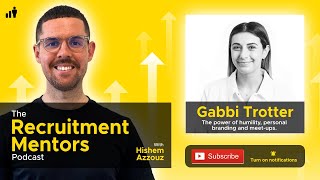
In this episode of the Recruitment Mentors Podcast, host Hishem Azzouz interviews Gabby Trotter, a recruiter who entered the industry at 19 and has spent the last five years at Searchability focusing on testing talent in Yorkshire and the Northwest. Gabby shares the traits she values in recruiters—organization and integrity—explains how she assesses these traits in candidates, and reflects on her first year’s challenges, especially building confidence and handling rejection. She details how she identified a market gap, crafted a business plan, and built a testing desk from scratch, outlining her client‑targeting strategy, networking tactics, and referral approach. The conversation moves into personal branding, where Gabby defines a recruiter’s brand, offers practical content‑creation advice, and discusses standing out in a crowded market. She also talks about the ROI of learning technical skills, her speaking engagements, and how authenticity drives opportunities. The interview then covers her transition to leadership, managing a small team, motivating individuals based on personal drivers, and time‑management practices. Gabby emphasizes mindset, resilience, and the “back‑to‑basics” approach to sustain performance during downturns. Finally, she shares advice for younger recruiters, prioritises personal branding as the lever for growth, critiques industry perception, and outlines her ultimate goal: scaling the testing team to match the development team’s size and billing capacity.
Chapters
Welcome to the Recruitment Mentors Podcast. My name is Hishem Azzouz. Today I'm delighted to be joined by Gabby Trotter, who joined the recruitment industry when she was just 19 years old, and for the last 5 years has worked at Searchability recruiting the best testing talent in Yorkshire and the Northwest. And for the last 2 and a half years has also been responsible for a small team, as well as billing. Gabby, thank you for joining me on the podcast.
Thank you very much for having me, I'm looking forward to it.
So where I want to start this podcast moving forward is, in your opinion, what characteristics and traits do you think make up a highly successful recruitment consultant?
Good question, and I'm glad that you asked me this in advance because I had to have, you know, a serious think about this because It's so hard to boil it down to, you know, one or two particular traits. And I think obviously it varies massively depending on what sector you operate in and what your role is, whether you're a manager or you're just looking after yourself. But I kind of thought, you know, for me, what I look for when I recruit for my team, one of the biggest things I look for is someone who is organized and someone who has got the ability to have control of the day rather than let the day run away with them. I think a lot of this job is about being kind of in the right place at the right time. So organisation is so important in terms of what you're doing during the day and just making sure that you don't miss opportunities. If someone says to me, call me in a month's time, you know, you best believe in a month's time exactly at 9 AM, I am calling them. I've set the reminder. There's no way that I'm going to forget about that because that's a a golden nugget of opportunity. So organization, and I think integrity is huge as well. I know that might be a bit controversial because I'm sure there's some recruiters out there that are doing very well and maybe have questionable morals. You know, for me, and especially if you work in a niche sector like I work in, you know, your reputation will massively precede you. So integrity is key, treating people like you would want to be treated if the shoe was on the other foot. That's my kind of two key things I look for. Everything else I think be taught.
I love that. And I think, uh, let's— I think the goal here is to make sure that integrity isn't controversial, because I think that should— you know what I mean? In the recruitment industry, I think it should definitely not be controversial. But I have to ask you, before we dig into your, your journey, how do you— so how do you look for organization in an interview of interest? Besides, I don't know, just turn up on time, doing all those things, like, how, how do you look for that in someone?
I think you have to ask the right questions. So if someone has been in a retail or a sales role before, asking them how they would manage their day, what targets they had to work to during the day, and how they made sure they hit those. If someone's fresh out of uni, that's great because I feel you can really gauge someone's level of organisation by just talking to them about, you know, how did you manage your time in uni? How did you find the pressure of moving from that school environment where everything is almost kind of forced, you have to attend lessons, whereas in university, you know, it is a little bit more optional. How did you find that switch and were you able to kind of motivate yourself to actually be proactive whilst you were there? So there's just a few different kind of leading questions I think you can ask people to get a gauge and I think by showing how someone approaches an interview and how much prep they've done and If they show up on time and, you know, were they aware of, you know, exactly who you were and the company was before the interview, that's all just really good signs of someone that's, you know, organized and has that proactive approach.
Yeah, awesome. I like it. So as I said in the introduction, for the last 2 and a half years, you've been on a sort of, not just a, you haven't just been focused on yourself, but you've had other people to be responsible for. So we'll definitely dig into that. But How would you describe your first year in recruitment?
A bit of a whirlwind, I would say. I was obviously pretty much fresh out of school. I had a couple of jobs, you know, working in Topshop, like a call centre job before, but I'd never really properly been in the working world, in an office, working, you know, long hours at the start. It was definitely a shock to the system. And I would be lying if I said in that first few months I didn't think about just packing it all in and going back to Topshop about 100 times. But I also found it very kind of intriguing and inspiring seeing these people around me who were seemingly normal people, really down to earth. But then you would see, obviously, these deals going on the board. Everyone would talk about their commission and their paycheck. Because I didn't know anyone that had ever worked in recruitment and I just thought, God, this is unbelievable. How did no one ever tell me about this before? You know, this is such an exciting place to work and there's so much opportunity here. So it was a real eye-opener. But it was, it was tough that first year because I was very nervous when I started and I was quite naive. You know, I didn't really have much of a phone manner or, you know, know how to deal with people just simply not wanting anything to do with me. So there was definitely a few, you know, kind of tear-jerking moments on the phone. They really didn't want to talk to me, but yeah, that thick skin had to come in quite quickly. And I worked with some really great people at the start of my recruitment career as well, some really great mentors within the business, so that helped a lot.
So let's talk about very quickly, what was, looking back, what was your biggest challenge in that first year, would you say? So you mentioned there, obviously dealing with difficult conversations that you probably haven't had to do before, but If you were to pinpoint it, what was the sort of biggest hurdle or most common hurdle that you had to overcome that then maybe helped you progress or accelerate your career, do you think?
I think just overall confidence was the biggest thing for me, just building up the confidence and being self-assured in myself to say, you know, I do know what I'm talking about and this person should want to talk to me because I can actually give them a genuine opportunity here to further their career. And, you know, I'm not wasting anyone's time. I am a useful kind of addition to this team. So it was definitely the confidence for me and making sure that I didn't kind of shy away from asking those difficult questions and, you know, asking within the business, can I take on a bit more responsibility? You know, what's the next step for me? I think at the start it was all such a whirlwind and every day was so busy that I never really stopped and thought, well, how do I become like that really successful person over there? You know, that felt like a million miles away. So Just building up that confidence to be kind of ready to really push forward and progress in the company.
And do you think that confidence comes from Gabby doing deals or can you cultivate that confidence in different areas, you think? 'Cause I'm sure that's the confidence you've probably had to cultivate in your guys, right? So do you think that just comes from Gabby walking up to the deal board, ringing the bell, whatever you do over there. Like, do you think it just comes from that, or I don't know, what do you think?
So I had, I suppose, quite a slow start, you would say, possibly, to my recruitment career. You know, I didn't kind of start and get up and running and on the board within a matter of months. I was, you know, a bit of a slower burner, and I did sit alongside a couple of people and resource for them for quite a while before I took that leap to start the testing market and go on the board as a full consultant. So Success for me was initially, number one, actually starting to understand what I was talking about and get my head around the market and how everything kind of slotted together from a tech point of view. And also, it was just feeling like I was starting to get kind of welcomed into the community because I've always done that, that same patch, that Yorkshire Northwest area, and just building meaningful relationships with people online. Like, I was so passionate and interested about the social media side of things and joining communities. And once that started falling into place and other people who had maybe been doing recruitment for 3 years were asking my advice on how to engage people on social media, that gave me, you know, such a boost.
Okay, how long did it take to do your first deal then? So if you were a slow starter interested—
yeah, so I'm trying to think how long I was there for. I was probably there for Nearly a year before I actually went up on the board. But once I was up on the board, yeah, I was super confident at that point and it snowballed from there. So I think I see people go on the board quicker and they kind of learn whilst on the board, whereas I felt like I knew the job inside out, went on the board and I kind of hit the ground running with it. So I think I went on the board and maybe did my first deal within the first week and did 4 deals in my first month and it all continued from there.
Yeah, it just continued from there. Yeah.
A slow burner at the start.
That's right.
I could do it. Yeah.
So like, why didn't you quit then? Because a year's a long time. I've had people on here before that they didn't make a placement, and you, you're not there for the base salary, right? And I'm sure everyone— and you recognize that from people around you. But why didn't you quit?
I think it's because I knew, I, I knew that I was doing a good job. I wasn't necessarily, you know, a fully fledged consultant at that point, but I was a very, very successful resourcer. Um, you know, the company was very happy with how I was I was getting involved in a lot of training for the new people joining the business and around social media. So I felt fulfilled, but it just didn't kind of click for me that if these people are doing it and why can't you do it? You are just as good as these people and you know, you're getting irate because you're seeing them earn double the amount you're earning, but you're the only one in your own way. The company wants to support you. You know you can do it, but it was just me taking that leap of faith. I would say I didn't quit because no one was holding me back apart from myself. You know, the job and the company was great, but it was just having that confidence to make that jump to the next level.
Love that. And then final thing on your first year then, what was the best— like you mentioned mentors, you mentioned surrounded by good people. What was the best piece of advice that you received in that first year, do you think?
Oh, that is a good question. I think one of the things that Searchability is great for, and I know that a lot of companies might say that they do this, but they are hyper-aware of how important reputation is, and they're hyper-aware of the fact that if you do it right from day one and you're not there for the quick win, you're there for the long-term goal, then you're going to reap the rewards down the line. So it was always just making sure that every, every role, every kind of nibble of a role that we got, you know, we were giving it our full attention and working it to the best of our ability. So it was just making sure that you viewed every opportunity as a long-term opportunity. You know, there's no such thing really as a quick win.
I love that. So basically, do you— so basically the advice is, or what you was really mindful of was, which has obviously helped, is do not— basically just the real importance of your reputation. In your market? Yeah, yeah. Okay, yeah, awesome. So right, so going into your second year then, so this is when obviously things start snowballing. Definitely keen to dig in, uh, with you on the social media and stuff like that, on your journey with that. So just to help me and help people listening, so context is, so did you then— what, so obviously you recruit in the testing market from what I understand? Yeah. So going into this second year Was that then where, what was you building out from scratch or was you then like a 360 consultancy doing clients and delivery? Just give me context there and then we can dig into sort of your journey and learning.
Of course. So we originally had no one focusing on testing within the business. Everyone who did development did development and testing. So I was ready to take that leap, ready to be a consultant, and I'd been kind of teed up to take on development in a different patch. However, because I had already invested this year into this particular location and market and I felt I'd really embedded myself, I pulled together a little bit of kind of a sales pitch for the directors and said, look, I know you want me to do this, but I really, really think if you back me and you let me just do testing in these locations, I will make more than if you put me on development there. And they were unsure because, you know, there was no blueprint to go off. They've not kind of had anyone covering testing before. And, you know, I think testing sometimes wrongly can be perceived as development's, you know, less attractive younger sister. And it was just not really something that had been touched upon. But I knew that there was a gap in the market and I really did know that I would be able to maximise on that. So that's how testing came about and how I kind of moved on to that patch. And it was pretty much starting from scratch, to be honest.
So, so keen to dig into this because it's one of the sort of popular questions I get, Gabby, from recruiters on. Would love you to speak to people on how they've approached building a desk from scratch. Yeah, but I think what will help with that is tell us what was in that business plan, or like the core sort of fundamentals of it, because I think that's really interesting, right? I love the fact that you took the initiative to go, hey guys, I know you want this for me, but this is why I think I should focus on this. Absolutely love that. What, what was it? What made up that business plan that gave you the confidence, obviously? And yeah, what did that look like out of interest?
So what I pulled together was the testing roles that I had already personally. I know I hadn't kind of brought the clients on board, but worked and resourced when I was working as a resourcer, what those placements equated to value-wise, and then dug into the clients that we already had. Do they recruit and test? If so, how often? How big is their testing team? Kind of market mapping who we were already working with. And then on top of that, identifying the key players within testing recruitment that we didn't currently work with, but who would be on my hit list, if you will. So weighing up what we already have that we can kind of exploit and maximise on and where I'd be targeting moving forward.
Love that. How did you go about it then? How did you go? So obviously, so what's interesting there is, so you had clients that you could go after, but just really focus and be like, hey, I'm Gabby, obviously Searchability works with you, but I'm the testing person. I'm just gonna focus on that. If you have testing requirements or testing, obviously people that you need on the person. But so yeah, how did that look then? What was the plan to get in front of your target list, which no doubt recruiters will have their own target lists. How did it go? How did you approach it?
So it was, it was, as you said there, obviously, you know, the key thing is, is always making the introduction. And I would say that I am not a pushy person. Um, that's not really my approach. I, I do take the softer approach, and I certainly take the approach of, um, getting to know people over time before kind of dropping in, can I work with you straight away? So In the early days, I was just having a lot of conversations with people who I knew in the back of my mind, you know, you're someone that could be really valuable for me as a connection. But initially, just having a chat to them about what they do, explaining that I was focusing on testing full-time, you know, can they talk me through a few things that would be important for me to know? So then at the point where the conversation was warm, I could then drop in at that point, look, you know, I'm really serious about this. You've given me a lot of useful advice. Who are my best who you're speaking to at your company to get a shot at this and just really using that network.
So you lend on candidates?
Yeah, lend on candidates a lot. I mean, I've never been afraid to ring someone and say, you know, can you just do me a massive favor? You know, I won't bring your name into it, but who do I need to speak to? Have you got an email address? Have you got a number? I promise I won't tell them how I got it. But people generally in their heart, I like to think, are good. And, you know, they want to see people succeed as long as you I would say you don't want to bleed your network dry. It's a two-way street. So at the start, I was doing a lot of blogs and anything I could do to engage with people to then be able to ask them, you know, at a later date, the recruitment question is what I was trying to do in inventive ways.
Yeah, nice. So, so what would you say was the sort of most effective method for you then in growing your client network, would you say?
I think It was definitely— I'm not naive to say that it didn't help that we already had some good clients on board that I had worked roles for and impressed already. And again, just had that very open and honest conversation with them and said, I am starting a new market here. A recommendation from you would be worth its weight in gold with other key players in and around the area. Is that something you'd be happy to pull together? And I think that just really strengthened when I was kind of hitting the phones hard and, you know, sending out these introductory emails just to make it a little bit more real, um, and less of a blanket approach when I'm actually, you know, connecting it with real-life recommendations and referrals.
Yeah, so do a real quick thing on that. So we all— you always hear about referrals, don't you, in training recommendations? So like, just, just to sort of finalize that, like, what would you say are the benefits of getting referrals? And like, in your opinion, what is the best way of getting them or approaching us? You just mentioned emails there, but like, just your experience in that, because you hear that a lot, don't you? But like, what would you say the main benefits and also the best way that you think is to go about getting them?
Yes, it's something again, the searchability ethos is, that's always been something that we have pushed for. And back in the day, it used to be all about the kind of LinkedIn recommendations. Right now, our kind of big focus is Trustpilot. So that has always been something that's kind of been hammered home from day one is, you know, don't ask, don't get. No one's going to write you. You could be the greatest recruiter in the world. No one's going to off their own back at home at night, sit and think, I'm going to write Gabby at Searchability and, you know, you need to push for these things and say, I know what I've done for you. So there's this, this, and this, and we place this and this. I can kind of almost pull it together for you. I just need you to give it the green light and just say, you know, I seal this with approval. She knows what she's talking about, and I would say, you know, give her a chance because she's done a great job of filling our vacancies. So just being a bit cheeky with that, I think.
Okay, nice. So you mentioned, um, what I was just then keen to ask you was, you know, you're talking about basically adding value, um, but at the back of your head knowing that that is someone that could obviously be a great relationship to form. Like, recruiters are typically, or can be typically, sort of, um, be known as impatient. Right? So that's why sometimes people do find it hard to think about marketing themselves or whatever, because they'd rather just call someone and try and, I don't know, agree fees or whatever. So how long, like, so talking about that period of giving value, obviously you've got the existing relationships, but if we focus on you expanding your new clients in that second year with that approach, how long is that timeline, do you think, would you say, realistically, if you really approach it with giving value, if that's sharing content, if that's, yeah, trying to speak to people, like how long is that timeline, do you think, of getting to know someone, building relationships to, you know what, Gabby, yeah, can you help us, would you say?
Yeah, no, that's a great question. And it's something that when you grow a team, you have to think about because obviously you need wins early doors and you need fees coming in early doors. You can create this brand in the background, but it's got to be combined with just sheer perseverance, knocking on doors, doors and getting relationships in place. So alongside all of that slower burner, of course, was all of the usual, getting on the phone as much as possible and dropping through as much content as possible. So I would say that's probably how I did the first handful of deals whilst the kind of softer think skills was going on in the background. And I would say that probably took at least 6 months for it to get to the point where I think people actually are starting to recognise me a little bit here and understand that I'm kind of this testing recruiter in Yorkshire. And I think it's always a good way to kind of see how you're perceived when you start getting through those emails from the rival agencies in the area saying, oh, you know, a client mentioned you the other day and you've taken this particular area by storm. And I think that's when you know that, you know, word's getting around and the approach is working. But it's got to be paired with just the classic, you know, just being proactive.
Yeah. So, so just on that then, if I'm listening and I'm going through that process at the moment of building out a new market or whatever, like how long would you like, I guess, how long would you sort of say to them, like really stick it out for this period to see if you get some solid traction? Like how long did it take you then, would you say? Was it like this sort of more 6 months, 6 months doing all those things?
I would say 6 months. I think the first 6 months for anyone in recruitment are probably the hardest. I mean, the first year is probably, you know, the hardest. It takes a while for this job to click, and consistency is one of the hardest things to get in the world of recruitment. But I would say if you're hitting that 6-month mark of building a new desk and building a personal brand and you feel like you're still getting nowhere, I would say that perhaps something is amiss, whether or not you've maybe not picked the right market or whether you think that you're getting your presence out in front of the right people, but you're simply just, you know, missing them completely. If you're really investing into it and really, um, you know, working super hard throughout that 6 months, then I would say that that's the point where you kind of need to take stock and be seeing a bit of, um, kind of result back off your hard work.
Yeah, nice. I like that. So how, how did you, um, how do you finish billing-wise in that year, focusing out a complete desk, you know? What did you do?
That is a great question. I'm trying to think off the top of my head. I think it was about 190, which I was pretty happy with for the first full year on the board.
Yeah, yeah, nice. That's awesome. And is it all perm, yeah, that you do?
All perm, yeah. So we're not dual desk, we've got completely separate contract team at Searchability. So yeah, all permanent.
Awesome. So then obviously, and then was it another year of building on what you built before you started obviously looking at or growing your team, building even more credibility, getting your name in the market, etc. Yeah.
Yeah, it was that second year again was just building up further consistency. I think it must have been towards the back end of that that we started really thinking about the fact that there was quite a lot of business coming in and I was perhaps starting to get spread a little bit thin and it would make sense to start growing out this test team now. That was always the long-term vision that with, you know, I want to start the testing team for it to one day to be as big as the dev team at Searchability and, you know, rival that team.
Love that. So you've mentioned branding quite a few times.
Yeah.
Let's, let's talk about this, right? It's definitely become more and more, obviously, that, that's what I've helped recruiters with in the last sort of year and a half. So I'd love to just sort of get your take on it and sort of, I guess it's something now that you encourage your team to do. And it's clearly something that you've become known for in Searchability, even obviously I saw that you're doing events talking about it for the testing market. So how would you define a person, like building a personal brand as a recruiter? Like, firstly, like what, when we say this phrase personal branding, like what does it mean to you?
So a personal brand for me, I would say A personal brand is not just the roles that you've got on at the moment or what you're doing any given month. Your personal brand precedes that. So that is just something that is always kind of ever-present in the background. So despite where everything else is up to, my personal brand would hopefully, you know, always precede that. And that's just being known as, you know, a testing recruiter, but also being known as someone that, you know, you can genuinely have a conversation with. And I am someone that is quite approachable on social media. And I talk a lot about a lot of things that are completely unrelated to work and unrelated to testing. Um, but I think it just helps you to be seen as a person as opposed to a recruiter or as opposed to a member of whatever agency you belong to. That's kind of helping you shape out just your individuality within the market.
And that's that. So like, human first.
Yeah.
And then a recruiter, right? Which obviously helps.
Definitely.
So, okay, so like Okay, there'll probably be a lot of listening. If recruiters listen to this podcast, they probably know this is important, right? So what I've seen is the number one challenge as to why people don't start is, like, I'll say to you, Gabby, I know it's important, but what the hell do I talk about? Yeah, what do I create content about, right? So what's your go-to advice if I'm a recruiter listening or someone in your team? I'm going, Gabby, right, I want to build my brand like you, da da da, like, what are you telling me to help me start?
Okay, yeah, I would say initially creating content can be daunting if you're talking about creating original content. I think everyone automatically thinks, okay, so I need to start a podcast, or I need to blog, or I need to run an event. And I think people try to run before they can walk. So all you have to do to get started is you don't even have to create your own content. You can just share other people's relevant content but add your take to it or pose a question. So I would say don't just share an article. You might as well do nothing if you're literally just clicking share from BBC Tech News, adding nothing else to it. Just actually read the article, understand it, and just pop on your key takeaway on there or pose a question that's brought up in the article to get the conversation going. So if you don't have that confidence yet or you're unsure what to put out there, that's a great place start. And I think these recruiters who want to kind of set up events, I keep going back to the event space because that seems to be the popular thing to do at the moment, before even understanding already what events are out there that are already being run by, you know, grassroots people in the community, why not just ask them a few questions, ask if you can come along, ask if you can sponsor it? Because I think otherwise, it's clear that you're starting this event because you just want an easy way to find candidates and it's it's all about personal gain. So it's just making sure that you are adding value and again, not just kind of bleeding that network dry.
Yeah, I love that. And yeah, definitely don't like— you don't want to go in blind, do you, if you're trying to facilitate events? So what would be then your number one tip to stand out in a crowded marketplace and really set yourself apart from the competition? Because this obviously ties into it, but I'd love to get your take on that because particularly if you're listening to this, like yourself, you're a recruiter in tech. Yeah, there's a lot of you. I don't know how many, I don't know how many of you there are in Yorkshire, but yeah, there's a lot, a lot, a lot, there is a lot of tech recruiters. So, but this, this is relevant for any, any recruiter, any market, because there's, there's thousands of recruiters, right? But what, what's like, what's your number one tip for recruiters to stand out? What comes up for you?
So I'd say number one tip is depending on what your niche is and what your market is, find out where do the people in that market hang out? What events do they go to? What platforms are they on? Are they on Slack? Are they on Twitter? Is there a Facebook group? And put yourself into that group, hold your hands up and say, look, I'm a recruiter, but I'm really genuinely just here to learn more about my market because I want to be good at my job and I don't want to piss people off every day by calling them and having no idea what I'm talking about. So I'm going to, you know, be vulnerable and honest and put myself out there and say, I would love your help to be better at my job and just find out where are these people and how do I put myself in front of them?
And it comes back to integrity, doesn't it? Because if you don't mean that, yeah, you'll get found out. Simple as that. So what I wanted to ask you, and this is an interesting question that someone sent me which ties into this. So because you've spoken about events, getting involved with your network and community, And I think this might be a bit specific to tech, but I think also in a lot of other sectors.
Yeah.
What do you think is the return on investment of spending time really learning the skills that you recruit for? So I've seen it in a few different places where tech recruiters now are going, we code, we learn, we've learned how to code, which means we can recruit better. I understand it and I think that's great. But what's your opinion on, yeah, return on investment of time learning those skills and really embedding yourself and understanding what testers do over getting really good on the recruitment side, right? Obviously these go hand in hand, but like, what do you think?
Yeah, I think it's a very fine balance between having enough knowledge that you don't make a fool of yourself on the phone and people feel like you care enough about what they do in their market. But I also think that it can be perceived from a lot of these kind of technical groups I'm in and a lot of the things that I kind of am privy to behind the scenes, that a lot of it is kind of considered a little bit insincere when you do see people saying, you know, I've learned to code, or if in testing, for example, I've done my ISTQB. I quite often say to people on the phone, oh, I've literally never heard of that tool before. Can you tell me a bit about it? I'd love to know a little bit of context because it's something that has never come up. I'd much rather do that than sit there and try and blag it and pretend. I think I've got good knowledge around testing. You know, I've been recruiting for it for 5 years, but there's still a lot of stuff that I don't know and that goes over my head, and I'm just quite honest about it.
Yeah, no, I really like that. And I think What one of the sort of second biggest challenges that I get from recruiters tying into sort of content which is relevant to this is, especially in the, in the sort of technical world where people would be really concerned or worried about talking about something quite tech-specific because they're like, oh my God, like, I don't know how, I'm not as competent as these people. But I think of course it's going to help with context and I guess relating when you're speaking to people. But you don't get paid to do what they do, so you're never going to be as competent as them. Should you be curious about it? Should you learn? For sure. But that isn't your job as a recruiter, right? What you need to be an absolute expert in is who's the best in the market, who are the best employers and what do they offer, or why that person is the best in the market, etc. Do you get what I mean? And that, like, that's what you're going to be an expert in. So yeah, being honest and going, oh, that's interesting, tell me about it. You have every right to. Yeah. So that makes sense.
And you know what the perfect example is? The Ministry of Testing event where I did my personal brand talk. Every other speaker at that event was a tester and every other talk was technical. And they never would have invited me to do a technical testing talk because it would have been an absolute shambles. It would have been a mockery. No one would have cared. So the fact that I say, well, I don't know anything about that enough to give a talk, but what I do know about is personal brand. And I know that's useful across all industries. How about that? Would it, would it be of interest to have something a little bit different? And, you know, it went down really well.
So I think recognizing where you add value.
Yeah, exactly. And, you know, post content around interview tips, CV tips, you know, just talk about what you know. There's enough people out there pretending to know about things and talking nonsense. Don't add to the noise. Just stick to what you know.
Awesome. So quick one on that. I reckon there might be a lot of your competitors going, How did Gabby get to do a talk at that event? Right. So how did you achieve that? I know it wasn't just from one act or you doing one thing. Clearly, this is something that you've been passionate about and sort of been involved in doing from the very beginning of your recruitment career. But what— how do you think you was able— so one, clearly what we just discussed, you got invited or you had the opportunity because you recognized where you could potentially add value. To their audience, which is obviously a factor. But what else do you think contributed to you getting that opportunity?
So I think it's all about the chain of events. So if I really go back and break it down, there was a testing event in Leeds, I think, 2 years ago that I went along to unsponsored, and I met a lot of kind of prevalent people in the speaker community. I was then invited to speak at that event the next year, which unfortunately didn't happen. But because of that, that led to me being invited to do the same talk. It's all been the personal brand talk internally at Sage for their internal testing conference. And that was just something to do off my own back and something I was invited to do. And then once I saw the opportunity to speak at Ministry of Test, and this was a serious gig, people get paid to do this. And I thought, there's no way I can do that. But it was actually John from Sage who said to me, your talk was really, really good. Just put yourself forward. Everyone knows who you are at Ministry of Testing because you're constantly talking to them on Twitter and you're on all their groups and you talk to all of us. So we'll all back you. And that's how it came about, really. So just the long-term game in the background, as I say, of just being involved in stuff over the years. And again, I suppose you could class that as, you know, a strong personal recommendation from someone in the industry. Kind of pushing me forward, and it's so nice. I've never worked with him, I've never placed him, I've never recruited for Sage, but he's just a really nice guy from the community that I get along with. So it's just one of those genuine connections.
Yeah, I love that. That's awesome. So let's talk about Gabby's leadership journey then, and management, because that's a whole different ball game, right? So what— so obviously, clearly you wanted to grow this team, back yourself to build up this desk, which you did. Actually, just quickly, actually, for context, because I think it's interesting. What do you remember what you then— did you want— remember what you then built, um, built on? And obviously did $190K in that first year, building that out pretty much from scratch. What did you then do the next year, do you know?
So I think the way I had kind of like a half year and then a full year and another full year— I'm trying to remember like the 5 years that I've done. I know that it was the, the $190K, and then I I think that I broke about 220, and then last year was that kind of best year ever, and I did 280 last year. Amazing. Things are a bit crazy this year, like, maybe not talk about that, but yeah, last year was kind of a, you know, a really big personal achievement. Awesome.
No, I just, I just wanted to highlight that because I think, again, more, if more recruiters enter the industry with that long-term mindset like you have, you've then, like, you know, I mean, that's, that's what you can build on, and that's when you can really start reaping the rewards of your hard work. So how long have you— so obviously just for context then, so you currently— how big is your team currently?
So at the moment it is myself and two other consultants that are on the board with the view we're interviewing at the moment for someone else to join again in that resource or capacity with view to go up to consultant. So we're a fully established team of three consultants on test.
Awesome. So Let's just think about it as a whole then. Like, what if you look back, like, right? Obviously I know you're still in it, but like, what were the sort of biggest challenges for you then when you started having to be not just responsible for yourself, but responsible for another human being and them doing well? Like, what was really difficult for you at first?
It was such a shift that I don't think, you know, anyone can kind of prepare you for how different it is. From looking after number one to going to growing a team. And, you know, it is going to have a knock-on effect in terms of your results for a little while. It's that kind of short-term pain for long-term gain. You want to build your team. But in those early days where there's, you know, a question a minute, it really takes you away from your goal and your focus. So I think just learning how to run my day and be organized again with another person alongside me. I'm just learning as well to be a manager and how to kind of have responsibility for someone else. I was still, you know, only in my very early 20s, and it was quite novel interviewing some of these people in their mid-30s and then probably thinking, this person's going to manage me. I've been working for 10 years and, you know, she's practically fresh out of school. So I think just getting into my head that I am a worthy manager and I know what I'm doing and I'm very good at my job. So you need to listen to me and I've got some good knowledge for you. Making that shift into a manager is always something that I think people initially find hard, but you've just got to find your feet and your confidence with that.
Awesome. So let's talk, because I think that's a real common thing in terms of maximizing and managing your day, where you've given yourself enough space and time to do what you need to, to achieve what you need to personally, but then also make sure you've got enough time to support person or persons. So how, because I'm sure this is something that you've had to get even better at during COVID now, right? So what does, like, how have you got better at managing your time? Do you have sort of set times where Gabby can be contacted, spoken to, and do it like that? Or what's the typical structure of sort of Gabby, the bidding manager?
So we tend to every week on a Monday have a weekly meeting where we'll run through kind of what chances have you got on the go this this week? Where will you be targeting? And just, you know, a general catch-up as to where everything is up to. And I tend to kind of expect that everything kind of gets laid out on the table at that point. You know, you're not then going to be needing to have a chat half an hour later about something. You know, that is our catch-up to set us in play because Mondays are a really busy day. But I've always kind of kept the approach that I want to be really, really approachable. I don't want anyone to ever feel like they can't ask me a question or that anything stupid question. I'd rather someone asked me, you know, the simplest question than sit there all day wondering, you know, whether they should do something or not. You know, that's not a good use of anyone's time. So I wouldn't say that I'm ever on kind of full do not disturb mode. I think you can always kind of, you know, let me know if you've got a question. And it's easier in the office because it takes one second, you have a quick chat and you get back to what you're doing. It's harder from home because it's a Teams call or it's a phone call.
Yeah, you got to book it in your diary.
Eat into your day a lot more. So I think I've got plenty of tolerance for people asking me a question. What I can't really tolerate is getting the same question over and over and over again. And that's why I like organised people, because I like it when I show someone something once, they make notes, and then they don't need to ask me again. So I think it's that balance of being approachable, but Don't take too much from that.
It's just funny you saying that because I can just relate. So my girlfriend has a real issue with me because she'll show me how to cook something with a recipe once and then I don't, I don't remember how to do it the second time. I have to ask and she absolutely hates it. So I can definitely get where you're getting at that. So something that I think also is part of this journey, which whenever I've spoken to people about is like How have you got better at sort of getting the best out of your team? Because I'm sure that's something that you've really had to, um, have in place during this COVID period as well when you're not all together, whatever. But what's been your journey with that? Like, how have you— what have you worked out or learned along the way that has helped you get the most out of your team?
So I think it is really truly understanding what motivates that individual. Are they I think, you know, we're all money motivated if you're in recruitment, let's cut to the chase. But some people are more so money motivated than others. Some people really crave that recognition that if they do something well, you know, they want the praise. Others don't care about the praise as long as they're making the money. So it's finding what each person really kind of desires and making sure that my management style reflects that. So if it is the money side of things, you know, making a massive deal of, you know, where they're up to with their billings and updating it all the time and kind of having that visual whiteboard of of where it's up to, or if they are someone that really gets a lot back from having the praise and recognition, just making sure that, you know, that their wins are shouted up and I'm telling my higher-ups and the directors and just making sure that I'm really complimentary. So just truly understanding what drives people because it varies massively depending on who you're dealing with.
Yeah, and this has come up a lot, Gabby. So how have you gone about getting curious around that and finding that out truly? Do you know what I mean? Because yeah, yeah, someone can say to you, I'm motivated by this, but are they? So like, you know what I mean? So like, how have you, how have you found out? Yeah, so I mean, it's like, yes, Gabby, I'm motivated by money. I want to buy a house, all these things. That's like the go-to, isn't it? So it's just like, yeah, I want to buy a house. But what, how have you sort of got, yeah, how have you got curious about really finding out what drives these people that I know I can sort of push on or make sure I'm doing that hopefully can really make sure that they're performing?
Yeah, I think I'm really, really lucky with my team because we are so close and, you know, we are, you know, we have that real sense of identity. We're team testing in the business and we very much stick together. So, you know, I speak to them a lot and I do get to know a lot of what they are doing in their personal lives and what is important to them beyond just what they think is the right kind of generic answer. Answer. So that helps massively and I think just understanding them as a person helps as well. So understanding, are you someone who likes a lot of close management? Do you want me to, you know, sit alongside you and really work with you closely or do you learn more by being set off to do it on your own and then, you know, fight or flight, you know, if you fail, you fail but at least you gave it a go. So As well as understanding those motivations, it's understanding as well how people best want to be managed and how they best want to be trained. And I think you can only really do that with spending a decent amount of time with someone and getting to know them. You think you know people in interview and then they can start and they can be very different in good and bad ways. So you've just got to put a bit of time in, I think, in that initial period to make it work long term.
Awesome. So let's talk about, before we get to sort of the end of this, let's talk about mindset, Gabby. Super important, always typically is the answer when people say that's the difference between a great recruiter and a top, top, top recruiter. No doubt this is something that you've had to really sort of try and maintain, yeah, have a strong resilient mindset during this COVID period as well. I know I've had to and a lot of people will, but sort of what for you, what have you done? Obviously over the last 5 years, I'm sure there's things that you do maybe, or on a weekly basis, daily basis, or things that you've learned that really help you have the best, give you the, that give you the best possible chance of having like more great days than bad days, right? Because as you all know, this is formally called recruitment roller coaster. That's because there's just massive highs and massive lows, right?
Oh yeah.
So what What do you do? What are your non-negotiables when it comes to like, right, I need, I need to do this so then I'm sort of best equipped to have the best chance of having more good days?
Yeah, no, I love that it was called recruitment rollercoaster because it is so true. And I think sometimes you have to lean into those. So if you're on a high and things are going well, do not take that for granted. Lean into it and appreciate how, you know, how well you're working because because it can turn so quickly. When things are bad though, I think it took me a while. It did hit me hard in the early days. I took it very personally. Someone ghosted me or they didn't turn up to an interview. But over time I have hardened up against that and I've stopped beating myself up about it because ultimately we work with people and people have their own minds and who knows what's going on behind the scenes and you can't feel bad. Some mistakes or some things that happen are just way out of your control. So just learning to breathe and let it go so you can reset and keep going. And I do try and— it is impossible, but I do try and have a bit of downtime in the evenings and turn that kind of work phone off. It'll go to a gym class. My boyfriend also works in recruitment.
Really?
It's not always easy. It's very easy to talk about work, but you've got to take a breather. And holidays for me is such a big thing, which is why this year has been very, very tough. But yeah, just leaning into those highs and really enjoy it when they last. And, you know, just trying to grow a thick skin with those bad times and realize that some things are way beyond your control and you've just got to breathe and let them go.
And what's really helped you over the last sort of 6 months or so? Obviously, you haven't got the holidays to get that out of your system. Like, what's personally helped you? Over the last sort of 6 or so months?
I think that, you know, sometimes in life you need things to slow down, and I'm someone that when I'm in the moment and everything's moving so fast that I don't really stop and think about it. So, you know, I'd be going to 3 different meetups a week, and I'd be driving to Leeds, Manchester, Chester, back, and it would be non-stop. So it was actually quite nice to just have some forced time at home that was just very much, you know, a lower-key lifestyle for a little bit. And I think that that did help and just having more time to myself. But again, more time to think about things and think about the negative things. So just again, just trying to do a bit of exercise and to keep my mind off it helped me massively in lockdown.
So just being appreciative of how often do I get time to—
Yeah.
Relax or like, yeah, not, not go 110 miles an hour.
Speed back up again before I even knew it. You know, you're back to— I know it's not quite back to normal yet, but things are a lot more busy than they were.
Yeah.
So before you know it, life's back to the craziness. So maybe just enjoy the downtime a little bit, I suppose.
Yeah. Be present. But it's hard. But what— so final thing on that then, like what's been— if I said to you, like, what's been the sort of best advice that you've received that's helped you mentally? Like, you mentioned around leaning in, you mentioned about take a breather, but like, what advice have you received along the way that's really helped you manage mentally and have more resilience, would you say?
Just overall in recruitment or in lockdown specifically?
Either or, just whatever comes up for you.
I think I suppose across both ways it works, but in the quieter periods in lockdown, what really helped me was going back to basics and having a to-do list because there was those, you know, quiet times where no one knew quite what was going to happen with the industry and just ticking off those small little tasks throughout the day and, you know, chipping away at that bigger end goal kind of kept me sane. If I was only noting the big wins over those kind of harder few weeks, then of course I would have felt like there was no wins, you know. So identifying the small wins, always celebrate the small wins 100%. 100%.
Love that. So I promise someone that listens to this podcast that the next time that someone— I always do this now, this won't be this year, but the next time— they said to me, the next time someone says— when someone says back to basics, can you please ask them what that means? Because it's like such— it's such a common term, isn't it? But like, and that'll probably mean— that could mean different things with different people. So you just mentioned a bit there, but like, when you say back to basics, what do you mean?
I suppose just back to basics, back to the old schools, it all sounds the same and it's all such a wide term, isn't it? But, you know, we're not a massively KPI-driven kind of recruitment agency, but I suppose, you know, back to those basics of, you know, you're only going to get somewhere if you get that new piece of business and you send that CV and that translates into an interview, and sometimes you need to just focus on those really simple metrics to actually cut through the noise and achieve what you want to achieve. We use the phrase busy idiot a lot. So, you know, you're super busy and we don't doubt that you're working really hard, but when you actually delve into what you're doing, there's no wonder it's not translating into results. Sometimes you need to go back to those basics. So I think that's what it means to me anyway.
Good answer. I like that. I think in today's day and age, it's so easy for you to call me and go, Gabby, I'm busy. All right. Yeah. What do you mean? What do you mean by busy? I mean, so, yeah. So, no, I really like that. And I think this sort of what I take from what you just shared is when you say that is like also in that which I think is interesting is everything that you just mentioned there is completely in your control.
Yeah.
Do you know what I mean? So it's like, right, what can I do? It's in my control that I know I'm fully capable of that can help me feel like I'm making progress, building momentum that I know can hopefully over time build up to getting back to where I was or whatever. Love that. So I had to ask this question which your colleague sent me, and then I'm going to ask you 5 quick questions. Okay? No, don't be. So this question was from Kelly Harvey.
Okay.
And she said, well, she got 2 questions actually. So I'm going to ask you the first one. What would, what would be the advice that you would give a younger Gabby?
Ooh, so many things.
In relation to your career in recruitment, what would you say to her?
Like I was saying at the start, I would just say, just sounds so cheesy, but just believe in yourself. Look around and these people are no better than you. And, you know, I hate to make it about gender and it's not about gender, but I think because there wasn't really many women in the business at the time that were in those kind of strong leadership roles, maybe felt less attainable. So maybe don't look for the role model, just be the role model. You know, you do it and then everyone else might follow.
I love that. Be the role model. And then the other question, for and up from this, which I think is a really interesting one. So I guess the context of this is like what you would do that you think will give you the best possible chance of achieving the goals that you want. So the question is, if you could commit more time to one element of your job that would give you the best chance of obviously achieving the goals you want to, what would it be? And she put building your team, building your brand, building your client base. Like, what do you think? I know this is a combination of things, but I think that's an interesting question.
It is an interesting one. Obviously, I'm inclined to say brand because it's something that I am passionate about, and I do think it really works. So I would maybe say brand, and I think from building brand, I do think client base will follow. I do I think that goes hand in hand. So, you know, I wish I had a little bit more time now to be as creative as I was in the early days in terms of creating content, because I think that's something that I'm probably guilty of letting fall by the wayside a little bit as more and more stuff has come onto my plate. So just investing back into that would be great.
Amazing. Right. So to finish, I've got 5 sort of quickfire questions. Don't have to answer them in a quick fashion. Just let me know what comes up for you. Right. So first question, if you could change the industry, what would you improve?
I think change from within about the perception of the industry we're in. I think you see someone slate recruiters and instead of people defending them, you'll just see all the other recruiters saying, oh God, yeah, we are awful, but not me. Whereas I wish that we would just say, well, no, actually, this is a really good industry and it's worth billions of pounds and there's a reason it's here. So a bit more sense of community, which I know you're not going to get because we're all technically rivals, but, you know, defend the industry. Don't just say, well, I'm the exception. Yeah, you're right, they are all awful. I'd like to see a bit more of that.
I love that. Question 2: What book have you read that has had the biggest impact on you?
Oh, see, I used to read so much when I was younger, but I've really lost it recently.
So, or if you listen, listen Audible, I don't know, what, what have you read or done, listened to something that's had a big impact on you?
Do you know what, this is a totally off topic and rogue answer because it's not a book and it's not all—
that's okay.
I actually watched the, um, Tottenham Hotspur thing.
Oh my God, I love those documentaries.
Oh my God, I absolutely love that. And I actually I really liked his management style. It was so different to what I thought it was because I think everyone perceives him as being, you know, really hard-faced, but seeing how soft he actually is behind the scenes, I really like that, and it shows that you can still be a nice person and be a manager.
No, I love you mention that. I honestly, I live for behind-the-scenes sport documentaries because of the insight that you get. I think it's amazing. That's fine. I know that question is very reliant on me people reading, so that's fine. Right, so next question. My question is, if you could write a LinkedIn post that could be seen by every single recruitment consultant across the world, what would you want it to say?
Oh, that is such a good question. I suppose it's quite similar to my first answer, but I would say maybe, you know, be proud of the sector that you work in and do it with integrity and that you think you're on a good path and don't let anyone knock you off that because everyone gives this industry so much stick. But, you know, for me personally, it's given me such a great life and, you know, the ability to buy a house at the age of 24. So, you know, just be proud of the industry that you're in and have your integrity.
Amazing. Next question. What did you spend your first biggest commission paycheck on?
Oh, that is such a good question.
And it's French.
I had all these visions of all these great designer bags that I wanted to buy. And then the minute I actually had the money, I thought, oh my God, I could never spend that money on a bike. I don't even think I did anything that rogue or interesting. I think most of my money, and I think it probably will have done, is gone towards a holiday. I'd much rather spend it on a holiday than anything too materialistic.
Yeah, what, what's, what was like the bougiest holiday then that you spent it on? Have you been to like the Maldives or something like that?
Been to Dubai, that was pretty bougie. And I went on quite a long holiday to the Philippines as well. That was an amazing experience. Yeah, I've been some great places.
Awesome. Love that. Final question. What is the ultimate goal for your recruitment career?
Oh, this is a great question. It's something that I think about a lot. So to kind of decide, you know, it's hard sometimes in recruitment to plan ahead and think about the future. But I definitely would say for me, the plan is definitely to continue growing team testing to the point, and we're not there yet, where it is the same size and at the same kind of billing capacity as team development within Searchability. So really kind of prove to everyone that might have doubted it that, you know, testing is just as good as development.
Let's go. Let's go better. Love that. Gabby, it's been an absolute pleasure.
Thank you so much.
Thank you.
It's been great. It's flown by.
More from Hishem




You don't need as many clients as you think to bill $1 Million A Year In Recruitment



From 30 Direct Reports to Back-to-Back $1M Years as a Solo Recruiter with Zach Creighton



