Ginnette Harvey - Climbing the ranks at Sthree, relocating & building multiple brands in the US
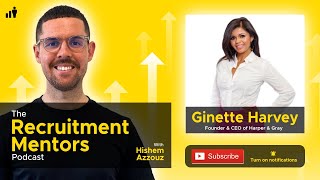
Jeanette Harvey built a 500-person recruitment operation at S3 Group across the US, then founded Harper & Gray. She explains why niching matters, how she shifted from the UK's KPI-obsessed culture to high-growth American markets, and what leadership actually requires: role-modeling, coaching, and letting billing managers run autonomously.
Chapters
Welcome to the Recruitment Mentors Podcast. My name is Hishem Azzouz. Today I'm really excited to be joined by Jeanette Harvey, who is the founder and CEO of Harper and Gray. Harper and Gray is a recent recruitment business that Jeanette has launched, and their mission as a company is to partner with companies on their journey to create more diverse, equitable, and inclusive organizations. Before that, Jeanette launched her own business. Before she launched her own business, she worked for the S3 Group for over a decade, initially starting with their Huxley Banking brand, which she built from the ground up, with her latter years being spent on their Real Staffing brand, which is one of the biggest life science recruitment brands globally. Jeanette consistently led the brand to double-digit growth and along the way has been recognized as one of the top 100 influential staffing leaders in North America by SIA. Jeanette, thank you for joining me on the podcast.
Thanks for having me.
Been really looking forward to this one, and where we always like to start is, in your opinion, what characteristics and traits do you think make up a highly successful recruitment consultant?
Yeah, so no substitute for work ethic. I'm sure that probably comes up a lot, but recruitment is hard work and there's, there's no, there's no getting around that. But I think really a willingness and desire to connect with people on a human level. So that ability to build rapport, to actually be interested in people, to do what you say you're going to do. I think there's a big piece around personal brand that kind of goes right alongside that. So being sort of fiercely protective of the service that you are going to be offering both your clients and, and candidates, because that's, that's the collateral that you take with you as you build your career.
Really interesting. So I'm really excited to sort of unpack your journey. I've been seeing a lot of the things that you've been sharing over the last sort of 6 or so months. And so just for people listening, for, for context, you really built your recruitment career which you spent over 10 years at the S3 Group, right? As you were sharing with me before, spent a year in the UK but never on UK markets. You've always been focused on the American markets. And then in 2005, you actually took your career to the States and co-founded the S3 Group over there. And then whilst your time there, you ended up obviously managing and leading multiple brands. So I'm really excited to unpack that. And I guess where I always like to start, because there's always a story or two there, but like, how, how would you describe your first year in recruitment? What was that like?
Yeah, so I've been with the S3 Group for 15 years and I joined there in 2005. And so it was quite interesting that first year in recruitment because It was based thousands of miles away from my client base. I built the US banking business from London. So, that was some pretty antisocial hours, as you can imagine, and a few sacrifices that came alongside that. But it was really, really exciting because back in 2005, there really weren't any UK recruitment companies to speak of that were in the US. I mean, S3 really cracked that market. And so it was exciting to have a blank slate and really have, you know, the— okay, it was the States. It felt like the world was our oyster at the time. And yeah, there's something to be said for, you know, building a reputation and a brand organically. So although we had made a lot of traction with, with some big players in the UK that didn't necessarily translate to doing business with them stateside. So it was really a lot of business development, building out a really solid candidate niche, um, and, um, and, and really, uh, really, really putting in the, the work, um, kind of long term to sort of build and establish the business.
So, you mentioned it a bit there, but whenever we have sort of recruitment professionals from the S3 brand on here, I'm just always interested to hear people's opinions or the way that they would describe the business because there's so many stories of the S3 Group and what sort of was achieved within that business. Like, when you was— before you obviously moved to the US, What did that business sort of feel like? What was the culture like? How would you describe the culture when you were working there in the UK, out of interest?
Yeah, and the culture of S3 has, without a shadow of a doubt, really evolved. Back in 2005, I would say the word that comes to mind is pretty hardcore. Really? You know, it was high, high levels of discipline, and it was, you know, very— It was kind of long hours and, you know, it was a KPI-driven business. I'll be honest with you, for me, I'm extremely kind of self-disciplined anyway. And, you know, any standards that were sort of imposed on me, I've always exceeded that anyway. So it wasn't really, it wasn't an issue. And I quite like the idea of a simple blueprint, so coming into the business and kind of knowing if you do the following activities, right, to a high standard, you'll be successful. That there's something quite reassuring in that. So it really works in a very candidate-driven way. And yeah, it was amazing. I mean, for me, within my first 9 months, I hit S3 top rookie and I got flown on a private jet to the opening game of the World Cup. So that really set the scene for my career with S3 and it became very difficult to top that, let's say.
Yeah, I can imagine. So, so you mentioned that. I'm just, I'm just curious, Jeanette, you mentioned that you're someone that hold yourself to quite high standards anyway. Where, where's that come from? Out of interest, have you always been that way or how come?
Yeah, I am. I've always been that way. I grew up with very little. And so I think when you grow up with very little, that definitely impacts your mindset. And I've had to work extremely hard for everything that I've had. But I never took for granted the option or the ability to be able to do that. I was grateful for the opportunity and I made the most of it.
Yeah, fair. Okay. So a couple of things and then we'll sort of segue into you actually going over to the States. So I would say I think a lot more of it is happening now. But before COVID I would say most aggressive or progressive recruitment businesses would have had sort of US on, on their business plan in terms of diversifying their client base and these types of things. So I guess I just wanted to ask you, there'll be people listening to this that may be early on in their journey in building out a US market for their business, etc. So just curious to hear from you, like, what were some of the things that I guess you had to maybe learn quite quickly the hard way that you had to sort of adapt to the nuances of dealing with the US market? I don't know, does anything come up there that sort of sticks in mind where if you had someone new join in your team or one of your teams where you'd say this is sort of how the US do business here? I guess you've already done it, to be fair, so you haven't got much to compare to the UK. But I don't know, I guess what comes up for you that may be slightly different that some of us that have always served the UK market or Europe markets may not understand or would have to learn the hard way?
Yeah, I think going into the UK market, going into the US market from the UK market, there's obviously such a vast difference in the size of the markets. It's huge. And you can get really— that could almost be quite overwhelming. And where I've seen other people come and try to replicate what we did and not be successful often it's been a lack of focus. So it has been, you know, trying to go at too much, um, and, uh, and really kind of feeling the effects of the overwhelm of exactly how big that market is. I think it's important to go in on, on a tight niche and to, to really understand what your proposition is and, uh, you know, to, to sort of build a, build a brand, build a candidate community, um, and and really expand and grow through that. Sometimes it can feel quite counterintuitive to go quite narrow, but I think in this instance it's a really smart way to approach it.
Sure. So just on this, because I'm sure you've done a lot of this as you were growing the brands and the teams, but would just be interested to get your take on this. Obviously, you'll be aware that I'd like to think that a lot of recruitment companies have this idea of sort of inch wide, mile deep and niche, right? So I guess like from your perspective and your lens, like what, how niche is niche enough, if you get what I mean? Like when you say you have to have a real focus on niche, like how, for people listening, like what does that actually mean? Is it, am I just doing one job title, one sort of seniority in one sector, or I don't know, how do you sort of communicate and feel about what is, is niche enough?
Yeah, you need to— obviously it's, it depends entirely on the sector, um, and, uh, and, and really the domain that you're looking at. So you, you need to, to be able to take stock of what the candidate demand looks like in, in that marketplace. But obviously start, you know, the smaller that you can you can start. It's easier to kind of expand the parameters than to kind of go the opposite direction. But I think that you're really at minimum looking at a specific practice area, right? So if you're doing life sciences, for example, you're probably going to want to pick pharma or medical device, for example, and then quality or regulatory within that. And that's got to at least be— that's got to be your minimum level of kind of niching down. And you may well target specific job titles within that.
Okay, that's good to know. Quite practical, but I know that will help a lot of people listen to this. So final question, I guess, on sort of early days. I'm always interested to hear sort of answers to this. It seems like you had a real positive start, but if you were able to go back to 2005 and give Jeanette any advice, what would you say to her out of interest?
To enjoy the time that you are an individual contributor. You know, it was, it was probably one of the most enjoyable times of my career. I love leadership, and I spent a long time in leadership, but there's something to be said for being able to see that direct correlation between, you know, I can change the outcome of my business through what I do today, right? So the actual gratification is quite immediate. And So yeah, I think, I think enjoying that while I could, that's probably what I'd go back and tell myself.
Yeah, really interesting. So, so just, just to paint the picture for everyone then. So obviously, I guess the first thing that I'd be interested in, because obviously you took your recruitment career to the States in 2005, right? So not long after you joined the Esprit Group in 2004. So I guess my first question really, obviously you mentioned there the high standards and with that would have been sort of internal competition. Like why? It seemed like again, you got off to a really great start, Rookie of the Year within 9 months, etc. But like, why was Gennadiy able to get that opportunity to take the S3 group to North America and start that? Like, why was you trusted with that opportunity out of interest? Why you and not the person sitting next to you?
Well, number one, that's what I was hired to do. Okay, that helped. But, um, you know, I mean, realistically, I'm sure the company wouldn't have invested in actually taking me and getting me a visa if I hadn't come in and shown what I would be capable of doing on the market. I think recruitment, there's no way of getting around this. It's a performance environment. And, you know, It's not that there's, there's no hiding from performance. And in the early point, certainly from a leadership perspective, I definitely look at attitudes and inputs and just ability to, to kind of push yourself and, and get outside your comfort zone and to make the difficult phone calls and things like that. And I think it was, it was probably the same for For my leaders, when I was, you know, first in the business, I was not afraid to make the difficult calls. I wasn't afraid to push myself out of my comfort zone. I was always willing to learn. I had a good attitude. And those things alongside performance are, you know, really what you would look for when starting out a new venture, a new business.
Yeah, no, I love that. And so just, just so we all understand and for those listening, so when you— so where did you then base yourself when you went to America?
I was in New York.
Okay, so you went to New York. Cool. So just, could you just— would you mind just painting a picture of the actual— the business that you were starting? Like, how many of you went over? Was it just yourself? Like, what did the actual business look like that you were starting in New York at that stage?
Yeah, so the business in New York, there were 5 of us that moved over in this sort of initial team. And my responsibility was to build out the banking technology business. And, you know, that was interesting. We were kind of a perm-only business for really the first couple of years that we were out there. And I built a, a really high value, a really high value business effectively. So, um, we spent a lot of time really deciding and picking, um, quite thoughtful niches that would not only generate sustainable revenue for us but would also open up the doors to the broader client as well. So I think there's a huge benefit to picking, um, you know, the, the sort of verticals where the client really, really needs your help, right? Is not only, uh, can— does that mean you can command, uh, quite high fees, but it also means that the client, you know, has a different level of respect for you if you're able to deliver in, um, in a vertical that is, is so difficult. That means that it's quite easy to get access to, to kind of the broader jobs and to kind of penetrate the clients from there. And so, that's kind of exactly what we did. And within 12 to 18 months, the team in New York, the banking technology team, it became the most profitable perm team globally in S3. And it sort of continued on that track for the remainder of the years that I kind of led it. So, it just really went from strength to strength.
So, so on that, a real popular, a really popular sort of area that a lot of recruiters message me that they're— and I'm sure you found this in your career when leading teams and things— but a lot of recruiters message me always asking for me to ask people like yourself for advice, practical tips on, on the client side. So I guess the question I have for you to sort of try and encourage you to share some of the things that you've learned in your career is During that period then, it seems like you were really strategic, which is, I think a lot of people probably even missed that part. But like, what was, what ended up being like your most effective way to win business and build these relationships that then meant that this was the, ended up being the most profitable part of the es free group globally? Like what, I don't know what comes up for you. What really works for you?
I mean, it's exactly that. It's a two-step thing. It's going in, with something that is really valuable for the client. So what are a lot of the mistakes that a lot of people make is their outreach is literally knocking on the door and saying, hi, I'm, I'm, you know, Mr. Recruiter, uh, you know, do you have any jobs? You know, and it's nothing more, you know, it's not more sophisticated than that. And the reality is that there's you and another 100 recruitment companies that are doing that. And so for me, the outreach to clients is never about me. It's never about, will you work with me? It's always leading with the value that I can provide to a client. And so if you— the benefit of really niching down is from an industry perspective, you understand the trends, you understand where there is, where it's candidate short. And when it's candidate short, then you can take your candidate to market and feel confident that you're— that the client is actually really going to be interested in what you have to say because you're going to solve a problem for them. And so taking that approach is, is really the way to open the door with a client. And then when you open the door with the client, you stand and fall on your service, right? So you need to make sure that you, um, you know, you, you do what you say you're gonna do. So not only you kind of delivering on that particular search on, on that, that particular job and, and, you know, possibly the candidate they were originally interested in. But that's how you then develop the relationship across other verticals, and, and then it becomes much more, um, you know, lead sales through service.
Yeah, no, I really like the way that you put that. So, so as, as you shared with us, that became a really profitable part of the, the business globally. So then when, by that point, was you then more on a sort of in the leadership capacity than you were a contributor capacity or just help me out on that sort of journey. When did you then start getting involved with leading other brands? Like when did the sort of real leadership piece come into it?
Yeah, so probably for the first 3 years with the company, I did a hybrid role. So individual contributor and then sort of individual contributor and manager. A lot of people find that quite a difficult job to focus on their own production and hire, train, and manage a team. I personally found it to be one of the easier leadership gigs because I think people really underestimate the power of role modeling, of being able to just show people how to do the job. It's actually easier than telling people how to do the job. So I quite enjoyed that. But then after about 3 years, we were really in high growth mode. I mean, to give you an idea, we started out, as I said, the kind of the 5 of us that ended up being kind of 2 of us, um, that, that kind of stayed with the business long term. And so take— we grew that business from, you know, no people to 500 people by the time that I left. And so that was, uh, you know, just a ton of, a ton of growth during that time.
Yeah. So, okay, that really paints a picture. Thank you. So I guess there's a couple of things that— there'll be a lot of people that listen to this that really aspire to go into leadership. So I just want to ask you a couple of questions on that. And I think you alluded to it straight away because I'm sure you've helped people overcome some of those challenges. Like, I've— a sort of common phrase that I've heard be chucked around in industry is that a sort of billing manager— being a billing manager is one of the hardest roles in the industry, right? But like you said, actually sort of looking back or now when you then end up leading teams where you were just in the leadership role rather than leading by example, that's one of the great positives you have when being the billing manager. But what I always hear is, is the sort of management of the self-management of time always tends to be like, that's what I keep hearing when I speak to billing managers. It's how much time should I spend with my team without the detriment of my own performance? And I'm sure you've helped people with this in your career. So I guess if I ask you, I don't know, what sort of self-management systems or time management systems did you live by when you was, when you was a billing manager that really worked for you, or you've helped other people with? Does anything come up for you on that?
Yeah, I think you have to work in a really green way when you are a billing manager. And so for me, it was always about Your job is to get people to be able to, to do this job very well without, you know, autonomously. And so where you will see, I think a lot of people really struggle with this is they're not really setting their people up to do the job autonomously. Like they're jumping in and doing stuff for them, whereas for me it was kind of a simple process of, you know, breaking down, you know, what are all the different elements and components of this job? And, you know, you train people on it. And when you train, don't just train one person, train more, you know, train, train everyone, even if that means you're giving people kind of a refresher. It's training people it's them seeing you do it. So, you know, why would I ever be taking a job spec, for example, without having someone on my team listen in? If I know that I know how to take a brilliant job spec, why am I going to do that by myself? And then, you know, not use that as an opportunity for training. And then the same thing, right, is, you know, you've seen me do it and now I'm going to support you and give you feedback on yours and really what you're doing as time goes by is you're checking the competency boxes for these people. So over time, there's sort of less and less support that you need to give. And if you know you've trained someone really well, then you can also use them as the role model and, you know, as support for kind of the broader team. So I think it's all about do it properly with the the first people that you onboard work really green, and actually those initial people, they'll be super competent too, and that's how you grow a team effectively. You don't do it alone.
Got that. Okay, so a few sort of couple of things on leadership that I'd love to ask you. One is, obviously, as you said, you scaled this business to obviously around 500 people by the time that you left. Now, that involved obviously multiple brands. It wasn't then just the, obviously, the banking brand that you essentially earned your stripes in, let's say, for lack of a better phrase. But I've got a question for you, like, how, how did you approach leading teams that you'd never recruited for? What was that experience like? Because I think people listening to this are probably people that are aspirational, maybe in the leadership, maybe open to taking head of director positions in other companies, but that may be in for a different sector. So I think it's quite interesting channeling. I've had a couple of people ask me about it to ask people on, on this show. So what, what's been your experience in leading teams that you never actually recruited in yourself, out of interest?
I mean, that's the difference between having a big business, right, is that if you want to have a big business, then I mean, it's ludicrous to think that you are going to have recruited in, in every single person. Also, you have to have processes and structures, and structures to be able to apply a really good strategy and, um, and structures around execution. And if you've got— if you know how to evaluate, is this a good market, same set of questions, right? It's the same set of questions that you're going to apply to any market to sort of understand, is this a good market? What's the dynamics of that market? Is it candidate-driven? Is it job-driven? What's this— what's the client— what should the client strategy look like? What should the candidate strategy look like? All those different things there, that's about having, having having the right processes and the right questions. And so you don't need to know a business intimately, you just need to know what you need to know in order to be able to make smart decisions.
Yeah. So yeah, yeah. So I guess what you're saying there is focus on those things that you have experience in rather than trying to sort of be perceived as the expert in that vertical or whatever, double down on the things that have— yeah, will show up in the verticals and markets that you have managed or recruited in in the past?
And then, yeah, okay. I mean, yeah, I mean, at a point at that stage, your expertise is leading recruitment businesses to growth. And so the, the point isn't actually about how detailed your market knowledge is of each of those different verticals. I mean, when you look at, uh, some, some pretty, uh, senior C-level executives within some of the large recruitment companies, including the current CEO of S3, no recruitment experience at all. So, you came from completely different industries. So, the further that you go up the chain, actually, it's your leadership expertise, it's your strategic thinking, it's your approach to risk management, it's your ability to manage a P&L, it's, you know, your, uh, people strategy. Those are the things that become important, and the, the, uh, the, the, the ins and outs of, you know, a recruitment market are less important. And I appreciate that it's iterative, right? Depends where you're at. But if people can get their head in the game of, you know, I need to start to add value to the recruitment process without intimately knowing these markets, if I want to continue to kind of rise up the, you know, through the ranks, then I think that's a good way to start thinking to get you to that point.
Yeah, got it. Really, really well put. I have to ask you this because you've been involved in leading so many people, and I think it's something that a lot of managers and leaders think about in recruitment, but what What's been your journey in like getting the best out of your teams? When I say to you, Jeanette, how have you got the best out of your teams? I know there will be nuances to particular individuals and teams, but what comes up for you there? Like what typically has sort of really helped you get the best out of your teams out of interest?
Yeah, I think leading with empathy is really important. Sometimes can feel a little bit cliché, but I think it is important and leading with empathy, it doesn't mean that you don't have high standards. It doesn't mean that you don't hold people accountable. I'm big on accountability, accountability for myself and accountability for my teams, and we've always had very high standards. But if those things are in place, then the way that you lead, motivate, empower, coach— so I lean heavily on, on coaching to get the best out of people, uh, that, you know, those things, that's really kind of the, the method to get to that sort of destination. And so I think kind of treating people with, treating people with respect and kind of supporting them, meeting them where they are is really important and giving really, really clear expectations. So that's not one to be overlooked. When I support other leaders, you know, and they're struggling to get the best out of others. When I really do a bit of a deep dive, there's just disconnect in expectations. So, you know, the manager wants one thing, but the other, you know, the employee just isn't clear, right? There's just, there's not that, there's not crystal clear clarity of expectations. And so that's something for me is that, I never would have people in my team not know what I expected of them because that's where you, you know, everything flows back from, from that really.
Yeah, that's a really good point. I'd love to know if you were to, if we were to take a random recruitment business and we were to say to the consultants of a 5 to 15 person team, like, do you know exactly what you need to do this month that your sort of team or leadership requires of you or expects from you? How many people would be able to answer that in a really crystal clear way? I need to pull, do this, like, that would be really interesting actually. I think that's a really—
It'd be very interesting. It'd be a very interesting exercise and I think that percentage would be extremely low.
Yeah, yeah, yeah. I think that'd be really interesting. So what I wanted to ask you next then is what, what's been your And you like, what's been your journey with imposter syndrome? Because I feel like you've, you went on this journey and you strike me as someone that really took it in stride. You have high standards, you've continued to work on yourself. You don't strike me as someone that wasn't willing to ask for help. Like, I don't know what's been your journey in overcoming or having or even experiencing imposter syndrome as you sort of continue to lead more people and we're doing more things that are a lot more first. I don't know what's been your journey with that.
I think anyone who says that they don't have imposter syndrome is either a liar or they're not sitting at different tables, because the reality is, for me, imposter syndrome definitely shows up when you do those firsts, as you said. So actually, the more ambitious you are, the more you put yourself in situations where you're in different rooms and you're sitting at different tables. And of course you have those moments where you're like, oh, I shouldn't be here. And I've had those moments before. Actually, over the last few years, I've had quite a transformative journey with imposter syndrome where I realized that, you know, you can only be an imposter if you're trying to show up as someone other than yourself. And showing up authentically as me and really leaning into what I bring to the table and who I am has really meant for me that that's kind of, that's sort of gone away because I'm not trying, I'm not trying to anticipate what people need from me. I'm not trying to anticipate like who I should be and just, you know, trying to gloss over that extra kind of 10% or just I just show up authentically and quite fearlessly as me. And I think it translates better as well. Like, people, people buy into authenticity.
No, yeah, I really like the way that you put that. And I guess part of that then, which I'll be interested to hear your sort of journey with, apart from you to really understand how to authentically lean into you being you and what you bring to the table, requires definitely a good sense of self-awareness. And understanding what you like, what's been your journey with sort of cultivating self-awareness and understanding what does, what value do I bring in this, in this boardroom and this context? And yeah, what's been your journey of cultivating self-awareness out of interest?
I'm going to be honest with you. I actually think imposter syndrome is probably linked with high self-awareness. So it's not people who, people don't have imposter syndrome who are not self-aware. When you've got imposter syndrome, is because you're actually very aware of where you are and what you're experiencing. You think quite critically about yourself. The people that are completely oblivious and have a total different self-perception, they don't have imposter syndrome. They're the people that sit in the rooms and kind of make a bit of an idiot of themselves, right? Because they think they're much better than they are and their ego comes through. So yeah, like for me, I'm, I've always been incredibly self-aware and it's more actually about, I think for a lot of people who are trying to conquer this is about conquering perfectionism, conquering being too self-critical on themselves. Like those, those are the things that you need to focus in on.
Yeah. No, interesting. So I feel like we've this has been quite positive so far. So obviously, as we know, recruitment comes with highs and lows. So talk to me about if when I say to you what was like the sort of toughest part of that journey in America and working for the S3 group, like what, what comes up for you and like what helped you work through it?
Yeah, I mean, I'll be honest with you, I've had a really great— I had a great experience at S3. And I'm quite resilient, but, you know, I moved to Chicago in 2011 and set up that region for S3. And there was a little bit of that, that was, it was very under-resourced and, you know, there wasn't a ton of support. And I think the company's perspective were, you did it before, frère, you can do it again. So, they kind of would divert a lot of resources to other areas. And I sort of felt a little bit like, you know, because I can do it doesn't mean that you shouldn't support me better. And there was something to be said for, you know, I just, I felt like I'd done this already in New York and then starting all over again. I think you definitely have to check your energy level for, you know, starting something new and starting something new again, because it is like there's only so many times I think that we can go through that same journey. And so fortunately, the Midwest became, you know, a hugely profitable region for S3, but it was definitely tough kind of starting again and not working with very much.
Yeah, okay, fair enough. So I'm really excited to go through the sort of early stages of you starting your own recruitment business. But I guess just a couple of things that could translate to also part of your mission with your own business. But I have to obviously speak to you about this, and that's sort of women in recruitment, right? So I think from what I can see from your brand, you do a really great job of talking about this as part of your brand. So why don't I share with you just some of the things that I've sort of learned from sitting down with people like yourself. So what I've I've come to find is that when I speak to, um, women in recruitment, it seems like— and I think hopefully I feel like this, this could have really changed and shifted over the last sort of year or so— but I've felt that when I speak to women who have ended up in the leadership position, they've, um, found it really difficult to get there because along the way they would have had to make some really difficult decisions on the crossroads of starting a family then that sort of pegging them back with their career and finding it back hard to get to the sort of senior position where they work really hard to. So that seems to be a real common challenge for women, which I feel like could potentially impact more women in leadership and senior positions. I'd like to think the sort of flexibility and remoteness that's come with the past sort of 18 months or so could hopefully really impact that. And then the other part Is there nothing which you spoke really well about? Whenever I've spoken to women in recruitment as well, one of the common things that I feel women talk more about than I think men is, is that sort of navigating with imposter syndrome and maybe not being as willing to put their hand up for that promotion or think that they're deserving of that promotion. Whereas men probably still have those same feelings, but more willing to put their hand up. Yeah, I'll do that, even though they're not the finished article or whatever. So I guess, I don't know what's been like, you're obviously a great story of this, but a lot of people sort of in their own recruitment business don't have female role models that they can look up to and go, wow, Jeanette's achieved this in my business. That's sort of someone that I'd really like to aspire to. They actually have to become that role, that be driven by becoming that role model themselves. So I don't know what, how, I don't know, how do you feel about sort of women in leadership and senior positions in recruitment? Is that something that is going in the right direction? Like, what more work do you think we have to do there, and what are some of the reasons why women are probably underrepresented at that level?
Yeah, I think there's a lot that you kind of say there. You know, first of all, clearly there is a lot of work to be done. I mean, just saw a set of statistics recently, you know, for kind of US staffing firms, and the number of women in kind of senior executive roles was quite pitiful, right? So even when we're talking about making progress, yeah, we're making steps forward, but the numbers still don't look very good. So, so yes, there's, there's a lot of work that needs to be done. Um, yes, there are still barriers in place for women who want to have a family, and often that's just about how they're perceived and how their commitment's perceived, and people taking opportunities away from them because they're assuming rather than, than can ask So there's all of those things. You know, you talk about men, you know, are they going to ask for promotions? I mean, when even something as simple as pay rises, men ask 4 times as often as women. So, you know, it stands to reason if you ask more, then you get more. And I think exactly the same thing applies to kind of promotions and, you know, some sort gender bias and gender-specific behaviors kind of come in where women are far more likely to wait to be recognized, or if they get told to, you know, we're going to work on this promotion for the next 12 months, then they'll sit and they'll diligently work on it. Whereas, I mean, I've experienced this myself where, you know, men are lobbying for exceptions kind of left, right and center. And if you don't, if the organization itself doesn't hold firm to those same standards, that's where this becomes really difficult, right? Is that if you're in a company that says, you know, we don't make any exceptions ever, then it's a level playing field. But if that's not the case, this culture of exceptions really, sets women up in particular, I think, for failure because we don't tend to generally not ask for exceptions and we don't really do the whole self-promotion thing. So I think a few different things to kind of combat that. One, I think there's a lot more visibility and discussion around this now, which is definitely helping to shine a light on this and is actually kind helping women to navigate and self-manage different. It's also helping leaders and managers to kind of do the same thing too, is to kind of be so much more aware. And in turn, that means that there's more— people are trying to be more equitable in how they're managing men and women. But then, you know, right alongside that, You know, you've also, you kind of mentioned this mentoring and kind of role models. I think if women can understand it's a big world out there and it took me a while to realize this too, you don't just have to look for role models in your own organization. There's tons of places that you can get mentors and it doesn't always have to be a recruitment mentor. You know, one of my early mentors was someone in a completely different field and that was great because I got got a totally different perspective. So I think just really surrounding yourself with positive role models, you know, irrespective of the industry, can also really help shape your thinking and your own development.
Yeah, I love that. So obviously this is part of the, the puzzle, but like, obviously let's sort of talk about— obviously that this is a big part of your mission with your own recruitment business now, isn't it? And helping organizations and with diversity, equity, inclusion. So I guess, so again, giving you context of what I've sort of, sort of experienced from speaking to recruiters, this is what seems to be happening. Although there are, I feel like, more and more recruiters that have been really proactive, but the experience that I seem to get from recruiters is that when it comes to diversity, is that then they're not invited to the table with their clients on the actual topic of of how can our business employ more diverse talent and where recruiters are then sort of experiencing the diversity pieces, their clients are going, we now need to, we need to start seeing diverse shortlists and diverse candidates. And because they've been nowhere near the conversation or even been invited to the table because they've never brought this conversation up or topic of conversation up, recruiters then turn around and going, how the hell do I do that? How do I start attracting and communicating and building relationships with underrepresented talent? So I guess, like, from your sort of journey and like, where can recruiters start with their diversity journey? I'm sure you'll get this asked a lot, but like, where— like, I'm sure a lot of people listen to this. I personally feel like a lot of people generally do actually have the right intention Yeah, but actually don't know where to start. And so we're also quite worried about standing on the wrong eggshells and asking. I don't know, there's obviously there's a lot of things, but I feel like a lot of people don't know where to start. Yeah, I guess. Where would you encourage people to start if their intention is there, which is probably one of the most important things, that their intent is the right thing rather than this coming from a place of being a tick box exercise and just doing it to make one person happy.
Yeah, well, listen, I would go back to what I said at the beginning of this conversation, right? We're there to solve problems for our clients. So if people say, I'm not invited to that conversation, well, why should you be? Right? You are there to solve your client's problem. And so if you're engaging properly with your client from the very beginning, you'll be asking them questions, right? So from a talent perspective, what are the top 3 priorities for you? What's most important for you? You'll be having those kind of conversations and right up at the gate, the client's going to be saying, in, you know, diversity, equity, inclusion, right? Because that, that is, that's, that's the common challenge right now. And then you can have a conversation with, with clients and actually come up with, with kind of a solution together. So the first thing I would say is if people are finding themselves on the back end of that conversation, then you're probably not doing a good enough job in, um, in, in really kind of finding out what's important to your clients early on in the process. And then secondly, You know, if a client does say, this is my priority, you're not, you know, as recruiters, we're not sort of there as order takers, right? So if ever you find yourself in a situation where it's just kind of a shopping list, like, go away, bring me that, then again, something's kind of gone wrong. So if you're in a space that you really understand, you should be able to tell the client what the demographic is like. You should be able to come up with solutions together to kind of support that. And it might be that you shift in the conversation with a client. You're saying, listen, I can help you find diverse talent, but that means that we're taking away the speed element, right? Which is completely fine with, but we need to, you know, you want a client to work with you exclusively, right? Because going away and finding a diverse slate of candidates, that takes more time. That's not about just going into your database. It's exactly what you said. You're kind of cultivating relationships, you're going that kind of extra mile. And so the, the sort of conversation and, and the, the tone of how that search is, is going to operate needs to be very different.
Yeah, okay. And then obviously, as we come to, to the end here, talk to us about, obviously, yeah, like, huge, huge step in starting your own recruitment business. Worked for one organization, as you said, for, as we've discussed, for 15 years. So I'm sure you obviously possessed a lot of confidence that you could do it, but at the same time, it's again stepping into that unknown. Like, how, how has it been so far? Obviously, you started that journey in April this year. So how, how has it been so far?
Yeah, it's early days. So I started Harper and Gray, very purpose-led. So, you know, the idea really being able to address talent while putting diversity and inclusion first and kind of solving for that in a more holistic way. So supporting clients with diverse slates of candidates when it comes to hiring, helping them to develop equitable hiring processes, and then actually also performance and executive coaching for their leadership teams who need to lead in a more inclusive and kind of empowering way. So sort of those that, that kind of end-to-end is really looking at different ways through the sort of talent chain and the talent process to be able to solve for diversity, equity and inclusion. So I feel very passionate about it. It's a topic and an area that I feel I've got a lot of kind of expertise in now and really being able to put my my, uh, experience, all of my recruitment experience, kind of into something that feels very mission-led, uh, you know, feels great. But it's been, it's been 4 weeks, it's been crazy busy. I've already signed up my first client and, you know, ton of, uh, you know, ton of interest and a ton of support for the, the mission of the, of the brand. So I'm, I'm excited to build something that also feels quite scalable to solve a very, very large problem. And, um, and yeah, so, so far so good. And I'm sure that, you know, ask me in another 6 months and, you know, there'll be a whole host of, uh, of other kind of emotions. But, um, you know, I, I, I'm not new to building a business. I'm new to building my own business, but I, I think there's some, some benefit to to having done this for an organization because I know that it takes time and I've got a ton of patience and kind of got the t-shirt, I think, for this.
No, I'm really excited to see it grow from afar. So before we finish, I've just got a couple of sort of quickfire questions to ask you. Before I do that, just very quickly, Um, I'd be silly not to ask you this, but as we come to the end here, obviously you've worked in the American market for some time now. Like, what's, what's your sort of overall feeling towards the American market? I mean, I'm definitely speaking to more and more UK-based recruitment businesses that are continuing now with their plans to get into the US. Like, I don't know, what's the sort of overall perspective of the US recruitment market? Is there still plenty of room for UK-based agencies? Really?
Yeah, there's plenty of room.
Yeah. Okay. So feeling positive?
Yes, definitely.
Yeah. Nice. So last couple of questions. So the last couple of questions I have for you. The first one is, if you could change the industry, what would you improve?
I'd change people's approach to, to, to clients and particularly to candidates. I think it's a human— it's a business that is so heavily reliant upon human connection, and I don't always think that there is an appropriate level of kind of respect and empathy for the fact that changing jobs can sometimes be one of the biggest decisions that a person will make. And I think that there's a lot more room for empathy and a better experience for people.
Sure. Next one. So what book have you read that's had the biggest impact on you? Do you think it could be if you don't read, maybe Audible podcast, but what have you sort of consumed or read or whatever that's had a real impact on you, do you think?
No, I do. I really enjoy reading. There's a couple actually that I've read recently. So Reboot is one of them. And Dare to Lead, Brené Brown is the other one.
Nice. Okay. It's a bit of a less serious one, this one, before we finish. So what did you spend your first biggest commission paycheck on?
I think paying off all my credit card debt.
Really?
Lovely.
Awesome. So look, final, final question, Jeanette, and that's what, what's the ultimate goal for your recruitment career?
My ultimate goal is to build a business and a brand that I feel really proud of and that is actually making a real demonstrable difference in the world.
Amazing. Jeanette, it's been an absolute pleasure. Thank you so much. I'm excited to see where your business goes. Thank you.
Thank you.
More from Hishem




You don't need as many clients as you think to bill $1 Million A Year In Recruitment



From 30 Direct Reports to Back-to-Back $1M Years as a Solo Recruiter with Zach Creighton



