Guy Walker - Why ADHD is his superpower and key to running multiple brands and markets
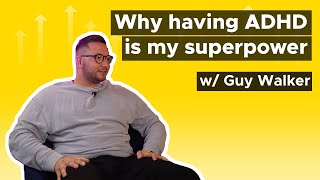
In this episode of the Recruitment Mentors Podcast, host Hishem Azzouz interviews Guy Walker, the CEO and founder of Talentia Group, a recruitment umbrella that now houses nine specialist brands across sectors such as education, engineering, finance, healthcare, sales, marketing and a US operation. Guy recounts how he launched the business in May 2018 with just £15,000, driven by a family‑first ethos after the loss of his mother. He outlines the three traits he believes make a top recruiter – hard work, resilience and passion – and explains how his own ADHD functions as a professional super‑power, giving him the energy to spin multiple plates. The conversation covers the severe impact of COVID‑19 (a £150k loss in year two) and the strategic pivot to diversify risk by creating new brands (finance, construction) through a people‑first hiring model that matches passionate candidates with bespoke market opportunities. Guy details the repeatable blueprint he uses when entering a new market: deep market research, a 6‑12 month focus on culture, onboarding, and a standardized training cohort that allows recruiters to move between brands while retaining core processes. He discusses the challenges of maintaining a unified culture across multiple locations, the importance of consistent onboarding, and the role of non‑billing staff in supporting dispersed teams. The interview also delves into Talentia’s merger and acquisition approach, highlighting cultural fit, financial due diligence, and clear exit expectations as non‑negotiables. Guy shares personal health transformations – losing weight, traveling abroad to “buy back time,” and prioritising his own wellbeing – and how that human‑first mindset feeds into the company’s growth plan to reach 300 employees (250 consultants, 50 support staff) within six years, with a focus on employee home‑ownership and risk mitigation. The episode ends with Guy’s commitment to continual learning, listening to feedback, and scaling the business while staying true to the core values of hard work, resilience, passion, and people‑first culture.
Chapters
Welcome back to another episode of the Recruitment Mentors Podcast. I'm your host, Hishem Azzouz, and on this week's episode, I was joined by Guy Walker, who is the CEO and founder of a business called Talentear Group. He started this in 2018, and now they have 9 recruitment brands within the group and an umbrella company. Within this group, they operate in markets such as engineering, education, healthcare, sales, marketing, and they have around 90 people across the group. I absolutely love Guy's passion, enthusiasm for what he's building with his business, but also for his career and what they're trying to do at Talentia Group. We spoke about so many things from leadership, from spinning loads of different plates, from how Guy has continued to have to evolve as a leader and how he's got way better at building a blueprint and backing people to go into different markets and so, so much more. Enjoy the episode. Guy, welcome to the podcast.
Thanks for having me on. I'm really excited. I've been looking forward to it for a few weeks.
Yeah, thanks for making the trip. Where have you come in from? Because I know you're— you just find yourself in different parts of the UK.
It was Manchester into Bristol into London, which was an exciting drive. As you can imagine, the M6 is a car park.
So I'm really excited to sort of unpack this journey that you're on or the journey that you've been on so far. And I guess I always sort of think it's useful for people listening just to understand like where you are today, some key parts. If there's anything that I've missed, fill it in. But just to give people context, you have your own recruitment business, a group of companies which is called Talentia Group.
Yeah, Talentia Group, yeah.
There's 9 recruitment brands within that and an umbrella company which all started in May 2018.
Yep.
So the different brands within that, in terms of the sectors they operate in, we've got engineering, sustainability and tech, finance, education, healthcare, sales, marketing, and you also have a US operations team as well.
Yep.
And I think you also mentioned around the talent here and management services as well within that. You've got circa 90 people across the group, 60% lent to contract business, 40% perm. And you start this business on your own, but then quite early on brought on a really good friend of yours that I'm assuming came in that sort of director level.
Yeah, yeah, he's the other director, so it's me and Elliot Redmond.
Okay, so a lot to unpack, my friend.
Loads to talk about, loads and loads.
But I guess where I always like to start is the million-pound question, and I think it's something that a lot of people think about, particularly when they start their own recruitment business journey. So I'd love to hear your take on the characteristics and traits that you believe make up a highly successful recruitment consultant in today's market?
I've got to stay true to form, there's a, there's a Talentsia brand answer that will really encapsulate what we look for, and then that's what I am and what my team are. So we look for 3 things, and they're probably mimicked across the industry, but I look for hard work and examples of hard work and delivering on hard work. That doesn't have to be 90-hour weeks, it doesn't have to be like really pushing yourself or like not sleeping for a week, You can just be someone that is willing to put in a shift when you need to. There's a big glorification of overworking and working for 15 hours a day and really burning yourself out, and what you actually need to do is work hard when you need to and rest when you don't need to. So we look through examples of people that have put in a shift, come up against challenges, and overcome those, which bleeds really nicely into the second thing that's really, really important, and that's resilience. In recruitment, you get hit up and down, up and down. Everyone will be familiar with the recruitment roller coaster. We sit on it every day, strapped in, ready to go, and I'll be really honest, if you're not resilient, it's not the right industry. There are ways to make it easier, but being able to take a metaphorical slap, take the emotional ups and downs, and being able to push on through that to get the result you're looking for is probably the second most important trait. And the third and final thing, which I think I've got bags of, and that comes across in me, is passion. You really have to give, you have to give yourself, you have to care. There's another phrase there, of course, but you really have to want it and really want the best for yourself. Recruitment is a roller coaster and a ride, but if you get on at the right time and you ride that journey, you'll get everything you've ever wanted from a career from recruitment. It offers a full spectrum career. It really does mean that people can have everything they want from life, and if you're passionate and you care, that will come through in the work that you do, and you pass that on to your clients and your candidates and your colleagues. So top 3: hardworking, resilience, and passion.
I love that. So I really want to sort of hone in and focus on your entrepreneurial journey, but I guess just to, um, touch on it, obviously, how long did you work for another business or other businesses before you started Talentia in 2018?
Yeah, I was a recruiter for a large education business for close to 5 years. I left that business after being quite a high performer. I kind of hit every trip. One of my accolades is I've gone to Vegas 5 times. 5th time was pretty boring, I'll be honest. There's only so many nightclubs you can go to and only so much money you can lose on the table before you're like, right, what's this? So I've been with them for a long time. Unfortunately, I lost my mum in 2017 to a really aggressive form of cancer, and the idea of going back into the same rigmarole, the same work, in the same way, really, really put me off, and I couldn't focus. So I had to go and do something, and the only thing I've ever known really, in the most recent years, has been recruitment. So I went home to recruitment, but not home to the business, and that was a massive challenge at a really difficult time, but it was the only thing I felt was right to do. And we've just cracked on from then, and it's been a hell of a journey.
So that is so interesting. You said, like, so I, like, this is pretty raw and recent, but like literally yesterday I went to my first ever funeral. I'm 29 years old, so I count myself quite lucky. And my girlfriend's cousin, um, it wasn't close to me, but obviously my partner, it's my girlfriend's cousin, she lost her life to a really aggressive cancer as well. She's like super young, super unfair. But like, the only— the thing, just thinking about yesterday and stuff, I don't know if these are some of the things that you felt, was just, just perspective. Like, like you said, they're like, go back to the same job, do the same thing. I don't know, I think instantly you can be brought to like, wow, okay, yeah, life does end. Is, is this all worth it? Do you know what I mean? So did you just spring straight— not straight to that, but you were like, wow, okay, Do I want to carry on doing this, or I don't know?
Why do you work for people, right? Why do you work? You work for you. You work for what you enjoy and what you love. And I found that I loved different things. I used to love the lifestyle. I used to be a recruiter that was out 5 nights a week. I used to love the trips, the incentives, all that stuff that really, when you're new in recruitment, is fun. I suddenly realised I was old, right? And I wasn't old, I was 25, but I felt wise beyond my years. I felt emotionally burnt beyond my years, and I needed to figure out why I worked for someone. I couldn't, I couldn't work for those people. No, I'm not going to badmouth them, nothing like that. I couldn't work for them. I didn't buy into their vision for what they were trying to achieve, and I knew that I could do better, and I could do better for myself. I wasn't going to let myself down anymore working in that same role, in that same place, in that same job. And I knew that I could create something that was truly special, and that's how I set about building what I built now, and it's still true to itself from the time before. It still rides on family first, and that was what I put at the forefront of everything. My mum was incredibly special. She was a very special woman. I wouldn't bore anyone with that, but she was very, very special, and she put family at the front of everything. And so I then put family at the front of everything I did. So now in my business, family first is the phrase you hear 10 times a day. Put your family first. It doesn't matter whatever it is. Family first. And so that—
because I've heard you say then you started this business with £15,000.
Yep.
After your mum passing, and that's what we started.
That came from her, yeah, yeah. She absolutely, yeah, she left me a bit of money in a pot to go out, had a bit of money, friend lent me a bit of money, and we went from there really. It was quite expensive at the beginning for sure, but that money went far. We made it stretch for sure.
What was like, because obviously when I sort of shared with everyone what the business looks like today, like when you started the business in 2018, like did Guy have this grand vision of it's going to be a number of different recruitment brands? Like what was the initial mindset? Was it like, right, let's give this a real go, let's, yeah, get as much money in the bank as we can, let's try and make this a success? Like what was the initial—
It wasn't about money. And that's weird for a recruiter to say. There was this like £100,000 figure. I wanted £100,000 a year. That was like, that was cool, that was, that was enough to live. I didn't need any more than that. £100,000 to some people is a shedload of money, £100,000 to others is not. I wanted to build a company that comfortably paid me £100,000 and I could love it. I actually just set about doing things better. Like, I felt that the recruitment industry needs to hold itself to a better account. We as an industry need to invest better into people. So we kind of just cracked on investing in people. Like, me and my best mate, he's a trainer and I'm a biller, I'm a doer. I get on the phone, I win business, I win clients, I'll smash it out of the park. That's my job, that's what I get paid to do. My best mate was the person that invested in the, in people, and he would have the patience and the time to sit and show them how to be better. And our top hires, like my, my top 7 people had no experience. So my, my, my top team now that are all incredibly talented, like some of the best you've you've seen in recruitment, in my opinion. Of course I'm biased, but they had nothing. They just had the right mindset, and through our investment and through being a team, we scaled the thing straight away. But it started on just doing things better than people had done them before. Actually caring about your client and caring about your candidate was so integral. We, yeah, we went for a bit of an undercut strategy. We were transparent in our margins, which gave honesty and integrity to the market. We were really clear about where we wanted to go and what we want to do with our customers, and then we've evolved since then, and we've evolved in a way that meant we could pay back to our customers and invest in our USPs and our product. Recruitment is a service, and you really have to understand what service you're offering. So many recruiters kind of come in and just do recruitment. We offer, within recruitment, a better service, whether that's a way to improve the teachers that we place or a way to make sure that the construction workers we put out there are safer, or a way to make sure our engineers use more sustainable practices. All of our brands have really integral USPs that add value to the candidate and in turn to the client, and they're embodied by the consultants that represent them.
So what did this business look like at the end of year 1 then? So you obviously brought on one of your good friends, like, was you just doing one market? How many different markets are you in? What did the business look like?
We started in education. Education was our biggest brand, that's where I came from. Um, we quickly merged into— we quickly created an umbrella company because we could see the umbrella companies were making a load of money out what they were doing. And we thought, actually, why are we sending this money off to another brand when we can do the same job, control it in-house, and give better customer service? Brought it straight in-house, created a brand, and moved that along. That's now a self-sufficient business. Um, I think it was 10 of us at the year one, and just education, just education, and we made £15 grand, which was tough.
You made £15,000?
Yeah, first year, which was tough. I think if you expect to make a massive return, but we had so many staff, we expanded so quickly, you kind of, you take what you can, right? That paid everyone and everyone was happy. I was on salary at that point, so I was like, yeah, cool, everyone's paid up and there's £15,000 left over. Year 2 was a scary, scary time.
Going into COVID, right?
Ah, the pandemic.
Yeah.
Schools and colleges never close. Education is gold-plated, right? That we will always be busy. There's always a demand for what we do. COVID flipped that on its head. I had some scary nights. I think loads of people remember having a whiteboard and going, case 1, case 2, case 3, oh my God, case 4. Case 5 is like, uh, selling your house and just giving up on everything altogether. And me and my best mate, my director, had to sit through those decisions and those choices in that pandemic. So we lost £150,000 year 2, but we lost no staff. We kept everyone that we could on the furlough scheme that was eligible and we kept them through. We had a few people that weren't eligible for when they started, we paid them for as long as we could, but quickly we realised market conditions were turning against us in a really dramatic way. So every month I was trading, I was losing roughly £20,000.
But how does that feel?
I've got a really good sticking point. I was sat near the Severn Bridge in Bristol, overlooking the Severn Bridge, and I was like, cool, this bridge is big and I'm small, and I rang my dad And it was absolutely raining, absolutely putting it down. And this was the 3 days where they shut everything and they hadn't announced the furlough scheme. So this was even the most scary time for business owners. They'd closed you and they hadn't put anything in place to support you. And my dad was just like, you're gonna be okay. I know you, I know what you're capable of, I believe in you, I know how hard it feels, I know how tough it is. I'm stood in this stupid bridge covered in like rain. I was absolutely sheeting it down and I was just emotionally done and I needed my dad of all people to pick me back up and send me back out to fight. And after that call I kind of went home and I did more strategizing and then they announced the furlough scheme and for the first time in 3 nights I could sleep and I could breathe again knowing that my staff were going to be all right. I didn't earn any money that year but they were okay, they got paid and they were really scared as everyone was you don't know what's going on, you don't know what's coming, and I took care of them and I looked after them and that was the number one thing. We took the decision that they were more important than anything else, so we went through that.
So by the end of the year 2 then, was you still only in education?
We're still only in education. This is at the point where we realised we didn't want to be in an industry that could be closed down, and we realised that in our risk strategy you've got to go broader and you've got to go wider, but we don't want to do it willy-nilly just to placate a kind of 'Oh, we're scared, we don't want to go out of business in one area.' So we decided to start spreading our risk. And I don't know if you can hear this yet, but we've got a people-first strategy. That means if someone comes in with all of this passion, all of this hard work, all of this resilience, we have to find a home for them. And the first person that was, was a lovely lad called Johnny, and he wanted to do finance, and he'd been made redundant through the pandemic, and he was really struggling. And we said, 'Cool, we'll try finance.' And so we set up Formula E Associates, and finance actually in that short period got up and running quite quickly. Johnny then decided they want to do something else as the pandemic lifted, but we kept the brand and we've kept that moving since then. But that was our first foray into securing our risk investment. The second one was the best one. It was like, I didn't tell my finance manager for 3 weeks, I knew she'd kill me. But a young lad, he was 21, he just tried a new sector of recruitment. He'd tried to work in space and it hadn't worked out, and the person that runs it was a friend of mine. He said, I've got this kid and you need to have him. He was a construction recruiter, had been in it for years. And so this, like, quite shy 21-year-old lad who's just been made, obviously let go or sacked, whatever, from his job was like in front of me going, I need a job. And I was like, okay, I don't do construction at the moment, but I love construction, I love the industry. So cool, we'll go, let's get on. And I was like, right, you've got a job and I've got to explain this to my finance team. And we created a brand out of nothing in 2 months' time.
What year was that?
This was in 2020, so just after the— as the pandemic had eased but not over. It's not over. Um, and we built this brand out of nothing. I didn't even tell my finance manager there was a new brand for 3 weeks because I knew she'd slaughter me because we were just coming out the back end. We needed to get a clear financial picture, but I couldn't let this young lad and his passion go to waste. That brand has since grown to 8 people, is working with some tier 1 contractors, and it's got some amazing hearts in it. And it wouldn't have happened if that plucky young kid hadn't walked in my room and gone, right, I'm having it, let's go. He was so nervous, honestly. He'll see this and he'll be like, he's talking about me. So I'm not gonna name him, but he smashed it out of the park and I couldn't have done it without him. And he was the people for— he was the start of the people-focused strategy. Find the best people you can and give them the best opportunity you can and guide them to the finish. And although the project that we started with him isn't over, you could call it a success at this point.
So each different brand then has— that's been the strategy?
Absolutely. You find a brilliant personality with all of the things that you look for, and you give them the opportunity to let it flourish. You don't do it on a kind of tying them up basis. You give them a salary, you take the risk out of it, you take some of the stress out of it, and then you invest in them to create that business. We're doing it at the minute. I've got an engineering brand off the ground in the last 3 months. And the guy that runs it, yeah, 26, 6 years experience, super mistreated in his career, but so much knowledge, cares so much about what he does. I've seen him absolutely smash it out of the park, and that brand will have 4 heads by the end of this month. And all because that one bloke is just full of energy and he's willing to drive it to the finish, and you can feel that when you speak to him.
Hey everyone, a real quick one from me. This podcast would not be possible without our amazing podcast partners Vincere and Sourcebreaker. Because you listen to this podcast, you're able to get your hands on exclusive savings on both of these award-winning products. If you're a growing recruitment business, you have to check out Vincere, who are an all-in-one operating system for your growing recruitment business. With Sourcebreaker, if you want to make sure that all of your recruiters have the best tools on the market to stand out and beat their competition, then you have to check out Sourcebreaker. Use the link in the show notes, in the comments below, and you'll be able to get yourself exclusive savings on these amazing products. So like, I'm sure people will be curious, so I would love to just hear your take on this because you've done this a few times now. Like, if I walk in your office and you feel the things that you feel and you're describing, and I identify an industry that you're not currently in, what's like the blueprint? What's like the game plan to— do you know what I mean? Like, I tell my finance manager straight away, but like, yeah, What's like, because it's competitive, how am I going to stand out, how I want to do things differently, what's the typical, I don't know, because you've done this a few times now and there are going to be nuances in different markets, but what, what have become like the fundamentals that you have to really focus on in the first 6 to 12 months?
I'll do the most recent one that we really sought out, um, because the guy that wanted it was really strategic in his thinking. He's not the sort of person that's like fly-by-night, gun shooter. Yeah, very much a thinker, really wants to know what we're doing. So he came in and sat in my business for 2 weeks and did nothing. He just sat and watched which brand worked, who did what, how they were, the style of recruitment, and, and got to understand himself a bit better and how he wanted to work. And then we made the decision, we're going here and we're getting into this business. So then you trigger a whole host of things. So my CDO, Louise Billington, brilliant people manager, so she would help shape the feel of the brand Elliot then goes and gets the market research from our head of operations, and we understand what a market looks like in its entirety. So if we're going to take a small slice, we want to make sure that small slice is big enough, right? And if it's a small market, really niche, and it's going to take 7 years to build, we go into that with our eyes open. Turns out this market was going to be a pretty big one, and it had a lot of nuances and a lot of kind of like, uh, challenges in terms of terms and conditions and legalities that we had to figure out. And so it probably took another 3 weeks to plan and to really sit and go through and make sure that the person was comfortable, because if he wasn't comfortable and he wasn't playing the game the way he wanted to, he wouldn't buy into it and wouldn't achieve. So we always make sure the people sat in the seat that drive it are comfortable with all the decisions made. And then he was comfortable, green button, go. And from there, you're generating demand, you're finding applicants, you're getting them out, and the blueprint is the same for everyone else. You get really good candidates and you get them in with good clients and you make money. That's the end goal, right? We all want to get good people in good jobs. No one wants to place a crap candidate and have a complaint, or no one wants to place a good person into a bad business. So once you identify the best clients, you start working with the ones that you want to work with. And I've seen this, this lad who had 1 year's experience, and it was— I must admit, 1 year's experience makes you think, has he got what it takes? He absolutely has what it takes. He's got all of the skills that he needs, and with the right coaching and the right support from my team and who we are, he will do incredibly well. I will see him be successful, whether it's one of the last things I do or it's one of the last things I think about every night. But he will, because of his attitude, be very successful. And the blueprint always works.
So obviously I completely understand that one of the biggest lessons, it sounded like, that you took from COVID then was like the importance of, yeah, diversification and not having all your eggs in one basket. Yeah. But like, I can't help but think now, like, how— I know you said you've got your sort of best friend who's an operator, and then you've got obviously these key people in the business now. But like, I speak to so many recruitment leaders who find themselves like just so time poor, stretched, and they're doing one market but niches within the market. So like, how does Guy— because I can imagine like 1, yeah, 9 till 12, you've been said, I've got these biggest challenges in construction at the moment. 12 to 1, you've got your engineering guy, guy, I'm struggling with this, what do you think? But how, how do you— yeah, I don't know, how does that work? How do you— how have you been able to show up?
There's one thing that's like a superpower that I'm stuck with and I can't really get away from, and it's— I'm sorry to the guys that don't have it, but I've got ADHD. So I spin plates, that's all I do. I can't sit still now, you can see me starting to move, right? It'll take half an hour and I'll start twitching. And so if I'm not doing something, that's the worst version of me. Don't ever let me get bored, right? Because when I'm bored, stuff breaks. So you have to keep me entertained. When I interview for these people, they interview me. So you come into it knowing what I've got on my plate, you know what I've got. So you're banking that that hour I can give you is enough, right? Or you're banking that the hour I give you, or the hour that everyone else has got, or the 3 hours that someone else has got spare, is enough. And you make that decision in the process. So if an hour of my time and my wisdom is enough in recruitment to take you on, you, you take the trade-off. And certain brands take certain focuses, right? You go like a yo-yo. Sometimes you're in certain places and you've got to catch up, and you run around. And sometimes there's pressures in, in more than, more than one area at once, and that's when it gets really tough. And that's when you kind of— you catch me over the next last 4 weeks and it's been difficult, but that's when you dig deep. And that's why hard work and passion becomes the 2 most important things, and resilience, right? At my level, right, I have to be all the same things as a trainee recruiter. I have to sit in their shoes, I have to work the hours they work, I have to pick up the phone when I don't want to, I have to push my passion beyond where I thought I was capable. And we've always got that. And as long as you go back to your basics, like a trainee recruiter, you'll be okay. And I take from that. So yeah, I'm busy, but the trade-off is that I get to impact so many different people and their progression gets to be my source of progression. And I love to see it. So that's the bit that excites me. I get a kick out of it.
Yeah, I can tell. I had that written down because doing my research, and I think I heard you say on another podcast, like, just loosely about having ADHD, but I wasn't actually sure if, like, You've had a diagnosis?
Yeah, yeah, formally diagnosed. They gave me some tablets and they made me bonkers. Never again.
Because I just want to ask you something about this. Like, you saw— because my question was, heard you talk about this before, but like, how is that sort of— how have you— how has you having that diagnosis like manifested in your professional life? Like, it seems like you just shared a bit there where you're like, I always have to be doing something, blah, blah, blah. But just for those people listening that may also have that diagnosis, like, is there anything else worth sharing that you've been on that journey that you found has enabled you to get the best out of Guy? Because some of the best salespeople I've worked with have had ADHD.
Yeah, yeah.
And like, I'll be honest, like one of my best friends as well, he got diagnosed with ADHD when he was quite young. And like, I don't know, they're some of my favourite people if I'm honest. Like, I just love— I can tell your energy is like, I love that. Yeah, like, yeah, I don't know, I guess everyone's on their own journey. But is there anything else to share on that that you feel like has helped Guy get the best out of Guy in the work environment, out of interest?
I'm not broken, I'm just different. Um, you could have a diagnosis. I got mine at 28, but I was really— I always knew I was slightly different.
What made you get that then?
Or like, I just thought, tell me, go on, tell me what I already know, right? Validate me, I need to be validated. It costs— it's loads of money, it's like £1,500 to have it, but validate me, right? Tell me there's something different about me and then I can understand it. And I thought it would help me understand it. No, no. So I got diagnosed and nothing changed. Next day I carried on exactly the same. I kind of say it more often now because there are points when I get out of a meeting and I need to run around the room, right? I need to get busy and I can't think before I speak. I will get myself in trouble because I just exude passion and energy and I just throw myself into things. And I need to explain that sometimes. I need to say, listen, I've got ADHD. I actually occasionally can't help it. I can almost always think before I speak. I can practice these things, but when I get out of this room, I'm gonna need to run around. I'm gonna need to like sprint, right? I'm gonna have to do some stuff to burn off this additional energy, and it comes out in moving, shaking, and such a weird thing. But what a superpower for a salesperson or a recruiter. I could not handle the volume or the pressure or the plates I have to spin, which is the best recruitment analogy to describe. I'm doing this all day. Without ADHD. So I absolutely credit 75% of my success— random number— but a lot of my success to being capable of handling what people without ADHD or people without that level can do. But we've probably all got something a bit different about us, and it's how we harness these superpowers and turn them into stuff for us. And yeah, I don't like some of the negatives, like the overthinking the worrying, the not being able to sleep at some nights, and like all the bad bits of ADHD and the fidgeting and all that. I, I dislike that stuff, but I wouldn't trade losing all the skills and the superpowers I generate from it to get rid of some of the bad stuff. So I just have to apologize more often.
No, no, I appreciate you sharing that. So I guess what I'd love to just hear your take on then, because like what, what I'm sort of continuing to learn here and gather is like where your recruitment business and, and the group was like after COVID and coming out of COVID is so different to like where it is because you found these amazing people, you've ended up doing a bit of a blueprint and you've ended up building a bit of a methodology and yeah, like amazing opportunity to invest in people, the right people to take them into markets. So like, what have been some of your most recent challenges or like some of the biggest challenges that maybe you least expected that have come with having different brands operating with way more people?
Great question. Training will always and has always been the toughest part of the recruitment industry. Hiring big billers and getting them to bill is, is kind of rudimentary. It doesn't necessarily work, um, long term. You want people that you've crafted and shaped. And Talencia doesn't have a unique vision— we're just recruiters— but we have a unique way of doing things that's unique to us as far as we're concerned. Um, so how we train people is the same across every brand. So my recruiters can hotspot between brands if they had to, right? They lose the market knowledge, but they maintain the systems, they maintain the controls, they maintain the candidate care, the client care, the sales process— nothing changes. So every brand is different, every brand has its unique feel, but the recruiters are trained the same way. And I think the biggest challenge I've faced is training recruiters. I couldn't do it without Elliot, and I couldn't do it without Louise, and I couldn't do it without the managers willing to put time into these fresh grads, these first jobbers, these second jobbers, these these people that are getting stuck into the recruitment industry for the first time, you need all of the tools, all of the resources, and all of the people to handle a model like that. We take 10 trainees at once and our retention rate is staggering. That's how we've managed to grow so quickly, is having cohorts of people that bind together, work together across different brands, share all that knowledge in the training, and then they're coached and guided by some of the industry's best. And that's how we get them out. And I think without a plan for that, I don't know how any recruitment company would scale. And that is the single biggest success factor in my recruitment company, is brilliant training supported by brilliant trainers.
What about, like, has it been a challenge? Because I've spoke to you a few times and you've been in Manchester one time, you was in Newquay another time, like you have different locations, right?
Yep.
How difficult has it been to like have a culture, the same culture, show up in Manchester, like in these different places, like, and have like a clear vision that everyone's bought into, but you're in different places? I know we're not in a different country, but different places. Has that been a challenge?
Yeah, we're really at the forefront of things at the moment, I would say. So it's really easy where I'm present because the culture is what I embody and they are my characteristics. So it's really easy where people I've worked with for years are there. It's when we have new people in new places and how we get them to work the way we work. Strong onboarding. When you bring these people through, they have to know why you do it, they have to know why they want to be in recruitment, and they have to really hone in on what they want for their progression. And then having an even progression strategy across all of those businesses, matching your lunch times, matching your start times, finish times. You can't see your colleagues in another office going home early or working later than you without getting a bit upset about it. So really standardizing your process across your locations, and then FaceTime. Get your big billers moving around, get your, get your noisy people that are going to share knowledge, get your trainers moving around the businesses. You need in multiple locations more non-billing staff than if you didn't, right? If you tap into various talent pools across various places, you will need more non-billers to supervise those operations. And that's what we've noticed, is that we've got to send our people that don't sit on a desk to more places and really progress that. Part of our culture is training and on progression, and so when we take that out, that's what we need to put into all these other places. So whenever we change something, we change it for everyone. We really make sure everyone feels like part of the same thing. It's still the biggest challenge, and I don't know if I've got the answer for you. I would really like someone to give me the answer if they know it, but we do as much right as we possibly can And where we fail or we learn that there's a mistake, we listen and we improve it.
But have you ever worked with like an NED or mentor or like— because I know I speak to a lot of recruitment leaders and that's something that they really want, and on the odd occasion I'll refer people. But have you ever— has that been something you've wanted to look for?
Depends on what your problem is. There are people out there that are suited to certain problems, and if your NED isn't asking you what your problem is before they're trying to get you to set up a subscription fee or kind of work with them ongoing. If they don't know what your problem is, don't listen to them. If they qualify you as a customer and they understand you, brilliant. And I've had a few— I wouldn't call them nerds, they haven't come on in long-term advisory— but I've had a few days where I've had people in that know better than me, and I've learned from them and then adapted the process. Um, I think something we're going through at the minute is an employee proposition from a friend of mine, John Blackburn, and that excites me more than anything else because his sole benefit is for the employees. I don't really mind about any of it, I think people are quite happy, but he's going to come in and reshape our employee proposition, and that excites me more than a Ned telling me how to run my finances or how to get my client strategy enhanced, because leave that to them, they will do it for you if you give them the right guidance. But yeah, no, so I think Neds have a purpose I think for a good Ned, they really need to understand your business. So, when you go to the market and ask people, make sure they ask you some good questions first.
So, you've mentioned around, you've backed people and supported them, but I think when we prepared for this, you mentioned, like, again, feel free to correct me if I'm wrong here, but you said around, obviously, you've also, like, purchased free brands. Yep. Is that right?
Yeah, so mergers and acquisitions are kind of interesting. Because you take on board people's clients that like to be worked with a certain way, take on board employees that like to be worked with a certain way.
How did this come about, firstly?
Always good people.
Okay.
Yeah, you find good people that are maybe struggling with the market, struggling with their conditions, struggling with their training, struggling with being on their own, maybe not enjoying where they've been and where they've got to. And then you, you talk to them and you find out what they want to get, and you decide if you two matching up is a good partnership. And if you think you can develop their career and you think you can take them beyond where they've taken themselves so far, you say yes and you say cool, you fix a fee, you sort out a merging process, and then you go from there. And I can say that not all of them have been successful, but they're all works in progress. So if you're willing to— someone's willing to give you the faith to take their business and take it further, you have to repay that. And the person I'm talking about will know what I'm talking about, but trust me, I'm going to help him and we are going to take that business to a place it's never been before, and we will take it on, but it's not going to be without challenge and strife. And how we shape these things is hugely important. So if you are going to do a merger or an acquisition, understand their why and make sure it matches your why, and make sure where you both want to get, or the organizations want to get together, is clearly mapped out. Because without that, they might as well carry on on their own. They would carry on doing whatever they were doing make sure you know exactly why you're doing it.
But like, that isn't something that just like— you don't just end up in someone's LinkedIn DMs and start talking about that. Like, did you intentionally look for these opportunities?
Did you actually just end up in someone's DMs?
Really?
Yeah, man.
So, um, you don't have to tell me like particularly how it happened, but I just like— because I feel like you have to be quite intentional about it.
You tap people up, right? Okay. How you doing? You're right. How is everything? How you getting on? 'Oh yeah, I'm all right. Yeah, yeah, yeah. Are you sure? Is everything going well?' 'Yeah, it's all good really. I'm just— oh, maybe this.' 'Oh mate, I can help you with that, no problem.' And then as you begin to maybe help them free of charge or help them for a charge or whatever, as you began to impart knowledge, they then might think, 'Actually, I like that. Oh, come and have a chat. Come and have a coffee. Come and sit in with us, see what you like.' And they've all gone like that. It's all been, 'You good?' 'Yeah, I'm all right, but I got these pain points.' 'Oh cool, well I can fix all that.' you've just got to give me a bit more of your time, and then you fix it. And then they maybe see what you're offering, and you go, listen, what about this? How does this sound to you? Can we talk about this? One of them was because someone got drunk and said you should do this, and, and then it came to fruition. You two will also know I'm talking about you, but I love that as well. Um, and that was hilarious. Like, one really valued member of my team texted someone else while he was pissed saying, you guys need to do a merger. And he went, cool, sounds like a great idea. And no one expected it. And then thus the whole, we've got another brand, and we're like, great, okay, how did that happen? But The visions aligned, and, and I was on the phone to him last night. He's one of the really, one of the really exciting prospects. The guy's gone from a brand of 2 to now having a team of 9, and he's on track to a team of probably 20 by the end of next year. And he's absolutely loving it, I hope. He said he was. Um, but yeah, totally off the back of a DM.
So you just mentioned how when it comes to mergers, the importance of you understanding their why, them understanding your why. But I just wanted to ask before we moved on, like Because you've done a couple of these now, what would you say— it might be the answer, but like, what would you say are the sort of non-negotiables when it comes to a merger being the right thing or a merger working?
Cultural fit, financial due diligence, and knowing where you're going to take it. Have an exit point in mind, but don't be set in stone because exit points will change. You will be a bit fluid because conditions adapt, and you've got to be tougher than that. But know the numbers underneath that business and know the metrics. One of them, I looked at their best year and I said, that's our best case scenario. And then I took their worst year and said, that's where we're at. So if I can get them from their worst year and make them profitable and make them grow, that's the number I take. So the worst year was what I took, and I went with that. And I was expecting that to be the worst year. They tripled it, but we went for the worst year. And then cultural fit— that person's got to get along with your business and the people you have in it. And if they don't like your senior team, don't like your execs, don't like your support staff, it's a no-go. Yeah, you have to get along with the people that I brought in because they're here for the journey. And it's always been whenever someone's had a disagreement with any of my senior team, they've never lasted that long. I back my people 100% and I support them 100%, and when their guts are triggering, it's not right, then that's not right for me. You need friends in business, you need people that are around you that protect you from yourself sometimes, and Talente has definitely developed a really good nose for when people will fit and won't fit. And that might make it sound a bit like a cult, but to some degree, your culture needs to be so important to you that when people come in, they do need to fit. And people will adjust a bit. There's always flex in things. You can always bring someone on that's a little bit outside. But if your gut's telling you something's wrong, your gut's right. It almost always is, and you should trust it.
So as we come to the end here, what I wanted to ask, because again, I was doing my research and stuff, I was looking at your— always like to look at people's LinkedIn posts and stuff like that.
Oh no.
Yeah, you do share a lot of things which I really like, but I guess I saw— I wanted to use— we've spoken a lot about the business, the journey being on, but obviously for you as a person, I think the post I wanted to refer to was like you shared a picture of you like 20 stone and then like losing weight.
Why are you doing that to me? Because I wouldn't—
no one needs to know because I wanted to like because I think I, I've been on my own sort of journey, but like you can find yourself very easily putting everything into work and then the other stuff, I don't know, you just don't do it, do you know what I mean? Or like, it's like, yeah, yeah, but I'm smashing, blah blah blah. How, how have you got better? Yeah, but you've, you've turned it around. So like, how have you got— how do you think you've got better? Or like, has it been a challenge for you to get a bit more of that, like putting guys, a human being first and not just obviously the business and everything else.
Like, it's funny you say that. I have to say I'm a human more recently. I think people think because you get a lofty title and you're the CEO that you stop being a human. And maybe you do, maybe, maybe I'm getting it wrong and I'm not allowed to be myself anymore. But I decided about a year ago that I needed my life back. And as much as you can trade everything for money and for guts and glory and taking a business and a vision and a dream If I'm not healthy enough to be the head of the table and not healthy enough to take that place, then it's all going to be for nothing. And so I was just sad with how I looked, how I felt, where I was at. I was giving my soul to a business that was giving it back to me, and the people in it gave it back to me, but I wasn't giving any love to myself. And so I had to get consistency in my routine, in my food, in my gym, and buy some time back. What people wouldn't know is at the same time as going and losing all that weight, I also worked abroad every month for a week.
Really?
To take a bit of life back. So I spent a week in Barcelona, I spent a week in Italy, France. I was all over the globe buying my time back and looking outside into the business, working just as hard and nothing slipped. If anything, I worked harder. Max will remember the week I was in Barcelona just grafting. Walking 20K every day and just being like, what has happened? Why are we stuck here? 20 steps. And it was harder work than if I sat in my office in Bristol. And I was like, I don't really know what we're doing. And I decided that things that I do that I can enjoy, and the business would be a vehicle for that, is okay. It doesn't have to be work 14, 15 hours a day. It doesn't have to be takeaway every night. It doesn't have to be like lunch at your desk. You could buy time back with investment. And I invested in myself, and I'm now a happier person. I am a human, and I think people do well to remember we're all just people. Be kind to yourselves, to your colleagues, to everyone where you can. I think some people are annoying. Yeah, mate, why'd you have to bring that up? That's not fair. Yeah, I was pretty angry. It's called the recruitment stones. We've all got it, right? Anyone watching this will know what happens when you sit at a desk, you get there and the stone grows.
You did something about it, that's why I wanted to highlight it. A lot of people don't.
Recruitment stones, man, they're coming for everyone.
Yeah, yeah, of course. But so I guess what, like, someone that might be feeling like that, then what would your advice be to them? Because you clearly arrived at a moment where you're like, enough's enough. Like, if someone's listening, I think, you know what, yeah, I haven't put myself first, or I'm putting myself last all the time. Don't wait for that moment, because I really like what you just said there, because that's sort of my mentality. I'm not always perfect, but like you said, how can I be that— you said that head of the table but not healthy enough to be there and stuff like this? What's the point?
Yes. Don't let it get there, right? If people are telling you you don't look well, or people are telling you that you need to take some time and you need to take care, it's because people give a shit. They care. They want you to be the best version of yourself. Listen to them. I think Louise was telling me to go to eat properly for like, I don't know, 3 years. Fine. And in the end it's like, right, cool. Now I'm eating properly, now I'm going to the gym, now I'm looking after myself. And I was just consistent with my gym work and my food. As I am with my recruitment. It's a process repeated over and over again. And always, man, you go back to being a trainee. I go back to my basics. My back to basics is what I do with my trainees whenever they're struggling. Back to basics. Do what I taught you. Do what you do at the very beginning. And I was slender once as a young lad, and I knew that if I ate right and I stuck to my simple bits, I could get back there. I've got a big frame now, and trying to get back to maybe me as like a 14-stone kid isn't going to be as successful, but going back to my basics and drumming myself to be that every day and consistent just yielded results, and I, I feel so much better.
I feel happy. Yeah, yeah. So what, what, as we come to the end here then, what's next for, for the group? What, what's, what's on the, what's on the, the horizon? What's going on?
Investing in the people we've got and using tools like Recruitment Mentors, using tools like, um, new technology that gets emerged. I'm really enjoying some of the new stuff that's coming through the market and testing and trialing things. We're on a journey to 300 people, and it's going to take a hell of a lot of effort.
300 people?
300 people. It's going to take a hell of a lot of effort to get there, and it's going to need a lot of time, love, and attention. And why 300? Magic number. 3 is a magic number. Um, it might sound silly to someone that maybe hasn't got a large number of staff, but the more staff you have, the less risk you have. So we— with that would be 250 sales staff and 50 support staff. And with 250 sales staff, I don't have to make 10 or 20 grand per person. I can run that at a lesser profit margin and invest more into those people and get more return from them and still make 250 grand a month, which is enough of a buffer. Maybe some people say that you want a bigger buffer, right? And as your appetite for risk grows or shrinks, you'll change that buffer and you'll turn the business to, to achieve what you want from life. And at 250 consultants, there was enough for me and my top-level directors and my associate directors and my business leaders to take from it more time and buy back more time collectively. So our plan is, as a team, to buy back our lives over the course of the next 6 years, to, to live a better life and make sure that we stay true to the core, which is to make sure that those good people that we employ also have great lives. 36% of my staff own their own homes.
Wow.
Massive important stat for me because that means that people are progressing in their lives outside of work and in work, and that embodies what my guys are trying to do. My top team are all trying to do the same thing, but they're trying to buy their lives back after giving it all to recruitment. And I think at 250, my top team can all buy their lives back a bit more than before as people, more people come through.
Guy, look, I absolutely love your energy, love your passion. I think it's amazing. I can't turn it off, but like, genuinely, I think If you like, definitely like where you was going into COVID or when you maybe first thought about your business and what it is now and the things you're dealing with on a weekly basis, the leader that you have to show up and be like, I think, I think it's amazing. Like you've also had to continue to reinvent yourself. You've been on your own personal journey, business journey, and it's, I'm sure you just feel like you're just getting started.
I don't even get it right, man. I've made mistakes and I've probably upset some people and I will, I probably will do again. But from the depths of my heart, I'm just a human and I will do better. So hold me to account. I think something that's really powerful is you have to listen to what people say about you and you have to take it on board, even if you don't like it. And I won't always like what people say about me, and that's cool. People will watch this and maybe not like it, but listen to them and take what learning lessons you can from the negatives and the positives. And yeah, that's, that's what's next. I'm gonna know more and do better and be better. So I'm coming for you to do better.
I love it, guys.
Thank you very much, bro.
Thank you so much for listening to the episode. I hope you enjoyed it and got value from the conversation. If you did enjoy it, please don't forget to like, share, and subscribe, and we'll see you in the next episode.
More from Hishem




You don't need as many clients as you think to bill $1 Million A Year In Recruitment



From 30 Direct Reports to Back-to-Back $1M Years as a Solo Recruiter with Zach Creighton



