Hannah Jarvis - If you have a big personality then use it, this industry is driven by people.
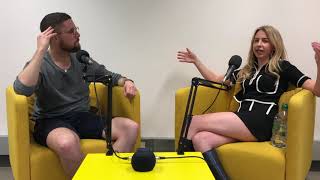
In this podcast‑style interview, Hishem Azzouz talks with Hannah Jarvis, co‑founder of Haptic Recruit, about the evolution of her recruitment agency from a lifestyle‑focused startup to a growth‑oriented business. They discuss the distinction between a lifestyle business and a scalable venture, the importance of balancing permanent and contract revenue for investor appeal, and the challenges of building a team from scratch, including training her brother and mastering time‑management. Hannah reflects on the recruitment industry's negative reputation, emphasizing ethical practices and the need to act in candidates' and clients' best interests. They explore geographic expansion by mapping markets and facilitating candidate relocation across hubs such as Stockholm, London, and future US targets, and detail her sourcing tactics—LinkedIn, referrals, events, and niche platforms like Stack Overflow. The conversation also covers how to run effective, audience‑first events, the benefits of a dedicated office space (WeWork) for community and focus, and Hannah’s side projects like her "Recruiting Minefield" podcast. Finally, she shares upcoming milestones, including a push into the American market via the GDC conference, and offers concise advice to recruiters: leverage personality and act without over‑thinking.
Chapters
Welcome to the Recruitment Rollercoaster podcast. My name is Hishem Azzouz, and today, just having a sip of water, I'm joined by Hannah Jarvis, who is one of the co-founders of Haptic Recruit.
Hello.
Thank you so much for joining me.
Of course. Thank you.
You must feel like a pro now. Now you've got your own podcast.
Uh, no, not really.
No, no. We'll see how this goes. Um, look, thank you for joining me. Um, as you know, where I always, always like to start How the hell did you get into recruitment, Hannah Jarvis? What happened?
Golden Age question. So I actually did law at uni. Really? Yeah, did law. I didn't— found out very quickly I did not want to be a lawyer, like after the first seminar.
Really?
Yeah, just like stuck with like a lot of statute. I don't even like reading. It was just like—
who pushed you down that route then? Your parents?
Yeah, but I also kind of looked at it as like the Golden Gates, you know. I grew up in like a very middle-class area and I was like, oh, why don't I be a lawyer and move to the city and etc., etc. But it doesn't always work out that way. So I didn't really want to go down the corporate ladder, having to say certain things to get somewhere or having to do certain things. So yep, persevered for 3 years anyway, got the degree, moved back home, managed children's therapy center for like a year.
Really?
It's a bit random. Yeah. Then my friends were moving to London, so I just kind of like jumped in.
So where was you born? Where did you grow up?
Tumbridge Wells.
Oh, okay.
Yeah, Royal Tumbridge Wells.
From Eastbourne. Oh yeah, Royal Tumbridge Wells. Yeah, yeah, yeah, Tumbridge Wells is all right, isn't it?
It's all right.
Yeah, there's— it hasn't got your middle class bubble. Yeah, yeah, basically.
But it's all right. Um, so yeah, so I moved to London and I found myself in a pyramid scheme.
Okay.
Yeah, it was like, basically imagine clipboard lanyard standing on the streets of London trying to sell credit cards to people.
Really?
Yes. Oh, hardcore sales. It was not decent. I got a doner kebab in the face. It was an interesting month of my life. It genuinely felt like I did it for a year.
So did you, did you know it was that, or was it sold as a marketing executive job?
Considering I'm a salesman, I could be sold to very easily.
Really?
Went in and this woman, she was like, right, okay, we're gonna do this, bish bash bosh. I was like, yeah, sounds great, sign me up.
Nah, really?
I did it for a month and I hate not being good at something.
Whereabouts in London was it?
Uh, it was based in Angel, but we went to like all like the edge, edge, edge of London.
Um, I always, I always give time to, uh, people that are doing that because I just think I just have so much respect for it.
Really?
But, and then I'll— and then I don't, I don't— they don't close me because I'm just giving them some time. Yeah, but no one speaks to them.
Most of the people that do it, like, trying to sign you up for charities, which is a good thing. Yeah, not trying to get your credit rating and take all your money and fuck you over for the rest of your life. So yeah, that must have been hard. Yeah, it was not in keeping with my moral compass.
Okay.
So I kind of thought, what the hell should I do next? Wanted to carry on obviously living in London. My brother was in recruitment.
Okay.
He was in recruitment for like 7 years by that point.
Oh, wow.
Yeah, moved his way up from like consultant to manager. I think he had like a team of 15 or something.
Yeah.
He was like, don't do it. But I was like, fuck you, I am gonna do it.
Don't do recruitment.
Yeah.
Okay.
Yeah, yeah. And then I interviewed probably at like 15, maybe 20 recruitment companies.
Really?
And I got through to the final stage every time. But I never got an offer.
Why was that?
I don't know.
They're not giving you the feedback.
They— I think basically, I think when you want to hire a grad, you want someone that's slightly and somewhat moldable, that you can kind of put in a box and be like, follow these processes and do that. Yeah. And I just don't think I'm just not that person. I'm not, I'm not in that box.
You definitely don't strike me as that person.
No.
So, okay, I'm not—
I don't want to bring the gender thing into it, but Okay. All of the people that interviewed me were like old white men.
Okay.
I remember them. I remember like one of the CEOs, he was mental. He was like, tell me why you're different to every other person out there. Like literally like crawling across the table, like losing his mind. Yeah. And the first woman that interviewed me, like, offered me on the spot.
Really?
Yeah. And then I found out about Eurostaff through my brother because it's like a sister company under their umbrella group. Interviewed at Eurostaff. By that point, I think I was just like, fuck it, let's go. Yeah, I just like calmed down a bit, I think, and I was like, yeah, yeah, let's do this. So yeah, they offered me and I joined.
What did you learn through that process then? Besides obviously that there's a lot of men in recruitment and you're not this moldable person, but like, how— so how are these people selling you recruitment? Like, so you obviously had to persevere for that because that's a lot of rejection, right? Yeah, obviously you've just been on the month for the streets getting doner kebabs in your face, then you're getting rejected 20 times. Yeah, yeah. What made you want to still get on— get into— did it sound interesting to you?
Because I probably by that point had a very sizable chip on my shoulder. Yeah, I was gonna say, yeah, I've got 4 brothers, so I've always been competitive.
Really?
Yeah. Uh, so by that point I was like, fuck them, I am gonna do this and I'm gonna do it well.
Yeah, yeah.
So yeah, but how do they sell recruitment to you then? Like, how did—
what was the sales pitch? Yeah, how do they sell it?
Um, like, have autonomy, it's like building your own business within a business. Uh, I like the idea of working like the Nordic markets. Okay, that was like the unknown. Um, yeah, I really like my manager. My manager, funny enough, was like very, very process-driven. So I think because he was one extreme and I was the other, we kind of just like, we somehow found the middle ground. Yeah.
So that obviously, I know obviously there was loads of interviews by the time you decided to do your own stuff, but was there anything that you sort of recognized that you're like, you know what, I really like this company? Was it the—
it was the Nordic markets.
Was it? What interested you about that?
Uh, it was the unknown, wasn't it?
What do you mean?
It was the unknown. Like, I didn't even— I'd never even been to Sweden.
Okay.
And I was suddenly just like working in— working in Stockholm.
Oh, what, you worked there? You worked—
no, no, I worked in this— in the Swedish market.
Okay, okay, okay, cool. So you really like the idea of that?
Yeah, I thought that was cool.
That's interesting. Yeah.
And like, the industries like tech, gaming, both seem pretty cool. I didn't know anything about those industries, so again, I had the opportunity to learn that.
Okay, that's fair enough. So, um, what I was going to say, so did And then you went into the gaming industry from, from day one, or not?
Um, I most did like mostly tech. Uh, my manager, one of his main clients was King. I don't know who they are, developers of Candy Crush. Okay, so that was one of the first placements I did. All right, was like a lead designer at King. Okay, so that's how I like found out more about the industry, and then it kind of just like evolved from there.
Yeah. Okay, so how were, uh, how are you, how long was you at Eurostar?
How long was that for? Like, I want to say 2 years, but I don't even think it was 2 years, like over 1.5 years.
Really?
Yeah.
What went on in the first year?
Uh, a lot. Uh, did quite well in terms of billing.
Uh, what did you bill?
I was told— I don't really have any comparison, do I? I think I did like 220. Okay, which wasn't—
yeah, definitely decent, which was better than me. Yeah, as you know.
What was yours again, Hishem?
You just want me to say it? 24K. Yeah. No, that's definitely good for your first year, for sure. As you said, in the market that you never— you didn't know anything about. In, um, I think I've got a message today actually from a— I always ask people if they want, uh, if they want me to go over certain topics with people.
Yeah.
And this guy messaged me today saying, um, about talking about resilience, which you always do, but particularly around people recruiting into the EU markets, because that's what he does, and people around him are finding it like really tough.
Really? Why is that?
I don't know. He just told me that it'd be interesting to speak to people that are recruiting into the EU markets and the challenges that come with that and those things. But what I was going to say was the fact that you wasn't recruiting in a UK market as well and all that, so there's a lot of challenges and a lot of unknowns. So that's definitely well played.
But I didn't know any different. I mean, I didn't—
very true—
I didn't start in the UK market and have those very— yeah, selling like recruitment style, I just went straight into the Nordic markets. You have to adapt to the culture you're in. That's one of— that's probably the main piece of advice I would give.
Really?
Yeah, like Swedish people and the way that they work and what they want from someone and like everything else is completely different to—
so was you just in the Swedish markets and all? Was that what— just Nordic?
Just Stockholm?
Just Stockholm? That's what we did in the first year?
The whole time.
Oh, the whole time?
Yeah.
Okay, cool. So, um, let's break down that first year a bit then. Like what— so obviously you build well So did you dive straight into like 360? Was you— did you get given the phone to get some clients, or like, what, um, how was it structured?
I think I did a couple of deliveries, but I was— I think I went on a client visit in my second week.
Really?
So I went to Stockholm my second week, and I was kind of just thrown in the deep end. Yeah, because my manager was going anyway, so he was like, come with. So I was already meeting clients.
You've got that Swedish look as well, haven't you? Have I? Yeah, you've got that sort of blonde hair.
Blonde hair is not natural.
All right, yeah, maybe not then.
I speak Swedish.
Okay, cool. So literally like just straight in the deep end. Started meeting. So to be fair, actually, I think I met a client in the first couple of weeks. It's decent to get an idea of the businesses that you're helping and those things.
Yeah, um, I'm an overthinker, so if you left it any longer, I would have been like— I like that he just kind of threw me.
Really? Okay, cool. So, okay, so was you— did you— so was you BDing quite early on then?
Yeah, yeah. I can't exactly remember when I first got my client, but from quite early on. I liked being 3x2. 360. I liked having like the control over the whole process.
Did you do anything, um, to learn about the market that you didn't know anything about besides like how did you dive into getting sort of acquiring the right knowledge?
Um, YouTube videos, a good place to start. Uh, just research really. I think we had to do a presentation on our market pretty early on, so it forced me to do like research and stuff.
Yeah, that's a good idea, isn't it? Yeah, if people don't do that. Okay, so that helped. And then, um, obviously a lot of people say sort of speaking to candidates and stuff.
Speaking to candidates, I think People are scared to ask questions. They like, you don't know anything about this industry. You're never going to know as much about the industry as the person you're speaking to, the candidate you're speaking to. So you can just say that. I remember just being like, look, I'm sorry, I'm not a designer. Can you break that down? Can you explain that for me?
Yeah. Okay, cool. How did you find business development then? Because that's always a topic that people like to talk about because that's difficult, right?
It's, it's a good— it's an interesting one.
Do you just make it again?
Yeah, you smash the phones, but the biggest piece of advice I would give is creative writing. Like, it sounds bizarre, right? Like, we do it in our training in Haptic now. We actually like have like massive creative writing, like brainstorming sessions. 'Cause if you think about it, you've got 2, you've got 3 ways you can get new clients. You've got, I don't know, 4, networking, conferences, et cetera, referrals from current clients or candidates. You've got the phone, just like phoning, or you've got like cold messaging, cold emailing, cold messaging on LinkedIn.
Now, personal brand.
Exactly, buzzwords. Um, to separate yourself, you don't— they're just going to delete all those emails that come into the inbox that are like, I've come across your company and I've seen you've got some open roles.
I've written so many of those.
Yeah, exactly, they're bullshit. They're just gonna get deleted. So I think thinking outside the box in terms of your cold messaging approach, being a bit weird, being a bit crazy, is the way to go. It gets—
give me some examples because we had a few.
I don't want to give away too many secrets.
Well, come on, come on. Okay, okay, to give it— to give context. So I had, um, a lady called Alicia Teagle.
Yeah.
Um, and she's— she spoke exactly about this, where she was like, look, I encourage my consultants now to be authentic, be unique, stand out. What you're talking about. Yeah, exactly. Um, what you're talking about. So she was like, you know what, I'm gonna start sending out some peculiar messages so I stand out. So she shared this story about Basically, she sent an email to a business that she'd been trying to get in with for ages, or just the decision maker, just a picture of a white rhino. Yeah, just subject rhino. And then he came back, was like, why are you sending me this? She was like, have you ever seen one of these before? He's like, no. And then when she replies, have you ever seen one of these before? And it was a candidate.
Yeah, yeah.
So like, what— so talk to me about some, some stories around that.
I'll give you one example. Um, something called haptic bingo.
Haptic bingo?
Bingo, yeah. Okay, so we, we went on, what is it, moo.com or something? We made our own bingo card.
Really?
So yeah, and we basically— it's taking the piss out of the classic recruitment terms. So, you know, I'm gonna create some urgency or whatever it is. Please find and close, whatever, your perfect candidate or whatever it is. And then you have all those classic terms on the bingo card. and then I kind of like attach it, or you can send it in the post, and you can be like, I promise if we like, when we have a phone call, I will not use any of these terms. And then you literally sit there, and if you do, it's like, yeah, yeah, okay.
And did you do that kind of stuff in Eurostaff? No, early on?
Oh, so I remember in my second— yeah, but I always had those ideas. I was always the one like, okay, great, this is a way to do something, but why the hell aren't we doing it differently?
So you was always open-minded to like, how can we do it?
Differently. Yeah.
So when you use Eurostaff then, was you just relying on the traditional methods to crack on and BD and get clients?
With a sprinkle— with a sprinkling of myself.
Really?
Yeah.
So how do you try and stand out through that then? Because that's obviously the challenge, right? What you're talking about, you have the luxury of doing that now because you have your own business, um, but there's gonna be people listening that may be open to this and they're like, Jesus Christ, this is getting really difficult now, and I do want to try different things.
You do need to stand out. It's just so saturated.
That's what I mean. 8,000. So how did you go about that in Eurostaff then?
So I think in like my second week in Eurostaff, might be in, I don't know, my third, whatever, I just made a meetup group in Stockholm.
Really?
Yeah. I was like, why aren't we doing meetups? Why aren't we doing events? Like, I would love to like a VR and AR, because it's when VR was huge, loads of money was getting pumped into it. I was like, why aren't we doing like events for candidates or just in general? Um, so I made a meetup group and they told me not to. They were like, no, Hannah, we need to wait, we need to get authority, whatever, like approval. But I just did it and we got like 300 members in like 24 hours. Yeah. And I was— I remember having to go to like Glenn, who was our head of marketing there, and he was like, Hannah, should have done that, but now we can't go back. But now we're gonna have to do it. Yeah, it got like 1,000 members.
Really?
It's like the second biggest VR—
that's awesome.
Yes. And we start doing events and stuff like that.
Okay, so I guess what you're saying there is just just be willing to do it and see what happens, right?
Don't overthink it, just do it.
Okay, yeah, let's talk a bit about— because I think, um, look, I think it's like a lot of people are going into, if not already, there's a lot of businesses that have been trading in the EU markets for a while. But obviously I think it's safe to say there's a lot of recruitment businesses that are looking at EU markets, US markets, etc. So let's talk about— because you said that you had to adapt to what, what they're, what they're like, right? So let's talk a bit about that because there will be people listening that may have to go into straight into EU markets or looking to expand into EU markets. So what, what did you learn through that journey? Like, what, what were the different nuances that you had to learn and sort of adapt to from a client and candidate perspective?
Um, I think again it's more about because recruitment has been established in the UK for so long, there's always the— there's already huge stigmas and huge kind of expectations about how you should behave. And you can get away with doing like the more hard sell and everything else in the UK market because people are just used to it.
Yeah.
But in, in other European markets, like the Nordic market, you can't do that. People just don't appreciate it.
Really? What if you're trying to push them down a certain path and push them down a certain path, like cold calling them like all hours of the day? Really?
Uh, yeah, like just be— you need to be much more personal personable in your approach.
Okay, that's what I really mean.
Once—
yeah, so, so you're talking— when you did get through to someone, you've got a sort of— yeah, you've got to approach it in the right way so you don't rub them up the wrong way, basically.
Yeah, yeah, yeah, yeah. Bring— it's ridiculous how many people I've known who've had like massive personalities, and then they suddenly pick up the phone to a candidate and they just turn into like a recruitment robot.
Professional.
Yeah, yeah, it's bizarre. Like, if you've got a big personality, this is like a people market, use it, it's going to get you places.
Okay. And was there any— was, um, was there any, like, like, how did they— was their perception of speaking to Hannah, who's like this UK girl in London, like, and they're in like Sweden, like, how did these people take, take that? Um, like, was it, was it, was it sort of— was there any challenges around that they were dealing with a UK recruiter, or was it pretty sweet?
There wasn't actually, no.
Was it not?
No, because you're bringing— if you can bring all of the best bits of UK recruitment, like the really good headhunting skills, etc., but then, uh, be as like personable and everything else as their local recruitment firms, and honest and just like yourself, then you've got the perfect combination.
Cool. Did you meet your candidates or clients? Yeah. Oh really? Which do you like? Did you do video calls?
I know No, I used to go there like probably once every 6 weeks.
Really?
Yeah.
Well, then you just like do loads of meetings.
Yeah, back to back.
Decent.
Yeah, that's good.
So you know Sweden quite well?
Stockholm.
Stockholm.
Never been outside.
Yeah, really? Yeah, that's quite cool. So, um, anything else that went on in that, that first year that's worth sharing and talking about?
Uh, no, I think, like I say, the event—
was it all perm that you did?
All perm, yeah.
Really?
I don't think I made for contract.
Why?
I just, I, I feel like I'm screwing someone over with contract.
In what way?
Like, because you're lying. You have not— from what I gather, you have to basically lie about the kind of salary.
So you're selling because you add on top.
Yeah, the add-on. Yeah, I just like, yeah, give me a pound. Like, do you know what I mean?
I can't do it.
Yeah, I can't do it.
Okay, so, so after Eurostar, if you set up Haptic.
Yeah, had a, uh, company in between.
Yeah, yeah.
Um, but that unfortunately didn't work out. So yeah, we set up Haptic in November, November last year.
So how the hell, like, because a lot of people will listen to this and think, well, Hannah's done recruitment for what, 18 months? Yeah, she's got her own agency, she's doing it with her brother who told her not to get into recruitment. Yeah, obviously, obviously your brother by this point must have like, what, a decade of experience?
Uh, yeah.
So I mean, look, at the end of the day, like, obviously, look, experience helps, but it doesn't mean that you can't deliver for, for your, um, candidates and clients, right? But was that— how the hell did that happen? Like, what do you know? I mean, have you always wanted to have your own business or no?
Yeah, 50% balls. I think most people could do it. It's, it's just having the balls to do it, really. Yeah, it's just about taking the— like, jumping in the deep end and sinking.
Was it, was this like— was it something that your brother had always wanted to do as well?
Because yeah, but my brother's not as much of a risk taker as me, so I need to—
do you have to sell him then?
Yeah, I need to be like, we're doing this, let's— do you know what I mean?
Really?
Yeah, he's like very good at the like day-to-day, like all the, um, like consistent kind of stuff, and I'm better at like taking the bigger risks, long-term vision, etc. So we complement each other quite well, really.
Um, how is it being in business with your bro?
Uh, it's good. Initially it was a bit like, this is weird, like the dynamics.
How did you like— surely you have to— I don't know, did you have to draw the line where it's like, right, okay, we talk about, I don't know, like personal stuff, or like, like, there's got to be some sort of shut off, shut off, or you just, just carried on and just sort of grew the relationship as business partners?
I mean, because I've got 3 older brothers in London, I hang about with them loads anyway.
Really?
Yeah, they're like friends. I'm friends with all their friends. So it was weird to like, you know, see him in a social thing and then see him like the next day at work, but we're used to it now. Really good. Yeah.
Where did the name come from?
Where did the name— oh God, I can't even pretend. It does mean something, like the physical touch, but I'm not even gonna try and make up some bullshit thing about it. I just love— I like how it sounds, I like how it looks, I like the letters. Yeah.
Okay, cool. So let's— so you're— so how many months is that in then? Like, what, 9? No, how many months is that?
Are you in 8? Yes, 6, 7, 8 months.
How have that— how, how have those months been then? What's been going on?
What's been going on? Um, okay, so yeah, we've got— we work with the global Candid Network, but we work— we're in 4 key hubs. Okay, Stockholm, Helsinki, Barcelona, London.
Okay.
Um, and we work with a, like, a particular type and number of studios Studio is a gaming company.
Okay.
In each of these hubs.
Okay.
So both like startups and, and the bigger guys. Um, but yeah, so we've got established client bases in each of those hubs. We're going into Berlin soon. Yeah, it's going well, really well. And we just like specialize in the gaming space at the moment, really.
So you really niche down. So obviously you obviously ended up doing that anyway when you was employed.
Yeah.
But you've really niched down. You've identified areas where there's obviously key places, and that's what you're dedicated to.
Yeah.
And you're based in London?
Yeah, London. Yeah.
So I guess let's talk— let's sort of unpack a bit what you've— I'm sure it, like, you can't even probably remember what happened last week, but like, what— let's talk about like what, what you've learned through this process, right? Because obviously, yeah, you've got to have the balls, but and then you've got, you've got to execute. So like, what, what's been going on and what have you— what's been different from being employed, Hannah, for Eurostaff to now being in business with your brother? Because there's gonna be a lot of people listening that are thinking about setting up their own agency or want to, or already through that journey, who it's just them at the moment, they haven't had the luxury of actually doing it with a family member, etc. Do you know what I mean? So let's unpack that a bit because I'm sure there's some things in there that are definitely worth talking about.
So I think, you know, I remember starting and I literally, because obviously I couldn't work with my old clients. Yeah, in Stockholm. So I remember starting with a laptop and a LinkedIn Lite account and I was about to just try and get clients in London. Everyone worked in the UK market, and I was like, fucking hell, really? Yeah, just starting from nothing, just literally a laptop and a phone. So people underestimate—
so you had no business plan?
No, not initially.
Okay, that's cool. That's pretty normal.
Yeah, I think because the first company wasn't enough planning, so then by the time I got to Haptic, yes, there was like a plan and everything else. But when I first, first left Eurostar, it was just a phone.
Yeah, okay, cool.
I think, um, yeah, there's a massive difference from running a recruitment company with a strong brand, you actually knowing who your competitors are and, and working around that, and knowing where you're going in the medium to longer term, to just placing people in jobs. Like, there's a massive difference, and I think people underestimate not only the amount of commitment that takes, um, in your life, but how have your friends been? Good. None of them like own their own companies or anything. They're pretty much—
because I was talking about this last week with Alicia. It's like, because yeah, as you said, there's a lot of commitment that people obviously probably don't— obviously if you're going to set up your own company, you know, there's— I mean, look, it's like you're gonna have to fucking pay the bills at the end of the day, so you know you have to be committed. But obviously the, the friends part is interesting because all of a sudden you can be like, sorry, I, I'm really sorry, but I need to work tonight, or whatever. Then that can start getting a bit weird with friends.
It was a hard adjustment, probably most like because I'm— I've always been that person, Hannah will go out, you know. I've always been— I used to go out a lot, really used to go out a lot, a lot. And switching, like, people just didn't understand it, you know, like me saying no, like, maybe like, no, actually can't go out this weekend, I'm not going out the week anymore. So yeah, it was an adjustment, but at the end of the day, if they're your friends, they'll stick by you, and if they're not, then you don't want them anyway.
Okay, so one clearly first thing is You, you need to really think about the commitment, what's involved. And obviously there's a lot more to it on the business side than just operational finance, accounts.
Like, that takes a lot of time, and I think people, yeah, don't realize that.
So what if you, if you was to start, if you were to start again? I know you're not even that far, but obviously that early on, what would definitely be like your go-to? I'd definitely do this first, or I'd definitely make sure I have that in place, or whatever.
I actually, I wouldn't change anything from Haptic. Yeah, yeah, because in the company before, I, I made a lot of mistakes and I did some things right and I learned from that. So I'd already had like a learning curve.
So what do you learn from that then? Let's talk about that because people can get value from that.
Um, what did I learn from that? Uh, yeah, know how much of a sacrifice it is gonna take, like in general.
Yeah.
Um, you've got to be seriously like seriously committed that you want to do this for the long term. Um, what else did I learn? Brand. Brand is key. I think so many recruitment companies, they just have like a website and they just think— they've got that old school mentality that are like, don't worry about it, place these candidates in these roles, bish bash bosh, money in the bank, that's it. No, you need to think about how am I going to actually separate myself from the other 8,000 recruitment companies started in the UK last year. Yeah, one of the main things you can do that is buy like your, your business and personal brand. Yeah, so that is what one of the, one of the really good ones.
Yeah, so how have you obviously, besides sending moon pig cards— yeah, like, so, so you've learned that, that's interesting. So besides obviously when you speak to people, being unique, being yourself and those things, right, which is your brand anyway and those things. But so yeah, what else have you done differently then to try and stand out? Because 8% of the recruitment market in the UK employ under 10 people. So like that, obviously everyone knows it's saturated and everyone thinks that they're different, but it's exactly what you said. A lot of these people aren't doing anything really different, right?
Yeah.
So how have you gone about that then, besides sending weird and wacky, uh, messages to clients?
Uh, so yeah, like brand would definitely be one. Your vlogs, your blogs, your podcast, your events, all of that, that's like in, in one bracket.
How do you prioritize that? Because you must be Very time poor right now.
I, I categorize my day with like 4 things. I've said pipeline, sourcing, business development, director duties.
Oh, let's talk about that.
All of, all of that, all of what I just said, like the vlogs, the blogs, that's under director duties.
How do you structure your day?
That's done.
Let's talk about how you structure your day. I like that. Okay, no one, no one structured it like that before.
So me and my brother, we have like, uh, symmetrical day plans. Under 4 categories. So like sourcing, BD pipeline, and directed duties.
And do you have them? So what—
we have different directed—
how big are the blank, uh, the blocks?
The blocks of time, anything between an hour to 2 hours, really.
Really? So there's all— so it's always like 4 categories that you're focusing on?
Yeah.
And then we have different things that fall into the category?
Yeah. And they change depending on what our day objectives are, weekly objectives, or our monthly objectives.
Really?
We've got to be be consistently like updating those. Yeah.
So where do you update it? Like, how do you communicate with each other? Like a visual thing, or is it just a piece of tech that you use?
It's just like something called Agenda. It's just like a really good like day planner list thing.
Really?
Yeah.
So, and then the branding and content side fits into what category?
Director duties.
Director duties.
So James's director duties are like operational accounting.
Yeah.
So I know that they're gonna get done.
Nice.
And I know when they're gonna get done. And I know what's in his list at all times, and he knows that I'm doing the vlogs, the blogs, the events. Yeah, yeah, like, like all of the other stuff, like the training plans, things like that.
Yeah, yeah.
So we separate our tasks very well, and then obviously sourcing, BD, that's all, that's all just—
that's just standard. I like that. Have you always done that, or did you— like, did you— that was just a sort of evolution of— it got to a point where it's like, actually, let's just break down our day, make it simple?
Yeah, it's a lot of trial and error, really. I'm always like, I've got an idea, let's try it, let's let's do this now. And we've got to this point and we're like, okay, sick, this works.
Really? It's been working well for you? Decent.
Yeah, it's good.
So how many of you are there now?
So there's me, my brother, and a guy called Ryan. He's like an ex-professional footballer.
Really?
He's hilarious. He's like super competitive.
How did you find— how did you find employing your first hire? Uh, that must have been interesting.
It was fine. James used to manage him.
Oh really?
Yeah.
So James Tatum, Yeah, yeah, yeah.
So they've already kind of got that dynamic.
Yeah, yeah.
But yeah, it's good, it's been good. And then we've actually just hired someone from Stockholm, okay, who's in the gaming space. So he used to be like—
flipped him into a recruiter, basically.
Yeah, like, how hard would it be for a recruiter to learn how to be a games artist and have all the knowledge that he has? But how hard would it be for a games artist to become a recruiter? Yeah.
Yeah, I used to work in insurance and I went into insurance recruitment. Exactly. Definitely. I mean, you're gonna have a point of difference from day one, aren't you?
Yeah, exactly.
And you're going to fully understand your market and everything.
And he's had his own startup. He's like hired 10 people himself. That's how I met him, because I approached him to like hire for his studio in Stockholm.
Yeah, decent.
And he's like super personal. He's got all like the perfect ingredients.
Yeah.
To be a really good recruiter. And I took him in a client meeting on his first day.
Really?
They smashed it. What is he even talking about?
Yeah, cool, love that. So I guess, and if any— it seems like obviously a good strategy is to employ people that you've had some sort of relationship or you trust or whatever. But did you learn anything through that, or has that been pretty smooth? Obviously, because that, that can be a real challenge, right? Yeah, hiring their first person, those things. A lot of this, obviously you hear quite a lot of advice around if you can hire people that you know or your friends or whatever, then great, but Did you learn anything through that hiring process, or not really?
Um, not particularly.
No, really?
Yeah, it has gone quite smoothly.
Really? Fair enough.
What we have tried, and that's what I'm saying, like, we are at the stage where we're trialing a few different things. Yeah, we've tried like an outsourced like sourcing company.
Really?
Yeah.
Okay. Yeah, what, they're like in India? In like India or something?
Yeah.
My brother, they're gonna become so more popular. Yeah, I've spoken to quite a few.
Yeah, my brother, he— his friend had like a 15-person recruitment company in London. 10, um, 10 people. He basically fired 10 people recently and just kept 5 for BD and pipeline. Really? So now he outsourced all to this company. So we were like, let's try it. It will never be like our, like, half our company, but it could be a pillar.
Yeah, yeah, yeah. Let's talk a bit more about that if you don't mind.
Yeah, of course.
What— so what sort of tasks you get them to do? Is it a lot of the grunt work, like a lot of the sourcing? And, and like, so what's— what are some of the tasks that they do?
So we've literally got like a— I've written a sourcing process.
Perfect.
Step by step.
Yeah, because that's what you've got to do with these things. Obviously that's a bit trial and error, but you've got to make it as clear as possible to enable them to deliver what you want.
You need to know what they're doing. Yeah, every day, because obviously—
okay, so which— yeah, talk a bit about that.
They— well, yeah, like, um, the— I don't know how to describe it. We've got like a chart. Yeah. And they basically color code which stage they're at and what they're doing.
Really?
Yeah. So we know— so if they go off, if they go off the line, like imagine there's a straight line.
Yeah.
If we go— if they go off the line for whatever reason, they're not where they should be, why aren't they there? Do they need more training? Have they not been putting the work in, etc.? So we just bring them back.
You've got some decent little systems in place.
Thank you.
I like it. But so So when— so up to what point would you then get involved? Because I think that would be sometimes people's concern, is it's like, so if people— if they're going to be trying to approach people on my behalf, I need to be confident they're, they're competent to do that and they come across in the right way and those things. Like, at what point do they get involved? Do they speak to these candidates or do they send you a shortlist, then you call the relevant people? Like, when do you get involved?
They have the first call.
They do the first call?
Yeah, but then we will always do another call.
Really?
Yeah, okay. Giving them loads of like call training and stuff.
Yeah, of course. But that's interesting because some, some people might not be comfortable with that. Some, some Indian person calling. No, it's just interesting that you've done that. So I wanted to—
just people, they're just living.
Yeah, obviously, obviously. No, no, no, it's not that. It's just more of like, I think if I'm, if I'm a recruiter right now, I'm thinking, wait, hang on a minute, these people that I've never met before, we might have been on video call, how comfortable I am with them calling people. That's also— I was interested as to of it.
Of course, you can't just be like, okay guys, go and find me candidates. Yeah, you have to be like, right, you're with us now, they work for us full-time, this is what— this is how we do it and this is why we do it.
So what has that enabled you to do then? What has that enabled you to spend more time on? What?
And it's enabled us to spend more time on business development, like everything else in the company, um, because sourcing obviously takes up the most time for us anyway because it's a candidate-driven.
Has it been pretty successful? So far, obviously.
So far, I mean, I'm not gonna lie, the first few weeks were touch and go, but— and you do have to put the effort in.
Yeah, that's the biggest part, isn't it? Because I've read a lot. Um, I don't know if you ever come across a guy called Tim Ferriss. You ever heard of him?
No.
He wrote this book called 4-Hour Workweek, and there's a big part around that on VAs. And obviously, it's— obviously, it's an outsourced sourcing solution, but a big part is the same sort of process of If you're hiring a VA, you've got to, you've got to really make it crystal clear as to what they've got to do, what success looks like there, and what it doesn't, those things. So yeah, you're totally right. But would you, would you recommend it to people then who— because there will be people listening who might be one-man band, bit smaller, maybe even some recruiters could benefit from this, where they could then speak to people internally and go, look, if we get this outsourced or outsourced solution right, it will enable us to spend more time on the activities that are going to give, give us the outcomes that we want.
Stephanie. Uh, yeah, I would recommend it, but like I said, get your processes straight.
Understand, don't just be like, oh, it's done now. Like, it's— yeah, it's a two-way relationship.
Yeah, 100%.
That's exciting.
My mentor knows a woman who basically she just does all the pipeline and business development herself, and she has 19 resources.
Really?
And she bills 2 mil a year.
Wow. Yeah, 2 million a year.
2 million. Yeah, her and 19 resources.
Fucking hell.
Yeah.
Wow. So do you think— because I think, I think like, like listening to you speak and the way you're approaching things, absolutely, absolutely love your energy and how you're approaching it. But I think if you think about your— I don't use the word naive, but like you're so open to like doing things differently or trying to, do you know what I mean? So what's your view then on like— I know obviously you're, you're obviously you have a mentor and you're probably in your own little bubble just making shit happen, but like do you think more and more recruitment businesses will do things like you're doing and outsourcing and all that, like, how do you think that's going to affect the, the recruit— the day, the day-to-day recruiter, do you know what I mean?
I think, you know, a lot of recruiting companies, they work in industries that are like ever-changing, like tech, gaming, etc., and we have to— you have to like move with it. Yeah, you can't just be doing stuff like the old school way anymore. Yeah, it's just, it's just not going to work in the long term, in my opinion.
And I think, I think generally, I think listening to sort of your story so far is like you've just been open-minded And I think that, that just goes so far. Like, if you're prepared to try different things and actually, well, I know I've been taught this way, but how come we've never thought of it like this or tried it this way? Obviously you now have the, the great thing about owning your own business, you can try these things straight away without not speaking to anyone.
Yeah, I think that's one of the main reasons why I had to do it myself.
Really?
I just had all these ideas.
Yeah.
And I couldn't do anything with them.
Love that. Okay, cool. Um, all right, mentor. Yeah, am I speaking about that a little bit? Is that okay? You don't have to say who it is.
Yeah, I know.
So how did you— because I, I have my mentors, um, and I think more and more, and quite a lot of people off the back of listening to this have reached out to people and, and those things. So did you reach out to this person to mentor you, or did it just naturally happen? Did they—
so I won an award when I was at Eurostaff. It's like, what was it? Best newcomer.
Best newcomer. Well, yeah, 220K first year.
Cheers.
Oh, that's cool. No, you're gone.
Um, yeah, like the recruitment awards. I won an award, but by that time I'd already left, so I wasn't even there to pick it up. Really?
Yeah. Brutal.
I know, I know. We went to Ibiza and I literally came in my suitcase the next day, probably just super hungover, and I was like, I'm done.
Really?
Yeah, it wasn't— it wasn't a good way to go, but yeah.
Okay, so, um, this person still wanted to mentor you after?
Yes. Anyway, he was one of the judges. Okay, so that's how I met him.
What did you have to do?
Kept in contact ever since.
What did you have to do though for this award then? Like, just like you said, he—
so I think there was like shortlist of like 10 people, and you go there and you speak to a panel of like 6 or 7, and he was one of the judges.
Okay, so he obviously got—
ask you about—
you got a full dose of Hannah Jarvis basically.
Yeah, I walked in like a pink suit. Um, yeah, and they just speak about, you know, what I've done, the events in Stockholm. Yeah, how I work, how think, etc. I don't really know why I won, but okay.
So then it just naturally happened then, it seems like. Okay, that's interesting. Well, and how long have you had that sort of, call it, mental relationship, when it was a bit more than—
um, last year maybe, when I really— when I set up, really.
Really?
Yeah.
Okay, well, let's just talk a bit about that because I think a lot of people would really benefit from— so what have you got out of it from your perspective?
What I've got out of it is because, you know, I, I learned the basics of recruitment at Eurostaff. All the other stuff I've done, you know, I've just kind of got to this point, but I had no idea how to build a recruitment company. I've only mentored one person.
You've mentored someone?
I've mentored one person at Eurostaff already. Yeah.
Okay.
Um, but that was it.
That's totally different to feel like you're running a business.
Yeah. So obviously there's there's a lot I've kind of learned along the way and that I do know, but there's a ton that I have no clue about. So I think it's being— it's about being able to step back and look at actually what do you know, what don't you know, what your weaknesses, and then filling in the gaps. And his, like, what he could give me was, okay, this is how you build a recruitment company successfully, this is how I did it, etc.
And what do you give him?
Uh, I don't know.
No, the reason I— the reason I asked that is because, like, someone could be listening right now, it's like, think that person, obviously the The great thing about that, which I'm sure you're super grateful for, is that he obviously, he saw you at Eurostar and was like, fucking hell, this is one to watch out for. Whereas someone right now could be listening in his, in his bedroom.
Yeah.
And like, what is— what is— because it's like, these people that they reach out to, they're going to be time poor, do you know what I mean? Like, if someone reached out to you now, it's like, Hannah, I'd really like you to mentor me. It's got to be a two-way thing, do you know what I mean? So you've had that advantage. So that's why I wanted to ask.
I think if you have a bit of cash, then it's definitely a good investment. Yeah, yeah, yeah, that's fair enough.
That's fair enough. So it's helped you on the— it's helped you actually— what you said is you recognized sort of the knowledge that you do have, what you don't have, and this person's helped you, I guess, guide you along the way of actually what would your advice be around this, blah blah blah, and those things. Yeah. Is it something that you'd recommend to people if they could, if they have the cash?
Definitely. It doesn't need to be like an ongoing thing. It can be like, do you like speak some once a month, a day of your time?
Yeah.
And these are things I need to know about. Yeah, and you're gonna learn a shit ton.
Okay, cool. Um, what I want to speak to you about is, because I think you have this quite naturally— what mindset?
Mindset? Yeah.
What should be your mindset?
Um, I feel like being quite resilient.
Yeah, where's that come from? So you mentioned you've been around your brothers, your dad.
Yeah, they're all very much like, stand up, do it again.
Really?
Yeah. Um, I think just there's no point dwelling on it, is there? There's no point dwelling on it. Like, you, you'll lose a 10 grand deal in a day, but you might get another one later this afternoon. Like, it—
have you always had that though?
Because like, so when you've had really shit days, it's a difficult one to do.
Uh, what did, what did you do? How did you just get like overcome that? Because that doesn't— I remember, look, I built 24K in my first year, so I've had a lot of shit days.
But how was that 24K? What was that feeling when you got that 24K?
Yeah, it was great, but like there was so many things that Oh my God, there's so much rejection, so much failure, all that. So, and for me it was just perspective and not, not, but not everyone has that, right? So I'd walk into my office and my colleague would be moaning that the traffic was terrible and that would ruin the half of her day, right? Whereas, and yeah, like you said, I could, you could lose a 5K deal and you could let that ruin the rest of your day, or you could, it depends. It's been able to take a step back, isn't it?
Don't get me wrong, like we all have those days.
Yeah, of course.
We like, we're caught off guard and something just does really piss you off. But I think it's either one of two reasons. Either you could have done something better in that scenario, or you did something wrong for that to happen, or shit happens. It's just the nature of the industry. It's just like bad luck.
Yeah, but did you take responsibility? You're talking about being responsible there. Not everyone's responsible. The easy thing to do is to blame the candidate and to blame the client. So where does that come from?
Take a step back and look at your own kind of actions. Where's that come from? Uh, I've all— I'm— I've always been quite self-reflective.
Really?
Probably too much so, to be honest.
Really?
Yeah.
You said you're a bit of an overthinker, didn't you? Yeah. Okay. How— any, like— okay, fair enough. So if that came quite natural, do you do anything to help that with that self-reflection, or is it literally you just going round and round in your head talking to yourself? Like, do you write anything down?
Talk to myself a lot. I genuinely have full-blown conversations with myself.
Yeah. Totally see that.
Yeah, yeah, yeah.
But do you write anything? Like, do you have anything help with that self-reflection process? Like, for me, I would make sure I would— I make time to write stuff down.
And I write stuff down.
Really?
I do yoga.
Okay.
Yeah.
Um, what's yoga helped you with in the recruitment world?
Chilling, just having a break, just chilling out.
I feel like you'd find it quite hard to chill.
Yeah, I'm not saying it's not easy, but it is yoga, obviously.
So yeah, I've done yoga for a while. Yeah, and, um, definitely helped me. Yeah, not just physically but mentally. Um, I guess, I guess it does, it does cultivate being able to take a step back, doesn't it? And that's the big thing, like, if you can get so wrapped up in emotions and what's going on. So it's helped you with that?
I think what— I think stuff that I can't— like material things, like when deals go wrong or whatever, I'm just like, fuck it, you know, next thing, etc. I think what I struggled in terms of mindset my last company was just like office politics. So I think, yeah, like getting too involved in the office politics and everything else was going on in the company and let that affect me much more than the actual recruitment. So me taking a step back from that and doing, doing it myself, I've removed all of that. So all I need to think about now is like the recruitment side of things, the business side of things.
Interesting. Okay, where, um, so I, I have this conversation quite a lot with people where they set up on their own. And I guess there's a lot of people where from day one they'll know that they want to build a business, and there'll be people that from day one they know that they want to build a— they want to build a lifestyle business, if that's around the young family, or if that, that's just what they want, right? Um, but from, from the conversation I've had and the people I speak to, there's a real you can find yourself in a really difficult spot if you're in between those, those two places. If it— oh my goodness, is this going to be a business or is it— so have you always known what Haptic is like? Is it from day one when you convince your brother, right, we're gonna— have you gonna— are we gonna build— are we— are you building the business? Are you building a business that suits sort of your and your brother's lifestyle and what you want? Or what— how do you think of the business that way?
It's a good question because it is it's something I have asked myself a lot. Do I just—
because I know you're early on in the journey and it might evolve. But yeah, it's, it's interesting. Yeah, that's why.
But at one, at one point we did have to sit down and make the decision no, because it makes the—
it helps make the decisions if you know what that is, don't you?
But also the issue is, is because one of the main reasons I'm doing this, so we can do all the other stuff, you know, be different, build up a brand, do the events, like all this other stuff. Like we're even talking about like doing like an app and things like that. Yeah, so I can't do that if that's a lifestyle business, do you know what I mean?
Yeah, yeah.
I need— what is it like to build up a business so I can concentrate on all that?
So yeah, when I said to someone, I always ask a direct question. I was like, is this a lifestyle business or is this a business? Because from, from my standpoint, I need to know that from the marketing services that I talk about. Um, what, what's your perception of a lifestyle business, just out of interest?
Uh, working, having the freedom to work for yourself on your own terms, uh, to have the best life that, that you want, basically, for yourself, really.
Yeah, it's really— you build a business around you and the life that you want.
Exactly.
Which obviously business gives you that, but when you're thinking of a business, you're thinking about other people, you're thinking about— and that all of a sudden then it's, it's a totally different ball game, isn't it?
Yeah. One of the, one of the key differences, obviously you're building something to potentially sell and exit at one point, and the other one is it's just a continuum.
Is that what you're doing? Yeah, yeah, it's nice. Interesting, because, um, again, I've had this conversation a couple of times. It's like, how, how often do recruitment businesses actually sell?
Exactly.
I'm not quite sure. Yeah, I know, especially, especially if you're doing something we haven't quite worked out, especially if you're doing from the conversation.
I'm no expert because niche, it's in gaming.
Yeah, I guess. I mean, would that, would that be a problem if I was an investor if that meant you guys were the go-to people in the market? Not sure. But from what I understand, the conversation I've had is like, obviously if it's a perm business, it's like, that is so reliant— like, how are you gonna— how is the business gonna run if you're not there? Yeah, do you know what I mean? Whereas, yeah, yeah, obviously from what I understand, it was a contract work and business. Obviously that's the great thing about having recurring revenue and those things, and obviously there's relationships involved. However, if that continues, that's obviously a lot more appetizing to an investor because, do you get what I mean?
That's what I think investors ideally look for, a business that's 70% contract.
Exactly.
Yeah. So we will pivot. Like, we're perm at the moment because we didn't want to give any investment— any of our— sorry, any of our shareholding away.
So if you haven't got any investment, you—
no, no, no, we just built it from the ground up. So, and we want to keep it that way, really. So we need to do perm for a while, cash flow, but then we will build up a contract division.
Yeah, yeah, that makes sense. So I guess, um, what I was gonna say, how, how have your billings been then since you started? Because obviously there's so much other shit now. I know you've got your little cat, my personal billings. Yeah.
Oh, okay.
Because that obviously, that, that's all— that's also a challenge, isn't it? Because like you've got these other categories you've got to think about now. You're not just employed and worried about putting fees on the board. Yeah, you've got your direct director duties. So like, how have you found that? How have you managed that? Besides, obviously you clearly structure your day, But how have you managed that, um, and how's it been with the billing side?
Um, so I'm not gonna lie, when James came on board, that was a bit of a tricky period. Okay, so I had to invest so much time into like my brother.
Okay, cool.
Yeah, because he didn't know the industry, he'd never done perm.
Oh fuck, so James didn't recruit in the industry that you did previously?
No.
Oh shit. Yeah, so you really sold them the dream.
He literally was contracts teachers. Fuck off, it's completely different ball game.
Mad.
Yeah, so I literally, given the fact that I've never really trained anyone, had to write a training manual, train him from scratch, and like just kind of run with it. Okay, so obviously, yeah, for that 2 months wasn't great, but since then it's been, it's been quite consistent, it's been okay.
How have you managed that though? What do you put that down to?
Time management. And that's the hardest thing I've had to overcome.
Really? Because I'm all like ideas, like, yeah, I can see you go off on a tangent.
Exactly. So time management and processes is my like nemesis, but I— the only way to succeed is that, really. So I've had to master that and that's been difficult.
And the key to that is that the, the different 4 categories and stuff.
Yeah, yeah, yeah.
Okay, so a couple more questions and I'll let you go.
Yeah, yeah.
Um, what— so I love the way that you just— yeah, like, your mindset towards being different and all those things. But like, what, what's your view on, um, recruitment having a shit name? Like, why? Like, where do you see the— how do you see the recruitment industry changing?
I get it. I get why it has a shit name. Yeah, because I've been in the environment where you've got the leaderboards there's people at the top, there's people at the bottom, there's incentives, there's all these other things. And if you're naturally quite competitive— and I was guilty of it—
you cut corners.
You cut corners. So I get why it's got a bad name, and I get why there's like so many stigmas attached to it, but you don't have to do it that way.
And I guess— and then is your, is your genuine approach like just, just do the right thing? So I'm finding that quite common speaking to people.
I think yes, that obviously is the approach, but I think people would be lying if they said 100% of the time I do exactly the right thing. Yeah, sometimes you have to maybe give a bit more influence or whatever.
No, do you know what I mean? Obviously, do you know what I mean?
Shut up. Um, yeah, yeah, but you understand what I'm saying.
Yeah, yeah.
So obviously Obviously you do the right thing and you act in the best interest of your candidates and clients, of course. Like, that's the only way you're gonna build up a community, build up a long-term network, and it's the only way that's going to separate you from the others. Uh, but yeah, it can't, it can't happen like 1,000% of the time.
Okay. Um, what, what I wanted to— I didn't ask you the question earlier, but you know, you said that obviously you've got these hubs in these different countries. So how, how did you go about doing that? Because like, as I said, like generally I'm having so many conversations about people, um, not just, not just servicing the UK market because it's so fucking saturated. So how did you approach that? Like, how did that happen? Because before you only did Stockholm before, right? So how the hell did you do that?
I think, uh, because I started, I was Stockholm, then I did UK, and then when we did haptic I was like let's think about our industry. People are in this, are in, are in the industry for the sheer love of what they do. Like, they absolutely love it. And then the freedom of movement is huge. So if you speak to someone in London who have always wanted to work on this game, like they've been playing it their whole lives, but that job is in Helsinki, they're much more likely to uproot their lives and their family and move to Helsinki.
Really?
Yeah. So I was thinking, well, because there's so many relocations anyway, let's just dive in the deep end and give people basically the option. Let's give people—
she did it, she did it through candidates.
Yeah, did it like—
so as in like, so yeah, like you said, you spoke to that person and they'd love that opportunity, so then you spec that person into these.
Yeah, I don't, I don't want to be limited. Okay, you can only move down the road in London. Yeah, of course, you work in all these other hubs and this is what the gaming spaces like there, and yeah, you know, this studio, etc., etc.
So did you literally pick up the phone and speak to candidates in different places? That's it?
Yeah, I did my— it's all about market mapping. Do your research, understand your industries, know where the best companies are and why, and why people would want to move there and how they're going to get there. And just kind of went from there, really. The longer-term goal is to probably become some kind of like relocation, yeah, advisory as well, but You can't do everything.
Yeah, no, that makes sense. And so I'm just trying to think, because there'll be people listening, would be like, fucking hell, so what, I'll just start BDing like people in these different— obviously there's research parts. If they identify, yeah, like I said, Barcelona is a really good place for their market, you're saying you literally start speaking to candidates.
Yeah.
Expect them in. Was there any, any, any, was any more than the normal pushback from these businesses when you were doing that? Well, not really.
It's the same. We have worked with other recruiters, or we're not hiring right now, or whatever. It's the same, a different language. Okay, you can't— yeah, they have to speak English. English, obviously you can't learn.
Yeah, yeah, yeah, yeah. No, it's just, just curious because like I know you said, yeah, it's just the same, but a lot of people, they would easily make the decision in their head before even trying it. It wasn't the same, do you know what I mean?
No. If someone's living there and you're approaching that company to work with them like know, know about that place, know about that studio, know about wherever it is.
Yeah, that's fine.
And also the selling point you have is having this other network elsewhere that you can then bring to them.
Yeah, yeah.
Because if there's a candidate shortage where they are, shortage where they are, you have all these other candidates that you can relocate.
Yeah, totally cool. What I wanted to ask you, just out of complete curiosity, was, um, because you mentioned when you first started before Haptic, you had your laptop and you had LinkedIn or whatever. Like, where, where, where are you having the most— obviously I know it's, um, particular to your niche, but where do you get a lot of your candidates? Like, where's a lot of success for you? Is it LinkedIn? Is it job— like, probably not job boards, but is it predominantly LinkedIn?
Or LinkedIn, referrals, events, conferences. Yeah, like Stack Overflow is good for programming.
Really? How, um, I spoke about events last week, like I know you literally just made a meetup, but like any advice around that? Because there'll be a lot of probably people listening that are thinking about setting up events and stuff. Like through that process of just jumping in the deep end, did you learn anything about a good way to structure it or a good way to sort of position it to why people should attend and those things? Like how did you go about—
obviously do your research and what sort what already exists.
Yeah.
And what are the gaps? Um, and get the right speakers, because people— you don't— not gonna have to worry about, uh, how many people turn up if you have the right speakers. They will come to you.
So leverage. Yeah, okay. So identify people that people would want to listen to.
Exactly.
And let really leverage that. So I guess from, from the events that I've been to and some of the events that we've run here, we've really made sure that the people attending are put first, because I think that, that's obviously always the downfall from a marketing perspective, in the recruiter's mind, it's like, okay, well, how are we going to make money from this, Hannah? And I think, I think the play— like, there's loads of stats out there to back up that events are like the best lead generators. Um, but I think the best way to do that would be to really put your audience first. So, and a big part of that would be, yeah, get people that people want to listen to, listen to what people want.
Don't just like— don't do like a hiring event, do something that is completely irrelevant to recruitment.
Yeah, yeah.
Or your mission, do, do something that gives back to the industry itself, and people in the longer term and indirectly will give value, right?
Yeah, yeah, cool. Um, so before we finish, I want to— because I've spoke to a few people about this who found this a challenge.
Yeah.
So obviously you're based in WeWork right now. How quickly did you get like an office, or like have a— is it like a permanent desk, is it a hot desk, or—
uh, it's an office. Day one.
Really? From day one?
Yeah.
Did you— knew you needed that?
I need somewhere to go and work.
That's what I mean. Yeah, because I know I've spoke to a lot of people where they might be— they might have— they've made the space at home or whatever, and one, that can be really lonely.
Yeah.
And two, it comes with those own challenges. So has that really done it?
But yeah, it's difficult, really.
But you found basically just making a commitment, right, okay, this is our office, besides obviously, right, I'm going ahead for work, has it given you anything but anything else besides being around other people. And because obviously I know you've got your brother, but it can be quite lonely, right? It's like, fuck, it's just me dealing with all this shit. Like, has it helped with that as well? Or—
I mean, we work as gigs, it's like a sense of community, and they have loads of events. Yeah, it's like a networking excuse as well. Um, so you don't miss as much that you might have before working in a big company that do loads of like social things, etc., because it's like that, just in a different—
Yeah, so it's just nice to know that it's not just you fucking slaving away. And exactly, it's everyone else in the back garden. Yeah. Um, okay, cool. What, um, what are you excited about, Hannah? I'm sure there's a lot of things.
What am I excited about?
What's going on? Um, so you've got your podcast.
Yeah, I've got a podcast called The Recruiting Minefield. Bloody minefield.
When's, uh, when's the next one coming out? Next episode?
Uh, it should actually be out today. I need to talk to Kevin. So I did it with someone who used to work at Eurostar.
Okay.
Who's also set up himself, and it's aimed at hiring managers, and it basically takes apart the whole process. So whether they're looking to use recruiters or hire directly, or whether it's like their first employee in a startup, it talks through anything from like taking a job spec, closing a candidate, making—
just the whole recruitment process. And why have you done that?
Um, I guess obviously the obvious one is like brand, etc., etc. But it does give you an excuse to actually sit down and reanalyze it and think about it. And because as you say, I am basically a founder and we're just like going 100 miles an hour. I don't have a lot of time to reflect. And especially because Kevin, he's had a lot of experience, he's been internal, etc. Yeah. So like, we're letting you go.
You feel like you've got value to give? Yeah. Yeah, cool. I like that. Um, so besides the podcast then, what's going on? So I mean Big, big, um, big milestones. Obviously I know you're not quite at the year mark yet, but that's, that's obviously coming up, which is exciting. But what else, what else are you excited about? What's going on?
Um, growing internally, that's what I'm excited about in London. Uh, we're hitting America. Oh, touch wood, next March.
Really?
Yeah.
And how are you gonna go about doing that? Are you gonna start placing business from here first, or are you gonna try and tap someone up to do it on the ground there first?
So we're going to revolve it around like a massive, massive gaming conference called GDC. Okay, so we're gonna basically in the, the run-up organize meetings, etc., and everyone's gonna go over there.
Really? Yeah. So what, as in you're gonna start recruiting into America?
No, we're gonna— well, I don't know, maybe, maybe in like the new year.
But you want to go over there to like—
that's a milestone we're working towards. Okay, the first client meetings.
Yeah, yeah, yeah, fair enough. Okay, cool. Well, that's all exciting.
Yeah, and they like events and just stuff like that. But yeah, it's all good.
All right, well, um, look, before we finish, I always like to ask one question. Yeah, um, this question you can, uh, answer with a phrase, sentence, anything. Okay, the question is, if you could, uh, communicate to every recruiter out there, they would listen to Hannah Jarvis, they'd take on your advice and start using your advice tomorrow. What springs to mind?
Uh, maybe a couple of things.
Yeah, that's cool. Go with it.
Okay, first one: don't forget your personality. Yeah, use it as much as possible. Um, second one: just do it. Don't overthink it.
Just do it.
Just do it. If you have an idea, just do it and see what happens.
Hannah, it's been a pleasure.
It's been a pleasure.
Thanks a lot.
More from Hishem




You don't need as many clients as you think to bill $1 Million A Year In Recruitment



From 30 Direct Reports to Back-to-Back $1M Years as a Solo Recruiter with Zach Creighton



