Harry Portch - What was it really like starting an agency at 20 years old?
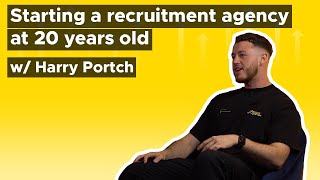
Harry Portch started HM Staffing at 20 after just 18 months in recruitment, launching from his dining room table in December 2018. He built the agency to nine staff by focusing on a local Berkshire market and using humorous LinkedIn content to drive inbound leads, while learning to handle rejection and age-related bias from clients.
Chapters
Welcome back to another episode of the Recruitment Mentors Podcast. I'm your host, Hishem Azzouz, and on this week's episode, I was joined by Harry Porch, who is the solo founder of HM Staffing. After 18 months working for another business, Harry decided to go out on his own. Some may say that's naive. I think he'll be the first to say that He owned that and was naive at the beginning of his journey. But they've now been in business for 4 years and he really shared with us in this episode the highs and lows of going out on your own with, let's be honest, not a ton of experience behind you. He shared with us the challenges that he faced being a 20-year-old solo founder of a recruitment business and the tons of challenges that have come along the way from hiring, from growing, but also plenty of the things that they've learned, how they've done things differently. They've really invested a lot into marketing and really going against the norm of what a typical recruitment business should be doing. I'm really excited to see this business as a far evolve, but look, that's enough from me. Enjoy this week's episode. Harry, welcome to the podcast.
Thanks for having me, mate.
Thanks for making the trip.
I was all right, wasn't too bad. No cancellations, nothing, just came.
Yeah, straight through from Reading. Yeah, which, um, you've, you've built a local Reading recruitment business, which I find really interesting, which I know we're going to go into. But thanks for making the trip. Uh, I guess I always like to start with the million-pound question, and I'm sure it's something that you've thought more and more about since having your own recruitment business. But I guess just to help people listening to sort of understand where you're at on your journey, feel free to I guess fill in any of the blanks. Yeah, of course. But what I just found super interesting about your journey is you're someone that, yeah, worked in recruitment for less than 2 years, so 18 months, then started your own recruitment business, and you've been on that journey now for the last 4 years. So today there's 9 of you in the business, um, have an office in Reading, satellite office in Manchester. You just recently launched your first academy where you've hired a couple of people at the same time and you're taking them through a whole journey. And I think in this, in this conversation, I'm really keen to talk about the highs, the lows, the challenges, and everything that you've learned along the way in these last 4 years. The fun stuff, isn't it? But if we could start with, yeah, like when I say to you, what are the characteristics and traits that you believe make up a highly successful recruiter in today's market? What comes up for you on that?
There's so many different things. There's one that always stands out for me, and it's just having guts. So not even just with guts like picking up phone, but having those like really difficult questions with candidates, clients, um, pick up the phone is one thing, especially when you first start, right? I think everyone's a bit scared to pick the phone up, especially when it's clients. But the other thing as well is not to take things personally. I used to, at the start, if someone said no, I thought they were saying like no to me personally, and I'd get so caught up on it, and I'd be thinking in the back of my head for so long. And then I had to separate that, okay, it's not actually saying no to me personally, it's, you know, it's saying no to recruitment agencies, no to the company because it would proper bug me. It would bug me for so long if I could say a client didn't want to work with us and everything like that. But they're two things that I think you, you have to sort of get from the start. Having the guts is, is massive as well, right?
On the taking it personal thing, I'm sure you've had to help people with that now.
Yeah.
Let me just ask you something on that because I think a lot of people listening— I definitely struggled with that early on.
Yeah.
Because you're dealing with people as well as you're product. It's— there's a lot more emotions. So like, I know you just said there you had to separate them, but like, what if I'm listening right now and I am taking things personally and I find myself thinking about that client rejecting me 3 weeks after it's happened?
Yeah.
What's your advice to those people to get better at, yeah, moving away from that or not taking the emotions out of it?
It's a difficult one, isn't it? Because it— one day it just happens, and it's one of those things I just have to remind my team all the time, and they're not saying no to let's say if it was Jack, they're not saying no to Jack Bannon, they're saying no to Jack Bannon from HM Staffing. It's two different people right now. When you come into work, you're someone, when you leave work, you're that person. That person's not gonna— say if you're face-to-face, right, and you ask that question, the likelihood of the response they gave you on the phone in person is not going to be the same. That's going to be quite rude on the phone, for example, can't they? Which are interesting, interesting people. But yeah, it's hard to actually do it. I think it's just a constant reminder. I have to keep telling myself, keep telling myself, keep telling myself that it's not personal, it's not personal, it's not got personal until it actually stuck. I don't think it's something you can teach yourself how to feel.
Okay, interesting. So having guts, I think that's interesting that you've said that because I feel like looking at your journey, you've probably had to have quite a bit of that.
Yeah, and naivety.
So you worked in recruitment for 18 months.
Yeah.
And then you decided to start your own recruitment business at 20 years old. And then you've obviously been on that journey now for the last 4 years. So when did you start the business? That would have been 2018?
Yeah, so in December time.
December 2018?
Yeah, back end of December. So I was completely done with the last agency I was at.
Yeah.
And I just thought, you know what, why not? I didn't want to go work for someone else. I mean, I was saying to you, I'd been on a night out with a mate in Bristol, I woke up and I had like 4 calls from internal recruiters in Reading. I was like, how'd you get my number? And everything like that, like it wasn't anywhere. And then Yeah, I think it was that moment I was like, I don't want to work for another company like this. I don't like how a lot of things are done with recruitment agencies. So I was like, right, I'm just gonna do it myself, which was, um, I was naive at the time, but I think it's paid off quite well.
Let's just break this down then. So first year, so the whole of 2019 basically was your first year?
Yeah, pretty much.
Like, what was the mindset? Was it like, and what were your circumstances? Were you living at home with the parents?
Yeah, so living at home, so I didn't have any bills in that sense. I owned my car and everything like that. So I didn't have any major outgoings. I just thought, what have I got to lose with this? I knew that there'd be certain clients that want to work with me, and I was thinking, right, let's say if I can bring 2 clients on and do £40k in the first year, that's more than the salary that I would be getting elsewhere, plus probably enough to cover my costs. And then we got, yeah, we had a few clients that came on board straight away that I was like, right, what are we going to get this first year from you guys? And we worked out that, okay, we're actually going to do quite well. So then I thought, Hired people in, got an office. It was my dining room table from December to March. Then it went to this office that was probably about the size from like me and you sat away. It was horrible. We lived in it, had no windows, nothing like that. It was a proper box. But yeah, it was interesting.
So dining room table for the first couple of months, just, I guess, like you said, what's the worst that can happen?
Yep.
Try and do some deals. Did some deals. How long did it take to do your first deal, do you remember?
6 weeks.
6 weeks, yeah.
And that's from actually setting up— actually, was it— yeah, 6 weeks till the invoice got sent out, right? So I was like, right, what am I going to do? Like, it came on in December and I was like, it's over Christmas, everything like that. And they were like, oh, we'd look at it in January. And I'm like, okay, that's fine. I was like, Excel spreadsheet was up. I was thinking which job board's going to be the cheapest for me to find someone. So I trial with— I think I went CV Library and that's how I got the first one in. So I didn't really have to pay for anything. I was just using like my own laptop, my personal phone, everything like that. So yeah, it's 6 weeks until the invoice went out and they started, and then that was when it really hit. I was like, right, okay, we can actually build something here. And they gave us another 3 jobs. Really? So straight away I was like, right, okay, hang on, we've got some momentum here. And then it just carried on from there.
And then you made your first hire in April?
Yes, so April, hired one of my best mates.
Your best mates? Yeah. And then was it just you two for the rest of the year?
It was us two for 3 months and we hired 2 people. Yeah. Which, yeah, some of the hires didn't work out. I think I was at the start looking at, all right, would I get along with you? That's it. I wasn't looking at anything else. Like, could I go have a beer with you? Could I chill with you? And everything like that, which is definitely not the right mindset for hiring. And I should have known that because we hire for everyone else, right? But when it's actually hiring for yourself, it's a bit different. So yeah, we made some wrong hires and everything like that.
You'd be surprised how common that is.
Everyone does it.
But so just so we understand, so the end of the first year, did it end up still being just you and your mate despite—
No, there was I think there's 4 of us by the end of the first year.
Yeah, okay. Let's just talk about this first year then for a sec, because I think a lot of people, like you just said there, you went out in Bristol, or let's say you went out down the pub in Reading and a bunch going to meet a bunch of recruiters.
Yeah.
I think a typical sentence you'll hear is, oh, one day I'm gonna do it on my own, or I know I could do this on my own.
Yeah, definitely.
A lot of people don't have the guts to take the first step.
I did it in Turkey as well. I was in Turkey and I was just, I was with my mate at the time and there was 2 recruiters and they were both talking about it and I just jumped in the conversation. I was like, I'm not getting involved in this chat. But yeah, no, you hear it everywhere.
Yeah. So like, what in that first year— I know you said there's plenty of obviously you being naive, what have you got to lose— but what was, I guess, most challenging that first year that you least expected?
I think it was like personal battles. I think there's a bit of an ego that probably came with it because it started doing well, started getting clients in, and I really thought that I was the man to a certain degree. But age came into it a lot, right? A lot of— we go meet clients and stuff like that, and they'd look at me and they'd be like, you're a kid. 'Oh yeah, that's so much.' And I was just there like, 'Yeah, but okay, let's say if you go and dealt with a consultant at one of the bigger agencies, the likelihood is they're going to be similar age to me,' right? So we had that quite a lot, and that was something that was used against us, and now we switched it around. Now we use it in more of a positive way. That was something we had quite a lot, and it was a big challenge to sort of overcome that. Managing people that are older than me, that was a real big challenge, just more of a learning curve for me. I probably did it wrong as well. Looking back, there's probably certain things I should have done a bit better, but I'd say they were the big, big challenges in that first year.
So quite a lot anchored to your age then?
Yeah, oh, it always is, always was at the start. But then I had to chip my shoulder about it as well.
Do you think you brought that on yourself? Like, because did you almost potentially go into situations thinking, oh, like, are they going to think, like, I'm just too young?
Yeah, 100%. I used to see it as a negative, so then I felt like everyone else saw it as a negative. So then as soon as I overcame that and I was like, you know, I can actually make this like a really positive thing, and that works so well for us when we talk about it. But yeah, back then it was because I saw it in a negative way, it means that everyone else did.
That's so interesting because I think people would assume, yeah, like, but at the same, like, when you say you've now turned it into a positive, yeah, so the negative perception of Harro is too young to be doing the, to be running his own recruitment business, or them potentially thinking that I'm too young was what you— you haven't got enough experience. Like, yeah, that's what you— that was like the story you were telling yourself.
Yeah.
But then what, what was the story you started telling yourself as to make it more of a positive?
Well, at that point, age—
I got older.
First of all, we had more years, years of experience, so it didn't look like something that was in the first year. We could say, okay, well, he set up when he was 20, you know, nearly 4 years old now, we've gone and done this. And I think the little achievements along the way kind of helped me framing a different position. So winning awards, or we spoke up for LinkedIn, and then when we throw those things into the story, then it turns out to be really impressive, not just some kid that's trying to do it his first year.
What I take from that is you've, over time, obviously you've gathered more and more evidence as to why you— Yeah, you can—
Why I was being naive. Yeah, yeah.
Like, what would you say to Harry then if you're starting again? Like, because clearly you've gone on to continue to build credibility, back yourself, more confidence. But like, what would you go back and say to Harry, who had that real chip on his shoulder and viewed his age as a negative thing going into that first year?
I'd say one thing, don't take things too personally. I used to say it to everyone now, but just to shut up a bit as well. Like, I just would talk way too much, but like tell everyone what we were always up to and everything like that, which probably didn't help. In fact, everyone's like, oh, he's just a kid, he just like talks way too much and everything like that. We spoke about like ego side of things on the call before. I said, I think that does come in. I I think when you put yourself in a position where people are looking up to you in a business world, where they're looking to you for management or jobs and stuff like that, then that does inflate massively. So I'd say just watch that and don't take things too personally.
So you almost, you think maybe you overcompensated by, yeah, just speaking a lot?
And yeah, oh, 100%. So I just learned just to be quiet sometimes. Like, even in client meetings, you're just rambling on and someone's like, oh, tell us about yourself, you know, speaking for like 5 minutes, thinking, what am I doing? Just calm down a bit. But yeah, there's a lot of pressure on— I put a lot of pressure on myself to make sure that it succeeded because of other people thinking that, oh, it wouldn't, and stuff like that.
And then, so then at that point as well, like, what about like mentally outside of work? Or like, did you have any challenges there? Like, was your family super supportive, or were they thinking like, what is Harry—
No, they were supportive. They were, uh, we were in the office from like 6 to 11. I probably put on like 30 kilograms as well. Oh yeah, it's horrible. Well, we were just taking like delivery every day. Um, it was such an unhealthy life. I wouldn't go to the gym for ages just because I'm there like, no, I need to be at work, I need to be working constantly. Hardly saw my mates and everything like that, so those relationships and such obviously took a bit of a turn, everything like that. There was like, 'Oh, he thinks he's too busy for us.' It's like, 'No, I'm just really trying to focus on this and build something for my future.' So a lot outside of work, definitely that first year took a bit of a hit.
But so did you almost— it's like, did you have it? And I guess at that age as well, I mean, I'm 29, so when I was 20 I definitely didn't have— the only thing that I found myself doing was I was selling products on Amazon. Yeah, it wasn't like I was hiring people and stuff like that, but that can be difficult when you're at that age and you have no one else that is on like a— did you have no one else that was on— obviously you hired your best mate, but there's no one else on like a similar path?
Not that I could see, not, not in that space anyway. There's a few people that I knew that had— my group's changed, you know, throughout the years, and now there's a lot more business owners in that friendship group and everything like that. But at the start, no one else that I knew was doing anything similar, so that felt lonely. Yeah, yeah, massive.
And they almost felt like, again, you were too busy for them, which is the ego thing again.
It's an awkward conversation to have, but when you do then go out and everyone's like, oh look who it is, and stuff like that, and you're there like, really, we're doing this? But yeah, it was tricky at the time because I just wanted to be out with my mates. There were so many times I was thinking like, should I just sack this off, you know? Go work with someone else and I can still actually enjoy my childhood, I guess you could call it that still. Because that's what everyone says, like the best years of life, you're 18, 19, 20, 21, that kind of stuff. Like you're out with your mates, you're making memories and stuff like that. And I was just sat in a box office for most of the time.
But just putting on loads of weight.
Yeah, yeah, the life, the life. Looking back at it, there's some photos we did recently, a company presentation, and there's a few photos of me then. Everyone's like, who's that? And I'm like, really, that's me. I'll show you some of them after. They're gold. They are gold.
Yeah, yeah. So you mentioned that. Why didn't you quit?
I don't know. At that point, I was probably thinking, I know I need to do this myself to prove other people wrong a little bit. So I think in that first year, I was thinking, I can make such a better salary, I can make so much better money. And I'm thinking, no, this is definitely a long game. And then as the years went on, we put the right people around us and stuff like that. And I'm so happy that I did stick out. My brother was quite big in that, actually. I said about anything like that, he'd just give me like a funny look and be like, what are you on about?
Your brother, how old's your brother?
25 now, so he's 18 months older than me. So he'd always like be on my shoulder like, what are you talking about? He'd be like, shut up, just get on with it and stuff like that. And he's quite brutal. He's still like that now. If I moan about anything, he just tells me to shut up really. But yeah, no, so he was quite big in that as well. So I don't want to let down the people that supported me as well and showed a lot of love for that early stages. So that did keep me going a lot of time in the dark days and stuff like that, when you sat in your car thinking like, what am I doing? Is it worth it? And everything like that. Those people really kept it.
So, and then the final thing then, a lot of people underestimate, like, I know you said at the beginning, like, oh, you literally had your laptop, Excel spreadsheet, you literally had the trial on CV Library and you found someone that you placed. But like, operationally, the business stuff that oftentimes I speak to people and they underestimate how much time that takes, or like, yeah, what's involved in terms of like the finance side of things and like the operations. Was any of that difficult, like, in the first year? Because obviously before, all you had to worry about was you just looking at your pay packet and if you got paid the correct commission or not. Like, you didn't have to worry about all the other stuff, right?
Yeah.
Was that a challenge in that first year, adjusting to that?
It was. I don't feel like I did it very well. I was quite lucky with one of them because my dad's an accountant.
Your dad's an accountant?
Yeah, so I was quite lucky with that one because he managed to help me out with sort of the finances, as in, like, looking at them and looking after them and So he supported me with that part of it, but the rest of it, I was shocking. Like processes and stuff like that, I just wouldn't document anything. Like looking back now, I'm thinking, oh, if I'd have actually done that right at the start, then I wouldn't have to be doing it now, and so many different things with it. But yeah, that was a nightmare.
So the main thing, when you say processes, like what do you mean?
Even stuff like now I wish I documented, it would be stuff like, okay, how you find a candidate and stuff like that, and actually just document it, especially at the start when I had a lot more time. He said, now, try and document it over the last 3 years, been doing it and stuff. All that, having a system from the start. Obviously I'd get a system, we use Vincere now, but I'd get that early as I could, as soon as I had the budget for it. I didn't really do it for 6 months.
What, were you just using an Excel spreadsheet?
Yeah, just downloads to my laptop and I just like would remember it in a notebook and stuff like that. But yeah, it wasn't too challenging, but I'd get stuff like that straight away, you know, start documenting everything from the start because at that point is you're never going to have to go back and redo it and everything like that, or be worried about what could happen of, you know, having a CV on your laptop and GDPR and all of that.
No, no, I just respect that because I think what you just lent into was just taking action and then like working out as you go. I think a lot of people think they have to have all that sorted out before they can even take steps forward.
Yeah, yeah, I'd have it on my phone as well, just like it literally was just my phone, laptop, Excel spreadsheet. I say Excel spreadsheet, I probably used it like 5 times, right? I did not keep track on it. I had it there and it was supposed to be used and I used it a bit and it would be more like, okay, so I had an interview I'd have it all in there, but I'd have my calendar would just be full of just like everything, interviews, calls with everyone. I'll be religious with that. I've still got my notebook from my first year. Yeah, yeah, my handwriting is terrible. I'm getting slated on LinkedIn at the moment because everyone keeps posting our non-negotiables and everyone's like, who's written that? And everything like that. And it's like, me. Yeah, it's terrible.
So what I really find interesting about your business is like how you've really focused on it being localised.
Yep.
Because I'll be honest with you, most people that I sit down with, speak with, would say like in today's market, you, it's really important that you have a niche and a focus.
Yeah.
And I know you have a few different sectors that you focus on, but I don't know, from what you shared them, and feel free to add context, whatever, it also felt quite general. But like what you focused on is it, is it been really local in terms of mainly around the Reading area?
Yeah.
So talk to me a bit about how this sort of approach to your business has evolved? Like, because obviously if I went on your website, there's a number of different sectors on there, but how have you approached that? And I don't know, how has this sort of focusing in your local area played out?
So that's the thing, a lot of our stuff's Berkshire, like 90% of it. The other 10%, you know, we do go into London and stuff like that. It's normally when we get brought into London, it's never normally that we aim and target companies in London, but it slowly has sort of progressed. We've got a few in Manchester and everything like that where the satellite offices and stuff like that, but it was kind of what I was used to doing, the office support, sales, marketing, HR, those key areas there. But also a lot of the clients that we get in with that might have a marketing manager role for us, the likelihood of them having a sales team and an admin person and an admin department or HR and everything like that is so high that normally we'd get in with a company and the repeat business in there is so much that it's a lot easier for us to do that than focusing on 100 different marketing manager roles and only working that. So that's how we split it between desks. So it'll get to a point soon where we've got 2 people per desk.
So how do you split it? Sorry, what do you mean?
So it depends on the person and who I think they'll be best speaking to, because the candidates for all those different roles are so different. So it's normally split between sales, marketing, HR, office support, and then in the sales and marketing bit, it's a bit bigger because then they split in between them with sales.
So you have people that just do sales and marketing, HR?
Yeah.
But then it's not like sector specific, it's just more like local, in the Berkshire area? Exactly that.
'Cause a lot of the people that are good for, let's say, like a telecoms admin role are also good for a retail admin role or a sales admin role at a manufacturing company. A lot of them, it's a similar background and they're all looking for the same thing. So us being really targeted to, let's say, only cyber, okay, well, the people we're placing there would also be good for a different industry. So for us, it didn't seem much point having that really specific. Don't get me wrong, there's a few of the guys that they really focus on certain industries and stuff like that just 'cause they've got good candidates in those areas. But it's such a mix, which makes people a lot of time actually come into work, enjoy it a bit more as well, because they're not constantly just speaking to the same people non-stop, same industries. They do get to work with mix of clients, which I know they enjoy.
Because I think one of the, obviously, one of the things that I think you guys have done really well, and I think if people almost know you for, is your brand. Yeah. And I think when we were speaking about this, I think what I found really interesting was how much of a positive impact it's had on just you being a local business, hiring local people, recruiting for the local area. Like, you was telling me how, like, yeah, you could— like, if you think about it, the, the people that you hire that might be a bit younger than you or whatever, like, they will know people that have worked in the local area, and it just all just keeps growing. And I just found that really interesting. But I guess talk to us a bit about, like, why have you really tried to go against the status quo? I think that's how people would— I don't know, I was looking at your post today And like, I feel like that's almost a perception that you've built, like you're going against like the grain or like how to typically do it. Where, where's that come from?
I'm not sure where it's come from. Well, I know where the videos have come from and that kind of content has, because a friend of mine, he owns a company that, that's what they specialize in for massive, massive brands. And I thought, could we make this about recruitment work? So we started doing that, and then I've given the team just like flexibility to their LinkedIn, you know, build your own personal brand, make people laugh on it, and people remember you. So I went to a meeting with the council doing some advisory work for them, and there was someone there just recognized us from my LinkedIn content straight away, and they were just laughing about it and stuff like that. And they were like, oh, do you want to have a chat about recruitment as well? So all these good conversations have been coming from it. But yeah, we get the flexibility for them to kind of do what they want within reason. There's a few posts that I get sent like, oh, what do you think about this? A bit risky. And I'm there like Yeah, no, let's just leave that one out. So yeah, some of them, and I'm thinking, why do you think that that would be a good idea? But some of them do really well, like the ferret one Jack did the other week. I think it's done like 2 million views now, and I know for a fact that he wouldn't get that exposure doing like a recruitment post, something just about recruitment. Oh yeah, recruitment, I'm finding this in a trend and that and that. And I think, right, well, which is the way to get out there? You know, we haven't got this big marketing budget that a lot of companies have, 'Let's have some fun with it.' And it's done, it's done really well for us, to be fair. And it's made that brand really strong that when we internally recruit, we've never struggled with applicants. We get loads come in.
So it's impacted internally.
Yeah.
What about, obviously that was one of my other questions, like how, because I think I saw, I think I wrote it down here, like one of the posts that you did was around, I don't know if it was you or one of your colleagues, but like I think it said like, 'I still find it funny how many people say your post videos are cringe or embarrassing,' but then like you, but then you actually get business. Yeah, yeah, from it. You just mentioned there—
I got wound up that day.
Yeah, but like, obviously you just mentioned that it helps you hire internally. Yeah, that's a huge challenge for 99% of recruitment businesses, so it's helped on there. But how was it— how has it manifested investing in your brand and doing things a bit differently on like client acquisition or other parts of the business? Like, how's that?
That normally helps. Normally helps. Um, I had someone the other week, um, they're a client and we don't want to work with them anymore, and they sent like this ridiculously long abusive email, and it did say in it like, oh, 'You don't care about your business because of the shit you post on YouTube.' Oh wow. And I was like, okay, fair enough, that's your opinion on it. But that is also that that MD of that company is probably in their 60s, not understand what we're trying to do and who we're trying to get in with and everything like that. But most of them love it, most of them absolutely love it. We've had some massive, massive companies come on from it. The ones that don't like it are really traditional businesses that are still stuck in the past, in my opinion, or recruitment agencies. A lot don't like it. I've heard quite a lot about it. When I go out, people say, oh, my director hates your content. I'm like, okay.
Why do you think that?
I think it's because it's different to what it normally is, and they might be seeing people engaging with it and they wish they could be getting the engagement on it. It could be anything, or I wish we had that idea. Because a few people said to me, I went to my director and said, oh, we should do a post of this, and he was like, no, we can't do that, that's ridiculous, and stuff like that. It could just be a bit like, it could be a bit of jealousy, it could be anything, but I think where we're trying not to be stuck in an old way and actually be forward thinking and thinking, well, how can we get out there without spending, you know, thousands and thousands? That studio that we record everything is in our office, so it's literally next door, we're in a serviced office, so for us to film content, we literally go in there for half an hour on lunch, do it, and then come back in, they send it to us the next day, it's done.
So when you say it's like just to be clear, like how does it actually happen? Does it like, do you or any of your team literally get messages like, hey Harry, we love your content, we've got a number of roles at the moment, like we're local, would love to speak to you, like what does it actually look like?
Yeah, so we had that the other week with one of the, I'm not gonna say the company, but yeah, yeah, well it's probably on the, you know, household name, I could say it off camera and you'd be like, yeah, I know them straight away, and it happened again recently, um, they just be like, look, love your content, um, really want to work with you guys, we like what you're doing, we think you're quite funny, or we like the brand you're trying to build, it's a bit different, it's refreshing, which is what we're trying to be. And we've had, I think, about 5 or 6. I think we've done about field roles from it, probably about 25, I'd say, in the last year, from actually just posting constantly about stuff. That's inbound, which just means as well it's just less outbound activity, which I think everyone would love that to happen. That less outbound, more inbound, which is where we want to get it to be. We want stuff coming in all the time. But yeah, we get reached out on LinkedIn about it, people call the office saying, I found this video funny. We've got 'Hey, we're looking for a role in HR, can you guys help us out with it?' But normally it then puts us in a position where when we say our fees, people aren't arguing it. 'Oh no, I don't want to pay that, I'll be paying 12.5% instead of 20% or 17.5%,' for example. Most people, when we say our fees, they go, 'Yeah, that's fine.' So it's helped us put us in a position of authority, you could say, and people don't really argue that part. So we get better fees, better clients, and actually just all-round better relationships.
Hey everyone, a real quick one from me. This podcast would not be possible without our amazing podcast partners Vincere and Sourcebreaker. Because you listen to this podcast, you're able to get your hands on exclusive savings on both of these award-winning products. If you're a growing recruitment business, you have to check out Vincere, who are an all-in-one operating system for your growing recruitment business. With Sourcebreaker, if you want to make sure that all of recruiters have the best tools on the market to stand out and beat their competition, then you have to check out Sourcebreaker. Use the link in the show notes, in the comments below, and you'll be able to get yourself exclusive savings on these amazing products. And like, yeah, I think, I think what you've definitely nailed is like the, the comedic element as well. Obviously, I really enjoyed that video that you guys put together on like obviously reading the, the tweets. Yeah, that was good. That is, yeah, it is Look, that's a big part of why I started this, because I actually do, I guess because I'm in my little echo chamber, like I'm speaking to people that want to be the best recruiter they can be, want to deliver the best service, want to change the perception of the industry. But there's still so many people out there receiving poor experiences. So yeah, like, yeah, if you haven't seen that video, definitely check it out. It is hilarious in terms of reading the tweets and what people say about recruiters.
There's one person that they've tweeted or they've been involved in every single video we've done because they're so active about the hate for recruiters. And we're doing a few more and he's in it again, and then I'm going to reach out to him and see if he'll do a video of us, him and George. Yeah, Jeff versus George is what it's going to be called. But yeah, I feel like he's going to say no, he's some big, like, some CEO in America. But yeah, I want to see if I can get on a Zoom call. I think it'd just be funny. Anyone that's seen the content will then be able to appreciate it. But yeah, we're doing a bit more about what people think about recruiters soon.
So how has, like, let's just fast forward a bit then. Obviously you then had to go in COVID. That must have been a challenge. But I guess what I'd be interested to go into is, like, how obviously you started, like you said, a bit naive, had a bit of a chip on your shoulder, 20 years old, and you obviously wrestled with that. But how have you had to, like, evolve as a— Harry has had to evolve as a business owner. Like, what are some of the things that you've really had to, I don't know, be like harsh with yourself on and get better at and improve on and spend time on? Like, have you had to like grow up as a business owner?
A lot. Um, which is, it's just been a bit more mature about certain things as well. And I struggle to keep concentrated on anything. So I've got ADD, dyslexic and everything like that. So for me, it's like, that's a bit like ongoing battle. I'll get distracted of anything. And it's not letting myself get distracted with other people and stuff like that. I'd be the easy one to distract in the office. I should be the last one that should, that should be that person. Someone could just say something, I'll be there like, 'Oh yeah, what's that?' And then, yeah, so that's been one thing. The management side of things has been a bit more having a bit more sympathy with people and understanding people. That's obviously, it's always a bit of a challenge. I'm like, 'Just get on with your work.' It's like, 'What's wrong?' And stuff like that, and learning to understand people a bit better. But I said it's been part of like an interesting journey.
Because I saw that like you've got like a coach or someone that you work with.
Yeah, Dave.
When did that start?
That started just— we started speaking just before COVID it was actually the week before. We've got a few mutuals and everything like that, we always knew of each other. Everyone thinks he's fake, by the way, because his name is Dave Davies, so everyone's like, oh, you just give me a fake name to get out of this conversation. I'm like, no, like, that's legit his name. But yeah, we had a few mutual connections and stuff like that, and we'd always speak on LinkedIn. I met him out at Revista Cuba, we were out in Reading just before COVID happened. We got speaking in there And then we kept in touch throughout lockdown, we went to a lot of the same networking events, and it got to the end of it and I was like, yeah, I definitely need your help to a certain degree with the sales training as well. I think there's only so much sales training you can do as a business leader, getting someone else in, and that's what they experience in there, an expert in that industry, that area even, is so vital. I still get now loads of people, sales coaches, reach out to me. I actually had one go through an ex-girlfriend of mine, to try and get me as a client. Oh really? Yeah, really weird. It's absolutely freaked me out. Like, there must be like a referral fee in here somewhere and stuff like that. But yeah, I had from the other week, I'm just like, what are you going on about?
So what did you do with this guy?
So Dave, we see Dave every fortnight for half a day, sometimes once a month, depends on how busy we are. And the whole team, all of us, even me, will go and have sales training with him. And then I see him weekly every Monday and we go through sort of what challenges You know, he'd give me a bit of management coaching, for example, or if I say, 'I'm really stuck on this, how would you—' and then he gives me like a different perspective. Or say something's bugging me as well is a big thing. If I say it to him, you're like, 'Hey, why is it bugging you?' Let me break it down, and by the end of it I think, 'What am I doing? Why am I letting that bother me?' and stuff like that. But sometimes when you know that your decision you've got to make and you're putting yourself off it because it's such a hard decision to make, and he's a good person that I can talk through with it, and I come off the call and I'm like, 'Okay, I know what I need to do.' So how much does that help then?
So much, so much.
I don't think we'd be in a position where we are now if it wasn't for him. I've had some ideas that he thinks, he's like, oh, do you really think that's a good idea? And I'm like, yeah, I do. And he's like, why? And I'm like, I go through it, I'm like, that's such a stupid idea, like, what am I doing? But yeah, it helps massively. And I think that the age thing comes into it. I think he's been in business for like 30 years. I'm not going to say any anymore because then he'll tell me off saying he's old. But, but yeah, having that person I can turn to as like a mentor as well is so, so important for me.
And what would your advice be for someone listening to this that like would love to be engaged with someone like that? They're a solo founder, have challenges. Like it seemed it happened quite organically. It was a night out and you connected. But I don't know if you like, knowing how impactful that's been. Yeah. If you were to be like, right, I need to like be really intentional about finding someone that can help me with that. I don't know, what would your advice be to people about how to go about finding someone like Dave? It's a difficult one, isn't it?
Because most people say, I'll find someone in recruitment, an expert recruitment one, but Dave's general, so he doesn't just work with recruiters, he works with cybersecurity companies and data companies. He's worked with recruitment companies before, obviously, but I use him because for me he knows loads of industries. We work within loads of different industries, so it made sense. But don't post on LinkedIn. Recommendations and you get every single person in the world commenting their uncle, brother, son and stuff like that. Whenever I see that, I always message him saying I'll have a chat with Dave, who we use. But I'd meet as many of them as you can and actually see the one that you connect with the most, that you get along with, because you're going to want to spend time with them, which is going to help you in the long run. The reason we picked Dave is because of how much of a laugh he is and how I know how good he is. If I didn't have such a laugh with him, I couldn't I couldn't work from, I don't think it then would have benefited us as much. Interesting.
So what have been, like, if we think over the last, like, 2 years where you've really been obviously pushing the business forward, like, what have been some of the different challenges that you've found yourself maybe speaking to Dave about or having to work through?
I'd say team members is one thing. If it's something, if someone's done something, or if I think, right, 'Oh, do we want to be keeping you or not?' Performance of certain people, like stuff like that. That's the stuff where it comes so in handy because say if you've got someone, they're really not performing well, you've got to first of all think, 'Hey, why are they not performing well? What can I do to make them perform a lot better?' You know, the numbers go up and everything like that. So that stuff I speak to them about there. Or it's stuff like making decisions. There's some people that you really want to keep around but you really shouldn't be keeping around. I think everyone, yeah, everyone's got people like that, and talking Talking through that, that's, yeah, that's been a big, big help.
I've got to be careful what I say about some things like that, but yeah, it's, um, but like it's the people element, like running a business and the people element, making difficult decisions.
Yeah, it's clients as well actually. Um, he introduces quite a lot of clients, which is always great as well. So if anything, he makes the money back that we spend with him. It's great, it's a no-brainer. Um, there's sometimes there's clients that you think, no, I really want to work with, I really want to work through it. Okay, they're a bit worse fees, they've been a bit of trouble, they've been a bit of a nightmare. And he's like, why are you wasting your time? There's a few times that that's happened, I think. Okay, yeah, we end up dropping some certain clients over it, which has then helped us so much in the long run. But I wouldn't have dropped them because they're a big name client, and it's like, but it sounds good when I say we work with— we can say it. Um, but yeah, there's been a few difficult decisions like that. It's sentimental as well, isn't it? You might like, liked it when you were younger, or you've known about them since you were, you were little, and then you work with them now, and it's like a bit of an ego thing.
Oh, we work with So yeah, do you think people underestimate running their own, like how difficult it could be running their own recruitment business?
Yes, yes and no, depends what you want to do with it, right? You know, some people set up an agency and they just want to do it themselves, um, from their house and just them and everything like that, and I guess that might not be as such, but if you want to scale it past a certain point then there's a lot of challenges, like people, you don't think about how much challenges having a team around you really can can be, but there's a lot of— every single person's got their own challenges and stuff like that, and as the leader, you have to take them on and help them with that personally and at work. So yeah, there's a lot of challenges that people don't think of and underestimate massively, but it's not something that I'd say it should put anyone off. It shouldn't put anyone off wanting to set up, because learning and having those challenges come up all the time develops yourself. You learn how to handle them, you learn how to handle them quickly as well, so then next time it comes up, It's stuff that you can just deal with really quickly and move on with.
And then how has it evolved in terms of you thinking, like, started with obviously being in your dining room table, Excel spreadsheets, all that, to like now you're working with a coach, business coach, whatever you want to call Dave. You've got 9 people in the business, that's 9 people's lives that you're supporting with the business that you're, you're building. Like, how has, in terms of how you're thinking about the future of the business, evolved? Like has that become more and more clear, or have you struggled with like, oh, let's just worry about this year? I don't know, how have you found that?
I'm always planning the next thing. Okay. I'm always looking in sort of 5 years, something I do a lot with Dave. But then we fill that in with the team as well, which I think really motivates them because they see the more senior positions opening up, and okay, they could be a head of Reading, an area director, or in this role coming up, and okay, well, how do I get you there? And we sit with them and say, 'If you wanted to get to this position, you know, you need to be doing this, this, and this,' which really helps motivate them. So we're always looking into the future for that reason.
So is this a business that you do want to—
Yeah, yeah, we've got an idea of where we want to go. Manchester is definitely the next thing. Manchester is so much nicer as well. I was walking around today, not one person smiled. Everyone's so— Oh yeah, I know, I know. In Manchester everyone's like chatting to you, they're like, 'Oh, this is really nice,' but in London you don't get that. Redden, you don't get it either. But it's, um, yeah, definitely. We— I never want to have an office with 100 people in one office. I don't like— I wouldn't want— I wouldn't want to work in that environment, so I wouldn't want to put my team through it as well. But yeah, 20, 30 people is what we think per office, but having multiple offices focusing on local markets.
Because like, I don't know about you, but like sometimes when like in the early stages, all you can see directly in front of you are just like the challenges that you see, you know what I mean? So it can be quite hard sometimes to take a step back and get out the weeds. So like, has that— do you think that's massively helped you just have more clarity on decision-making and making the right decision? If you know, like, right, okay, the sort of 3 to 5 year goal here is going to be 20, 30 people in Reading, 20, 30 people in Manchester. Because I'm assuming you didn't always have—
no, that wasn't that. I think that came from working with Dave, right? Yeah. Of him saying, well, what's the bigger picture? Because I'd only used to plan about what's the next 3 months. What's the next 4 months looking like? And having that someone that actually makes you take a step back is massive. I never used to do it, I never used to do it, and then as soon as I've done it, the results, the billings, the motivation in the office, morale, everything has just gone up and up and up. And then everyone's really bought into this bigger picture that even in the first interviews, we'll go through what a 5-year plan looks like. We'll just go through it with them, and then at that point everyone's like, okay, right, I want to be involved in this.
It's crazy, yeah, like a lot of people can fall into the trap thinking, oh, I need to worry about that when we're bigger, or at this stage, but it has such an impact even on like, yeah, when you're hiring people and saying this is what you could be part of. How, like, as we come to the end here then, how has Harry got better at managing like all of this? Seems like you've, yeah, been willing to invest in yourself, get help. You've obviously been willing to learn as much as you can, improve along the way with people management, whatever. How have you got better at managing like, yeah, all of this going on, then your personal life, to make sure you're not, yeah, 30 kg heavy? Like, how have you found that?
It's a struggle, it's a struggle all the time. It's not like a magic answer, but 75 hard, we spoke about before, that's always been an interesting one. Getting up earlier, going to bed later, that kind of stuff. But learning to switch off as well for my personal stuff. So it gets past Friday at certain times, I don't have my emails come through my personal phone. I only got my work phone with me today, I started leaving it behind places.
So you've got two different phones?
Yeah, we didn't at the start, we did a lot of stuff with Reading Uni, um, like the students with temp stuff, like you'd get calls at 3 AM from like people putting in sickies and stuff like that. I like people, like if you had like social media links to your phone number, like everyone would be like adding your Snapchat and Instagram and stuff like that back in like 2019. And it's like, well, I can't be doing this, so this isn't good. So yeah, we switched that. So having that actual separation where, okay, well, I'm gonna go away or whatever and leave my phone, and I have my emails on my phone obviously, but the notifications don't come through. Um, it's the managing the work-life balance is the thing. That's what everyone speaks about right now, isn't it? About does everyone actually have one? So past a certain time, I won't do it. I won't check my work phone past 8 o'clock. It's those rules that I've built into my life that then have managed to mean that I can actually enjoy both sides of it.
So they've been some of the habits that you've worked on building? Yeah, massively.
It's stuff like when I'm on holiday, it's like trying not to check my emails. I do it all the time, but I do it like once. I let myself check in the morning. And I'll look, and then the next day.
So obviously you were just sharing about getting better at work-life balance. Yeah. Trying to sort of get better at, yeah, having habits that help you switch off these types of things. Yeah, interested to hear how you found— I know obviously when we last spoke, I don't know, it might have been before you went away or whatever, like how have you found stepping away from the business knowing you've got your office full of young, young people there cracking on without you there? I don't know, how have you found that?
At the start it was challenging, now I've got a lot of trust in my team, there's so much trust there. I know there's certain people that if people were slacking, they'd be like, what are you doing, come on, let's get on with this. So I have a lot of trust there, but if I go away I'll get those random FaceTime calls, not about work or anything like that. I was in Greece, I was like, me and my mate were just like, we were probably just relaxing, a drink from like 9 AM and stuff like that, and I'd get a call with them just being like, oh, we've had this sick thing happen, I'll be sat there just like absolutely smashed. But it was quite an interesting time, the amount of screenshots they got taken whilst I was away as well, they FaceTimed me and I'm like Just, yeah, but I trust them a lot. There's a lot of trust that I give them, like, quite a lot of autonomy around even their day-to-day stuff. We don't have start time and finish times, so they have their core hours. So someone gets at 9:30 and they normally leave at 6, and everyone just makes up these hours and stuff. That's where we put a lot of trust in them. It's a lot that's given back to us. So then I'm never like worrying, like, oh, what's happening? I wonder, okay, is someone booking interviews? Because at the end of the day, if they're not booking interviews, they're not making commission. So I've learned that part. I used to be like calling like 4 or 5 times a day, but now I'm like, I trust these people, that my business is in safe hands, because at the end of the day they want it to be part of their business as well. They want to be growing with it as well and everything like that, and like shares and stuff like that. So I trust them to do it.
So it's been a hard challenge to do that, but again, I think that anchors back down to like the thing you've been doing with Dave around like what the future looks like, what they're part of. 'Cause if you do the work on that and you do a good job of communicating it, then they're the sorts of things that these people should be thinking about and leaning into as to like why they want to, why they need to do what they need to do.
I get drunk texts off Jack all the time in particular saying like, 'H&M till I die' and stuff like that. It cracks me up and I'm like, 'Oh right,' I wake up, well, I'm not drinking, well, it's fair, he's not drinking at the moment either, but like yeah, we'd go on nights out and I'd hear him like shouting it from the other side of the bar and stuff like that. And it's like, I can't not, if I'm away, I'm there like, there's so much trust there and stuff like, obviously he's not I'm not being serious, but it might be, I don't know.
But has that become one of the best parts then?
Yeah, the people on the journey, the people and the culture we've built. It's like it's written on our walls, culture comes first. The new people that have started in the academy, they've really bought into it as well, and they've settled in so quickly. Like, I walked in the other day and one of them was like, oh, you're right, and said a rude word about me, and I'm like, hang about, you can't talk like that. And it's just, yeah, it's funny, but The school I went to was a Quaker school, which is like a really weird thing, but everyone's equal, so you don't get hierarchy and stuff like that. And we've kind of put that into the business, so everyone kind of feels on the same level. There's certain times obviously they know it's not and everything, but the culture is so good at the moment and everything like that, which is why we're so fast about who we bring in. And that's what's led to the trust and me to be able to step away and go on a night out or take a day off and go up to see my mates in Manchester or Hull and not have to actually worry about what's what's happening now.
So to wrap up then, I guess what would be good just to hear your thoughts on would be like, yeah, if I'm listening to this, I'm 20 years old, yeah, found myself having some recruitment experience, and I'm like, you know what, I really fancy this entrepreneurial journey, don't want to work for someone else anymore. What advice would you give them, or what would you say to them? Because that was you.
First thing I'd say is, what have you got to lose? 'Cause I remember someone said that to me, don't ask me who, 'cause I have no idea. I should remember that. But then I was like, what have you got to lose? Let's say you do it for 6 months and it doesn't work out. What are people gonna think? Oh, they're gonna think he's failed. No, they're gonna think it's a 20-year-old trying his luck. Fair play, a lot of respect. I would never look at someone's journey if they failed to have business and like laugh about it. You'd think fair play, like there's a lot of respect there, there's a lot of guts there, a lot of courage and everything like that. Like, if you didn't try it, would you regret it as well? So if you end up saying, 'No, I don't want to work,' go work for another agency. In 6 months' time or a year or 2 years, you'll say you're a top biller. That could be for your business. So I always think about that and just, just go for it. You've got nothing to lose. Um, well, there's actually areas when you actually look at it in a bit more detail, right? But there's nothing to lose as in what other people think, because it doesn't matter what they think. Because what happens if it goes really well?
Yeah, I think, look, fair play to you because I think clearly you've been on your own. Obviously the business has grown, but then you've also clearly been on your own personal journey as well, starting from obviously dining room table to then like clearly building a culture that you're proud of, having people on the journey, working with people like Dave to help you understand, right, okay, yeah, how can I think about this business in 3, 5 years' time rather than just 3 months ahead? Like clearly being willing to, like you said, have guts, do things differently. And yeah, I think just nothing but respect really and kudos to that. So thanks a lot for coming on the pod, mate. I enjoyed it. Thank you so much for listening to the episode. I hope you enjoyed it and got value from the conversation. If you did enjoy it, please don't forget to like, share, and subscribe, and we'll see you in the next episode.
More from Hishem




You don't need as many clients as you think to bill $1 Million A Year In Recruitment



From 30 Direct Reports to Back-to-Back $1M Years as a Solo Recruiter with Zach Creighton



