Hayley Still - CEO, Mother, Leader!
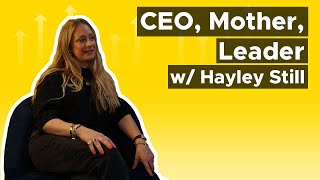
In this episode of the Recruitment Mentors Podcast, host Hishem Azzouz interviews Hayley Still, who after 12 years at the Hydrogen Group was appointed CEO in 2022. The conversation traces Hayley’s career from a law graduate and travel year to a recruitment consultant, highlighting the traits she believes make a successful recruiter – deep listening, genuine curiosity about people, self‑motivation and a clear financial purpose. Hayley explains her personal mindset, the influence of her upbringing and her mother’s reframing habit, and how she balances motherhood with a demanding role. She details the company’s culture‑first strategy, including the “I own my time” flexible‑working initiative launched in 2019, the recent purpose‑definition project involving 90 staff, and how these underpin the group’s values of freedom, accountability and empowerment. The discussion moves to practical leadership topics: how she transitioned into the CEO role by relying on instinct, building support structures, and adopting a “conductor” rather than “doer” mindset. Hayley shares the business’s resilience tactics – sector diversification, a balanced contract/permanent mix, a strong cash‑rich balance sheet, and a compensation model that keeps salary costs flexible. She reflects on past hiring missteps, emphasizing role‑fit over billings, and offers advice on inspiring more women in recruitment, stressing the relevance of traditionally female skills such as empathy and listening. Throughout, Hayley’s candid reflections on work‑life integration, mental‑health‑focused responsibility, and the evolving role of women in the industry provide actionable insights for recruiters and leaders alike.
Chapters
Welcome back to another episode of the Recruitment Mentors Podcast. I'm your host, Hishem Azzouz, and on this week's episode, I was joined by Hayley Still, who after working at the Hydrogen Group for nearly 12 years, this year became the CEO. This was a fascinating conversation. We discussed everything from leadership, purpose, working from home, and I really got to understand Hailey's mindset and why I felt that she was able to get the opportunities that she did. She's been able to continuously climb the ranks in a business that no doubt will be filled with some really great quality people. And Hailey was the one that was able to get these opportunities to become the CEO. And Hailey is someone that has got a fantastic mindset, and I am not surprised at all as to why she's being able to achieve the things that she's been able to achieve. Enjoy the episode. Hayley, welcome to the podcast.
Hi, thank you for having me.
Yeah, thank you for your time. Really looking forward to this. As I was just saying, before I ask you the million-pound question, which I always like to start with, I just wanted to— always like to just give people listening to this just some immediate context of the journey you've been on, where you are today. So feel free to sort of correct me, um, if I'm wrong on parts of this, but From what I understood in our previous conversations, you joined Hydrogen as a graduate in September 2007, and you've been there ever since. Yeah. And then in the last, obviously the sort of key piece recently is in the last 8 months you become CEO of Hydrogen Group and you're now responsible for circa 350 people across the group. And I know your role is multifaceted, but you broke it down to me as business as usual and projects, which we're going to talk about today.
Yeah, yeah.
So I think I'm really excited today to talk to you about your journey as a CEO so far, what you've learned, and just a whole mix of other things, right? But where I always like to start is, yeah, the million-pound question, something that you've probably thought really long and hard about, I'd like to think, in your leadership roles and these types of things. But in your opinion, what characteristics and traits do you believe make up a highly successful recruitment consultant in today's market? Let's start there.
Okay. And I've thought about this, I've thought about it from two angles, and just to clarify, highly successful recruitment consultant rather than manager or leader, etc. So it's about being a consultant. Yeah, okay. So I think the first one is actually being really good listening. So really good listener, so like asking really good questions and really genuinely listening to the answer, because if you don't listen, when you're speaking you're rarely learning, you're mainly learning when you're listening. And in recruitment, like, the really different thing to other jobs is the thing that you're kind of selling hasn't decided yet whether it wants to be sold or not. And you're also, you know, you've got two parties that you've got to be working with. And so it's like so crucial if you don't listen, you can't also have that like sixth sense as to what someone's not saying, you know, what kind of, you know, is going on behind the scenes. So that's the first thing, someone who has really good kind of questioning but listening skills. I do think that you need to be a people person, so I do genuinely think that you have to like enjoy people and you have to be curious about people, like I do think that that's important. You have to be self-motivated, it is definitely the kind of job that is limitless and endless, but you have to have that like personal kind of get up and go and motivation and want to achieve something for yourself, And then now this is a bit of a controversial one, so I know there's a lot of debate around this, and I'm going to talk about money. Now I think you can be intrinsically and extrinsically motivated, and I actually think the people who are kind of intrinsically motivated, meaning you're doing it for something within yourself that really matters, I actually think those people are probably the most successful because they're always kind of driving themselves. Extrinsically motivated is being motivated by things like money, job title, etc. But I do think in recruitment it is a hard job, and it's a really hard job, particularly for the first couple of years. And unless there's a reason why you would do this rather than something which perhaps doesn't have the potential to be as well paid, I'm not sure that you would stick with it and do it. So I do think from the money perspective, there needs to be a reason. And that's not to say that you are just a really flash person and want loads of money, but it might be that you need to support your family, or, you know, that there needs to be a reason why the potential to earn kind of a lot of money Even if it's not absolutely immediate, I think probably needs to be there.
Yeah, no, I think that's really interesting. I love the listening piece. I think some— I feel like a lot of people early on going on the journey with that, they sort of almost ask questions and they answer them before they even have the answer. And yeah, something you have to get really good at is something I'm always, even on this podcast, listening and like just asking something and shutting up. And it's a real skill. So like, there's so much that I want to unpack here, but I'm really curious about this. So How would you describe Hayley before recruitment? How would you describe that person?
It's funny, like, I mean, I was constantly losing my phone.
Losing your phone?
Yeah, yeah, yeah. I'm not like a particularly— I mean, I'm very focused about certain things, but things that it's not I don't care about, but it's almost like I feel like my brain only holds has only much like holds certain amount of information and the stuff that I really want to be focused on, I'm like incredibly focused on and the rest of stuff I can be a bit like haphazard. But what would people say to me before recruitment? I mean, I went traveling for a year before I went into recruitment, I was at university before that and when I went to university, I went with a couple of friends from school and then I have a group of like 4 or 5 really, really close girlfriends who I met at uni as well, including those 2. And so I honestly think I have never really changed too much, I've always been the kind of same person. Those 5 people would probably know how kind of focused and ambitious I really am when I want to be. Like, for example, I would never be the person, like, when we're traveling to, you know, keep track of how we're getting to places or what we do. I just go and have a good time, go like, this is great, I'm experiencing loads of stuff. But now, like, if I have to travel on my own, yeah, I totally can do kind of all of that stuff. But I don't think I've changed hugely during this journey, and I think that's partly because, like, my core kind of group of friends are still the same people that I was at school with. And so, like, yeah, kept me kind of exactly the same. If I suddenly changed or reinvented myself, it'd be like, what is this?
Who are you? Yeah. So I was obviously just speaking to you about this before, but I wanted to ask it to you. So you graduated with a degree in law.
Yep.
You do that because you want to go into law, in my view, or not?
Is that incorrect? No, I didn't. I didn't. I had good results from school and they said either do medicine or do law. And I was like, I'm really scared of blood and I don't want to cut up a dead body to begin with, so I guess I'll do law. Because I didn't really know what I wanted to do, and law is a very kind of broad degree which kind of stands you in good stead, or that's kind of how I perceived it to be.
So I was like, yeah, I did law at A-level, and then, but I just felt, I don't know, my perception of it— so thank you for sharing— that was just like, that is quite specific, do you know what I mean? But I'm sure, yeah, it will be very respected by employers if you have a degree in law. So I wanted to ask you, right, So I was reading an article on the way in today where like tuition fees could rise to like £24,000 a year, right? So I'm just really curious just to get your thoughts on like knowing the career that you've had and you've been able to build what you've been able to build at Hydrogen and your career in recruitment, would you have still gone to university knowing that that was going to happen?
Yes, because I think it really helped form the person that I am, and it allowed me space and time to learn how to live on my own, learn how to like do my washing. To be fair, like, yeah, but— well, like organize my life, you know, and kind of make all those mistakes and, um, yeah, like just have such a good time. And I'm making it sound like you spend an awful lot of money, just have a good time, but I do think that during that period you kind of mature in a certain way, and there is There's something that I think happens there which leads to the philosophy of what we've been doing at Hygiene, one of my philosophies, which is, you know, in, in school it's very structured quite often. In university there's this big shift where you're told, right, here is a timetable, so here's some lectures that you need to go to, here's some tutorials that you need to go to, but at the end of the day choose if you want to write a dissertation or you can do kind of other exams and 'Get yourself organised so that you pass these exams, write this dissertation,' but you're not told like what hours to start, what hours to finish, exactly how to organise yourself. And I think that journey of actually going from being kind of put in this very structured environment at school to less of a structured environment where you have to think for yourself and actually get yourself organised to kind of produce results is actually quite an important transition. And that's why, so something I introduced within the business in 2019 was a concept called 'I own my time,' and it basically meant that we took away kind of the working hours and we took away having to work from the office. You could work whenever, kind of wherever you want, and we judged the results, judged the business on kind of the results rather than the inputs. Because I was like, you know, why have we taken people from school, let them go to university or give them time to kind of grow up and then treat them like children again, put them in this like 9-to-5 mode. And the ultimate thing that happens is people act like children if you teach them by, you know, if you treat them like children. And if you run a business full of like rules and regulations and this is exactly what you want, this is what you have to do, this is blah, blah, blah, then all you ever find out about people is whether they can follow the rules. If you take away the rules but give them the ethos of what we're trying to achieve and why, then you understand whether that person has perhaps what it takes to be successful and, you know, who to invest your time in, etc., etc.
No, thanks for sharing that. I think, no, I think that's a really, really interesting way to look at it, and I had that written down around the I Am My Time, so I'm definitely gonna—
But that said, we do hire people who don't go to university, and I don't think for everyone it's totally essential. Everyone— and that's really something that I'm really focused on as well— everyone has their own path. And everyone is an individual, I wouldn't treat everyone exactly the same. What I would do is, if I knew you hadn't been to university, I would understand that you perhaps need to go through that transition with me, and me as your manager would need to kind of work on that and help you understand, like, these, these are the outputs that we expect, and but how you do it, and understand that you needed to make that transition.
Yeah, no, no, I really like that. I think holding yourself accountable, being responsible for yourself, yeah, that's, that's huge. So what, what I wanted to ask you then was, I know you said around, like, you focus, like you have a certain space to like focus on certain things and all of that. But like a lot of people, I think, outside looking in, or maybe internally, will be thinking like, what has Hayley done differently to other people to sort of get the opportunities that you have? And like, I was obviously in my sort of preparation, I saw that like a recent interview that you did with California Business Journal.
Oh yeah, yeah.
And I think basically one of the things that it was like sort of the headline there where If someone was to ask you 2 years ago, like, was becoming the CEO on your list of goals, you probably would have answered no, it wasn't, because I'm focusing on my task at hand. So I just wanted to start with, like, what do you, like, maybe in hindsight— I know you're sort of 8 months in, right? But hindsight into, like, for people that have big aspirations, that want to become a CEO, that want to become a director, whatever, what is it that you think you demonstrated, maybe without saying, or the things that maybe you did do differently? And let's be honest, in a recruitment environment that is extremely competitive internally and externally, that you think you demonstrated in your environment that you think were maybe some of the reasons why you got the knock on the door, the opportunity, as to like, 'Heiley, is this something that you would consider or be open to?' To begin with, I really just focused on my craft, like I just focused on being a really good recruiter, and that sort of partly what I was saying in that article, which was every role I've done, I've really focused on being the best I could possibly be in that, in that role.
But I have always, like, been looking around me at what's going on in the world, but also kind of assessing how we could do things differently, if we should be doing things differently. I would say that I've been, like, thirsty for kind of knowledge and experience. And less thirsty for job titles, and the job titles have followed because I've been like really keen and had always like this real growth mindset. And I think partly it's also speaking up. So I'm not afraid to speak up with ideas or views, opinions. I'm completely happy to be wrong, you know. I think that's how I learn and, you know, how I understand and hear kind of other points of view, etc. I talk about this because we do like a CEO induction where I meet all the new people who are in business. I love it, it's one of my favorite things to do because I hear all the great stuff about them. But yeah, that's some of the, some of the things I talk to them about is like, like, have views, look around you and, and have views and opinions and don't be afraid to kind of speak up. I think it's, it's part of that. I do have like strong vision, strong philosophy, but I just don't cut corners or just work really hard. And, you know, I've never tried to, I've never looked at how I could do something kind of necessarily quicker or easier. I've always just thought, how can I do it better and kind of get the best result?
I like that. So you said they're like having a real thirst for like knowledge and those things rather than job titles. Yeah, I think, yeah, and really focusing on your craft. I think that's really useful for people. And I guess something I've always picked up on in these conversations— be interested in this, I don't know what you think about this, but I do feel like sometimes, I don't know if you experience this in your management career, but people in recruitment particularly, they can do things and expect to get the promotion or expect to get the job title. They don't, and then they're demotivated. So I know you said you didn't have a thirst for job titles, but did you make it clear to the people that you needed to on your journey, like, what do I need to do to get— because I think sometimes people, people miss that.
Yeah, you see, if I didn't get a promotion, my first question wouldn't be like looking at that person saying, kind of, I deserve this. I want to know why, what more do I need to do, you know, what am I missing, what can I work on. I've never— one of the things I've always felt is I never want to be promoted if you don't think I'm ready, because if you're promoting me into a job which you're saying, you know, is at this level and you're now going to judge me at this level but you don't think I'm at that level, then help me understand what I need to do to get there. I don't want to put myself in a position where I can't do the job that you know, needs to be done. And I, yeah, I— but there have been times when I've said, help me understand, like, I genuinely think I'm there, or, or if I'm not, help me, help me get the experience, help me kind of—
I think that's the insight. So I'm glad you shared that because I think some people can do things and it's like they don't ask what that looks like, and then they go into their monthly review or whatever and they're like, why haven't I got a promotion? But they haven't, they haven't they haven't met that person, or at least ask that person like, what is it exactly that you need me to do?
Yeah.
And get that clarity. Yeah. You know, so I think that's really interesting.
Take responsibility for yourself. I like, I really believe kind of from a mental health perspective, one of the really most important things I think is it's not just about taking responsibility for yourself, but if you, if you don't do that, it's like handing over the keys to someone else for your happiness. It's like saying I rely on you and your feedback and your opinion for me to be happy, whereas if you know, you're always taking control and you're always looking at what you can do in a situation and what you're in control of, then your kind of success and happiness is in your hands rather than someone else's. And if it's in someone else's hands, you really feel quite helpless and hopeless. And that is quite at the core of people who do have mental health issues and are kind of struggling. And so whenever something happens, and there have been things that have happened to me that have been really tough, I've always tried to reframe it and look at what can I take from this. You know, what can I do differently? How can I kind of help myself not be in this situation again? Because otherwise, if you're just a victim or it's kind of you put too much on someone else, then you're not in control of it anymore.
Where does this mindset come from? Not everyone has, like, I'm like, I really relate with that and like that speaks volumes to me as well. I really believe in that, like I love what you just said there. And I, yeah, I speak to my friends about this a lot and these things, like, you're so out of control, as you said, if you're putting the keys on someone else. And yeah, I just love that. So like, how have you— not everyone has this.
Like, we cultivate this. People ask me this, like, right, what podcasts and stuff do you listen to? What do you do? And actually, specifically at certain times, don't listen to stuff so I can really hear my own thoughts clearly and get really clear on what I'm doing, what my vision is, what I really believe in. Um, I mean, a fair bit comes from my mom. My mom is naturally like this. She's like a really inspirational person, and she naturally reframes things. She's just real, really positive. And I don't know, I just think—
Maybe from your mom? That's amazing.
Like, we've never—
yeah, I guess maybe your mom hasn't sat you down and gone like, this is how you reframe this.
They don't work in— they work in sport, they don't work in business, which maybe helps in some ways. There's a lot you can learn from it.
But yeah, I guess you've taken in that she reframes things and These are things that she may look at some sort of scenario.
Yeah, I guess like little things that you can, yeah, I see her do it with my niece a little bit sometimes. She's like, "No, Connie, that's, you know, you know, look at it this way. Jude might have just kicked over that lovely tower that you just built, but think of it this way, you've got the chance to build it again." I love that.
So talk to me about how did you feel when you got offered the CEO position?
I felt completely bewildered, to be honest with you, and also I felt like, um, so to put it into perspective, when I had my baby in June, um, we had to move out of our flat 2 weeks later, moved into another flat, um, which was nowhere near my friends, it was like on the Isle of Dogs and stuff, and, um, when we started talking about this, I went in to meet Ian and John And I'd had to think, get my mum or someone to look after the baby, and he must have only been about 3 months old or something. And so I was a bit like, ch-ch-ch. And so when all of this was being talked about with the CEO stuff, I was just a bit like, really? But also like, well, yes, I would like to do that, and yeah, that's great. But it's a bit of a blur in many ways, and it was, and I, and it sort of slowly dawned on me. I came home and sort of said to my husband, 'Alex, you won't believe this, like, I might actually be going back as CEO.' And he was like, 'Wow.' And so I was a bit like, 'Yeah, wow.' And then just kind of carried on being a mum with this tiny baby that I was kind of struggling to work out how to navigate. So there was like quite a period where I knew about it and no one else knew about it. And so I had quite a long time to get used to the idea, but also— process it and get ready for it. Yeah, but strangely enough, it's felt like the most natural transition of any of the jobs that I've done. Yeah, a lot of people— and I don't know whether that's because I had the baby. So I had 6 months maternity leave, but then when I came back in January, I came back as CEO, and it just felt, um, I don't know, it felt really natural. A lot of people like, were you nervous going back to work? I was like, no, I was totally relieved because I did not enjoy being on maternity leave. Um, and no, I was relieved, and it just felt like quite a natural transition, strangely.
So I have— I think this is the right time to ask, ask this with what you just shared with us. So I've done multiple sort of women in recruitment series and, and these types of things, and from my perspective, from sitting down with successful women in recruitment, like, one of the things I've always picked up on is they can, they can often find themselves arriving at this sort of destination in their life where it's like, do I carry on putting energy and time into career or put it into family and raising a family and having a family? And I do feel like from my perception, again, recruitment has massively evolved. But I think a lot of the older women that I've sat down with, that was a really difficult time for them, particularly being in a recruitment context. So I wanted to ask you again, I picked this up in a sort of interview that you said, and this might just help people that are on a similar journey to you. And what I picked up on was you said you didn't meet your husband until you was in your 30s. So maybe a long, like a longer time than like the perceived time that you're meant to meet the person you're meant to be with, right? And you, you, you said, I didn't, I didn't dare to dream that I might get the opportunity to have a baby.
Yeah.
So like, I just wanted to, just for you to just share, if you're happy to, like, how, how did you, how did you make sure that didn't, like, I use the word cripple you, but I don't want that to be too extreme, do you know what I mean? Like, that, that's a lot of, like, pressure potentially you could put on yourself. Like, am I going to be able to have a child, these things, whilst also navigating a career and being successful? Like, how, how did you even if you felt like that, how did you make sure that didn't take over and then—
But the desire maybe to have a baby?
Yeah, like you may even thought it never would have happened.
Well, it's—
So much pressure for—
Yeah, but it goes back to that feeling of looking at the things that you are in control of. So, um, I wasn't in control of whether I was going to have a baby or not because I definitely wasn't going to have a baby with just anyone. I knew that. I prefer not to have a baby than have it with the wrong person because I take No, very seriously, I, I think that's the biggest, most important choice I've made in my life— who's going to be the father of my son? Because he has to live with that forever.
So, um, hey everyone, a real quick one from me. This podcast would not be possible without our amazing podcast partners Vincere and Sourcebreaker. Because you listen to this podcast, you were able to get your hands on exclusive savings on both of these award-winning products. If you're a growing recruitment business, you have to check out Vincere, who are an all-in-one operating system for your growing recruitment business. With Sourcebreaker, if you want to make sure that all of your recruiters have the best tools on the market to stand out and beat their competition, then you have to check out Sourcebreaker. Use the link in the show notes, in the comments below, and you'll be able to get yourself exclusive savings on these amazing products.
Yeah, I mean, I, I looked at it and I thought, do you know what, I have a career that I love. I love being in recruitment, and I love all my friends in my team, and genuinely You know, it almost worried me the opposite, that I would never get round to meeting anyone because I was so busy with my job and loving it so much. But again, like, that's the kind of thing that if you frame it in a way that I want to have a baby and maybe I need to put everything on hold to try and make that happen, it's quite a difficult thing to force to happen. And so I felt actually the opposite, work on everything else in my life. So work towards making sure I kind of bought my flat and I'd got to where I wanted to with my job and, you know, my other interests, seeing friends, exercising, all that kind of stuff. Focus on the things that I am in control of. And yeah, keep going out and trying to meet people, but I never wanted to look back and feel like I'd wasted that time. So I kind of held a deep-down hope or belief that eventually I would meet someone that I wanted to be with. And I just never wanted— I remember saying this to my friend on a dog walk once when we were both single and saying, I'm really worried that you know, we are worried that we're single and we're not going to meet someone, but once it then happens, I don't want us to look back on this period and think we wasted it by worrying or kind of, you know, prioritising that too much. Because even if it doesn't happen, you know, you've still got that life to live as it is. So I think that I didn't let that kind of weigh on me too heavily, although obviously it's on your mind, but I just felt like what would be would be with that, and I would live my life in the best possible way, giving myself like the variety, the best experiences I could, say I felt as fulfilled as I could. And if that came along, then that's amazing. But if it wasn't meant to be for me and that wasn't kind of my, my destination—
I thank you for sharing that. I think that would be really helpful for people to like say—
it's hard though, like you say these things—
I can't fully relate, but like I, I, I understand.
I get it. It is really hard. And some people possibly feel more maternal than I did. I didn't feel like I was put on this earth only to be a mother, but I know some people feel much more strongly about that than perhaps I did.
No, thank you for sharing that. So Let— so you had a couple of— even though you obviously, you was, you was processing being a mum for the first time, there's no rule book on that, right? You got told that, yeah, come back as a CEO. So you had a couple of months to sort of, I guess, yeah, digest it, process it. What was like— I'll just be keen to hear, like, what was Hayley's internal strategy of like, this is how I'm going to approach being a CEO for the first time? Again, there's no rule book, or I don't know, you like— what, what was the internal the internal dialogue of like, this is what I'm going to make sure I am, this is what I'm going to avoid. How is you going to approach it going into January?
I don't have that. I just be myself and I just go with my instincts. And I think that's one of the things that has stood me in really good stead. I don't second-guess myself and I don't— I'm really instinctive about what I do. So it means that, rightly or wrongly perhaps, that I don't sit and think for a long time. I just know I kind of know where I am, and I really believe that I believe in my philosophy to building teams, running businesses, and believe it's good and strong, and I also feel confident in my team and the people around me. One thing I did do when I went back was look very carefully at the kind of support that I had in place, so I said to John and Ian, if I'm going to do this, there's a couple of things. One, I don't want to travel constantly. I will travel a bit, but I don't want to travel kind of all the time, and I— so that's one thing. Also, like, I have a PA, but also some of what she does is supports me from a personal angle as well, because that's some of the kind of pinchy stuff that sometimes when you're really busy, you know, as a mum, yeah, and some stuff like my husband, that is not his domain, some of that stuff, and you have to be realistic about what people can and can't do, and, you know, I know he's not like he doesn't love personal admin either, so I wouldn't ask him to do it necessarily. And then, but then also at work, making sure that you've got the right support mechanisms in place. And when I went into it, no, I just was, I just thought like, be yourself. But also remember, I'd been out of the business for 6 months, so I went into it thinking just listen and learn. And in a weird way, it was quite a nice transition and quite easy for me because I could be like, I'm coming at this from quite a distance, which is what you need to do as a CEO anyway. You need to have that kind of distance so you can keep your eye on direction of travel and strategy. And yeah, it meant that I kind of naturally had that distance and I could just be listening and asking questions kind of legit because I'd been there, rather than suddenly switching from being like in the kind of detail. Yeah, it was like it almost made it sort of easier, I guess, coming at it from having been up.
I think that's great. So what's been maybe like the most challenging so far that you least expected? I know you said you just went into it, you brought your full self to there, you listened and learned, but like in hindsight, I know 8 months in, we're still in the thick of it here, but I know, what do you think?
Yeah, like, one thing I really didn't expect, and I have felt, and this might be potentially more of a commentary on me than the reality of what's going on, but I have always been like, as I am. I don't really think of myself as a CEO, I don't think of myself as particularly senior, I just am who I am. And like, I love people, I love all the people in my business, I've I feel really strongly kind of about that. But you definitely don't see me in suits. Like, what I'm wearing today is the kind of stuff that I wear. I always wear trainers, like, or Doc Martens or something, you know, like, I'm definitely not stereotypically what you might expect as a CEO, particularly perhaps in, you know, professional services type sector. And that's never bothered me in the slightest. I've always just been kind of like, yeah, just, I'm who I am. I feel it's been— I felt more pressure since I've had the title to be something that other people want me to be. And I can see it can sometimes make them uncomfortable that they're not quite sure how to kind of navigate it. And but I think that that is in some instances a commentary on where we're at in the world generally. Like, I think there's a real moment for women. I think women are having a particular moment where, you know, the skills that we have as females and can lean into potentially more easily than men can, although that's not to say that men don't have these skills, I definitely think they do, but some of those are perhaps valued more now than they ever have been before. And I think there's just a shift, this like, because what I don't believe in is the control and command type, like I'm the CEO so you do what I say. Like I believe I'm the CEO so I work for you guys, so talk to me, tell me. 'Who are you? What are you doing? Why are you doing it? Let me learn, let me understand, and then let me step back and see how I guide the business with all that kind of in mind, and let me work as hard as possible for you all.' And yeah, I feel that more than I thought I would, or that I had previously. And I found myself from time to time being like, 'Oh, should I wear this?' Really?
Yeah. You get ready in the morning like, 'Should I?' No, I'm bloody wearing this, yeah.
Yeah, but then sometimes I can go a bit off-piste and probably should be thinking that anyway, regardless.
I love that. So let's just get into like Hydrogen, the business, the group. Like, I think a lot of people that listen to this show are recruiting entrepreneurs. Yeah, I think, yeah, there'll be a few sort of interesting things here that I think people would be curious about. So one of the things maybe we could start with, like we mentioned in terms of the group, circa 350 people within the group. Like, how does a company of that size, like, protect its culture and standards? I'm just super interested in that.
Yeah, that is really interesting. We're doing a lot of work on that at the moment, and I would say I think we've been on a journey with our culture, and actually that's partly why I think I'm in this role, because that is something I really care about and I believe in, and get the culture right and the figures will look after themselves. And We're actually just— the first thing that I've been doing is working on our purpose. So we talk a lot through things like I own my future and I own my time about like the ethos, and this ethos is really to do with freedom of choice, freedom of thinking, accountability for people, and it's a bit of a red herring, the working from home or not. People often think it's just about that, and it's not about that. It's about, you know, again, like taking away the rules and letting people think freely and then and helping to kind of shape them. And so we've been talking a lot about that, and I've got to the point where we thought we need actually to kind of distill down exactly what we're saying here and how we're going to articulate it and use it to help kind of govern decisions that we're making and, you know, the direction of the business. So we've been redefining what our purpose is, and we're just kind of launching it into the business at the moment, and we're doing loads and loads of work on it. That, I think, is a really key thing to make sure that you've got right. You're all focusing on the right thing and sort of singing from the same hymn sheet, I suppose. And anyone who doesn't, if you're very clear about what it is you believe in and what you believe in as a business, then I think the people who believe in it too stay and engage with you, engage with the business. The people who don't tend to leave, but that's that's kind of okay if you truly, yeah, if you truly do believe it yourself and you have got the right.
So on that, that's really interesting. So on the purpose piece, how, like, how involved do you, how involved do you get the people in the business in the creation of that?
We, so yeah, it's interesting. So we had an agency who helped us with it. So they don't come in, the agency don't come in and say, right, CEO, I'm going to tell you. No, no, no, they, well, in a way they do. They don't say we're going to tell you what your purpose is, they say let's talk to you, and finance. They talked to like obviously all of the exec, etc., but we also got over 60 people in the business, actually it was more like 90 in the end, involved in it through innovation teams. So actually really, and that we were very clear with them, this has to come from the business, it's not just coming from me. But you do ultimately need someone with vision, and again, I think that's really important for the role of a CEO. Like, you do need to have vision, be able to look to the future, have something that you kind of really believe in. And so yeah, you get, you have to get everybody involved, you know, you have to kind kind of understand what is already within the business, what they're feeling, etc., as well.
So, so let's talk about this I Own My Time initiative, right? So you said you launched that in 2019, you said?
Yeah.
So like, let's just talk about it just so then I think a lot of people were interested. Like, for me, like, I don't know, I'll be honest, I'm sort of sick of seeing that sort of work from home, office sort of debate, if I'm honest.
Yeah, same, I know.
And like, so clearly 2019, I Own My Time. So what I take from that is, as you said, empowering people to, like you said, have freedom, choice to make their own decisions as to what's best for them, and like they do what they think is going to enable them to get to where they need to, rather than, like you said, that means like, are you in the office or not in the office sort of thing. So like, as a business as large as you are, like, how does Hydrogen Group like view, like, how do you view this work from home, in the office thing? Like, how have you approached it? Because I feel like, I don't know, correct me if I'm wrong here, but I do feel like with the amount of people that you're involved with, that could be even more challenging. Like, if I've got a business with 20 people, it's like, right guys, we're going to try this this week. Yeah, yeah. Do you get what I mean?
Yeah.
Because I personally, my perception of it right now is like, online it's very black and white, which I don't actually quite like. I think a lot of people go to sort of judging before being curious. So if you come out online and say hydrogen 5 days a week in the office, everyone, you have people go, hey, you're wrong, that's entirely wrong, you can't do and no one says, that's interesting, how did you come to that conclusion, right? So how has a business of your size navigated that? Because I feel like, yeah, this is really difficult for a lot of recruitment managers.
I know, it's really hard, but something I really believe in is the power of the conversation. So the most important thing is the conversation that comes before you deciding where you're going to work and how you're going to work. And I would say I learned an awful lot rolling out that in 2019. I would do it differently if I did it again, and made lots of mistakes, and we're still getting this ethos absolutely right in the business now, 3 years on, because yeah, that was the problem. It was too much like, do I work from home, do I work from the office? And by giving people that flexibility, it left the managers in kind of a place where they were like, hang on, so are you saying I can't tell people what to do, or that what is my role in this situation if you're saying everyone's got freedom, everyone must make their own choices to do what they want. And that's actually still something, and I think that's one of the biggest things in the industry at the moment, like, you know, with this debate, the real crucial thing is the way that I want us to run the business and the way that we are running the business is very much different to how I was brought up. So I was very much brought up in this kind of control and command, get in at 8, leave at 7 type vibe. And so I do understand that a lot of managers who have also been brought up in that way are kind of at a loss as to how to manage in this new environment. And I don't want us to be a control and command business. I want us to be a business where we hire people who are motivated, accountable, kind of bright, want to be there. And we— but that doesn't mean that we don't say to them, look, I guess the best example which I get asked all the time is around this training thing. Is it better to train in person or kind of remotely. I would prefer to hire someone who is going to be absolutely amazing but is fully remote than someone who is average but can come into the office. Now, that will mean the onboarding is trickier and takes longer. I do appreciate that, and there is like part of me that feels like, you know, we say, oh, they can't see what I'm doing, they don't learn by osmosis. There is a benefit to that, but that does also mean in some instances people are just carrying on what they're doing and ignoring the person next to them. That's not everyone, but that kind of can happen, and with the best will in the world, like, you're incredibly busy in recruitment. When you're having to onboard remotely, you do have to stop what you're doing and look at this person and train them. So in some instances, there are some benefits to kind of doing it remotely, but ultimately, if that person remotely is brilliant and is going to be, you know, a 500K biller for me in the future, then yeah, I'd prefer to go through the pain of it taking a bit longer kind of onboarding remotely. But the The thing that I really feel about it is, say you're new and you're a grad, the most important thing to me is that I have this conversation with you that says, right, these are your first 2 weeks, you know, talk to me about your setup at home, talk to me about how your life works and what are the important kind of pressures on you outside of work so that we can figure out what the best working pattern is. Now, my advice to you would be, I actually think I'm willing to come in for the first couple of weeks or the first month or so. I think there's a great benefit to being in for the kind of first month or so, but after that, the best benefit is to get you to the best place that you can be, personal and professional life. So let's see how that sort of works and have an ongoing conversation. Now, if I said that to you and you said to me, look, I've got elderly parents who I look after, it's going to be really difficult for me to come in every day, I totally understand that, and that's fine. If you said, well, thanks so much for saying that you'll come in with me, but I can't be asked, then at least I know, but at least I've had this conversation. I understand where you stand, I understand some of your thinking, I'm kind of engaged with with where your life is at and what's going on with you. And I can be deciding whether I want to invest in this person, whether I want to spend my time training this person, because I've now got some understanding about how they feel, the way they operate, and what they're going to do. If I'd said, right, first 2 weeks you got to be in the office 8 till 6, all I will know is whether you can get your ass into the office at 8 and whether you still leave at 6, you know, just the power of the conversation. The conversation, yeah, it's around like this conversation, And it's how you then end up working. I mean, I personally think a good mix, for me, I do a mix of both and I've tried and it's taken me a long time in these 8 months to figure out what kind of works best.
So just quickly on that, you said you would do things differently if you'd roll that out.
I would spend more time, and I still need to do it and I'm doing it, I would spend more time helping the kind of managers understand how to manage it. So we spoke at a leadership level, like a kind of director's level, and everyone kind of agreed that was going to happen. One of my issues though is With some things, when you're driving really big change in a business, if you're not careful, if you take on too much opinion, sometimes the change can never happen and you can run a business by committee, which isn't always great as well. And I knew this was a fairly forward-thinking thing in 2019. Bear in mind we hadn't had COVID then, and I kind of knew there would be a lot of pushback. So in many ways as well, you kind of have to do a big bang and then figure it out afterwards. So it's a little bit the chicken and the egg, but I think I would have spent a bit more time with the kind of manager population, helping them understand more about what we were saying.
Thanks for sharing that, I think that would be really helpful for people. So curious on this, I don't know how you feel, I don't know what your sort of current thoughts are on this, but a lot of recruitment leaders that I speak to continue to tell me that how they're finding the market is they have started to notice that clients are maybe reducing the amount they're spending on agency spend, maybe pulled a particular few roles, but overall they've still got really healthy client pipelines healthy job flow and feel mostly, depending on what sector you're in, optimistic. So I was just really curious, like, obviously the media is a whole different story in terms of going into an economic downturn, recession, all this. How does a business like Hydrogen, with the amount of people that you're responsible for, like, what do you have top of mind? Because I'm like, people can see everything that they're reading.
Yeah, yeah.
And it could get really negative really quickly for people. So yeah, what's top of mind? What do you think about? What smart decisions are we thinking about here from from the seat that you're in?
Well, first of all, it goes back to what you're in control of. Again, if you focus too much on the market and it's kind of out of people's control, you can make them feel really hopeless and helpless and kind of make them think it's not really worth coming to work because the market's so terrible that whatever I do, nothing will happen. So one, I wouldn't focus on the market that much, and also, you know, no one fully knows what's going to happen, so I also really dislike spending a lot of time speculating on things that, you know, I really hate wasting time and energy on stuff that could happen. Yeah, like in— anyway, and what I decide about it— well, anyway, yeah, so there's that element to it. But from a business perspective, you sort of always have to be planning for that kind of thing. So the important things are having a good mix of sectors, so to kind of keep yourself like diversified, have scientific, so we have like life science, have professional services, don't just be overexposed to like the FS sector, make sure that you have a good range of sectors that you're in. Have a good balance between contract and perm. One's usually booming versus the other, and, you know, make sure you've got that good kind of base in contract where you know that you've got that kind of your contract book coming through each month anyway. The other thing, and there's like loads of different commentary on this sort of thing, and we make sure that we have a really strong balance sheet, so we don't carry loads of debt, and we're often, and we make sure that we're really conscious of that, like We're quite kind of cash-rich, I suppose, so we delisted when we were in 2020. We spent a lot of the money that we had in the bank on, in effect, buying ourselves back, delisting, but we make sure we build up those reserves, so we don't invest everything that we make in terms of profits. We're, in effect, saving for a rainy day, so, you know, make sure you've got that. The other thing, and there's a lot of debate about this as well, is we don't pay the highest salaries. There will be recruiters out there who will pay much higher base salaries, salaries, it's definitely— we try and be competitive, we appreciate that people have like their own overheads that they have to cover and they want an amount of guarantee about that, we do want the best people, so you know, we're competitive about it, but one of the other things about not paying the highest salaries and having a good portion of someone's salary made up of the bonus is that you're then a flexible asset, so if a recession massively hits, we don't have to get rid of everyone because naturally we will be paying less less per person because their bonuses will be less. So, you know, we don't have our hands tied in that kind of situation to actually get rid of people.
From your perspective, what do you think has been one of the biggest mistakes Hydrogen Group has made?
That's interesting. I think there was some really bad hiring that went on, and we got rid of some people who I thought were really talented, and if they were in the right roles— because I think we've let people dictate too much what roles they to do, rather than having people in roles that they're really good at. And that's something we're working on now, and I think there's a lot of this in recruitment where you have, like, you know, amazing billers who are never going to be the best managers, but in recruitment you'll often let them be. And I guess we've let the tail wag the dog in the past, and we did some hiring which wasn't great. And yeah, I would never want to name names or anything like that, but yeah, I would say I would say some of that, probably.
It's interesting, it comes back to your culture piece and protecting that and really owning that. And yeah, that also involves if people aren't aligned with that, then even if they might be one of your biggest earners, oh yeah, you have to protect it.
Yeah, yeah, yeah, 100%.
Um, so I guess as we sort of come towards the end here, I have to ask you, because of— I think a lot of people— I was looking at your post when you announced your CEO and looking at the comments and stuff like like, from your perspective, I think it— I do feel like the needle has definitely moved in a positive way, but how do you feel we can inspire more women in the industry?
Do you know what I think is so funny about this is, like, a lot of the skills which studies say are particularly female, so like empathy, listening skills, that kind of thing, are so relevant in recruitment. It blows my mind sometimes that you know, we wouldn't have more women in recruitment, but I do understand why. I mean, I definitely will do everything that I can to inspire more women. I'm just about to, in the next couple of weeks, sit down with a cross-section of women from our business to understand really what their challenges are, try and understand different people's perspectives. Mine is only my journey and what I felt, but I think having people in, women in senior roles, I think listening evolving, being, you know, understanding the pressures, definitely being parents, and I think with men and women actually with that kind of thing, making sure that you have got a setup which is feasible. When I came into recruitment, it definitely was like, this is not a long-term career because I can't see anyone who's got kids or even anyone, I don't like, you know, no role models, exactly. And when I, in 2019, when I pushed in really hard about that, And that was because I had met my husband by then and I knew I would want children in the coming years, and I was like, I'm not letting this derail my career. I'm going to do something myself to make sure I've got a setup where I can have everything that kind of I want to do in life as well. And I think I would say to women, like, it is such an amazing industry. It is, it's so much fun. And, you know, just— but speak up and take responsibility, like, make yourself heard, you know. French, um, you've got so much to offer.
No, yeah, I love that. So I was telling you before, obviously I did reach out to Ian. Oh yeah, about some questions. There's nothing, nothing to be wary of here, but I've ended up, I've ended up creating my own question. Okay, because of Ian, basically, because I spoke to him. But anyway, the question I have for you, the other ones that he asked, I feel like we've sort of covered. But the question I have for you is, if I was to ask Ian what you had to improve on to become an even better CEO right now, what do you think he would say?
He would say not doing the doing, because I'm a real doer and I love to be involved in everything, and I have like, my natural desire is want to do it myself rather than like, that's my kind of natural resting place, rather than as a CEO you're not the doer anymore, you're the conductor, you know, you have people playing to their position, let them play to their position, you conduct it and make it happen. He's always saying to me, stop leaving meetings with things that you're going to do, but it's partly because I love doing stuff myself. And he would say, yeah, stop doing the doing and get better at, you know, just conducting.
I love that, not doing the doing.
Yeah, everyone else is probably like, great, I'd love to not do the doing.
Well, you've had to do so much of that to get to where you are right now.
Yeah, yeah, yeah.
I speak to so many people who want to do that and because they love it so much. Yeah, so I understand.
But it's not like— I guess that's the thing, it's not like saying stop working, it's like put my time, energy, and passion and my, like, all this abundance of energy I've got into the other things that you do as a singer.
Yeah, like I said, be the conductor. I think that's quite a good way to put it. Well, look, Helly, thanks so much for joining me. I think I can, from our conversation, I think I've definitely, for me, my perception, and I think other people listening this, we'll definitely be able to see why you've, why you've got to where you've got to. I think you've got an amazing mindset. I think you inspire a lot of people, and thank you so much for joining me.
That is very kind of you to say, and I've loved it. Thank you so much for having me.
Thank you so much for listening to the episode. I hope you enjoyed it and got value from the conversation. If you did enjoy it, please don't forget to like, share, and subscribe, and we'll see you in the next episode.
More from Hishem




You don't need as many clients as you think to bill $1 Million A Year In Recruitment



From 30 Direct Reports to Back-to-Back $1M Years as a Solo Recruiter with Zach Creighton



