How to Shift From Selling Traditional Recruitment to Solution-Based Sales with Troy Neenan
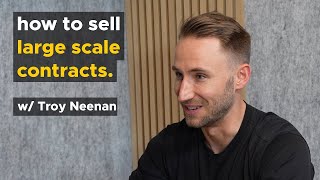
In this interview, Contract Solutions Director Troy Neenan explains how Pro Clinical Staffing moves from classic headhunting to a solution‑based, "temp‑to‑perm" model that acts as a talent guarantee for biotech and pharma clients. He outlines how recruiters can spot hiring triggers—such as prolonged vacancy periods—and position a short‑term contractor placement as a low‑risk trial before a permanent hire. Neenan stresses the importance of educating clients about the financial and operational benefits of this approach, using market‑specific examples (e.g., PAYE contracts in the US and Switzerland) and concrete case‑study stories that frame the service as an insurance policy for senior stakeholders. He also discusses practical business‑development tactics: managing a pipeline, measuring monthly Net Fee Income (NFI), focusing on high‑fee regions, and balancing multiple client and internal demands through disciplined time management. Finally, he shares coaching advice for recruitment teams, highlighting the need to consistently refine messaging, leverage success stories, and maintain a solution‑oriented mindset to drive growth.
Chapters
If you give someone a bit of info, subconsciously they'll, they'll say, okay, let me at least answer this person or give something back. If you give something to someone, subconsciously they will return the favor.
Troy Neenan, he's worked in recruitment for nearly a decade, recently got promoted to Contract Solutions Director at Pro Clinical Staffing, and over the last 5 years he's been instrumental in building the EU contract team. Starting it from scratch in 4 short years, this division is now generating circa £1 million net fee income. So how did Troy do it?
It's never been easier for clients to hire people because you've got LinkedIn and you can write a job description with ChatGPT in about 10 seconds. It's even more important now to fully understand what they're looking for and then try and educate, you know, your clients where possible.
So this is what you're going to learn in this week's episode: how to become world-class at business development.
A lot more recruiters now want to do business development or need to do business development, so all in order to survive. So if it's not going to be you, it will be someone else.
How to identify hiring triggers that could lead to large-scale hiring projects.
I think there's two things that we need to know, is knowing the triggers to hire for your clients, not only one person, but what are the triggers to hire, hiring a team of people.
The power of committing to becoming a subject matter expert and how to use your industry knowledge when selling.
I know my market quite well, so I can talk a fairly high level. I've not done the role that these guys are doing, but I can work to fairly high level.
How to transition from selling typical contract solutions to selling solutions for large-scale hiring projects.
Traditionally, especially when I've managed people who have quite a few years of experience, they will still lead with the kind of CV. Yeah, but then it's just coaching them and giving them a good kind of case study as to this is how we've done it.
And so, so much more. Let's get into this week's episode. Troy, welcome to the pod.
Thank you for having me.
Obviously we first met when you came to one of the live podcast events. Yes. So now, uh, do you ever think we'll end up in this position?
Absolutely not. Absolutely no way. Still quite surreal that I'm actually here.
Yeah, so a lot to unpack. Obviously you've been on, as we were just saying, like really interesting journey. Um, what we're going to unpack today is, is the last sort of 4 years of Pro Clinical. Yeah, obviously you've just sort of been, um, let's call it— I guess it's a promotion, right?
Yeah, yeah, yeah, you can say that.
Yeah, like doing a slightly different position where it's in entirely new business focus.
Yeah.
But when you join the business, you was really at the forefront of building out the— this, um, really focusing on the contract side, right? Yeah, for Pro Clinical. Yeah, Europe specifically. And your world is under the banner of like life sciences, right?
That's right. Yeah.
So really interested to— if I'm honest, like, I know we're going to end up getting in the, the sort of intricacies of like how you've become, uh, just constantly better on the BD client acquisition side. I know that's something that a lot of people enjoy. So why don't, why don't we start, start here? Because I find it interesting when the sort of terminology changes. But correct me if I'm wrong, you're— so your title now is like Contract Solutions Director, Director, right? So what I wanted to ask, just kick this off, is How would you describe the difference between a contract recruiter and a contract solutions recruiter?
That's a good question. Good question. Yeah, my title is a bit hyped up, but it's quite good. Yeah, I guess from starting out when I've been doing this for 8 years now, and typically when I was first starting doing BD, I think I was doing the kind of traditional way of calling up a client, got a great candidate, you know, um what do you, what do you think of them? So that's what I was doing from the start. Now, 8 years later, I've got a much more strategic-focused kind of role where I'm basically going up to clients and saying, I know you're running a phase 3 trial that you need to complete so you can then go to the authorities and get the medicine approved. I know you need a team of 12 people. So I already know that from the start, and that's kind of the message I'm leading with.
Yeah.
So I think that's the, the kind of key here, is that I started off doing kind of the traditional 'here's a CV, what do you think?' to now moving into more of a solution space where I'm leading with a bit more value, and I understand what the client wants, and I'm creating a, a team, a project team, to deliver on their, on their kind of the needs of the business, basically.
What's like, I find really interesting about that, the way that you framed it— that was a good job, by the way. So like, it's still— what's interesting is like, if you think about— I don't know what you think about this, but what you just described there, the center of it is still like people, essentially. Yeah, like the— what will make up that project team is people. But the way you're framing it and the conversations you're having, like you just said, is, uh, I know that you may have a problem getting to like the outcome that you want, and yeah, I can, you know, provide you the, the solution for this. Yeah, so it does— like you said, you're not leading with quote unquote the product being the person. You're actually saying, hey, I know like this is where you want to go, this is what's important to you, these are your goals.
Yeah, absolutely.
And some of the issues that you might have, or, uh, to really make sure that you get there, you're going to need this solution. You're going to need these people to to do that. That's sort of how I sort of take that.
Yeah, and that's exactly right. We're not a consulting company, you know. I don't work in the consulting space where we're taking on the deliverables of the project because our insurances just wouldn't be sky high. Um, so that's not something we're doing, but I can certainly add value in obviously creating a project team which can be, in terms of budget, be better for the business. And also we have direct access to talent Sometimes what clients, you know, in my space, they will outsource to a consultancy. That consultancy then asks us to, to find the talent. So they're almost like a middleman. They do take on a lot of the deliverables of the project, but they essentially need us to find the, the people. So what we do is we'll come in and say, look, we could— you can have direct access to the talent, still have someone internally overseeing the project but you have direct access to talent and we can also bring people in from your competitors essentially.
So let's, let's start here then. Let's just get straight into it. Like, how would you— I know we're early on here, but like, you, you haven't just, uh, obviously this started in January, this new role, right? But like, you, you wanted to go in this direction when we prepared for this.
Yeah.
Obviously ask you some of the things that you feel like your colleagues would say you're like best known for. It was business development, it was client acquisition. Yeah. So obviously this is something like you wanted to like lean into this and go, but Yeah, like this wasn't just something that in January, like, I want to start doing more of this. Like, that— I'm assuming you saw opportunities and you started to have, uh, conversations, pipeline, where it was more around projects, teams, these types of things, right?
That's right.
So I guess, why don't, why don't we just start? I'd love to just— for people listening to this that may feel like, I don't know, this might be like brand new to them, they never heard of like a contract recruiter speaking about it this way. But I feel like more, the more and more contract recruiters that I speak to, it almost seems like this is— not everyone, but it seems like they want to get to this sort of position where they are speaking, they're providing solutions more rather than like a person that can solve like a short-term problem.
Yeah.
So what, what have been like— what would you say are the, the main like mindset shifts you have to have towards like your client acquisition, your business development? Because you said how it's different in terms of like how you, how you do it, right, or how you speak about it. But what about your mindset towards business development? Because like, surely there's going to be some differences there.
Yeah, so the mindset— I mean, the mindset I've had with BD always is, even when I was doing the candidate side, is I was doing BD every day. So even when I was speaking to candidates, I was getting information such as references, you know, where they're interviewing, the managers that they, that they've worked with. So I'm getting these pieces of information to help with my BD. So I think the mindset BD in general has to be— it's not separate. You can— that work is also your BD work. And that's been the kind of mindset that I've, I've had throughout my whole career. I think when we are moving into more of the solution space, I think there's two things that we need to know is knowing the triggers to hire for your clients, not only one person, but what are the triggers to hire— hiring a team of people. You know, do you really understand that? Do consultants really understand that? Um, that's one point. And the second point is knowing your market really well and inside out. I work in— we obviously work in the life science space, but it's a very specif— I work in a very specific area, which is clinical research. I've been doing this for 8 years now. It's easy for me to say this 8 years on, say I'm a market expert, but even when you're a young consultant or, you know, a junior consultant, you can still leverage a lot of market information from your clients. Because there's a lot of publicly available data out there that you can use in your BD kind of course to kind of summarize.
Yeah, no, that's really helpful. So would you mind— I know, fine if you give an example, um, in your world, but I think like that first point is really interesting, the trigger point, right? So give us an example of that. Feel it, you can make it like to your world, and then I'll make sure that I feel like you can translate. Yeah, yeah. So like Because I think that's really— because then, yeah, that is a different mindset shift, isn't it? It's like, because you're not talking about they've got a live vacancy, it sounds like you're the trick— I mean, you'll go for it with the trigger point of like, this then, this then indicates to me that they're gonna need these types of people that can do these types of things over this time period. But yeah, you tell me what the trigger points are.
Yeah, so in terms— yeah, absolutely. So the kind of examples that I'll use is when I look at partnering with clients, I look at where they're running the, the clinical trial. So for example, if a new biotech is running a Phase 2 trial in Europe, then I know they will need some oversight of that study because they're based perhaps in America and they don't have boots on the ground. So I'm going to that client and I'm saying, I know you have a new study that you're running, which is typically in Phase 2. There's 3 stages to clinical development. In stage 2, it's typically more of an international study. So you're going into Europe, you're opening more, uh, more research sites to run the trial. So I'm going to the client, I'm saying, I know you're running a phase 2 trial. Based on kind of the, the evidence or the info that I have, I know you will need some oversight or a project manager to oversee that study. And then, and then you can go from there, basically. So you're kind of leading with value and leading with that.
Yeah, okay. Yeah. Right. Now that doesn't— I mean, that, to be fair, you explained that pretty well. So like, then you— yeah, so you use that insight and then obviously again, this is just every— I'm assuming people can get that information, but then it's like, what— not everyone's going to do that with that information, right?
Yeah, it's kind of knowing what information to kind of get out of, you know, to take and then, you know, um, and discuss with clients. Because this is with a hiring manager, and I typically work with smaller companies that don't have maybe an HR team. So maybe my message to the HR team might be slightly different than I'm talking to a hiring manager about.
Yeah, sure.
But the kind of info is still the same.
So what I know you might have just given the example, but I just want to make sure that this is clear for people because I think it's interesting is like, is there anything else that you could share where like you've seen the trigger point that you've again maybe found through experience and you figured out, you know what, if this happens, then this probably is going to mean that, which means they're going to need these types of people. Yeah, um, in order to help them, you know, achieve what they want to achieve. Like, is there anything else more to share on what— how else you approach that call? Because that is different, right? Because like you said at the beginning of this conversation, how, how a lot of people do BD is like, I've got this person. Yeah, that can do this for you. Like, is that someone that you need or whatever? But here you're not even talking about a person, right? You're actually talking about the, the future needs. So like, is there anything else to share? Like because I'm assuming that's something you've had to get better at. So like, how have you— what does that now like— tell us a bit more about what that sounds like, right? Because yeah, I think that's interesting for people on how you actually approach those types of calls.
Yeah, so I think going back to how I was, you know, doing, um, BD before, I was really leading with the CV. Yeah, now I'm leading the conversation with the project. So I'm discussing the project and understanding the project needs, and then based on that, we can then go through, okay, you'll need 3 people to service this project. But clients also go on the journey as well. They usually start very small and then they grow and grow, and then once they will get to a stage where they're going to approve a medicine, they're a 500, 300 person business, right? So it's understanding in each stage of the kind of development life cycle, or each stage of clients at what they need, how many people they kind of need it as well. So sure, maybe leading with the projects a bit more rather than a kind of CV, if that—
what about—
what's your question?
What might be helpful then is, what about, like, how do you— talk to me about your sales process then, because like, surely that's evolved. Because like, what it sounds like there, they need to be giving you information and you need to be asking good quality questions. So like, do you know what I mean? Like, what— when you, when you find these trigger points, what are you asking for? You're asking for, like, you know, you're, you're leading with that approach and going, and this is why I think it could be, you know, a good idea to have a 30-45 minute discovery call where I can understand a bit more about your potential project needs and the people you're going to need? Or do you know what I mean, what does the sales process look like? Because surely that's different.
Yeah, so the initial reach out is actually quite specific. So I'll reach out to a client, um, usually via email, and I'll state the, the kind of study name or this, or the study number. Usually it's, yeah, kind of a simple message. I'm working with two of your clients, you know, I've overseen a project team of X amount of people. Here's a few people bullet pointed below. I have then have that, that conversation with them, usually half an hour, 40 minutes. Yeah, depending on the size of the, the company, we then have to, might have to go through a kind of a, a sort of a sales process where, you know, um, where we're agreeing terms with them, etc. Typically with the smaller companies you don't have to. Typically they're happy to then you then start to work on those kind of, uh, needs that they have.
Okay, so it's from— so basically that's really interesting. So you're using like case studies, using your track record.
That's right.
You're showing them that you've done your research, like this is what I think. Yeah. And the ask at that point is then for like a 30-45 minute conversation?
Yeah, when you're free to speak.
And then is that— and then in that conversation, is that when you're really digging into like, right, you know, tell me a bit more about how you think this is going to go, the project, and you learn that, and then what, and then you advise from that point?
So yeah, so I'd lead with the project. So I say, okay, talk me through what you'll need on this project. We'll go through quite specific, um, specific details. I know my market quite well, so I can talk a fairly high level. I've not done the role that these guys are doing, but I can work, I can work to a fairly high level based on that info. Then I'm advising them on, on how to, how to go about it. So based on the info, I think you probably need an oversight manager in 3 countries because you're running trials in these 3 countries. Um, so that's how I'd lead the— I would lead the conversation.
Yeah, that is really interesting. I guess for Pete, I don't know, have you found— have you— I guess what I'm gonna ask you now is like, have you had anyone in, in your team? Because obviously you used to manage your, your team.
Yeah.
So have you, like, what have you found people struggle with, like, when trying to have more of those types of conversations? Because it is different. That is very different, right? Because you're really having to lean into your subject matter expertise.
Yeah.
And you're like advising, right, in terms of like the— yeah, and, and also like you're advising on like, yeah, the, the, um, the, the problems they might run into, the, the solution they'll need in terms of like the people they're going to need. So like, have you— what, is there anything that you found people often struggle where they, where they're going from, you know, doing the typical BD, speaking candidates, contractors or whatever, to then booking in a meeting and then, you know, having to guide the conversation to understand what actually type of contractors and skill sets they're going to need? Have you found that anything that typically people struggle with when trying to make that transition?
Yeah, it's— I think what they do struggle with is traditionally, especially when I've managed people who've have quite a few years of experience, they will still lead with the kind of CV.
Yeah.
So then it's, it's, it's then coaching them not to— I wouldn't say not to do that because there's times where you have to. Client needs are different depending on, on, you know, who they are and where they are. But then it's just coaching them and giving them a good kind of case study as to this is how we've done it. If you leave the project, you're not— you're going to find out way more information. So that client who maybe thinks that he needs one person in reality, if we go through kind of case studies, what we've done before, and if you understand the, the study that they're running, they might need 3 people. So that's the, that's the kind of journey. But you're right, I would say when I was first sort of managing people, I would always advise them, like, have an initial call, a discovery call, and then say there's no pressure on then scheduling another call with them and say, look, based on what you've discussed, I'm going to go away with, you know, to the team. We're going to come up with a solution for you. Let's book in a meeting next week. And then, you know, usually the more junior person on my team would then come to me and say, hey, we've got this, this client, they need potentially one person, they're running a study in Europe, what do you think?
Basically, oh, and you'll say, right, okay, so you're saying sometimes the pitfall is you like result in just leading with like, oh, like I, I've got a contractor that can do that for you. Yeah, like just jumping straight, jumping straight up. Yeah, and like taking a breath, taking a step back, and actually having more of, let's call it like a commercial strategic conversation. Yeah, like what are you trying to achieve here? Where are you in the life cycle? And like, like to understand that information because then, yeah, that could then make you realize, oh, hang on a minute, that's probably going to mean that you may not need this person now, but 3 months from now you might need this type of person, and so on.
Yeah, that's absolutely right. So taking more of a helicopter view, or I've I've had the, the case before where clients— a client wants to hire someone in America, it's East Coast. Yeah, but they didn't need to go, there was no travel involved in, in the role, but they really wanted someone in America because they thought that was better, they had boots on the ground, and time zone-wise worked. But that comes with a bigger cost to the client. So we said to, to the client, look, there's a person in Europe, he's done East Coast hours for years, it'll cost you half the price. Here's that person. So again, we're advising them and offering kind of a better solution that saves them money in the long run.
Yeah, sure. So what you're saying is sometimes obviously that is what's needed. Yeah, is that what you're saying?
Yeah, that's right. So that, you know, sometimes clients don't— sometimes clients don't know what they kind of—
right, yeah.
Um, before they go into the call. So rather than saying, yeah, we've got that person in America, let's, let's go for it, taking more of a maybe, yeah, step back and looking at, at the kind of bigger picture.
So I think what, what, what can help people, because ultimately if you get better at that, you know, this isn't— you tell me if you disagree with this or not, but like there's a lot of benefit to like having that approach as a contract recruiter, right? Just even if like you're not— even if you don't want to get to the point where you're, uh, getting to now in terms of like really trying to win big project solutions, actually just by having more of this approach is what I'm hearing is that actually, you, you could be missing opportunities by not having this approach, basically, even if it doesn't mean like, yeah, we're having the, the solution conversations. So like, what I feel like is going to be fundamental to that— let me know if you disagree with this or not— but you've mentioned discovery call there, because I feel like if your process is just straight to jump in with like your product, yeah, then of course your— the perception of you is just going to be, oh, this person can provide me with this person right now and fix this problem. But you're like, what's going to change that or give you more opportunities potentially to get more runners out, to get more contractors out, um, with that same person is actually taking a step back. Yeah. And doing a bit more of a discovery of and understanding where they're at, what's important to them, what their issues are.
Yes, right.
So let's just talk about that for a sec because surely that, that could potentially help a lot of people. A lot of people may not even do that, or maybe not even have that in their current process. So if I'm, if I'm a contract recruiter right now listening to this and I don't conduct a discovery call, yeah, I might just go straight into, you know, a typical, like, you know, you need these contractors, I can do that for you. Like, how do I go about starting to have those? Like, what are the main things that I need to change? Like, how does the— what does the ask sound like? How does that— how do I need to change my approach?
Yeah, I think it's a good question. Million dollar question. Um, I think from my experience it's about educating clients as well. And as I said before, it's really understanding your market. But I think a lot of, a lot of people don't educate— can't— well, I wouldn't say can't educate their clients, of course they do, they try. But knowing how to educate your clients, and then also, as I said, understanding your, your kind of your market really well enough so you can identify the problems that they, that they have.
Okay, yeah. So I feel like, how can we— you've mentioned market knowledge a lot, like, that's— how, how can we speed up that process? Like, how? Because that is, that is— do you feel like that's one of your big competitive advantages?
Um, yeah, I would say so. Yeah, absolutely.
The more you're in something, the more knowledge and information you're gonna get. Yeah. But it's— it can, it can be very easy for someone to say, well, yeah, you've been doing it for that long. Yeah, for you to say.
Exactly.
Like, how do you handle that? Because I'm sure you had to deal with that when you obviously managing people.
Yeah, of course I did. Yeah, you're absolutely right.
And how can people speed that up or not just let that be the reason why they can't have more of these discovery calls, why they can't educate their clients more?
Yeah, so I would say, for example, in my market, a lot of information is publicly available. This might be the same in other other industries, it, etc. So it's just all we're doing here is just using that information, a publicly available information about the clinical trial, for example, and then just relating that to, to the client and discussing that with the client. So even when I had a junior consultant in my, in my team, I said to him, take a step back, look, look at the study info and just talk about the study with the client. Because that is what the client's doing. And they also like talking about themselves as well and what they're doing. And then based on that information, just try and understand how that relates to hiring processes and what you can do to help, basically. So it's using kind of publicly available info and then just discussing that with clients, just putting two and two together, essentially.
And what I also take from there is you're not saying that you have to be as competent as a person you're speaking to, but what you— what really you were saying there is like ask questions around the study rather than ask questions around what person they need.
Yeah, exactly. Ask questions around what's important to them, because the reason they've reached out to you initially is because you're there to solve a problem. The problem is, I can't find people for what? To, to execute this clinical trial. That's, that's the end goal. Yeah, find the people is— that's the kind of middle point. The end point is, you know, executing the study because it'll, it'll get the company to the next milestone or save the company, you know, X amount of pounds. So talk about the end goal and then work backwards.
Yeah, yeah. So I know we, we like really went deep there into like—
yeah, but I really—
I think it's interesting, right? I think, I think there's a lot to be said, just contract recruitment, panel recruitment, or whatever I do. I— it is that having that mindset of that discovery, I think, could, could really transform people's performances a lot more personally, I feel like. So obviously my business is very different, but I do think when I was in recruitment, like, it's just so easy to lead just straight into, I've got this candidate. Yeah, are you interested? I know sometimes that's just what's required, right? If, um, you've seen that a company is hiring and that it you know, the language is like, we need this person, it's urgent, and you can see it's open for 2, uh, 3, um, weeks and maybe still not filled. Of course, that can be like what you lead into. Yeah, leave it into like, this is why I need to have a conversation. But I think there's still a lot to be said with like, rather than just going straight into like, tell me about this person, like, what do they need to have? Yeah, it's like, how did we get here? Like, what, what have you tried so far? What we've been struggling with? Definitely, did you know? I mean, so having that discovery mindset even, and even if it's 30 minutes before we then get into like the job briefing call or wherever it may be, like you're saying, um, personally, again, like that seems like that's been a huge thing as to like why you've ended up here. Like you've just got better and better and understanding your market, asking commercial questions, understanding what's important to them, where these companies need to get to with their, yeah, clinical trials and stuff. Then you can then go, well, from what I've learned today, this is what I'm going to recommend like what we need to do.
Definitely.
So I feel like just talking about that, and whatever that looks like in your world, just having more of that discovery mindset can, can really transform your BD results. Because like you said, in your world, it can be the difference from finding out or making that client understand that they don't need one contractor, they need three.
Yeah, absolutely. So, and also, clients have— it's never been easier for clients to hire people because you've got LinkedIn And you can write a job description with ChatGPT in about 10 seconds. So it's even more important now to fully understand what they're looking for and then try and educate, you know, your clients where possible.
Of course, we'll get back to the episode in just one minute, but today I'm excited to talk to you about one of our partners, Firefish, the recruitment CRM that accelerates data-driven growth. Being able to benchmark your agency's performance against others in your industry has always been Impossible until now. Our partners at Firefish have just recently released their industry benchmarking dashboards, taking data insights to the next level by enabling you to benchmark your own performance, your recruiters' and team's performance against others within your sector. The benchmarking dashboards are built on anonymized placement, sales, and KPI data so Firefish users can get a monthly snapshot of their agency's performance benchmarks against their peers in seconds. If you want to learn more about benchmarking dashboards or find out how Firefish can support your company's growth this year, they very kindly offered our community, the Recruitment Mentors Podcast, a special offer that's going to save you thousands of pounds. Now, this offer is only available until March 31st, so you can click the link in the show description, or you can head to firefishsoftware.com/rmp. So we were just talking about it before I went into that then, on like how you were like coaching your team and stuff. If you don't mind, I just want to ask you something that I found. Like, I've done a lot of these prep calls now with contract recruiters. I thought I had it written down, but you might, you might have to help me out here. So do you remember I, I told you like, oh, that's really interesting, you were saying that with your team you measure, um, like the— how— if they haven't done enough in a new business, like what, what was it?
Yeah, NFI, lost position.
Yeah, NFI. It sounds really boring, doesn't it?
Can we talk about that? Because I thought that was me about your NFI lost position on a Monday morning after a heavy weekend? No, absolutely not.
So like, would you— because I thought that was really interesting because—
yeah, yeah, of course, you tell me.
But obviously from what I understood, you're helping your team understand like where they might end up and like what they need to put more energy into, what they need to focus on.
Yeah.
So what is NFI lost position?
Good question. So basically, um, the way we calculate, or the way we look at, um kind of our contractors is on a monthly basis. So we see how much our contractors are billing the company on a monthly basis. Other, other companies out there will calculate that as weekly GP. We do monthly NFI, it's called, so monthly net fee income.
Yeah.
So for example, what I do with the team, what I've done myself as well when I was a sole contributor, is I've had a look at— I had a look at how much I'm losing you know, each quarter. So let's say, for example, it's— I'm losing £10,000 worth of NFI that quarter in, say, Q1, for example. So I look at that, that number, £10,000. So if I don't do anything, if I don't do any deals, I'm going to lose £10,000 because the contract is coming— because the contracts are coming to— are coming to an end. Yeah, exactly. I think what we do as a business quite well, and what I've done fairly well, is just then understand the new business value that you're bringing in. So as a business, we still calculate a deal size and contract as new business value. So it's capped at 6 months.
Why'd you do that?
Um, so typically, well, typically contracts can be 6 months, so that we calculate that as a business. Um, some, uh, some companies out there do 12 months, but it can sometimes skew the numbers. So if you do a deal you know, if you do, I don't know, a project manager deal and you calculate that over 12 months, that's 40 grand. So you would have hit your target or close to your target. So then a person can put their fee up, but they're losing 3 contractors, right? You know, because they're coming to an end. So they get to a point at the end of the quarter where they're losing money.
Got you.
So it's like brother and sister. You have your new business value and your NFI value. So to go to your kind of original So question, I look at the number, which is say 10,000. So then I calculate, okay, what's my average NFI per deal? So typically the average new business value is 15K in my market, between 15 and 20K. So if I relate that to what it is on a weekly, on a monthly basis, what that contractor will bring in is around 2,500. So I know going into that quarter I need to do 4 deals because if my maths is right, 2,500 times 4 is 10,000. So that's, that's the message now. It's okay, in those first 2 months I need to do 4 deals because if I do 4 deals it will get me to 10,000 and that means I'm not losing, I'm maintaining my contract book. But they'll— you also have to give a bit of leeway for them to start and also build money for the company. So as a manager, it was quite useful for me to sort of, um, work in that way because I'd have a look at what the person on my team is losing. If it's, say, $10,000, then I say to that person, you need 4 deals in first 2 months. Then we work backwards. How do we get there? You might need to do a lot of work in the start of the quarter, and then maybe you can relax a bit towards the end, or vice versa. If a person's only losing £2,000 of NFI in that quarter, then that message as a manager is you work your ass off because you can really increase your contract book. You can, you know, you can, you can almost double your, the contract size depending on how many runners you have. So that's the mass, that's the kind of message. So to summarize all of that, it's really understanding kind of the relationship between the business you're bringing in and also what your contract book is and how much you're kind of losing.
And if I lost position?
And if I lost position, baby.
No, you did a good job of explaining that. Good, okay, good. So the reason why I wanted you to explain that is, one, there might be managers that don't do it that way, because you— again, I'm just going to act naive here— I'm assuming it can be easy as a contract recruiter to look at like what's coming in each month and being like, I'm sweet.
Exactly. And, right, and to cut you off there, that's what some business— some businesses do, do have. So they'll, they'll incentivize their, their consultants on how much they're bringing in, but they don't really understand the second part, which is how much their contract book is worth. But they kind of sometimes lose sight on, okay, how much money, how many deals do I have to do to maintain that contract book?
Yeah, exactly. And then like I've had people on here where I don't know if you've ever had this happen, but I'm assuming this helps mitigate this. It's not going to be able to completely prevent it from happening, but one of the worst things that can happen as a contract recruiter is your book getting absolutely wiped.
Yeah, that is painful.
It's given you— obviously by you doing that as a manager and working that out, you're giving people that insight where potentially if you didn't have that insight, you could get complacent. Yeah, you could not have visibility on like, hang on a minute, I'm actually 2 months away from like losing half of my book. So I do really need to emphasize the new business and what I need to be doing.
Exactly.
So I'm assuming it's also to prevent like, yeah, those like massive, uh, drops happening and also help you future-proof your contract book.
Yeah, and it's to future-proof your contract book because you have to treat— I mean, as a contract recruiter, you're and it's a cliché in recruitment, you're running your own business, but you, you have to do so even more in, in contract recruitment because naturally contracts do finish at some point. So yeah, it does— the kind of peaks and troughs is what we tend to, tend to see in recruitment quite often. And that's kind of one thing that I've— one tool that I've, uh, yeah, that's helped me basically to, to kind of maintain my contract book over, over 4 years.
Have you found that just to be way more of an effective way to like encourage your team to do like the activities and help them understand why.
Absolutely, because this is it. And they, they then understand why you need to send 5 CVs, why you need to book in 5 BD calls a week, because they understand the end goal. Whereas if I, if I didn't explain that to them and I just say to that person, okay, you need to increase your you know, your, um, your CV sent out or your BD calls or whatever, and they don't really understand the kind of reasons behind that, then that's a bit more of a difficult message to kind of give as well.
And if I lost position? Okay, so curious then, um, because we're talking about— we're just talking about this now. So like, I think, because I'm always interested to hear how people think about this. Personally, I feel like the best recruiters always know their numbers personally, like regardless of how emotional.
Here we go, you're going to challenge me now on my numbers.
No, no, no. So like, I think what I'm interested to hear your take on— I know every market is different, every people's contract book will be different or whatever, but I'm sure there'll be some principles that you, that you just feel like it's just tried and tested. If you do this, it should mean this. So yeah, my question to you is, if I do this, what you've just said, I've figured out actually 'Oh my God, like, I'm— I've really built up my contract book to a great position, but actually I am 3 months away from it being 30% less.' Yeah. So my question to you is, if I know— if I want to, um, make sure that I'm in the same position or better, so particularly on the new business side, which is like your world, what, what are you often then— what are like the, the metrics or the core activities that you feel like if you, if you do this, if you get near this, it should take care of your loss position. So I'm interested on how you think about the science behind, as a contract recruiter, what those core activities are that if you do your CV sendouts, if you do this, if you do that, it— the net result will be you'll cover your loss position or you'll need more. Do you get what I mean?
Yeah, absolutely. And I think of all the kind of KPIs we look at, what I've seen works, and the kind of KPI that's most important to me in my world is your first stage interviews per week. Because that gives you a pipeline of candidates coming through each week. So even when I was doing, you know, doing permanent recruitment, I knew that if I was getting 3 interviews per week, I was hitting my target quite comfortably. So contract recruiter, you're probably not gonna average 3 a week because, you know, you might have 3 or 4 jobs one week and nothing next couple of weeks. So an average I would say is your first stage interviews. We like to go— we like to kind of stay between 2 and 4 per week. That gives you kind of a pipeline of candidates coming through each week as well. So I think that's the key. First stage interviews would be like the kind of key, um, key KPI that I would, I would measure my team against.
Yeah, nice, love that. Um, and then, okay, that's really helpful because I know, like, yeah, I know people get emotional about that word, but I think, like you just said, it's just like you— people need to, like, like you said, how much easier do you feel about where you're going to end up if you know, like, those one or two interviews that you get, you're gonna— you have the best chance of hitting your target. Like, why would you not want to know what those important numbers are? Exactly.
And then you're able to then get that deposit on the house.
Yeah. And do what you need to do.
Do what you need to do. Because there's nothing worse than working, getting your book to a certain level, and then dropping down by 50%. And it's nothing, nothing worse than having to then recover from that.
So one, one word that I've heard the, like, way more when I interview people like yourself compared to permanent recruiters is leads. So I really want to hear your, like, philosophy on leads, because I feel like everyone— like, I'm sure, like, if I— most contract recruiters will know what a lead is, but I feel like the best recruiters must be doing something different with the same information, or just must be doing something better around it. I don't know how you feel about this, so, because I'm sure this is something that you've had to manage— when you manage people is like, you— they would have heard the exact same thing you did, but they did the polar opposite to what you would have done with the same bit of information. And that, that was a lead, right?
Yeah.
So like, I guess firstly, from your perspective, like, if you wouldn't mind, like, how would you define the lead personally?
It's a new business opportunity basically that gets you closer to your target. So that's kind of— that would be my definition of a lead.
I think, who gives you the most leads? Like, where do you often find yourself getting the most leads? That, that is that.
It's, it's, yeah, it's a tricky question to answer really. I guess what I've seen with lead generation is not— there's no single source of lead gen. So there's two ways I would kind of go after— two, two kind of leads I would go after. First is the leads from candidates, which is your active interviews, um, that those candidates are performing. What I've done over the last couple years, and what I've always encouraged my team to do, is to really qualify these leads. So rather than just saying, where have you interviewed? Oh, I don't know, X company, and that's it, go into way more detail, because then your conversion rate will increase quite, quite significantly. If you then ask that person, who's the manager? When did you do the interview? You know, basic, basic questions that you would expect to do. Because if obviously that, if that interview took place 2 weeks ago in the contract world, that job might have already been gone. But if that interview took place yesterday, then you know you'd probably drop everything if you don't have any jobs and really go after that lead. So that's one from the leads from, from, uh, from candidates. This is where I've seen where you can pick up jobs fairly quickly because they're active jobs. The second lead is, like I said before, is the market information. Okay, these trials are happening in a month's time. That is a bit more of a long-term lead, but it then leads to— pardon the pun— uh, to maybe offering a better solution, or, you know, a multi-hire project, for example. Whereas maybe the leads from that you get from online as well from job adverts and candidates. They're probably maybe your ones and twos that you expect to fill fairly quickly because they're active jobs that are ongoing. But to the— to your point, I would say really qualifying the lead is really crucial because that's where people go wrong. I— that's where I've gone wrong in the past, you know. When I've— when I first started, I thought, oh, this person's interviewing at X company, let me go after— after that company. I can go on LinkedIn and find the manager, but I don't know anything behind— but that's, that's all I know. So my conversion rate wasn't as strong. Where I found the conversion rate go up from lead generation to, to job pulled was, um, was when I started qualifying the leads really, you know, with a kind of fine-tooth comb, essentially.
What would be your non-negotiable then to make it qualified? If they get— if someone gave you all the info What would be like—
yeah, and that's based on people giving you their—
that's gonna be my next question because I know that like it's not as easy. It's like because people know the game, right? And it's like— so I'm gonna ask you that, but just if we were to just put that aside for a second, like what, what would make you go off a call and go, this is a really qualified lead? What would be like the non-negotiable things that you'd really want to aim to walk away with?
So when they interviewed.
So when they interviewed.
So that's obviously it's all about speed in contract recruitment. So when they interviewed is is crucial. Who the manager is, what the job title is, and also sometimes what the rate is as well. If I know the rate is very low, then I know that job might not be getting filled in, in the time that that person— that that company wants it to get filled by. So it gives me more chance to then go in and have that conversation with a client.
Yeah. So when, like, how long ago did they interview?
Yeah, I think that's probably number one, I would say, give— just given the nature of contract recruitment being—
and then you were saying who the Who interviewed them, did you say?
Yeah, the manager.
And then the rate would be helpful just because that gives you a bit of an insight on like, because you'll know your market on like, yeah, underpaying or—
yeah, exactly. Or if it's a decent rate, etc.
How did— so how have we got better at people giving the info, mate? Because it's like, you— they like these— yeah, they know the game, surely.
Of course, of course they know the game.
Like, absolutely. I'm always interested to hear people's take on like, yeah, how— I don't know, I don't know. Like, I don't— would you say I don't know, like, is it something that you're— is it something that people are naturally better at doing? Like, I don't know, because there's quite a lot that goes into it, I can imagine, in terms of like, there is how you deliver the question, the tonality.
Yeah. How—
I don't know, like, what your reputation is, if you spoke to that person before. Yeah. But like, what have you found to be like— yeah, how have you become more effective at having people willingly share this information with you?
Yeah, absolutely. I would say giving them some information as well and getting to a point where it's almost like a two-way conversation. That's where I found it works. Yeah, what would you give someone? So for example, if, if I ask the person, you've, you know, where they've interviewed, oh, X company, oh, I actually know that company, you know, they're going for, I know they're going through phase 1 or phase 3 study, or appreciate they've also let a lot of people go, you know, and I'm So having a conversation around that company and then saying, oh, just this out of interest, who do you speak to on Friday?
So what are you—
rather than saying who you've interviewed with, who do you speak to on Friday?
Yeah, it's totally different.
Or maybe wait to the end before they hang up the phone and say, oh, just one more thing.
Oh, the one last— one quick question, one last question, one last question.
Where did you interview? Oh, who did you interview?
I love that. Yeah, it's banger. So, so what I found— I don't know if you found this, but I was speaking to a friend about this today. Like, it's funny how many times you can get the, oh, one quick question, one last question. You can actually get quite a few questions in.
Yeah, yeah, exactly. What do we get? No leads after this podcast comes out.
No, I think what the insights that I took from that is, yeah, like, you know, if you, if you were— if you go straight in, if you go straight in for that like how much success you're gonna have. Like, oh yeah, I met this company. Oh, like, who interviewed you? Straight away. Yeah, like you just said, like, just being— treating it like a natural conversation, being curious. Like, oh, that's interesting, I've spoke to someone else who said they're really enjoying it.
Yeah, exactly.
Project, or, you know, the opposite. Then lead in with like, oh, like, be curious and, and not just be like direct, I guess.
This is it, not being direct is quite important. Like, one of the guys I used to, um, he's the manager. He was quite direct, quite a direct person. I said to him, just have a conversation with him like you would a friend, obviously to a certain, certain point, and just have more of a two-way conversation. And he found that that worked quite well.
Would you rather, if you could only get one last question in those conversations, you'd rather get— would you rather walk away with when, how long are they interviewed, or who the manager was?
Probably who the company is, so I know to target. Um, probably that, and then I can kind of find Yeah, that and maybe the time of day.
Yeah, that would be really good info.
Yeah.
So what have you found? Because I'm sure you've seen people do what you've just said and then they don't do the next bit, which is the follow-up. Yeah. What— is that what— is that what people miss? Like, is it like they get that info and then they're like, right, like, what— they don't then take the next step? Is, is it the follow-up that then people like just don't? Because that's the next bit, right? You've got the information.
Yeah.
You've done a really good job there, but then it's like the best people then action that consistently.
This is it.
And why don't they do that, that bit?
And it's actually that, that's, that's what gets you obviously the, the new business.
Why do you think people struggle with that?
It's a good question. I can't speak for everyone really. I'm not too sure in terms of why the core struggle is.
I would say, what have you found when you manage people?
I guess for, for me, um, it's, yeah, the next follow-up is, is obviously very, it's very crucial. You know, you get in the lead, get all the good information, but I think Maybe people try, and I've had people in my team where they've tried 3 or 4 times and got nowhere, or have the perception that because the client is not coming back, back to them, they're either, you know, angry that they've reached out so many times. But if you put yourself in the client's shoe— and this is what I said to, um, to the people in my group and to people I've worked with before— if you put yourself into the client's shoe, give you an example, worked through a client once, met her in London, and we got onto the topic of like emails and how busy she is. And she actually showed me her email. She's like, I've just received 200 emails, you know, today, based because I've had the clinical trial site that's activating, I've got recruiters, um, you know, emailing me, etc., etc. So if you put yourself in the client's shoe, that client's receiving a ton of emails So for your email to get, to get sent and then get read and a response to then happen in the first go is very limited. So what I'd say to people is just be relentless and just keep going until, until that client does, does eventually, um, come back to you, because they, they will. I've had it. I've only had the case maybe once or twice where the client's actually been quite angry that I've maybe emailed them 10 or 12 times over a period of time, etc.
We'll get back to the episode in just one minute, but today I'm excited to talk to you about one of our partners, Sourcewell, the industry-leading business development and headhunting platform. At the end of last year, Sourcewell released an exciting new feature, the platform's very own live feed. Being honest with you, this feature has been one of my favorites to date because it tells you exactly who's engaging with your outreach in real time. This means you can easily tell which lead is hot and which is not, so you can connect with the right people at the right time to skyrocket your engagement. You can actually hear from one of our mentors and 2023 panelists, Amber Penrose, on how she's achieved instant results with Sourcewell's new feature, Live Feed.
The Sourcewell Live List feature has enabled me to become a secret little stalker and to contact my ideal customer profile whilst they're at their desks. And especially for someone like me who works in biotech where computer time, understandably for a lot of scientists, just isn't prevalent, this has been a huge help. And for example, a biotech vice president of HR who I have been politely pestering for what feels like my entire life finally picked up the phone to me because I cold-called her after she clicked on my email 4 times in a row, which Sourcewell kindly had let me know. To the point where she actually giggled during my cold call opener and responded with, are you in the office watching me? And despite that awkward encounter, we're now working on a retained project with them in Boston, and that wouldn't have been possible if it weren't for Sourcewell.
As you can see, Sourcewell is a great tool for driving better engagement, more meetings, and higher revenue. If you're looking for a competitive edge in 2024, then Sourcewell could be for you. You can book a demo with Sourcewell and mention the Recruitment Mentors podcast to enjoy an extra 50 phone and 50 email credits per user. And this exclusive offer for this community is going to save you circa £500 or more and is only going to be available until March 31st. So click the link in the show notes, or you can go directly to sourcewell.com/demo. Let me ask you this then, and interested, I know, I know every, it'd be like different each time, but, uh, because we're just talking about it, what, how long would, like, what is like the rough, like, right window? So like, if, if I get like a really good lead, I know you're saying be relentless, like you have to just be consistent, but yeah, like what would be like the ideal window where if I can get them in this in this, like, how long should I chase it before I'm like, you know what, I need to make that now more like a long— I need to make sure I'm still— I now know they hire contractors. Yeah, they've, you know, they've used this person I know is good. Um, so there might be another opportunity there. I've missed out on this one, but there might be an opportunity in the next 6-12 months. Yeah, they're going to that camp. But like, how long should I be relentless for before you might have just missed the opportunity, or you haven't, you know what I mean? Yeah, I don't know if there's a window there because the contract, like you said, you have to act quick. So like, yeah, if I speak to a contractor, I'll get a lead, I'll do a good job with that. I know they've interviewed interviewed there last week, should I then be on that for like 5 days straight? And if I get no bites at all, I'm like, right, I need to then move them into more of like a maybe every other week, every week. I'm at least trying to grab their attention, or at least trying to speak to them because I wasn't—
yeah, yeah. I would say in contract recruitment you have to try probably every day.
Really? For how long though? Until they respond.
Until they respond. But, um, but also you have to do it in the right way. Yeah, you can't just, you know, badger them, um, because that obviously gets annoying and it ruins your relationship in, you know, with the client and in the market and the reputation as well. So whenever I'm chasing a client, I'm adding a piece of information about what I know about the company, why I think that person is good for, for the organization, or any pieces of information. I've also got to the point sometimes, especially last year where it was a bit more difficult to, to get clients on board, is giving them information about the market, for example, some marketing material. If you give someone a bit of info, naturally they will be— subconsciously they'll, they'll— okay, they'll say, okay, let me at least answer this person or give something back. That's a very human, um, sort of natural thing to do. If you give something to someone, subconsciously they will return the favor.
Have you got a story where, like, you was very close to like giving up, but then they became a client.
Yeah, it's happened a few times, to be fair. I actually worked with, um, not me, but someone I used to work with. He emailed, he emailed the client 12 times over 3 months, and that client finally then responded being like, yeah, I'm free to speak. And that client then went on to be quite, quite an important client for them in that year. That he sold a retainer, etc. So yeah, there's been, there's been stages where I've been like, they're not going to pick up, they're not going to pick up. I usually leave all that till the, to the end of the day. So at the end of the day, what I'll do is if I'm, if I'm chasing a client, I'll just try one more time outside of working hours. More times than not, it does— sometimes it does work, I would say. Um, but you just have to keep— you just have to be relentless. That's, that's what I'm Probably get down.
Yeah, I'll write that down. Be relentless. That's just non-stop.
Yeah, that's a non-negotiable.
Yeah, has to be, doesn't it? I guess. But even more, even like more so in, in your, in your world.
Yeah, definitely.
In terms of like how, how quickly things can change. That, that is like, that is the thing that I did, permanent recruitment. So that is obviously, I know you've done both, but I do find that like just, just mad in terms of like if on Friday there's this company that you've been chasing for 5 days straight. Yeah, they finally come back on Friday, and you know that could be a company that could be big for you. And they've got— they say, Troy, you know what, like, I really respect how persistent you've been. I've heard good things about you in the market. Yeah, um, look, we've really struggled to get these 3 contractors, or we need these 3 people. Um, can you help us out? Like, you know, if you've got— yeah, but if you've got bands on, like, but you have to, you, you know, you have to, you then have to do it, don't you? Like, like Friday, 4 o'clock, that call comes in.
Well, it depends what you value. Do you value going down the pub more? Do you value—
I think that's what I just find— well, because it's like, you, if you don't, if you don't do that, someone else will.
Yeah, exactly.
Someone else thinks mad.
And even more so than ever. I mean, last year, you know, it was a fairly fairly tough year for a lot of businesses. A lot more recruiters now want to do— want to do business development or need to do business development in order to survive. So if it's not going to be you, it will be someone else.
It'll be someone else. Yeah. And like, yeah, like you said, and then it's just, just non-stop.
Exactly.
So let's just step into a bit into like now then. I really enjoyed all that, like the leads, uh, net fee loss position. Yeah, that was, um That was good. Um, yeah, definitely. Let— I guess just to round this conversation out, I think as you continue to progress on your like business development journey, this solutions journey you're going on, I think I wrote down here— maybe it'd be interesting for you to talk about it a bit in terms of like how you view different like solutions. This might be, uh, interesting. So I've got them written down here. This might be uh, some of this might be wrong, but I think you shared a few things with me. So when we think about different solutions that you can offer as a contract recruiter, right?
Yeah.
So I'll write down here, try before you hire. I don't know if you'd like to use that terminology.
Absolutely.
Yeah. So try before you hire, contract to perm.
Yeah.
And then you've got project-based hiring, which is now what you want to be like building a lot more of your pipeline around and winning. And then you've got contract standard in terms of like I need a contractor, and then you deliver that person.
Yeah, that's right. So we tend to find— sorry to cut you off— we tend to find that more at like C-suite level as well, the kind of interim CEOs for startups.
So let's just talk a bit about this, because again, this is your world now, right? Solutions. And this might be— someone listening to this right now might just have one view. The only solution they could provide is the contract standard. Yeah, yeah. So why don't we talk a bit about the try before you hire thing? I thought that was real. I thought this— I don't know if this is like— you probably speak to more contract recruiters than I do, but is that fairly common in in terms of like framing it of, uh, yeah, turning— is it like a perm opportunity into a contract opportunity? Essentially, is it?
Yeah. Okay.
Oh no.
Yeah.
Oh man, sorry, went for some water, mate.
Yeah, sorry, that's fun, mate.
Yeah, no worries. Um, I'll just go back. Um, yeah, so is the, the try before you hire piece, is that literally like you turn perm opportunities into contract opportunities?
Yeah, it's temp to perm. So yeah, not reinventing the wheel or anything like that, but, um, the way try before you hire came, came about, I mean, temp to perm's been around for forever really. Yeah, but during COVID um, a lot of the clients I was working with, they tend to, tend to have been smaller organizations. They were still, still had to run studies, but I think, well, a lot of clients are quite reluctant to pay large recruitment fees up front for their permanent staff. So in 2020, I was doing the, the Swiss market. Typical Swiss fees are between 20,000 and 40,000 Swiss francs. Which is obviously a lot of money if you're a startup or if you're a nonprofit organization that's running, running clinical trials. You then have to factor in 12% of social costs, then the person's annual salary. In Switzerland, the annual salary is between 100,000 and 150,000. So companies, what they saw is they had to invest a huge amount in the, the front end to then get the person that's interviewed. That's not— the person's not even walked through the door yet, and they've spent a lot of money at the front end. So a lot of clients were quite reluctant to do that, and that's why you saw, you know, perm hiring, especially the first kind of half of, uh, well, when COVID hit, it fell off quite significantly because a lot of clients put permanent hiring on hold. But some clients, and quite a lot of organizations, they still had to run the clinical trials. Vaccine trials, um, were massive. Other studies were huge as well because medicines still need to get to the people that need it most. So the Try Before You Hire came about by— well, the solution we provided to those clients is to say we can hire that person through our company, through, through Proclinical in, say, Switzerland. We will outsource the social costs and the contracts, the HR piece, all into— and, and the salary, which is an hourly rate. We will wrap that all up into one hourly budget or a monthly budget as well, which some clients did, did want. Um, and then the result from that is actually got the talent in much quicker. They didn't have to spend 20,000, 40,000 Swiss francs.
See how good is this person going to be, can I deliver, and then they're going to be way more confident about potentially hiring them on a permanent basis.
This is it. So then for 6 to 12 months they got the, the candidate in much quicker, usually immediately or straight away. They didn't have to spend the front end, and more importantly, they had the opportunity to see how that person works in a real life setting. Because a CV, in my opinion, and an interview can sometimes be quite a poor indicator of someone's ability, especially in a small company where in small companies you have to be really hands-on. You have to hit the ground running. It's really important, you know, soft skill, which you sometimes can't get from an interview. And then more times than not, after 6 to 12 months, that company said, right, we're going to invest in you now. We'll either, you know, take you on— well, most likely take you on perm, give you a salary, etc. And then there's, you know, exit fee or whatever you want to negotiate with the client. So to summarize everything, that's how I've got— that's how we took a perm hire, educated the client and said, there's another solution we can, we can provide you, which is a, in essence, temp to perm, and wrapped it up in a nice, nice little tagline and nice marketing behind it.
You see a lot of that happening still now then, in terms of like your team converting?
Yeah, huge. I would say huge amount now, but certainly solid. It's still a solid base of, of our, of our deals. Especially in really high-fee countries like Switzerland, America, the Nordics.
So what you're saying, where it's like a really, like you said, high upfront cost, so like the risk's higher, basically.
Exactly. And now companies, they need— especially if it's— especially if a biotech is going through funding, they're not a revenue-generating company. So when that funding dries up, a lot of the time the company then goes under because the funding's dried up. So HR and TA are now looking for essentially talent guarantees to say, if we do obviously, um, put some upfront cost into this process and they don't work out, then we lose money. And that's obviously a huge issue.
So what would be— just to tie that together, just out of interest, I know it all—
like, on a bit of a tangent there.
No, no, no, that was helpful. But I think Just to tie that together, just interested to get your, uh, thoughts on this. Like, what is that? I'm assuming, like, again, like you said, you know, this does involve educating the client. Yeah, because I'm assuming massively, like, what, what, what have you found? I don't know if you've seen this across your team. Has there been, like, typically where if, if they've seen and noticed that a client has been trying to get in, like, a permanent person, or they've seen that they're advertising someone and it's gone on for maybe a certain time period. Yeah, they found, you know what, that's like a great opportunity for me to turn that into a potential— yeah, try before you hire, like, temp to perm opportunity. Is it like— is, is that the key to it? It's just like, if there are companies out there that, you know, are trying to find someone where it is hard to find people, but there's way more of like a talent pool for contractors, um, and they might have been looking for that person or looking for those types of people for a while like 2, 3 weeks, or I don't know if there's longer period where then that, that tends to be a good opportunity to do that. Is there a certain window you found?
Yeah, there is a window. There's the time frame where companies looking to hire for. If they're looking for, for several months, then that solution does become more relevant and we can sort of, um, discuss that with the client. So there's that element, but also what's the cost to the business for that person not being in, in the role as well?
Yeah.
There is that. But in some countries like the US, Switzerland, for example, it's quite common for people to initially start off as a contractor. Then they don't have their limited company. We're essentially employing them, for example, like a PAYE, um, kind of model. And then clients that will then internalize them after 12, 18 months, etc. So in some markets it's more common But then you can take that into other markets, you know, into Belgium or, or, um, or the UK, and then educate your clients, you know, through that model and tell the client, look, we've been doing this in Switzerland. It's cost the, the business— it's saved the business X amount. It's also resulted in that person being with the business for longer because you're essentially testing them out. And if you don't like them, it's an easy offboarding process.
Yeah.
So to kind of go back to the main point, it's really about educating your clients.
Yeah, it comes back to that, doesn't it?
Yeah.
So let's, um, let's think about— so over the next, like, as you think about this year then, obviously I know he was excited to get into this position, it's something that you really wanted. Like, when you think about your craft and what you know you're gonna have to, like, continue to get world-class at, what does that look like for you? How do you think about that? Like, what is Troy gonna have to consistently now really focus on becoming world-class? That— because, you know, the— what you're— the responsibility that you now have, as we were talking before we started this, you know, you're, you're someone that's going to be seen internally as someone that is going to be responsible for generating pipeline for people, for the business. That, that's, that's a big response. Yeah. So like, what, what are you like, just to sort of tap into like how you're thinking about yourself and what you— what do you know you're gonna have to be laser focused on? What you're gonna have to consistently think about? I need to keep getting better at this, world-class at this. How do you think about that?
Yeah, I think probably time management is, is really crucial for me because at the moment in my role I'm juggling my own clients, then I'm juggling potential bids that we're doing with other clients, which can take a long time, and then I'm working with consultants who are asking me questions, you know, on a regular basis in the office as well. So I think for me, being a bit more of a visible role here, is time management is really crucial. So I would say if I, if I nail that, then, then I'll, then I'll be, I'll be fine. On more of the recruitment side, yeah, it's probably delivering that message and discussing past success with other clients as well, because the I wouldn't say the issue, but when you are working in more of a solution space, the companies we're working with, larger companies, they go to quite reputable, uh, organizations, and it's almost an insurance policy for them. So I've had it before, for example, where I've spoken to, you know, a CEO at a quite well-known biotech or mid-sized biotech, and they've said, Troy, we've actually gone with a very well-established, um, company, more of a consultancy because if they don't deliver the project, then I can go to my chairman and say, look, I've used the best in, in the business, you can't sack me. Or you, you know, it's difficult for you to— it's difficult. It's, it's better for, for them to have that conversation than to say I've gone with Proclinical, who are the new, new kids on the block.
It's so interesting you say that because I was listening to a podcast recently where they like said that example where um, they— yeah, like you just said, like, no one's gonna get fired for, uh, you know, deciding to go with Deloitte.
This is it.
Yeah, yeah, no one's gonna get fired for doing that.
Yeah, that's it.
That's mad, isn't it? So, so you're saying, like, what you, you're very aware of is you're gonna have to really lean into your case studies. Yeah. So it's—
yeah, telling the story, um, and yeah, telling that, that kind of story of the insurance policy example of what I've said.
Interesting. So it's some interesting times ahead Yeah, should be, should be kids. Love it. Well, look, Troy, thanks so much for coming on the pod. I know we went into some details, but I know a lot of people are going to love that.
So, brilliant. Thank you. Cheers.
More from Hishem




You don't need as many clients as you think to bill $1 Million A Year In Recruitment



From 30 Direct Reports to Back-to-Back $1M Years as a Solo Recruiter with Zach Creighton



