Indi Pahl -Why treating people well and putting time in to developing your staff will ensure success
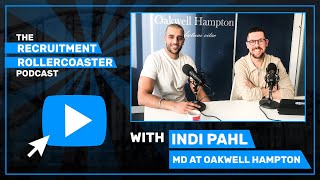
In this episode of the Recruitment Rollercoaster podcast, host Hishem Azzouz interviews Indy (Indi) Pahl, co‑founder of Oakwell Hampton, about how his firm retains talent, structures career progression, and scales the business. Indy stresses personal accountability in hiring decisions and the need to own mistakes, which drives a culture of continuous improvement. He outlines a clear, fast‑track career ladder—from junior consultant to director and principal—tied to billable targets, competency milestones, and transparent promotion criteria. Training is a mix of internal sessions, external experts, and a management structure that cascades knowledge, ensuring everyone knows the steps to the next level. Indy identifies the traits of top recruiters as relentless networking, market expertise, and a value‑adding approach rather than pure transactional placement. He advises new founders to trust themselves, seek help from industry networks (e.g., Powerhive, former colleagues), and avoid copying existing models. Oakwell’s growth strategy includes deepening its UK base while expanding into Europe (starting with Amsterdam) and eyeing future US entry, leveraging local market advice and moving high‑performers into new territories. The conversation shifts to resilience: historically it meant persisting through cold‑calling rejections, now it involves maintaining motivation in a network‑driven, social‑media‑heavy environment and managing comparison pressures. Indy recommends breaking down targets, reverse‑engineering goals, and celebrating incremental wins to build team resilience. Finally, he underscores staff wellbeing and mental health as a core responsibility of leaders, urging recruiters to look after their people. The episode blends practical recruitment tactics with broader leadership and growth insights.
Chapters
Welcome to the Recruitment Rollercoaster Podcast. My name is Hishem Azzouz. Today I'm in Manchester, um, I'm delighted to be joined by Indy Pal, who is one of the co-founders of Oakwell Hampton, who are a specialist IT, digital, and tech sales agency with offices in Manchester, uh, and currently sitting at 23 heads with, uh, some new people joining soon as well. Yeah, so, um, Been looking forward to this, mate.
Cool.
I think people, uh, would definitely be interested to hear about the Indy journey, right?
Sure.
Journey. Um, so where I always like to start on this, uh, podcast is how did Indy enter the world of, uh, recruitment? Let's start there.
Bizarrely, really. Um, finished— you went to uni in Lancaster, did economics. Um, I had all the intentions of trying to be a trader in London. And then kind of last minute thought, no, I'm a northern boy, I'll stay in the north.
So where did you grow up?
I'm from Huddersfield originally. And then yeah, Lancaster and then down into Manchester. But yeah, I never even knew what recruitment was. Really? I worked packing mops during the summer holidays while I was at college and uni and stuff, Vileda mops for like 10p an hour or something stupid, whatever it was. And the only thing I knew about recruitment was going through a high street recruitment agency to get that job.
Yeah, yeah.
So I had CV on a job board.
Um, so you didn't— you hadn't done sales before?
I'd done a bit of sales at uni, like I'd done a year in industry, I'd worked in retail. Okay, that kind of thing. But I just didn't know what recruitment was at all.
Yeah.
Um, and then I got a call from the internal recruitment team at S3. Yeah. Um, Parveen, who was the wife of Keith.
Yeah, yeah, I met her at one of the Pie Hub events.
Yeah, yeah.
I think she actually told me that story, actually. I don't think about that event. I did a short talk there and she said, yeah, she mentioned, yeah, okay.
So she's representing me to her husband basically.
That's mental.
Yeah, exactly. I was going to get the job really, wasn't I? But yeah, I remember coming down to Manchester for first interview. I know I literally no idea what it was. Obviously done my research on it, but I still wasn't sure.
No perception of recruitment?
Nah, just like candidates as clients. How would you put them together? Where'd you get the jobs? No, nothing like that. But I just, there's a massive buzz when I remember walking onto the floor and I was like, that's cool. Yeah, it was.
It seemed like that sort of trader sort of type.
It was busy.
Yeah, really busy. Which I'm sure you visualized when you was like economics trader.
Yeah, absolutely.
Yeah.
And then, you know, um, quite, it was quite cramped together looking back now, you know, the office was pretty small actually.
Really? Yeah.
I think back to S3 now, we moved into a much bigger office and, um, you know, you've got all these kind of grand memories or whatever, but that office now looking back was pretty small and you kind of sat on top of each other and everybody's up on their feet. Or it was, it was cool. I was, I was kind of hooked straight away, to be honest.
Yeah, yeah. So obviously got that job, and then to, to frame it up then, so you spent what, 4 years?
Just 5 years.
Yeah, 5 years. That's a real solid stint for your first— not, not very common that typically, right? So just to frame it up for everyone, so spent, yeah, just under 5 years at S3, um, then joined Energize, right? And was there for what, 4 and a bit years. And then after that, set up obviously Oakwell, and this business has been going now for 4 years.
4 years, bang on.
Okay, cool. So very quickly then, so the— when I looked on your LinkedIn and stuff, so the sort of typical— did you just take the typical route, S3? Sort of climbed up the ranks? Yeah, did that. Yeah. So was you a good biller?
Um, average to good. I'm not going to sit here and say, you know, I was one of the best or anything like that. I wasn't. Um, did you do contracts or perm? Perm, software development.
Really?
Yeah, run-of-the-mill C# developers. Okay. But yeah, I think consistent. You know, I think I could be relied on to help out with team targets and stuff like that, definitely. I believe I'm a better manager than I was a biller.
Yeah, I was gonna say, did you want management?
Yeah, from day one, I think naturally my skills aligned to that. Really? Yeah, I think looking back now, there's better billers than me. I go back to the main kind of crux of that office, There's better billers than me, definitely. But management, I think, is where my main skills lie.
Okay. So just two things that I'll be keen to just ask you about the S3 experience. One, so when I moved out to London and I started working for Hoxo, this is when I got exposed to this whole sort of S3 brand. I worked outside of London, didn't know anything about it. So how would you describe the environment? Obviously, so many, a lot of people that, a lot of people in the recruitment industry, successful people have come out of that. Business. So how would you describe, looking back, that environment? And yeah, how much of an impact do you think it had on your career?
Huge impact, massive impact. Um, and what was it like? It's, it's so competitive.
Really?
Yeah, ultra competitive. But you, you— we, we only used to hire grads, right? So you had this kind of mentality of, of people moving either to a city that they didn't know, so their friends were all also new to recruitment and worked in the office. So you end up being mates with everybody.
Yeah.
But you're trying to beat each other. But then you've got this brand versus brand thing that was big at S3. I think that's changed now from speaking to people now. But the brand thing was huge, right? So Progressive, we were always wanting to beat Huxley, wanting to beat—
Yeah, yeah, yeah. That's what I remember, that you worked for Progressive.
Progressive. Yeah. So it's— you kind of like compete with each other on a daily basis and then suddenly you're you're a team again because you're trying to beat your officers. And it was just, yeah, just—
and did that encourage you then to not want to be at the bottom of the pack? You wanted to strive for the best, you wanted to be at the top of the best you're trying to be.
Yeah, the weirdest thing is like when you, um, when in that era anyway, you didn't know about anything else outside, outside of S3. Why would you want—
that's the crazy thing now, I think, isn't it? Like, yeah, you can have that, like you just know what's going on within your four walls.
You— yeah, that's it, it was it, that was it. And they just did it so brilliantly well that you wouldn't want— it was almost like you'd failed if you did leave. That's what it was like, honestly. Yeah. You know, kind of it took you this hard to get down. Sorry, it was that difficult kind of getting the job in the first place and then difficult building your patch. And now you're in it and they've got these fantastic holidays, you got these brilliant Christmas parties, all this kind of stuff. You made your mates there. Honestly, it was like, right, if you leave, it's because you failed.
Yeah.
And You know, that's not necessarily a positive thing, but it was, it was made that way. I think— I don't know if that was intentional or what, but it worked. And, um, a lot— really, really top 5 years. I learned an awful lot.
And, um, the sort of final thing on that, I think, thinking of people, um, listening, maybe working in bigger brands or growing businesses, like, how and what would you sort of put down to you being able to— because as you said, really competitive So why do you think Indy got the opportunity to progress, get the management positions and these types of things? As you said, maybe wasn't the best biller compared to some of the people around you, but why do you think that you managed to get the go-ahead with some of the progression opportunities?
I think it was consistency was key. You know, you got people who can come in and 6, 7, 8 deals in a month and then blank for a few months and that kind of thing where I think the consistency was key there. But then As I said, it's when you get that opportunity to go on team lead to start off with, having, you know, taking the training, training is unbelievable as well, then putting it into practice. I think having that common sense of ability to just work with people and understand people's motivations and things like that. S3 was always one of those which we're trying to build here at Oakwell as well, is that it's meritocracy. How well you do, you go through. And it always felt like that. It never felt like it was, there's a ceiling or anything.
Did you proactively seek what you wanted as well? Because I think that's something people can typically expect.
It was just given. It was, it was so clear what you had to do.
Really?
Yeah.
So that's a big factor, right? Clear. Everything clear. Yeah.
Yeah. The amount of companies, people you speak to now where, you know, when you're interviewing people and they just genuinely don't know what they have to do to get promoted next. That's alien to me. I didn't— yeah, yeah, I couldn't work in that kind of environment.
Yeah, yeah, that makes sense. Okay, so then, um, failed and left Energize. Yeah, it went out. So obviously I've, um Heard, obviously, as you know, had— I have one of your— had Jake on the podcast. Yeah, you work there. Obviously they're quite a big brand in Manchester as well, aren't they? Quite right.
Yeah.
So, so, um, so work there, and then did you— again, it was the— did you go there straight as manager, or what was the—
I went in to, um, grow the it part of it, which— when I got there, the company was, was pretty small. I think it was 6, 15, 16 people, something like that. Yeah, in the company. And given that Progressive Manchester was like 26 or something like that. Yeah, it was strange for me, to be honest with you. But no, look, you know, good 4 years there as well. You know, opened up, I don't know, something like 14, 15 different markets for them, grew the IT side of it and the digital side of it.
And so that was that. Is that what you was really good at when you was working for other people, which I'm sure you're doing for yourself now, is open up markets, building teams?
Yeah, hiring the right people to do that with, you know, with you, um, and training them the right way and making sure you, you're taking advantage of the opportunities that are out there. Um, so when I left for Energize, it was a good market as well. We just come off the back of the recession, um, so things were picking up really well as well. So it was— I think the great thing about joining a small business like that at the time was that, um, it was a bit of a blank canvas for me, which was, which was really nice actually looking back, because you know, they were trying a few things. I'm coming from a huge S3 background where I've been kind of drilled into what, what you can do, what works, right? So you have that anyway. So you put all that into practice straight away and then also then put in your own ideas on top of that. So you know something's going to work first of all, and then you're just adding these little things on top to see if they work or not. And that was the one thing that probably being at S3 you couldn't do. You— that business is—
they knew what worked, but it was huge, but they weren't agile.
Yeah, you know, um, you could— if you wanted to change something, you could change it to a really small degree, but then you have to answer to someone as to why you've done that. Whereas going to somewhere, as there was 15, 16 people when we started, it was— you could change anything within a minute, you know. It was, it's all on you, which is great. And, you know, we— it's a good 4 years, mate.
So started Oakwell with, uh, 2 other— 2 business partners.
Started with, um, Ben, um, straight away, and then Simon joined after 6 months. Just with contractual covenants and everything.
Had you always wanted to do, uh, have you always wanted to have your own agency or own business?
I toyed with the idea in the past. Um, I'd be honest with you, it wasn't— it's never been like kind of, oh, I definitely, definitely want to open my own business, but it just seemed like the right time. Um, and it's one of them— I think we were talking before about sometimes you think, well, now or never.
Yeah.
Um, man, that was— that happened to be that.
What is that? Because you were saying obviously earlier that, yeah, you— so since starting the business, you've had 2 children.
Yeah.
Yeah, so around the time you decided to start the business, what, your, your wife was pregnant?
No, no, we just got married.
Okay.
Um, yeah, I mean, absolutely nuts really, timing-wise. So I started the business '16, had a first child in, in, um, 2017, and then had my second child last year. So I've not slept for 4 years, basically.
Okay, mate. So, um, how did you meet your— what, so how did you meet your business partners? Was it through the—
I hired Both, yeah.
Oh really?
Yeah, yeah.
Okay, that's interesting. So did you have— so how much of a strategy did you guys have?
Um, we had a strategy, obviously. Look, we, we all— we were already doing what, what we would— what we were going to be doing. Yeah, you know, so it was, um, can we grow this ourselves? So first of all, you know, the time had come to leave. Yeah, right. So when I came to that conclusion the loyalty factor from Ben and Simon was huge. They said, we want to come, we want to be part of it. Fantastic, cool. Um, and then it was about, right, doing it in the right way. So we, we knew what worked again, um, and we just set about doing what we know works first of all, growing it that way, and then being— it's always being open enough to let different ideas in. I think that's why we've grown quite quickly. It's, we know it works great, that's your core, and then just let a few different ideas here and there.
Yeah, that's interesting. How, how happy are you that you started with two other people?
Massive. Yeah, huge. As I said, when you, when you take your personal life, everyone's gonna have different circumstances. Um, I've had two kids in that time, Ben's got married and had a kid in that time, Simon's gonna get married now. Um, all your personal life changes affect work, obviously. So when you've got, you know, people you trust to just count on, huge. What—
so what— let's break it down then. So Oakwell being—
it's—
so, uh, it's been going for four years now. How were the first years? How was the first year? So was it just you three for the whole year, or was it the same?
So me and Ben started it and we started training in February— trading in February, sorry. We hired 3 people within the first month.
Really?
Uh, by the end of March, sorry.
Really?
Yeah.
How come you decided to hire people?
Because I, I, I didn't, you know, I don't— I hadn't built— oh yeah, right.
Did you get— did you get back on the phones then? No, just had to get people to get on the phone.
So yeah, exactly. Look, well, part of the strategy, you know, most people would say, right, you start a business, you've got to do everything. Whereas I thought, right, where's our strengths lie, right? Ben, brilliant builder. And I said, did you all—
did you know each other's strengths, like, from day dot? You know? Yeah, fair. Yeah, that helps, right? Yeah, I think sometimes people need to work that out, don't they? Or work that out.
But we knew because we'd worked together for so long. Yeah, you know, hire the right people, train them was my job, get them, you know, performing quickly. Ben was bringing clients. Remember, we, you know, as a director of my old business, I had 6 months where I couldn't touch any business that we'd worked with. Over the last 6 or 12 months, whatever it was.
So Ben just had to start opening up, start from scratch. Yeah, picking up the phone. Absolutely. And what was it, the, um, so it was obviously, yeah, not the same clients but a similar sort of market, or did you similar market, did you decide to niche down in any way, or tech markets, do what we know, do what we know is successful, what we're good at.
I'm sorry. And then grow from there.
Really? Okay, so first year then, just so in terms of like headcount, what did that look like at the end of year one?
We finished headcount-wise, I think we were on 8.
Okay, so yeah, okay. How, um, how did you get 3 people into the business, mate, to join the free chat? Do you know what I mean? Because, uh, it's a question I get a lot from people.
Yeah.
And I'm sure you hear this all the time, look, you're part of networks and the Power Hive, things like this. Like, um, obviously businesses really struggle to get past that scale from 5 people to 10 people to 15 people, etc. So yeah, How did you— what was the sell?
It was— that's probably one of the biggest achievements, really. We had an office which was tiny. I mean, it fit 5 people. Eventually we somehow got 7 in there. Um, what was the sell?
Sorry, what was the sell?
What the sell was, right, this is what I've done in the past. Yeah, this is where we're going. Be an early entry into that, basically. Um, and you look, you're not gonna Well, I'm not saying I'm not gonna, but we hired 2 people never done recruitment before.
Really?
Yeah. And one person who'd been working at Roullion, so very different type of recruitment to what we were doing. And, you know, all of them did really well. 2 of them in particular did fantastically well, over £100 grand. One of them, £100 grand first year. Second, the other guy then did £130, £140 second year. Yeah, it was, you know, decent, decent core that we had to start with.
And then that must be helping you because that's what— that's— people struggle to get that sort of core, right?
And it's perm as well, so, you know, kind of cash flow was, was quite quick.
Why do you think— why do you think I was able to achieve that in the first year?
It was— look, you have to be able to train people, right?
And that was you.
That's not saying like I'm wow.
No, no, no, but no, but you're saying you know what your strengths are and your strengths was to get the best out of your people. Absolutely.
Yeah, it better for us, for me to dedicate my time training, coaching, developing, and hiring the right people and letting them go in the markets we knew would work, than me potentially getting back on the phone and trying to put into practice.
I just think that's really interesting. If you think of a typical small business, especially if you're a solo founder or small business, typically they wouldn't have the luxury of not having to bill and just focus on their people. Yeah, that's such a huge asset.
It was huge. Sleepless nights, right? Yeah, yeah.
It's not that makes it any more easier, but I think that's the fact that you, as one of the founders of the business, you could just focus on right, got these 3 people in the business, let's set them up for success.
Yeah, absolutely. No investment either.
Zero. Was that purposeful or did you think about it?
I mean, we had savings, a little bit of savings that we put into it.
How much runway did you give yourself? I think a lot of people think about that. How, Hishem, I'm thinking about starting a recruitment business, how long should I give myself in terms of, yeah, so I'm not shitting my pants about billing.
Not long, really.
Not as long.
We're taking on 3 people straight away, right?
Yeah.
So, um, we, we started making placements immediately.
Really?
That was the big thing. Um, I think our second month— yeah, I think it's March or April first year— we did something like 25 grand ahead.
Really?
Yeah, 4 billers. Just— yeah, it was just under 100 grand in that month, and it was like fair play, right? Okay, we can do this. You know, this gives you that confidence. And as I said, because it was, because it was, um, permanent payment days, 7 to 30 days in between there, it was, it was coming in quickly, right? Right, fantastic. And it just, it just went from there, really.
Okay, and then, um, two, um, a couple final things on the first year, mate. One, did, did you have any sort of plan or strategy to sort of make your recruitment business different?
Yeah.
What was that?
Everybody, from what I can remember, is talking about external candidates and clients and how fantastic you need to be for them. Of course that's true. Of course that's true. But we— the way we recruit in our industry, it really depends on how good your consultants are. So everything that we did, it was about employee-centric first. So if you can treat— you hire, you train, you treat, and you keep the right consultants and make them better and better and better internally first. They're going to then go and do that good job externally. So that was it.
What was the main difference?
Can we create a culture where people want to join us and then not leave? Because from there then developed this, this training program, this progression path that, you know what, over the first 9 to 12 months it's about just getting better and then we'll see the results after that. Not a lot of companies will give people that amount of time.
Not in Spain.
Yeah, exactly.
Yeah, I got him in. Yeah, yeah.
So it's like, right, we've got 3 months, we've got 6 months, we've got 12 months. You know exactly what they have to do in that time. If they're doing that, it's not nothing to shout home about, but if they're doing that, they're progressing. And then you'll see a huge spike from 12 months on. And that's exactly what happened.
That's really interesting. So, so that was the typical length of period that you were— the mindset was to really invest in these people and give them a try if they're doing obviously the right things in between the activity and the attitude.
That's come from the the previous 4 years at Energize, the previous 5 years at Progressive as well. Just everyone that I'd ever managed anyway, going back and analyzing how long it took people to get going, that was it. If you— if people could hit the milestones that I gave them in that first 12 months, the second 12 months were always going to be pretty good.
What were the milestones, mate?
Share with us, come on. No, the first 3 months is about growing your markets. No, there's nothing new here. It's about growing your market, hitting certain things, then it's about a little bit of performance, then it's a consistency. Once you've got that, then you're ready to go. Simple as that. So, you know, networking, first of all, making sure that you can rely on certain candidates, rely on certain clients, start getting some of the rewards for it, and then making sure on a monthly basis you're being consistent in everything that you do. Bang, 12 months in. But also being cool enough to say, look, if you're not hitting those, it's not going to work out, you know what I mean? So one thing that when I speak to people, let's say like The Hive that, that we're part of, they struggle with letting people go, really, they're too late or too early.
Okay.
So, but because then there's no real parameters in them that they're kind of just going, well, I think they're just on the cusp of doing something well, or they let go too quickly, or they get on with that person so they want to give them that little bit more time, or whatever it is. But ask— the way we do it here is a little bit black and white.
Okay.
Um, and we try and not let too much emotion come into that. Because then, okay, if you know they hit those parameters, then you—
what? So just to be clear, I think that's great. Just to be clear for everyone listening, like, what are those parameters?
Do you know what I mean?
Because I think that's what people want to hear, right? It's like, okay, Indy, that, that's, that's great, really good advice. Definitely couldn't agree more because I've had those conversations when people saying that's a struggle and stuff like that. But so you said first 3 months networking, client development, yeah, the market, yeah. But what are the Just clear parameters where, like, you know what, if this person isn't doing this, then yeah, I know that it's probably not going to work out.
Yeah, of course. Look at the first 3 months to say it's about growing your market first of all, right? So getting your clients, winning clients, winning jobs, um, headhunting candidates, you know, doing the, the central parts of the job that if you can't do, you're not going to be successful in it. Then follow it. So once that's ticked off, there's certain, you know, kind of numerical, um, what's like clockwork, signed terms and stuff like that. Signed terms, jobs, meetings, that kind of stuff. Yeah, that that, you know, intrinsical thing really. The next 3 months after that is about finding performance now. So can— how many offers are you getting in that time? How many placements are you making in that time? How many, you know, certain pieces of key performance indicators are you getting in that time? So how, how well are you covering a job? How well are you getting out one candidate to X amount of places? Um, and then the following 6 months from there is about doing that on a consistent basis. So, you know, one thing you What I don't like necessarily is somebody going and gone and doing 5 placements in 1 month and then blanking for the next 2. I'll take the 5 placements, you know what I mean? But you want to make sure that they know how they're doing it and it's consistent. So the cycles are, you know, 3, 4 week cycles at the absolute latest. So once they're into that routine, it then starts to go, right, okay, I know I can do that and I'm comfortable doing that. Now how do I get the best out of it? And that's where predominantly we've seen it comes to about 10 months to 12 months.
Yeah. Okay, year one then, biggest challenge would you say? Because it seems like, yeah, like obviously got— there's some people that you got in, they did really well. Business partner just nailing it from day one, then you have a business partner.
You did the same. Yeah.
What, what would you say were the biggest challenges year one, would you say, mate?
Biggest challenges, um, you know, no one's None of us had run a business before. So everything about that, really.
Yeah.
VAT.
Yeah.
Yeah.
This is stuff you didn't know.
Just stuff that, you know, no one really tells you too much about. Yeah. You know, to be honest with you, the first year went really well.
Yeah, fair enough.
Really well. So, you know, when you hear these horror stories about didn't know how they're going to pay their staff or didn't know how they— we didn't have those problems. It was more about the other things in the background that you need to know. And then actually one of the biggest learning curve, I suppose, rather than a difficulty, was that I was trying to recreate something that's already been done, i.e., S3, you know, not trying to recreate it to be a 1,000-person company or anything like that, but trying to do things in the same way. Whereas, no, you need to just use those experiences and do it in your own way.
When and how did you realize that?
Well, you know, there's 5 of us, 6 of us, 7 of us in a small office and we're all suited and booted. And, you know, I mean, in Manchester, all our clients are in London. Like, what? Why are we doing that?
Yeah.
And what actually one of the big things that we do is like once a year, twice a year, whatever, we get all the consultants to tell us what they really think is going on. Are they happy? Are they not? In a real kind of open conversation. And one of the first things they said was like, why on earth are we wearing suits? Really? Yeah. And it was really difficult for me to let it go.
Yeah.
Um, but yeah, one of the best things we've done. And looking back now, you're like, why on earth were we doing that? When we do our client meetings, you're out meeting candidates or whatever, because we're based in Manchester predominantly and most of our business is, is down south.
Yeah.
Um, we know when we're going to be meeting people, right? So it's fine.
So, um, Year 2. Let's think about that for a second. So then what, just to sort of frame out then, so end of year 2, did you continue to invest? Obviously, yeah, focus on your people and then bring some more people on, yeah, on the journey.
Yeah, yeah.
What did you end up in terms of headcount-wise? And I think, well, actually, what did you, what did you end up doing billions revenue-wise year 1?
Year 1, um, turnover-wise, uh, was about 600 grand, something like that.
Okay. And then what— so then going into year 2, what was the plan? It's like, right, guy, actually, like, you all looked at each other, like, you know what, we can do this.
Yeah.
What's— because now I'm sure, yeah, you've got a bit more confidence, obviously.
A bit of confidence. Um, we'd had a lot of confidence in, I'd say, hiring the right people and, and then coming good. And then we started to see that, that not working as well, you know, people, you know. And that's, that's down to us, absolutely. Our interview process and stuff like that needed to evolve, but it was more the same, honestly.
Yeah, another good year.
Good year. Good growth, both on turnover and size of team. Really, our kind of difficulties, if you want, came when we got bigger.
Really?
Yeah. You know, we've been as high as 27, 28 heads, I think, at one point. And scaled that back a little bit, just because at that stage, I'm sure you've probably seen different companies. When you get to that stage, you need a lot of people performing. You can't really have too many that you're carrying and stuff like that. And we moved offices as well. So we were in this absolute—
what, here in this one?
Yeah. So we were in an office, we were in a building which I'd walked past in Manchester a million times before, never even noticed it. Yeah. Never mind kind of thought, oh, that's office space. So we're in there for 2, 3 years, and then we came into this place, which, you know, fits 60 people altogether, um, 60, 65 people. So this is going to be our headquarters for quite a while, um, but with it comes a huge cost to it as well compared to where we were. Um, so it's just that kind of taking that next step, um, and one of the big things was realizing, look, you know, profitability-wise and everything else, it's probably not going to be as high as the first couple of years, even though the team's slightly bigger and revenue and turnover is higher. But our have increased as well, and not being scared of that, you know, when it's— we're not trying to sell a business right now, we're not trying to secure investment right now or anything like that. It's about, you know, growing it, growing in the right way, enjoying yourself while you're doing it. So as long as, you know, everybody's happy, we're growing, we can— we're, you know, kind of financially cool as well, then that's, that's the route we've taken. Um, and, you know, we'll, we'll see, we'll see it continue to grow, I'm sure, in the next couple years.
Okay, mate. So just to— why don't we just very quickly just break down the sort of time before you decided to, as you said, not be scared of investing in a place like this, back in yourselves, well, actually, we are going to grow, this is the plan. So you mentioned that some of the challenges were the hiring piece, right? I think so many people— obviously, it's just the most ironic thing ever, right? Recruiting basically can't happen itself, right?
Yeah.
I'm sure it's an ongoing process, ongoing journey of just becoming a bit more slick. And as you said, just having— just getting even more tight with those parameters and knowing definitely, you know, that person, that'd be great, or if they won't be. But what, what were— what did— what did you sort of change in the maybe interview process, or what did you start to include, or your sort of non-negotiables when hiring that you think has had an impact on making a better decision? Because I think that's such a common challenge for people.
Yeah, yeah. Well, as I said, one of the biggest things that we did right from the start was have an all-inclusive culture. Yeah. Um, so one of the, the key things we did was get a larger proportion of people involved in the interview process. Okay. Um, and we've said no to a few people that I probably would have said yes to.
Okay, that's interesting.
Where you've got some of the, the guys and girls out there.
I'm not sure.
Yeah, yeah, yeah, yeah. You know, we— they can go into an interview situation or a, or a drink situation or whatever that may be and pick up a few things where the interviewees let their guard down a little bit and, you know, brought that back to my attention or whatever. And, um, you know, we've made decisions off the back of that. So, and, you know, that we've been burnt a couple of times where somebody's come in and, you know, they're not culturally correct for what we're trying to do and you can see it straight away and you think, how have I missed that? And it's probably because we're so competency-driven at that particular point, whereas somebody else could have come in, you know, not, not the interviewer, recognized, not just being reliant on your opinion or you and Ben or the other guys. When you're so small as well, it's so important.
Yeah. You know, yeah, I remember when I got the— when I went into the recruitment business I went into, I think I met 4 people, one of them being the owner and the 3 were builders.
Yeah.
And that's also— yeah, okay, so then, yeah, so that, that's interesting. So you— yeah. Other people may see something that you don't. Yeah, obviously that gets a bit difficult though when there's—
yeah, absolutely. No, the other thing with it as well is that, you know, when, like you said, how did you get 3 people to join a business that hadn't been trading, right? So obviously when you go in an interview situation, I'm selling it as hard as I can, and sometimes that's not right for the actual applicant, right? Because they're going to come in and maybe I've sold something that isn't quite exactly as they've envisaged it now. Whereas when you get some, a biller in to tell them, we encourage them to say, look, what's and all, tell them everything that you need to tell them. 'What's cool, what's not, what could change, etc.' Absolutely honest here. And then they'll know.
Surprised how much of a long way that goes. Huge. In this market.
Yeah.
Because I think it's back to what you said when, and this has come up a couple of times, where, when you're wherever you are in your business journey and you are a bit smaller or whatever, part of you, a guy that I interviewed recently, Christian, shared this, like when he was earlier on in his business, he was a bit like, I'd be really grateful if they'd join me just because of like where you are in the journey. Do you know what I mean? There's also an element of you wanting to sell to them as part of like, no, yeah, hopefully they'll join that sort of thing. Do you know what I mean?
Yeah. Well, you know, that first year I remember interviewing a few people and they're saying they're interviewing here, there, and you're like, whoa, what are we even doing in this kind of place? And then you get them and you're just like, all right. But then I started realising, am I hiring someone because they were interviewing at X, Y, and Z? And it's a kind of a—
Yeah, that's true.
Have I kind of gone over and done something because I wanted to beat them rather than actually wanting this person? Do you know what I mean?
Yeah.
So, you know, those kind of lines got confused a little bit at times and we had to again strip that back and make sure you don't do that again. But yeah, it's a minefield, right? It should be really easy for a cruise.
So for you then, like on the— just as we're on this sort of hiring for your own business tangent, like for you, what are the non-negotiables you look for in recruiters for your business? Obviously, I'm sure they're unique to you and your culture, but for you, when you're looking at people for your business, so like what's the model that you've gone from? I'm sure it's a bit of a mix, but do you take on grads, take on experience? Mixed.
Yeah.
So what are the non-negotiables for you when hiring for your business?
They've got to be congruent. So what I mean by that is what they say, they have to back up.
Okay.
Have to. So, you know, the easiest example is people saying they're money motivated, for example, and they've gone through uni, gone through college, all the rest of it, never had a job. I mean, it's just like, what are you talking about there? I look for things that either somebody has, you know, kind of either done or in a situation that they've found themselves in and they've got out of, and in a positive, you know, taking something and either creating a real positive environment and impact, or they've found themselves in a bit of a negative situation and turned it into a positive. Um, I like people like that who've kind of had to grab something, you know, by the scruff of its neck and turn it around. Um, and then just somebody who can, who can really kind of explain properly, succinctly what their motivations are and why.
A lot of people don't know what that is, do they?
They do, if you can dig down enough. Because you can tell me that you can go and talk to somebody and they just don't know why they're there and they don't know why they're working.
Yeah, they need to be able to do that.
If they can't, that's what I'm saying, if they can't describe it and they can't explain it, then no.
And why is that important?
Because you've got to know what you're aiming towards.
Yeah.
Yeah, this job can be monotonous, can't it?
Of course it can.
Yeah, day in, day out, you're doing very, very similar things. You're getting you're getting ghosted by a client or a candidate, are you getting lied to left, right, and center sometimes, um, you have to then remind yourself why you're doing it. So if you don't know in the first place, you struggle.
Struggling from the outset.
Yeah.
And then how much of, um, how much has it helped you? Because you've been quite visible online, I feel like. I think that's fair to say. Has that been a conscious thing, celebrating success? That, you know, if you've done that like purposefully? Yeah, not in like an egotistical way, but you've consciously, you wanted to let people know that the milestones people hitting in your business and things?
It's not, not for external purposes.
What do you mean?
It's not— if I, if I put a LinkedIn post up saying congratulations to XYZ because they've been promoted, it's for that person.
Yeah, yeah.
So it's not like I'm not trying to say, look what we've done. Yeah, it's for that person. I find that nowadays with a younger, um, workforce, that they— the social media element of it is huge.
So how much does that help you?
Massively. So I think that people happy, you know, they're happy with that kind of, that visibility for themselves externally. Yeah, of course it helps an awful lot.
Has it helped you make hires?
Has it helped us?
Has it helped you make hires for your business?
Yeah, I think so. The biggest thing it's done is, as I say, it's, it's helped the culture here. People know that they're getting rewarded with really small things. Putting a post up because somebody's been promoted or got being Consultant of the Month or something is the easiest thing to do in the world, right? But it shows that we care. When I was a recruiter, if you got Consultant— you didn't do Consultant of the Month— if you got a couple of deals, you get a pat on the back and a pint, maybe, right? Um, whereas I think now it's just that it's so competitive, and I think motivations have slightly changed for, you know, in in the world that we live in now. So that kind of recognition, yeah, that recognition is, is quite important, I think.
Yeah, no, I'm just interested just because I think if I look at— if I think, or obviously I spend a lot of time on, um, LinkedIn, and if I see you and your business, I think quite— I think quite easily I can get a bit of a feel as to what it might be like to work here. Yeah, I just feel like that's obviously helpful when there's however many recruitment businesses in Manchester alone, you know what I mean?
Yeah, it goes back to your initial question, you know, what do did we think we could do differently? And then it was, it was very simple and plain to see that everything's about attracting the right people to work for us. You look at our website, for example, it's, it's more about us and it's more about people to work for us than it is necessarily for clients and candidates. Now, people might think that's wrong, and I've been told it's wrong by quite a few people in the marketing world. You know, we are potentially adding things on to that, but you can see that we've gone after it trying to attract the right people to work for us. And I think if we can get that right internally first, then externally it'll just work, and it has done so far.
So, okay, um, what, what I'd love to hear from you, mate, is, um, a bit about hiring triggers from a business standpoint. So as, as I said, a lot of people message me or interested in Indie. How the hell did you go from, yeah, 5 people in that sort of not so big room to where you are now, right? So some people may think that's just impossible for them or not attainable. So Have you got better at, or have you sort of picked up or noticed, it's not gonna be perfect all the time, but sort of, I don't know, making sure that the people that you do have in your business right now are at a certain point, then you go, right, okay, we can get 2, 3 more people in now, or just noticing or getting better at when to hire or get new people through the door?
Yeah, I think data is huge. I think if you're not using statistics and data to do that, you're going on emotion a little bit and you feel like, oh, the team might need a bit of an input. Let's get someone new in, or we need to get rid of that person now because we've had a few bad months or whatever. I think data is— we use Kube 19, right? Alongside Bullhorn and alongside a few other things. Sourcebreakers, I better mention them in case they ever go away. But Kube's been the one for us which has been so simple, so easy to use, and tells us exactly where we're at any one time.
Yeah.
And then when we start the business, as I said, it was—
when did you invest in that?
Uh, Tom Winslet will say 3 years too late. Um, I think it was about a year and a half ago, something like that, maybe 2 years ago now.
Um, and so that's had a pretty big impact.
That's had an impact, definitely. Um, because as I said, it tells you where you're at. But when we start the business, you didn't have data. So it was, you know, we hired 3 people and then the next person, next person. On the basis of it seems to be going quite well. But you can't— yeah, but you can't keep doing that. Yeah, yeah, exactly. So, but we now know exactly the cost base, exactly cost per head. We know exactly how much we need to then make profitability-wise. Now that we know that data, we know we need to do that on an XYZ basis. So that will then trigger the next hire. And then we can do that per team and we can all do that for each sales manager as well. So each sales manager knows what they have to do performance-wise. On a 3-month basis before that next trip.
What's the tip like? I think that's exactly why I wanted to ask that. And I guess, again, I know it would change for different markets and stuff, but you do permanent contract, don't you?
Yeah.
So I know it would change stuff, but rough cost per head that you're looking at getting a team at for you to then consider, right, okay, let's maybe consider getting another person in, 2 people in.
We're still quite lean, which is good as a business. So we're kind of looking at a, revenue of between $10K and $12K per head. And that's over a period of time. If you—
Yeah. Yeah.
And that will then get the trigger.
It's not like, oh, they've done $12K on average over the last 3 months. Let's get like— it's over a period of time.
Yeah. Like for an average, for example's sake, if you've got one of the team leaders, sales managers out there has got, say, a team of 4, they're looking to get to around about $50K from those 4 people on 3 months in a row.
3 months in a row.
And you get the trigger.
That's interesting.
Yeah.
So, and as you said, data can massively help.
Data helps because, you know, if you— if what can happen with that, if without data your costs can spiral without you knowing.
Yeah.
Or your cost versus what you're bringing in isn't correct. You know what I mean?
Yeah.
It just allows—
it gives you more confidence in the whole decision-making. Yeah, exactly. And they just make better decision-making for sure. And have you always had the men— what's been your mentality towards Have you always had the mentality of like, I'm always hiring? As in, like, are you someone or have been like quite reactive rather than— or have you always been the person in this business that's willing to go for a coffee with someone? Or what, do you know what I mean? What's been your mentality to that?
Quite planned, but then as I say, because we've got these, you know, the trigger points and, and when we can hire, so to speak. But I'm always open because if, if you've got somebody who's good that comes along then I think being small is one of those where some people go wrong, isn't it?
They just make— it can sometimes be a bit more reactive, right? And when I've sat down with people, they've gone, well, actually, my sort of role is— well, actually, I'm really focused on growing the business. So I'm someone that's always sitting down with potential hires.
I think the problem of relationship— the problem being, um, too planned, suppose, is that you're almost saying over this small window is when we're going to hire. So you can only get the at the very best, you're only getting the best who's become available in that window, right?
Yeah, exactly, yeah.
So by just being open enough all the time, you hopefully will come across some really good people. There's pros and cons again for grads and for experienced people, of course. You know, there's no right answer there, I don't think. But we've had some fantastic experiences with experienced people and not, right? And as I said, you know, one of the guys that we hired initially, um, he wasn't even a grad, he was just a salesperson who worked in a bar, and he was great for us. So it's—
that's just a mad thing about recruitment.
Yeah, like there's no— there's no background.
Yeah, yeah. Okay, so what— what did you— where— how— where did you get to in terms of the point as a business for you to decide that you're going to invest in an office where it can fit what, triple the amount of people you was at? What— how— where did that— like, how was that— is that fair? Like, around about that sort of—
yeah, yeah.
So how— how— yeah, how And why? Why?
Why is pretty easy. We sat on top of each other. You, you could make a cup of tea, wash your hands, and do a phone call probably within like a 2-meter radius, you know what I mean?
Okay, fair enough.
So we needed to move. Yeah.
And what— and so where was you as a business before you said, you know what, chat was like, we need to look at a bigger place? As in, so as a business, where— just for everyone listening, so before you went into this place which can fit 60, 65 people where was your business? So you was at headcount-wise, we were at, um, 18, I think. 18?
Yeah.
Okay. And then, yeah, I'm assuming then— and then what, what have you done revenue-wise that year or anything? Because I'm sure that must have been a big factor for you to go, you know what, let's invest in that.
I think we were just short of 2 million.
Really?
Yeah, from, from memory. Um, yeah, so it was— it's a big move, mate, to be honest with you. Um, because as I said, the office space place itself was, was so cheap. Yeah, yeah, I mean, so we're really, really hiking costs up.
So your overheads will obviously have increased.
Yeah, because we're now smack bang, literally.
Yeah, I know.
In the middle.
When I first came here to meet you, I was like, fucking hell, like, it's literally in— yeah, I mean, I'm in the Arndale Centre pretty much.
Yeah, yeah, a bit better than the other side, but, um, but yeah, I mean, it's, it's Deansgate one side. Yeah, um, you know, we're in St. Ann's Square. It's, it's pretty expensive, um, and it's pretty big. So it was a big decision, but it was one of those where it felt right, you know. You walked in, you're like, okay, cool, this is the next step, and it'll be the next step for a while, if you know.
Yeah, yeah.
So, um, we needed to move, that was obvious. We were doing well, um, and then, you know, kind of the one thing that was really holding us back— so when we first started, I was having to do all my interviews in a hotel because I was a bit like, really? Yeah. I was like, how am I gonna— I only had one room anyway, right? Um, but then as you— as we progressed into that slightly better, bigger— anyway, should we say— yeah, office, we had one meeting room as well, but you had to walk past everybody to get into that meeting room. So it was just actually putting people off, to be honest with you.
Yeah.
Um, so it was becoming a necessity to what we were doing performance-wise and what we were portraying social media-wise. We had to now kind of back that up a little bit and, and be very, very real in that respect. As well. So, um, this place came along, um, with that. Yeah, let's go for it, time's right.
Okay. And then, and then, so you've been in this place for the last—
yeah.
And then that's when you've obviously grown quite a bit. So you're now what, circa 25, you said?
Yeah, around about that.
Yeah. Okay, mate. And I mean, during, during this time, you're building the family.
Yeah, building a family. They kind of dictate, really.
But yeah, how, how's that been when you've been trying to build this business, mate? I think I always enjoy talking about yeah, talking about revenue and all these things, but this is real shit that people got to go through, right? Do you know what I mean? Like, as you said, massive help, business partners.
Yeah, huge help.
How have you— as you said, I know you said you didn't sleep, but like, how, how have you juggled both? How's that been for you?
I've not really sat back and thought about it because I might cry. Um, no, a lot. I mean, obviously my wife's amazing. Um, you know, she takes a 99%, should we say, of, you know, daily duties, should we say. But let's give you an average, like today. Yeah, today. So weirdly, out of the blue, he doesn't do it anymore. My little, little boy, he's 9 months old, he's called Ayrton. He wakes up at half 1 this morning for no reason, right? Normally sleeps all the way through, great. Half 1, bang, up crying for an hour, right? Cool. Half past 2, I can't now get back to sleep. I'm moving around loads, gonna wake my wife up. So I go to one of the spare rooms for a call. In the spare room, can't get that sleep. Last time I look at my watch, it's like quarter to 5, right? Quarter to 7— no, half 6. My daughter comes running in, Dad, wake up! Cool, half 6, right, brilliant. So now I'm trying to have my breakfast in there. Both— he's climbing up my leg, he's crawling. Now she's like, wants to have my breakfast. Yeah. So then you run out trying to get the train get to work. Work's manic, obviously, always is. And then I'm getting a train back. I'm legging it from here to the train station at 5 o'clock, so I've got to make the quarter past 5 because I've got to get back to bedtime, bath time, bedtime, which is just nuts. Yeah. And then you kind of sit down around about 8 to have something to eat. Yeah. And you might have a bit of a conversation with your wife, but then she's absolutely shattered, she's going to bed, and it starts again the next day, right?
Well, I Fucking hell.
So yeah, that's been going on for 4, 3 and a half years now.
Really?
3 years.
And then how, how have you— I mean, one, obviously there's no other option, right? Like this, do you know what I mean? There's no other option besides you, obviously. Yeah, making it work. But how have you— some of the things maybe you could share on how, how do you think you've ensured that when Indy walks through these doors that you're at top of your game? And because when you're here, it's no longer about the children, it's about you, about your people, right?
Yeah, yeah.
So like, how have you ensured that that you're the best you can? Obviously you're gonna have good days and bad days, but how have you ensured the top of your game for everyone around you?
Um, the partners. Yeah, so, um, being great as well. Ben and Simon, as I say, Ben's had his, his first child as well, and he's, you know, he's in similar boat really. Um, but also the trust. I have maximum trust in the people we've hired. Um, so It's— you obviously got to make decisions, and then that data helps, right? So you're not using emotion, you're not tired one day and you're going to make a weird decision, or you're not really happy one day because you slept and you're making—
so that's that. So what are you saying there, mate? When you have those things, it's very clear if people were cracking on with what they meant. Yeah. And that, that makes you a bit more comfortable, like, yeah. Because a lot of people, I can imagine, when they have their own recruitment business and What they are worried about, if they don't have the days, they don't have the visibility of, oh fuck, is Jake in the office doing what he's meant to be doing? Like, you can think that, right?
Yeah.
But you, there's— you can't hide that.
No.
So that's helped.
Yeah, exactly. But I trust them. Yeah, you know, we've just recently, um, launched work from home, you know, a couple of days a week. Yeah.
When did you do that?
Not long ago at all, a couple of weeks ago. What time? Um, felt right, really. Yeah.
And what people been asking for you for it, or did that— where did that come from? You say it felt right, but did you pull it out?
We've always been flexible, um, you know, people need an hour here, an hour there, yeah, day or after, whatever. But I think putting it in now, it just felt right in terms of, um, just the way the workforce is going. And again, you know, we want to attract the right people And we've got all the things that you need to be able to track how well somebody's doing, how much they're working. Yeah, it doesn't matter where people work from necessarily. We do try and keep a culture office-wise because I think that's important, especially for juniors that need to learn, etc. But having, you know, a couple of days flexibility is, is I think the right way to go. And then on top of that, we also launched something where everybody's a part ownership of the business now. Really? Yeah. Yeah, yeah, um, so what—
so how have you structured that?
So we've put X amount of percentage of the business away, um, and I've given an employee kind of, um, scheme in that way. Um, because it kind of goes back to your question a little bit about, you know, how you've got all these things going on at home, how do you— how do you make sure that you're the best you can possibly at work? Well, I think if people own it it, then what, you know, why would you want to do a bad job if you own it anyway? Yeah, I mean, so we, um, purposefully done that. We've launched it, everyone seemed to be happy, hopefully. Um, and, you know, let's see how we go from there. But it was something that I remember reading or listening to a podcast myself from, I think it was Simon the Fos. Yeah.
Oh yeah, yeah, yeah, yeah.
And it— that was right very early when we first started the business and, um, really struck home with me, really struck a chord. I was like, that's, that's cool, um, as long as you can tailor it and structure it in the right way.
Yeah.
And then, you know, then we had to see how the business worked. We've got the right people, have we got the right culture, is it working? Once that was kind of like, yes it is, then I was always working on something to try and bring this in.
Yeah. Um, and how have you exactly structured Is that okay for you to share that?
Or like, I'll give you some basics on it.
Yeah, because I think the reason why I'm just asking and curious about that is just because I think when, when people hear equity, like, I don't know, there's— it can be quite a bit of smoke and mirrors, can't it? A lot of people like, yeah, okay, indeed, great, but how the fuck does that make you money at the end of the day? Do you know what I mean? And there's, there's definitely that cynical—
yeah.
So like, how— yeah, how have you— yeah, what are the basics of how you structure it? How— why—
yeah, it's, um Gotta be in it, in with us for a year before you, um, become a shareholder.
Yeah.
Um, and it's all about each— well, everybody in the business is working in the same way to grow the value of the business and to get it to a certain point. At that certain point, they will receive either a bonus, um, worth what their, their shares are worth, or if there is an exit, or if there some kind of buyout or whatever that may be, they also get it then. But it doesn't have to be an exit. Yeah.
Okay. That's, that's the part. Yeah.
Yeah.
I think that's where a lot of people are a bit naive or unsure, like didn't, didn't realize, well, actually, I know I can, I don't really get, I can't really get any of this unless something happens.
Yeah. I mean, that's prevalent everywhere in the industry, isn't it? I've been in that situation myself where it's, it's a bit pointless because you're not in control of it. And if if the company never sells or does anything, it's not—
you obviously, um, this is a quick one actually, it comes to mind, but, um, obviously you said, you know, Ryan Adams. So yeah, obviously did a podcast with him recently, and, um, 3 months or 4 months, or was it— it might be in July, um, so he started the business in July, then in October— so he had share, he was a shareholder in the Consul Partners, and, um, they sold the business for like 9 or 10 million, or it might even be more, um, in October. Yeah, but he'd left to start his own business, so zero shares.
Yeah, yeah, yeah, I know. Timing, mate.
Yeah, exactly. So yeah, okay, so that's, that's clear.
He's had a similar journey to us, hasn't he, Ryan? He's obviously out in America now, but he said he's, he's kids and stuff.
Yeah, yeah, we spoke about that, but that's really interesting then. So, and how, and how long ago was this, sorry, that when you, um, implemented this or offered this?
So we've been doing, we've been working on it for 6, 7 months now, and we launched it at the start of the year.
Oh wow. And how, how have you noticed? Has there been a difference in this sort of— I don't know, have you picked up on anything where she's been interested?
Or I think just behavioral. Yeah, I think, um, you know, I think it's— I don't really know what I would be looking for. Yeah, yeah. But I think certain, certain behaviors have definitely changed. And, you know, I think people now are also aware that they're aiming towards something, and it's I think the biggest thing is knowing that once X is hit, it doesn't matter what we sell, don't sell, whatever happens, they're going to get that payout as a bonus basically. And it's, it's structured, it's structured really well. If I think if I was a consultant, I'd be well bought into it, which is cool. Um, so yeah, it's, it's definitely added.
That's wicked. I think that's obviously one of the great things about building our own business, right? But you can offer, uh, offer things like that to the people that helping you grow this business. Yeah, right, which is really cool.
Exactly. Yeah, that's what I'm saying. One of the biggest, um, areas of development for me was trying to actually go after and do my own ideas rather than— as 5 years S3 was unbelievable and everything that I know from those guys, right? But then it's kind of double-edged sword a little bit because you're almost so well-versed in doing it that way. Yeah, you kind of don't know any other and you don't trust yourself a little bit. But you can't create something that's already been— you can't copy something, I don't think, because the best version has already been done. And then you start looking at— eventually anyway, looking at things, thinking, well, what's the positives of having a really small business now rather than having that huge business in the late 2000s when I joined or whatever? Yeah, I mean, yeah, it's like being, um, being small and being flexible, being agile.
Yeah.
Having your own ideas, implementing them and seeing where they go, trusting yourself. Yeah, you know, that's all the things that I've probably learned more so than actually the intricacies of doing the job, which have helped more.
Yeah, and yeah, exactly. And that's one of the— that's really interesting. Yeah, so you could— you find yourself sometimes falling back into knowing what works. And yeah, that's interesting. So, um, okay, mate, so let's just think about the, the last year for a second. Yeah, so, um, as you said, currently right now, uh, sort of 25 heads What did you do revenue-wise last year?
Turnover was just short of £3 million. Yeah.
So let's talk about that for a second. Spoken a lot about people. That's really been your focus and clearly a big part as to how you've got to where you are so far. Like, how do you think you've enabled or been able to achieve that growth? Do you know what I mean? What are some of the key things there?
Yeah, good retention. Yeah, I'd say good, um, you know, good, good consultants that we've got. And we've got a good client base now. We're trying a lot of different, um, methods, if you want, of trying to make sure that our client retention is strong and a client, um, you know, kind of building out the clients that we've already got is strong and we're not just continuously going after new stuff all the time. Um, Contract has helped an awful lot. This last year was the All our investment last year went into contract.
Really?
Yeah, a lot of it as well. Why did you do that? Because I think where we want to go, we want to get it to a 50/50 company, permanent contracts, yeah, both in the UK and into Europe. We've started in Holland now as well. So that's the main contracts in the UK and which IR35 coming in play. Good decision? I'm not sure. But also, holding— that's where the investment came in. So contract helped a lot last year, um, and just the, the— as I said earlier on, the, the progression path that we have in place, a huge amount of investment in people in that 12 months, a couple of years ago, is now really paying dividends. So, um, that's been the biggest thing.
How much, how much time, or how much do you invest in retaining your people. I don't think many people, like, focus on that enough.
I think you've got to be really honest with yourself. That's— I think that's the key thing, you know. How many— you know, you speak to people all the time now, right? Um, how many people lose an employee and the first thing they say is, well, he's crap anyway? Yeah, I mean, yeah, it's like, was he? Why'd you hire him then? Yeah, why'd you hire her? And it's— I think you've got to own it. You've got to own, own the decision You've got to own it if it's a mistake, and you've got to then understand and really look into it and think, well, why has that happened? And that's one of the key things that we did, and we consistently do.
Always lose accountability.
Absolutely. Yeah, hugely.
Yeah. And I think just to sort of run off, because I think again that's definitely going to be a challenge for a lot of people, but why do you think you've been able to retain a lot of your good people?
Um, we look after them. No, I think the recognition part is cool. Yeah, I believe, um, we straight through, no speed cameras type of progression, so they know what they have to do to get promoted.
What's the typical career path that you sort of structure for people out of interest?
Look, similar to most people, you start off as a junior rookie, you know, go through the consultant paths. So it's consultant, senior consultant, sales manager, business manager, um, managing consultant, director, like I And then you've got your principal route as well. So associate director that way. But they can be quite quick progressions.
Is it typically done on what, just billings, or is it demonstrating against your values, or how have you typically measured that?
From— that's one thing that I'm— so yeah, look, we're kind of normal, should we say, in terms of, you know, you've got to bill X amount.
You say that's normal, but it might not be.
No, I know. So what I'm saying is like, I struggle because I said to you early doors, you know, I was a an average to good recruiter, you know, but a better manager, I believe. And I think more people can go down that route.
Yeah, yeah.
But in recruitment, it's almost like, well, you've got to earn your stripes first of all, because why would somebody listen to you, that kind of thing. So at this moment in time, we're very much down the normal route of, yeah, you've got to, you know, the billings is a target, competencies alongside that, other things come into play as well depending on which company you're working for, right? But I think the key thing for us is it's quite quick, and I think that's what I've seen as well, um, again with it, with the slightly younger millennials or whatever age group we're in now. I don't even know, um, but quicker progression is, is key, I think. So it's not necessarily, you know, making it easier for them, but having maybe more milestones in place so they feel like they're progressing. Yeah, um, I think that's really important.
That's interesting. And then, um, final thing, mate. Again, we may have sort of covered this, but I think again you could give some really good insights. How, how do you think you've got the, um— she just spoke about keeping your people, but— and then make it maximizing people in your business. So do you do all the training still, or like, how, how do you think— what's on the key? Because again, I think that's where some— a lot of people fall short is always thinking about, oh, I should probably get someone new in to do this, or someone— I'll get someone new in that could change this. Like, how have you— as you said, that is first 12 months really important, but then after that, how have you maximized and ensured that your people were just the best that they can be? Anything that you've done there?
Yeah, look, consistent training.
Um, is that something that you do, or it both?
Yeah, internally I do a lot of it. Um, we have external trainers as well. Management structure in place. So that's been an organic growth as well, which is cool. So, you know, the managers are well versed in how we do things, and then, yeah, that helps. That core is in there, and then they're putting their own spin on things as well, which is good. And then, as I think the biggest thing is that everybody knows what they have to do to get to the next step.
I know you've said that, haven't you? And that is key.
Yeah, absolutely.
The clarity, really clear and clarity.
Yeah. And then, and then the other things we've talked about, you get the interviewing wrong, well, you're off to a wrong foot straight away, right? But if you can get that right, you've got the motivations right, you've got then the clarity of how they progress correct, then they're joining a business that they want to work for because culturally it works for them, then they've well invested because potentially in 12 months' time they're going to be owning a small percentage of it. All that has helped us get to where we're at right now, and we've got an awful long way left to go.
So a couple final things, mate, before we finish. Just on that, what— as you said, started in, um, obviously es free and these sorts of things. Like, what, what do you think are the sort of real common traits that you've seen then sort of really high performers in your business or in your time now in the last sort of 4 or so years that may— might be slightly different than when it was compared to when you started? Like, what are the common traits that you've seen in highly successful billers, people around you?
Yeah, I think the traits when I was a biller was got to work hard. Like, not that you don't work. Yeah, I know, but it was phone-based, you know what I mean? It was really kind of heavy on the phone. Yeah, get out, speak to people as much as you possibly can, make things happen that way.
Yeah.
And I think the— from what I've seen, the top billers-wise now is that you've really got to be in your network, really in it, that part of it. Yeah, 100%, you know. Getting out to as many different events as you possibly can, using social media to your advantage, and adding a hell of a lot of value rather than just hiring a person. That's, that's the key thing, I think, with the difference. I think if I look back, I was quite a transactional recruiter, happy enough to say that, but so were hundreds of other people I knew working for, working alongside me. And maybe that was that's why I didn't do as well as I could have, right? But I think now if I look around, certainly my office, and look around some of the other businesses that I know around Manchester, those good billers and good performers are really well versed in their markets. They really know it, you know, whether clients are bought into, but it's the adding value piece. It's not just hiring somebody for them. They really are contributing to that business.
Okay, mate, so knowing what you know now, anything that you'd say to yourself at the beginning of this Oakwell journey, or would you say to people that might be early on this journey, knowing what you know now? Trust, trust yourself, trust yourself.
Yeah, I think if you, if you've made the decision to go for it, you've done it on merit, right? You've done it for a particular reason, you think you can do it, so trust yourself.
Did you seek any help early on, like from other people outside?
No, that was the second thing I was gonna say.
Oh, sorry, sorry, because I think that's come up a lot. So I was interested.
I mean, the, the the network group, the Powerhive, has been great for us. Um, I know, look, you know, Sean runs it, he was my old boss. Keith runs it, he was his old boss. So we've known each other a long time anyway. But even knowing them, I didn't reach out to them.
Yeah, it's mad.
Yeah, crazy.
Um, you know, why do you think that is? Why does it, like, just— you wanted to—
why?
I don't know, there's so many people just get on with it.
You just get on with it. Yeah, yeah, I did. And you just kind of off you go. And then, as I said, it's just trust yourself, I would say, and use the ideas that you have in your mind.
Definitely lean back to your ideas.
Yeah, rather than trying to copy something that's already been done.
Yeah.
But yeah, if you know people, which invariably everyone that starts an agency knows a lot of people in the same industry, seek that help. Because I don't know if there's a thing where you think, oh, I'm going to give away some ideas and then they're going to get a competitive advantage on me or something. It's like, it's ridiculous. There's enough for everyone, right? So Yeah, ask for help, definitely.
And what are the sort of growth— so going into year 5 now, or—
yeah, yeah, or 4 years old.
Yeah. What are the growth strategies sort of from what you've learned, like anything that, like anything you're going to do? So clearly, again, really focusing internally with the different things that you're offering, stuff like that. But how, what, yeah, how are you planning on scaling or growing the sort of, yeah, from what you've learned now?
Yeah. So, um, The investment's going to be in the teams that are performing, obviously. Yeah, we've got those triggers in place that we talked about. Yeah, we want to go into Europe in, you know, in a big way. Um, we started off in—
why didn't I go into Europe?
We started off in Amsterdam.
Yeah.
And it's, it's looking like, shall we say, a very, very buoyant market. Yeah, some big fees in there. Um, and are you all in the UK predominantly at the moment? Predominantly, yeah, both in London and and the Northwest as well. But yeah, that Dutch piece at the moment is looking tasty, shall we say. Yeah, just the way that we recruit perhaps is well-versed to how they like to do it so far. But we've seen some good results there.
And what's been the strategy on that? Just like, have you got someone that's done it before, or you just sort of tasked someone that was up for the challenge and just start to open up a market there?
Talking to people, first of all, that was key.
Oh, is it getting people's advice?
Yeah, yeah, yeah, yeah. And they were so forthcoming in giving that advice as well. I think you were speaking to one of them, Chris Stringer.
Oh, did you speak to him?
Yeah, so he's an ex-colleague of mine from Progressive days. Oh, okay. Yeah, um, you know, he was—
they just do that market, don't they?
Yeah, exactly. And he was, he was great. Dan Dorr, uh, Moria. Nice.
Um, you know, because Morabond do quite a bit over there as well.
Yeah, so invaluable advice early doors. We moved our top biller onto it.
Okay.
Um, and I say, you know, he's he's making a real fist of it at the moment, which is cool. I want to get more people into there because—
why do you want to do that? Just diversify where you're—
yeah, 100%. Yeah, yeah, yeah. And you know, the UK is great, we're doing— we've done really well out of it, but, um, you do get squeezed on fees, there's loads of competition as we all know. Um, and yeah, ultimately we want to diversify across Europe. I do want to look at the States, um, at the right time. Um, but we still want to keep that core in the UK as well, you know, not going to I'm not going to kind of look and turn that away. Manchester's my home. I'm a Liverpool fan from Huddersfield. Yeah, Manchester's my home. Yeah, yeah.
Um, wicked, mate. So look, um, got a couple questions for you on, um, resilience because I have an event in line with the podcast coming up all about resilience and going the distance. But, um, before I ask you those, mate, what, what are you excited about, mate? What do you want to shout about?
What am I excited about? What in general?
In life? Just in life, business?
Sport.
What are you excited about?
What am I excited about? Well, we're hopefully going to win the league for the first time in 30 years. That's pretty cool. Yeah, I'll definitely be telling you about that. I don't get mad, I don't get time, number one. That's a rubbish excuse. Number two, tickets are ridiculously difficult to come by. I went out to watch the kids play at Shrewsbury. You did that? Um, yeah, it's— I'd love to go more, simple as that. Okay. I'm excited about Oakwell, mate. I'll be honest with you. You know, I think that we've got a really, really good group of people here and we've got a massive opportunity to take advantage of a good market still at this moment in time. I believe contract is going to be interesting over the next few months. Definitely. But I'm excited about the diversification we've got going on. And there's some, as I said, this is just an exciting time for us as well because you can really feel the company is as one, you know, everyone kind of moving in the same direction as well, which is good. So I'm excited about that. And obviously from my home life, it's exciting times as well.
Yeah. So I've got 3 questions for you. What does resilience in recruitment mean to you?
Means not giving up, but don't make the same mistakes.
Yeah, that's very well put, isn't it?
Yeah. I think some people will go, yeah, just don't give up and just knocking your head against the brick wall all the time. I'd say give up, you know. Um, yeah, just learn, just learn from your mistakes.
And how do you think the importance or needs for resilience has changed as the industry has evolved?
Um, I think, you know, like you asked the question what was different 10, 15 years ago to now, and I said the phone base versus being in your network, right? The phone thing, resilience was was not getting annoyed, not getting pissed off when people are telling you to get lost. And now it's, I think the resilience-wise now is more an internal thing where it's about, can I keep going in terms of networking? Can I keep going in terms of, right, I wanted to do 3 placements this month, only done 2. It's that, I think it's a different type of resilience where before it used to be just go again, just go again, just go again. And I think this is— I think as well, just the, the landscape of the social media where we live in as well, it's just comparison, comparison, comparison with something that's not true, right? So I think that's— that plays a big part in resilience as well. All the, you know, forget— I'm not talking about Instagram and stuff, I'm literally talking about LinkedIn where one recruiter says this, well, maybe I should be doing that as well, or they've done really well there, should I move across there? Or I think that kind of resilience of just looking into family first of all, and just keeping on going. What are you doing?
What can people do themselves to instill resilience in their teams?
Say that again.
What can people do themselves to instill more resilience in their teams?
Um, I think break targets down. Yeah, I think a lot of everybody has targets, right? As they should do anyway in a sales environment. But sometimes I think just you leave the target as the end goal.
Yeah.
And I think that that's where—
reverse engineer it, break it down.
Yeah, absolutely. Because that can help with the resilience side of it. Yeah, that's interesting because you're kind of just taking that step each.
Yeah.
You know, you're taking step by step each time. You can celebrate each step if you want to. And I think that would help. Yeah.
Last question.
Cool.
You can answer this with a sentence, a phrase, just anything that comes to mind, mate. Um, so if Indy could communicate to every single recruiter out there, every single recruitment business owner, they'd listen to you, they'd take on your advice, implement it tomorrow, what would you say to the people, mate?
Look after the staff. Yeah, yeah, just seriously look after it. It's, it's one of mental health is big, isn't it, at the moment in time? Should be big all the time. We do a really stressful job, and across the industry, across just, you know, people not in recruitment, we get a really bad ride. And I think as company owners and directors and managers, it's our kind of duty to make sure we look after people. Yeah, 100%.
Love that, mate. And it's been a pleasure.
No, thank you, mate. Cheers.
More from Hishem




You don't need as many clients as you think to bill $1 Million A Year In Recruitment



From 30 Direct Reports to Back-to-Back $1M Years as a Solo Recruiter with Zach Creighton



