Jack Catherall - 15 minutes with a Recruitment Mentor
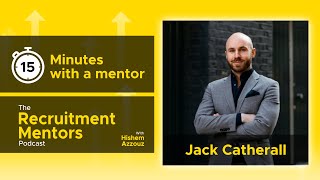
Jack Catherall, Managing Director of Wiser Elite, discusses remote team motivation, work-from-home routines like walk-and-talk meetings to beat Zoom fatigue, and his cold-call approach: permission-based opening, brief value prop, then ask about hiring needs before pushing for a meeting.
Chapters
Welcome to the Recruitment Mentors Podcast. My name is Hishem Azzouz. Today we are back with another episode of the 15 Minutes with a Mentor series, and this is where we ask some of the mentors from inside the community 7 questions in 15 minutes. I'm very excited to be joined by Jack today, and before we get into the questions, Jack, if you could introduce yourself to those that may not know who you are, and then we'll get through these questions.
Awesome. Yeah, no pressure. Hi guys, I'm Jack. I'm the MD of Wiser Elite. We are a specialist software sales recruitment team. Been operating for almost 6 years now. So I joined a group called Wiser, which specializes in employer branding and graduate recruitment, and I helped them build this new entity, and we've organically grown it now to a 7-figure business. And over the years, kind of been kind of like doing a bit of a trial and test kind of process and trying to build this business out, but we're doing a pretty good job, I think. And yes, great to be part of this, and hopefully I can help out with some of these questions you're gonna fire at me.
Right, so what I want to know first, Jack, is what was your biggest challenge in 2020? How did you overcome it? And what did you learn from it?
I mean, there was loads of challenges last year, right? It was a pretty tough one. I think the biggest one that I faced was like not being in control. So when the environment's going well, you tend to have a lot of control in terms of like how you can fire up the team and kind of like just kind of like get them motivated. I think with last year with what was happening, it was like really out of my hands in terms of kind of like their feelings. So the biggest thing there really was like the people, their motivation, how they're feeling. We weren't in office, I couldn't put my arm around them and just have that chat or go for that walk, which I would usually do if I feel like someone's down or needs a bit of a bump. So I'd say that's probably the biggest challenge that I faced and We're getting through it now, like we've obviously kind of found a bit of a rhythm, um, and I've learned how to deal with that, but I think it was just the lack of control to start with.
Yeah, so what work— working from home tip could you share with other recruiters listening to this that you feel has had a sort of real positive impact on your productivity when working from home?
It's a good one. So I think it's having a start and end of day. So I found myself working up to like 9, 10 o'clock at night because there's nothing else to do, and the next I'm completely knackered and I'm not in the right headspace. So the days where I've had a clear plan and I mean, everyone would tell you this, even if you're not working from home, having a clear plan and having a structure, this is what I'm going to do, 9 to 6 or whatever hours you work was a big changer for me. We also changed up a few things, which is like our meetings, like having a bit of walk and talk rather than just having chats like this over Zoom because It can be a bit obviously kind of tiring doing it over and over again, so just trying to change up massively helps. So I'd say there were two things, it's like having a start of the day and then just changing up how you're trying to communicate with everyone, but also even how you're communicating with candidates and clients. Some candidates weren't doing a prep call, I'm like, okay, I'm gonna do this on a walk if it's a nice day, which is quite tough to find in January.
Yeah, nice. So I'd be interested to know, like over the last 12 months, what's been the most effective way for you guys to win business?
So it massively bounced back for us. Our financial year starts in April and we saw in that first Q and second Q, like we were doing 40% of our number. It was really, really tough and obviously everything drops off at the start and it kind of slowly bounced back. All of the client wins that we saw towards Q3, which was October, November, December, a lot of it was just from all of the long-term partnerships we've had. I'd say we probably had another 15 new client wins, but a lot of it was just down to people knowing who we were. And I think that's because we played this long-term approach with our clients and we never tried to do a quick win here or there. We never tried to treat a candidate badly. If we can't help them, we always give them the update on what's going on. So a lot of those came back to us and gave us business and the ones that we found we had want new clients, we have new logos, no work to perform. It was just like, yeah, it was just candidate spec-ins that we just saw that they were hiring at this time, but they just raised investments or something happened. There was an event in their business and it was like, we just be smart about the messaging. It wasn't just a generic message. It was like, seeing this is happening, I'm guessing you're going to be looking for X, Y, and Z. Here's a good profile that I think you should consider. Would you be open to a chat this time next week? And we're keeping that up as well. But what I did notice is that previously we didn't really have much focus around our BD in terms of the number of messages going out each week or number of calls. And so we had much more structure because it was more important to us because we needed to win business. So the structure was kept together.
Nice, interesting. So, be interesting to know, what habit or hobby did you start in 2020 that you're going to continue in 2021?
That's a good question. Um, I'd say like, I mean, it's running and getting out a bit more. Like, I mean, it's, um, where all of my ideas come from. It's, uh, where, you know, I have really good time to think and be on my own. Even when you're on your own in the house with like your partner and stuff, you're never really on your own. But getting out and running and stuff really makes a difference. So that's something that I think this year I'm going to try and keep on top of as long as I'm not getting injured, which I am at the moment. So, uh-huh.
Any, any big run, any big run goals this year? Because this has come up a lot, it's definitely helped me run, and I want to keep it. But any big goals you want to share?
Well, still marathon. I signed up for the Brighton Marathon, which is supposed to be— yeah, it's supposed to be in May this year, but I've got moved back to, um, to October, I believe. So we'll see how it is. I mean, I'm struggling. Get past 5-10Ks, so we've got a bit of training to do.
Love that. Right, so probably the most important question, Jack: what do you think is better, the first coffee in the morning or the first pint post-work on a Friday?
Coffee.
Yes, I'm glad. That conviction, I like that. I'm definitely coffee. Awesome. Right, second to last.
I love a good pint after work, but I always regret it the next day.
Right. Second. So, so this question is slightly different. It's a scenario that I want to sort of hear how you would approach it. So scenario is a particular client that you've had on your sort of target client list for a long period of time. During that time, there's been several touchpoints. So I know you guys do different things from roundtables to webinars to podcasts, etc. But during that time, they may have attended one of your events and may have listened to a podcast. You may have even dropped them a note on LinkedIn or an email, but through your candidate network, you managed to get one of the hiring manager's contact details at this target client. So you call them, they pick up, they say, hello, who is this? And just want to hear how you'd approach that conversation.
Sure. I tend to always keep it short and sweet and never go into it with like, I'm trying to sell to someone. So generally I would have an opener or you know, it is a referral by someone to say, hey, I was put in touch with you by X, Y, or Z, or hey, notice this event again that happens, um, or you came to our event, or whatever it may be. So make sure that first line is strong, um, and then say like, it'd be good to have like 20 seconds just to run through why I'm calling. And then they would then say, okay, interesting, or yes, I've heard of you guys, or whatever it may be. And then I would go into start asking questions about obviously the current situation with hiring. So I'd say, we help software tech companies who are recruiting SDRs or account execs and sales leaders, are you looking to hire in the next 30 days or so? And then if they respond and say yes or no, then obviously I look to try and move to the next kind of section, which would be try to get a meeting or try to, you know, do a follow-up at a certain point of time. But I'll never try and go into that meeting with just like bombard them with information, and I would always try short and sweet. So make sure that 30, 60 seconds is quite clear about what you're doing and the reason for it.
No, I really like— I've definitely used that where you say, um, this will take 20 seconds, or have you got 20 seconds, yes or no? And if they say yes, then yeah, you've sort of just— you've then been given, um, the green light, right, to do it. So then you feel a bit more comfortable with it. So that's always helped me as well, to be fair. So last question, So I want you to sort of imagine really, and this may be something that you've done with your team internally, but just wanting to imagine that I'm a recruiter that has set goals for 2021, completely convinced I'm gonna have a better year than I did in 2020, feeling motivated. And I just want to sort of hear what your advice would be to recruiters listening to this that you think would give us the best chance of actually achieving the goals that we've set. Would love to hear that from you.
So achieving goals is quite interesting. I looked back to my goals last year and the year before, and last year I didn't achieve any of those goals because obviously there's a lot of change. We're quite happy there. So I don't want to come at this with, you know, this is how you hit goals, because I'm definitely on that journey of like, what do I need to be doing to make sure I'm consistently hitting those? But I can let you know why I've missed goals in the past and why I've achieved goals in the past and kind of give a bit of a breakdown. Maybe someone can pick up something from that. Moving forward.
Yeah, sounds good.
So reasons why I failed, I think being unrealistic with the goal. So maybe the goal is too ambitious or the time we're trying to do it in is unrealistic. So, you know, trying to do a million pounds in a quarter is a great goal, but, you know, is it realistic? And so I've set a few of those in the past and like, actually, that wasn't achievable. So something like, something I had to consider when you're looking at your goals for this year, is it realistic? You know, the reason why I haven't achieved goals is not putting enough effort into it. So what's the motivation behind that goal? Do you really care about it? Like, is it something you get up every single day and try to work towards, or is it just like a little bit of a fad?
Sounds good.
Yeah. Make sure that's in place. And the reason why I haven't hit goals is obviously something's changed, like maybe pandemic or, you know, the desk has changed direction or someone's left the business, whatever it may be. Like, there are reasons why I haven't hit goals in the past. Why I have achieved goals is that I haven't had too many. So the goal I achieve is that I only focus on that and maybe one other. So look at your list of goals, make sure that you've got, you know, a select few that you really, really care about, you're motivated behind. And then I think you'll probably have a more success rate of trying to hit those and achieve those for this year. And also the goals I have here, I had early momentum with. So don't try and make a goal which is going to be over 12 months. Try and break it down so that you can tick that box in the first week or tick a box in the first month, that momentum will really help you to try and achieve that overall large goal. Either break it down or make it smaller so you can feel that momentum initially as well. And making it visible. So the goals I've achieved have been quite clear, whether they've been sitting on my laptop or they've been sitting in front of me on my notebook. That's something that's obviously really important because you have to put action towards them every single day. It can't be something you just pick up like once every 2 months, I was like, oh crap, I need to get out, start running for my marathon. So I work towards things I've never had really, someone helping me to be accountable. I can only imagine that's going to, you know, going to be important, something to, you know, keep pressure on you as either your manager or colleague or friends and something to just kind of bounce off ideas if things are going down or struggling. So I have people in my team who are working towards goals and make sure I check in with them every fortnight and like, okay, we have these quarterly goals. What's happening here? What's happened in the past 2 weeks? What are you going to do in the next 2 weeks? So it doesn't get too long. Um, and in the past I've had situations where we've had quarterly reviews, we haven't even spoke about a goal for the whole 3 months. I'm like, actually, like, we missed it. And that was just a waste of their time and my time. So something to bear in mind.
Yeah, no, I love that. Chat, that was 15 minutes of a mentor. Thank you.
Appreciate it, bro.
More from Hishem




You don't need as many clients as you think to bill $1 Million A Year In Recruitment



From 30 Direct Reports to Back-to-Back $1M Years as a Solo Recruiter with Zach Creighton



