James Blackwell - How to scale your agency to 7 figures
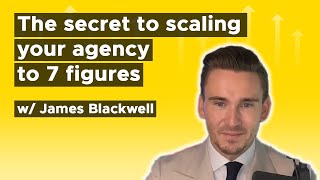
In this episode of the Recruitment Mentors Podcast, host Hishem Azzouz interviews James Blackwell, founder of the Agency Blueprint program and author of Automatic Recruitment Agency. Blackwell shares the personal journey that took him from a recruiter in a large S3‑style firm to building a multi‑million‑dollar agency, and he outlines the mindset, systems, and community elements required to push a recruitment business from six‑figure revenues to seven‑figure scale. The conversation covers the importance of a growth‑oriented mindset, the challenges of delegating and letting go of control, and the need to reinvent oneself (Version 1.0 → 2.0) when aiming for higher revenue. Blackwell explains how his program helps owners develop a “different version” of themselves, build robust client‑ and candidate‑attraction systems, leverage LinkedIn automation, and create operational frameworks that allow the founder to step back from day‑to‑day tasks. Real‑world examples, such as a former financial advisor who grew his agency to $1 M/year after joining the program, illustrate the impact of applying first‑principles thinking early. The episode also touches on the role of community, mentorship, and omnipresence marketing (ads, LinkedIn webinars) in reducing isolation for solo recruiters. Listeners are directed to agencyblueprint.com for a discovery call and to automaticrecruitmentagency.com for the book that distills the discussed tactics. Throughout, Blackwell emphasizes continuous personal development, paying for mentorship, and avoiding the common pitfalls that cause 95 % of businesses to fail within five years.
Chapters
Everything goes back to mindset. So like, spend a lot of time strengthening it because it's the only thing that will ensure that you don't break when you have bad months or recessions come and everything else.
Welcome back to another episode of the Recruitment Mentors Podcast. I'm your host, Hishem Azzouz, and on this week's episode, I was joined by James Blackwell.
Scaling a business is like the scariest thing you'll ever do in your life, and it's going to put you in places of being extremely uncomfortable. And you have to be comfortable being uncomfortable.
Now, you may have seen one of his ads at some point pop up on your LinkedIn. James has gone on a journey where he's scaled his recruitment business to be doing 7 figures a year, and he is very detached from that business. He is not working in the business, he is always working on the business. So he's ended up going on this journey where he's now built an education company called The Agency Blueprint. So he helps recruitment entrepreneurs, typically people that have their own recruitment business who are stuck on that $5,000 to $10,000, $15,000 a month hamster wheel. We broke down how you can go about using virtual resources to do your candidate sourcing, to do your lead management. And for those of you that are interested in potentially working with James and his team, use the link in the show notes to book in a call with his team, and you're going to get looked after because you've come through the podcast. Enjoy it. Into the episode. James, welcome back to the podcast.
Thank you for having me, Hishem.
I was just saying, we, uh, did this remote 2 years ago, COVID times, and hopefully I've improved my interviewing skills.
No, like I said, you, you're a good interviewer, Hishem, so don't be too harsh on yourself. But I'm, I'm looking forward to, uh, today's episode because I know a lot's changed since the last 2 years, especially in the recruitment space and also my businesses. So happy to share some wisdom where I can.
Exactly. So I think purpose of today is like, why I was excited to get James back is I see the content that you put out, I get hit by your LinkedIn ads, I get your emails because I'm always curious to learn on how other people are doing what they're doing. So I think other people that listen to this podcast might have experienced the same. Some of the ads you might have seen, they might even be getting your emails. So I think what I'm really excited to do today is really just get into the nitty-gritty of how you actually help people and what that actually looks like in terms of the things that you find yourself, uh, you teach people, the systems, the processes. So we're going to really focus on that, but I thought just to start Like, why don't you just tell us, give us the, the high-level details of like your own recruitment business, where it is today, um, talk to us about, you know, what it did revenue-wise last year, or however your financial year might have been, uh, just gone, what you ended up GP-wise, how many people you have in the business. Because I think what's really important that people know is with what you do, you're walking the walk, and I think that's important when you're in the education business. So let's just start there, give us the details of where Ronald James is today, and then we're going to go into the agency blueprint and this journey that you've been on over the last couple of years.
Sure, sounds good, Hishem. So, so yeah, so those that maybe didn't watch the last episode, just to give you a quick synopsis of my recruitment agency and then Agency Blueprint. So I founded Ronald James almost a decade ago, so I think it's like over 8 years now, and that's really transformed over those years. So I think now to this day it is pretty much self-managing without me. So now I live in Dubai, I manage that team remotely from Slack and Zoom. And obviously, I've got a good team and a good team culture in place in a physical office in Newcastle, in the UK. And yeah, so the business has been going from strength to strength. I think the difference between what I've done with Ronald James over probably the last 2 years, it's pretty much stayed the same in terms of performance, but also knowing that it's involved zero of my time. So I think the big thing, say, for instance, last year performance, We did just over $1.5 million in terms of revenue. That's pretty much mostly all perm revenue fees and very high profit margins between 40-50%. And I think that comes down to just having solid systems in place over the years, really good exclusive and some retained clients and a really good team in terms of how we develop the remote sourcing team. So that really allowed us to scale with, do more placements without having more recruiters in the seats, if that makes sense. So, so we have a small team, uh, around about 11, 12 employees at the time of recording this, and, uh, that's a mixture between in the office, hybrid, and remote. So some people work in the office maybe 1, 2 days a week, some 3 days a week, some fully remote, uh, in different, uh, places around the world.
And they're all full-time employees of Ronald James?
Yeah.
And it's all perm that you've, that you've typically done then?
Yeah, I mean, look, we've probably done maybe 10, 15% now and again as, as contract for some of our best clients that need some contract resource. But yeah, we've predominantly done perm just because when I started as a recruiter, what, many, many years ago, maybe 15 years ago, 14 years ago, I've always done permanent recruitment. So I prefer it just because it's cleaner, easier, and it's a lot easier to do that while stepping away from the business day to day.
And it's tech that you do? And is it, is it like fairly niche? Do you mainly do business in the UK? Do you do other stuff in the, in the US, Europe?
Yeah, good question. So we, we focus predominantly in the northeast of England, uh, so that's pretty much our, what we call bread and butter. We're the biggest digital and tech recruitment agency in the northeast in terms of the placements made, the clients that we got on our books, and the clients that we've serviced. And then we've also relaunched Boston in the US, because we just hired a quite a really good senior recruiter that's going to really build out that market back in Boston. So we were doing that and then we stopped and then we're back into the US market as well.
Okay, so $1.5 million last year, 11 to 12 full-time employees, about 45% profit margins. And then obviously this is why, where I wanted to start, that's sort of what your recruitment business looks like. And then you can tell us, but obviously what I put down here in terms of what you now do, you've got two products. You've got your Recruiter Accelerator, which is all centered around helping recruitment entrepreneurs, recruitment business owners scale their business to six and seven figures, which you've done for yourself and you're doing. And then the other element is you have an Elite Mastermind for those people that really want to take their earning potential seriously and want to, you know, take their business to a million plus.
Yeah, correct. So that's a different business called the Agency Blueprint. So that's probably been my main focus over the last, definitely the last 3 years has been transcending into teaching others exactly what I replicated in my agency and really helping them build out the systems automation and the remote team so they can scale up to 7 figures without having to work harder as such. So that's been, yeah, the focus on the other business. We got 2 products for that, Recruiter Accelerator, So that's pretty much helping anyone from 0 to 10, 20K a month that want to scale up and implement the foundations, which we'll probably dive into today around why I think a lot of recruitment agency owners don't really reverse engineer things back to first principles and build out systems thinking from day one. And then for those that want to actually scale to 7 figures, we have an elite mastermind. So I do live events in Dubai, US, the UK, and a lot more closer specialized support from me and my team. Yeah. And then I've got other companies that I've invested in as well. So I've got two other companies that I've invested in. I've got a SaaS company that just started and investments in property, commercial, residential. And yeah, that's been pretty much the growth so far.
And you've, and you obviously in preparing for this, you've told me sort of for anyone listening, this has ended up being like the real like sweet spot of people that you've ended up helping. You might be someone that is doing— you've been doing $5-10K a month. It might have not been that consistent. You might have some better months than that, some worse months than that. They probably work on their own. They know they need to change or create a business that's more consistent or less reliant on them. But yeah, obviously that can be overwhelming. And they're the types of people that you find yourself speaking to a lot of the time. Is that fair?
Yeah, like I would say a lot of people that we help are what are called solopreneur recruiters that have— some have been in recruitment for 20, 25 years and are still doing candidate placements themselves, and they're burnt out and tired, frustrated. They can't exit the business, but they also can't step away from the business day to day. So you've probably got two vehicles in terms of like where you want to go. So sometimes when you start a recruitment agency, you might want to go all the way to really scaling it up to 10, 20 million and then exiting it then. Obviously, we know the statistics of the chances of actually selling a recruitment agency is pretty much below 1%. So for you to actually get there, it's going to be very, very hard because I shared a statistic the other day about even just scaling an agency to a million plus in terms of revenue. It's pretty much only 5% of business owners can ever get to that mark and then to scale it past or businesses past 5 million, it's pretty much 5% of that 5%. So no, sorry, 1% of that 5%. So it's very, very difficult to get there. So a lot of people don't want to go the full spectrum of like building an agency to sell, or they maybe realize 1 year, 2 years, 3 years, and it's very, very hard. And there's a different way to do it. So I think most people that start a business as such, they want freedom, they want autonomy, they want financial freedom for the family. And to leave maybe a legacy, but also to be able to work when they want, where they want, whenever they want. And you can do that with a recruitment agency if it's done correctly. You put the right systems in place, the right team, the right structure. Over time, you can get there. So yeah, we help a lot of agency owners that are either just about starting up and maybe 6 months in, and then they're struggling to get it past the 10, 20K a month mark without them having to burn to the ground working 60, 70 hours a week. And then sometimes like those solopreneurs that have been in the game a long time, or maybe at 1, 2, 3 employees trying to hire 360 recruiters, it keeps failing. So then they're back to just depending on themselves and maybe a VA. We help them streamline and scale their agency without them, like I said, being involved in it like 60, 70 hours a week.
And that's what we're going to break down today. But I have, I have— let's just start with this. What, James, what do we say to the cynics that see your content, see the flashy stuff, see what you're doing, and think, what the fuck is this all about? This, this guy, this isn't gonna work. Like, it's just one of those coaching things. They get you signed up and then, yeah, you know, there isn't real weight to what they have to say, or they don't actually help me get to where I want to. Um, what, what do we say to these, to these cynics that I'm sure you've found yourself speaking to, or you might see the odd comment which you don't let affect you at all, go, nah, this is a load of bollocks that this guy's talking about. Let's just start there. What do we say to those people? And then let's get into the stuff that you teach people.
Yeah, sure. I mean, look, I mean, I've helped over 600 recruitment agency owners scale their business over the last 3, nearly 4 years. So I think what you tend to find, people on the outside, if they haven't invested in themselves before, they'll tend to have a stigma around investing in mentors, courses, masterminds. And look, there's a lot of people out there that are trying to sell different things. And sometimes people don't get results. So, um, one thing that's very important, like, I'm still around today and like get more and more successful, and the only way I'm getting more and more successful is mean I'm getting people results. Um, you chop— find out if, um, it was a case of I wasn't getting anyone results in terms of coming in the program. I mean, we've, we've helped a lot, a lot of agencies, uh, get unstuck and really make more money. So, um, what I would say is it doesn't matter whether it's me or someone else, but like I would say everyone should always get a mentor if you're in business. Like, you should always, like, find a mentor that's 3 or 4 steps ahead of you, because having a mentor can, like, really eradicate mistakes, prevent you from making some failures and get you faster results quicker. And yeah, like, some— look, 95% of people don't invest in themselves. That's just the way it goes. So I'm not here to convince people that they should invest in themselves. That's up to them. But been around more and more successful people, the one trend that I've spotted with millionaires— and I was having dinner with a billionaire, a tech billionaire, out in Dubai 2 days ago— and even then, like, everyone invests in themselves. Everyone's had mentors, anyone that's successful. And the people that are set in their ways and thinking they can figure it out themselves, that's fine, but what gets you from A to B doesn't get you from B to C. So there's things that someone knows. So I always like take the wisdom quote of mentor of mine that would share was, if there's someone that's got more money than you— and yes, we can go down the rabbit hole of, uh, success doesn't mean it's a definition if you've got more wealth, but let's say if we're in a business, we're here to make money at the end of the day. If you, if you're not making profit in your business, you don't have a business. So if we analyze people that are successful and actually more successful than you and made more money than you, they know something you don't know. So if you want to be arrogant and not want to learn from them, that's fine, but just know that whether you like them or not, that you, you will learn something from them. So I'm always an absorber, like a sponge. So if I know someone's more successful than me, I might not want to be exactly them, but I want to take at least 1% from them. Can I take some golden nuggets, one or two transitions that could help me make a million, an extra 10 million? And that's the mindset I always go in with learning from people, is I'm always curious and I'm always open to learning more. And I think the people that get the bug, once they've invested in themselves once, they get some results, they start reading more, they start attending different events, they start getting more mentorship. Naturally, you're going to be more successful. Like, that's just the way it goes. The more you invest in yourself, I've personally found the best investment is in yourself, not stocks, not shares, not crypto or anything else. Like, to create your own net worth, when you look at people that have made 8 figures and 9 figures, their best investment is in themselves. Education. It's a far greater return on any crypto, any stock, any savings portfolio, because skills and experience is like the main two things that you have in your life, and those two things are going to last you a lifetime.
Yeah, I honestly, I couldn't agree more. So let's break this down then. So you like to call it a hybrid agency, right, um, is the terminology you use. And correct me if I'm wrong, uh, but the terminology that you've sort of broke this down to, you might have changed it a bit, you tell me, but You've got 4 pillars in your hybrid agency system. You've got system, automation, virtual sourcing team, and operational excellence. Am I missing anything there? Is that still up to date and correct?
Yeah, it's pretty much like we put them in attract phase, deliver phase, systemize, and scale. So like there's 4 key what we call pillars in our agency blueprint roadmap. And then there's different tiers from going from $0K to $10K, $10K to $30K, and then $40K to $100K+. A month.
Yeah, cool. So I asked you in preparing for this, and where I wanted to start is like, what— where do you find yourself repeating yourself the most? And, uh, time and time again repeating the knowledge that you're sharing, you're getting the same questions. And I think this is really relevant right now. So why don't we just start with having a set process to win clients? And I think this is really relevant right now with how the market's changed, um, and, uh, what recruiters need to be, uh, you know, be world-class at or be spending more time on. And you said to me that, yeah, this is often where people fall short. The people that are doing 10, 20 grand a month, they don't have a system to consistently be bringing in clients. Because we've all been there where, like last year, everyone's doing really well, we've got loads of job flow, and then obviously going into this first half of the year, that's reduced. It's like, oh, we need to be doing BD again. Obviously your whole thing is we need to create a system. So why don't we just start with firstly, like, how would you do— what makes up this client-winning system? What are the principles to it and what makes it up?
Yeah, great question. Yeah, so, so boiling it down, when we reverse engineer everything back to first principles and we look at the key points we need to implement first, but first we need a client map. So I call it the niche builders, but we need a solid way of knowing that any potential client that we could work with in our niche we've got their data from. So we know who the hiring manager is, the C-suite executives, we've got their email addresses, we've got their LinkedIn profiles, all in a map. So I would like put in a Google Sheet and that's your master sheet. Okay. So once that's built, you never really need to rebuild it, rebuild it again. Maybe you could get a VA to top it up every 6 months if there's any changes. But that's the first thing. Okay. And then the second thing, we need an attract— attraction mechanism. Enabling us to go one-to-many with to the market to try and get some traction with client leads. Okay, so we need a lead generation machine. Okay, so that could be a mix of email automation. So with email automation, it's not a case of just, okay, I'm going to just plug it into an automation tool and away we go. It's okay, no, like we need to make sure that emails are hyper-personalized to the right points of contact. You've got the right type of email deliverability, you've got the correct subject lines to get them the emails opened, because half the time they don't get opened. You put in the right context in the email to get a reply, because the number one thing for an email campaign is not to really sell on the email, it's to get a reply because you want to create a conversation, okay? And a lot of people get the stigma behind, I don't want to automate everything in my agency, recruiters, it's a personal touch and it's human-to-human interaction. Well, yes it is, but you need leverage, you've only got so much time in the day. So the number one thing you need to do is automate the point to get to the conversation. And a lot of recruiters and agency owners don't do that. And it's like a secondary thought because they think, oh, well, I've already got like 8 jobs, 10 jobs, 12 jobs, or whatever it is. But they're not really thinking about the future because always you want to be churning through clients to get better and better clients over time. Like naturally, like when you first start off your agency, you take any client or pretty much anyone in the niche and you start to realize that these guys aren't really hiring all of the time or they're messing me about or the low fees, they don't pay on time or they've got 3-stage interview process. So you constantly need a client lead machine to generate the other clients that might come through in year 2, year 3, year 4. And so that's what the email automation— then you've got LinkedIn automation. So like the next thing we help you build out is a set cadence in terms of follow-up sequence to nurture potential client leads through LinkedIn. But obviously, once you've got volume there, you need a virtual team that's going to manage that because you can't manage those inbox. Okay, so then what we call a nurture pipeline funnel, we put that into a different tool. It's like a mini CRM that sits in your email account that can nurture maybe responses and yes responses. So obviously once we get a yes response, that's the ultimate goal. Okay, so let's say like a client puts a hand up and say yes, can you send me the CV or I'm interested to learn more. The next thing that most recruiters fail to do is just Obviously you pick up the phone, you give them a call, and you walk them through the requirements, and then you're talking about your terms and maybe pitching yourself. I think it's very, very important to convert a client and walk them through a custom experience that we call as the Signature Sales System. So we help you develop a signature sales pitch deck. So it's between 18 to 24 slides, and it's actually walking that client through the problems in the market, your expertise in the market, what's going wrong with their current hiring process, and assessing their needs and giving them a prescription and a solution of why your services are different. So I talk about unfair advantages in the market. So we really pitch in around this is what we do differently within our marketing, with strategies, with automation, with the way we've got our remote sourcing, video outreach, all these voice note follow-ups, everything that we do differently. We package together so the client can be comfortable knowing like, wow, these guys are doing something slightly different. And I understand why they're charging a certain fee or package. And then at the end we package it together. So I call like a platinum, gold, silver package. It depends on how you, how you customize the pitch, but you always either pitching for retained or exclusivity. And then the third part might be contingent. So that's like the trifecta of the signature sales system. And that traditionally normally gets 8 out of 10 closes. So it should close a client 80% of the time. And I've done that, I've perfected that for the last 8 years. And we've had like, I think probably between every agency we've had on board, maybe $30-40 million of revenue that's generated over time.
So let's talk about, let's talk about the first part of that because I think we're not going to be able to showcase how we're different on what we do if we're not getting the leads. Like the leads is the actual just complete lifeblood of a business, right? When we're in this type of business. So I just have one or two things I just want to sort of drill down here. We've heard multiple times on, on this podcast. So again, if you're making notes right now, do you have a market map? Are you consistently building, uh, your market map? Every single top-performing recruiter does this religiously. So not surprised that, James, you, you started there, where you need to understand who are the main players in, in my market and in my niche. And if I do find a, a, a new one, that it's— that information is going somewhere and it's added to the companies that I know I should be able to deliver for and solve problems for them. So we've got the market map. Let's just focus on the next two bits. I think that's what people will be most interested in. So in terms of— let's just start with the email automation part, right? So what are we talking here, James? Are we, are we speccing out a shitload of candidates? Is that typically what people lead in with? Like you said, the objective is to get a reply. So like, what have you found to be the most effective here? What have you found that is mainly working for the people that you work with? Is it that just coming up with a system to send out loads of CVs and loads of candidates? Is it just getting really smart with personalization and talking about the pain points that we know these people have? What's the key to that email part? Because a lot of people use emails, but it's about doing it effectively and people don't want to just become spammy and, and just fall into that category. So what's the important part there?
Yeah, good question. So like the first thing is we don't spec a CV as such. We never put an attachment on an email campaign. So the number one thing that you want to do is not use your CRM or ATS to ever like spec on the CV because the ATS or CRM system, and I've tested hundreds, okay, and even the one we recommend inside our program, we don't recommend to use the client outreach using that tool. So because I've studied a lot in terms of like inbound marketing and digital marketing, that's like the direction I've been over the last few years and working with a lot of industry leaders in that. The first thing we need is deliverability with the email. So a CRM system ATS, when you put an attachment on it, it's most likely going to go into spam or promotions. Okay, you want it to land in that person's inbox. So the number one tip that I would give to everyone is make sure it's just black and white text. Okay, there's no hyperlinks, there's no signatures on the email, there's nothing to click. So it looks like it's just a personal email from James to Hishem. Okay. So that gives it probably an 80% chance to get through all of the spam filters and funnels to make sure it lands in the inbox. So it's not just a case of spamming over a PDF document or Word document and attachments. So that's what I would say the next thing is. And then everything else is custom in terms of the niche. So we actually, inside our program, I have a £100,000 a year copywriter that works for both my companies that comes on calls every single week inside our coaching sessions. And actually custom creates the email campaigns with each individual member. Okay, so there's obviously a framework designed around that in terms of the body, the context. Sometimes we try and be a little bit funny and a little bit creative and different, and then it's all about the follow-up procedure. So we looked at on the basics, obviously trying not to dive too much in depth because people are listening on a podcast, so I can't visually show you. I would say It's all about timing in your market. Okay. So when we look at when clients are hiring, clients are hiring, probably 1 to 3% of your market's hiring at that time. Okay. Maybe 5% at most. So that means that 95 to 97% of that market, when you've got your data list, is not hiring at that time. So we need to make sure we're following up and it's all about timing to catch them at a time when someone's handed in the notice, they've just had new budget to open out a role. You have to be front of mind, okay? So that's like talking about marketing 101, creating an omnipresence in the market. So that's why you need to be all over LinkedIn, you need to be reaching out to them on LinkedIn, you need to be reaching out on email, you need to be doing events, you need to be sponsoring events, all these different things coming together. But in terms of the email replies, it's making sure you've got a follow-up sequence. And I always recommend 6 to 7 follow-ups in an email campaign, and you can spread that out over time. And that means you've got more likelihood to catch a client when they might be looking. Because if you just blast out 4 or 5 emails within like, let's say, a 4 or 5 week period, what about in week 8 or week 16 when they actually are looking to hire, then the other agency sent them an email. So with email campaigns, it's spreading out the follow-up sequence and making sure you've got enough in the follow-up. There's, there's $100K a year clients that I've won that are still clients today that ignored every single one of my emails until email 6, email 7. Or a second or third campaign in another quarter. So it is all about being persistent and trying different angles in terms of subject lines is the number one thing to get open rates, because if you're not getting the email open, it's not getting read. So we need to make sure it goes to the inbox first. So that's why I was saying black and white text, no links, no signatures, no attachments. Make sure you're not using your CRM or ATS. Use a proper email automation software tool and then when that is getting delivered, then you're tweaking the— you're testing A/B variables of different email copy. And we change that a lot of the time. I mean, we've got the— you've all got the ability now to use ChatGPT. So ChatGPT is good in terms of you could see— whenever I see a good email or a good cold outreach email that like sort of grabs my attention, I save it in a folder with my executive assistant. Then we'll go through them maybe once a month with my copywriter, and we might spin out 4 or 5 different variations of them. Okay, so we'll always test different variations. So it's like signing up to different people that are doing B2B outreach, seeing what works and testing. You can still pitch in a candidate as such, like an NPC. Obviously that's been going around for since the test time and recruitment still works. But I would say it would still work with bullet points and follow-ups. And then what I like to do on replies is we do a customized video outreach. To the response. Okay, so when you get a maybe reply back, or maybe thanks for reaching out but just not yet, doing a customized video to follow up with the client is— or potential client— is what I would recommend to nurture them.
Interesting. What, like, people are going to be thinking this, like, what tool do you get people to use typically?
The tools I would recommend, something like Reply.io is good. Email automation software tool. You could use something like Apollo. Any, any tool that is— I believe in pick the best tool for the job. Okay, so when we— when you come inside our program, I give you the recommendations of the tools that we've tried and tested for over a decade. Okay. And there's always a new kid on the block in terms of a shiny new object tool. Oh wow, this is the all-in-one solution. There's no such thing as an all-in-one solution that does everything. I've never trusted them. Every time there's a new tool out that incorporates LinkedIn automation with email automation and finding email leads and finding phone numbers and everything else, like, you can't be the master of everything in the software tool. So I picked the software tool that just focuses on email automation, and that's all they do. Best tool for the job.
Makes sense. And then if we get this right, and then we'll go into the LinkedIn piece, if we get this, this system right, what do you think on average, like, how many, like, of these emails do you think should be going out daily, weekly, if we've got this system going repeatedly? Because I think that'd be an interesting insight to people. If I think when I was in, in recruiting, in a recruitment business, I wasn't doing any of these emails, consistent things. It was me personally writing the email, like phoning people, like just the typical thing. So if we get this system right, I know it always varies, but typically how many emails in a week are we probably sending out and going out daily, weekly, do you think?
Yeah, so obviously your email's got a threshold in terms of deliverability. So if it's a brand new email domain, you need to warm up your inbox. So use a tool like Warm Up Inbox, for example, to warm up the inbox so you know it's gonna be delivered in the inbox. And then you wanna make sure you use an email deliverability test tool. You can just go, go on Google and test your email. So as long as it's like an 8 or 9 outta 10 deliverability, then you know it's good to go. And then what I always recommend is buying maybe 3 or 4 other email domains. You can buy as many as you want, but for example, ronaldjamesgroup.com is our website, but I've got ronaldjamesgroup.com, uh, .net,.ai,.co.uk,.io, for example. Like, we've got lots of different subdomains because then you can run different email campaigns through the different, uh, providers. Okay, so then going from 50 a day, which is normally the threshold, you can maybe push it up to 100 a day, but 50 is normally the, the trend. You could have 4 domains, so that's 200 emails going out a day. Now then, it goes back to your client list. So have you, when you're, when you're mapping out your niche, have you got enough potential clients in your market niche? So I always recommend you want to have at least 2,000 to 5,000 potential clients that you could work with over time. So as long as you've got that, that's like, let's say there's 5,000 companies, 2 to 3 points of contact. So you've got either 10,000 to 15,000 in a dataset that you're going to run maybe 200 emails a day to.
And then how does this, how does this differ on, on LinkedIn then? Because I feel like, do you, um, I think obviously, correct me if I'm wrong, but Dripify is something that you use, right? Or encourage? Yeah, I've heard a lot about that. But what, how, how does it, what, what differs in LinkedIn? And so we've, we've done all the upfront work, we've got the emails going, we've got the deliverability, we've got a 6-7 step email, um, you know, process which is encouraging people to reply or booking a meeting with you. So you've got that going. Well, what am I now doing on LinkedIn then as well to accompany that?
So LinkedIn's slightly different because you can't— you don't really want to put too much long copy in the LinkedIn outreach message because what you tend to find is everyone knows— well, a lot of people know now you're going to automate message outreach. So you want to make it come across that it's not automated. That's the number one skill of like a LinkedIn outreach message. Is doing that. So I always like shortening our sequences. So like 2 lines, 3 lines in the copy in terms of the LinkedIn outreach. The best way to do it is when you're running the email campaign, you're going to run the LinkedIn automation campaign side by side. So it means that if you're viewing a profile of a potential prospect that you've emailed, they've seen that you viewed their profile and you're like, okay, so that's Hishem, I understand now there's email. So you've got a better chance of them thinking who you are, and if they're interested, they're going to reply more. And then over LinkedIn, it's all about, again, follow-up sequences. You might create a journey. We normally create a custom journey for you, maybe 6 to 10 different follow-up sequences and ways to get replies, whether it's a 9-word message to get a reply, whether it's a case study, whether it's pitching in a candidate, whether it's sending the Loom video of a candidate role. And then you've got a different strategy as well for— we call it live leads. So where there's clients that are actively hiring in your market right now, we'll have a different client acquisition process to get live leads because you need to be faster to market with that. So you need to be more aggressive with follow-up sequences, the way you custom outreach with that. But LinkedIn automation, the number one goal is to get the connection first. So a lot of people get it wrong where they're trying to pitch either on the connection invitation. So it means it's just an automatic decline and they're not going to get accepted. So you've got to make sure the profile looks strong. So I mean, again, back to first principles on LinkedIn, you can't just bolt on a LinkedIn automation tool. We've had plenty of people before they joined us thought LinkedIn automation doesn't work because they did it wrong. The LinkedIn profile wasn't good. The title, the background, the profile picture, the body of like your LinkedIn profile, that needs to look good. Then it's making sure you send the right invitation request and not selling too much on the connection message and making sure that you're not just pitching straight away when they connect. Because on automation, you could all of a sudden you get a connection request, then message 1 goes. You don't want to do that because then definitely looks automated. Yeah, so there's different nuances that you want to make sure you install in your LinkedIn automation machine to make sure that the follow-up sequences are correct. Now, the biggest problem most agency owners have, they come to us, is if they've done that, they're overwhelmed because then all of a sudden they've created more work for themselves because they've got they can't manage their LinkedIn inbox anymore. They're looking on a weekend on the phone and they're like, wow, I need to respond to this one. And they've got so many messages and it gets messy. So that's when you— when we build out the virtual team. So they're going to handle that lead funnel inside your LinkedIn account. And the same with the email funnels and your emails account, because as you scale with volume of automation, it breaks because you haven't got anyone to manage it and you haven't got a process, SOP, to make sure well, this is the process when a lead comes in, or we're going to reply on LinkedIn.
Yeah, I'm, I'm not, I'm not surprised by that. So why, why don't we, why don't we cover the, the, the virtual piece and we'll come back to that? Because I also wanted to— because I know that's also fundamental on our candidate acquisition funnel and that journey as well, isn't it? But I think what people would be really interested in— this is something I've implemented in my own business and has been really effective I think is, is, is missed in, in the recruitment industry. So correct me if I'm wrong here, ideal client journey would be they get an email from me, maybe LinkedIn message, might even got a personalized video from me, but whatever the steps, uh, may be, they get to the point where they're like, you know what, James, you're being persistent, it looks like you can help, you've added value, let, let's have a conversation, and I, and I book into your diary and we have a, uh, meeting. So this is where you obviously mentioned around your, your signature sales system where you have a sales deck that you refined, um, and there's an opportunity to present how you're different and what you do. So is the typical sales process, client process that you aim to obviously achieve with your clients is like they're booking a meeting and then that, that one meeting is when they're then pitching and closing business? Is that, is that the step? And then they start working on, they agree terms and they're working. Is that typically the the sales process.
Yeah, look, that's the ideal scenario and that's the plan, what we want to do. We either want to get them on Zoom as soon as possible. No, never on the phone. Ideally a Zoom call because that's the way you can take control of the process because you have the signature sales pitch deck. You use it as an anchoring point to go back because a lot of people are visual learners and the way they want to see and how we design the presentation looks great and it walks them through and it flows really well. So it's the only way that you can retain control over the conversation to keep an anchoring point. So ideally you want to do it over Zoom. If you can do it in person, even better. I know some people that are doing different niches in the US or whatever, so it's a lot harder from the UK. So I understand that. But yeah, ideally you want to get them on Zoom, walk them through the pitch. And then it's not just going through the pitch, we also use a tool to send them a digital proposal. So we can see when they've opened it, how much time they've spent on each part, and to get them across the line. Because it's great pitching, okay, that's great, send me the details. But then 50% of proposals aren't signed because we don't have a strong follow-up procedure. So making sure that we present it correctly, but also send them the correct proposal and the right follow-up process to get them to commit.
Hey everyone, a real quick one from me. This podcast would not be possible without our amazing podcast partners, Vincere and Sourcebreaker. Because you listen to this podcast, you're able to get your hands on exclusive savings on both of these award-winning products. If you're a growing recruitment business, you have to check out Vincere, who are an all-in-one operating system for your growing recruitment business. With Sourcebreaker, if you want to make sure that all of your recruiters have the best tools on the market to stand out and beat their competition, then you have to check out Sourcebreaker. Use the link in the show notes, in the comments below, and you'll be able to get yourself exclusive savings on these amazing products. Okay, so what are— look, obviously we're not gonna, uh, you're not gonna go down it slide by slide what's on this slide there, right? But what are the, the principles to— because I think this is, this is really valuable for people, because if you think about it, and I'm sure you hear it still now, if I think about when I was in recruitment, the way that I would negotiate terms would be on the phone. I'm trying to build credibility, trust through this initial phone call. And you're talking about— it's very transactional and it's very difficult to showcase your value and credibility via just a phone call with a company that you know that's hiring and you're trying to get the best terms that you possibly can and for them to give you a chance. You never worked with them before. So I think this is, this is really powerful for people. And we've had someone talk about this before that, and it was really pivotal for them. So what, what are the principles that should go into your sales presentation? And obviously you've really refined this, but what, what are the non-negotiables that should be on this presentation that people can take away and at least try and aim to put together themselves?
Yeah, good question. So, so we, we don't just have one proposal. So as you scale to 7 figures, it's not about doing a pitch deck, uh, it's about winning business that's like 10, 15, 50 placements a year. So I've got a pitch deck with a a big billion-pound bank in the UK that we won. We placed over 60 employees there and built on the full team over a 2-year period. It was worth over $750,000. And, uh, that pitch deck is like 78 slides. It took me a long, long time because we had to go through a full C-suite executive. So I had to go to the headquarters in Edinburgh. There's 20 people around the room asking me different strategies, and that was all around inbound marketing strategies. So building out create page websites for them, video, social media, tech events to capture the audience. So as you ascend your agency, there's a different type of signature sales pitch, like I would say, that you can really package up retained and the outsourced-insourced model. And that works really well, especially in today's market of like actually looking after all of the recruitment services of a company. Once you've established a niche, that's the next level. But we're talking about the basic, just simple signature sales pitch deck that we use. The first thing is the introduction. So you want to face the problems head on. So we have a slide that will be, say, the problems that you're facing right now. So I understand you, Hishem, because you may be struggling to hire XYZ candidates at the moment because you haven't got inbound systems to get them. The business is struggling to retain this type of level of candidate because of XYZ. You may be falling behind on projects because of these issues. And like 5 or 6 areas of the problems that they're facing. So they get that you get the market, okay? That you understand salaries have increased by 30% and here's the trend, for example. And then you recognize and look, this is what I do is traditional methods do not work. So I'll say like job boards are in fast decline. Developers don't openly apply for jobs because they're not actively looking. Average developer is getting maybe 50 to 100 messages every single week on LinkedIn. Cold calling developers, hate it, doesn't work. Company adverts, you're not really getting any responses. So I'm recognizing with them that the traditional methods of recruitment aren't working anymore. We need a different solution. So then we walk them through like, well, how our system helps to implement in their business to not only attract but also retain good employees. So we talk about focusing on the passive, we call it a passive digital automation funnel. So we'll say, look, we know 80% of the developers in the market are not actively looking for a job. But they would be open to move if all things were right. And this is the content nurture, engage, convert strategy that we do. And then we'll show all of the different tools we use, our virtual sourcing team, all of the email campaigns, the way we do events and webinars and everything else, and how our database has got everything in the market, like a lot of different strategies and unique point tracking open system of emails. So we know when a candidate is potentially looking to move, for example. So we will show them like the marketing piece of like what we do differently to a traditional agency, because I like saying that we're more hybrid agency, we're more digital marketing recruitment agency. So we're using leveraging technology, tools, systems, remote teams, and clever strategies to engage with candidates. Then we'll walk them through, I call it a 10-point metric scoring system of like how we analyze a candidate before we present to them. The areas that we focus on in the business. So like authority, automation, like making sure the database is correct, the events, webinars, like career sites, and then the type of clients that we work with and a bit of storytelling. So walking them through, I'd always create a custom slide or two around a company that was similar to them that we helped and they were stuck and had this problem and this was a solution and this is where we placed 5 or 10 developers over the year, for example, so that they can resonate with that. So like the closer you've got a company that was similar to them, the better. Then I talk about building a moat around the agency and like trying to get control of the market. So we build what are called talent pools for their business. So we take them offline from an email and we've got like a tool that we use with Trello to actually send candidates and walk them through a flow. So I'll try and get my client to use that. So that means that other agencies are just sending traditional emails via CV. This client's used to using Trello now, and I communicate with them in Slack, for example. So we move an interview process, they can visually see everything, and they can move them through a process a lot quicker. People try and use their own ATS that's got this plugin. Look, it's never going to work. Client's not going to use that. But that's why we built something that was a tool that a lot of, definitely a lot of tech companies use. We created, we walk them through like the hiring plan. So we create a bespoke plan for them. We'll walk them through the end-to-end hiring process. So we'll show them a visual map of exactly what happens day one with requirements, project kickoff, to igniting the passive talent funnel, to the talent pool, to help building their brand in the market as well. Because us as recruitment agency owners, and a lot of agency owners should use this, is you should leverage your brand. Your brand in your niche is a lot bigger than the company that's hiring for that talent. So for example, if a company in the Northeast is hiring a developer, the likelihood of them getting them using us is going to be 10 times more likely because we collectively on our LinkedIn profiles, we've probably got like 100,000 connections engaged, like on news feeds, etc. So we help them build their brand and like create more awareness in the market for their company. Uh, yeah, so we're walking through and hiring process, the delivery plan, and then we package up the services at the end and bundle it together of, like I said, Exclusive, uh, sorry, retained, exclusive, or contingent.
Two things I love about that. Thank you for breaking that down. Two things. One, as you all know, oftentimes the perception of what recruiters do isn't the real— the reality of it. So all those things that you just said then is going to showcase when you get to the 'and this is how we work, these are our terms, this is all that.' They've obviously gone on a journey to actually understand what the fuck happens, like, when they work with them, right? Which oftentimes is difficult to do when you're on a phone call, saying, no, we work to 20%, that's what we do. And it can— like, you've taken them on that whole journey, first thing. Second thing, what I really like about this is what you're teaching people to do for their own business, they then can use those systems and approaches with their clients. Exactly right. And I think that's super smart. You're practicing what you preach, you're doing what you do for yourself, but then you're able to then offer that and speak to companies. And it will be a point of difference, and it will be something that hopefully can achieve obviously better results more quickly and in a more effective way. So I think that that's super smart. So why don't we move this on to then like the sourcing piece, the sort of outsourcing piece and the remote piece, because that's also fundamental. So again, correct me if I'm wrong, it sounds like— I think when we last did an interview, we spoke a bit about remote teams and stuff. It seems like you've had obviously so much experience over the years in dealing with remote people and having outsource resources that you can use. So where typically is it like when we're trying to go on this journey of implementing some of these things, where is it that we really need to commit to trying to get the outsource, the virtual resource right? Is it Is it really fundamental that we have the virtual resource system working for managing the leads and managing that part? Because that's really difficult to do on your own. And then is it also absolutely fundamental when it comes to the sourcing element and have people always be creating shortlists and these types of things? Are they the two key areas on the virtual front?
Yeah, it's a good question. So it's split into two parts now. So first you've got what we call like a virtual team that is handling maybe from the Philippines that handles all of admin, all of the lead funnel, all of the follow-up sequences. Okay, so that's just like the first thing that you need to do is get your VA system in place so you can stop doing tasks that are worth $10 to $50 an hour. Okay, so we can, we can systemize that, we can create a step-by-step process for that. So all you're doing is speaking to high-quality clients, doing the pitches, winning the business, handing it off to your delivery team. That's an ideal solution for a business owner. The second thing and the most important thing now that's been the biggest shift, and this is probably the best training that I've developed for probably the last 3 years, is what I call the marketing sourcing system. So this is where you get marketing sources from different countries that are doing video outreach, they're doing voice note follow-up, they're doing all of the marketing in your business, they're doing all of the social media, and actually sourcing candidates, replying backwards and forwards, nurturing candidates in your niche. To then book qualified calls into yours or your recruitment consultant's diary. So all they're doing is got a day worth of calls for qualified candidates for their live jobs. They're doing the interview, uh, candidate interview over the phone, qualification, sending CVs, getting interview feedback, closing deals. Because once you get that system up and running, these are the hardest things to get going. Because it's great if you hire talent, and some people try and hire 2, 3, 60 recruiters, then all of a sudden they haven't billed for 3 months, or it's cost them too much money, they went back to just doing it themselves because they were billing $20K a month for themselves. If I had 2 recruiters and now they're pretty much losing money, so, and then the struggle to get past that, that's because they're trying to scale with a business that is going to fail. It's not like on House of Cards. I haven't built the systems to generate clients, enough volume for not just them, for the rest of the team, a consistent way to get them either exclusive or retained, because you want exclusivity as a minimum, ideally, because it gives you more time to fill the role. So it gives you your team time to deliver. As long as you can deliver within 21 days or 30 days, there's no reason why you can't get them exclusive. Like most clients would prefer to work with one partner or two talent partners. They don't want many others. So the marketing sourcing system is the next thing that you want to get right along with the virtual team. So that's that. They can be both remote, so they're not in the office, they can run itself and they're quite cheap. I mean, I reverse engineer the modeling for the payment structure for the sourcing team. So a lot of people inside our program have hired 3 or 4 of these sourcers, and they've never had to do any sourcing again. So they're out of their own LinkedIn inbox all of the time. They're not having to worry about generating candidates anymore. And each employee, depending on where we hire them from, is around about $1,000 to $1,500 a month in terms of cost. But they bring in a 10x ROI or 1,000x ROI. You're paying them $1,000, they bring in a $10,000 fee. Like, we— it goes back to investing in yourself at the start compared to stocks and crypto. Like, if you've got a model where if you, if you hire one person and they're going to give you a 10x ROI or 5x ROI, why wouldn't you double that and triple that? So it gives you a really agile model that you can, that you can build on.
Look, it sounds great, right? And I've had my own experience. Like, I, I use a VA. You, you tell me where people maybe overcomplicate it or have the wrong perception of thinking that getting to the point you described is— that's never going to work. Like, they're not going to be as good quality as James says, or like, it's just gonna be way more difficult than you make out. From my experience, I feel like the really upfront work, which you— which then pays dividends to get to the point which you described, is all of that upfront work of mapping out the systems. When this happens, do that. This is what a good candidate looks like. This is this, this is that. And it's all those steps that, that's the part that is painful and you have to do. But if you get really good at making it really easy for James to follow step by step— when this happens, do that, when this happens, do that— then you've got a way higher chance of this, this type of approach working. But you tell me, like, do people often think, oh yeah, I'm going to get to the point where James says, but then have nothing like documented, no like steps thing. And it's, it's just crazy to think that you can get someone to a point where they're doing good quality work and getting the, the types of, um, people in front of you and do what they need to do. Like, what, like, what are the assumptions that people get wrong here? And where are the things that people often fall short of to get this system going?
Well, one, they've never done it before, so they're trying to learn it themselves whilst being a recruiter and run a recruitment agency. So the chances of that being successful are very, very slim. Which goes back to go and find someone that's already proven that it works, learn from them and implement it a lot faster and you're gonna stick to it and you're gonna get better results. Like it's very simple 'cause as a recruitment agency owner, you have not got enough time. Like the last thing an agency owner wants to do is I'm hiring a VA, I've told them to do this and that and haven't done it, it hasn't worked out and then they quit. So you're either gonna be prepared to put in extra work, which is an extra 10 hours per week to train them, build the SOPs, the follow-up sequences, get it dialed in, because it's going to take 6 months to dial in if you're doing it yourself. 6 to 12 months, because you're going to have to learn the hard way because you haven't— you can't cheat it. Or you paid someone that's already been there, done that, and can just replicate the steps and plug it in. So for instance, for our marketing system, which was a good question you asked about, it all sounds great. We give 6 months training academy with all of our sources. So when you come into our program and we help you, we can help you find train and manage that marketing sourcer because we perfected the model and our head of marketing will train them, come on calls every single week, help them with Loom outreach, LinkedIn follow-ups, message sequences, things that are working to get candidates over the line. So that takes the weight off the agency owner's shoulders because they haven't got 5 to 10 hours a week to sit with a marketing sourcer to say, no, don't do the video that way, don't message these type of candidates that way and follow-up sequences. So it's either trading time or you've got money. Those are the only two resources. So if you've got money, you pay to buy that time back. Or if you've got time, go and invest in the extra 10 hours a week yourself to train up the sourcing team and try and figure it out. That's what I would say is like, there's either a hard way, which is the longer way trying to figure it out yourself, or you would just— it doesn't matter whether it's me or someone else that understands how to build out virtual teams and models. That's what I would do if I was, if I was an agency owner that was at 10, 20K a month, I would invest some of that money to try and get there a lot quicker. Because if I can figure that out 3 to 6 months shorter period and I'm billing 20K a month, that's £120,000 that I can make more money on. So, but sometimes people don't think of things that way in terms of time, but time is finite, money is infinite.
So just, just granular question before, and as we come to the end here, I'll ask you a couple more things. But just granular question, are these people messaging people from like, Hishem from Ronald James is messaging you, or is it typically, is it typically set up where it's like James the founder is messaging you? How, how have you typically approached that? What does that typically look like?
Yeah, so with the marketing sourcing system, it's, it's the person. So I ideally will have like a Most likely it's a female in this role because they're good at social media marketing and they want a career. So we'll always pick people that have got social media marketing skills and they're the ones that are doing the video outreach. So it's their LinkedIn profile and they're the ones that are mastering the sourcing and all they do is the sourcing. So they live, breathe the candidate in that market. That's it. And then they're passing on the calls booked into the recruiter's diary because recruiters don't do that. They don't want to do that. Like a skilled recruiter, is good at speaking to candidates over the phone, doing interview qualification calls, and closing deals. Getting them to source correctly on LinkedIn, they'll mess around on the newsfeed for a lot of time, liking different posts, making stupid comments or whatever it is in the inbox, and they will, they will go to the shortest cut route to success. So if they can just email 3 top candidates, get 2 replies, get 2 CVs, job done. Like But that's good, they can still do that. But it's the rest of the market they're not going to outreach to. Are they going to video outreach to all of the rest of the like 120 on the shortlist? Probably not, because they haven't got time because they're working maybe 8 jobs, 10 jobs.
Okay, we're up for time here. Yeah, just for another— is that all right?
I'm good.
Yeah. All right, so I think that— so look, so much value here, and you've really gone into detail and communicate things really, really well. So I think this is really going to get people thinking. But then I think when I was asking you around what are the common light bulb moments that you find people you work with have, I think the other thing that we haven't spoken about here, so let's speak about it, is I think you said to me never learn the skill of owning a business. So for me, that sounds like a mindset piece, or like, I don't know what, like how fundamental is really shifting your mindset here if I'm in that hamster wheel of 10, 20 grand a month last month, and it was 5 grand a month the month before. What, what sort of mindset and different framings and different perspectives have you found yourself have to help people arrive at, or create for people to get to a point where they're earning more money, they're working less in the business, more on the business, or doing more the things that they enjoy, and, and they're able to get from that 6 to 7 figure? What, what are the mindset shifts in order to do that?
Yeah, well, everything goes back to mindset. So like, spend a lot of time strengthening it because it's the only thing that will ensure that you don't break when you have bad months or recessions come and everything else. It's your mindset that stays strong. And I would say like, what gets you from 6 figures as a recruiter and a solopreneur will not get you to 7 figures. You need to become a different version of yourself. So I would definitely say like one thing that we work on inside the program is turning Hishem from version 1.0 to 2.0. So who do I need to become in order to get to where I want to get to is very, very important. And some people might say it's too hard or fluff, but like when I look back over myself over the last 5 to 7 years and to where I am now, like with a net worth of 8 figures and multiple businesses and living my dream, look, it wasn't always like that. It was a struggle. I was in a small office with my brother starting up, trying to hustle, starting to grind. Having to go out and meet clients every single week, rinse and repeat for 4 or 5 years. But I did that whilst trying to understand how can I not keep doing this again in terms of like how can I systemize, how can I automate. I'm always thinking how can I remove myself from the business a little bit more, just a little bit more and a little bit more. But a lot of people that are stuck at the 20K, it is come down to mindset. So it's fear, belief, and it's not knowing what they don't know. So it's the unknown. And this, like, scaling a business is like the scariest thing you'll ever do in your life, and it's going to put you in places of like being extremely uncomfortable, and you have to be comfortable being uncomfortable. But if you can learn from others that have already been there to make you feel a little bit more comfortable, and you're in a community, like your community or someone else's community, that you can share ideas with and ask questions and reconfirm things of like limited beliefs in your mindset, or negative thoughts, then it's going to be a little bit easier. So I would say just working on yourself every single day in terms of personal development, reading books, listening to podcasts like they're doing now. And yeah, finding a mentor is like one of the biggest things that changed my life for sure. And I consistently learn and pay to learn all of the time. But a lot of things that people hold themselves back at 20K is they want to do everything themselves. And I don't worry, I was there. I need to send that LinkedIn. No one can use my LinkedIn account. Or what if I send a message to a candidate that I shouldn't have sent to, or reach out to a client that already knows me and it's going to look automated? All of these false perceptions are made up in our heads.
Like, why is that then, do you think? Because I'm not surprised that's that. Why is, why is it that you think people latch on and hold on to, no, I should be doing this, or I need to be doing that? Why is that?
Just ego and control. Like, one of the hardest things as a business owner is delegating. Like, and that's one thing I help business owners do is helping them and forcing them to delegate. And the more they delegate, the better they feel. But it's lack of control. It's like driving the car with no steering wheel and like driving in a Tesla and trusting it to automate and drive itself. It's because you've been used to doing it yourself for so long. It's very, very hard. And unwiring that part of your brain. So that's what I was saying, like people that have been in the business like 20 years in recruitment, it's even harder for them to like, and hats off, we've got a lot of people in the program that we've helped transform after 20 years and they're like, James, I wish I knew this like 5, 10 years ago. But it comes to a part where like sometimes green, fresh people that are maybe recruited just starting their agency, if they can do this from first principles and start from day one, it's going to be a lot easier. The people that are further and further, further down the line, it's harder and harder to convince them to do things a different way. And but they'll come to a point where they're hitting a brick wall and they're thinking, when they're seeing people that are only— I've just interviewed Sam, Sammy, which is going to be a good podcast that's on my YouTube channel soon as this comes out. And he was a financial advisor that didn't have a clue about recruitment, joined the program, started whilst working his job, and now he's doing a million a year in his agency, 80K months. And then now he was taking a holiday cruise like for 5 weeks with his little daughter and his missus. And The reason why he did that, he just, he was just green. He just absorbed every single bit of information and implemented. He didn't have another voice in his head questioning, well, this isn't going to work because we tried this before, remember Hishem Azzouz, in a different way. So, and then what you'll tend to find is people that are stuck at $20K a month 20 years in, why are you still stuck at $20K a month when someone else is at $80K a month? There must be something wrong with my mindset, or I should be just open to trusting in a process that I just don't. I clearly have got to where I've got to, A to B, which is great. But like I said before, if we get from B to C, it's a different process, different strategy, different system. You need to learn maybe from someone else to show you the way because you can't see around those corners you haven't been through.
Yeah, no, I love it. Look, I've always, whenever we spoke, always respected the journey that you've been on and how you're helping people. I speak to— look, I've literally had like 3 conversations this week with solo entrepreneurs, uh, who, you know, are lonely. It's challenging. They don't have a community. They, they, they make decisions and think, was that the right decision? Should I be doing that, or should I be doing this? And as you will know, most people start their own recruitment company, and what they then do is, right, I'm going to start my own recruitment company and do it the same but different, and this is what I'm going to do that's different. So a lot of these recruitment companies, and when people go on that recruitment entrepreneurial journey oftentimes just do what they've always done, but maybe 10, 15, 20% better. So I think for the right person, what you're doing really is going to open people's minds and get them thinking about how they can build a recruitment business in an entirely different way, which they've probably never experienced before when being employed and working for a recruitment company. So I think for the, for the right person, for the right entrepreneur who has the, you know, the open-mindedness once they build a business that they're not working in all the time and is profitable. I think this is something that, um, is going to help a lot of people, which is why I wanted to really dig into this, uh, with you today. Because there's a lot of lonely solopreneurs who are unsure if what they're doing is right, would probably love to spend more time with their family, would love to earn more money, uh, but think that in order for them to do that, they have to do what they did at their old employer, which was hire people and these things. So I totally get it.
You've hit the nail on the head. And listen, I, I remember where I was in their position. So I was a recruiter working at an S3-style recruitment agency, Nigel Frank International, Frank Group, a great company, and I learned a lot from them. But one thing I knew, I didn't want an agency like theirs because I like— imagine me leaving there and that's like worth 200, 300, 400 million and it's a big empire. I can't replicate their model, just me. And so like, I knew from day one, I still remember to this day, I was in Cafe Nero in Newcastle, I put my notice in, I was getting legal letters and all sorts, and I was like in 20K of debt because I took out a loan to pay for my business. I was opening up a laptop and day one I was like, right, well, what market am I going to do? How do I understand what niche I'm going to do? Oh well, they did Salesforce, I can maybe do that and try and do that. Like, there was no strategy, I had no one to speak to. I was getting anxiety, I was under pressure, I was watching all of these self-development things, but I was like, well, I don't know the how. If all I know is to come in, get job boards, make cold calls, be around the team and try and like make some placements. And yeah, it's a lonely road. And back then I didn't— there was no one on the market that could help you with a plan. The only person there was was James Caan. So I had plenty of interviews with him and he obviously asked to invest in my business. And for me, I decided against that and I wanted 100% control and I figured it out a different way and a different path because a lot of people that are setting up their agency now, they're modeling the company they came from. And if they came from a company that is above 50 employees or 20 or 30 employees, it's probably not the business one they want because if they look at the recruitment or business owner that they work for, Are they taking 6 holidays a year? Are they spending a lot of time with the family? Are they in the office all of the time, 8 to 10 hours? Because I wouldn't want to be that owner. And most people that are setting up, they want freedom, but they're building a business on a model where the business owner they work for didn't have freedom. So they're trying to emulate that and then they haven't got the financial resource to do it. Then they're trying to learn how to be an entrepreneur, how to grow a business, how to build the systems and attract talent. No one's going to work for you. If you haven't got financial backing, a track record, and some really good clients and some systems. So that's why I help you build out the candidate attraction piece, the client attraction piece. So then at least when you're hiring, you've got a better chance to hire someone good because they're coming into something that's slightly different, that they can maybe make more money whilst just working 9 to 5 as opposed to working 8 to 8 back in the day when I used to have to do that.
So look, how, um, if I'm listening to this right now, I've been hovering at that $10-20K a month mark. I might have had a few bigger months. I might be on my own. There might be just 2, 3 of us, uh, and what I've learned today is really interesting. But there's a, there's a lot. There's one thing listen to this, and there's another thing being committed. Financial investment, emotional investment, community, all these things. So How do people typically end up being able to speak to you or find out if any of your products can help their business or be a good fit?
Yeah, awesome. So they can go to agencyblueprint.com. You can book a call through them. Maybe you'll put a book a call link with one of our team. We'll at least give you a plan. We'll see if we can help you or not because we don't take on everyone. I'm not going to take on anyone with no recruitment experience at all, for example, and very rare in those cases unless they've got big commitment and they've got a good network in their own niche. And yeah, we'll see if we can, we can, we can help you. And so agencyblueprint.com, obviously I've got my book that's come on called Automatic Clients, uh, sorry, Automatic Recruitment Agency. So how to get automatic clients and candidates. So should go to automaticrecruitmentagency.com, uh, where I pretty much put everything that we discussed in today's session into a book. You can, you can go away, implement it yourself. Uh, yeah, and like I said, I mean 95% of people don't invest in themselves, whether it's me or someone else. All I would say is like, go and get a mentor because they will know something you don't know and they will help you get there a little bit quicker and help you from not making fundamental mistakes because 95% of businesses fail within 5 years. So try and make sure that you're not in that 95%. And, uh, but yeah, like, hopefully that episode was, was useful and, and I'm happy to answer any questions, uh, if anyone wants to reach out to me on LinkedIn or on our website, then I'm more than happy to help. Sometimes I go live maybe once, once a month on webinars on LinkedIn. But yeah, like it was interesting, you said at the start of the session about probably a lot of people have maybe seen me advertise on LinkedIn and that type of stuff, and it might annoy you sometimes. But one thing I learned from one of my mentors, Grant Cardone, is like all like feedback is good feedback in terms of making an omnipresence in the market and I need to be seen. So, like, sometimes on the outside it might come across a bit arrogant or whatever, it's never my intention, it's just a case of you've always got to look at people that are maybe ahead of you in whatever area of business in life and they must be doing something right because you can't just suddenly, like, for instance, like, the amount of money we spend on ads and everything else is just to go more in bigger market but there might be something that I can help you with and a bit of wisdom and a bit of things that you might learn. And you might take 80% from someone else, uh, and that's good too. Like, there's plenty of mentors I've had, I've took 10% from them, 10% from them, but you are your own person. So that's one thing that I want to get away. It might not be just one mentor you have, you're going to have many mentors over your career.
Look, I think, no, absolutely. And, and I just think, like, for me, why I, why I'm curious, why I respect, uh, what you're doing and the things that you share is, for me, you're practicing what you preach. Like, if I end up on a call with one of your team because I've seen your LinkedIn ad, or as a message, or as one of the emails, like, you— I, I think it's so important when you're in the education business like you are, a coaching business, you, you got to practice what you preach. There's nothing more worse than, you know, taking, uh, life advice from someone that hasn't trodden the path that you want to Try them on.
Yeah.
Uh, so look, James, keep doing your thing. Um, I think it's great what you're doing. It's for the right person. I think it's, um, a great help because I've spoken to individuals that have worked with you and, um, it's, it's been absolutely pivotal for them. So keep being you, James. Appreciate it, and thanks for, uh, coming on the pod.
Thanks, Hishem, and thanks for everyone for listening.
Thank you so much for listening to the episode. I hope you enjoyed it and got value from the conversation. If you did enjoy it, Please don't forget to like, share, and subscribe, and we'll see you in the next episode.
More from Hishem




You don't need as many clients as you think to bill $1 Million A Year In Recruitment



From 30 Direct Reports to Back-to-Back $1M Years as a Solo Recruiter with Zach Creighton



