James Silverman - Our mission with Hunted has always been to inform, inspire and amuse recruiters
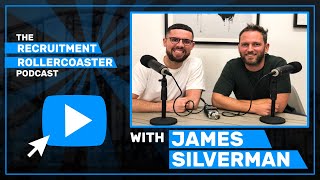
In this Recruitment Rollercoaster podcast episode recorded at Hunted’s London HQ, host Hishem Azzouz interviews James Silverman, co‑founder of Hunted. James recounts his entry into recruitment through a university friend, his early stint at Michael Page during the 2008 financial crisis, and his subsequent move into the niche rec‑to‑rec space. He describes a pivotal project in Singapore that sparked his passion for cross‑border recruiting, leading to the launch of Hunted – a two‑sided marketplace and mobile‑first platform designed to solve the information gap recruiters face. The conversation covers the origin of the Hunted brand name, the creation of the satirical Ed Hunter persona, and a content strategy aimed at informing, inspiring and amusing recruiters. James shares practical advice on international relocation, the importance of personal branding versus corporate branding, and the qualities that make top billers successful (likability, work ethic, smart work). He reflects on the evolving recruitment landscape, the rise of technology, diverse business models, and Hunted’s features such as 58 employer‑badge filters that increase transparency and empower talent. The episode also announces a partnership between Hunted and the podcast, emphasizing mutual value creation and future collaboration.
Chapters
Welcome to the Recruitment Rollercoaster podcast. My name is Hishem Azzouz, and today, um, we're in LA in the Hunted HQ offices, and I'm joined by James Silverman, who is one of the founders of Hunted.
James, thanks for having me on the podcast.
No worries at all, this is really exciting. So just to, um, frame up before we have a good chat, I just wanted to sort of frame up where we are. And if you haven't seen already, the I recently announced that I've partnered with James and Hunted with the podcast, which is really exciting. So James and his team and Hunted are going to be sponsoring the podcast, but also I really do see it as a partnership because we can definitely help each other amongst just sponsoring. And there's loads of things that we can do together, which is really exciting.
It's been good to have you in the office.
Yeah, I am quite loud though.
Yeah, well, you know, the team's quite loud.
Okay, that's cool. Yeah, so I've been— so we're recording this in the Hunted HQ offices, which is, um, just right by Chancery Lane. And I've been working here, um, for the last, uh, 2 weeks actually, um, which has been great. And, um, yeah, we're now gonna have the option to record them here. I'll also be able to go into people's offices. But, um, chapter 2 for the podcast. Yeah, which is really exciting.
Yeah, um, I couldn't really say no, really, could I?
No, definitely not. So, um, look, James, as you know, where I always, always like to start— how the hell did James Silverman end up in, uh, recruitment, mate? Let's, let's start there.
Let's go. Okay. Um, so I started out my recruitment career at Michael Page. Yeah. And, um, essentially it's my now business partner Guy. Yeah. Who was, who was responsible for getting me into recruitment.
So did the dream.
Sold Me the Dream, um, worked with him closely on the team there. But backtrack, I met Guy, we went to university together in Nottingham, same course.
So you didn't know him before uni?
Didn't know him before uni, met on the first day.
Um, classic.
Yeah, classic. We were in the, um, introduction to Spanish lecture. Oh wow. And we were both studying French. So, um, yeah, quite an interesting story how we, how we met, but different halls at university, but We ended up becoming good friends. We actually ran a business together at uni. Oh wow. Classic student venture of running club nights.
Yeah.
Which was brilliant. And obviously that was how we met. And obviously, you know, without, you know, meeting him at university, we wouldn't be running a business together now. Yeah, yeah, yeah. But yeah, he got me into recruitment. He started at Michael Page probably 9 months before me.
Oh really?
And I'd been on a gap year, came back, didn't know what I wanted to do. Financially motivated, entrepreneurial, and it just seemed like a—
seemed like a good fit. Yeah. So did you— so what was the perception of recruitment at that point? What did— how did Guy describe it, if you remember?
It's hard to remember. I mean, I didn't— I remembered, ironically, I didn't quite get rec2rec as a concept. You're on a job board. I thought, Guy's talking about recruitment, I'm going to go out and interview with different companies. I'll go in and meet his, his manager. Yeah, page as well. And you sort of go on to a job board and you're applying to jobs for recruitment companies by recruiter, and yeah, you're naive, you don't really understand.
No, you definitely don't exist.
People outside of recruitment don't know that rec2rec is this. And, um, yeah, I remember going to meet a rec2rec, being briefed on a load of different companies, went and met a load of brands, a lot of them who, you know, I remember most of them, I work with a few of them now as well. But then it was, you know, it was a bit of a no-brainer. I was put on, I was offered an opportunity at Michael Page. Yeah, to work alongside Guy building out a new division within the engineering team, but building out a Lean Six Sigma desk. Oh, so a pretty niche area of sort of engineering manufacturing. Yeah, um, used to work with a lot of management consultancies. Okay, um, some, you know, good fee value, but I, um, so I joined Michael Page in September 2008.
How big were they at that point?
Still, I don't know, they were bigger then than they were a few months later because that was, that was the week that, yeah, you know, Lehman Brothers collapsed.
Yeah.
And so, you know, not the best time to get into recruitment.
But, um, did you have to then what, change sector that you recruited?
No, no, no, it was just really, it was just really tough. Fairly robust sector. I mean, you know, people who were recruiting back in 2008 will remember.
Yeah.
You know, the downturn, a lot of people, you know, did unfortunately lose their jobs. There was, you know, Some sectors more than others. You look at property and construction, they were, they were hit massively.
Yeah.
And I remember actually at Page, some of the guys, when I first started, I think some of the, the, um, guys from the Dubai office had come over on a trip and they'd been billing silly amounts of money. Yeah. Um, you know, strutting through the office.
Yeah.
You know, top performers. And then, you know, I remember a couple of months later, you know, most of them weren't working in recruitment anymore.
That, I mean, crazy how that come up.
Yeah, it really dropped off. Um, but yeah, it was, it was a challenging time to be in.
So how long was you there for?
I was there just under a year.
Oh really?
Yeah. Okay.
How were those 12 months then? Like, really, like, difficult?
Oh yeah, look, I think any, you know, when you start any career, I imagine it's—
yeah, yeah, for sure—
difficult. You're going from university and a gap year and not needing to, to, you know, get up and get into an office every day. You know, back then, and I know it's different, recruitment has changed a lot, you know, the last 10 years, but, you know, strict 8 till 7.
8 till 7?
Yeah, yeah, you're at your desk 5:30 on a Friday, you get to finish.
Oh, brilliant.
It's— I'm sure— I know it's different now.
Yeah, of course, of course.
The world of recruitment, you know, it's, it's evolving. Um, but yeah, it was, it was full-on. Interestingly, and I guess at Page, you know, massive, massive company, amazing training. I remember going to do training in Manchester.
Oh, okay.
And, you know, great exposure to some really phenomenal recruiters, people who'd progressed in that, in that business. Um, but I was in quite a unique situation where I was in a team that reported directly into— I think it was the ops director, who was probably 3 or 4 layers above what you typically report.
Oh wow.
Okay, you know, you have a manager. Yeah, yeah. I can't remember the hierarchy in AD and sort of a few levels up. Um, and then I think that ops director, um, you know, he was even promoted to regional director while I was there. So I didn't have anyone— he was spending time across the different offices responsible for, which was great. It suited me because I'm, you know, quite entrepreneurial.
Yeah, yeah.
So you had a lot of free space, a lot of free space, well, more than you typically get.
Yeah, sure.
But, um, in all honesty, I mean, I left and, you know, ended up setting up my own business. I always wanted to do that. And yeah, working for a large company, you know, didn't necessarily suit me.
Yeah. How quickly did you know that? Was it like quite early on or—
Yeah, yeah, yeah, you knew that really early on. Yeah, I probably knew it before I even joined, but you know, you think you need some, you know, you need to give yourself the best chance of, of learning as much as you can early in your, in your career.
So was there any, any— before we move on then, was any like key learnings in that first 12 months that sort of really helped you for like further on?
Oh, definitely. I mean, that was my grounding in recruitment. That was my recruitment process. That was You know, I think I love it. Even now when I hire people from a recruitment background, if they've worked for a big company or somewhere that is inevitably a bit more rigid in terms of that management structure and KPIs and the activity levels that you need, you've just got that innate appreciation for, you know, more effort equals more results.
Yeah, yeah, yeah.
You know, and I think if you are going to run your own business, you know, you can't escape hard work. You need to be motivated and get on with it. And I think at those early stages of your career, not everyone is quite so likely to be as self-motivated. So actually having a bit of structure, being told to get on with it, it helps. And I enjoyed it, you know, worked with some brilliant businesses as well, you know, got some, some pretty, you know, decent success, you know, for first year.
Was it permanent? You did?
Yeah.
Contract? Nice. Okay.
And it was, you know, it was an interesting— I think Michael Page, you look as an organization so big, you'd often be focused on a, on a niche geography where we were operating. It was a finite client base, it was sort of 50 to 100 businesses, really consultancy space. And so we'd work with them all across Europe.
Oh wow.
So that, that was nice. It was, you know, that exposure to, you know, these top consultancy companies. Yeah. Dealing with some incredibly bright individuals on the, you know, candidate and the client side. And it was interesting because Lean Six Sigma as a concept, yeah, is about creating you know, lean processes and as many efficiencies in whatever, essentially whatever you're doing. It started, you know, originally from, from Toyota and looking at that, that line and, and how you improve the positions of machines or where you organize your tools in a workshop.
Yeah.
But actually then it was starting to be applied into any organization and banks and, you know, anywhere you can improve the efficiency.
That's really interesting.
Yeah.
Before, um, before we move on, just, just out of complete curiosity, And we'll talk about this more, no doubt, but how, how, um, how much of an impact did it have working for Michael Page when— and from a branding perspective, so like when you called people, prospects, people, whatever, and you said, hi, my name is James and I work for Michael Page, how much did that help you early on? Did it— did you recognize that, or did you not?
I think it did, it, it did early on, and I think part of that was, you know, LinkedIn was still, you know, relatively in its infancy.
Yeah.
So not everyone in our world was, was, was on LinkedIn. And I think that's where there's been a shift away from companies, the power of a database and a corporate brand, to now your personal brand.
Yeah.
You've got avenues for that. But, um, yeah, absolutely, in the early days it helped. And even if nothing else, it's, it's— if you're, you know, starting out in recruitment and it gives you a bit of credibility, yeah, it may just give you a bit of confidence.
Yeah, for sure.
You know, I'm calling, I'm saying I'm calling from—
you've got that logo, they've heard of us.
Yeah. So I've got, you know, that definitely That definitely helps early on. Yeah, just find you that credibility. Yeah.
Okay, so then after that, so then after that, am I right in saying that you then started a rep-to-rep business, right? Or got involved with a rep-to-rep business early on?
Yeah, so I, I left Michael Page.
Yeah.
Um, wasn't sure after that if recruitment was for me, really. And, um, yeah, you know, wasn't sure what to do. I was interviewing, I interviewed with a few search firms, um, And then I actually had a— I was in an interview process for a job at a financial PR firm in the city.
Really?
Yeah, actually away from recruitment and get into the city.
Yeah, yeah.
I don't know if I was thinking about something a bit more creative and, and got to sort of, um, final stage of these interviews. And coincidentally, the rec to rec that had represented me at a couple of search firms after I left Page, yeah, had asked me to— if I'd be interested to help her out on a project. So this was Hayley had launched Paddington Partners.
Yeah.
Which, you know, absolute startup, wreck to wreck business. And I'd got this offer for a job in the city.
Yeah.
But I had 6 weeks before I started, you know, I needed the money. I was like, yeah, definitely keen to come and help out on a project.
Yeah.
And it was actually for, for one of her early clients, Eames Consulting. Oh, well, down the road, sat on site with them to help out on this 4-week project. Was actually focused on building their, um, building out their Singapore office.
Oh wow.
And honestly, it felt like a completely different industry, you know, when you change environment. And obviously going from a massive company to an absolute startup with 2 people in a very different sector, you know, in, in an incredibly candidate-led sector, working overseas, you know, covering Singapore. I, I loved it.
So was you recruiting people from the UK to go over to Singapore, or was you recruiting from the UK?
Mostly I was recruiting in that market. Yeah, so as in from the UK, but no, so, so looking for people on the ground in Singapore.
Oh, okay.
They'd recently launched an office there, and then, you know, we placed a few people in. I subsequently ended up placing the country manager out there. Yeah, yeah, you know, it was a great account for us to work. Yeah, but yeah, so didn't expect to, you know, fall back into recruitment, especially not into, into rec to rec. But I, I loved it, and one of the things I truly loved— I'm going to talk about that sector that, that I was operating in before, Lean Six Sigma within any engineering manufacturing. Yes, I learned a lot, and I think it was really interesting, but I, you know, the, the people I was engaging with weren't, you know, I didn't necessarily have great natural rapport. Yeah, you know, there were a lot of these were sort of 50, 60-year-old guys who come from a very traditional education and background, working their way up through engineering. And, you know, a lot of respect for them, learned a lot from those conversations.
Yeah.
But then going into recruitment where Rec to rec is the only part of the industry where you're not— it's not superficial knowledge, you know. You know, if you were a— I couldn't go on site and with a consultancy and give them advice on their, you know, re-engineering their processes. Whereas in recruitment, in rec to rec, you're dealing with the same industry that you're operating in, and I just love that. And I thought, you know, still early in my career, I'm, you know, working for a startup, but actually it was the most amazing opportunity to learn an incredible amount because you've got all of these senior people that you're exposed to in the industry— MDs, CEOs of, of, you know, small, medium, large organizations all over the world, candidates at every level, you know, every stage of their career. I saw phenomenal recruiters, and you're able to learn so much from them. You sat in front of them and you're digging into their experience and what you can learn.
So you just— yeah, that I can, I can definitely relate to that, thinking about— that's what, to be fair, that's what I was really excited about, recruiting from insurance to then actually dealing with recruitment business owners and these things. I can definitely relate to that as to that. Yeah, exactly.
How much more do you know about recruitment from just dealing and speaking?
That's what I mean. Yeah, I know, I know. I've really enjoyed that. I totally, I totally get that. So, okay, cool. So just to, um, frame it up slightly, so then how long did you work for that business?
So, um, did a year or so in London, relocated to Singapore to open an office out there.
Okay.
Um, so it's about 18 months in London actually, moved over there. Yeah, 3 and a bit years over in Singapore.
Singapore, yeah.
And then moved back to launch Hunted.
Okay, cool. So let's unpack some of that journey because I'm sure there's some very interesting things around that. So okay, I get, get that you then sort of found this— you're just really excited with the, the rep-to-rep piece and the people you're meeting, all these things. So then I guess, so, um, what did you always initially at the beginning work on site with businesses, or was it a lot? Was that just an initial project? Yeah.
And, and also you think back, this was 2008 or 2009, there, um, you know, you didn't have WeWorks, you know, Regus back then I don't think had their business lounges. Like, it was expensive to commit to an office, so we used to split time between a couple of client offices. Oh wow, worked really well. You're immersed in there.
Yeah, exactly. That must be really beneficial.
You've got people around you. So that was how we started before getting an office in Farringdon.
Okay.
And down the road.
Yeah.
And then ended up moving to an office in Primrose Hill. Okay. It's a great spot for for an office.
I went there recently, actually.
Yeah, lovely spot.
Yeah, it's really nice.
Pubs after work.
Yeah, it's really nice. It's really nice.
Okay. And so, no, it's probably longer than 18 months, probably 2 years that we were here in London.
And what year was this, roughly?
2009. Okay. 2010. And then moved over to Singapore.
So why did you move over to Singapore?
Would you— I'd been— you know, Paddington Palace is global.
Yeah, yeah, yeah.
They've now got offices all over the globe, but back then, um, we saw one of our USPs was cross-border moves. Hayley had actually lived in Singapore previously and built, I think, what was the first rec to rec in Asia.
Oh wow. So she could really confidently communicate the culture over there, what to expect.
It was a shared network. She knew the market, had, you know, an existing client base. And a lot of the clients that you work with in Singapore, they may be Australian businesses And so, or they may have an office in Hong Kong as well. And so if you were representing someone, say, from the UK that was interested in relocating overseas, back then there was— it was really hard to move to the US as an agency recruiter, really. And that's completely changed over the last 5 or so years.
So where was it pretty easy? Was it Australia? Was a lot more easier?
Yeah, Australia. I mean, Australia's got harder now. Yeah, Australia, um, that was easier back then. Singapore, um, is, is relatively straightforward, but if you've got a degree or 5 years experience, Hong Kong is probably even easier. And then of course Dubai, where it's, you know, it's really very easy to relocate over there, although just not as much opportunity. It's not as big a market.
Yeah, yeah.
Um, so yeah, decided we, you know, could have looked to open on a first office overseas in Hong Kong, decided Singapore Loved it. You know, it was, it was an incredible experience. And especially having worked the market remotely, and anyone who's done this knows, you know, what it comes with challenges.
Yeah.
But the longer you do that before then going there and being on the ground, really, but it made it so, so easy, you know. So I used to go out on trips, just go out on a trip, you know, every couple of months to Singapore, fill the diary with, with, you know, nonstop meetings. Yeah. All day. Um, which, which was great. It was, you know, you'd be knackered. Yeah, land, you'd be jet-lagged. Often land on a Monday morning straight into meetings. I think I remember some days to have 10 meetings, you know, breakfast meetings all morning, a lunch meeting all afternoon. Yeah, drinks with, you know, someone you placed in the evening.
It was, it was full-on, but it was, um, so then when you was based in Singapore, was you— so just so I understand it correctly, you was moving people around in the Singapore market. You wasn't— and it was less so getting from people from the UK to both Singapore.
But I think as we built that team, and, you know, again, one of the things that I've always, I guess, believed in building a business in recruitment is if you can ensure that the whole is greater than the sum of its parts.
Yeah.
There's a lot of businesses in this industry where it's a bunch of individuals in a room who, you know, happen to be sharing a roof, but they're actually building their own micro business. And I think we saw an opportunity with the international moves and having, as we built the team, a specialist in Hong Kong, specialist in London, specialist in Australia and Dubai. Yeah, because you're doing a lot of that cross-border, a lot of the cross-border moves, you, you split so many fees, you really do work together and you're creating more opportunity for you, for your colleagues.
Yeah, yeah.
And it all comes back around. So about half of what we did back then was, was cross-border. Okay. But obviously when you're there, when you're on the ground in a small market like Singapore, you can really build a name and build a brand, build a network quickly, where, you know, rec to rec, I've always felt it can, it can be the hardest sector to start in, but then it can, it can become one of the best. You know, a market like Singapore, I loved it in that, you know, there wasn't a huge amount of competition. It was a small market, so you could really get to know the lay of the land. You could, you know, work with who you truly believe to be the best possible businesses out there. And it meant if you were dealing with a candidate that you know, a great recruiter, you knew with confidence you could cover them off. And I think with London, you just look at the size of the market here and the number of, number of options. And I think, you know, a lot of the time people complain about the service from rec to rec. Yeah, I think that almost that transactional nature of that sector is forced because, you know, as a rec to rec, your fee is the candidate. It's such a candidate-driven market.
Of course. Yeah.
If you're going to do the best job of looking after the fee, you're often forced to get that person out to as many people as possible.
Just to make sure it's covered up.
Because they might meet with another actor, right? Yeah. And they represent them, they may sort of go direct. So whereas in a smaller market like Singapore, you could really be a lot more quality focused. You get absolute buy-in from that individual because you know the market. You can share the news and the moves and really have your finger on the pulse. And that just brought you more credibility, which brought trust and time to then, you know, manage a process really efficient.
Just a bit on that then. There'll probably be, um, um, a lot of people listening who may, may be thinking about moving abroad or have now got 2, 3 years experience on their, um, LinkedIn, so they're getting peppered by recs. Do you want to move to New York or whatever, right? So what— I'm sure it may— there's different nuances to different countries, right? But what, what was the sort of typical conversation to help a recruiter make the right decision in terms of should I move abroad, what are the challenges that I can expect to come with that? Let's just talk a bit about that because I think you can add a lot of value around that for people.
Look, I, for me, I think recruitment as a, as an industry, as a career, one of the absolute best things about it is how transferable the skills are and how in-demand your skills are. You know, you've got one go on this planet and, you know, for me it's International experiences and seeing as much of the world as you can. It's also, it's a people industry, and I think more you can have a, you know, a global outlook and, you know, be adaptable to different, you know, circumstances and situations and people, it's only going to sort of improve your abilities as a recruiter. Yeah. Um, not to mention, it's just, you know, it's such a fun thing to do, to go and experience an expat culture somewhere, go and experience, you know, the, the Singapore, for example. It's not just the, the you know, city-state itself, which is small, quality of life is amazing, but it's weekend trips to Bali or to Thailand, you know, experiencing Vietnam and that, that, you know, the entire region. And so be it Singapore, Hong Kong, Australia, you know, there's amazing opportunities for recruiters.
But what should people be thinking about though, just, just to like wrap up some of the things that they— the option— oh, I get all that, but I guess what What should people be thinking about before they're like seriously considering moving their life over there?
I mean, really, I think you shouldn't necessarily think, I want to go overseas. Okay, you should think, I want to go to a particular destination, you know.
Okay, if you've traveled and you've been to Australia, you should definitely think about a particular place as opposed to just anywhere, like somewhere that you, you feel inclined and motivated to go and excited by.
Yeah, and absolutely. And if if you're just keen to experience something different, then do your research. Yeah, go on to Hunted, check out our worldwide series. Yeah, but it is, you know, it's about a lot of what we do at Hunted is sort of applying, you know, what we were doing, what I was doing previously, thinking, you know, back when you're at that earlier stage in your career or you're not sure what you're doing, how do I make better decisions? How do I become more informed, you know, around what my options are and how to maximize my career? Yeah. And I think just do your research because, you know, different stages of life, different locations may appeal more.
And I can imagine such a big move like that, obviously a recruiter has a— obviously you're going to influence that person to a certain degree, but to want to move somewhere, you've got to come to that decision yourself as well, haven't you? And like, yeah, sort of really, yeah, be up for that. But ultimately it comes to that decision yourself with someone's help and guidance.
Absolutely. And I think that, you know, hiring organizations will always be very mindful of the risk of bringing someone from overseas. And what they don't want to hear in an interview is, yeah, I'm, you know, considering Singapore, but maybe Hong Kong as well. Like, they want you to be so committed because it's, it's just greater risk for them. They'll typically— there's obviously the cost of visas. They may set you up with accommodation for, for a few weeks. They may pay for your flights out there on top of, you know, yeah, you know, how many, how many times did, um—
that's just a whole nother variable. Like, if I think of the experience I had with candidates and stuff, like How many times did you have people like bail when they're meant to get on the plane? That must have been savage.
Um, you know what, actually not much, really. And again, when you've got a real, you know, a relocation involved, yeah, your dropout rates are inevitably much less.
Really? Fair enough.
Well, I mean, one of the, you know, you think of the logistics of it, typically a company will say that you need to repay the relocation that they offered if you leave within 12 months, and, you know, fair enough. Um, but yeah, there was— that would be horrible. Yeah, there was a couple of, um, that'd be grim. Yeah, there was a couple of—
so, okay, and then, and then did you come back? And then you came back to the UK after that?
Yeah, yeah. So what, you know, what brought me back was, was Hunted. So probably 6 to 9 months before I left Singapore, started to think about, you know, applications of technology in, in the rec-to-rec world and And, you know, London is the— it's the epicenter of the recruitment industry. It absolutely is. And I think not just from the, you know, number of companies and number of recruiters here, but it's the most advanced recruitment market in the world. Absolutely. We're seeing so much great innovation here in the space. And, you know, we were building our, our MVP, our initial product with an agency out in Singapore. You know, the usual sort of cliché, you know, going out to an agency in the startup world, you're always warned against that, and rightly so. Yeah, cost more, took longer, massively underwhelmed with the product. Um, but then we brought it all in-house when I moved back to— when I moved back to London.
Really? Yeah. So where did it— where did this— the initial idea for Honey come from then? Where did that— um, where was that?
Well, obviously working in rec-to-rec, you know, It's twofold. So Hunted was the platform or the app that I wish existed when I was at Michael Page.
Yeah. So it came from something that you wish you had.
Absolutely. So, you know, the candidate side, that was my experience. I, you know, enjoyed Michael Page and what I learned there, but it wasn't necessarily the right environment for me. My first thought was, I'm probably going to leave recruitment.
Yeah.
When actually, you know, you don't realize outside of those four walls, and especially today, I mean, it was not as much back then, but there's more diversity of culture, people, of office environment.
You know, this, this is really hard to comprehend that right now in today's world, that like the lack of information you'd have had access to if you wanted to join another recruitment business. That is crazy, you know, especially if you're in somewhere like London.
Do you go and meet with a rec to rec and rely on their particular portfolio of companies? Do you jump onto—
yeah, exactly—
Google and try and find recruitment companies? Especially you look at the whole market I mean, it's just fragmented over the last 10 years. There's so many thousands of businesses and people tend to go from a large organization to a smaller one. The smaller ones are the harder ones to find. And, you know, if you're a smaller business and this is where the flip side of our product, it came from understanding the pains and frustrations of a lot of the businesses that were emerging in Singapore and in London.
Yeah.
And they may have been the top biller from a, from a page or a talent to out there. And then they set up their own business and then they have a real challenge getting people, get more people to know who they are. And if they've really taken the time to build a strong EVP and they're going to really look after their, their staff, then there was just, there was a real lack of visibility for the talent seeing what's out there, but also, you know, inability for the companies to actually broadcast their employer brand to the people that they want to know about it.
Yeah, yeah. So, okay, so that, that's where the initial idea came from. Yeah, that makes a lot of sense. And then, so how, so how How old is Hunted now then? Like, how many years have you been on this journey?
I guess from inception, like idea, probably 5 years. Really? And then, you know, a long phase working with—
How long did it take for the app to— sometimes those things take a while, don't they?
Yeah. So probably a year before we actually, actually released something from an idea, you know, you're building, you know, you're looking at devising your product and, you know, it wasn't the most straightforward product to release, you know, it was a two-sided marketplace. Yeah, which comes with its challenges, of course, as well. But yeah, about a year, I think when it got real for us was when we bought the domain, really,.com. Oh, when we saw we were looking for a name, we were looking what we call it.
And then where did the name come from?
We were looking online, we're looking for idealia.com, didn't think that we'd get it. You know what, it was going to, you know, cost a crazy amount. Came across hunted.com.
And it was, yeah, it makes sense.
It's great. It makes sense. But like, it does make sense and it's strong and it's, you know, it's memorable.
And we, you know, I'm sure there's a lot of recruiters listening now that feel hunted by Rector X.
Yeah, I'm sure a lot of people out there. But I think back then as well, I think, you know, most recruitment companies were slightly more traditional names. Yeah, we wanted— we were—
no, I think it's a good word—
disruptive with a product. We wanted to be disruptive with our marketing. We wanted to be disruptive and just really delight users. And I think brand was so important in an industry where it's really hard to build a brand.
Yeah.
And that's because brands are built through word of mouth. And, you know, job search is a really covert thing. Not many people talk with their colleagues that they're out interviewing for another job. And so to build a brand within the recruitment space, you know, it was challenging. So we knew, you know, strong name, instantly recognizable, um, and Then what came next was, you know, the next however many months were a content strategy because we just knew that this industry was horrendously underserved with quality content. Yeah, I'm talking about the recruiters, you know, 90% of the industry. There was lots of, you know, content for decision makers, for marketing directors, for managing directors, because obviously there was a commercial opportunity. You know, they were the purse strings, but no one was really creating content for the, for the rest of the industry.
So true.
And so we set about right from the start, it was designed and it still is today to inform, to inspire and amuse. We, you know, it was not easy to start.
I was going to say that. How did, how did people receive it early on? Because I'm sure a lot of people now, even some people that don't know, they might have a bit of an inclination to who Hunted are, whatever. But it's always interesting, that evolution of like that point where you would have gone through, you and Guy or whoever, like people saying this is a stupid idea, what you're on about. To now, to now it's like, oh my God, great idea.
The best example of that is our good mate Tom Wish, who I remember telling him— who's now our content manager. Yeah, yeah. At Hunted and has, you know, done a phenomenal job. But, you know, early days, I remember meeting Wishy at the pub with Guy and some other mates, and a few worked in recruitment.
Yeah, yeah.
Talked them through the idea, and Wishy straight away, oh, never work.
Yeah.
And so, and that, you know, that was That was a nice little inflection point for us when, as soon as we knew that Wishy bought into it, he got it, and he could see what we were doing, so we can convince anyone. He's the most cynical person that you'll meet. Um, yeah, but no, and I guess it came down to like, we had this idea of the content strategy, and then a certain satirical character came along and was our, you know, I guess a bit of, you know, creative guerrilla marketing. You know, how do you build trust and really try and, you know, we're trying to galvanize this community. We want this sense of us in the recruitment industry. And Ed Hunter was, was how we did that. You know, it started with, you know, sort of standalone blog. You know, we adopted him in, in early days. Yeah, it was similar.
I was early on on the Hunter journey then.
Yes, that was I think possibly just as we released our mobile apps, because to start with we weren't a website. We didn't have a website really a year or so after we launched. It was only a mobile app. Um, and so having that blog, I mean, that was, you know, building that following on LinkedIn was our way of just getting in with an audience. Of course, we're able to retarget people through Facebook and Instagram ads, which has been amazing. But I think the shift Ed's been really important for this and it still adds a different dimension to our content. But what's been really great is that afforded us the, the time and the readership to then actually get the rest of our content seen.
Yeah.
And, you know, obviously 90% of our views in early days were all for, you know, Ed. Now, you know, it's probably— it's about 10% of our views on the, on the blog.
So for those that may be listening that don't know who Ed Hunter is, What, did you even work in recruitment? But how would you— obviously, I definitely recommend checking out, but like, how would you describe—
he is Hunter, he is the, the wolf that you may see on, on LinkedIn. Um, and yeah, just a satirical cartoon wolf who, you know, the, the, the, the real person behind Ed, you know, works in recruitment and experiences all the things that we as an industry experience.
Yeah.
And you know, his— I think his job, I think it says on his LinkedIn bio, is keeping recruiters sane. And often, you know what it's like. Yeah, you need that, you need that break. And, you know, if you can't laugh at yourselves, then, you know, it's just looking at all of the, the amusing yet sometimes painful, frustrating things that go on in, in the day-to-day of a recruiter.
So, um, look, before we go into sort of, um, how you see things evolving and sort of what your viewpoint is, I think what— and I found myself in this position, but you found yourself obviously through Rector Work and stuff anyway, but now with Hunter, just in such a unique position to sort of have an understanding of where the market is or how it's evolved. Obviously still being very much involved in terms of what motivates people to move and all these things. So I guess, what's your, any sort of advice or things to share around what, because at the end of the day, sort of a recruiter as we've already said, will always get— feel like there's an opportunity outside of their four walls, right? As soon as they get a couple of years experience. So like, what, what do you— from your whole time in, in this space and game, like, if I'm a recruiter right now and I've got a couple years experience and I'm sort of thinking, right, is it the business— this is my first job in recruitment, I'm not sure I see a future in where I'm at, or whatever, like, what should, what should people really keep an eye out for? Or when they're meeting new businesses or whatever, do you know what I mean? Like, is there anything in there that it's worth talking about.
You know what, in my short time in recruitment, you know, like 10 years I've been in the industry, I've lived and breathed, you know, recruitment, you know, a year at Page and then rec to rec. Yeah, this industry as a whole. And I think it's been so— I've, I've always loved the industry. I love how entrepreneurial it is. I love how meritocratic it is. You know, there's some just phenomenal success stories. And again, I was, I was lucky I was in a position I was exposed to some, some incredible success stories. Yeah. Um, at every, you know, stage in people's careers. But I think today the industry is, you know, it's shifting at an incredible pace. There's so much innovation. Um, there's— you— the, the career of a recruiter today is not what it was 10 years ago. It can be. I think that's one thing. The industry, you can, you can operate as you've operated, as businesses have for the last 20 years, And if you execute well and you've got good processes, you can be incredibly successful. Whether that will be the same forever, I don't know. Yeah, but there's also different ways of being successful in this industry today. And, you know, you just look at some of the, you know, emerging agencies, you know, in London, whether it's sort of on-site embedded solutions, whether it's technology enhancing a candidate experience or giving more visibility to the to a line manager or an employer, whether it's the applications of video in a process, whether it's integrating, you know, more diverse service offering around employer branding and consulting on a talent strategy, or, you know, disruptive pricing. You know, why do people charge a fee per hire? Is it always more work to place someone on $50K than it is to place someone on $40K? Yeah, yeah. You know, I think there's a lot more businesses that are questioning the way things have been done.
So should recruiters be thinking about those types of businesses and be aware of that?
Look, one of our— you know, I think that there's going to be more diverse opportunity for recruiters, you know, day by day. Yeah, there's just more and more options. So it's sort of work out what your strengths are, work out what you enjoy. And some people will love the, you know, the, the traditional, um, high-intensity— yeah, you know, sales floor, the traditional recruitment environment. They'd love to just get 3 promotions in 2 years and be managing big teams and, you know, prepared to put in that work. Then there's other people that are very different and just are passionate about helping a smaller number of client organizations, and they want to, you know, look at their diversity and inclusion initiatives, and they want to be promoting mental well-being within their client and just really being their partner and adding as much value as possible.
So I guess really reflect and think about what you really enjoy and what your strengths are and all these things.
Yeah. Absolutely. And it's still massively a people business. Often you could be at one company and the only reason that you're there is because you've just got the most incredible manager. And that's, you know, that's amazing if you found that. Or you've just got a brilliant team of like-minded colleagues that, you know, if you enjoy coming into the office and you work in recruitment, like, that's a major part.
Yeah.
Yes, you could move down the road for a slightly better commission structure, but Are you going to be as capable to, you know, generate the same revenue if you're not happy day to day?
So, um, another thing that I'd like to get your thoughts on from everything that you've seen, like what, what's been, um, what's been like— so have you, have you been around or been involved or seen like big, big, big billers, like million pound plus? Yeah, yeah, yeah. What, from what you've seen then, like, always interested to hear people's perspective on this, like what, what are some of the common things that you see in those people?
Um, yeah, good, good question. And I guess it somewhat fits into what I would tend to look for when I'm hiring. Okay, you know, if I look, you know, met thousands of recruiters. Yeah. And for me, it came down to, to, you know, 3 things. Okay, for 3 clear things. The top thing for me was always likability, really. And I think, you know, that's close, is EQ. But if you can sit in front of someone and within seconds you just sort of like them. Or, you know, I think likability just breeds trust.
Okay.
Trust in recruitment is incredibly powerful.
Yeah.
You know, it's— if you are empathetic, you're, you're very likable. Yeah. And these are such important traits to get buy-in and trust from people. They were less likely to muck you around. Yeah. You know, just completely upfront with you. They'll want to help you. And again, you can ask for advice. I think Likability is— I can't remember meeting any top billers that didn't have that. Didn't have that. Next, you can't escape a good work ethic in recruitment. Yeah, just that attitude. If you complement that likability with a strong work ethic, you're prepared to put in the, you know, the hard graft, then you're going to be successful. And then the third thing that, you know, really takes you to the next level is ability to really work smart. So some real you know, intelligence and being able to, to, you know, look at ways that you can be more productive and I guess be smarter with the, the, you know, what you've got.
What have you got? Yeah, yeah. Okay, that's interesting. Then I guess just to sort of tie in with that, I guess from even to talk about your own journey with this and the challenges that you've come up against, like how, how does mindset fit in that? From your— I think you're talking about the smart— being smart there is probably tapping get into that. But yeah, I guess for you, you must have been through some real challenging times and these things, do you know what I mean? So like, how the mindset piece then, how does that fit in from your own experience and also what, what you're seeing in recruiters and some of the big builders that you've seen? Like, where, where does mindset fit in that?
Oh, it's huge. I think, you know, things like that, you know, work ethic, that's hard if you can't motivate yourself. If you're— yeah, you know, if you—
can you have that work effort if you work from home?
Absolutely not for me. I'm, I, I've been, you know, do it one day a week occasionally. Yeah, I love being in an office.
Yeah, no, I agree. I'm the same. I'm the same.
I do. But no, you absolutely can. And I think, you know, that's another point, you know, working from home, it's a results industry. Working from home and flexible working is just, it's, it fits so nicely with recruitment.
Yeah, it does.
You can't, you can't hide from your results.
Yeah.
Um, but yeah, look, I think that sort of mental resilience as a recruiter in the industry, starting a business in any sector, but starting one within this sector, you really do need to keep that positive mindset. For me, like, having—
was it spoken much about that when, as you were like, do you know what I mean, during your time in RetoRed, like, was that, was that spoken about much in terms of like being around positive people and having this positive mindset, do you know what I mean? Um, or not really?
I don't know if it was necessarily spoken about. It was just, I guess, you, you people look culture fit.
Yeah.
So if you've got a really positive bunch of people and there's a real buzz in the office, you know, you either fit into that. Yeah, yeah, yeah. Fair enough. You know, I've worked with brilliant organizations where you could probably hear a pin drop in the office. You know, it's a small—
I'd find that hard. I would.
Yeah, it's just— but that, you know, again, it's the beauty of the industry. Like, yeah, everyone can find their fit, whatever culture, whatever environment, whatever working style or management style that suits you. Yeah, go out and find it. Yeah, because it's out there.
Yeah, for sure. Okay, so let's, um, let's talk a bit about, I guess, where Hunted is, where you see it going, the evolution that you've seen within the industry. And I mean, you've already talking about there's just so much innovation.
How long have we got?
So much innovation going on in the industry. But again, at the same time, I think that's— you mentioned about creating content, and that was a big reason as to how this podcast came about, because they're just came a point in my career where I wanted more knowledge, which my colleagues unfortunately couldn't give me, just because it was— I wanted more knowledge about, um, the online piece and all these things. But also I thought, I mean, I was in an agency of 8 people, so there's got to be more people in recruitment that I can learn from. That was just always my mindset. So I guess, as you said, you're creating— you're like, not many people right now may not know there's a lot of innovation going on in recruitment. Yeah. Do you get what I mean? That's the great thing about this podcast, that we can actually give this knowledge and information to people. So I guess you've already mentioned a few things, but I guess what, what have been some of the biggest changes that you've seen and sort of what, what you see happening and how you see it evolving?
Yeah. And I guess, you know, that context of us partnering up now, a lot of that, you know, as I spoke earlier about the content we were producing originally through a blog, this is absolutely an extension of that.
Yeah.
And if you can help inform people and inspire them through sharing information and success stories and shed a light on all sorts of different topics in the industry, you're only going to ensure that they're better placed to maximize their career. They're going to make the right decisions.
And that's also been the evolution, right? Because if I think about when I made— when I came up with the genius idea in my office, go, right guys, we're going to create some videos, and these people looked at me like completely distraught. But the first thing my consultant said, I always remember, is, well, no, what about our competitors and they see our videos? Do you know what I mean? So like, that must have evolved.
It's funny, we've had that on Hunted, a company not wanting to come on board because they're so proud of what they've built and they think that their competitors are going to copy them.
That's what I mean.
But actually, you've just got to look at what the net positive will be. And in reality, getting exposure to thousands of recruiters is going to have a much bigger positive impact on your talent strategy.
But how different are you though, do you know what I mean? Like, what are you doing that's so different? There's going to be a lot of different things, but at the same time— and actually, for it to be like a complete secret though and be like, no, no, do you know what I mean? That's changed a lot, I think.
And I think that every business is different, even if on paper they offer all the same things. They're different people.
Yeah, for sure.
Walk into a different bit, of course they're different. Yeah. We've got, you know, one of the ways that we've helped is we've grown the volume of companies that are on Hunted that we're representing. We look ways that we can actually differentiate them and enable people to search for what's right for them. And so we've got 58 different badges that businesses can tag themselves up with, and you can obviously search for a badge you care about, from trivial things like, you know, duvet days and early finish Fridays, or a beer fridge or an office dog, to much more meaningful things like, uh, in-house L&D function or offering global mobility. And, and I think that just shows, I mean, we've got 58 different badges as a starting point of all the things that you could have as a business. Yeah, obviously that, that's, you know, that's still scratching the surface. But I guess you look back to what you're saying, that the industry is changing. And I, I guess for us, one of the big picture goals, what we're trying to achieve with Hunted is, you know, really put the power in the hands of the, of the talent in a candidate short market, being in control of your career, understand what's out there, be given the content through podcasts, through, you know, the blog and what—
given the actual reality of—
to know what your options are and what incredible companies there are out there. And so transparency is huge for us. But, you know, we like to think that through building these, you know, profiles on the platform and driving transparency, encouraging brands to share their commission structures, really share the ins and outs of their business and their identity that it's only ever going to raise the standards as a whole because it forces, you know, it's always been just as hard for the best businesses to hire recruiters as it is for the average businesses, and that it shouldn't be that way. Yeah, it should be easier for the best companies to attract people because they're really investing in their EVP and their proposition, and it would then only force the, you know, the, the businesses who aren't offering as strong a value proposition, it will force them to up their game.
Yeah, no, I do like that, and I think Just out of curiosity, actually just got me thinking when you're talking about that, like, so from what, what I see online from recruitment businesses advertising for, um, talent and promoting their businesses, I, I do feel like they always end up going down the same path, do you know what I mean? Like big bill of lunches, Ibiza trips, just promote the— not all of them, but a lot of the time, I'd say 75% of the time, if I see a recruitment business advertise for their job. It's that, that's the go-to. But do you have any opinion on like how businesses can sort of best portray their business? Obviously that's part of it, what you can, the rewards and what you can achieve, which is great. But what else should they, you know, I mean, what other things should they be talking about and highlighting? That's—
well, look, I think a few years ago businesses were pretty restricted. In my mind, actually, when I was, you know, 5, 6 years ago in a traditional rec-to-rec role, I grouped companies into two really distinct categories.
Okay.
And you've got one end of the spectrum, your S3 type model where, you know, you hire a lot of junior graduates, trainees. You have a really incredible process that means you can keep hiring them. And if you lose people, you can still keep growing. If you lose a top performer, you can plug that gap with the next incredibly well-trained, well-drilled you know, recruiter into that role. And so you're not exposed if you're losing someone that's really brilliant. And then at the other end of the spectrum, you've got the slightly more grown-up environments that don't hire junior people. They only hire very experienced people. They reward them incredibly well, very flat structures, lots of principal consultant type environments, and they ensure that they do everything they can to not lose them. You need to make it so compelling to be there and reward them so well that they won't be thinking about setting up their own business. But I think where companies struggled was when they, you know, that was only a small number in this end and small in that bracket. Yeah. All of the companies in the middle that were trying to be all things to all people, you know, if you want to— at this end of the spectrum, recruiters would join and fast-track progression. They could be, you know, running teams of 30, 40 people, you know, within 4 years of their recruitment career, which is amazing. At this end, they're just happy working flexibly, a bit of time working from home, really grown up, strong reward structure. I think it's when you're trying to appeal to everyone that you can sometimes lose and not just never really have an identity. But I guess things have changed because, you know, technology enables people to offer, you know, flexible working. The infrastructure is different, the, you know, the cheap cost of workspace and WeWork, it's you can offer so many more perks.
Yeah.
Without massive financial outlay. Yeah. You've got the, you know, um, you know, there's so many resources out there that are free for, you know, training and developing. You can offer a lot more even as a startup business. And then you add into that all the innovation that's going on, you know, whether it's the, the adoption technology or different pricing or an on-site solution. That creates a different opportunities as well. So I guess it's interesting, it's changing and it's becoming increasingly diverse, which is where, you know, our product we're completely overhauling at the moment, redesign of all of the, you know, the discovery and the company profiles, more dynamic content. And it's just to keep people better informed of what's going on.
Yeah, I know. I just think my opinion on that is just I just think like more companies need to— I know it's easier said than done, but just really double down on their people and like showcase. Because at the end of the day, like, I've had my own experiences with my career and the businesses I've chose to work for, and it's always come down to the people that I met in the room and come back to like, did I like them and can I see myself working with them? And I just feel like obviously the, the Rolexes and Ibiza trips is— yeah, that's going to motivate a lot of people, which I get, but I just think it— I think it's just a lot more smarter and a good idea to actually promote the stories within your business and the people. These people— that's just my view on that, I think. Yeah, do you know what I mean?
Different stages of your career, you care about different things. Yeah, exactly.
That's very true.
You know, I think at times you probably enjoyed a trip to Ibiza.
Yeah, I definitely still enjoy that now, to be fair. Yeah. Um, okay, mate. So then, and then I guess, what, what's your, um, what, what's on the horizon for recruitment then? Like, what's like what are you thinking on that?
And yeah, it's going to accelerate, you know, the innovation. We're going to see it more and more. It's been interesting last few years. We've seen innovation coming from outside of the industry. You know, you look at platforms like Hired and Talent.io that, you know, coming out of Silicon Valley maybe and looking at, you know, building a tech platform, a marketplace model, whatever it may be. Interestingly, those businesses, they might raise a huge amount of money, they inevitably end up building big talent teams. And this is because you can't escape that, you know, today you can't escape the importance of the human part of the recruitment process. Yeah, you can improve it with technology. And what I think has been exciting is then to see the innovation that's emerged from within the industry. Um, and I think all of this is, you know, we're seeing more and more innovative business businesses in the agency world emerge. We're seeing more diverse product offerings from your RPOs and global agencies, but also more innovation coming from, from, you know, all sorts of different places.
Um, so I think, yeah, it's exciting, isn't it? It is exciting. And yeah, I definitely agree. I think, thinking when, um, when I worked at Hookso, I was having weekly conversations with businesses that were just so focused on how could— how can they actually solve real problems for their clients and really be perceived as an extension of, of the businesses they work with? Because I think, yeah, obviously there's always going to be a place for contingent deals and all that, but I think it is evolving in a way where actually, how, how can my recruitment business solve a real problem? And how can we add some real significant value? And thinking about, yeah, probably the first time where, like, pretty much you have with Hunted, where it's actually thinking about the client first. And thinking about the actual customer first. And really, it's a lot of the time recruitment is like, okay, well, what can I do to make this fee or whatever, do you know what I mean? And really flipping on its head and thinking about that customer first.
You look where, you know, the last 20 years of recruitment, we've come from a handful of household big brand names who have the power of the database, you know. You needed costly infrastructure and offices back then and fax machines. Yeah, yeah, you know, the barriers have been completely demolished and the industry is fragmented. But that has meant that there's greater competition than ever, not just, you know, client side and winning business. So you want to have a differentiated offering and offer, you know, different pricing or add-on solutions and services, but also then the competition for talent. But the innovation in the industry and that accelerating is so exciting for the people in the industry because that's creating more diverse career paths.
Exactly.
You don't need to just go down that traditional sales route. Um, you know, you could be passionate about all sorts of different areas. You look at, you know, podcasts as a way of generating business.
So many people talking about podcasts now, which is exciting.
Writing and, yeah, you know, all sorts of crazy digital marketing. All of that plays a part. Running events, you know, that can be— if you're brilliant at running events, you're going to have an incredibly warm candidate network. Yeah. And I just think all of this innovation is just creating such an interesting career path. You know, it should be— you know, recruitment gets a bad rep. Yeah, it does. Industry. But you know what, it's— yeah, as, as you know, the industry evolves, people see it as the talent industry, and actually a career in talent becomes really desirable. And it can mean one of many different things. It could be working with a third party, it could be working with an end client.
I think that will be exciting.
It will.
Yeah, I think— yeah, for sure. But it's, it's definitely going to be a long journey in that.
Yeah, recruiters get it quicker than you think.
Yeah, yeah, I think— no, you're right, I do like where you went with that. And I think it's definitely true why I've just seen, like, even on the Hunted profile, some of the jobs on there, it's like talent community and all that. Like, when was a recruitment consultant ever called a community builder or— yeah, do you know what I mean? So no, I do think that. And I think the only— I think the way that recruitment is gonna improve its reputation and the perception is by really actually sharing the value that recruitment businesses bring and being transparent, as you said, coming back to that. That's what, that's, that's what it is. If I think about the people I've sat down with on this podcast and spoken, like, there's so many talented individuals in this industry. Obviously, it just takes one, one recruiter called Tom to not give someone interview feedback, and they can very easily share their opinion online or whatever. But there's so many people out there that are doing a great job and really thinking about their client and candidate first, that hopefully doing things like this and things like Hunter can really sort of bring that to life and actually talk about that in a great way and give more people access to that. Which I think brings us on to quite nicely as to how we got to this point where we're sitting in your office in Chancery Lane doing this podcast. And I think that's what I'm just really excited about with the podcast. I mean, I started this in my bedroom Um, just—
and you've done well.
Yeah, I mean, yeah, I think it's— but again, it's just come from that— it's just come from that place of what you said, really, just which has sort of come to me quite naturally, where this is something that I wish I had when I— like, when I was commuting to work, an hour drive. And when I— when I tried to find this for myself, I— the stuff that I listened to just didn't resonate with me at all. And I was like, there's got to be more stuff out there. And I struggled to find it. So I was like, well, recruiters love talking about themselves. There's got to be some people out there willing to talk. And I think, yeah, it's been, it's been an amazing journey. But what I'm excited about and why I was really excited about sort of speaking to you guys and getting a partnership in place is I think that, that's where we are really aligned, is that, as you said, about what you want to do with your content. And that's what I want to do with the, with the podcast, just to continue to, to give value to the audience, offer inform people. Oh, the lights just gone off.
We should have paid the bills.
No, I think that, that's what I'm really excited about, is to continue, take this up a notch, inform more people, give more value, and ultimately just give even more great information from, from great people in industry, which is really exciting, mate.
Well, good on you. And, you know, amazing, you know, the number that you've done already. Yeah, yeah. Hopefully through partnering with us there'll be ways to—
yeah, well, I definitely diversify. Definitely episode 100, mate. I want to turn that into a live event, mate. Yeah, yeah, I want to do that.
You've got to get Ed Hunter on as well.
Yeah, we've got— yeah, I know, we've got to do something. I don't know how we're going to do that. Yeah, but, um, look, mate, it's been an absolute pleasure. Enjoy that.
Thank you. And, um, hopefully that was, you know, there was some useful and somewhat interesting insights to the audience.
For sure, definitely. And, um, Look, I think we'll have to jump in and do this again in a couple months' time, but I'm really excited and I'm excited for how this partnership is going to evolve. Yeah, thank you.
We nearly got all the way with the lights on.
More from Hishem




You don't need as many clients as you think to bill $1 Million A Year In Recruitment



From 30 Direct Reports to Back-to-Back $1M Years as a Solo Recruiter with Zach Creighton



