Jamie Weekes - The fundamental basics are what you need to be successful in recruitment
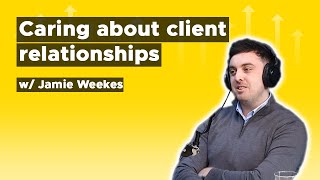
In this segment of the Recruitment Mentors Podcast, Jamie Weekes discusses Intasso’s approach to expanding its US presence while maintaining the core values established in its EMEA operations. He explains the decision to prioritize hiring local talent in North America rather than relocating staff from the UK, emphasizing cross‑pollination of knowledge between regions. Weekes describes the current US setup—a shared office hub used by two team members—with plans to eventually invest in a dedicated office, but stresses that remote work flexibility remains a cornerstone for employee retention. He highlights the company’s recent growth year, noting improvements in hiring, technology stack, and systems that now allow him to step back from day‑to‑day details. Looking ahead, Weekes is excited about scaling headcount, revenue, and profitability over the next twelve months, confident that the infrastructure is in place to drive further expansion.
Chapters
We're a remote-first business. We have got an office, but we've set up in the middle of COVID right? So we couldn't go to an office, so we had to learn to work remotely. The biggest problem was being isolated and how we bring people together. So every Monday we have our kickoff meeting, every Friday we have our wrap-up meeting. You know, people go away hopefully, I think, motivated from those meetings to sort of know the direction we're heading in. And that kept everyone singing on the same hymn sheet, which was really fundamental.
Welcome back to another episode of the Recruitment Mentors Podcast. I'm your host, Hishem Azzouz, and on this week's In this episode, I was joined by Jamie Weeks, who after building a successful recruitment career as a contract recruiter, went on the entrepreneurial journey with his co-founder Ryan, who both started a company called Intaso. They specialize in the cybersecurity space, and over the last 3 or so years, they've been building this successful company that serves the cybersecurity space across EMEA and US. We dive into so much in this episode. But particularly we really dive into what works today when it comes to client acquisition. That is one of Jamie's strongest skill sets, and we really dig deep into what it takes to be successful at business development in today's market. And as well as that, we talk about Jamie's journey on building a recruitment business, building a high-performing team, and so much more. Enjoy the episode. Jamie, welcome to the podcast.
Thanks for having me.
Thanks for coming over. Where did you travel from?
Thatcham, just outside of Reading.
Outside of Reading? Yeah, it's not the Elizabeth Line now.
Yeah, I only work with clients on the Elizabeth Line.
I remember you saying that.
Yeah, it's actually a game changer, to be fair, isn't it?
It is.
I mean, it used to take me about an hour and 45 door to door, really, into the city. Now it's about an hour since they've electrified the lines and put the Elizabeth Line in, and most of my clients, fortunately, are around Liverpool Street.
So nice.
It works.
I appreciate you, uh, making the trip. Look, I think I'm really excited today to sit down with you to really talk about this entrepreneurial journey that you've been on for over the last 3 and a bit years within Tasso. So today we're going to really talk about that, focus on that. What I like to do, just give everyone, um, just a bit of context about you, your journey, the journey that you're on. So if I'm missing anything here, let me know. That you think is important. But just from preparing for this, I think you said in your previous job you were one of the biggest performers and you was in contract recruitment.
Yep.
Right, I think you said you got your book to like 40K, 50K.
Uh, no, not quite 50. It was about— yeah, it was about 40K.
Appreciate the honesty.
Yeah, I wish it was 50.
Um, and what, what world was that in? What sector was that in?
Uh, interim finance recruitment. So anything qualified.
Okay, cool. And then November 2019, Intasso started trading.
Yep.
You joined in 2020.
Yeah.
Um, you're the co-founder of that business with a guy called Ryan.
Yeah.
Then in the first year, I think you hired your first person within 6 months, but ended the first proper year around 400 grand net fee income and around 6 people. Then end of 2021, uh, it was more 950 grand net fee income, 4 people. And then end of 2022 Um, you've got to nearly $2 million in revenue, um, and there's around 18 people in the business. You've got people in the UK and Carolina.
Yeah, that's right.
And then obviously your world is you specialize in go-to-market teams. Is that particularly in cybersecurity? Have I got that wrong?
So only in cybersecurity.
Okay, only in cybersecurity, right? And then you've got other part of the business that's more like tech? That's right.
So they do— in terms of how we carved out, we've got our technical team who place sort of blue team, so defenders, attackers, all the way through to technical CISO into the end users. So like your British Gas, your Thames Waters. And then my area of the business focuses on GTM teams for cybersecurity vendors. So the guys that make the products. So like McAfee is a popular one you might have heard of before. I haven't.
Okay.
It's a Netflix docu— documentary about the—
yeah, so I haven't watched it, sorry.
Yeah, um, yeah, so we, we basically build the sales teams for those, those vendors. So our niche is we're sort of an inch wide but a mile deep and cover the entire cybersecurity ecosystem.
Okay, cool. So loads to go into here. I guess always like to just start the million-pound question. We'd just love to hear your take on what you believe the, the sort of common characteristics and traits are of successful recruiters in today's market? Let's start there.
Yeah, so I would say discipline is a big one. Um, I think it's quite easy for people to be motivated when, when they start a job, and then that, that process tends to dwindle out when they don't get results. So as long as you're disciplined with your process and know the outcome will come eventually, as long as you follow those steps, um And then probably tenacity. You need to be tenacious, you need to want it. It's an easy job to be busy but achieve nothing. So as long as you're being tenacious at trying to achieve the objectives you set in line with the sort of discipline trait, you're going to be successful. It'll be really hard to not be successful doing that.
Yeah, no, for sure. I think, um, definitely I really like the discipline piece. That is Definitely overlooked.
Yeah, it's a— yeah, I don't know. I mean, you interview a lot of people. Is it quite a popular one?
Well, in terms of what people say, yeah, probably not. The people haven't said the word discipline, but maybe like they hold themselves accountable, they do what's needed. Um, so I think I do really like that word, uh, discipline, because I think if you have— I think I heard on a podcast recently, like, discipline needs motivation for breakfast. And it's just like, you need to be able to do the things that are required even when you don't want to do them.
Yeah, I agree.
You can't just sit there going, oh, I'm just waiting for this motivation to Come through, man, and I'll do this BD call.
Go get a large cup of coffee and then you're motivated.
So let's talk about the— this journey then that you've been on. Um, I guess why don't we just start— would you mind? You gave us some really good context of the business, but why don't we— would you mind just sharing like sort of your role within the business, like in terms of how that's ended up looking, what you mainly have focused on in the last sort of 3 and a bit years, and then I think that will give people some good context as well.
Yeah, so we, um, yeah, we had no real idea of what was going to happen, if I'm honest. So Ryan, um, yeah, he's the main founder of the business. Um, we saw— we worked together for several years before. Um, I was getting a little bit bored of placing finance professionals. Um, my market was, you know, it It was anything south of High Wycombe and anything north of the M3. So it was quite a small area I was in, and I'd done that for 5 years. And Ryan was talking about the concept of Intasso, didn't want to get involved with him, and that's why it was too good to stand down, really. I always wanted to do something like it, but probably didn't feel ready to go and be a sole founder. And I don't think Ryan wanted someone with him to sort of go on that journey. Um, we didn't know how successful it was going to be. We just knew we were going to sort of initially set up, um, try and build revenue, which we were both good at, um, and sort of see where it took us, and then put a plan in place before we started hiring people. Um, because that was probably the scariest bit, right, when you get people to leave their jobs and get on board with you. Um, so that, that was— yeah, that was an interesting time. But in terms of when, when we got going, Ryan got going initially. I then couldn't join because I needed to stick around at my last company to use my private healthcare for— believe it or not, I've had 3 nose jobs. Uh, so yeah, I had that one booked in for January, and then I was going on my honeymoon, um, in February time. And then got back, Ryan had been going for a couple of months, and he was like, right, we good to go. And then that little bug come around called COVID, and I was like, I might I might sit tight and just see what happens. Obviously no one had no— I had no idea how big it was going to go and completely change the world. Um, and then yeah, it's a bit of the bullet really to get on board and go with him in March. And then a week later it was sort of lockdown, couldn't leave the house at all. Um, and we had to get creative. And the beauty of what we do, all of my, my vendors want to sell to all of Ryan's market in the end user technical space. So we accidentally become sort of an event business for the first 3 months when no one was recruiting. So for us, it added a lot of value in that we could do thought leadership events for the CISOs and bring a lot of value to them. And we could have—
What are CISOs? Just quickly, so people like, just in like language, could be what?
So chief—
Directors, chief—
Yeah, chief information security officer. So yeah, they run all the security stuff in an end user. And all of my vendors wanted to sell to them. Obviously not a lot of people were spending money, so we were like, why don't we just do thought leadership sessions? You know, Ryan was telling me what was a hot topic in the, in the technical community, and then I would identify a vendor that we were targeting or worked with to see if they want to get involved and do the thought leadership session with us because their product aligned to that particular problem. Um, and we didn't really know how much to charge, if I'm honest, because it was quite— I said, I've done— we've done recruitment for 5, 10 years between us, and, um We'd done events, but we'd pay for those events and those thought leadership sessions. We didn't know a company would actually pay us to do an event for them. Um, and then sort of the prices just went up event after event until the point where we had people reaching out saying, can we do an event with you? And it was— well, I'll be honest, recruitment's picked up now. We're not really an event company, so we like to do them every 3 to 6 months just to bring the community together. But we did them more frequently over lockdown because, yeah, no one was hiring. Um, and then from that point, um, we're about 3 months in. Ryan wanted to keep it a bit of a lifestyle business, which is why he sort of come to me and be a bit of a cash cow. Um, I obviously joined as a minority shareholder, and for me it was all about going on a journey and, you know, creating value for a business. Um, then we quite quickly decided, right, we are going to scale this and, you know, it's going to be big, um, and it's purely going to be focused on cybersecurity. We we know we really defined our value proposition quite early on, um, and we work well with each other, which was the main thing. So we had a lot of fun, and that first year was the funnest year. Um, there was a lot of flexibility to, you know, take clients out, go play a lot of golf. Overheads were very low. We didn't have a lot of people in the business. We had like this, this two-man office initially where we sort of both had our little corners to get things going. And then Joe Head joined quite early on into the journey. I think we're about sort of 3 months, and then we sort of squeezed an extra desk on the end without telling the, uh, the office company that there's actually 3 of us up there. Um, and then yeah, it sort of took off from there really. So that's—
well, so you didn't do cybersecurity before?
No.
So that's what, like, you're talking about it like— yeah, you're talking about like, yeah, just getting into with these new relationships, new networks, but you haven't done that before?
No, so it was— yeah, that was the scariest thing for me. So that's why, you know, I knew I could do recruitment, I could run a process. I loved recruitment, I was passionate about it, which is why I thought, you know, I want to— I want to really grow something and be part of the business. Um, and then when I sort of joined Ryan, I sort of had to— because Ryan had never done the GTM stuff either. So it was, I've recruited for some of these vendors, but you'll sort of have to figure it out. So Being honest, I was fully expecting to be looking for a new job after 3 to 6 months. Um, but yeah, again, going down to being disciplined. So how—
just talk us through that. Like, how did you— because I think a lot of people can learn from this. So how did Jamie approach— I've never recruited in this space before. Yeah, I've never done go-to-market teams. Like you said, you was in a very specific patch talking to very specific people for 5 years. Yeah, you're now speaking— you're using all this language and lingo that obviously is now second nature to you, but it wouldn't have been at the beginning. So what— how did you approach adapting to that? How did you not be overcome with like, I have no fucking clue what I'm doing, I'm gonna sound uncredible, like, do you know what I mean? Like, how did you approach adapting to a brand new market?
So it's— it comes down to being an expert in recruitment. You are— you're obviously more credible when you win more work, when you become an expert in your market. But in the early doors, it was— it was working the candidates. No one was hiring anyway, so I was talking to candidates, understanding what they actually did and what a GTM was. Where I'd worked with Ryan before, before we obviously bit the bullet, I was learning about cybersecurity and, you know, he was teaching me a lot. So I understood the concept of it. And then thereafter, you know, it was sort of Ryan's wife had just given birth 2 weeks after I got on board. He'd sort of sent me a laptop and was like, right, let's, let's figure out, figure out between us. Um, yeah, we had no system, so it was on Excel for a couple of months before we put Bullhorn in. Um, and yeah, the biggest thing for me was, was reaching out and speaking to candidates. You know, I was honest with them. I'll be honest, talk me through what that means, and just understanding what it is they sold, um, understanding what their challenges were, um, and then providing them advice about how you interview, what a recruitment process looks like, and just coming across as a credible recruitment expert rather than a credible cybersecurity expert. Because you can learn the market quite quickly, but the nuts and bolts of recruitment doesn't change in any market you're in, really. Um, you know, I've adapted my style a little bit because it's a global role I'm in now. So, you know, I can be up at 6 AM working with Israel and then up at 9 PM working with San Francisco because that's where a lot of the, the product hubs sit, and then they build their sales team regionally in each region. Um, so that, that was the thing I found hardest going from working anything south of High Wycombe to the M3 corridor to now working global. And it's how do you not be overwhelmed with, with everything? You know, you can be really busy achieving absolutely nothing because there's just so much to get after. The you know, the world really is your oyster. Um, does that help?
Yeah, that does. Yeah, so that— I just find that you are— you're sort of talking about it like it was a bit like a breeze. That's what— that's why I'm just interested, you know what I mean? But yeah, clearly that, like you just said, then that can be really overwhelming. But what the advice that I really like there is, you lent into where you can add value, where your skills were— recruitment. Yeah. And you sort of own the fact that, okay, I'm not an expert cybersecurity, however, these are some of the ways that I can help you, and I can showcase that by coaching on interviews or talking about recruitment processes or talking about how you can better stand out so you can get in front of better hiring managers and these things. Because I think— I'm sure you've seen a lot— a lot of people can get caught up on, oh, I have no clue about cybersecurity, I'm going to look stupid. So I think that's really good advice. So why don't we— I think what I wanted to make sure— let's just start here and then we'll go into more of like the business stuff. But, um, I think I, uh, put down, uh, here again, I might have this wrong, but I think you said It might have been, uh, last year where we— you, uh, shared with me that it was either like 40 or 50% of the, the new logos that Intasa brought on, you was involved in, in the GTM side. The GTM side, yeah, yeah.
So all of our vendors, I'd sign about 50 of them.
50, so around 60 new logos won by the end of year 2, 50% of them brought on by you. Yeah, right. So let's fucking talk about this.
Yeah, what—
firstly, talking about go-to, uh, go-to-market teams and things like, what was your, what was your go-to-market strategy? How did you approach even acquiring these logos? What was the initial strategy?
So there's sort of two ways to break it down. Initially, it was the working the candidate, understanding the market, who was hiring, what sort of, you know, where they're interviewing, how we can help them, um, and just really understanding the market. I'll be honest that we didn't really— we didn't have Sourcebreaker, we didn't have any of the AI tools to do that market mapping. It was it was quite old school, what I did 5 years ago when I first learned how to do recruitment on my market. Speak the candidate, figure out where they're interviewing, who's hiring, what, what vertical cybersecurity is, is hot. Um, and then that allowed me to build out, you know, a client plan. We, a couple of months in, decided it wasn't a good idea running a business on Excel, so we got, got Bullhorn. Um, and, um, then I was able to build up my client plan where I figured out who was hiring and a hot area of sort of cybersecurity products. And I was able to reach out to those businesses and it was articulating our value proposition of, look, we cover the cybersecurity ecosystem. We do a lot of events with cybersecurity vendors for our CISOs as thought leadership to bring a lot of value to the community. And they were really interested in being a part of that rather than just, hi, I'm Jamie from Intasso, have you got any jobs? So that was the most important thing, really nailing down what our value proposition was. And you know, it's fine if it was just a case of, have you got any jobs or, you know, speccing some CVs out, you can do that and you can win work that way. But that allowed us to build more stickier and credible relationships with the VPs and the CROs and the hiring community who knew what was going on across the full business. So that was one area and that just sort of scaled organically and you pick up a job, you do a good job and it's, ah, you know, I see you connected to Steve over at this company. I'll be honest, I've heard good things about them. Could you tee me up an intro? Um, and they like working with me. We've done an event with them and they want to add a bit of value to their, their mate, and, you know, they'll make the intro. Um, what then happened was we sort of targeted the VC space. So I did a little bit before in my last job, and I always knew, no, it's a longer play. Um, I think when you target VCs, you, you think the floodgates are going to open the second you sign an MSA or a framework with one of them. And they're really hard to build relationships with. One, because they're very busy, they're spinning so many different plates. Two, because you don't know who to target in those businesses because they just put partner and they could be a partner for, for anything. Um, so it was identifying the VCs that invested heavily in cybersecurity and reaching out to them to see how we can add value to their portfolios. One, for our event side of things, which we've done in the past and two, how a framework can help them scale. Because the beauty about the— any SaaS products is they get millions of pounds in funding, and part of that is grow at all costs. And to grow at all costs, you need to hire people. So it's not just one finance director job like I used to place, it's we need 20 account execs in a year. And an account exec, the basic salary is about $100K. So the fees were really good, um, and obviously venture capital want to try and reduce that cost, so we could put some frameworks in place for their portfolio companies. And that's how we spread out across a wider number of portfolios, which, which worked really well, um. And then I've sort of just been holding on to the coattails of it.
All right, let's, let's break this down. Okay, so Firstly, love the— just again, just it's interesting how sometimes things can— like in today's world, there can be all these different things that you could do. It could be LinkedIn Recruiter, Sourcebreaker, all these things. But yeah, you're like, yeah, just spoke to candidates, ask good questions, use the information, and I was taking action, right? Yeah, that was actually what you're just talking about there, just world-class basics. So you spoke— you said a lot around— I just want to make sure that people will get this. So when you say value proposition Yeah, what does that actually mean? Like, what are you actually saying? What does that look like? Because clearly that's been important. You've mentioned the events. We really nailed down our value proposition. We're saying to people, this is what our value proposition is. Yeah, what, what, like, what does that actually, what does that actually sound like and what does that look like?
So what, what's the purpose of this individual building a long-term relationship with you is the biggest thing. Because I think recruitment, you can either be a numbers recruiter where we'll go to that business because we'll get, you know, 10 CVs. We might hire a candidate through them, um, we'll just have to kiss a few frogs. Or you've got the sort of true— I think the word consultant gets thrown around a lot, um, but you've got the consultant-led recruiter where you are an industry expert and they trust the CVs that you'll be sending to them. Um, and by articulating what Intasso does as a business, yes, you need your personal branding around, hi, I'm Jamie, this is what I do, this is my market, I'm part of Intasso, and this is what Intasso does in the cybersecurity ecosystem. Um, it's quite attractive to a lot of people to build those long-term relationships with us because the thing we try and instill across the team is it's not a candidate, it's not a client, you know, it's a customer call. Um, because I think that's where people become terrified of business development. It's like, well, that's fine, just call them, introduce what we do at Intasso, what we do in the cybersecurity ecosystem, what we're trying to build. And do they want to be a part of that? You know, they might be struggling to hire people, great, or they might not be enjoying it and we can try and place them. Um, and that's what sort of separates us and other recruiters a lot of the time. Does that answer the question?
Yeah, it does. No, I was just thinking then, it'd be crazy to think the amount of people, amount of recruiters, if you were to— if you're listening right now and we're to ask you what's your value proposition, or what makes your company unique, or like what makes it different? Why should a customer engage with you? I don't know how many people can answer that question or might find it difficult.
Yeah, yeah. And it is hard. I'm not saying it's easy, it's really hard to nail it. But as long as you can, as a business, you know what your value proposition is. And I think where it is hard is in a larger recruitment company who do everything, whereas we're like I said earlier, sort of an inch wide and a mile deep. It's all we know, it's all we do. So it makes sense for those individuals to build a relationship with us because that's what we do. And over time, we've, you know, we've filled some really big VP, C-suite jobs, and it's a very small ecosystem, cyber. And the word starts to spread, and then you tend to get introductions, and it sort of snowballs. And back to what I said earlier around your discipline, it's easy for things to slip through the net if you don't have a process in place and track those introductions and have a follow-up process. Because you'll get introduced to a VP and it'll be a, hi Steve, I've just used Jamie to hire some people, I know you've been struggling, thought you guys should connect. And then you'll reach out, thanks for the intro, and you'll never hear back. That's not because they don't want to hear from you, it's because they're really busy. And then you need to follow up, follow up, follow up, follow up. And then if you don't hear by the second or third time, just go back to the person who introduced you and say, thanks for the intro, I've not heard back, but, um, I don't know if you could try and team me up another intro, or if they're not interested, and take it from there.
Yeah. Um, yes, a lot of people miss that, don't they?
Yeah. And I think it's— that's where you can get overwhelmed with tech stacks. Everyone's so hung up on automation and what the next tool is to try and make your job easier. But it, it's, it's not a hard job as long as you do the basics right and build relationships with people and go back to people when you say you will. You don't need to target 200 businesses in one go. You can target 20 businesses as long as you've got the right relationships. Um, I think that's where it can become quite a stressful job at the moment because we've been You know, I interview a lot of recruiters for us, and one of the first questions is, what tech stack have you got?
Really?
And it's okay, it's not, not really a question I want to hear, if I'm honest, because, um, yeah, I mean, we do, we have invested in Sourcebreaker, we do use Talent Insights, and we use all of those systems now. It does make your job easier, but I just think you need to do the basics great and you'll be successful.
Okay, I'm going to ask you about the VC stuff, but let's just focus on this for a sec because I think this would be helpful for people. And I know we're going in the granular of the BD here, but that, that is— I know that's something that you clearly fucking enjoy, have done well at, and the business wouldn't be where it is if— obviously, I know you were talking about the GTM team here, but obviously fundamental to a recruitment business being successful is being able to consistently win good quality business. Yeah, that, that, that's like fundamental to it. That is a very big part of it. So this will be valuable for a lot of people. But so let's just describe We hear— we do hear this, do the basics well, that we hear that chucked around a lot. So could you, from your perspective, what are the world-class basics when it comes to exceptional BD? Like, what do— if I am absolutely brilliant at BD, what do my basics look like that I'm disciplined with, that I'm doing daily, weekly? What do they actually look like from your perspective?
You need to be confident and relaxed in your process because I think that comes across when you're speaking to, to hiring managers. And part of that, a big part of that, is the system and your process of how, you know, we grade relationships from A, B, and C, you know, how you progress someone from a C relationship to, to an A relationship. And part of that is having them in a call cycle, in a meeting cycle. And you look at the Pyramid of Control, right? And sometimes interview recruiters, it's, I've never met them. And then it's like, well how, like, you need to have those relationships to sort of lean on those individuals during, you know, tough negotiation processes or relationship breaks down with other stakeholders in the business to sort of fight your corner. So exceptional BD for me is having a process in place on the system that can take the pressure out of your brain and you remembering everything.
So what is that? Sorry, it's about— Yeah, sorry if that's annoying you people, but like, I think that's a key bit there. Just, just describe what a typical process might be. It might be a process that you've used or someone in your team uses, because I think that is what a lot of people miss.
Yeah.
And you're talking about that, stop being overwhelmed by, I have to do all this different BD, where do I start? You're saying, what is your process and do you have one? So could, as you're going on there, sorry, could you just explain what an example process might be?
Yeah, so, um, I mean, let's say you, you've got a candidate interviewing, um, we call them the sort of 1%ers, to help get them the job and close the deal. And it's how can you help them? Part of that is a testimonial rather than a reference. So, you know, is there an online manager that we can go and get a testimonial from? Um, and most account execs or salespeople want to sell themselves, so they're like, yeah, go and speak to Joe Bloggs. Um, reaching out to Joe Bloggs, getting a testimonial And if Joe Blogs is already in your related network, great. But for this example, let's say they're not. Um, and then sort of closing that call with, just as a high-level overview, you're clearly in cyber, this is what we do, I'd love to have you in our network. And I think where people go wrong in those sort of calls is trying to flip it to bid equal straight away. And it's about bringing that person into your community because they've taken the time to give you this testimonial on one of your candidates you've got interviewing to help get them the job. And they might be looking for a job themselves, or they might know we're about to land Series B and I'm going to have to go hire 30 people and I've got no idea where I'm getting them from. And then you sort of put that person into your database and system, and then, you know, whatever your agreed SLAs are internally, you keep in touch with them. And then every call— it sounds like really basic stuff, but every call, it's what's the outcome? You know, you're gonna go meet them for a coffee, you're gonna go play golf with them, How are you going to take them from a cold contact to a professional friend and someone that you, you know, enjoys taking your calls and calls you back?
So the first part then— sorry, I know I made you go into that, but I know that'd be useful for people. So the first part was, yeah, giving your brain a break and having processes and tools and like just processes that you can follow. Yeah, that it's more of I need to do this rather than how should— like, oh, how could I— like you just said you're not thinking, how can I turn this person into a professional friend? You've got like steps that I can follow. So all I need to be disciplined with is doing the steps. Yeah, which is the following up, which is just doing the high value. How happy would you be to be in our network? Okay, cool. And then it's like, okay, right, 2 weeks from now I'm gonna drop him a call. And you just need to do the steps rather than have to do the thinking on the how.
Yeah, that's it. Um, That's the biggest thing, and that's where the system comes into place, and that you haven't got to remember all this stuff. And if you enjoy— you're in recruitment because you enjoy talking to people, and you enjoy people and working with people. Um, you can enjoy those conversations. It's not necessarily a case of you get to— I mean, I'm not perfect, so there are times I do forget to put things in the system, and, you know, expect everyone does that. It's 6 months' time you see someone's just got a new job and it's, ah shit, I didn't keep in contact with them. And then it's, you gotta make a call. Do you pick up the phone? Because they may not have had, you know, they might, you know, not have appreciated that, or they actually just didn't want you to hound them because they've, they've got a job anyway. Um, and then you go on to work with them. So, um, that, that's the thing I found that helped me the most. It's quite granular BD what we're talking about now, but that that's the sort of basic fundamentals of any good recruitment BD plan, um, and just treating that human as a customer rather than having them coded up as a candidate or a client. Yeah, but obviously when you do work with them as a client, you need them in a particular business. Of course. And then, yeah.
Hey everyone, a real quick one from me. This podcast would not be possible without our amazing podcast partners Vincere and Sourcebreaker. Because you listen to this podcast, you're able to get your hands on exclusive savings on both of these award-winning products. If you're a growing recruitment business, you have to check out Vincere, who are an all-in-one operating system for your growing recruitment business. With Sourcebreaker, if you want to make sure that all of your recruiters have the best tools on the market to stand out and beat their competition, then you have to check out Sourcebreaker. Use the link in the show notes, in the comments below, and you'll be able to get yourself exclusive savings on these amazing products. So let's segue into the VC piece because we've spoken about this a few times with different founders on the podcast. It's definitely been more in conversations in certain industries. So firstly, how long did it take for you to get on to the outcome, the end outcome, which was to get on the Framework? How long did it take?
Probably the first one was actually an accident— not an accident, I was targeting One, what you find is there's so much risk involved in these deals where it's tens of millions to hundreds of millions of dollars that these VCs are putting in. So they tend to buddy up on them and go in together to minimize that risk. Um, I was sort of chipping away at one and we got invited to a party, um, in Vegas when we were at a show over there. Um, and then I sort of bumped into someone and I was like, what do you do? I'm a VC partner for this firm. And then I was like, what do you do? General networking chit-chat. And he was like, oh, we need a CISO for one of our customers, one of our portfolios. I was like, oh, perfect, that's sort of what we do. And then sort of, as I said, you don't really sort of dive into talking shop at these sort of things. The conversations went elsewhere, and it's sort of all about the process, having that follow-up process after bumping shoulders at this party. Um, and then we went on a follow-up call, and then a couple of months later we went on to place that CISO. Um, and yeah, that was quite a tasty fee that come off the back of it. Um, and then that sort of snowballed organically, um, in terms of that VC was really happy because they'd been recruiting that CISO for a year and couldn't find anyone for the job, and introduced us to another VC that they buddy up with a lot of their deals. Um, And then from there it just sort of snowballed really until we've got that full market map and the main VCs that work in our industry. Um, and then yet we've got our framework we can offer them, and then we also support them with, with events through our CSO community as well, which you can add value in that.
Yeah, the value. Yeah. So when you— sorry, you don't have to go into the absolute like nitty-gritty, but when you say framework, like what we're talking here, are you basically saying if they invest in a company or part of their portfolio companies need to hire X amount of people or hire these certain people, Intasso is our partner and we've agreed that they will do it at this, uh, yeah, to an extent.
I suppose the— yeah, without going into it too much, um, what I find is a lot of an MSA or a contract's quite a scary word, whereas a framework is these are a partner, up to you if you want to use them, right? Um, and a lot of the time it depends on the VC you're working with. Some who invest early stages, the, the businesses they're acquiring, they've got no recruitment processes, so they need a lot more from a recruitment partner, right? Versus a VC that gets involved in later stages that have internal recruitment teams, they might not need that much help from you other than a, you know, exec search.
So you said that these people are busy, it's really hard. Like, what did you— obviously clearly persistence, discipline, having a process. Was there anything that you found worked more effectively besides just bumping into people?
Yeah, yeah, um, yeah, bump— that was pretty— yeah, probably not the best example, bumping into someone.
No, but that was because you're, you're speaking to people, you got invited there because clearly you were building relationships. Like, there's a re— there's, um, there's a reason why you was there, do you know what I mean?
Yeah, no, I get that. So yeah, no, so, um, that's in terms of the process to find out who these guys are. It's not a case of targeting the VCs, it's doing your traditional business development, targeting your— the vendors you want to approach. And then as you start to build relationship with them, uh, who's your backers? Uh, you know, these guys are invested in us. Uh, who's the partner you work with there? And then trying to figure it out that way, because if they tell you who their backer is, you'll type that VC firm in and they'll have 50 people that all have the job title partner.
Great.
And you have no idea what partner manages what portfolio.
And then I think you said to me, obviously the idea here is you get in early because you've got that relationship. It's like, en caso, yeah, we just invest in this, uh, company. They need, like you said, 30 people.
Yeah.
So there's huge, obviously, potential opportunities. And it's not ones and twos, it's like projects and these things. But also the long-term players, if you have a dramatic positive impact on that business, guess what? Like, as they— if they continue to grow raise more money. There's obviously a real lot— there's a short-term amazing opportunity, but also long-term. But like you said to me when we were prepared for this, people would think, oh my God, like, we've got this, we've got this agreement with them, fucking sorted, we're gonna have X number of opportunities this year, they're gonna invest in all these different companies. But you said to me, it doesn't quite work out like that, the floodgates don't open. Yeah. So how, how did you then make sure that you maximized the opportunity that you got trusted with and got given by having an agreed framework with these VCs? How did you maximize it?
Yeah, so they're, you know, the partner's a busy person managing a lot of different portfolios, so you can't just sign this and expect, great, Steve's going to do all my business development for me and introduce me to all of the businesses. It's taking it upon yourself to do some targeted BD. And, you know, this is sort of cold BD, you know, what companies are in their portfolios and sort of reaching out to them targeted of hey, we've not spoken before, I work with these other companies in your portfolios, um, we've actually got a framework in place with your investors, um, can we tee up a quick intro call? Love to see how we can help. Um, and then again, that just goes into a sales cycle. Um, and then you might have eventually a partner reach out to you saying, hey, we've got this company struggling to hire someone, can I tee you up an intro? That, that's like, that's the ideal scenario, but you can't rely on that.
I'm relying on that. Yeah. So I know we've gone really grinding on the BD here. I know that would be helpful, but also like for, for business owners, it's essential, like thinking about strategic business development. And that's what we're talking about here. And we've also spoken about just how you approached it. So let's get your business owner hat on then. Yeah, let's just start with what, what's been most difficult so far on you being an entrepreneur, you managing, leading people, you and Ryan growing a business? What, what's been most difficult that maybe you've been surprised by?
Um, I've been surprised. I suppose the, the thing I personally found— we're really good in terms of how we work, in that Ryan's great at leading people and telling a journey and, you know, bigger picture, whereas I'm really good at sort of sales operations. And when we did go for a big system change, um, we needed something that would work globally. Our vision is to not have 50 people in one office It's about to have experts in different regions, so London covers the Fulham area region. We've got the North Carolina guys which covers North America, and eventually we'll have Singapore go live to cover APAC. So we moved over to Salesforce. I expected a plug-and-play sort of thing over from Bullhorn. That was really tough in that we then had to redefine all our processes. It was a really painful 6 months. That was our fault in that internally we just, we assumed a lot that, um, it was sort of out the box. Um, and then when it's gone live, it's yet sort of the best product we could have put into the business in terms of managing our sales process because it's a product for sales process. That, that was the biggest technical challenge we had. The biggest softer sort of challenge we had was, um, sort of how we bring people on the journey. Because like most startups, you, you bring on board experienced people because they're good at what they do, and you bring them on the journey, and then eventually you start to bring sort of other people into the business who you might not know, and you just assume that their process is how you work and vice versa. And what we, what we push really hard is there's no one-size-fits-all model for recruitment. And I think that's where recruiters look for new jobs because they get pissed off their bosses saying, hey, this is our process, like it or lump it. And I get you need that to an extent, but as long as it's an overall model of these are the outputs we expect, you know, whether it takes you 10, 20 calls, or you'd rather, you know, showcase your candidates through tailored spec CVs, or you want to have a, you know, an emailed BD strategy, that's fine as long as we're sort of seeing those outputs. That sort of defining that overall business, um, sort of process was the hardest part. Um, because at the beginning it's you have a lot of fun and I know what works for me, Ryan knows what works for him, Joe knows what works for him, and you know, we're all billing a lot of money and having a lot of fun, overheads are low. And then you sort of need that structure as you scale to, to prevent anything like that happening.
How difficult have you found hiring?
Um, yeah, really hard. The people we do get, we've— we get, we get really good people. Um, but what we've struggled with was some sort of interview framework. Um, you asked me a question the other day, um, I forgot something to do around how do you— what was the question you asked the other day?
Which one? What? When?
Um, about the key competencies you look for when you hire people.
Oh right, yeah, like what the Yeah, in terms of what the non-negotiables are.
Yeah, that is it. And that made me think, we don't— I don't think we actually had any non-negotiables. I think the biggest thing for us was the softer skills. Um, you know, someone who'd come from not doing finance but enjoyed working with people and the recruitment process, and this was a career for me, not a stopgap, um, like it is for some people when they leave university. Um, That was the biggest thing for us. But now we do look at some technical skills around what process looks like, um, for individuals. Um, so that's— that, that was a really hard bit. And in terms of how, how we've interviewed that, we have had to sit down and, you know, put some sort of almost competency framework together around the sort of questions we're going to ask to sort of see what the answers are, just try and avoid bad hiring.
Yeah, you don't, you don't want You don't want Ryan to do an interview that's entirely different to the interview that you do.
Yeah, yeah. I think what we found early on was Ryan or I or Joe would find someone and then be like, can you meet this person? Then I can meet this person, he's like, you're literally asking me everything Ryan or Joe asked me last week. And it's like, ah, sorry. And then, um, yeah, now we've got a proper framework in place, but That's the fun of this, of being like an early start, and that was everything I was looking for in that you're, you're sort of doing everything, and then eventually, as you know, you get more revenue, you can start to bring people in to be subject matter experts of, you know, operations. Like Sam, um, honestly, yeah, if anything ever happened to Sam, we'd be screwed. She basically runs it. Uh, Sam Thorpe, she's our ops manager.
Um, so when did you get an ops manager?
Um, about 18 months ago.
So how many of you were there?
8 of us.
That's an interesting high at that stage.
Yeah, I mean, we knew it wasn't going to be a lifestyle thing, and the, the cyber market went mental, and we were beneficiaries of that because when COVID hit, um, in 2020, there was $6 billion invested in cybersecurity.
Wow.
In 2022, there was $22 billion invested in cybersecurity. Um, so yeah, 3 times the year before. Um, and it was grow at all costs. And when we hired Sam, we, we had like— we were getting clients emailing us saying we need to hire 30 people. So we knew the revenue was there, and it's okay, let's make hay now. Yeah.
So just because I think this would be really interesting, like I recorded a podcast yesterday where we really focused on a lot of— I don't know if you've ended up growing your network or speaking to peers that are on the similar sort of entrepreneurial journey, but obviously a lot of the, the sort of UK, um, recruitment business makeup is made up of businesses that, that are a lot under 10 heads, um, like 80, 82% of it, whatever, wherever, depending on where you look at the stats. And a lot of people do yo-yo from like 15 to 8 or 12 to 8, whatever. And I think a lot of the time, just from interviewing people, from speaking to people, when I do speak to businesses that are at that sort of 8 stage, it is a lot of the time just like, just chaos. Like, there's no processes, there's no systems, like you were just talking about, which you've had to implement, which has clearly had an impact on you getting more now to nearly 20 people. But with her, with you describing that person as like, I don't know what we do without her. Yeah, like, what is it? What does that person do? Like, what they're responsible for? Why have they been so impactful? Because I think that is something for entrepreneurs to consider. Of— there's a lot of— sit down with someone this week where there's 10 of them and they're like, how the fuck do we get to 20? Because we know if we keep approaching things how we are now, it probably isn't going to work. So it's like, okay, well, maybe we do actually need to have someone in the business that isn't a salesperson, isn't these things. So what, what, what did you hire that person to do?
Yeah, again, this was, um, something Ryan's really good at. And I suppose the how the dynamic works with me coming in and Joe as well, in that we sort of hold him accountable to scaling the business because, um, yeah, we're here to actually do something. Um, and then we saw, yeah, like what you just said, right? We got to 8 people, um, we were doing too much and we probably weren't doing jobs we were good at. And then we brought Sam in and just sort of little things she does around sort of how she runs finance with our finance provider and sort of she's hired a you know, an account— a management accountant recently to internally to help us and taking the finance side of things away. And then she sort of took on board the CRM stuff. I mean, I'm, I'm really good at telling what the recruitment process is and the sort of steps we need. I can't actually do it very well. I'm not like in the actual system itself. Yeah, yeah, I'm not, I'm not a techie. Um, and it allows us to do what we were better at, and that's being customer-facing And then that again helped us. That just took us to that next level because we had so much more free time. Sam's doing everything she enjoys, which was sales operations, and the sales teams weren't having to do as much admin as they were doing when they'd done a deal or for interview processes, interview confirmations. We had all that support now. Um, so that was sort of fundamental, getting us from that sort of 8 to 10 to 18 to 20 where we are now. And now we're sort of Figuring out what those steps are, what the next steps are, what's going to turn the dial.
Are there any other, like, um, I want to call them like systems and process. I know we've used that word a lot, but are there any other like fundamental company processes that you've— that maybe it sounds— been involved in implementing or whatever that you think has enabled, you know, give you more confidence that there's more, there's more people? But we've, yeah, we've got a process around these things that enables everyone, like you just said, to not just be in the chaos of like, how the fuck do I do this? How the fuck do I do that? Is there anything else? Like you said finance there, you said the sales operation. So like you can help her know what the recruitment process needs to look like, but then she's the person executing, getting that built in Salesforce and doing it. Is there any other processes or systems that you've built internally that you think has enabled you to get to, um, just double in size?
So the, um, sort of take the— in terms of how we structure the team, sort of build, build the culture, um, that, that was actually a big part of that. So we, every Monday we have a kick— because we're, we're a remote-first business. We have got an office, but people like work— we set up in the middle of COVID right? So we couldn't go to an office, so we had to learn to work remotely. And the biggest problem was being isolated and how we bring people together. So we You know, every Monday we have our kickoff meeting, every Friday we have our wrap-up meeting, and locally in our individual teams on a Wednesday we have like a sort of job MOT to see where we are to help us forecast. Um, sort of being able to build the system and the support we got from Sam to build that system, those meetings were so much more impactful and data-driven around sort of deals we've closed, what the revenue looks like, what the pipeline looks like, some pretty graphs around where we are with targets and you know, people go away hopefully, I think, motivated from those meetings to sort of know the direction we're heading in. Um, and that kept everyone singing on the same hymn sheet, um, which was really fundamental.
Yeah, that's really useful. I literally spoke to a founder this week who was there. I think they're around like 8 people, and they've just implemented like some new CRM and stuff like that. And it's like, honestly, last year had no visibility on what people were doing. Yeah, no fucking clue. Yeah, and a lot of people like— so I under— that's a really good point. It's like we did have these sort of, um, yeah, weekly cadences of like the monthly kickoff, midweek, at the end of the week. But then having someone like Sam in there can actually add a lot more tangibles and clarity around where we are. Yeah, what we need to be focusing on. So that's a really good point. How on the culture piece then, how have How have you approached that? Like, how have you, how have you thought about intentionally building the Entasso culture? Like, how have you approached that, do you think?
Yeah, um, that, that, that was probably the hardest thing because you're bringing people in that you haven't worked with before. Um, so you sort of need to get everyone to keep their own unique flair. So So they stay passionate, but also they're bought into the vision where we're going on. So, you know, part of our— why people like working here, I think, is because they get a lot of trust to work remotely and work when you want, unlimited holiday. We've got sort of the quarterly metrics we agree with everyone. So everyone knows what they need to deliver that quarter, which keeps them dialed in individually. And then it's important we bring the team together. So it's not a sort of high-performance club, everyone comes on it. So every quarter we all get together, sales ops, the sales team, and it's not just a piss-up because I think everyone's sick of those. It's like we're going on a cooking class next month for Q1. So it's quirky little things to bring, bring the team together, which is important. I think the big one is what I mentioned earlier around communicating properly as a business and make sure it's quality communication. I think we're guilty of it as well. Some kickoff meetings, we go really into the granular around the job and a process and what's happening with it. But that's that one unique situation. As long as you can keep it sort of wider business around sort of where the whole company is, that keeps everyone dialed in and motivated to what we're, we're trying to achieve.
Yeah, I love that. It's, it's interesting. That is the cool thing about having your own business, that you are literally creating and crafting a culture. Like, that's, that's one of your jobs.
It's hard because you, you do it and then you're like, is that right?
Yeah.
Uh, and then yeah, you either get a good reaction or a bad reaction and you still roll with it now. Um, yeah.
So thinking about— if you think about this, the Intasa journey so far, it's obviously, it's going in an upward trajectory, right? So what do you think would be the biggest reason why that won't continue if we were to sit down at the end of this year? She said obviously end of 2022, $1.8 million net fee income. Like, what, what do you think could be the biggest reason why you don't end up then continuing to grow that and that becomes $2.5, $2.8 at the end of this year?
Yeah, I think it, it, you know, it's certainly not going to be 100% year-on-year growth, sort of where we are now. Um, as I said, we were beneficiaries of COVID There were winners and losers off the back of that. If I look at investment into cybersecurity, it was $22 billion in '21. '22, it dropped down to like $16 billion. That was because there was that hype and we rode the wave. Um, you know, it's not— it is going to come down. I don't think it will go much lower than that. Um, so cybersecurity will continue growing. We're just not going to see the, the levels of investment and growth we saw. Um, so that means we need to work harder to be over our customer base, as opposed to one business emailing us 30 jobs. It's going to be one business where we do 2 or 3 deals in, like, like what it was pre-COVID. Um, so that, that might be one reason things slowed down, because of market conditions. But that ultimately is an excuse, uh, as long as we're doing the basics right. And if the market isn't there, the market isn't there. But I don't think that'll change.
And then how important do you think you having a US presence will be? Yeah, for it keep going in the right direction.
Yeah, that's going to be massive for us. Um, you know, cybersecurity, the market is like 10 times what it is in the UK and the EMEA region. A lot of the companies are actually founded in Israel but then moved to North America because it's a good hub for them, for one, for talent, and two, for investment and market presence. We knew we wanted to go into the US quite early on. The biggest thing for us is we didn't want to do it sort of half-assed and sort of semi-try and do some deals from the UK, so we were turning a lot of work down where our customers wanted us to recruit for them in North America. So when we thought about doing it, it was, okay, let's go hire someone in North America and sort of bring them on as a co-founder for that, that business unit so they can sort of turn the dial and drive it. And we're effectively, you know, invest in that, give them all of our client base, and then it will add more value to our customers. And when we were looking for someone, we didn't really care where they were based. We just needed to find that individual. And then sort of James popped up, who runs our US office. And I'll be honest, I didn't know where North Carolina was on a map. I thought it was going to be like, uh, Chicago, San Francisco, New York. And, um, yeah, it turns out North Carolina is a really big cybersecurity hub, um, and that's that was exactly what we needed and confirmed everything, that he knew the market. So rather than sending a Brit over to find their feet, he knows his market, we've got our customer base. Um, so for him, you know, year, year one's just been wrapping his arms around our customers, trying to generate revenue, but also trying to scale a team at the same time. So yeah, I've been quite heavily involved in, in helping him do that, which you know, with a young family, it's been, been pretty tough over the last 12 months because the, the US is predominantly going to be the, the GTM team, um, and then eventually they'll start to have a CSO and technical team. But yeah, it's more of a local market, whereas the, the vendor GTM stuff, that's, that's a global presence.
Anyway, just as we come to the end here, I'm sure you picked up a lot of recruitment businesses I speak to, even now currently fully just committed in the US, or have it, have started to make that part of their business plan, or they already have people trying to work on it. Is there anything that you found more difficult in the US market that you didn't anticipate?
Um, yes, the— I mean, tech, from a technical skill set, Jane, we're joking, you know, he talks a local language, he talks American, so it's really easy for him to take him on client meetings because I think companies in the US, they're inundated with UK companies that want to, again, ride the wave and launch in the US, but they do it from the UK. So that's helped us massively. The sort of biggest challenge we had was, again, we assumed that all of these customers we have, we work with in EMEA, would just snap us up in North America because we've got such good relationships with them over here. And actually, that didn't happen. We had businesses we'd done the odd deal with in EMEA really need our help in North America, and then businesses we do a load of work with in EMEA not actually use us.
And it didn't end up being the clients that you think it would be.
Yeah. So the, the first few months, I was like, why are we not doing any deals here? Like, we've done 15 deals there last year. What's the what are we doing wrong? And then eventually you start to understand. It's like, look, we use you in EMEA because we, we can deliver in North America really well. We don't need help here, um, we need help in EMEA, which is why we've got such a good relationship with you. Um, so that was probably the hardest thing, sort of finding our feet around where we can generate revenue quickly. Um, and it wasn't where we thought it would be.
Has that ended up being the core of the strategy then, that we've got a track record here with you in EMEA, we've done this for you in EMEA. Yeah, we know that you obviously also have a team in North America. Who do we need to speak to? How to connect to us? Has that ended up being at the core of the strategy then, just really trying to—
Yeah, that's been it. And then obviously James knows the market over there, so he's got his contacts anyway, but he's had his restrictions.
And now we're up and running, start doing the new logo stuff.
Yeah, now we're generating a new logo over there. Yeah, so just a case of hiring people. So in terms of our growth, I think the biggest headcount growth in TASO is going to be North America over the next, um, 6 to 12 months.
And then do you think you're gonna try and grow that with more US people, or—
Yeah, I mean, the opportunity is there if someone in EMEA wants to go to North America. That opportunity is absolutely there. Um, but yeah, as I said, we won't— you know, I've seen businesses, you know, albeit do it really well, where they sort of train people in the UK and then ship them over to North America to start a new life. Whereas for us, it's sort of finding local talent that James knows, and, you know, we can scale that way and have Americans work the American market. My role is then to eventually just cross-pollinate, really. So making sure that the stuff in America, we work with in EMEA, and vice versa.
And then how do you think you're going to approach— just curious, like, are you gonna still do like many remote in the US? Is there an office? How are you thinking about that?
Yeah, at the moment there's 2 people, so we've, we've got like a hub they use, it's like a shared office. Eventually, now we're starting to see that momentum, it will be invest in an office. Um, but we want to keep the sort of values quite core to what we've got in the, in the EMEA business, um, in that they, they can work remote if they want and there's no pressure to come to this office. I think where it's really hard to retain people is when you're saying you're in the office, um, so 3-5 days a week, and it can be quite inflexible. Um, so I think we've done a good job retaining people just, just having that flexibility.
Well, I love it. I think you've been on such an interesting journey. I think, like, I think obviously we've gone on to a few different places here. Obviously we went really granular on the BD strategy, what work, spoken about getting into the, the sort of VC ecosystem, talking about your business, uh, the business journey, how you've approached that. I guess what What, um, what are you most excited about then? Because there's a lot going on, right?
Um, I'm most excited for the people coming through the business at the moment. I mean, we're, we're at a point where we've got— last year was a real big growth year for us in terms of hiring people, tech stack, system. We've got such a good infrastructure in place now. Um, you know, I've been able to step away from being really into the granular, and we've got a really good team of people delivering and picking up those customers. And there's such a good opportunity for Intasso to really kick on and grow over the next 12 months from headcount, revenue, profitability over the next 12 months, which is our main ambition. I say, but we might sit down in a year's time, it might not go that way, but everything's in place. We just, yeah, just got to make hay.
I bet. Jamie, thanks for coming on the pod.
I appreciate having me.
Thank you so much for listening to the episode. I hope you enjoyed it and got value from the conversation. If you did enjoy it, please don't forget to like, share, and subscribe, and we'll see you in the next episode.
More from Hishem




You don't need as many clients as you think to bill $1 Million A Year In Recruitment



From 30 Direct Reports to Back-to-Back $1M Years as a Solo Recruiter with Zach Creighton



