Kane Webster - Crafting the perfect elevator pitch, & winning business in a busy recruitment market!
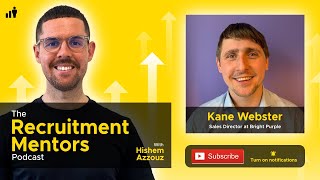
Kane Webster, Sales Director at Bright Purple, went from hospitality to recruitment leadership over nine years. He built teams through repeatable processes and hands-on account management, and credits cold-calling and strong elevator pitches for winning business in a competitive market.
Chapters
Welcome to the Recruitment Mentors Podcast. My name is Hishem Azzouz. Today I'm really excited to be joined by Kane Webster, who is the sales director for Bright Purple, who are a specialist tech and business change consultancy that work with businesses across Scotland, the UK, and beyond. Kane started his recruitment career in 2013 after having a stint in hospitality as a restaurant supervisor, but over the last 9 years he has taken his recruitment career from resourcer to team lead, to principal, to sales manager, and for the last 2 years, he's now been the sales director for Bright Purple. So he now has an oversight of the entire sales floor. He's responsible for driving the Bright Purple culture and standards across these teams and has a real active role in helping the business go to the next level and really involved in hiring exceptional talent to join the company. So Cain, thanks for joining me on the podcast.
Thank you for having me.
Looking forward to this one. As I said, I think you might be the second Scot that I've had on the podcast.
I have deliberately wore—
you can't see, Cain has got a nice tartan shirt on there. He's Scottish and proud. Absolutely love it. So where we like to start on this podcast, Cain, is the million-pound question. So What I would love to hear from you with your sort of 9 years context and experience so far, like what, what characteristics and traits do you think make up a highly successful recruitment consultant in today's market? Do you feel?
Yeah, today's market is probably, probably a valuable snippet there because it's definitely changed a little bit. Yeah. Innovative for today's market, I would say. Ability to adapt to new technologies. It's a running joke in Break Purple that I'm a technophobe.
We've had some issues there, haven't we?
Yeah, we've had some issues. I run an IT recruitment agency as the sales director, and I had a Nokia 3310 until last year. Wow. And then I realized when I got my smartphone just how behind the times I was. Being committed to that kind of ever-changing landscape as a recruiter, I mean LinkedIn is key, embracing all these new technological advances and not being left behind is key as well. There's so many new tools, software tools you can be using, so we trial 2 or 3 new software packages every year, 2 don't work, 1 do and we take that forward with us, so always being open to change is really, really key. But for people starting a career out, I would say it's the obvious one, it's perseverance. This idea that you can join and bill 100K or make, earn 100K even, billing 100K is hard enough in your first year. So to earn 100K in your first year, anyone that's done that, hats off to them. I've not met them. So perseverance, understanding that it's a journey, not a quick fix or a quick win. It really is a journey in recruitment. You have to learn your stripes. You can't be told all the answers. You've really got to learn through hard work and mistakes what the answers are and what the process is like. So perseverance is definitely my biggest advice to people. Adopting and not being scared of new technology is my other advice. We use totally different platforms from what we did only 8, 9 years ago.
[Speaker:JAMES] Yeah, nice. Innovative, being open-minded, open to change. Adaptable. And as you see, perseverance. Okay, so obviously what we're going to unpack here is your 9-year journey, right? So this probably, it probably feels like a whole big blur to you, right? Let like the probably last 18 months feel like a bit of a blur. It definitely does for me, let alone the last whole 9 years. So I guess where, where I just want to start then is just to think about the beginning. Like how, I think there's always an interesting story. Just really quickly, like how the hell did you end up Did you end up serving some recruiters in the restaurant and like, what, what's the story going from hospitality to getting your job at Bright Purple?
Well, I must be the only person I know that actively tried to get into recruitment and found it hard. Um, I had 4 interviews that I was rejected from. I think my first one was with Michael Page and I got to the final stage.
Yeah.
I was rejected. Um, and then I tried Hydrogen Group in Edinburgh, got rejected.
Hays got rejected.
Why'd you get rejected?
Did you get feedback? Did you get candid feedback?
Yeah, the first feedback was, this is genuinely the feedback, that I was too fluffy.
Too fluffy, wow.
That was one of the feedback. The other one was that I didn't have any experience. Shock, horror.
Shock, yeah. I have no experience.
Yeah.
So that's a bit of a fuck-off though, innit? You've got no experience.
Yeah, yeah, yeah, exactly that. One of them, I won't name names, I don't like to throw people under the bus. One of them actually said that they'd like to offer me, but they'd like me to go get experience elsewhere first so I'd get trained for free. Wow. Which I thought was the key of the match. Interesting.
Yeah, interesting. So got rejected then. So Bright Purple was the one that go, yeah, okay, we're going to give you a chance.
They were the first one to give me a chance. Yeah, I started out as an entry-level resourcer. I had a really, really tough start to my career. I didn't do a deal in 4 months, I think.
Really?
And I was working harder and later than anybody. I was doing all the things you're meant to do, but I just couldn't get a break. I had 10 final stage interviews fall Flat on their faces. Yeah, 10 in a row.
10 in a row. Right, let's talk about this then. So you wanted to get into recruitment. Let's just get straight to this because I think this would be really helpful for people. Uh, why didn't you quit?
Well, I was lucky enough, I was working in the restaurant trade and I was— I graduated in 2008, okay? So that was the end of boom and bust going on. I graduated in the middle of a recession. So I went traveling for 5 years and worked in bars and restaurants. And I thought I was making quite good money, if I'm being honest with you. And I felt quite good about myself. And then one of my friends, Michael Court, he was working in recruitment. And he was just— his career was really taking off. And he was really, really young. And I remember always looking up to him and thinking, wow, you're doing so good for the age we are. We're in our mid-20s, and you're already running teams of people. Big deals, and it was attractive to me. I'll be honest, I was quite proud of him as a friend. So, I knew long-term, if I stuck it out, I could be like him. It's the real truth. So, I kept going and I kept going and I kept going. And when I was having these 10 rejections at final stage offers, I knew I was doing something right because I was getting to that part. Yeah, I was falling over the final hurdle. And sometimes the candidate was rejecting that, sometimes the client was changing the job spec. And when you're new, you don't get the the hottest or the coolest roles. So to get 10 final stages, even though I didn't get a deal in my first 4 months, to get 10 final stages with the hardest roles in the company, because that is a reality for people starting out in their career. They get given the kind of cut-your-teeth roles, the kind of cut-your-cup-of-cash roles.
I wouldn't know if that's the case now.
It's not the case. It's not at Bright Purple, definitely not. In my experience, when I joined in Bright Purple, that's exactly what they were looking for.
Yeah, yeah, of course, of course.
Every agency goes through a journey. So I was learning my trade and I knew I was doing something right because I was getting, meeting all my KPIs, I was getting interviews. And then in month 5 and 6, I think I was the top performer in months 5 and 6. I'd done something, I'd done like a quarter's target in a month.
Month 5 and a quarter's target.
Month 6. I started to sign my own clients as well. I was cut loose as a resourcer and they said, you know what, 'You're a great resourcer, but you're not hitting the back of the net, so to speak. So why don't you go try and win your own clients and see if that changes things and own the relationships? But you need to go on your own.' And I did. I did it straight away. And that was the real changing point for me. I was allowed to be myself and not kind of read from a script as much and actually be myself. But the reason I didn't quit is I had examples of my friends who were successful. I could see people in the company like my mentor Craig Fraser, who was having great success in the company. So I knew you could be successful at recruitment and I was seeing other people doing it and I wasn't doing much different than them.
I wasn't doing much different than them.
So I put it down to bad luck and just kept, I don't know, reaccusing myself.
[Speaker:JAMES] So just let me know if you like, it was just actually the client piece or something else, but like, you know those, 'cause thinking like there might be people listening right now that might be experiencing or going through what you're talking about. Hopefully it's not 10 in a row because that's fucking savage. But like, what— so obviously it seems like owning the client relationship had an impact, but was that like looking— if we were to just think now, like anything else that you think like, oh, if I did, if I focus on this more or whatever, what, what, what was it that you think enabled you not to hit the back of the net that could help people listen to this hopefully hit the back of the net?
Totally. Well, I put clients on a pedestal initially.
Yeah, very common.
When I started working on clients, I treated them different than candidates, and it took me a long time to realize candidates— clients are just candidates in a different kind of guise, so to speak. When I stopped writing the long-winded emails and just being really direct and answering their questions, I found I got a lot more kind of replies and feedback from clients when I was emailing them directly. Spotting trends and patterns. Before, I'd be given a role and I'd work out and I'd get 2 CVs over and the client would say, "Oh, more CVs." And I'd go, "Oh, okay." And I feel okay.
[Speaker] So you'd be a bit of an order taker, just?
[Speaker] Yeah, exactly. I was an order taker and I felt I looked busy and I was busy and I felt busy and I felt like I was delivering 'cause I was hitting my KPIs, but I wasn't really results. I wasn't hitting, I wasn't getting deals over the line or placing people into jobs. I was just hitting KPIs and getting CVs and the client, Clients were happy. They were like, "Oh, we've got 9 CVs for this job. Great." And then I slowly realized, "Cain, why are you sending 9 CVs for a job?" Why, if you sent 2 really good CVs for a perm tech role, which are hard to find, and the client's not coming back with interview availability or buying signs, why do I keep working that role? So, I started to kind of treat clients how they were treating me. So if a client was good with me and giving me all the information and giving me good feedback and moving fast, then I would stick with them. But if a client was becoming a bit of a black hole, if that makes sense, or not giving me feedback or kept delaying interviews, then I'd focus my attention elsewhere. So it took me 3 or 4 months to realize that just because a client asks you to work the role doesn't mean you have to. If a client asks you to work the role but is behaving in a way that isn't good for them—
Yeah, you're not working with committed clients.
Yeah, exactly that. So I started to grade my clients and then, and as I was really committed to the job, I was really committed to the job. I had this mentality of work. I was working like half 8 till 7 PM every night because my mentality was put in the hard yards early and that way you'll progress your career quicker. So I knew I was doing all the right things and I knew I was giving 110%. I was giving, and I was getting better each day. And so I started to realize that the clients that I worked with, I could kind of be a bit more selective with. And if they weren't giving me—
You valued your time. You valued your time. And this is really common.
I started to value my time.
Exactly.
Whereas when you start your journey in recruitment, you definitely have this idea that the client is here, you are here, you're an order taker, and the client says they're happy, great. But at the end of the day, my boss wasn't because my boss was going, well, how many How many people have you actually placed? It's all very well sending free CVs and writing free great cover letters and knowing their dog's name, but if the client's not giving you feedback on the CV, what are you going to do today? You're going to keep working that role, are you, Cain? And I'd be like, yeah. And they'd be like, well, come on, think for yourself. The penny kind of dropped a little.
Nice. I love that. So plenty of things to take away there. So just to frame this up. So today, right now, How many people are you responsible for? How many people do you manage or do you have direct reports from? Just let's just frame it where you are today.
I've got 4 people that report to me and under those 4 people there is— oh no, I've got 5 people that report to me, sorry. I won't tell you who, I forgot. And underneath there is about 15.
Okay.
So probably about, I'm probably responsible for about 20 people overall, but 5 that report into me to manage.
So the role that you're in now, as I said in the introduction, like, so you are part of your is to get the most out of your leaders. And so you're now in a position where you're like supporting the lead, like you're giving the leaders the support. And then I guess part of your role will also be sort of offering support to the wider team. But you're obviously first part is making sure like the 5 leaders are getting everything that they need, support that they need, all of that. Right. And then you're also now involved in like business decisions and where the business is going as well. Right.
Spot on.
Yeah.
So yeah, in theory I should only have 5 people contacting me, but the reality is that's not true. I probably have 20 people. I probably touch base with all 20 on a daily basis almost.
Yeah.
So it's good. Like I've been doing with the same company 9 years. Yeah.
It's amazing.
Yeah.
I think that's great. So, so that, that's where it is today. So like let, let's sort of unpack some of the sort of, I guess, key milestones, right? And then this, so from what, From what I can see on LinkedIn, obviously first 2 years it seemed like you was just like an individual contributor. All you had to worry about was, yeah, just getting the most out of your clients, doing deals, all of that. Is that right? Yeah. Cool.
Yeah. 100% on a journey.
Yeah. And then after that, and then, and then after that, was you then always in some sort of like billing leadership type of role after that point?
Yeah. I went straight. I worked on a permanent team. Okay. I'd recommend anyone. Anyone that starts their career, it's very hard to learn this career in a contract desk. So I worked in a permanent team under Craig Fraser, and then I moved into a contract desk after year 1 under a Tony Summers. And then that gave me an ability to both business develop, because in perm there's a lot of business development, and it gave me the ability to work, work very, very fast, because contract is very, very fast. So initially, Started out kind of just a lone wolf going out, winning my own clients, servicing them, kind of mid-level. And then I went straight into a team leader role because the business needed it. The business had a bit of turbulence in my second year. We had a lot of leavers because I think they went and started their own company. Oh, wow. Yeah, yeah. The other company didn't work out, but it is what it is. They were good people. It just didn't work out for them. But it left a big opportunity for me. So when a lot of the business left, I thought, well, they offered me to leave with them. I won't pretend they didn't. But at the same time, I was like, well, why would I? I mean, you guys are leaving and there's going to be a big, big business.
Yeah, it's a good opportunity for you.
Great. And that's the other advice I give to people. You know, people say it's luck and timing recruitment. It really, really is. But it's the perseverance to stick around for when the opportunity comes.
Okay, present those opportunities. Yeah.
Yeah, so when that opportunity presented itself, I stepped into it and I let my personality really come through and I put my heart and soul into it, really.
Since then you've been in a leadership position?
Been in a leadership position after year 2, 2 and a half years roughly. After 2 and a half years I went into a leadership position, but like I say, that was luck and timing.
Timing, yeah, yeah, fair.
And it was very, very hard because I went into a leadership position with not much mentoring. Originally because a lot of good people or senior people had left. But again, I was thrown in the deep end and I swam very, very hard and very, very fast for very, very long. And eventually I learned everything you had to learn on the job.
Yeah. Yeah. Well, so we're going to dive into that. So, and then right now, are you— so right now and throughout that period, have you always been doing deals at some point or are you really far attached from that now? Are you still doing deals now?
Well, that's a running joke in the business because I fought for years to be as hands-on as I could. Okay. So when I got made sales manager, I actually— I've never asked for a promotion, really. I've never asked for one, and I've actually turned them down and then been asked to do them further down the line and agreed because I thought, okay, yeah, you're right, I should probably do this. So when they asked me to be sales manager first time, I said no, and then 6 months later I said, okay, I'll do this, but I don't want to lose my hands-on capability. So I put in my title, hands-on Yeah, I can see that.
Why do you want to lose it? Are you scared of like not being current? Would you like— is it because you enjoyed that part of the job?
Well, coming through in my career, I always— there was a lot of middle management in recruitment. There's a lot of people that look busy that aren't really speaking to candidates or signing clients and in the sales floor. And I never really had a lot of respect for that.
Okay.
I always liked people that were, you know, hands-on, winning clients or finding—
Leading by example.
Yeah, leading by example, exactly that. So I fought for as long as I possibly could to stay cold-faced and in the kind of, you know, doing the 360 job for as long as I could. But roundabout when I became sales director, it was very, very hard to do the candidate side because I'd come in in the morning and, you know, someone was sick or someone was pregnant or someone was, you know, someone hadn't turned up for work. Someone had an issue with a client, or we were low on contract roles, had to go and business develop, or the perm figure was low, so we had to go into perm business. So it wasn't through choice I went away from the hands-on side. And that hands-on sales manager became a bit of a joke in the team because I started doing the client side and the hiring of staff and moving away from the candidate side. So to this day, they still kind of, um, they still flag that as kind of a A jest, shall we say. So it's quite funny you mention it. But yeah, now my job, I've moved away from the candidate side a lot. If a candidate comes to me that's right for a job, I'll know because I know the market really, really well. I'll know if they're right, but I hand it over.
But you still might get involved in strategic business development or supporting the teams on that side and the account development and stuff like that.
I'm still very hands-on in account development and business development. What I do now is I go and when I hire somebody, I tend to give them 6 months, no real target because we're a bit more forgiving at Break Purpose. I give them 6 months to get up and running. After month 4, if they're a trainee consultant, I, within the 4 months they've joined, will usually sign 10 clients or something silly like that, a large number. Then I take those clients and then I account develop with them as a resource, and I CC them in, and I slowly CC myself out and let them run the account. And so I do that on repeat now. So I just build desks on repeat through business development. That's what I do. I go on an elephant hunt, SME, one spot business, and then I bring in consultants, and I slowly phase myself out of the process and then go do it for somebody else. That's what I think a sales director should be doing. And on the strategic level, the strategic level is easy. I mean, it's not very hard. There's not a lot of rocket science behind recruitment agencies. I know people like to make it complicated, but it really isn't that complicated. But yeah, I'm involved in all the key decisions, all the strategy, but the strategy is really, really simple. We want to grow our contract book. We want to increase our perm placements. We want to win more clients, and we want to send more CVs. The best way for me to do that as sales director is win more clients and hire more staff. So the strategy is fairly set out from the start. Okay.
So let's unpack this then. So I'm really keen. So what we will go over is your leadership journey, because I think that's a really common challenge for people. And then we'll talk a bit about the business strategy or whatever, because I do feel like there's a bit more to it than what you just said. But I get your point. I get your point entirely. But what I just wanted to focus on very quickly is you sort of saying, um, sort of you building up desks for people and doing that on repeat, right? So a lot of people listen to this, may have come into the recruitment industry in the last couple of years, and obviously it's quite typical for them to start on the candidate side and then start transitioning into the 360, whatever it is, right, in terms of winning your own clients, building your niche, getting known, all of that. And that can be a really difficult transition for people, which is why it makes sense that If you can support someone in getting to that point by, as you said, slowly but surely passing things over, getting them involved on the journey, showing them how you go about it, that can really help them. So what I want to know from you then is like, what can people listening to this do? Or what do you think the best people do when it comes to really, um, doing that transition really well? So I might be someone right now that supported Cain. On the resourcing, da da da, but now I need to start doing my own BD activity, I need to start growing my own accounts. What do the best recruiters do well on that point, do you think, or what do you think people should be doing?
Well, at transition stage, it might not be very popular, but the cold calling thing is really, really key because it really does shake that kind of tag, that kind of negative sales tag off your shoulders. I'm not going to sit here and tell you that it's very successful cold calling a business. It's not. And even if I sat down now and picked 10 businesses and cold called, my success rate would be low. However, in your first couple of years, you don't have a brand yet. You don't have a name yet. You can't reference clients where you've put 30, 40 people or projects where you've delivered 50 contractors. I can do that now. So my elevator pitch and my credibility is better and I've got references. It's much easier for me to business develop now, but in year 2 and 3, year 1, 2, and 3, sorry, when I didn't have any reputation really, I was learning my trade and I had to win my own clients, I did it the old-fashioned way and I would target myself on 5 BD calls a day where I'd go on LinkedIn, I'd map out the company, I'd say, right, it's the CTO I need to speak to, go on their website, I'd get all their jobs, I'd pick one that had been working recently, I'd ask a candidate, "Oh, I'm going to try and speak to this client. If they're interested, would you be happy for me to introduce your resume, etc., etc.?" And then I'd phone the client, an elevator pitch. Now, it's not very successful doing it that way, but by doing that again and again and again and again and again for 9 to 18 months, after doing that for 9 to 18 months, you have too much business, first of all. You do have enough success, because it's a numbers game, but you also turn the word sales into a positive thing and you shake off that negative tag. And it also helps you value how valuable a client is. You start to treat clients with more respect because it was really hard to win them in the first place. And then because you're thinking more salesy and you've started mapping out companies and you're thinking of your elevator pitch and you're trying to join dots, oh, they use Xamarin and they use Kotlin and they use Swift, and you start to build a picture of the market. You become more credible. Even if your elevator pitch to one mobile app company fails, all that work you've done, you then understand, "Oh, well, they've got a team of 7 iOS developers," or you start to map them out.
[Speaker:DAVID] Okay, I'm sorry.
[Speaker:DAVID] Yeah. By doing elevator pitches, as long as you prepare them right, the information you learn through that prep and the guts it takes to make that call in front of the whole office, it becomes second nature, obviously. But the guts it takes to make that first call in front of all your friends and your colleagues and try and win business off someone you've never spoke to, that's a bit of a rush as well. You build credibility because you get to know the market, you learn how to map out a client, you learn how to join dots. It's not the most successful way of doing it, but over time, the skills you learn from doing it come in handy over years and years and years. So now, the elevator pitch is just in my head.
What does a good elevator pitch look like, mate?
To me, it's very short and snappy. You win their trust straight away. You can reference somebody that they know that knows you. You can reference similar clients that you work with. You can reference similar technologies that they're using or projects that they're using. And you know their business inside out. Sometimes you even know people in the business that you place elsewhere. It's all about being able to reference yourself to technologies and people within their business. And their clients, and also kind of justifying why they should speak to you. You should speak to me because I've just placed 3 iOS developers. You've just won a project with the BBC. STV are my biggest client currently, and I've delivered their entire mobile team. Just making them listen to what— making them realize they need to speak to you above anyone else, and making them realize that you can add value to what they're doing. And because the clients need— clients need recruiters, and a lot of recruiters don't really value themselves. Clients really need recruiters to grow their business because they'll have pressure to deliver projects, to deliver products, and from a shareholder perspective, businesses will have, you know, pressures to grow. So the only way they're going to grow is by recruiting the right people. So by speaking to me, more often than not, in the tech space in Scotland, I'll help them grow, I'll help them deliver a project, and I'll help them deliver their product. So the elevator pitch differs each time. Yeah, yeah. So you spend 5 to 10 minutes building that out, and then you You tweak it and then you work.
Yeah, because you're doing it. What advice would you have for people that really struggle to get over that hurdle of spending at least time each week trying to speak to people that they don't know to try and start to build a market pitch, all of that? What's your advice to help them overcome that? Because I'm sure you've had this in your teams.
Yeah, 100%. Listen, see, picking up the phone and cold calling a client that's never heard of you before, it is daunting. I found it daunting. Once I got on a roll, I found it exciting. Not everybody adapts to that, and to pretend to do is nonsense. My advice is find what works for you. If it's networking, great. Go to networking events. If it's branding and you want to build in a LinkedIn, if you want to market yourself to the market, do it, but do it well. Do you know what I mean? I'm terrible. I'm a technophobe. You go through my LinkedIn posts, they're not great. I'm not the best marketer, but I'm I'm brilliant at picking up the phone and I'm brilliant at going to events and I'm brilliant at going over and just introducing myself. Find what's good for you. Some people are brilliant copywriters and they can write great emails. If that's what you're really good at, make sure you're doing a lot of it and make sure you're actually— make sure you're thinking, making your elevator pitches in the email very salesy and very snappy and very unique. So for me, the cold calling thing was really, really good because it's very daunting and you don't want to feel like a fool, if that makes sense, on the call. So you have to not feel like one, you have to do your research. Otherwise you're left holding the phone like, eh. And it's happened to me, by the way, and it still does. And don't think for a second that it doesn't. So think what works for you, think what's good for you, and do it, and do it with good intentions, and do it en masse is my advice.
Yeah. Okay. So before we move on to the leadership piece then, what— obviously you've done contract and perm, obviously involved in teams that do contract and perm. Just focusing on like doing good recruit— like what do you believe— we'll do this for both, right? But what do you believe is like the one thing that perm recruiters, let's start there, need to master to achieve sort of consistent performance? And why do you think, from your experience?
Yeah, perm's a slower process and it's harder to find candidates in my experience. So I think process is very important for permanent recruiters, funnily enough. They need to make sure they've got a consistent set process, you know, advert, job boards, LinkedIn, and, you know, home-to-home.
Repeatable processes that they know that work, that they can do time and time again.
Exactly. Repeatable processes they know that work. And knowing their market as well, knowing exactly which clients have which people, and really, really knowing that market really, really well. But yeah, perm is a slower process, and I find it easier to win business in permanent, actually. So marketing your candidates in permanent is much more important, I think, because you can take a good perm candidate and market them much easier because they're harder to find, so it's easier to sell, in my experience. But yeah, process is really, really important for perm, and taking your time. Candidates like— you've got to remember, in perm as well, it's a big move for a candidate. Yeah. And a recruiter phones you and only gives you 1 minute of their time or 2 minutes of their time, are you really going to quit your job? I wouldn't. I wouldn't quit my job and put my mortgage at risk and my kids at risk. So if you're doing permanent recruitment, please just think about it. Take it seriously. Yeah, take it seriously. This is people's lives we're talking about, and they may have been in this job for 10, 15 years. Contractors, on the other hand—
Yeah, what one thing do contract recruiters really need to master, do you think? To get really, really good speed? I didn't say speed.
Hotlist and speed. I've placed the same contractors maybe 5 to 6 times, and I've also been given a contract role on PSLs where there's 2 or 3 of us, and it really is just a race. There's maybe 35 people that the 3 recruiters know, and it's just go, go, go, go, go. So, the contract candidates, in my experience, they tend to not want to be on the phone for 5 to 10 minutes. They tend to be limited companies and they tend to be like rate, location, working from home allowance. They tend to be quite short and direct compared to perm candidates. Perm candidates, they're leaving a permanent job for another permanent job usually. Contractors are usually in contract or out of contract, so it's much more transactional. It's more transactional with contractors, especially London may be different because I know the job market moves a lot more down there, but in Scotland, permanent candidates, if they're going to move, it's a really, really serious decision for them. So treat them as that and remember that they're going to take their time and they're going to review a job spec overnight. Contract candidates can sometimes— you can sometimes get the right to represent on the phone, always get it by email to avoid the pun fight, but you can sometimes get, "Yeah, what's the client? What's the rate? Yeah, duration, tech stack. Oh yeah, I know that person. Yeah, okay, put me forward." You can beat other contract candidates in my experience because it's more transactional. But perm candidates, get to, you mean get to know the name of their dog if you can. Yeah.
Yeah. Okay. So, so just, just to tie this all together and let, let's make it just, I guess, even more current. Like if we think in the last 18 months, right, in the journey that you've been on, and I know there's a few sort of quite sort of exciting changes that you've experienced in, in that time with Bright Purple, right? Which we're gonna talk about. But like just to sort of, focus still on like being good at recruitment right now, being successful, consistent performance. Like if you were to look at your teams holistically over the last 18 months, what, what's been like the most consistent and effective way for your teams to win business, do you think, over the last 18 months? What's really worked? Yeah.
And it's not been hard to win business because we've been in tech. So I found that the easiest— around about April time this year, The tech market's boomed more than it's ever boomed, so it's been quite easy to win business actually. Picking up the phone, going to events, I mean there's not been many because of COVID but we were at Scotland IS last week, for example, and we picked up business there. Keep doing what you're doing, just because you're working from home doesn't— I mean, keeping the same work ethic as you had in the office at home is the key really, but we're finding business has not really slowed down, we've not had to do much different. Than we did before. We're just finding there's much more business out there. Engagement, then we hired— maybe it's because we hired a marketing person, I don't know. Maybe she's directly linked to our recent success. But yeah, we're marketing ourselves much better and we're easier to find because in tech everyone's hiring. So, we're not finding winning business as a problem right now. We're finding hiring enough staff to keep the growth journey that we Clients are hard.
Yeah.
And we're all, yeah. And we're finding permanent candidates. I've got lots of offers right now.
Yeah. A lot of options. Yeah. Okay.
A lot of options. Yeah.
Okay, cool. So let's go into this leadership sort of journey, right? So talk to, because obviously it's a real big challenge for a lot of people and a lot of people listening to this will aspire to be a director, a leader at some point in their recruitment career. So like what, yeah. What were some of the things you had to learn the hard way? So let's start there. Like, if we were to think in hindsight, obviously you've had to learn the hard way. As you said, you didn't have loads of mentors on the leadership side because a lot of people left. Like, what did you have to learn the hard way? What did you find really difficult? Firstly, let's start there. When we were starting, when Cain had to become more of a leader, a hands-on leader, as you said.
Um, well, not everyone's like me.
Okay, so when you say that, as in like you were going in having the mindset, why isn't he doing that? Why isn't she doing that? Because that's what you you think you would do. Okay. So comparing people to your standards, who you are, what you do. First part.
Exactly. Okay. As a leader, you get in recruitment, it's classic. The top performers become managers and top performers aren't always good managers. So for me, it was a real journey where I became a top performer through my habits and my way of doing things. So when I Tried to impart that on people. Some people took it and we had similar personalities and it was great. Others didn't. At first I was really confused and I didn't really know how to manage them. Looking back, I've been on a bit of a journey and I would manage them differently now, if I'm being honest.
How would you manage? In what way? What would you do differently?
Well, I would ask— what I do now is I ask them, "How do you want the business to develop? How do you want to manage your accounts? Why do you want to put them forward?" ask more open questions instead of saying—
So you're going to do it this way?
Yeah, but that's all I knew.
Yeah, yeah, yeah.
And I was on a journey as well, so to speak. So I tried to impart how I'd done it on them. And they're different people. And I'm an extrovert. I think that comes across with whoever meets me. So managing introverts, I would always be like, oh, just call them. Oh yeah, just do this. And then slowly you learn everybody's really different. Accepting that, accepting that, and now I have accepted that because I've been in a leadership role for 7 years now. I've managed so many people now that I do respect everyone's different and everyone's got different roles within a team, whereas before I just wanted everyone to be— if we had a team, if everyone on Break Proper was like Cain Webster, we'd be out of business. We'd have no fun, we'd have no processes, we'd have no finance team. The finance team would quit on the day, the tax team would quit on the day. So now I realize that, yeah, my role is great and I get a lot of claps and celebrated, but the truth is I couldn't do my job without the finance team, the indoor team, the account management team. So yeah, realizing everyone's got different strengths earlier in my career would have been crucial. And what I've learned lately, well, I'll touch on it, is and I've only learned this in the last year since I'm in that director role, that the value of a back office, oh my God, I can't believe how much I undervalued them when I wasn't in a director role and how much I didn't realize they did for the business.
I feel like the name needs to change. Back office. I don't know. I just feel like the label's like you said, they're behind this. They're just behind the scenes. I don't know what the name is, but I feel like it has that interpretation of like, oh, they're just there, dude. They're like, they just do the finance, whatever. But as you said, like, they're so fucking important for the whole thing.
So important. Honestly, so important. And you know, looking back again, I've probably annoyed them all and I've probably not taken enough time to realize how annoying I am.
Do you know what I mean?
I just fool them a new client or fool them a new contractor or fool them a new perm placement. They're like, well, how do I invoice, Kane? I'm like, I don't know. And looking back, I look at it now and think, oh yeah.
So, so, so that's a quite common challenge that you've shared, like, yeah, expecting people to do what you would do. What, what else would— did you find challenging then on the leadership journey that maybe you had to work through?
Um, when you become a leader or a director or a sales manager, you, you have to accept people have personal lives. And okay, so there's a lot of things that kind of you you have to deal with that aren't part of your remit, if that makes sense. People have peaks and troughs in their personal life. So you have to remember, people have got a work persona and an out-of-work persona. And sometimes you'd have a top performer that would just fall off a cliff, or you'd have someone that wasn't doing too well just skyrocket. And the reality is that they start telling you things, because you've known them for years at points, they start telling you things that are going on in their personal life. And you you do end up— it does end up impacting you. If someone's having a really hard time personally and they confide in you, like, okay, this has happened in my family, and you do carry that around a little bit sometimes. So switching off and having— because when you're managing 20 people, 20 sales staff, obviously those 20 people are going to be going through different journeys in life. Some will be in a new relationship and they'll be totally buoyant and totally happy. Others will be going through a divorce. Others will have a death in the family.
Yeah, so dealing with that.
Yeah, exactly that. So, having gone from a lone wolf consultant into managing 20 people, when you manage a team of 4 or 5, that happens every couple of months. You have to have a really heartfelt conversation. But when you're managing 20 sales staff, you're having to have those conversations maybe once a month now. And people have got real lives with real stuff impacting their work. Mental health has been a big thing lately in the last couple of years. It has really come out, so it's been much more open. It's been a much more open environment to talk about it and ask why someone's not as engaged on the calls or not working as late like they used to work as late. Not that they should, for example, but it's a much more open environment to have that conversation, which is a good thing. But with that more open conversation as a leader and as a director or a manager, you do take some of it home with you. You do carry some of it around. And so learning to try it, I'm still trying to switch off after work sometimes, to be honest with you. But you do carry a lot of— Yeah, it's hard. It's hard because you care about these people. They're your friends and your staff. So you really do care about them.
Do you know what I mean? Yeah, 100%. So before we go into the sort of business strategy side of things you've learned there, just curious, So all the things you're talking about there, all those challenges that you can sort of experience as a hands-on billing manager, all these types of things.
Yeah.
What that can also sometimes mean is that you end up earning less money with more responsibility, more headaches. So what, what are your— I don't know if you're thinking about this at the moment, it's just one of the conversations I've been having with a few people recently. Like, what is such an— like, there's no way Bright Purple will get to where they get to without those 5 people or more people like that in your business.
Right?
So how, I don't know, when I say to you, how do you think that billing manager, that hands-on billing leader role could be, what's the word, rewarded? Or like, I don't know how, I don't know, does anything come up for you when you think how could that person be incentivized in a different way? Or I don't know, does anything come up for you on that that you're thinking about of interest?
Yeah, yeah. We, I'm very lucky. So obviously I'm the sales director, but I've got a CEO, Nick Price, who's run this business for 26 years. He is an idea factory. So when I say the strategy part is easy, it's because I've got someone just throwing ideas at me constantly. And all I need to do is pick one of the good ideas because the guy is fascinating. He could have 2 or 3 great ideas in a day. So all I need to do is pick the one that I want to get behind and go with it. So he comes up with a lot of the strategy, if I'm being honest with you, and I go and execute it. So I find it easy because I've got someone doing that for me and I just have to kind of I kind of have to agree with the one I agree with most and then go with it. But on the billing manager side, yeah, you can earn less money for a more stressful job, but at the same time, it is more rewarding. It really is more rewarding.
As financially rewarding as it should be.
Yeah. So at Break Purple, we've got a system. So we've been dealing with this problem because all the 5 guys and girls you mentioned, they have got, they've got personal targets that they're exceeding all the time. They're also managing a team. However, what we've done is we've incentivized them on their team performance. So as long as they hit their own target and everyone in their team is 70% to target, and that way they're not getting a bonus. And we might change that in April and we're constantly looking at that.
Yeah, yeah, yeah.
Because you're right. I actually definitely see that, but there is, you do get more rewards.
Yeah, no, I can see that. It's just more of like most people wouldn't go, it's more rewarding, but I don't feel like why I should sort of financially take like a hit on it. You get what I mean? Cause that, so I just think it should be more, we should be more innovative with how we can reward those people, you know, or motivate them.
Base wage is obvious one. So you get an increase in your base wage, but usually doesn't equate to how much commission you would have made if you were just taking all the time out of one-to-ones and training and hiring. All that time put into filling jobs, you might make more in commission. It's the truth. And so what we're trying to do is we're trying to do quarterly bonuses for our working managers where, um, as long as they hit their target and everyone in their team is at least 70% of their target, they'll get a much bigger bonus. That's where we're at today. That'll change.
Yeah.
We look at it constantly. You're right. It's a very, it's the hardest, maybe one of the hardest jobs in recruitment, running a team of 5 or 6 good recruiters and it's one of the hardest jobs. So yeah, we look at it all the time.
So let's talk about Cain, the sales director then as we come to the end here. One of the most common questions I get is around, and this, like you said, you, I love the fact that you around your mindset around tech and tools and stuff like that. What have been some of the things you guys have invested in that you think you probably couldn't live without now, out of interest, on the tool side?
Oh yeah. Yeah. Well, I'll shamelessly plug SourceBreaker. Well, I mean, I can't believe I used to have to log into 4 or 5 different job boards to look for— Why? Why?
Just talk, talk us through like how it's had an impact, like in, in like real recruitment life. Why, why has it been so good?
Well, the Well, they came to us and they done a demo and I mean, we get pitched all the time for tools. And this was probably 2 or 3 years ago and they came and they were like, oh yeah, we aggregate all your job boards. I was like, well, what do you mean? And then they came and they said, look, you take Jobsite, TotalJobs, JobServe, CW, CW Library, S1Jobs, and instead of logging into them all and having to log in and logging in, logging out and sharing and all this kind of stuff, 'You just log in at Sourcebreaker.' And I was like, 'Okay, log in.' And then they're all there, all your job boards in one tab, and they don't repeat themselves. So Sourcebreaker has really taken a lot of the kind of double work out of scrolling job boards. We now just use one job, we have lots of job boards which show on one job board.
And how does that help the guys and girls? Is it on the BD side, is it candidate side, is it both?
Candidate side, because they're only having to log into one.
Right.
Platform, SourceBreaker, and what it does is it puts all the job boards and candidates into one format, right? It doesn't repeat names, all right? So it's great.
So you're, instead of logging into 5 different job boards, just saving a shitload of time, basically.
Yes. Instead of being John Smith on all 5 job boards, I'm going, oh, I've seen, I've seen that name before. Oh yeah. So you just got all there. It's perfect. Also, it builds leads. Now I personally, um, do most of my BD from kind of like referrals from candidates and I go where you, you know, Classic, you know, I'll work a role. When I was hands-on, before the team ripped into me, if they're listening to this, I would work a role and I'd get 3 good candidates, send them over, textbook recruitment. And while finding those candidates, I'd get, where else are you interviewing? I'd ask all our candidates and they would tell me. Then I would take the candidates that were more suitable for these other clients and I'd approach them and I'd elevator pitch. Okay, but Sourcebreaker, if you're not so good and you don't feel comfortable asking where people are interviewing, you can click a button which changes your candidate search into job leads. And it brings up all— instead of having to go through competitors' websites, adverts, and try to figure out who is that financial service client in the middle of Edinburgh, instead of having to do that kind of, you know, inspector mode, you can easily go to Sourcebreaker and you have the same Boolean search and you type candidates, then you type jobs and it goes, here's all the jobs, here's all the clients that have jobs matching that job, matching that kind of Boolean search. And it's like, oh, SkyScanner, Fanjo.
Yeah, it comes all up in one place. Yeah.
And it's like, God, I don't even have to actually get market leads from talking to candidates anymore. I can literally just click a button. That's what you've got to do with the times. You've really got to move with the times.
Yeah, yeah, yeah. Talk to me about one of the other things that's been quite pivotal for you guys is this remote team, right? For the remote team in terms of the last 18 months. So talk to us about this journey, 'cause I think this is still a talking point. You're obviously a business based in Scotland. I know you've had offices in different parts of the world throughout your journey, but talk to us about what you've learned so far, the positives, maybe some of the challenges on you building out this fully remote team, although your business HQ's in Scotland.
Yeah, well, first of all, I'm going to apologize on behalf of the entire world who didn't embrace remote working before, and I was one of those people. So I'm just going to apologize.
At least you can own that, right?
Yeah, I want to apologize on behalf of 90% of directors, even if they don't know they should apologize. So pre-COVID, I was a sales director, and if you'd asked me, can we run this business remotely, I would have laughed.
Yeah, good one.
Yeah, whatever, as if. And then COVID taught us we could. And luckily, my finance director Gemma Brown and the CEO Nick Price, they were probably of the same opinion. Gemma Brown was a bit more forward-thinking than me and Nick, but we just didn't think you could work remotely. And we were constantly going to board meetings, constantly saying, let's grow this business. And then, how are we going to grow it? Well, we're going to hire more recruiters. What are we going to offer them? We're going to offer them 5 days a week in Edinburgh, 9 to 5.
The same as what everyone else is offering. Exactly.
Exactly the same. Exactly the same. Then we come back 3 months later and go, how many staff have we hired? 2. But we said we'd hire 10. Ah, well, we interviewed 10, but those 10 had 6 other offers. And what were they offering? They were offering 9 to 5, office-based Edinburgh, 30K base and 30K target. And shock horror, we couldn't grow. We just couldn't grow. And looking back, it's absurd, isn't it? It's just absurd. The definition of insanity is doing the same thing expecting a different result. We were every board meeting going in saying we want to grow. We had full intentions of growing and we were going out and we were hiring, but we were hiring maybe, we were growing by maybe 5% a year in terms of staff. And it's because we were making this requirement of you have to be in the office at 9:00 and if you're 5 minutes late, I mean, we weren't that bad, we weren't draconian, but if you're 5 minutes late, people—
It wasn't an option for you guys. You didn't, it wasn't— So what have you learned so far? What have you learned so far then since going down this path of a fully remote team?
I've learned retention of staff is much higher. We are not really, people aren't really resigning.
Retention, yeah.
Retention's key. What's the point in hiring 5 staff if you lose 5 staff?
Yeah.
What's the point? You're not—
What about productivity? What does that look like?
Well, yeah, productivity is good. Results are good.
Okay.
I would say people, It's funny because when you worked in the office, I look back there and I think, God, our results are better than ever. So, people are working the hours they need to work to get the job done. Whereas when you're in the office, I remember on Fridays, even when I was sales director and sales manager or team leader consultant, on a Friday at 3, we weren't really working. We were just having banter, slagging each other off, getting that kind of—
Classic.
Sometimes on a Thursday, Thursday afternoon, we may be down to like, looking back, it was draconian, it was, but whether we liked it better or not, we were not working, we were not in the office to work. We were in the office because we were contracted to be there 9 to 5, 9 to half 5. So what I found is productivity has increased because I would suggest on average people might be doing slightly less. Hours if you include travel. And so productivity is increased if you include travel, but people are working smarter, people are working when suits them, people are getting a job and they're working it there and then, and then they're getting up late the next morning and starting later.
Yeah. What about some challenges so far then? Like, I think one of the biggest question marks is with this team, do we feel like we can cultivate a bright purple culture within this team?
Like what you mean, the remote?
Yeah, the remote team. Sorry.
Yeah.
Like what's been, cause I think that's what a lot of people are thinking about.
Just to give you a bit of context. I mean, we are 80% remote even in Scotland. So we've got an office, which is not really flexible.
People can come in or that.
So yeah, flexibility. If you, if you've, you know, if you want to take, for example, you want to take your child to swimming class, 10 to 11, just let your line manager know and make up the hour. We're quite flexible. And as long as you're in office one day a week to try and keep that culture going for now, we will look at that again in April next year, I think. But right now it's one day a week. So we are quite flexible across the board and we're 80% remote across the board. The 100% remote team though, to answer your question directly, we went down to London last week or the week before and we got them all together. We went on a speedboat down the Thames. That was brilliant. And we got them together. We have them in weekly wash-ups. They're coming up to Edinburgh for the Christmas party. Okay.
So it's like creating moments like that then and making the effort. We've certainly—
Yeah. Well, funny you say that. Both the people that joined the remote team, Stuart and Umar, they had other offers from other recruitment agencies. And the reason they joined Bright Purple is because we came down from Edinburgh.
You made a real effort.
Yeah, I got a train down to London, then I went down to Bromley South to meet Stuart, had dinner, and then he accepted our offer and turned down another one. Then I rented a car and drove to Leicester, met Umar, who's brilliant as well, with Renata, who's the head of our a remote resourcing team, and he had another offer. I won't— Yeah, of course, yeah. And he ended up choosing us over them. And both of them said, you actually took the time to come down and meet me and actually show me that you cared. And other recruitment agencies didn't do that. So the lesson for us is we're going to keep doing that. Every time I go to a meeting in London, I'm going to make sure the remote team meet me there. Every time there's a big event like a Christmas party or an Edinburgh Fringe event or an end of year— social, we will pay for them to come up and we'll get them a hotel and we will make an effort because staff retention is the key in all recruitment agencies.
It should be, it should be. I think sometimes it isn't as much thought about as it is getting people. Like you said, in those board meetings, you didn't say, how can we keep all the people we have? You said, how can we get 10 more people? Do you get what I mean? I think you're completely right.
Spot on. And that is changing. The world is moving in a better direction with that. I mean, there's a great graph that, I mean, it's like how much you value something when you have it and it's like down here.
Right, okay, yeah, yeah.
If you don't have it.
If you don't have it. Right, yeah, yeah.
You know what I mean? And it's so true.
Yeah.
And I constantly remind myself of that. Yeah. If I was interviewing some of my leadership team now or some of my good consultants and senior consultants and principals and good resources, et cetera, I'd be biting their hand off. I'd be trying to get them in the business as fast as I can. So I constantly remind myself of that graph of, like how much you value something when you have it versus how much you value something you don't. So yeah, retention's key.
Love it. So as we finish then, what's on the bright purple horizon, mate? What are you excited about? Talk to us before we finish. What's going on? What are you excited about?
Tomorrow, obviously we had a kind of remote day away in London last week. Tomorrow we're going to Dundee with the kind of Scottish-based recruiter. Okay. Wet n Wild, we're going on a Wet n Wild assault course and we're going for a curry after that. We did a staff survey, so basically what drives us is our staff survey, and our staff survey told us that they want, we give Christmas and New Year off for free, so they told us they want, so we gave them their birthday off for free next year, and they also said with remote working they want more kind of team building exercises. So we're investing a lot of time and effort and money into, if we're not going to meet each other, every day in the office and we're only going to see each other once a week or maybe less because they're not all in the office at the same time, let's really get creative. So, we've got Wet n Wild tomorrow in Dundee, we've got a big Christmas party coming up, which I won't say just now in case the team here, because Gemma Brown's working on it, when the remote team will be coming up for that, which I'm really excited about, we'll all get together. And then in February, we're doing the Great Gatsby Ball on a Saturday night, which we're all doing. So, we're really We've downsized our office because of remote working and flexibility, and we're taking the money saved in the office—
Fascinating. Amazing.
Exactly that. So, there's an event almost every month or every second month for Break Purple right now to keep that culture going that you talked about and to keep the remote team engaged. And the good thing about the remote team is we can scale up as quick as we want now because we're a flat-hire and fully remote, we can scale this business up as quick as our clients demand. I mean, we've got 5 We've got 5 offers out right now of consultants because of the remote flexible working, and we've got no one resigning. So it's really, really having that remote team just buys us that kind of, it buys us that bandwidth to grow as quick as we want. So I'm really, I'm just really excited. What's on the horizon?
I can tell. Yeah.
Hopefully people are going to accept the offers we've got out with them. I'm hopefully not going to make too much of a fool of myself in this wet and wild conference tomorrow. And hopefully I don't get too drunk at the Christmas party. That's basically on my horizon.
Well, look, no, Cain, it's been an absolute pleasure. Love your energy, love your positivity. I think there's loads to take away from here, from chucking yourself into it, perseverance, working out what works for you, just, yeah, creating your own luck, being willing to, yeah, like get out of your comfort zone, try different things, be open-minded. But yeah, honestly, thanks so much for coming on the pod. Really excited to see where you guys are over the next couple of years.
Yeah, thank you for having me. And the last bit of advice I'll give to anyone listening to this on the start of their journey is stick in, genuinely stick in at what you're doing. Sometimes you'll feel like you're not doing that well, but you don't know how well other people are doing. And it is a journey. It really, really is a journey. So stick in at what you're doing and believe in yourself because there's lots of successful recruiters out there. So it is very, very achievable.
Yeah, I love it. Cain, thank you.
Thank you, all the best, bye.
More from Hishem




You don't need as many clients as you think to bill $1 Million A Year In Recruitment



From 30 Direct Reports to Back-to-Back $1M Years as a Solo Recruiter with Zach Creighton



