Kareem Bakr - Double down on your relationships to TRULY master business development
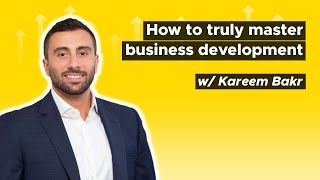
In this Recruitment Mentors podcast episode, host Hishem Azzouz interviews Kareem Bakr, MD of Faden International’s New York office. Kareem walks through his ten‑year journey from the 11th employee in a windowless New York room to leading a 275‑person operation. He shares the metrics he lives by (consistently securing 10 interviews per week), the three core traits he believes make a top recruiter – intellectual curiosity, resilience, and resourcefulness – and how he identifies those traits in candidates. He recounts an eight‑month period with no deals, the mindset shift that turned it around, and the concrete actions (hard‑work beats talent, deep client immersion, and a focus on process over outcome) that propelled him into the global top‑5 billers. The conversation then pivots to building a high‑performance culture: cultivating leadership through transparent “what‑how‑why” communication, managing managers, L&D pathways, and a merit‑based promotion framework. Kareem explains his 360‑recruitment model, the importance of “foul‑weather” client relationships, and his niche‑market strategy that targets business‑critical verticals with stable supply‑demand imbalances. He outlines growth priorities for 2023‑24, emphasizing technology verticals and expansion in the West Coast, Southeast, and Dallas markets. Throughout, he stresses simplicity in KPIs, disciplined time‑management, and treating the business as his own.
Chapters
The only KPI I really focused on and the only metric that I really bothered myself with was can I get myself to 10 interviews in a week consistently over the course of a 4-week span? At the end of the day, we're dealing with people. A client is still a person. They're not going to bite you. It's going to be okay. Look, let's just— let's get through it. Let's get them on the phone. Let's get them for a coffee and understand what they're about. There's a certain sense of open transparency that you have to have when cultivating a leadership team of understanding what does good look like? Where do we want to get to? And how are we going to get there? And everyone in that team understanding the what, how, and why behind every initiative is what gets you moving forward.
Welcome back to another Recruitment Mentors podcast episode. I'm your host, Hishem Azzouz, and today I'm really excited to be joined by Kareem. Kareem's joining me from New York. Kareem, welcome to the podcast.
Thank you, Sam. Been a pleasure to be here. Very excited as well. And, uh, yeah, ready to get underway.
Really excited to unpack this journey that you've been on. So just to give people a bit of context, like I always like to do, and feel free to sort of add anything that I've missed, but Kareem, you've built your career at Faden, uh, Faden International, within one of their specific brands, Selva Jennings, but more recently become MD of Faden International, particularly the, the New York, um, part of the business. And over the last sort of decade, ultimately you've progressed your career from being an individual contributor recruiter all the way to where you are now as an MD. So I think what I wrote down here when we were prepared for this was you was the 11th employee in New York. Yep. Um, and I think across the US there was around 150 people at the time, but particularly in New York you was the 11th employee. And then you just overall over time progressed. I think on here one of the milestones that you put was in 2000 in '16 because you joined the business in, let me get it up here, 2013. So 2016, you ended up finding yourself being responsible for a 30-person team. Then 2018, you took over Selber Jennings in New York and now 65 people to 135 people across a 3-year span when you was responsible for that. And then 2021, you was then in charge of Selber Jennings USA which was, uh, when you started around 180 people, which is now more 275 people. Um, and then now you're actual— from October, you're actually the MD of, of Faden International, um, in the American— the, the specifically the New York piece, right?
Correct.
So what, what you shared with me is obviously there's probably a load of things that you find yourself doing, um, and helping the business in But ultimately you stopped billing around 2016. And then really your role now, which you sort of shared with me, is really focused on deploying people and getting people to build out new markets and specific markets. You're then also spending time really investing in that leadership layer of your business, helping them, training them, providing them with a blueprint, just really supporting the leadership team and the future leadership team. Also creating succession plans. And then the other part is just the— maybe a bit more recently, we'll go into it, but just a bit more business strategy overall for the New York office, for all the brands, and ultimately maintain and build a sales culture, maintain fees, increase fees, is sort of how we broke it down. So that's, um, that's me summing up your 10-year career in 3 minutes.
That's about right. I'm growing it.
Um, so, so hopefully that's useful context for everyone. But I guess the first question, the million-dollar question that we always like to start with, and I'm sure you really thought long and hard about this as you've continued on your journey, but I'd love to hear your take, Kareem, on, in your opinion, what characteristics and traits do you really believe make up a highly successful recruitment consultant in, in today's market?
Yeah, absolutely. So I would start with the first being intellectual curiosity. Um, how I would sort of categorize that is someone wanting to go above and beyond to really nerd out or geek out in their space, in a sense, right? Don't just learn what we teach you in these four walls, but Go the extra mile to listen to different podcasts, read, you know, different publications and news articles and outlets that you can sharpen your skill set a bit. Also, in terms of having conversations with clients and candidates, don't just keep it high-level transactional and really try and delve deep and, and be intellectually curious to think about how can I actually better my, my skill set and my knowledge having this conversation. The second thing I would think about, or, you know, I put in that category would be resilience. Obviously, anyone that's in recruitment knows that it's peaks and valleys. It's sales through and through. There's going to be times where you're pulling your hair out. There's going to be other times where you're popping champagne. I think the most successful recruiters are the ones who have the toughest skin and can just roll with the punches and not get bothered or get knocked down very easily. The third piece I'd say is resourcefulness/adaptability, if you will. And what I mean by that is someone who can think quickly on their feet, adapt to any different situation, think in a resourceful, commercially driven mindset to really capitalize on any situation that they're in. So those would be my 3.
Really interesting. I love intellectual curiosity. How do you try and pinpoint that in an interview environment?
Absolutely. So I think it really starts with asking brain teaser type questions, if you will, and see if people understand why you're asking them. And can they, you know, they elaborate in the right way. I want to see examples of people going above and beyond to learn a new skill set, if you will. Right. If someone is a self-taught, you know, guitar player, you know, picked up a hobby and want to, you know, go a bit further, think about something a little bit deeper. Those are instances that stand out to me in that sense.
Really interesting. So describe the New York office when you joined. Yeah, like, because obviously it's been— you've been part of— I think this is sometimes the really great opportunity people get in our industry is to go on this amazing growth journey with a company. So you was, just to clarify, the 11th employee within the Selby Jennings brand?
So that this was— I was 11th employee in, in Spain, of all North America. Um, at the time I think we had about 150 people globally in Theden. When I joined in 2013, the New York office consisted of, I want to say, 8 people in Selby Jennings and about 2 or 3 in the DSJ or N10 supply chain business. So when I joined, it was a pretty small room. You know, it's the infamous room with no windows. There was, you know, a bunch of us in there just doing quality recruitment as long as we could every single day, just trying to get the business off the ground in the States. And yeah, it was, it was definitely a grind. It was definitely a bit of a different atmosphere to what I was expecting. But it was, to me, it was incredible. It was being a part of something where everything we put in, you could see the direct correlation of it coming out on the other end.
So with Hindset then, Kareem, just curious, With hindsight, what do you think were like, looking back, what were some of the— I don't know what, what made that room special? What was some of the magic that was happening in that early period that now looking back, you're like, you know what, I'm not surprised we've gone on to do this, or I'm not surprised some of the things that we've achieved. With hindsight, what are some of those things that you think, yeah, really just all came together and was a whole pot of sort of ambition, execution. What are some of the core ingredients that looking back now you're definitely aware of that was in those four walls?
Yeah, absolutely. I think it's, you know, that room and that business really set the foundation for what a lot of our culture is today in New York as well as across Fade in the US. And I think it sort of starts with hard work beats talent. When talent doesn't work hard, that's one of my favorite quotes. And that was that room through and through, right? No one there was going to get out-hustled or outworked by anyone. And there was a culture that embraced that and let us really achieve that. I'd say the second piece was just the sheer ambition and like-minded individuals in that room together. Everyone was ambitious. They wanted to find, you know, a sandbox where we could realize that ambition, where we could actually put that in practice and, and reap the benefits and the reward of our hard work. And I think the third piece, I'd say, comes down to just, again, the like-minded individuals in every sense of the word. We wanted to care for our clients. We wanted to care for our candidates. We wanted to have a mindset that doing good enough wasn't good enough for us. Everyone was almost aligned in the same direction of let's go and achieve our goals while also achieving the team's goals, the business goals, and taking the company one step further together. That I don't think you can really, you know, put a specific word on that, but it was almost like a feeling of, you know, you step into this room and there's that, that sheer electricity of, okay, we're going to do this together and we're going to get there together.
Really interesting. What, again, just thinking about the early period, Again, with hindsight, any advice that you got early on from the experienced people around you that's really stuck with you, or maybe you've even found yourself passing on to people who are early on in their recruitment careers as well?
Yeah, absolutely. I think for many of us joining recruitment early on, it is a bit of an adaptation, understanding that yes, it is a sales environment, but it's not transactional sales. If you think about recruitment as walking into a shop and buying a bottle of water and, you know, transaction's done. Here's my bottle of water. Here's your, you know, your $2. We go our separate ways. That's obviously not what we do. So some of the best advice I got early on was really get to know the people that you're working with on both ends of the phone, both the clients and the candidates, and understand that as you make a placement or as you help move someone from, you know, Canada to the States or LA to New York, you're impacting someone's life. And once that sort of starts to sink in, and I see that, you know, happening when I share that advice with some of my colleagues, you start to see that light bulb moment go off, or then the person starts to turn the corner of like, okay, this makes sense. It is bigger than just myself or a placement. It's much more impactful than that.
And then I have to ask, as I was saying to you before we started, a friend of the podcast is your colleague Oliver Cook.
Yeah.
So I asked him for some questions. Yeah. And what he told me— I don't know, you'll be able to fact-check this. I don't know if this is true or not, but, uh, I said to all of you, what would you love me to ask Karim? And one of the things that he did say, just touching on the early period, was he said, I do believe that Karim went 8 months without doing a deal.
That's correct.
He joined the business when it was a quite small team. So yeah, I have, I have to ask why the hell did you not quit and how did you push through that? As you said, it was an environment where there was ambition. I'm sure the standards were high. You didn't see any quote-unquote results, like the end result. Yeah, right. For 8 months, how the hell did you keep showing up every day, putting in the work? Talk to us about that, because a lot of people would have quit.
Absolutely. No, it was, uh, it was definitely a bit of a grind, but I think that kind of goes to what I said early on, just the sheer resilience. Yeah, I worked very closely with Ali for a lot of years. And I think to a certain extent, you know, I don't want to give him too much credit, but seeing him be successful in those early days for me and watching him, you know, be a top biller in the office and achieve all these things, I was doing the fundamentals as well. It made it so much more real and so much more possible. So I said, you know, why not me? Why? What am I doing wrong? Essentially what I was doing was, was focused way too much on a KPI and driving a number to hit a number and not really thinking about the process of what I was doing. And again, the advice that I got that I just mentioned before, thinking about the process not as a transactional sales cycle, but really getting to know the ins and outs of the client, the candidate, what makes them tick. Just a really good fact find, if you will. Started to level up my game and interactions with individuals. And then that turned, you know, the luck around in a full 180 from bottom of the board year 1 to top 5 globally year 2. So it was definitely a learning lesson, say the least.
Yeah, it's interesting that tied it in. And then I guess the final piece on this, and a lot of people, and I'm sure you have them in your business now and you've helped people, but a lot of people listen to this might be in that period right now. And I think what can sometimes be difficult, and I don't know if you can relate to this, but when you are in the thick of not seeing the billings next to your name, you're putting in the work, you're doing the activity, you're just not— it's not quite clicking, you're not quite seeing the results. When you're in that, you're in the trenches, it can definitely be hard to see light at the end of the tunnel. And it can be hard to see that it could turn around. Do you get what I mean? So I guess just to sort of tie that together again, because you went through that, for people listening that might be in that right now or might be really struggling, what would your advice be to them that hopefully would help them understand if they are on the right track or if you keep doing this, then there is a good chance that you will start seeing results? Because I think, as I said, it can be really difficult to see the light at the end of the tunnel when you're in the thick of it. You're not getting the results that you'd hoped for. What would your advice be?
Yeah, absolutely. So where I sort of walked it back was stop thinking about the result. And the result is obviously getting a placement across the line and seeing that money come into your pocket. But again, that's a result you can't control the result and hitting numbers, hitting KPIs on a day-to-day basis, right? You can't just snap your fingers and boom, there's 10 CVs sent out the door. Boom, there's 3 new jobs. Pulled today. That comes from action. And the actions I would focus on is really what am I doing every single minute of that day that's going to get me one step closer to actually achieving the result of hitting a KPI. And as those KPIs start getting hit and start stacking up with good quality, then the results of a placement will come. The second piece to it was the only KPI I really focused on and the only metric that I really bothered myself with was can I get myself to 10 interviews in a week consistently over the course of a 4-week span? So I wasn't thinking about where's my next placement coming from or what am I doing there. It's all about how do I follow my specific model that's going to get me to a consistent 4-week period of 10+ interviews each week.
Thank you for sharing that because I think it can be overwhelming, can't it? Because we could have number of calls made, number of BD calls made, first stage interviews, discovery calls. I don't know, there could be a whole bunch of different things that we're aiming to hit, but I think oftentimes what helps a lot of people is really making it simple. And for you, this sort of leading indicator was if I aim to get 10 interviews and I make that happen and I really focus on the process, over time I keep getting better at those things, it should then get to the result that obviously we're aiming for.
Yep, absolutely.
So that, that's a great insight. So let's talk about leadership then, because that's clearly where you've really excelled. I know you just said there that you went from, as we've discussed, to then becoming within the top 5 globally. But I guess actually, to be fair, I'd be silly, I think people would be annoyed at me if I didn't ask you about that actually. So I guess what people would want to know, Kream, as you can imagine, you've done a really good job of sharing some of the things you had to learn the hard way. But I guess again, with the, the sort of, uh, with the pleasure of hindsight or the ability to work with hindsight, what were the, the main things that Karim was doing differently compared to, uh, when he was in that top 5 compared to, uh, when you weren't? That's obviously what people want to know. And feel free to go granular here. We could talk about the things that you did differently when it comes to building your brand with, with your clients and prospects. I don't know, just anything that comes up for you because people want to know how the hell did Kareem go from not doing any deals for 8 months to then over the next 2 years becoming in the top 5 globally, which clearly would have been a very, very competitive leaderboard with the amount of people, uh, that Faden would have had across the, the different brands globally.
Yeah.
So what comes to mind when you think, like, what did I really double down on and what did I do differently compared to Kareem in the first 18 months of his career?
Absolutely. So where I doubled down was again the hard work piece, right? I just backed myself that if I you know, came in 30 minutes earlier, stayed 30 minutes later, I would have the upper hand on that. I was getting to add response before my colleagues and getting people cleared for new jobs before anyone else could. I was pulling leads from people before anyone else could. That was the one, I'd say, constant that stayed with me. Where things really started to, to turn the corner was when I started to dive deeper into my market. And when I joined the business, I was from the risk management space. And full transparency, I didn't, you know, go to university for risk management. It was, it was something new and relatively foreign to me. I knew where it sat within the world of financial services, but it was a space where I had to go out and want to learn and not just depend on my leadership at the time to teach me the nuts and bolts of everything. And I'd say that the third piece that was a pretty drastic shift was understanding that If the clients are the, are the people who are giving us these mandates, who are giving us these searches, who are essentially footing the bill in terms of when a successful placement is made, they're the people writing the check. Let me get closer to them. Let me actually understand what they need, how we can partner better, understand their business, how to pitch it properly. I started to build repeat business and repeat clients and that run in year 2 for me really came off the back of having probably 4 to 5 really strong relationships where there was multiple placements made in a very, uh, you know, short amount of time.
Interesting. So again, coming back to that intellectual curiosity and really committing to learning as much as possible about your market, and then as you said, realizing that, yeah, doubling down on the client relationships And getting good at that. Interesting. So I guess let's, as we're talking about it, let's just bring it to today then, if that's okay. Yeah, because I think you're in a really unique position now where you are cultivating a high-performance culture. And I think one of the things that Ollie shared with me is around how you've got in the New York office, you've got some real high performers. I think he shared with me that this year you've had over 10 people in New York do over $1 million in billings. Yes. And most of these people have around like 2 to 4 years experience. So all you shared with me, so I think this would probably be a good time just to, I guess, fast forward to today because things have obviously changed, evolved. I don't know, you'll be able to tell us.
Yeah.
The core of it might still be there, but particularly I'm sure those million-dollar billers, a big part of them being able to achieve those sorts of numbers is going to be around getting really good on the client side and cultivating those relationships, building repeat business, all those things. So I guess the question I have for you, um, with what you can see going on in your office, what has continued more recently to be the sort of most consistent, um, and efficient way of building business, um, signing new logos, building repeat business? What, what has ended up being the real principles that you feel those high performers in your four walls have continued to implement and execute on that you think has really enabled them to achieve those sorts of numbers?
Yeah, absolutely. So I think it starts with building foul weather relationships. And what I mean by that is not just approaching a client in a transactional way of, you know, hello client, are you hiring? Yes, no, no. Okay, cool. Thank you very much. Leave you alone. Yes, let me just go and get a job and kind of walk away. Where, where I think those individuals have really excelled is that they've built relationships where they're embedded in some of these companies where we move from essentially a spot business partner to a trusted resource and extension of that internal talent acquisition team. And it's not about us going and sitting on site with them or anything like that, but just getting to know people for who they are, for people, understanding what makes that business tick, what makes that talent acquisition partner in-house happy, what they want to see. And again, I think it's, it's a whole different mindset shift around how to approach a client that's elevated those individuals so quickly. And then obviously off the back of that, you're able to, you know, sign better terms because clients want to essentially pay you more to have more attention on them and to get a better product and a better quality service. So just again, going back to what I said early on, for us, doing good enough is not good enough. We take a lot of pride and passion in our work and know that anything that leaves this place is an example of who we are and sets the precedent for what, you know, the Faded businesses or the Selfie Jennings businesses or whatever, you know, brand. So we really try and make sure that it's our best foot forward every single time.
So let— I just want to peel back the onion a bit on this, if that's okay.
Yeah, go for it.
Because, because I'll be honest with you, I think a lot of people listen to this would probably have aspirations to become, or even say to people like that's what they are to their clients. But it's a whole nother thing actually achieving that and being that. So I guess What I want to ask you, and if we can go a bit granular here, like I'm trying to understand how they actually get to that position. Definitely. I mean, because I think a lot of people will probably that listen to this will be aware that that's where they want to get to, where they are that trusted resource, they're an extension of their business, right? But they may be struggling to get to that point. It might be that, um, I don't know, they're not asking the right quality of questions, or it might just be a mindset shift and they're very tunnel visioned on Kareem has told me that he's got this job, so I'm just going to focus on asking questions around that rather than asking questions like, why are you hiring for this person? What happens if we don't get this person in? So like, what, what do you think that those people have done differently and how have they like really got to that point? Um, because a lot of people want to get to there, but I think, um, struggle, right? So I don't know, how would you boil that down? And I'm trying to get you to go a bit grander here. Yes. But I don't know what, what comes up for you on that, because I think that would be really useful for people on like how can they actually get to that position.
Right. So again, I think it's a, it's a combination of factors. One I'd say as well, internally for us, learning and development and our L&D team is, you know, amazing. We have a lot of individuals that help our consultants at different levels and stages of their careers. So people within that 2 to 4 year span will take on essentially 3 different courses through L&D that's going to Escent should be the fundamentals on how to mushroom accounts and how to get closer to a client. Ultimately, what these people are doing differently is the mindset shift, right? It's, it's taking a step back and realizing I don't need to get a hard and fast win today. I'm not looking for a client to say yes to me today. Here's a job, go fill it. It's about understanding that what we do is building excuse me, is putting together a process and building rapport over a period of time. And this can come down to, you know, questions about, you know, what's the next 6 months look like for the business, right? I'm not really interested in hearing about your plans today, but, you know, if you are hiring, great. If not, tell me about what's coming down the pipeline over the course of the next 3 to 6 months, right? Where are the biggest pain points for you? What have other, you know, talent agencies and recruitment partners that you have done well that we can emulate or things that are missing that we can maybe fill that void? And again, I think it's something pretty generic, obviously trying to, you know, fill the void and remove the thorn in the client's side. But saying it and doing it are two different things. And I'd say one thing that we really do well is we want to start in, in very particular niche verticals, right? We don't try and be every and anything to all clients. We start in a very narrow piece of the market that we know we can deliver on. And it's almost about putting your money where your mouth is. So if I say something to a client, I don't want that to be an empty promise. It's, I could do this. I will come back to you in the next 12, 24, 40 hours and you will see the tangible product or result. So that's where I think that credibility starts to build in.
Yeah, no, I appreciate you sharing that. I think, yeah, I do think a big part of it is the mindset piece and the identity shift and yeah, not just focusing on getting that new vacancy win. And like you said, taking a bit of a step back. But I think what underpins all of this, there's no way for anyone listening because we've done a bunch of sessions on successfully landing and expanding. At Recruitment Mentors, and what underpins all of it is what Kareem is saying, which is you have to do what you say. Yeah, exactly. None of you will be able to— no, none of you will be able to continue to grow the amount of money that your customers spend with you and the trust that you build with them and the equity that you give them if you're not delivering and you're already doing good recruitment. It's then about combining that with asking smart questions, not just being so tunnel vision, taking a step back and getting really good at understanding the problems that you solve for them and ask questions around that rather than like, yeah, just about that one particular seat and that one, one job vacancy, right? Um, so awesome. I know we went a bit grounded there, so hopefully that'll be helpful for people. But let's go into, let's go into leadership then, Kareem, because that's— this is definitely a journey that a lot of people end up on in recruitment and can oftentimes be extremely difficult. So why don't I just start by sort of saying, I guess firstly, just to get maybe some of the core principles that you've developed over time, like how would you approach leadership differently if you were to start all over again? Because I'm sure you've had to learn things potentially the hard way. So if Karim was to start his leadership journey right at the beginning, maybe around 2016 when you started finding yourself leading 30 people or so, like, is there anything that you would do differently knowing what you know now? Because you've clearly really, really, um, grown your teeth in leadership now, and clearly it's something that you've excelled in. So talk to us a bit about that if you have anything to share.
So I'd say that to start off, definitely know yourself. Know what— know who you are, what you're about, what you stand for, what your principles are, what's the overall mantra for your team in a sense. And I don't think those things should ever waver with who you bring in. But if I had to go back and, and be a bit better in 2016, I would recognize that you can't lead everyone in the same way. Not everyone's going to get excited by the same things. And even if you assemble a team of 30 people that all buy into you and what you're about and what the main mission is. How you deliver that information is going to vary person to person. How each individual receives feedback is going to be different. And the style of which you have difficult conversations has to be done in a pretty thoughtful way to make sure that information lands correctly. That was probably the biggest learning curve for me. Where I thought that I had everyone, everyone should think like this and let's just go in this direction together. And how could someone not see this picture as clearly as I do? Once I got that, it started to work a little bit better from a team building perspective.
Hey everyone, a real quick one from me. This podcast would not be possible without our amazing podcast partners, Vincere and Sourcebreaker. Because you listen to this podcast, you were able to get your hands on exclusive savings on both of these award-winning products. If you're a growing recruitment business, you have to check out Vincere, who are an all-in-one operating system for your growing recruitment business. With Sourcebreaker, if you want to make sure that all of your recruiters have the best tools on the market to stand out and beat their competition, then you have to check out Sourcebreaker. Use the link in the show notes, in the comments below, and you'll be able to get yourself exclusive savings on these amazing products. Yeah, it's a great insight. How— you know what, I'm probably gonna ask you now. How can people do that? Because that's hard, right? Like, how can you— how have you got better at— are you making— are you creating intentional space so Kareem can learn and find out how Hishem the biller or Hishem the manager likes to be managed? What are you doing to collect that nuance or context that you obviously need to be the best leader for them? How have you got better understanding that? Because that's difficult.
That to me, it really starts with the interview process. Like when you're, when you're bringing someone into your business, that for me, that's, that's alarm bells going off. First things first, who is this person? What are they about? How do they learn? How do they like feedback? And understanding what makes them tick from a, from the get-go. I think in addition to that, when someone's in the seat Remember that we are a people business and any business that has individuals and people in it is a people business. We don't have to treat our employees as numbers. And that's something I've never done and never will do. Right. There's a, there's a human that you're working with. Get to know them, understand why they're here, what they're doing it for. What is, what is their day to day about? What are they like? What don't they like? Let me hear about your goals for the next 6 months, the next 6 years. And if they need help crafting those, you can actually get in the weeds with them and give them a bit of a roadmap. And one of the things that I've, I've used along the way is working backwards and reverse engineering goals. So if someone says, I'd like to buy a house in 2 years, let's figure that out and walk that backwards of, okay, every day from now until that 2-year mile marker, what do we need to do to make that a reality? So that I think is something that's pretty easy for people to do is just take 10, 20, 30 minutes out of your day, maybe once a month, to sit down with each one of your team members and understand what makes them tick.
And then I'd love to get your take on, like, you're, you're in a really competitive business internally. Um, so I always like to ask this, but like, what, what do you— again, maybe with, with hindsight— what do you think Kareem did to be the person that did get the promotions and you continue to go in the right direction? Because I'm sure there would have been other people within those four walls that maybe had their eyes on one day becoming an MD or these things, right? So you've spoken a bit about how you've had to— yeah, what you've had to learn in leadership. But what also do you think that you've done to really make sure that you're the person that gets those promotions, that gets those extra opportunities, extra responsibilities? I think that would be good advice for people listening to this that also have those aspirations. Yeah.
I think in, in anything in life that you do, right, do it properly is something that I've always been told, right? Don't just do something halfway and expect a good result. If you got to do something, do it with care. Take your time, be patient. And the main thing I think I've done, or the mindset that I've adopted early on, was always thinking of myself as a business owner. And a major stakeholder in this business, and that any money coming in or out was essentially like looking at it as essentially my own money. And that level of care of, you know, is there— are there enough different kinds of tea in the kitchen?
Right.
Are people happy when they walk in? Do they like the colors of the walls? Right. Am I taking care of every minute detail? In my team, in my office, and showing them that I will do anything for them as long as they meet me halfway and show that same respect. I think that essentially has built a culture where people can rally around that. People know that I'm fully 110% vested in their success in the business, and off the back of that, you then see the success and results.
Did you— the promotions that you did get, did you ask for them or did they come to you?
Uh, they came to me.
Really?
Yeah.
But did you ever— because I think this is— this has been an insight in other conversations where I think— I'm sure you've seen this in, in your four walls, where people can do, uh, perform and expect. But an insight that we've had a couple of times is, why don't you instead find out what you need to do and get clarity on what Kareem needs to do to get that promotion, or literally be really intentional about, hey, I want to be here in 3 years, what do I need to do, or what do you need from me for that to be a possibility? Did you ever do that to really get an understanding of what Kareem needed to do and be, rather than just doing— yeah, having that mindset and then just expecting that things come to you? Because they don't always— that doesn't always happen.
Yeah, I know, I agree with that. And I think that, again, something around the fate in business that I've loved and respected from day one, and having, you know, early on in my search when I was looking for, you know, a role in recruitment, there was, you know, 2, 3 businesses I was looking at. Thedan, honestly, was one of the ones I chose. And the thing that I loved most about Thedan was that you could see the progression and what you needed to do from day one. On the first day of the business, I knew exactly what I had to do to get to director at some point. I knew it was going to take a few years to get there, but it was pretty blatant in terms of the layout. Now, one of the things that we do with, with our consultants pretty much every promotion cycle is stop and break down where they are, where they want to get to, and set the tangible goals and metrics that they can control over the course of the next 12 months to reach that next milestone. So that's the reason why no one really ever has to ask for a promotion. It's, it's basically spelled out in black and white of if you do these things, you will get X reward or you'll get X promotion. And then again, right, it's putting your money where your mouth is rather than saying, oh, can we make a case? Can I maybe get over the line on this promotion? I didn't quite hit this. It is what it is and it's not what it's not. And I think that's the easiest way to just be in a truly meritocratic environment.
Yeah, no, I like that. And I think that sometimes a lot of companies sometimes don't make the effort or time to give everyone that clarity. Because that is one of the biggest frustrations, right, when working for a business. If you think you need to do something to get to a certain promotion or something that you're driving towards, you get there and then you're communicated with to say, actually, no, you need to do this, or it wasn't clear, right? And that 100% will be definitely a reason why some people leave certain companies and move on. So let's talk about, like, what I'd love to just get your, your take on A lot of people that listen to this will have aspirations to grow their recruitment business. And one of the absolute fundamental things to make that a possibility is the leadership team and cultivating new leaders. From what I understand about Faden and getting to know Ollie a bit and knowing a bit about your business, obviously what it seems like, you guys do a really good job of homegrown talent. And bringing a lot of people into your business that don't necessarily have recruitment experience. Is that fair?
Yeah, that's correct.
So, so like, talk to us a bit about your science philosophy around turning those people that never done recruitment before to performing, to then being your future leaders. Like, what, what's the science behind that? How are you really making sure that, um, yeah, you're, you're, um, yeah, growing that leadership team rather than relying on going to market and hiring, hiring experienced people? Like, what's, what's your views on the science behind really cultivating that really important leadership layer in your business and in the New York office?
Absolutely. So I think to grow a leadership team, you need to make quality hires first thing, to bring those people through in a quality fashion. And I think that comes from a continuous effort from our L&D team that helps grow individuals into true market experts. It's our model, our operating model day to day in terms of what does good look like and how do we achieve the results that we do and how does someone go about their day to day. And I think as someone moves into leadership, it, it really comes because they have a desire to make a wider impact on the business. Versus just their own individual billings. And they see that there is a career runway and track and path forward to help shape the future of a team. A lot of the people that we bring into the business are, as I mentioned, ambitious. They have an entrepreneurial mindset and they like the idea of essentially running their own small business in a larger business. And as we grow leadership teams, I think the biggest thing is making sure that that cohort of people have a good working culture as well. Right. I think one of the things that we did very well with, with the Selby US business is that every Selby local head to the different regional offices we have and the team heads as well all got along. Right. They were in constant communication, probably speaking to each other, you know, at minimum 2 or 3 times a week. And there's this a certain sense of open transparency that you have to have when cultivating a leadership team of Understanding what does good look like, where do we want to get to, and how are we going to get there, right? If I had to break it down into 3 things, is, you know, what, how, and why. And everyone in that team understanding the what, how, and why behind every initiative is what gets you moving forward.
Yeah, that's going to be my next question, Kareem, because what you've clearly had to evolve and get good at, which I feel like you're talking about here when you say the what, how, and why.
Yep.
Is how have you then got better at managing managers or leading leaders? Because now for you to scale and to be in the position that you're in, you're now having to lead, yeah, like, like through those people, right? Or like manage the managers, however you want to call it. So is that, is that what you would boil that down to, that Karim has had to get really good at clearly communicating to the leadership team the, the what, how, and why. Like, how have you got better? Yeah, talk to us a bit about that because I think that, that can also be difficult. Like, how, how have you got better, or how have you approached managing managers who then obviously then manage their own team?
Yeah, absolutely. So I think managing managers is probably one of the trickiest roles that you can evolve into.
Uh, right, sorry.
Yeah, go for it.
Uh, oh, sorry, mate. Wait 2 seconds.
Sorry.
Fucking savage, mate. Someone just opened my door and gave me delivery, even though it's not for me. Anyway, let me, let me ask you that question again if that's okay. So, and then we'll just carry on. Um, are we right for time, by the way?
Yeah, that's fine. All good.
All right, cool. Um, so yeah, as, as I was saying, Kareem, like, you've obviously would have had to get better at managing managers. That's also a really difficult task to manage people who are then managing other people. Because I'll be honest, I have spoken to a lot of people in that leadership layer, and that can end up being a quite lonely position. So quite like what you've said there around making sure that cohort of leadership or that leadership layer are speaking to one another, they know the what, they know the how, they know the why. Yeah. So talk to me a bit about that in terms of how Karim has had to get better at managing managers and, and, and yeah, managing through those people.
Yeah. So in terms of managing managers, right, as I said, it's probably one of the most challenging transitions that anyone can make. What it really boils down to is getting people to buy into you early on and having the respect for what you do. And I think in any sort of recruitment business, you earn respect in two ways on the sales floor. One is what the scoreboard says and your track record. Can you show that you've been successful in the past? You've built good teams or you were a good biller. Yeah, there's some sort of scorecard behind that you can point out. The second way you earn respect, which I think is way more impactful, is what you do for people. And I think inherently everyone is selfish to a certain degree. With any change comes the question of what's in it for me? And if I was to transition to go and lead a new manager and have to get them good at coaching a team and developing their new— their business, they're going to understand How is Karim a value add? What is he going to bring to the table or what has he done for me that's going to be different or new that's actually going to help me succeed? So being able to identify that early on and one of the things that I do is just identifying essentially 3 things that the teams can hold me accountable to day in and day out. And on the flip side, 3 things I expect of them and just leveling expectations from day 1. Now, again, one of the hardest parts of managing through somebody else is not rolling up your sleeves and circumventing them and going straight to the problem or going straight to the consultant that needs help. It is about having a bit more patience, understanding framework and guidelines that you've put in place and giving people trust of, you know, the ability for them to— that you trust them to go out and execute on task. And you say, cool, we're going to go in this direction. I trust that you're gonna get the job done, giving them that, that outlet. Um, that's always been sort of the mentality, the methodology behind it.
What could be— just quickly, what could be an example, one of the things that you could add value to them? I do like that, that you— yeah, you're making a two-way thing. Yeah. Rather than them feeling like Kareem is just busting my balls and getting me to do all his, all his, uh, the legwork, right? What, what's typically one of the things that they hold you accountable to out of interest?
A lot of it comes down to helping with time management. Most of the team leads that I work with are, you know, running businesses of, let's say, 10 to 20 people, and they may be tasked with doubling that over the course of the next 12 months. And running a team of 10 is much different than running a team of 30. So the value add that I could give someone is sitting with them and showing them, well, this is how you're going to spend your time. This is where you put your efforts. Try this methodology instead, or use this system to keep yourself organized. A lot of it as well comes down to getting people to be more proactive with their thinking versus reactive and being better planners in a sense, just getting, getting your week organized before the week even starts. One of the things I do religiously is I won't, I won't leave the office on a Friday until I've set together a plan for what my Monday morning looks like. I've been doing that for the last you know, 8 years as a consultant, as a team lead as well, uh, and it's made a drastic difference in how I'm able to execute effectively, uh, first thing in the morning on a Monday and carry out that week in a positive fashion.
Yeah, that is the— I've given this out a lot— that is the number one time management tip or habit you want to implement. Yeah. So like, for me, it's, it's, um, doing the day plan before I leave for the office for the next day and having a bit of a weekly review or putting down like what the weekly objectives are before the Monday starts.
Absolutely.
That's absolutely huge. So, okay, so for the last like 10, 15 minutes here, then what I'd love to then talk about is the sort of third piece that you've continued to evolve in more around business overall and strategy. So I've got a couple of things that I'd love to just, just ask you around this. So firstly, really curious, how— what models do you operate in the New York office, in the American market? Do you have different models in terms of you have a team of delivery consultants that do 180 and just focus on the candidate side. Then you might have account managers that just do account management. Do you then have people that just win new business and sales? Or do you typically operate in a model where everyone is 360 and people are responsible for bringing their own clients and also the candidate piece? Like, how do you think about that? Because there's definitely, I don't know, in the UK, there's definitely some really interesting conversations having where I think a lot of people over the last 2 years really doubled down on the delivery model, the 180 model. And then I think over the last 3 to 6 months with this shift in the markets and their teams needing to be more self-sufficient and winning their own business, people are starting to maybe track back a bit or want more of their teams to be able to win their own business. So how, how, how has that played out for you? How do you think about that at the moment within your offices and that going into next year?
Absolutely. So we, we have always been a 360 recruitment model through and through. We do have a specific accounts team that looks after essentially our top 30 accounts globally. These are, you know, accounts that are generating, you know, 7 figures plus of revenue and a certain amount of placements a year. But for the most part, I'd say, you know, 99% of the business is a 360 model outside that accounts team. I don't think that's going to change for us, right? And I think it really helps shape some of the best consultants that can interact on both sides of the coin. And it's also pretty fulfilling to be able to see, you know, the candidate that you sourced and potentially headhunted now go through a process and manage that process, work with the client and just take it all the way, all the way through is much more rewarding than just doing one aspect of the puzzle.
And a very quick question on that. Yeah, because I'm in the, the learning and development world. So one of the most common areas that our customers ask for help with when it comes to skill development is business development. So just curious, what's ended up being your framework science behind like tech Kareem starting with Faden, correct? And then how long is it before he's, he's interacting with clients? Because a lot of people— this might be more specific to the UK start on the candidate side and they may not start the BD client development side until like 3 months, 6 months. If you're, if you really double down on a 360 piece, don't plan to change. Like, what's your science behind that? Do you get the client exposure in week 1? Like, because have you, have you found this? Do you, have you ever found yourself dealing with that where you found like a cohort of people just put clients on the pedestal, worry about BD because they maybe did just focus on the candidate side initially? Like, what? Yeah, just interested to get your thoughts on that.
Absolutely. So I think it is very common for individuals to, you know, put a client on a pedestal and psych themselves out a bit about calling them and interacting with them. One of the trainings that we do early on is, is almost a bit of a confidence boost training. Just, you know, at the end of the day, we're dealing with people. A client is still a person. They're not going to bite you. It's going to be okay. Well, let's just— let's get through it. Let's get them on the phone. Let's get them for a coffee and understand what they're about. We get our consultants in the weeds on both sides of the coin, clients and candidates, as early on as possible. So it could be within the first 2 weeks. I think one of the things that we have a bit of a luxury, you know, at Faden is that we have such a robust and seasoned book of business with some of these clients. So there's opportunities for us to do a bit of, you know, brownfield business development with warm and existing clients that we can go and tap into. And a more junior client can get a little bit softer exposure. To dealing with a pretty seasoned or senior figure at a business. And now on the other side, we have the greenfield business development of going out and hunting and approaching clients for the first time and, you know, just going in cold with, you know, a basic elevator pitch as to what we're about. I do think it's important to have both experiences to really get good at the art and science of doing quality business development.
Yeah, interesting. And then I guess the other thing that I want to get your thoughts on, obviously you've been operating in the, obviously, American market your whole career. So have you always specifically focused on North America?
Correct.
Yeah. So I'd be interested to get your thoughts on this. Obviously you guys have UK business, but have you— so one of the trends over the last 2 years, 100%, is that there's been a real increase in UK recruitment companies doing the US market, either only doing the US market from the UK or it becoming a really solid part of their business plan. So in your— and, and the reason why is, just a bit, just to add a bit of nuance, the UK— so there's more UK recruitment businesses in the UK than there is in the entire of the States, right? Which is absolutely fucking nuts. Yeah. So just to put that into context, because we shared this on our live podcast event the other week, so there's Basically, there's more UK recruitment companies in the US, all in all, and the UK can fit in Texas, the whole of UK, or something like that. It's some crazy stat, it just puts it into perspective.
Right.
So, have you found, has things started to become more competitive? Like, how have you, I don't know, what, have you found that, I don't know, obviously Faden, it's different, right? Like you said, you guys have worked absolutely, like, so hard over however many years to build the reputation you have. But obviously one of the things you do is look at new markets and how people go into new markets, these things. Have you found that it has started to become more competitive than maybe you've experienced in the past? I'm just curious from your perspective.
Again, I don't think so. And not to sound, you know, about it in an arrogant way or anything like that. That's not how I mean to come off. But the markets that we're in are extremely niche and we focus on such particular segments of the market where there may not be one main competitor to cover a whole slew of business, right? I don't think, for example, with Selby Jennings, I don't think there is one sole competitor to Selby Jennings for the 7, 8 markets that we cover. There are smaller businesses that may compete with this one team or this one desk. But again, it's almost apples to oranges in terms of the offering. That, that's being provided. Yes, there's definitely a boatload of new names and faces that I've seen pop up across the board, but they don't necessarily directly compete with what we do because of the sheer scale and size, excuse me, that we're at now tends to deliver at a different pace and rate and caliber.
Yeah, of course. I was just curious if it started to come up in your meetings, maybe like You know how it is, your guys or girls going, this is the second time I've called this type of business and I've heard this company name, haven't heard. So that's interesting. What about— I want to— I'm just going to put a pin on the niche piece because like we hear this a lot on this podcast. So I definitely want to get your take on like what niche means to you and how you look at that. But really quickly, again, just on the sort of optics and your perspective of the particular North American market, what states are you excited by? In terms of going into 2023, next couple of years, growth opportunities? Obviously, I know you're going to talk about from the markets that you guys operate in, but what states are you excited by where you're really excited with the potential growth opportunities in these states?
Yeah, so from a state perspective and where we currently have offices, I'm absolutely buzzing about my colleague Dylan Panney and the LA office that they're growing out there. I think it was our fastest and hottest office launch in all of LA.
Sorry, you said LA?
Yeah, correct. And that was, I think, the best office launch that we had out of any launch in the history of Phaeton. I think that the Southeast is just a promising place right now as well. So across Tampa, Charlotte for us is going to be two areas of substantial growth across a number of different verticals, not just one area in particular. And then Dallas, right? You see how much is going on there. Just the sheer real estate prices, just, you know, absolute hockey stick on a graph in terms of growth down there and businesses moving there. So I would say those three regions, the South, the West Coast and the Southeast, I think are probably primed for the most growth in terms of we're going to see a lot of volume of deal flow and placements there.
Yeah, nice. So yeah, before we finish then, talk to me about how does Cream view niche? What does that mean for you? What makes a niche a niche, if you get what I mean? Because I think everyone can sometimes think about this differently. So just always curious, like you said, that's clearly been a real solid part of the recipe as to why you guys have been successful. So talk to us about how you explain and describe Niche.
Yeah. So for me, niche is going to be a specific business-critical market vertical. And that's one of the things that we really differentiate ourselves on is, and you can have a niche, you know, function that is pretty particular, right? You can maybe take like a convertible bonds trader, right? That's a very small market niche in a very small area. Now, Is that the most business-critical role to a financial institution? Maybe it is for some, maybe it is for others, right? What we— for me, what I'd like to see is business-critical functions, niche business-critical functions where those roles don't go out of style, where the markets are going up, down, or sideways. Those roles are constantly in demand. That's the type of niche that I like to go after and that we go after.
I really like that, business critical. You know I'm gonna ask you now, don't you? Yeah, this has obviously been what you've had to get really good at, right?
Yeah.
What are some of the leading indicators, or like, what is it that you really make sure that niche or vertical has that makes you feel confident that it is business critical?
Yeah, absolutely. So we tend to follow the candidates in a sense, right? And understand where, where are candidates going, what are clients asking for and demanding. We basically want to be in markets where the supply-demand imbalance for talent is always at a constant rate. That, that's, I think, the main leading indicator of that. How a space is doing, right? We'll look at our leading indicators and leading edge indicators internally of Are we pulling, you know, a significant amount of roles there? Is there space for us to grow? Let's actually do some research and understand, you know, what's the market cap and space that we have to run in that region or sorry, in that particular vertical. And a culmination of all those things will then dictate what that niche will be or if that's going to be an issue we want to go into.
Yeah, I love it. Right. Final question then, Karim, is What is it? I'd love to hear like what it is, because I'm sure you're thinking about this right now, this part of the year. What are you and your team and your, your, uh, business function doubling down on in 2023? What, what are you guys really doubling down on going into next year? It could be anything.
From a— feel free to go Spanish if you want.
Just overall, yeah, what, what you guys make sure you double down on.
Yeah, I think for, for me here in New York the most exciting piece that we have is technology. And from a more industry agnostic approach, I'd say that's where I'd like to put a lot of, you know, my eggs into that basket regardless of what's going on in the market. And, you know, a lot of turmoil within, you know, the startup world and whatnot. I think the tech sector is one that is just a behemoth. And there's so much potential and there's so many small pockets and verticals that we have yet to explore. So I really want to double down on growing that piece quite aggressively.
Love that. Well, look, Karim, it's been an absolute pleasure. I think kudos to you, sir, on building the career that you have done. Excited to see how it continues to evolve from afar. But yeah, thank you for being honest, sharing a lot of, yeah, I guess your philosophies, principles, and yeah, as I said, said, uh, really appreciate you, uh, coming on the show.
Cool, man, I appreciate it as well. Thanks so much for having me.
Thank you so much for listening to the episode. I hope you enjoyed it and got value from the conversation. If you did enjoy it, please don't forget to like, share, and subscribe, and we'll see you in the next episode.
More from Hishem




You don't need as many clients as you think to bill $1 Million A Year In Recruitment



From 30 Direct Reports to Back-to-Back $1M Years as a Solo Recruiter with Zach Creighton



