Kyle Gallagher: Why placement retention & playing the long game is the key to success in recruitment
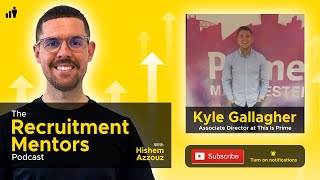
Kyle Gallagher, Associate Director at This Is Prime, went from first resourcer hire to board member in six years by focusing on placement retention and long-term client relationships. He argues retention is the key KPI that builds credibility and revenue, and that top recruiters need coachability, solution focus, and clear motivation. Cold calling still works as a differentiator.
Chapters
Welcome to the Recruitment Mentors Podcast. My name is Hishem Azzouz. Today I'm excited to be joined by Kyle Gallagher, who is the Associate Director at This Is Prime. Kyle joined the business straight out of university as a resourcer, and over the last 6 years he has climbed the ranks and progressed all the way up to Associate Director, where he now sits on the board of the business and is responsible for leading new growth areas in the business such as the US, and other UK regions. Carl, welcome back to the podcast.
Thank you for having me. Always a pleasure, Hishem.
Amazing. So for those of you that haven't listened, Carl was involved in the 15 Minutes with a Mentor series, but on this episode, we're going to really dig into Carl's journey so far. But where I always like to start, and the first question I have for you, Carl, is, in your opinion, what characteristics and traits do you think make up a highly successful recruitment consultant?
Yes, where do we start? How long have we got? So there are loads out there, and I'm sure we've all heard a lot of the typical buzzwords that people tend to say to answer this question. I think it boils down to a few main things for me. First of all, you have to be coachable. Any person looking to be successful in this role, you have to be willing to learn and take on board feedback, and more importantly, implement it straight away. So I think being coachable is absolutely key. I think someone that's solutions-focused, and so I know there's a few people recently have spoken a lot about people who are curious and inquisitive. I think that's really, really important as well to be successful in recruitment, just naturally wanting to solve problems. And then these two kind of tie in together, but people are incredibly hardworking, of course, is absolutely key to being successful. But people that just know what they want. So having that real dig deep motivation, I don't think it really matters too much what that is, as long as you know for sure that you want it and you want it really badly. I think for me, they're probably the main things I would say that make a highly successful recruiter.
Love that. So just for context for people listening, we're just talking a bit about this, but just for context, Karl, could you just sort of share like the world that you've recruited in over the last sort of 6 years? I know it's been on a bit of a transition recently, but like just give us a bit of a flavour of the typical people that you'd be placing and have been supporting, and then that will just help with context.
Yeah, sure. So as you mentioned, it has transitioned a little bit, but what has never changed is that it's always been around placing the best entry-level, so junior and graduate talent into recruitment businesses or more recently into fast-growing tech businesses, mainly across Manchester and London. So people that are very much looking to enter a sales-based career for the very first time.
Amazing. And then the reason why I wanted you to share that is because, yeah, I think straight away with what you just said on your last point there, like really clear on what people want. I was just interested to just dig a bit deep in there straight away, like in your experience and the sort of lens that you sort of see it from. Has that changed? I think a lot of people online, particularly around recruitment, right? I think a lot of people online say that the money part, that's changed. But I don't know, I had someone on the other week, a lady called Dandan in New York, and she like, obviously it's different nuances, but like she was on a completely different scale. Like for her, people need to know or want recruitment to be a financial wealth vehicle for them to achieve what they want to. So I wanted to ask you that straight away. Like, do you feel that has changed?
Yeah, I actually listened to a bit of that episode as well. Has it changed? Yes, is probably what I would say. Now, do you have to have an element of money motivation in recruitment? I think you do. The job is, is too difficult, too much under pressure to do it if you weren't motivated by money. But I think there are certain things that have maybe overtaken money as a motivator, or certainly things that are important particularly for graduates looking to get into this role. So progression is key. Graduates now, they always want to be improving, they always want to be progressing financially, but also in their job title, their responsibility. They want to be empowered. So I'd say progression, you know, is really important now and potentially overtaken money. But a lot of people— and what's changed over the last few years is more and more graduates, they want to be a part of what almost something that's bigger than them. They want to, wherever they work, they want to have a purpose. They want to make sure whatever they are doing, they're getting better and achieving every day, but they're part of something that's having a bigger and greater impact. So to come back to your question, I think things have changed slightly. Of course, money is always going to be, I don't think we'll ever come away from money being a motivator, but I think there are certainly things that are more important than they probably were 5, 6 years ago when I first started.
Yeah, yeah, really interesting. So let's, let's break this down then. So like, Carl, how would you describe your first year in recruitment?
Um, well, I'm gonna have to give you like a few, a few stories here, but it was, um, it was amazing. Like, some of the experiences I got fresh out of university, joining a startup business, not knowing how—
what was, what was This Is Prime when you joined? Like, how— yeah, describe This Is Prime.
It was a pink logo.
Wow. Okay. Was you their first hire?
Yeah, the first hire. So it was a website and it was an idea, a great idea and a concept. That was it. So the mission and the journey was to make this concept a reality. So zero candidates and I mean zero. There was no database at the time, no clients. We didn't have a single client. So what it was like, it was difficult, it was tough, but that was part of the reason I joined in the first place because I wanted that excitement. I wanted to be a part of something you could help grow, and it kind of links back to what we just referred to with that purpose, I suppose, and being part of something that mattered to me, and the exposure and the experience you would gain just as much as the money that you could earn doing recruitment. So yeah, to give you an example, when we first started, um, when I first started resourcing you know, forget SourceBreaker, all these amazing tools and things to do your job. We had, I think, a 3-day trial of CB Library to kick things off.
Get as many CBs as possible.
Yeah, remember that. Yeah, exactly. So it was tough, but you look back on it now and it was such a humbling and grounding experience at the time. So yeah, it was basically taking a concept, taking it to market and proving it could work, which 6 and a half years on, we're not where we want to be, but we've certainly done very well.
Yeah, no, absolutely. Love that. So I guess just thinking about it doesn't have to be specifically for the first year, but early on in your recruitment career, which as you all know probably better than most, is typically the toughest and where a lot of recruiters can end up spinning out of recruitment or recruitment sort of chewing them up and spit them back out. So I guess what were some of the biggest challenges for you then? In those sort of first year or so, a couple of years? Like what, so you just said that, yeah, you was ultimately selling a concept and starting from the ground up, but so what were some of the biggest challenges that you had to overcome early on?
Yeah, loads. So one of the biggest challenges was probably competition at the time. You know, we were speaking to candidates and we were quite limited early on with the options that we had for these candidates to send out. So our competition just had so much more power in the market. So the big challenge was we were missing out on more candidates we were placing at the beginning. I think that was a really big challenge because you were investing so much time into people. As you know, we provide training to candidates at this level as well. To invest all of that time for little or no return whatsoever, I think that was a, that was a massive challenge in itself. I think just being on the phone in a role where you're the only person that's just starting doing this particular job, where you don't have people to bounce off, you know, a lot of people going into a bigger recruitment business, you've got so many people there that you can learn off and speak to on a daily basis. You know, we didn't have that at the beginning because it was a startup. So they're just two of the challenges, but for all of the challenges there were, there have also been great experiences and reasons why I wouldn't have had it any other way at the same time.
Yeah, I think just on, if we could just sort of zoom in on that point where you said around, yeah, like there was, obviously, you started, you joined the business, there's people that you could look up to and yeah, Neil and Nicole were obviously driving the business. But I guess why I wanted to zoom in on that point of like not having as many people that maybe people are used to bouncing off and these types of things, things. I think that that's been really apparent over the last year, right? Where obviously you're joining me today from home, and I think that's something that is really relevant over the last year where I've spoken to numerous recruiters who, yeah, got their BD power hour or spending 2-3 hours doing BD and like, yeah, been rejected numerous times. And sometimes you can use that office environment to bring you back up. So I guess, how have you How has that translated for you over the last year on that point? Because I'm sure that that's obviously changed for you. How have you ended up bouncing back or making sure that you remain motivated despite you just smashing it out from your dining room table on your own or whatever?
Um, so this year in particular, um, I don't know, I think I've probably learned very early on in my career, um, you always have to know what you're aiming for and what you're striving for. So The first few weeks of the last 12 months were obviously very difficult because kind of you just ripped up, ripped up the textbook, so to speak. But I think very quickly we just realigned our focus. I knew what I wanted to achieve, what I needed to achieve, and that just kept me motivated. You know, working at home over the last 6 to 9 months, it's still non-comparable to what Prime was like in the early days because If anything, it's been better, although we still had Zoom and all these ways to communicate with people. That's more than we probably did have at the beginning. So for me personally, it's been fine. I know for others it has been a challenge. It's not been easy working in a sales role when you're at home in your bedroom having to make, you know, cold calls to businesses. For recruiters, probably more so than ever because BD all of a sudden became the big focus overnight. I think it has been incredibly challenging for most people. I think I was maybe a little bit more fortunate that I've already been conditioned or preconditioned.
You've had those experiences to lean on.
Yeah.
So, so I guess what people want to know, Carl, and, and you can refer to any point in your career, but like what people want to know on this point is like when have you been in like a real slump? Or like where, I don't know, when have you experienced like just haven't got any wins or haven't sort of moved the needle in any part of your recruitment desk over a period of time? Keep getting rejected, keep getting pushed back, maybe had a number of dropouts back, I don't know, like when have you been in a real slump? Maybe in the last year or I don't know, when have you been in that sort of space and how have you sort of typically got yourself out of that to push on and sort of do what you need to do, which is what you're talking about now?
Yeah, there's been loads, loads of examples and I think as you transition and progress through your recruitment career, those challenges and those slumps they're just different. I think when you first start becoming a recruiter, it's to do with dropouts. I think when you then become a manager, it's more to do with how people in your team are feeling and how they're performing and how they're doing. So I think it changes. A big one that really sticks out for me, and it was quite funny when I look back on it now, I was on holiday, me and my girlfriend were in the Amalfi Coast in Italy. If you've not been, recommend it, beautiful place, but it is quite expensive, it's not cheap when you're over there. And whilst I was over there, There was, I think, between— there was definitely two, potentially a third dropout or deal that didn't go in that I was counting on for commission that was due to be paid whilst I was in Italy. Those happened. I knew what was going on. I was asking Neil for updates and he wasn't being particularly quick to respond. I know this is bad news. This is bad news. So that cost me— it cost me a significant amount of commission that I was due to receive whilst I was over there. That was a real slump because in a time where you're meant to have the time of your life, knowing that things that have happened back in the UK, somewhat out of your control, are going to cost you X amount of money. So that was difficult. How did I bounce back? At the time, I just had the mindset, I'm not going to let it ruin my holiday. You know, there's nothing I can do.
I'm sure you had the other half saying as well, like, Carl, I can't have you being miserable. Go have your strop and then come back.
Yeah, no, she was certainly in my ear quite a bit. But yeah, that was it. I just had the mindset, I can't control it now. There's nothing that I can do. And that's kind of the mindset I've always had. If there is something that I could have done to change a situation, I'll get quite frustrated about it. Like, why didn't I do that? But right, this is what I need to do next time. If there's a situation like that that happened while Phil was away, if there's nothing that I can do at that moment in time, there's no point letting it impact your day and how you're feeling. That's just one example that particularly stands out. There's obviously been loads, but that was one in particular where, yeah, it sticks in the memory. It hurts. It still hurts. Yeah.
So I guess on this point then, like, obviously you would have helped countless people start their careers in recruitment. Like, what, like, where do you think people typically go wrong? Or like, where do you, why do you think a lot of recruiters do end up failing and then do end up leaving the industry? I don't know where, because obviously the turnover can be quite high, can't it? And so I don't know, where do you think sort of people typically go wrong early on in their recruitment career that can sometimes leave them either really struggling or then end up leaving the industry? What comes up for you in that?
I think a lot of the times it's that people going into it don't know what to expect. I think that is the most common reason people go into recruitment not fully understanding exactly what they will be doing day to day and how difficult it can be, which is one thing that I try to do in the conversations I have with graduates looking to get into sales or recruitment is really giving them a warts-and-all overview of exactly, look, these are the great things, we can talk about that all day long, but what are you going to find difficult? Other people find this difficult, how will you deal with that? They're the bits that we focus on, so I think the most common reason people go wrong is they don't know exactly what they're getting themselves in for And I think I would kind of flip this as well, and I think any graduate looking to go into this industry, it is a partnership. Graduates are responsible for making sure they've got the right motivations, for knowing what they want to do. Us as business leaders, we're also responsible for making sure we give these people the platform, the training, and support to be successful. So I think, you know, why a lot of people don't work out, I think it's twofold, but the most common one is people not truly understanding what it is they're getting themselves in for.
Yeah, yeah, really good point. Um, and I guess just like sort of on that point, um, do you think on that, do you think it has got better? That sort of, I don't know, like, I don't know, would you say, I don't know what the actual stat is, I should probably know it, but do you think the sort of people that do enter the recruitment industry, think more people actually stay in the industry now or less? Because I feel like, I mean, this is part of the reason why I started the podcast, but I think When I looked to enter the industry in 2016, I wanted to work in the industry because a friend told me about it, but he just sold me the dream. Like, there was limited content, there was like limited stuff online, like you just saw, like the potential earnings and stuff like that. But obviously there's just so much content out there now. But like you said, it's a partnership. And I think it's important that one, the grads know what they're going into, but then also are they in the environment, are they in an environment that is going to support them or is going to just set them up to sink and fail? Do you think it has improved?
I can confidently speak about candidates that we've represented and worked with, and it definitely has, you know, that there has been a change and more and more people are being successful and sticking in their roles. And our mission, and it hasn't changed, our purpose is to change the perception of sales. So what we want is graduates, when they come to their third and final year, when they finish university, is they know what a career in sales is. It's not something they fall into, it's not just something that, you know, the friend sells them the as I mentioned, it's something they are already aware of. And I think doing that, and, you know, we have influenced that over the last few years, but I think continuing to do that and change that perception will definitely be something that improves the retention rate. If these people know what they're getting themselves in for, nothing's a surprise, nothing's a shock. So they're much more likely to then stick it out and, you know, stay in it for years to come. So to answer your question, has it improved? Yes. But there is definitely still work to do. I think there is still an assumption by a lot of sales leaders that they will hire people and some will work out and some won't. We want to change that, that the people that don't work out, you know, they're not the rule, they're the exception. More people should work out than not, definitely.
Yeah, no, I love that. That's really interesting. So the next thing that I just wanted to ask you on this sort of point on sort of early on in sort of recruiters' careers and stuff, and then we'll transition into you being a leader and these types of things, but Like a question I've had a couple of times, obviously a lot of recruitment businesses rely on hiring trainees, right? And I know that you guys hire trainees yourself, right? If that's grads, non-grads, or whatever. But a question I've had a couple of times, which I'll be interested to get your thoughts on, is like, how can managers and leaders help sort of graduates or people early on in their recruitment career, like really deal with self-doubt? And I've just had that question quite a lot where, yeah, they hire a group of grads or new people who just really struggle to believe that they can do the job or really suffer that self-doubt early on. I don't know, one, have you experienced that? Two, any thoughts on how you think managers and leaders can sort of impact that self-doubt that sort of people early on in their recruitment career may have?
I think we've all experienced that. I think anyone who says they haven't at some point had some sort of self-doubt is, you know, is probably lying. What can we do as managers and leaders is just manage that effectively. So give examples of things that people have done previously. Most of the time, self-doubt is just a belief that you have that is incorrect. It's not actually true. It's just something that you believe to be true. So I think it's our job as leaders just to unlock that mindset, find out why they're thinking that way in the first place, uncover it a little bit more and just help them and guide them. I think that's all we can really do. I think that there is a key here though, having the right mindset, I think is, you know, having the right motivation, definitely something you either have or you don't. Us as managers just need to, you know, give guidance and leadership when they may be having a little bit of doubt, but I don't think we should be necessarily giving loads of motivation. I think we need people who are self-motivated in this particular role. Yeah.
And then just final point on this, like you hear a lot of people now talk about they need sort of recruiters to have that growth mindset wherever they are in their career, but I guess particularly early on if you can make sure that you're hiring people that do have that, then that could be, yes, because then you're having this mindset of like, what can I learn from this failure, challenge, blah blah blah. But how have you actually looked for that in graduates or junior sales talent? Like how have you identified if people have a growth mindset out of interest?
Yeah, good question, and it is difficult. When speaking to clients all the time, the big challenge they have is interviewing entry-level candidates because they've never done the job before, so it's not like if you're interviewing an experienced salespeople, you can just say, look, you know, what have you delivered, what have your targets been, what have you achieved against them? But it is just looking at what they've done in their life, whether that be work, education, extracurricular stuff, and trying to get them to give you examples of where they have demonstrated a growth mindset. It's as simple as that, and although these people won't have worked in sales or recruitment before, they will have done a lot of things in their life where they will have demonstrated the ability to grow. So it's just unlocking that and seeing, seeing where they have it, but it could be in anything. I remember one example, we had a client where they wanted people that were high performers, and again, at graduate level, you know, that can be difficult to find. And people, you know, they were always looking to grow, but they weren't bothered about what that was. And so much so, we placed a candidate who his high performance was in football refereeing. So he was only an amateur football referee, but he's got all these coaching badges and was the top level that he could be at that time as being a football referee. That is demonstrating growth, that's investing himself to get the badges, and I think there's an assumption that recruiters have to be incredible at sports. Not necessarily. This person was a referee and a very good one and demonstrated they wanted to grow and progress within that particular field. So hopefully that helps. Bit of a round-the-houses answer, but hopefully it gives some context into the types of things you can look for when hiring at this level.
Yeah, no, no, absolutely. And I think, I guess, what I just wanted to ask you then is, how old was you when you When you entered the recruitment industry?
21? 21.
Yeah. So that's my sort of final question on this early days. Like, what advice would you give the 21-year-old Karl entering the world, entering the recruitment industry, just joined This Is Prime, startup? What would you say to him?
Don't be afraid to make mistakes. Yeah, go, go out and make mistakes. That's the advice I gave a lot of the guys in our team now, is just go out and make mistakes. Okay, don't make the same mistakes again and again, make sure you learn from them quickly, but just go out, try things, give things a go. If you get it wrong, so what? We'll learn from it and make sure we, uh, we improve for next time.
Yeah, and I think that's it. That's what— that's exactly that, isn't it? It's like, give yourself at least the opportunity to make the mistake rather than not even getting in the box to make the mistake, you know what I mean? Because then once you're in the box and you're trying to, trying to get it in the goal or whatever, you're there's things that you can learn and then hopefully give you the better chance of getting more out of it when you do get in the box next time. Do you know what I mean? So I love that. So just for context then, Karl, spoken a lot about graduates early on, including yourself. So just to help me out and people listening. So obviously worked at This Is Prime for over 6 years, progressed to associate director, obviously joined when it was a startup. What was your journey in the sense of, so how long was you like just a sort of, just an individual contributor, just worrying about your own billings? And then when did you start transitioning to managing? Just give me a bit of context on that and then we'll dive into a bit more of Carl turning into a leader and the things that you learned there.
Yeah, sure. So it was probably the first 2, 2 and a half years where it was mainly as an individual contributor, which was initially as a resourcer before then progressing and transitioning into a a 360 consultant. It was probably around 2 and a half, coming up to 3 years in, where the management responsibility started with 2 people. So we hired 2 resources that I was responsible for and managed, and then at that point it was just about growing the team from there.
Yeah, nice. Then I'm assuming, and as you got more support, you was, I guess you assuming you was focusing on more client development, things like that, and you may be involved in the delivery side, but you'd get support on that side.
Exactly that. So when we had the team coming in responsible for filling roles, my main two focuses and two priorities really was new business development and ensuring that the team had everything they needed from me to be successful and achieve what they were looking to achieve.
Yeah, nice. So I think let's, let's just zoom in a bit on, on the client side. Like, it is the most popular area whenever I speak to recruiters within Recruitment Mentors or just in general around sort of the area that like they want to improve the most, it's always typically the client side. So if we just talk a bit about that for a second, um, I guess what over your career, like, what has continued to be the sort of best way for you to build your, your client network and build business and build client relationships with people that you do a lot of business with? Like, what continues to— I know it could be a multiple of things, but like, what continues to be the best way for you to build that client side?
You're so right, by the way. This is incredibly popular at the moment. Like, every conversation that we're having with people in our networks is all around business development and winning new clients. So it's become more popular now than ever. What's worked really well for me is The first 18 months in my career where we were speaking to candidates that we couldn't place, I think I mentioned earlier, we were losing out on more candidates we were placing at the very, very beginning. That for me was, and still is, the best way to generate new business and really build your network. So there was candidates we were missing out on that went on to become managers within their businesses that are now some of our biggest clients. But very early on in my first few months, there were candidates that we missed out on. So we did get a return. It just took a few years to do that. So for me, the best client development strategy is just delivering incredible experiences for every single person that you speak to, whether that's giving no feedback to a candidate, make sure it's the most relevant and best feedback that you can give them that helps them moving forward, because that person, you never know who they may know, or they could become themselves. So it's probably away from the usual answer of videos, cold calling, referrals, kind of referrals, but it's that when you first start in your recruitment career, those first 18 months are absolutely key because you're speaking to so many different people that will be in your network as probably key decision makers within a matter of years, if they're not already. So for me, that was the key. That is still the best, you know, candidates that we've worked with at Prime that go on to become managers themselves, they're our biggest advocates and our biggest ambassadors. Another point on that is just being different. I think where a lot of recruiters go wrong is still being quite transactional in what they do, not really necessarily caring about what they're doing. It's just, you know, I need to get X amount of specs out or I need to speak to X amount of decision makers. I think what's worked well for me is having a purpose for the businesses that I'm trying to bring on. There's a reason that I want to work with this business, whatever that may be. So yeah, along with the first, the first 8-2 years are key in terms of the relationships you develop and the reputation you build for yourself. That can be quite difficult to change, so it's important you nail that early on. And then just making sure when you're reaching out to people and trying to win new business, you know why you want that client and how they fit in with kind of your brand and your network.
Yeah, I love that second point. I guess what you're talking about there, Carl, is basically having this long-term mindset, right? So I guess early on it can be hard to have that, can't it? Because for different reasons, like I might work for you and you're going, I need you to get X number of deals in or whatever, like, so I might be facing some internal pressures, but I'm going, you know what? Yeah, but I'm playing the long game. Like, I know that over the next 18-24 months, like, this could really come to fruition. So I guess, I don't know, like, how, how have you cultivated that yourself? Or like, how have you gone about cultivating that long-term mindset in your teams? Because not everyone has that, and that could be for different reasons. It could be, like I said, because they've got to keep their manager happy, or because they want, they want the deals in this month. I don't know, how, how have you cultivated that yourself, and how have you cultivated that in, in the people that you've managed?
How I've cultivated it in myself was when I first joined the business, it was always with the long term in mind. If it wasn't with the long term in mind, I wouldn't have joined the startup as the first person. So for me, it was already embedded because I knew it was going to be a journey. It wasn't just going to be something that you did in short-term blocks. So that was already embedded. How to then embed that in the team? We've got success stories and examples of things that have happened due to us caring about the relationships we were building in the early days. So it's quite easy to reinforce to our team because we can say, if you do this, if you provide amazing experiences, if you do this, this is what you will eventually get in return from your network. They will end up approaching you just by you doing all of this really well in the early days and at the beginning of your career. And I think that was embedded a lot by, you know, Neil, Nicole, to be fair, as well early on, the importance of making sure every single candidate has feedback, making sure regardless of what we can do with them, they have an amazing experience. So that's just something that's embedded in the organisation anyway, and from a personal perspective was always in it for the long term.
Yeah, no, that's really interesting, and I think, I guess, if you're listening to this and you haven't got a manager that's saying, giving you these examples, I guess if you're listening to this, like, go and find those examples. Like if you're sort of listening to this and like, no, not sure, like I can wait that long or whatever. Well, ask some of the sort of high-performing billers in your team. You should have at least a couple that you could look up to and ask them like, out of interest, out of your sort of 5 best clients, like where did they come from? And there might be a story in there, right, that you're sharing. It's like, right, okay, yes. And that can reinforce that, can't it? So go and find that in your business if you're not being told it. Like go and hopefully if you listen to this podcast, you've 'cause we hear this a lot about the importance of long-term relationships, not being transactional, but if you need that, again, those examples, try and find them in your business.
Yeah, they definitely will be there. And look, don't be reliant on this, you know, don't try and leverage your relationships from your first year in the business and never pick up the phone and do a cold call. Of course you should be doing that as well. But it is, it's an easy way that people sometimes overlook.
Yeah, yeah, for sure. So on this point on client development and you sharing that sort of being some of the best ways, just out of interest, it's one of the popular things that people always want to know about. What does Karl's, maybe you can refer to when you're just an individual contributor or more now, but like what does a typical day look like for you? People want to know day plans. People want to know how does Karl, what does Karl's typical day look like to ensure that you're hitting your quota or you think that gives you the best chance of getting the deals that you need to each month. What does a day plan look like for you?
Yeah, again, it is different every single day, so I'll try and give you an idea of a typical day, but you know, yeah, it does obviously change, you know, now in the role that I'm in. But typically, let's say Monday, first bit of the day will be spent with the people in my team going through one-to-ones, review of performance last week, what we need to do to improve going into this week. We try and keep that more improvement and kind of, you mentioned it before, growth mindset focus. So yeah, we look at numbers, but we more look at the reasons behind them and okay, what do we need to be doing differently or what can we do to improve going into this week ahead? So that's what a Monday morning would typically start off with. Then for me, a lot of the day will be business development focused. So that's a key area for me now in looking to build the Prime brand in the UK outside of Manchester and London and in the US too. So that will be very much structured the next couple of hours, early afternoon UK business development, which will be split into blocks of time depending on the activity or outreach that I'm doing, and then later on in the afternoon will obviously be more US-focused due to the time difference. But again, what we try and do is block it out into specific times, so this week we'll have 3 BD you know, cold calling sessions. Then the sales team may do an hour where we get together and write, all we're doing is personalized videos for this hour. Then what we're doing is LinkedIn voice notes. So that kind of answers your question. We block things out in time so that in that time period, everything you do can be focused on that particular activity. So yeah, that's what my day looks like, managing the team and trying to create and win new business opportunities.
And, you know, thank you for sharing that. I guess what I wanted to ask you is like, how important is the part in your diary like before you get to those block times? Do you get what I mean? I think that's where sometimes people go wrong, where sometimes people shared that a non-negotiable for them is that they've done the plan so they have a plan when they go into that block time. Do you get what I mean? So how much time do you spend on mapping out, or when you do go into that session with your team, you know where you're sort of putting your energy into. Do you get what I mean?
Yeah, yeah, definitely. Um, that probably comes into the night before. Um, so what I like to do every single day before properly switching off is just do like a little wrap-up with yourself really on, right, what have we done today, what is tomorrow's focus, and what do we need to achieve. Um, helps you sleep better at night as well when you go into bed knowing exactly what you've done and what you need to do the next day.
Definitely agree.
Yeah, so that helps. How much time goes into planning it is difficult to kind of put a time on it, but I would always make sure going into these particular blocked out areas, of course you have to have done your preparation beforehand to make the most of the time. There's nothing worse than going into a, you know, a business development hour with whatever it is you may be doing, if 20 minutes between each call is spent researching and, you know, doing what you need to do beforehand in between every call. It's just it's not the best use of that time. So yeah, the preparation is always done, and most of the time it will be done the evening before. If it's specific to that day, it will be done again on the morning before you actually start and sit down at your desk for the day.
Yeah, and you mentioned you do different things as teams, but like, is cold calling dead?
No, it is not.
I just see so many people talking about this. No.
Well, actually it is dead because no one's doing it, but that doesn't mean it's dead. If there is a time, we had this in a bit of an internal session this morning, so I might be sharing a few secrets. Cold calling is absolutely alive and those who are not doing it now are losing out. We, you know, the directors at Prime, for example, the people that we get sold to all the time, there is so many emails and LinkedIn messages that we're receiving We've not got any cold calls on our mobiles. There's been not one cold call whatsoever. Landlines, yeah, you know, maybe there has been, but no one's really been in the office. So no, cold calling is not dead. If there is a time to be doing cold calling, it is now. But I'm a believer in you should always be doing the thing that makes you stand out. So we still do videos. I'm not saying, you know, they're not good. Same with LinkedIn voice notes, really well-crafted cold outreach emails. The issue is a lot of people are doing them. No one else is cold calling. So as long as you can do a cold call, you are standing out just by doing that. You don't have to be mega creative with it. Just by doing it, you're going to be standing out because no one else is doing it. So no, it's not— it's dead, but it shouldn't be. And my advice to anyone listening to this is pick up the phone, cold call people, invest in a tool that allows you to get people's mobile numbers working from home. Just speak to people.
Yeah. And I think, look, I think the message here, because I've seen this time and time again and it's like what Karl's saying is one, cold calling shouldn't be your only method of getting hold of people. That's number one. I think sometimes people put cold calling in that camp of like, okay, if you're cold calling, then you're only doing cold calling. Do you know what I mean? So it's like one, it shouldn't be your only method. Karl's mentioned about voice notes, video messages, outreach, like all those things. So I think it's like What can you do? I think the better way to sort of think about cold calling or that initial outreach is like, what can you do that could give you a better chance of these people knowing who you are and giving you a better chance of standing out to that person before you call that mobile number? Do you know what I mean? Because that can hopefully mean that you have a better chance of getting those 30 to 90 seconds to explain why you're calling and how you might be able to help them and add value to them. So it's like, what can you do to warm up that cold call? Do you know what I mean? I think that's the better question, isn't it?
Definitely, and there's certainly a place for that as well and using different approaches, but I think you've got to be clever with it and I think what recruitment probably does need to do, and it started to do it, is treat itself— we've always said recruitment is sales, but there's a lot of things that salespeople do that recruiters don't necessarily do. So to give you an example, I think you need to be clever with your outreach because different things will work for different people. So a couple of real recent real-life examples, the client that we brought on were advertising, had a job spec up online, and in that job spec specifically what they were looking for was someone who loved the phone. The telephone will be this person's best friend. So if we didn't cold call that business, how can we expect for them to work with us? So literally picked up the phone, this is a cold call, you know, you've said in your job ad you want people that love the phone, this is the only way I could introduce myself, we brought the client on. Another one was a tech business selling to someone that was probably trying to be more creative in their own sales job, sent them a video and that resulted in a meeting and agreeing terms, so I think that the advice is just to be clever with it, but certainly incorporate cold calling into what you do.
Yeah, I love that and you're using, you're just being smart there and like playing, yeah, utilising what these companies are trying to get for their own businesses. And yeah, I love that, that's great. So let's talk a bit about— it's always a sort of common challenge that recruiters face, and I'm sure you've had to learn the hard way and learn as you go. Like, what's been your journey like with leadership and sort of managing people's performance whilst managing your own?
What's the journey been like? It's just eye-opening to begin with because you go from being so so individually focused, so in control, you know, individually of what you, you're going to achieve, to very quickly everything being based on the team. And of course you are in control, but there are certain things that maybe happens in your team that means you don't get to where you want to be or you don't achieve your goal. So it's eye-opening, it is a challenge for sure. What's my journey been like with it is just focusing where I find my achievement and my motivation. So I just very quickly had to realize that there's no point me— I was focusing more on the team performance than my own billings. If my personal billing suffered, I wasn't bothered if it meant the people in my team were helping achieve the collective goal. I think that's the short answer is, um, I was quite fortunate in the way that I was being managed was more focused on the team goal. And, you know, if I had to contribute to help us achieve that, I would, but it was more focused on what your team needs to do this. If that means you can sacrifice your personal billions for the greater good of the team, then so be it. We're absolutely fine with that. So yeah, I hope that helps. I just had to shift my mindset to, right, I need to now find sense of achievement in us doing this as a collective, as we're great, not anyone individual is.
Yeah, no, nice. And that definitely is a mindset shift, isn't it, when you've only had to worry about yourself. I guess we may have already touched on it, but sort of thinking about sort of you as a leader and looking at it from a leadership side, like where— I know I'm always interested to ask this, obviously you would have managed a number of people now, but where do you think sort of recruiters typically go wrong, or the typical stumbling blocks or the typical hurdles that they always end up tripping over that can sometimes prevent them from maximizing their potential that you know that they can hit? I don't know, what sort of common things have you always seen or seen happen out of interest?
The self-doubt thing that you mentioned earlier is quite common and I think that's why it's important we look for people that are solution-focused. So we always used to have a bit of a joke in our team where someone would say, oh, I don't know how to do this or I can't do this or this isn't working for me and we just— and it got to a point where this was so embedded that I didn't even have to say it, other people and the junior people on the team would say it, it was, we want solutions, not problems. And then we'd work together, ask questions and we don't want, oh, this isn't working, I can't do that. Right, that's fine. Things don't work, but we need to work as a collective to overcome it and get the result that we want. So self-doubt, I think, is the biggest thing that stops recruiters, definitely. But I think again, it's just a mindset piece of making sure that you're always looking for solutions and outcomes to problems rather than focusing on the problems too much themselves. So that definitely helped myself and the people in our team, Sven, is something that we still say and call people out for now. There's no such thing as, you know, you can't do something. It's okay, you can't now, but what do we need to implement and help you with so you can find a solution to it? Self-doubt is definitely a big, big one, but I think it is relatively easy to coach and train. If you've got the right people in the first place, for sure. What else? Again, linked into self-doubt, but it is business development. A lot of people, when they transition from the resource to consultant level, struggle, are scared of business development and bringing on clients. So again, we just try and embrace it as something that you should relish, something that you should actually enjoy, and you should look forward, not necessarily to the rejection, but there are parts of that you should embrace, for sure. Yeah, again, bit of a wordy answer, but hopefully there's a couple of pieces in there that do. It mainly does come down to mindset. If you've hired the right people with the right skill set, more often than not, mindset is the only thing that stops them.
Yeah, no, really interested in that. And I guess just on this, it may tap into mindset, but I think this is something that you've probably had to get good at as well. And I think sort of great managers have had to really step up and understand, like, you always hear around motivating your team and things like that, I guess. What's been— how do you think you've sort of got the best out of your team? I'm always interested to hear how managers and recruitment leaders have, they think, done that. How have you sort of got the best out of your team and motivated your team, do you think?
Understanding, I think, is key. Really understanding the people in your team and what motivates them. So although we're working towards a team collective to achieve something, what motivates person X and the reason they're doing it could still be very, very different and completely different to person Y. So I think as a manager, you have to understand the people in your team on a personal level and you have to understand why they're in it. Why are they doing what they're doing? If you don't understand that as a manager, you've probably got no chance. So to come back to your question, how to get the most and motivate your team, you just have to understand them. You know, it's as simple, it's as simple as that. And it does get overlooked, which is why our kind of weekly one-to-ones are so important. There's so much more than just how many calls did you make last week? You know, there's so much more than that. It's kind of an ongoing development session of really understanding the people you're working with so you can then get the best out of them.
Yeah, I love that. And we've heard it a lot on this podcast, but like you said, it's probably overlooked. And I think sort of thinking of the conversations that I've had with leaders over the last sort of 3 to 6 months, they've always shared the same thing, which is like the meetings that they have, what you're talking about, like we don't talk about numbers. I mean, that isn't to say that you shouldn't know, you shouldn't have KPIs and stuff. Like we need to know what the recipe is to get to where you need to, right? We need to know, are we on track? Are we not? Blah, blah, blah. But like if your meetings with your guys and girls are just about, like you said, how many calls they had, blah, blah, blah. Then yeah, you're going to struggle to get the most out of them. So it's just really common and it comes up a lot. So thank you for sharing that. I guess what I wanted to ask you, Karl, before we sort of finish and come towards the end here, a lot of recruiters that I've spoken to, you said one of the big motivators is progression. And I think a lot of sort of aspirational recruiters that want to sort of really make the most out of their recruitment career want to get to where you've got to, if that's a director or whatever the title is. So I guess You could say on paper that Carl was destined to get to that point and get the opportunity to potentially own part of the business or sit at the board because he was the first hire. But I think there'll be a lot of people that may not maximize that opportunity or may not be in the position that you are. So I guess what I wanted to hear from you was like, why do you think you was— you've been able to really grasp that opportunity and get to where you've got to and hopefully even in the future own part of the business and these things, like why do you think he was able to do that and not some of the people that maybe joined at a similar time or could have got that as well?
Yes, it is a really, really interesting point, um, but probably certainly one of self-reflection a little bit because I think the perception might be, you know, first one in a business, as you said, destined for that to happen. But there are people that have joined the business not too long after that had experience that, you know, were probably better positioned to actually fast-track and get to director quicker than I have, that didn't for one reason or another. So I think the key things are knowing what you want to achieve. I think any advice I would give to someone that's listening that wants to become a director is, first of all, make sure it is what you actually do want to achieve, and secondly, be really forthcoming with your ambitions. Don't hold back. You know, I've always made it clear to the guys at Prime that that is where I want to get to. And at any one time, you could have asked me, what do you need to do to get your next promotion? Or how long away are you roughly from getting a director? I could have told you at any one time, this is what I need to do, this is what I need to generate, this is how many clients I need to bring on, these are competencies I need to work on and develop. So at any one time, I could have told you, and I think anyone out there that wants to become a director, if we were to ask you, what do you need to do to get promoted? What do you need to do to get the next step? You should know the answer to that question. If you don't, you need to go and find the answer straight away. So I think that's the key thing really, knowing what it is you need to do and achieve and being really forthcoming with it, I think is absolutely key. And then the third one is make sure you join the right business. And a bit of a disclaimer, that isn't necessarily a startup. There are so many examples out there of bigger businesses where people have joined and become a director in 5, 6, 7 years. So it doesn't have to be a startup. At all, but make sure you are joining the right business if you do want to become a director. Questions you should ask are just very simply looking for people that have already done that, already replicated that, and making sure again, even before you join a business, what do I need to do to get to director level? So yeah, hopefully there's a few, few bits of advice. I think it comes down to being in the right business, making sure you actually want it, and then make sure you know what you need to do to get there. You have them 3 things, the rest, the rest is down to you really.
And I think just to make this crystal clear, like in your opinion, like how much responsibility lays on the person to find out what they need to do? Like, is that, is that something like, is that, that should, could that, should that be completely down to me to find that out or should that, should I expect the company to tell me that?
It's a, again, it's a partnership. Yeah, I think, I think the responsibility does lie with the company. For sure, but then again, if I was to think, well, hang on, this is my career and I don't know the answer to these questions, I would make it my responsibility. So I think it does lie with the company, but if the company doesn't provide clarity on that, and believe it or not, there are so many recruiters, salespeople I've spoken to in the past that you ask what their targets are or what they need to achieve, they cannot tell you. So it is a real problem, you know, it's not just something we're making up. People don't know what they need to do to get promoted and you know, quite a few businesses out there. So it's the company's responsibility. They should have a framework, a progression plan, everything in place. If you as a recruiter don't know that, make it your responsibility. And if not, find a—
Yeah, yeah, yeah.
No, I love that.
That's what I wanted you to highlight there, is that, okay, so if the business doesn't have all the answers, like, take it upon yourself to one, try and find out the answers. And if they don't, then it's like, okay, well, like you said, it's a partnership. Well, let's talk about that. Like, this is— I'm telling you, this is where I want to get to. What do you need me to do to get there, or at least consider me for that? So, and I think those questions that you outlined, they're such great questions to know about yourself and your recruitment career, do you know what I mean? Like, I think, yeah, so I think that's really great advice. So I wanted to, before I ask you the 5 final questions, I wanted to ask to get your sort of thoughts on like a temperature of the recruitment industry or like just sort of some of the trends that you've noticed. But before I do, I always like asking this question, um, what do you think is like the most important action or KPI that contributes to success in recruitment?
That is the million-dollar question, isn't it? What is the most important metric or KPI? Um, I'm going to challenge the norm on this one, and it's something that we've started to recognize more and more at Prime, and I think it works well because of the market that we recruit into that has typically had high retention. We measure and reward retention now. So our kind of quarterly get-togethers, we had a recognition and award for, yeah, highest revenue, most number of placements, but the person that has had the best retention of candidates placed, i.e., the ones that have stayed in their roles for the longest with the highest percentage. So I would go as far to say in our industry, that's a really important metric, which I don't think many recruitment businesses probably place too much focus on—
Rewards, highlight, put on— yeah, I love that.
Yeah, so that's what I would say, probably slightly different to the norm. Of course, you know, there are a lot of metrics that are important, but for me, in the industry we're in, where the big challenge for entry level is the retention rate, I think for us that has to be a key metric.
Yeah, and you know what, like, that metric actually fuels everything else. Like, if you're a recruiter that has got an amazing stat around that, that everyone I place has typically stayed there for over 2 years or something like that, whatever, that also then helps you with everything else. That's something that you use in credibility and like that this is something that you really care about and something that you can highlight when you're doing BD and all these other things, you get what I mean? So it's something that definitely should be highlighted and rewarded.
100%. 100%.
Yeah, adds to, just proves the service that you're delivering. So, so yeah, look, before I ask you the 5 final questions, look, you, I know, bit of a transition that you definitely serve more now on the sort of tech side, but obviously been involved in the recruitment industry for some time supporting businesses grow their business with entry-level talent. So, look, you've got obviously a unique lens on like what you're seeing, what you're not seeing. I'd just be interested to hear your thoughts really on like, what are you keeping an eye on or how are you feeling about the recruitment industry going into the sort of this year and the next sort of 2, 3, 4 years? What do you think some of the best companies are doing? Where do you think maybe some companies are potentially going to be left behind? I don't know what comes up for you when I say like the temperature of the recruitment industry and where it's going.
How I'm feeling is excited. I think there's a big opportunity now for a lot of businesses and it's genuinely been really refreshing to hear, speaking to several recruitment business owners recently that have posted record months, you know, this year already, you know, even, you know, decimating pre-COVID figures, you know, it's really, really impressive. So I think if anyone's in recruitment now, I would be excited about the future. I think how I see it developing is businesses becoming more solutions-focused, whether that be with partnerships, exclusive models, you know, different recruitment processes, whatever that may be. I see recruitment becoming more solutions-focused rather than the typical transaction of, do you have a job, I will fill it. I think the businesses that will do the best, the ones that can provide more than one solution to the businesses that they partner with. So that's the way that I see it going, and I think for any business that is doing that more than just the typical filling jobs, I'd be very excited about what the next couple of years could look like.
Yeah, I'm definitely seeing the same. So I think that's amazing that you are seeing that as well. Okay. 5 final questions. If you could change the industry, what would you improve?
So I've heard a lot recently that there's— and I've heard you discuss it as well, Hishem— about the low barriers to entry being something that people would maybe change. I massively, massively challenge and disagree with that. I actually think that is one of the best things about the recruitment industry, giving people with no experience the opportunity to earn really good money and develop incredible careers. I think that's the best thing about the recruitment industry. Now, the reason that that doesn't work sometimes is probably something that recruitment business leaders, people like myself, we need to look ourselves in the mirror and go, this isn't working, probably hiring these people if we're not giving them the training and support that they need to be credible and, you know, to be really good recruiters. So the thing that I would change is the support, guidance, and training and making sure that we're setting people up to succeed rather than setting them up to fail. That's something that definitely improved, by the way, and is continuing to improve. But for me, the low barrier to entry is probably the best thing. One of the biggest frustrations that a lot of graduates have is that I come out of university and I sometimes need that experience. Yeah, yeah. And so it's, it's a good thing, let's embrace it, but we need to give the correct support, training, guidance, leadership so these people aren't just rabbit in the headlights when they enter the industry. When they don't have the training and support, that's when you hear all the horror stories That's where recruitment gets a bad reputation. So yeah, I wouldn't— the barrier to entry thing, it's not— I think that's a positive.
Yeah, I love that. If you could write a LinkedIn post that could be seen by every single recruitment consultant across the world, what would you want it to say?
I'm gonna have to say a disclaimer here. I've heard this saying and this quote somewhere and I have stolen it from someone and I don't know who. So if you're listening to this and you're thinking, I said that. Yeah, credit does go to you. But it is, don't take yourself too seriously, but take what you do very seriously. I think that really resonates with particularly us at Prime in that, you know, we want to have fun with what we're doing, but, you know, don't let that detract from the way that we're incredibly serious about what we're trying to achieve. So yeah, don't take yourself too seriously, take what you do very seriously.
Yeah, I like that. What did you spend your first biggest commission paycheck on?
I was in Kraków on a lads' weekend away at the time, so it was Polish vodka. It's quite cheap as well, Kraków, so it's difficult to spend a lot, but we managed to try and went to a Wisła Kraków game in a stand with all the ultras as well, so basically just blew it on a lads weekend away, but it was incredible.
Love that. Final question, what's the ultimate goal for your recruitment career?
It's changed, but for me now it's to build an incredible place for people to work, to ensure that the people within Prime have everything they need to build successful careers, and then to continue with our mission of changing the perception of sales and making sure that graduates see it as something that they choose to go into, not something they fall into.
I love that. Karl, it's been an absolute pleasure, thank you.
Thank you very much, appreciate it, cheers.
More from Hishem




You don't need as many clients as you think to bill $1 Million A Year In Recruitment



From 30 Direct Reports to Back-to-Back $1M Years as a Solo Recruiter with Zach Creighton



