Lauren Windebank: Going solo as a Founder - what is it really like to run a business with two kids?
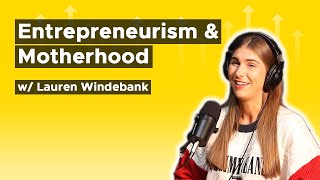
Lauren Windebank runs Roma Black, a recruitment agency she took solo while raising two kids. She uses the flexibility of recruitment's commission-based pay to manage childcare, and is launching Tribe, a coaching and mentoring platform for women in tech.
Chapters
You almost have to sit down and go, what would I be needed for right now? What could not happen unless I executed it?
Yeah, it's a good starting point.
Yeah. And that's basically what I did. And anything on that list, I then ensured there was a process system, you know, whatever it is in place so that things could happen without me physically having to sign anything off. I've spent a lot of time coaching and developing certain members of my team to give them the confidence to make decisions. I don't stop anything on the days that I'm not working. If I'm not able to answer the phone, for example.
Hello everyone and welcome back to another episode of the Recruitment Mentors Podcast. I'm your host Hishem Azzouz, and on this week's episode I was joined by Lauren Weinbank. It's fair to say that she's been dealt her fair share of adversity since starting her very own recruitment business in 2018 called Roma Flat. Now she actually started this business with her co-founder. However, along the way it ended up being a journey that she didn't no longer want to go on. So Lauren found herself continuing the entrepreneurial journey on her own and along the way brought into the world her two beautiful children. So found herself running a business on her own whilst being the mother of two children under 2 years old. So in this conversation we talk about how she navigated that, how she's made the business a success, how she's dealt with this adversity, how she's always developed a positive and optimistic mindset, what she would maybe do differently if she was to start the journey again, and so much more. Enjoy the conversation. Lauren, welcome to the podcast.
Thanks for having me.
Thanks for making the trip. Wasn't too far, was it, for you?
No, it's like an hour on the train, so I appreciate the effort regardless.
Thank you. And obviously, second attempt, this, isn't it?
Yes.
Yeah, first time. Yeah, life got in the way, but we're here now. So really looking forward to breaking down this journey that, that you've been on. So like I always, uh, like to just really quickly, just to give everyone some immediate context, but since, uh, the end of 2018, you've been on an entrepreneurial journey, recruitment entrepreneurial journey. But before that, correct me if I'm wrong, you worked in recruitment for like 3 and a half years? Only 4 years, was that?
Um, yeah, about 3 years.
Yeah, roughly. Yeah, 3 years. Then started, um, your own recruitment business at the end of 2018 with your co-founder. And then a year and a couple months, um, from that start— starting point, around Feb 2020, obviously just before COVID your co-founder decided that it wasn't for her. Yeah. And you then obviously carried on this business and entrepreneurial journey by yourself. Along the way you gained investment, which we're going to talk a bit about. But today, in terms of where you are and what the business looks like, there's 9 of you. And then last year you did just under £1 million in revenue.
Mm-hmm.
And we're today going to really focus on this business journey that you've been on, because I think it's fair to say it has not been a plain sailing ride, right? There's definitely been sort of obstacles along the way which you've worked through and no doubt learned from. Let's start with the million-pound question. Uh, would love to hear your thoughts on what characteristics and traits you believe make up a highly successful recruiter in today's market. Let's start there.
Yeah, okay. Um, so I think there's like several things. Um, firstly, it's the one that everyone says, right? Resilience. It's such an up-and-down industry that you just have to be able to take the you know, lows of the highs. Um, and then I think what's sort of really important is that, like, focus and discipline. Um, a lot of the best recruiters are able to come in, you know, stay focused on the job type thing and actually be consistent. There's so many inconsistent recruiters out there, and I think that comes down to being very process-driven. So having, you know, your day plan mapped out and sort of sticking to that, having that sort of regimented ability, I guess. And I think that's so important so that you don't get those inconsistent— obviously sometimes it's industry, right, market conditions. But I do think a lot of the inconsistencies can be avoided purely by like being disciplined and focused on a daily basis.
Yeah, I couldn't agree with you more. That is, that is often missed in terms of like, I remember when I was in recruitment, no one ever sort of sat me down and said this is what a good day plan might look like, or yeah, you can get better at prioritizing tasks. And it is so important. And what I really like about thinking, um, about thinking about that in terms of becoming a high-performing recruiter is those things that you just said that are like entirely in your control. Yeah, your process, your day plan. Obviously you still have to do the thing and you have to perform, but there's a lot of things in recruitment you can't control. But being process-driven, being disciplined, being focused is absolutely something you can control. On, on that then, just, just curious really quickly, anything that you've done recently, either yourself or with your team, that you think has enabled Lauren to be better at being focused, disciplined? Out of interest.
I think another thing that it does take, I think, to be successful is a long-term mindset in recruitment because, you know, that, that first sort of year you work your hardest for the least amount of money. And I think if you can get your head around that and you can just focus on relationship building, I think that's something we've heavily focused on, is actually it might not be right now, it might be 6 months, year time, you know, 2 years time like those relationships are key, um, because you're always going to need new clients, right? Um, so I think that's, uh, something people massively like under, underrate, if you like. You know, they, they look for the quick wins, um, when actually I think if you have that long-term thinking, it can massively change the game.
Yeah, I, I mean, I definitely agree. I sat down— a common— I don't know how you feel about this, and it might have been your approach during COVID but really common. I sat down with, um, a lady called, uh, B, who is a contract recruiter, and we're talking about how she hit some of her achievements. And a really common sentence I've heard a lot of people say now in line with this is, during COVID all I did was speak to candidates, build relationships, and that's all I was focused on. And then when things start to open up, or when things, um, yeah, start to get back to to some sort of normality, they would then go back to the people that they actually spoke to or did try and help them when no one else was trying to help them.
Yeah.
So I don't know, like, if you've experienced that, but I've heard that so much. Like, all I did was try to help, speak to people, build relationships, and then at some point I haven't had those— a lot of those experiences. They've gone, look, Lauren, I wanted to give you a call because do you remember when you put on that webinar around how to stand out when I'm applying for a job? Is there any way that you could help me as I'm hiring for my team now?
Yeah, I think that happens all the time. Now, when you give value for free, it does come back around. Um, and when I look back now to when we, like, you know, with my co-founder, we first set out, I think we were naive, you know, because you then go from a secure salary, you know, decent consistent commission, to, you know, nothing until the deals come rolling in. Um, and you, you almost in sort of like fight or flight mode a bit. And I completely changed my approach from that long-term thinking. I always— I'd had that from day dot starting in recruitment, um, and that changed. So when I look back with hindsight now, that's one of the biggest mistakes I think that I made sort of early on. I'm so glad I managed to pull it back.
So just quickly then, just to just focus on this because I think it'll be helpful, Like, what does— because I'm sure you help your team with this now, and I asked someone else this, but I think it's helpful because when you're like in it, you can't see the actions you're doing today that could be sort of helping you in 6, 12 months' time. It's hard to see that when you're in it, right? Because you might have your manager going, Lauren, we haven't booked in any interviews this week. You've got putting pressure on yourself. You've got pressures of the business that you work for. So what are some of the things that you look for, or are the lagging indicators that you really focus on that gives you confidence or gives your team confidence that, no, you know what, if we keep doing this, there's a very good chance that it will help us in the long run, rather than maybe just the immediate things that we need to be seeing that can cause more that short term? Yeah, I don't know if there's anything that you help your team sort of really sort of make sure they're aware of and look at that gives them confidence that what they are doing is going to help them in the future? Because sometimes that can be hard to see.
Yeah, I think it's a sort of mixture of approaches in terms of that relationship building, whether it be candidates, clients, um, and to look at the value you're getting from the conversations you're having. And I think if you can see that someone is putting in the effort and they're having really good conversations. It just so happens, you know, that that client's not hiring right now, but the, you know, the conversation's been so positive that when they are, you're gonna stand a chance, you know. And I think you can see that in people when you can— we track certain, you know, noteworthy conversations, you know, positive sort of conversations on LinkedIn, um, that helps to see someone's output and the passion they have for relationship building and sort of how successful based on the outcomes of their conversations they're having, because that's all you're doing when you first start in recruitment. And I do have, um, like trainees, you know, so people that haven't ever, you know, done recruitment before. So you have to start with the small wins. You can't, you know, you still track all the other KPIs, but you're not going to have them book in so many interviews in their first couple of weeks because that's really for them to start to build relationships for the long term.
Yeah, noteworthy conversations are like that. So if I was to sit down with you and your co-founder then at the beginning of this journey and I said, right ladies, starting a recruitment business, tell me what you want this business to be, what are your big plans for the business? Like, how would you talk about the business in terms of what it would look like in how many periods of time? What were the ambitions? If I was to be sitting in front of you in 2018 and said, tell me about your business, what did it look like, what, what is it, what were the ambitions?
I think this is where we went wrong. Um, so I've— I'm a really ambitious person, and for me it's almost like it's never an 'that's not going to happen,' it's just going to look like a when, like a matter of time type thing. Um, because I'm just very driven and I've always been like that. Whereas I think we were just on very different paths. Um, obviously I don't know if we'll touch on this later on, but giving context to that sort of my story, if you like, um, soon after setting up the business I fell pregnant. So automatically, you know, we are on very different journeys. Um, and so I think for me I always saw the the business being like bigger than me. I didn't want to have to be a slave to my business because I knew I was going to have children. I knew I wanted to have the flexibility, the freedom, which is why I set up the business in the first place. And I think maybe that's where it, you know, it didn't work out for us as two co-founders, you know. Um, and why she maybe left was just because for her she couldn't deal with the uncertainty um, and probably the fact that we were on, you know, different paths.
Yeah.
Um, but I always, I think, had that— although I didn't have that long-term mindset when it came to like getting clients at the very beginning, um, I still had it in terms of like where I saw the business. I'm a risk taker, so for me I was like, listen, you know, let's get a database, let's invest in job boards, LinkedIn, um, and we were just very different in those regards. And so I think you, you never know these things when you're starting out, you know. You can be friends, you can be colleagues for God knows how many years, but until you work, you know, together under that severe pressure, because you do have no money, you know, you have to build something from scratch, that's when sort of the cracks start to show, I think. Um, And I think it's hard. You don't even know if you could identify it. It's just one of those things, you know. Timing sometimes is everything, and our timing just wasn't right.
So just on this, I know we're very conscious here of like, we don't want to speak for people, right? But I think we were talking about this from the perspective of like what you've learned and what other people can learn, right? So I guess what you're saying there, yeah, sharing there is like, yeah, maybe, yeah, we weren't on the same pages, and maybe if I asked a question to you and your co-founder, you might have got different answers, right? Which is maybe why it didn't, um, quite work out. But I guess from that then, looking back, or for other people listening that do, uh, someday want to start a business and don't want to do it on their own, they do want to start with a co-founder, is there anything sort of, I guess, any advice around there in terms of like what you would have maybe done differently? In terms of, would you— how would you have more intentionally understood each other on like what you did want? Because it sounds like maybe you didn't do enough of that, or I don't know.
Yeah, I, I think it's really hard to pinpoint because there were several factors, right?
Yeah.
Um, all I knew is that that's why I set up the business, you know. That was quite clear from, from the outset that that was my plan, to, to start a family and have that flexibility, have that freedom to leave a secure job where I was being elevated, you know. I was in a, I was in a good position. Um, so I think just those really transparent conversations, but like often, because things change. So not just at the beginning where you're all in agreement because it's all fun and exciting, you're just about to start this journey, but actually throughout, make sure you've got that clear communication so that you're on the same page.
Yeah, I love that. Just be— I think that's the thing, just be a lot more intentional about it. Don't put business, um, the version 1 business plan together and then like never talk about it again. And yeah, make sure— yeah, okay. So, so basically, correct me if I'm wrong here, But, uh, when then you obviously had the conversation with your co-founder, this was around Feb 2020, right?
Yeah.
And this is also when— so when did you, uh, when did you fall pregnant with your first child?
Oh, good question.
Well, like, September.
Okay, September 2018. Yeah, September 2018.
Okay, so when you had this conversation How did you feel? Take me back to that conversation because you must have been like, what, that I was pregnant? No, no, sorry, as in like when your co-founder— I don't know how exactly how it happened, but like when he was like, okay, yeah, look, Lauren, I think I'm not sure this is working out for me. Um, and by this point you've got another human in the world.
Yeah. Um, like, yeah, how did you feel then when you obviously realized and learned that 'Oh, okay, I'm, I'm gonna be, uh, on this journey on my own.' Yeah, so at that point, so I had my little boy in April, but now the following year in February, right, and I'm pregnant with my little girl who's due in July.
Yeah.
Um, so the cracks had already started to show, right? So it, it was more of a mutual— okay, I did— I didn't want it for her either, you know, because it wasn't right, it wasn't the right timing, didn't bring out the best in her. Um, and you want, you want everyone to be happy, don't you? You want sort of peace. And, uh, entrepreneur journey isn't for everyone, you know. It really does come with its challenges. Um, so my initial reaction was almost like, shit, you know, I'm now gonna have two kids and a business I've got to run on my own. You know, how am I going to do it? Um, but also it was almost like I knew I would get through it, if that makes sense. I had that sort of self-belief. So it was a bit of excitement of like, okay, what does this next chapter look like for me on my own? Or, you know, whatever pathway was going to be in front of me.
So where— like, what I love about this is a lot of people wouldn't react like that. So like, you just curious, like, where have you developed this mindset? Has it been over time? Like, can you pinpoint it anywhere? Like, where have you developed this mindset of being able to focus on the things that you can control, not sort of getting swept away with all the emotions of like, fucking hell, I've got, yeah, now two children to take care of and, um, make sure I can provide for them? Yeah, how have you gone about developing this mindset of yours?
Yeah, do you know what, I don't really know. I don't really know. Um, I'm a really sort of calm, collected person, so I don't let a lot of things— like, I get stressed, right? That's, that's natural. But I don't let a lot of things get on top of me. Um, and I'm just positive, I'm optimistic, so I always think it's gonna work out. It's, you know, this has happened for a reason, it's gonna work out. Um, my mom has always sort of drummed into me like don't let things that you can't control control you. Yeah, yeah, affect you. Control your, your emotions, um, because you can't change it. So if you can't change it, why dwell on it? Um, but yeah, I don't know where sort of that—
like, I mean, if your mom was telling that, that definitely would have a factor.
Yeah, it would. But at the same time, when I told them that I was going to set up the business, they were like, no, why? You know, you've just got promoted and you're on a really good sort of like upward trajectory there, why would you do that? Um, but I've just, I've just always had that sort of like fire in me to, to do my own thing. Um, which I guess is what I did.
So what was, what was the game plan then from sort of February time? So had your little girl in April, so 2 months.
So I had her a couple months after her in July.
Oh, sorry, July. So that was July 2020.
Yeah.
So leading up to that then, what, what was the game plan? Was like, right, let's just get some deals in, or was this— I can't remember the, the timeline, but was that like, did you, uh, get investment before you had your daughter, or was it around that time?
Or, um, so I was— again, timing's everything. Um, I was lucky in that some of the clients that I'd been sort of actively pursuing had come to fruition. So I managed to have, I think it was like a 50K month, um, in the March.
And that was like just by yourself?
Yeah.
Let's go! So first like proper month on your own?
Yeah.
Okay, month.
Yeah.
Cheers.
Um, so that sort of kept me going because I thought, well, I'm gonna, you know, I'll give you some good fun to have another baby. Yeah, I'm gonna need some, like, not gonna be able to just like be recruiting 5 days a week. Um, So there was an opportunity that sort of presented itself for a company for me to go and do their internal recruitment, sort of like head it up. But I knew that I didn't want to, you know, like abandon Roma Black. I still very much believed in it, even given sort of the situation I was in. And that conversation just evolved. I don't really know how we got there, but maybe they saw something in me and then I ended up get an investment which enabled me to build a team so, um, I could actually have that sort of balance of being a mum and my business still sort of running. Because yeah, at that point in time, I, I wouldn't have been able to, to juggle that.
Really?
No, not with a 1-year-old and a newborn, I don't think. Trying to speak to candidates, you know, build, build a client base Yeah, I don't think that would have been, been doable.
So this was— so, um, let me know if this is all correct, right? So just for people's context here, so yeah, the— so basically you raised £250 grand and then they obviously have equity in your business, and then that enabled you to, yeah, hire 2 people and they started in September.
Yeah, so I hired 2 that started in September, um, both times with, with both my kids, personal choice. I was, you know, back into it within 3 months, um, sort of not full-time obviously, but sort of part-time, um, and at that point we then had a little office, just like the 3 of us, um, and so I'd sort of go in 2 days a week, um, yeah, I think my little girl was like 12 weeks or something at this point, um, I don't think even think she was that old to be fair, and, uh, yeah, then come the sort of the next year, um, we hired more people, um, and we just sort of continued sort of that growth journey, I guess, from those first two hires.
And then basically, and then the, the deal was basically ended up being 50/50 partners, right? So this was actually a client?
Um, no, it wasn't a client. It was someone that just wanted me to go and like be their head of recruitment, if you like, right? Head up their recruitment function, right? Um, and so that conversation, they then took it to the founder and said maybe this is an investment opportunity for you.
Yeah. Um, what do you think they saw in you then?
What do you think? Maybe just my, my like passion and drive, and you know, the fact that I did have two kids but I was still very much, you know, like moving forward. And I think maybe that work ethic, that's so important. Um, even when you come back to sort of successful traits of recruiters, work ethic is huge. When I look at my best recruiters, they've got an exceptional work ethic.
So we had, um, an amazing lady called Hannah Ahmed on the podcast who was really sort of open and vulnerable with us and spoke about her journey with postnatal depression.
Oh, okay. Yeah.
And she had an unplanned pregnancy. She has her own recruitment business. The pregnancy didn't quite go to plan in terms of didn't have a natural birth and these types of things. So like, let's just talk about this for a second because you sort of, you talk about having two children with a bit of a smile on your face, a bit of a laugh, just like, that would be so fucking difficult. So like, let's just talk about that for a second. Like What, like, how did you— I don't know, how did you juggle things? What was the mindset? Because I feel like, again, this comes back to your mindset of focus— focusing on things you can control. Like, yeah, how— what was the thought process to go, you know what, I'm going to show up, I'm still going to achieve the things that I'm going to, and this isn't, yeah, going to be the reason why I can't achieve my goals? I don't know, like, what was the thought process?
Yeah, I just didn't see any barriers to entry. The fact that just because I'm a mum now, like, I can't run a successful business. And, you know, a lot of people— there were a lot of judgments. But ultimately, you know, I was on my own journey. Like, you do you, I'll do me, you know.
Um, when you said judgment, what do you mean?
Well, just like going back to work, you know, a lot of people take 9 months off, a year off. Um, I didn't have that luxury, you know. And actually, that's— it, it brings me happiness. My children bring me happiness, but my work brings me happiness. So I didn't want to like abandon that. Um, and I was just really lucky that, you know, I've got a really good support system around me, uh, good grandparents.
Um, family's been really helpful.
Yeah, so I had that sort of childcare support on the days I would go into the office to start to build out essentially the, the business, you know, as a small team.
Hey everyone, a real quick one from me. This podcast would not be possible without our amazing podcast partners Vincere and Sourcebreaker. Because you listen to this podcast, you're able to get your hands on exclusive savings on both of these award-winning products. If you're a growing recruitment business, you have to check out Vincere, who are an all-in-one operating system for your growing recruitment business. With Sourcebreaker, if you want to make sure that all of your recruiters have the best tools on the market to stand out and beat their competition, then you have to check out Sourcebreaker. Use the link in the show notes, in the comments below, and you'll be able to get yourself exclusive savings on these amazing products. Uh, and then like, obviously now in today's world we love talking about balance, right? I just think— I don't know how I feel. I almost feel like it's sort of unrealistic. I think it is important for you to be self-aware and understand, like, is sort of Lauren burning the wick at both ends? And what can I do to make sure that I don't arrive at this destination of being like, I'm absolutely fucked? Like, obviously we don't want to get there, but in terms of like, like, yeah, in those moments, Lauren being like— people going, no, you haven't really got work-life balance. And you're like, well, fucking hell, how can I do that? You know what I mean? Like, one minute I'm feeding the kids and they're relying on me, and then I'm trying to do deals and build relationships with clients. So how, how did you approach that, that balance element then? Like, how would you approach that in terms of Lauren having the working entrepreneur hat on, then having the mom hat on? How did you balance it?
Yeah, so I honestly don't know how— like, I've got a friend, she's got 3 girls under 4.
Wow.
And she still like recruits herself. For me, again, it comes back to I saw a bigger picture for myself where the business almost didn't need me to run. And on the early days of, you know, the small team, that didn't happen. Like, balance, I feel like it can be defined as like different things, but I get what you're saying. You know, I don't believe there is true balance because if you're really excelling in one area in your life, something else is suffering as a consequence. Um, so the, the way I maintained balance was by having set days that I'd go in and I'd work, um, and then days I had my kids. But ultimately there were days when I'd be taking calls from my team or clients or, you know, and I haven't actually recruited myself now for maybe like 2 and a half years.
Oh really?
Um, so that enabled me to have the balance, and I now have a leadership team in place. So if I've got my days with the kids now, my phone doesn't ring. Um, but it took a while to get there, you know. So you can have the balance in terms of that home-work life split, but ultimately if you if you want to be truly successful, those scales are going to tip.
Yeah, no, I definitely agree. So let's talk about how you got to that point, because that's pretty— I speak to business owners all the time and are of similar size to where you are now, 9 people, um, sometimes even bigger, and the owner is still very much reliant on and dependent on. So how have you— like, talk me through how you've got to that point. Obviously you said it was difficult to get there.
Yeah.
Obviously it requires having people in the right seats, but how did you intentionally get to that point of Lauren not being dependent on— for Roma Black to, to be successful and to be hitting the goals that you wanted to? Talk to us a bit about how you approach that.
Yeah, so yeah, like I said, it's been a bit of a journey, but ultimately I knew that was like my end goal, so that I was still, you know, needed in the business and I still added value to the business but it would run smoothly, you know, without me on the days that I needed it to run without me. And that's obviously then just evolved to the point where it is pretty self-sufficient now. Um, I still work in the business, I still work on the business, um, 3 days a week, um, in terms of me physically in an office, but I work all the time because I love it. It doesn't feel like work. So if I'm sat there and I've put the kids to bed and I'm doing a bit of business development, or, you know, that's sort of really a key role that I still play very much in the business, um, new client attraction, things like that. Um, I think the, the journey was firstly stepping away from that day-to-day, which all I did was change my efforts from being focused on that sort of 360 to then just the business development. So it'd almost just be like feeding my team, if you like. Um, and also had 360 recruiters in the business who would bring on their own clients too. And I think then what's slowly happened is for me to hire the right people into the business who have the same mindset as me, are really aligned with where I want to take the business who can, you know, help it to, to get to probably even where I can get it to. So what I've tried to do is build a team that are better than me to take their business to new levels.
Love that. What's been— just had, um, Roger sat down here, we spoke a lot around leadership and how— I don't know, sort of, if you've had your own experiences of this, maybe at Roma Black or before, but Obviously a lot of people find themselves in a sort of management leadership role simply because Lauren was a top performer, right? And for no fault of their own, I think a lot of the time, like, a lot of these time these people don't actually get much help or support on how can Lauren become not only a top performer but a great leader. Like, what's been, what's been your journey with, with leadership and sort of enabling to— and, um, yeah, getting the best out of people And then most importantly, for you, for you to be self, um, the business to be self-sufficient, not reliant on you, these managers and leaders need to be great managers and leaders, right?
Yeah.
So how have you approached that for yourself? And then how have you enabled the team to be people that don't just tell people to do things but coach people and get the best out of people? What's been your relationship with leadership?
Yeah, so sort of early on when I started in recruitment, I was I guess highlighted as someone they wanted to fast-track to management. Um, so I think I was actually the first person to ever skip every single like, uh, promotion, like senior, lead, and I went straight to managing consultant. Um, looking back now, I feel like I probably didn't develop as a recruiter as much because I was then thrown into being a recruiter but also being a manager, uh, still quite early on, you know, in my recruitment journey, if you like. Um, and you just sort of learn, don't you, how to work with different people. Um, I don't even think it's like managing people, it's like working with different people and getting— knowing how to get the best out of those individuals. So I guess once I then I had my own business and was, you know, hiring my own team, I learned so many lessons, you know, along the way. Like, no one gets it perfect first time round. Um, and I think it's about, from observing, I guess, previous managers that maybe I've had, not being like emotionally driven. So, you know, if like something goes wrong and then they're like taking it out on the whole team, they've pulled everyone in, like it's an emotional reaction. So I've always put time in between anything So if something does go wrong or something hasn't like gone to plan, someone's, you know, not performed or, you know, done something, just taking that time and delivering messages in the right way. Like, we're all people. I really don't believe in sort of that old management approach where like if you don't hit your KPIs, you're like dragged in or, you know, like told off in front of other people. Like, I'm just I said, like I said, I'm a very calm person and I really like to coach people. I like to try and add value. I like to listen, um, and help like develop individuals, you know. Have I got it wrong hiring certain people along the road? Absolutely. Like, be surprised if anyone didn't. Um, but I have got to a point now where I've got a really strong team that are super passionate, really respectful um, we just work really well together. And I've then tried to sort of instill those same sort of characteristics, I guess, um, into my leadership team. We're all very different, um, but ultimately you just want to get the best out of people. And no one person is the same, so you need to bend, you know, to find out what their values are and what drives them, um, because not everyone in recruitment is like driven by the same thing. That's something I've massively— I've learned, like, not everyone is actually really driven by the money. Some of them are driven by the achievement of their target for the business that they're working in, as opposed to the money in their pocket.
Have you got better at uncovering that? Do you really try and make sure you sort of dig into that on a consistent basis?
Yeah, so we've actually just undergone like a strengths assessment.
Okay.
Which is really, really valuable. I'd done it myself and thought, yeah, this would be incredible to do as a team. So we looked at our individual strengths and then our strengths as a collective.
Nice.
Um, and it really sort of highlights people's true values and like drivers and why they are the way they are, you know, why maybe some are really process-driven, um, why some are more driven by like competition, which I think helps then you effectively, um, coach the people that you have in your business and get the best out of them.
So what— how does that work?
And there's like a series of questions or Yeah, it's a series of questions at a time, so you almost have to go with like your—
like, yeah, yeah.
And then it produces a report with like your top 5 strengths.
Okay, so what would be like an example of a strength? What sort of things could—
so like my number 1 strength, you're gonna ask me like— don't ask me all 5 because—
okay, no, no, just give me the top one.
My number 1 strength is Futuristic.
Okay, that makes sense.
Which means that I, yeah, continuously sort of look to the future but sort of bring others um, or that journey.
Yeah, love that. So I think this would be like— I saw that this might have been part of it, I don't know, but I saw that you, uh, invested in a career coach.
Yep.
Best decision you've ever made? Yeah, one-off. Yeah. Talk to me about that. Talk to me about that.
So I'm currently on my second coach.
Okay.
Um, so first one was really to help me get to the point where the business was self-sustained, like, man, you know, it was literally running without me. And so processes, systems, you know, the right people, um, and that was transformative. And then I've recently just started coaching with a new coach that will help me more as a leader.
And what, what does that relationship look like? Are you like, um, is it like a weekly thing? Is it a monthly thing?
Are you monthly? But that's, that's literally brand new.
Really? Yeah. How— why did you end up going down that path? I'll probably write that. I think that's, that's brilliant.
I'm just really big on self-development, and I think one of the biggest things and learning curves is self-awareness. And I like to think I'm, I'm pretty self-aware. So if someone said something to me, I'd probably go, oh yeah, do you know what, I do do that. Um, but some people don't have that self-awareness. And so I think through sort of self-development, you get to unpick a lot of things, um, to find out. And that's why I love that strengths assessment, like, why am I the way I am type thing? Why are these my leading strengths? Um, and it's just so interesting because apparently people that sort of do work that leans into their strengths are way happier. Way more fulfilled. Um, and when I looked at my strengths, recruitment is so aligned to what my strengths are. Um, so yeah, I'd urge anyone to, to take that assessment because it's really valuable.
How did you go about finding the right coach? Because you get, you get peppered, don't you? And like, there's so many coaches now. Um, like, I've been— I sort of said to them to like stop calling because it wasn't the right time, but like, I've been getting calls from like this action coach and they're offering free coaching sessions and it's like, I mean, it can be a bit of a— it can be a bit of a black hole.
Yeah.
Did you get recommended? How happened?
So I think there's so many coaches out there now, isn't there? Yeah, especially sort of like on LinkedIn. Um, but I'm more driven by— so the reason that I went with my first coach was because I could see that she'd built a business, also had, you know, two children and and built a business with zero investment, which is like incredible. Yeah. Um, and the business completely run without her in it. And I think for me to try and create if that balance exists, um, to get to that point so that I really didn't feel like I was being constantly torn, or at one point, you know, something was— the scales were sort of tipped, um, I wanted to dig deeper to what can I do, what can I, um, what processes or systems can I implement so the business runs, you know, smoother, um, with or without me. And in this case, I went with without me, um, even though I'm still very much in the business, right? But it was just like, yeah, you're not making it not dependent on you. Yes. Yeah.
Um, so it sounds like you found, you found someone that resonated with you. Yeah. That you could see some of yourself in. Yeah, that maybe are like a couple of steps ahead than like where you are today. Yeah, so yeah, that's a quite good— like, I think, yeah, that's— if I— like, I'm definitely open to investing in a coach in these things, and that they're the sort of things that I'd look for because, yeah, I think it always helps if you're speaking to someone that you think has been in your shoes. I don't know, it just feels like what you're able to get access to is just going to be a lot more credible.
Yeah, and ultimately, I think you need to align it with your goals. So that was one of my goals. I could, I could see someone that had achieved what I wanted to achieve, that their, her business ran, you know, without her in it. Um, again, she still was sort of working in it to a, you know, small degree, if you like. Um, so I would never coach with someone that's approached me.
Hmm.
Like, I'm way more I don't know, I'm like, I really think things through before I do them, before I act. So only if something really sort of resonates with me will I, right, then approach someone to be like, you know what, that feels like the right natural step for my own self-development. Um, and the current coach, I actually met, um, one of the ladies that, that works for this coaching company at the Women in Business and Tech event.
Okay.
Um, and they're exceptional, like industry leaders within the tech space who have then gone on to— like, their tagline is like enabling dreams.
Nice.
Um, and one of their coaches I got introduced to, and she's, she's just incredible. Like, I can't even tell you. And she's coached all of the top, you know, industry leaders in all of the biggest companies at a global level. And so for me, I thought to really take it to the next level, I want to be coached by someone who is exceptional at leadership. And her questioning, like to get the best out of people, to ask clever questions, to really unpack someone so that you can sort of get to the bottom of something, if you like. Um, she's like just brilliant. Yeah.
So just, just quickly, because I think this will be helpful for people, particularly the way that you're describing how much of, uh, like you said obviously multiple times, that the business isn't reliant on you. So what have been some of like the game-changing processes that you've implemented then that you think has really enabled that? We've spoken about obviously making good hires, having a leadership team, but what— are there any— so yeah, what sort of processes have you implemented, do you think, that have really enabled you to, yeah, not be dependent on—
yeah. So I think it's, it's like several things. So even down to like the operations of the business, like have someone, have someone running that, right? So if there's— you almost have to sit down and go what would I be needed for right now? What could not happen unless I executed it?
Okay, it's a good starting point.
Yeah, and that's basically what I did. And anything on that list, I then ensured there was a process system, you know, whatever it is, in place so that things could happen without me physically having to sign anything off. Or, you know, so say, um, when it comes to terms of business like that, that's someone else now that, that does that, you know. I don't, I don't need to approve terms of business. That's all dealt with with the leadership team. Um, and I guess the biggest sort of like difference in where I was maybe a year ago to where I am now, maybe even 6 months to be fair, um, was that on my days off with the kids, I'd be getting phone calls. Oh, um, just got off the phone with, you know, this, you know, blah blah blah. What do you think? What do I need to do? And so I've, I've spent a lot of time coaching and developing certain members of my team to give them the confidence to make decisions. Um, because when it's not your business, and I can understand this, right? Um, you don't want to make the wrong decision or do the wrong thing or you know, if you've got a counteroffer or whatever it is, um, everyone would come to me, um, to, you know, what would you do and everything else. And so I've just almost created layers so that nothing— I don't stop anything on the days that I'm not working. I don't stop anything from happening if I'm not able to answer the phone, for example.
So where do you even start with that then? Because like so many people will be in that position, I feel like. Where they always get calls, oh Lauren, I just like, I'm really sorry to bother you, like can you just help me with this? Yeah, like do you just initially start by communicating? I don't know, like how do you set boundaries? Yeah, yeah, that's what me, I've set boundaries.
You have to set boundaries, um, and I'm really lucky, right, that I'm so transparent with my team, um, so it's not that I don't work hard because I'm always, like I say, I'm always working, um, and I think that that's one of the biggest things that, um, people like perceive, because people see what they want to see, don't they? And they don't see what happens behind closed doors, um, is that, oh God, how hard can it be coming in 2 days a week, you know? And it's like, you have no idea. Like, I work all the time, um, I'm just not in the office, right? Um, and so it comes firstly by surrounding yourself with a team who respect you who respect those boundaries, who know you're doing absolutely everything to drive that business forward, you know, that you give value, you know, where it's needed. And ultimately, if someone really needed me, I'm going to answer the phone, right? But unless it was like life or death, they wouldn't call me now because they don't need to. Um, so yeah, I, I think that you need the right people, you need that communication to begin with. To set boundaries. Look, these are the days that I'm— and it's probably most helpful to say, like, women that are trying to, you know, like, spend time with their kids but also, like, keep their business afloat if they've got a team as well. Um, and it's just having that sort of clear communication, setting the boundaries, right? These are the days that I'm with my kids. I want to give my all to them on the days I'm with them, so that, you know, sort of, yeah, unless there's this, this scenario. And you always have to start with that and then start— yeah, slowly come away from it and give them the confidence to deal with any situations.
So I've got one of your, uh, posts here. So I think we've covered quite a lot of this, but if there's anything that maybe you want to add now, whatever it was around, um, Roman Black turning 4, and you put, if you're starting your own business, here's what I wish someone had told me year one. We put, pick your team wisely. I think we've spoken a lot about that. Know your value, take time to reflect and celebrate, trust the journey, stay in your lane, don't be a slave to your business, which, like you're saying, hire people better than you.
Yeah.
Anything else we'd add to that, or are we pretty happy with that list?
Yeah, um, you know what, there's probably so many. There's probably so many. Um, if long-term mindset's not on there, then keep that long-term mindset because it's quite easy to come away from it. Um, especially if, you know, your jobs have dried up and you're starting to— that the panic starts to set in. You start to, I think, come away from your, like, like, how the core way that you work. Um, so just trying to keep that long-term mindset and that positivity, that optimism. Um, and also I think if you do have a team, just really looking at your, your culture and what you can do to always sort of positively influence that, um, because there's a lot of women that don't go into certain industries because they feel like they're not going to get that balance, when actually my top performer works 4 days a week. If it's half term, she she's still working, she doesn't have to take it as holiday, right? She's still working and she just works around her kids. Like, I don't have to worry. She's so like intrinsically driven that she's going to work her ass off. Um, so a lot of companies I think just need to give that flexibility, and they'll be surprised that some of their best workers will be women with, with kids.
Yeah, fair. I want to ask you about that, clearly a passion of, of yours, but I, I think on that list what I, I don't know, from what I've got outside looking in, and I want to hear your take on it. Like, how much— like, you've really built your brand, I feel like, on online, or you, you're definitely consistent. So surprised not to see building your brand on there, because how much has building your brand impacted the business, or what sort of positive effects have you seen from building your brand? Because you, you are pretty consistent with sharing content and building your brand on LinkedIn, I'd say.
Yeah, do you know what, that's probably— that's a big one that's, that's missed. Um, and I really wish I was one of those people when I like started Roma Black. You'll never catch me posting on LinkedIn. Yeah, so what changed that then? Because I'm quite a private person, and I think that I was so set in my ways with that that I swear to God, I wish if there's one thing that I'd have invested in that back then um, because everyone's on LinkedIn now, everyone's building a personal brand. Back then they weren't. Um, but it's one of those things, isn't it?
Like, what made you start?
Hindsight.
What changed that?
I think just seeing the success stories other people were posting about their personal brand and what doors had opened. And I can absolutely attest to that now. Like, it has opened doors for me, you know. Do you think Um, probably, probably like a year ago.
Oh wow, okay.
Yeah, um, but inconsistently. Yeah, so probably say the last of like 6 months I've tried to be a lot more consistent.
Yeah, so what sort of doors have opened up for you then? What have been some of the positive stories that you've experienced?
Just like even people that send you messages, you know, that, that want advice and coaching to build their recruitment business, new clients, you know, just like new relationships on a global level. Uh, it's just— it is incredible what can come from a personal brand. And that's why if you look at any of my team, they're all over LinkedIn, they're all building personal brands, um, because there's so much value in it. And I think some companies, especially if you maybe rewind like 4 years ago would see that as a threat. Um, yeah, people are going to get poached. Yeah, yeah. But if you really have a great team and they're happy, then you don't have— don't have to worry about it.
Always be vulnerable for your team. That's just part of the game.
It's life, right? And if someone was presented with an exceptional opportunity that I can offer someone, I'd be annoyed if they didn't take it.
Yeah, you want to again come back to focus on what you can control. You can focus on Creating a culture that people are really happy to be part of and they're being supported, they're the things you can control.
Yeah, and I think, um, like differentiating between like your company brand and your personal brand. I probably spent a lot of time focusing on like the company brand and not my personal brand, um, whereas now it's like the two work side by side. Yeah.
So if, if, uh, I was sitting in front of you right now and I was Lauren when I was going, nah, you won't be catching me posting LinkedIn, because you might have people in your business now that you have to really convert, like, yeah, yeah. And there'll be people listening to this still like shit scared of posting, don't want to post, don't want to be someone that just adds another selfie to the newsfeed. Yeah, talk like, how are you convincing me? What sort of, like, what, what's your advice to me? Or what things would you talk to me about as to like why you think it's worth my time as a recruiter in today's market?
Yeah, I think the biggest thing is we're so like society and like Instagram, everyone's driven by likes or comments. And I think if you can get your head around, look, I might post something and it might get one like, but ultimately it only needs to get that one like and it's reached, you know, even at a really low scale, 100 people. Well, one of those 100 people might be a client that's hiring that's just seen your post. So I think it's a, like, exceptional opportunity for recruiters to position themselves as an industry expert if they are, you know, connect with candidates, potential clients, um, because that's where, like, everyone is. And cold calling has its place, right? But sometimes it's a long-winded way of trying to get through to someone there's so many other avenues by using LinkedIn where you can reach a wider audience. So I think it's definitely worth people's time, and it's just getting over the fact that, okay, it's going to take me a while. It's like when, like, you first got Facebook or something, or first got Instagram, and you get that one like on your, on your picture. Like, it can only go up, it can only grow from here. So just have that kind of mindset. I can only build. Gotta start somewhere. Even, you know, the biggest content creators on LinkedIn would have started somewhere.
Yeah. And I know this sort of stat came out today, but I know you said it is a lot more competitive than it is, but still, what, uh, there's a stat there that people love people saying, which is like 2% of LinkedIn users only post weekly or whatever. So I don't— I feel like that's— that stat has been around long enough now where I feel like it's got to be more than 2%. But I do still think maybe 20. Yeah, I do still I think, like, I couldn't agree with you more. Like, recruitment is, is, is competitive, and it's like, for me, it's just more about giving, uh, yourself more, more ways to connect with people. And yeah, at the end of the day, like, we're all human. And yes, it's B2B, but for me, it's, it's human to human, really. And if you, uh, have another way to showcase who you are, what you're about, but like you said, most importantly, showcase your credibility and what you know about the market and these types of things, it's only going to help the rest of your activity. If that's in mailing, if that's dropping people a message, if that's calling people, if that's emailing people. For me, it's just an— it's just an absolute no-brainer. It has to be a non-negotiable now.
Yeah, and it puts a face to a name, doesn't it? And it almost like— we are all human, and it gives that human element, like, for people to see your achievements, or, you know, what drives you, or— and You know, that's so funny about that stat because I have a lot of, you know, even like clients that I don't work with them anymore, right? My team do, um, and I still talk to them and they'll message, I just love following your journey. But they wouldn't have liked—
like, wouldn't have noticed that they like my post, or do you know what I mean? You never know.
Yeah, yeah, yeah. So many like lurkers on there, you know. I actually spoke to a lady the other day and she was like, oh yeah, I'm a lurker on here. I was like, I love it.
I was like, I love that.
I love the honesty. But it is true, there are probably so many people that just watch, you know, from afar. They never post, but they're, but they're there and they can see anything. And it only takes for your post to just trigger— timing is everything in recruitment. So why not get out there every day? It's like, doesn't take a lot of time, for sure.
So look, as we come to the end here then, something that I know you're passionate about, you've mentioned it a few times— female leaders inspiring the future female leaders. How, how can we create more female recruitment leaders? Like, talk to me about that, your sort of thought process on that, your mindset towards that.
Yeah, I think the no-brainer is what I touched on earlier, is to give women more flexibility so they don't feel like they have to choose between, like, between their career and, like, and having a family. Yeah, because for me, when I was thinking right, you know what, I'm gonna, I'm gonna set up on my own. Um, I— there was like, it was very sort of male dominant in terms of the managers and directors. And so it was very much like, oh, you don't need to have kids yet, you know, have them in your 30s, like, you know, you've got a good thing going on here. And so I saw those signs very early, and I thought, if I'm gonna have true flexibility and freedom, I'm gonna have to set up on my own, which is what I did. Um, so if people can give women the platform and not see, oh, what if their kids are sick, or also what if they are, you know, they're still going to work their ass off, you know, that I do feel like— and I can't speak for everyone, right? But women do work exceptionally hard and they're very good at multitasking, they're very good at time management. So they don't need to be physically visible 5 days a week in the office because they'll probably still outperform people that are, you know, first ones in, last ones out, because they're just smarter with their time. Um, and yeah, so I think if we can educate and create more flexibility for women, then more women will get to leadership. Because they'll enter markets that, you know, has the, the platform for them to thrive and actually do their best work.
Yeah, it's hard, isn't it? Because I always sort of think of this, um, saying or quote, whoever is like, you, you can't be what you can't see. And it's like, if you're a female right now in a recruitment business and you know deep down you really want a family and there's no one at director or whatever that has a family and they've had both, you like, how are you not going to think that it's not possible or that you are going to have to sacrifice your career ambitions, uh, for your family?
Yeah.
So does it— is it just more— is it just more about then, do you think, like just, um, yeah, a bit having the, the courage to have the conversation? And yeah, it's, it's hard, right? Because look, you're a business owner now. Let's be honest, if you interview someone and they go, yeah, I really want a family, there's no way you're not going to think about that, do you know what I mean? In terms of like, okay, so she could work for us for a bit, then she's on maternity leave. Yeah, it's hard, right? Because it's like, even speaking to my partner about now, we, we definitely want to have a family and it's, it's fucking hard. Like, how do you approach it? Like, do I tell them I want to have a family? I don't want to think that I'm going to work there for a couple of months and then I'm going to be having a child and then I'm on— it's hard, isn't it? Yeah, to have the courage from a male standpoint to talk about it and go, no, no, we will support you. For a woman to go, I do really want a family, and own that without them not thinking, oh, what are they going to think? Are they going to think I'm not— it's hard, isn't it?
Yeah, and it is. And I think it's a societal mindset shift, you know. It's not something that's ever going to change overnight because some people are incredibly set in their ways of, oh, you know, we're going to train her up and she's, you know, and then she's going to go off. Yeah, but well, she'll be back, you know, if you create that culture and you create the opportunity where she can have that flexible working, she'll be back. If you don't, she won't because it's not feasible. So in order to have that representation in leadership, females with families, you know, men with families that are maybe like more, more of a caregiver type thing than the female— sometimes you get that— um, then it's going to start with those small changes further down to give that flexibility so people can actually get there.
And just curious, before we come to the end here, just super curious, I don't know what you've seen, it might have been things that you've looked at with your recent business around female leadership and stuff. What is like a dire maternity cover or support? Like, what is absolutely terrible?
I don't know, I can't really tell you because like I didn't have— like, I worked for myself, right? So I didn't have a maternity, um, cover or support. Yeah, yeah. And I went straight back to work, um, and that's personal choice, um, but I think that it's a real tricky one because when you look at, you know, startup companies, they can't offer what the Facebooks—
Exactly.
—can offer. But ultimately, you have to know that when you're selecting your employer, that, that does fall on, on the, on the female, right? Um, and I think it's then about going, okay, we know we want to have a baby so let's start saving if my company don't have the best maternity policy because they're a, they're a startup or they're a small business. Um, and yeah, I, I think that that's more of a consideration because it's going to take a long time until there's— and obviously there's the changes with childcare.
Yeah, what was that? I tried to fully understand that.
Um, so I don't think it's till 2025, but Right now it's, you get 30 hours, um, and what they're trying to do is basically create more funding. So it's like 30 hours a week. So basically women can get back into work because the biggest is the cost of childcare. Yeah, um, it's like my childcare bill. That's a good thing, right? Oh, it's a massively positive thing. Yeah, um, because it means that more women can return to work because what they're faced with is well, I could go to work, but it just clears my childcare bill, so I might as well stay at home. Yeah.
Um, so hopefully that will see a natural shift for more females, um, at least having the choice or more options rather than just thinking like you just said. Like, that isn't very empowering, is it, to be like, no, I could either stay at home and I get covered, or yeah, I'll go to work and I don't see my kids and I'll just get paid just as much.
Like, yeah, it all goes on childcare.
It all goes on childcare. Yeah. Okay, yeah, yeah, I did see that.
I think that's what's so great about recruitment is if you can have that flexibility, you have that OTE. So it's almost like even if you do have childcare costs, you've got those on top earnings to really sort of make it worth it, especially if you then get the flexibility so that if your, you know, child's ill or it's half term or whatever, you're not having to use holiday the fact that your child's not very well.
Yeah, that's just— yeah, yeah. So look, let's end it then. You're a futurist. Talk to us about what you're excited— futurist, is that what you said, right? Yeah, yeah. Uh, I thought I just made that word up then. Uh, that's one of your strengths. So what, what are you excited about? What is— what does— what does the rest of this year look like? What are you— what have you got top of mind?
Yes, I'm excited to just continue to build Roma Black. Um, you know, we've really got ambitious plans in terms of global client base, um, and got a really solid team. So I'm just incredibly excited to continue to sort of build that out and become even more of a solid team, invest more in the people. Um, and then also with my other business, Tribe, which is all about empowering females in tech through sort of coaching, mentoring, um, online resources, community, um, that launched yesterday. So just excited to go on that journey as well.
Love it. Well, look, Lauren, thank you so much for coming on the podcast. Absolutely love your optimism.
Thanks for having me.
Your positive mindset. I think you've been on a fantastic journey, and, uh, yeah, like, we'll inspire a lot of people. I just love the fact that, yeah, had plenty of obstacles along the way but pushed on, learned from them. Yeah. And yeah, I'm not surprised that you're excited, uh, with where you're going. So thank you so much.
Thank you.
Thank you so much for listening to the episode. I hope you enjoyed it and got value from the conversation. If you did enjoy it, please don't forget to like, share, and subscribe, and we'll see you in the next episode.
More from Hishem




You don't need as many clients as you think to bill $1 Million A Year In Recruitment



From 30 Direct Reports to Back-to-Back $1M Years as a Solo Recruiter with Zach Creighton



