Leadership Lessons & How To Stand Out In A Competitive Market with Ollie Scott
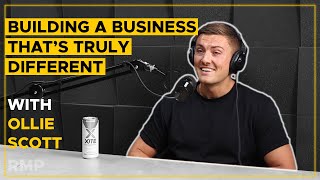
Ollie Scott built Unknown from £563k to targeting £2 million by hiring overlooked talent and shifting from brief-driven to problem-centric selling. He shares how weekly purpose check-ins, a People Operations partner, and a 90-day US expansion playbook balance growth with culture.
Chapters
I love this quote. There's a quote that said, do the actions of your business match up to the promise of your brand? So to me, I got really obsessed with that, right? We're saying we're about hiring the unknown. What does that really mean? Well, it means if we keep on hiring the same people from the same places, we're going to make the same work, right? Stop looking where you've always looked and start to hire from similar places where you might get talent from and therefore transform where you're going.
Welcome back to another episode of the Recruitment Mentors Podcast. I'm your host Hishem Azzouz, and on this week's episode I was joined by Ollie Scott. He's the founder of a recruitment business called Unknown. First year we did 563, second year 800 grand, third year 1.2, fourth year 1.6, and big goal for the fifth year is to break 2 million. So in this episode we break down how he's gone about building his business over the last 4 years, not only what has worked, but most importantly the things that haven't worked. We broke down the challenges in hiring people without experience. We spoke about their challenges in going into the US market. We spoke about leaning too much into not wanting to be perceived as a typical recruitment agency and the knock-on effects that had on their business. There's so much value in this conversation for any of you who are in the trenches of building a recruitment business. How would you approach the first 90 days knowing what you know now?
Don't do a podcast apologizing about—
Enjoy this week's episode with Ollie. Ollie, welcome to the podcast.
Thank you so much.
It's like, I feel like we've met at like interesting points, haven't we? I feel like obviously when I first met you, like, the podcast was called the Recruitment Rollercoaster Podcast. It was sponsored by Hunted. So yeah, I feel like I'm looking forward to this because like we've just sort of— and then we've sort of stayed in touch in different ways. I've always sort of seen what you've been up to, so I'm looking forward to properly like unpacking this journey that you've You're on. So to give everyone some immediate context, so you're just saying, so you, you started in recruitment in 2012, but what we're here to talk about today and what we're going to dive into is the entrepreneurial journey that you're in the thick of. So in 2019, you started your own recruitment business called Unknown, um, started this on your own with a credit card, 13 grand, MBNA. Yep. And first year we did 563 4 people by the end of the year. Second year, 8 people, 800 grand. Third year, 1.2, 10 people. Fourth year, 1.6, 14 people. And big goal for the fifth year is to break 2 million. Uh, I think just because we did it, this would be really helpful as well because then we can go into it all. But in terms of how things are currently set up, and you let me know if I've got any of this wrong, obviously we've got you as the, the founder because we did a bit of an org chart, didn't we? And this will just paint a picture for everyone. So obviously you as the founder, so, you know, people, BD, brand strategy. You've then got a, uh, your only non-biller, your people operations partner, who you said has been an absolute game changer. So I'm excited to go into that with you. Then you've got 4 managing partners, 1 senior partner who's very much just like a biller, no management. Then the managing partners you have in the management, uh, roles, and then, you know, they have people underneath them. And then Like, I saw your announcement video, which we'll talk about, obviously, to the US. So right now you said split the businesses around 50% UK, 30% US, and then the rest EU. And then products and services contingent, you've done around 50%, um, contingent business, 40% retained. And then you also have worked with a bunch of companies on like team hires and group hires. So that's a real breakdown, mate.
I feel like I'm about to get sanctioned. I've never, I've never had my business broken down in such a numeric—
yeah, sorry, that's But we went through that together, right?
Yeah, man.
So everyone listening, you now have a picture of Ollie's business.
I should do this when I host.
So like this, but that, that ever— that helps everyone, right? So there's a bunch of different places we can go with this, but at least everyone immediately has like, you know, they understand where you're at.
Yeah.
So where I always like to start, million pound question, which I'm sure you've continued to wrestle with with your own business. I'd love to get your take on, you know, what you believe are the common characteristics and traits of a top-performing recruiter in today's market, what are those in your opinion? We—
so we've defined this in a way. Um, I'm not saying we've got the— for us, this is how we define it. Accountability. I should— I hate to be this direct, but this is our 5 values, right? Accountability, curiosity, grit. See that pause there?
Destiny, knowing your own 5 values.
I'm actually gonna— I'm gonna stop there.
Okay.
Yeah.
Accountability, curiosity, grit.
We— so we changed them, right? They started off as— and this is why you never do 5 values, right? What a fucking start, right? To me, those are the ones I wang on about. We have courage, which— there's this thing that we learn once around listening, right? How do you listen properly? And you listen with the 4 C's. I always remember 3 of them, as I've just done with the 5, right? Courage, curiosity. Now those two things are really interesting. When someone says to you, how do you listen with courage? It's quite painful to listen to somebody when they're going through a hard time. The same thing happens when you're interviewing a candidate. So courage for us is really important, but as is the curiosity thing. Not just like, you know, asking questions that for the sake of sounding clever. Like, only ask those questions that you really give a fuck about the answer to. Because you know when you're asking one of those, and you're going to do it on this podcast, I'm sure, right? And you ask the question, you go Oh, you know, um, and you sort of shut off when you ask. I hate that in a recruiter. So for us, when we were defining our values— curiosity, courage, grit— grit is really important to us because when the times are terrible, like we're in right now, this bouncy weird recession, you need to have that strange thing that you can't define. Um, and I like that. I like the definition of grit because some— I think there's a book called Grit, right? It was—
it's It was like a scale.
Yeah, but it was about having persistency at the same time as passion. Grit isn't helpful if you're just persistent. We all know what persistent recruitment looks like without any passion, right? They're phone bashing, they're calling someone up the whole time, they're annoying people. But if they have passion alongside that, that's very different. So for us, grit was really important. Hey, they're coming back now. Accountability is there, baby. Ambition. All right, okay, we're hitting it, we're hitting it. I'm back. It's funny. Only one thing on that as well is the characteristics. I'll let you ask your next questions. Don't go for 5, man, go for 3. So if I was to pick 3, I would say curiosity, accountability, and grit.
Yeah, yeah, I'd say they're, they're pretty important, aren't they? So let's get into this business journey then. Okay, so start it on your own. I guess where I want to start is I always— I'm always curious to find out how people like you think they're going to do things different. You've worked in different recruitment organizations, you would have taken things that you liked. Maybe there'll be things that you don't like and you'll be thinking, right, my business, I'm going to do it better than all these experiences I've had. And I think you've, you've really lent into that because I think I saw one of your recent posts which said, I don't want us to look, sound, or smell like a recruitment company. Right, so one, I want to know why is that important to you? And I think that also is tied into like what, from your perspective, all this perspective when you're starting this business, and I'm sure it's evolved, what were the like 1 to 2, 3 things that you're like, we are going to do this different and this is going to help us stand out?
Yeah, okay. So I, before I thought about launching a recruitment company, I wanted to do like me on my own, right? So I definitely, I focused on the market first. I wanted to make sure that I did something that wasn't like all of the competitors. We have major players, the talent business, there's a bunch of really good recruitment companies out there. I didn't want to work for any of them, but they were all saying the same thing. So firstly, before I went into the recruitment side, I picked out that— what is the USP? What do I want to do differently in the recruitment market? When it's just me, I can pick anything. I chose to do the Unknown proposition, which I can come on to another time. But when I started building Unknown, I started to think about, okay, wait, what did I hate about recruitment? When I worked at Gemini, there were some brilliant things I loved about Gemini people. I tell you what I loved. I loved the culture. I loved the getting things done. I loved being in a team together and pulling in the same direction. What I didn't like, and the reason why I said about the smell, I didn't like the fact that we were sort of fucking chucked into this office, 8 AM, 5 or 6 PM every single day. Someone would always cook broccoli at 9 in the morning, right? So it didn't smell good to be in there. The next thing would happen, you're arguing about who wants to play Kiss 100 or Mellow Magic, right? All these weird trivial arguments that are happening when you're not doing the job that you're there to do. 40% of the people gave a fuck about what they did. The other 60 were there to take a pay packet and probably become an estate agent at some point. I didn't want to be in that room for very long, and that— I lasted 6 and a half years, went out on my own in this kind of rage. I hate recruitment. Well, recruitment's awful, but I am a recruiter, right? And so then when we first set up, that was the thing. It's like, this can't be anything like a recruitment company. As wanky as it sounds, we worked from Soho House and everyone— no one had a desk.
So what— why though? Like, is it because you're also thinking about— I understand your experience, but you're also trying to really, you know, prove externally that you're not like the rest.
Yeah, that's totally it. I also felt like with nebulous KPIs— you must call 25 people today— that ended up affecting the service that you're giving to your clients. And so I saw good recruiters and bad recruiters. The bad ones that were doing KPIs for the sake of it, that persistency thing without any passion, and the good ones that were doing what they felt what was right for their clients that they were passionate to work with. So I knew what I didn't want to sound like. And funny, if we're speaking about kind of how to launch and that kind of stuff, one of the things that I did when I decided to start hiring people, I wrote a breakup letter to recruitment, or a breakup letter to creative recruitment. And it was cheesy, but it got us into this place of having an enemy. And I think if you're going to launch a recruitment company, you know, spoiler alert, the world doesn't need another recruitment company, probably in your sector, whatever it is, even if it's AI. What they do need is a company that is different to the rest for a good reason. So when, when you're thinking about doing something differently, one of the things I found really helpful was to write a creative breakup letter, you know, to the recruitment industry. And it would be like, you know, I hate how you treat your staff, I hate how you kind of write fake jobs, I hate how you do all these things that traditional bad recruitment companies do. The more we did, the more I wrote that thing, and it was quite long, like an Oscar Wilde novel, the more I started to figure out, oh, there's some trends in here that you could build a proposition around this, right? And you can hire accordingly. We're the people that, we're not the people that, you know. So that, that to me, I knew if I hired like that and I designed our business like that, the end goal, i.e., the candidates that are putting into the jobs that we're getting on, would be better.
So just to round that out then, like, what I'd be curious just to understand is if you could just give us some tangibles. I understand what you're saying. That's really interesting. I haven't heard anyone talk about like that, because ultimately what you're saying is in that exercise it then gave the opportunity to reflect on the things that, you know, you really liked, or the things that you didn't like, and that really then gave you clarity on the way that you wanted to do things that would then be different. But if we were to, you know, look under the bonnet of your business right now, what, what would you say you're doing different? Because that, that's clearly like— you go on your website, doesn't look like a recruitment website. Yeah, because I think that was part of your post, right? It was like, we've been told that it looks like we're a design agency. Yeah, so like you've really lent into that. So I'm just really curious to understand like the tangibles of what is it that you do different.
Yeah, so it's a really good question, and I didn't want to just be the guys that say we're different and then when you work with us you're not, right? I love this quote. There's a quote that said, do the actions of your business match up to the promise of your brand. So to me, I got really obsessed with that, right? We're saying we're about hiring the unknown. What does that really mean? Well, it means if we keep on hiring the same people from the same places, we're going to make the same work, right? So to our clients, the proposition was very clear: stop looking where you've always looked and start to hire from similar places where you might get talent from and therefore transform where you're going, right? In other words, the mystery box option, right? So we would say to our clients, when we build shortlists it's 75% of what you're expecting to see and 25% of what the fuck, where did that come from, right? And interestingly, a lot of the time, the what the fuck, they'd normally get the job because the client would look at the candidate and go, yeah, you have sent everyone from our competitors. Yeah, I knew, I knew Dave, I knew Daisy, I knew Peter. That other person though, why did you send that person? Well, you know, we've noticed that you guys have been doing a lot of X and this person has done a lot of X, but now they've started doing Y. So if you went for that person, you could win way more clients. And so you start to— the proposition becomes around transformation via the route of diversity. So what we're doing differently, we're looking at business problems rather than briefs. We're not— look, we're not going, give us a brief, give us the job role and the criteria. We're looking beyond that and we're saying to them, right, before we even get into this briefing stage, before you send me a job spec— for the first year I was like, don't send me a job spec because you've already arrived at your solution, which is a hire that's going to be a designer for that brand. Talk to me about the problem in your business, and I can start to figure out if you need to hire somebody— could come from internally, probably won't— and B, where is the opportunity here? Because you can— you're telling me there is a problem, there is a gap in your business. It may not be in the place that you think it is.
Okay, that's, that's super interesting. And I love, I love the, the focus on the, the problems piece because that can transform a lot of recruiters success if you're listening to this. And I quote the— a soundbite that I really like. So, uh, Amber Penrose, who's been on this podcast, is very— it was a very popular one. She did a training session with us, and it's always stuck with me. And like, this is how I approach sales as well, and it is again just transformative, and I think actually the right way to go about it, if I'm honest. So the soundbite from Amber was what made her go from a $500 grand biller to an $800 grand biller? Well, she stopped chasing vacancies and she only chased problems.
Nice.
And like, it's just a really easy way to remember that. So what we're saying here is, okay, yes, there is— you need someone, there's a job brief here right now, but be willing to say, okay, Ollie, let's just take a step back for a moment. Like, why, why, why have we got here? Why is this important? Why do we need to get this person? What's going to happen if we don't get this person? And you actually have those types of conversations is questions as well.
And I think if you were to ask, like, because that's all well and good saying go hunting for the problems, but to get privy to the problems is the, is the hard part. You know, if I said to my associates who are just starting out recruitment, go find some problems, they'd get there in the end because they'd follow leads and they figure out. But if they're in front of a client, it's quite scary to ask a client the questions that unlock those problems. So I tried to get those into two key questions that I actually think are important with anything, in any task that you're given, let alone a brief. Um, one of them is, and it sounds so basic, but what is the purpose of this hire that you're trying to make right now? Like, to give me— I'm going to ask you why 5 times. You're going to say because the client's going to leave. Okay, I'm going to ask you why again. Well, because if we haven't got that client, we can't— then you travel up the why tree and you end up finding out that my co-founder fucking hates design, and I've got to get somebody to convince them to stay, right?
Yeah.
So then you go, right, well, it's probably not that, that junior, it should be someone that's more senior. No. So number one is, is what is the purpose of this hire? And traveling up and asking why 5 times. And the second question is, how are we going to measure its impact once it arrives within your business? Because that's when you under— you understand the truth. You know, a lot of clients come to you and they go, they go, they almost have the idea around the hire. They'll be like, oh yeah, you know, it's someone that's going to be bah, bah, bah, all these executions, right? And you go, great, and then how are you going to measure bah bah bah when they're in the business? Well, the truth is we haven't actually got that business on at the moment. So you start to sort of bullshit detect when you ask them how they're going to measure the impact of this champagne hire that they're trying to get you to make with them.
I love that. What is the purpose and what— how are we going to measure the success of this person? Yeah, great questions there. Okay, so one of the, the fundamental ways then that you, uh, obviously approach being different is I really like that. So tapping into talent that can often be missed, overlooked, and then the, the benefits of that. So yeah, it's diversity then, it sounds like, but not in a bad way.
When you said— because I was going to call, uh, Unknown was going to be called Unheard. Okay, right. And I was all in the uns, I was going, you know, undiscovered, and they all have really negative connotations. When you say to somebody— you're selling the idea of diversity and you're saying to them Have you considered the overlooked people? Yeah, so the name has to be empowering. Unknown is— fuck, well, that's FOMO. I've got FOMO. What if I don't know the best person for this brief, you know? And that works both ways for the candidates. I want to go to X agency or brand. Okay, cool. There are obvious choices there, but what about the places that you don't know? Have you considered X? And the unknown name drives FOMO, but also curiosity from both clients and candidates. Where, where can I go then? And then you build trust because you're not just saying all the best places in the world that they can go to.
So any on, on this then, just curious, any like hows worth sharing on how you go about doing that, finding the people? Yeah, like, because I'm— it's, it sounds great. Yeah, like, how do you go about doing that? Is it just, I don't know, like, are you then showcasing people that don't quite fit all the things they're looking for, but you have a compelling reason as to like why, like how.
So firstly, it's back to that brief, right? You know, understanding the real business problem. And by the way, when I say the unknown and the overlooked people, I'm not talking postman for creative director roles, right? I'm talking like, we're like 5 degrees away. Yeah, I don't just go, oh, by the way, here's a Bhangra dancer, and I don't know, they're brilliant what they do.
You can sound like that.
Yeah, that's what somebody want. And this was really offensive, one of our clients said to us we were pitching for a really CEO role, and we're, you know, we've only done 4 or 5 of those searches enough in our time at that point. And, um, the, the chairman said, this unknown lot, what is it, like wonky fruit? Like, so is it like dashboards? You know, that's what I said. No, no, no, no, no, it's not that, it's transformative. So yeah, good question. Yeah, wonky fruit, brilliant. I can't believe we're known for that. So, so yeah, we sort of focused around that really, and we're like, right, okay, so it's one thing saying that we hire different people. It's not just different for the sake of different. And I think that's the important conversation when it comes to diversity. It's transformational. And the only way you can really transform is, A, getting really good at the basics. So if you have these business problems, I'm not going to send you somebody that's a really sexy hire that has no idea how to do the day-to-day of your business. They will understand your business. It's just they're a bit further down the line in their career, probably at one of your better competitors doing something that you wish you were doing. So these are people that are going to help companies transform, not here's a random person that's going to come in, we'll see if it works out, good luck. Because I think that's where, that's where our proposition got a little bit murky. And I have, I have to keep on qualifying that on my LinkedIn at the moment because the more people go, wait, so what is it? Oh, can't you just send me like who I want? You know, yes, we will. That's part of the proposition. But what about the people that you know that you could go for that are going to help you transform? So the answer to your question, very long answer, is deeply understanding very specialist markets. We're hyper niche, you know, where we have normally where people have about one person, we have about 8 people covering design. And so within that design you've got product, UX, UI, branding, advertising in those designs. So by knowing those fields intricately well and knowing exactly who is out there, when they're going to move and all that stuff, then you can start to look at the the unknown. I hate to quote people, but there is a Picasso quote that has arrived in my brain at this point. Okay, if I can remember it. Like my values, I'm going to remember this one. He says, give me, give me the rules so I can learn them like a pro and break them like an artist.
Right.
And I kind of see that in candidate mapping, right? You look at your— all of the candidates in your market and you learn them like a pro, and it's only then that you can start to suggest the wonky fruit, right?
As well as— I feel like as well though, what's fundamental, which you've touched on, is being, uh, curious enough to find out the, the true problems.
Yeah, exactly.
Because that's when you can— that's when you're going to have a compelling reason as to like why they're part of the shortlist.
Yeah.
Because you've listened, you've actually asked some questions around what's the purpose of this person, what— how are you going to measure the success of them. So if you're doing that effectively, yeah, then you're going to have— yeah, you're not then just like speaking to Ollie and making sure he ticks all the boxes on the job description. You actually understand how this person could transform their, their business.
As you said, your previous guest from Adecco— I forget her name now— Amy. She was speaking about, um, one of the things that I, I stand by massively, and that is being brave enough to say why someone's not right for your role and still submitting them. Right? You're being a consultant, as she was saying on the podcast, right? You're looking at somebody and you're going— I call it sitting on the park bench rather than, you know, how most sales— like, we're right now, it's like, bam, bam, bam, this is why they're great, everyone's amazing, they're banging, they're brilliant. That breeds distrust after a while. When you send 7 people and 3 of them are right, you say everyone's amazing, how can I believe anything you say? So having the courage to say to a client, like Amy was saying, look, here's here's Dave, um, or Daisy— we'll go with Daisy— you know, she's brilliant for these reasons, but I've just got this slight doubt, and it might not be a real doubt, but I'm just going to flag it now. By being willing enough to sit on the park bench and look at the candidate as a holistic being rather than a product that you're trying to sell somebody, it changes the dynamic in the relationship that you have with your client immediately. Because by the way, if you don't say that in the write-up— might not be right for these reasons— They're gonna find out. You can't pull the wool over somebody's eyes, right? So yeah, that's one of the things that we do differently.
Awesome. Now I appreciate you going into that because I think that that can definitely spark some ideas, and I think people appreciate it because we all hear how people are different, right? Which is why I wanted to, to go there. Where, where I wanted to go now, because I feel like a lot of people could learn from this, was you shared with me how you've had to learn the hard way around being nice and being kind. Okay, talk to us about what, what that looks like, what that means. Because I think particularly in markets right now, as a business owner, as a manager, as a leader, it's— when things are tough, it's— it is— it can be hard to have that balance of like being empathetic and then also being like, well, this is required, sort of thing. Do you know what I mean? That line is sometimes difficult. So talk to us about being nice and being kind and what you had to learn the hard way.
Yeah, quick, um, context I think is important on this. I, I obviously worked at Gemini People. It was a great company James Caan owned.
I—
everyone in that business was subject to hot and cold management, right? When you're billing, everyone loves you. When you're not, no one does. So when I started to hire people for Unknown, I didn't want anyone to ever experience that because I think it was a really toxic way of being, being managed. So much so that I went the other way, right? So, and I, and you know, I had lots of therapy before I started the business. We have a group therapist at Unknown and I employ everybody. That was the whole thing. I want to get everyone therapists, Soho House memberships, and fucking class pass. We're going to just look after everyone, everyone's lives, right? Whether they're shit or good, we'll look after their lives, right? So I just, I had this dying thing because I'm— I don't know if you know what codependent means, but I want people to like me, right? And I don't like it if people don't like me. And it's like a, you know, it's a weakness and a strength at the same time. It's definitely a weakness when you're trying to run a company with good cash flow. Yeah, with people that aren't performing. Right? Number one, I was just nice. I'd go, no, it's all right, it will work out, you know, just keep on believing, and have that kind of American blind optimistic view on people development without defining where or how they could get to that place, right? So that was the biggest learning. I said to everybody— I went on a podcast and I said, fuck it, you know, KPIs are rubbish, they're just nebulous, they're pointless, we don't do them. One idiot, right? What we do do is objective KRs, which I think everybody does, OKRs, right? But the nice versus kind thing— the kind thing to do in the situation when someone's joined you isn't to say, go get a tiger and how about a fucking 15th place medal? It's to go to them, right, here's the games of the— you know, here are the rules of the game. This is how you win. This is how you exceed. And if you're not doing those things, come to me and I will tell you how to get better. And designing a space of feedback and all that kind of stuff. I just— I feared systems. I didn't like the rigidity of, you know, Monday call, setting objectives, Friday call, how do we get on. I just thought, these kids aren't babies, they know what they're doing. And the first 5 people did know what they were doing because they'd been burned by the place that we come from. And when you first start a recruitment company, you don't usually hire junior people, which I didn't. I started with pretty senior recruiters, and the magic worked. No KPIs, we'd even fucking speak about numbers. We were just making enough money.
Yeah.
Then we got the next wave of people in who I thought, okay, let's go associates. We can— we got the Midas touch. We'll just teach these guys how to do recruitment by osmosis. And it didn't work. We had people in the business that we weren't being kind to by being clear. We were just being nebulous and random and supportive, but not really telling people what they should and shouldn't do to be a successful recruiter. And that, that comes from me, you know, there's trying to be different can polarize, right? Trying to be different is really important in the early days. You've got to establish a culture by starting a revolution around something, but that can become polarised and bad when it starts to eat away at what you set up the company to do. So my belief on being different started to become bad for the business. Yeah, because I wasn't being kind and clear to the recruiters that had joined us that had no— I was saying rip up the rule book, that, you know, what rule book? I've never read it, you know. So what that meant, and, you know, the reason I said being kind versus being nice is it's— you could be nice all your career and you could be crap. You could be a really, really nice leader and you can be really bad. But to be a kind leader is very different. And being kind isn't always being nice. Being kind can mean being pretty fucking brutally honest about someone not being right for your business. Yeah, before it gets too late, before they start pissing you off and pissing other people off because they're not pulling their weight. The kind thing to do in that situation is to go, hey, this isn't— how do you think this is working out? You know, do you really want to be here? Are you enjoying this? Because the way this is going to go from now on, which is going to get quite messy— that's a kind thing to do. The, the nice thing that I probably did in that situation, um, was to plod along, and when it got really, really bad, boom, gunshot to the back of the head. This isn't working, sorry. Like, that, that's such a difference. It's a really unkind way of— and that happens in every recruitment company, you know. You have this kind of passive aggressive manager that sort of half tells you you're doing badly but doesn't want to piss you off because it's awkward. And then lo and behold, 2 months down the line, you've not hit your target, you're gone, and you never had that clarity. Nobody ever told you because they weren't bothering to be kind, they were just being nice. So that's my point on nice versus kind.
Yeah, I think just a quick point on that, and then I'm gonna ask you to just paint a picture for us on what it looked like and then maybe what it looks like now, because I think that'd be really interesting for people. But I just want to caveat with what you just said. I definitely agree, but actually, because, because of what we do, we have a lot of those managers you're describing like deliver training for us because a lot of the time they've got to that seat by being good performers, often top performers. But a lot of those people actually get fuck-all help on how to be kind. Yeah, on how to be a coach, on how to listen effectively, on how to communicate feedback. Like, so it's also that there's also a huge element there where just so many people don't get any support or help on how, like, how to actually be better. Do you know what I mean?
I mean, that's why I was interested when I saw your product.
Yeah, because that's a big way how we mo— like, how we incentivize people to deliver training. At the core of our offer is you get put through a Coach Accelerator course, and that is what people are most excited about compared to the money. But like, what I'd love you to share— you touched on it— because I've spoke to a lot of recruitment leaders that have probably gone through what you've gone through. They sort of panned— I, I— there's a way that I've been saying is they probably pandered too much to what employees wanted.
Yeah.
And it— but it sounded like Ollie just pandered to like, I want everyone to like really enjoy work and I want everyone to like me and all that, right? I, I get that. But I think a lot of recruitment leaders went too far the other way. And then when things have got more difficult because they didn't have anything like, you know, measuring things, or they weren't hot on any of those things, it's then really difficult to help people get better because there's, there's not— there's like nothing to look at. But it's also then difficult to communicate you're also wrestling with, well, no, no, we still want the Soho House stuff, we want the class pass, we want to be supportive. Um, but how do we then now communicate that, look, you can still have that, but I need you to be fucking on it and like have a bit more that energy rather than like, oh, it's okay, like, you know, I hold myself accountable, I didn't get the shortlist done, whatever, I'll do it next week sort of thing.
Yeah.
So what did things look like before? Yep. So you said there, like, something on Monday, something on Friday, like, we hold it, whatever. So what did it look like before, where maybe you felt like you lent too much to— like, it was too much to them, I was being too nice— to then, how have you then, like, combined that? Because I'm sure it's not just gone all the way the other way.
No.
Have you then blended it? So what did it look like initially? Because I think people could relate to that. And then what does it look like now?
So number one, we— I wrote the values, I wrote the principles, I wrote everything, right? And I just went, there you are, but, uh, and I expected everybody to work and live by them, right? That's not how you implement values into a business. So we worked— my head at that time, we looked like a values-led business, I thought. And then things would happen where I'd be like, what the fuck, that's not how we work. So I need to bring them along on the journey. I needed to do a values workshop, a purpose workshop. Um, that was the first thing we kicked in, right? So one thing I will say, like, Monday and Friday, the context of those meetings are different. Before, they were very much like, what are you going to try and do this week?
Yeah, yeah, that's what I want to know, right? What they sounded like.
But about then it was very much like, I still, I believe in intention and reflection. That's how I do our Monday and Friday call. And the intentions were fluffy and they weren't around our principles or values and they were just like, what are you going to get done this week? Right? So very, again, I use the word nebulous a lot, but objectiveless kind of calls and conversations. But I'll go back a little bit because I realised that last, maybe 2 years ago, the beginning of this year when I hired our people operations partner, I said to her, we have a problem, and that is that people say they are doing things that they are not to appease, right? And so therefore we need to find a way where people aren't forgetting these values and they're living and breathing what we stand for as a business. So what we did, we did a purpose workshop. For those who don't know, you sit around a room and you figure out what you stand for and what you're trying to achieve. And then from that, um, we decided to bring in the rest of the business once we had a clear understanding of who we were what our key values were, which I remember 4 out of them now. I got the 5th one's gonna come back. Um, I think we're gonna boil them down to 3. And then the principles, which I think are really, really important. Before writing the principles, if you've seen the Nike film Air, yeah, there's some great— there's 10 principles in there. I wrote them before I saw that, by the way, I will say. Um, but there we wrote 10 principles, but I didn't want to do that until the rest of the business had come in, into a little— we hired out a space. I said, okay guys, here's what we want to achieve. In 3 years' time, we're going to be a company of 25 people healthy, happy, high-earning, high-performing humans. That's the purpose. And then at the same time, I want us to get there whilst having a lot of fun, right? Here are the key values that we stand for. Now, what I want to do— and this is Hannah's idea, my people operations partner, she made it up. It worked for us. We got everyone to break out into different teams of 3, and we said, right, you've got one person in that 3, and they are going to be like the most unknown, as in our company unknown. Unknownian, as we call them. Yeah, they're a pure fucking Unknownian, right? Here are 20 Post-it notes. Write down the behaviors that make that person the purest Unknownian, right? So it's like, you know, he gets back to candidates, he lets people down gently, but it's always, you know, kind of the behaviors of a good recruiter, essentially. And then the things we do differently. Now flip him. We literally had someone standing up and we flipped them, right? It was a bit pervy. Um, it was Joe though. He was a bloke and he was all right with it. So Joe was standing up and he was like, right, we turned Joe around and we're like, right, on Joe's back, I want you to write what are the unacceptable behaviors of an Unknownian. What does a bad Unknownian do? They ghost candidates, they write fake jobs, they badabada. What you're doing is you're starting tribalism in the business. Yeah, you're kind of going, right, you were all there that day, you wrote on a Post-it note and stuck it on his back. Why have you done it? You know, so then from that, I took all the Post-it notes with Hannah, we scattered them across the table.
Yeah.
And I wrote the 10 principles that we all stood by and believed in. And then to get the principles to be married into the business, every Monday, every Friday, I would say, right, the principle is this one. How are you going to show up to that principle this week? And then on the Friday, I would say, how did you show up to that principle? And so you've gone from the top all the way through, then onto a regular basis where you're reporting back on the things that you believe and the company say they stand for, and you show examples like One of our things is clarify upfront, otherwise it gets awkward. And somebody will say, yeah, so I had a client call and the client was trying to pitch that they wanted to hire this brilliant person. I said, can I just clarify what is the business problem that they're coming in to solve? And the client couldn't answer, so I didn't take the brief. I was like, oh my, you know, but that's good. We've saved time, right? We didn't take a ghost brief that was never going to work because you've lived by one of our principles. and now the whole company know about that. So it's a long answer to your question, but I believe the way that you get to begin, you know, having a company that is operating better than how we were is starting with what matters and what makes you different. I can go into the operational stuff.
Yeah, we're going— no, I think that like what's really helpful about there is you, you, you just shared how— because that, that came after that, there was then changes, but the changes came from everyone being involved in those changes. Yeah. Because I think as a business owner, or, you know, how many of you start a business and then you're like, you know what, I think we've actually gone too far this way and we probably need to get back to like more this. If you then just go into the office next day and like, right guys, it stopped. We're not— you know the KPIs? You know we said we hate your KPIs? Fuck that, we're back to KPIs. And then you're like, what the— like, nah, I joined this because he was like, no KPIs. Like that. So it's like, how can I approach that? And what I really liked, what you shared there, is like you said, they, they put the Post-it notes on that person's back. Yeah, they, they did. So then when you're holding these people accountable and they're not doing, you know, they're not living by the principles, you got— you can't really defend that, really. Yeah, because I put the Post-it note on that person's back.
Yeah, but the good thing is, right, and the thing is, one of the things about culture that nobody says is it's a little bumpy journey to know what you, you know, what the culture is. We— I have gone against a load of those fucking Post-it notes, but then I, I'm giving people permission to hold me accountable to that and go, uh, did you clarify? No, I didn't. Yeah, you're right. So it— I think that's where people go wrong sometimes. They get these principles and they fucking hold them so tightly and they're like, right, you're not doing the thing. And then people go, I don't want to be here anymore, it's weird. So I think that's key, you know. Yes, holding people accountable, but also being forgiving when things do go wrong. And, and sharing with everybody. We have voice note— it was Voice Note Tuesday, but now everyone sends them in like, hey guys, I went against one of our principles by doing this, fucked up, but I'm— one of our things is to be accountable, so I'm letting you all know.
This podcast is proudly partnered with Vincere, the all-in-one recruitment agency software that over 20,000 recruiters trust daily. We're also partnered with the award-winning 1UP Sales. The sales and motivation platform that enables you to maximize the potential of your teams. We love partnering with both of these organizations because they share our mission in helping you get the most out of your people and your business. You can get exclusive offers because you listen to this podcast and get up to 10% off the usage price forever. Use the link in the show notes to get your hands on that. Let's get back to the episode. So I feel like I want to make sure we cover this because I feel like this will also be really helpful people. But I feel like we've spoken about there because one of the things that you shared that, you know, if you was listening to this and you was like a couple of years into the business journey, the people management element and these things like would be— you'd really love to like learn more about. Yeah. So I want to like— is that— why don't we, as we're talking about it, because I want you to talk about and share how you got caught maybe again too much one way or thinking I'm a business owner, I need to be on the business, not in the business. And like your journey with actually recognizing and understanding where you can have the biggest leverage and impact on the business, right? So what I want to talk about that, but I guess very, uh, quickly, like you shared with me how important this people operations partner has been in your business. So clearly you're referencing her there in terms of helping you execute things like that, where maybe you said to her, like you said, we've got this problem, and then she helped you execute, right? What else, like, how else has this massively, you know, helped your business from an operation standpoint? Because I think I've shared this a lot, but definitely a common trend on why recruitment companies in the UK, a lot of them are micro businesses under 10 people, is they don't have— often don't invest in the processes, the systems for them to be 20, 25, 30, because they think, oh, we'll just worry about that when we get there. Yeah, but you've got this, you know, non-billable person in there. So what What else have they been hugely valuable for in terms of helping you get this business ready to be a 25-person company?
Yeah, so Hannah, I agree, by the way, we were early. I got to 12 or 13 people, I think we were, maybe, maybe more, 14, whatever. And normally people say, yeah, 20, 25 is a good time to appoint somebody at that point. I, I really disagree. If you can afford to get somebody in that's a non-biller at that point, you should. One, because you need to be more on the business and figure out what you're bad and good at. For a long time I was doing the wrong job. I was just doing reviews and feeding back on problems that were happening the whole time. So I spotted that I was getting pulled into stuff that I just— it wasn't helping the business. And I could see our clients weren't hearing from me very regularly and all that sort of stuff. So what I did, the process, I wrote down what are all of the things that if I could just give to somebody else, I would, you know, accounting conversations, reviews, um, to be honest, a lot of the people stuff that I don't need to know about happening, you know, squabbles, whatever it is. I wrote this list of things down, and the thing about that is that's not enough to then go, who wants to do this, all this terrible stuff that I hate? So I was like, okay, let's break this into a few different sections. Some of these things are people things, and a lot of these things are operational things. So I don't need a HR director, I don't need an operations manager, I need a bit of a blend between those two, but I want them to be really fucking good. And I want them to come here, and, and their career will get better if they come here. So I knew I had to offer something other than just doing the stuff I didn't like doing. And that's why I called it a people operations partner, because the partner stuff is the thing that— what is why Hannah joined my business. Partnership stuff is like, how do we start to design better board packs? How do we build a better board for the business? Go out and meet different people. How are we going to expand to the US? You know, all the growth stuff that a HR director probably wouldn't have been involved in. Um, I involved her in that. Why so early? Because I, I want to build a recruitment company with a fucking power— like, brilliant culture. Yeah, I love how— I love having people that I enjoy being around in the business. You cannot do that, I think, beyond 15 people on your own. And so I wanted to get somebody that, yes, of course, looks after the operational stuff that gives me a headache. Yes, that takes over the people side of things and also do the partnership stuff. But really it's to make sure the people are happy and healthy and looked after. Because people don't tell you the truth as much. That's the thing. Once you get to found— I've not called myself a CEO yet, but that's on the cards to be soon. I'm gonna promote myself as that, by the way. I'll come on to that. I didn't— I, again, imposter syndrome, whatever you want to fucking call it— I didn't call myself a CEO at the beginning because CEO of who?
It feels a bit icky though.
Oh, it's rank. It is. Hey, it's like Ollie Scott, founder and CEO of Unknown Employees 1, right? Fucking smashed it. Yeah, it's rank. And so I just put it off. I just didn't want to do it. And then when we got to 15, hired Hannah, she came and we started to, you know, started to make progress on our reviews. We wrote roles and responsibilities. Now that is a key, key thing. Wow, that is important. Roles, responsibilities, and also promotional criteria to get upward. It sounds so basic, but like listing down what is expected of the employees and what is the unexpected, i.e., how do you exceed your job. So she came in she's smashed a lot of that stuff. We're now, I guess, going from the, um, get her getting in the boat phase to now rowing it. You know, she's going, right, okay, I get it, people trust me in this business, now we can move forward. Um, but that— I mean, God, where do I start with how many things that she's done for this business?
I think you— I think you've outlined it.
Is that okay?
Yeah, I think you outlined a lot of it. Uh, I really— again, there's some really practical tasks there on like, yeah, the roles, responsibilities, you firstly reflecting on the things that you think actually isn't the best, quote-unquote, best use of your time, or isn't going to help you keep the business going in the right direction. So, and then do you feel like— just curious, and final bit on that— do you think that one person, because you've done it that way, do you think she could then execute all the things that you need them to execute up to like 20 people? Or do you see that team bit needing to be bigger? Or do you reckon you've got that personality we've got all these things in place now where like there's going to be a lot less things that break going, getting to 20.
Yeah, I think, I actually think, I always said I don't want to get any bigger than 25 in the UK because that's when the broccoli starts. Um, I, I don't see why she couldn't do that. Yeah, my biggest thing at the moment is trying to figure out something which I'll be really open about. I'm going to New York next year. The plan is to me to go out there for a bit longer, like 2 and a half months, whilst we're applying for a visa. Um, can she and the managing partners run the business successfully with me being completely off that time zone? Yeah. Um, and that's the litmus test really, is like, does it go to shit? And you know, when I go away— I've been away for like 2 weeks last year, Hannah was a month in, and I genuinely felt— we did one voice note in that 2 weeks and I was okay.
That's awesome.
And like, I wanna— okay, sure, things have stagnated there's things that I move along that just won't happen otherwise unless I'm there. But operationally and financially, everything was okay. Yeah. So I want to— yeah, the goal really is to get to that point where I'm, I'm just adding, I'm top line. Yeah. Someone once said to me this advice when I was moving from being founder to CEO, and that'll eventually happen officially, but he said this really impressive thing which I've kind of lived by. I wrote to him and I was like, I feel really guilty, I'm sitting in a sauna and it's 3 PM on a Monday, and, um, I feel like I should be doing new business or, you know, finding candidates or whatever. Um, I went to this weird time where I just busied myself. I'd just call a biller and be like, do you want any help with anything? Right? Because what had happened, I'd made myself redundant, right? My old job was redundant. We got to about 9 or 10 people.
9 or 10 people.
You, you, I stopped billing. I wasn't doing, I wasn't doing any business development. I was, I don't want to get in their way. I just went, right, I'm brand guy.
And Hannah was there or not?
No, she wasn't there at that point. But this guy who's been a CEO for 25 years, um, said to me, you're— the reason you're struggling right now is that you're thinking about the next 3 months. That's not your job anymore. You've been doing that for the last 2 years. Your job is to think about what happens in 9 months. Your head needs to be in 9 months. You've got the cash flow and the luxury to do that. So make sure that you— by service to your business, you're always in the 9 months ahead. And that was kind of freeing for me. I was allowed to then sit in a sauna at 3 PM on a Monday whilst I'm not billing, going, right, what do we want? And that incredibly, you then become a top line leader. You've got bottom line leaders and top line leaders. They're both as important as each other. Bottom line of the guys going, are we going to make payday at the end of the month? Is the CRM working? Is all the stuff ticking along? Should we reduce costs? Right. And in a recession, these are the COOs, these are the CFOs that come out of the woodwork going, right, it's my time to shine. How do we minimize expenditure? The top line CEOs usually are the guys that are going, where are we going to be in 9 months' time? What is the next opportunity that's going to come in and how can I win that for our business so we're celebrating that in 9 months' time? Yeah. So that, that was really freeing. And I think once— and it's really important to say, once you aren't worried about the next 3 months, you can do that job. If you're still looking at your runway and going, we're not going to make it past the next 6 weeks, you need to crack on. Well, you get down to the bottom line and you do the top line as well.
No, I think that's really helpful, people, mate, because look, you're you'll have, you'll have friends, I think.
Although I know you don't like, you know, all the recruitment circles, but I don't dislike it. I just, I, I, I had to be angry at it.
Yeah, but like, the reason why I mentioned that is because I think what you're talking about there is the mindset sometimes people never get out of. Like, they just have the— because they came from— there was a top biller, they did all that, now they start their own business. It's like, well, I'll just keep doing deals, smack, like, you know, smashing those things in. That's how I can help the business. But then, you know, where they probably then struggle to scale is they don't have those— that epiphany. Yeah, right. Where it's like, actually, how can I actually now best serve this business? We've got the 9-month runway, the 12-month financial runway. Actually, no, I'll just keep doing deals like that. Like, makes me feel good. Like, I like being in the leaderboard, you know what I mean? So I think that'd be really helpful for people. So in line with that then, what is it that now Ollie views he can do that best serves the business to be a top-line leader? What is it now that— because you broke this down with me, didn't you? Like, what have you arrived at? I know it always involved.
Yeah, yeah.
But okay, I'm no longer billing, I've made myself redundant, I've got a hand in the operations person. Like, I need to be doing more than just, you know, my sauna and cold plunge in the afternoon. Like, what is it that you're then doing that you believe is like, I'm moving this, this business forward?
Yeah, so I went back to what I love doing. It's important to say that, like, there are things that I do for the business that I, I will always love, and that is business development, getting in front of clients, right? I think you— I needed to carry on doing that, and I stopped, I'll be honest, for 18 months. Didn't meet a client. Just, well, it's not my thing anymore. So dumb, right? I, I—
so you wouldn't do that?
I just wouldn't, you know, I'd be like, if you were to start that journey, you do not do that, right? Gary Vaynerchuk, he always speaks about the inside-out CEO, right? Inside-out CEO is in the client conversations, he is hosting them at the Monday to Friday conversations and figure out what the fuck's going on within the business. You are in the business, but the way that you work on the business is by doing the thing that you do brilliantly and better than anybody else in that company, which in my case writing really good content, hosting podcasts, and meeting CEOs. And then what I do is I truth-find. I think that's one of the most important things a CEO of a recruitment company should do. What are the trends and the truths that are happening? You're only going to get them from really honest conversations with leaders and your clients. So go for park bench conversations. That sounds a bit weird, creepy. Go for— metaphorically, park bench conversations where you're not selling at the client. You're looking at them and going, what do you see in the market? What are you— you know, how are you— not how can I help you, How are you navigating through this storm? And then you get the information. So I think my job really is to be this kind of detective finding out all the truths and the trends that are happening in the industry, writing about them publicly so we are known as the business that knows what's going on, not being, you know, closeting information from the industry. And then I guess the other part of my job is the people development stuff, and it's the kind of things that made me successful as a recruiter and reminding— I listened to that podcast literally this morning, by the way. And Amy. Yeah, I fucking sent it to my whole business and I was like, I've not heard recruitment like this for so long. This is beautiful. It's so— she was so simplistic and she, like, in a good way.
Yeah.
And operationally minded. Those things like enriching processes— I can't even say in that— but like reminding everybody of how to get things done with the most amount of leverage, right? And going, right, let's look at these situations. So I think Yeah, on the business stuff is BD and seeing clients and podcasting and writing about it. And then in the business is trying to deepen and enrich my management team and everybody else in the company as well in being best practice. And asking— like, we do these fear— well, I say we do, we're about to do these Fear Fridays or Fear Thursdays. Fear Thursdays, maybe. And that is when we sit around, you know, in a circle, kumbaya, and people come with a thing that they're worried about or they think they're shit at, and they go, look, I'm really bad at writing BD messages, how do you do BD? Or I don't know how to prep a candidate for an interview, how do you do that?
And you're just starting that now?
We're starting that now. We've done it, you know, we do it on voice notes, it's not the same. So now I love a voice note.
Yeah, I'm all for voice notes, but I've got 1.5 of them.
2%, brother. 2, sorry, 2x.
That's the only thing about LinkedIn voice notes, like you can't— I don't think you can speed them up, there's a bit jarring.
Oh, they only go on for a minute though, that's a good thing. Yeah, true, but what—
yeah, I want to be able to fast forward it, man. Because people just long things out.
I don't think people should do voice notes on LinkedIn. It's aggressive.
Yeah, okay, so you've got Voice Note Tuesdays, Voice Note Thursday. Yeah, yeah, but yeah, okay, so you— what I love about that, we speak to a lot of our customers around this, is like, you've definitely been— like, I know you've done the voice note, but what you're creating there is a lot of companies don't create an intentional space for their team to learn from others. It's actually great. It's actually wild. Yeah, like I said this to one of my friends the other day who's in recruitment, I was like Just curious, your top biller, do you think that like every— like if they're— if they've got like an outreach email or like a spec template that they've been using for the last 2 months that is always getting a bite, do you think James in your team, uh, also knows about that? No. Yeah, often the answer, right, is like creating this intentional space to go, what's working for you, Ollie? This is what's— what's working for me. Like, this is these are things that I'm really finding working on the phone right now. Like, that's a missed opportunity. You have to create that intentional space for people to do that knowledge sharing amongst their team.
It's hard, by the way. We've not cracked that as well because we— because we're trying to stand out and be different. The new people that join, it's kind of a bit cliquey, it's quite culty. So new recruiters are going, I don't know if I should say that, I'm not going to share what I've done because it might not be the unknown way, which is my least favorite thing. Because I'm like, that A, there's not an unknown way where everyone's got to be— we're not, you know, Russia here. We're not trying to make everybody sort of a communistic sort of vibe here. It's— we're trying to make sure everybody can sound like themselves. They have permission to sound like whatever they want to sound like. Yeah, ideally themselves, right? The unknown way is just becoming curious about how you can sound better. But it's impossible to expect people to be like that unless you've created a safe psychological space. Where people feel like they're not going to get judged.
That's true.
And, and, you know, I was thinking about that fear thing. That's one of the weirdest things. Like, I— it's so hard, and this is a really— it's an art to nail the feedback thing. You know, I see a post that flies out that I've not proofread, and I'll go, fr, that's not how we should sound at all. That's awful. And I had to find a way to write to that person, that unknown, and go, hey, I, I really love the intention of what you've written here, but we don't say things like that. And, you know, just try and change it. That's really hard because you're trying to get everyone to sound like themselves, but not like that, right? So it's a fine— it's a really fine balance, and it would be impossible to achieve if you don't establish vulnerability and a welcomeness to that, right?
Yeah.
Let's all be okay with being wrong. I'm gonna share when I'm wrong, and you should too.
Yeah. Okay, right, last 5 to 7 minutes then. And that's gone quick. Last 5 to 7 minutes, because I want to make sure we're touching it because you're in the thick of it. So let me, let me just hit you with— how long have you been in the thick of building traction in the US, would you say?
A year and a half.
Year and a half. Okay, cool. So what I'd love you to— for us to end on then, you've got a year and a half of context for people listening that might be early on on the journey or considering expanding into the US, whatever. From what you've learned so far, how would you approach the first 90 days knowing what you know now?
Don't do a podcast apologizing about going to the US.
Okay.
Uh, the British charm thing, yeah, works, but the apologetically British thing doesn't work, right? And the kind of vulnerability thing, which works for us really well here, doesn't work there.
So what does that look like? What does that sound like?
I, um, you know, in the UK we don't like sales, right? So you've got to find a clever way of getting someone to get in bed with you, metaphorically. In New York, they want to know what they're fucking buying, right? Really quickly, right? Don't tell me that this is a chat, right? Tell me what you do and tell me how you're going to help me. Yeah, the whole Gary Vaynerchuk jab, jab, right hook thing is true. You give something away, you give something away, then you right hook and you go, hey, I do this, I really want to have a conversation with you about that. Totally. The other thing I would do in 90 days: ask for introductions. They will give them freely. And then give them to them as well, from people that you're—
you chat to.
Exactly. If you're in London, you're having a call with them, you go, right, get to the point, make it about them, ask them all the questions like what would they dream to be working, where would they love to be, or, you know, who they love to hire, or whatever it is. Get to the nut. But more importantly, who have they not got in their network that they would like to have in their network? Show off that you know people, show off that you could, you know, because it's New York— is that New York particularly is like that? LA's a bit frosty when it's more like, who do you know? In New York, it's how can I help you know someone, right? So the thing that we learned quite early on is to add value as soon as we got somewhere. And we go, oh yeah, you've— again, the transformation thing— you mentioned that you might want to do this one day with your career. Have you spoken to Jenny? She's really good at that. Yeah, cool, I'll hook you up. So every meeting you have don't leave without offering at least an introduction is one of the things that we learned.
Um, direct introductions. Yeah, value.
And if we're talking about startups going to the US, we, we still haven't incorporated. I nearly incorporated early on, um, but we didn't decide to do that in the end. You don't need to until you want to have people on the ground, right? Um, the other thing is if you have a brand, trademark it, uh, because we got sued as soon as we got there. Uh, literally, that's all good though, right? It's all good, we sorted out. I got—
yeah, we got your pants. I didn't know.
Yes, cease and desist. Yeah, that's not an enjoyable thing. That's fucking heavy. Yeah, it literally said you must stop using the word Unknown in everything.
I wasn't— it was like, but we're giving you enough time using Unknown, but now a reservoir of goodwill.
Yeah, we've given you a reservoir of goodwill. Fucking hell. Anyway, so don't, don't do that. And if you have a brand that's distinctive, like, cherish it and protect it. Um, be like, be very clear about what you're adding to that market. And don't— and the 'it's a busy market' or 'cause there's loads of money here' is obviously not going to fly. You have to have something distinctive that you're bringing that's different. So when we first went there, the 90 days, it was just curiosity. We almost fucking zipped our mouths closed and just opened our ears and we're like, okay, what is— what would you change about this market? Where do you think there is a lack? And we, we discovered there was big lack in mid to senior talent because of COVID We went there literally 6 months after COVID. The one thing everyone was screaming about was culture. I really miss having that kind of culture, and, you know, I'd love to work within an office. So you start to figure out we can add something now. It's not got to be some big entrepreneurial discovery about the market. It can be a timely discovery. It can be a thing where you're like, ooh, everyone's moved out of New York, people are missing people, and this level of mid to senior seems to be where the biggest ghost has happened. So how can we find mid to seniors that want to meet more people and say that we represent them and know the best ones?
We found out by being curious. How, how long did it take to get your first invoice out?
Uh, before we went, to be fair, that's kind of what led us there. But, um, the big one that we've— yeah, I guess one that was like north of a $40K deal kind of thing, which in the US a lot of them end up being, um 9 months.
9 months?
Yeah, slow game, I think. Yeah, we got lots of freelance things and we kind of got in and had the odd 5, 10 grand sort of thing. And then to land a 50-odd K deal, yeah, um, which is all about timing and that kind of stuff, it was, yeah, about 9 months.
And then now just gonna put a lot more resource energy into it?
Well, now, thanks for asking, uh, we have, uh, some rules open at the moment, so Yeah, we're looking— we want to hire 3 people. I'm going to put a post out whenever this goes out after then about hiring 3 senior recruiters. We did look to hire somebody locally in the US, and we did experiment with a couple of people that just didn't work.
Yeah.
Why? Because our culture and our brand and how we operate, as you've heard, is like— is our USP. To just outsource that to someone in the US is just not going to work. So we want to incubate 3 people in the UK get them to know everything that we know about the creative market, country agnostically. Um, it's a weird term, isn't it? Internationally.
Yeah.
Uh, and, and once they've got that, they either can move to the US— we'll be incorporated by then, we have visas and that sort of thing set up— or they can stay in the UK and work the US market. That's the—
a lot of people do that.
Yeah, which is like, it's not unheard of. So, um, yeah, we're looking for 3 senior they can or cannot have worked or haven't worked in the, um, the UK market in creative and whatever. It'd be great if they've worked in the US market. The more important thing is that they're curious about the creative industries and want to learn more about it. Because hey, if you didn't know, there's a million jobs being added to this industry in the next 5 years. So it's a booming market.
Yeah, let's go.
Thank you.
It's been a pleasure. Thanks for being honest, sharing, you know, a ton of things that I think a lot of founders, recruiters will find helpful. So thanks for coming on the pod.
Thanks for having me.
More from Hishem




You don't need as many clients as you think to bill $1 Million A Year In Recruitment



From 30 Direct Reports to Back-to-Back $1M Years as a Solo Recruiter with Zach Creighton



