Lessons and Insights from Successfully Scaling While Retaining Your Best People with Martin Lawes
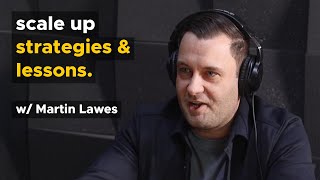
Martin Lawes, founder of Platform Recruitment, explains how he expanded into the US by choosing Texas over New York, closed his first deal in four months, and learned that positive conversations rarely convert to contracts. He stresses mastering your P&L and cash flow, keeping your team-to-leader ratio tight as you scale, and deepening client relationships over chasing new ones.
Chapters
There's never really like a, you know, a finished product, I don't think. But you've got to listen to your staff as well. They'll tell you, the ones who are doing it day to day. And I think if you are a leader in a business, you want to be doing that all of the time, because otherwise you're standing still a little bit.
Martin Laws, the CEO and founder of Platform Recruitment. After just 2 years of being a recruitment consultant, in 2010 he launched his own recruitment business. And from 2019, they've been on a growth journey, now operating in the UK, US, and German market. All whilst achieving multiple years of 7-figure gross profit. So how did he do it?
Well, I was like 23 when I, when I did it, right? I rented a flat in London, didn't have any kids at that time, and, you know, no real heavy outgoings. So it was a risk that I could take quite comfortably.
This is what you're going to learn in this week's episode: how to retain your best people and create a homegrown leadership team, the power of setting up a key accounts division?
So when we were growing, we were taking on accounts all of the time. We were taking on really good clients with lots of jobs for us, but we've always been very strict with people's verticals and we pride ourselves on being market experts.
How to get the organizational structure right to scale from 10 to 30 to a 50-person company?
If you can get someone who can do all your interviewing and all your training and everything and then help you run the business, I'm around. Unreal, right?
Lessons from breaking into the US and German markets and so much more. Let's get into this week's episode. Mine, welcome to the pod.
Thank you, mate.
We've got a lot to unpack here. Uh, we're going to be talking about your entrepreneurial journey with Platform Recruitment, which consists of 13 years. Long time.
Yeah, long time.
So a lot for us to unpack. I know there's been a ton of learnings. You continue to to learn. You're going into different markets, and yeah, looking forward to really talking about all these things that we've learned along the way. So just to give everyone some immediate context, uh, let me know if any of this I say is, is incorrect. Uh, so started the, the business with your co-founder Jack, um, in around 2010 after 2 years of recruitment experience. Yeah, it's a proper expert, mate.
Mine was probably more like 1 and a half years, to be honest with you, rather than 2.
But so yeah, started it with Jack. And then I think the way that you described it to me, which I think you said is fair, is up until COVID really you had like just steady growth, right? So I think you said around 2019 it was around 1.6 million gross profit, around 14 people, and around 90%, uh, perm. So just had some solid amount of growth year on year. And then 2020, COVID, difficult year. 2021, um, 1.4 million GP, around 14 people still. And then this is when you start to go on this growth journey. Towards the end of 2021. So then 2022, you was at 22 people, 1.8 million GP, and then today we're on track to do 2 million GP and around 27 people.
Yeah, we're probably on track for more than that now. Okay, um, I think that was when I spoke to you, so that's probably, probably more like 2.2, something like that. Yeah, this year, this calendar year.
And just to sort of just paint a picture for people on this, how this sort of business looks now, and again, let me know if any of this is wrong. So You've got an ops team now which consists of 2 people. Um, you've got Johnny and Tom who were your really early employees that have been with you on this whole journey. So you've got Tom who's like a director. Johnny, uh, is he a director? He's very much involved in internal hiring, training.
Yeah.
Uh, so what I think is really cool about this is you've got 24 salespeople and then you've got 5 team leaders. So you've really done a good job of you know, uh, enabling people to grow into that leadership layer. And you've built that leadership layer, which a lot of people struggle to, which we're going to get into. So you've really, you know, built a solid foundation here to keep growing. Now, a couple of things. You, you've done a lot of business in, in the UK, but you've recently expanded into the German market, and then you've been doing the US for under 12 months, but longer than obviously—
Roughly 12 months.
Yeah, okay, roughly 12 months. And then around 85% perm, 50% contract. Yeah, is that right? And then I got here in terms of like your core responsibilities, because this will help people understand, you know, with you being the founder of this, where do you sit in and all of that. So you shared with me main responsibilities, core responsibilities are strategy of the whole company, managing direct reports across the business, so the leaders, um, that you speak to, getting involved in the new markets, you know, opening doors in the trenches, helping um, you know, platform, get into new markets, and then also coaching and supporting consultants. Is that fair?
Yeah. I just got to give a quick shout out to, uh, Ronan, who sits at a similar level to Johnny and Thomas. He runs our key accounts team and looks at client relationship building and, um, protecting client relationships as well. So I can't leave him out.
Yeah, no, no, absolutely. Would you mind just quickly sharing that then? So we've got— we put 24 salespeople around that Obviously a lot of those are like the typical— they have their markets, they're focused on billing managers, but then part of that is this key accounts thing you just mentioned. So would you mind just explaining that key accounts team quick, and then that'll be the final bit of context? I think that'd be helpful.
So when we were growing, um, we were taking on accounts all of the time. We were taking on really good clients with lots of jobs for us, um, but we've already always been very strict with people's verticals. Um, we market ourselves, and we pride ourselves on being market experts. And I don't think you can be that if you are then working on other jobs outside of this certain technical vertical. So lots of the time we had clients who were asking us for stuff outside of our verticals that we were having to say no to. So we developed and grew this key accounts team who would fill anything for our really good clients that the vertical guys wouldn't fill.
Um, how many people in that team now?
That's got 3 at the moment. That's— it's, it's dialed back a little bit recently, but we are looking to grow that back out. At one point it was up to about 5, 6 people.
And at what point did you introduce that team?
That was 3, 4 years in. Yeah, um, yeah, 2014, 2015, something like that.
So the, the idea there was just like, we're turning away this business because we want to be strict and focus on what we're specialists at and make sure the work that we're doing keeps building on. Like, because, you know, when you're a specialist, one of the great things about that is that each search you're building your talent pools and your, your network. So then the next time you get your special type of role, you can instantly tap into those, rather than every time you take on a new search, if it's a different discipline, different like niche or skill set, you have to start all over again, and that takes more time. But you're turning away businesses like, hang on a minute, why don't we try and service some of this and then increase the client spend with these clients, right?
Exactly. And the other thing it does is it develops the client relationship more as well. So if you've got, um, one of my mechanical engineering recruiters who will pull a job, get us in with a new client, fill that job, and then there's not another mechanical engineering requirement for a couple of months, but there's some other jobs there that need filling— very early on, we would have just filled that job and waited for a next job to come along. But by that point there would have been bigger agencies who would have filled those positions and probably got a bit more in with the client and, uh, got a bit more of a stronger relationship. So that really helped to develop client relationships as well because we were filling their other jobs and we were managing that account a bit better. Um, and that was a big plus as well.
I think that's super smart. So it consisted— it consists of someone that's senior in that team, and then you've got what ultimately— what are these, like, delivery people, people that focus on the the candidate side.
They're focused on the candidate side, but I don't call them delivery consultants. I call them key account consultants because they manage the account and they make sure that they keep it going and keep the relationship there, right? I think lots of the time, certainly how I define it, if someone just comes in and does delivery, they're just talking to candidates all of the time. But my guys in the key accounts team are talking to clients quite regularly. They're not doing a heavy amount of brand new BD, That's what differentiates them from the 360 consultants, but they're still doing the client calls and they're building the client relationships. So that's why we call it a key account team rather than delivery team.
So you've got basically, so that you've then got the 20 people that are in that free typical 360 setup then basically, yeah, roughly, probably a couple more than that actually. But yeah, so why don't we, let's just acknowledge that the first part of this journey, because I think you was honest with me and said like, you know, up until COVID it was steady growth. And then, um, you're the, uh, the co-founder still involved but no longer involved as much, and he was like, right, I want to sort of kick on and, and really try and grow this. But how would you, how would you describe those early years, um, you know, leading up to that? Like, how would you describe that, that period?
Like, really early years, like, super fun and exciting because I was only young when I was like 23 when I, when I did it, right? Didn't— I rented a flat in London, um, didn't have any kids at that time, um, and you know, no real heavy outgoings. So it was a risk that, that I could take quite comfortably. Um, so, you know, although a lot depended on us making placements and bringing money in, etc., for me personally, but not as much as it would now. So, you know, I take my hat off to anyone who's got huge outgoings and dependents and things like that who go and start a business later in life. But I think when you do it early on, there's not as much pressure really. It's almost like if this doesn't go well, I'll just go and get a job in recruitment somewhere else because I know I'm good at it. I know, you know, I know I can do it. So if it doesn't go well, we'll just, we'll just pack it in and crack on. But, you know, that was, that was never really an option for us. But it was just always nice to know that there are other things that you can do and the pressure's off a little bit.
Worst case scenario, as you said, totally isn't like a bad situation.
Yeah. Yeah. But it was exciting, mate, and it was great. And, you know, we had it. We had a really good time. It was tough because you start from scratch and that's hard, obviously. And you don't— you know a bit about recruitment because you've done it for a year or two, but you don't know loads about it. So, you know, you're still learning new things about the job as you go along, and you don't really have anyone with 5, 10, 20 years experience that's sort of sat with you helping you as you would if you were with a bigger agency. So that's pretty tough because you've got to learn a lot of new things as you go along, and you, you know, obviously you make mistakes. In that process as well.
What, like, what were some of the things? Because I think, like, I think what we're talking about here is the positives of being naive, right? Yeah, like a year and a half experience. Yeah, I can do this on my own. Yeah, like that, that's like the positivity of just having a bit of naivety and going straight into it, and then you figure out along the way, which— yeah, I think, I think that's such a great story. But what were some of the things where people listening might be in that position. I think sometimes people underestimate like the, the, the business stuff, not the recruiter stuff, right? Because you know how to do deals.
Yeah.
But like, how did you, how did you approach that? Because like, that's hard, right? Getting paid is often like, I'm like, didn't realize, because you, you do a deal and you're like writing it on the board, you're like, sweet, I know how much commission I'm getting. But their invoice might not even be paid, or the payment terms might not be that great.
Yeah, yeah, no, totally. But you know, even aside from that, you've got a contract dispute, and it's like you would usually pay pass it to a legal team upstairs or whatever, but you don't have them. Like, you are the legal team as well.
Yeah.
Um, chasing invoices was okay. Um, we had a good process for that. Nice. I think if you are firm enough with clients and you remind them enough, then you tend to get paid. And certainly all the clients that we had, we didn't have any huge issues. Um, we've got what— we had one standout disaster. Um, do you want to tell you about that?
What did they— what, they just— they just—
they just— they had some contractors through us and some perm placements, and we lost— they went into liquidation. We lost 150K.
Um, what are you even doing though? I was quite— someone as well, speak to one of our clients the other day who, yeah, like one of their clients just declared bankruptcy and it's a company of 2 people. Like, it's just fucking heavy, that, innit?
It's terrible. Like, you know, it's bad enough when it's like 20K, you know, that hits you hard enough, but 150 is like, we ain't taking any, any wage this, this quarter. Um, but it's fine because, you know, you— I think you learn lessons from when stuff like that happens to you. Um, without that happening, we probably wouldn't have tightened up our processes moving forward with other clients. So, you know, we let a lot of contract, um, missed payments slide because we were like, they're a great client, we're doing loads of business with them, so let's let them off and we'll let them pay next month or whatever. Um, I think that we learned very quickly that if someone is delaying their payments to you, you need to get to the bottom of it really quickly. Um, so there's certain red flags that you really need to know what to look for. And we've learned that now. So, you know, and as you go along, this is it. Early on, you're going to make so many mistakes because unless you've got someone running the whole business for you and you can just make placements, then you are going to have to do all of those things yourself. And if you haven't done them before, obviously you're learning from scratch, so you're going to make mistakes.
What sort of things would you like, looking back and just thinking, if I'm listening to this, where at some point one day I really like the idea of setting up my own recruitment business— doesn't necessarily have to be a big business, it could just be that I want to, you know, have a bit more freedom, earn more money potentially, rather than being employed— what I think a really smart thing to do from my perspective would be to try and get exposure to some of these things on the, like, commercial side. Understanding the importance of payment terms, how they chase invoices, understanding how a recruitment company makes money in terms of like the number on the board, to then what that then trickles down to, to profit. Like, what would be some of the things that if you're speaking to your younger self that you'd like try and encourage him to get exposure to that would help in that I now have a recruitment business?
I would say the best advice I could give anyone early on is to network a lot more. Um, we didn't do that enough, so we weren't talking to other recruitment leaders, we weren't talking to anyone who was 5 years in or 7 years in or 10 years into starting to run in their recruitment companies. So what you can learn from those people is, is invaluable. Um, so I would say try and network and get in touch with people who've been there and done that before. And they'll have all the answers that you need because they've done it. They will have got their answers from someone else as well.
So yeah, and so many people are in that position now, and it's— you can— other people just network way more now, way more open to helping, I feel like.
I mean, network's an amazing— it's amazing. Last couple of years I've really heavily got into it, and I've met— so I went over to the US a couple of weeks ago, met a guy over there, um, went out with him, was intro to him through someone else that I know, and he's given me some incredible ideas about client defense and client attack and things like that that I've put into practice like right now. And, you know, it's just like loads of people, everyone has different ideas about how to do recruitment, so you don't always have to do exactly what they, what they suggest. But lots of the time, the ideas that they have, you can, you can adapt them and implementing them into your business. And it's amazing. And otherwise you're just, you're sort of guessing. You can read books and you can, I mean, I'm a big fan of your podcast, right? So you can listen to podcasts and get loads of good ideas from that, which is amazing. But, you know, just actually talking to someone and talking to as many people as you can who've been there, done it, and know is amazing. And I wish I would've done that a lot sooner.
[Speaker] Yeah, that's great. What— so I think one of the things that I think I really think that's great about your journey is you, you've kept a lot of people in terms of a lot on the journey, right?
Yeah.
Because how many people have you got still on this journey with you that have been with you for like since like early on?
I mean, so my two associate directors, business manager, and all of my team leaders were— platform recruitment was their first job at uni.
Really? So how many people is that?
That's 8, 9 people. So all of my leadership team were with Platform, not from the start, but certainly that was their first job, and we've trained them up from straight out of university up to team leaders, senior team leaders, business managers, associate directors. So all of my leadership team is straight out of uni and have been trained by me.
Yeah, that's awesome. I love that. What What do you think, again, just taking a bit of a step back, what, like, particularly when you're early on, and we're going to go into this growth phase, but like, what do you think are some of the things that you've done well to, to keep your people engaged and not have these people leave? Because that, that is like, to be able to do that, that, that's great. And I think sometimes it can be difficult early on because you miss things, right? You're, you're really in the trenches early on. You're thinking about how much money you've got in the bank, doing deals. And sometimes you might miss some of the signs that could mean that someone might be unhappy, or you might do— might not do a good job of really communicating, like, this is where they are today, this is sort of the future that I see for you, and keeping them engaged in that way. So taking a step back, what do you think are some of the things that you've done well to really positively impact that attrition? Because that, that's great that you've been able to do that.
Yeah, I think one of the things are everyone always wants to know what's next for them. And I think very early on with some of our first members of staff, we didn't quite know that. So it was almost a bit like, well, you're just going to work here, you'll get to senior and then principal, and then we'll sort of figure it out after that. And I don't really think that's great for people. I think you want to, you know, certainly ambitious people, they want to know, you know, what's the end goal? Like, where am I going to get? How high am I going to get in this company? So I think really early on, you've got to try and 'Even if you don't have positions for directors or whatever right now, have that path for people. Let them know this is where you can get to and you're part of this journey. And, you know, there's different levels to it and different stages, and you're going to be the one that builds this company up to the point where there is a director-level position for you,' or whatever it is. So I think that's a super important thing to make sure that everyone understands what's next for them. The other thing that I would say is just, you know, platform recruitment is very much like about respecting each other and collaborating with each other. And I think that you've got to make sure that you listen to your staff and you respect their opinion and you respect them as individuals. So if you need to change things, then you change things. If you need to give them a bit of flexibility around certain things, then you need to do that because everyone's a bit different. And I think when you just have this set Certainly when, you know, you're starting a recruitment company, you can't really have like, this is the only way that things are done. You've got to make sure that people are involved in the evolution of the company. And I think when they feel like they're involved in it and they're a part of the company, they're more likely to stay. And because it's their company as well.
We'll get back to the episode in just one minute. But today I'm excited to talk to you about one of our partners, Sourcewell, the industry-leading business development and headhunting platform. At the end of last year, Sourcer released an exciting new feature, the platform's very own live feed. Being honest with you, this feature has been one of my favorites to date because it tells you exactly who's engaging with your outreach in real time. This means you can easily tell which lead is hot and which is not, so you can connect with the right people at the right time to skyrocket your engagement. You can actually hear from one of our mentors and 2023 panelists, Amber Penrose. On how she's achieved instant results with Sourcewell's new feature, Live Feed.
The Sourcewell Live List feature has enabled me to become a secret little stalker and to contact my ideal customer profile whilst they're at their desks. And especially for someone like me who works in biotech, where computer time, understandably for a lot of scientists, just isn't prevalent, this has been a huge help. And for example, a biotech vice president of HR who I have been politely pestering for what feels like my entire life finally picked up the phone to me because I cold called her after she clicked on my email 4 times in a row, which Sourcewell kindly had let me know, to the point where she actually giggled during my cold call opener and responded with, are you in the office watching me? And despite that awkward encounter, we're now working on a retained project with them in Boston. Boston, and that wouldn't have been possible if it weren't for Sourcewell.
As you can see, Sourcewell is a great tool for driving better engagement, more meetings, and higher revenue. If you're looking for a competitive edge in 2024, then Sourcewell could be for you. You can book a demo with Sourcewell and mention the Recruitment Mentors Podcast to enjoy an extra 50 phone and 50 email credits per user. And this exclusive offer for this community is going to save you circa £500 or more. And is only going to be available until March 31st. So click the link in the show notes, or you can go directly to sourcify.com/demo. Let's unpack the first bit because I think that would be really helpful for people, because I'm sure this has evolved. But I really agree with you. I think if you were to say to most people, like, what's your reason for leaving, or what, why are you disgruntled, most people will quickly use that word progression, might they, at some point. I think that's what we're talking about here, is especially when you're like smaller and growing, you can sort of feel like, I will worry about like having these career pathways in place when we're like 15 people, 20 people. But yeah, I think one thing that I've continued to learn sitting down with people like yourself, and I don't know if you agree or not, but I think the smart thing to do that's going to help you break through those barriers of being a 5-person, 10-person, 15-person company is implementing processes and systems like these types of things before you need them. Yeah, rather than waiting until like someone's like, I'm gonna leave, and you're like, no, no, what, like don't leave. And they're like, look, I have no idea where I'm going. You're like, right, fuck, we need to fix that, you know what I mean? So would you mind just talk to— if you don't mind sharing, I think the career pathways would be really helpful for people and give people some ideas. So why don't we do it in the way where— so if I'm joining your business right now and I'm joining, um, let's do it that I've got like— I'm joining as a second job, I might have, you know, a year, 2 years recruitment experience. Um, I live in North London, so that's ideal. I'm working at the Platform Recruitment Office. Yeah, like, what, what's my— what does my career pathway look like? What, what does that look like if I was to join you as a consultant? Where do I go from there?
So coming in at consultant level, you've got, um, senior consultant after that, then principal consultant, all pay rises obviously, um, along the way. Um, then it's team leader, um, then it's senior team leader. Then you move into business manager, and then there's associate director, and then director after that. So that's all planned out.
Um, and what are the typical checkpoints? Is it done on billings? Is it done on— how do you do it?
The early ones are done on billings. Um, we don't want to promote someone into a team leader position if we don't think they can manage a team. So what we do at principal level is we make sure that they're buddied up with a new person within the same team as them. And their job is to be a buddy to that person, but to support them, right, daily. Um, sometimes give them some feedback on calls, help them with their emails, help them with the system, but show us that you can balance your own work with also having someone that you're supporting and need your help as well. Um, and if you do a good job and you hit certain billing targets as well, then that's when you progress to the next stages. So, and that's the same with the other, the levels after that as well. You know, I need to be confident that someone is going to be able to help me run the company. Just because you can do loads of deals might not necessarily mean that you're ready to take that step into the strategic level positions.
Um, I think that's also for them as well though, right? In terms of like, do I enjoy giving feedback? Do I enjoy this element of the job?
Yeah.
And gives them exposure to that. And if I don't enjoy that, what's my pathway? Is it then just to like— what does that look like?
There's another route where it goes more towards like a, like a senior biller, basically. Um, to be honest, most people, or actually everyone in our business, have all wanted to do the team leader thing. Um, they've all, they've all— because everyone's so like friendly, everyone like is like mates. So they actually want to see people do better and enjoy that part. Yeah. And they help, they love encouraging people who are coming through. So, um, they naturally like move into that role anyway. But if we ever had anyone who didn't want to do that, then there's other routes where they could just go down a billing route. And we've not had to do it yet, but we probably look at the commission and things to, you know, incentivize around certain things because they wouldn't be getting team commission and things like that.
So I think that's important. Obviously, that's great that people have gone down that path, but I think, as I'm sure you've heard, like, people have often been forced into that management piece, um, and that can be a real pain point for people. Would you mind, uh, would you mind sharing like what those typical milestones look like then? Because I think that'd be helpful. I know everyone does it differently in terms of If I join as a consultant, how do you do it? Like, I need to bill X amount in a certain time period? Is it like, how, how does that work?
Yeah, so, uh, consultant to senior is 60K in a 6-month period.
Okay.
Uh, the next promotion is 90, same period. The next one is buddying someone, showing us you can be a team leader, and doing 120K in a year— in 6 months.
6 months?
Yeah.
Why 6 months?
Um, we do like a rolling 6-month period, so we don't make it like a fix. So it's not like you've got between January and June to do it.
Um, so it's just over whatever 6-month, a rolling 6-month period.
Yeah. So we want to be sure that if you are going to— first of all, you've got to be bringing in enough cash to get promoted and get the pay rise right, and then take it to the next level. So, you know, in recruitment, you need to be performing and bringing money in to be doing well.
You don't want to promote someone that has a really good 6 months and then the next— so is that like— also it's about consistency, right?
Consistency over a 6-month period, yeah. If we made it over a 3-month period, then, then, you know, someone could fluke a couple of months and do pretty well. So, but I think a year is too long, you know. I want people to get promoted quickly. Yeah, I want people to move through the ranks because actually that's the way we— that's the way we've grown. If people aren't getting promoted quickly then we're not going to grow as a business. We're not going to then create those future team leaders who are then going to be able to have people underneath them. So it's important to make the targets achievable because you want people to be promoted. I do anyway. And but also you want to make sure that they are doing a good enough job to deserve it, basically, if that makes sense.
And is it just on billings then, or have you experimented with— I don't know, are there other elements in there that you have to showcase? Do to get promoted or not.
There's other things in there as well. So, um, platform values— they've got to make sure that they're living and breathing them. Um, they've got to make sure that respecting everyone around them, they've got to make sure that they are upholding our culture. Um, they've got to make sure that they are not a negative influence on the office, which no one is. But, you know, if I wouldn't— I would think twice or probably wouldn't promote someone if they were bringing a lot of negativity to the business, but they were just bringing us money in. It's not all about that. You want to make sure that people are embodying your culture and the brand. And if they're not doing that, you don't really want them being the future leader of your business. So, but really, if, you know, if I, if I feel like someone isn't quite doing that, I won't just allow that to happen and then just wait for them to hit the billing target and then say, sorry, you're not being promoted because you've done this. I nip it in the bud pretty quickly.
Yeah, that's your responsibility, isn't it?
Totally. And you want people to all really be this, be a, you know, have a similar sort of ethics and similar ethos and similar attitude towards the business. And if anyone's not like that, it's your job to communicate that to them and make sure that they understand where they're going wrong. Because if you don't, then sometimes it's not really their fault. They think that they don't know if they're doing anything wrong.
So now I appreciate sharing that because I know that would be— I think people, particularly founders of growing companies, that they're they're interested in how they promote people and how to go about it. So I know that would be helpful. Have you, have you, um, found out or figured out what a good ratio is from like consultants to team lead yet? Because I know that, that's, that can be quite difficult, you know what I mean, in terms of what's, what's too many consultants to one manager.
Yeah, okay.
So I know you've got— yeah, have you?
Yeah, well, we've got, you know, we've got a couple of people with like 2 people on their team.
Yeah.
Who are managing to do a lot of their own work. And but Tom, who we mentioned earlier, he's got like 8 people on his team at the moment, so that's a lot for him, um, you know, as— and he's a billing manager as well, so, you know, he's still doing deals, um, so that— I would say that—
do you reckon that's too much?
Yeah, he's probably on the brink of like, you know, we've got, we've got a couple of people in that team about to move to team leader who are then going to split off underneath Tom's department and, and sort of run things separately. But, you know, we do weekly meetings, um, with everyone, so he's got to do 7 of them a week It's a long time. It's a lot, a lot of time. So I would say that, that, you know, 5 is probably good. And then I think what you want to start doing later on is you get your team to 5 people, you keep growing that, but then hopefully you have a couple of people in there who get promoted to team leader, and then they run their own team with their own weekly meetings, etc. And then the team leader will report into that person, and then you reduce the number of people directly reporting into you. But indirectly it's increasing all of the time.
Yeah, I mean, when we did some surveys at Hector, the average like ratio was 5 to 1.
Yeah, I would say that, I would say that's about right.
Yeah. Um, I was just speaking to literally one of our customers this week who— I just want to get your thoughts on it because we're talking about it now, because I'm sure you've had to deal with this. Oftentimes, as we're talking about those people that get in those team lead seats, that they've got there because they're, they're hitting those targets in that 6-month period. But as you know, it is hard, that role, in terms of like juggling. Obviously you've got that previous step where they're doing some of those elements before they get there, which are really— I think that's great because you're giving them some exposure to it. Hopefully they get better at it before then they're in that proper team lead seat. But I speak to a company, um, this week who, yeah, there's like, uh, 10 of them, and the 2 people that are in those team lead seat, they're doing it for the first time and they got there because they perform well, and then they haven't performed as well this year compared to the people that they're managing. And I'm sure that that's common, right? It's hard. So how have you— like, two things, I guess. One, how have you like kept those people engaged, or how have you— how do you think about solving that problem or helping those types of people? Because you don't want those people that have got into those seats to be disengaged and disheartened because they've got there because, you know, they're performing well. And then two, have you experimented with anything on like how they're incentivized, or how they do hit their number, or how they still maintain their earnings if their, uh, you know, responsible for more people?
Yeah, so I think anyone who's moving into a team, anyone or most people in recruitment will tell you that a team lead who still needs to do deals is the hardest job out there because your team takes up a lot of your time, especially when you've got new people. So we take the majority of our people straight out of university. They need a lot of training and a lot of support. That is a lot. Um, in our business, we've got Johnny, we mentioned earlier, who, um, is our head of growth, who does all our hiring, but also all of our training for people in the first 12 months. So what that gave my team leaders is someone else who will sit with their new members of staff and support them in the first 12 months to get them up to speed. So one thing I would probably say to, um, that company with 10 people who've got the 2 team leaders is, if you've got someone that you can use who can support new starters, who are the ones who take up the majority of someone's time do that if you can, because it takes a little bit of the load off the team leaders, frees them up to do their own placements and work with their other staff a little bit more. So that definitely helps. I think when you're judging a team leader on their performance, you need to look at their team rather than just their own billings individually. You can't just suddenly go, well, you're managing a team of 2, 3 people, but your billings have gone down. Like, what the hell's happened? You can't, you know, you can't do that to someone. I don't think that's fair. Because naturally they have been helping other people. So if other people in the team are outbilling them, that's, that's, that's good. That's good. That's a good thing. Yeah, like, that's, that's— you want that almost.
So how do you think about financially rewarding those people? Do you like, do you reduce their billings target, or like, do you know what I mean? How does that—
we do—
have you figured that out?
We do team league commission, we do quarterly team performance bonuses for all of our team leaders. So they get their individual team commission that, that most team leaders in recruitment will get I also give my team leaders a quarterly bonus based around the whole team's performance.
Performance, yeah.
Yeah. So if your team collectively have done really well, you'll get a bonus off the back of that. Yeah. So they're measured on, yes, their own personal billings, because a lot of them don't want to lose that because they're in direct control of it. So they want to keep earning their own individual commission. You're incentivized on all of your team individually doing their own placements, and you get a little piece of that as well. But then your team collectively, you'll get a bonus based on their overall performance because What you don't want is, I feel anyway, is have a team of a couple of people and you feel like one of them's a bit of an underperformer, so you're just going to focus on the ones that you think can make you team lead commission. You want your whole team doing well. So these quarterly bonuses are around your whole team being profitable and performing well, and that way you get your team leaders to spread their load across, like, you know, everyone really, their workload across everyone. Which has worked quite well for us.
Yeah, that's great. And then the other thing that you mentioned which I found interesting is, like you said, respecting the people on your journey, listen to them, you know, having them share their thoughts on the way things should be done or how things could be improved. How have you found— I think it's an interesting sort of line to keep in terms of it's your business, so you should be like directing it in the direction you think it should be going. But of course, when you're like a small growing business, you obviously want to listen to the people that are on the journey with you and get their thoughts and these things. Like, how have you found balancing like Martin knowing best for the company with listen to the team? Do you know what I mean? Because I think if you, you don't— I think personally, from the conversations that I've had a lot this year, I think a lot— I don't know if you found this, but in your own journey, but I've found a lot of founders over the last couple of years really pandered to their employees too much. And I think this is where this sort of whole like working from home office thing, and now people asking people to come back to the office and these things, it's because like they just, whatever anyone wanted in their business, they just listened to and gave it to them. And then now I think people have to go back on their word or getting back to like what they think is best for the company. And at the end of the day, it's your company. Yeah, do you know what I mean? So I feel like there is a bit of a line to be like this is the, the culture that I wanted to build, this is the business, the type of business I want to build. And I think you've got a lead on that. But of course, like you're saying, you've also got to make sure that you're making space for people to— who are on the journey with you to influence how the company can, can become better. But you've got to be leading that. How do you— how have you found balancing that? Because you don't want to build platform around everything that everyone else thinks it needs to be.
No, I mean, I think early on you, you build it around what you think it should be, um, and then you start growing it around all of those things. Um, but sooner or later you've got to start letting go of stuff, and that's where you, you do start to lose a little bit of control because, you know, we're at nearly 30 people now. Um, you can't do everything that size of company. When there's 10 people, you can do everything, you can have influence over everyone in the whole business. You can't when you're bigger. So you've got to make sure that you are delegating the work to people that you trust are going to do it as good, if not better, hopefully, than you've done it before. So that's super important. You really need to trust the people that you're delegating these tasks to. So luckily for me, my leadership team, who've been most of them with me, like I said, straight out of university, they know, they know the Platform Recruitment culture. They know the way that I like things to be done. But that's not to say that I'm not open to change because I change things all of the time. So if someone comes to me with some ideas and I think they're good, the first thing I'll do is run them by the leadership team and get their thoughts on it, and then we'll make a decision together. I think it's better to make decisions with, um, the people that you trust in your business than to just make them all yourself. Um, so did that answer your question?
Yeah, fair. No, that's just how you think about it. No, I like that. So let's talk about this growth journey then, because I think what you're talking about there is where sometimes people can struggle, right? I'm sure you're aware, like we're just talking earlier, but obviously most of the UK recruitment companies are companies of like 10 and under. So you're just talking about that word delegation there. So why don't we just try and— I think this be useful for people. What, as you were going on this growth journey, what were some of the first things that you looked to like delegate? That you think enabled you to then have more space to make decisions or be involved in growing the business? What were some of the first things that you delegated?
So what, what we should have delegated earlier was like a lot of the operation side of it and the admin side of it. So, you know, we— I was still putting pictures up on the wall, chasing invoices, uh, looking at contractor timesheets, processing them, dealing with the accounts, dealing with, you know, loads of different things, right? So that takes up a lot of your time. And early on, when you're a 10-people business, you still need to be billing. You can't, you know, you can't sit back in your armchair and sort of like watch everyone else bill. You still need to be doing it yourself and leading from the front. So admin tasks, definitely try and delegate them out. You know, even like running reports and putting reports together and things like that, you want to be the one who reads the end report rather than the one who's sitting there on your CRM digesting all the information and putting it into, into graphs and tables and whatever. You can teach your team leaders to do stuff like that though, um, you know, or anyone a bit more senior. I think certainly when we were like 7, 8 people, we did just do everything ourselves. We did— we were very like controlling, um, and probably what we should have done is taught the more senior people to do a lot of the things that, that, you know, they probably would have quite enjoyed taking off our hands. So I would say anyone growing, um, you know, at around 7 to 10 to 12 people, start giving your more senior people a bit more responsibility, um, to free yourself up. So things like the admin tasks, um, chasing contractors, and, you know, get, get someone in finance. I would say someone who can do sort of HR, finance type stuff would—
What was your first operations? How you got two people?
Daria. Daria was our first operations hire. So she—
At what point did you hire her?
It was about 4 or 5 years ago.
Uh, so how, how big were you roughly?
Probably 14 people maybe.
I would say, what was— I'm sure her role was evolved.
Totally.
Yeah. But like, what was like some of the core things that you're like, right, if you can take— if you can manage these bits, that would be an absolute—
yeah, I mean, sending mugs to candidates when they get placed. You start— I used to have to pack them all up and take them to the post office, you know. It takes like 3, 4 hours to do something like that.
And what was this person's job title, like operations executive or something?
Yeah, operations, office management type position. So you know, just everything around— even ordering the, you know, making sure the beer fridges are stocked up and making sure that, you know, the air conditioning units are being maintained. Like, when you're a small company, you have to do all of that stuff. And it's just like, you know, a lot of it is just not really a waste of your time because it's your business and you should be involved in as much as you can. But you— there's other things that you could add more value to.
That isn't the way that I— that isn't a high leverage task. No, Martin packing mugs. Yeah, isn't a high level.
Someone has to do it.
Yeah, yeah, no, 100%. But like, that's, that's the way exactly what you're saying. It's like, yeah, like that, by having someone else do that, that enables you to spend more time on, uh, yeah, tasks that hopefully will enable you to grow, grow the business, right?
Yeah, but early on when you, you know, say you're at 7, 8 people, you, you— it's quite a tough decision to say I'm going to bring in a non-billing head someone who's going to be on X amount of money a year but not actually make me any, but directly. But actually, when you think about it, when they free up your time and free up probably a lot of your consultants' time, you're gonna— they're gonna bring in money indirectly anyway because of the time that they free up. So I would say, um, make that— make that move a bit earlier. Um, would you—
obviously not interested in what you, uh, paid that person, but do you reckon you could get someone like that on what, circa 30K?
Yeah, circle that. Yeah, all right, maybe a little bit more if you want someone good.
But like, the— I think whenever I speak to someone that has someone like that in their business, they're so fucking valuable. Yeah, like when they're great, they, they— these people like can do a lot. They can impact so many things, like you just said, candidate experience. They might be involved in finance, like team culture, like just so, so much stuff. And I think The, the important part to remember is, okay, one, freeing up your time, but then making sure what are you doing at that time, which have to be high-level tasks, whether that be upskilling your leadership team, whether that be opening up new doors in new markets, whatever it may be. So, okay, so operations person, uh, operation executive, office manager, around that sort of 10:40 mark, would— was your first hire. What was then the, the second? What were the other things that you then started to try and delegate as you went on this journey, then on the growth journey?
So one of the biggest moves was to move Johnny, who was a billing team leader, yeah, into this head of growth position. Because when you're growing, when you get to 10 people, you, you then start wanting to really go for it. Um, so you imagine the number of telephone interviews you've got to do, um, and the number of other interviews and the sifting through CVs and all of that sort of stuff. Um, so Johnny um, moved into this head of growth role where he would do all the interviewing and all the, all the bringing in new staff, but then he would do all of the training as well because that is a huge drain on your time when you're a recruitment owner. We did all of our own training, we, we developed it over the 13 years, but, um, we've got it amazing now, so we get our guys and girls up to speed really quickly, um, but it's time consuming.
So I used to take like literally like 2 weeks off just Like, whenever you find like a group of a couple of new people you knew, 2 weeks, every 2 weeks.
Yeah, I'd be training for 2 weeks. I wouldn't be doing anything else really. I would be trying to do other things, but you know, it takes up a lot of your time. Yeah, so that was a big move for us because that freed up so much more of my time and Jack's time at the time.
What stage did you do that at, sorry?
I think roughly that was probably about 5, 6 years in, something like that.
Yeah, and also you're doing 10, 12 people and you're making that decision on the premise that we want to grow. You're not going to do that unless you want to grow, right?
Yeah, sure. Yeah, you, you know, you want to have growth plans that, you know, that, that, that person is going to be justified in that role. But, you know, the good thing about Johnny is he brings other things to the business as well. So we will look at processes and, you know, conflict resolution as well. You know, he looks at the overall strategic running of the business. So if you can get someone who can do, um, all your interviewing and all your training and everything and then help you run the business— unreal, unreal, right?
Who's the other person in your ops team then?
Uh, we've got Courtney who does all of our marketing for us now. So again, right, early on you're trying to do LinkedIn posts, you're trying to make them creative, you're sitting there rewriting it 5 times because you don't think it's very good. Um, bringing in a marketing person and they do it standing on their head. She does amazing case studies for us, um, for when we're winning new business. Um, she does all sorts of different, um, incentive type stuff, branding stuff. Um, we just had a meeting this morning about putting all of our values up on the wall and how that's going to look and designing it and everything. When you don't have that person, you're the one who has to do it. And, you know, might seem like it's not that big a task, but it is. It takes up a lot of time.
So as you've— so what I'll be interested to get your take on then is, what do you feel like as you're going on that, like, as you, as you're in the thick of this, like, 15 to 30, uh, growth mark, like, what— like, if we just take a bit of a step back from your perspective what do you view as like high leverage tasks that you think if I spend time doing this, it's going to be moving the business forward? Not necessarily about making more money or whatever, but just you view as if I spend my time doing these things, it should mean that, you know, we're going to get closer to our goals. What do you view some of those things to be?
I've always put a lot of importance on, um, looking at the processes within the business and the way people are doing things. Um, so Even just like the— let's take like CV submission emails, for example, right? Um, you know, I'll— I will spot check them, look at the quality of them, and if they're not up to speed, up to what I would have done when I was sending them back in the day, then that— they're the type of things I want to develop and change. So I always want to make sure that I have got my, um, finger on like all of the processes within the business and make sure that people are doing things properly. And then obviously it's up to me to communicate that down the, down the chain through the team leaders and everyone else. But certainly, like, the processes that you have in your business and the things that your consultants are doing to win new business, working on jobs, making placements, developing client relationships—all of those things are, are at the core of your whole company. They're the things that are going to make your business a success or a failure. So that, I would say, is the most important thing to make sure that you are still heavily involved in, because if you're not, what you can find is you'll start losing a little bit of control over certain things, and then suddenly candidates aren't being prepped very well for interviews, and you're finding that your CV, your interview-to-placement ratio is going down, and you're wondering why. Um, yes, the team leaders will be on top of that, the management will be on top of it, but I think I like to always check that and have a hand in that just to make sure that I can give my input as well.
I think that makes sense because a lot of companies that I speak to that are on this journey, that, that are on that sort of 10 to 30 journey, a lot of the time how they do things isn't documented and it's in the like founder's head or the senior leadership team's head. And that isn't helpful when you want to go on this growth journey, right? So what you're talking about there, I definitely agree because I think for a lot of recruitment companies, how many of them have their processes documented on how they do things? And I think I view— I definitely agree with you in terms of that being a high-level task, because if you think about it, it takes you to improve the CV submission process once, or like, if you spend 2 hours on improving it, that can then be used multiple times before you need to improve it again, you know what I mean? So you spend 2 hours but then it's used multiple times and like it can improve a bunch of things.
I think on that as well, you always want to be perfecting things like that as well. There's never really like a, you know, a finished product, I don't think. You know, you're, you're even like your, you know, your interview prep that people will do. Yeah, you might have a document for like, you know, say these things, ask these questions, or whatever, find this out, but you can always improve things like that. So that's another thing that you always want to be doing is looking at 'You know, yes, we had a good process for this, but could it be better?' And I think if you are a leader in a business, you want to be doing that all of the time, because otherwise you're standing still a little bit. And you might go and improve over other areas of the business, but you want to, you want to look at everything all of the time if you can. Um, and just always be looking at ways to improve. But you've got to listen to your staff as well. They'll tell you, the ones who are doing it day to day, they'll say, 'I think we can improve this.' I mean, I had a meeting with 2 of our senior consultants this morning who've got this amazing new way of doing BD with much bigger clients and trying to get us in with much bigger clients. Because the majority of our clients, you know, we've got a lot of them, they're SMEs. We've got some big clients, but we want to start going after some bigger ones. So as soon as I put the idea out there, got Amara and Max who've come to me this morning with this huge plan around how they think they can get us in with these massive companies. How they think that they could put in a procedure or a process for everyone to be able to do that. Amazing. Unreal. Yeah, I mean, we need to tweak it a bit and, you know, make it so that the newer people can follow it, but it's, it's brilliant.
If you think about the things you're talking about, how much headspace do your busy team leaders or recruiters have to think about those things as well? Yeah, that's why, that's why I think— because I don't know if you found this, but as you've like grown, I know you're still very much helping people open up doors, different markets, which we'll get onto in a sec. But I've often found, like, you know, when you're 10 to 12, a lot of your purpose is still very much bringing in deals, doing that, and that, that's quite wrapped up in your purpose as, like, you're building this business, you're contributing. But as you grow and you, and you effectively delegate, ultimately you're making yourself more and more redundant. Yeah. So sometimes people— I don't know if you struggle with this or you found it quite easy to sort of gravitate towards the things that you can you know, impact. But you can find yourself going, okay, well, if I'm, if I'm delegating that and getting so-and-so to do that, what, what do I then do? Like, what, what's the point of my role? What am I meant to do, right?
Yeah, I think based on what you said at the start, team leaders will, because they're doing such a hard job, they won't always come up with, with ways to improve different processes. So that is your job. Your job is to go, I think we could do this a little bit better, here's some of my ideas, what do you guys think? And then that suddenly gets them thinking. So If anything, you're there as the catalyst to get ideas flowing with people. Otherwise, they're just going to be focused on doing their own deals, developing their own clients, and working within their own team. So definitely, as a business leader, you've got to be looking at the overall business and ways to improve it, but not just doing it on your own, almost putting the idea in, in people's heads and letting them run with it.
We'll get back to the episode in just one minute, but today I'm excited to talk to you about one of our partners, Firefish, the recruitment CRM that accelerates data-driven growth. Being able to benchmark your agency's performance against others in your industry has always been impossible until now. Our partners at Firefish have just recently released their industry benchmarking dashboards, taking data insights to the next level by enabling you to benchmark your own performance, your recruiters' and team's performance, against others within your sector. The benchmarking dashboards are built on anonymized placement, sales, and KPI data, so Firefish users can get a monthly snapshot of their agency's performance benchmarks against their peers in seconds. If you want to learn more about benchmarking dashboards or find out how Firefish can support your company's growth this year, they very kindly offered our community, the Recruitment Mentors Podcast, a special offer that's going to save you thousands of pounds. Now, this offer is only available until March 31st, so you can click the link in the show description, or you can head to firefishsoftware.com/rmp. So curious then, putting you on the spot here, what is there one process that you can think of that you've improved or changed or tweaked over the last 12 or so months that has had a big impact?
Out of interest, last 12 months, I think the— so I mentioned about interview prep and interview debrief, and I think that there was probably, yeah, over the last 12 months we've really, really improved on that because we did have people cutting corners a little bit. You know what it's like when you're busy and you think, this candidate's probably not going to get this job, they're not great for it, I might have better candidates in there, so I won't go out of my way to really prep them and really get them ready for the interview. I think what we've really improved on over the last 12 months is making sure that every single candidate has every possible chance of getting that job. Um, and I think that's super important because you work so hard to get an interview for your candidates, if you're sending them in there not fully prepped, I think you're crazy. Yeah. And unfortunately, there's a couple of occasions where we found that people were going into interviews and, and, you know, they, they hadn't done their research on the company, they hadn't gone through the job spec multiple times and really understood what the requirements are from the client, and we hadn't spoken to the client, um, well enough to find out exactly what they were looking for at interviews. So You, you, you, like I said, you work so hard to get these interviews and candidates are quite hard to come by at the moment. I don't know if your other people you're talking to are saying that as well, but I say to, to all my guys that you're struggling to find these candidates and then you're struggling to get interviews. But when you do, you're not, you're not really going out of your way to make sure that candidate is pretty much nailed on to get the job. So that's super important and that's something that, that, you know, we've improved on.
And then getting granular here, but how, how, how have you gone about like storing platforms processes? Because I speak to a lot of people that are interested in that. Like, do you just have like a Google Doc with everything on? Like, I don't know, how, how have you like, how do you go about making it really easy for people to, you know, use this process that's been improved? So like, if I, you know, you spoke to me about making sure the interview prep is bang on you know, you're relying on me to remember and do it, but surely there should be somewhere that I can go that can help me make sure that I'm doing it right every single time. Yeah. Have you approached that?
Yeah, we've got a shared all folder in Google Drive. Um, all of the training is in there. Nice. So if you ever want to go back and look at your REOC training to get a little refresher for yourself on that, you can. Yeah. Um, if you want to look at the interview prep document, it's in there, you can find it. What we tend to do is if we ever feel like anything like that is slipping, we'll pull up all the documentation, um, and we'll talk to people about it, and we'll do some refresher training on it, and then we'll send some follow-up emails to say, here's how you do it, here's the reminders of what you do, what you need to do, um, and here's how you check that you've done it. Um, so, you know, again, processes are really important. So you're setting up an interview, you need to make sure that you have checked the box of that candidate's been fully prepped and I'm confident that they're going to get the job. And it's the same with all the other stuff as well. I think that you just, you have, you have all of the information there fully accessible for everyone, but you also, you talk through it with everyone as well. And that, you know, that big part of the team leader's job is to make sure that they're doing that with everyone as well. But lots of that is done on the job and it's continuous.
Nice. So the other thing that you've found yourself doing is then getting in the trenches. Yeah, so you want to talk to us a bit about how is this— how, like, yeah, how do you view— like, how are you thinking about this US piece, right? How are you thinking about how can Martin— because this isn't about you getting the big deals in, and it isn't about you, right? It's about what can you do to help your team and your consultants start getting a track record in a new market the platform hasn't been doing business in before. So Why don't we just think about— because this is oftentimes another high leverage task that founders can find themselves doing, is like, okay, I'm thinking about processes, I'm, you know, supporting my leadership team, um, you know, how else can I impact this business? Well, one of the things is you can absolutely help it be more diversified or lead by the front and do these types of things. So how did you first think about, as a founder, how can you impact getting into the US? Was it just getting on the phones, trying to open up doors? Like, how did you— like, how did you think about that in terms of how you can positively impact getting into the US?
So the first thing I would say is, um, in order to, to do the diversification, that was all off the back of me networking and joining these network groups and having Kalpesh, who we both know, as a mentor, um, bringing him in, drawing on his experience, um, and taking advice from him. So you, you probably won't come up with these ideas on your own. Like, I wouldn't have come up with, I'm going to go and recruit in the US on my own. Um, I saw some stuff on LinkedIn and that piqued my interest, and then I started following up with my networking groups and the people that I was, I was talking to and working with. And then you make sure that, uh, you know, it's feasible for your business, and you make sure that the, the opportunity is right for you. Um, and you make sure that you learn absolutely everything you can about the market and about the process and about the laws and about the contracts that need to be in place and you know, how do you get a US phone number and how do you, you know, US terms and conditions and all these different things, right? So you do all of that through your networking groups. You can Google it, but you're never going to get the right answer if you want to Google something. If you talk to someone who's been there and done it before, they'll give you the right answer. So that's essential to then go and branch out and expand. Um, but in order to—
anything, just quickly, anything that surprised you in that process? Like, was it easy? Was it like a lot more straightforward than you initially thought? Was it more challenging than you thought?
The US was surprisingly easy to get going. Okay. It— the, the research wasn't easy, right? That, you know, I spent probably like 6 weeks. What was you trying to find out? Um, like just how it's done, like how other people have done it, how other people have made a success out of it, um, whether there's a market over there for the niches that we cover over here, because I wanted to, to marry that up and, and to reflect that. To make sure that, you know, we're allowed to do business with the US. Are we allowed to invoice them from a UK company? How does that work? What sort of tax forms are involved? Like everything, right? So there's all of that research that I did. So I do know a lot of name drops here, aren't I? But I use the PGC Group for that. Oh nice, they were brilliant. Yeah, so they gave me a lot of advice very early on. And obviously I did all my own research. I spoke to all my own accountants, my own lawyers, my own network groups and everything, and I put it all together and I made the decision that, yeah, it will be good for us and it's possible. And then when we got going, it was, you know, we had a couple of UK clients who had offices in the US, so that helped. That was a bit of an in. Now, first of all, we started off thinking we're going to do New York, and then that quickly changed to Texas. Why? I don't know. Really? I think that—
Is it because you looked at how much it might cost if you have to pay people over there?
Yeah, maybe, maybe. But it was, I think, to be honest with you, it's it's, you know, it's taking advice from those networks again. So, you know, you sort of like— I'm talking to Kalpesh and going, yeah, we're going to be in New York, mate, it's going to be great. And then, you know, he talked to me about it and weighed up the pros and the cons and everything else. And then, you know, my sort of— we started evolving the idea into different states and different territories and different markets and things like that. So I think, you know, all ideas, you have to be open to change them if they need to be changed. Um, if we would have just gone, no, that's it, I'm sticking with New York, that's, that's what I'm going to do, there's not loads of, of the types of engineering companies that we recruit for in New York, really. And it's quite a saturated recruitment market over there. Okay. Um, Texas is a little different. Um, and I, and I felt that as we were getting into it, there was much more opportunity there. And it turns out that there was. So it was, it was a good decision in the end to move. So I think you just, you always want to be open to that. Um, always look at different options. You don't have to change your mind But just be open to changing your mind if you need to.
Yeah. So understand, as a founder, figuring all that out is your job, your responsibility. Yeah, right. But then, yeah, you, you set your sights on then Texas. Obviously you've got how many people doing it?
Sorry, we got 2 at the moment, um, doing that market, um, and we are going to grow that quite heavily next year.
And then talk to me about how have you viewed or approached like supporting that team? Is it then literally you're trying to pick up business with them, these types of things. How, how have you then impacted things on that side? Like, how else as a founder— yeah, like thinking about high leverage tasks— of you then being involved in trying to win business clients, what does that look like?
Yeah, so I obviously went, like I mentioned, I went over to Texas a couple of weeks ago just to meet clients and do some BD, um, with one of our guys, Chad. Um, so that was great, and we met some amazing clients over there, and we won some, some pretty decent like chunky, um, business. Um, but yeah, I think really, especially early on, figuring out the, the culture, figuring out the ways of doing things, the different times that you should be calling people if you're doing it from the UK, etc., that you need to be heavily involved in that. I didn't just want to leave them to do it on their own because I don't think that's very fair because it's brand new and you haven't really told them exactly what they need to be doing and how they need to be doing it. So to just let them figure that, figure that out on their own is probably not right. But at the same time, you also need to understand that you've got the whole of the— you've got the whole of the UK business to run also. So I can't just drop that and then do the US as like, you know, a bit of a, a bit of a sort of side project type thing. So it's all about balance, I think, balancing your current workload with support and people who are building something out that's brand new. And making sure that they've got all the tools to do that, the right support to do that, and everything that they need.
How long did it take to do your first deal in the US?
Uh, it's about 4 months, I think. Um, 4 months and then a little bit more of a gap, and then it just flew off. Yeah, we did like, I think we did 150K in one month. I think it was 200 and something in over a couple of months. Um, so yeah, it's, you know, we're still very much building out that market at the moment, but it's, you know, the The clients that we have are really good, um, and we're bringing in new business all the time.
Just curious then, what were— because I've got a friend at the moment that's like in the trenches of doing this, and sometimes when you're in those first 4 months, which he's in, you can start doubting yourself, like, am I doing the right things? Like, looking back, because we're like 12 months in now, like, what were some of the sort of lagging indicators that you was keeping a close eye on or understanding from Chad in terms of that gave you hopefully a positive indication that you wasn't far off starting to get those initial wins? Would that be a placement, client, whatever? What were some of those lagging indicators that you really looked at that gave you confidence that you was going to get to the point that you're at now?
I think early on, um, when you, you haven't dealt with anyone in the US before, what we were finding is that we thought that we were about to signing contracts with companies because they were— we were having loads of positive conversations with them and then it would just fall flat. So, you know, if you pitch a company in the UK and they go, oh yeah, sounds great, you know, I love the sound of your company, send me your terms of business, I really want to work with you guys, you think that's in the bag. Like, yeah, and it usually will be in the bag in the UK. In the US it's not, it's not, it's not. I've heard that.
Yeah, it's like they don't like saying no or something.
No. So when you don't actually know that early on, you, you, you know, you think that you're getting in with these companies and you think it's all going really well and then you sort of, you're putting all your eggs into the, into that basket. You're really focusing on it and on those clients because you think that it's going somewhere, and then when it doesn't, you've almost wasted your time a little bit. So I think what you've got to understand is you, you may not be getting as close to winning that bit of business as you think. So you've got to make sure that you're doing all the other things right and you're, you're spreading your effort out to all the other clients and all the other things.
Happy years, basically. Yeah. How do you navigate that now? Do you do you basically call it out in the sense of like— so like, if, if I'm getting a sense of like you're just saying yes but really I feel like you're just saying yes and it's going to be a no, or I'm not going to hear from you, are you sort of trying to call that out in the sense of like just try and really preempt that?
Basically, I think the guys are calling it out a lot more. Yeah. Um, but I also think that they are probably spreading out their, their BD a bit more than they were, right? Um, if that makes sense. So, you know, you, you, regardless of if someone is like, send me your terms, that sounds great, um, you're, you're, you're sort of in the back of your mind thinking, that's— there's a potential for that not to go anywhere, no matter how positive it sounds. So I've got to keep doing all of the other things really well. Yeah. Um, and then just keeping it ticking, um, all the time. But yeah, I think calling people out on it, I mean, that's, that's their culture, right? That's, uh, at least that's what I think. So, you know, they that's the way they do things, that, you know, they're positive, they're upbeat, and, you know, they're sort of leading you on a bit. Yeah. And it's, you know, that's fine.
It's just like when I just say calling out, as in like just preempting the objection or preempting that happening. So she's saying, Martin, is there like— are there any other reservations that's going to prevent you from, you know, signing this contract when I send that over? Making sure you ask that extra question to avoid that head-on, or just saying—
I would say you can ask that extra question. Yeah. But then you might just hear what you want to hear. They might just tell you what you want to hear, right? Because I think that's what it's like. You know, they're just— well, I know that's what it's like. So I think, yeah, you can ask extra questions, but you might still get all the positivity and all that, you know, the sort of that you think it's, it's going somewhere.
So is it you saying that we're gonna have to be like, right, so what, what's stopping you from like agreeing to sign it now sort of thing? Is that what we have to do?
Yeah, probably close it down a lot, a lot quicker and be a lot more sort of heavy-handed with it. Yeah, um, I would say. But the other thing I would say is that just treat them the same way as if a UK person had just put the phone down on you. Keep going. Try someone else in the business. Um, yeah, you know, just, just really don't think that you've won just because it sort of seems like it's going well. Keep going with that client, keep trying other people in the business, keep trying different things. Don't, um, don't sort of sit back and go, that went really well, that's, that should be in the bag. That's sort of what I'm saying. Rather than like really like questioning them and being like, you know, let's, well, let's get this done right now, you know, sort of thing. You, you're sounding like it's really good. That's their culture. Let, let that, let that be the way they are, but just make sure that you are still hungry with that client regardless of whether you think you're pretty close to it or not.
No, that makes sense. So how are you— like, this is an exciting period for your business, right? So let's just talk a bit about how we're thinking about the future, the things at top of mind, what you're gonna— because I think what, what I really like about the entrepreneurial journey— I don't know sort of how you feel about this, But I think what, what's really cool to note and understand and remember when you're on this entrepreneurial journey is like, you've been on this journey for 13 years, and sometimes I think when you're in a cert— when you're at us— when you're in a certain chapter of, of that business journey, you can almost feel like it's going to be like this forever. But in these 13 years, I'm sure you feel now and have felt like it's— Platform has been a different company. If you get what I mean, like you've had different chapters where the early period it was like a lot of fun, blah, blah, blah, then you're on this growth journey now and it's different, so almost it's the same company but you can have, it can feel like a different company at different stages. And you're now going into another chapter where you're going on this growth journey, so like you've got to evolve, you've got to learn new things, you've got to be the person that the business needs to be, and this is new territory, right? So what are some of the things that, like, you're really thinking about? So we're talking about diversification. You've, um, you know, we're talking about the operation side of things. You've got this leadership layer. What are the things that you're now thinking about, uh, the business needs if we want to, you know, keep going in on the— on this growth journey?
Yeah, so I think, um, when you do get bigger, obviously your costs increase. Early on, you— it's like the cost of nothing. You know, you're paying people salaries and their commission, and you know, if you've got an office, that's a cost. But really, there's not huge costs, especially if you don't have a big ops team or different, different people in your team non-billing. So one of the big things you've got to really start getting to grips with is the financials and the P&L. And that's something that, you know, I've got a business studies degree, so I did a bit of that, but it was a long time ago, so you do forget. So, you know, well, that's, you know, you've got accountants for that. But what I try and do with my accountants, with my— any lawyers, any— anyone else that I'm using, when they're showing me things, I always try and— I always get them to explain it to me, like really talk me through it all. They don't just like, oh, there's your P&L, and you know, it's like that thick, or your accounts. It's like, explain this all to me, make me understand it so that I know what's going on financially. Um, so that sort of financial planning is super important because that's going to then you get— then going to understand how much you can grow. And then can you grow your ops team? Can you grow your different teams? You know, what, what, what do you need in order to increase your headcount and get another office and move into these different countries, etc.?
Um, so really understand the science of your cash flow. Yeah. And really getting to grips with that and understanding it and, and being really competent. And that is something that, you know, you're gonna have to continue becoming great at if you want to grow this business.
Yeah. And the earlier you can do that, the better, because early on they're quite simple. Your overheads, your costs and everything are quite simple. The number of staff you have, probably low anyway. So all of that's a bit more simple. Later on, it becomes a lot more complicated. You've got lots of different things going on. And then, you know, when you're doing FX trading and, you know, looking at different euro account that we've got and our dollar account and all of those different things, you've got to then start getting your head around all of that from an accounting and tax point of view. So the quicker you can learn all of that, the better. And like I said, you should— you need to surround yourself with experts in all of those different things. So, you know, I've got an FX currency company that I don't just say to him, can you do this trade for me? I say, explain exactly what you're doing and what's happening behind all of this. I know FX trade is quite simple really, but as an example, get educated on it. Yeah, educate yourself and make sure you understand it because you, you need to understand everything really. You don't really want there to be any aspect of your business that you don't really understand, and you're a bit like, I hope that goes all right, I don't quite understand what's going on, but hopefully that works out. You want to understand everything. So, you know, all of the, the financial side of it is, is important. And then, you know, from a, a strategic point of view, you've got to make sure that you are putting in the right layers in your business for it to run properly. Again, earlier, early on, um, you've got 7 or 8 people it's quite easy, easier, because you can oversee all of those people really. When you've got 25, 30 people underneath you, you have to have layers and trust the people in those upper layers to be doing the right things with those, those members of staff at the bottom. Not the bottom, but you know, early on. So that's another important thing as well, layers, and make sure that your, your, your leadership team have the right training, the right support to do the right things and do their jobs well.
How would you visualize a 50-person org chart?
Uh, I would probably say you would have, um, someone at the top, maybe like CEO-type position. Then I think you would split the 50 down to either offices or locations or, or, you know, whatever, or technical markets, and then you would then split that down into the team leaders. Um, you— I think that is a really— what you want is if you're at the top, you want only a certain amount of people reporting directly into you. You know, if you've got— you know, we talked about team leader having a team of 5 people. If you've got a team of 5, 6, 7 people, that's manageable reporting directly into you, and then other people reporting into them. If that's much bigger, your job's going to be much harder. If you've got 15 direct reports in a 50-person company, that's chaos. That's chaos. That's, that's too much. That's too many people who are— who you've got to look at what, what they're doing in their day job. So just making sure you've got those right layers all structured in that, and they, and they work well.
Um, how big do you see being the ops team in a 50-person company?
Yeah, like 5, 6 people. And what do you see they'll be—
what, what do you— what, what will they be covering, do you think?
I think you would split them into HR, finance, office, managing the offices, marketing. Yeah. Um, and then probably like a sort of ops support type role where they're looking at performance within teams and different ways of like improving performance and different ways of looking at like the stats of, of what people are doing. So almost like looking at the data but looking at the overall ops as well.
Yeah, nice. I love that. I think that's interesting. So let's round this out then. So like, what, what's really top of mind then this year, like going into next year? What are you going to be really doubling down on? Where, you know, if we were to sit down this time next year, what would we like to have happened?
We are having a huge push on, um, existing client relationships. Nice. Improving them and getting more out of them. We are having a big push into these new markets. So we've got 3 people who are building out Germany market for us right now. We've got 2 people doing the US market. That will grow in the new year as well. So those 2 markets will, will grow. The UK market will grow as well. But what we really want to be doing is making sure that of the 500, 600 clients that we've got in the UK, they're all really good, strong relationships. We pride ourselves on collaboration. It's one of our You know, it's one of the things that we live by. So we want to make sure that, you know, if I go to any one of our clients and say, what do you think of Platform Recruitment? What do you think of our service? They give me a good response. So that's what we're going to be working on heavily next year.
And where do you fit in and all that?
Well, well, that making sure that, you know, if we've got these clients who want face time with me or, you know, if any of them play golf, that'd be great. Play golf, that'd be cool. But just making sure that any of our bigger accounts and our really good clients are getting a really high level of service from us. They do anyway, but it can always be better. And I think that unless you're at a point where your client uses you exclusively and if you ask them, they'd say you're doing an amazing job and the relationship's incredible, I think until you get to that point, you always want to be working towards it. With everyone that you work with. And there's going to be some clients that you can't, you can't quite get there with for certain reasons. But I think you want to work towards that as much as you can. And it's certainly something that we are looking at right now. We've got some amazing things coming that are going to help us to do that. But that's, that's where we'll be next year. We'll have, we'll have, you'll be able to ask any of our clients about Platform. They'll tell you we're amazing.
Love it. Mark, it's been an absolute pleasure, mate. Kudos to you on the journey you've been on. I think, I think it's mega. So it's exciting to, you know, exciting to see where you are in another year, in a year's time. Yeah. Thank you, mate. Thanks for having me on.
More from Hishem




You don't need as many clients as you think to bill $1 Million A Year In Recruitment



From 30 Direct Reports to Back-to-Back $1M Years as a Solo Recruiter with Zach Creighton



